

NFL Free-Agent Signings: Analyzing Tuesday's Most Questionable Contracts
Bad decisions from desperate teams litter the entire NFL offseason, but nowhere is that more apparent than the first official day of the league's free-agent signing period.
There were some who said the new collective bargaining agreement's allotment for an early-negotiation window—similar to that of the NBA—would eliminate some of the shock value. And, to a certain extent, I guess that's true.
Just hours into the 4 p.m. official opening of the 2014 NFL league year, though, it's safe to say there's still plenty of surprise and awe to go around. Loaded with cap space after a surprising influx of revenue set the cap at $133 million, general managers went on a rapid-fire spending spree that left league insiders and reporters slack-jawed.
.png?w=2560)
Albert Breer of the NFL Network took one look at the amount of money being thrown around and sent a shot at the hyper-criticality of those judging the 2011 CBA negotiations:
Now, there are a number of ways one could rebut that. The criticism of the CBA from the players' perspective was not that they would suddenly cease being paid. It was that the owners fleeced players into signing a bad deal, replete with non-guaranteed contracts and revenue-based concessions that lined the owners' pockets. Make no mistake: These deals wouldn't be given out if owners weren't still pocketing mind-numbing profits that make these deals look like pittance.
That said, holy crap look at all that money. NFL teams went out and spent an entire small country's GDP on a bunch of dudes deemed not worth their exorbitant cost to their previous teams.
And while some general managers used their influx of cash to make prudent, smart decisions, that's boring. We can talk about them in January and February. The great thing about there being so much money available to front offices is seeing them spend it with brash over-exuberance that could bite them in the face.
With that in mind, here's a look at a few of the more questionable deals handed out Tuesday.
Raiders Give Rodger Saffold $42.5 Million

Oakland and Washington are arguably the two most serial offenders of the "don't overpay" edict. Both front offices have affinities for high-priced, big-named talent—usually right about the time they stop being worth that high price. While cap issues forced both teams into silence (for the most part) last offseason, the Redskins and Raiders are flush with space and are expected to make big moves.
Although it doesn't totally follow the blueprint, score one for Oakland on the bad-contracts battle. The Raiders signed former Rams offensive lineman Rodger Saffold to a five-year, $42.5 million deal with $21 million in guarantees, per ESPN's Adam Schefter.
The move will ostensibly counteract the departure of tackle Jared Veldheer, who started 48 games over the past four seasons in Oakland. Veldheer signed with the Arizona Cardinals, per NFL.com's Ian Rapoport (via Gregg Rosenthal).
Here's the one issue with that: Veldheer is a superior player, based on nearly every conceivable measure. The game tape shows a still-developing menace of a physical talent. A bit of a raw prospect when the Raiders drafted him in 2010, Veldheer improved from a turnstile at the left tackle spot to a solid player whose value was suppressed by injury.

Veldheer played in just five games last season, missing the first 11 games while dealing with a torn triceps. Though he was fine down the stretch, it was obvious Veldheer was still not 100 percent recovered—perhaps expediting his departure.
Saffold is a versatile, talented player, but he's far from without his own injury history. He's missed at least four games in each of the last three seasons and a total of 17 since his rookie campaign. The myriad of injuries and only semi-effectiveness of Saffold at the left tackle spot had the Rams looking for answers elsewhere, as they signed Jake Long last offseason with the impetus of protecting Sam Bradford.
Saffold played in only 12 games and started just nine in 2013, but he may have found his calling with a move to guard. His athleticism and strength combination acquitted him well in limited time inside, and we'd be remiss if we didn't note his versatility as a factor for Oakland. That said, if Saffold's best position is guard—and based on what we've seen of him, it probably is—that's a whole heck of a lot of scratch at that position.
It will be interesting to see where he lines up opening week. If it's guard, the Raiders probably overpaid for a pretty good guard. If it's tackle, the Raiders overpaid an inconsistent talent when they could have merely retained Veldheer at a smaller number.
Browns Pay Donte Whitner $7 Million Per Season
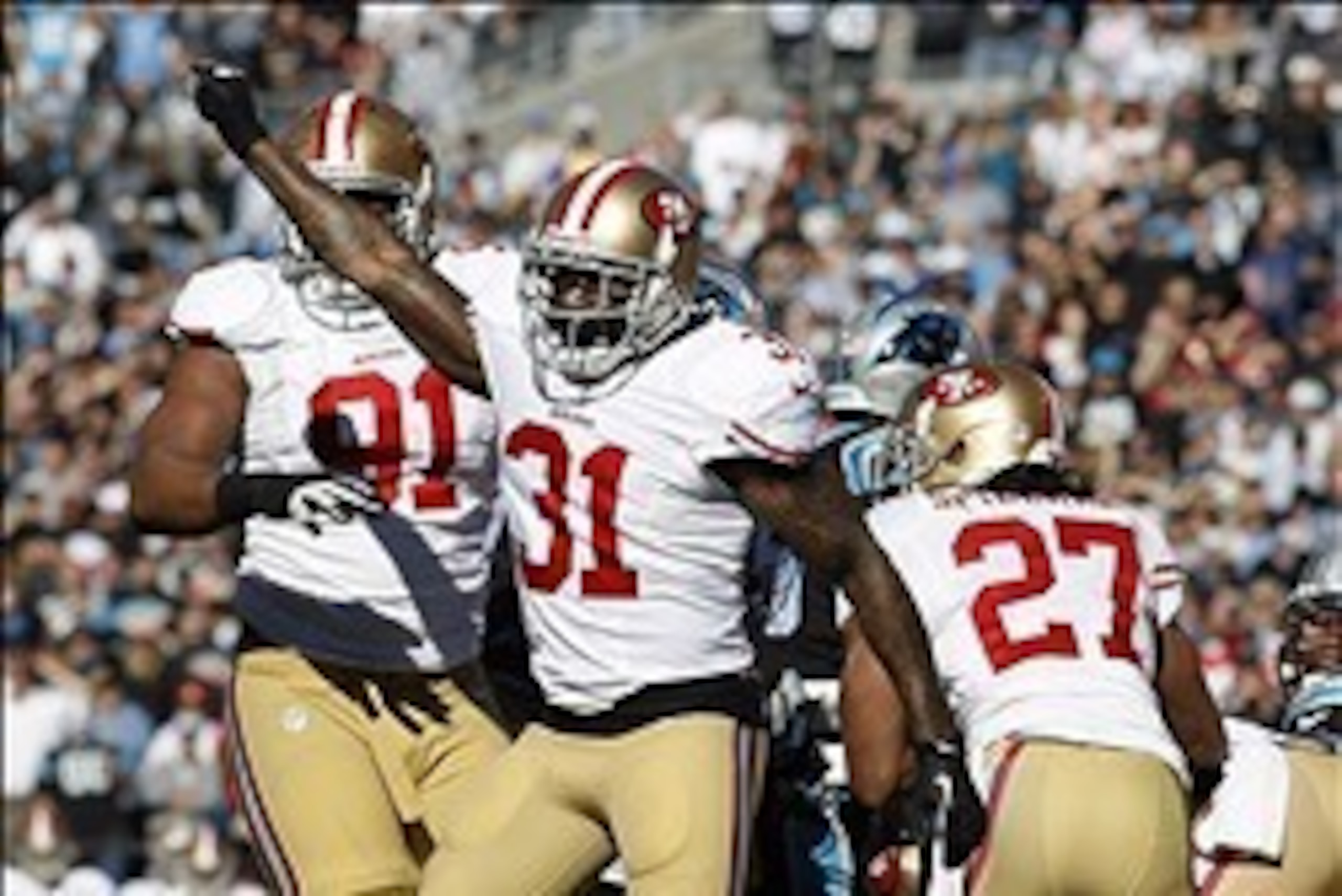
Speaking of teams shuffling the deck chairs and probably getting worse in the process, helllloooo Cleveland. The Browns made two big moves in the first day of free agency, neither of which look all that bad on the surface.
Karlos Dansby is, even at age 32, an upgrade over this iteration of D'Qwell Jackson. Dansby was brilliant during his one-season return to Arizona, and even if Jackson was a vocal and beloved veteran leader, sometimes changing the voices in a locker room is a necessary evil. Plus, it's not like Jackson is 25 or anything.
The move that has and should draw the most eyebrow raises is the four-year deal given to safety Dante Whitner. Cleveland will pay Whitner $28 million over the course of that deal, per Schefter. Though, the guarantees of the deal are yet to be released.
Again, on the surface, this deal isn't terrible. It's an obvious overpay, but the 49ers replaced Whitner with Antoine Bethea—per the Sacramento Bee's Matt Barrows (h/t CBS Sports' Josh Katzowitz)—which is a curious move in its own right. Whitner still takes way too many gambles looking for big hits and blows coverages more than you'd like, but there's no way you can argue Bethea is a better player at this point. At best, they're equals.
From a Browns' perspective, they're also continuing to change the culture. Whitner is Cleveland born and bred, and he couldn't even hide his excitement after the signing was announced.
"I'm very excited,'' Whitner said, per . "It's a very surreal feeling. It's a dream come true. Everyone dreams about playing for their hometown team and now I have that chance."
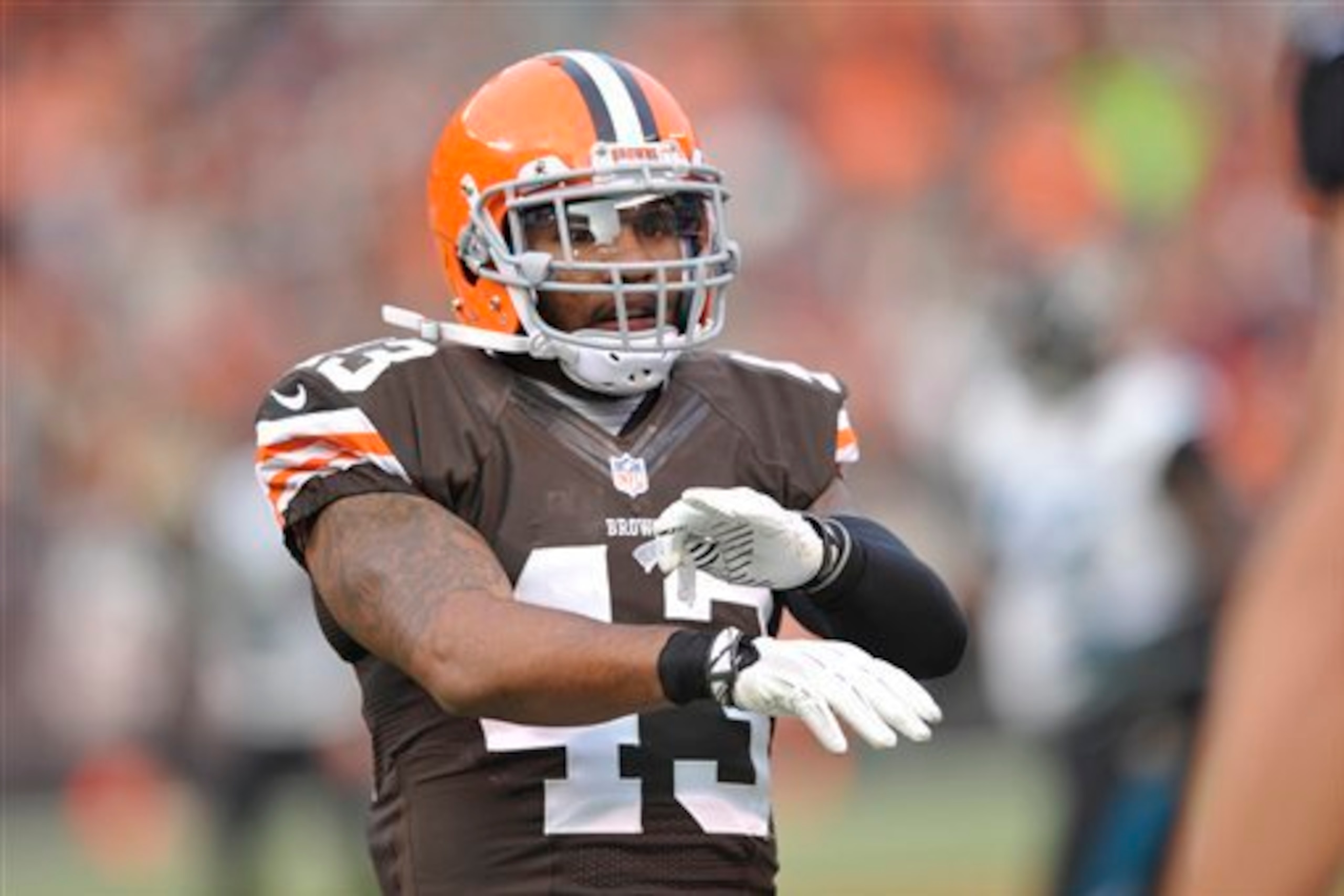
The issue at hand is whether Cleveland allowed a better, younger and cheaper player at the same position walk. Whitner replaces T.J. Ward, the incumbent Browns safety who signed with the defending AFC champion Broncos on Tuesday, per Mike Klis of the Denver Post, who also stated that the deal is for $23 million ($14 guaranteed) over four years.
From a numbers standpoint, Ward and Whitner were essentially washes last season. Ward was superior in run-stopping opportunities, while Whitner had a surprising advantage in coverage, per Pro Football Focus (subscription required). There are plenty of mitigating circumstances that go into one-year samples, but the numbers associated with these deals make it evident just how much people forget over that timespan.
In 2012, Ward was arguably the best all-around safety in football. At the very least, he was the most under-appreciated. Ward was the fourth-best run stopper and top coverage safety via PFF metrics. Numbers alone don't tell an entire story, and Whitner is an excellent guy to have around in the locker room, but this was an overpay for a slight downgrade.
Everson Griffen Signs for—Wait, HOW MUCH?!?

OK, I'm cheating here. Griffen and the Vikings agreed to their five-year, $42.5 million contract over the weekend. However, since the Vikings only made the deal official on Tuesday, I technically didn't lie, so you can all hush up now.
The reality of the situation is you just can't talk about free-agent overpays without mentioning Griffen 63 times. No, really. It's a sportswriter law, signed Tuesday to coincide with the most inexplicable free-agent deal given out thus far.
Since the signing isn't exactly breaking news, you've probably already heard the numbers. One start in 59 career games. Just 17.5 career sacks. Less than 60 percent snaps played last season. No season with more than eight sacks. There was no career year, no real impetus for this massive contract other than Griffen's potential—and the Vikings' desperation to replace Jared Allen.
The deals given to fellow defensive ends over the last few days have only made Griffen's deal look worse. Michael Bennett, one of the best handful of defensive ends last season, re-signed with the Seahawks for $28.5 million, though he took less money to do so, per Schefter. Lamarr Houston only got $35 million, per the Chicago Tribune's Brad Biggs. Art Jones, roughly $6 million per season according to ESPN's Adam Schefter.

Somehow Griffen walks away smelling like roses. The Vikings, smelling like something else. Based on the market and Griffen's resume, Minnesota overpaid by no less than $10 million and possibly as much $15 million. Now it's fair to point out that no NFL contract is actually worth its reported value, but the Vikings aren't getting out of this deal for at least three years.
The obvious legitimate caveat here is that the starting stat was misleading. Griffen was a member of the Vikings' defensive line rotation throughout the season, and he actually played more snaps than Bennett—an important distinction common fans often forget.
The issue here is simpler: Griffen just wasn't effective enough in his snaps to earn this high pay grade. He's been good, not great as both a run stopper and pass rusher—but just that. There's a place for "pretty good" in the NFL. Those are the types of players who often get lost in the muck of talking heads discussing the elite and the terrible all over your airwaves, with little in-between nuance.
Griffen is a nuance player. Smart fans know who he is. The Vikings are paying him to be a superstar. And he's just not that.
Follow Tyler Conway on Twitter:
.jpg?w=2560 "Bills Rams Football")

.jpg?w=2560 "Grading WWE Raw 🔠")
.jpg?w=2560 "Monday Night Raw Blog 🔴")