

Sochi Olympics 2014: Men's Figure Skaters Play It Too Safe in Lackluster Finale
Safety first.
Not the way Olympics performances should be in any sport, but that's the way it was Friday in the men's figure skating long program in Sochi.
When Canada's Patrick Chan had the best chance of his life to grab the gold medal and become the first Canadian man to win the event, he came out with a lackadaisical skate that was missing pizzazz.

.jpg?w=2560)
Casey Stengel, the famous baseball manager, said it best when he opined that "Most ballgames are lost, not won."
Yuzuru Hanyu got the gold medal but Stengel was right.
It felt as if Hanyu lost even when winning.

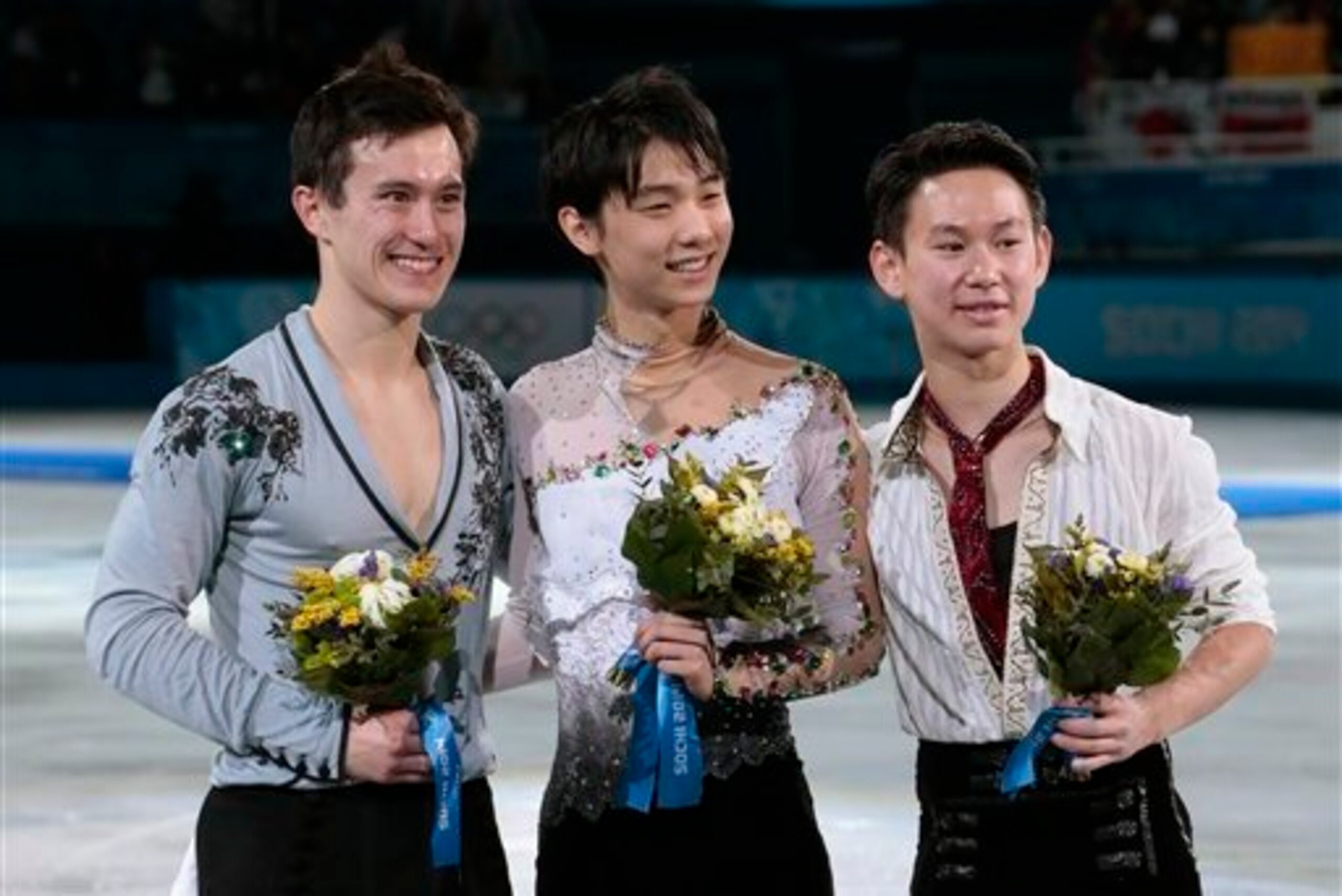
Chan's shaky, stumbling performance—which came after Hanyu had left the door open to gold—earned him a disappointing silver. The most compelling skater of the day was bronze medal-winning Denis Ten, a 20-year-old from Kazakhstan who trains in California under Michelle Kwan's former coach, Frank Carroll.
Ten won the bronze and stamped himself as a future champion.
But the skating in the last group of men—the ones who had a chance to seize the moment, to create a memorable effort such as the ones we've seen from skaters such as Brian Boitano, Evan Lysacek and Evgeni Plushenko in previous Olympic finals—was mostly filled with stumbles and bobbles, slow spins and choppy footwork.
Even 19-year-old American Jason Brown, who started in sixth place after the short program but had a chance to sneak into the bronze position, made the Irish music from Riverdance he skated to seem lackluster and lifeless.
Brown fell from sixth to ninth and then told NBC how happy he was to finish in the top 10.
That's not the attitude we expect from champions, present or future.
NBC's two analysts agreed that the gold and silver medalists did nothing to earn their medals.
"No one has shown up to skate to win the medal here," Johnny Weir said.
Tara Lipinski, who famously skated with total fearlessness and immense verve to take a gold medal in 1998 when Kwan avoiding falling but was too careful, said "You usually can't win the gold medal with a safe skate, and that's what happened."
Hanyu comes from the Sendai area of Japan that was devastated by a major earthquake in March of 2013 and was in a practice rink when the quake hit. He had to run out, still wearing skates.
So Hanyu knows fear.
But the Olympic stage seemed to scare him, too. Hanyu fell on his opening quad jump, he touched his hands down several times and seemed to get tangled up on footwork sequences.
Chan skated after Hanyu with a large opening to become the first Canadian man to win Olympic singles gold, but he was unsteady and unsure.
Coming up after Hanyu, Chan, at first, seemed as if he could seize the moment. His opening quadruple toe loop-triple toe loop combination was performed with confidence—it was fast and it flowed.
But on a second quad attempt, Chan slipped on the landing and on another jump, he needed to put his hands down.
It looked like Chan had decided his body of work—three straight world championships since the last Olympics—would allow the judges to reward him with a gold after Hanyu's mistake-filled effort.
Still only 19 and making his first Olympic appearance, Hanyu had skated so unlike the teenager who scored a record-setting 101.45 points in the short program Thursday that it seemed in only a matter of four minutes, Chan could celebrate his gold.
After all, Chan holds the world record score in a long program (196.25) and in combined short and long programs (295.27).
But numbers don't lie. Chan scored a mere 178.10 in his long program Friday and 275.62 overall while Hanyu's long program earned 178.64 to give him a winning total of 280.09.
"I was not happy with my program," Hanya told Nancy Armour of USA Today.
Hanyu's coach, Canadian Brian Orser, told him: "A win is a win is a win."
But it's not.
A win should be something like the "Miracle on Ice" gold medal for U.S. hockey in 1980.
Or like Lipinski's powerful all-out, go-for-broke performance in Nagano, when it had seemed that Kwan, who skated before Lipinski, had secured gold.

American Jeremy Abbott had high expectations after his own skate for the Canadian, telling Rosie DiManno of the Toronto Star, "I train with Patrick every day and he’s one of the hardest workers I’ve ever seen in my life."
But all the hard work was not in evidence here. Instead Chan was left in tears and we were left feeling as if the gold and silver medals should have just been packed up and saved to be given out four years from now at the next Winter Games, in South Korea.
Unless otherwise noted, quotes are taken from audio transmitted from Sochi.
Diane Pucin is the Olympics lead writer for Bleacher Report. She covered eight Games for the Philadelphia Inquirer and the Los Angeles Times. You can follow her on Twitter @mepucin.




.jpg?w=2560 "Viral Rams Coach Vid 🖕")
.jpg?w=2560 "2 NFL Officials Suspended")
