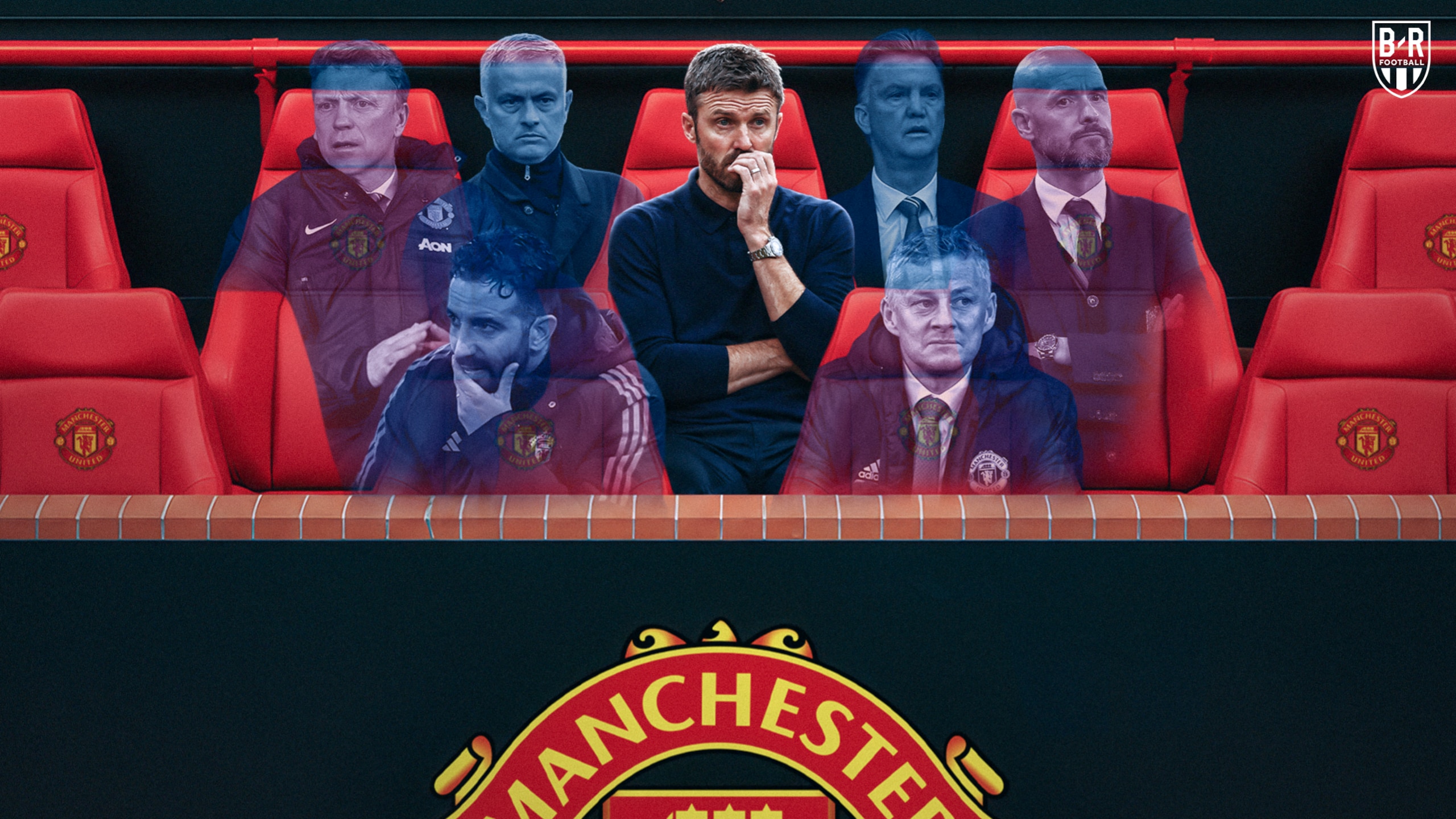
Shambolic Transfer Window Is Proof Manchester United Need a Technical Director
As Manchester United were preparing to unveil David Moyes as Sir Alex Ferguson's successor this summer they talked of the two Scotsmen being "cut from the same cloth."
The implication was that they had chosen a man who shared the same values as Sir Alex, a manager who could carry on the work he had started.
It also hinted that United's board had purposefully steered away from other candidates like Jose Mourinho. The Portuguese has a more impressive CV than Moyes, but he doesn't usually stick around very long.
TOP NEWS

Messi Picks Next Gen Talent 💫
Carrick Replacement Candidates 👀

Managers on Hot Seat Already ♨️
Ferguson built himself an empire at Old Trafford. And he decided Moyes was the man to take his throne.
But times have changed since Ferguson moved south from Aberdeen in 1986. The game is almost unrecognisable.
In his early years in Manchester, Ferguson would coach the first-team, sign players and scout opposition teams. Academy players of the 80s talk of Ferguson attending their training sessions at The Cliff, chatting to watching parents and even making them cups of tea.
In his later years he delegated some of his duties, especially on the training pitch, although always watching on with a keen eye. But even in his final season he was a regular spectator at Altrincham's Moss Lane to watch the reserves.
Despite passing on some of his responsibilities, Ferguson still ran the club from top to bottom. Even past his 70th birthday, nothing happened without him knowing.
It's the role Moyes has assumed this summer because that's the management structure Ferguson left behind.
But while Ferguson took over a mid-table First Division football club in November 1986, Moyes has arrived at the head of a billion-pound global company.
Everyone wants a piece of him. Players, fans, sponsors, rights holders, agents, journalists and the rest. The job of a Premier League manager is becoming too big for one man.
Because Ferguson lasted so long he had become an anachronism. His colleagues in 1986 might have ruled like Tsars, but not the ones he left in 2013.
This summer, the Premier League's two remaining omni-present rulers, Moyes and Arsene Wenger, were left doing their transfer business late on deadline day.
All the while, Manuel Pellegrini and Andre Villas-Boas, the managers of Manchester City and Tottenham, had their feet up, watching the madness from afar. It's no coincidence.
Pellegrini and Villas-Boas left their market dealings to technical directors, Txiki Begiristain at City and Franco Baldini at Spurs. The result was that the bulk of their business was done early, leaving their rivals to panic as the click ticked down.
English clubs have an historic mistrust of the director of football role. Wenger said last week he could never work with one because responsibility for signings and results should lie with him.
But in the modern game there is room for a role between manager and chief executive. Ed Woodward, widely criticised for his handling of United's transfers this summer, could certainly have used the help in his first window.
Begiristain and Baldini have gone about their business this summer with a quiet efficiency that will appeal to even the strictest of rulers. Even Wenger and Moyes.

.jpg?w=2560 "Cam Ward Says He's Not A Loser")
.jpg?w=2560 "Chargers Fall to 0-5 🤢")
.jpg?w=2560 "Viral Dan Campbell Presser 💙")