
A Preseason How-to Guide to Building a Perennial NFL Contender
Using the preseason to help build a perennial NFL contender takes three relatively simple steps. Smart franchises draft to a formula and develop their rookies within the structure of that formula.
Savvy coaches use the preseason as an opportunity to add new wrinkles to successful systems. Cagey general managers keep an eye on remaining free agents and show patience in the market.
Sticking with a Formula and Drafting to It
.png?w=2560)
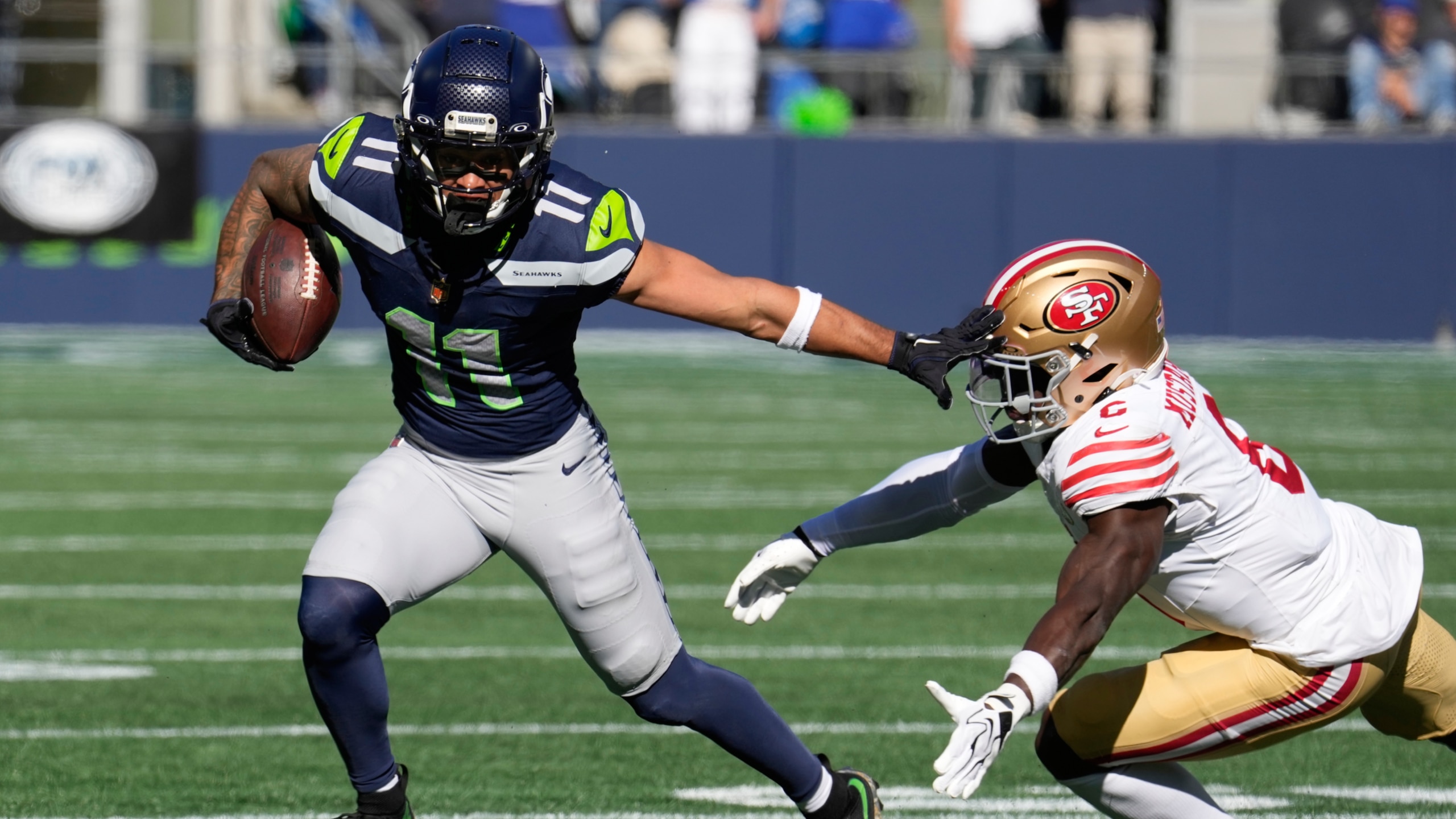
No team in football exemplifies this quality better than the Pittsburgh Steelers. It is most obvious in the way they assemble and maintain tough defenses.
It is no coincidence that the Steelers have boasted a strong defense for most of the last 20 years. They have stuck rigidly to a trusted formula.
That formula is based on a clear system, a 3-4 with zone-blitzing concepts. The Steelers only target draftees who fit this template.
That has to make their scouting processes easier than most. The Steelers can ignore every prospect, no matter how highly touted they are, who does not fit the mold of their specific system.
That is why they consistently find conversion defensive ends and successfully turn them into prolific pass-rushing outside linebackers. It is how they are able to identify so many linemen strong enough to 2-gap, but also nimble enough to zone drop.
By adhering to the very specific requirements of their system, the Steelers have been able to seamlessly replace the names, but maintain the quality on their defense.
In 1994, they selected Jason Gildon in the third round. By 1996, he had replaced Greg Lloyd and Kevin Greene and became Pittsburgh's premier outside pass-rusher.
Joey Porter was snared in the third round of the 1999 draft and quickly developed into a natural 3-4 fit. Developing their rookies is something the Steelers do better than most.
They are willing to take their time indoctrinating new faces into their scheme. This year's top pick, Jarvis Jones, is already finding that out, according to Alan Robinson of The Pittsburgh Tribune-Review.
Jones' pass-rush skills made him famous at the collegiate level. But the Steelers did not draft him solely on his merits getting to the passer.
Linebackers coach Kevin Butler explained to Robinson how Jones is being refined into a zone-blitz defender:
"In college, he kind of free lanced a little bit, and we're a little more disciplined in what we ask them to do and the techniques we ask them to use in the passing game,” Butler said. “All he did (at Georgia) was drop straight back and look at the quarterback. We're asking him to do a lot of different things in terms of pass coverage, and that's not one of them. We've got to get him out of that habit, and he's willing to get out of that habit.
"
By selecting versatile 'tweener defenders and expanding their repertoires, the Steelers can consistently recycle playmakers to keep their defense strong.
It is how they turned an inside linebacker like Chad Brown into a feared outside pass-rusher in the mid-nineties. It is how Lawrence Timmons went from average on the outside, to one of the best inside 'backers in today's NFL.
Sticking to their formula is the most important part of the Steelers plan. Finding 3-4 fits was easier in the nineties when they had the field virtually to themselves while the rest of the league played 4-3.
Drafting to the same template they had twenty years ago still helps them find the right parts for coordinator Dick Le Beau's scheme today, even while most of the league is trying to emulate it.
That is why the six-time Super Bowl winners have been near the top of the AFC for two decades.
Finding New Wrinkles
Those who don't have the structure and continuity the Steelers apply to their defense rely on subtly tweaking their formulas in preseason. Few have ever been better at this than the New England Patriots.
As Smart Football's Chris Brown notes, Patriots head coach Bill Belichick overhauled his offense to defeat the blitzing defenses of his main division rival, the New York Jets.
In an essay entilted, "How Rex Ryan Created the New Look New England Patriots Offense," Brown argued that Belichick's spread-style attack, featuring Randy Moss and Wes Welker, was having trouble dealing with multiple blitzers:
"Since they typically lined up with three receivers and only one running back, Ryan was able to specifically attack Brady's pass protection and take away the run along the way. He forced Belichick's hand in terms of play calling: New England's spread to pass became predictable instead of fearsome, and it was up to Brady on almost every play to throw the ball before some unblocked rusher took him down again.
(taken from Chris B. Brown, The Essential Smart Football, Create Space Independent Publishing Platform, 10 May 2012)
"
Of course, it was not only the Jets who had given Brady and Belichick this problem. When the New York Giants defeated the Patriots in Super Bowl XLII, they did it with an assortment of fire zone pressures.
That set the template for beating Brady and the Jets just took it a step further. The point is Belichick was forced to adjust his schemes.
So he unveiled a two-tight end attack to nullify Ryan's designer blitzes. The scheme was spearheaded by Rob Gronkowksi and Brown details how the Patriots deployed him as football's ultimate blitz-beater:
"But Gronkowski is a true triple-threat from the tight end spot: He can block, he can go out for passes, and he can even block and then go out for delayed passes. Multiple defenders therefore have to keep their eyes on him.
And against such a threat, Ryan can't sell out with multifarious blitzes overloaded to one side or the other, simply in an all-out effort to get to Tom Brady. The presence of the tight ends—where will they line up, what will they do?—dictates terms to Rex Ryan, who would much rather cut loose and go on carrying his father's torch as the destroyer of pretty-boy quarterbacks.
(taken from Chris B. Brown, The Essential Smart Football, Create Space Independent Publishing Platform, 10 May 2012)
"
The willingness to adapt keeps the Patriots fresh when they have not always possessed elite-level talent. It prevents their nearest competitors from zeroing in on what they do best. This renders many schemes designed to stop what the Patriots did well last season, moot.
Sometimes those adjustments are forced by the strengths of an antagonist like the Jets. Other times they are forced by outside circumstances.
The latter reasoning helps explain this year's attempt to use running back Shane Vereen more as a wide receiver. With his tight end sets depleted and an uncertain wide receiver corps, Belichick must find new ways to help his pass-attack thrive.
According to NESN.com, that plan will heavily involve Vereen:
"With fewer two-wide receiver sets comes more targets for running backs in general. So, while Vereen had 62 carries to eight receptions in the regular season and Woodhead had 76 carries to 40 catches...
Vereen will take on the role of the third-down back, but he’ll also be on the field as a second or third wideout and as a second running back.
"
Belichick will use offseason practices, training camp time and preseason games to make his latest adjustment work.
Keeping One Eye on the Free Agent Market
By this stage of the preseason most rosters are set. But the smart general managers and coaches know it is still worth keeping an eye of the free agent market.
Waiting for a bargain has allowed many teams to secure vital pieces of the puzzle. This year one such beneficiary of a close study of the market could be the Indianapolis Colts.
General manager Ryan Grigson caused a stir when he gave bumper contracts to the likes of Erik Walden and Ricky Jean-Francois. But Grigson deserves credit for also playing the bargain bin better than most.
In particular, he snared two veterans who could be vital for the Colts in 2013. The first was 32-year-old nose tackle Aubrayo Franklin.
A linchpin in the middle was lacking from the Colts 3-4 front in 2012 and the defense as a whole suffered. Franklin provides a true 2-gapper who can slot in on early downs.
Having played for four teams and seeing his role reduced in recent years, Franklin was not a marquee addition. But his signing was a smart, low-risk move, made possible by patiently letting the market develop and seeing which players best fit a specific need.
As much sense as signing Franklin made, Grigson's decision to take a chance on running back Ahmad Bradshaw could prove to be a masterstroke.
The Colts ground game has been poor for too long, but Bradshaw's arrival gives it instant credibility. He has posted two 1,000-yard seasons in his career and has experience as a featured back.
Bradshaw represented a risk because of health and fumbling issues, but he was a risk worth taking for the Colts. Grigson worked hard to mitigate the risk of this signing.
According to Mike Chappell of USA Today Sports, Grigson spent six days negotiating the right deal for the Colts. He settled on a one-year contract, meaning the Colts are not committed for too much time or finances if Bradshaw fails to make an impact.
His dubious health history makes that a wise move. Bradshaw is returning from offseason foot surgery. As Chappell notes for Indystar.com, the ex-New York Giant will start training camp on the PUP list.
That should allow Bradshaw to complete a full recovery and be healthy for the real action. This is one way teams can use preseason to ensure key players are fully fit for the start of the season.
The Colts have played the late stages of the market well. They waited for the right nose tackle to become available and patiently completed a favorable deal to upgrade in their running game.
Those teams that stick to their formula for recruitment and development can establish a continuity that guarantees regular success.
Those flexible enough to adapt to keep opponents guessing, can stay ahead of the curve and still contend amid changing circumstances.
While there are also rewards aplenty for those willing to stay patient in the market and take a calculated risk or two.
By following the three tips listed here, teams can maximize the preseason period to establish themselves to contend once the games get serious.
.jpg?w=2560 "Bills Rams Football")

.jpg?w=2560 "Grading WWE Raw 🔠")
.jpg?w=2560 "Monday Night Raw Blog 🔴")