All 30 MLB Farm Systems' Biggest Disappointment of the Season Thus Far
Given Bryce Harper, Manny Machado and Mike Trout’s rise to stardom last season at such a young age, it’s easy to forget that a majority of prospects actually struggle during their time in the minor leagues.
Think of it this way: There are 1,000 Tim Beckhams for every Byron Buxton. Make sense? Good.
After an exciting week that included a firsthand look at many of Prospect Pipeline’s Midseason Top 50 Prospects at the All-Stars Futures Game, it’s time to shift gears by breaking down each team’s most disappointing prospect from the first half of the 2013 season.
Dylan Bundy, RHP, Baltimore Orioles
1 of 30Selected No. 4 overall in the 2011 first-year player draft, Bundy enjoyed a meteoric rise through the Orioles’ system last year, registering a 2.08 ERA and 119-28 strikeout-to-walk ratio in 103.2 innings across three minor league levels.
The then-19-year-old’s professional debut culminated with two innings out of the Orioles' bullpen in September.
Naturally, expectations for the right-hander were high headed into the 2013 season, as many expected him to spend a majority of the year in the team’s starting rotation. However, after experiencing discomfort in his right elbow during spring training, Bundy landed on the disabled list to begin the year.
After multiple failed attempts at completing a throwing program, the 20-year-old was ultimately diagnosed with a partial tear in his right elbow ligament and underwent Tommy John surgery on June 27, 2013.
While it's kind of unfair to label Bundy as a disappointment based on something that’s out of his control such as an injury, it’s hard not to feel that way considering he entered the season as the game’s No. 1 pitching prospect.
Matt Barnes, RHP, Boston Red Sox
2 of 30Selected with the 19th overall pick in the 2011 draft, Barnes enjoyed a red-hot start to his professional career last season with a 0.36 ERA and 42-4 strikeout-to-walk ratio in 26.2 innings for Low-A Greenville.
Although his command was challenged after an early-season promotion to High-A Salem, the right-hander held his own with a 3.58 ERA and 91-25 strikeout-to-walk ratio in 93 innings.
Moved up to Double-A Portland for the 2013 season, Barnes’ tendency to pitch up in the zone with his fastball and lack of a consistent breaking ball have resulted in a dreadful sophomore campaign.
If there’s a silver lining, it’s that he’s missed 88 bats in 70.2 innings at a more advanced level. However, the 5.22 ERA and 81 hits allowed during that span certainly leave something to be desired.
Slade Heathcott, OF, New York Yankees
3 of 30Selected by the Yankees with the 29th overall pick in the 2009 draft, Heathcott had played in only 197 games headed into the 2012 season due to an assortment of injuries and personal issues.
However, the left-handed-hitting outfielder showed enough during his stay in the Florida State League last year (.847 OPS, 23 XBH, 17 SB) to receive a promotion to Double-A for the 2013 season.
As expected, the 22-year-old has been overmatched, as his lack of plate discipline and inability to control the strike zone have been challenged at the more advanced level.
Through his first 81 games for Double-A Trenton, Heathcott has fanned 89 times (28.3 percent strikeout rate) and owns a career-worst .322 on-base percentage.
However, it’s worth noting that the outfielder has played better as of late, batting .358/.404/.453 with 19 hits and a 12-4 strikeout-to-walk ratio in 13 July games.
Mikie Mahtook, OF, Tampa Bay Rays
4 of 30Mahtook was expected to move quickly through the minor leagues when the Rays selected him No. 31 overall in the 2011 draft. And after batting .290/.358/.419 with 27 extra-base hits and 19 stolen at High-A Charlotte to begin his professional career, it seemed as though he was on his way.
However, the athletic, 6’1”, 200-pound outfielder has struggled since reaching Double-A during the second half of the 2012 season.
Between the last two years, Mahtook has batted .242 with 44 extra-base hits, 20 stolen bases and a 104-43 strikeout-to-walk ratio in 127 games at the level.
Daniel Norris, LHP, Toronto Blue Jays
5 of 30Signed to an above-slot bonus as a second-round draft pick in 2011, Norris struggled last season during his professional debut, registering an 8.44 ERA with 58 hits and a 43-18 strikeout-to-walk ratio in 42.2 innings across two rookie levels.
Despite his disappointing professional debut, the Blue Jays promoted the 6’2” left-hander to Low-A Lansing for the 2013 season.
While he’s shown flashes of brilliance—including a 10-strikeout performance over four scoreless innings on May 23—Norris has been plagued by a lack of fastball command and inconsistent secondary offerings.
However, it is worth noting that he’s pitched better over the last two months, allowing four earned runs on 26 hits with a 41-19 strikeout-to-walk ratio in 28.1 innings.
Carlos Sanchez, 2B, Chicago White Sox
6 of 30After spending a majority of the 2011 season at Low-A Kannapolis, Sanchez seemingly came out of nowhere last year to ascend three levels.
After opening the season at High-A Winston-Salem, he had a month-long stay at Double-A Birmingham before a late-season promotion to Triple-A Charlotte. Across all three levels, the then-20-year-old batted .323/.378/.403 with 169 hits, 33 extra-base hits, 26 strikeouts and a 92-41 strikeout-to-walk ratio in 133 games.
Assigned back to Triple-A for the 2013 season, the switch-hitting infielder has struggled during his highly anticipated follow-up campaign, posting a .598 OPS with 14 stolen bases and a 61-26 strikeout-to-walk ratio through 86 games.
While Sanchez has the potential to hit for a decent average at the major league level, he’ll need to tighten the plate discipline before receiving a call-up.
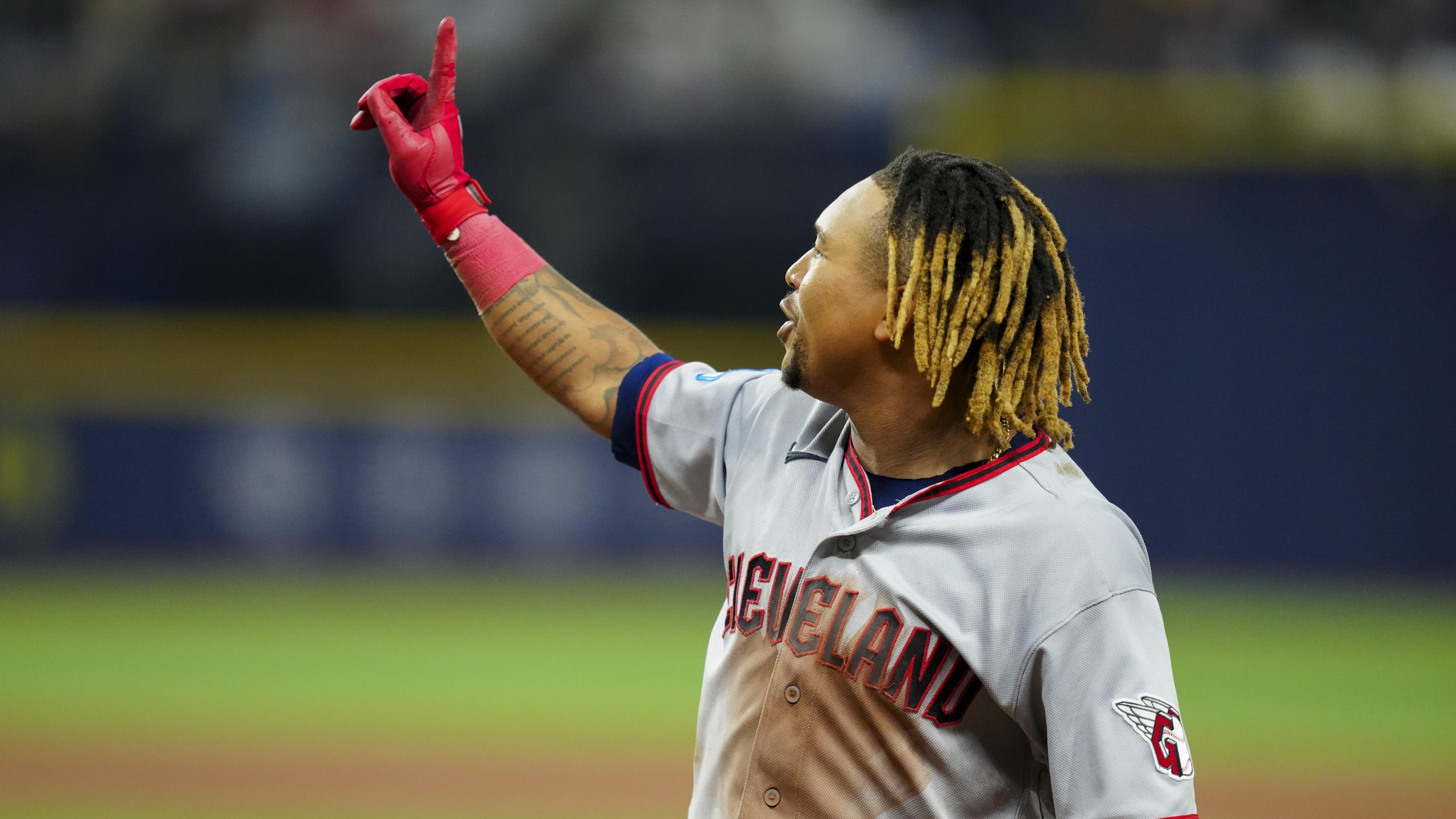
Trevor Bauer, RHP, Cleveland Indians
7 of 30Acquired by the Tribe during the offseason as part of a three-team trade involving the Arizona Diamondbacks and Cincinnati Reds, Bauer has struggled this season between Triple-A Columbus and the major leagues.
In four spot starts for the Indians, the right-hander has registered a 5.29 ERA and 11-16 strikeout-to-walk ratio in 17 innings—a line that looks eerily similar to the one he posted with the Diamondbacks last summer.
Just as was the case then, Bauer’s lack of success stems from his inconsistent fastball command and inability to get opposing hitters to expand the strike zone. In his last start on June 28 against the White Sox, the 22-year-old allowed five earned runs on six hits and failed to make it out of the first inning.
And it’s not as though he’s been significantly better at Triple-A this season, posting a 4.06 ERA with 76 hits allowed (nine home runs) and a 72-41 strikeout-to-walk ratio in 77.2 innings.
As a result of Bauer's struggles, right-hander Danny Salazar has seemingly passed him on the depth chart.
Tyler Collins, OF, Detroit Tigers
8 of 30Selected in the sixth round of the 2011 draft, Collins posted an .800 OPS with 47 extra-base hits, 20 stolen bases and a 64-58 strikeout-to-walk ratio last year during his full-season debut for High-A Lakeland.
However, the stocky, left-handed-hitting outfielder hasn’t fared as well this season following a promotion to Double-A Erie.
Through his first 86 games in the Eastern League, the 23-year-old has batted just .209 with 63 hits and managed only three stolen bases in seven attempts. Although the average has taken a hit, Collins has still shown decent power with 20 doubles and 13 home runs in 301 at-bats.
Regardless, it’s hard to see him being anything more than a fourth or fifth outfielder.
Bubba Starling, OF, Kansas City Royals
9 of 30Signed to a massive bonus as the No. 5 overall pick in the 2011 draft, Starling is yet to develop as hoped.
Although he’s a gifted athlete who’s loaded with an assortment of above-average-to-plus tools, the 20-year-old's raw baseball skills and inability to make adjustments have caused his prospect stock to dive since the start of the 2012 season.
After posting an .856 OPS with 10 home runs last year during his professional debut for rookie-level Burlington in the Appalachian League, the Royals challenged Starling with a promotion to Low-A Lexington for the 2013 season.
Unfortunately, he hasn’t responded favorably, batting .212/.299/.348 with 62 hits and 88 strikeouts through 83 games in the Midwest League.
While he's still young and has plenty of time to put things together, it’s safe to say that he’s far from the prospect the Royals envisioned when they made him their first-round pick two years ago.
Levi Michael, SS, Minnesota Twins
10 of 30The Twins tried to address the lack of middle-infield prospects in their system when they selected Michael in the first round of the 2011 draft—a decision that was met with skepticism, considering he was coming off a hip injury and was never considered a long-term option at shortstop.
Assigned to High-A Fort Myers last season for his professional debut, Michael posted a disappointing .650 OPS through 117 games, though he did show solid plate discipline with 82 strikeouts at 56 walks.
However, the performance didn’t convince the organization that he was ready to move up the ladder and he was assigned back to the level for the 2013 season.
Things haven’t gone any better for Michael in his second tour of the Florida State League, as the 22-year-old switch-hitter owns a .708 OPS through 55 games. On a positive note, the hip injury no longer appears to be an issue, as he’s 11-for-12 on the basepaths this season.
Nick Tropeano, RHP, Houston Astros
11 of 30A fifth-round draft pick in 2011 out of Stony Brook University, Tropeano made a strong impression last year during his full-season debut across both Class-A levels.
Overall, the 6’4”, 205-pound right-hander registered a 3.02 ERA and 166-47 strikeout-to-walk ratio in 158 innings.
Moved up to Double-A Corpus Christi for the 2013 season, it was believed that Tropeano would continue to move up the ladder with a strong start. However, the 22-year-old has been challenged against the more advanced hitters in the Texas League, posting a 4.25 ERA with 92 hits allowed (11 home runs) and a 79-25 strikeout-to-walk ratio in 84.2 innings.
While he’s continued to miss bats at a favorable rate, the right-hander’s inability to keep the ball in the park has become a legitimate concern.
Kaleb Cowart, 3B, Los Angeles Angels
12 of 30One of the top breakout prospects from the 2012 season, Cowart posted an .810 OPS with 54 extra-base hits, 14 stolen bases and a 111-67 strikeout-to-walk ratio in 135 games while splitting the year between both Class-A levels.
However, the switch-hitter’s stock has only declined since his underwhelming performance in the Arizona Fall League.
Viewed as the team’s future third baseman, the Angels handed Cowart an aggressive promotion to Double-A Arkansas for the 2013 season—a decision that they likely are regretting.
Through his first 89 games at the new level, the 21-year-old is batting .222/.286/.312 with 19 extra-base hits and 82 strikeouts. He has posted a sub-.600 OPS in all but one month this season.
Cowart’s plate discipline and pitch recognition aren’t as advanced as his 2012 numbers suggest, as his natural ability and tools previously allowed him to overcome the weakness. Therefore, it’s not surprising that he’s struggled this year against more advanced secondary stuff at Double-A.
It’ll be interesting to see what adjustments he makes during the second half of the season.
Miles Head, 3B, Oakland Athletics
13 of 30Coming off a breakout 2012 season during which he batted .333/.391/.577 with 32 doubles and 23 home runs in 124 games between High-A Stockton and Double-A Midland, Head was both overweight and out of shape when he showed up to spring training.
As a result, the organization assigned the 22-year-old back to Double-A for the 2013 season.
While there’s no empirical evidence that supports the claim, there’s reason to believe that his weight has played a direct role in his dismal performance. Head has now missed 55 games this season between two separate trips to the disabled list with a shoulder injury and has appeared in four games since May 19.
With a rehab assignment in the Rookie-level Arizona League underway, I wouldn’t be surprised if the A’s ease him back into action with an assignment to High-A Stockton.
James Paxton, LHP, Seattle Mariners
14 of 30A fourth-round selection of the Mariners in 2010, Paxton reached Double-A during his professional debut the following season. While his command was challenged during a second tour of the level in 2012, the left-hander had a solid season with a 3.05 ERA and 110-54 strikeout-to-walk ratio in 106.1 innings.
However, Paxton has consistently struggled this season for the first time in his career after moving up to Triple-A Tacoma, registering a 4.58 ERA with 109 hits allowed and a 97-39 strikeout-to-walk ratio in 98.1 innings.
When he’s at his best, Paxton’s stuff is as good as any left-handed pitching prospect. Beyond a fastball in the low-to-mid-90s that has considerable arm-side run, he flashes one of the better left-handed curveballs in the minors—a true 12-to-6 bender with power and depth.
With that said, Paxton’s complicated and max-effort delivery—especially when working from the stretch—impedes his command.
He’s flat-out nasty when everything is working in sync, but it tends to be a disaster when he’s not.
While pitching in the hitter-friendly Pacific Coast League hasn’t helped his numbers, the truth is that Paxton simply hasn’t pitched well this season.
I still think the Mariners will give him a chance to start in the major leagues, but the combination of his overall inconsistency and strong track record against same-side hitters has him destined for the bullpen.
Cody Buckel, RHP, Texas Rangers
15 of 30A second-round draft pick in 2010, Buckel entered the season ranked as my No. 83 prospect.
In 2012, the undersized right-hander breezed through the Carolina League with a 1.31 ERA and 91-25 strikeout-to-walk ratio in 75.2 innings. He then held his own with a 3.78 ERA and 68-23 strikeout-to-walk ratio in 69 innings following a midseason promotion to Double-A Frisco.
Seemingly on the fast track to the major leagues, Buckel received an invitation to big-league camp this spring. Unfortunately, the 22-year-old’s exposure against major league hitters was a complete disaster, as the right-hander suddenly was unable to locate his fastball anywhere close to the strike zone.
As a result, he allowed seven earned runs on four hits, five walks and two hit batters in one inning over two appearances.
Because his velocity and mechanics countered any notion of an undisclosed injury, all signs suggested that the issue was between Buckel’s ears.
To make matters worse, the issue carried over into the regular season, as he allowed 21 earned runs on 10 hits and 28 walks through his first 9.1 innings.
In an effort to prevent things from deteriorating even more, the organization opted to send Buckel to extended spring training to sort out the problem. Considering that he hasn’t pitched in a game since May 1, I can only assume that it’s not going well.
Sean Gilmartin, LHP, Atlanta Braves
16 of 30A first-round selection in 2011 out of Florida State, Gilmartin jumped on the fast track to the major leagues last year in his first full minor league season.
After registering a 3.54 ERA and 86-6 strikeout-to-walk ratio over 20 starts for Double-A Mississippi, the left-hander struggled following a late-season promotion to Triple-A Gwinnett.
Gilmartin didn’t look like himself during a rough showing at major league spring training, where he posted a 7.62 ERA with 22 hits allowed in 13 innings. Assigned back to Triple-A for the 2013 season, the 23-year-old’s performance worsened with each subsequent month before he was finally placed on the disabled list with shoulder fatigue in mid-June.
Overall, he owns a 5.83 ERA with 89 hits allowed and a 47-30 strikeout-to-walk ratio in 71 innings.
Austin Brice, RHP, Miami Marlins
17 of 30A ninth-round draft pick in 2010, Brice spent parts of two seasons in the rookie-level Gulf Coast League before making his full-season debut for Low-A Greensboro in 2012.
Although he showed flashes of brilliance, the right-hander’s control was erratic for a majority of the season and resulted in a 4.35 ERA with 13 home runs allowed and 68 walks in 109.2 innings.
However, he showed plenty of upside with a potential plus fastball-curveball combination that led to 122 strikeouts.
Returning to Greensboro this season for a second tour of the South Atlantic League, Brice’s control has regressed considerably while missing fewer bats. Appearing in 17 games, including 14 starts, the 21-year-old owns a 5.68 ERA and 69-58 strikeout-to-walk ratio in 71.1 innings.
He’s also hit seven batters and thrown five wild pitches.
Matt Reynolds, SS, New York Mets
18 of 30Selected in the second round of the 2012 draft, Reynolds was viewed as one of the more complete college hitters in the class after a solid career at the University of Arkansas.
Making his professional debut last summer, Reynolds posted a .702 OPS with 11 extra-base hits and a 26-12 strikeout-to-walk ratio in 42 games for Low-A Savannah.
With a system devoid of projectable up-the-middle prospects in the high minors, the Mets decided to move him up to the Florida State League for the 2013 season. Considering that this is his first full season as a professional, Reynolds’ .242/.321/.366 batting line with 25 extra-base hits is respectable.
However, there has been more swing-and-miss to his game than expected, with 57 strikeouts in 306 at-bats.
Ethan Martin, RHP, Philadelphia Phillies
19 of 30A first-round pick of the Dodgers in 2008, Martin was acquired by Philadelphia last season in the deal for Shane Victorino shortly before the trade deadline.
At that time, the right-hander was enjoying a breakout season at Double-A Chattanooga with a 3.58 ERA and 112 strikeouts in 118 innings. The 24-year-old’s success continued after joining the Phillies’ organization, as he registered a 3.18 ERA with 35 strikeouts in 39.2 innings.
Although his 8.4 strikeouts per nine innings and .212 opponent batting average marked a step forward in his overall development, it also masked the lack of command that led to 79 walks in 157.2 innings (4.5 walks per nine innings) across both levels.
The organization promoted Martin to Triple-A Lehigh Valley for the 2013 despite the concerning trend and his command worsened as a result.
Through his first 18 starts, the right-hander owns a 4.79 ERA with 58 walks in 97.2 innings (5.4 BB/9), but has continued to miss bats at a favorable rate (8.0 K/9).
Martin has the stuff to serve as a mid-rotation starter in the major leagues, but his regression at Triple-A this season only reaffirms that the right-hander needs more time to develop.
Destin Hood, OF, Washington Nationals
20 of 30A second-round selection of the Nationals in 2008, Hood appeared to be on the verge of breaking out after posting an .809 OPS with 13 home runs and 21 stolen bases for in 128 games for High-A Potomac in 2011.
However, injuries limited the 6’1”, 205-pound outfielder to only 99 games last season, which was also his first at the Double-A level.
Hood hasn’t shown the same potential that he did just a few years ago at the same level and is batting .226/.266/.332 with 20 extra-base hits and a 73-16 strikeout-to-walk ratio in 78 games.
Just when it seemed as though the 23-year-old might enjoy his first healthy season as a professional, he was placed on the disabled list on July 5 with quad tightness.
Dillon Maples, RHP, Chicago Cubs
21 of 30Signed to an above-slot bonus after the Cubs picked him in the 14th round of the 2011 draft, Maples didn’t make his professional debut until last summer. Even then, he was limited to only 10.1 innings in the rookie-level Arizona League.
Hoping to jumpstart his already lagging development, the organization bumped him to Low-A Kane County for the 2013 season, where his inexperience was exposed.
Appearing in 11 games (including seven starts), Maples registered an 8.31 ERA and 34-31 strikeout-to-walk ratio in 34.2 innings before a recent—and overdue—demotion to Short Season Boise. In his first Northwest League appearance on Saturday, the right-hander walked the only three batters he faced.
While Maples is only 21 and still has time to develop, he’s significantly behind the developmental curve for a player his age.
Daniel Corcino, RHP, Cincinnati Reds
22 of 30Signed out of the Dominican Republic in 2008, Corcino jumped onto the prospect radar in 2011 when he registered a 3.42 ERA and 156-34 strikeout-to-walk ratio in 139.1 innings as a 20-year-old in the Midwest League.
The Reds challenged the right-hander with a two-level bump to Double-A Pensacola last season, where he excelled against advanced hitters, posting a 3.01 ERA and .216 opponent batting with 126 strikeouts in 143.1 innings.
At the same time, Corcino’s walk rate jumped from 2.2 BB/9 in 2011 to 4.1 BB/9 in 2012, though that’s fairly common with young pitchers at higher levels.
Ignoring the red flag, the organization promoted Corcino to Triple-A Louisville for the 2013 season rather than allowing him to refine his command—even if only for a portion of the season—back at Double-A.
As a result, the 22-year-old has regressed considerably this season in the International League with a 6.40 ERA in 90 innings.
More specifically, the command that made him successful in previous seasons hasn’t translated at the Triple-A level, as his 10.8 H/9, 5.8 K/9 and 4.7 BB/9 represent the worst totals of his minor-league career.
Jed Bradley, LHP, Milwaukee Brewers
23 of 30The No. 15 overall pick in the 2011 draft, Bradley was one of two college pitchers—the other being Taylor Jungmann—selected by Milwaukee in the first round.
Although he played in the Arizona Fall League later that year, the left-hander didn’t make his professional debut until 2012 with High-A Brevard County, where he registered a 5.53 ERA and 60-43 strikeout-to-walk ratio in 107.1 innings.
After he suffered a groin injury early in the season, Bradley’s mechanics fell apart, as he struggled to repeat his delivery with a hint of consistency.
As a result, the left-hander’s entire arsenal was reduced to a collection of average-at-best offerings.
Assigned back to the pitcher-friendly Florida State League for the 2013 season, the 23-year-old has shown glimpses of putting it all together but lacks consistency.
While he’s posted a respectable—at least compared to his numbers from the 2012 season—4.30 ERA with a 56-38 strikeout-to-walk ratio in 73.1 innings, Bradley still has a ways to go towards rectifying his prospect stock.
Wyatt Mathisen, C, Pittsburgh Pirates
24 of 30When the Pirates drafted Mathisen in the first round of the 2012 draft, he already had the reputation as a bat-first catcher who may need considerable time to develop his chops behind the plate.
And sure enough, that was the story during his professional debut last summer in the Rookie-level Gulf Coast League, when he batted .295/.388/.374 with nine extra-base hits, 10 stolen bases and a 19-16 strikeout-to-walk ratio in 45 games.
Defensively, Mathisen’s raw receiving skills resulted in 10 passed balls in 24 games, which was made tolerable by his 36 percent caught-stealing clip.
As a result of his all-around impressive debut, the Pirates bumped Mathisen to Low-A West Virginia for the 2013 season. However, the 19-year-old didn’t respond to the challenge as hoped, batting .185/.256/.210 with three doubles and 22 strikeouts in 32 games.
In my opinion, the passive approach that worked for him last season in the GCL didn’t translate at the full-season level against advanced pitching.
Unfortunately, Mathisen was unable to turn the corner at the plate before landing on the disabled list with a hand injury. He has not played in a game since May 23.
Patrick Wisdom, 3B, St. Louis Cardinals
25 of 30Selected in the supplemental first round of the 2012 draft, Wisdom was among the first players to sign and begin a professional career.
After a disappointing junior season at St. Mary’s, the 6’2”, 210-pound third baseman rebounded nicely for Short Season Batavia in the New York-Penn League, batting .282/.373/.465 with 27 extra-base hits and a 58-31 strikeout-to-walk ratio in 65 games.
The 21-year-old has showcased plenty of raw power this year during his full-season debut for Low-A Peoria, with 16 doubles and 13 home runs through 88 games.
However, he’s struggled to adjust his approach and plate discipline in response to the improved pitching, which is reflected in his .230 batting average and .313 on-base percentage. In general, Wisdom has expanded the zone more this season than he did in 2012 with 93 strikeouts in 313 at-bats (30 percent).
Michael Perez, C, Arizona Diamondbacks
26 of 30A fifth-round draft pick out of Puerto Rico in 2011, Perez made a strong impression last year in his first full season with the Diamondbacks, batting .293/.358/.542 with 31 extra-base hits in 58 games for rookie-level Missoula in the Pioneer League.
The performance earned the 20-year-old catcher a full-season promotion for 2013, but the organization decided on an aggressive assignment to High-A Visalia rather than Low-A South Bend.
Perez’s immature approach and pitch recognition were exploited by the advanced pitching, and he was ultimately demoted to South Bend after batting only .173/.223/.307 with 78 strikeouts in 47 games.
The left-handed hitter still has a bright future and is probably one of the more underrated catching prospects in the low minors, but his first-half performance in the hitter-friendly California League was unexpected.
Trevor Story, SS, Colorado Rockies
27 of 30A supplemental first-round selection in the 2011 draft, Story shot up the rankings and captured my heart last year during his full-season debut by posting an .872 OPS with 43 doubles, 18 home runs and 15 stolen bases in 122 games for Low-A Asheville.
With the hitter-friendly California League representing the next step in his development, I ranked the toolsy shortstop as the No. 34 prospect headed into the 2013 season.
So far, Story has made me look bad—like, real bad. Through his first 87 games for High-A Modesto, the 20-year-old has batted .213/.385/.359 with 31 extra-base hits and a 125-29 strikeout-to-walk ratio in 87 games.
Even though he struck out 121 times last season, Story also demonstrated an ability to work deep counts and take walks. This season…not so much.
That being said, I still believe he’ll rebound over the second half of the season. He will need to do so in order to save his prospect stock.
Garrett Gould, RHP, Los Angeles Dodgers
28 of 30Selected in the second round of the 2009 draft, Gould was kept on a short leash early in his career and spent parts of two seasons in the rookie-level Pioneer League.
No one questioned the decision during the right-hander’s breakout full-season debut in 2011, when he registered a 2.40 ERA and 104-37 strikeout-to-walk ratio in 123.2 innings for Low-A Great Lakes.
Since then, however, Gould’s stock has been declining steadily, as the soon-to-be-22-year-old is yet to repeat his success at a more advanced level. In his first season with High-A Rancho Cucamonga in 2012, he posted a 5.75 ERA with 140 hits allowed (19 home runs) and a 123-54 strikeout-to-walk ratio in 130 innings.
While the inflated ERA and home run total can at least be partially attributed to the hitter-friendly parks of the California League, Gould’s increased walk rate presented the greater concern.
The organization responded by assigning him back to the level for the 2013 season, where his performance continued to deteriorate. Through 16 appearances, Gould registered an ugly 7.04 ERA with 89 hits allowed and a 59-31 strikeout-to-walk ratio in 76.2 innings.
After 206.2 innings in the California League over two seasons, the Dodgers had seen enough and finally promoted him to Double-A.
Rymer Liriano, OF, San Diego Padres
29 of 30Liriano was one of the top breakout prospects of the 2011 season, when he posted an .830 OPS with 52 extra-base hits and 66 stolen bases in 131 games between both Class-A levels.
Assigned back to the California League for the 2012 season, the outfielder picked up where he had left off with an .803 OPS and 22 stolen bases in 74 games before receiving a midseason promotion to Double-A San Antonio.
After holding his own with a .712 OPS in 53 games at the more advanced level followed by a strong showing in the Arizona Fall League, Liriano was one of my preseason favorites to reach the major leagues ahead of schedule.
Unfortunately, the 22-year-old was diagnosed with a torn elbow ligament in February and forced to undergo season-ending Tommy John surgery.
Joe Panik, 2B, San Francisco Giants
30 of 30Selected by the Giants with the No. 29 overall pick in the 2011 draft, Panik signed quickly and tore the cover off the ball during his professional debut with an .868 OPS in 69 games for Short Season Salem-Kaizer.
Since then, the 22-year-old has moved up the ladder at a steady pace thanks to his ability to play both middle-infield positions and a high contact rate from the left side of the plate.
In three minor league seasons, Panik has amassed more walks (130) than strikeouts (121).
However, Paink’s production has declined since his promising debut. After posting a .770 OPS for High-A San Jose in 2012, the second baseman is batting only .253/.335/.358 this season in 95 games for Double-A Richmond.
Granted, he’s playing in his second full season at the most competitive level, but the lack of adjustments this year is disconcerting.
Based on his development over the last three years, Panik’s most realistic ceiling—at least at this time—is a solid utility infielder at the major league level.
If he ever decides to make less weak contact and drive the ball consistently, then there’s a decent chance that he gets a shot as an everyday second baseman.

.jpg?w=2560 "Grading WWE Raw 🔠")
.png?w=2560 "Allen's BRUTAL 1H Stats 🫤")