
Are Liverpool on the Right Track to Return to Their Glory Days?
The Premier League era has not been kind to Liverpool Football Club.
Since the English top flight broke away from The Football League in 1992, the Merseyside giants, who at the time were the record First Division champions with 18 titles to their name, have never finished atop the standings, have come second just twice and, in the past four seasons, wound up no higher than sixth.
They have also been through seven managers in that time—a far cry from the four who not only served 32 years between them prior to the birth of the Premier League but also oversaw a period of unprecedented success at the club.

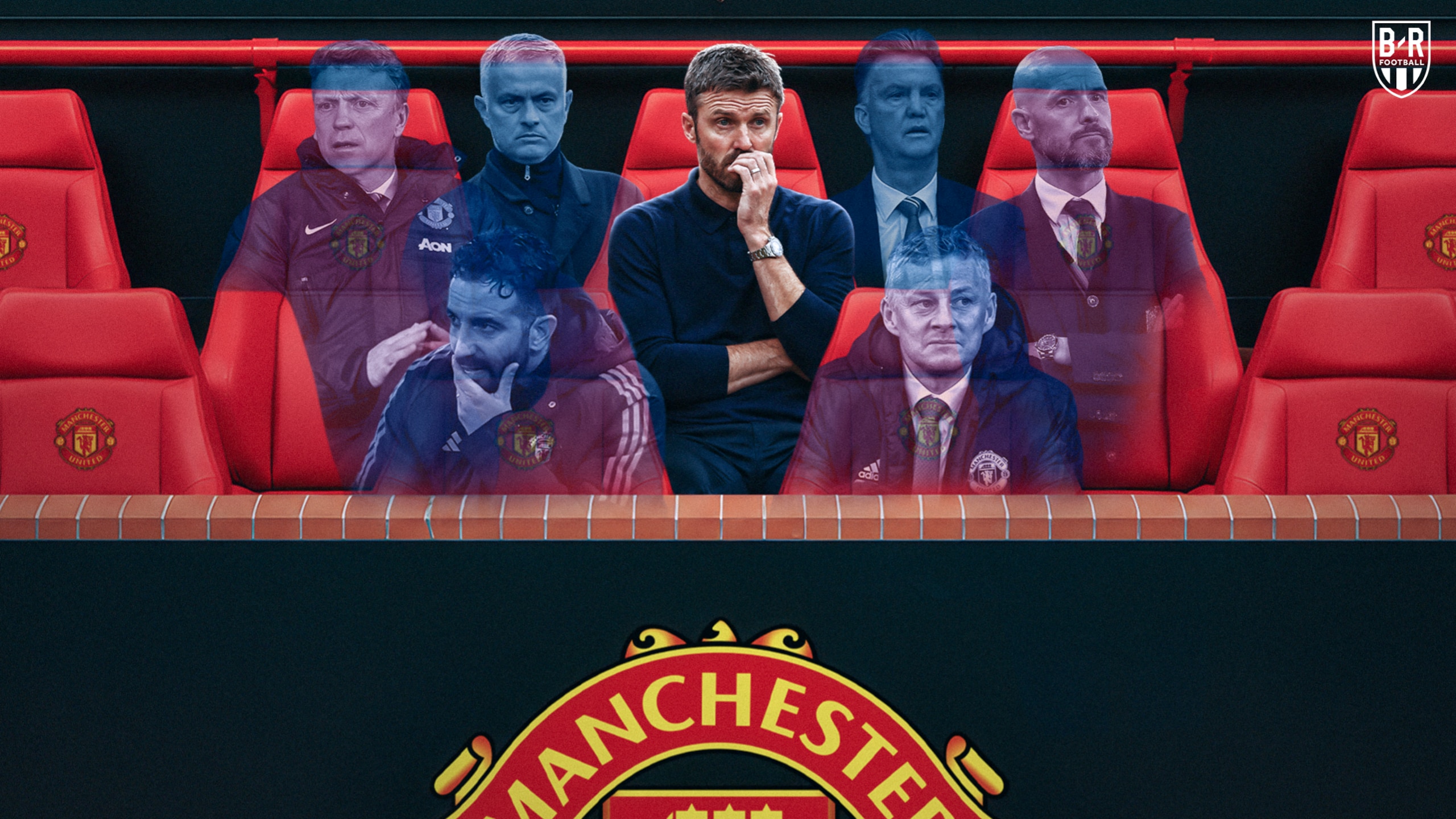
Between 1959 and 1991, Liverpool legends Bill Shankly, Bob Paisley, Joe Fagan and Kenny Dalglish delivered 13 league titles, four European Cups and four FA Cups to Anfield while making household names out of players such as Ian Callaghan, Emlyn Hughes, Kevin Keegan, Alan Hansen, Ian Rush and John Barnes.
Steven Gerrard and perhaps Jamie Carragher are the only players from last season who can realistically be named alongside those Kop legends, and with Carragher having retired and Gerrard getting along in years, Liverpool’s links to greatness become fewer and fewer.
This past spring, their 61 points left them seventh in the table—28 points adrift of champions Manchester United and out of both the Champions League and Europa League. But while things have rarely looked as bleak at one of English football’s most iconic clubs, there remains reason for optimism.
Building blocks have been put in place over the last few months that, if constructed upon, could see Liverpool back in contention for major prizes sooner than anyone would have thought three years, two years or even one year ago.
Getting back
Rarely has an ownership regime been as disastrous as that of Tom Hicks and George Gillett—the two Americans who took control of Liverpool in February 2007.
Over the more than three-and-a-half years of the Hicks-Gillett tenure, the club went from a Champions League finalist and Premier League runner-up to a company burdened with debts its owners neither could afford to pay nor had the stomach to properly refinance.
Bank-assigned deadlines came and went until finally the question of Liverpool’s ownership was settled in the courts, with John W. Henry and his Fenway Sports Group assuming control in October 2010.
They inherited a mess.
Dalglish was brought back to restore some sense of history and pride and also to spend Henry’s first transfer outlay, which he used to bring in Andy Carroll and Luis Suarez while jettisoning out-of-form striker Fernando Torres.
Both acquisitions proved disastrous, albeit for very different reasons.
Carroll simply couldn’t find the back of the net, scoring just six goals in 44 Premier League appearances for the club. Suarez, meanwhile, ran roughshod over the club’s reputation, first by incurring a suspension for racially insulting Manchester United left-back Patrice Evra and then picking up another lengthy ban for biting Chelsea defender Branislav Ivanovic.
The Evra affair—and the bizarre manner in which Dalglish stood firmly behind his player—was devastating for the club’s brand and had more than a thing or two to do with the club icon’s dismissal at the end of the 2011-12 season.
To that end, it is almost a certainty that Suarez will be shown the door over the next few weeks. Despite his 30 goals in all competitions for the club last season, the damage he inflicted on the club can only be repaired with him away from it; rebuilding a sullied brand is Henry’s top priority in the short term.
Two-step process
How do you make people like your football club? You play football they’ll like to watch.
In Brendan Rodgers Liverpool have the sort of manager who will win over new fans with an attractive stylistic philosophy while reassuring longtime supporters that there is still a reason to cheer.
Last season only Arsenal, Chelsea and Manchester United fans cheered more than their Liverpool counterparts, who were given 71 goals to celebrate over the course of a campaign that was as thrilling at one end of the park as it was frustrating at the other.
No team in the Premier League took close to the Reds’ 19.4 shots per game; only Arsenal and Manchester City possessed more of the ball, and only Manchester United, Arsenal and Manchester City had a better pass-completion percentage than Liverpool’s 84.2, per WhoScored.com
Compare those numbers to the 2011-12 campaign when Dalglish’s side attempted two shots fewer per match and finished nowhere near the top quarter of the table in any of the other three categories.
Under Rodgers, Liverpool are embracing an aggressive, attack-oriented style that will only improve as the 40-year-old gets more time to tweak it and more funding to bring in the sort of players who aren’t afraid of the ball, who can overlap positions and leave the opposition defense in a tizzy.
Last season’s acquisitions of Joe Allen, Daniel Sturridge and Philippe Coutinho revealed the type of player Rodgers was after, and already this summer he has brought in clever playmakers Luis Alberto and Iago Aspas while strengthening in the defensive third by signing defender Kolo Toure and goalkeeper Simon Mignolet.
In other words, Liverpool appear well on their way to accomplishing the first in a two-part process that should see them back to contention in the next few years—namely, becoming competitive again.
Part two—being able to sign top-quality players by offering them Champions League football—will only become more and more realistic the better Rodgers’ side plays and the more convinced Henry becomes that the Norther Irishman is truly a man to whom he can trust a sizeable summer war chest.
Last season we saw a hint of what the future could hold for Liverpool Football Club. Build on that and the Reds could still get back to the very top of the game before an entire generation of their fans comes and goes without knowing their side to be the natural winners they were for so long.

.jpg?w=2560)
.png?w=2560 "Allen's BRUTAL 1H Stats 🫤")
.jpg?w=2560 "Monday Night Raw Blog 🔴")
.jpg?w=2560 "Commanders OL HEATED After Tie ▶️")