5 Predictions for the Post-Alex Ferguson Era in the Premier League
With July 1, 2013 comes the official beginnings of many a tenure in world football, but it also marks the conclusion of just as many.
The most substantial of these era-ending power shifts is, of course, Sir Alex Ferguson’s departure from his managerial duties at Manchester United, an exit most of the world has spent the last two months getting to grips with.
For the last 26-and-a-half years, Ferguson has been staple of not just the Premier League but the old Division One, Europe and even sport in the more global spectrum.
In that space of time, the Red Devils’ former confidant has been responsible for the coining of terms associated most specifically with him and is one of, if not the most iconic figure of the last two decades in English football.
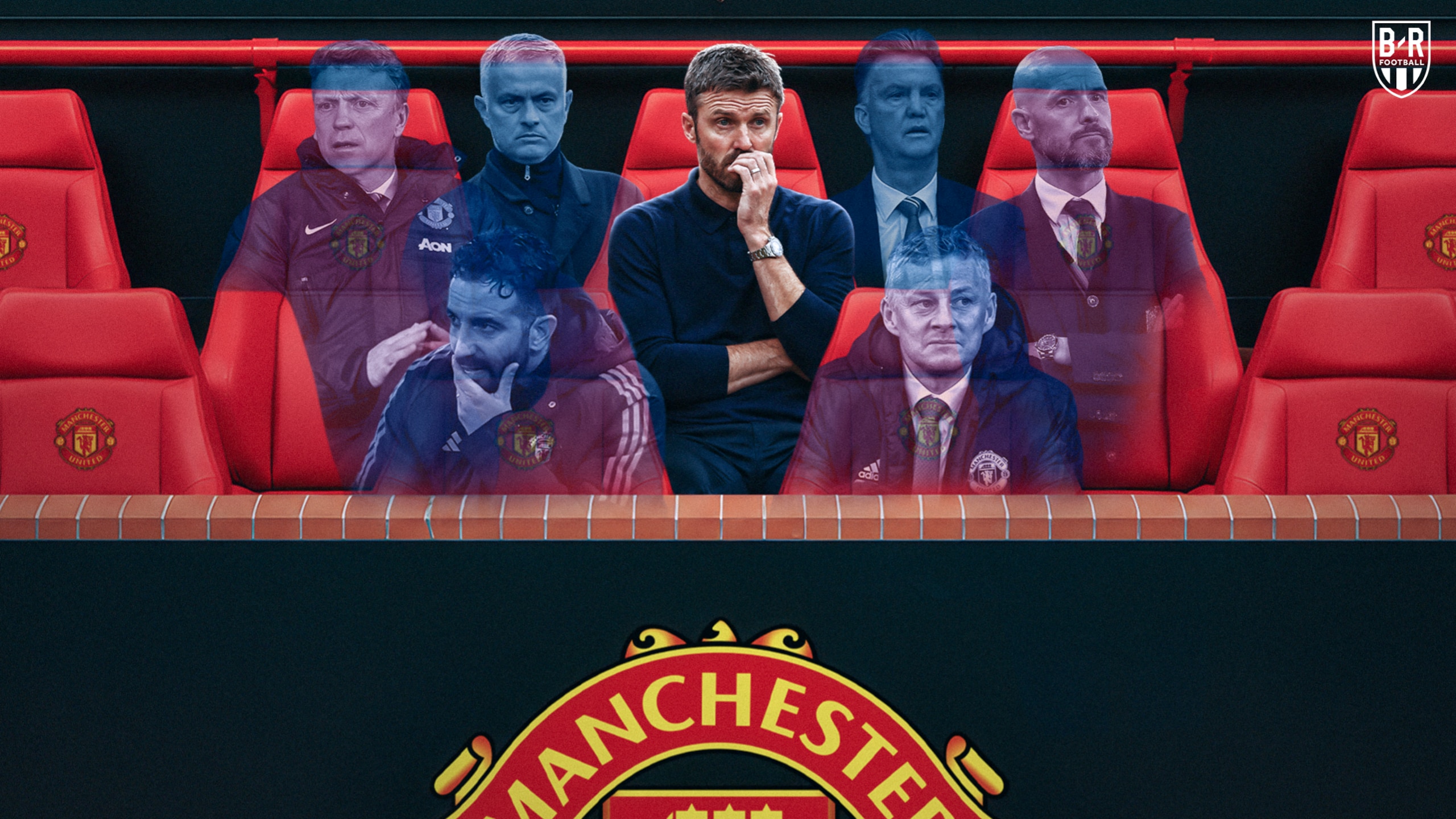
Even though it really began some weeks ago, David Moyes’ time as his replacement is now truly underway; the question is what a Fergie-less environment now holds for the English top flight.
Manchester United Made Mortal
1 of 5First and foremost, losing a manager like Sir Alex Ferguson is a loss of as of yet unquantifiable proportions.
The Scotsman evidently had a hand in naming fellow Glaswegian David Moyes as his successor and will even still have some direct influence on the club in his new directorial role.
However, without his effervescent and seemingly omnipotent presence both in the changing room and on the touchline, the reigning Premier League champions are bound to suffer, regardless of how good a job Moyes has done at Everton.
At least initially, that is.
For who can say how the new Red Devils boss will do at the club in five years' time, considering the strength of the squad he’s inherited? Moyes could, as many fans of the club will perhaps hope, go on to be even more of a success at the club than his predecessor, but it’s highly unlikely that his first term will be quite that rosy.
Regardless of how well this summer’s transfer window goes and the pedigree of talent remaining at the club past August, Manchester United are not the same club without arguably the greatest British manager ever at their helm.
With Jose Mourinho’s return to Chelsea, Manuel Pellegrini being a bit of an unknown force at the Etihad Stadium and Arsene Wenger now the longest-serving manager among the English elite, the race for English honours is more open than it’s been for some years.
Managerial Media Monopoly
2 of 5While the trophies and accolades of his 26 years in charge certainly account for the glitz and glamour of Sir Alex Ferguson’s Manchester United tenure, there were the less amorous sides of the veteran’s demeanour.
One of the aspects of the Scotsman’s reign for which he’ll remain infamous among some is his refusal to speak with certain media outlets, including a seven-year boycott against talking with the British Broadcasting Corporation.
With the finances of Manchester United being able to cope with the fines ultimately accrued as a result of this refusal, Ferguson’s apparent exemption from this media examination only served in adding to his reputation as an invincible.
Although numerous other managers in the first tier have shown the potential to speak their mind with the media—Ian Holloway, Jose Mourinho and Moyes but to name a few—it’s unlikely a boss will ever give off quite the same sense of power that Ferguson did in this regard.
More probably, the managers of the Premier League will fall in line with the rules put in place, with perhaps Mourinho the next most likely to pick up the mantle of “media bad boy.”
Mind Games of a Different Mould
3 of 5As is the case with any great protagonist, Sir Alex Ferguson’s story was only galvanized by the level of competition put against him; his nemeses, if you will.
Rafa Benitez (during his Liverpool stint), Arsene Wenger, Roberto Mancini, Mourinho and many have others have come, gone and in some cases returned again as direct antagonists to Ferguson.
These struggles are, of course, best portrayed in the media, a stage where opposing managers can express their views in the arena more commonly known these days as “mind games.”
Even with all his tactical wit and a roster almost any club would envy, Ferguson’s knowledge when it came to infuriating his opposite number was always another vast weapon in the his arsenal. So much so, in fact, that one could sometimes say a fixture was decided before a Manchester United player had even stepped onto the pitch.
Without his charming personality, the media landscape between managers is just another forum bound to undergo change in a Fergie-less Premier League, and decidedly not for the better.

.jpg?w=2560)
The Children Aren’t Our Future
4 of 5Since the early 1990s, the influx of foreign players in the English top flight has kicked into an overdrive of sorts, with more stars from abroad accounting for Premier League playing time than ever.
While Manchester United have certainly invested heavily in foreign players themselves, one amicable aspect of Ferguson’s management was that he could always find time for homegrown talent in his ranks.
In fact, such was the Scotsman’s ability to spot a youth product that he was even able to weather such a storm and maintain a pattern seemingly inherent at the Theatre of Dreams.
As the Daily Mail reported at the time, United’s 1-1 draw against Arsenal four games from the end of the 2012-13 campaign was the 3,638th consecutive game that a homegrown player had been named in the club’s matchday squad.
What’s remarkable is that even with the pressures placed on any elite club manager competing in the Champions League and other competitions, Ferguson never lost sight of one, very important ideology.
Now, it seems, that run may not endure. Of course, with Ferguson still in the vicinity, David Moyes could yet do as fine a job with youth production as his predecessor; most Premier league sides have edged away from what used to be a given, even at the highest level, in terms of fielding British talent.
According to a recent BBC report, playing time for English players under the age of 21 is now at its lowest, and however unfavourable the numbers may be, they aren’t quite surprising.
With one of the biggest promoters of youth production now stepped down from his most direct position, a major blow has been dealt to hopeful youths looking to make their name on the highest platform.
Arsene Wenger: Last Bastion of the Premier League Veteran
5 of 5Just as the one-club man is becoming an increasingly rare phenomenon, so too is the long-term manager.
With football officially viewed by most as much as a business as it is a sport, owners, chairmen and other executive board members haven’t the patience to deal with anything but immediate success.
Of course, it’s easy to forget that Ferguson’s career started in unenviable fashion, only just saved by the FA Cup triumph of 1990, the tournament that would go on to start possibly the most illustrious managerial career there will ever be.
In Arsene Wenger, the Premier League now has its longest-serving boss and quite plausibly the last manager who will surpass the 10-year mark at an elite club.
The hiring and firing promoted by the likes of Chelsea, Manchester City, Liverpool and others in the last few years is but an example of the short life span endured by elite club managers. If success can’t be brought within a season, and in some cases two seasons, it’s simply a case of “onto the next one” for any side that can afford it, which is a majority these days.
Instead of instilling trust in a manager, having the confidence in an appointment to perhaps go without silverware but to ultimately build a dynasty, clubs are happy to simply change managers in pursuit of instant glory.
Needless to say that Ferguson and Wenger were quite probably the last of a dying breed, and a species that would seem to now be down to its last.
.png?w=2560)


.jpg?w=2560 "Aaron Donald Fights Bills OL😳")