

Most of the biggest NBA contracts are attached to the biggest and brightest talents in the sport.
Most is the key word in that sentence, though, as it tips off how that isn't always the case.
Sometimes, colossal contracts get attached to players who simply can't live up to them, whether that's due to sagging production, availability issues or often a combination of the two.
Here, we'll spotlight five players on big-money deals who haven't been worth the investment. We're excluding anyone on expiring contracts, since financial relief for those players is mercifully coming soon. We'll also cite the money left on each of these underperforming investments with the years and salary values including the current campaign.
Bradley Beal, Phoenix Suns
1 of 5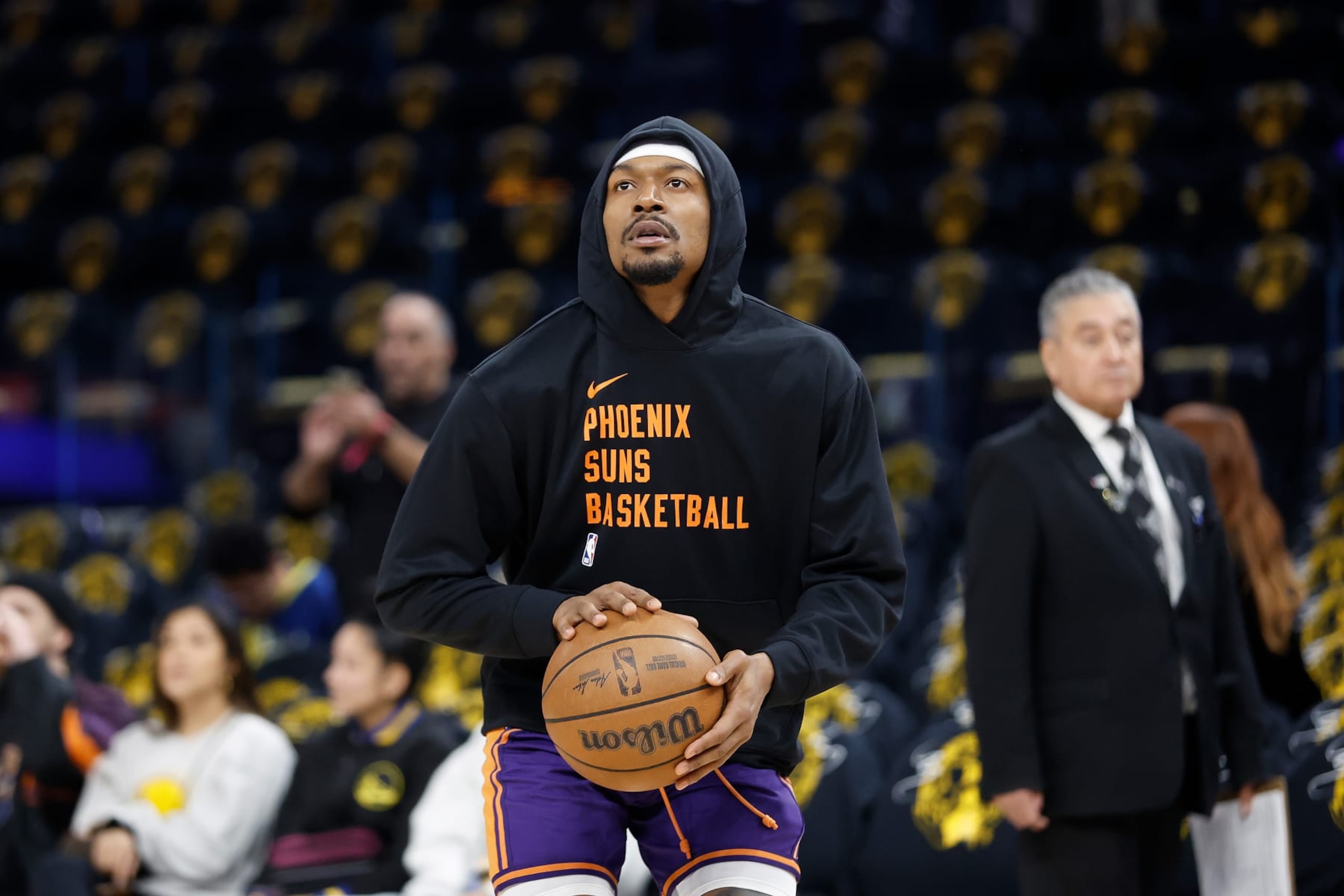
Remaining contract: Four years, $207.7 million (player option in 2026-27)
A healthy Bradley Beal is a very good offensive player. The problem is he's seldom appeared as a great talent on the court, and he's had an increasingly difficult time even making it to the hardwood.
That's not exactly the description you'd envision of someone with an average annual salary north of $50 million, let alone from the player possessing the Association's only no-trade clause.
Such has been life for Beal, though, who last topped 60 appearances in 2018-19. It has often been various ailments as opposed to serious setbacks, but when they clearly aren't going away—he is sidelined with hamstring soreness as we speak—that doesn't make them any less concerning.
Maybe the many absences would be a bit easier to stomach if he was all-caps INCREDIBLE when he played, but again, he's a lot closer to good than great. His average output of 18.2 points and 4.5 assists is a stat line matched by 41 other players around the league, more than half of whom have a better true shooting percentage than his 57.9. Among combo guards, he's ranked in just the 66th percentile in points per shot attempt and the 30th percentile for turnover percentage.
Nothing stands out in his profile other than his salary, which is sixth-highest in the league.
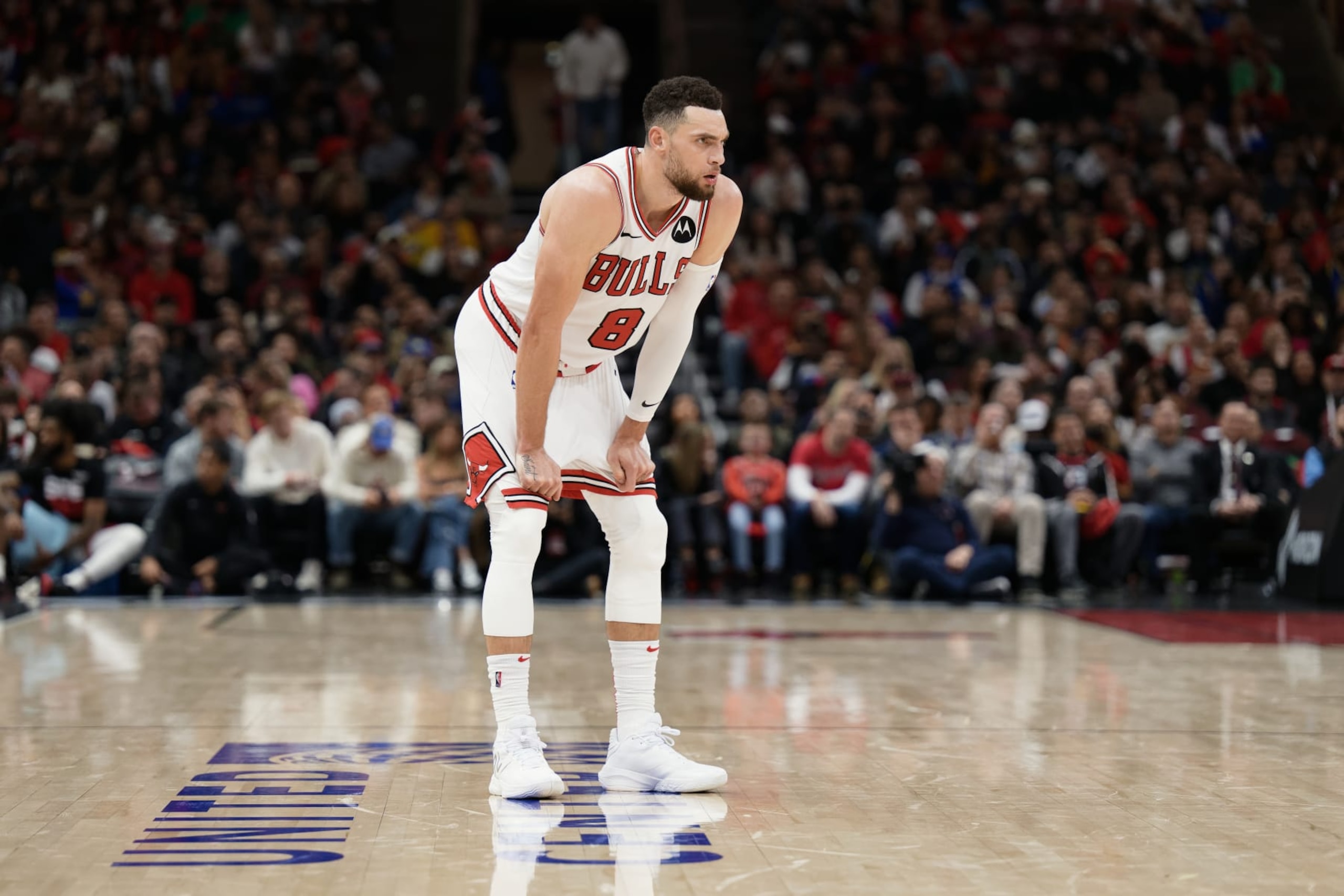
Zach LaVine, Chicago Bulls
2 of 5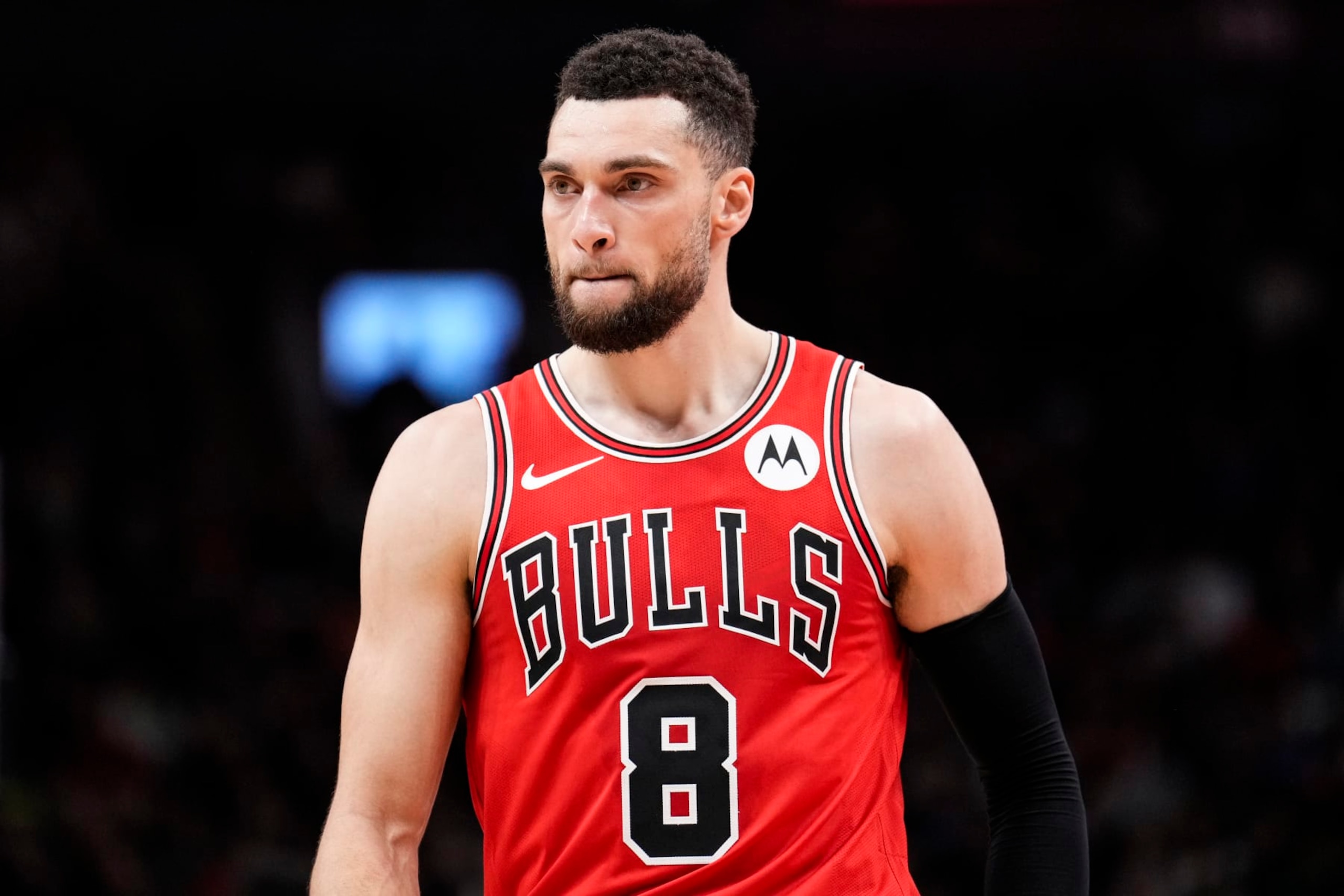
Remaining contract: Four years, $178.1 million (player option in 2026-27)
Normally, Zach LaVine's numbers land about where you'd expect for someone collecting this kind of coin. Start digging below the surface stats, though, and you'll spot all of the red flags flying around the premium he's being paid.
Look beyond his typically strong scoring numbers (which, by the way, weren't as potent this season before foot surgery cut his campaign short), and you'll struggle to see the substance beneath them. How much have his career 20.5 points and 3.9 assists per game actually helped when his team has fared better without him in eight of his 10 NBA seasons?
The .082 win shares per 48 minutes he contributed this season ranks 191st among the 306 players who've logged 500-plus minutes. That sounds—and is—pretty abysmal for someone with such a hefty salary, right? Well, it gets worse, as this wholly unimpressive mark in this metric for this season is identical to his career average. And as a career average, that puts him 623rd out of the 780 players to clear 15,000-plus minutes.
He has never had a discernible impact on his team's success. Not in a positive way, at least. While others have contributed to this, the fact remains he has booked a single playoff trip—which lasted all of five games—during his first decade in the league. He isn't someone who elevates the players around him, and he can actually make things more difficult for them given his limitations as a defender and his bouts of tunnel vision.
And imagine, we've gone this far discussing his flaws as a huge-money player without even bringing up his injury issues. He has suffered a medley of maladies over his career, including an ACL tear in 2017 and soreness in the same knee that required surgery in 2022.
Jordan Poole, Washington Wizards
3 of 5
Remaining contract: Four years, $123 million
Since Jordan Poole put pen to paper on this deal as an October 2022 extension, he's been salary-dumped by the Golden State Warriors and benched by the bottom-feeding Washington Wizards.
No wonder "a lot of teams" see this contract as "one of the worst deals in the NBA right now," as ESPN's Bobby Marks said during an appearance on 95.7 The Game's Willard and Dibs show.
Poole is, in short, an offensive specialist who's been about as bad as anyone on that end among high-mileage players.
Of the 195 players to reach 1,000 minutes this season, he ranks 192nd in offensive box plus/minus. Among the 55 players with a usage percentage of 25-plus (minimum 500 minutes), he is 54th in true shooting percentage and offensive win shares. Among combo guards, he's in the 83rd percentile for usage and the 23rd percentile for points per shot attempt.
And remember, these are all stats tied to his offense, which is by far the strongest part of his game. On defense, he's allowing his matchups to shoot better from every level than they do on average, yielding an overall jump of 3.2 field-goal percentage points.


Ben Simmons, Brooklyn Nets
4 of 5
Remaining contract: Two years, $78.2 million
When Ben Simmons initially signed this deal—a five-year, $170 million extension—in July 2019, his star was clearly on the rise. It has essentially been nose-diving ever since, though that process really spiraled out of control starting with the 2021-22 campaign.
He missed that entire season with a back injury and mental health issues. He has since made it back to the court, but his availability problem hasn't gone away. He suited up just 42 times last season and has played in only 13 of the Nets' first 55 contests this time around. For those keeping score at home, that's 55 appearances in 219 games or about 25 percent participation.
If you're of the belief that the best ability is availability, Simmons earns an atrocious mark in perhaps the most important category.
What's perhaps worse, though, is that when he does make it onto the court, he's almost never worth the wait. His inability to ever harness a jump shot makes him too easy to defend in the half court, and his inaccuracy at the foul line (career 58.9 percent) torpedoed whatever aggressiveness he once had.
Because he's not at all a scoring threat, there is tremendous pressure on him to deliver as a top-shelf distributor and defender. He's still a skilled playmaker (9.0 assists against 2.8 turnovers per 36 minutes), but he's not the spectacular, all-purpose stopper he once was. In fact, defensive estimated plus/minus regards him as entirely average (minus-0.4, 53rd percentile).
So, what is a 6'10" passer who plays decent defense and shrinks the offensive end as a non-scoring threat worth? Certainly nothing close to what he's actually being compensated.
Andrew Wiggins, Golden State Warriors
5 of 5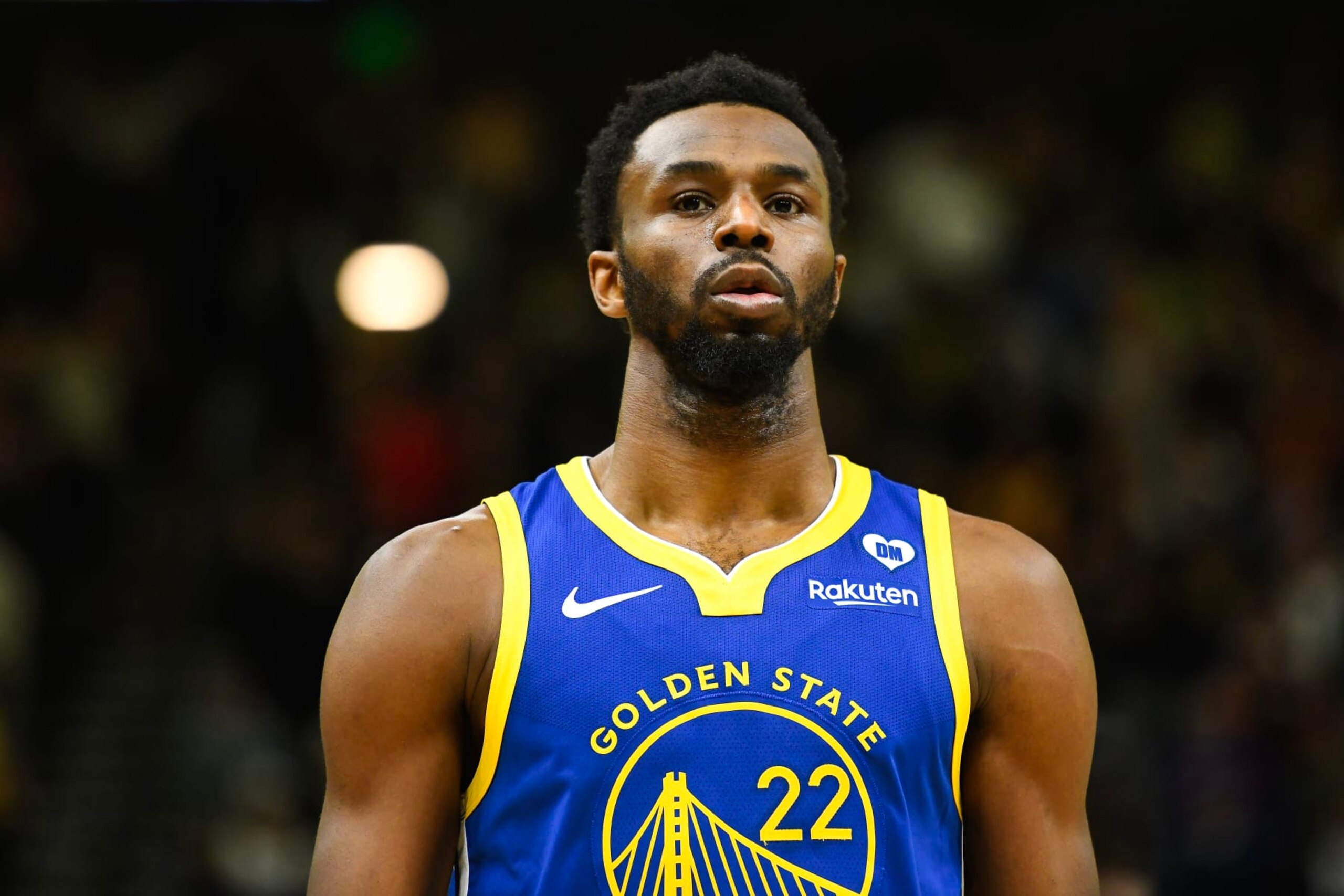
Remaining contract: Four years, $109 million
When the Warriors gave Andrew Wiggins this extension in October 2022, it didn't raise any eyebrows. If anything, it looked like a team-friendly pact.
After all, the 6'7" swingman had just played a pivotal role as Stephen Curry's sidekick in Golden State's run to the title. Wiggins appeared like he graduated from the Warriors academy and would serve as their bridge between contending today and contending tomorrow, too.
However, he missed the final two months of the 2022-23 regular season for personal reasons and hasn't quite been himself ever since. His stats have sagged significantly in this campaign to the point that February has probably been his best month and in it he's averaged just 13.4 points, 4.8 rebounds and 1.8 assists in 26.8 minutes.
Too often this season, Golden State either hasn't felt his impact or noticed his presence for the wrong reasons. Among its rotation regulars, he's bringing up the rear in net rating differential at an unsettling minus-9.4 points per 100 possessions. By estimated plus/minus, he's been a bottom-half-of-the-league player on both ends and just a 35th percentile contributor overall.
When Golden State tried shopping him ahead of the deadline, it heard crickets in response. Wiggins has time, of course, to find his footing, and maybe this contract goes back to being a positive value if he does. But until that happens, the production doesn't come close to matching the pay rate.
Statistics courtesy of Basketball Reference, Cleaning the Glass, Dunks & Threes and NBA.com and current through games played on Thursday. Salary information via Spotrac.
Zach Buckley covers the NBA for Bleacher Report. Follow him on X, @ZachBuckleyNBA.

.jpg?w=2560 "Mahomes Told Teammate to Leave Meeting")
.jpg?w=2560 "🚨 Week 8 AP Top 25 Poll")

.jpg?w=2560 "Baker Gets Glove From Rays 🧤")
.jpg?w=2560 "Steelers Roll Saints in Paris")
.jpg?w=2560 "NFL investigating Eagles")
.jpg?w=2560 "5 Teams Eyeing Jonathan Taylor")
.jpg?w=2560 "Updates from EVERY Game")