


Congratulations to the Los Angeles Lakers on winning the first-ever NBA Cup. Every player on the roster has earned a moment or five to reflect on their victory—and the extra $500,000 they just pocketed.
The rest of us are free (obligated?) to resume thinking about the bigger picture. And what better way to do that than by delivering a fresh, piping-hot batch of updated win-loss projections for every team?
Working through this exercise is not an exact science. Wins and losses must total 1,230 apiece. The criteria for tackling this project is entirely open-ended after that.
Everything within the realm of reasonable logic is up for consideration: what we've seen so far, player injuries and returns, prospective buying or selling on the trade market, internal development, critical or unaddressable flaws, emergent strengths, etc., etc., etc.
My crystal ball has whirred to life. Let us now begin.
Atlanta Hawks (41-41)
1 of 30
If you Google image search "mediocrity," the return results will comprise a torrent of Atlanta Hawks pictures from 2008 through present day. Don't bother checking for yourself. I would never lie to you.
Atlanta is actually on pace to finish below .500. Most won't see a good reason to bump them up. That's fair. But the Hawks do have some things going for them.
Piecing together a top-five offense amid Trae Young's wonky shooting splits is an absolute win. Dejounte Murray's defense feels more gimmicky than substantive this year, but his scoring has been more lethal, and Atlanta is winning the minute he logs without Trae. Jalen Johnson was among the Most Improved Player headliners before fracturing his left wrist.
Any meaningful change to the Hawks' trajectory begins and ends with their defense. That kind of about-face isn't coming as currently constructed. Atlanta does a good job forcing turnovers, and that's about it.
Rewriting the Hawks' overwhelmingly ordinary fate requires a trade-market overhaul. And the answer is not Pascal Siakam.
Boston Celtics (60-22)
2 of 30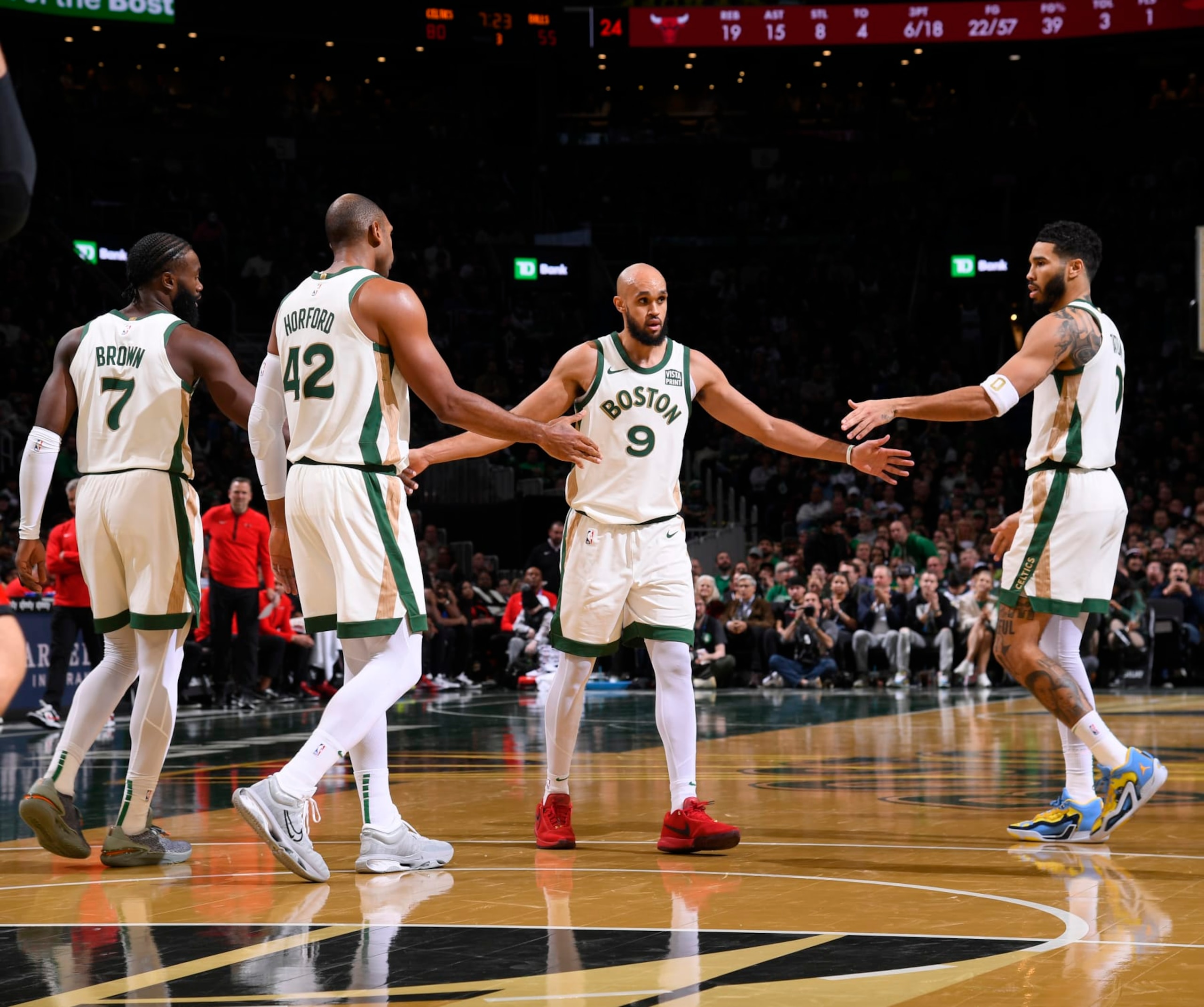
Sixty wins almost feels like a formality for the Boston Celtics.
Injury bugs can bite them. Kristaps Porziņģis has already missed time with a strained left calf, and Al Horford is 37. But key absences are the caveat for every team.
Boston is built to withstand them better than most. Its top-end talent is beyond compare in the Eastern Conference. Jayson Tatum is the only player they cannot afford to lose.
Offensive stickiness is a bigger concern, insofar as the Celtics have any big concerns. Their relative dearth of above-average playmaking bleeds through every so often, and there continues to be nights in which Jrue Holiday, Jaylen Brown and Tatum himself champion questionable decision-making.
Boston by and large has the spacey lineups and shot-makers to offset its most glaring functional wart. Adding a reserve guard or big who cracks the top eight or nine of the rotation would be nice. But, you know, we're talking about the eighth or ninth spot here.
That, frankly, says it all.
Brooklyn Nets (43-39)
3 of 30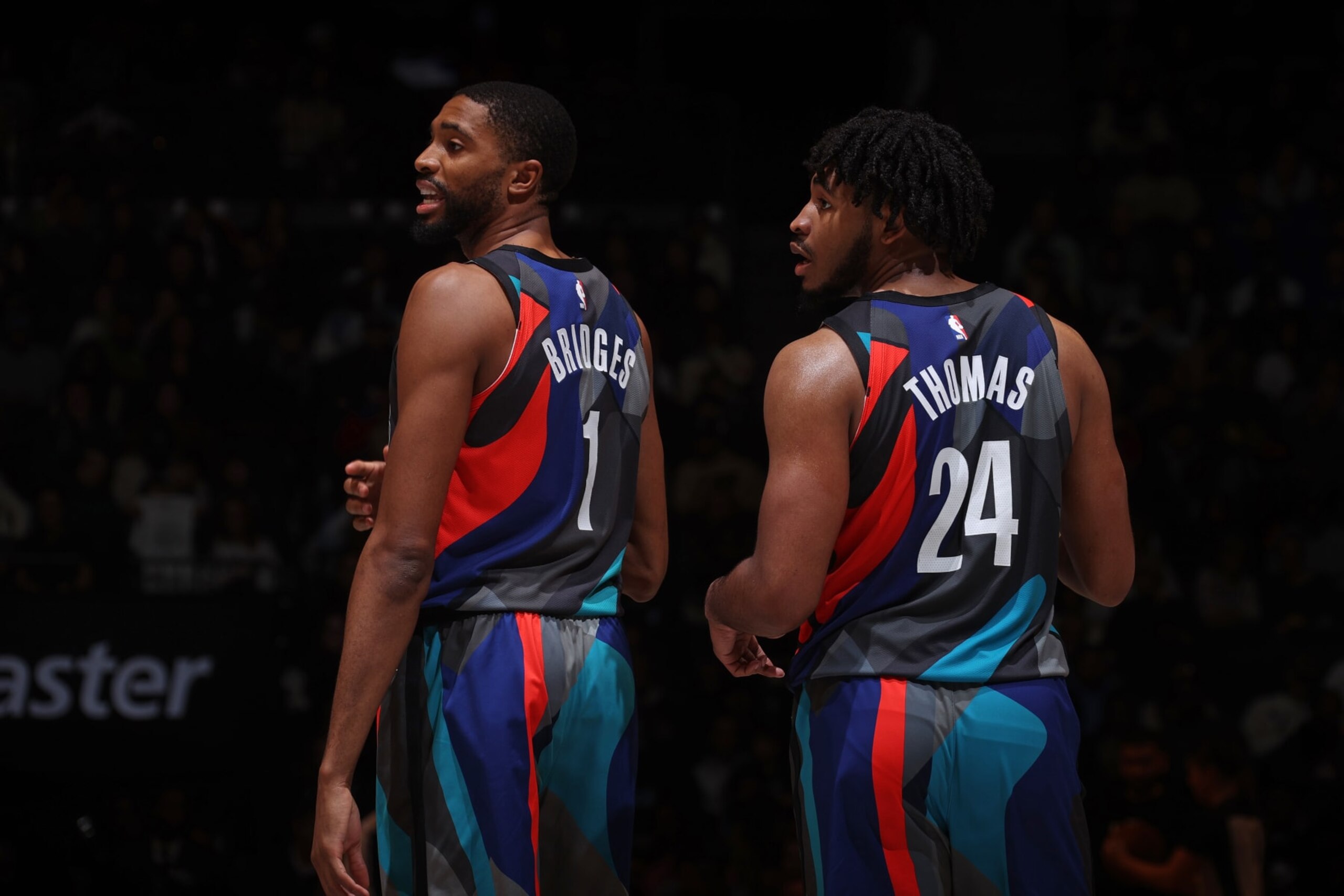
Raise your hand if you expected the Brooklyn Nets offense to be this good.
Whether it's sustainable is a separate matter. Cam Thomas could cool off from the in-between. Lonnie Walker IV may actually miss a three-point attempt once he returns from a strained left hamstring. And the team as whole might not flirt with a 40-percent clip on triples for the entire season.
At the same time, between Thomas, Walker, Mikal Bridges, Spencer Dinwiddie, Cameron Johnson and this version of Dorian Finney-Smith, the Nets have offensive talent to spare—not to mention the spacing necessary, in most lineups, to buoy their half-court efficiency.
Ticketing them for 45 or more wins is still tough. The defense has been underwhelming, albeit plucky on the glass. Ben Simmons' latest brush with nerve damage in his back makes it difficult to envision this group churning out more than league-average stopping power.
To their credit, the Nets have the assets to make a trade. But their competitive window exists in this weird space, floating somewhere between win-now and let's-see-what-we-have-here. They profile as a team more likely to stand pat than shake things up—a justifiable stance that should leave them contending for a bottom-four playoff seed.
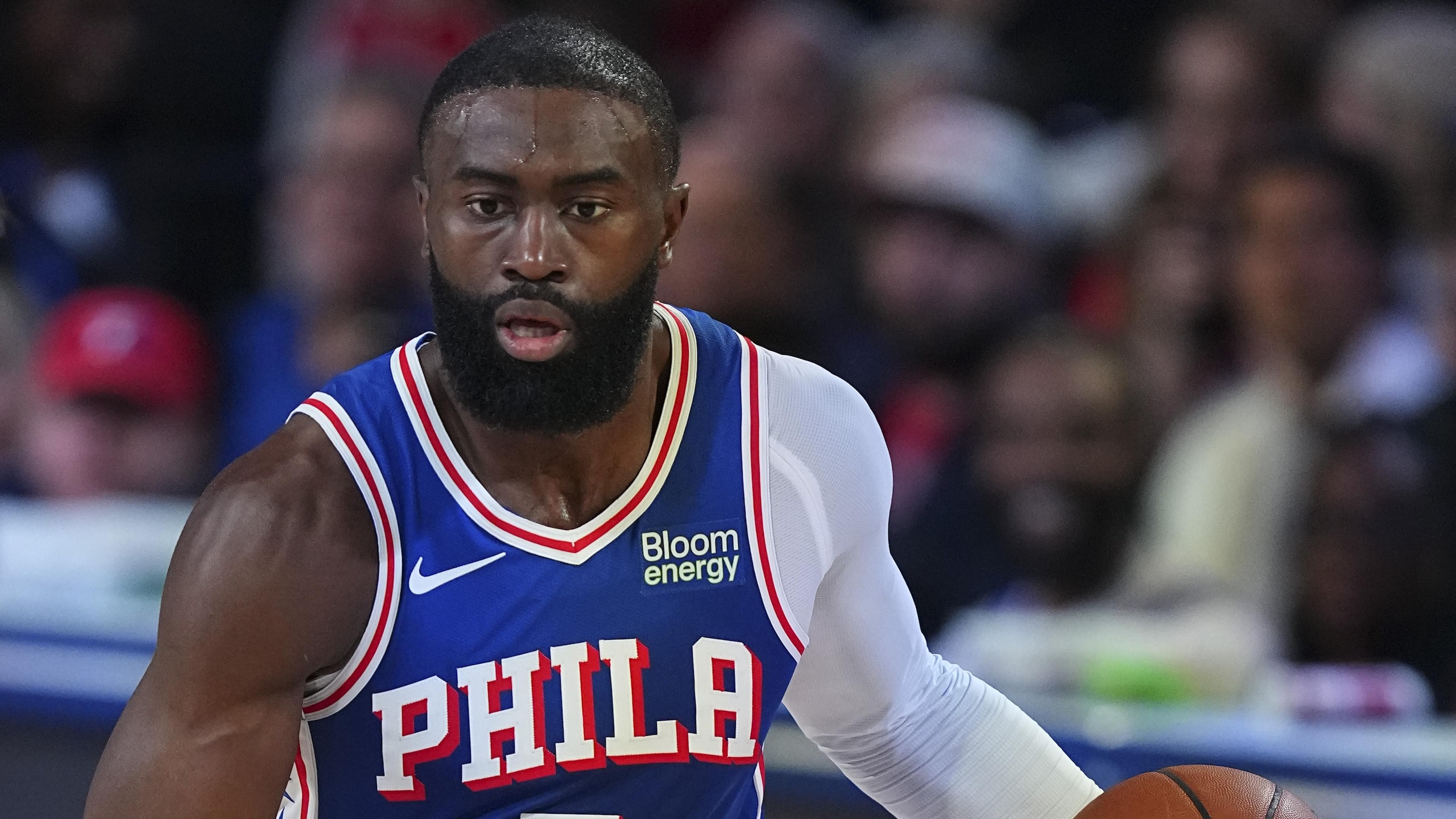
Charlotte Hornets (24-58)
4 of 30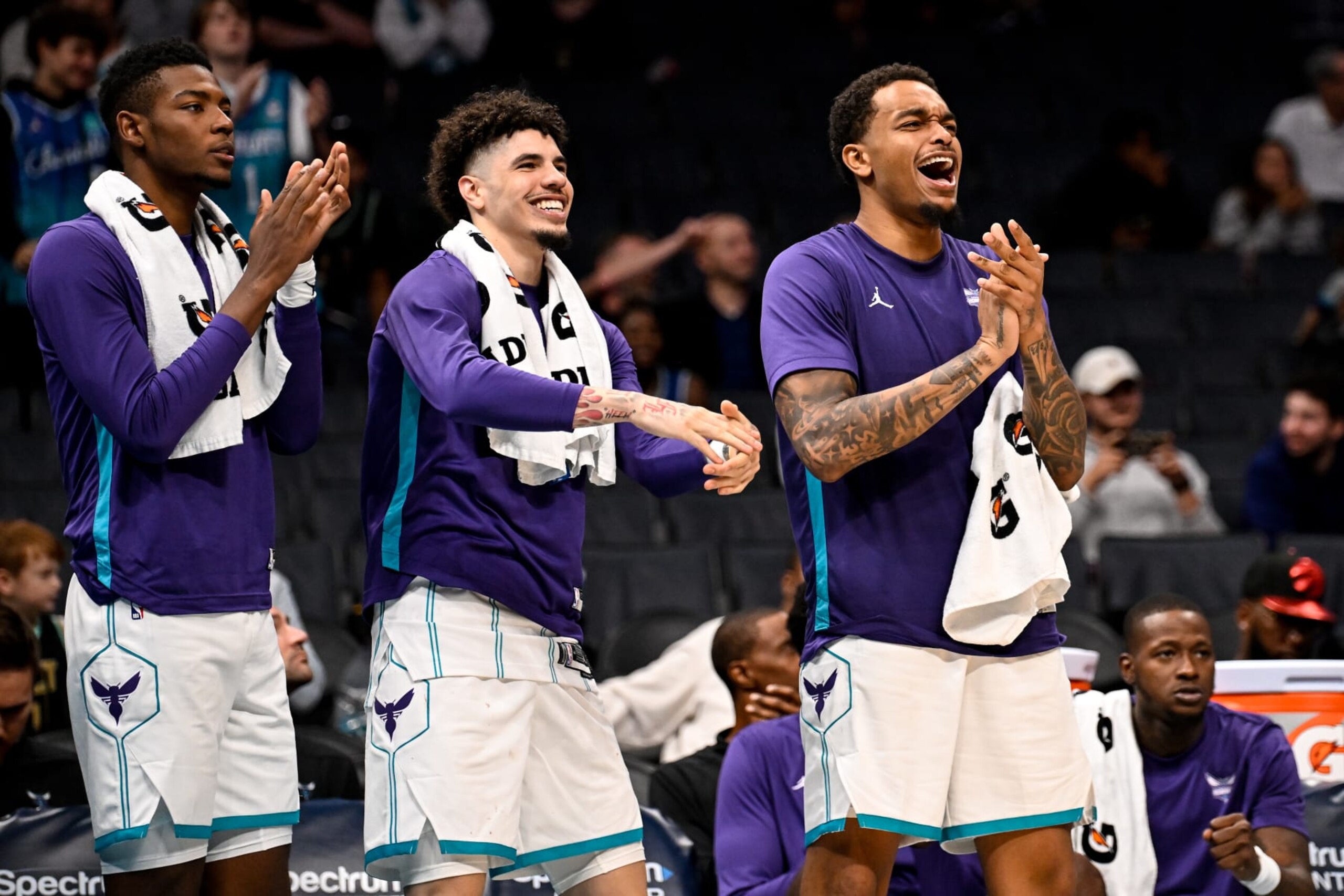
Some pretty large assumptions are being made here.
The Charlotte Hornets are tracking toward 25-plus victories at this writing. That's by no means impressive, but they've maintained this pace amid extended absences from Miles Bridges (served the balance of a 30-game suspension for pleading no contest to felony domestic violence), Terry Rozier and LaMelo Ball.
Surely the Hornets at full strength are closer to a 30-something-win team than a sub-25-victory squad.
Counterpoint: Are they really?
Charlotte's defense is thus far disastrous. And unsustainably hot opponent three-point shooting is merely part of the story. Mark Williams too often looks overtaxed, and rookie Brandon Miller is shouldering a five-year veteran's burden (and doing quite well).
More than that, LaMelo remains out with a sprained ankle—the same right ankle he had surgically repaired last March. The Hornets are going nowhere without him. And by the time he returns, they could be far enough behind the play-in race that Gordon Hayward and Terry Rozier trade rumors transition into actual exits.
Chicago Bulls (28-54)
5 of 30
Chicago Bulls fans should take solace in a sub-30-win projection. It suggests that executive vice president Artūras Karnišovas will finally burn down what should have been set aflame years ago.
On the other hand, perhaps I'm giving The Windy City's front office too much credit. We have years of evidence proving Chicago will do everything in its power to remain aggressively sub-mediocre.
Zach LaVine may have played his last game in a Bulls uniform. The team has been "focused" on moving him for some time, and he's now slated to miss at least another three to four weeks after receiving a PRP injection in his right foot. This would be an impetus for most organizations to accelerate their teardown. But Chicago has admittedly looked pluckier in its first four games without him, a mini stretch that features wins over Milwaukee (sans DeMar DeRozan as well) and New Orleans.
Could LaVine's absence wind up galvanizing the Bulls in a way that convinces them to move him for additional depth while holding onto DeRozan, Jevon Carter, Alex Caruso, Torrey Craig, Patrick Williams, et al.? It shouldn't. But these are the Bulls. So it might.
Cleveland Cavaliers (49-33)
6 of 30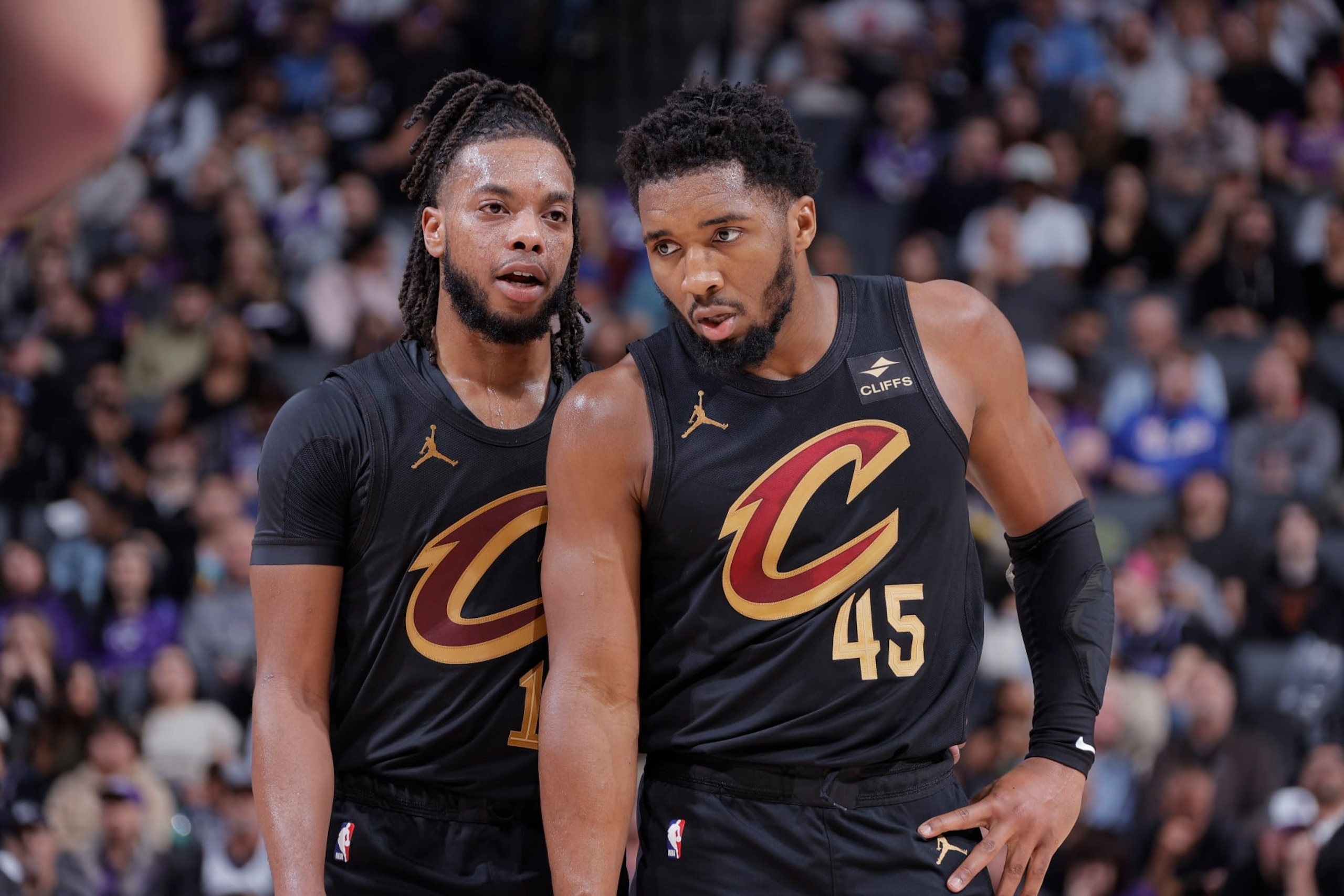
Various injuries have left the Cleveland Cavaliers slogging through a choppy start to the season. Their best five-man unit—Darius Garland, Donovan Mitchell, Max Strus, Evan Mobley, Jarrett Allen—hasn't logged a ton of time together, and the offense looks uneven when they do share the floor.
Polite concern is fine. The starting five's offensive profile is awkward. Much too low three-point volume is exacerbated by poor shooting above the break. Garland has yet to really find his outside stroke. The big-to-big actions involving Mobley and Allen are intriguing but inconsistent, and the half-court still gets a little squishy when they're playing together.
Cleveland will be fine. Mitchell has largely been spectacular. Garland will make (and hopefully take) more threes and get his turnovers under control.
Strus is already a home-run acquisition, not just for his shooting and movement beyond the arc, but also for his dribbling and playmaking inside it. Georges Niang makes the players around him want to run. Caris LeVert's left knee injury and Isaac Okoro's arctic-cold shooting since returning from his own knee issue are interesting subplots but galaxies from death knells.
This group needs time to get or at least sniff whole. Whether they're a true-blue contender is debatable. But they should resume and sustain 50-win play soon enough.
Dallas Mavericks (45-37)
7 of 30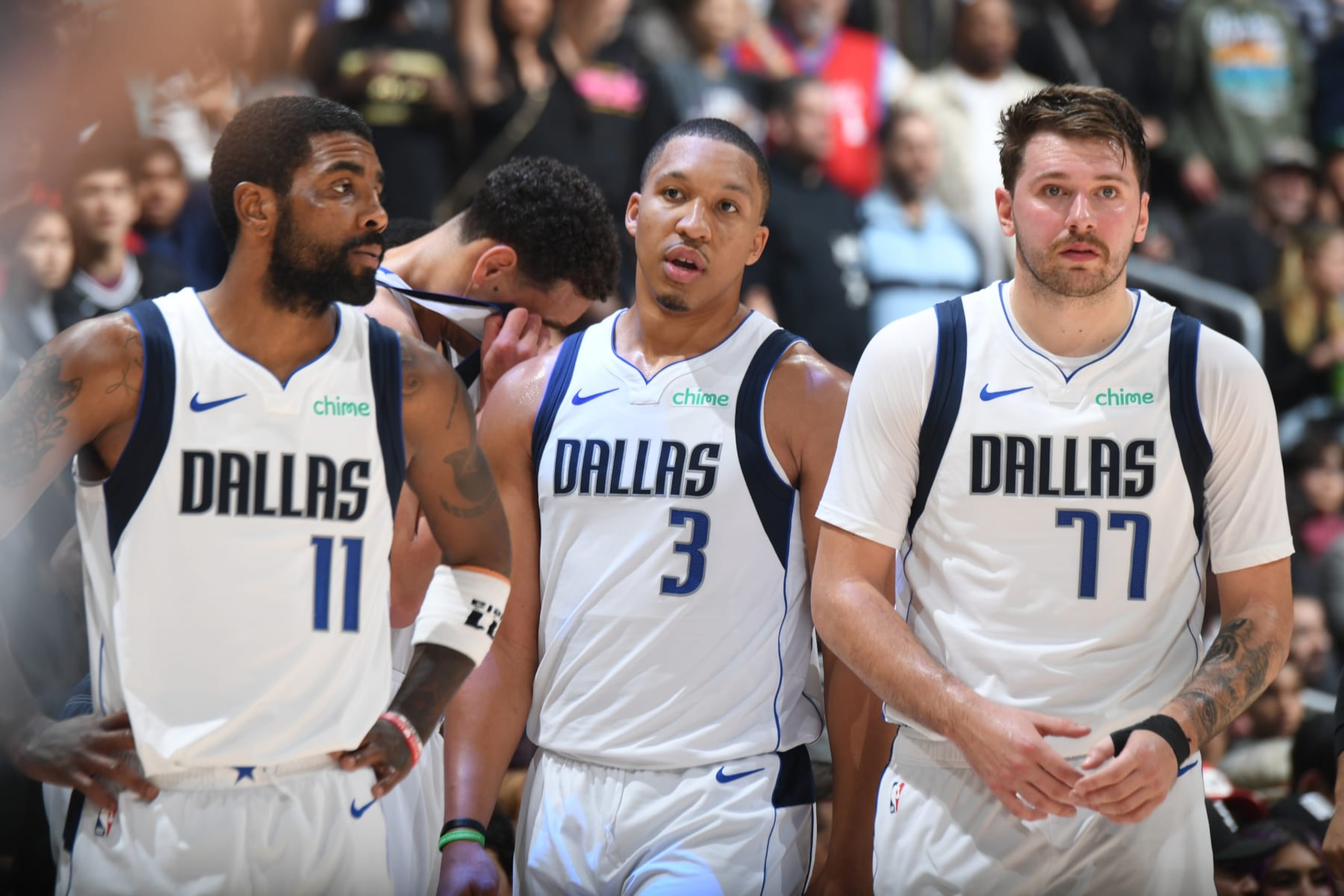
Scorching-hot play out of the gate currently has the Dallas Mavericks on a 50ish-win track. I can't get all the way up there.
Ground will eventually be ceded to at least a handful of more complete teams presently behind them: The Los Angeles Lakers, Phoenix Suns, Sacramento Kings, perhaps the L.A. Clippers and New Orleans Pelicans. Dallas itself has already started descending back down to earth.
Key absences complicate matters. Maxi Kleber remains critical to unlocking what should be some of the Mavs' best lineups but has barely played this season. Kyrie Irving has missed time. Grant Williams is dealing with right knee stuff. Josh Green has underachieved and will now miss extended time with a sprained right elbow.
Accounting for these injuries gives Dallas some leeway. That's not enough to overlook the defensive concerns. The problems are exactly what you'd expect. Their rim protection is dicey even with Dereck Lively II playing well. Opponents can get behind them too easily in transition. Derrick Jones Jr. is a pleasant surprise but has not solved the point-of-attack issues.
For all of Luka Dončić's individual brilliance, the starting five is also a net negative. Rolling out DJJ provides an air of defensive stability, and he has hit his threes. But it visibly changes how Dallas gets guarded in the half-court. The rotation overall seems like it needs more than better health—an archetype of player not yet on the team.
Denver Nuggets (54-28)
8 of 30
Manufacturing concern for the Denver Nuggets is hard.
No, they're not perfect. Jamal Murray has yet to get going and already dealt with right ankle and hamstring injuries. The bench play remains, as ever, spotty. Aaron Gordon's three-point shooting is a problem.
And yet, the Nuggets are chugging along, on the back of MVP-favorite stuff from Nikola Jokić, tracking toward 50-plus wins despite an extended absence from Murray in the rear view.
Most of Denver's top-end units continue to get the job done. I destroyed the Reggie Jackson contract over the summer—a player option felt excessive—but he's ensured the rotation remains seven deep. Christian Braun is perking up.
Kentavious Caldwell-Pope has a shot at All-Defense. Michael Porter Jr.'s offense seems to wax and wane more than his defense and rebounding—which, to be clear, is a good problem to have. The team itself has a defensive switch. The Nuggets are fourth in points allowed per possession against top-10 offenses.
Ascents from the Minnesota Timberwolves and Oklahoma City Thunder have overshadowed Denver's outlook. Ditto for a smorgasbord of teams that haven't been as good but look dramatically different compared to last year. But attention is not a barometer for viability. The Nuggets remain the toast of the West.
Detroit Pistons (14-68)
9 of 30
Congratulations might be in order for the Detroit Pistons. They are on pace for the worst record in NBA history. I'm saying they won't actualize that bottom-of-the-barrel fate. Is there a higher compliment?
In all seriousness, the Pistons are a unique combination of disastrous and capable of being better. Extended absences from Monte Morris (still out) and Bojan Bogdanović have messed with their floor balance. People laugh at their refusal to deal the latter, but he will invariably open up space for Cade Cunningham.
Speaking of whom, Cunningham's performance has started to normalize. Threes are beginning to fall again, and the turnovers, while an issue, have come down. Jalen Duren was a delight to watch prior to his right ankle injury. Ausar Thompson is one of the most entertaining defenders in the league.
Detroit can and should win at a higher clip. But the product isn't nearly coherent enough to bank on it matching, let alone outstripping, last year's 17 victories. The Jaden Ivey situation is officially weird, if not detrimental. And the Pistons have not done nearly enough to optimize the 4-5 rotation.
Tack on the prospect of this team surrendering to its place at the bottom and eventually moving Bogdanović while steering further into lottery odds, and landing at sub-15-wins feels anything but egregious.
Golden State Warriors (42-40)
10 of 30
Stephen Curry is clearly still transformative enough to spearhead a fearsome contender. It's too bad, really, the Golden State Warriors haven't built one around him.
The dynasty is not approaching conclusion. It's already over. The Warriors are old and small and unathletic. Their path out of the middle, as currently constructed, is hopelessly, hilariously dependent on near-impossibilities.
Klay Thompson will look less disjointed on offense, but streakiness is now ingrained into his play. And at 33, with two major injuries under his belt, the defense isn't getting any better. Counting on Andrew Wiggins to recapture 2022 postseason form is nearing fool's errand status. We have almost a decade of evidence proving he's not that guy.
Depth has been a bright spot. Moses Moody is the team's most valuable perimeter defender (non-Gary Payton II division), and Brandin Podziemski plays with a gap-filling grittiness. But the Warriors are fading near the top and don't have the answers in-house. Thompson cannot age in reverse, and Jonathan Kuminga remains both inconsistent and outside head coach Steve Kerr's circle of trust.
Slotting the Warriors for an above-.500 finish may actually be too ambitious. They need a big-time trade for this season to be anything more than a prolonged and painful goodbye to an era that's depleted its lightning-in-a-bottle stores.
Houston Rockets (39-43)
11 of 30
Knocking the Houston Rockets down from their .500ish pace stings, mostly because they've been so much fun. The Alperen Şengün arrival is for real, and the additions of Fred VanVleet and Dillon Brooks have fueled what is, right now, a top-five defense that doesn't feel entirely fluky beyond opponent three-point shooting. And Houston has held serve against some pretty gnarly (read: winning) opponents. (Road win in Denver on Friday night, anyone???)
Leveling up from here will be tough. The Golden State Warriors are the lone team behind the Rockets that they really need to fear, but sliding down even one spot takes them out of the play-in race.
Internal development will—and to some extent already has—clashed with immediate hopes. Jalen Green has been topsy-turvy. Jabari Smith Jr. continues to search for the right balance of dependability and volume on the offensive end. Rookie Amen Thompson will presumably factor prominently into the rotation upon returning from a right ankle injury.
Leaning on so many youngsters lends itself to growing pains. That includes Şengün. We don't yet know, for sure, whether he can sustain his production across an entire season in the biggest role he's ever shouldered.
Houston has the assets to get frisky at the trade deadline. Its first-round obligation to Oklahoma City (top-four protection) may even prompt action. But the Rockets are unlikely to broker a fortunes-altering deal. And that's OK. Nudging up their win total by 17 year-over-year is a feat unto itself.
Indiana Pacers (47-35)
12 of 30
Tyrese Haliburton is captaining an Indiana Pacers squad that, if all continues to break right, will brush elbows with 50 wins.
This offense is thermonuclear: fast, devastating, versatile, fast, stretchy, electric, teeming with off- and on-ball movement, fast and efficient. Indiana has the league's top half-court attack, a 23-spot jump from last year.
Did I also mention the offense was fast? The Pacers' average possession time is 13.5 seconds, according to Inpredictable. That is the quickest pace we've seen since the 2020-21 NBA champion Milwaukee Bucks.
Can Indiana play at warp speed for an entire season without wearing down? I'll tilt toward yes. This isn't its first hyper-drive rodeo. Hali and the team laid the blueprint for this mode of operation last year. Most on the roster will be in the shape necessary to keep on keeping on.
Seriously flirting with, maybe hitting, 50 wins will take appreciable defensive improvement. The Pacers are small and targetable and invite parades at the rim. Myles Turner is attempting to cover up for too much, and with the exception of Aaron Nesmith, Indy's best stoppers—Andrew Nembhard, Bruce Brown, T.J. McConnell—don't have the size to rumble with the bigger perimeter playmakers.
Keep an eye on Indy leading into the trade deadline. The Pacers control all of their own firsts and house two blueish-chip prospects in Bennedict Mathurin and Jarace Walker. They can upgrade the wing and combo-forward spots if they so choose.
L.A. Clippers (45-37)
13 of 30
Forecasting the L.A. Clippers' win total was a headache ahead of the regular season. It isn't any less difficult now.
Acquiring James Harden makes them better at the top. And head coach Tyronn Lue is starting to find and field combinations that work. The quintet of Harden, Terance Mann, Paul George, Kawhi Leonard and Ivica Zubac is gobsmacking opponents. Russell Westbrook is embracing his role off the bench, and L.A. has tested out a handful of arrangements with him, many of which skew small, that inject real pace.
Things are slowly, surely coming together. The Clippers are 7-3 since losing their initial five games post-Harden trade.
This experiment is nevertheless unsettling. Too many caveats endure. George and Leonard have appeared in every game. If history repeats itself, L.A.'s collective availability is operating on borrowed time. Hovering around .500 feels like a missed opportunity, if not outright failure, relative to how much they've played.
Awkward and obstructive limitations are also peppered up and down the roster. The Clippers have yet to unearth a sensible lineup that includes both Harden and Westbrook. Ivica Zubac and Daniel Theis (and an eventually healthy Mason Plumlee) get the job done now. The playoffs will be different. L.A. might need another trade to fill the minutes previously sponged up by P.J. Tucker, who really shouldn't be sharing the floor with any of the team's true bigs and has tallied five straight DNPs.
As was the case before, the Clippers remain tantalizing and combustible. The Harden trade has merely made them more of both.
Los Angeles Lakers (50-32)
14 of 30
You can talk me into 50-plus wins for the Los Angeles Lakers without much effort, because LeBron James exists. Just weeks away from turning 39, he's averaging 25.0 points and 6.6 assists while shooting what would be a career high on twos (62.5 percent) and threes (40.7 percent). That is silly and mind-melting and real greatest-of-all-time sh*t.
Los Angeles' reliance on him defies logic, in ways both good and bad. On the one hand, look at what he's doing in his age-39-season! Everything's hunky-dory. On the other, they're getting spanked when he sits, and the offense in general remains desperate for outside volume and efficiency.
Better availability is already aiding the cause. Anthony Davis is working off an iconic In-Season Tournament Final performance and building a Defensive Player of the Year case game by game. Austin Reaves' transition to the bench is proving to be a stroke of genius. D'Angelo Russell is spitting out performances that can be described as "two-way positive."
Taurean Prince may have regained his three-point stroke during L.A.'s In-Season Tournament semifinals victory over New Orleans. Max Christie and Cam Reddish are providing quality reserve minutes. Gabe Vincent's eventual return from a right knee injury could help jazz up the offense and the non-LeBron minutes.
Nothing the Lakers have done so far, though, reverses their house-of-cards feel. The roster flat-out doesn't have enough shooting even with LeBron and DLo going supernova. More critically, both LeBron and AD have cleared 60 appearances just once since 2018-19. Their continued durability is not assured. Paired with the team's overarching offensive concerns, that's cause for restraint—just not too much of it.
Memphis Grizzlies (33-49)
15 of 30
Thirty-three wins looks and feels and is incredibly low. It's also demonstrably better than the 25 victories for which the Memphis Grizzlies are on track.
Ja Morant is just a few beats away from rejoining the rotation after serving a 25-game suspension for conduct detrimental to the league. He will significantly glitz up an offense that needs Jaylen Nowell to get by at the moment.
Here's the thing: It's probably too late for Morant or anybody else to save the Grizzlies' season. They're too far gone. They trail by five losses for the final play-in spot. That's a rough gap to bridge past the season's quarter-pole.
Playing so much of the year without Morant is clearly problematic. But Memphis has suffered a bevy of other bad breaks. Neither Steven Adams nor Brandon Clarke is expected to play this season. Marcus Smart has looked bad on offense and may not return from a left foot injury before the calendar turns to 2024. Luke Kennard has appeared in just eight games while battling a left knee issue.
Memphis retains the assets necessary to bolster the rotation. To what end, though? The ninth-best record in the West? That's akin to throwing good money after the bad. This year is a wash—unsalvageable independent of in-house miracles and external collapses. The Grizzlies don't need to blow it up, but they will need to take their medicine and regroup over the summer.
Miami Heat (47-35)
16 of 30
Doubting the Miami Heat's capacity to just figure it out and make it work should be illegal, if only to stop us all, myself included, from doing it.
Oh, they lost Max Strus and Gabe Vincent for nothing over the offseason? Whatever. Rookie Jaime Jacquez Jr. will leave a huge two-way dent from Day 1 even before he starts hitting threes (which he's now doing). And the Duncan Robinson-can-dribble experiment will become a new normal.
Jimmy Butler looked off, maybe old, to start the season? Cool story, bro. Ever heard of a ramp-up? Or his taking and making more threes just because?
Kyle Lowry is old, the playmaking deficit is real and Tyler Herro hasn't played in over a month with a sprained right ankle? Imagine caring. Lowry is downing threes, and Bam Adebayo has made yet another offensive jump that positions him for a first-ever All-NBA cameo.
Miami's defense has underwhelmed relative to its reputation. Opponent three-point shooting will cool off, but the Heat placing dead last in conversion rate allowed at the rim speaks to the fragility and teensy-tininess of their frontcourt.
Do they need a trade? Does a healthier Caleb Martin up top make it easier for Miami's wings and bigs down low?
Does it matter, when we know Miami will figure it out anyway, winning enough games to cement a playoff bid and upend the Eastern Conference postseason landscape?
Milwaukee Bucks (56-26)
17 of 30
So much about the Milwaukee Bucks experience this season is uncomfortable. The lack of reliance on Damian Lillard-Giannis Antetokounmpo pick-and-rolls is jarring, regardless of who you want to be the screener. The defense is shaky—flimsy at the point of attack and hapless in transition.
Khris Middleton is only just rounding into form but doesn't always look prepared to guard. The Jae Crowder (groin) and Pat Connaughton (ankle) injuries looms large. Bobby Portis Jr. has seen his playing time slashed. Head coach Adrian Griffin has received criticism to no end, and there have been moments of palpable confusion late in games.
Yet, all the while, the Bucks are on course to skate past the 55-win benchmark. The offense may lack two-man-game luster for stretches, but it ranks inside the top five of points scored per possession—both overall and in crunch time. The rim protection is better now that Brook Lopez plays more drop...unless he's facing Indiana. Malik Beasley has not fared this well on both ends of the floor in quite some time.
Losing sleep over Milwaukee's flaws is extreme. Their defensive issues are most damning. They are 17th in the half-court, and nobody is allowing opponents to get on the break more frequently off live rebounds. But it also matters that the Bucks are eons above .500 while seldom appearing at their peak. I personally feel better about this team's longer-term shape than I did in the middle of November.
Minnesota Timberwolves (58-24)
18 of 30
If forced to choose a team to come out of the Western Conference right now, I'm sticking with the Denver Nuggets. After that, the field is supposed to be more open-ended.
The Minnesota Timberwolves are ensuring it's not.
This team is the real deal. Rudy Gobert should be the Defensive Player of the Year favorite. He is covering exponentially more ground than last season, and you can tell he enjoys hustling alongside players with perimeter juice. Anthony Edwards, Jaden McDaniels, Nickeil Alexander-Walker and, maybe, Troy Brown Jr. all would have qualified as Gobert's best defensive running mate during his final season in Utah.
Pretty much everyone is busting their butt on the less glamorous end—including Karl-Anthony Towns, who remains slow-footed in space but is less likely to get caught off balance or out of position away from the ball. It helps that he gets to play beside Gobert and Naz Reid, who's made yet another jump at both ends.
Some offensive awkwardness endures. The Wolves are shooting well from three but not firing away nearly often enough. It's a flaw that could magnify itself in the postseason, particularly when the dual-big setup has repressed volume at the rim and contributed to turnovers in tight spaces.
Minnesota will take that trade-off given its defensive success. Matchups could prove problematic in the playoffs, but as it stands, the quality of their top-eight or -nine rotation is superseded by no one.
New Orleans Pelicans (45-37)
19 of 30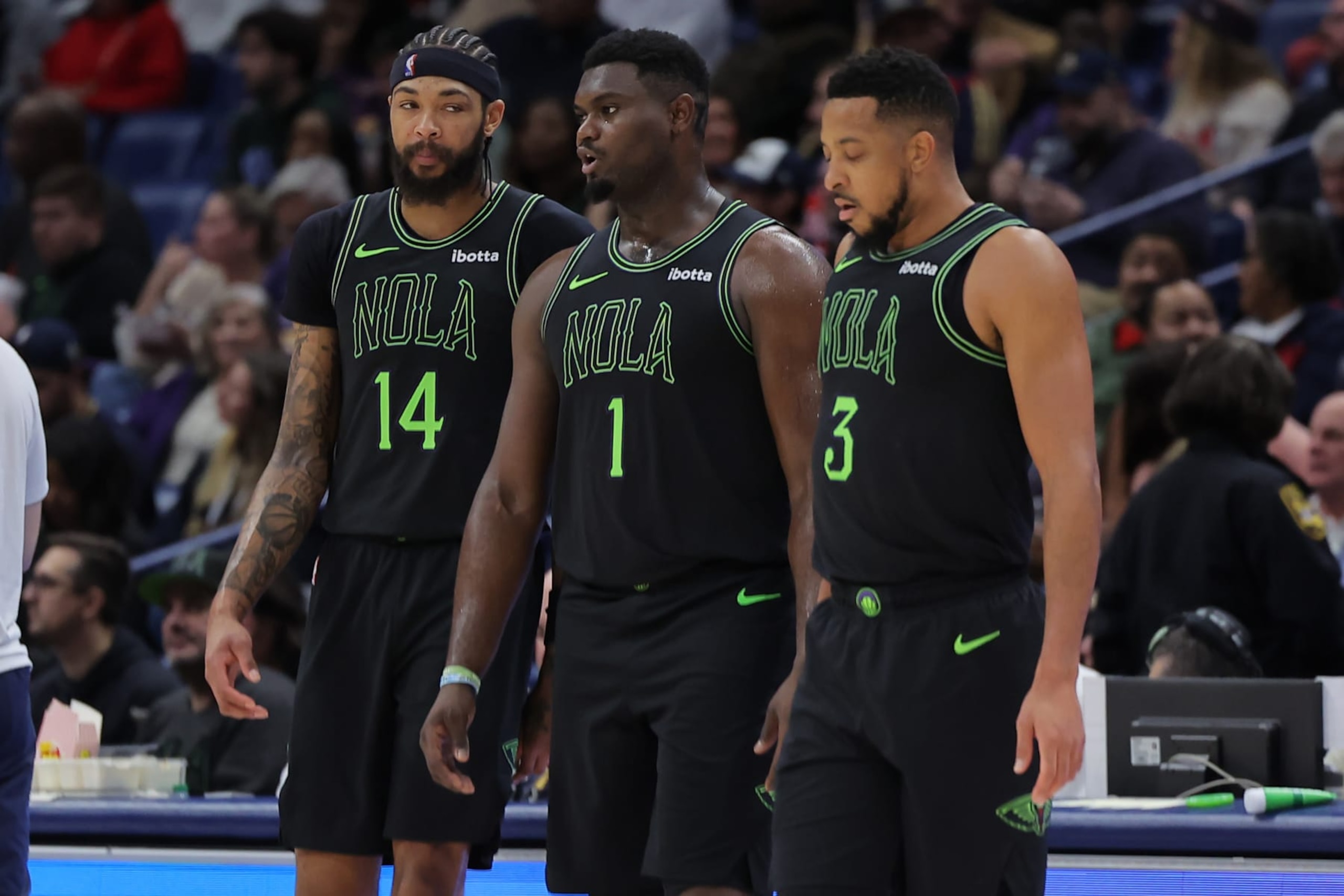
You'll be hard-pressed to find someone higher on this exact version of the New Orleans Pelicans than myself. Faults and foibles and all, they have the bandwidth to play so many different ways, across a vast variety of lineups.
Trey Murphy III's return, in particular, does wonders to open up the floor and get them to Zion-as-the-only-big combinations that blast opponents to smithereens without capsizing New Orleans' own defense. Herb Jones' development on-ball—he's shooting over 50 percent on drives and delivering connective passes—helps do the same in clumpier lineups and Zion-less units.
But even I must admit that 45 wins falls on the ambitious end of the spectrum. The Pelicans' transition defense is not on point, and Zion's engagement on the glass and the less glamorous end is plumbing new lows.
New Orleans must also commit itself to opening the floor even more. Does that entail leaning on more smaller lineups? Having Zion ratchet up the super-high ball screens for Brandon Ingram and CJ McCollum? Is Matt Ryan's return the answer? Does this need to be done through trade?
And what, pray tell, is that trade? Do they look to for a screener and rim protector at the 5, even though Jonas Valančiūnas is not the problem? Can said screener and rim protector also stretch the floor? Or do the Pelicans focus on adding a caps-lock SHOOTER on the wing? If so, who's on the move? And whose minutes must be cut to make room?
Dilemmas abound, both big and small. I remain bullish on New Orleans' lineup versatility and the offensive flickers Zion delivers independent of freakish athletic plays. This team is and will remain a problem if it stays relatively healthy.
New York Knicks (47-36)
20 of 30
Giving the New York Knicks the same number of Ws as they recorded last year when they're on track to bag around 50 at this writing won't sit well with certain fans. It's not meant to be an insult.
It's more than anything a nod to the shifting landscape in the Eastern Conference. The Boston Celtics, Milwaukee Bucks and Philadelphia 76ers aren't going anywhere. At least one of the Cleveland Cavaliers and Miami Heat will climb the ranks. And neither the Indiana Pacers nor—*checks notes*—second-place Orlando Magic seem like they have staying power.
Most statistical indicators nonetheless portray the Knicks as a borderline elite team...minus their record against above-.500 squads. They are sitting around the top 10 of both offensive and defensive efficiency. There's little reason to doubt either standing.
New York is shooting well from three, and its volume is fine. There's a delicate balance to what they do that goes beyond their subsistence on Mitchell Robinson-generated second-chance offense, but Jalen Brunson's ascent into one of the most dangerous outside marksmen alive is believable.
The consistency of R.J. Barrett (struggling since returning from migraine pain) and Julius Randle (playing well lately!) is in question. Their peaks and valleys can fluctuate by the quarter. Head coach Tom Thibodeau also benched Quentin Grimes Friday night in the wake of his struggles. His defensive bandwidth is too valuable to de-emphasize, yet he's also uber-important to opening the floor. What happens to New York's defense with Donte DiVincenzo elevated to the starting five?
Few teams are deeper than these Knicks. That depth is a weapon and part of their charm. Their path to that next tier of contender isn't quite clear—not in a damning way, not in a they-have-to-make a trade way, just in a weird, they-feel-one-archetype-of-player-or-leap-short way.
Oklahoma City Thunder (51-31)
21 of 30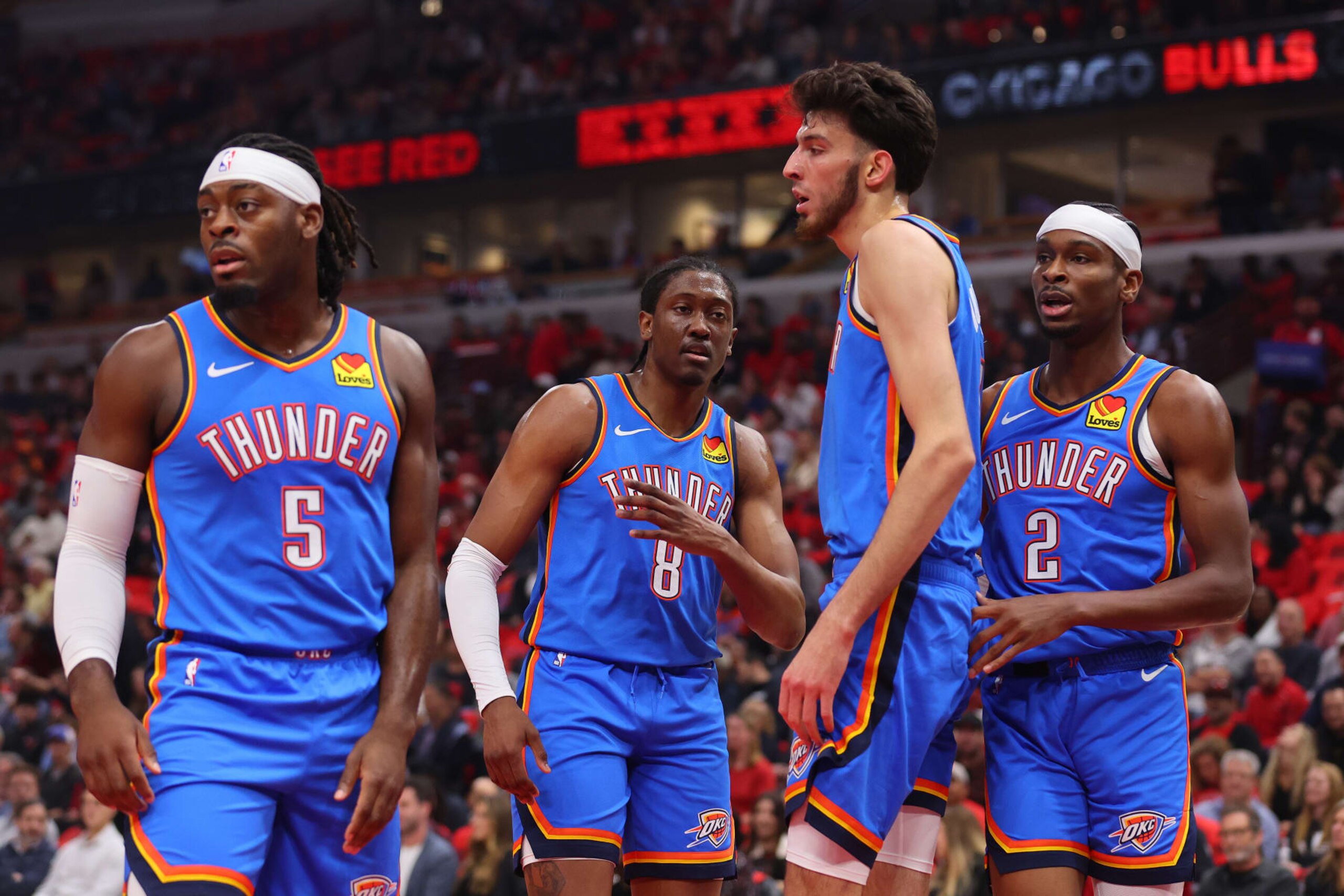
Restraint is no longer required when talking about the Oklahoma City Thunder, no matter what executive vice president Sam Presti might say. This is not to say they're above concern.
Josh Giddey's play is currently a drain they need to plan around. They are small and can be jockeyed around on the glass. Their league-best three-point clip might come down, and they could stand to jack more triples despite the success of endless downhill attacks. Chet Holmgren could hit a rookie wall. Oklahoma City has been rickety against opponents north of .500.
Attempts to rain on the Thunder's coming-out parade are futile, though. You don't spit out a top-five net rating through one-quarter of the season by mistake.
Shai Gilgeous-Alexander remains a top-five MVP candidate—and he's not four or five. Jalen Williams is closer to an every-level scorer than not. Holmgren's fit has been as seamless as it is powerful. Isaiah Joe is making things happen beyond the arc, and inside the arc, and on defense. Cason Wallace is going to crack an All-Rookie team. Aaron Wiggins is adrenaline in miniature. Kenrich Williams remains unbreakable connective tissue.
There's no turning back now. Oklahoma City knows it. Experimentation isn't dead, but players who move the immediate needle are getting prioritized over those who don't (I still believe in you, Ousmane Dieng).
The Thunder haven't just arrived. They have unpacked, had the locks changed and fully settled into their new digs near the top of the West.
Orlando Magic (48-34)
22 of 30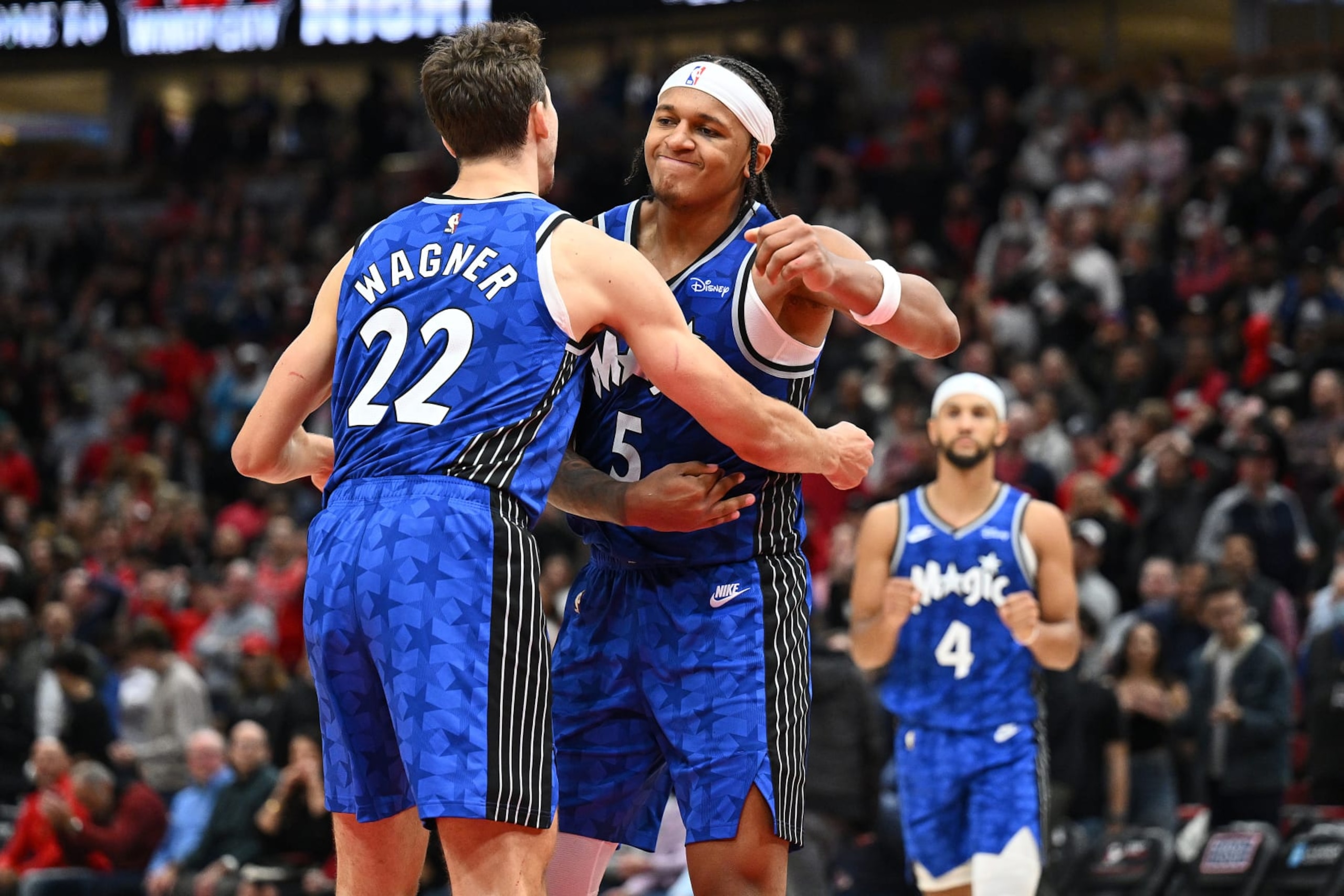
Uhhh, yeah, I didn't see this coming at the beginning of the year. The Orlando Magic profiled as the quintessential plucky upstart that would win some games but needed another season or so to marinate.
They instead look ready, or close to it, right now.
Following a Friday night destruction of the deserving-to-be-relegated Detroit Pistons, the Magic have won 10 of their past 12 games—a stretch in which the offense has ranked in the top 10 and the defense has (mostly) remained hellfire. This is all happening, meanwhile, without Markelle Fultz. Or Wendell Carter Jr. And only a little bit of Jonathan Isaac.
Such is Orlando's depth. Goga Bitadze and Mo Wagner are filling in admirably up front. Paolo Banchero is nuking defenses after a slow start. Franz Wagner doesn't need to splash threes at brain-boggling clips to impact the offense. Anthony Black is going to make no fewer than five All-Defense teams for his career. Cole Anthony's shot-making and passing and rebounding remain underappreciated.
And then there's Jalen Suggs (who did not play Friday). He has been one of the 10 best defenders this year, bar none, all while cozying up to a plug-and-play offensive role.
Spacing still figures to be this team's "downfall." Defenses don't care about sagging off pretty much anyone in the name of packing the paint. Buying the Magic as an above-average offense overall without a trade is tough. But any deal needn't be for a star. Orlando's rise is so meteoric, so real, a player like Anfernee Simons or Gary Trent Jr. could make a world of difference.
Philadelphia 76ers (53-29)
23 of 30
Still waiting for the Philadelphia 76ers to taper off in the aftermath of James Harden not-at-all-quietly quitting?
Keep waiting.
And waiting.
But also maybe stop.
Because it's not happening.
Tyrese Maxey has inoculated the Sixers against a star-power decline by channeling his own (All-NBA-caliber) star power. He might be Joel Embiid's sidekick, but his impact rivals that of an equal. (Aside: Embiid's passing this year is divine.) Maxey is averaging around 27 points and seven assists while downing over 39 percent of his triples on absurd volume and, most critically, quarterbacking net-positive units without Embiid.
Philly is not a finished product by any stretch. But it now has the assets to go meaningful-trade shopping. And Maxey's ascent allows the Sixers to broaden the scope of their search. Another star or No. 2 option is no longer the mandate. They can prioritize a No. 3 or esteemed depth, or they can wait until the offseason to go bigger-name hunting. That matters.
So, too, do Philly's warts. The defense is slumping in transition, an issue perhaps linked to head coach Nick Nurse having them crash the offensive glass. Tobias Harris has cooled off after a surface-of-the-sun start. And the Sixers could use another ball-handler and/or wing to beef up the rotation if they want to compete at the highest level. But that impedes their 2024 title pursuit. It won't preclude them from maintaining their 50-plus-win pace.
Phoenix Suns (50-32)
24 of 30
Zero.
That is how many minutes Bradley Beal, Devin Booker and Kevin Durant have played together this season. And their sampling will remain at zero until Beal returns from a back injury that has limited him to three appearances so far.
Earmarking the Phoenix Suns for 50 wins is optimistic given the extended absences incurred by two of their stars. And Beal's return won't help the team's ball containment up top, which has led to issues at the rim.
Question marks appear in droves when looking at the rest of their rotation and its collection of minimum contracts, one-way cast mates and names who run hot-and-cold (shout-out, Jusuf Nurkić). But playing with all three stars should help address the turnover issues. It also removes one question-mark from the crunch-time carousel.
If nothing else, the Suns are on a 50-plus-win pace when both Booker and Durant take the floor (7-4). Imperfections and all, they should be able to build upon that rate once they add Beal to the equation.
Portland Trail Blazers (17-65)
25 of 30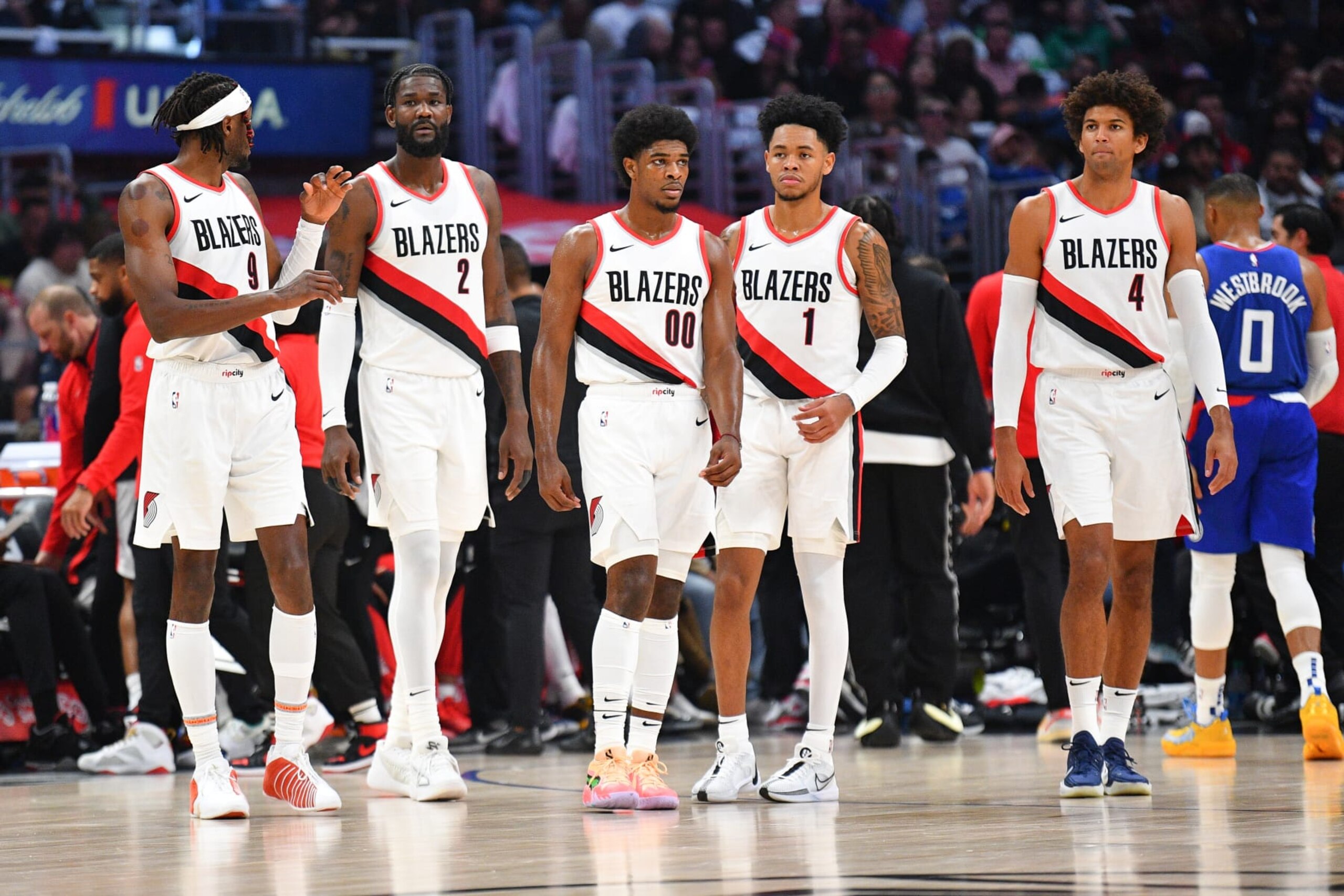
Cue the "Try watching the Portland Trail Blazers some time, nerd!" responses.
Lowering the Blazers' current win-loss pace is less about the on-court product and more about the team's direction. Portland has quietly scrapped and clawed its way up to 10th in half-court defense, a real accomplishment given its youth and the season-ending injury to Robert Williams III.
Propping up this standing will get harder with both Scoot Henderson and Anfernee Simons back in the fold—both of whom should offer much-needed offensive relief. More importantly, though, we have to question how much of this roster remains intact after the Feb. 8 trade deadline.
Malcolm Brogdon, Jerami Grant, Matisse Thybulle and maybe even Simons should all be up for grabs. And if any of them are not moved, it's only a matter of time before they and Deandre Ayton rack up DNPs for injuries to made-up body parts.
On top of all that, and in the interest of full disclosure: I needed to subtract wins from somewhere after my initial—and I promise agonizing—run-through of these projections. Teams like Chicago, Detroit, Portland and Washington, among others, were the low-hanging fruit. And I gobbled it up.
Sacramento Kings (46-36)
26 of 30
Finishing two wins shy of last year's 48-victory blast-off would not be a failure by the Sacramento Kings. The middle of the Western Conference is thornier, and they have so far opted against wholesale changes.
Granted, the Kings aren't exactly the same. De'Aaron Fox and Keegan Murray (pre-back injuries) have turned their two-way dials up to 11. But their steps forward are offset by the Harrison Barnes regression and the near-total demise of Davion Mitchell.
Sacramento's offense is trending in the right direction following Fox's return from a left ankle injury. Fending off a bottom-10 defensive standing with this exact roster forecasts as an impossibility.
The Kings score enough to get their defense set, allow the right mix of shots and are getting burned by some potentially fluky opponent perimeter shooting. But they are barren of stoppers at just about every level, and protecting the rim will never be a strength with Domantas Sabonis anchoring the 5 rotation. Their Sabonis-without-Fox minutes have also sucked and are worth monitoring.
This doesn't render Sacramento any less compelling. If anything, it increases the intrigue surrounding the Kings' trade-deadline plans. OG Anunoby would be a dream fit and punch their ticket to contention, but someone on the level of Dorian Finney-Smith or Jae'Sean Tate could nudge them toward 50-win territory.
San Antonio Spurs (19-63)
27 of 30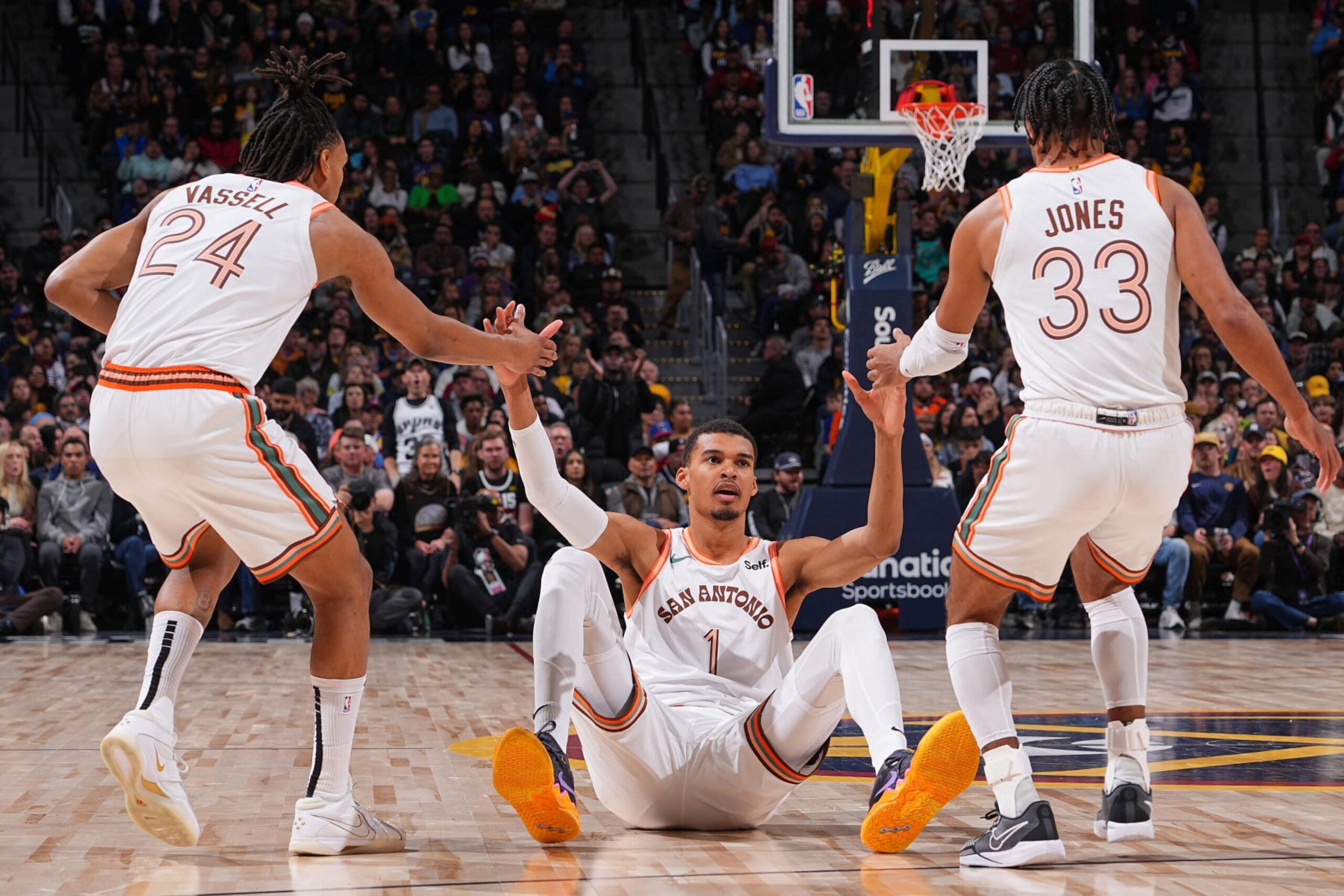
Projecting where the San Antonio Spurs' record winds up may be the hardest part of this entire exercise. Their current record and lineup structures infer a complete disinterest in winning—and roster optimization. But the talent they have is quality enough to improve over the course of the season.
Victor Wembanyama is, of course, the all-everything headliner. The Spurs still don't seem entirely sure how to use him. Claims that he's not involved in the offense enough are overblown. But San Antonio could absolutely stand to give him more self-starter possessions—particularly when head coach Gregg Popovich continues to not start Tre Jones, even on a night when Jeremy Sochan comes off the bench.
Almost 75 percent of Wemby's buckets are coming off assists. That's fine if you're running him alongside an actual floor general most of the time. The Spurs are not. (Fun development: Wemby is shooting over 40 percent on good volume from deep over the past couple of weeks.)
More Tre Jones might be the antidote to San Antonio's offensive bottoms. The team's defensive struggles have no concrete answer.
Wemby already warps opponent shot selection. Both Sochan and Devin Vassell are worker bees. And the roster generally pushes to get back in transition. But the Spurs are scrambled and foul-happy even when they have time to set up. That isn't going away without the sort of personnel or experience upgrade in which the organization clearly has no interest.
Sub-20 wins seems egregious—until you realize it seems likely to occur by design.
Toronto Raptors (35-47)
28 of 30
Scottie Barnes' Year 3 leap gives the Toronto Raptors access to immediate directions—plural. They've just yet to choose or optimize one.
Everything wrong with this team was readily predictable. The spacing is cramped; the half-court offense is surprisingly efficient almost in spite of itself. Assigning more responsibility to Barnes has left Pascal Siakam billowing in the wind. He has played better in recent games, but his outside shooting has cratered and contributes to the confines in which the Raptors' half-court attack must work.
Toronto has no in-house solution for its faulty dynamics. Barnes and Dennis Schröder are already outperforming expectations from deep. Banking on Gradey Dick to elevate his efficiency and moving Gary Trent Jr. into the starting five are the only levers left to pull.
Which raises the question: Now, what?
Any number of things are in play. OG Anunoby probably isn't going anywhere; his fit next to Barnes makes too much sense. But the Raptors could look to move Siakam and GTJ in advance of free agency and recalibrate over the summer.
They could also double-down and try netting a high-volume perimeter shot-maker. A Zach LaVine chase has its merits, assuming his right foot issue doesn't linger. But team president Masai Ujiri has remained cagey on the blockbuster front ever since the Kawhi Leonard acquisition.
Settling on somewhere between 34 and 40 victories is the safest play. The Raptors have access to a more distinct course, for better and worse, if they act purposefully. But we're now seasons removed from sensible action registering as their strong suit.
Utah Jazz (29-53)
29 of 30
This season's Utah Jazz are what so many thought last year's Utah Jazz would be out of the gate: at a talent deficit, and showing it.
Absences from Lauri Markkanen and Walker Kessler haven't helped matters, and Jordan Clarkson's thigh injury dilutes a playmaking hierarchy that wants for steadiness beyond Keyonte George. Slightly better availability coupled with a larger sample of the rookie floor general should help the Jazz escape the bottom-five-offense pit.
Still, this roster is equal parts uneven and unfinished. Utah's playmaking sparsity receives most of the spotlight, but it's light on wings and point-of-attack defense and perpetuating a frontcourt imbalance.
None of which is changing.
Though the Jazz have the assets to prowl the trade market for immediate upgrades, they're following a more gradual timeline. Team president Danny Ainge and general manager Justin Zanik are more likely to travel in the opposite direction and sell off (or shut down) players who can pad the win column to clear the runway for the evaluation of lesser-knowns. (Taylor Hendricks, I still love you.)
Seasons like this are part and parcel of rebuilding. And make no mistake, the Jazz are rebuilding. The question isn't so much how many games they'll win. It's more like how committed they are to said rebuild and whether that devotion is intense enough for Marrkanen to emerge as this year's out-of-left-field trade candidate.
Washington Wizards (15-67)
30 of 30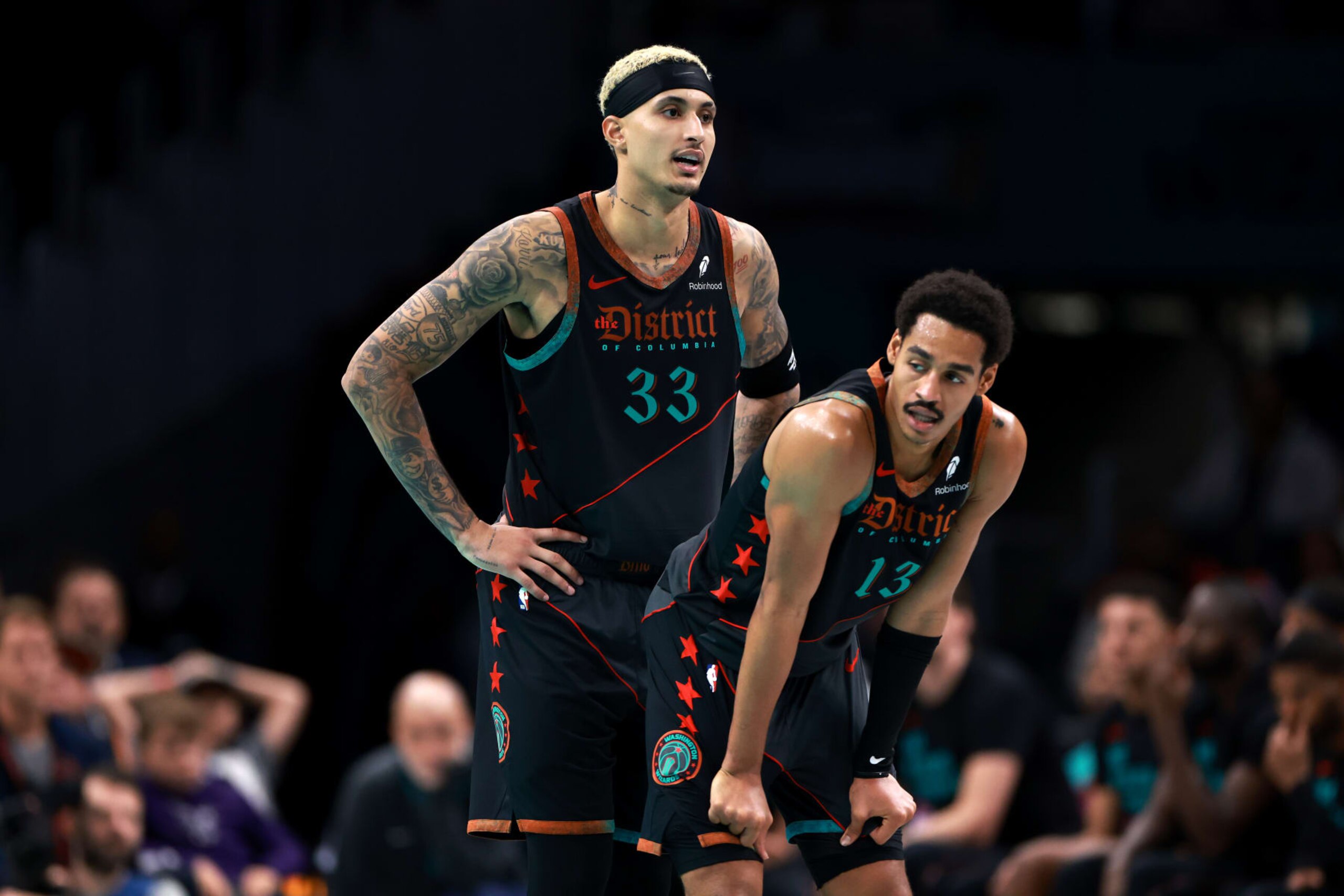
This number looks low at first glance. And it is. It's also a gift.
The Washington Wizards enter this exercise on a 12-win pace, with no discernible path towards appreciable improvement. Deni Avidija, Bilal Coulibaly and Corey Kispert have been bright spots, and Landry Shamet turned in his fair share of memorable moments before suffering a neck injury. But in the infancy of their long-awaited rebuild, the Wizards are built to lose—and to play little or no defense in the process.
Scooping up a few extra Ws later in the year when other squads initiate cruise control or inorganic tank mode is always on the table. Then again, Washington is a prime candidate to get worse by the trade deadline. If both Kyle Kuzma and Tyus Jones are on this roster past Feb. 8, paint me every shade of shocked and confused.
Washington's main objective for the rest of this season, aside from keeping pace in the loss column with the woebegone Detroit Pistons? Juice up the number of frontcourt touches Coulibaly is getting per game and cling, ever so tightly, to the big-picture information that comes with it.
Dan Favale covers the NBA for Bleacher Report. Follow him on Twitter (@danfavale), and subscribe to the Hardwood Knocks podcast, co-hosted by Bleacher Report's Grant Hughes.
Unless otherwise noted, stats courtesy of NBA.com, Basketball Reference, Stathead or Cleaning the Glass and accurate entering games on Friday, Dec. 8. Salary information via Spotrac.

.jpg?w=2560 "Reported Details of Seahawks-K9 Split")
.jpg?w=2560 "Bears TE Out for Season")
.jpg?w=2560 "Grading SmackDown 🔠")