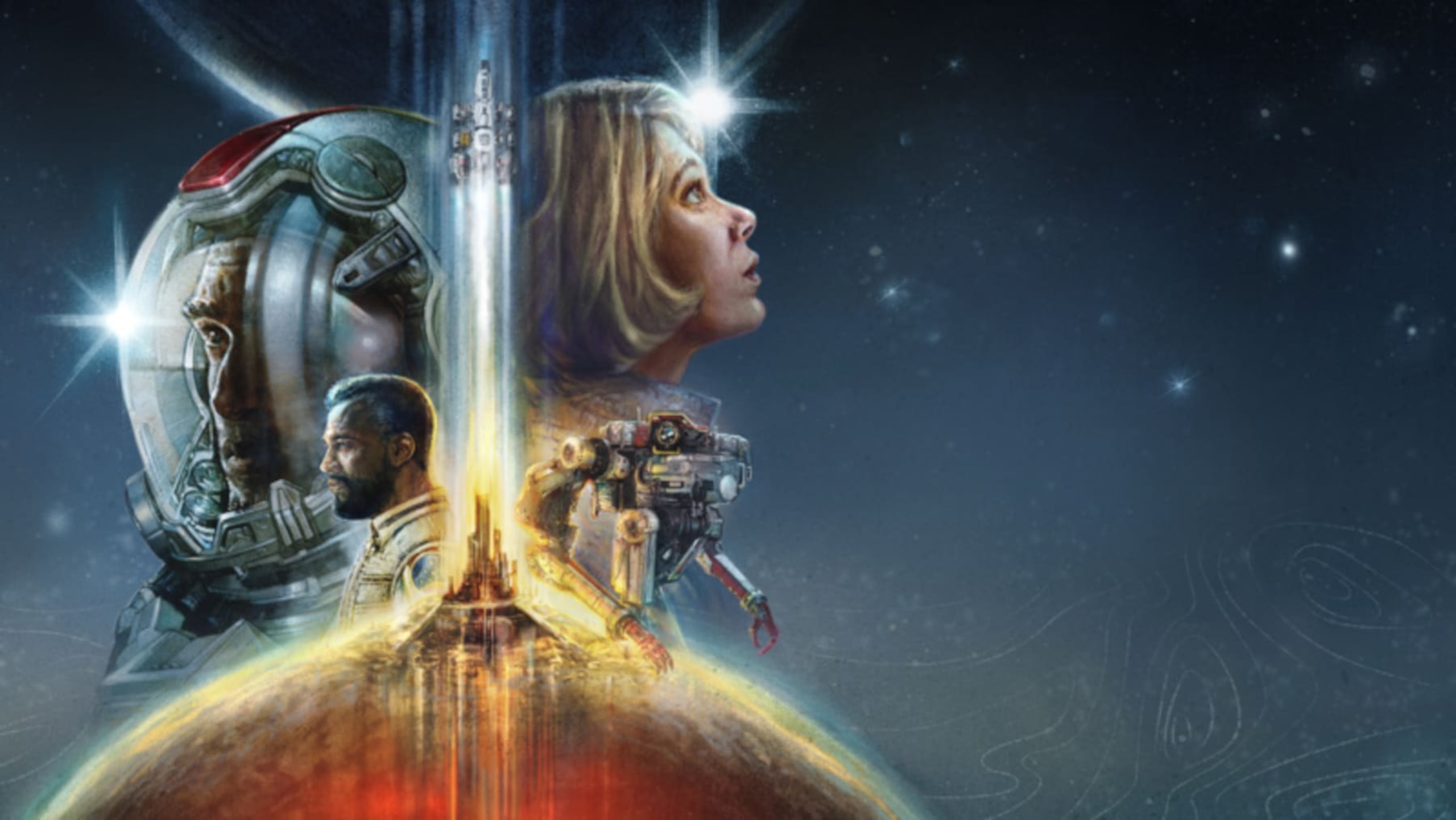


To say Starfield is one of the most anticipated modern games of all time would qualify as an understatement.
The first new IP in nearly 30 years from Bethesda Game Studios, Starfield doesn't shy away from promising big things to only further the hype.
A Bethesda action RPG in the same vein as Elder Scrolls and Fallout, Starfield takes players to space and attempts to open up a sense of customization, exploration and wonder at the largest scale in games to date.

.jpg?w=2560 "Steelers Saints Football")
.jpg?w=2560 "Rams Raiders Football")
The result is a gargantuan effort with staggering depth, be it systems or things to discover and an experience that rewards the player as the hour counter rises.
Graphics and Gameplay
Starfield offers players an open world in the Milky Way galaxy with a purported 1,000 planets to explore, never mind countless-feeling moons and stations.
In the moment, it certainly feels that expansive too, as the combination of procedural generation and handcrafted work that went into a staggering variety of different biomes makes it near-impossible to find repeated details. Unique fauna, creatures and people populate the many, many worlds, moons, stations and boardable ships.
Players can explore this universe in first-person and third-person perspective and both feel great. Zoomed in through the former, there's a better appreciation for the painstaking detail that went into every environment, right on down to little things like paperweights in an office or other environmental storytelling that oozes personality. Pulled back through the latter, it's impressive to see the strong suite of animations for jumping, swimming, even climbing ladders.
When players aren't lost in the stars they will encounter a few main hubs. The home of the Freestar Collective is a wild-west-in-space locale that very much feels just as it should. Then there's a certain neon city that is more cyberpunk and flashy, with its catacombs of alleys and buildings and corporate overbearing vibes impressively its own section of the game.
The overall aesthetic and feel, with old computer terminals and lived-in spaces like Fallout, is very much fitting in the sense that humanity quickly had to pack up its things and leave Earth in a rush and has spent the time since just getting by.
The game makes sure to lean into the realistic—but not too far. For example, gravitational force varies, so players will jump much higher on certain bodies of rock. While free-floating, shooting a gun might send the player backward.
Visually, Starfield is a stunner. There are muddy textures here and there, but most of the hiccups come down to nitpicking. Especially so when there is so much of a handcrafted feel to most spaces and a lighting and shadow system that creates some of the most stunning skyboxes seen in gaming. It's just one of those things—players will have to experience the scale and sheer sense of smallness for themselves.
There is a distinct Bethesda flair to the characters and conversations, with most being splendidly voice-acted to match the fantastic soundtrack. Most characters emote expressively and at times, especially with focal point characters, the lip-synching and expressions are stunning. That's not the case across the board, but the majority of the time the back-and-forth chatter here is clearly an industry leader. The dialogue choices themselves are a mix of the usual and varied enough to remain interesting, with heroic, mean and further information options to the player.
This extends to every facet of NPCs in the game, too. Companions will go find something to do if the player is idle, such as sit down on a bench.
Big games like this tend to struggle with NPC variety and number of people out and about making it feel like a lived-in world. Not here. There are many, many different types of people and styles at every turn, to the point of near-distraction because typically in games, people who look so distinct are important to a quest.
Oh, and they're clever too. A companion criticized our choice of dropping something so we weren't over-encumbered (which happens a little too often early on, especially given the number of interesting things in environments), giving a "there's got to be something less valuable you can drop" quip (yes, we picked it back up and chose something else). And a random NPC when we foolishly kept our helmet on inside: "You dont need to wear your helmet on this planet, you know that right?"
Hard to get mad about those when they're so consistent and impressive throughout, right?
Just walking into a bar or similar place on a human settlement offers an overwhelming amount of dialogue and things happening. Never mind, each of these places offers various NPCs the player can hire to help out on a ship, such as a laser specialist.
Combat manages to be just as impressive, first or third person. This is punchy feeling FPS action with a variety of guns, throwables and melee-based weapons.
It's impactful in the sense of feedback, realism and consequences—downed enemies will try to crawl away and regroup while shouting out locations, things they are suffering (blindness, etc.). Enemies, when taking damage a certain way, will have their boost pack erupt in a damaging explosion or, in some cases, shoot off into the air—or slam into a ceiling. Players will suffer afflictions, which are color-coded, making it a little easier to figure out which items to use to address them (or visit a doctor in a settlement). Enemy A.I. isn't the greatest sometimes, but the fun factor and immersion overshadows hiccups.
Many different playstyles are available, as expected. The stealth route returns in amazing fashion, but also available is a boost-heavy ambush playstyle, a bare-knuckle brawler and so much more.
Not that violence is the only option. The classic Bethesda conversations and dialogue checks can de-escalate things too or have a wide range of gameplay impacts, such as making friends, the cost of things, etc. Companions can assist in these, too.
Beyond deep character creation, the game even offers a robust number of options for just getting from Point A to Point B.
Players can use the Starmap (planet, system and galaxy views) in the data menu for "set course" fast travel or missions menu for something similar. Or, of course, just manually flying, too. Some might find it annoying, but it was immersive to keep track of fuel and general ship upkeep. Interplanetary fast travel doesn't take fuel, but players will have to check in with technicians at landing pads to maintain integrity.
Even the type of ship purchased or customized (or commandeered) varies greatly in playstyle and usage. Zipping around in a smaller ship while bounty hunting is a blast, but so is floating around in a big transport ship for cargo-styled missions (smuggling illicit things, of course).
Because yes, planets controlled by certain factions perform contraband scans. Getting caught, or doing anything illegal, as in other Bethesda RPGs, lands players in hot water, either with bounties (there's even a self-service bounty kiosk in many places) or combat.
Controlling ships feels solid and there is even an engaging minigame in which players much allocate points into various ship systems such as weapons, shields and engines. Powering these down in certain ways even permits stealth ship gameplay. The measured, strategic approach to ship combat feels like it fits with the scope and pace of the overall game.
Ship combat is mostly slow and measured, which allows for a nice juggling of the systems. While the first-person experience is fun, it does feel simpler to pop out into third-person for fights in order to get a better view of what's going on around the player.
That Starfield packs in a combat system on par with some of the best FPS experiences in gaming is staggering. That it masters environmental storytelling and juggles so many things in fun ways—leaving the player to decide what to do and how to do it— is an achievement.
Story and More
Players begin the journey by picking from several character background presets that help determine narrative beats and skill bonuses.
The creation suite is time-consuming in a good way, with plenty of sliders and tweaks available. Beyond visuals, backgrounds actually matter. Picking one with parents, for example, makes them visitable. These choices impact skill allocations and traits.
Even early on it feels pretty flexible. One of these choices we made produced a big bounty on our character, but running into certain NPCs enabled us to pay it off or wiggle our way out of it.
Said player character is a silent protagonist (though the game and character does says your name if possible) who quickly joins Constellation, "explorers" who have a slightly legendary status about them in the galaxy.
The story does have some narrative leaps early to get that action going that is sort of a tough sell. New recruit shows up on a job, gets asked to touch an artifact and is immediately tasked with transporting it. But the faster a player's out exploring the stars, the better.
Tensions are palpably high throughout the universe given that the game takes place two decades after a war between the United Colonies and the Freestar Collective, never mind the spacers, pirates, zealots and other factions zooming around pillaging and causing problems. Players will often be asked to join the marines or other factions while generally tip-toeing the line between all, with decisions and actions greatly impacting relationships and treatment by factions.
The Sol System itself is nearly a plundered afterthought by the time the game occurs. In the wake of Earth's collapse that thrust humanity into the stars, we predictably shot off in all directions, squabbling over territory and resources.
It's an engaging story, though this is the ultimate "got sidetracked" game. What's important to note is that, like everything else, it continues to get better the more time a player invests.
One tip? Do the side quests and minor-feeling things given by characters. There are some amazingly heartfelt performances and nuanced things going on in what feels like "side" quests, never mind good rewards.
Building relationships with companions is, of course, in again. So too is customizing them. Some of this can involve romance, though they also help in combat and can be assigned to outposts.
Yes, the outpost building started in games like Fallout has made it in and it is expansive in its modularity. Plopping one down on a planet, adding a landing pad and a mining section to farm resources passively is a nice touch.
So is an extensive shipbuilding experience with similar modularity. Players can add all sorts of things to the point these can become mobile headquarters if built right—and it's going to be fun to see what the creative elements of the player base share on social media, to say the least.
There's a fun minigame in of itself through managing companions. Because players can recruit a lot of people, be it notable story characters or randoms in bars, then place them on a ship or outpost. In fact, even early on, it's possible to miss the optional recruitment of story characters to the player's crew. There's a management screen that makes this juggling of companions across different ships and outposts easy and good strategic fun.
Progression is deep and will yield a high variety of player experiences, too. There are the usual (awesome) Bethesda traits, like pickpocketing and stealth. But more nuanced, space-based things are here too, like booster pack skill investment and even the ability to specifically target certain parts of enemy ships—such as engines so that once disabled, players can dock and board, engaging in combat and looting the ship. Yes, the game is this deep.
Physical, Social, Combat, Science, and Tech skills await players and leveling up a unique skill requires both earning a skill point and completing a skill challenge, with each skill boasting four ranks. This shouldn't go overlooked—these challenges encourage the player to explore more and experiment with things in a refreshing way.
No, we're not done yet. Crafting at research stations (Pharmacology, Food and Drink, Outpost Development, Equipment, and Weaponry) returns discoverable, important items too and yes, different vendors throughout the galaxy offer different items and prices (and some might just buy or sell illicit goods).
Surveying planets from afar is a good way to get a grip on the layout of a system and scout out where to put an outpost. Scanning planets on foot is a good time too and managing to survey a planet to 100 percent completion awards items players can sell.
This is an area of the game that might come under fire by players because somebody is bound to find somewhere that doesn't permit 100 percent exploration. But other than it feeling a little tedious to scan the same fauna a certain amount of times to complete an entry, it's really hard to complain about the truly overwhelming scope and scale of exploration available in this game. Being able to walk in a straight line on a planet for 10-plus minutes would be both a technological miracle given the number of explorable places in this game, never mind eventually boring.
Another pain point for some might be performance and load screens. There is the standard, charming Bethesda jank at times, such as an NPC's mouth moving before the sounds of their voice actually start and a companion running wildly around an area and screaming about taking damage. But it's far less present than past Bethesda launches by a long shot. The minor annoyance that is not being able to fly right down to a planet—navigating through a load screen instead—or getting a load screen to go to a different level of a city is hardly worth a complaint once players understand the scale of these environments.
This is by far the best-running Bethesda launch game in a long time and where there are limitations such as load screens, players can surely understand once in the game itself.
If all this sounds overwhelming, it very much is. A good chunk of the early game is just trying to figure everything out and some things are very easy to overlook. The game doesn't shove lessons in front of the player, so they will have to seek out their own help. Thankfully, the Help Menu, arranged alphabetically, offers in-depth tutorials that are immensely helpful and the modern suite of accessibility options are expectedly present.
Speedrunning Tips
Starfield will make for an interesting speedrunning game, to say the least.
There are bound to be different categories of runs, but mainlining the main quest is going to take a long, long time.
So, some tips (which apply to normal gameplay too). Fast travel is often available from inside locations, so always check. It doesn't always have to happen from the Starmap itself, as just pulling up the scanner in the HUD will permit fast travel to nearby visited locations.
A player's ship has a cargo hold that is easy to miss too. Put heavy crafting materials in here, as using crafting stations will pull from both inventory and the cargo hold itself.
In true Bethesda fashion, players can also use companions as pack-mules of sorts, offloading heavy things to them, meaning that many older Skyrim and Fallout strategies will surely surface as best practices once would-be runners get their hands on the game.
Conclusion
Starfield is often a breathtaking, captivating experience.
Interstingly, it starts slow with a been here before sort of vibe, a Bethesda RPG with new window dressing.
But Starfield is one of those rare media experiences that gets better the more a player engages with it. The game's layers peel back in engrossing fashion the more a player learns and experiments and the hour counter starts to zip upward faster than most games.
Heartfelt would be a nice word for Starfield. There's a sprawling universe of deep space opera lore here, endearing characters at every turn and a main narrative that is easily the best in a Bethesda RPG to date. Yes, there are tech limitations and things that remind a player that indeed, they are playing a video game—but the tradeoff is one of the best RPG experiences to date in which a player has full access to the stars.
One of the most immersive RPGs ever, Starfield was, without a doubt, worth the wait and an easy recommendation to even non-gamers, too.
.jpg?w=2560 "Chiefs Giants Football")
.jpg?w=2560 "AP Poll Top Five Week 9")


.jpg?w=2560 "Lamar Being Out Shocked Ravens")
.jpg?w=2560 "Packers Safety Slams Refs 🤬")