
Washington President: Big Ten Move Was About Stability, Not 'Dollars and Cents'
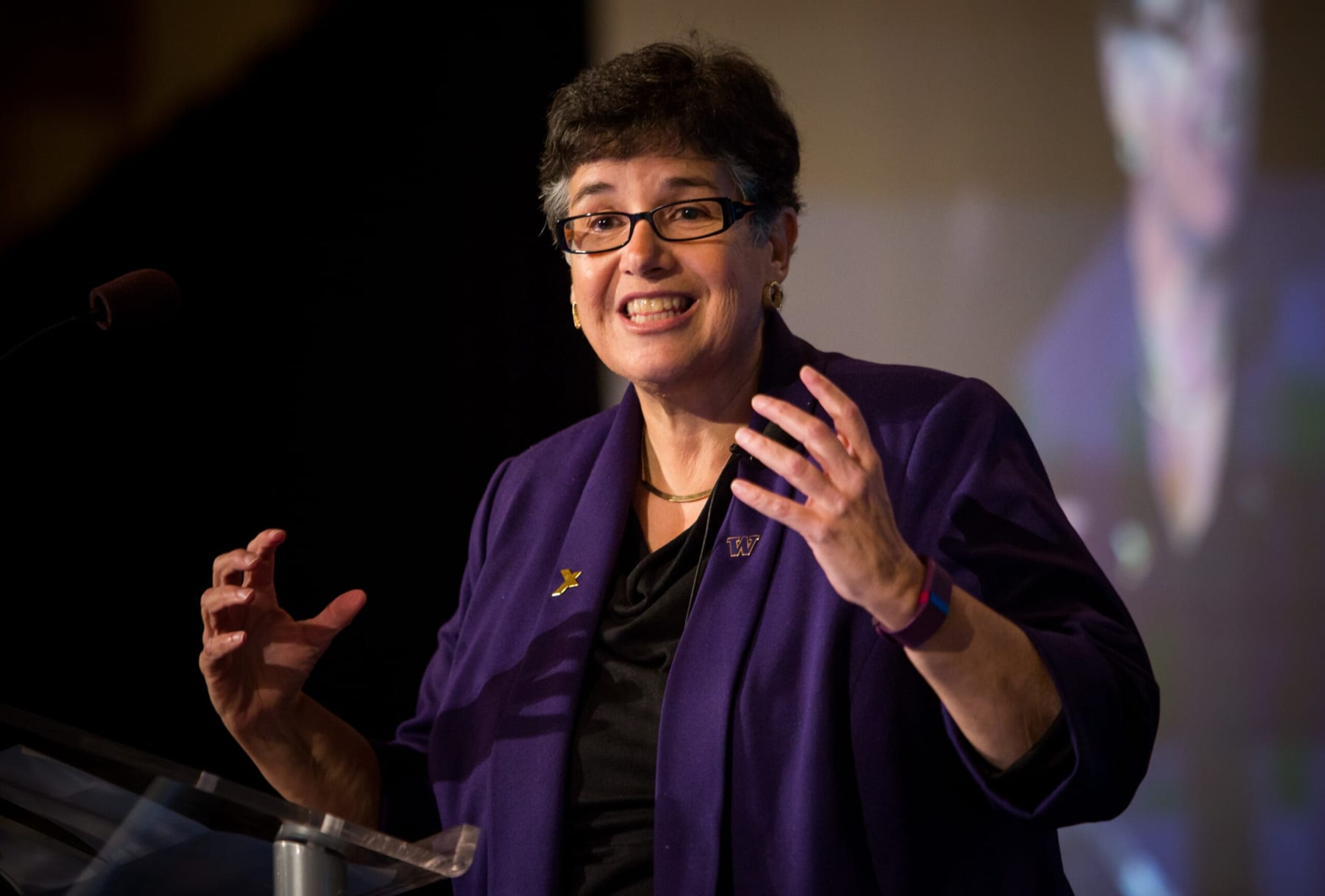
While there was clearly an economic factor in Washington and Oregon joining the Big Ten, Washington president Ana Mari Cauce told reporters the move was "not just about dollars and cents."
"When you have a deal that people are saying that one of the best aspects are that you can get out of it in two years, that tells you a lot," Cauce said Saturday of the proposed media rights deal between the Pac-12 and Apple. "This was about national visibility for our players, being on linear TV so they can be seen, so they could have the national exposure. It was about stability. It was about having a future that we could count on and built towards."
.jpg?w=2560 "AP Poll Top Five Week 9")


The Pac-12 went from a Power Five to a shell conference over the last month, with Colorado's departure for the Big 12 starting a domino effect that ultimately led to Arizona, Arizona State and Utah joining them and Washington and Oregon joining UCLA and USC in bolting for the Big Ten.
Cal, Oregon State, Stanford and Washington State are the only four remaining conference members. No plan has been announced for those four schools, but it appears more likely than not we're witnessing the dissolution of a conference with more than a century of history.
"I have to say this was heart-wrenching," Cauce said. "For more than a year, all of us worked really, really hard to find a viable path forward that would keep us together."
The fracturing of the traditional conference structure has been a product of capitalism above all else. As media rights skyrocket across college sports, schools have found themselves under pressure to increase the bottom line—and keep their teams competitive in the process.
The Big Ten conference will have 18 teams, with locations ranging from New Jersey to Los Angeles, beginning in 2024. The bi-coastal nature of the conference will undoubtedly create some travel strain for players, particularly in sports where they're playing multiple times per week. Flights from Newark (the nearest airport to Rutgers) to Los Angeles take six hours by themselves—not exactly an ideal scenario for athletes who are expected to keep up with their studies as well.
"I'll be the first to say this is not perfect," Washington athletic director Jennifer Cohen said. "There will be challenges. This does require a lot of change in adaptability. Part of the decision was that we felt very confident in the agreement we had with the Big Ten to have the resources to adapt to the challenges, including travel costs and additional resources, that our student-athletes are going to need to have a successful experience in the Big Ten."
.jpg?w=2560 "Colts Texans Football")
.jpg?w=2560)

.jpg?w=2560 "Rodgers Iced Out on Plane 💎")
.jpg?w=2560 "Raiders Could Start Mendoza")
.jpg?w=2560 "Mahomes Told Teammate to Leave Meeting")


.jpg?w=2560 "Lamar Being Out Shocked Ravens")
.jpg?w=2560 "Packers Safety Slams Refs 🤬")