

Biggest Winners and Losers from 2023 NBA Draft Night
Now that was an NBA draft.
Loads of stuff happened in the lead-up to and during the 2023 picks-and-prospect extravaganza. Incoming rookies were selected. Picks were dealt. Surprise choices were made. And, of course, deals featuring well-established, big-name players have been shuffling around all week.
Chris Paul is somehow a member of the Golden State Warriors. Jordan Poole is about to average 37 shot attempts per game for the Washington Wizards. Marcus Smart is now with the Memphis Grizzlies. Kristaps Porziņģis is on the Boston Celtics—for real, this time.
Bleacher Report's Dan Favale and Grant Hughes are here to make sense of it all, with a piping hot batch of winners and losers exiting Thursday night. As always, the long-term trajectory of these decisions can always change. But right now, certain players and teams are standing out more than others—for reasons both good and bad.
Winner: San Antonio Spurs
1 of 10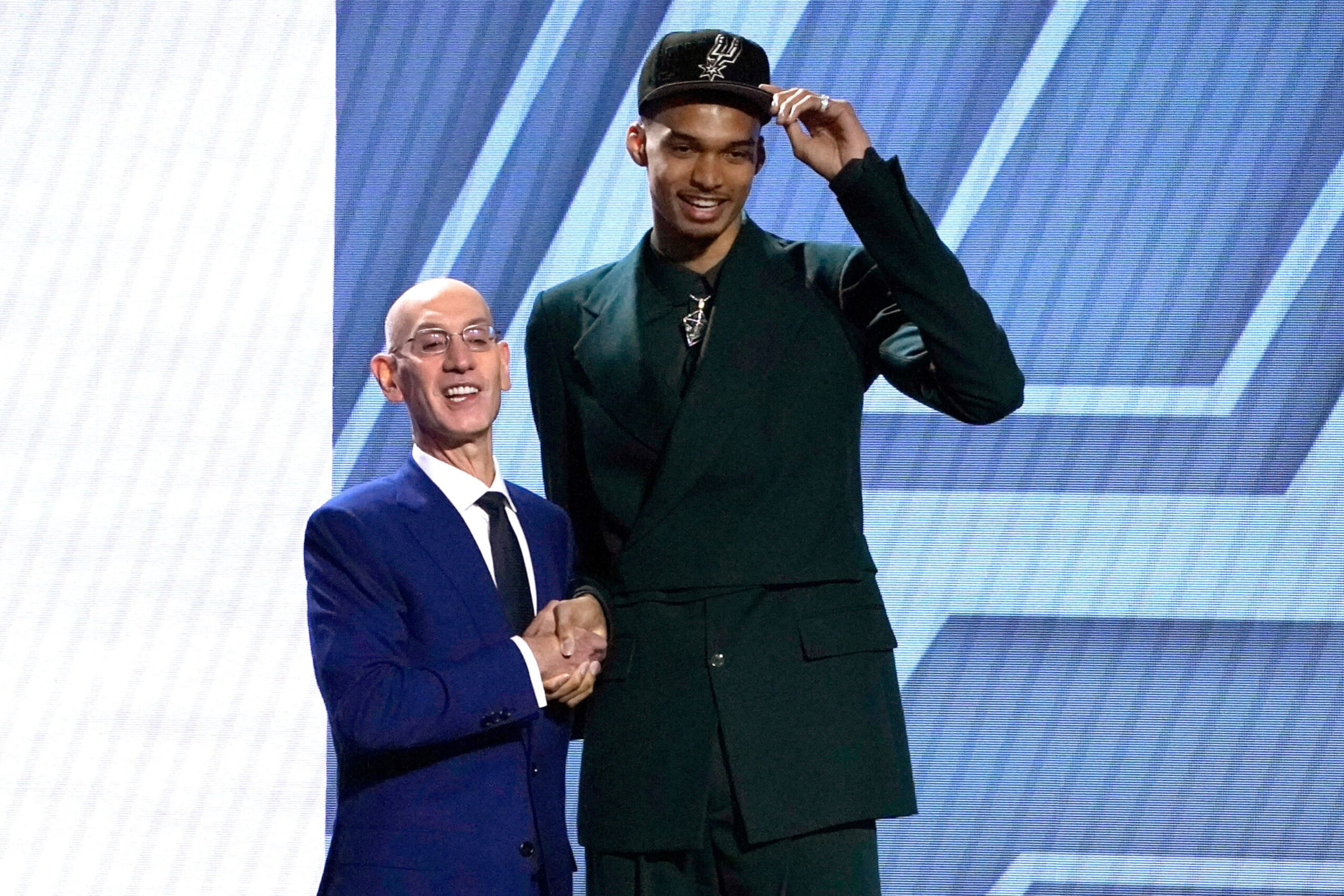
Victor Wembanyama is a generational prospect—a one-of-one talent with no unworkable flaws and immeasurable best-case outcomes.
Now, he's headed to San Antonio.
The Spurs win, everything, again.
—Favale
Loser: Cam Whitmore
2 of 10
Like everyone else drafted on Thursday, Cam Whitmore had a lifelong dream fulfilled. And he even wound up on a team, the Houston Rockets, that should provide the Villanova product ample opportunity to flex his scoring skill. He's also an instant millionaire, which is a nice thing to be.
Despite all that, Whitmore lands here because he endured the most surprising and precipitous slide of any notable prospect. Sure, he landed with the Rockets as some expected. But as recently as a couple of weeks ago, it seemed like he had a shot to get to Houston as the No. 4 pick. Instead, he fell all the way to No. 20.
Some of the slide may have been his own fault. Bad interviews and uninspiring workouts, as ESPN's Adrian Wojnarowski reported, seemed to outweigh the forward's collegiate production and undeniable physical tools. But we're still talking about one of the best scoring prospects in this class, someone most mock drafts had going inside the top 10. Several had him in the top five, and The Athletic's Sam Vecenie had him at No. 3 on his big board, ahead of Brandon Miller, who went second to the Charlotte Hornets.
Whitmore should be highly motivated to stick it to every team that passed on him. He still has every chance to come out of this situation a winner. For now, though, there's nowhere else to put the guy who came off the board at least a dozen picks later than even the most pessimistic predictions.
—Hughes
Winner: Jordan Poole
3 of 10
Dealt for Chris Paul mere hours before the draft, Jordan Poole heads to the Washington Wizards with everything working in his favor. His $128 million extension kicks in for the 2023-24 season, and he's about to take over as the undisputed top option on a Wizards team in the earliest stages of a rebuild.
Numbers will come in bunches for the 24-year-old guard, and it wouldn't be a shock to see him average upward of 28.0 points per game next year. Wins won't be nearly as easy to come by with Washington as they were in Golden State, but Poole already has a ring. Now, he can set out to prove himself individually.
Most importantly, Poole is now free of what seemed like an unsalvageable situation with the Warriors, where his receipt of a preseason punch from Draymond Green upended the team's interpersonal dynamics, cast a pall over the entire season and scuttled a title defense. Poole may become a true star with Washington, something that was never going to happen, post-punch, with the Dubs.
—Hughes


Winner: Washington Wizards
4 of 10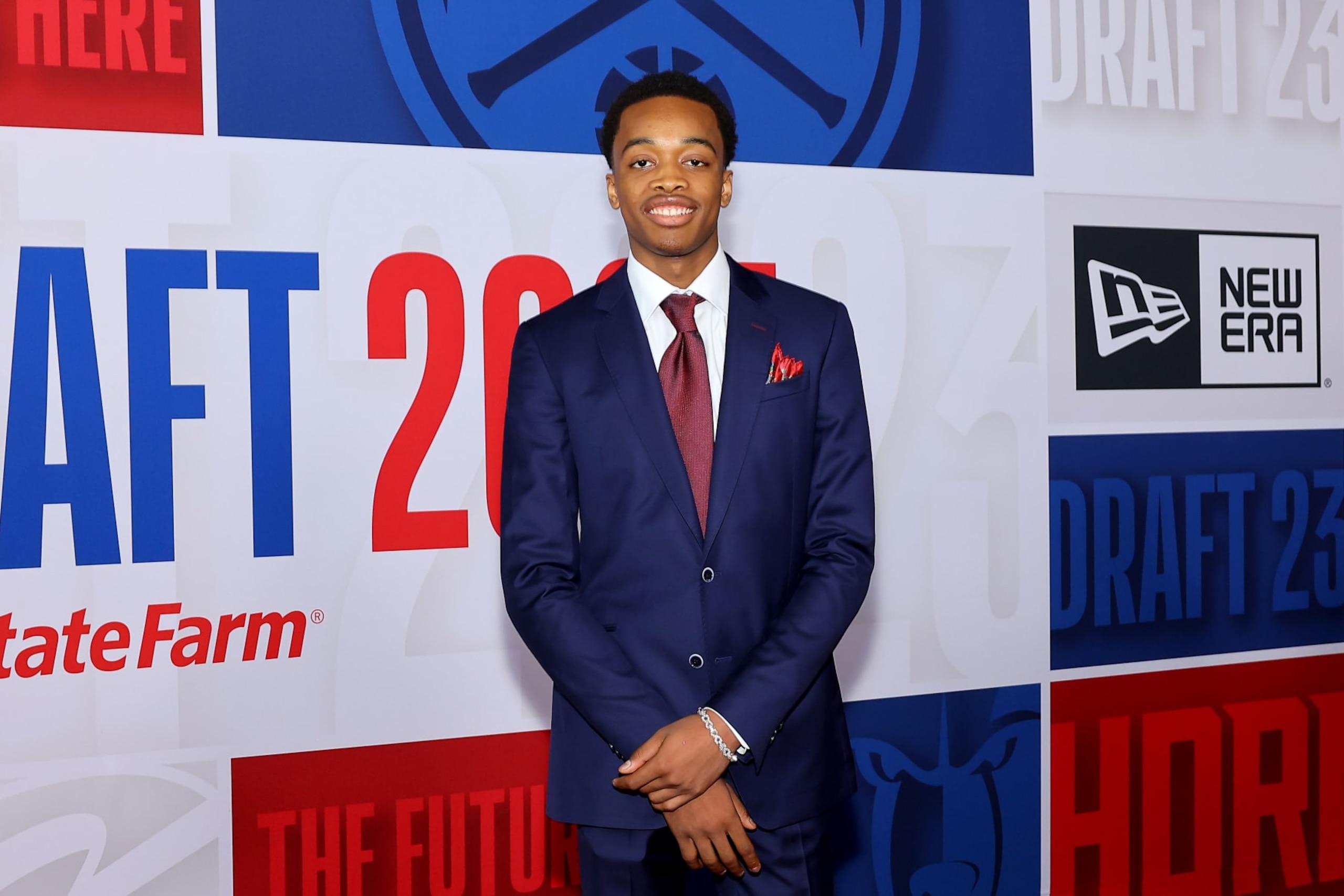
Let's review the extent of the Washington Wizards' pre-draft, but still very much draft-related, business:
- Out: Bradley Beal, Kristaps Porziņģis, Jordan Goodwin, Isaiah Todd, the No. 57 pick
- In: Jordan Poole, Tyus Jones, Danilo Gallinari, Mike Muscala, Patrick Baldwin Jr., Landry Shamet, Ryan Rollins, the No. 35 pick, Golden State's 2030 first-round pick (top-20 protection), four first-round swaps with Phoenix (2024, 2026, 2028, 2030), seven total second-round picks (2024, 2025, 2026, two 2027s, 2028, 2030)
This falls short of a caps-lock HAUL. None of these deals are great on the surface. They are, however, necessary.
President of Monument Basketball Michael Winger and Co. are merely playing the hand they've been dealt. The previous regime—and current team governor Ted Leonsis—nuked the value of Beal with his no-trade clause. They did the same by holding onto Porziņģis (and Kyle Kuzma) past last February's deadline.
Moving up to roll the dice on Bilal Coulibaly carries some risk. He is already a defensive disruptor with significant open-floor chops but will need to hone his on-ball offense to actualize his 90th percentile outcome. And hey: That's fine! The Wizards are rebuilding. Risk-taking is part of that racket.
Above all else, there is value in making the decision, at long last, to start over. Washington has made it—while taking on worthwhile fliers (Poole, Coulibaly, draft swaps) and creating a bunch of long-term flexibility in the process.
—Favale
Loser: Memphis Grizzlies
5 of 10
Pretty much everyone has been waiting for the Memphis Grizzlies to make an aggressive consolidation trade. They finally did.
And...it was underwhelming.
Acquiring Marcus Smart from the Boston Celtics has advantages. Dillon Brooks is on his way out, which left a void in a perimeter rotation already lacking a properly sized wing with trace amounts of ball skills. Smart, in many ways, straddles those two lines. He can pick up the defensive slack created from Brooks' departure while providing more maneuverability on the positional spectrum. Boston regularly used him to guard spots 1 through 4.
Smart also promises to be, let's say, a less damaging offensive player. Brooks has actually hit a higher percentage of his spot-up triples over the past three seasons. But Smart won't vomit up as many junky off-the-dribble jumpers, and postseason defenses play him tighter from beyond the arc.
Memphis gets a playmaking upgrade from Brooks, as well. Then again, that's not saying much. And the Grizz lose the stylings of Tyus Jones as part of the deal. Smart can work alongside Ja Morant more comfortably, but the Grizzlies are forfeiting vision and ball control.
Giving up two first-round picks on top of Jones—No. 25 (Marcus Sasser) and Golden State's 2024 selection (top-four protection)—should have gone further. Memphis is addressing a handful of needs but not its biggest one and hollowing out its asset chest in the process. Let's see how the rest of the offseason plays out. For now, this feels uninspiringly risky.
—Favale
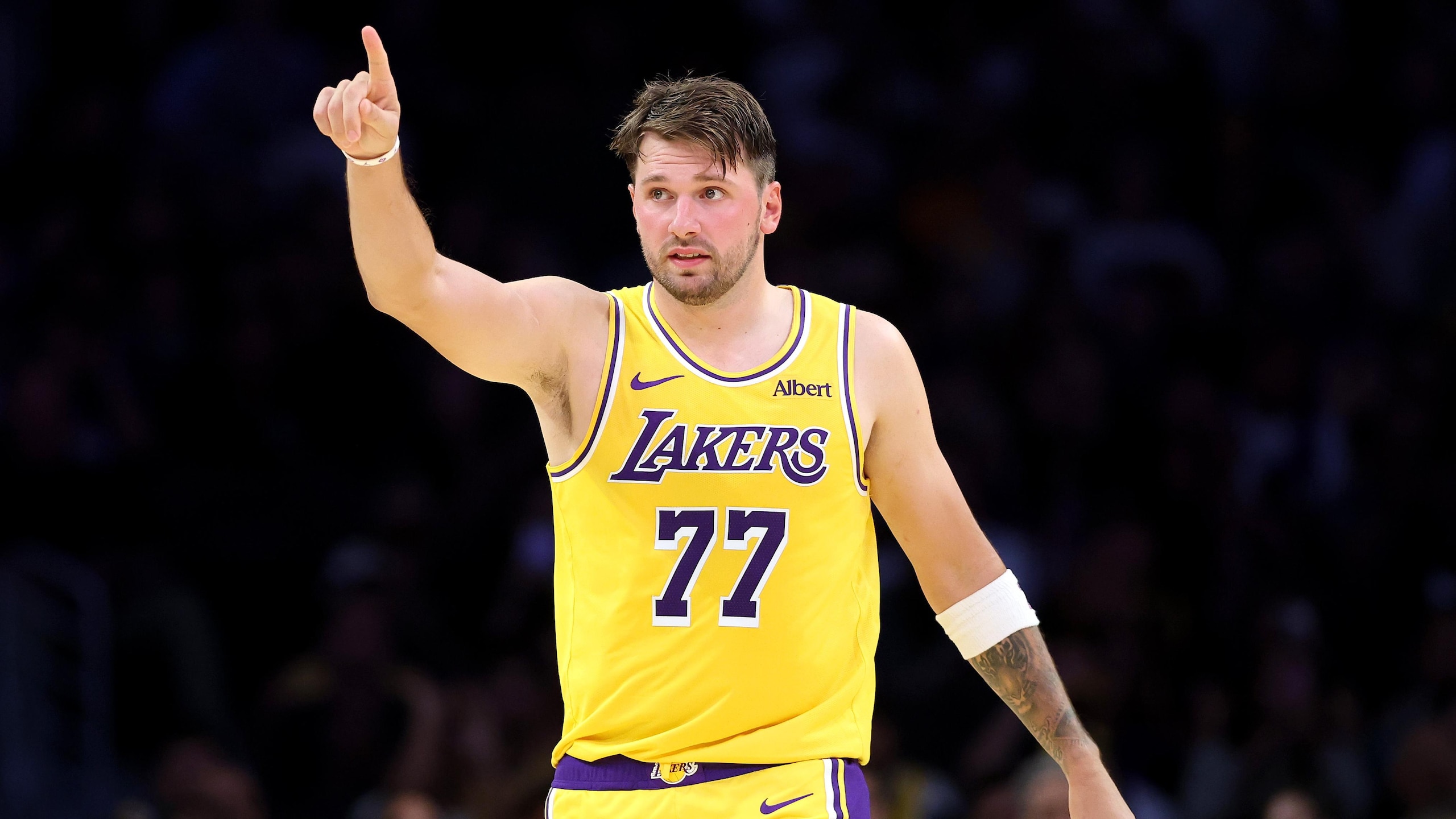
Winner: Dallas Mavericks
6 of 10
The Dallas Mavericks started off a highly successful draft night by moving Dāvis Bertāns' contract, foisting the $17 million he's owed in 2023-24 upon the Oklahoma City Thunder. Dallas included the No. 10 pick as a sweetener but got No. 12 from OKC in the bargain, a tiny step back in the draft order that worked out perfectly.
Dallas wound up with Duke center Dereck Lively II, an ideal fit for a team in need of mobile defenders and interior size. Lively profiles as an excellent rim-rolling threat on offense with DPOY potential on the other end. He was the No. 1 prospect in his high school class for a reason, and he shook off a slow start at Duke to emerge as a clear lottery talent.
Better still, Dallas generated a trade exception by sending Bertāns into the Thunder's cap space. The Mavericks then used that TPE to bring in Richaun Holmes from the Sacramento Kings with No. 24 pick Olivier-Maxence Prosper, a huge and rangy wing with legitimate shutdown defensive potential.
Holmes is set to earn $12 million in 2023-24, significantly less than Bertāns, and he further bolsters Dallas' depth at center. Somewhat forgotten over the last couple of years, Holmes was a full-time starter posting averages of 14.2 points, 8.3 rebounds and 1.6 blocks in 2020-21. He's still just 29 and could rediscover his starting-caliber two-way game with plenty of playing time ahead and Luka Dončić setting him up for his patented floaters and push shots.
Even if Holmes doesn't make a major impact, Dallas comes out of the draft with two potentially elite defensive rookies, cleaner books and enough room under the tax line to use its full mid-level exception on a free agent.
—Hughes
Loser: Anyone Who Wanted Oklahoma City Thunder to Accelerate Their Timeline
7 of 10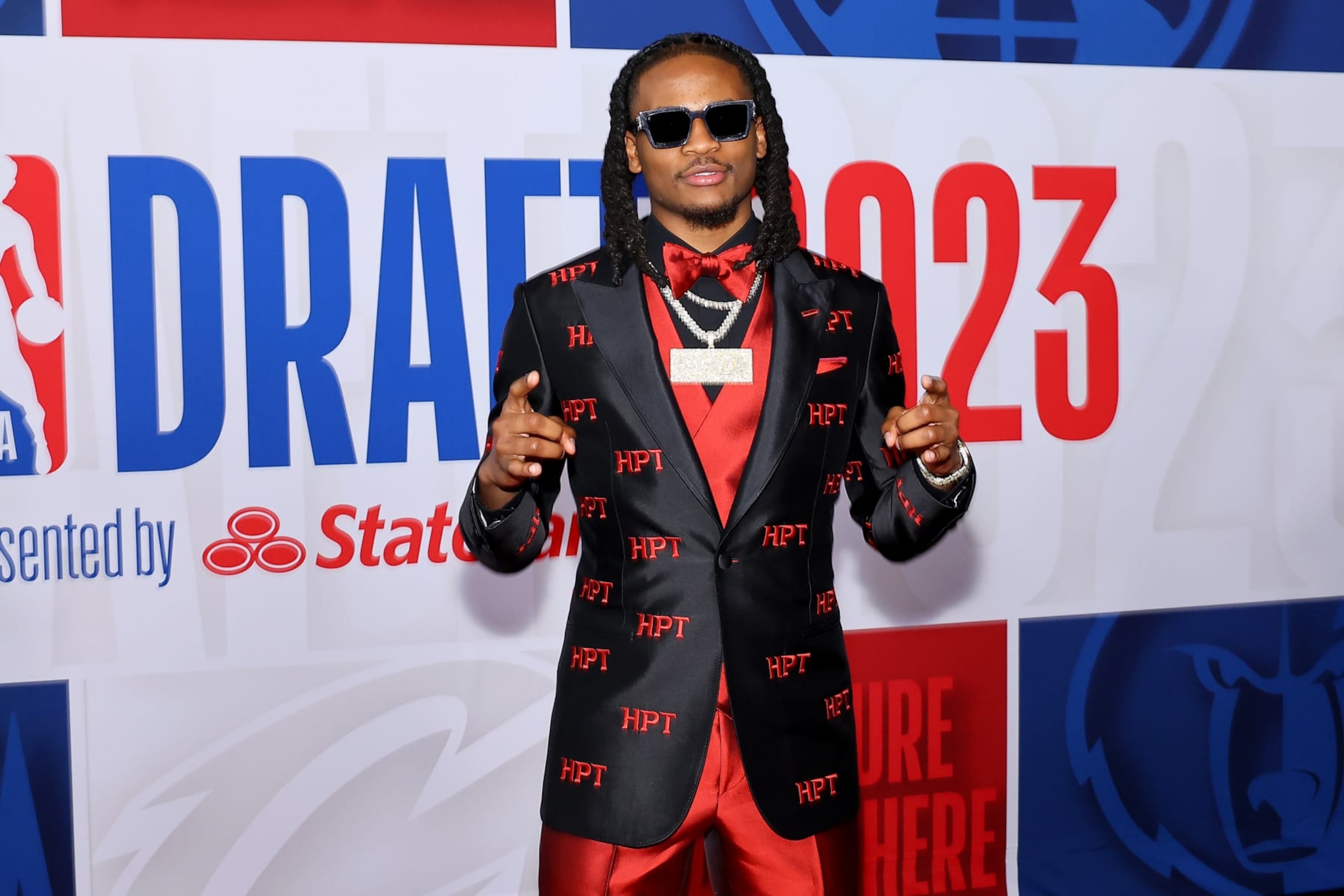
Coming off a season that unfolded more like an arrival than incremental step forward, the Oklahoma City Thunder could've entered this summer with over $34 million in cap space and the chance to add two significant talents: Chet Holmgren and a marquee free agent.
Executive vice president Sam Presti instead, and like usual, favored the more gradual course.
Oklahoma City agreed to take on Dāvis Bertāns' $17 million salary next season in exchange for jumping from No. 12 to No. 10 and grabbing Cason Wallace out of Kentucky. The move is perfectly justifiable. Wallace's off-the-bounce scoring is a question mark, but the Thunder don't need him to be their offensive engine. They have Shai Gilgeous-Alexander for that.
Wallace will assume a secondary offensive role for which he's more than suited. And all the while, he will defend his butt off. Having him, Lu Dort and Jalen Williams in the same rotation is pretty terrifying.
Still, for however much Oklahoma City organically improves next season, it had the means and opportunity to prioritize a bigger-time leap. That no longer appears to be in the cards—a decision that is neither right nor wrong but definitely a little bit of a bummer.
—Favale
Loser: Younger Prospects Who Want to Play for Winners
8 of 10
One year of evidence doesn't necessarily make it a trend, but the 2023 draft saw a handful of more experienced prospects climb higher than they might have in years past. The new CBA and its brutal penalties for exceeding the luxury tax may be influencing big-spending teams (which also tend to be win-now teams) to target players who can help right away.
It makes sense. Clubs trying to maximize their chances of success in the short term don't want to wait four years for a teenaged rookie to reach a point where he's ready to contribute to winning, at which point said player would be due for a huge raise anyway. So instead of gambling on the 18-year-old Cam Whitmore, the Los Angeles Lakers selected 20-year-old Jalen Hood-Schifino at No. 17, the Miami Heat took 22-year-old Jaime Jaquez Jr. at No. 18, and the Golden State Warriors tabbed 20-year-old Brandin Podziemski one pick later.
All three contenders bypassed the chance at a prospect with a much higher ceiling for steadier, less-starry options. And that's not because these teams have always preferred those types of players. The Warriors were all about their two-timeline plan until it flopped, and the Heat went with Nikola Jović in the first round last year, adding him just a few days after his 19th birthday.
The inexperienced and raw class of players need not fret. Four of the top five picks didn't go to college, and many teams will still prioritize the upside that comes with youth over everything else. But we may be seeing the first signs of a change that limits the odds of developmental prospects landing on good teams.
—Hughes
TBD: Portland Trail Blazers
9 of 10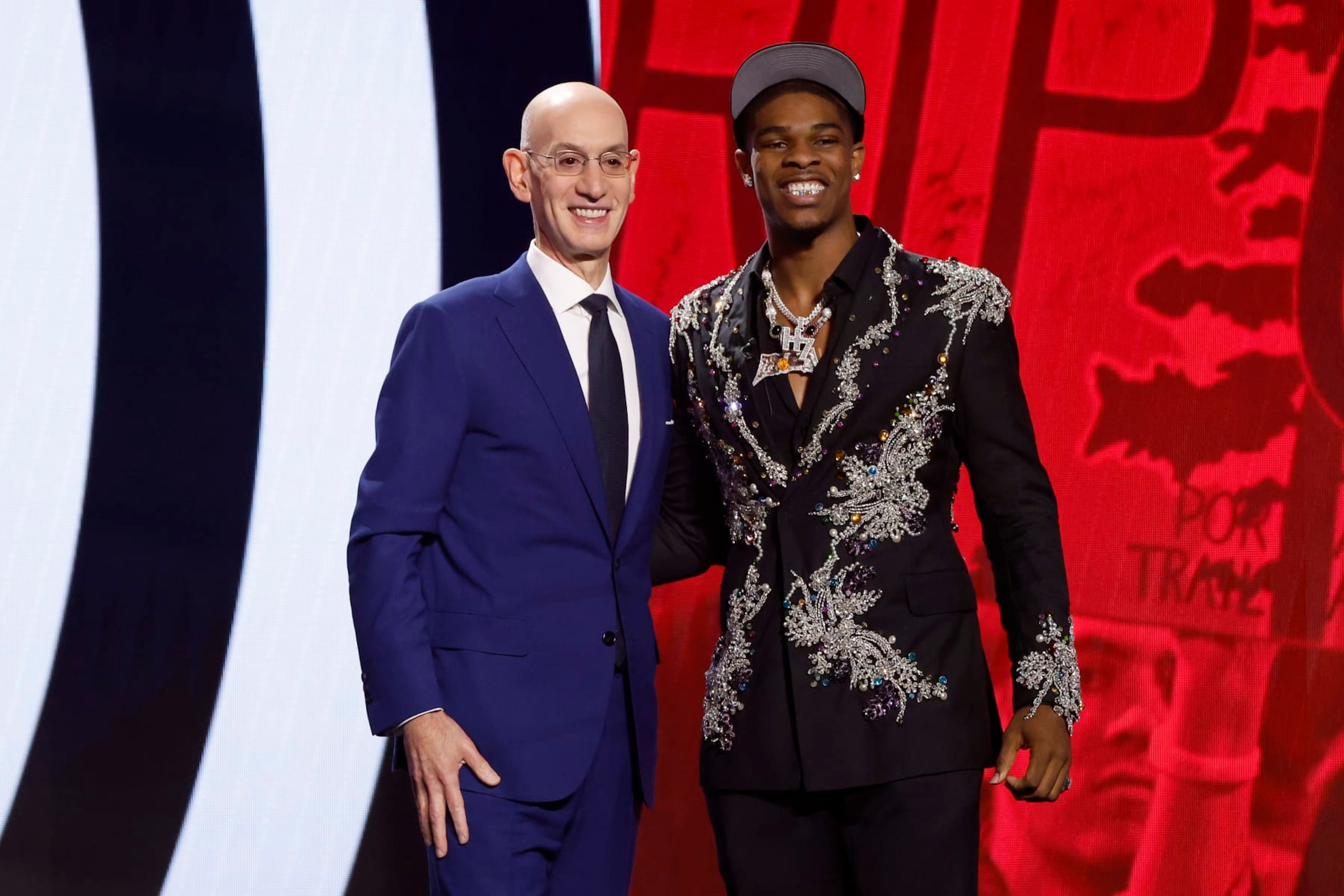
Criticizing the Portland Trail Blazers for holding onto the No. 3 pick is misguided.
It would be different if they held No. 8 or No. 9 (or later selections), claimed they were operating within Damian Lillard's window and then did nothing. But third overall was viewed as a franchise-altering choice, and the Blazers ended up with Scoot Henderson, the consensus second-best player of the draft. They're smart to prioritize the pick like a cornerstone. It's on the trade market to yield an acceptable return.
And it still could.
Megadeals don't have to happen on draft night. Portland has an entire offseason to go through.
At the same time, the Blazers are at a crossroads. They aren't moving Henderson just for immediacy's sake. They have also made Shaedon Sharpe damn near untouchable. That's all hunky-dory if Lillard is cool moving forward with the two kids. But he turns 33 in July and, by his own admission, wants to win—preferably with Portland.
Except, the Blazers aren't set up to win. Nor can they angle for a meteoric ascent without going nuclear. They won't have real cap space even if Jerami Grant leaves in free agency, and if Henderson and Sharpe are non-starters, their best trade packages top out at Anfernee Simons and soonest-available first-rounders. (They owe a pick to Chicago that's lottery-protected through 2028.)
Perhaps it all works out. Immediately, though, the Blazers seem caught between warring timelines.
—Favale
TBD: Sacramento Kings
10 of 10
Sending Richaun Holmes and No. 24 to Dallas positions the Sacramento Kings to have over $35 million in cap space this summer if they renounce all their own free agents—including Harrison Barnes and Trey Lyles.
That is, without question, extremely intriguing.
This year's free-agency pool is on the shallower end, but the Kings suddenly have the runway to pursue the biggest possible names. Jerami Grant, Kyle Kuzma and Khris Middleton, in particular, all loom as idealistic, high-impact fits who could plausibly upgrade Sacramento's product at both ends of the floor. The Kings could then turn around and use the fairly sizable room exception on yet another rotation staple—a backup big or, if they're lucky, another wing or combo forward.
Emphasis on could.
Everything must fall into place first. Do the Kings already know who they're getting? Or did they simply dump salary on the off chance they could materially upgrade the front line?
Using a first-rounder to move off Holmes' salary is a lot less sexy if Sacramento winds up largely running it back or breaking up the cap space into good-not-great depth. This will-they, can-they proposition is equal parts tantalizing and unsettling.
And the Kings are suddenly one of the league's most polarizing offseason teams because of it.
—Favale

.jpg?w=2560 "Mahomes Told Teammate to Leave Meeting")
.jpg?w=2560 "5 Teams Eyeing Jonathan Taylor")

.jpg?w=2560 "Baker Gets Glove From Rays 🧤")
.jpg?w=2560 "NFL investigating Eagles")
.jpg?w=2560 "🚨 Week 8 AP Top 25 Poll")
.jpg?w=2560 "Steelers Roll Saints in Paris 🇫🇷")
.jpg?w=2560 "Jonathan Taylor Landing Spots 📍")