


Eight teams are still in the postseason fight. So before we start poking holes in them, we should probably acknowledge that lasting this long is an achievement. The tactical shortcomings, disappointing players and broad flaws we'll highlight here clearly haven't been fatal.
Not yet, anyway.
That's the problem with reaching the second round of the playoffs. The competition is now pushover-free, and the smallest weak points become blinking, neon targets. Every remaining team is hellbent on hitting them as hard as possible. Opposing coaches sacrifice sleep looking for ways to exploit the smallest advantage.
Soon, the field will shrink from eight teams to four. We're focusing on the reasons each of the conference semifinalists might wind up on the wrong side of that cut.
Boston Celtics: Defensive Inconsistency
1 of 8
Wednesday's clampdown effort in a Game 2 win over the Philadelphia 76ers was the first time since Game 1 against the Atlanta Hawks that the Boston Celtics looked like themselves on defense.
In between those two contests, Boston, owner of the league's No. 3 defensive rating during the year, surrendered an average offensive rating of 121.7. For context, that's 10.2 points per 100 possessions worse than the Celtics' regular-season figure and below the San Antonio Spurs' 30th-ranked 2022-23 defense.
Some of that staggering difference owes to the vagaries of small samples, but Boston didn't have a single four-game stretch during the year in which it allowed at least 116 points per 100 possessions. It reeled off five straight across its two series against Atlanta and Philly. Maybe we don't need to sound the alarm, but the Celtics should at least flag the issue.
Boston's inability to create turnovers during the season has carried into the playoffs, the result of a style that favors switching over trapping. The Celtics don't like to scramble, and that makes it hard to speed up opponents and force mistakes. Maybe a little more aggression would be helpful.
The Celtics tend to fail most conspicuously when their offense bogs down and the ball sticks, typically late in games. But a second straight trip to the Finals may depend on whether Boston can defend more consistently.
Denver Nuggets: Backup Bigs
2 of 8
The Denver Nuggets played roughly one uninspiring quarter against the Minnesota Timberwolves in a breezy first-round series win. They sit ahead of the Phoenix Suns 2-0 in the second, marking them as a team with few hindrances.
Neither opponent had the personnel to test the Nuggets' suspect rim protection, an issue many believed would pose a problem in the playoffs, so we'll also have to table that one for now.
Nikola Jokić is dominating as expected, Jamal Murray is averaging 25.7 points on a 45.5/39.3/92.9 shooting split and Aaron Gordon's defense has been stellar. Any nomination here is going to be a reach, so we have no choice but to go with the only relative weak point to emerge in Denver's smooth run to a 6-1 postseason record.
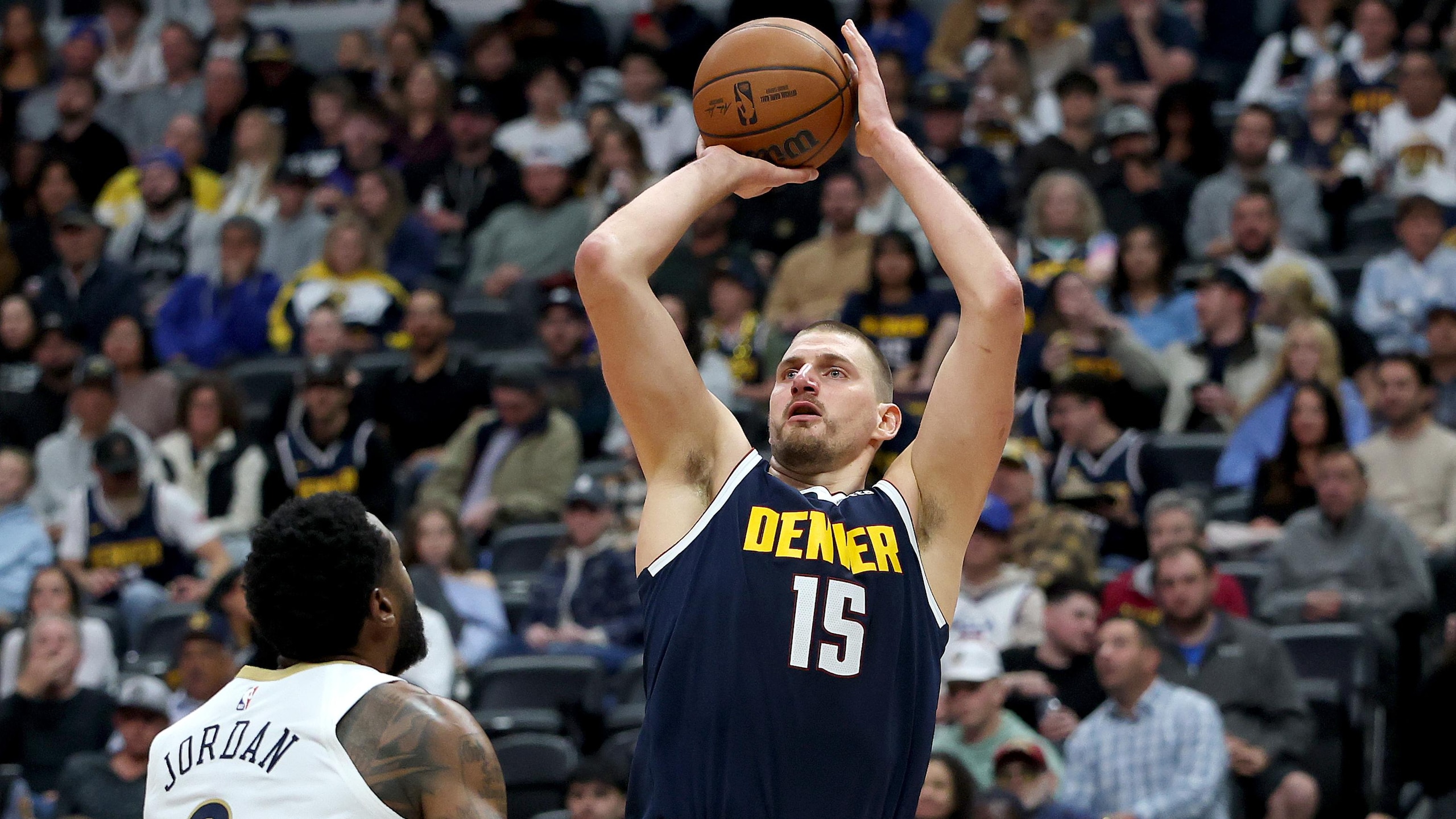
There may come a time when the Nuggets have to rest Jokić or sit him to avoid foul trouble, and neither of their backup bigs has played well enough to suggest those stretches will go well. DeAndre Jordan has played in just three postseason games this year and doesn't have the mobility to hold up against any respectable pick-and-roll attack, and Jeff Green is shooting 32.3 percent from the field.
Take Jokić off the floor, and Denver is likely to come undone, just like it did during the season when it got outscored by 10.4 points per 100 possessions with the two-time MVP out of the lineup. None of this is news, but the Nuggets haven't faced a tough enough challenge to expose any more revelatory weaknesses yet.
Either that, or Denver actually doesn't have any. Nuggets fans should be giddy about the possibility of that being the case.
Golden State Warriors: Reserve Guards
3 of 8
Jordan Poole is the easy target. His turnover woes, penchant for fouling, inexplicably poor shot selection and refusal to compete defensively (especially in transition) have been on display all season and throughout the playoffs.
The fourth-year guard has had his moments and helped the Golden State Warriors outscore the Los Angeles Lakers by seven points during his minutes in a Game 1 defeat. Of course, the only thing anyone wants to talk about from that contest is Poole's deep game-tying attempt, which he missed. It's been that kind of postseason for him.
The bad has dramatically outweighed the good, as evidenced by a massively negative point differential entering Game 2 against Los Angeles whenever Poole has run the offense without Stephen Curry on the floor.
The best versions of the dynastic Warriors had capable game-managing reserves behind Curry—players who could keep the offense moving, contribute on defense and prevent opponents from going on runs.
Poole is about as far from Shaun Livingston and Andre Iguodala as it gets. Ditto, so far, for Donte DiVincenzo and Gary Payton II, whose stints on the floor have also dragged the Dubs' net rating into extreme negative territory. Neither has scored efficiently nor made a consistent impact on D. Payton was a reliable creator of chaos last year, but he's only had flashes of that form in this postseason.
Poole has to play within the system, Payton must return to his havoc-wreaking ways and DiVincenzo has to do, well...something. Otherwise, the Warriors will keep getting crushed whenever Curry rests.

Los Angeles Lakers: Three-Point Shooting
4 of 8
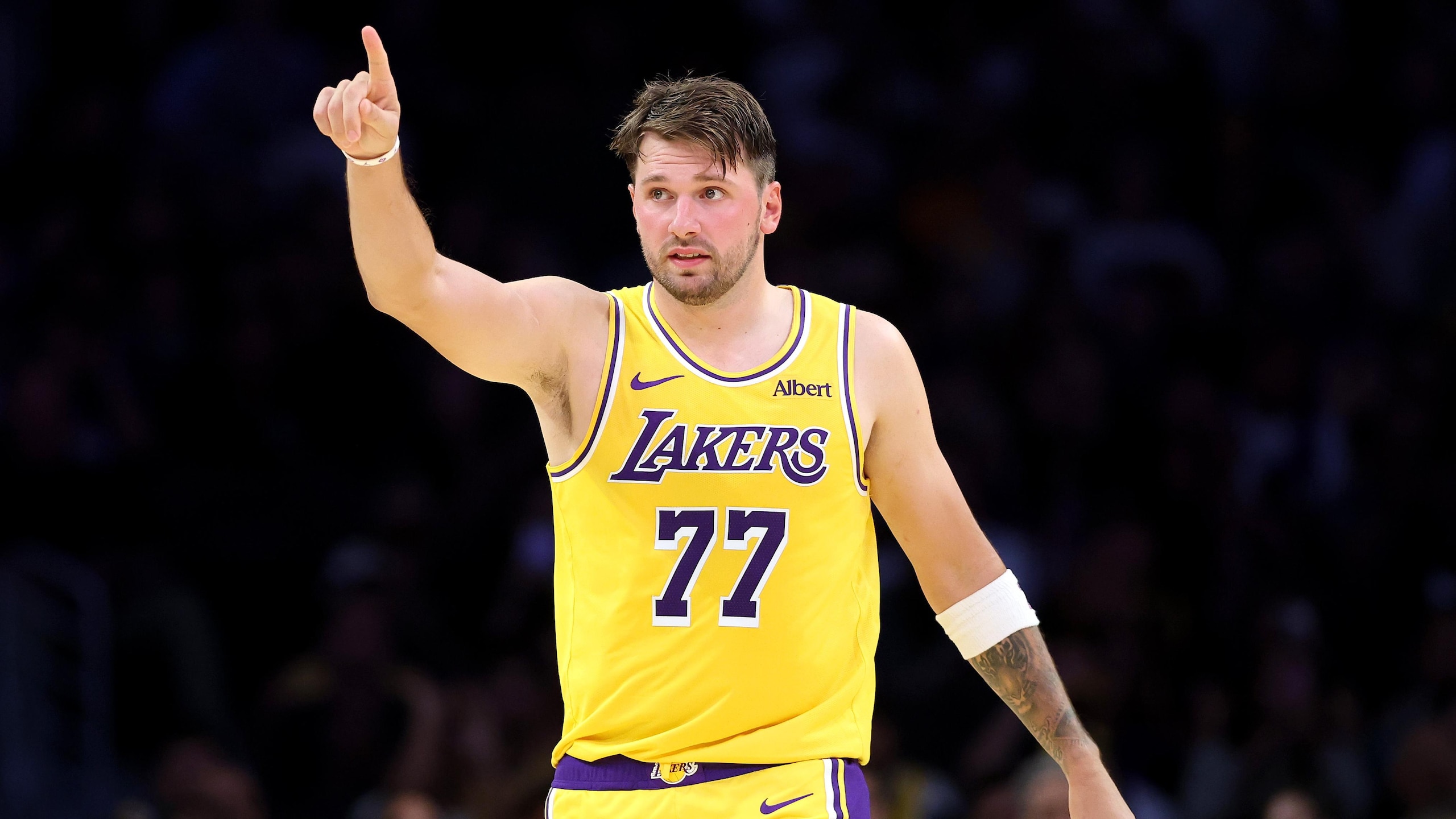
The Los Angeles Lakers are built to withstand poor three-point shooting nights better than most. Anthony Davis' dominance inside creates second-chance opportunities, and the emphasis on pushing the pace produces plenty of transition points to prop up the offense.
Still, it's difficult to imagine even the Lakers surviving long with the second-worst three-point hit rate among playoff teams entering Thursday night's game in Golden State (only the New York Knicks have been worse). Add to that the highest turnover rate of any team team still standing (other than the Knicks, again), and L.A. is grossly overdependent on paint dominance and transition scoring—ironically, much like the Memphis Grizzlies team they bounced from the first round.
LeBron James has had several long-range clunkers and went a combined 6-of-41 on threes from Game 2 against the Grizzlies to Game 1 against Golden State. He connected on 3-of-8 attempts in Game 2 versus the Warriors, but he's not the only one who has been on a cold streak. Dennis Schröder, Malik Beasley, Troy Brown Jr., Jarred Vanderbilt and Davis (albeit on low volume) have all struggled.
Shockingly, Rui Hachimura is the only Lakers regular converting triples above a 40.0 percent clip. And he was efficient once again Thursday night knocking down 4-of-6 from deep in 22 minutes. But if he regresses to his career rate of 34.7 percent, the Lakers may find themselves without a single threatening spacer.
D'Angelo Russell and Austin Reaves are too dangerous to be dismissed beyond the arc, but it's not hard to imagine the Warriors ignoring just about everyone else. (Even Russell and Reaves combined for just 1-of-8 from deep in the Game 2 blowout loss.)
Los Angeles may still have enough size, physicality and full-court oomph to keep the points coming, particularly against a Warriors team that will inevitably go smaller as the series progresses. But the degree of difficulty will get extremely high if the Lakers don't find a way to can a few more treys.
Miami Heat: Injuries
5 of 8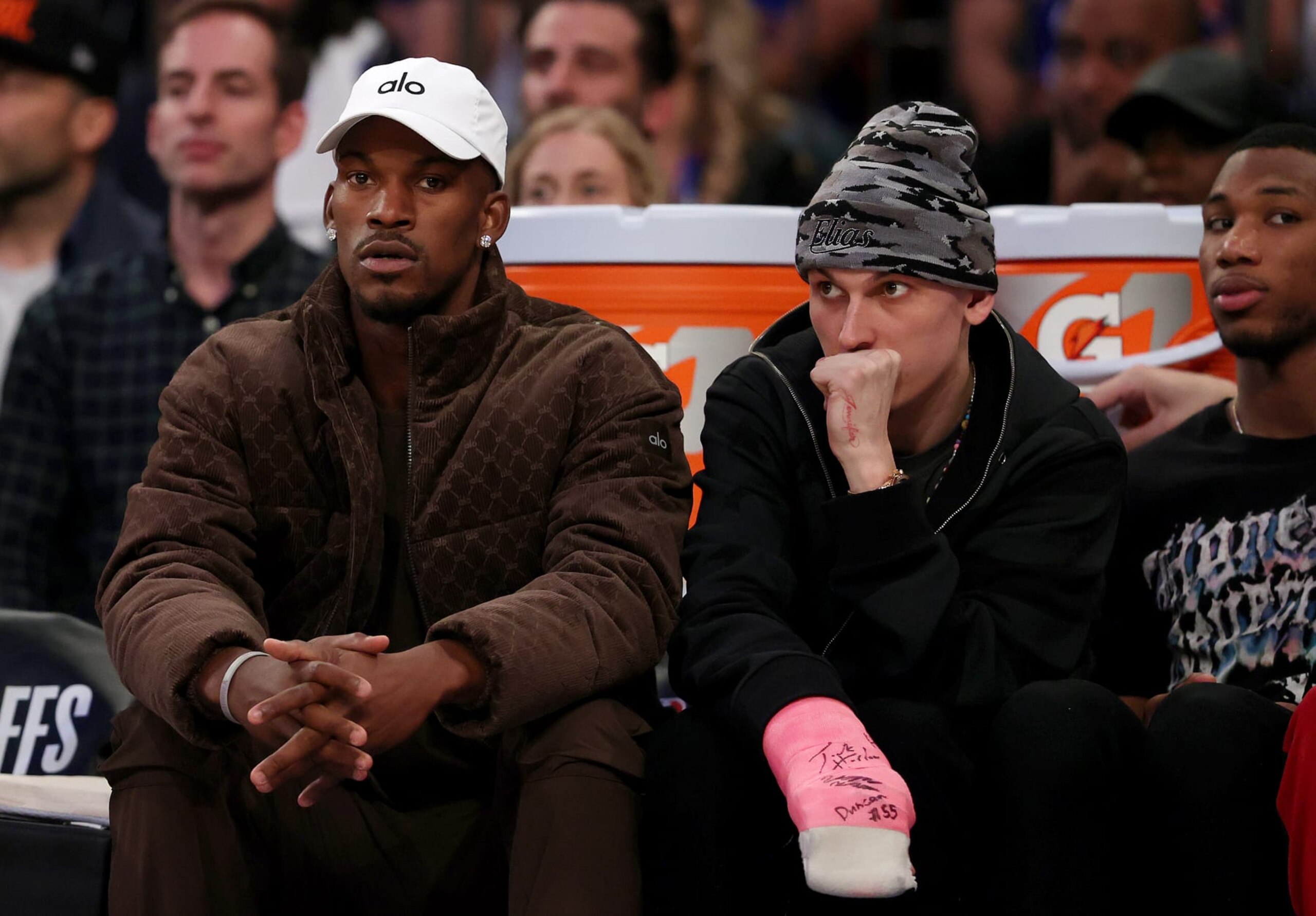
We'll only go to the injury copout once, but there's no better team to use it on than the Miami Heat. Jimmy Butler was the undisputed MVP of the first round and was well on his way to a second-round repeat when he sprained his ankle late in Game 1 against the New York Knicks.
Fortunately for Miami, Butler had already put up 25 points, 11 rebounds, four assists and two steals while shooting 8-of-16 from the floor. The Knicks curiously opted not to attack him as he hobbled around the court in the closing minutes, and the Heat secured a win that flipped home-court advantage in their favor. It's not a stretch to say Miami probably would have left New York with two wins had Butler played both contests.
Their odds would have been even better with a healthy Tyler Herro, who logged a grand total of 19 minutes against the Milwaukee Bucks before a broken hand shelved him in Game 1 of that series.
No team is the same when its stars go down, but the Heat were particularly vulnerable to the loss of key offensive players. Miami finished the regular season as the No. 25 offense, by far the worst ranking of any playoff team.
Lineups that didn't include Herro and Butler were almost laughably inept during the year, posting an offensive rating of 103.3, more than six points per 100 possessions worse than the figure the Charlotte Hornets' 30th-ranked attack put up. Even lineups with Herro off and Butler on struggled, getting outscored by 4.5 points per 100 possessions.
Improved shooting and Butler's takeover efforts transformed the Heat into an upset-hunting playoff juggernaut. If that ankle heals up, Miami will resume its run. If it doesn't, the Heat won't score enough to continue contending.
New York Knicks: Half-Court Offense
6 of 8
After a five-game rock fight with the Cleveland Cavaliers in the first round that saw them average just 99.6 points per game on a 52.4 true shooting percentage (league average during the season was 58.1 percent), the New York Knicks are redoubling their bricktastic efforts against the Heat.
Though they engineered a split in New York by taking Game 2 from the Jimmy Butler-less Heat, the Knicks rank dead last in half-court scoring efficiency among remaining playoff teams. Their offensive survival depends largely on Mitchell Robinson's relentless offensive rebounding and whatever extra points they can scrap together in transition.
The Knicks offense ranked behind only the Sacramento Kings in points per possession during the season, and they slotted in at a respectable 11th in half-court efficiency. As you'd expect, though, that figure was juiced up by the second-best offensive rebounding rate in the league.
Some of the Knicks' issues owe to the competition. Cleveland (first) and Miami (seventh) were among the NBA's best defenses during the season, so it's no surprise they've performed well in the playoffs. Julius Randle and Jalen Brunson have also battled ankle injuries, diminishing the Knicks' only two consistent shot creators. Somewhat surprisingly, but in a way that will likely delight the notoriously hard-nosed and defense-obsessed Tom Thibodeau, New York's survival may depend on its ability to get stops.
Its offense, especially in the half court, hasn't been good enough.
Philadelphia 76ers: Too Few Freebies
7 of 8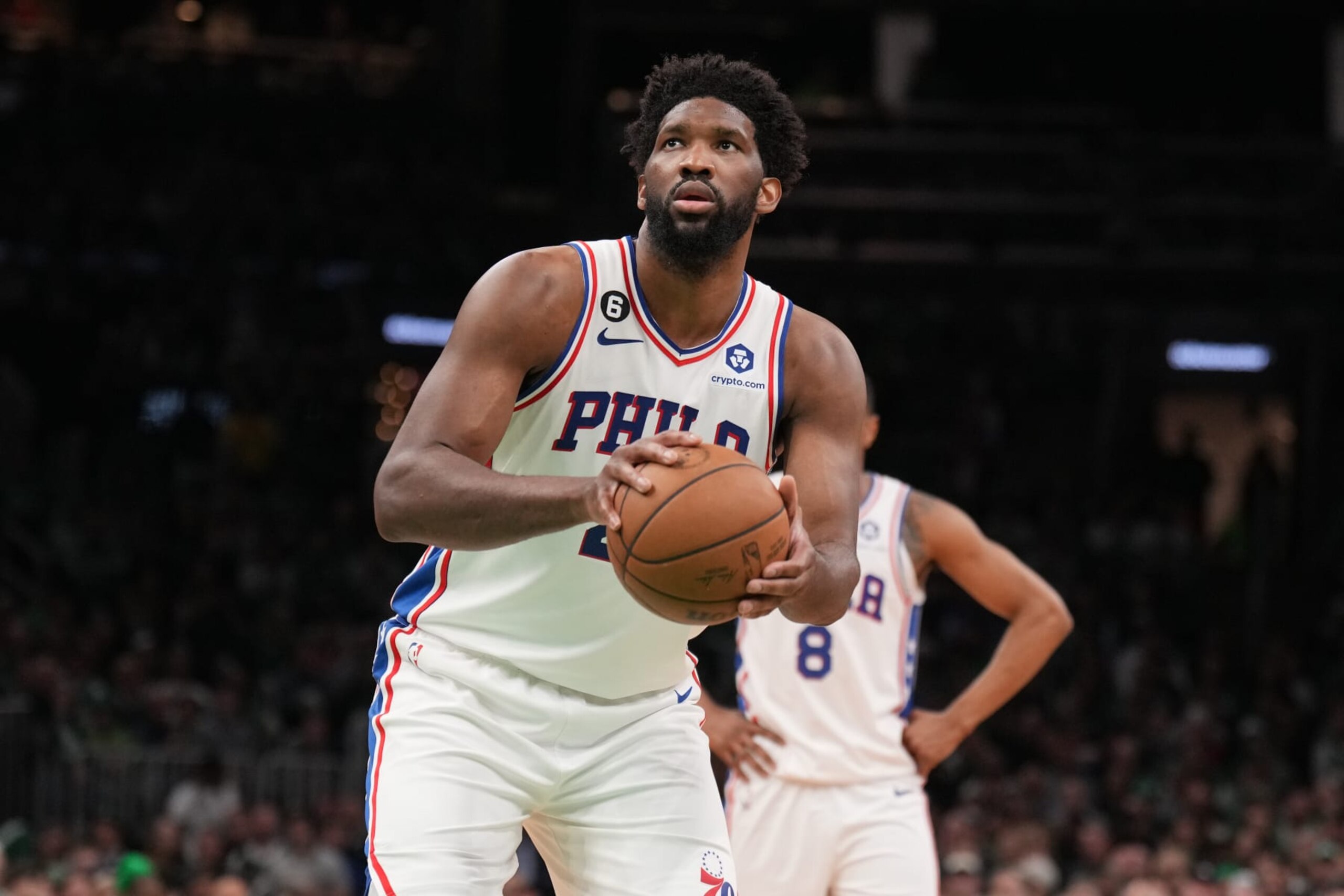
The Philadelphia 76ers led the league by a country mile in free-throw rate (the number of foul shots attempted per 100 field-goal attempts) during the season, which is no great surprise with Joel Embiid routinely forcing overmatched defenders to hack him.
Reliable foul-drawing was a huge reason the Sixers finished third in offensive efficiency; it doesn't matter if you're having an off night from deep or miss a bunch of layups when you can count on tons of points at the stripe.
The postseason has been different. Embiid's absence in Game 4 against the Brooklyn Nets and Game 1 against the Celtics is a factor, but it's still jarring to note that the Sixers rank second-to-last among remaining playoff teams in a stat category they dominated during the year. Only the Celtics get to the line less frequently, but that's less of a problem for a team that gets up 50-plus threes with regularity.
The Nets doubled Embiid and forced the ball out of his hands before he had a chance to sucker defenders into fouls, and Boston has been excellent at avoiding fouls in general during the playoffs.
Still, a key component of the Sixers' offensive success has been MIA through a half-dozen playoff games, and you have to wonder whether they can summon enough long-range volume and interior efficiency to make up the difference.
Phoenix Suns: Math
8 of 8
Anyone who predicted the Phoenix Suns' highly accurate mid-range attack would be both a blessing and curse got to nod smugly at halftime of Game 1 against the Denver Nuggets. Despite shooting 55.0 percent from the field, Phoenix trailed by 17 points.
There's something to be said for sticking to what works, and Phoenix's success as a two-point jump-shooting team has produced no shortage of success. It got the Suns to the 2021 Finals and took them to 64 wins a year ago. With Kevin Durant adding to the barrage, you could forgive Phoenix for staying true to its preferred strategy.
But also: Three is more than two.
Phoenix can succeed with its current shot diet, but not if it fails to correct some other math discrepancies. In addition to Denver making 10 more total threes for the series, the Suns have also piled up 25 turnovers to the Nuggets' 19 while attempting 22 free throws against Denver's 36. If you're going to take shots with lower expected value than that of the opponent, you can't also lose the possession and free-throw battles.
Another number crunch arose in Game 2, as Chris Paul suffered a strained groin that will likely keep him out through at least Game 5. Already painfully thin and asking for massive minute totals from its stars, Phoenix just saw its depth chart get even shorter.
Denver has gotten contributions from several reserves, with Bruce Brown, Jeff Green and Christian Braun all making impacts in support of Nikola Jokić, Jamal Murray and the rest of the starters.
The Suns bench was already failing to measure up, and now the team will be without a key starter for at least the next handful of games. Framed another way, the number of players Denver can count on was already greater than Phoenix's, and that math is now skewed even more favorably for the Nuggets.
Stats courtesy of NBA.com, Basketball Reference and Cleaning the Glass. Salary info via Spotrac.
Grant Hughes covers the NBA for Bleacher Report. Follow him on Twitter (@gt_hughes), and subscribe to the Hardwood Knocks podcast, where he appears with Bleacher Report's Dan Favale.

.jpg?w=2560 "Mahomes Told Teammate to Leave Meeting")
.jpg?w=2560 "🚨 Week 8 AP Top 25 Poll")
.jpg?w=2560 "Baker Gets Glove From Rays 🧤")
.jpg?w=2560 "Steelers Roll Saints in Paris")
.jpg?w=2560 "5 Teams Eyeing Jonathan Taylor")
.jpg?w=2560 "NFL investigating Eagles")
.jpg?w=2560 "Updates from EVERY Game")