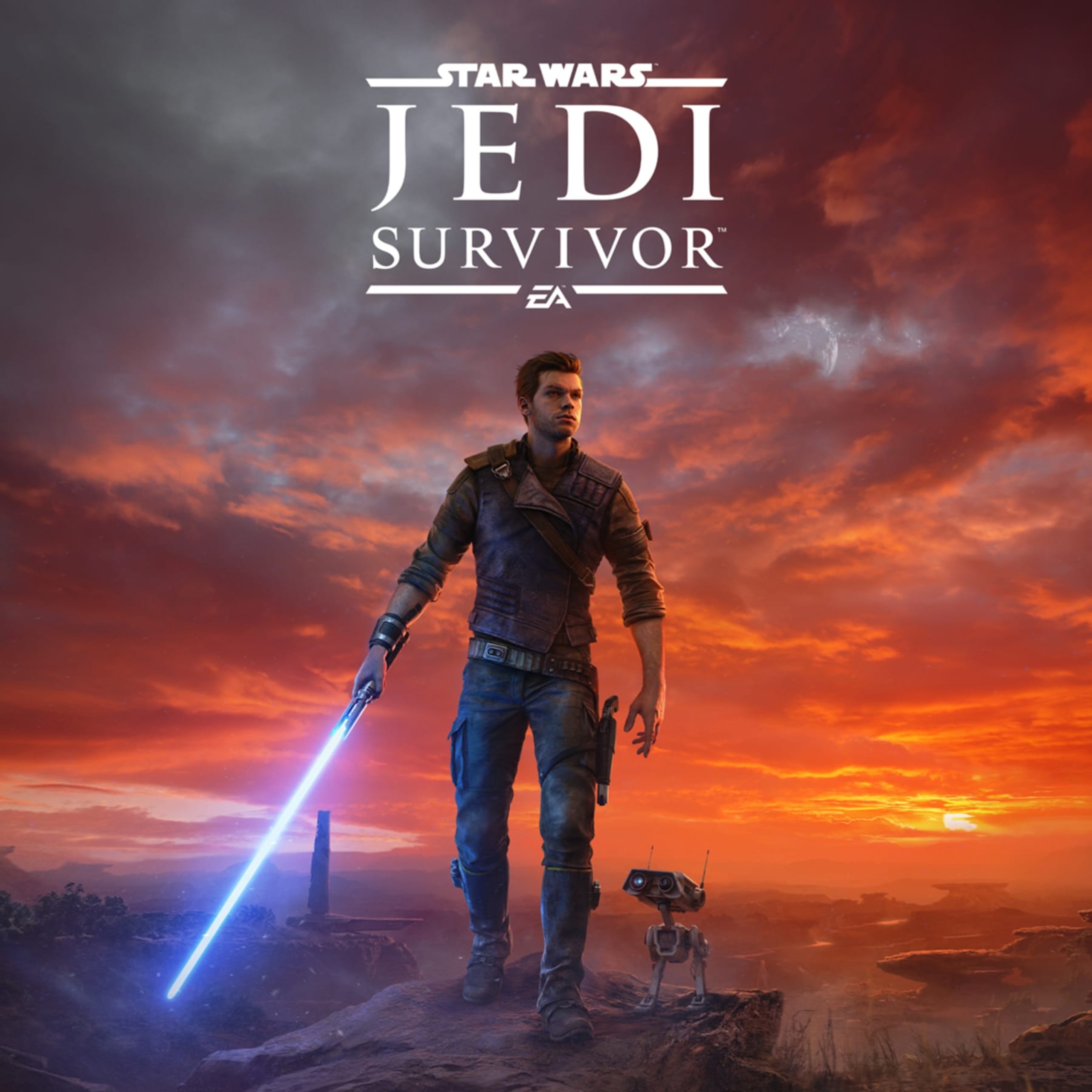

Star Wars Jedi Survivor Review: Gameplay Impressions, Videos and Speedrunning Tips
The calendar might only say April, but Star Wars Jedi: Survivor carries bigger expectations to its release than nearly any game slated to come out in 2023.
A sequel to 2019's Star Wars Jedi: Fallen Order from developer Respawn Entertainment, Survivor feels like a pivotal moment in this latest generation of video gaming.
Simply put, will the follow-up to a surprising, best-ever entry in a series as historic as Star Wars simply offer more of the same, or expand into a bar-setting series in the industry?
TOP NEWS

New NFL contenders starting to emerge after Week 4
.jpg?w=2560 "Cardinals Giants Football")
NFL investigating 2 referees for separate viral exchanges

Deion Playbook Found at Hotel
One quick glimpse at the second installment in the Cal Kestis saga offers an answer gamers will like.
Graphics and Gameplay
Fallen Order was so awe-inspiring from its opening scene for more than its industry-best graphics. There was a clear affection and attention to detail for the source material unrivaled in gaming even today and the sheer scale of it, making Cal and the player feel tiny in an overcrowded universe, was stunning.
Rest assured that translates to Survivor and is even better. Yes, the environments look great, from stunning weather effects like rainstorms to monstrous enemies that tower over Cal. Mist appropriately coats jungle areas, the notable age of ruins tells the story without a word and the physics of traversing environments and combat look great. Faces are crisp, emote impactfully and the sound design is as realistic as it gets, as if sitting in a theatre seeing the latest installment on the big screen.
But it's the scale that really sets the tone. Like Cal working in the gargantuan graveyard of Clone Wars ships for scraps in Fallen Order, the sequel hits similar tones throughout. Bonus points, again, for the game keeping a minimalist HUD that doesn't clutter the screen.
That's evident from the game's very first location, Koboh, a de-facto base of operations and by far the biggest planet yet in the series. It's very carefully constructed in that the middle area is extremely dense with buildings, things to do and people to see, before whisking out into outskirts with long-forgotten things to discover the farther a player gets from it.
It's a little uncanny just how much more fleshed out the locales like this are in terms of people of all races. The first game was tightly zoomed on Cal and crew, but right out of the gates this feels much more immersive with players immediately able to meet new races, bounty hunters and more.
This means a more universe feel to the setting as opposed to just linearly going from place to place. It's closer in feel to something broad like Mass Effect, which is a huge upgrade. Naturally, roaming around and meeting folks leads to uncovering "rumors," the game's savvy way of handling sidequests.
The Holomap is thankfully re-tooled and streamlined, meaning it's far less clunky and confusing compared to the one found in Fallen Order. Cal can still use the Visor to mark locations and, as if to wink-and-nod at how much bigger these areas are, he can uncover and utilize a fun array of mounts to help travel the land.
It's not just Koboh, either, nor is it always super obvious. The environments are affectionately crafted in a way that rewards those who pay attention to detail. Players will explore other dense maps packed with secrets tucked into cracks and some well-hidden climbable paths. Even routing of an area is a big improvement for the series—gone are the endless droves of one-way slides in linear fashion. Instead, Cal consistently sets up shortcuts in the environment that let him backtrack quickly if necessary.
Backtracking to old areas is also important, as the Metroidvania expansion of older places thanks to new abilities is fantastic. Cal will consistently come across new skills or abilities that help him access previously unreachable areas.
Of course, a dense world with things to do wouldn't mean much if the controls and gameplay weren't tight. Luckily for all involved, the original game was air-tight in this area, with precise, fun controls and a Dark Souls-esque gameplay loop that was oh-so-perfect for the Star Wars universe.
Returning players will immediately notice how faster general gameplay is, another example of the game's design theme of taking lagging parts of the original and expanding. Cal climbs faster, he's far more agile overall and things just feel more fluid like one would expect of a Jedi.
Cal gets new stances and Force powers, of course. For the former, it's a handful of stances that each have their own benefit and strengths against certain enemy types. For the latter, it's a barrage of new ways to interact, with an early favorite being using a shielded Stormtrooper machine gunner as a human shield while taking out his friends. Things can still get a little messy against groups of enemies, but not usually to the point of frustration.
Another first-game complaint washed away immediately—enemy variety. Cal encounters bounty hunters, droids and monsters of all kinds right out of the gates and it only keeps opening up from there.
This time out, dismemberment is on the menu for non-robot enemies, just an exclamation of sorts on a brilliant combat package that gives players a chance to really craft their own Jedi playstyle despite being restricted to one character. There's an overall deepening of the darkness from the first game's presentation, a gritty realness. Early, for example, Cal can pause and listen to the banter of soldiers simply talking about where to go eat after their shift, only to chop them up moments later.
All of the additions make each combat encounter feel more unique and less video-gamey, which helps success feel even more rewarding as players must juggle their chosen abilities with proper timing on strikes, parries, and dodges.
There's even a sort of revenge system too, as after being defeated, if Cal goes and damages the yellow-highlighted enemy that downed him, he'll receive rewards.
Players will again rest up at meditation circles when far from friendly environments. Despite the lightsaber and Force abilities, it's a little easy to feel overwhelmed while out and exploring given the toughness of enemies. It's never unfair, but we can argue it near-perfectly captures what it would really feel like in the Star Wars universe to be on the run.
That's the biggest compliment possible for the game in these areas—this is blatantly a passion project of the highest quality and one that takes care to make sure nearly every complaint or deficiency from the original goes addressed.
Story and More
Five years after the first entry, Cal is on the run from the Empire and crash lands Koboh, where he detects Tannalor—and away the story goes.
That's simplifying things, but fans of the overarching series know what to expect. It's a tale of survival, after all, as Cal tries to outrun the Galactic Empire and those others also intent on wiping out the survivors of Order 66. There is once more a heartfelt tale here with fun story beats, plus that ever-important Star Wars emphasis on camaraderie.
Aiding this sense of storytelling immersion along is a robust list of side characters and environments themselves that tell their own tale. It's almost hard to describe how dense some of the locales like Koboh are given how staggering the difference is from the first game. And the game uses such places as a vehicle to a massive list of side content.
In the last game, non-story items were largely limited to optional battles and collectibles. Not so here—there are side missions, puzzle rooms, extra fights and other things, to keep it mostly spoiler free. Point is, players are never not rewarded for sidetracking and it's one of those games where it's almost impossible not to veer off from the main story.
One can almost feel Respawn experimenting with new territory in some of these side items, too. One, for example, is a wave-based mode of streaming combatants Cal must overcome, which varies up enemy types as he progresses.
The same theme of dramatically expanding on the first game's more lackluster bits includes customization. Players can tune lightsaber colors very early this time, the unlockable apparel goes much further than an assorted variety of trenchcoats and players can make Cal their own with all sorts of hairstyles and facial hair, moving him far and away from the baby-faced killer of the first game, which is pretty fitting.
Progression hits the same notes. Every stance and skill now seems to have its own skill tree, a big expansion of investment that allows players to mold Cal as they see fit. This is far more complex than the last game's system and critically necessary, as skill points are an invaluable reward to make many of the game's side content rewarding.
Survivor even launches with a new-game plus mode, which refreshingly comes equipped with some new twists to gameplay that more games in the industry should be in a rush to emulate.
The game's Tactical Guide is appropriately dense, offering a treasure trove of information on just about everything in the game. A huge list of general options and accessibility options, including control modifications, navigation assistance, slow mode and quite a bit more, round out one of the better menu systems in gaming. Plus, the game's menus, including skill trees, are intuitive and visually fitting.
Plus, the game runs great most of the time, with very little in the way of FPS drops, though the roughly 130GB requirement on PC is a tough one.
Speedrunning Tips
Fallen Order was one of the most interesting speedrunning games in modern times.
It didn't take long for would-be runners to figure out critical sequence breaks, often via creative pathing jumps, and target-lock jumps to get to places earlier than intended (glitches introduced in updates and the infamous PS5 cutscene glitch didn't hurt, either). Never mind, of course, the immense display of skill needed to excel in the tough combat.
Survivor shouldn't be any different. Things like the Dual Wield stance make it easier to juggle multiple enemies and scenarios. And now Cal has access to mounts and the game—thankfully—acknowledged complaints about the first and allows fast travel via Meditation Points.
In short, proper routing, memorization and standard things like skipping cutscenes and leaning into fast travel will produce the quickest initial times.
Like before, it shouldn't take too long for critical sequence breaks and the like to emerge, likely positioning Survivor to live up to its predecessor in this way, too.
Conclusion
In many ways, Fallen Order felt like Respawn just getting its footing in the third-person, Star Wars universe.
Survivor, then, is more like a full-on sprint. The game has been expanded in nearly every conceivable way, offering denser environments, strengthening the intimate connection to its source material while letting players
Granted, Survivor wouldn't be possible without Star Wars, so it's fitting that it is not only one of the best video games to date for single players, it's probably earned a spot atop the mountain of Stars Wars games of all time alongside the likes of Knights of the Old Republic.
For other future games, the task of leapfrogging Survivor is immense. But for Respawn, owners of a Game of the Year favorite now, the progression shown here suggests the next will be even better. Star Wars and/or gaming fans are fortunate such a team has access to the untapped treasure trove of a universe and though the wait for another installment will feel excruciating, Survivor is more than equipped to exceed Fallen Order in longevity.
.jpg?w=2560 "Hill Injury Update Football")
.jpg?w=2560 "Titans Giants Football")
.jpg?w=2560 "Tyreek makes another cryptic post amid Chiefs rumors")



