NBA Players Under 25 Who Need a Trade to Shine
Changes of scenery in the NBA are so often talked about in star-player terms. Marquee Name X needs to be on a squad with a more fitting timeline. Team Y needs to trade Star Z and begin rebuilding and/or to avoid bankrolling his next deal." So on and so forth.
Even when the calls for new digs venture beyond concrete stardom, they're usually focused on established talents—role players, ascending youngsters or could-be finishing touches for one of the league's premier (or most desperate) contenders.
In reality, though, it's lesser-proven names and youngsters with distressed value who need new situations more than anyone.
This thought exercise is for them.
Star potential is not a prerequisite for cracking this list. On the contrary, all or most of the these players fall well short of that benchmark.
Overcrowded rotations and diverging timelines will be prevailing themes. Players on teams who have fairly sizable roles now and could soon usurp people in front of them will not be considered. (Think: Onyeka Okongwu in Atlanta.) This process is more about identifying promising talents who don't have a ready-made pathway to peaking with their current team.
R.J. Barrett, New York Knicks
1 of 5
R.J. Barrett signed a four-year, $107 million extension, with unlikely incentives that can inflate it to $120 million, before the start of this season. That financial commitment from the New York Knicks infers big-picture intent.
Or rather, it used to.
Jalen Brunson's caps-lock ARRIVAL coupled with Julius Randle's All-NBA-worthy renaissance significantly diminishes both the 22-year-old Barrett's long-term importance and leeway. He is best served getting more on-ball reps, but he's not yet earned them on a team looking to win now. His finishing around the rim remains decidedly below average, he continues to bailout or indulge weird takeoff points on his drives and he has no pull-up jumper of which to speak.
Keeping Barrett would be more palatable, for both sides, if he actualized his value as a three-and-D wing. He has done the opposite. His defense slipped this year; he can still hunker down on-ball, but his screen navigation is a seesaw, and he caught the poor-closeout bug. Complementary shooting, meanwhile, is just not something he offers. Barrett knocked down just 27 percent of his wide-open triples from Feb. 1 onward.
Force-feeding him and stomaching the learning curve, sink or swim, is a non-option with Brunson, Randle and Immanuel Quickley all on the roster. Barrett is better off somewhere that promises better spacing for his attacks, baptism-by-fire creation opportunities and, above all, the license to fail without seeing his role reimagined or cut altogether.
Isaiah Jackson, Indiana Pacers
2 of 5
Isaiah Jackson made more appearances and logged more minutes during his second season with the Indiana Pacers than he did as a rookie. Yet, his spot in the rotation with Myles Turner healthy was, to say the least, topsy-turvy. Playing him at the 4 is essentially a no-go, and the presences of Jalen Smith and, to a lesser extent, Daniel Theis capped not only Jackson's role but his guarantees.
This could technically become a non-issue. Theis isn't part of Indy's bigger picture, and Smith can play some 4. But while Jackson brings a lot of bounce, mobility and one-part hidden gem, 1.5-parts chaotic ball skills, he isn't nearly consistent enough yet on the defensive end. That will be a deal-breaker in plenty of situations, as Basketball, She Wrote's Caitlin Cooper expertly unpacked:
"According to Cleaning the Glass, Jackson ranks in the 98th percentile among bigs in block percentage, but he can be overzealous in his desire to swat everything...Laterally, he can keep guards in front. Where the struggle becomes real is with his backward mobility, as he can be too quick to open his stance and oftentimes has to rely on his recovery speed...Meanwhile, there are also moments where he seems confused as to what the coverage is supposed to be."
Youth is a viable excuse here. Jackson doesn't turn 22 until January, and the Pacers with a healthy Tyrese Haliburton run spacier lineups that can make use of the former's best offensive attributes. Still, with heaps of cap space and a fast accelerating timeline, Indiana figures to add multiple frontcourt bodies—which would foment further uncertainty for a raw-ish big who already has no path to a much higher-volume role so long as Turner remains in town.
Kira Lewis Jr., New Orleans Pelicans
3 of 5
Recovery from a torn right ACL cost Kira Lewis Jr. most of his sophomore year and then a sizable chunk of 2022-23. When he was available, he barely played. He finished with just 25 appearances and cleared 15 minutes in a single game only five times.
Sparing usage would make sense if the New Orleans Pelicans were juggernauts and fully healthy. They ended up being neither. Primary ball-handlers Brandon Ingram (37 absences) and Zion Williamson (53 absences) missed a combined 90 games, and despite what head coach Willie Green's rotation implied, Devonte' Graham did his damnedest to play himself off the floor prior to getting flipped at the trade deadline.
Yes, even at partial strength, the Pelicans were favoring immediacy. That doesn't jibe with the developmental arc of someone in their age-21 season who didn't clear 100 career appearances until late March.
At the same time, Lewis looked the part of a human blur shortly after his return. Given New Orleans' dearth of rim pressure and overall lackluster offense post-Zion injury, the now-22-year-old deserved more bites at the playing-time apple.
Lewis is extension-eligible ahead of his fourth year. It's difficult to see anything getting done. The Pelicans need more surrounding shooters to optimize his north-south attack mode. (He drilled 44.1 percent of his own threes, but that clip came on fewer than 35 attempts.) And if Lewis couldn't command experimental looks without Zion, he'll be hard-pressed to get them when the injury-prone megastar returns—failing a major roster shakeup.

Cam Thomas, Brooklyn Nets
4 of 5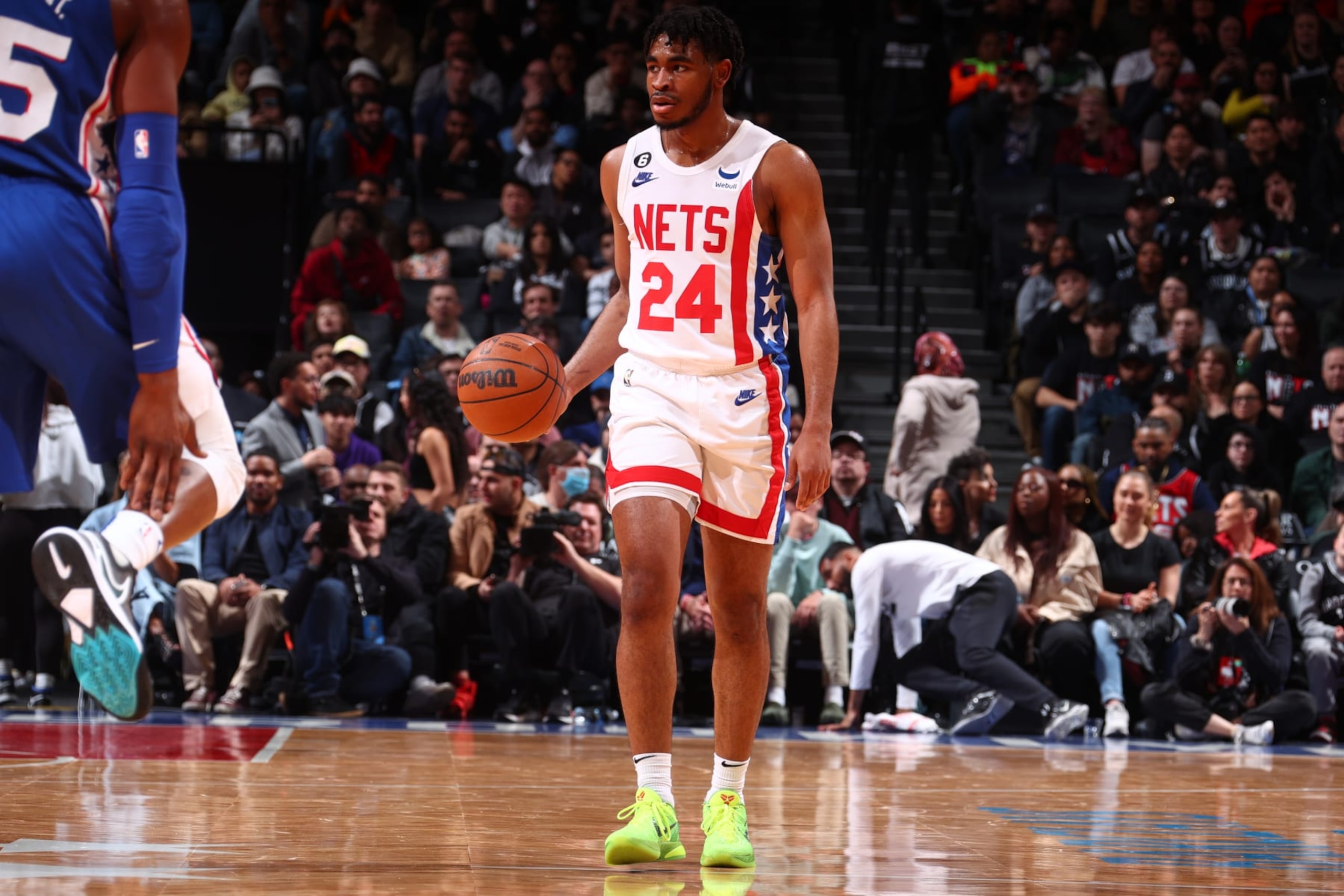
Cam Thomas is 21 years old and has already topped 40 points in a game on four separate occasions. That degree of bucket-getting, at his age, is beyond rare. Before this season, only 10 players had ever done the same before their 22nd birthdays: Carmelo Anthony, Rick Barry, Luka Dončić, Kevin Durant, Anthony Edwards, LeBron James, Michael Jordan, Tracy McGrady, Shaquille O'Neal and Trae Young
And yet, Thomas barely ever registered as a regular part of the Brooklyn Nets rotation this season. His most consistent stretch of playing time came after Durant's MCL injury and through the team's impromptu pivot around the trade deadline.
Limited usage was less damning when the Nets were contenders headlined by two megastars, but it's harder to write off now that Durant and Kyrie Irving are gone. Thomas started racking up DNPs again by early March, and head coach Jacque Vaughn doesn't sound too inclined to change course as Brooklyn wages first-round warfare with the Philadelphia 76ers.
Next year could bring a different direction with it, a more gradual timeline that prioritizes the development and discovery of what's not yet known. Don't bet on it, though. The Nets start conveying first-rounders to the Houston Rockets in 2024, and the crux of their core still leans more win-now than win-later.
Indeed, the emergence of Mikal Bridges as an alpha scorer has not voided Brooklyn's need for primary shot creation. Thomas brings some. He just doesn't offer much else, and the Nets need more than just scoring out of their scorers.
Ziaire Williams, Memphis Grizzlies
5 of 5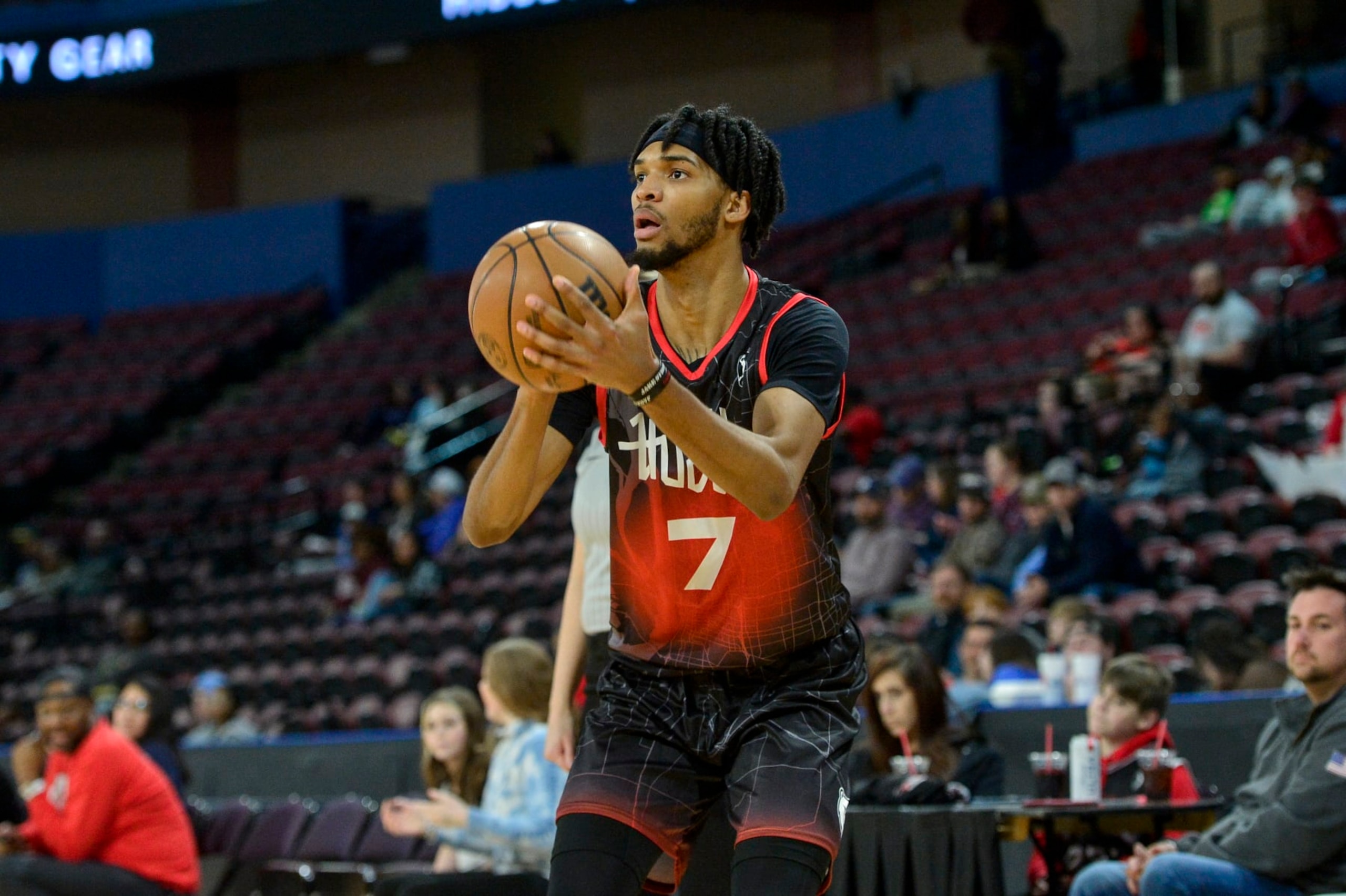
Ziaire Williams spent a chunk of last season starting for a Memphis Grizzlies team with the Association's second-best record. He came off the bench in the playoffs, amid right knee issues, but was still mostly part of the rotation. That's big-time for a rookie.
His sophomore year is an entirely different story.
After missing the start of the year with a right knee injury, he struggled and ultimately failed to remain part of the Grizzlies rotation. Most of his court time came with their G League affiliate, the Memphis Hustle.
Even now, as the Grizzlies grapple with injuries on the frontline and to Ja Morant, Williams remains on the outskirts of their playoff plans. And you can't really blame them. Those extended flashes Williams delivered last year—fluid floor navigation, hints of a pull-up jumper, defensive malleability, dabs of corner-three marksmanship—have almost completely dissipated.
Memphis has not outgrown its need for a premier wing, which could theoretically bode well for the 21-year-old's long-term utility. But re-entering the fold isn't exactly a given. The Grizzlies deepened their wing rotation with the acquisition of Luke Kennard, Desmond Bane's star ascent continues and head coach Taylor Jenkins is more inclined to use Santi Aldama, David Roddy, Xavier Tillman Sr. and (the injured) Brandon Clarke at the 4.
Dillon Brooks could open up some minutes if he leaves in free agency, but there's no guarantee extra ticks go to Williams. Memphis is no longer plucky or coming out of nowhere. It's entrenched as a postseason threat, with a title window. Wing solutions, at this stage, seem more likely to come via trade than internal development.
Unless otherwise noted, stats courtesy of NBA.com, Basketball Reference, Stathead or Cleaning the Glass. Salary information via Spotrac.
Dan Favale covers the NBA for Bleacher Report. Follow him on Twitter (@danfavale), and subscribe to the Hardwood Knocks podcast, co-hosted by Bleacher Report's Grant Hughes.

.jpg?w=2560 "Grading WWE Raw 🔠")
.png?w=2560 "Allen's BRUTAL 1H Stats 🫤")