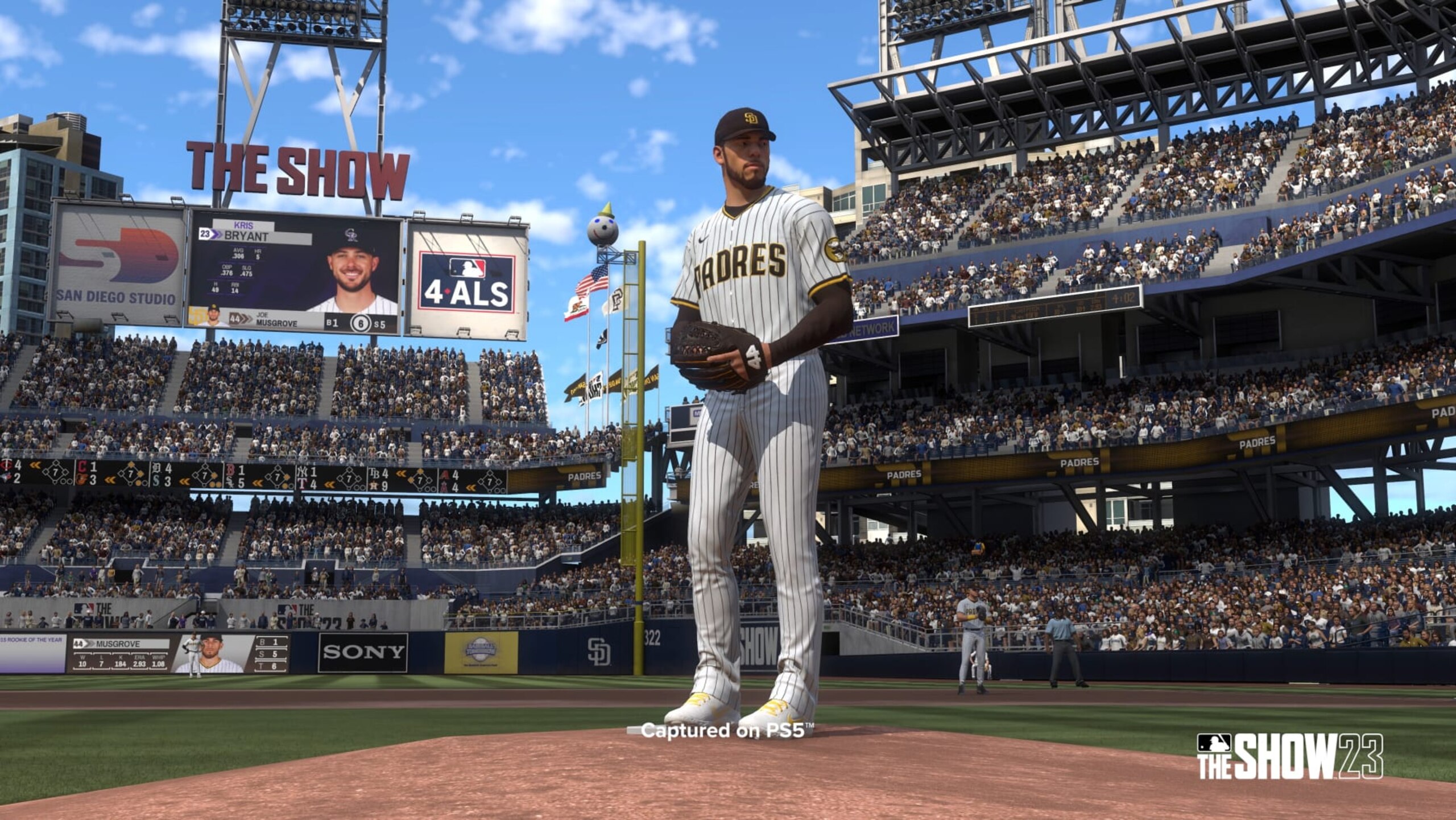


MLB The Show 23 from developer San Diego Studio continues to expand on the most robust offering in the annual sports video game sphere.
This year, it accomplishes the feat by smartly tweaking gameplay with some oft-requested features and adds multiple new game modes to the experience, including one that dives deep in the sport's rich history.
Seeing as this is Year 3 for The Show on next-generation consoles and Microsoft game systems, the expectations for another improvement were already sky-high.

.png?w=2560)
While constantly improving on what has been the best sports game running for a long time now is a tall task, The Show 23 seems likely to follow a series trend by competing against itself well enough to again drop the best entry in the series yet.
Gameplay
The Show 23 doesn't change much of the tried-and-true gameplay experience, but the impact is meaningfully positive where tweaks happen.
One is the long-awaited presence of a legitimate two-way system. Players can now properly assign a designated hitter, permitting things like one star serving as both pitcher and designated hitter.
Another is player ratings feeling like they matter more than ever on defense. The disparity between players on opposite ends of the Fielding rating spectrum feels more dramatic than ever. Fielders on the lower end are blatantly slower to react off contact.
Then there are the changes to the throwing meter. If players engage with the "Button Accuracy" setting, that green part of the timing-based meter that signifies an accurate, timely throw now also moves on tough infield and outfield throws.
It's a nice video game-y way to keep things fresh and create a skill gap. The green section of the throwing matter remaining static for years let seasoned players auto-pilot even difficult throws. Now that the green section moves, playing defense is more engaging.
It's another way to make player ratings matter more, too. The most popular example is if a player botches a throw to first base on the meter, a first baseman with a high fielding rating can still bail the player out, but it's not the lone example.
Keep in mind these additions are layered atop the already-fun, snappy gameplay with huge skill gaps. Last year, Amateur and Minor difficulties debuted and were successful at making gameplay even more accessible to players of all skill ranges. Those, plus robust tutorial and practice systems make for a rewarding player experience if undertaken.
It's hard to poke a hole in the gameplay loop when so many different varieties of control options, settings and styles of difficulty present themselves to players. This is the best The Show has felt yet, both because of the above and the strong marriage of gameplay with the below.
Graphics and Presentation
This has been a bit of a slow burn for the series, as expected. The first next-generation effort didn't present a big gap between versions, but last year's was a massive leap.
This year's game isn't as big of a leap, but players will notice droves of new animations, especially with dives and trying to pluck foul balls that would otherwise land out of play.
Player facial expressions, jersey details such as accumulation of dirt, reflections of lights, shadows and arguably the densest crowds seen in sports gaming strengthen immersion in a way that properly matches the simulation style the series hopes to achieve.
Adding to that is the brilliant broadcast style that keeps seeing creative layerings added atop the already-great package. A stunning feast of different camera angles and detailed graphs make it hard to skip pretty much anything in the pre or post-game.
The tandem of John 'Boog' Sciambi and Chris Singleton in the commentary booth for the second year isn't stale yet, thankfully, and it feels like a ton of new lines make the cut.
It's a little thing, but important nonetheless—The Show 23 tweaks several user interface (UI) elements to boost understanding and ease of use. These upgrades occur in the menus and on the field itself, be it feedback on attempts or the smooth implementation of vast data at a player's fingertips via new directional button commands.
While it was already expected this would be the best-looking game in the series, it's nice to see the journey onto next-generation consoles has gone smoothly enough that something relatively minor like menu navigation and screen cluttering during gameplay got some needed attention.
Storylines and More
Negro Leagues Baseball Museum president Bob Kendrick stunningly narrates this year's spotlight new game mode: Storylines: A New Game Experience.
Storylines provides an interactive history lesson of sorts for players by zooming in on the seven-team Negro Leagues formed in the 1920s and eight specific players from that era, including Jackie Robinson, Buck O'Neil and six others.
The mode is a refreshing lesson of the legends of the era and a clear passion project that pulls off many feats while blending gameplay and presentation elements in an almost documentary style.
Best of all about the first effort being such a hit is that the series plans to continue adding specific player spotlights atop it in future iterations of the game.
A year ago, The Show 22 took a big risk by re-tooling Diamond Dynasty. Now the follow-up does something that feels even riskier in a few ways—by yanking away the power-creep rug and simply letting players have access to 99 overall stars right away.
Core Seasons (every six-eight weeks) are now a staple of the experience. Some seasons will ask players to only use cards from specific sets, while the Core Set of cards is eligible for usage in every season. This notably doesn't carry over to other modes with Diamond Dynasty.
Also new and critical are Captain Cards, which give a significant boost to an overall team once players meet tier requirements. At its most basic, a Captain Card that matches the team of other roster members provides the boost. Teams can have a captain hitter and captain pitcher for a total of two.
Simply handing out 99 overalls is a bold move, but it does feel like it pays off. Instead of grinding endlessly for these cards, the focus of players now goes to build-crafting unique teams, which is arguably what a card-collecting mode should be. This only works so well because new sets will eventually shove aside older sets that aren't usable over time, preventing things from getting stale.
We're not done with Diamond Dynasty just yet, either—thank the new World Baseball Classic mode within.
Leaning into the must-see nature of this year's WBC, an entire mode within Diamond Dynasty will allow players to suit up as their home country and unlock jerseys, bat skins and even flashback players while playing key moments and tackling a themed Conquest map.
It's far from the most wild, robust addition to a video game ever. But as an additional thing to do that players will enjoy, further enhancing a robust sports package? The WBC mode is an underrated hit.
While it's usually the headline item this year, Road to The Show doesn't do different enough this time out to command headlines.
That's not to say there isn't anything new and the mode is still one of the best in sports games overall. Taking a created ballplayer from the minors up through experiences like the draft and tackling major league goals for years and years is a blast. So too is that best-in-games blend of presentations that has things like podcasts narrating the player's journey. Fun conversations littered with choices and minigames to boost stats return, too.
But overall, besides face scan implementation and a general necessary revamp of some UI elements, there isn't much new happening. And that's A-OK, considering the mode is still one of the best experiences out there for sports fans.
As one can tell from the pecking order here, Franchise mode didn't get as much attention this year. A much-needed Fog of War feature is finally here in a revamped scouting system. But the needed upgrade to scouting feels like it merely matches other sports titles now and that's about it as far as this beloved mode goes.
The online co-op mode arrived a year ago and was needed but vanilla. As expected, the organic expansion of this mode comes in the form of a ranked ladder for players to tackle while they alternate at-bats and pitching. It still feels a little limited, but it's hard to argue that the 3v3 format isn't fun.
Stadium Creator returns for its own Year 3 as in-depth as ever and again really benefits from the ability to choose between a simple editor or a more complicated one. A nice haul of new templates sure doesn't hurt.
Some of the other checklist items again return. Players can hop into weekly challenges, moments and the Home Run Derby in the quick play section. There are the expected exhibition options and even a retro mode. Postseason and custom leagues, plus custom practices and an in-depth tutorial also offer players a diverse palette.
As always, the game offers a staggering number of options across the board. Accessibility, actual gameplay commands and settings and even precise control over what on-screen information pops up during a game sit in the long lists of options.
Conclusion
Many things have set apart The Show from other sports games over the years.
One of those is the triumphant way it pours love and care into its passion for baseball history and the creative ways broadcast elements blend in with the gameplay.
That's abundantly clear now more than ever with Storylines, a uniquely amazing addition to the best sports game package out there.
As always, The Show pops off the page for its traditional marriage of immersion presentation and simulation gameplay. In recent years, the same care has been put into embracing players of all skill and sport knowledge with open arms, too.
The result is The Show 23, by far the best effort in the series and deserving of every bit of praise set to head its way.
.png?w=2560)
.jpg?w=2560 "Grading SmackDown 🔠")

.jpg?w=2560 "Reported Details of Seahawks-K9 Split")