

Who doesn't love an NBA rankings exercise drenched exclusively in good to great to immeasurably awesome vibes?
Sure, some will interpret this arrangement of breakout players and stars as an attempt to pit participants against one another. That's not the intention.
This instead looks to celebrate the most meaningful and pronounced evolutions of the season. Included players have all exceeded or annihilated expectations and deserve to be commended.
Ranking them is a difficult process. How do you compare an entry into stardom against more demonstrative leaps that don't quite land inside the same territory?
Our hierarchy will take into account three factors: the degree to which a player exceeded expectations, the size of their leap and the difficulty level of their breakout.
Example time! Player A has gone from role player to fringe star. Player B has gone from entrenched star to MVP candidate. Player B will get the nod over Player A because the scale and substance of his jump are both harder and more meaningful.
A handful of these players will hail from the "This came out of nowhere!" club. But the goal isn't solely to spotlight unfathomable rises. It's also about rewarding ahead-of-schedule surges and effusive, sustainable upswings that compel us, in some way, to recalibrate immediate and long-term trajectories.
10. Devin Vassell, San Antonio Spurs
1 of 10
Missing so much time with a left knee injury caps Devin Vassell's standing within this pecking order, and he still needs to be more aggressive on drives or hone an off-the-bounce three if he wants to graduate from "breakout player" to "rising star."
The latter, to be clear, is not out of the question.
Vassell is clearing 19 points and three assists per game while shouldering a materially heavier workload for the Spurs offense. They have him running pick-and-rolls, and his mid-range game is an italics-text weapon. He is downing over 46.5 percent of his pull-up twos.
Through it all, he retains his plug-and-play sheen. Vassell is an excellent off-ball mover and swishing more than 46 percent of his catch-and-fire threes.
Even if he's not a traditional star, the broadening of his offensive horizons suggests the Spurs' rebuild is further along than many think—particularly given rookie Jeremy Sochan's body of work.
9. Nicolas Claxton, Brooklyn Nets
2 of 10
Few players have been more impactful on the defensive end than Nic Claxton, who has the length and lateral speed to switch on to anyone, as well as the interior instincts to deter and erase looks at the hoop.
Opponents are shooting 51.7 percent against him at the rim—the fourth stingiest mark among 207 players to contest at least 100 attempts around the basket. He ranks inside the top 10 of total point-blank looks contested overall.
Yet while Claxton has leveled up his defense, he's taken longer, more meaningful strides on offense. He's shooting almost 80 percent at the rim, which is fun. But he's expanded his portfolio to feature more complicated usage.
Claxton has already made more hook shots (35) than he did all of last season (32) without sacrificing efficiency (46.7 percent). He is also, somewhat quietly, moonlighting on the perimeter. He has banged in 9-of-17 jumpers and looks ultra-comfortable putting the ball on the deck and attacking outside-in. His 35 made shots on drives are more than he had during his first three seasons combined—and come on a 57.4 percent clip from the floor.
8. De'Aaron Fox, Sacramento Kings
3 of 10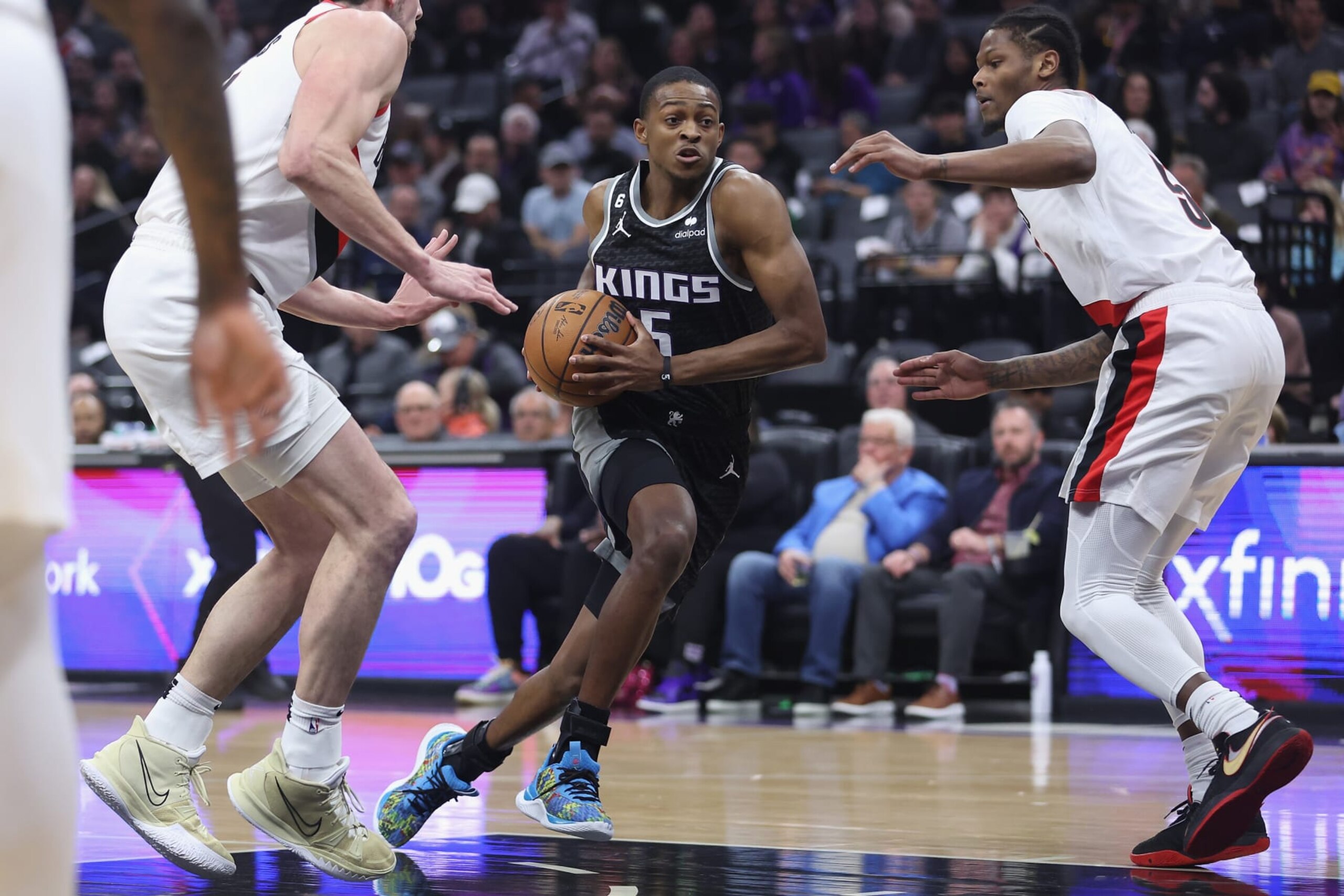
Putting De'Aaron Fox any higher undersells everything he's done in the past. We have seen him hover around the fringes of the All-NBA discussion before, but never this long.
The improvements are subtle, yet they also smack you in the face. He is shooting 77 percent at the rim and ranks inside the 85 percentile of pick-and-roll scoring efficiency—because it turns out floor spacing matters. His mid-range volume will still make some queasy, but it's hard to quibble with his selection when he's burying 51 percent of these looks, which is by far and away a career high.
Domantas Sabonis has, in many ways, streamlined Fox's offensive responsibility. Fox still deserves credit for maximizing his job description and not stylistically clashing with his star big man.
The minutes he logs without Sabonis aren't great. That says more about the KIings' backup big situation than anything. The offense hums during Fox's solo time, and his decision-making has flourished amid comfier half-court confines.
He has, in particular, developed a knack for misdirection. What often looks like 11th-hour panic is really him seeing potential opportunities and using jump-passes and pump-fakes to open them up.
Frankly, if we're being honest, Fox is having the season many want to believe Ja Morant has turned in.
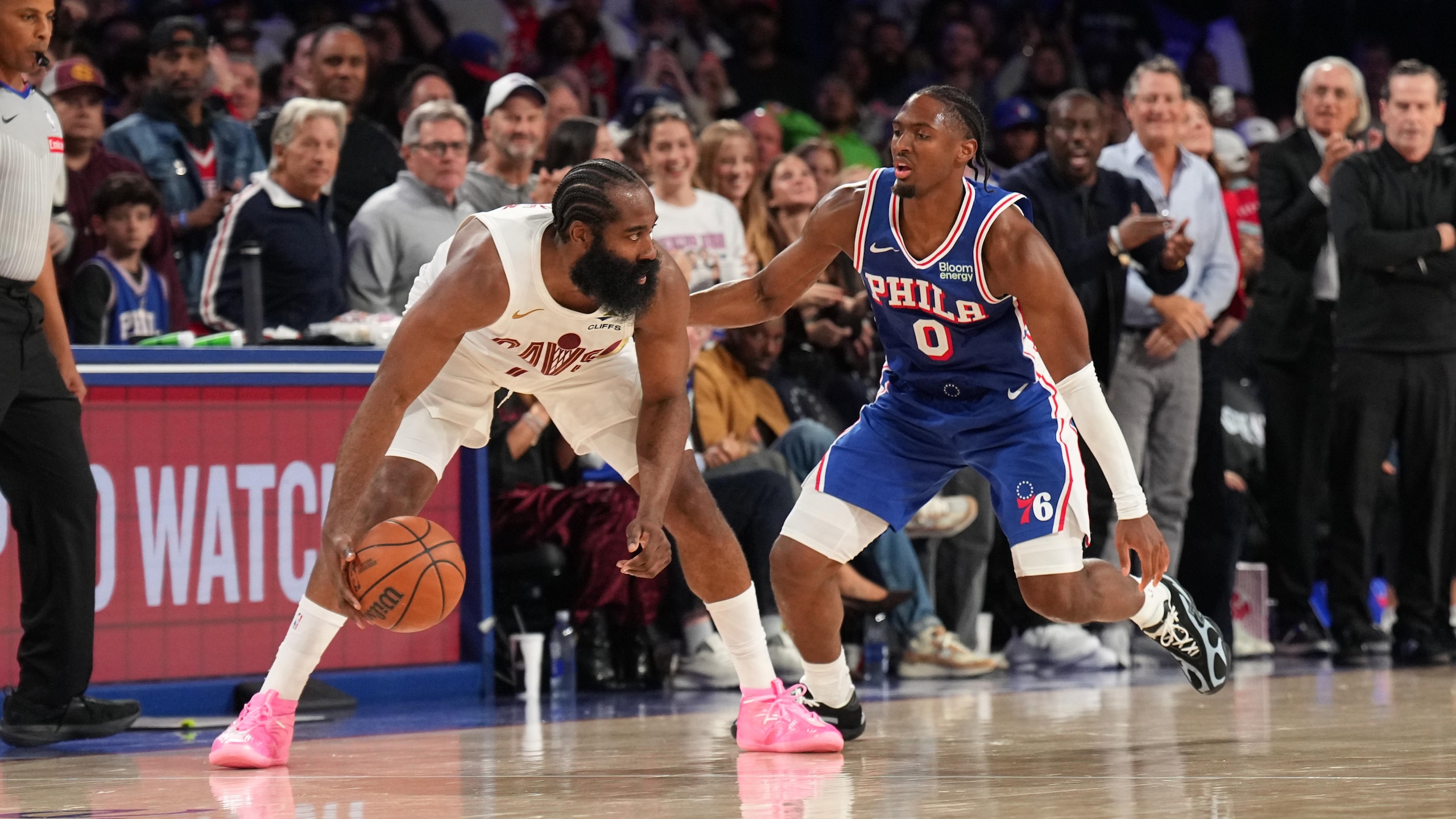

7. Anthony Edwards, Minnesota Timberwolves
4 of 10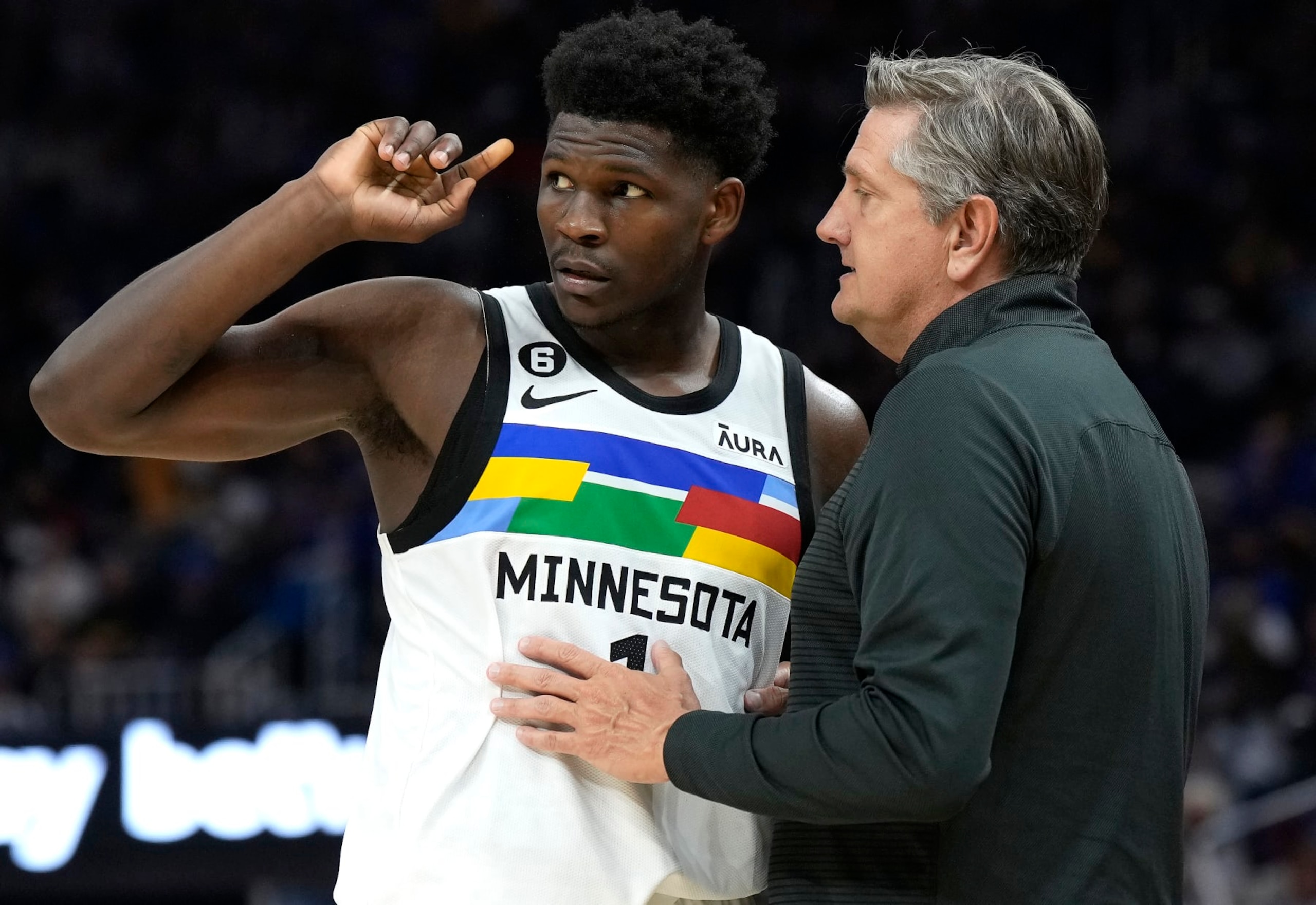
Much like De'Aaron Fox, Anthony Edwards' track record is too impressive to slot him any higher. He went kaboom over the second half of last season. This year's effort is an extension of that—and then some.
His per-minute production is almost identical to 2021-22, right down to the efficiency. But he's even more adept at parlaying his touches into foul-line trips, and, most critically, the Minnesota Timberwolves have officially turned over the fate of the offense to him.
Edwards is averaging around 26 points and five assists per game since the middle of December—while dropping in 36.7 percent of his 7.4 three-point attempts. Extra playmaking reps have come with their fair share of whiffed passes, but the returns are well worth any learning-curve trade-offs. His reads coming around screens and out of double-teams have improved exponentially.
Everything Edwards does now is real, authentic, offensive-life-force stuff. The same can be and should and must be said about his defense. He has ratcheted up the engagement without harshing his capacity to disrupt. His reads guarding against ball screens are at an all-time best, and he has never spent more time defending No. 1 or No. 2 options, according to BBall Index.
This isn't quite a leap to MVP territory. It is, however, the next best thing: a signal that might be next.
6. Tyrese Haliburton, Indiana Pacers
5 of 10
Tyrese Haliburton could maybe slide up a spot or two. But like Anthony Edwards and De'Aaron Fox before him, his season is less "Where TF did this come from?!" and more "accelerated, slightly surprising growth that's not originating out of thin air."
Still, Haliburton's "breakout" is less predictable than those of his contemporaries. He needed a scenery change to attain the agency necessary to get here. And while he hinted at All-NBA-consideration advancement upon joining the Indiana Pacers, a 26-game sample on a team actively not interested in winning games can yield only so much declaration.
Certainty is no longer an issue now. Haliburton is not just a first-time All-Star. He is among the NBA's seven (five?) best 23-and-under building blocks, someone who will garner All-NBA votes in a stuh-acked field of guards.
Concerns over Haliburton's go-get-it gene have long since dissipated. Even a higher on-again, off-again relationship with higher volume following his return from a left knee injury, we understand that the ebbs and flows are temporary, and that this is someone who significantly elevates the play of those around him.
Proof of concept came during Haliburton's recovery from a left knee injury. The Indiana Pacers went 1-9, with the league's second-worst offense. There is even more undeniable evidence when he plays. Indiana's effective field-goal percentage improves by 6.5 points with him on the floor. The only other players with a larger on-off bump through at least 1,500 minutes: Paul George and Nikola Jokić.
That star impact is right in line with his overall numbers. Haliburton is clearing 20 points and 10 assists per game on true shooting north of 61. James Harden and Magic Johnson are the only other players in league history to hit those benchmarks in the same season.
5. Mikal Bridges, Brooklyn Nets
6 of 10
Mikal Bridges started ascending as more of a self-creator and secondary playmaker with the Phoenix Suns. He has dialed his breakout up to 11 since joining the Brooklyn Nets.
Through his first seven games with his new team, he's averaging 23.4 points while canning 54.1 percent of his twos and a whopping 47.1 percent of his threes. And he has spit out both this volume and efficiency amid more focal-point usage.
Over 39 percent of his made buckets with the Nets are going unassisted, up from 28.8 percent with the Suns, which was already up from 18.1 percent last season. Brooklyn is also plumbing the depths of Bridges' initiation. The number of pick-and-rolls he's running every game have spiked, and though his assists haven't followed suit, his potential dimes have ticked up to 6.4 per game, a slight increase over his 6.0 in Phoenix. Both represent a demonstrative bump from last season's 4.4 potential assists per game.
A larger share of Bridges' field-goal attempts are now coming as pull-up jumpers—nearly 39 percent in his new digs—and he's draining 47.2 percent of these looks inside the arc. Just 25 percent of his shots came as pull-up jumpers in 2022-23.
Whether Bridges has another, center-of-the-universe layer to his scoring and playmaking will be a matter of course. Ditto for whether this rise in role and difficulty will have a greater impact on winning.
But someone who was once destined to headline the three-and-D-plus-a-little-bit-more field is now hinting that he might be so much more. The mere possibility is huge—for both Bridges himself and the future of the Nets.
4. Desmond Bane, Memphis Grizzlies
7 of 10
Desmond Bane would have made this list last year.
And he's playing well enough, while branching out broadly enough, to crack it again.
The progression of his ceiling over the past three seasons is unique in both scale and substance. In 2020-21, as a rookie, he looked like the quintessential offensive accessory, someone worthy of more plays-off-others volume. Last year, as a sophomore, he obliterated even the most optimistic projections with scorching-hot outside shooting. It was development that earned him building-block status on the Memphis Grizzlies, albeit not actual stardom.
Bane saved the actual-stardom jump for this season. Memphis' half-court offense remains unsettlingly flawed, but he has armed it with an operable secondary alternative to Ja Morant.
Almost 39 percent of Bane's made buckets are going unassisted, up from 29.7 percent in 2021-22. He is uncorking step-back threes more frequently (nearly one per game) and hitting them at a 48.6 percent clip. His off-the-dribble jumper, in general, is more of a staple—and absolutely lethal.
Among 56 players averaging at least five pull-up attempts per game, Stephen Curry and Kevin Durant are the only ones notching a better effective field-goal percentage than Bane. Seriously.
Memphis has entrusted Bane with more pick-and-roll duty, and he's attempting to facilitate more when going downhill. The functional face-lift looks pretty good on him. His assist rate has exploded; his turnover rate has not.
Tallying 20 points and four assists per game is fairly common now. The control and efficiency with which Bane does it is not. Just six other players are clearing 20 points while matching his assist rate, turnover rate and true shooting percentage, and that company reads like a who's who of All-NBA candidates: Jimmy Butler, Shai Gilgeous-Alexander, Kyrie Irving, Kawhi Leonard, Donovan Mitchell and Jayson Tatum.
3. Lauri Markkanen, Utah Jazz
8 of 10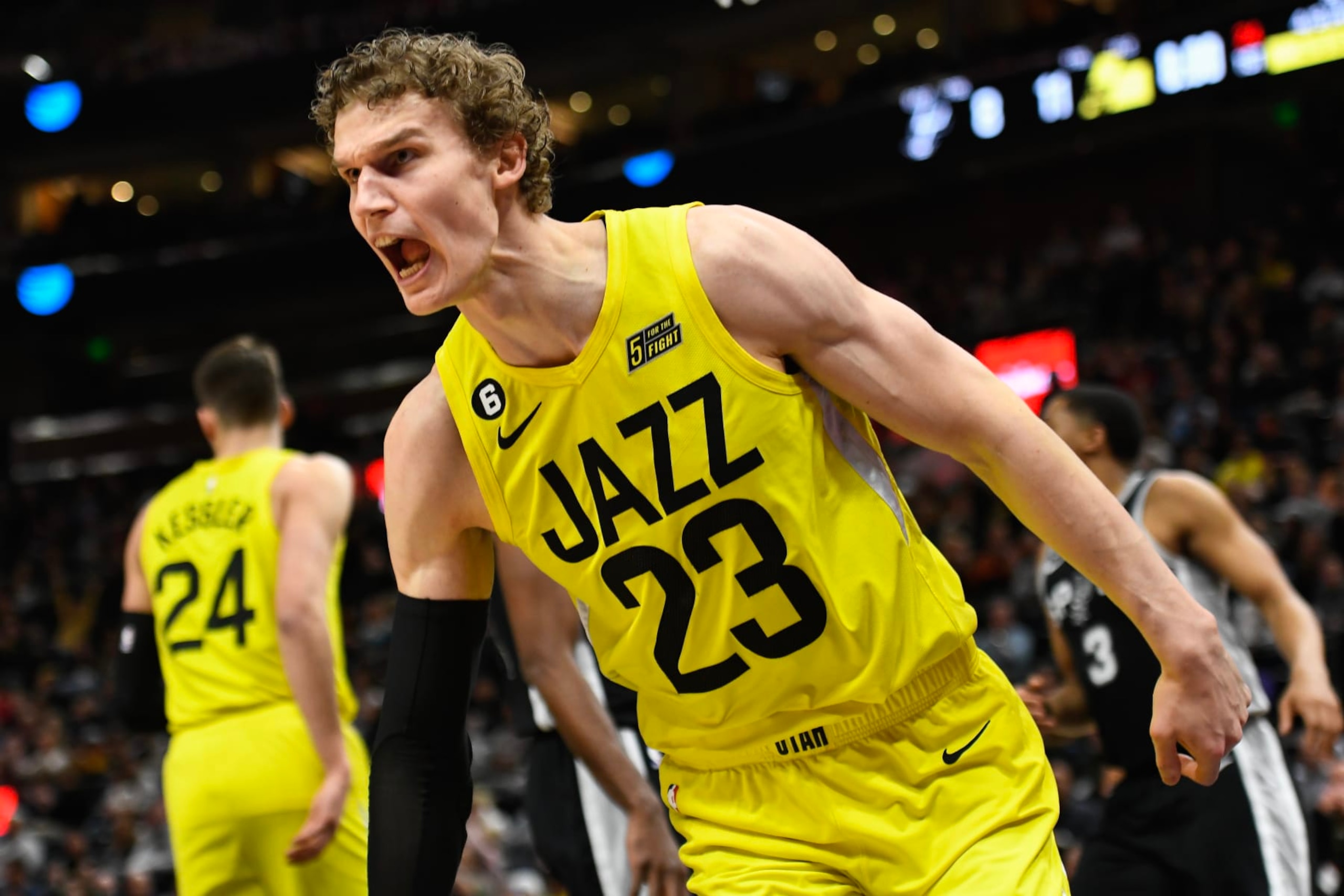
Monster leaps aren't the least bit common among those believed to be higher-end role players entering their sixth season and suiting up for their third team.
This is to say: Year 6 Lauri Markkanen is special.
Last year, in what was considered the most consistently impactful of his career*, he averaged 14.8 points while converting 54.8 percent of his twos and 35.8 percent of his threes and notching the league's 121st highest-usage rate. Skip forward to this season, and he's averaging 25.3 points while nailing 59.3 percent of his twos and 40.9 percent of his threes on a top-50ish usage rate. (*Note: 2018-19 comes pretty close.)
Oh, yeah: He was an All-Star, too.
Sticklers can downplay Markkanen's rise to stardom by picking apart his usage. He is a featured option who doesn't subsist on self-creation. Over 75 percent of his made baskets have come off assists.
Splitting these hairs at the top of this list—not to mention within Most Improved Player discussions—is both fair and necessary. But dismissing Markkanen's breakout as a matter of opportunistic volume misses the mark.
His role is not easy. He is a seven-footer operating largely like a wing. Markkanen ranks inside the 75th percentile of scoring off screens and is inside the 84th percentile of transition efficiency. The Utah Jazz do not have him one-on-oneing defenses to death, but he's shown situational flashes. He's averaging 1.23 points per possession across 60 isolations—a mark that lands inside the 95th percentile.
Replicating the efficacy with which Markkanen plays his part isn't effortless. What he's doing verges on unprecedented. Literally. Stephen Curry and LeBron James are the only players who have ever averaged 25-plus points for an entire season on Markkanen's efficiency. That is truly mind-boggling stuff.
2. Jalen Brunson, New York Knicks
9 of 10
Anyone offended by the contract Jalen Brunson signed in free agency (four years, $104 million) probably needed to watch more of Jalen Brunson. (Or at least look at future salary-cap projections.) Skepticism over how he'd fare independent of Luka Dončić, on a team with less pristine spacing, was more understandable.
And, apparently, totally pointless.
Brunson has thrived as the (co-)leading man for the New York Knicks. He is averaging around 24 points and six assists per game while sinking over 50 percent of his twos and more than 40 percent of his threes.
The last player to hit these benchmarks while also posting a turnover rate below 10?
That would be nobody.
There is no overstating the sense of structure and serenity he has injected into the Knicks' offense. They are not the most creative team, tactically, but his use of speed and footwork and angles amounts to legitimate invention. His floater is filthy, he can knock down off-balance fadeaways, and his vision ranges through and over collapsing defenses. That he can juggle his starring role with deference to Julius Randle is no small feat. On the contrary, it is a foundational aspect of New York's success.
Brunson did not make the All-Star game this year. But he could have. More importantly, he has proved beyond doubt that last year's romp in Dallas was neither fluke nor fleeting—nor, for that matter, representative of his ceiling.
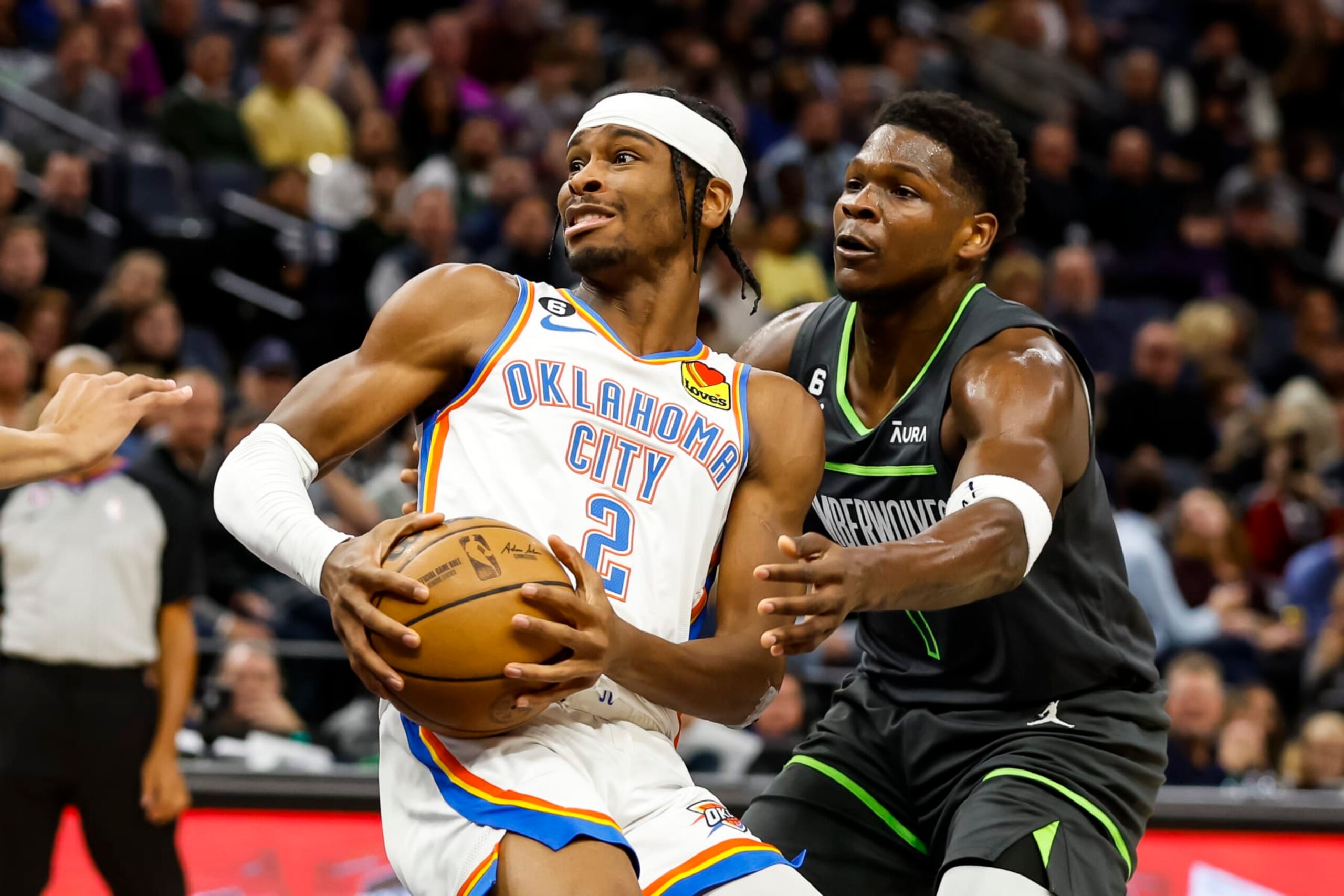
1. Shai Gilgeous-Alexander, Oklahoma City Thunder
10 of 10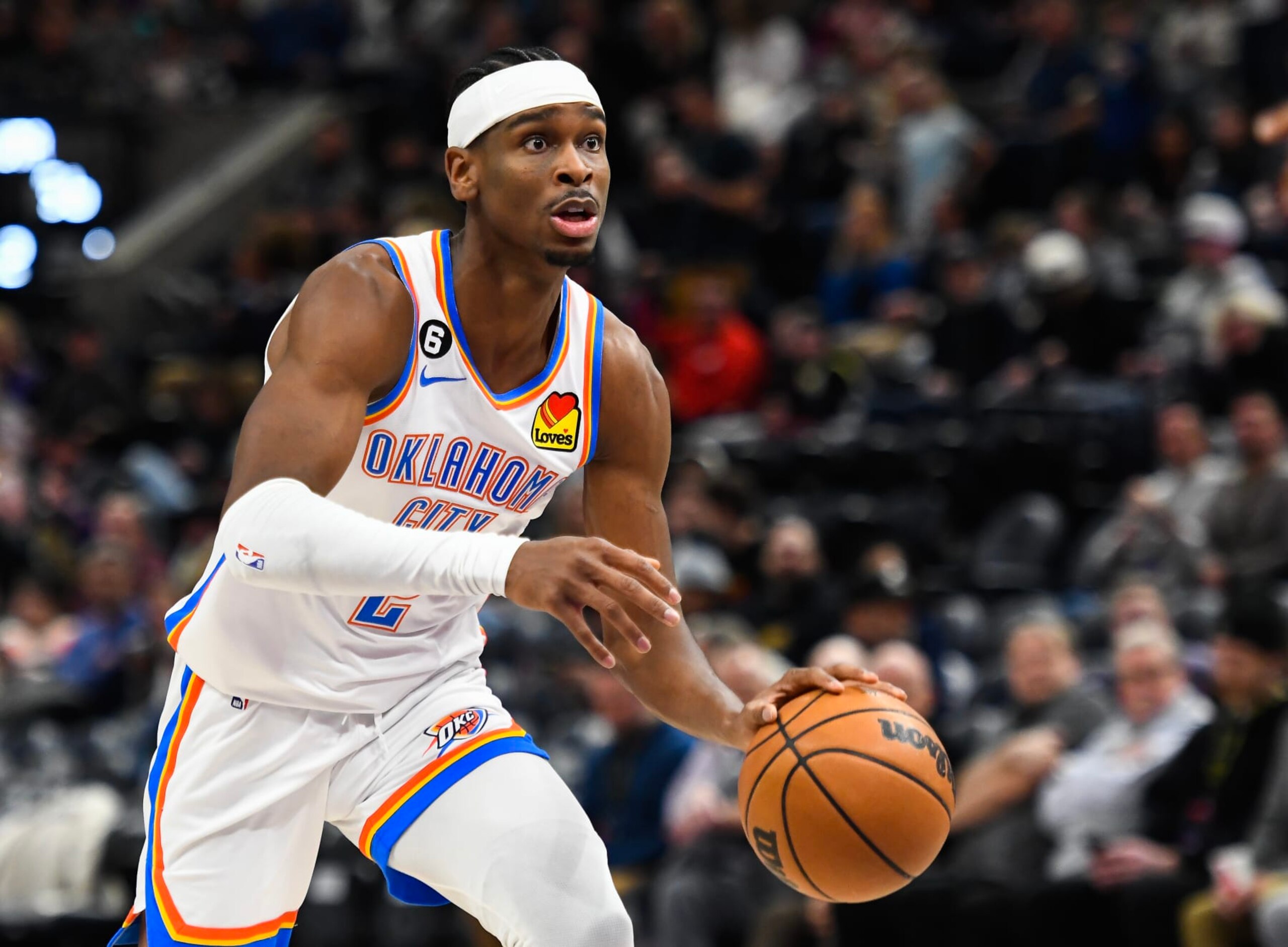
Other players on this list are making more pronounced leaps. Shai Gilgeous-Alexander is completing the most difficult of them all: transforming from All-Star-caliber to MVP level.
This does not hyperbolize his progress. SGA is averaging 31.0 points and 5.7 assists on 62.3 true shooting. His efficiency—which includes a basically career-best turnover rate—is absurd relative to the centrality of his role.
More than 433 players have appeared in at least 15 games this season. Luka Dončić and Trae Young are the only ones who see a larger share of their baskets go unassisted. SGA is also on pace to join Michael Jordan as the second player ever to clear 30 points and five assists on 60 true shooting with such a low turnover rate.
Don't let the Oklahoma City Thunder's place just outside the Western Conference play-in picture trick you. SGA should finish in the top 10 of MVP voting. His change of pace and directions and on-ball composure are the tenets around which their vastly improving offense is built. And while SGA is insulated against the toughest defensive assignments, his activity and fight in traffic hasn't been this high since his rookie year.
Never mind the Thunder's record, either. They have outscored opponents by 144 points this season with SGA on the floor. That is better than Dallas has fared with Dončić (plus-139).
All of which is why the "Oklahoma City's tanking again LOLOLOLOL" engagement-seekers need a reality check, preferably in the form of an innocuous-yet-firm slap upside the head.
SGA hasn't played since Feb. 23, but this idea the Thunder are faking his abdominal strain and entry into the league's health and safety protocols is a special kind of stupid. They aren't about to risk his All-NBA candidacy by shutting him down in the name of drumming up their Victor Wembanyama chances by, like, 2.8 percent.
Just as SGA has transcended regular ol' stardom, so too have the Thunder progressed beyond lottery-odds hoarding. Players-to-be-named later are no longer their timeline. SGA is their timeline. Super-duper stars always are.
Unless otherwise noted, stats courtesy of NBA.com, Basketball Reference, Stathead or Cleaning the Glass and accurate entering Friday's games. Salary information via Spotrac.
Dan Favale covers the NBA for Bleacher Report. Follow him on Twitter (@danfavale), and subscribe to the Hardwood Knocks podcast, co-hosted by Bleacher Report's Grant Hughes.

.jpg?w=2560 "Grading SmackDown 🔠")
.jpg?w=2560 "Reported Details of Seahawks-K9 Split")