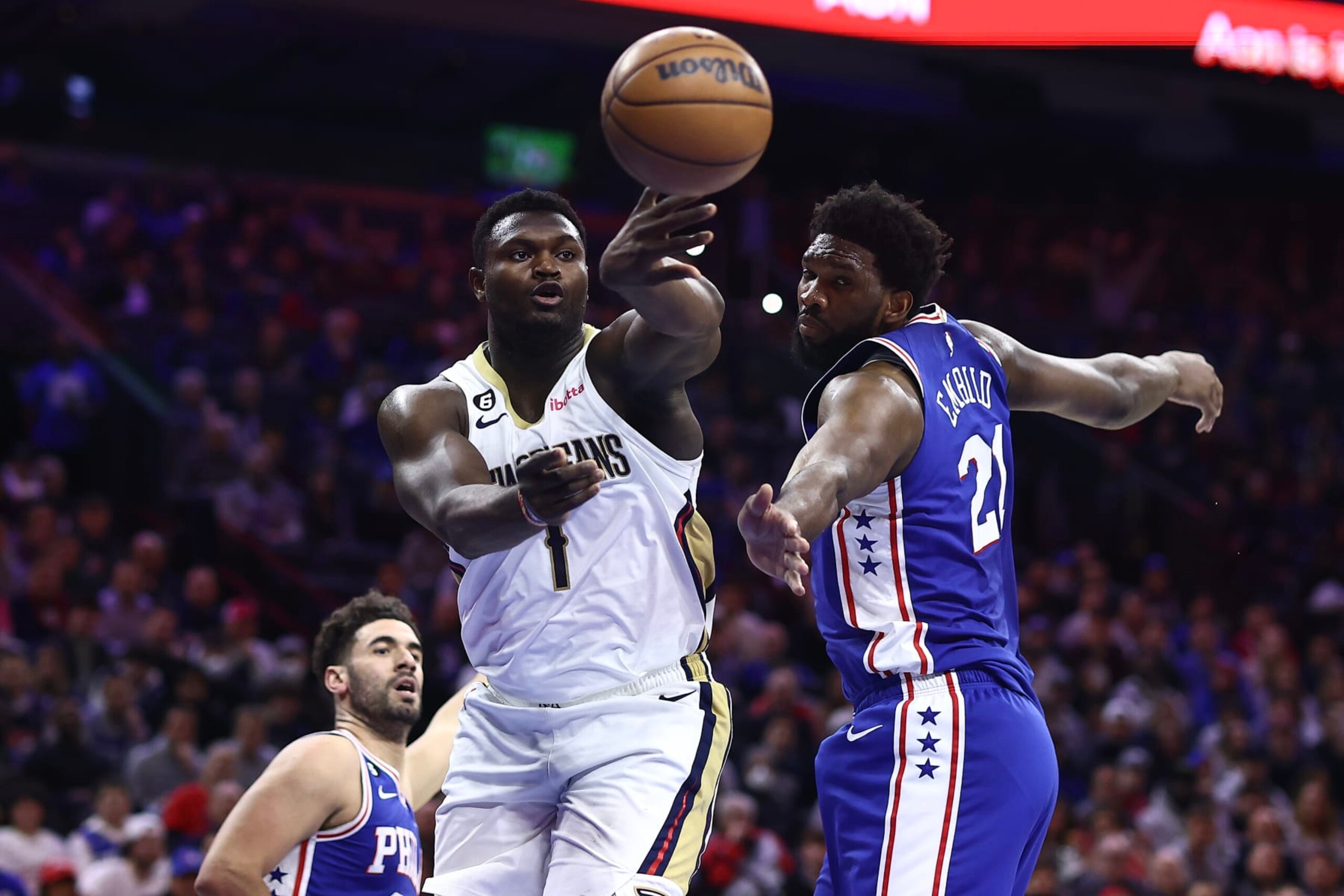


Try to describe the state of your favorite NBA team coming out of the All-Star break using only one word.
Actually, you know what, never mind. I'll do it for you. I'm vain like that.
This exercise will be tackled from 10,000-foot views. People on, employed by, intimately associated with and/or rooting for each team will surely have differing selections. With all due respect, it is my job not to give a damn.
These one-word encapsulations are meant to capture prevailing themes and defining issues and characteristics as we dive into the stretch run of the regular reason.
And to answer the question none of you had: Yes, made-up lingo totally counts.
Back to the Onewordmobile!
Atlanta Hawks: Disconcerting
1 of 30
Dismissing head coach Nate McMillan is not evidence of a franchise teetering on the brink when viewed in a vacuum. Making this decision over the All-Star break, while perhaps curious, allows the Atlanta Hawks to begin their search for a permanent replacement ahead of any other teams that wait to initiate changes until the offseason.
But this move doesn't exist on its own. It is part of a pattern, the latest development in a long line of unsettling events that have thrust the franchise under the most magnified of microscopes.
Former lead executive Travis Schlenk was reassigned earlier this season amid reports of an increasingly confusing front office structure seemingly rife with nepotism. That decision was not indefensible. But reaching it less than halfway through the schedule, after Schlenk guided the organization through an entire offseason, is galaxies from ideal regardless of how much power he forfeited prior to his reassignment.
Something continues to be noticeably amiss inside the Hawks' locker room—the "vibes," if you will. Rival executives are already waiting for Trae Young to request a trade. That is conjecture at its most speculative, but his rocky relationship with McMillan calls into question a number of things Atlanta must consider when choosing its next coach.
Chief among them: Is Trae part of the problem? Is he incapable of playing in a measurably different way? Or is this on McMillan for lacking invention and failing to get buy-in from his most important player?
John Collins' future looms in the backdrop of it all. He spent yet another trade deadline immersed in the rumor mill, only to stay put. The Hawks also have Bogdan Bogdanović's next contract to handle this summer (player option) and need to start thinking about a new deal for Dejounte Murray, who is set to reach free agency in 2024 and unlikely to sign an extension under the league's current rules.
Atlanta has the potential to get absurdly expensive, approaching a price point that doesn't align with the on-court product, which has produced various stretches of higher-level returns amidst below-average play at both ends of the floor for most of the season. (Note: The offense has hovered around top-10 territory since Jan. 1.)
What comes next for the Hawks is anyone's guess—inscrutability that is cause for alarm, borne from the absence of an obvious solution to many flaws and failings.
Boston Celtics: Dominant
2 of 30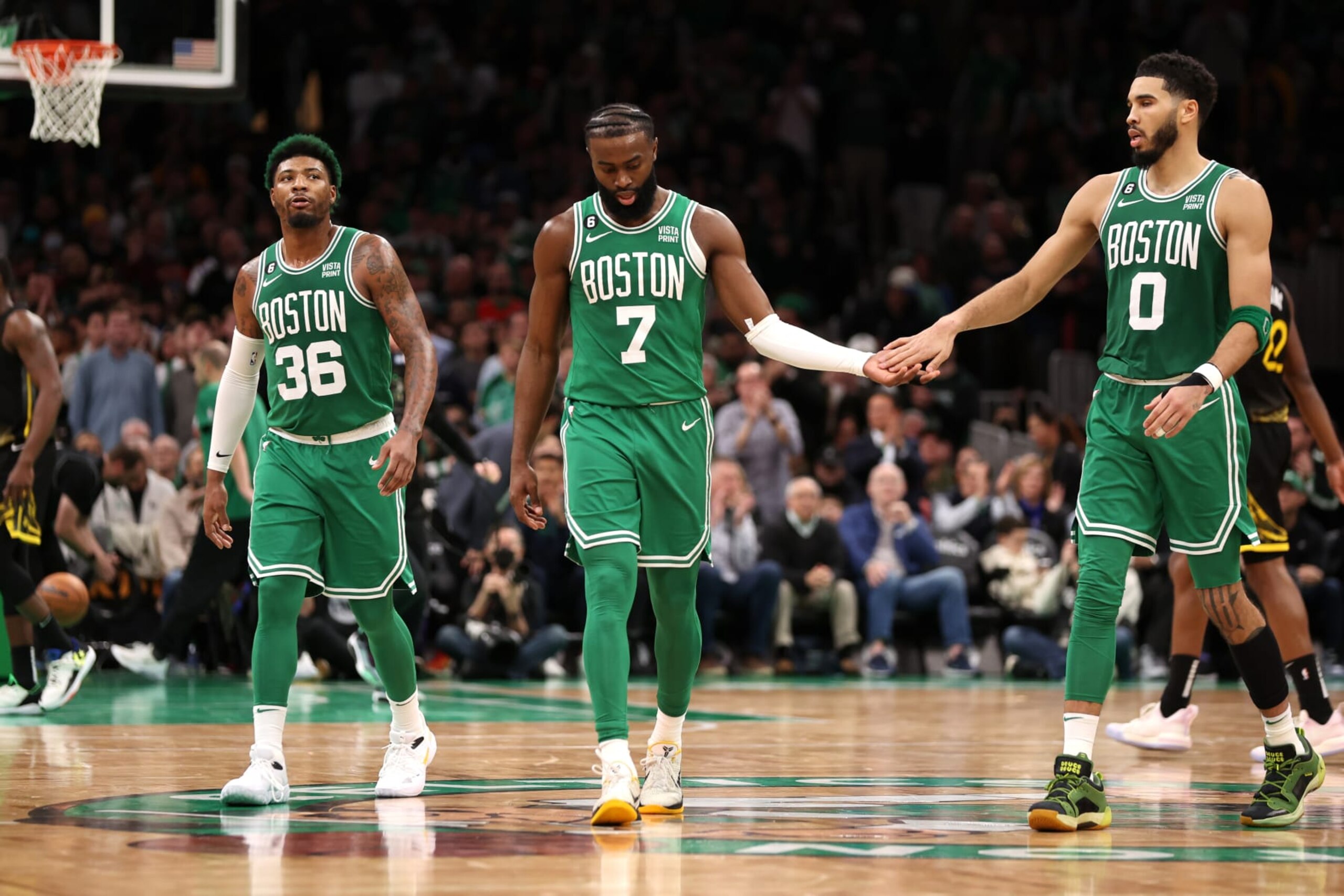
The Boston Celtics are the only team exiting the All-Star break among the top seven of both points scored and points allowed per possession.
They are third in offense and fourth in defense, which should be making all of us wonder whether we're overthinking the Eastern Conference race. We probably aren't, because the fullish-strength Milwaukee Bucks exist. But in a season defined by parity, the Celtics have consistently stood head and shoulders above pretty much everyone else.
They aren't benefiting from a peachy-keen road, either. Robert Williams III missed a bunch of time to start the year, and the team struggled on defense out of the gate. Boston has since navigated cold shooting spells and other absences.
None of it matters. The Celtics defense started its ascent long before RW3 even returned—they were eighth when he made his debut—and their offense is more equipped than ever to withstand shaky jump-shooting spurts.
Depth gets over-romanticized, but Boston's cannot be overstated. It just pushed the Bucks to the brink on Feb. 14 without Jaylen Brown, Al Horford, Marcus Smart and Jayson Tatum, for crying out loud.
"Dominant" is a one-word, three-syllable encapsulation that the Celtics have earned.
Brooklyn Nets: Regrouping
3 of 30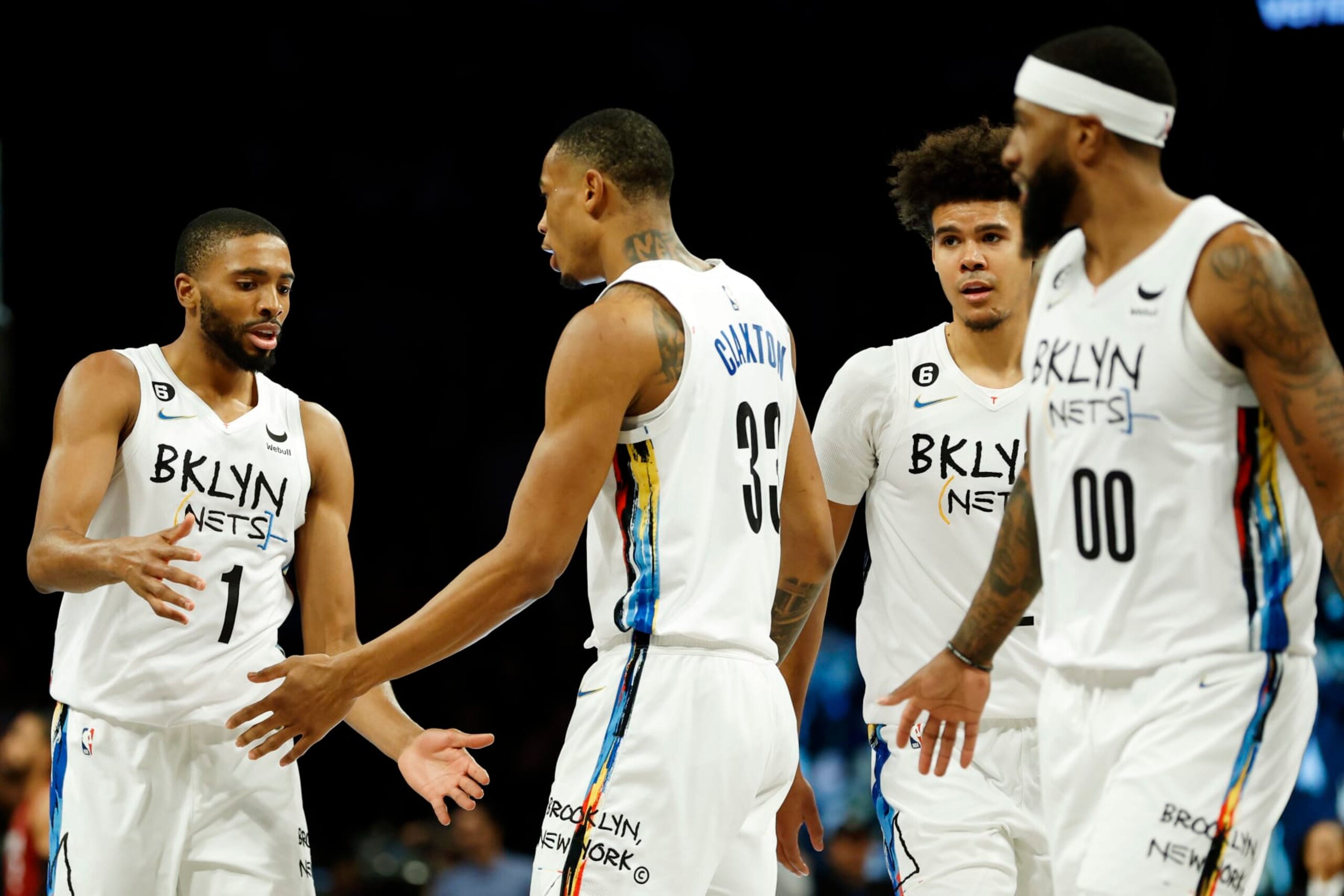
Finally, mercifully, the Brooklyn Nets are free to move on from the elephantine uncertainty that came with tethering themselves to a pair of superstars allergic to continuity.
Kevin Durant and Kyrie Irving are fantastic players. Ditto for James "Philadelphia By Way of Brooklyn" Harden. The Nets are a worse basketball team without them.
They are also now permitted to function like an actual basketball team.
KD and Kyrie alone aren't responsible for turning Brooklyn into a years-long sideshow overrun with drama, frustration and missed opportunities. So many are at fault, including those at the top of the Nets organization. But everyone involved can now move on.
Brooklyn has the chance to map out a plan that won't get upended or expire in a matter of weeks, if not days. What happens next remains uncertain. The Houston Rockets control the next four Nets first-round picks, the roster is now a hodgepodge of non-stars, and Ben Simmons' ongoing decline is equal parts sad, awkward and confusing to watch.
Will Brooklyn look to remain competitive beyond this season? Might it immediately dangle some combination of the five combined first-rounders that it received for KD and Kyrie in another blockbuster package? Or is this Step 1 of a teardown that won't give a flying-you-know-what about how many Nets picks the Rockets control?
Brooklyn traded one uncertain reality for another. But compared to the burden of the previous era, this new lack of surety feels more like choose-your-own-adventure optionality.

Charlotte Hornets: Searching
4 of 30
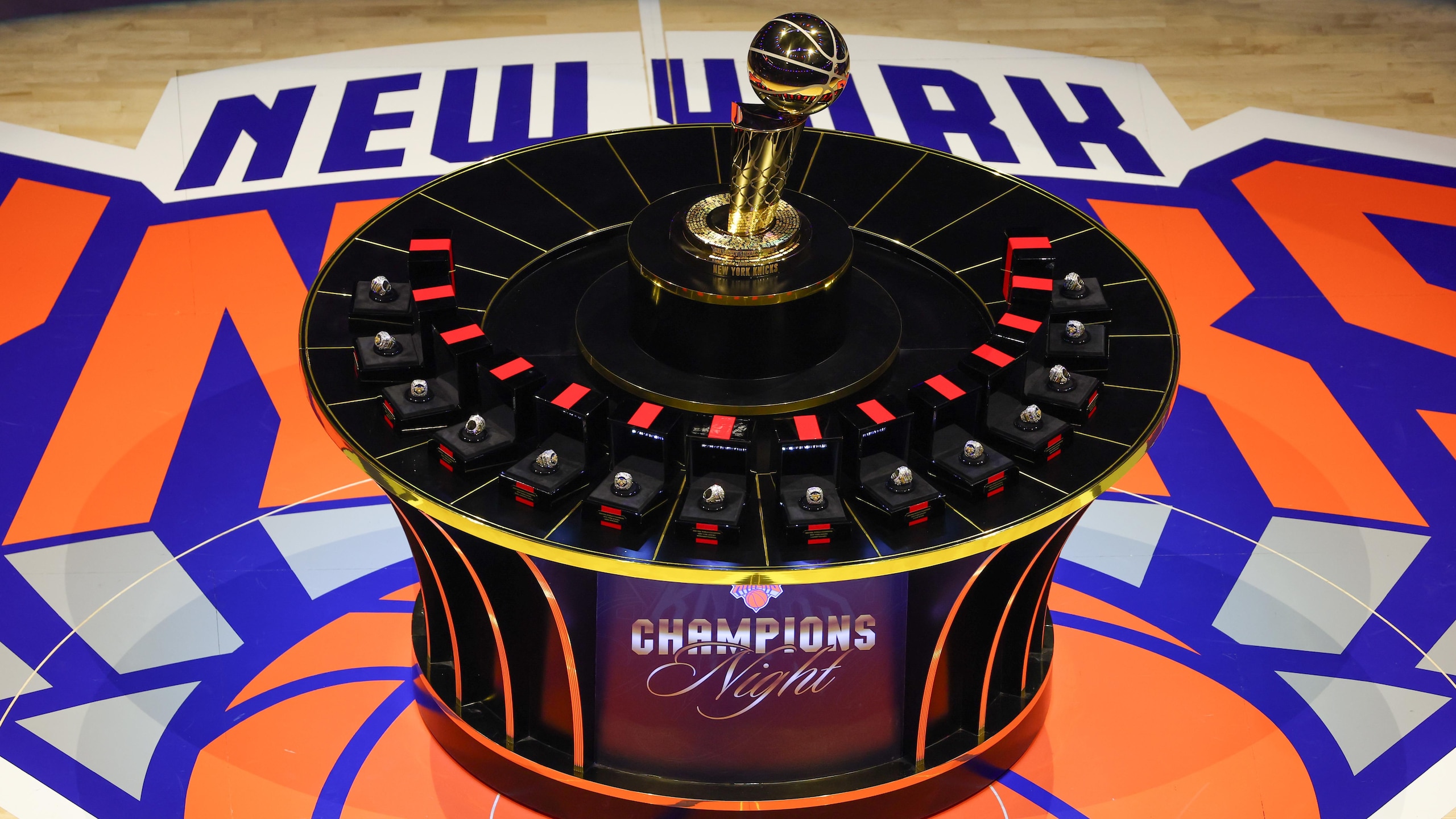
Feel free to go with "tanking." It technically fits the bill for the Charlotte Hornets and a handful of others. But it is more ill-suited to the Hornets than most.
Charlotte's place in the standings is less deliberate than the other tankers. Its endgame is less clear, too. The rest of this season is about scouring within in search of answers—a fact-finding mission not only on where the Hornets are headed, but who'll be part of it.
What is the extent of Mark Williams' breakout? Is the new full-strength starting five of him, LaMelo Ball, Terry Rozier, Gordon Hayward and P.J. Washington capable of playing any defense? (It is allowing a ghastly 135.4 points per 100 possessions on the season.)
How much is Washington, a restricted free agent, worth to this team moving forward? Are there any under-the-radar keepers on the roster? Nick Richards? Bryce McGowens (two-way contract)? JT Thor?
What is the Hornets' plan beyond this season? To take their top-four lottery odds, draft who they hope to be a co-cornerstone for the extension-eligible LaMelo and try to re-accelerate their position in the East? Or are they prepared to take a more gradual approach, tilting further toward a rebuild than a retool?
Charlotte is searching for everything. It needs whatever clarity the rest of this season can possibly provide.
Chicago Bulls: Chaotic
5 of 30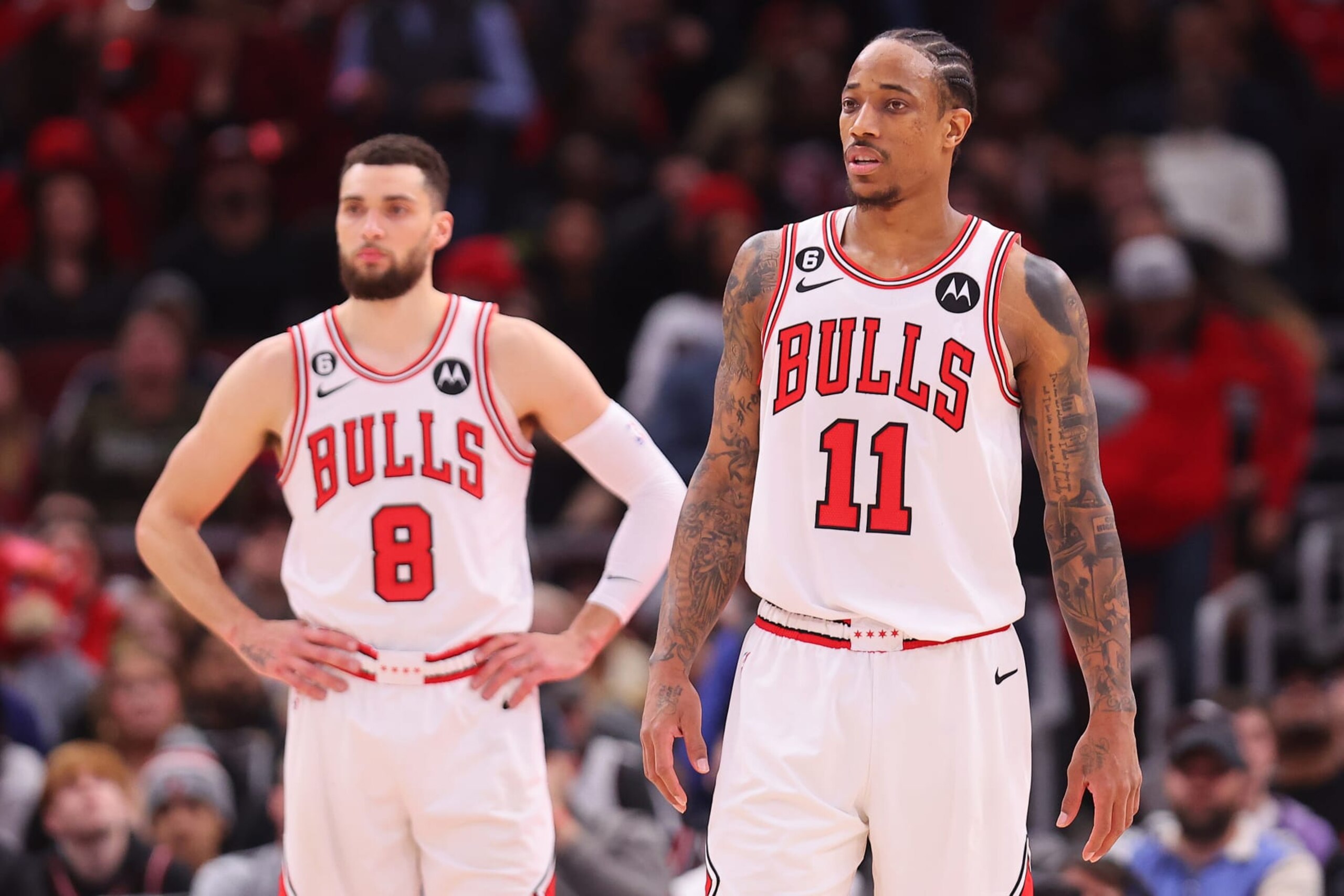
This Chicago Bulls team makes exactly zero sense.
Who has a roster built around DeMar DeRozan, Zach LaVine and Nikola Vucevic and then ranks—*checks notes*—24th in points scored per possession? But don't worry. They still have a top-11 half-court attack.
With that said, go ahead and worry again. They are dead last in three-point-attempt rate for some inexplicable reason. Sure, they could use more caps-lock SHOOTERS, but they have enough firepower not to actively skirt triples. (Looking at you, Alex Caruso...and Vooch...and Ayo Dosunmu...and even LaVine.)
Oh, and somehow, someway, the Bulls rank sixth in points allowed per possession despite having a bottom-six opponent shot profile. They're also missing two of their most disruptive defenders in Lonzo Ball and Javonte Green and aren't getting absurdly lucky on rival offenses' efficiency at the rim and from beyond the arc.
The Bulls also unofficially lead the league in randomly spectacular games against opponents they have no business beating, as well as laid eggs in supposed-to-be winnable matchups.
Franchises with more self-awareness and foresight would have stripped down the roster or at least reoriented at the trade deadline. The Bulls fomented more chaos by doing absolutely nothing. In doing so, they committed themselves to a non-direction. They're just a fringe play-in team wandering along the bottom of the Eastern Conference's middle.
Amidst a six-game losing streak, in dire need of reliable outside shooting and relative top-down steadiness, they were among the top suitors for Russell Westbrook before he joined the L.A. Clippers. Because sure, why not?
Cleveland Cavaliers: Arrived
6 of 30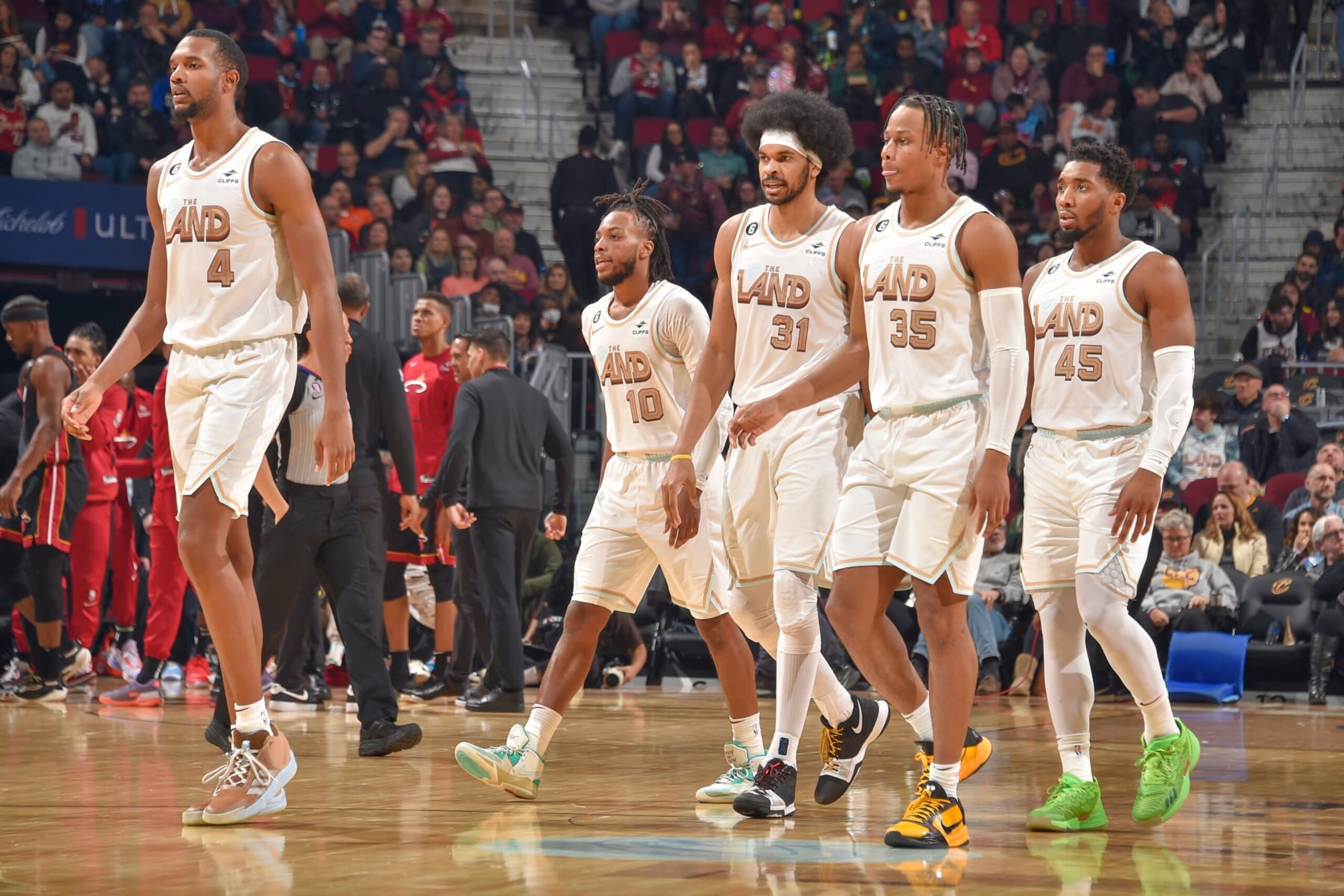
Last year's word for the Cleveland Cavaliers around this time was "close." Now, they're here.
Granted, "here" can mean any number of things. For the Cavs, it references arrival among the title contenders.
This isn't just a plucky, upstart playoff team incapable of winning more than a series. Cleveland has almost all the harbingers of a bona fide title threat. It ranks in the top 10 of both offense (ninth) and defense (third). Its best lineup is populated by four All-Star-level players in Jarrett Allen, Darius Garland, Evan Mobley and Donovan Mitchell.
The Cavs are comfortably winning the minutes Garland plays without Mitchell and the minutes Mitchell logs without Garland. More intriguingly, the Mobley-without-Allen lineups have stabilized to a net plus. And Cleveland's 21-year-old ball of clay is starting to take discernible shape on offense, dabbling in everything from full-floor quarterbacking to half-court outside-in attack to methodical fadeaways and floaters and slowed-down counters and leveled-up passing—a real, meaningful (and somehow) quiet ascent toward superstardom.
See-it-in-the-playoffs-first skeptics will insist this is a rush to coronation. Or they'll bemoan the Cavs' hodgepodge at the 3 and backup 4 spots. The latter gets a lot harder to do when Isaac Okoro is knocking down more than 40 percent of his threes since early December.
If the Cavs' downfall is supposed to be that they aren't perfect, or that they aren't old enough, well, that says it all. They have arrived, almost fully actualized, flirting with undeniability.
Dallas Mavericks: Gambling
7 of 30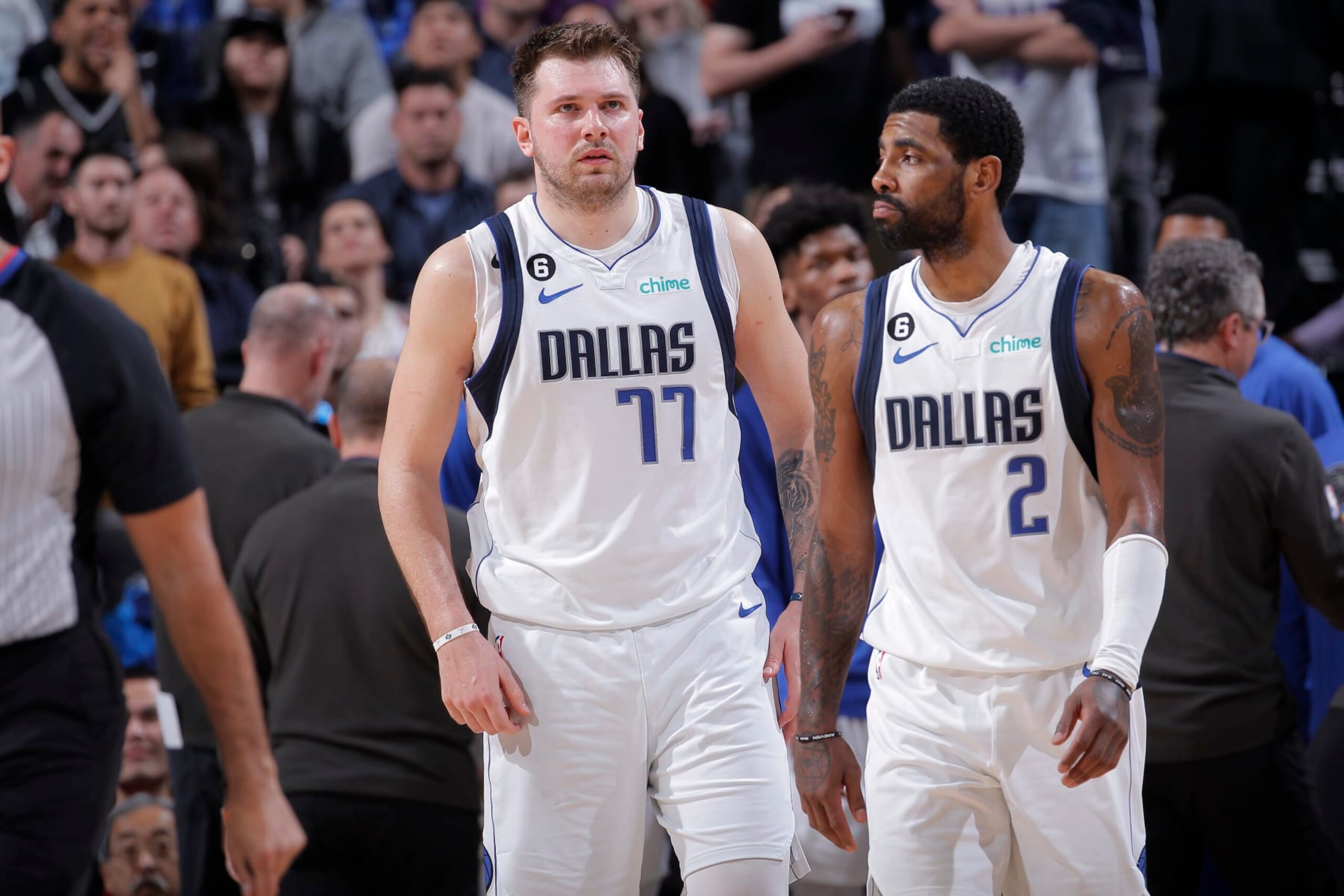
Will Luka Dončić and Kyrie Irving be able to coexist over the long term? Better yet, will the Dallas Mavericks even get the chance to find out?
Worrying about their offensive fit is luh-ame. They will figure it out. Right away, though, the Mavs are gambling with an already fragile defense.
They are 22nd in points allowed per possession on the season—and 25th since since Jan. 1—and they just traded away their most important stopper in Dorian Finney-Smith. Maxi Kleber's return from a hamstring injury will be huge, but he's far from a billboard for durability. Dallas is now extremely and uncomfortably reliant on Reggie Bullock and Josh Green.
Skip ahead a few steps to this summer, and the Mavs are gambling with the long-term direction of the franchise. They are prepared to treat Kyrie as a rental, according to NBA reporter Marc Stein.
If we're being brutally honest, that's the right call. Kyrie is as mercurial as he is talented, and for the moment, he isn't someone whom you can plan around with any semblance of permanence.
Still, this is a bananas place to be for a franchise that forked over Finney-Smith, Spencer Dinwiddie and an unprotected 2029 first-round pick. That is not a package you unload for a fleeting experiment. It is one you part with for a more immutable upgrade and fit and vision.
Dallas does not have the luxury of assured continuity. Kyrie could be become disenchanted with a situation he didn't choose. The Mavs could become disentranced if his synergy with Dončić never reaches fever pitch, or if their season ends in anything less than a convincing playoff push. Or perhaps everything works out. That is absolutely on the table, too.
Every imaginable outcome, for better or worse, is in play.
Denver Nuggets: Waiting
8 of 30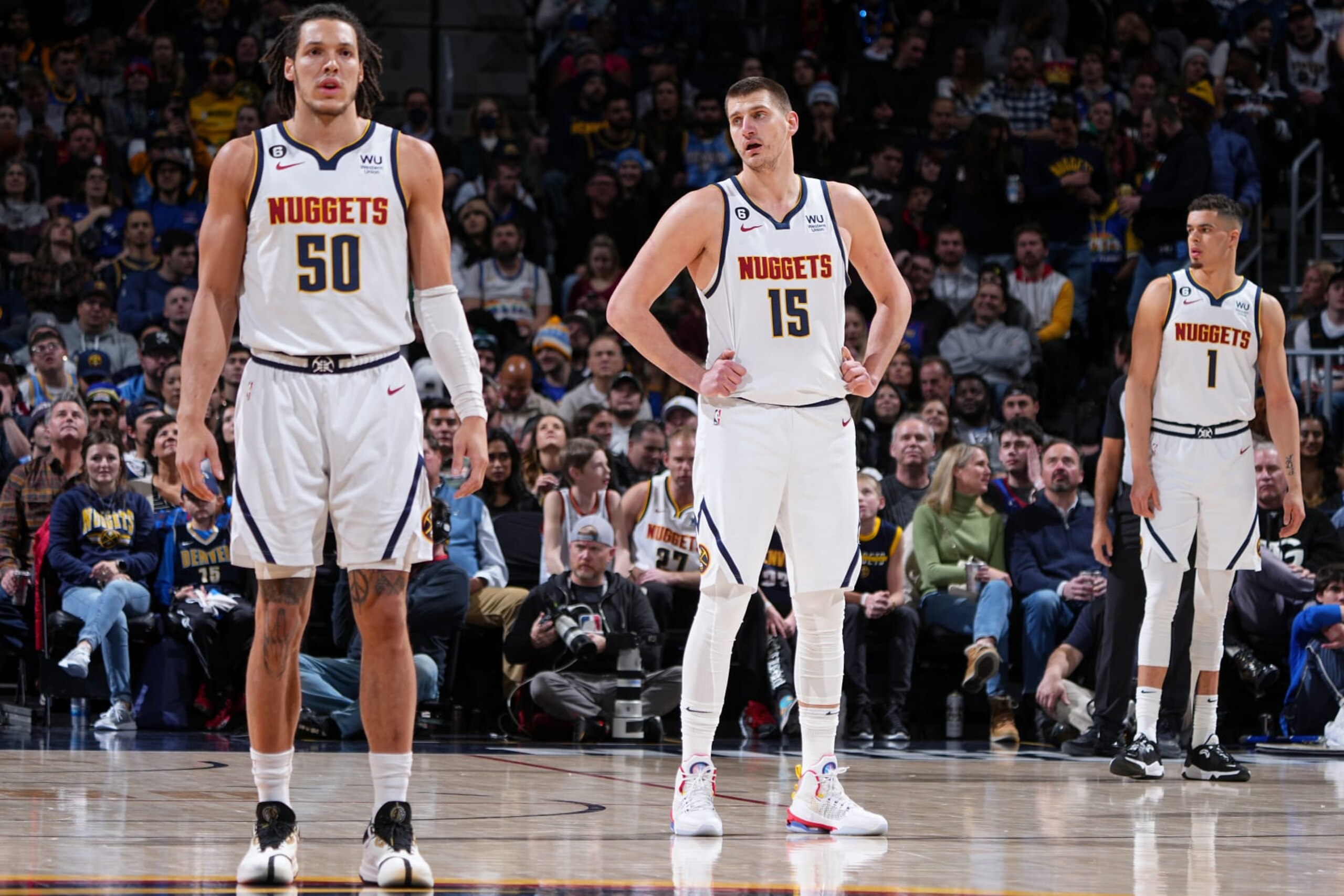
"Prove it in the playoffs" is a common refrain uttered about the Denver Nuggets, and it applies to anything about them that gets foisted under the national limelight. Nikola Jokić's march toward a third consecutive MVP award, the durability and viability of Michael Porter Jr., the defense, the bench—everything.
Believers will have rebukes at the ready. For the record, I count myself among them.
Disproving Jokić's value is an exercise in disingenuous futility. You can't. MPJ has appeared in over 70 percent of Denver's games so far, is playing well within his role and has never been less critical to this team's championship stock when assessing its lineup optionality.
Bench concerns are fair game. The Nuggets showed some intermittent fight during their non-Jokić minutes leading into the New Year, but they're a minus-73 in eight games without him since Feb. 1. Does selling unfathomably low on Bones Hyland help? What about the addition of Thomas Bryant? How much does it actually matter once Jokić starts playing 40 minutes per game when the stakes are highest?
Defensive skepticism is also fair—and overstated. The Nuggets are eighth in points allowed per possession since Dec. 1 and have the league's second-best crunch-time defense on the season.
These returns are not over Denver's head when looking at its personnel around Jokić. Bruce Brown, Kentavious Caldwell-Pope and Aaron Gordon allow head coach Michael Malone to futz and fiddle depending on the time and stakes and opponent in ways he couldn't before. But the Nuggets are benefiting from colder opponent shooting at the charity stripe and beyond the three-point line. There is some level of good fortune fueling their defensive standing.
All of which renders "prove it in the playoffs" an overused default that simultaneously is not without merit. The Nuggets absolutely need to prove they can dispatch heavyweights and make an NBA Finals appearance, because there's nothing else left for them.
Detroit Pistons: Blurry
9 of 30
Where are all the wings? In Brooklyn, New Orleans and Los Angeles, but not in Detroit.
Trading Saddiq Bey for James Wiseman when you already have Jalen Duren is...curious. That's different from bone-headed. It's certainly not evidence of franchise malpractice.
There is something objectively hysterical about having Duren, Wiseman, Isaiah Stewart, Marvin Bagley III (out since Jan. 2), Nerlens Noel, Dewayne Dedmon (waived) and Deandre Jordan (waived) all on your payroll, but the hilarity can be temporary. Jordan's dead money comes off the books after this season, and Noel has a team option for 2023-24. Dedmon's $2.7 million dead cap hit will remain on the books each year through 2024-25, but it isn't especially massive.
This Pistons dice roll, however, was not without opportunity cost. They just decided to be out on the cheaper, more versatile, more in-demand Bey. More critically, this move infers a direction without clear vision. Laz Jackson laid it out perfectly on a recent episode of the Detroit Bad Boys Podcast (20:37 mark):
"The other thing with Wiseman, [general manager] Troy Weaver, in the press conference, is like, 'We want to play Detroit basketball. We want to start with defense. We need to play better defense to restore what the Pistons can be.' OK. That makes sense. I agree with that. And he's like, 'We want to play two bigs because Philly plays big. Milwaukee has two bigs. Cleveland has two bigs. Both [Cleveland and Milwaukee] are in your division. We need two bigs.' OK, sure. I understand that. One of those bigs should be good at defense. That seems to be the purpose of playing two bigs, is that you get some sort of defensive boost from doing that. And yet, you're going to trade for what is, statistically, one of the worst defensive big men in the NBA.
"Wiseman, also…we talked about the advantage of the Stewart-Duren lineup being that both guys are good rebounders for their position. Wiseman, classically, is not a great rebounder for his position. He does not have great hands. You can see him flub passes in traffic. He does a little bit of the same thing as Duren, where he won't necessarily put his body on people and won't seek out contact. He just wants to out-athletic everyone for the ball, but that doesn't always work at the NBA level."
Detroit is betting on the untapped upside of a 21-year-old with the physical tools to be more, when healthy, than a "DNP - WTF IS HE?" It is a gamble that armchair general managers call for actual general managers to make all the time. But risks have to make sense. And as of now, even with dual-big desires in mind, this one and what it says about Detroit's overarching roster vision doesn't fit that bill.
Golden State Warriors: Burnout
10 of 30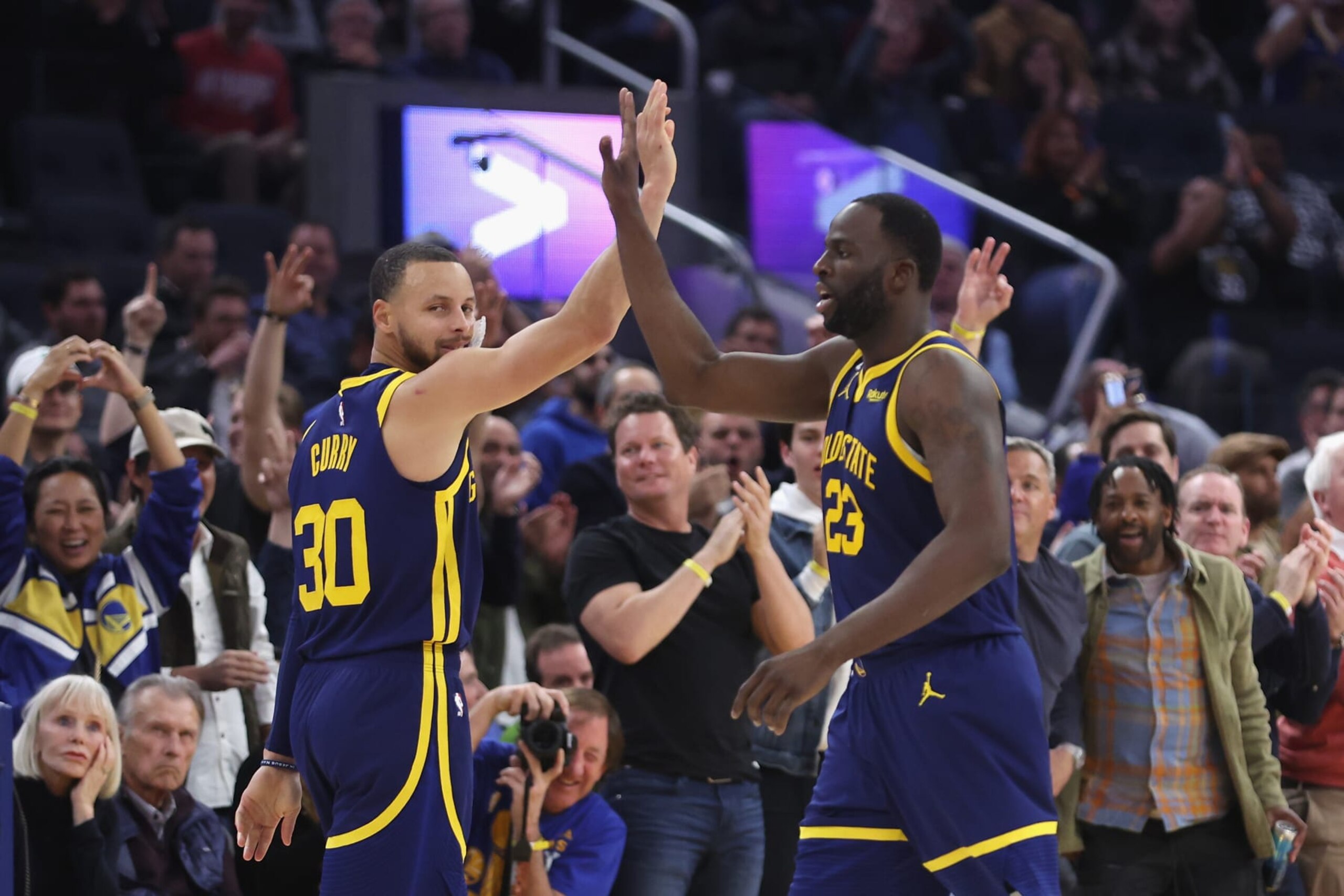
So much went into last year's Golden State Warriors title run, both emotionally and physically. This season has not measured up as an adequate encore.
Injuries are part of it. Andrew Wiggins missed significant time with an adductor injury and hasn't quite looked the same upon return. Stephen Curry is currently on the shelf with a lower left leg issue and already needed to come back from a shoulder injury. Donte DiVincenzo missed a ton of time to start the year.
That still doesn't explain the Warriors billowing around play-in territory and struggling to stay above .500. They just look and feel sapped—drained, if not burned out, from last season's push and the baggage attached to this go-round.
The defense isn't the same. Jordan Poole has plumbed levels of awful for stretches at a time. The bench has seldom offered respite. Golden State's road splits remain abysmal and tough to understand.
Energy, on many nights, just isn't there. Two timelines have given way to a single, hazy window. The Warriors finally moved James Wiseman for immediate help in Gary Payton II, but the latter isn't guaranteed to suit up again season. Jonathan Kuminga is playing more, and perhaps not enough.
Reinforcements do not appear to be in transit from the buyout market. Golden State will, it seems, remain reliant on minutes from Anthony Lamb and Ty Jerome, both of whom are signed to two-way contracts.
This is all unbecoming of a reigning champ and a supposed-to-be contender. The Warriors retain a championship gear with Curry in the mix, yet the act of flipping that switch has yet to prove sustainable. Heading into March, you can't help but wonder: Is Golden State burned out, just plain not good enough, a contender in hibernation or some combination of all three?
Houston Rockets: Incoherent
11 of 30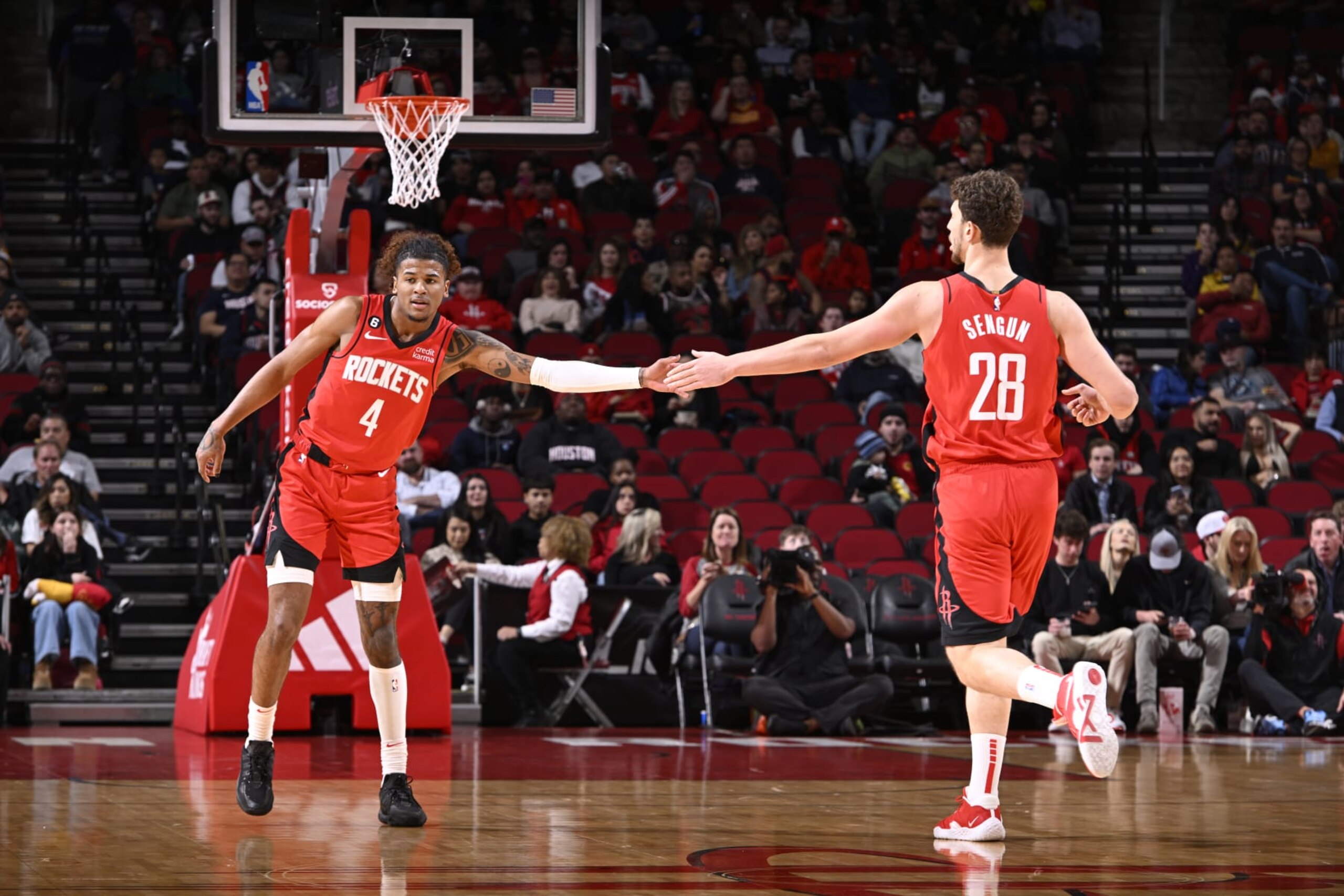
On paper, the Houston Rockets have a plan and direction and a bunch of youngsters worth monitoring. In practice, they are formless, an indiscernible mass of talent and turnovers and losses lacking distinct or predictable style and energy.
Jalen Green is a dial-goes-to-11 lightning bolt who still needs to master the art of slowed-down surveillance—or who at least must work beside someone else who can, rather than a straight-to-unknown-streaming-service version of himself in Kevin Porter Jr., who hasn't played since Jan. 11 after sustaining a left foot injury and remains miscast as a primary ball-handler tasked with teeing up others.
Alperen Şengün is more central to the offense these days...on most nights. He seems criminally underutilized on others, particularly for a team without a true-blue floor general. Daishen Nix's minutes aren't guaranteed yet, somehow, still too prevalent.
Head coach Stephen Silas ranges from appearing exhausted to looking as if he's being held hostage during postgame pressers. He has also admitted he doesn't run plays for Jabari Smith Jr., which is probably being overblown and unforgivable all at once.
Houston's trade deadline wasn't very illuminating, either. It unfolded like a team trying to force its head coach to consolidate the rotation. The buyout market, at least, was better for it.
The Rockets have the league's worst turnover rate by a mile. They don't look to run with meaningful frequency despite having the personnel to do so. Their defensive brand is curious incompetence du jour—a weird amalgam of disengaged, disconnected ultra-conservatism that, most recently, chaperoned Silas to wit's end.
What are the Rockets? Where are they headed? What's the plan? I have no idea. Unless, of course, an inevitable dalliance with a soon-to-be 34-year-old James Harden this summer counts as clarifying direction.
Indiana Pacers: Optionality
12 of 30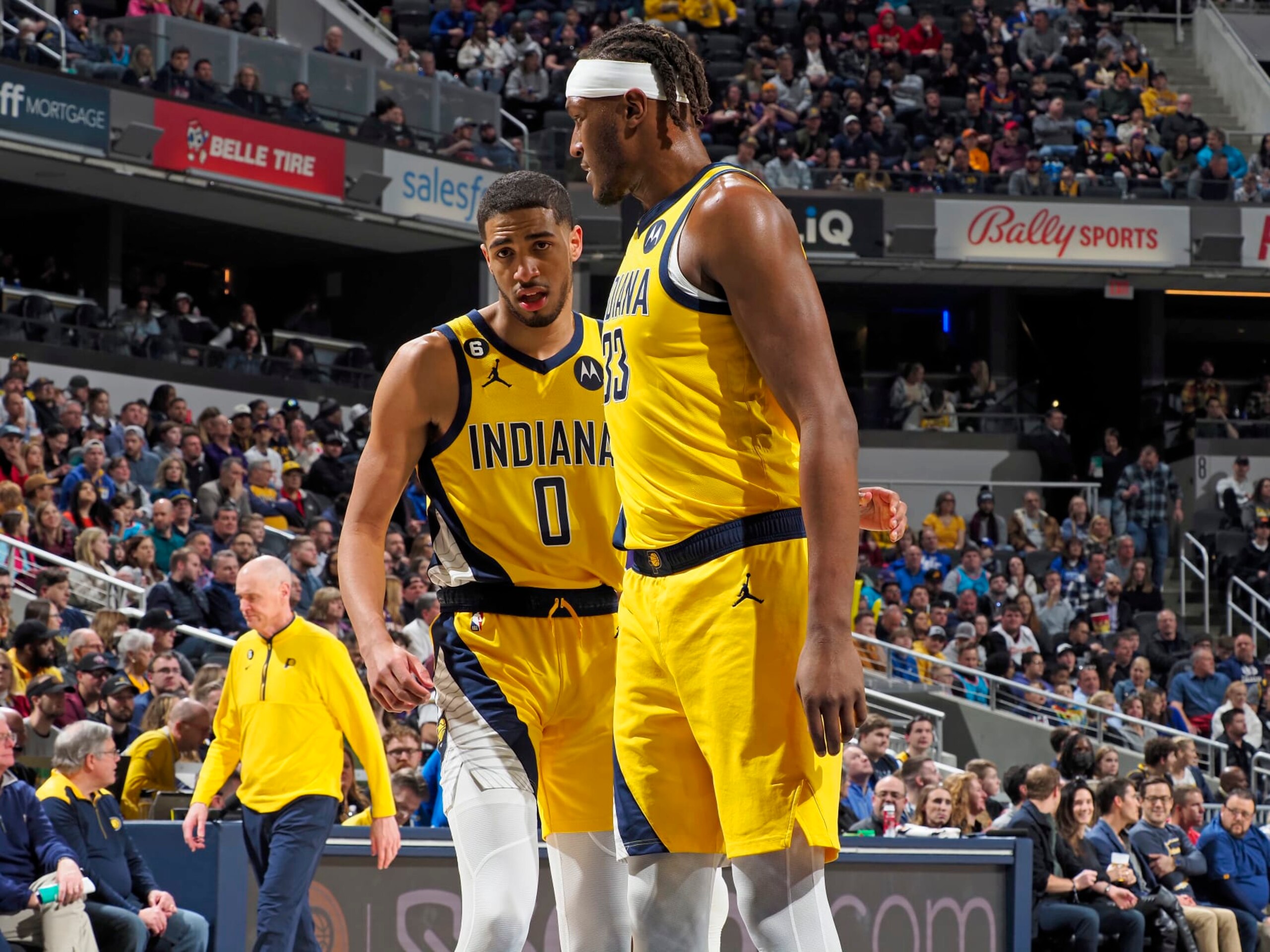
SCENARIO: You're the lead executive of an NBA team. You have a soon-to-be 23-year-old All-Star on the superstar track. And a soon-to-be 27-year-old, defensively dominant big man who scales to any offensive situation you just extended through 2024-25 at a franchise-friendly cost. And a 20-year-old microwavable firecracker destined to flame-throw, on reasonable efficiency, for a decade-plus, with three seasons left on his rookie-scale contract.
You also have a sweat-free pathway to more than $25 million in cap space this summer. And then you've got three first-rounders in the upcoming draft. One of them, your own, could be in the lottery. It could also be in the late teens if you backdoor your way into the postseason through the play-in tournament.
First and foremost: How do you handle the rest of the year? You're a stone's throw from play-in territory (2.5 games) but a heartbeat away from top-five lottery odds (1.5 games). You believe you can leapfrog a couple of the postseason hopefuls in front of you. But you also know that if you cover your 23-year-old superstar in bubble wrap around the end of March, you could bag top-five lottery odds and the chance to add another high-end prospect.
What do you do?
And then, regardless of what you do, how does the offseason unfold? Are you more patient and opportunistic, biding time and cap space, maybe even reopening the longstanding, never-really-ending trade talks for your recently extended big man? Or are you more abrupt and aggressive, throwing your money around to impact free agents who play the 3 and/or 4, perhaps even using your runway beneath the cap to grease the wheels of a bigger trade?
Pushing forward is always a complicated, multistep process, but are you prepared to choose one of these underlying directions? Or will you be content, even driven, to land somewhere in the middle?
This is the situation as we know it for the Indiana Pacers. And where some will bill it as uncertainty, it's really optionality. They are beholden to no singular direction and virtually incapable of providing a wrong answer. Theirs is a license for everything—to accelerate and add on, refine and recalibrate or retreat and rebuild.
L.A. Clippers: Lingering
13 of 30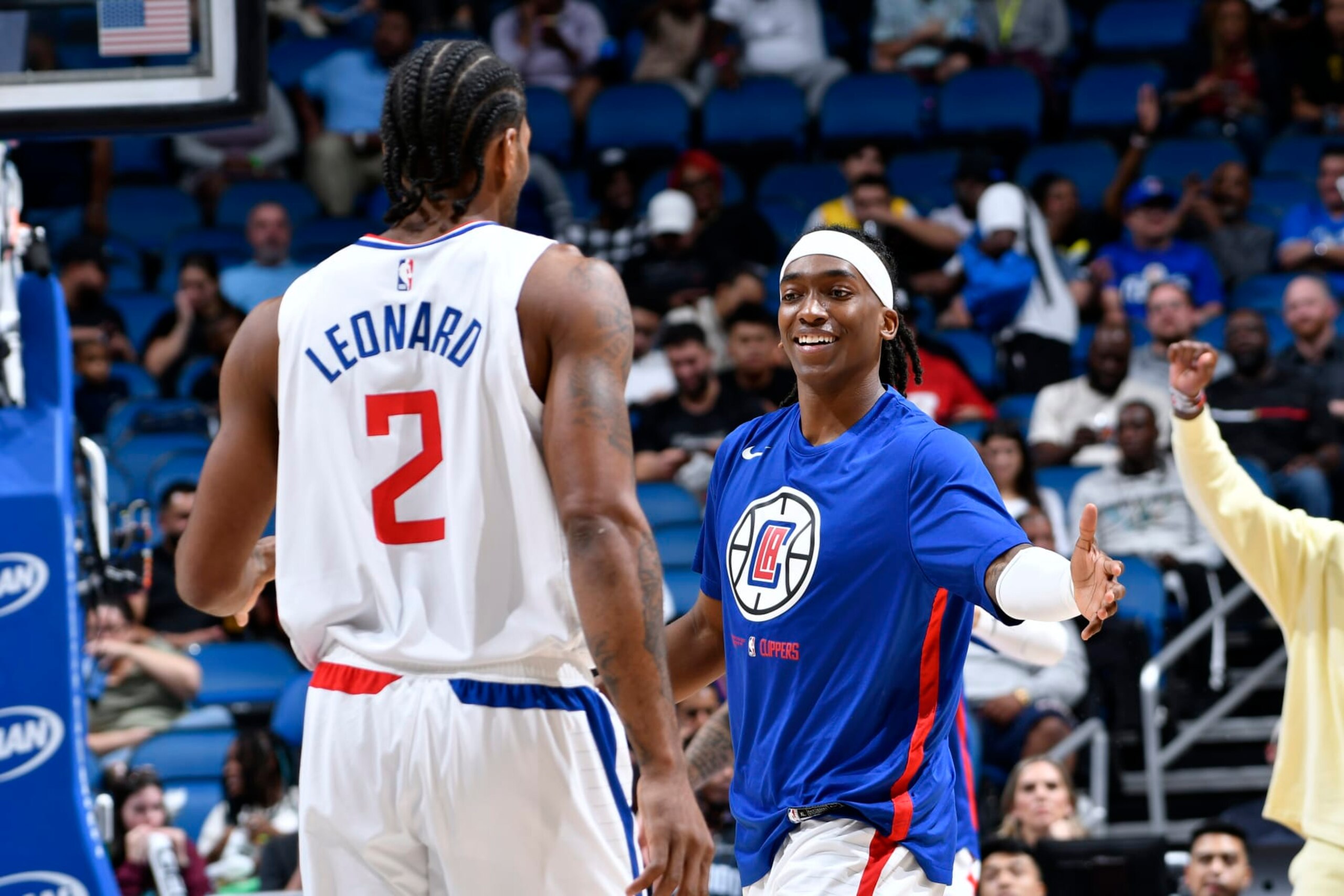
The 2022-23 L.A. Clippers are an enigma wrapped in a parable that lives inside an allegory. Just when you think you have a hold on the small and big pictures, they flip the scripts on a whim, compelling you to reconsider, well, everything. (See: Adding Russell Westbrook.)
What looked like a fading juggernaut to begin the year is now, almost tacitly, the Western Conference's fourth-best team. The year-long offensive numbers are concerning, but the Clippers are seventh in points scored per possession and 10-4 since Jan. 20.
The defense has slipped during this time, in part because of scorching-hot opponent three-point sniping, but also because of an on-again, off-again ability to get stops in transition.
L.A. has found something in its no-point-guard lineups with Terance Mann. And it has annihilated opponents all season with both Kawhi Leonard and Paul George on the court.
The front office's trade-deadline moves simultaneously fortified the middle-top of the rotation (Eric Gordon), increased optionality behind Ivica Zubac (Mason Plumlee) and injected a jolt of ball-handling and shot-making variability (Bones Hyland).
Skeptics will bet against the top of the Clippers' roster remaining healthy enough to withstand the rest of the schedule and into the playoffs. They have the league's second-hardest slate the rest of the way, according to PlayoffStatus.com. They also have just 21 games remaining, period—13 of which will be played at home.
Load-management punchline? Past its win-by-date contender? Sleeping giant?
Awoken giant?
This Clippers team has looked like it all and more without ever tumbling too far astray. And now, coming out of the All-Star break, it seems to be peaking at exactly the right time.
Los Angeles Lakers: Urgency
14 of 30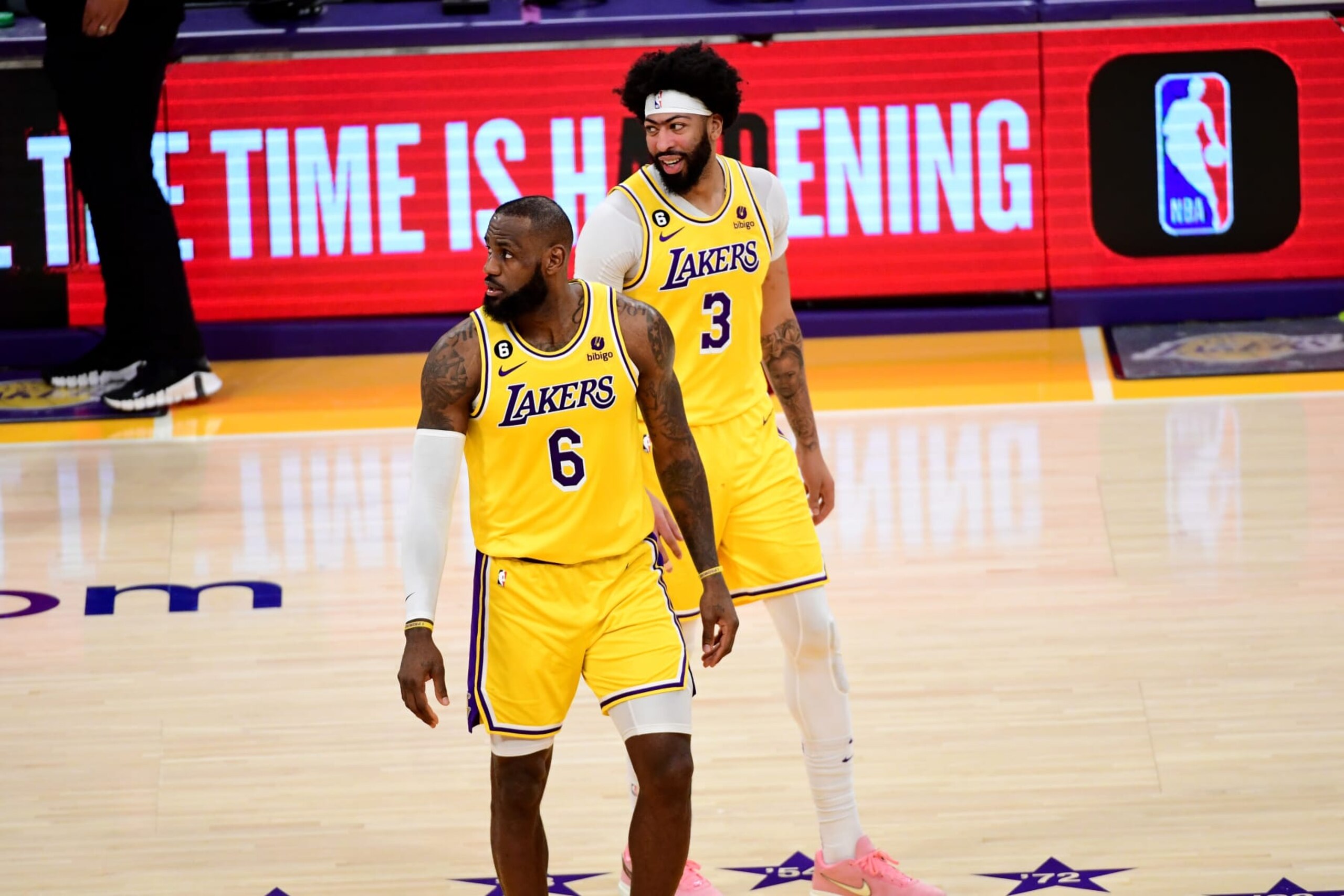
LeBron James didn't mince words when asked about the Los Angeles Lakers' stretch run. If anything, he hyperbolized them.
"It's 23 of the most important games of my career, for a regular season," he told reporters before the 2023 NBA All-Star Game. "It's the type of mindset that I have, and I hope the guys will have, coming back off the break."
This is an outlandish thing to say on its face. LeBron is a four-time champion, headlining a Lakers team that exits the All-Star break with a bottom-three Western Conference record. Even if they go on a run, there's no guarantee they make it out of the play-in tournament, let alone enter the real postseason bracket as anything more than a ritualistic stepping stone for the Denver Nuggets or whoever winds up with the No. 2 seed.
At the same time, LeBron isn't distorting reality or fabricating stakes. Every postseason appearance, however ceremonial or superficial, is precious when you're wrapping up Year 20 at age 38.
The Lakers, for their part, have ascribed actual importance to the rest of this year. They didn't mortgage their entire future at the trade deadline, but they gave up part of it. You don't send out a top-four-protected 2027 first-round pick that post-dates the LeBron era solely to get a jump-start on 2023-24.
You bring in D'Angelo Russell, Malik Beasley and Jarred Vanderbilt, among others, to make a run now—to ensure this year ends sometime, anytime, beyond your final game of the regular season.
Memphis Grizzlies: Polarizing
15 of 30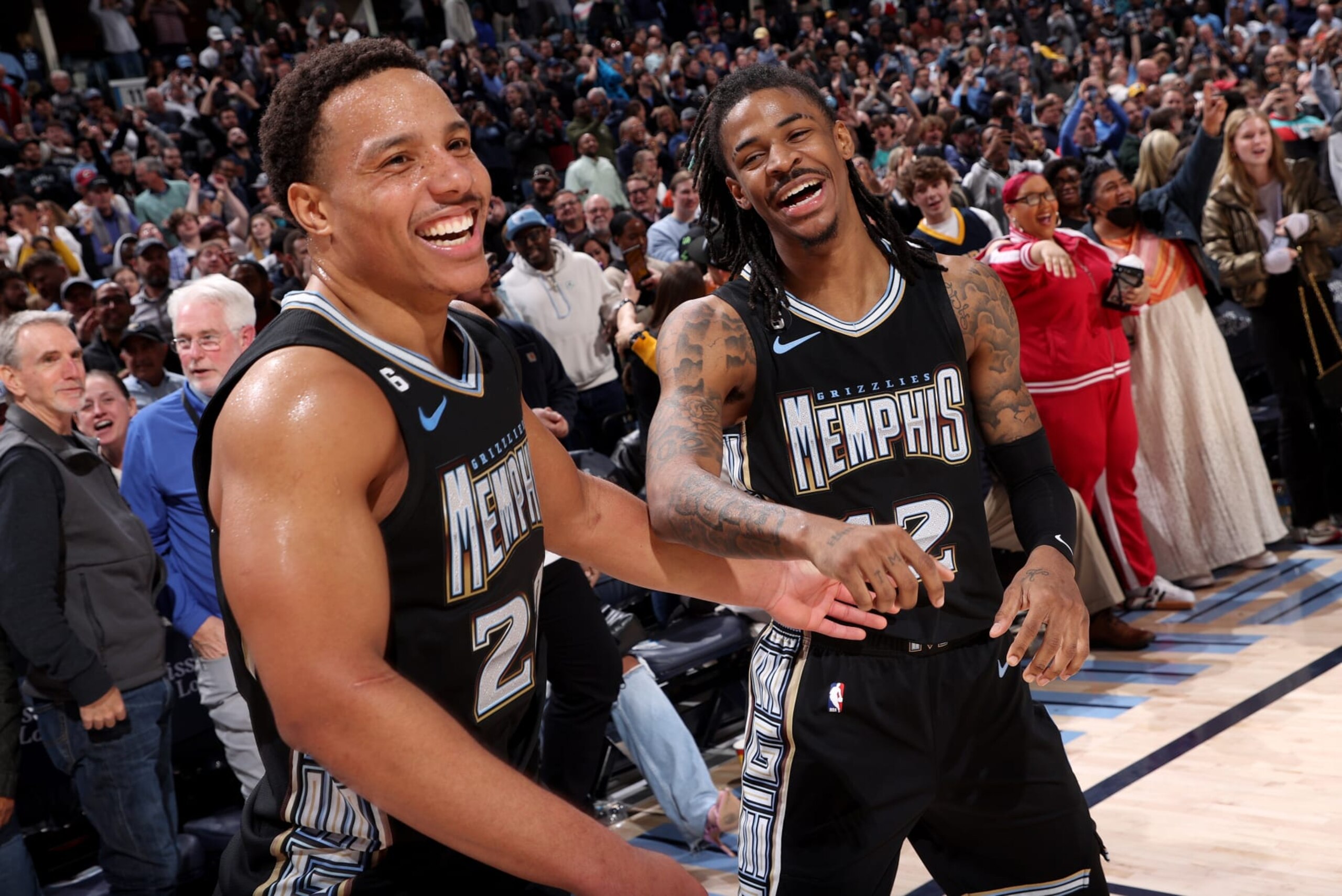
Are the Memphis Grizzlies a genuine title contender that didn't need an infusion of higher-end talent at the trade deadline and deserve to ooze all the bravado and bluster they please? Or are they a trash-talking paper tiger, more pomp than promise, overly attached to continuity and internal development, underestimating how much their flaws will cost them when it matters most?
The truth, as always, likely lands somewhere in the middle.
Memphis does not have the Western Conference's second-best record—or the league's second-best defense—by mistake. It is a force with which to be reckoned, even at the offensive end, where its meld of second-chance creation, transition thrust and anything Ja Morant may be more blunt instrument than sight to behold but is nevertheless effective.
Whether the Grizzlies fail to measure up with the foremost title favorites—Boston, Milwaukee, Denver, now Phoenix, perhaps Philadelphia—is a fair question. They continue to rank in the bottom 10 of half-court offense and both three-point-attempt frequency and accuracy.
Luke Kennard's arrival will help some. It is far from a panacea. Their performance in Steven Adams' absence has been particularly revealing—and, by extension, concerning.
They so badly need his screen-setting and rebounding. They are 4-7 since he went down, with a 24th-ranked offense and an even handsier version of Jaren Jackson Jr., who is averaging 4.9 fouls per 36 minutes during this span, up from 4.3.
Reaching radical conclusions on the state of the Grizzlies is uniquely difficult. They are by no means a disappointment or on the edge of implosion, but their success and place inside the contender clique are innately divisive—a lack of consensus that will make for a compelling-as-hell playoff run.
Miami Heat: Fringe
16 of 30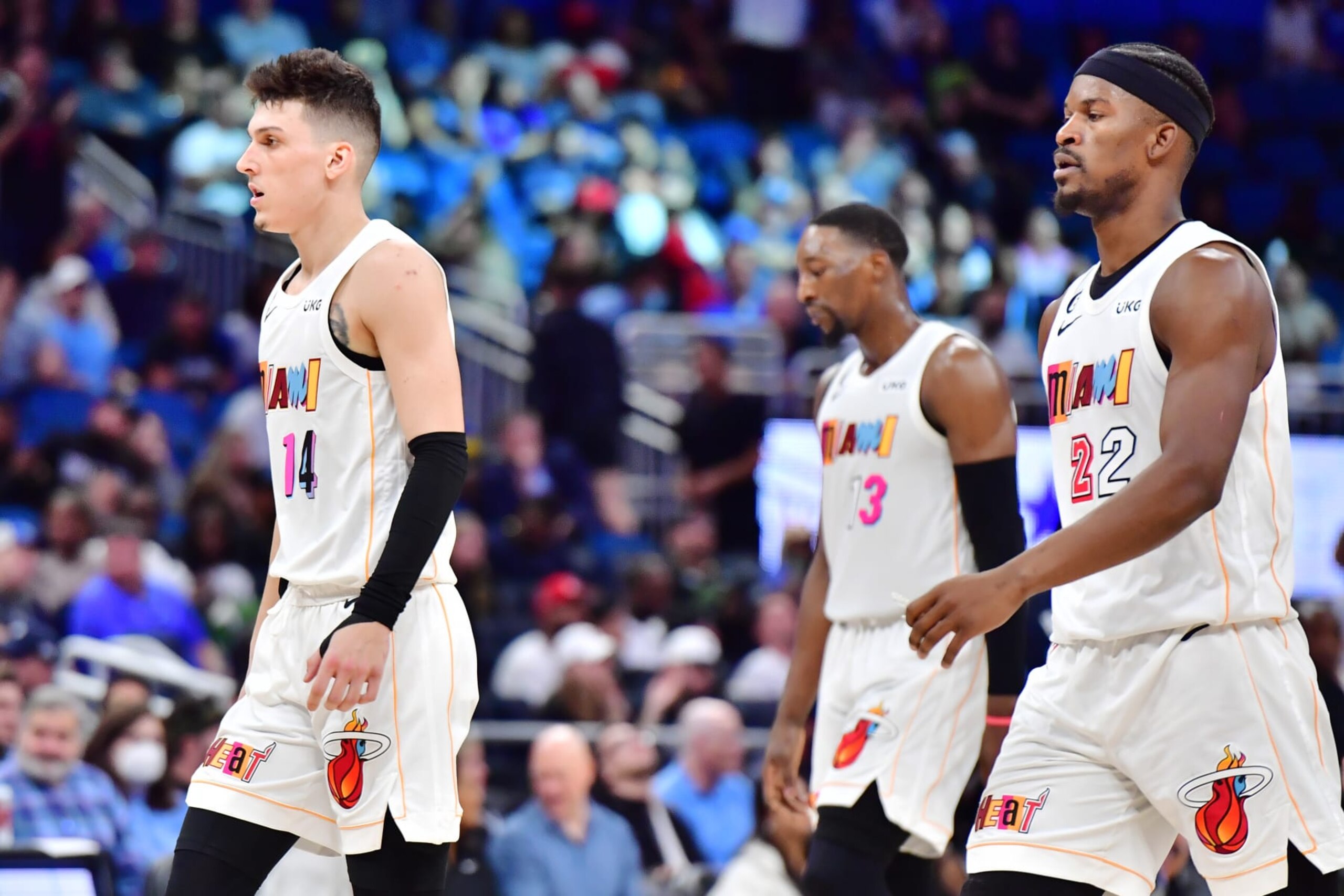
Etch the Miami Heat into an NBA tier at your own peril.
Their vitals beg us to amend preseason expectations and bounce them from the second-ring contender clique. They amble out of the All-Star break as the East's seven seed, in real danger of sticking inside the play-in ranks, with a 25th-ranked offense that is light on shooting and half-court punchiness.
Miami's relative inaction at the trade deadline portends a more sinister prognosis. A team with confidence in its immediate chances doesn't sit tight. And it's not like the Heat are content with the product in tow.
They plucked Kevin Love off the buyout heap and might wind up starting him. Age-36 Kyle Lowry has played poorly enough to see his minutes cut and the final year of his contract get viewed as an albatross.
Is this actually a gap year?
Except, then there's Jimmy Butler. And Bam Adebayo. And Tyler Herro. The top of this roster is reaaally good. Miami's eight most used lineups are all demonstrative net plusses. And lest we forget, the Heat made the conference finals last year with almost this exact core.
Is this "Just wait 'til you see us in the playoffs" disguised as regular-season strife?
The Heat are operating on the fringes of the playoff discussion in almost every possible sense. They are steering themselves into the middle but might be on the precipice of the top yet also flawed enough to topple closer down toward the bottom. Where will they land, and how will it all end once the dust settles? Really, with how this season has gone, not even they can half-truly know.
Milwaukee Bucks: Exhaling
17 of 30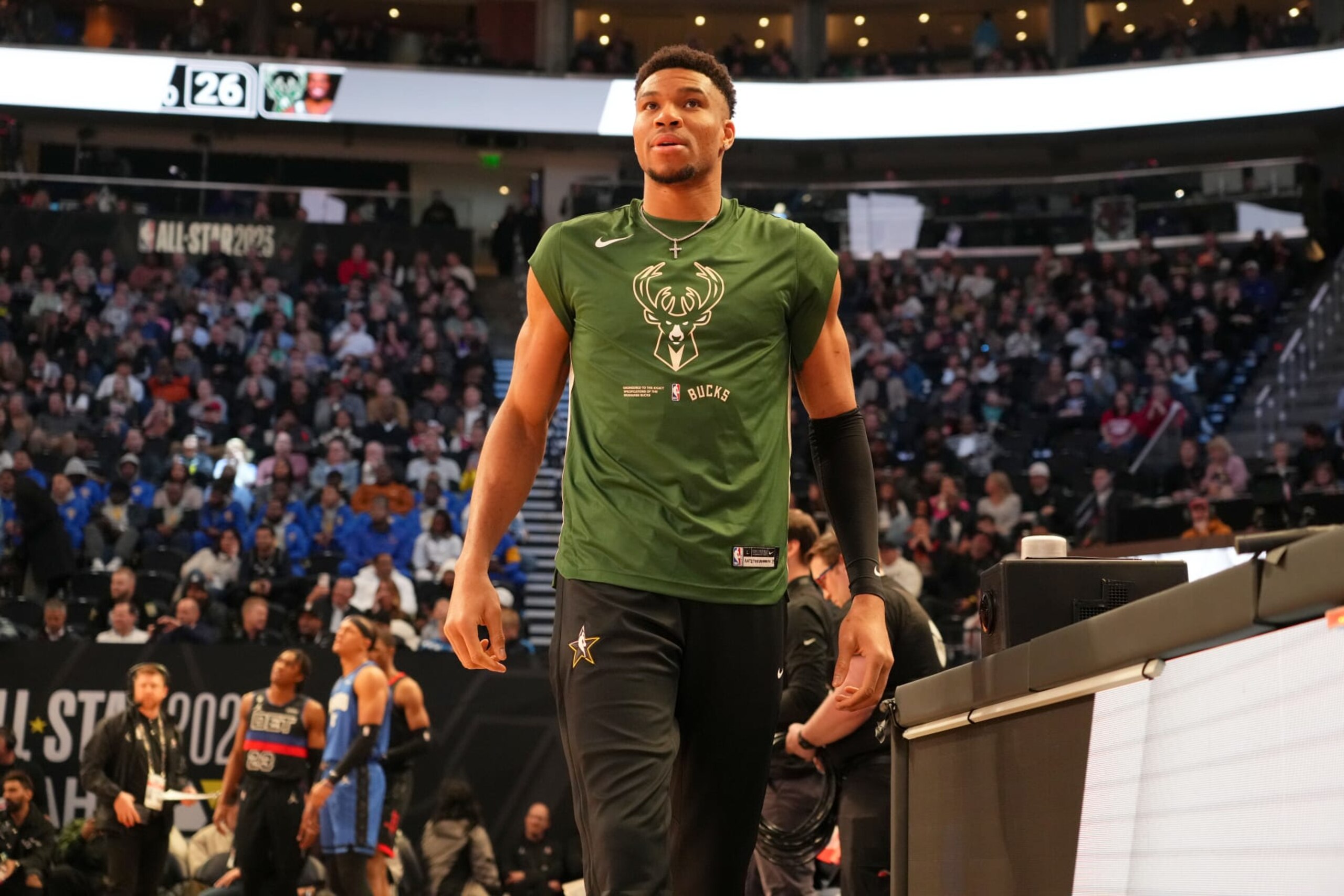
Sources told ESPN's Adrian Wojnarowski that Giannis Antetokounmpo "suffered a sprained ligament in his right wrist, and he will undergo treatment with the expectation that he'll be able to return to the lineup once the pain subsides." That is...unsettling. It's also miles from the worst-case scenario.
Losing Giannis for an extended period of time to a serious injury would have been catastrophic. The Bucks' title hopes go as he goes. There is no replacing the workload he shoulders on both offense and defense or the sheer tenacity with which he plays.
Milwaukee, it seems, evaded disaster. Everyone in the organization should be sighing in relief—though also, on some level, holding their breath.
Much of this Bucks season has unfolded with stop-and-start wrinkles. They emerge from the All-Star break on a 12-game winning streak, a mere one victory behind Boston for the Eastern Conference's best record. But they have enjoyed little lineup continuity for most of the year.
Khris Middleton sat out a large chunk of the season with wrist and knee issues. Jrue Holiday and Giannis have both missed 10-plus games. Bobby Portis hasn't played since Jan. 23 after suffering a right MCL sprain. Pat Connaughton missed the start of the season with a calf injury.
The Bucks are staking their claim as title favorites anyway, largely on the back of a league-best defense. There is nevertheless something discomfiting about Giannis, Holiday and Middleton appearing in only 14 games together to date.
Much of that concern is mitigated by how dominant the trio remains, but for Milwaukee's sake, this Giannis news, while not discouraging, needs to represent the last of its core setbacks.
Minnesota Timberwolves: Nebulous
18 of 30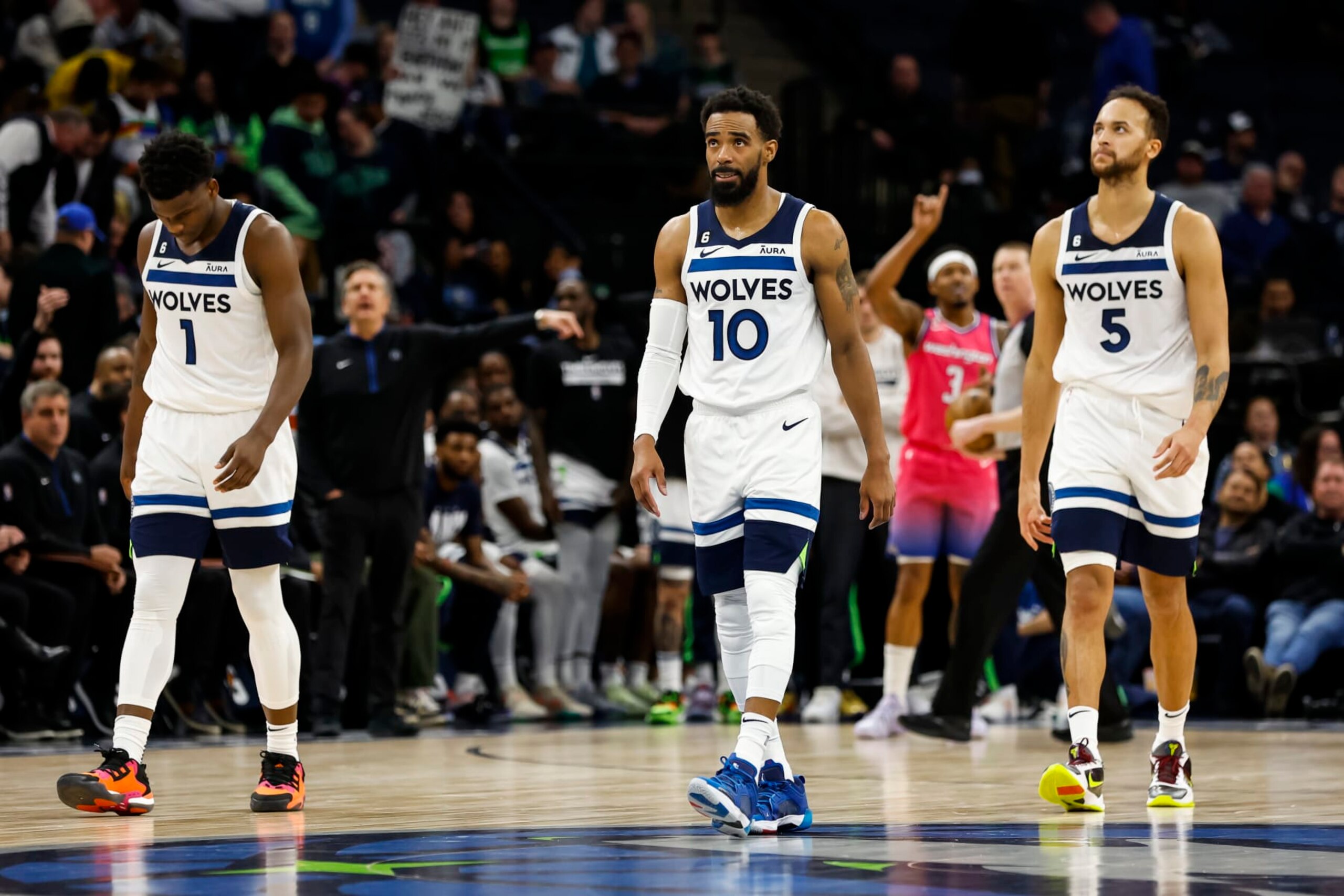
You might think we'd have a concrete handle on the Minnesota Timberwolves 60-plus games into the season. We don't.
It's easy to look at their record and declare them nothing more than a minor irritant, a likely play-in team without the depth or chemistry or offensive juice to win an entire series. And it's fair to paint them as an overall disappointment. They didn't drain their armory of assets for Rudy Gobert just to scrape and claw for a lower-rung postseason cameo.
Writing them off, under the circumstances, is fine. But let's not pretend to have a firm grasp on this team's ceiling.
Karl-Anthony Towns hasn't played since Nov. 28 while recovering from a right calf injury. His return is somewhat imminent and should have a material impact on the team's offense and overall trajectory. Ditto for the integration of Mike Conley. His first three games haven't looked so hot, but his preexisting rapport with Gobert, familiarity playing off the ball and general floor organization should go a long way.
Counterpoint: What if it doesn't?
Minnesota is not better off without Towns, per se, but it has become more acquainted with new realities in his absence. Anthony Edwards has taken on more responsibility over the past few months, and the offense is better off for it—the same offense that ranked in the 12th percentile of efficiency when he shared the floor with Gobert and Towns.
Are the Wolves now more equipped to work in everyone despite so little time left before the postseason? Does the addition of Conley simplify that process? Complicate it? Will they end up missing D'Angelo Russell, who played some of the most efficient basketball of his career after the Towns injury?
Minnesota hasn't done nearly enough to warrant benefit of the doubt, but its performance leading into the trade deadline suggested it was far from a lost cause and, more confusingly, in direct conflict with the direction it ended up traveling.
New Orleans Pelicans: Unsettling
19 of 30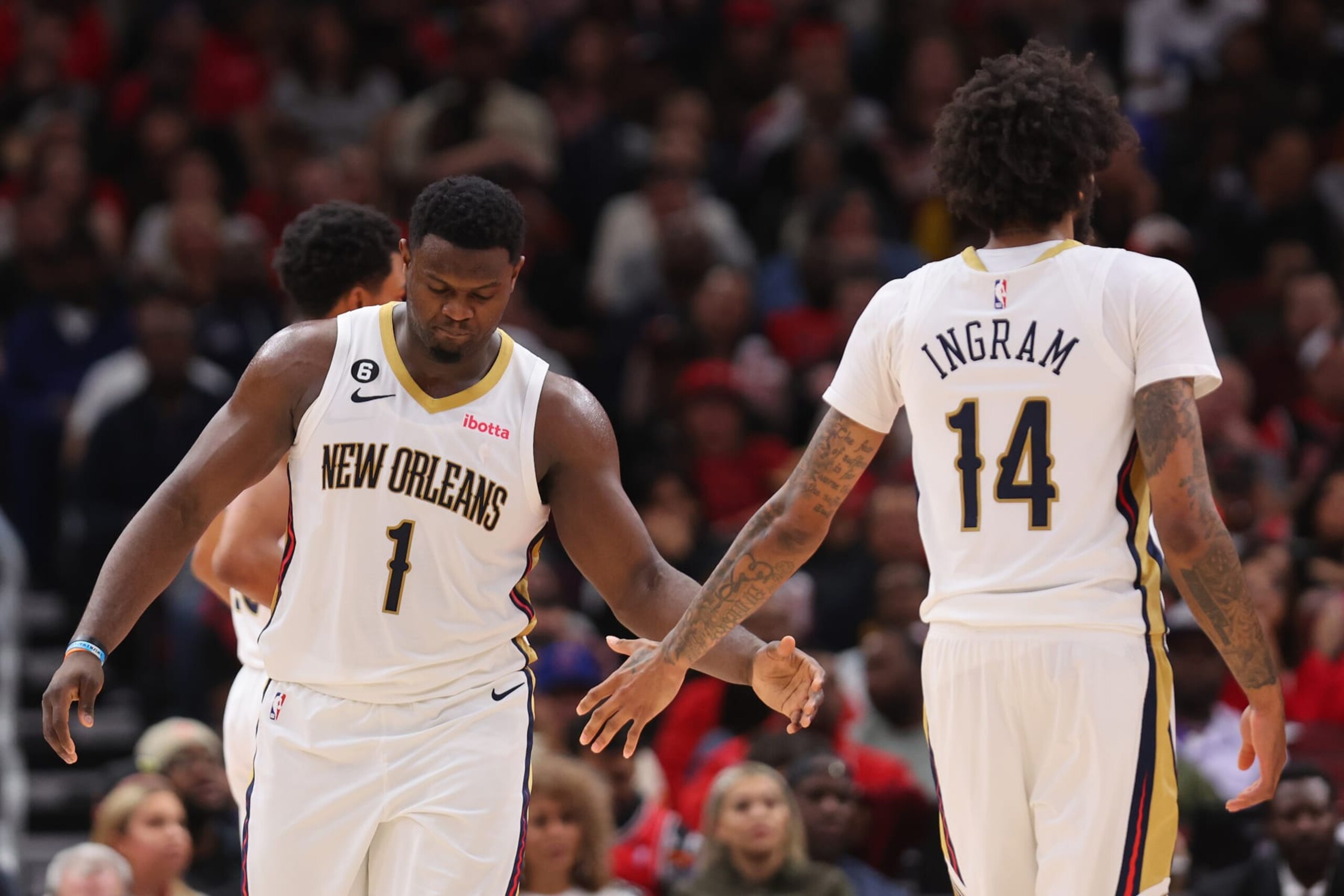
Despite all of their injuries and imperfections, the 2022-23 New Orleans Pelicans have hinted at a championship ceiling. Entering the new year, they owned a top-three net rating and were tied with Memphis for the Western Conference's second-best record.
Those ascending-contender vibes have since been blown to smithereens.
The Pelicans are 7-16 since Jan. 2, with a 25th-ranked offense and net rating, and have tumbled to seventh in the West, mere spitting distance from dropping outside play-in territory. This plunge just so happens to coincide with Zion Williamson's right hamstring injury, but his absence is neither a Teflon excuse nor especially comforting.
New Orleans cannot count on his return to change everything. It can't even count on his return, period. Zion's timeline to rejoin the team remains without a concrete date after he suffered a setback in his recovery. Both he and the Pelicans know all too well what that might mean.
This doesn't absolve New Orleans of anything. The same goes for Brandon Ingram's time on the shelf with a left big toe injury. He is nine games into his return and playing exceptionally well, and the Pelicans are still struggling to cobble together anything resembling a league-average offense or coherent game plan during that span.
Other teams would kill for New Orleans' depth in the absence of its best player. A core of Ingram, CJ McCollum, Jonas Valančiūnas, Herbert Jones, Trey Murphy III and Larry Nance Jr. should be doing more than retreating further into the play-in ranks.
Something looks and feels fundamentally broken about the Pelicans' process and approach. The offense, above all, should not be struggling this much to prop up satisfactory three-point volume and overall efficiency. Zion's return is the ultimate swing development, but it's rapidly becoming less than a given—much like New Orleans' ability to pull itself out of this downward spiral.
New York Knicks: Deep
20 of 30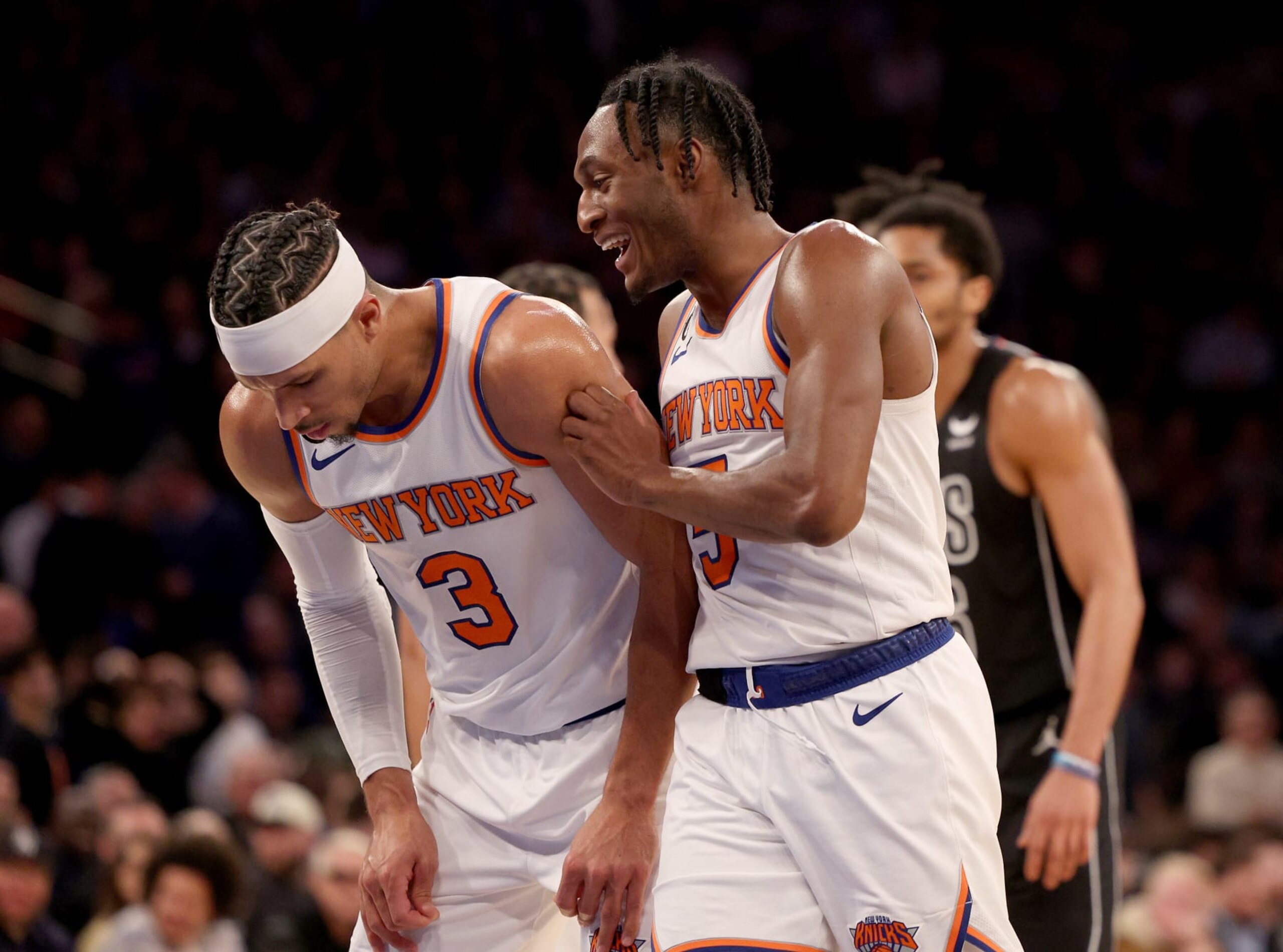
An honest tangent to start us off: I tried like hell to frame this in more profound, bigger-picture terms. I couldn't do it. The New York Knicks retain their air of stopgappy miscellany—a collection of talent that is good, far from great, with few inarguable future staples.
That is...fine. Truly. It's not meant as an insult. There is value in remaining competitive while biding your time for The Move that elevates you into the conference finals discussions. And the Knicks aren't just competitive. They're deep—genuinely, sustainably, perhaps even peerlessly deep.
New York stretches two have-to-find-them-minutes players at every rotation spot. In some instances, that number balloons to three at full strength (point guard and center, mainly). And this rise predates the arrival of Josh Hart. No bench has a better point differential per 100 possessions since Jan. 1.
Adding Hart merely inflates the standing of an already burgeoning group of reserves. In the 58 minutes he's logged beside Isaiah Hartenstein and Immanuel Quickley, the Knicks have an offensive rating of 143.2(!)—and a net rating of 32.4. The lineup optionality head coach Tom Thibodeau now has when mixing and matching his starters and styles is off the charts.
Depth of this level invariably begets awkward questions over the longer term. Most of them will involve Quentin Grimes and R.J. Barrett, with some trickle-down to Obi Toppin and Deuce McBride. Immediately, though, this is a gruh-eat problem to have—insofar as it's a problem at all.
Oklahoma City Thunder: Inbound
21 of 30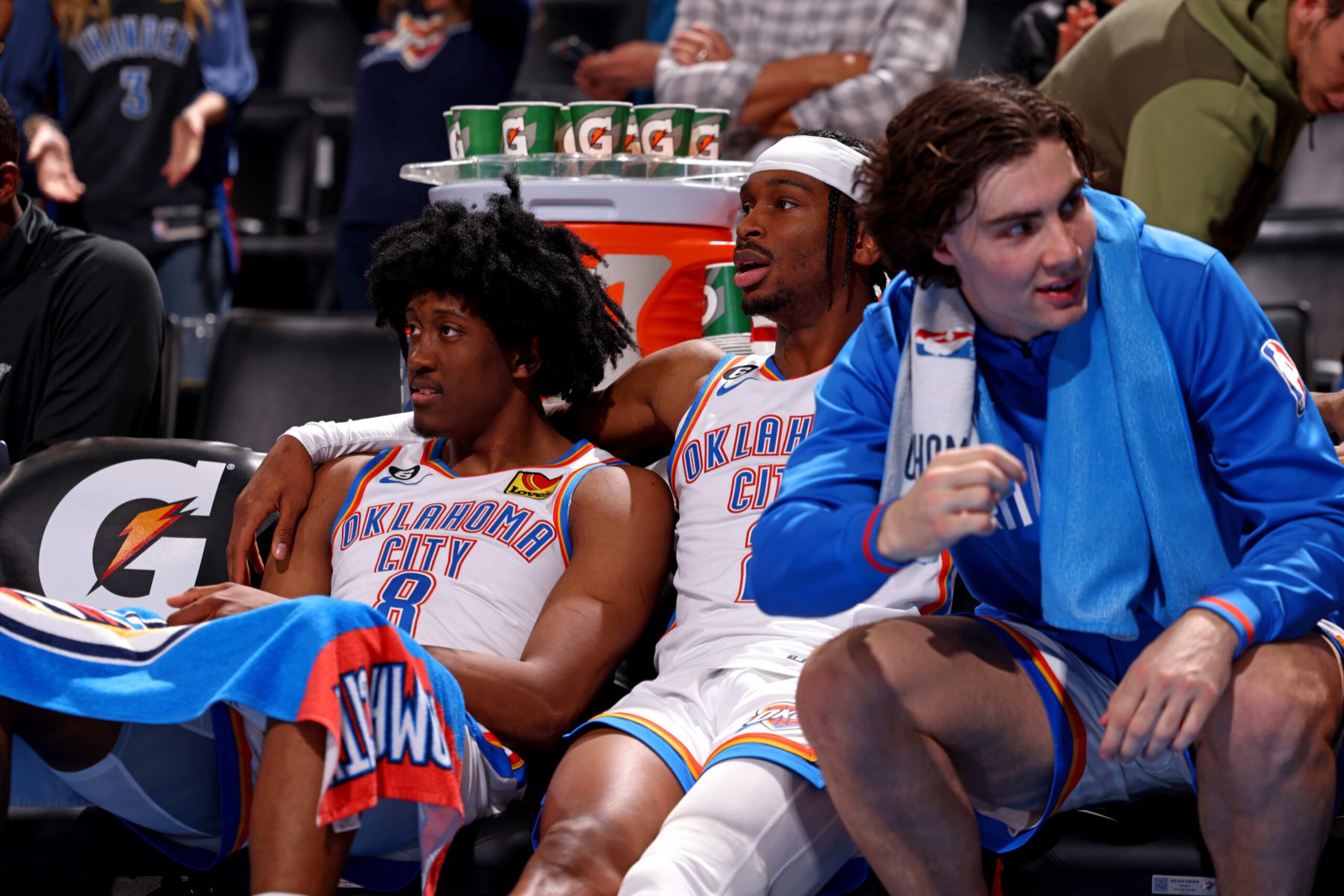
There will be no late-season chicanery from the Oklahoma City Thunder this year. They have a play-in—potentially outright playoff—spot to chase.
Dismiss the Thunder's season to date as over-their-head noise if you're so inclined. It's a mistake. They are deep, frenetic, just the right amount of ungoverned on defense and built around one of the 10 currently most valuable players in the league.
Oh, and the offense is starting to take shape, even if it's not a pretty-looking one.
Oklahoma City is first in points scored per possession since Jan. 1. Yes, you read that correctly. First. (And third in the half-court.)
No, the Thunder won't swish over 40 percent of their triples the rest of the way. And they will, at some point, need Shai Gilgeous-Alexander to jack up more treys. But there is a rhyme and reason and feel to their offense now, one made possible by a roster steeped in developing NBA talent and the capacity to play at varied tempos.
Monitoring a legitimate postseason push isn't even the most fascinating part about watching Oklahoma City. Pondering what the immediate future holds is more riveting.
Next season, Chet Holmgren and another first-round prospect will join a nucleus of SGA, Josh Giddey, Luguentz Dort, All-Rookie lock Jalen Williams and Kenrich Williams. That core is already well-complemented by Aaron Wiggins, Isaiah Joe and a (finally) healthy Ousmane Dieng. And the Thunder, if they dare, will have more than $30 million in cap space to spend.
Limits cannot, should not, must not be placed upon Oklahoma City's direction. It hasn't quite arrived, but it is, without question, making its final approach.
Orlando Magic: Ascending
22 of 30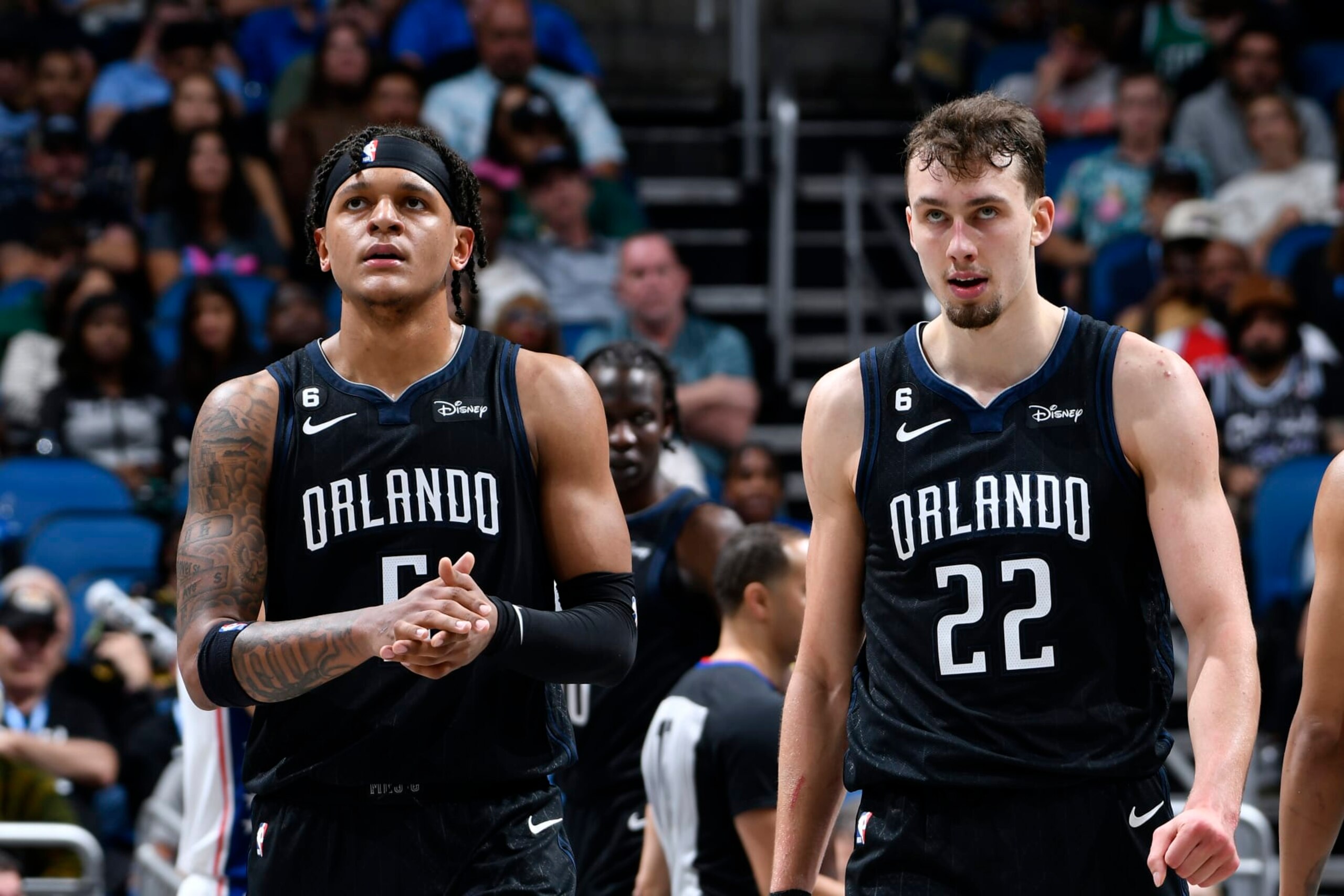
How many rebuilding situations would you rank ahead of the Orlando Magic's right now? Two? One?
None?
More to the point: How much longer will the Magic actually qualify as a "rebuilding situation?"
Immediate returns are already being generated by Orlando's core. Paolo Banchero is a lock to win Rookie of the Year and looks like That Dude. Franz Wagner continues to rewrite the history of the 2021 NBA draft. Markelle Fultz is now more than ever a weaponized offensive game manager with the size and nuisance level to wreck lives on defense.
Wendell Carter Jr. has emerged as one of the most dynamic bigs in the East. Cole Anthony has never been more efficient or microwavey. Jalen Suggs may be a letdown relative to his draft position, but his defense is solid, and the skeleton of his offense is not without hope.
The Magic have close to a top-10 defense since around Christmas, all without the benefit of unsustainably arctic opponent three-point shooting. Jonathan Isaac is back, too. Bol Bol continues to stand out for tantalizing reasons on offense—and all the wrong reasons on defense. Gary Harris is back to being a bankable three-and-D contributor with the know-how to attack in open space.
Teams with bottom-five records aren't finished products. The Magic are no exception. But their core is showing signs of appreciable growth and staying power, and they're about to add another high-end lottery pick, Chicago's first-rounder (top-four protected) and oodles of cap space to their offseason armory. There is almost no limit to the kind of leap Orlando can make next year.
Philadelphia 76ers: Complicated
23 of 30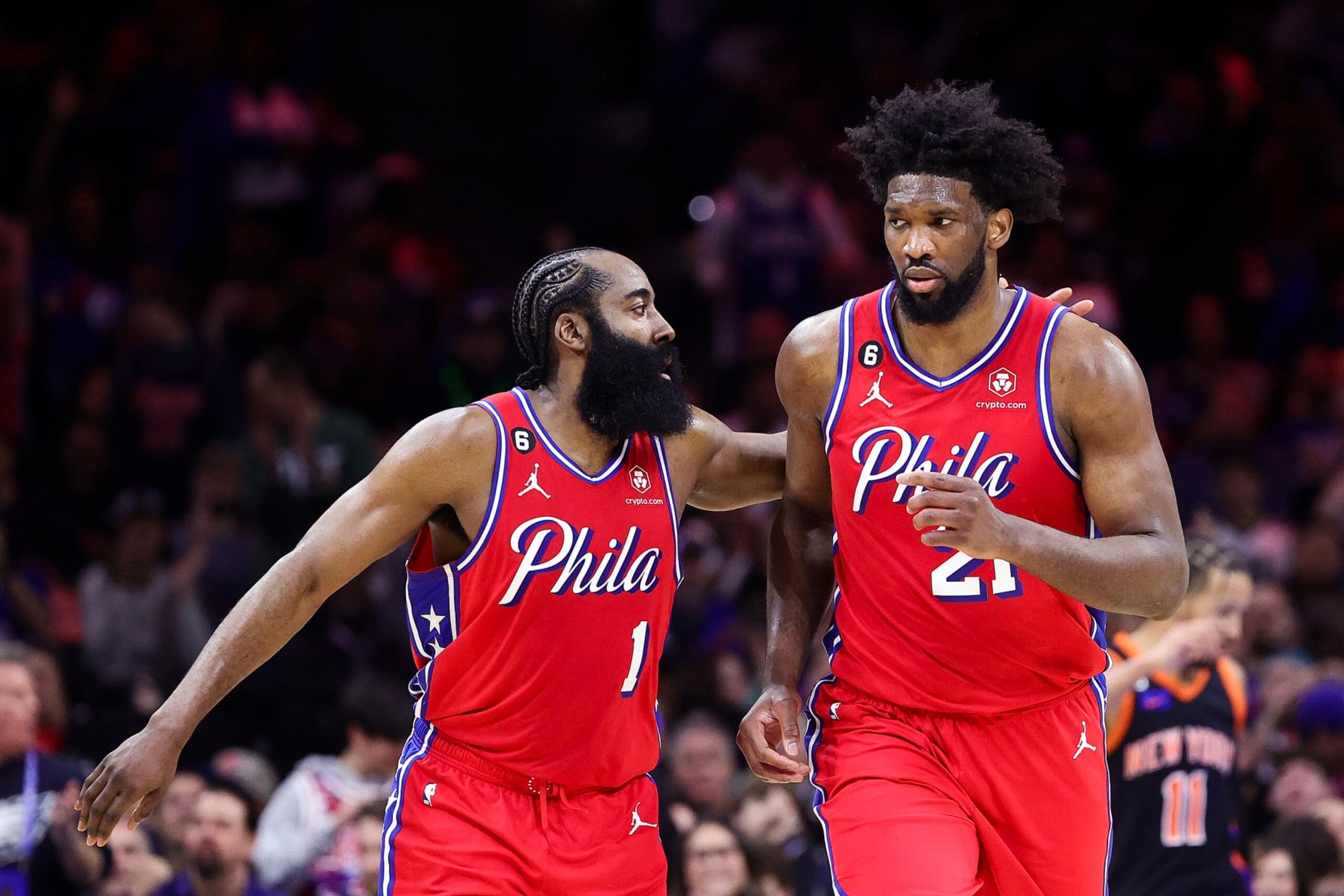
Taken at face value, the Philadelphia 76ers belong in the inner sanctum of NBA contenders. They have a top-eight offense and defense to go along with the East's third-best record. Both Joel Embiid and James Harden are delivering superstar returns, and the rotation is advantageously deep and, relative to head coach Doc Rivers' rigidity, fungible.
But do we all, collectively, actually trust the Sixers?
Philly's defense has slipped since the New Year, placing 23rd in transition and 21st in the half-court. Tyrese Maxey has started just one game since Jan. 15, a move packaged as lineup malleability that has since become the new norm. Is this an ingenious move? An actual demotion? Just plain awkward?
Embiid, in a tale as old as time, is not healthy and potentially overexerting himself before the postseason. The backup center rotation remains ill-equipped to manage his minutes.
The same goes for the schedule. Philly has the NBA's hardest remaining slate, according to PlayoffStatus.com, affording the team little to no margin for cruise control.
Harden's playoff track record will be at the fore of every "Are the Sixers for real?" debate until he rewrites it. The Christmas Day report of his openness to rejoining the Houston Rockets in free agency looms—awkward and odd and seemingly genuine in a way that inflates the stakes of the postseason. Is Philly playing not only to keep him but to elude an Embiid trade request that could feasibly follow Harden's departure?
These Sixers are playing amid an open title window. That much is clear. The extent to which it's open and whether it will last beyond this season is less so—a complex matter of uncertainty atypical of a team with top-six championship odds.
Phoenix Suns: Anticipation
24 of 30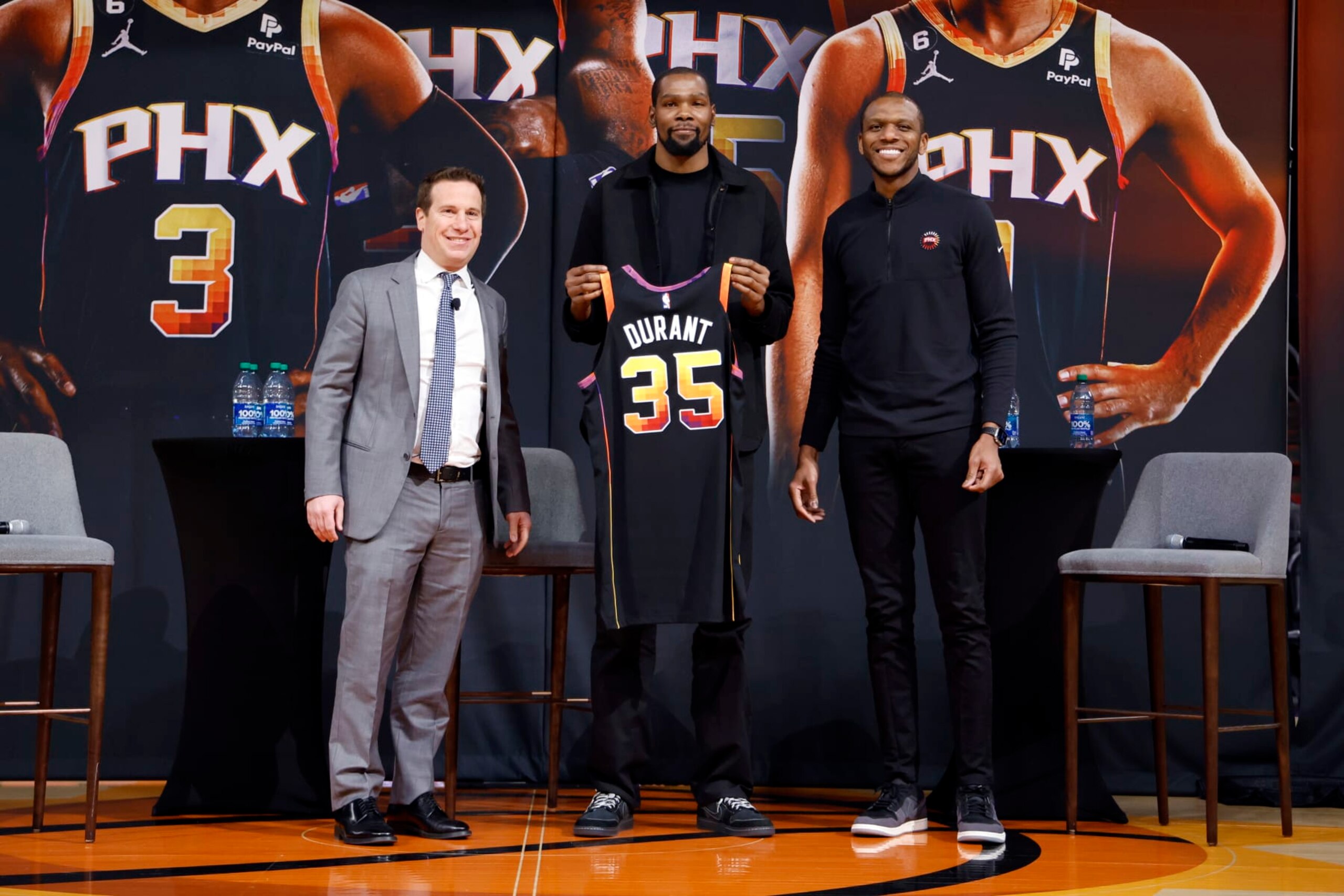
Um, duh.
Kevin Durant is one of the 15 greatest NBA players of all time. He was barreling his way toward the tippy-top of MVP ladders prior to suffering his MCL sprain. The Phoenix Suns just gave up a boatload—Mikal Bridges, Jae Crowder, Cameron Johnson, four unprotected first-rounders, one unprotected swap—to get him. His arrival changes everything for this team, in both the short and long term, as well as the Western Conference at large.
So, yeah, we should all be waiting, impatiently, to see him debut with the Suns, at which point we will all, still impatiently, hunt for profound referendums of what it all means.
Is Phoenix now the title favorite? Will there be a feeling-out period between KD, Devin Booker, Chris Paul and Deandre Ayton? Will Ayton be content in his role? Is this the year CP3 is relatively healthy for the playoffs?
Can the defense survive the departure of Bridges? What does Booker look like as the No. 2 option for the first time in his prime? And how unfair is that to the rest of the NBA?
Was Josh Okogie snubbed from the Three-Point Contest?
Answers to these pressing questions—and more—are coming. Soon. Beginning on Wednesday.
Portland Trail Blazers: Fraudulent
25 of 30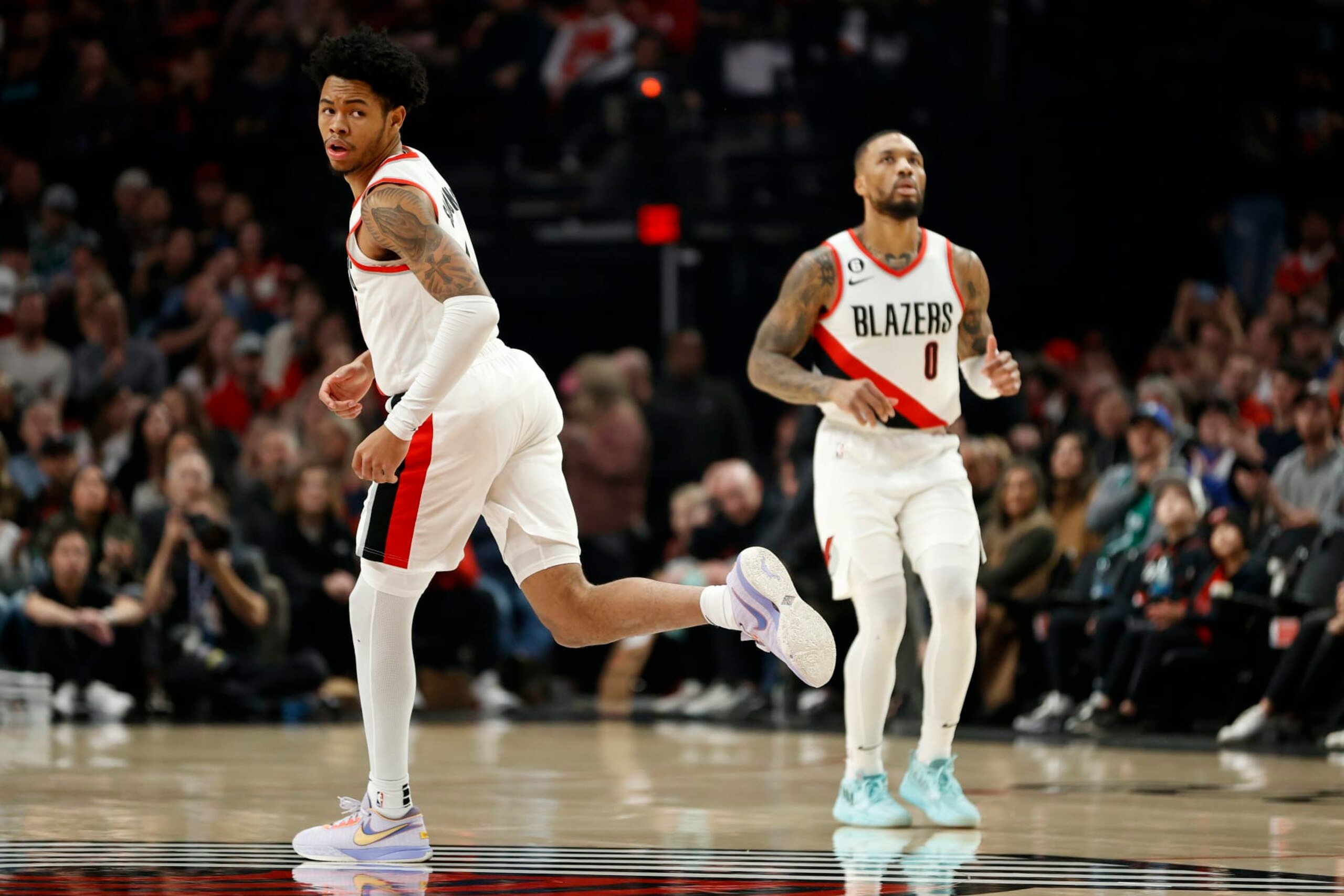
Damian Lillard's timeline my ass.
The Portland Trail Blazers emerge from the All-Star break with the 12th-best record in the Western Conference, fresh off a trade deadline that saw the front office puff out its chest, flex its arms, convey a commitment to upgrading the roster and then, ultimately, let out a long, emphatic, wet-sounding fart.
To be sure, there's nothing inherently sinister about the Blazers' midseason transactions. They turned Josh Hart and Gary Payton II into Cam Reddish, Matisse Thybulle, Ryan Arcidiacono, Kevin Knox, New York's 2023 first-rounder (lottery-protected; turns into four seconds if not conveyed) and five second-rounders. That's at once reasonable and senseless value.
Portland essentially posed as a buyer only to act like a seller. Reddish and Thybulle make the Blazers younger. This isn't to be confused with better. They added a first-round pick, which will come handy when they make their next non-blockbuster move, because they never make blockbuster moves, and because they're still dealing with the fallout from their lottery-protected-until-forever first-round obligation to Chicago.
So little about this squad is inspiring. What's the Blazers' pathway to climbing the Western Conference ladder, as currently constructed around two undersized guards, just like they were before?
Yeah, Shaedon Sharpe is a could-become-anything mystery box. What's that doing for Lillard's window? And what happens after they pay Jerami Grant almost $30 million per year this summer? Worse, what happens if he doesn't even take the money and leaves for nothing? And what in the actual hell is the plan for Jusuf Nurkić, who is owed $54.4 million over the next three years and saw his minutes slashed while dealing and eventually getting sidelined with a calf injury?
This is not a team operating on an immediate timeline—Dame's timeline. Nor, for that matter, are the Blazers on a gradual one. At best, their direction is a mystery.
At worst, and perhaps most likely, it is aimless.
Sacramento Kings: Honeymooning
26 of 30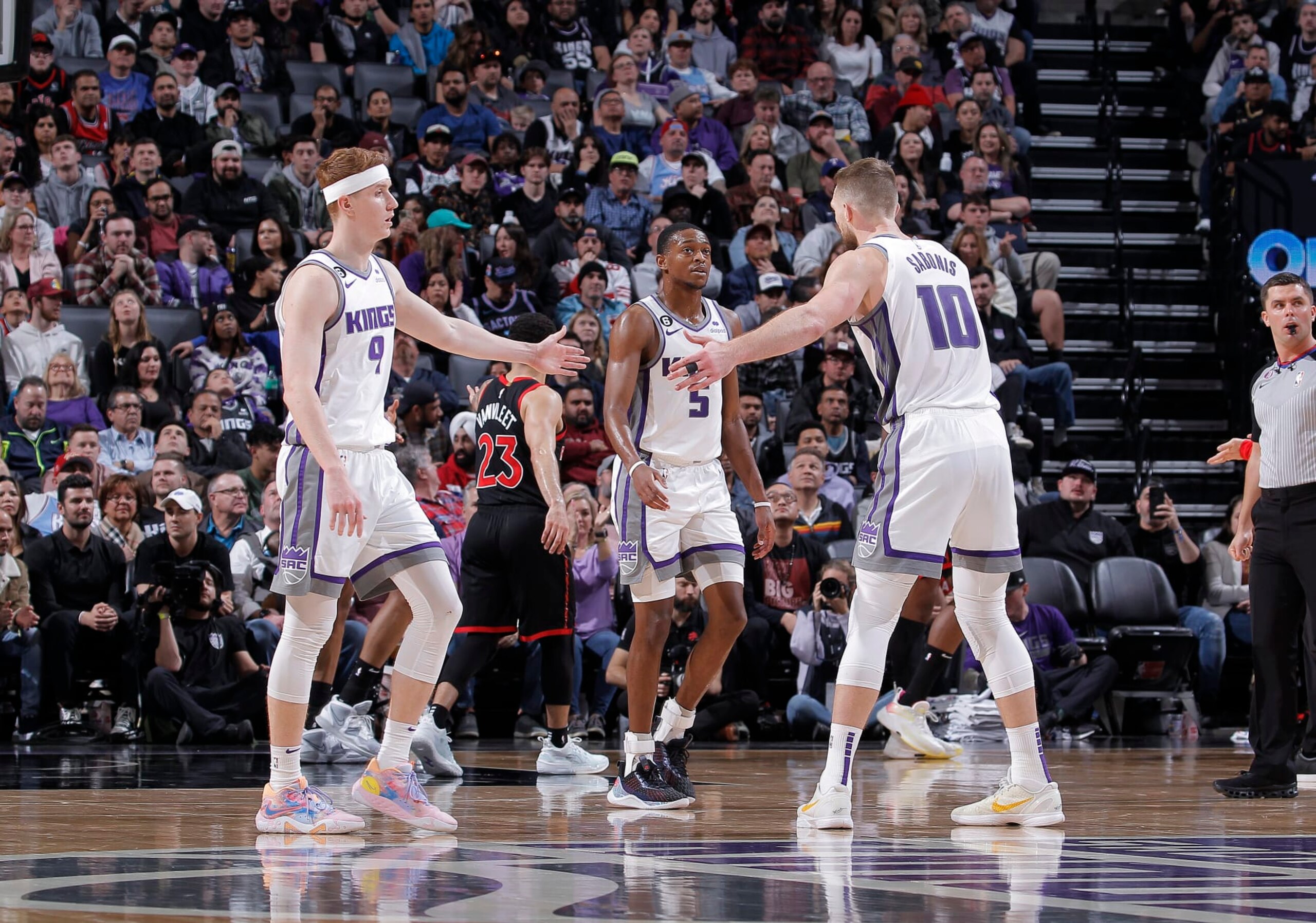
Pretty much everyone saw the Sacramento Kings' preseason over/under and knew the low-to-mid 30s total was too pessimistic. But this? Very few people, if any, saw this.
And by this, I of course mean the Kings spitting out the league's second-best offense en route to exiting the All-Star break with the Western Conference's No. 3 seed and a not-impossible crack at its No. 2 spot.
Never mind good-luck availability from the Kings' core players, or the infrequently solid defense, or a bench rotation that often works but still doesn't evoke intense confidence. And spare us the "Look how close they are to play-in territory! #parity #dametola" caveats.
There is a time and space to discuss all of that—as well as how Sacramento goes from happy-to-probably-be-there postseason participant to bona fide contender.
This isn't it. This is fun, and refreshing, and proved sustainable.
Most of all, this is the end to Sacramento's 16-year playoff drought.
So, yeah, screw everything else. Enjoy the damn hell out of this.
San Antonio Spurs: Wembanyama
27 of 30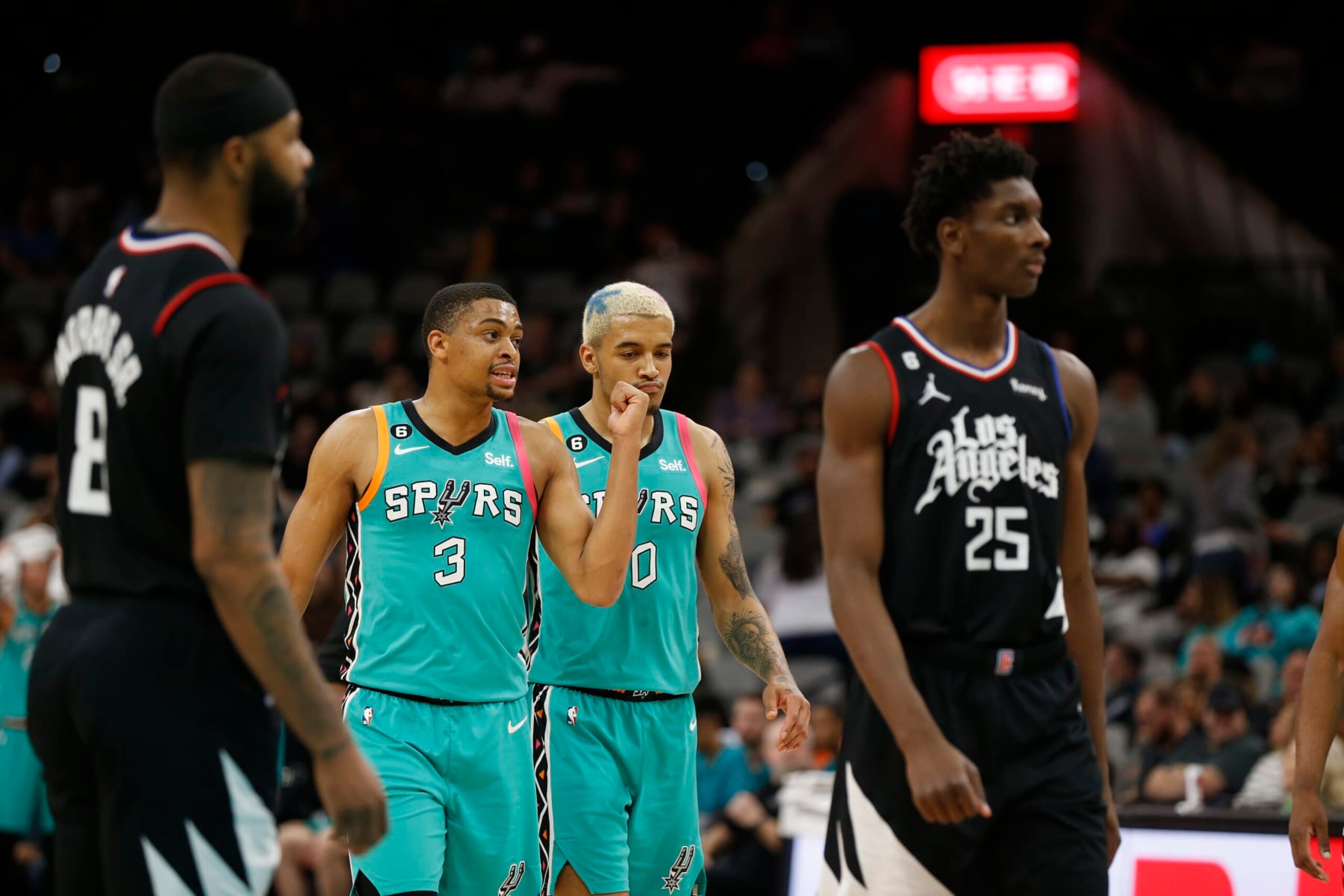
Flattened lottery odds diminish the appeal of vying for the NBA's worst record.
The San Antonio Spurs don't care.
Head coach Gregg Popovich and Co. come out of the All-Star break on a 14-game losing streak and have gone a very big-picture-committed 9-43 since opening the season 5-2. San Antonio is now dead last in net rating by a margin far larger than you'd expect at a time when the recklessly meandering team in Houston exists.
Arriving here, to rock-bottom bliss, has not been overtly unnatural. Devin Vassell had made #TheLeap before undergoing left knee surgery, and the Spurs are gaining a ton of information on the rest of their core.
Keldon Johnson remains really good but clearly needs a floor organizer alongside him on offense. Is said floor organizer rookie Jeremy Sochan? Eventually, maybe. San Antonio is putting the ball in his hands more, and he's delivered, averaging 14.5 points and 2.9 assists while hitting 40.9 percent of his threes and 86.2 percent of his (one-handed!) free throws over the past month—all on top of routinely guarding ultra-tough assignments.
Malaki Branham, another rookie, is frisky. A healthy Tre Jones' in-between game gets defenses on tilt. Zach Collins is quietly cobbling together a nice season. The Spurs are bad, but they're also building, coherently, and growing.
That doesn't mean the usual shenanigans aren't at play. They didn't need to ship out Josh Richardson and Jakob Poeltl to stay bad. They did it anyway—and scored a loosely protected first-round pick from Toronto in the process. Clearly, San Antonio is just as committed to the Victor Wembanyama sweepstakes as the core it already has in place.
Toronto Raptors: Precarious
28 of 30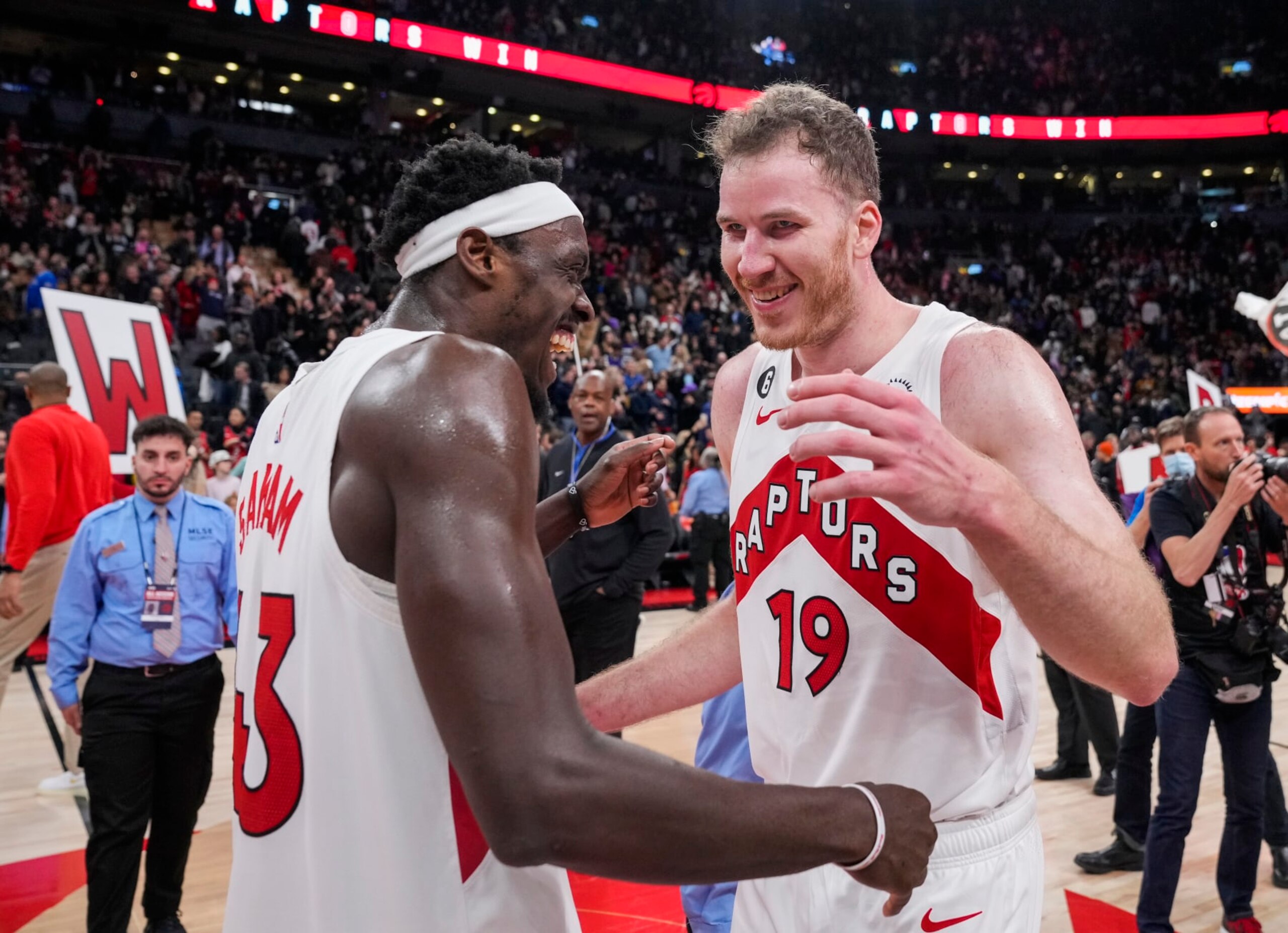
Most came to believe the Toronto Raptors would reorient their core at the trade deadline, if not select a stick of dynamite from an armory of variously dosed explosives and flirt with a partial to full-fledged teardown. Instead, team president Masai Ujiri did the exact opposite; he traded for Jakob Poeltl, a decidedly win-now move laced with implications galore that at the same time technically doesn't tether the organization to any angle or plan.
Like Gary Trent Jr. (player option) and Fred VanVleet (player option), Poeltl is slated for free agency this summer. Bankrolling new deals for all three will be mega expensive and would come in advance of looming raises for O.G. Anunoby and Pascal Siakam, both of whom are extension-eligible this offseason and scheduled to hit the open market in 2024.
Paying everyone seems untenable, even if it's logistically easy. But the Raptors didn't give up a 2024 first-round with top-six protection through 2026 just to let Poeltl bolt over the summer, and they surely wouldn't have punted on available packages for GTJ and FVV if they didn't have interest in re-signing both.
Toronto is committed to absolutely nothing. And it could just pivot via sign-and-trade avenues. This could also be an attempt to buy time. Maybe the Raptors pay GTJ, FVV and Poeltl and then re-evaluate their situation in advance of windfalls for Anunoby and Siakam. But there is no guarantee new deals for the former three age into valuable trade assets, and delaying the decisions on both OG and Pascal risks disastrous, lose-them-for-nothing consequences in 2024. (Note: Extension limitations probably mean Anunoby is hitting free agency no matter what.)
And let's not discount the other possibility now smacking us right in the face: Perhaps Toronto believes the addition of Poeltl, extra time with a healthy Precious Achiuwa and more development from Scottie Barnes positions this core to enter the championship fracas. The Raptors have, after all, won five of six.
That is quite the bet to make. Especially when this year's ceiling is, in all likelihood, repressed by timing. The Raptors are four losses back of a top-six playoff spot, and reaching the postseason through the play-in tournament would mean earning the right to sacrifice themselves at the alter of Boston or Milwaukee. They will be reinvesting in this core, if that is indeed the plan, after a year that doesn't unquestionably justify it—a nothing if not precarious track on which to be.
Utah Jazz: Transitioning
29 of 30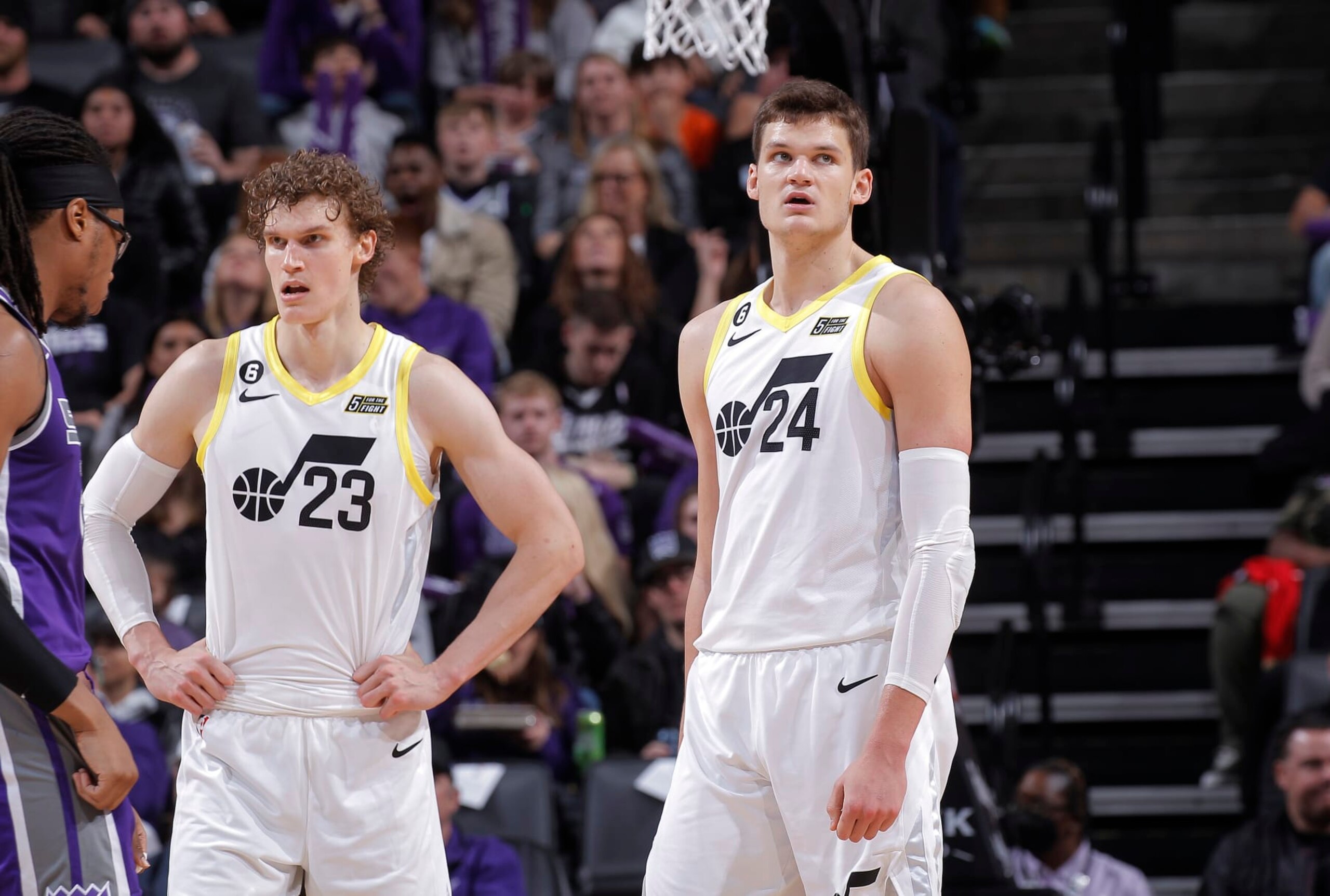
The Utah Jazz's trade-deadline selloff was a necessary reminder that they aren't in the market for "just good" or "pleasantly not bad." Nor are they in the business of "now." They are playing a longer game, one that started with dismantling a close-not-close-enough core and has since continued with the exits of Malik Beasley, Mike Conley and Jarred Vanderbilt and is further reflected in the playing time of Walker Kessler and, more notably, the introduction of Ochai Agbaji into the everyday rotation.
What comes next is at once predictable and unknown.
Utah will not be consumed by rejoining the play-in ranks. But does that mean it'll also be prepared to shut down remaining impact players with seven-syllable injuries to made-up body parts?
Lauri Markkanen is scrapping for All-NBA consideration, and there are only so many Simone Fontecchio minutes you can reasonably get away with. That would suggest an all-out late-season nosedive is unlikely—particularly when the Jazz have about 14 or 15 wins too many to party-crash the Victor Wembanyama and Scoot Henderson sweepstakes.
More of a crossroads will await this summer. Does Utah lean further into its rebuild and bid adieu to culture-setter/Emperor of Vibes Jordan Clarkson (player option) and Kelly Olynyk ($3 million guaranteed)? Does it perhaps consider gauging the market for should-have-been-a-stronger-Sixth-Man-of-the-Year-candidate-turned-starter Collin Sexton? Do they dare entertain offers on their then-26-year-old All-Star with two years left on his deal?
Are the Jazz going to use what could be north of $50 million on talent acquisition? To drive up offer sheets on rival restricted free agents? (Related: Boston, Brooklyn and Indiana, beware.) To rekindle their dalliance to John Collins? Could they actually look to buy, aggressively, even if it means parting with draft equity? Or will they stay the gradual course, leasing out cap space for longer-term assets or spending it on big-picture projects?
Many different paths are available to Utah. The transition to a defining one is still, all these months later, under construction.
Washington Wizards: Stranded
30 of 30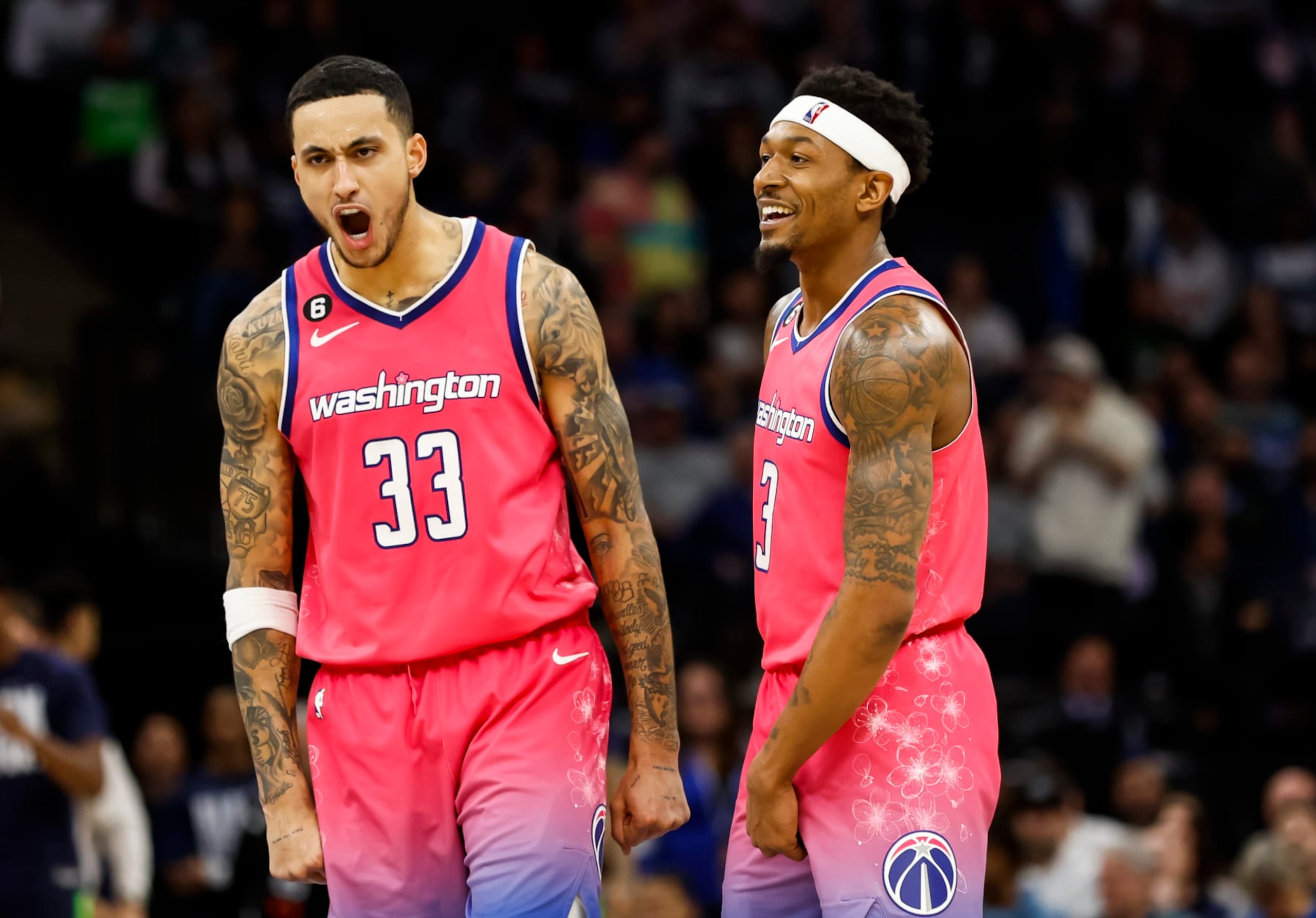
The Washington Wizards skated into the All-Star break on a high note, winning 10 of their last 14 games while maintaining a top-two offense. It is a surface-of-the-sun stretch that has catapulted them all the way up to...ninth place in the Eastern Conference.
Mapping out their path through the play-in and into the first round of the postseason doesn't take much imagination. Figuring out how they get beyond there, both immediately and in the years to come, takes all kinds of mental gymnastics.
Washington is basically obligated to pony up for Kyle Kuzma (player option) and Kristaps Porziņģis (player option) after not moving either at the trade deadline. Depending on how much they cost, the Wizards could be on the luxury-tax hook next season if they want to use the full mid-level exception.
Where is the leap coming from? A core built around Kuzma, Porziņģis, Bradley Beal, Daniel Gafford, Deni Avdija, Delon Wright, Monte Morris, Corey Kispert and a mid-level signing has finite upside. And Washington won't necessarily be in position to swing a blockbuster trade. It can't guarantee a first-round pick before 2028 unless it makes the playoffs and conveys this year's selection to New York.
Burning it down isn't so simple, either. The Wizards are not built to recoup untold numbers of picks and prospects through a selloff. Even if they could get decent value for the four years and $207.7 million left on Beal's contract, he's basically it. They aren't bagging mondo returns for Gafford, the soon-to-be extension-eligible Avdija or in prospective Kuzma and Porziņģis sign-and-trades.
For now, Washington seems consigned to a very rigid fate: too good to bottom out, not good enough to win a postseason round, without the assets necessary to broker a leap or incentivize a teardown.
Unless otherwise noted, stats courtesy of NBA.com, Basketball Reference, Stathead or Cleaning the Glass and accurate entering Thursday's games. Salary information via Spotrac.
Dan Favale covers the NBA for Bleacher Report. Follow him on Twitter (@danfavale), and subscribe to the Hardwood Knocks podcast, co-hosted by Bleacher Report's Grant Hughes.


.jpg?w=2560 "Grading SmackDown 🔠")
.jpg?w=2560 "Reported Details of Seahawks-K9 Split")