Chris Pronger as Ari Gold: Comparing NHL Stars to TV's Modern Greats
Ask yourself this question: If you were allowed just one night per weekend with your TV, which would you choose: Saturday night hockey, or Sunday night drama/comedy programming?
Thankfully, with the plethora of TV stations and picture-on-picture options at our disposal, we'll never have to make that choice. But when you think about it, great TV characters and our favorite NHL stars are not that different at all.
They both strive for greatness, but don't always achieve it. Very often, they're counted on to help others around them. And if they're really that good, they can elevate their show or team to levels of excellence few can achieve.
Both TV and the NHL are escapes from the real world we live in, so order in some pizza, put down your cellphone and get comfortable on the couch. It's time to indulge yourself with comparisons of some of modern TV's great male characters compared to some of the modern NHL's stars.
Chris Pronger as Ari Gold
1 of 10Be afraid. Be very afraid. These are two men with whom bullshit carries no weight.
Sure, Ari Gold may have climbed the Hollywood ladder embellishing the talents of his clients and may have bended the truth from time to time to protect Vincent Chase, but just try lying to Ari Gold. You’d likely be driven to insomnia out of fear of being found out.
And if you know Chris Pronger has your number? Well, there’s no chance of talking your way out of a mess on the ice.
Ari Gold is the self-proclaimed “most powerful man in Hollywood.” But being the head of Miller-Gold, a powerful agency which he built, it was really hard to disagree for a few seasons.
And Pronger? He has no international medals except golds. He has a Stanley Cup ring. Pronger may not be the force he once was (and Ari Gold is experiencing something of a fall from grace currently as well) but in the past 10 years, you’d be hard pressed to find a more intensely competitive man on the ice.
A big reason viewers tune in for Entourage every Sunday is to hear one of Gold’s famous, expletive-filled tirades against co-workers. In a means to gain power, he does things his own way and breaks the rules from time to time.
Chris Pronger has more suspensions than any other superstar on this list and does not shy away from stomping on a few fellow NHLers (literally) to get his way.
Is Pronger dangerous? Sure. But would you do whatever it took to be on both Pronger and Gold’s good side? I think we all know the answer to that one.
Tim Thomas as Larry David
2 of 10If Larry David were part of a fictional draft of television writers, he probably would have been taken somewhere between the 7th and 10th rounds. Basically, a kid with some promise but not a chance in hell of making it to the big time.
David got two shots with the bigs, most notably as a writer on Saturday Night Live from 1984-85, yet only one of his sketches aired. It would be easy to imagine David as a washed up, almost maniacal man telling jokes to nobody in a nursing home, wondering at night, “what could have been?”
Then, David and Jerry Seinfeld wrote a pilot for NBC. We all know how that turned out.
But Larry David, the TV character on Curb Your Enthusiasm, eclipses all of that with his eccentric behaviour. He is a late-bloomer, rising to fame as many others would be considering retirement. He is unconventional and unapologetic. And viewers cannot get enough.
Remember Game 2 of this year’s Cup finals? Tim Thomas comes way out of his net to try and stop Alex “The Biter” Burrows on a breakaway.
Burrows scores, Roberto Luongo questions Thomas’ style and critics are now questioning the sanity of the 37-year old keeper, who didn’t have a chance in hell in the NHL a few years previous.
We all know how that turned out.
You see, both David and Thomas are late bloomers. They spent time toiling in obscurity; David’s first season on Curb Your Enthusiasm took awhile to find its mark. And between the 1996-97 and 2002-03 seasons, Thomas spent time playing in seven different leagues.
He also practices yoga in an attempt to better his game.
At age 64, David is too old to be a memorable character. Still, he speaks his mind and cares not for the social norms in a place where, to be fair, is highly regulated by these norms.
And at 37, Thomas is way too old to be a recent winner of the Vezina, the Conn Smythe and the Stanley Cup. But both defy logic.
Curb viewers and NHL fans watch eagerly, scratching their heads at how these two make it work. Therein lies the fun. We have no idea how it’ll turn out.
Roberto Luongo as Ted Mosby
3 of 10You know what brings these two together so remarkably well? The fact that, if you were to meet both of them, you’d probably open with the same line:
“Boo-friggin’-hoo.”
You see, both Luongo and Mosby are two of the most flawed people on this list and are simply incapable of garnering any sympathy. They’re just too pathetic, too whiny.
Ted Mosby seems destined for failure on the women front. Sure, we know that at some point in the future he does indeed father children (though there is no mention of him actually finding a wife…but we’ll let that slide) and it’s not inconceivable that somewhere down the line, Luongo could win a Stanley Cup. But for the time being, their level of incompetency is frustrating.
Just as Ted Mosby got lucky with Robin Scherbatsky, a woman way out of his league (a Vancouver Canucks fan, in a weird coincidence) Bobby Lu hit pay dirt with the Canucks when he really didn’t deserve it.
Just playing in one of the league’s biggest markets immediately elevated Luongo to something of a “Superstar,” even though that’s as dubious a title as ever given out.
Luongo has been lucky, having consistently talented teams in front of him for the past five years in Vancouver. It didn’t take long for Scherbatsky to smarten up and realize Mosby wasn’t the man for her; the Canucks only have another 10 years and about $50,000,000 million to come to that same realization.
Still, it must be noted that what keeps Mosby’s vicious cycle of poor dates and faux-romanticism alive, as well as Luongo’s patchy playing style is that those around Mosby and Luongo actually believe in them.
Lily Aldrin constantly convinces Mosby that true love is on the horizon, and Canucks fans foolishly believe that Luongo can take them to the promised land. We all know how well that worked out in the 2011 playoffs.
And while no one can deny that Luongo was the man between the pipes when Canada won gold at the 2010 Winter Olympics, his name should hardly be glorified.
The man so ineffective in big games did indeed blow it. Twenty-five seconds away from the greatest victory of his life? Forget your detractors Bobby Lu! Be a man! Have a vision. Zach Parise puts a weak one by him. Sid the Kid really bailed him out from, you know, being hung in Robson Square.
And then, Ted Mosby, the night before his wedding to Stella, drives to pick up Stella’s ex and brings him to the wedding. Maybe she wasn’t the best for him, but he couldn’t seal the deal when it mattered most.
Let’s face it you two: you don’t need anyone to pump your tires. Just get it done.


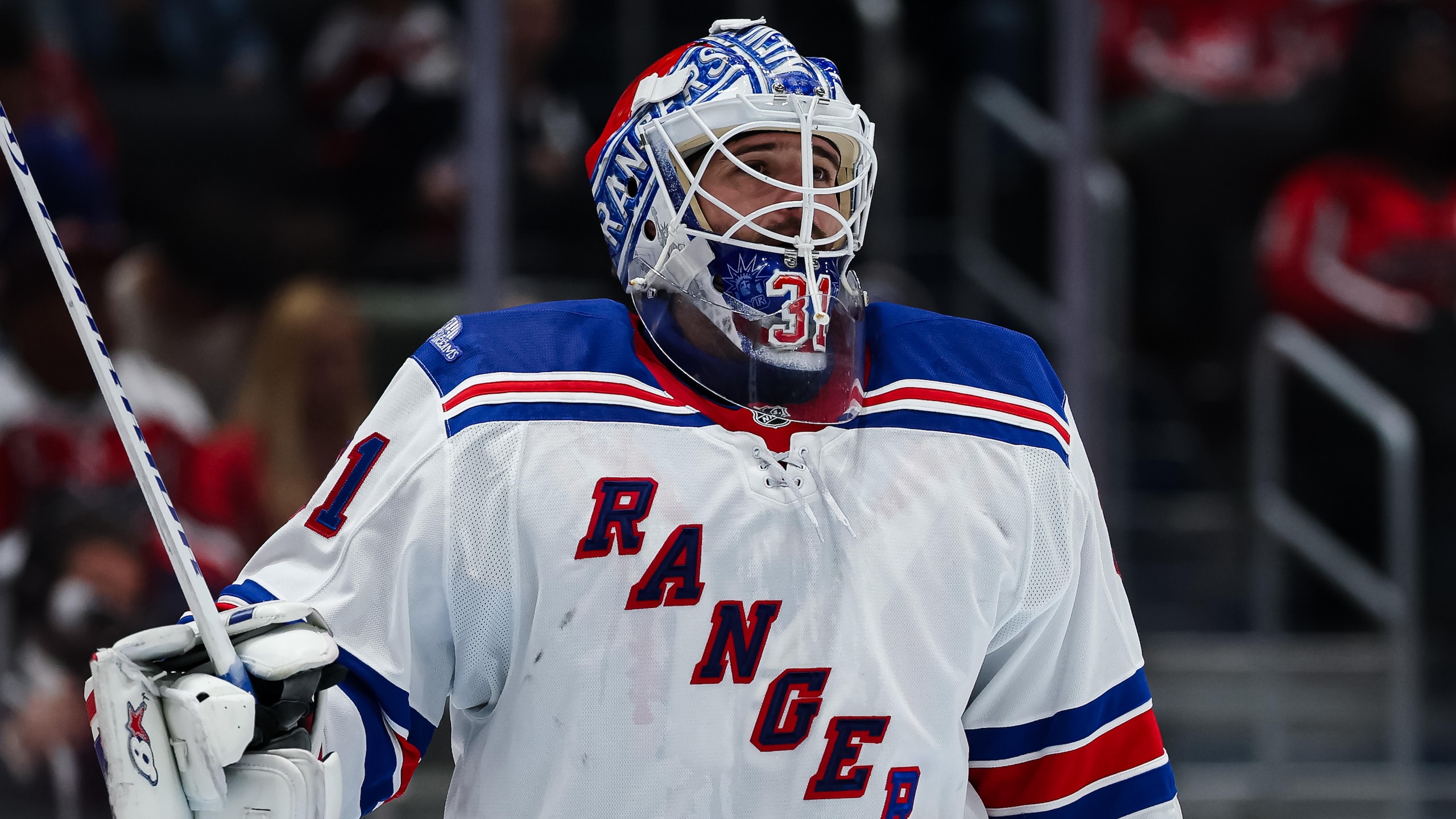
Dany Heatley as Frasier Crane
4 of 10If I could get both of these two in the psychiatrist’s seat, my message would be simple:
“Relax.”
While Frasier might not have been a hit with hockey fans, the character of Frasier Crane was perplexing enough to garner a spin-off after his overtly academic banter from the other side of the bar on Cheers. (Now, if Norm would’ve been given his own spin-off, I have a feeling hockey fans everywhere would’ve applauded. Just a hunch.)
When thrust into the spotlight on Frasier, Crane had a cast of characters that relied on him for survival. His bumbling brother, his snarky father and gracious caretaker all sought Crane’s competence episode after episode.
But Frasier Crane, a well-educated and well-respected psychiatrist, who tried to solve dozens of problems on his call-in show every day, lacked one vital element: he could not take care of himself.
Crane’s romantic relationships continually fail. His inability to not overthink matters constantly gets him into trouble that, while entertaining, he often cannot get out of.
There were points throughout Frasier in which the budding relationship between caretaker Daphne and brother Niles became more engaging a plotline than whatever Crane himself was upto.
He was supposed to be the focal point of the show, but instead turned into a joke that at times, just wasn’t funny.
Dany Heatley entered the league with big expectations. Drafted 2nd overall in the 2000 NHL Entry Draft, Heatley started strong with a rookie campaign impressive enough to pick up the Calder Trophy. By the next year, he was a bona-fide offensive threat. The future was bright for the kid from Calgary.
Then, just before the start of the 2003-2004 season, Heatley pleaded guilty to second degree vehicular homicide in a story that doesn’t need to be told again.
For the next few years, Heatley’s offensive outbursts came in spurts. After notching two 100-plus point seasons for the Ottawa Senators, he demanded a trade.
He had a decent season in 2009-2010, though dropped close to 20 points the next year.
And while playing for the Sharks, one of the most dangerous teams in the Western Conference, he’s been largely invisible throughout the playoffs.
Even while given formidable line-mates like Daniel Alfredsson and Joe Thorton, who would’ve depended on Heatley to make them better (as a real superstar does) Heatley just hasn’t been able to find his game.
His trade out of San Jose this summer was further evidence: Dany Heatley desperately needs to get his groove back.
Both Crane and Heatley are talented in their prospective fields, but just as Crane tends to overthink every problem and refuses to let the little things slide, Heatley often holds his stick a little too tight and can’t score when he needs to.
And for Crane and Heatley, who are the focal point of conversation wherever they go, that’s a problem.
Patrick Kane as Charlie Harper
5 of 10It was supposed to be the goal heard ‘round the world. Patrick Kane went shortside on Michael Leighton, ending the Chicago Blackhawks 49-year Stanley Cup drought. But few actually saw the goal, and only clued into the fact that the drought was over when Kane was mobbed by his teammates at centre-ice.
Charlie Harper could’ve really been somebody. Dude went to Juilliard, and somehow ended up as a composer. Of commercial jingles.
And while those jingles seem to have provided a capable life for Harper (beachfront property in Malibu, expensive cars, an endless supply of booze) here’s the thing: have we really heard too many of them?
If Harper is to afford the life he lives, shouldn’t viewers have seen him collecting cheques or really hitting it big? We see Ari Gold and Tony Soprano kicking ass and taking names as part of their employment, but do we ever see Harper working? While some might find that boring, it’s important to round out a character.
Patrick Kane has become a household name in the NHL, but not for what he’s done on the ice. His off-ice troubles with a Buffalo cab driver in 2009 have overshadowed lots of his on-ice accomplishments.
Yes, he’s won a Stanley Cup. But players like Jonathon Toews and Duncan Keith deserve much more of the credit for that 2010 win. Kane isn’t especially hard-working, but he always seems to be victorious.
Charlie Harper isn’t that especially recognizable for his work, but he’s always good for a laugh anyway. Both Harper and Kane in fact, are good for an off-hand quote. But it’s their slick attitude which puts of purists.
Talented, yes. Victorious, seemingly most of the time. A little hard work would probably round them out. (But let’s be honest; it’d only serve Kane better.)
Cory Perry as Dexter Morgan
6 of 10Because really, what do we know about Cory Perry?
I’m not suggesting that Perry turns into a serial killer who kills “justly” after he leaves the Honda Center. But he’s definitely not one for the spotlight.
Perry’s off-ice interviews are stoic affairs, revealing very little about the current Rocket Richard and Hart Trophy winner. While he’s won a Stanley Cup and an Olympic Gold Medal, the latter half of the 2010-2011 season was when Perry really broke out.
With Jonas Hiller injured, Perry took the team on his back. In short, Perry is brilliant when he works alone. He is a calculated and relentless goal scorer. His efforts to get to 50 goals towards the end of the season showed uncanny poise and determination.
Cory Perry is certainly valuable to the Ducks, but he could be equally valuable to any team for one reason: he works alone.
Dexter Morgan as a character garners rave reviews from both critics and fans because he too embodies a sort of pioneering spirit. He goes at his business alone, finding it very tough to maintain close personal connections with those around him.
And while he can’t make a friend at work to save his life, Morgan does enjoy a healthy relationship with his job. He can study murders as part of the Miami Police Department and in turn, become a more effective “code” killer.
There’s been one consistent goal scorer on the Ducks for the past few seasons, and it hasn’t been Cory Perry. Teemu Selanne, while it has never been acknowledged, is something of a protégé to Perry.
Selanne has been a constant offensive threat, and Cory Perry is now taking the reigns. He’s learnt from Selanne, but has done so in such a quiet and deliberate manner that Perry is now a force to be reckoned with. And few saw it coming.
Ryan Smyth as Kevin Arnold
7 of 10When Ryan Smyth was traded from the Edmonton Oilers in 2007, the perennial “nice guy” was enjoying a career year. Producing a point-per-game and garnering his first All-Star Game selection, it was easy to imagine the gritty and hard-working Smyth being an Oiler for life.
Which is why, when an emotional Smyth broke into tears after being dealt to the New York Islanders, hockey fans of sound heart and mind couldn’t help but become wrapped up in his misery. Smyth was the kind of player who always wore his heart on his sleeve and fans took to his style, despite his sensitivity.
Kevin Arnold wasn’t always big on talent or charm. He never made the football team, his grades were never that good and he worked lousy part-time jobs to buy burgers and shakes for him and his on-again-off-again flame, Winnie Cooper.
For all his shortcomings, including oversensitivity and selfishness, TV viewers rooted for the kid as he grew up. He embodied the struggle that we all face, including Ryan Smyth: how can we grow and maintain solid footing in a world that changes so rapidly around us?
Ryan Smyth’s role as “Captain Canada” throughout the mid-00’s was one of the few constants in the world of hockey. Canadian hockey fans felt proud to have such a hard-working, emotional guy running the show. Perhaps success in the playoffs seemed to evade Smyth, just as true greatness seemed to slip by Kevin Arnold, episode after episode.
But when both of them won, they won big. Whenever Kevin Arnold did indeed do right by Winnie, or make his ever-doubtful father proud, it was as if everything in the world seemed possible.
And when Smyth’s gutsy play led Canada to World Championship victories in 2003 and 2004, fans weren’t just happy, they were proud of Smyth. Viewers and fans relished in the opportunity to be a part of these victories.
In a world that does indeed change everyday, often by becoming a lot less emotional, it’s nice to see two guys who wore their heart on their sleeve and weren’t ashamed at all.
Joe Thornton as Hank Moody
8 of 10When Joe Thorton steps on the ice (especially with that grizzly playoff beard) people take notice. He’s a bit of a bruiser, not afraid to throw his weight around. And there is an undeniable level of offensive talent as well; he’s had flirtations with superstardom, including the Hart Trophy in 2006. He’s the kind of person who commands a room.
So too is novelist Hank Moody, whose quick-witted take on life, women and alcohol has turned Californication into one of the most entertaining shows on television. He’s enjoyed definite literary success with God Hates Us All which was subsequently turned into the movie A Crazy Little Thing Called Love and brought Moody a considerable amount of financial success.
These two sound like the kind of people you'd certainly want to have a ton of faith in, no? Therein lies the reason why Jumbo Joe and Moody are so strikingly similar.
There is no doubt that these two are real men, who talk with talent and fists when necessary. But still, they simply cannot be depended on. Moody constantly lets his impressionable daughter down with his drunken antics and cannot hold onto Karen, his muse. And Thornton just cannot lead a team to a Stanley Cup.
We would all like to see a Cup for Thornton and a life of happiness for Moody, that much is obvious. But that wouldn’t make a good story, would it?
Society loves to see the talented fall short, which is why Californication will continue to get great ratings, as will San Jose Sharks playoffs games, if only for hockey pundits to have the opportunity to say “I told you so” when the Sharks bow out early.
Let’s not forget the California connection between these two as well. It is a state of losers parading around as pseudo-celebrities.
While Moody found success with God Hates Us All, it was written in New York City. And Thornton is expected year after year to match the Sharks regular season triumphs in the post-season.
Thornton was indeed made captain at a young age when he played for the Bruins, and you can’t help but wonder if that tempered his career slightly.
There is really nothing wrong with being depended on to produce offensively and NOT lead your team at the same time. West coast hockey loves a high-flying style, which Thornton, at 6'4'', often cannot be a part of.
Sure, we can’t expect a return to Boston anytime soon for Thornton, but what both he and Hank Moody need is a change of scenery. The east coast, which would likely welcome both Moody and Thornton’s gritty style would not only be effective but beneficial to both their careers.
Jonathan Toews as Tony Soprano
9 of 10It ain’t easy being the boss.
Just ask Tony Soprano, who, as one of the most popular TV characters of all time, had to balance the pressures of his real family and his “Family,” a New Jersey crime organization (which is putting it politely).
Soprano continually took to drugs, alcohol, extra-marital affairs and violence to control the problems brought on by his own version of the “Daily grind.” And while it made for good TV, Tony Soprano still did his best to abide by a certain code of ethics which, he hoped, would make him a more respected person.
Jonathan Toews knows all about the pressures of being the boss as well. Being named as captain of the Chicago Blackhawks in only his second year in the NHL, Toews has had to learn quickly about the virtues of being a true leader.
And while his off-ice exploits may not garner much attention (a 2007 alcohol-related citation is hardly anything to write home about) like Soprano, Toews adheres to a set of strict morals. Namely: work hard and let your play speak for itself.
Sure, their codes may differ a little, but what sets these two apart is how strictly they adhere to them and how this consistency has made them peerless.
In the final episode of Season 5, Tony Soprano achieves one his great victories. With vision and foresight, he offers a percentage of a casino to the New York family in an effort to appease the trouble brewing between the two families.
Johnny Sack accepts his offer, showing once again why Soprano is the boss. Just as Soprano accepts Sack’s offer for a cup of coffee inside his home, he sees FBI agents swarming the house and makes a getaway on foot. Sack is arrested, and Soprano gets away unharmed. A great episode for Tony Soprano, the character.
And in the first episode of the next season, Soprano is shot in the stomach by his Uncle. Talk about a fall from grace.
Jonathan Toews was arguably Canada’s MVP during their run to the Gold Medal at the Winter Olympics in 2010. A few months later, at the tender hockey age of 22, Toews led the Chicago Blackhawks to the Stanley Cup and captured the Conn Smythe for his efforts. Not too shabby.
The next year, it was a fight for the Toews-led Blackhawks to even make the playoffs. They squeaked in with the 8th seed on the last day of the regular season, and ultimately fell to the rival Vancouver Canucks in seven games.
But like Soprano, Toews fought like the man he is. The Hawks fought back from a 3-0 deficit to force a Game 7. He showed tremendous character, as did Soprano, fighting his way out of a coma. It’s the fight within themselves which opponents truly fear.
Both Toews and Soprano truly did have to win fights within before they beat their competitors.
Toews had to balance an oddball cast of characters during the 2010 Stanley Cup run (we’ve established Patrick Kane’s role, but Dustin Byfuglien as loudmouth Ralph Cifaretto, anyone?) and Tony Soprano cannot make trades for better warriors.
What he’s been given is his family, and he did his best to turn them into a team that was feared throughout New Jersey.
The Blackhawks are now Toews' family and he will continue to run them well as the 2011-12 season begins. With these two, it’s family first. And the results speak for themselves.
Maurce "The Rocket" Richard as Homer Simpson
10 of 10A few things to clarify here:
1-In no way am I insinuating that Richard is as dumb as Simpson.
2-I had to go old here, because Homer is simply in a league of his own.
Forget the donuts, the nuclear meltdowns, the beer-drinking and the ineptitude. Forget the riots on behalf of his suspension and his Quebecois roots. In fact, there are more differences than similarities between Richard and Simpson.
But it is the one similarity which speaks the loudest: no one has revolutionized televised comedy as Homer Simpson has. And no one revolutionized the NHL the way Richard did.
Sure, Jerry Seinfeld’s jokes were a little wittier. And sure, Wayne Gretzky broke more records. But while Gretzky’s mark was left in the record books, Richard’s mark was left in the hearts of fans.
Seinfeld may ply his trade alone on stage as a stand-up comedian, but Homer Simpson made observational humour a unique brand of comedy, wherein one did not necessarily have to be smart to make jokes. And Richard did not have to have the hardest or most accurate shot to be the best goal-scorer.
What makes these two unique is the place from which their talent comes from: it is a place that many have since fought hard to locate, but no one has found.
Their talents are many, and just speaking their names evokes large smiles, and a list of one-liners or accomplishments too long to list here. They have no influences, because no one as memorable came before them.
In the world of modern TV characters and in the history of the NHL, they are the only two who can truly be called naturals.

.jpg?w=2560 "Rodgers Iced Out on Plane 💎")
.jpg?w=2560 "Mahomes Told Teammate to Leave Meeting")
.jpg?w=2560 "🚨 Week 8 AP Top 25 Poll")


.jpg?w=2560 "Raiders Could Start Mendoza")
.jpg?w=2560 "Lamar Being Out Shocked Ravens")