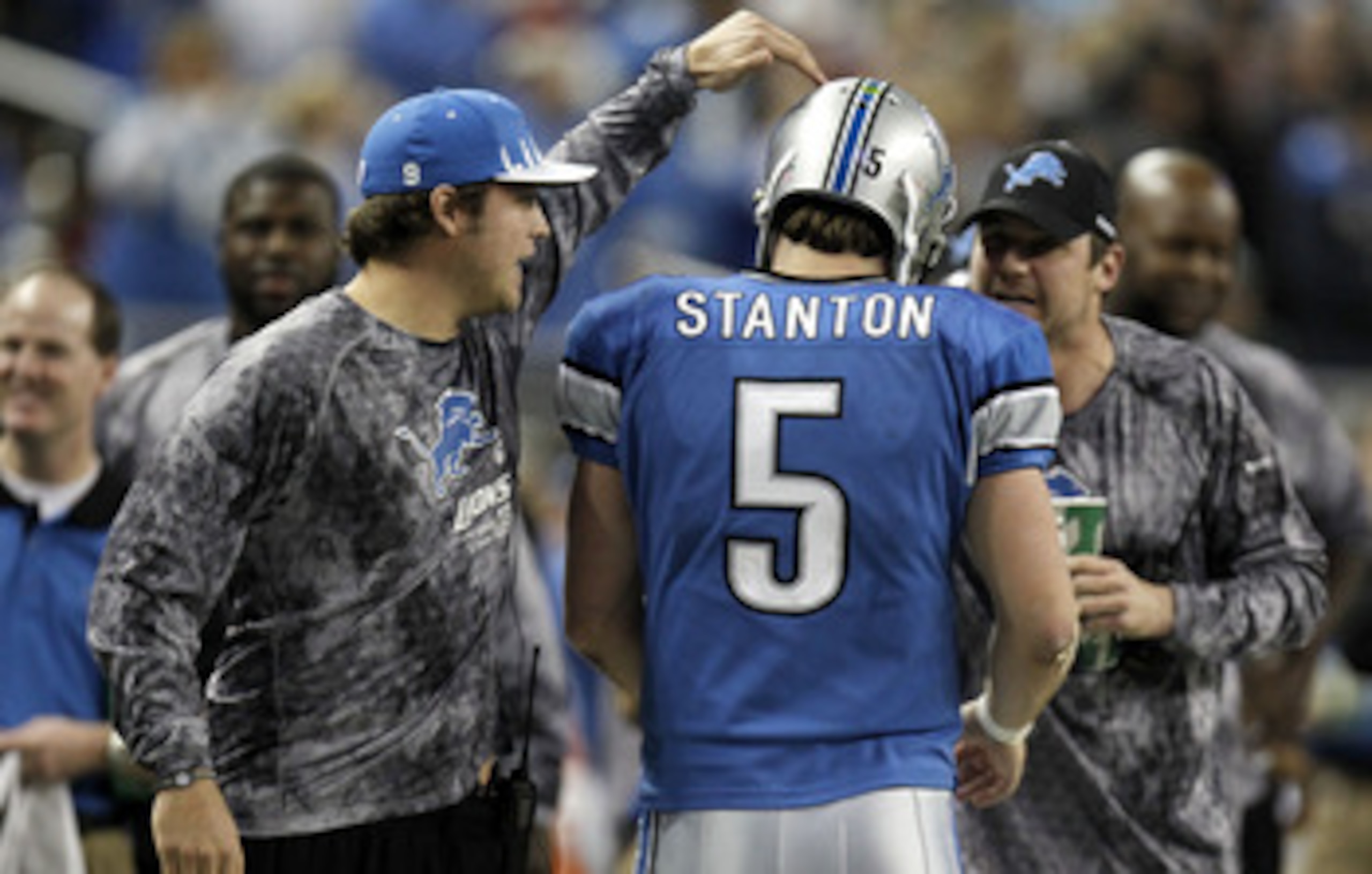


If there is one thing that has proven most detrimental to the Detroit Lions' attempts to crawl out of the hole they're been in for the last decade, it's injuries.
This is why the Lions of today are highly concerned with depth.
There is no question the Lions have come out on the short end of the stick regarding injuries more often than not. In part, this is a referendum of the level of talent the Lions have had over that same time frame.
This is an extreme example, but to illustrate, what do you think if a mid-major college team went out and started taking shots from the NFL's best?
Exactly. They'd get hurt.
But that's neither here nor there. The point is, injuries have been a major factor in just about every season the Lions have played, and they seem to have been consistently stand in the way of the Lions and whatever half-baked plans they're trying to execute.
That, at least, is true of the majority of the past decade. Lately, injuries seem to be the only thing standing between the Lions and a pretty well laid-out set of plans.
But good plans or bad, let's take a look at the injuries that have set the Lions back since 2000.
9. Daniel Bullocks
1 of 9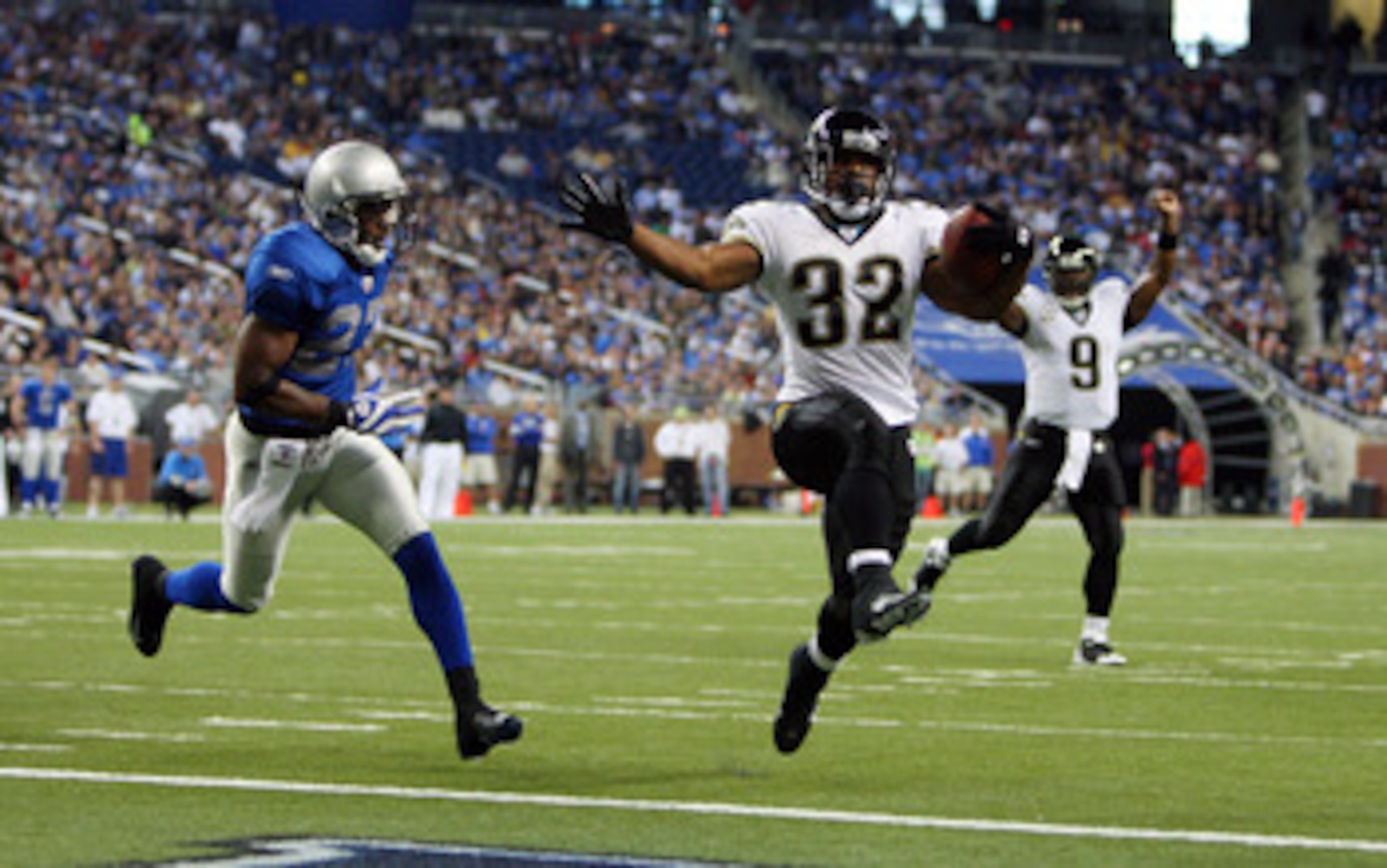
Despite some calls I made in the past which turned out to be correct, I always really wanted to like Daniel Bullocks.
His release last season was the right move, though an unfortunate one. It's hard telling how good Bullocks could have been had he not been recovering from more afflictions than a trauma center training dummy.
Considering he was picked by Matt Millen in the second round, I'm going to say probably not that good. Still, though, he seemed to be a good guy who was likable enough, it just didn't work out for him.
On the bright side, Bullocks' nagging injuries paved the way for the Lions to select Louis Delmas in 2009, which is looking like a pretty good call right now.
8. Jahvid Best
2 of 9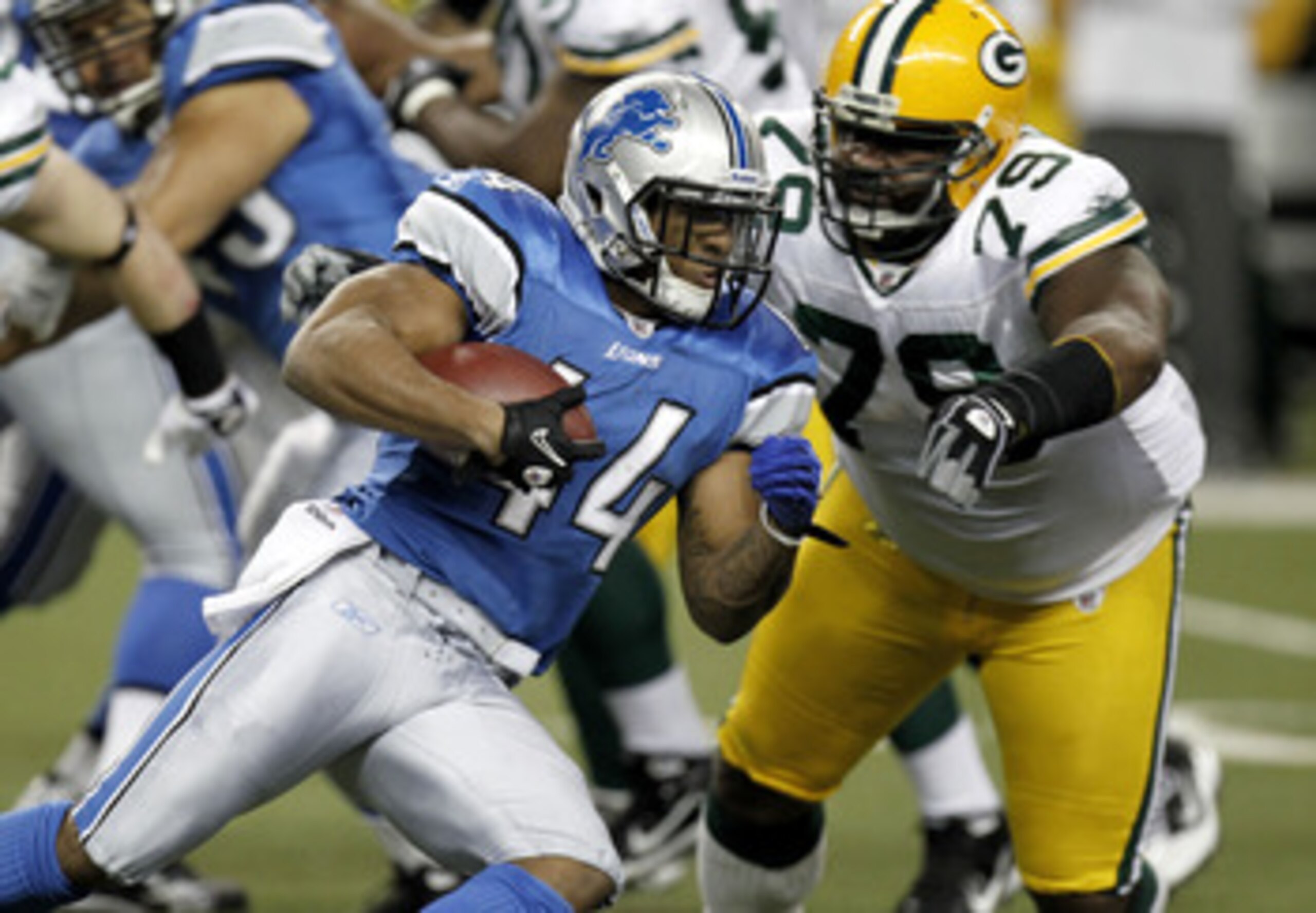
Jahvid Best is on this list because his turf toe injuries last year impeded the Lions' offensive progress.
He doesn't come in anywhere near the top half of the list because those injuries, while nagging, did not prevent him from playing, and he has a whole lot of career left.
Best still has a lot of time left to be the back the Lions want him to be, but it's still frustrating to see him explode out of the gate and immediately find himself impeded by nagging injuries.
7. Jared DeVries
3 of 9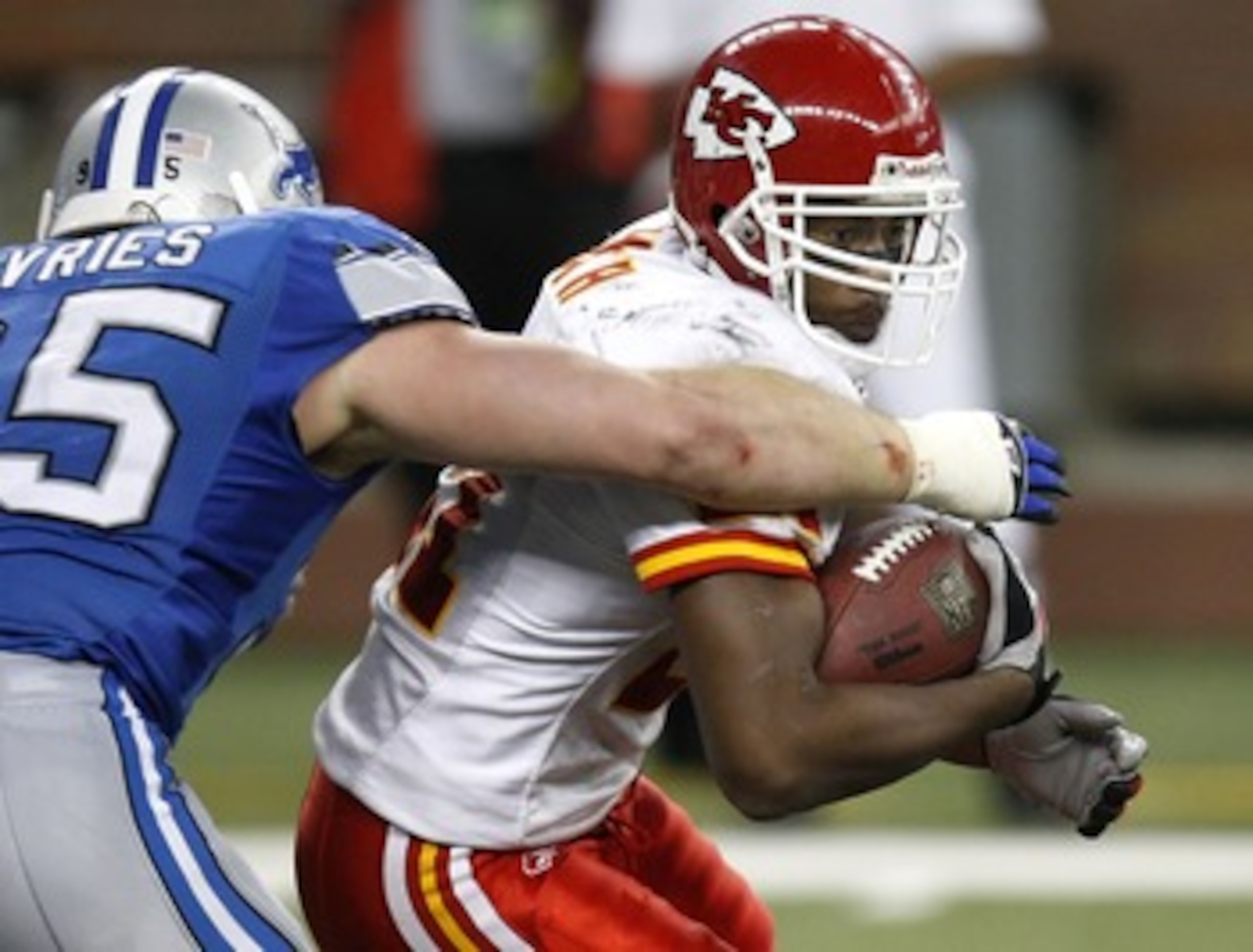
Even if healthy I'm not so certain that wily veteran defensive end Jared DeVries would have carved himself a spot with today's "best D-line EVAR" Detroit Lions.
If he had, I'm not so sure the Lions would have been better off (would the Lawrence Jackson trade have happened?).
Ultimately, though, we'll never know the answer to that question, as one of the only pre-Millen Lions has been unable to play for the post-Millen Lions, missing two straight seasons with a torn Achilles in 2009, and a knee injury in 2010.
There's a fair amount of speculation regarding the 35-year-old DeVries and whether he'll play again.
A long, frustrating lockout would seem to have been the perfect time for DeVries to announce he was hanging up the cleats, and he hasn't yet.
But it's still hard to imagine the guy getting much more than a sympathy shot in training camp. The Lions now have younger, stronger players in his position, and DeVries is not only in his career's twilight, but also coming off two serious injuries.
It's sad to think about what kind of impact he could have had on the new Lions had he remained healthy.
.jpg?w=2560 "Rams Raiders Football")

.jpg?w=2560 "Steelers Saints Football")
6. Kevin Smith
4 of 9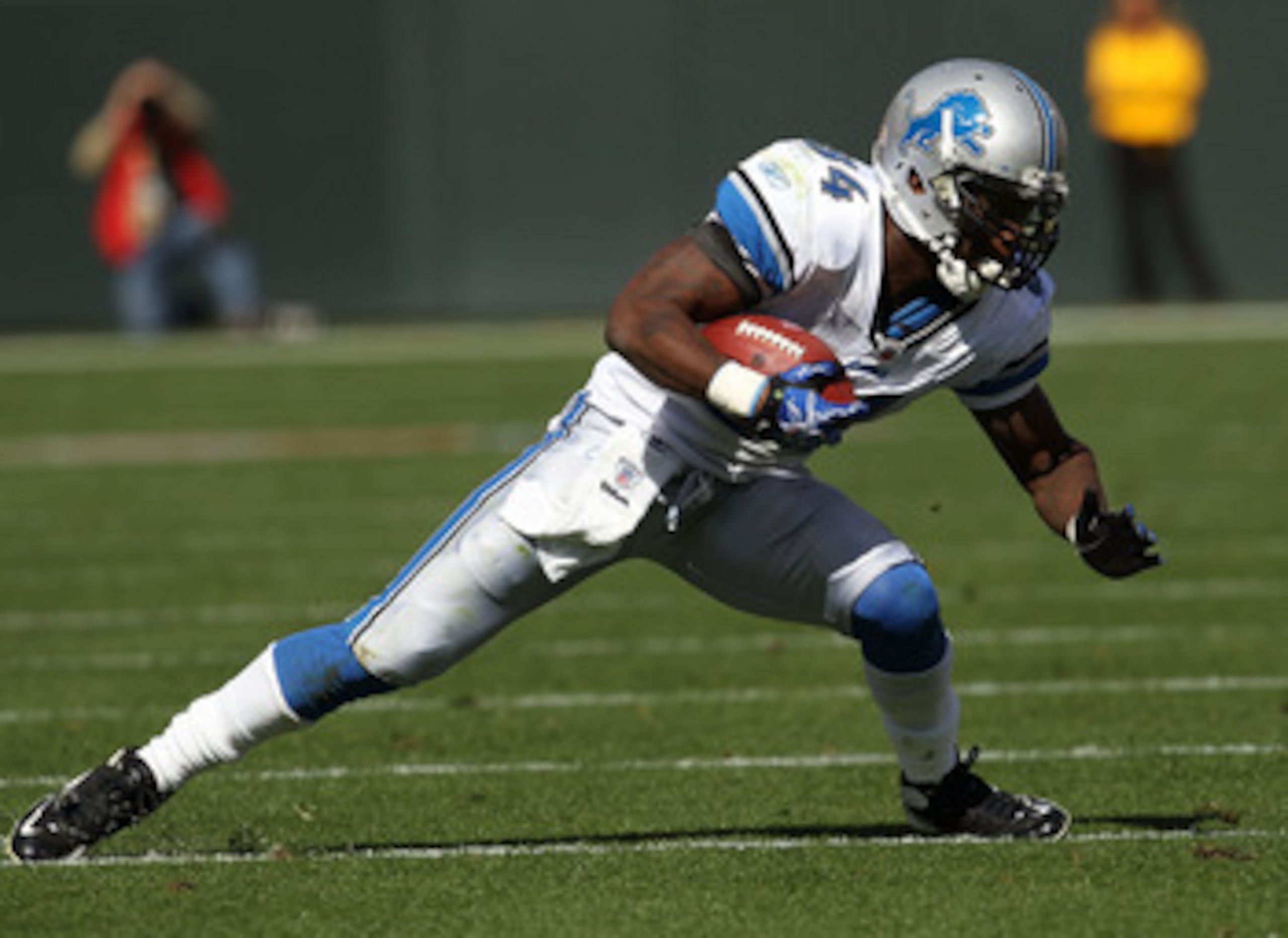
There is no doubt Kevin Smith's injuries have done a number on the Lions' offensive plans in the last few years.
It's fairly obvious in retrospect that the Lions were hoping to use Jahvid Best and Smith as a "speedster/grinder" combo after Smith's severe knee injury in 2009.
It made sense. Best isn't really built for 30 carries from scrimmage every game, and Smith was going to need someone to lighten his workload as he recovered. They would have complemented one another well, Best as the home-run threat, Smith as the 4-5 YPC guy.
But then Smith, fresh back from his knee injury, started performing at a sub-par level. Then he suffered a thumb injury which shelved him once again.
That injury, more than anything, is likely what contributed to the Lions' selection of Mikel Leshoure in 2011.
It's obvious they don't want Best overworked in the offense. They don't want him for a lot of between-the-tackles work. That's not because he can't, it's because he's not most effective there.
Had Smith remained healthy and been serviceable in 2010, would the Lions have spent so much to trade up for Leshoure? Absolutely not. It's reasonable to believe Smith could have figured into the Lions' long-term plans.
But injuries derail plans.
5. Louis Delmas
5 of 9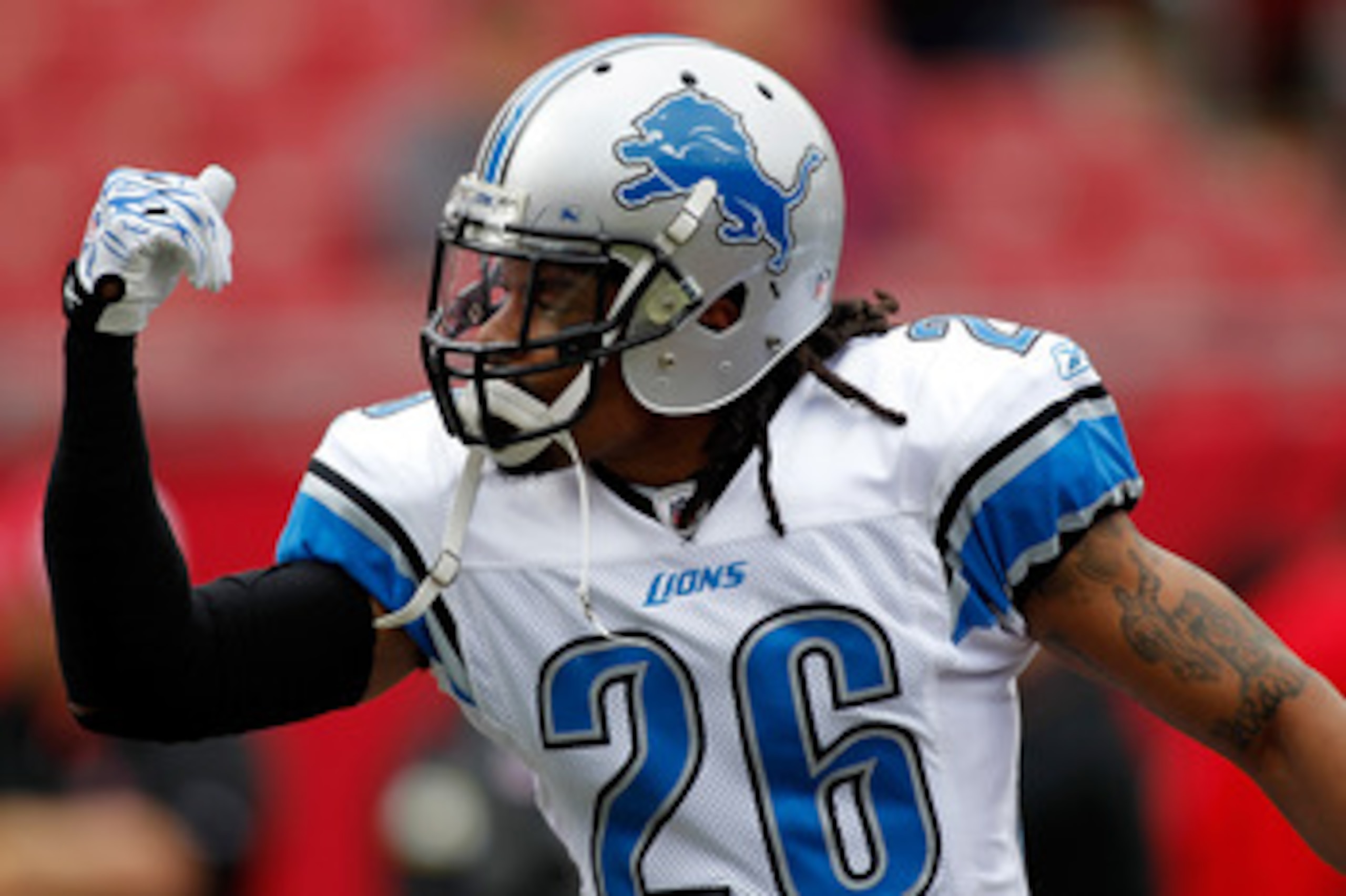
Like Jahvid Best, Delmas is on this list because nagging injuries have prevented him from reaching his potential thus far.
And also like Best, he's not too high on the list because he's still a very important defensive player who hasn't come close to being derailed by his injuries yet.
Still, the Lions and their fans are looking forward to seeing just exactly how good Delmas can be. Is he just a solid starter, or is he a playmaking superstar in development?
The answer to that question will likely determine the way the Lions build the team defensively in the next few years.
4. Teddy Lehman
6 of 9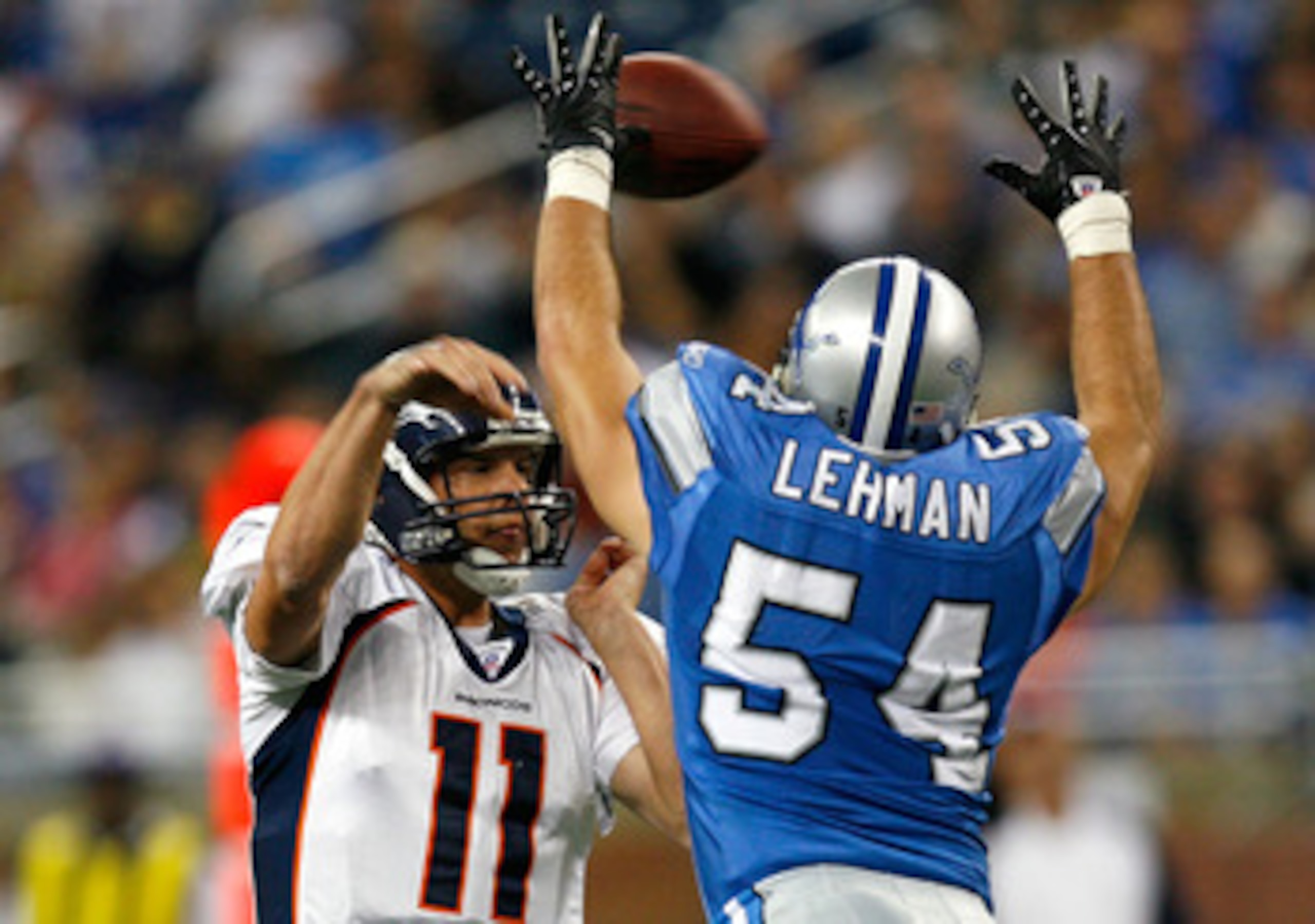
Teddy Lehman was a do-it-all workhorse in his 2004 rookie year.
Part linebacker, part special teamer, Lehman was in on over 1,200 plays and made 102 tackles his first year in the NFL as the only rookie linebacker that year to start all 16 games.
He hasn't started another game since.
Perhaps that overuse in his rookie year has to do with why he spent the majority of the next two years on the shelf with knee injuries, and now plays in the UFL.
Lehman looked like a blue-collar guy who would have fit in perfectly with the Lions, and could indeed have filled the Lions' void at middle linebacker for years, possibly even still today.
Instead, he's now a product of the Las Vegas Locomotives.
3. Kevin Jones
7 of 9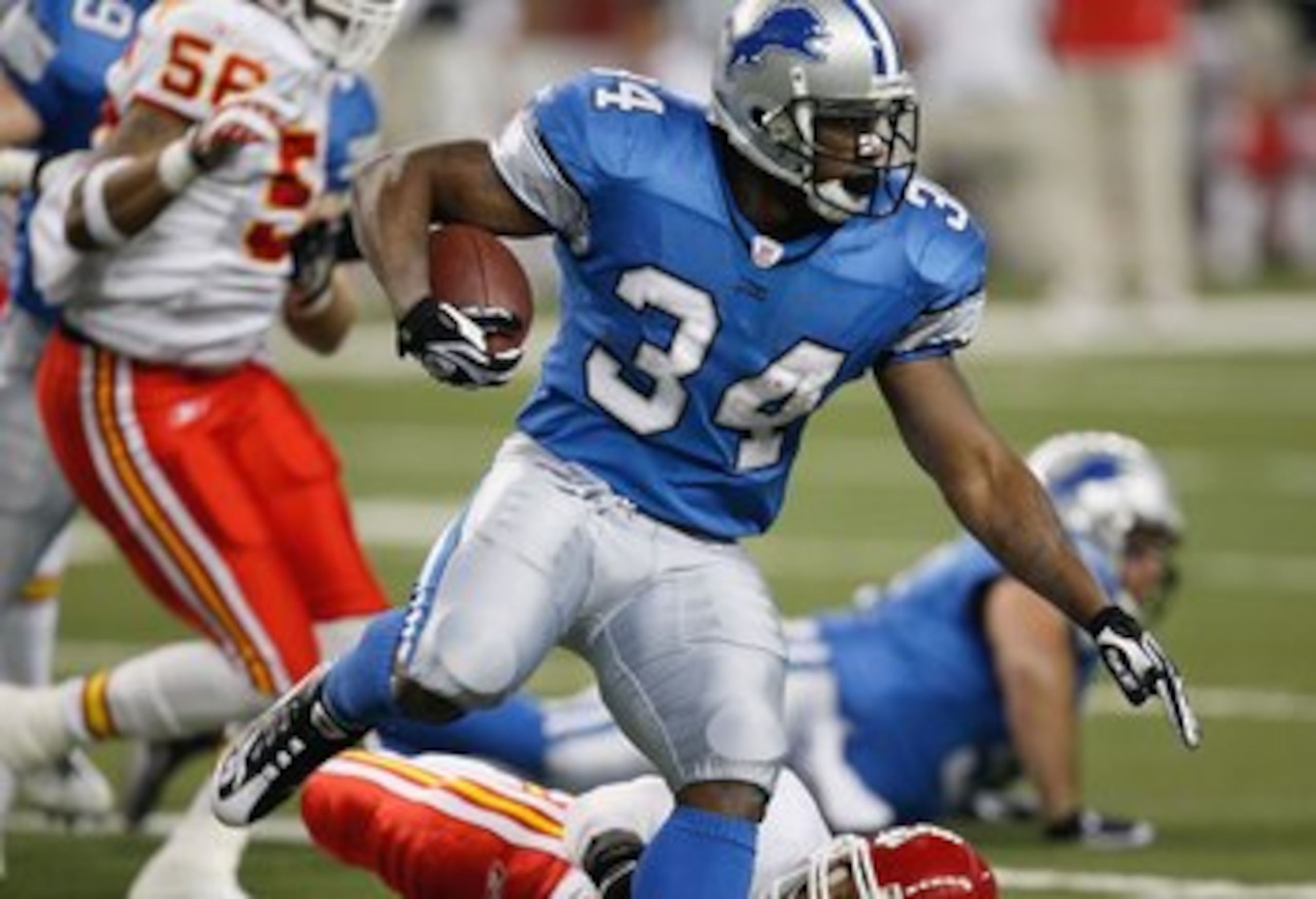
Because of Kevin Jones, every Lions fan now knows what a Lisfranc injury is.
It's a rare foot injury involving the small tendons in the midfoot, for those who actually don't.
And it was primarily because of that foot injury that Jones, the man responsible for the best rookie season by a Lions running back not named Sanders or Sims, now plays in the UFL.
Jones was supposed to be a bright spot in a decade that was otherwise pretty dark. He could have been and should have been the resurrection for a running game that had been dead since Sanders' surprise retirement.
Instead, he battled injury almost every year, giving way to the dreaded "by committee" rushing attack until his preseason release in 2008.
Jones' release paved the way for the Lions to draft Kevin Smith, who was equally incapable of reviving the Lions' running game, and for many of the same reasons (durability).
May we hope that Mikel Leshoure fares better.
2. Matthew Stafford
8 of 9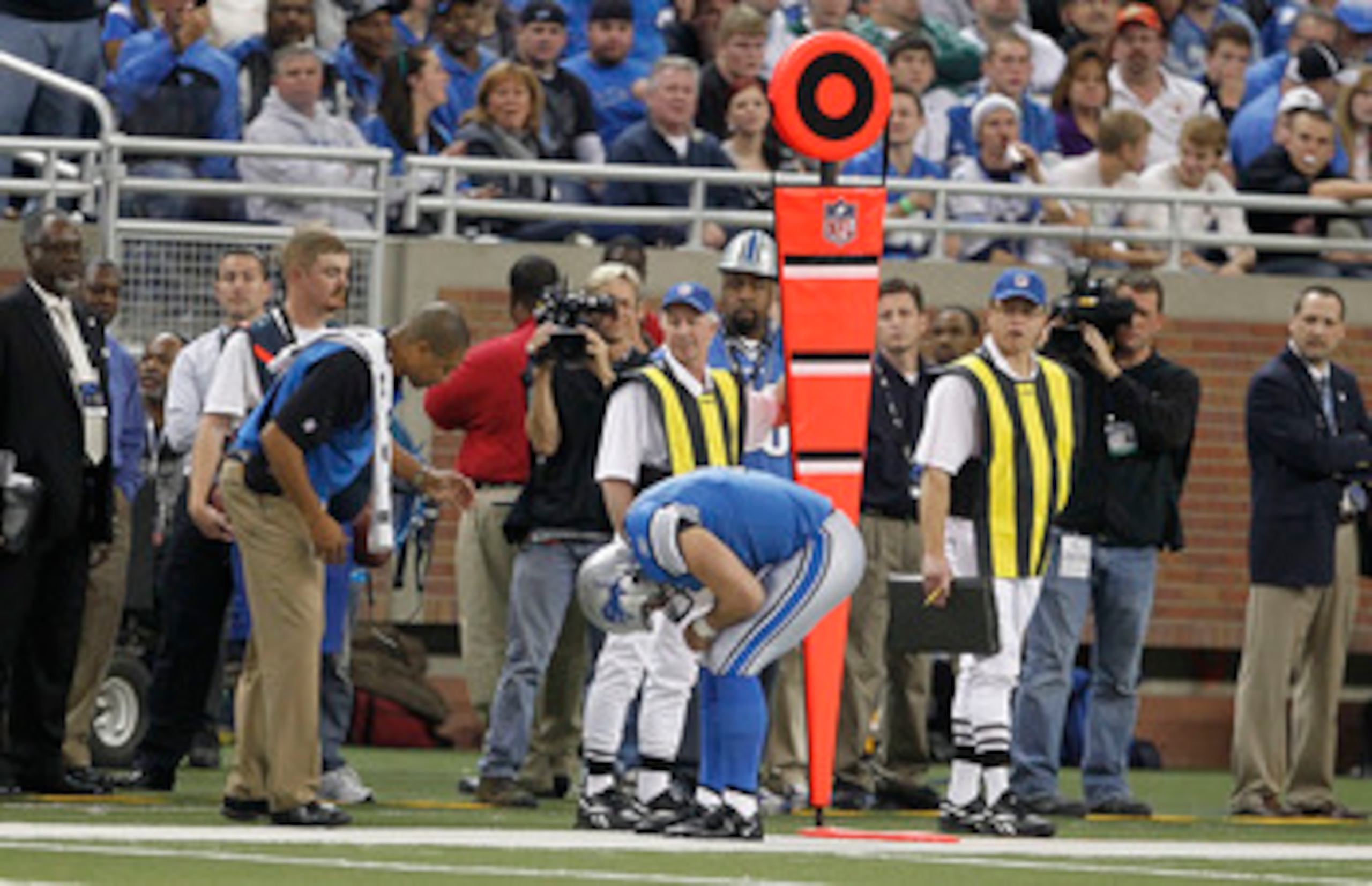
No. 9 on the field is the Lions' No. 1 priority to keep healthy in 2011.
Optimism is riding high for the Lions this year, but even a playoff appearance might ring hollow in Detroit if Matthew Stafford isn't the guy leading it.
Stafford was drafted to become the leader and face of the franchise's new era, and so far the guy who has seen the most of his face is Dr. James Andrews.
That cannot continue if the Lions are going to move forward as a franchise. More than a solid secondary, more than linemen, more than any free agents or draft picks going forward, it will be Stafford's health that will determine the direction of the franchise in the next few years.
Luckily, Stafford seems to have beefed up to keep himself protected, but even if the kid stays healthy going forward, it doesn't change the fact that his past injuries have set the Lions back considerably in their development.
Still, Stafford's injury hasn't been the most detrimental to the Lions over the last decade. That honor goes to...
1. Charles Rogers
9 of 9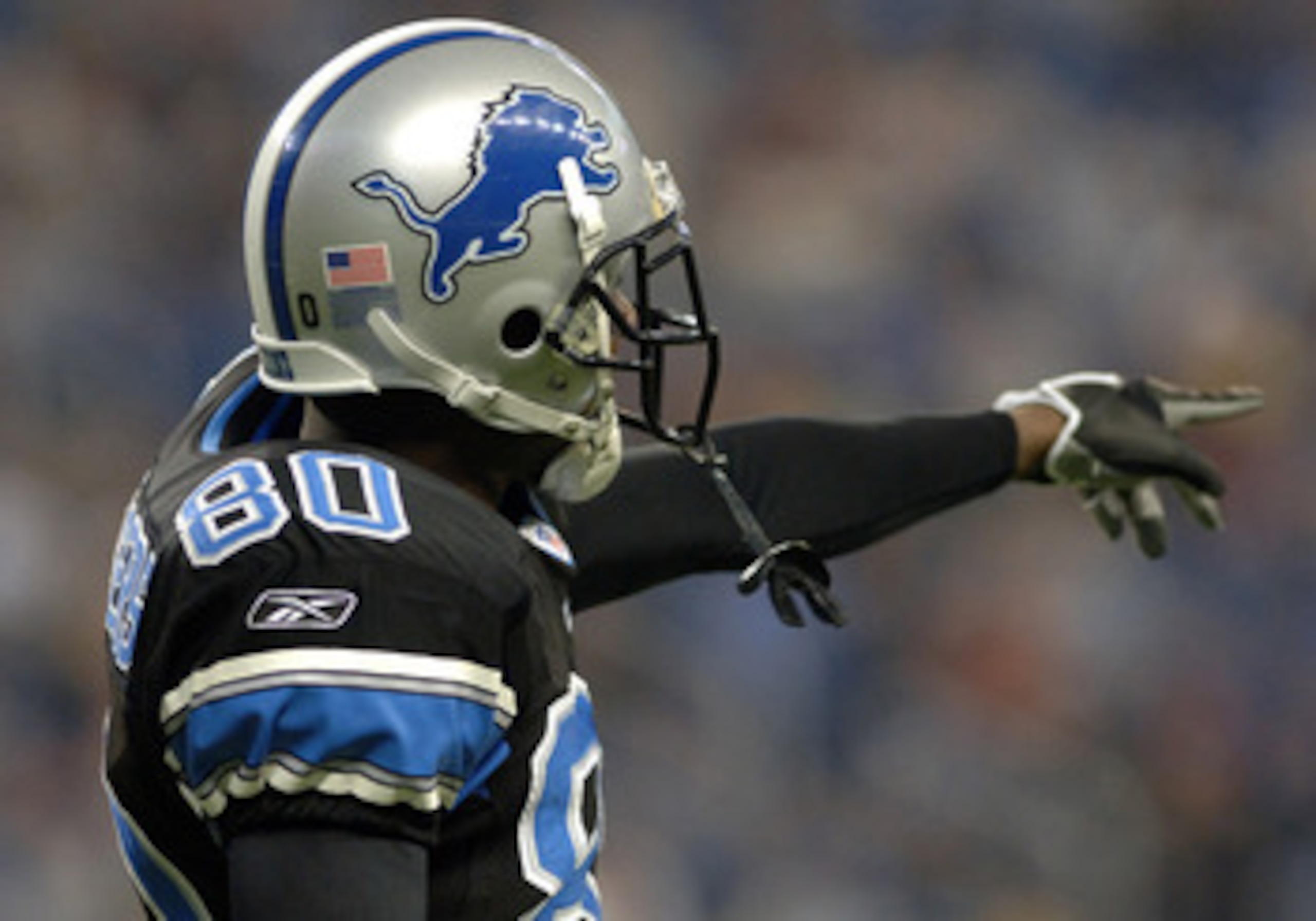
Equation for bad news: Youth + Money + Time + Boredom.
We'll never know for sure whether Charles Rogers would have worked out if not for his injuries leading him to the doorstep of the Ricky Williams School of Free Time Management.
What we do know is that he was the second overall pick in 2003, he showed glimpses of major potential during what brief time he spent on the field, and by the time he was recovered from his injuries, he was an unredeemable pothead.
It may be hard to think back this far, but when Rogers was selected in 2003, Matt Millen had not yet earned himself a label as the worst drafter of all time. His 2001 draft was actually quite solid, with Jeff Backus and Dominic Raiola carving out long-term spots on the team and Shaun Rogers still hanging around the league as well.
On top of that, Joey Harrington was just coming off his rookie season, and hadn't had time to bust yet. Millen was actually not looking like a bad GM at that point, but what happened with Charles Rogers would pretty much set the tone for the rest of his tenure.
Rogers' injury may, in part, have influenced Millen's decision to pick Roy Williams in 2004 and/or Mike Williams in 2005, and may have also contributed to the spectacular bust that was Harrington.
That's not to give Millen a pass on what were obviously poor draft picks, that's just to say that the circumstances surrounding Rogers may have contributed to those poor decisions. There's no guarantee Millen wouldn't have replaced those bad decisions with other bad decisions, but Calvin Johnson proves that he could have made the right call if the answer was right in front of him.
Had Rogers become an impact receiver, who's to say Millen wouldn't have gotten lucky and accidentally picked DeMarcus Ware in 2005, instead of Mike Williams?
Admittedly, not likely. But there's no denying the fact that Rogers' injury and consequential bust set the tone for the following five years of bad decisions and bad news.



.jpg?w=2560 "🚨 Week 8 AP Top 25 Poll")
.jpg?w=2560 "Packers Safety Slams Refs 🤬")