
Ronnie Brown: Why the Miami Dolphins Won't Throw Big Money at the Running Back
 In an era of unmitigated suffering and instability, when Miami Dolphins coaches and quarterbacks dropped like flies, draft gaffes littered each class, and beloved players bolted town for greater opportunities, Ronnie Brown stuck through it all.
Brown didn't necessarily have a choice, but the second overall pick in the 2005 NFL Draft chose never to complain, demand more money, or blast the countless questionable moves Miami made during his six-year tenure.
Instead, the man who has become the face of the franchise—whose jersey frequents the seats of Sun Life Stadium more than any other—remained modest.
TOP NEWS

New NFL Power Rankings 📊
Takeaways from Falcons' dominant MNF win
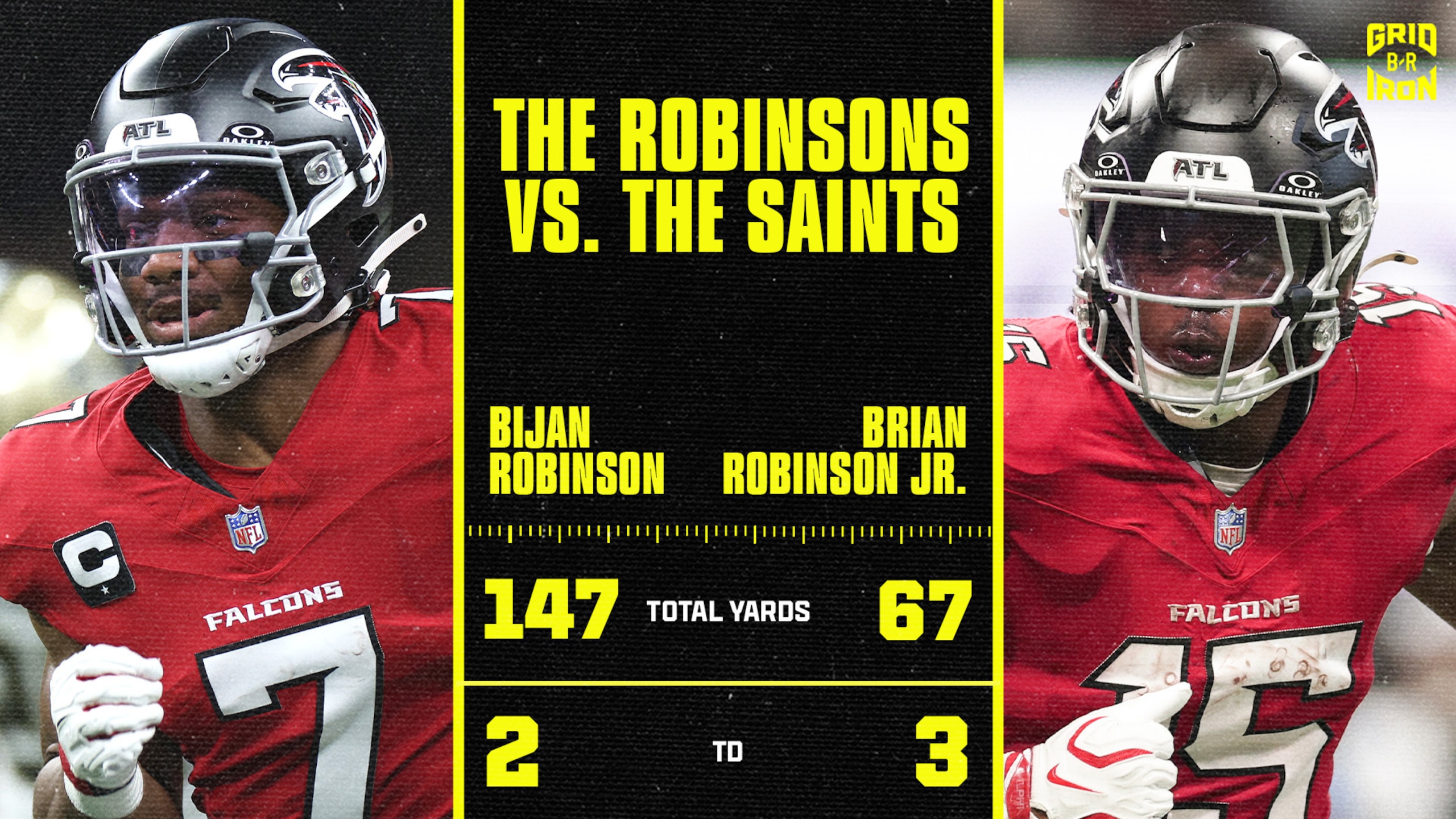
The Robinsons POUND the Rock 🪨
Even when Tony Sparano prevented him from securing a bonus at the end of the 2010 season, and even when his mentor and elder Ricky Williams publicly castigated the organization, Brown remained loyal.
So now that Brown reportedly desires a new contract, should the Dolphins pay him—even if out of mere loyalty?
It's one of sport's greatest paradoxes. Do you pay a loyal franchise player even though he is clearly past his prime? It's the same thing the Yankees just went through with Derek Jeter. New York caved, and will long for the money they allotted his way when free agency rolls around over the next few years.
But for the Dolphins, the answer should be no. Not unless Brown is willing to accept a mid-level contract.
This situation will ultimately hinge on a handful of factors, most of which work against Brown's favor.
First of all, Brown will turn 30 in December. Running backs famously decline once they approach 30, and that appears to be happening to him as well.
Case in point: Brown's yards per carry average dropped from 4.4 to 3.7 from 2009 to 2010. Despite playing in seven more games in 2010 than in 2009, he rushed for only 86 more yards. Some of these struggles can be attributed to an inferior offensive line, but such a big statistical drop off is very concerning regardless.
Second, the Dolphins just spent a second round pick on running back Daniel Thomas, a player who provides a strikingly similar skill set to Brown. So why would Miami re-sign Brown, when they essentially have a younger version of him?
Thomas obviously still needs to prove himself in the league, but the Dolphins would be better suited using their money on a back who provides a contrasting running style.
While Brown could impart invaluable wisdom on Thomas about the Wildcat and such, that isn't worth dishing out millions of dollars for a declining back.
Perhaps most importantly, there is an abundance of attractive free agent running backs. Players like DeAngelo Williams, Darren Sproles, Jerious Norwood, and others are all younger and have greater upsides than Brown.
All three would provide a contrasting style to Thomas, as well as speed and great hands.
Bringing in one of these is a far more attractive option than re-signing Brown.
With all of this being said, the Dolphins could re-sign Brown if he is willing to accept a very modest contract. He would likely take a backseat to Thomas, but he definitely still has something left in the tank.
However, the cons far outweigh the pros here. Even if the Dolphins miss out on DeAngelo Williams, Darren Sproles would fill a huge void as a third down back and in the return game, two facets where Brown is not valuable.
If Miami misses out on all of their free agent targets, then Brown makes for the best option. But as of now, it looks like his days as a Dolphin are over.
.jpg?w=2560 "Rams Eagles Football")

.jpg?w=2560 "Grading WWE Raw 🔠")


.jpg?w=2560 "Injury-stricken Seahawks signing veteran RB")
