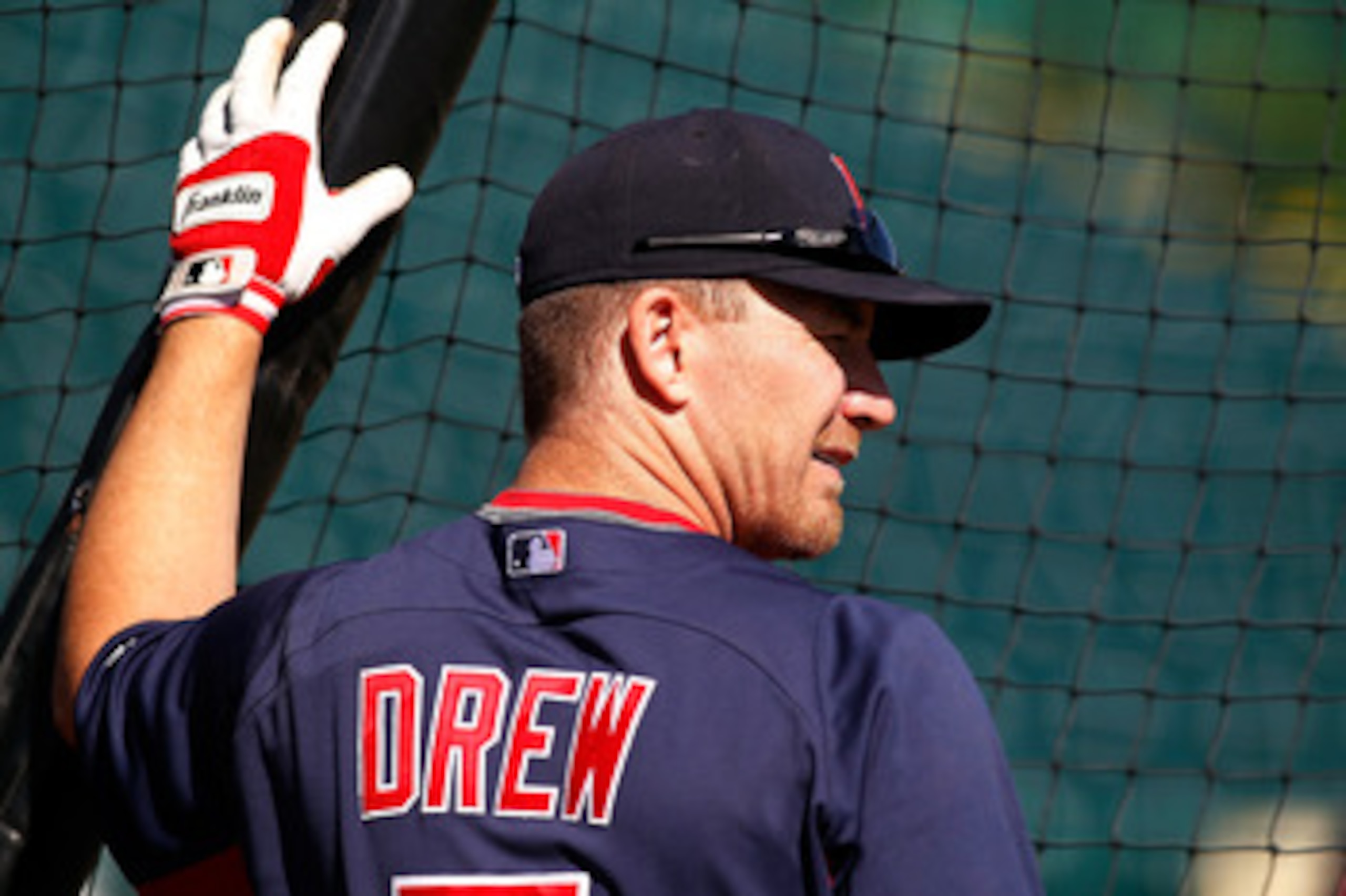

J.D. Drew: Why He Has Been a Bust with the Boston Red Sox
After recently putting together a list of the top 10 worst signings in recent Red Sox history, I got some blowback over my inclusion of J.D. Drew at number four. The counter-arguments ranged from the statistical to the inane, but plenty of folks thought that I was being too hard on old J.D., and by extension, too hard on the team for signing him to a five-year, $70 million deal back in 2007.
Fair enough. Everyone is entitled to his or her opinion, and a good debate is what loving sports is all about.
But there was a method to my madness, and a reason why I considered Drew to be one of Boston's top five worst signings. I think it's worth its own discussion.
I'll confess up front that I did not include postseason numbers in this piece, primarily because Drew's performance in that regard has as much to do with being fortunate enough to be on a winning team as it does with his contribution to getting the Sox there in the first place.
But for the record, I'll say that Drew has been solid in the playoffs.
Injuries, Missed Time and Platoons
1 of 4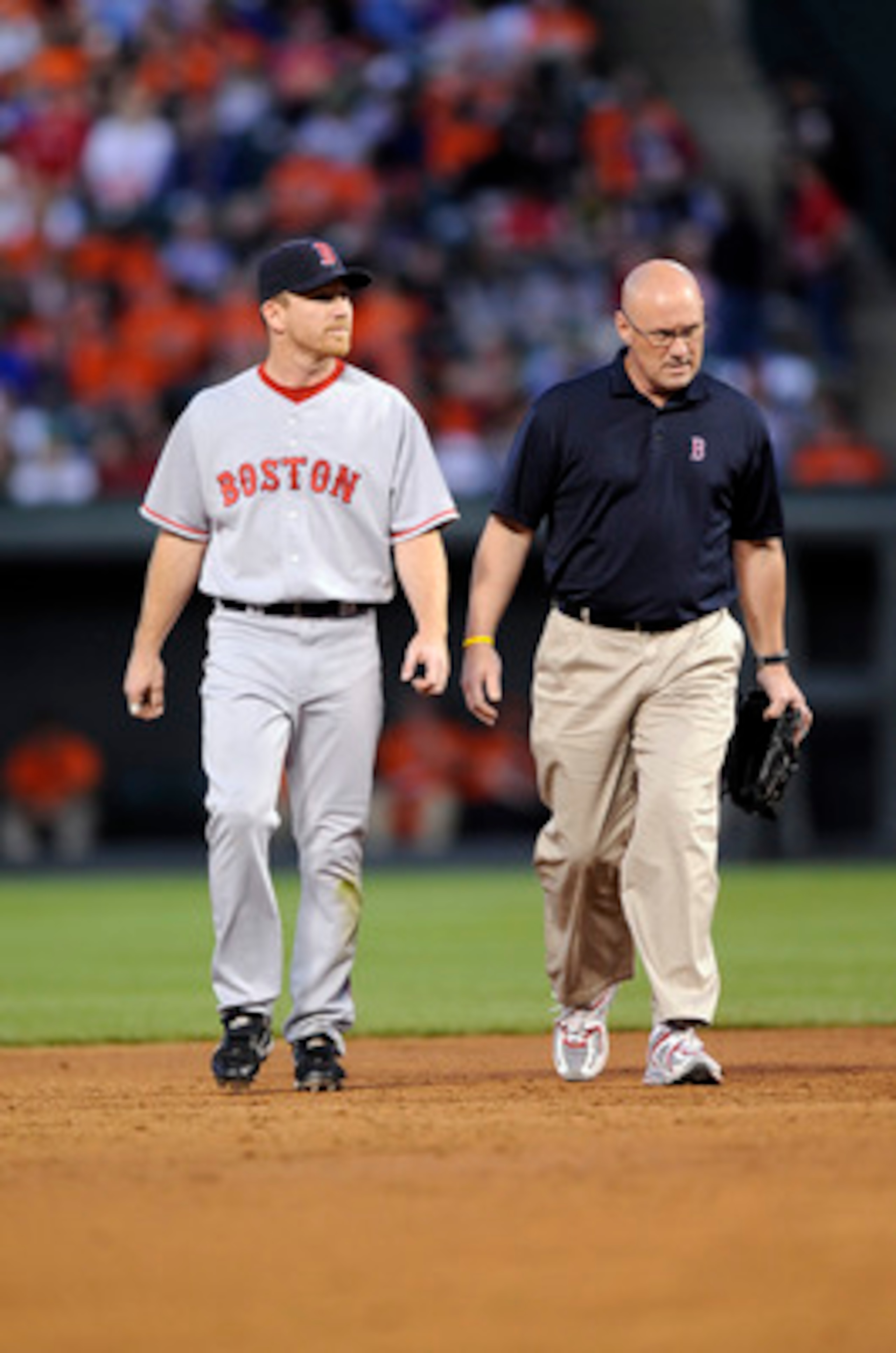
Drew has appeared in 572 regular season games for the Red Sox. That's 572 out of a possible 707, or roughly 80 percent. Right off the bat he's missing one in five games, and while plenty of players miss time due to injury or other issues, it's always been a bit different with Drew.
Drew's injuries have typically been of the nagging, hard-to-pin-down variety. Stiff back. Sore shoulder. Vertigo. He is notorious for not playing through pain, as his previous employers will tell you. I'm not implying that his problems weren't legitimate, but for $14 million per year, I might have expected a bit more toughness. That's just me.
Take a look at Drew's injury history. In four-plus seasons, Drew has been sidelined with quad or hamstring tightness a total of 12 times. Shoulder soreness three times. Back and neck soreness six times. Not to mention the eight instances of undisclosed or "general" injuries.
Those are some mighty fragile hammies.
Still, perhaps you think that playing 80 percent of the time isn't so bad. But before you go firming up that opinion, you should know that Drew has only started 526 games for the Red Sox. That means that Drew has been a starter in fewer than three out of every four regular season games while in Boston.
That should raise a major red flag. More than a few of those missed starts were due to platoon situations implemented by Terry Francona. When your own manager doesn't view you as a lock to be in the lineup, that's a problem. Especially for a guy making as much as Drew. But I'll get back to salary in a minute.
Let's talk production next.
Lack of Production in the Boston Red Sox Lineup
2 of 4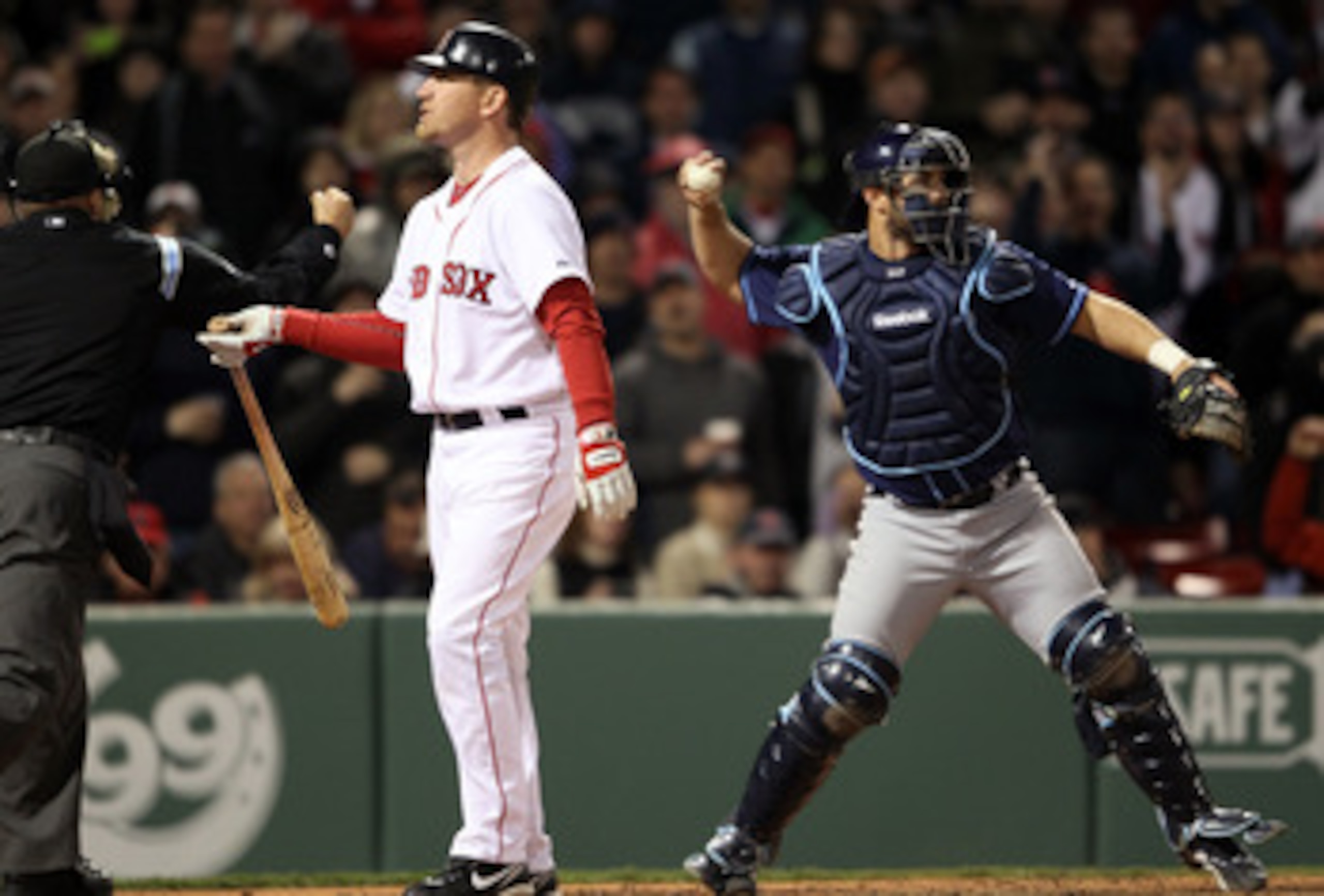
In four-plus seasons with the Red Sox, Drew has 79 home runs, 328 runs scored and 276 RBI. His .839 OPS is entirely respectable.
But Drew's best season numbers in Boston came in 2009: 24 homers, 84 runs scored, 68 RBI.
I have a tremendous respect for on-base percentage. And slugging. And the ability to draw walks and avoid strikeouts. Drew excels at each of those. But at the end of the day, baseball is still about scoring runs, and despite spending the vast majority of his time in the middle of the order, Drew has never been a reliable producer.
If you average his numbers into a 162-game season, they equate to roughly: 22 homers, 92 runs scored, 78 RBI.
Good numbers. But middle-of-the-order good? On teams with plenty of protection around him? Is that $14-million-per-year good? Not for my money.
It's not all his fault. His hitting with runners in scoring position (RISP) has typically been good, but the aggregate results are simply mediocre, especially when you consider the cost.
It's also worth noting that while his defenders like to point out 2008 and 2009, no one ever says much of 2007 or 2010. In those two campaigns, Drew was essentially league average with OPS+ totals of 105 and 109. His WAR totals, per Fangraphs, of 1.9 and 0.1 leave a great deal to be desired. So the best that the Sox can hope out of Drew will be three good seasons and two very mediocre ones. And that's if he turns 2011 around.
Which isn't likely.
Factor those years into the issue of missed time, and you have a real problem.
Hit the streets around Fenway and poll a bunch of fans who have watched Drew over the years. Or spend some time in Los Angeles or St. Louis. For the most part, you will hear the same story. Simply put, J.D. Drew has not delivered.
Which brings me to value.
Salary and Player Value
3 of 4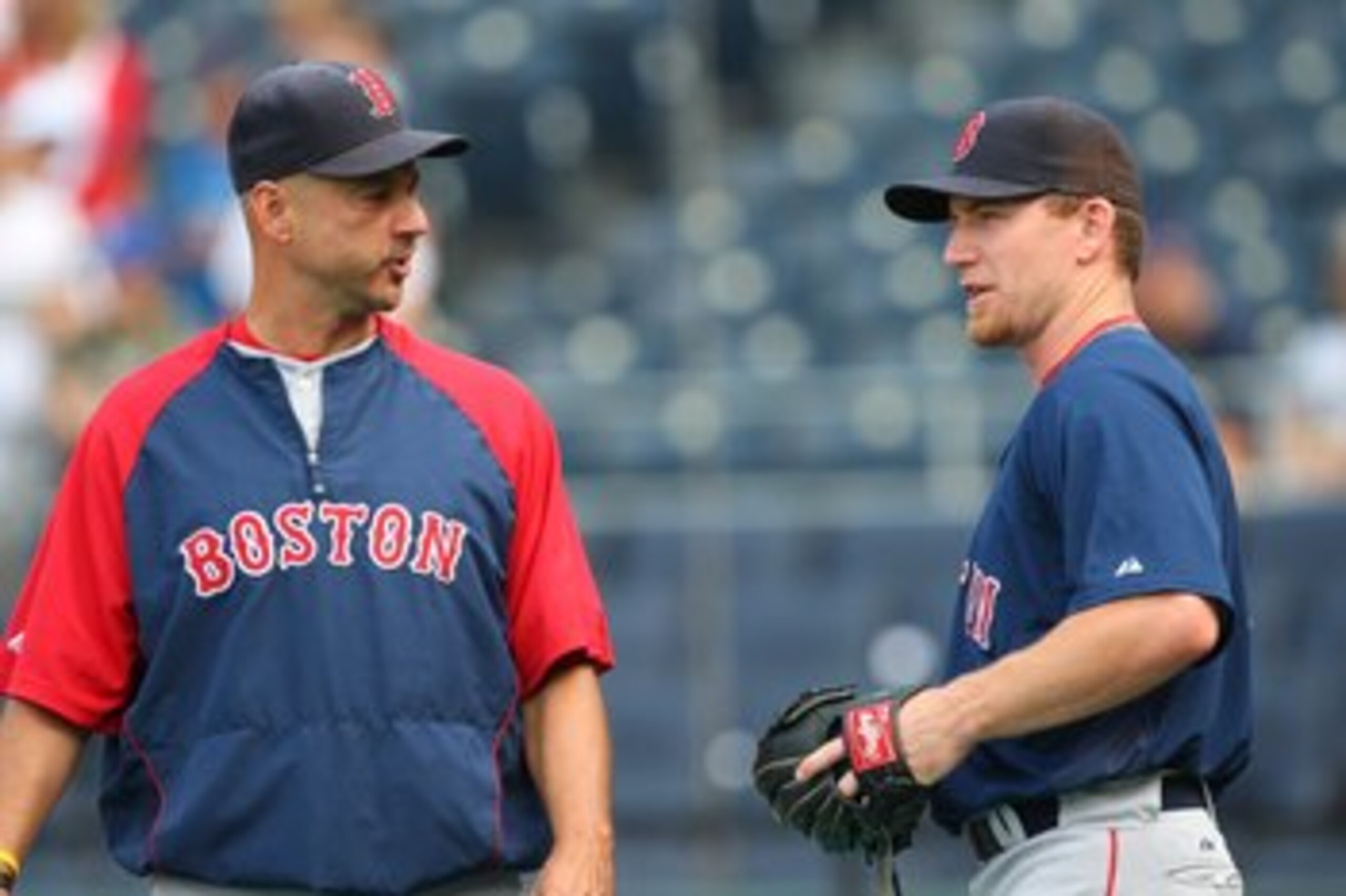
Much has been made of the wins above replacement (WAR) statistic that paints Drew in a favorable light. And I'll be the first to agree that from a sabermetric standpoint, Drew is a quality player. When he's actually on the field. But before we go overboard giving him credit, let's examine the numbers.
It's important to understand that there is not one single WAR calculation. WAR is dependent upon the value assigned to the "replacement player"; how well that imagined player would perform determines an actual player's WAR value.
Case in point, look at Drew's WAR as calculated by three different sites, Fangraphs, Baseball Prospectus and Baseball-Reference. Below are the numbers for each season 2007-2011 with the total WAR in parentheses:
FG: 1.9/ 4.1/ 5.0/ 2.5/ 0.1 (14.5)
BP: 2.5/ 3.7/ 4.4/ 2.9/ 0.7 (14.2)
BR: 2.7/ 2.7/ 5.6/ 2.5/ 0.1 (13.6)
The differences among the three totals are small, and the truth probably does lie somewhere in that range. But the point is that latching onto only one set of numbers can be risky.
Even so, let's stick with Fangraphs.com, as that's the site that King Kaufman chose to reference in his brief rebuttal of my Drew argument.
Those who know me will tell you that what I'm about to say is out of character, because I'm a big stats guy and a true believer in sabermetrics. But looking at the numbers without context is misleading and irresponsible. And to be perfectly blunt, Fangraphs' valuation is wrong.
Oh, I'm sure that the math itself is correct. But putting the information into a real-world context, it doesn't stand up.
Let's take, for example, Fangraphs' WAR value of 4.1 in 2008. Based on that, the site estimates Drew's monetary value at $18.4 million. Now take a step back for a minute.
In 2008, J.D. Drew played in 109 games. That's only two-thirds of the season. His .408 on-base percentage was admittedly fantastic, but overall he hit .280 with 19 home runs and 67 RBI while scoring 79 times. Can anyone seriously accept that two-thirds of a season with those numbers would be worth $18.4 million?
Common sense should tell you that it just doesn't work. $18.4 million would have made him sixth highest-paid player in baseball that year. For two-thirds of a season.
Similarly, Fangraphs tells us that Drew was "worth" $22.5 million in 2009 despite missing 25 games. At $22.5 million, Drew's salary would have ranked third in the majors. I guarantee that no one, not even Bill James himself would argue that Drew was worth that much.
The problem is that these "values" aren't applicable to the real-world. As a random example, take Mark Teixeira's 2008 season, which Fangraphs pegs as being worth $33.2 million. A $33.2 million salary would be a new record for the highest-paid season in the history of the game. Teixeira is a great player who had a great season in 2008, but not that great. Not even close.
The point is that simply adding up the various dollar amounts of what Drew has allegedly been worth over the years is not a sound way of assessing his real-world value. Look at the economics of baseball during that span.

MLB Economics During Drew's Boston Tenure
4 of 4
In 2007 when he inked the deal, J.D. Drew became the 18th-highest paid player in MLB and the fifth-highest paid outfielder. In 2008, his $14 million made him the 10th-highest paid outfielder. In 2009, ninth. In 2010, 10th again. And in 2011, he ranks 11th in terms of outfielders' salaries.
Now who wants to stand up and argue that J.D. Drew is or has ever been anything close to a top-10 outfielder?
In fact, Drew isn't even a reliable starter. Yet over the course of his Red Sox career, he's consistently been in or near the top-30 highest-paid players in the game. This while failing to start more than one-quarter of Boston's games.
Despite his career-long underachieving attitude and constant injuries, Drew came to Boston saddled with the expectation that he would finally live up to his five-star potential. That simply didn't happen, and no amount of data parsing can make it otherwise. For the amount of money he was paid, Drew was a considerable disappointment. In other words, a bust. That's just reality.


.jpg?w=2560 "Raiders Could Start Mendoza")



.jpg?w=2560 "Rodgers Iced Out on Plane 💎")
.jpg?w=2560 "🚨 Week 8 AP Top 25 Poll")
.jpg?w=2560 "Packers Safety Slams Refs 🤬")