
2011 Stanley Cup Finals: Vancouver Canucks vs. Boston Bruins Player Matchups
The Vancouver Canucks and Boston Bruins are about to engage in a best of seven game series to claim the Stanley Cup.
As is befitting the last two teams standing in the grueling endurance challenge that is the NHL playoffs, the Bruins and Canucks both have an abundance of stars.
Whether it is a 38-year drought for Boston, or a 40-year franchise futility record for the Canucks, one of these teams is going to beat their losing streak, and win the Stanley Cup.
Any Stanley Cup-winning team has players that step up to take on an almost iconic role:
The Sniper and the Playmaker, who conspire to provide the bulk of the offensive production.
The Conn Smythe winner, a heart and soul player who is seemingly everywhere on the ice, doing all the little things necessary to win and providing clutch goals.
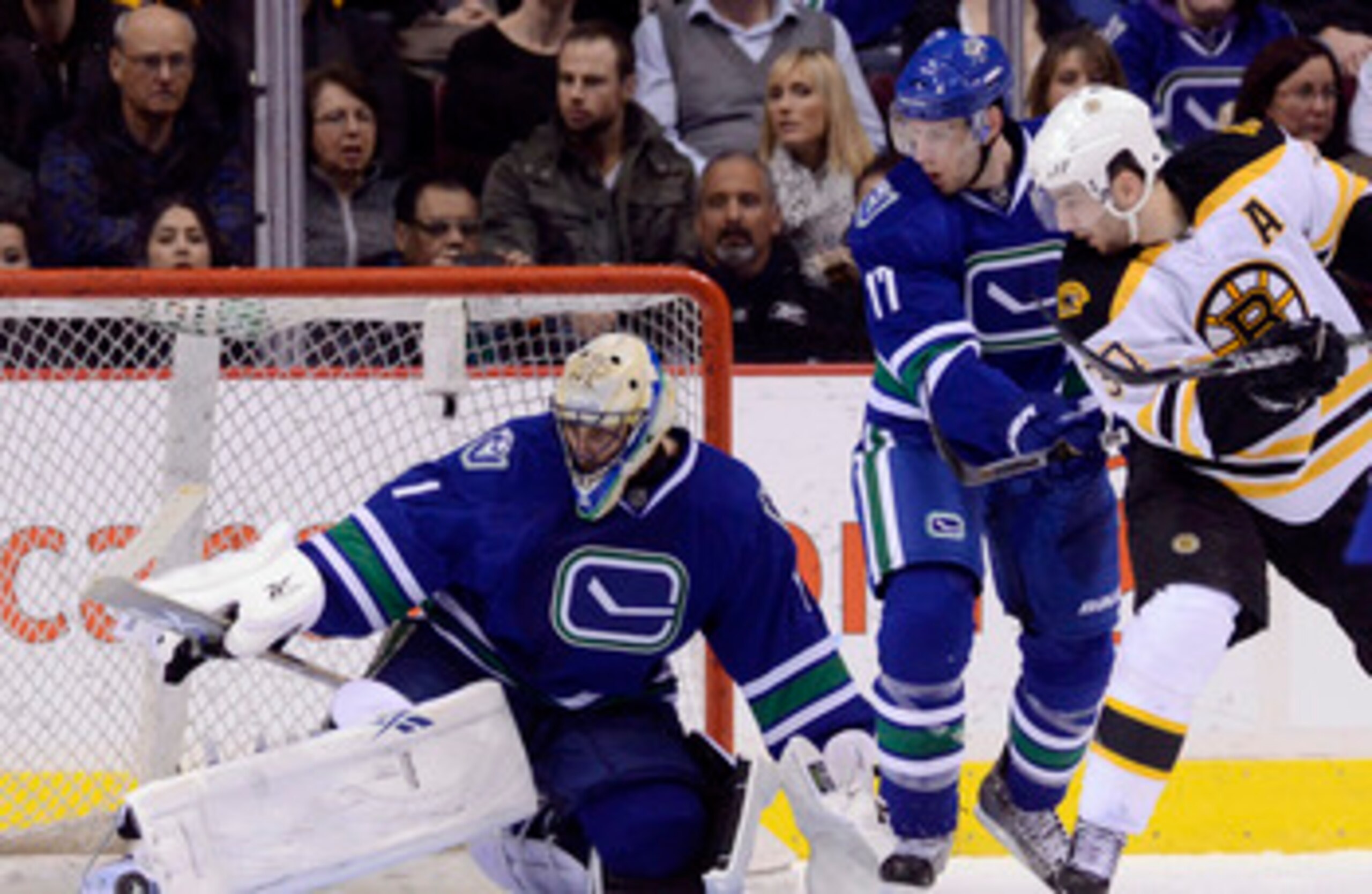
The Tenacious Defender, a nasty piece of business who makes opposing forwards pay for daring to cross his blueline or crowding his goalie.
The Goalie—no adjective needed—who simply provides the big saves when the game is on the line.
Of course, any Stanley Cup-winning team also has great supporting players, but they all have players who fit these roles and who drive the team to success.
If you think back to past Stanley Cup-winning teams, you can easily see how these roles were filled. For example, last year Patrick Kane was the Sniper for Blackhawks, Jonathan Toews was the Conn Smythe winner, etc.
Now let's compare the players who are filling these iconic roles for the Canucks and Bruins at the start of the Stanley Cup Finals.
The Sniper
1 of 6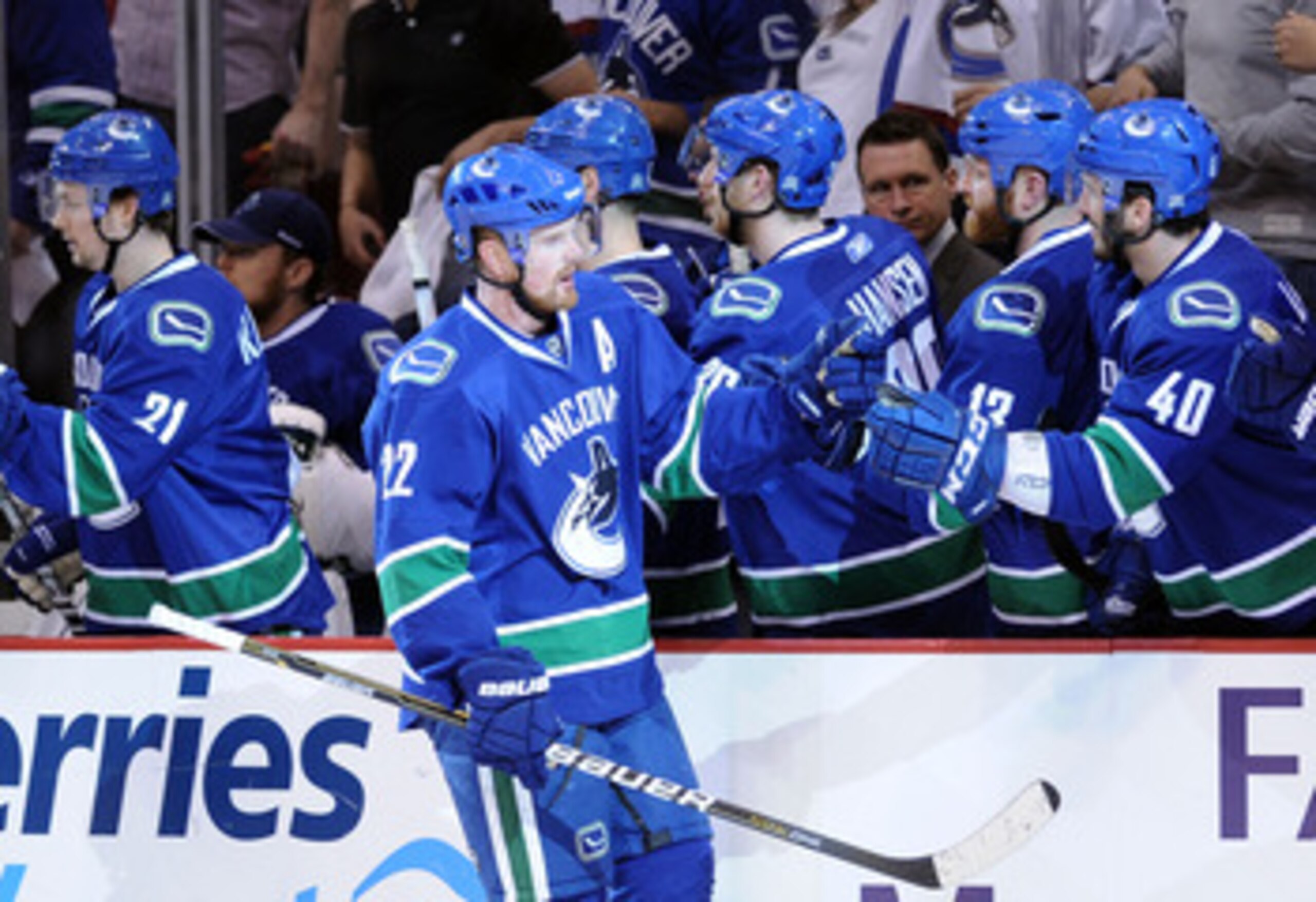
Daniel Sedin (8 goals, 8 assists, 16 points)
vs.
David Krejci (10 goals, 7 assists, 17 points)
I easily could have listed Nathan Horton for the Bruins, but Krejci edges him in terms of both goals (10 vs. 8) as well as game-winning goals (4 vs. 3).
Krejci tallied a hat trick in a losing cause in Game 6 of the Eastern Conference Finals, which served as notice to anyone who forgot how dangerous a player he is.
Daniel Sedin is the obvious choice for the Canucks in this role, as he won the Art Ross Trophy in the regular season and is leading the Canucks in playoff goals.
While Daniel has a few less goals than Krejci, I feel that the second round unbalanced the statistics.
Boston played against a Chris Pronger-less Flyer's team that lacked an NHL goaltender, and it was like shooting fish in a barrel. Krejci picked up four goals in that series.
Daniel Sedin, on the other hand, played a second round against a very defensive team in Nashville, which boasts a Jack Adams Award nominee (Barry Trotz), Norris Trophy nominee (Shea Weber) and Vezina Trophy nominee (Pekka Rinne).
When one player is shooting on AHL goalies and the other is going up against the goalie who should walk away with the Vezina in June, it isn't a fair comparison to strictly go by the numbers.
In the end, however slight the advantage might be, I feel Daniel Sedin is the more dangerous player.
Advantage: Vancouver
The Playmaker
2 of 6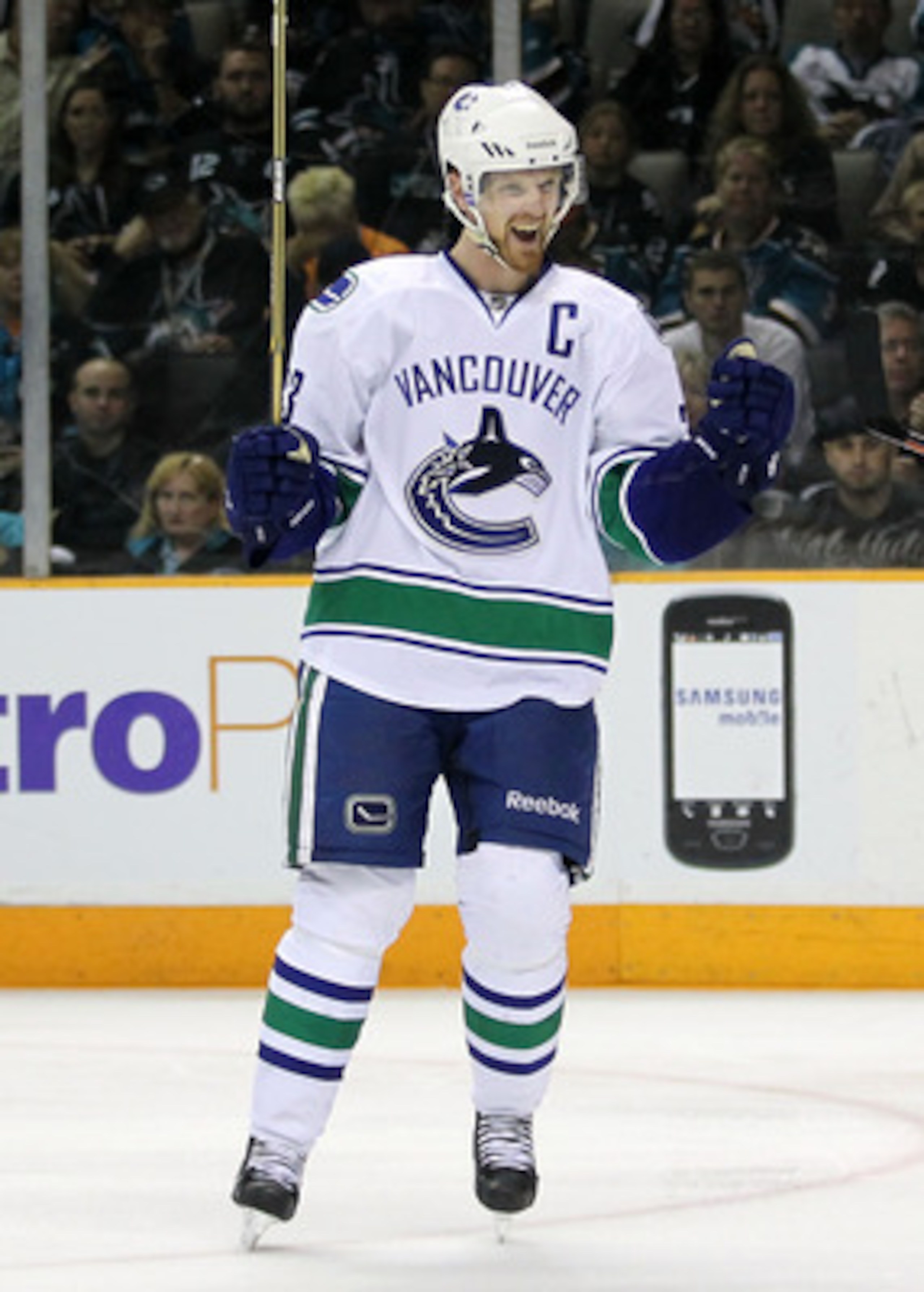
Henrik Sedin (2 goals, 19 assists, 21 points)
vs.
Patrice Bergeron (4 goals, 11 assists, 15 points)
In the games I've watched (and I admit, I didn't catch all 18 Bruins games), Bergeron has been the most consistent center for the Bruins. He excels at playing solid two-way hockey, and his playmaking ability shows in his assist totals.
Henrik Sedin hasn't been consistent over the playoffs. He started off strong, cooled down in the latter half of the first round and into the second round with a suspected back injury and then feasted on the Sharks. He had an amazing 12 points in a mere five games during the Western Conference Finals.
Bergeron is good, but you can't argue against the man who leads the NHL playoffs in both assists and points, especially when he is on a hot streak.
Advantage: Vancouver
The Conn Smythe Candidate
3 of 6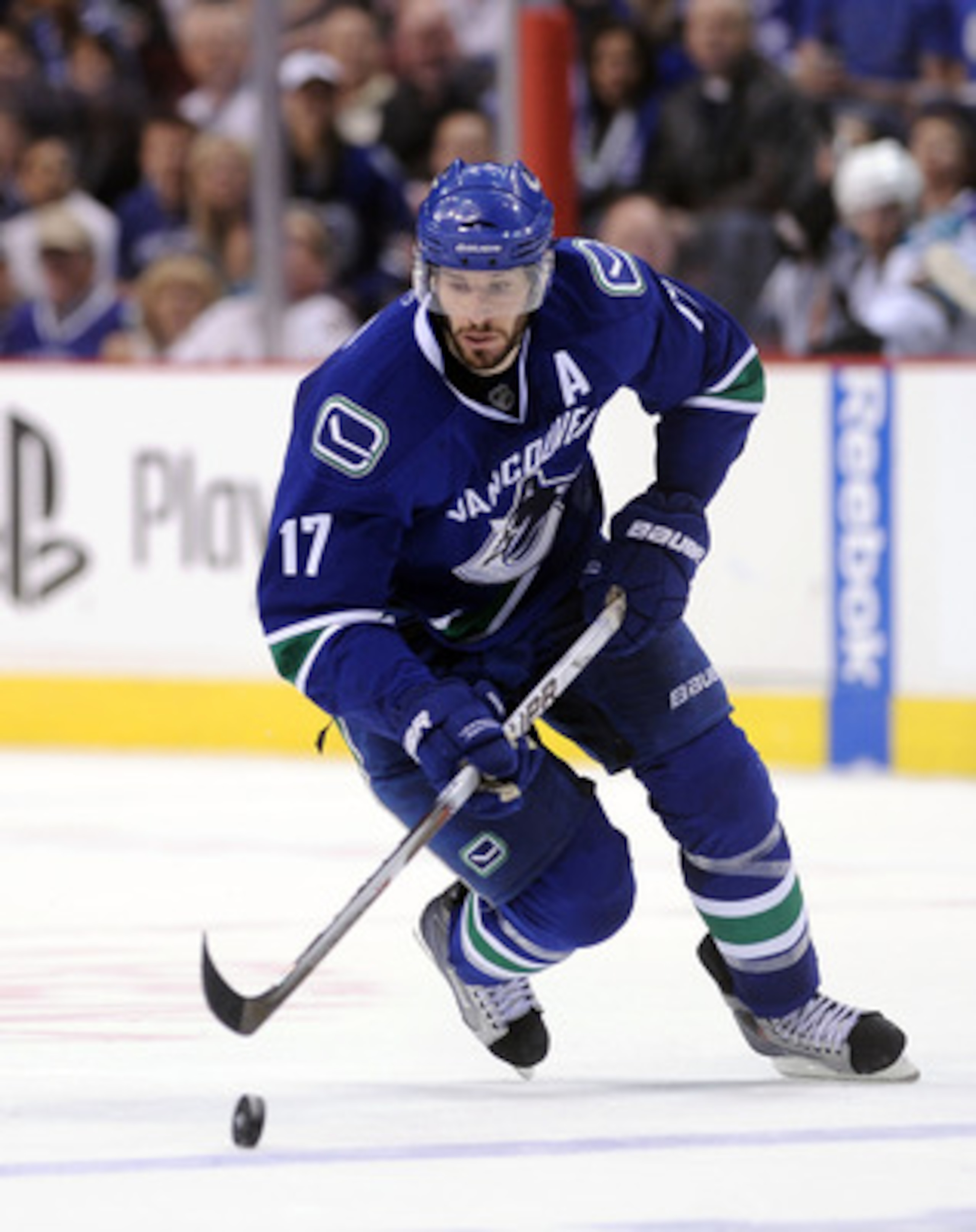
Ryan Kesler (7 goals, 11 assists, 18 points, +6 rating, 2 GWG, 56 hits, 22 takeaways)
vs.
Nathan Horton (8 goals, 9 assists, 17 points, +10 rating, 31 hits, 3 GWG, 31 hits, 1 takeaway)
Kesler (6'2", 202 pounds) and Horton (6'2", 229 pounds) are physical forces for their teams. They also both provide clutch scoring.
Whether it is Horton's late goal to win Game 7 of the Eastern Conference Finals, or Kesler's goal to force overtime in Game 5 of the Western Conference Finals, if you need a goal, these are the guys you turn to.
Despite being a bit smaller, Kesler is by far the more physical and complete player, outhitting Horton by a significant margin, but more importantly, he is far betting at winning puck battles, as shown by their respective takeaway numbers.
Advantage: Vancouver

.jpg?w=2560 "NHL Trade Grades Connor Hellebuyck")
The Tenacious Defender
4 of 6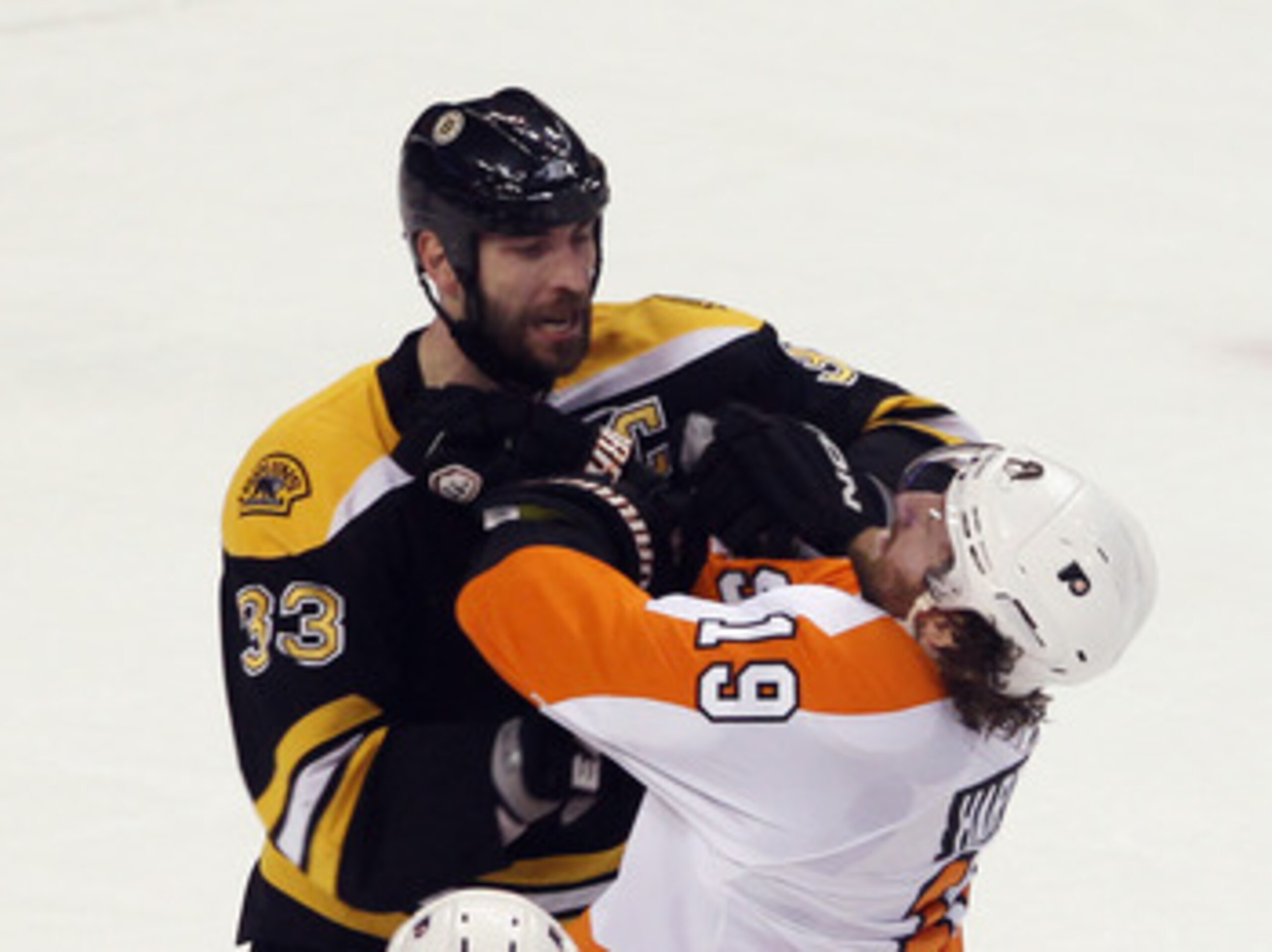
Kevin Bieksa (+10 rating, 37 PIM, 3 fighting majors, 62 hits, 24 blocked shots, 25:56 in ice time)
vs.
Zdeno Chara (+11 rating, 14 PIM, 40 hits, 21 blocked shots, 28:17 average ice time)
Bieksa is a nasty defenceman, who Don Cherry loves to talk about on Hockey Night in Canada. In other words, he'll do whatever it takes, legal or illegal, to clear the front of his net or win a battle for the puck.
Chara isn't exactly an angel himself and is slowly earning a reputation as a dirty player as well.
Bieksa is outhitting Chara by 50 percent in sheer volume of hits.
However, at 6-foot-1 and 198 pounds, Bieksa is significantly smaller than Chara's 6-foot-9, 255-pound frame, so it balances out in the end. Bieksa hits hard, but when Chara hits someone, they go down hard.
Advantage: Boston
The Goalie
5 of 6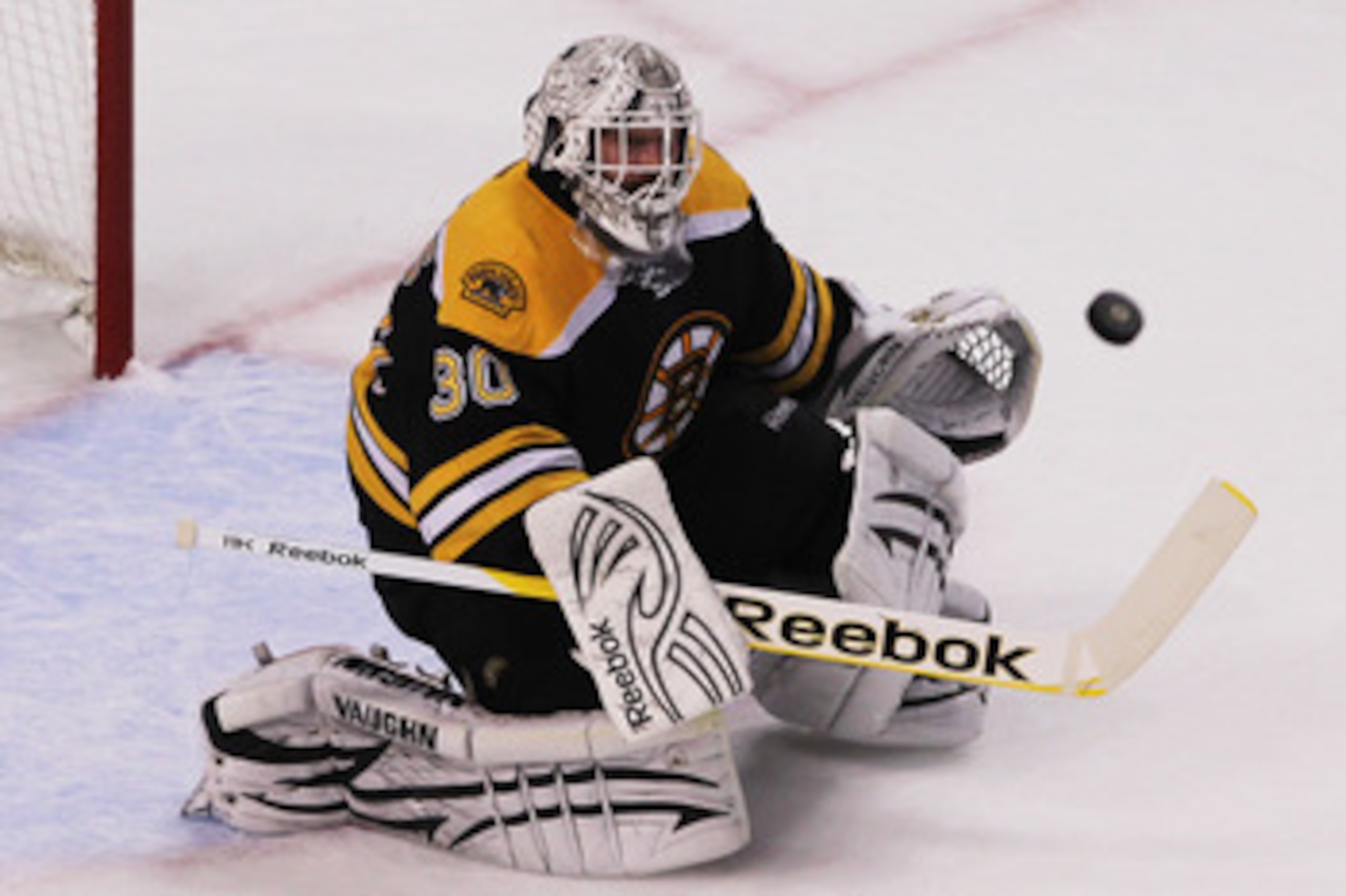
Roberto Luongo (12-6, 0.922 save percentage, 2.29 GAA, 2 shutouts)
vs.
Tim Thomas (12-6, 0.929 save percentage, 2.29 GAA, 2 shutouts)
Goaltending is just about as statistically equal as you could imagine. Neither Vezina-nominated goalie has a real advantage here.
Either is capable of stealing a game or two. On the other hand, either one is capable of giving up a bad goal or two as well.
Advantage: Draw
Conclusion
6 of 6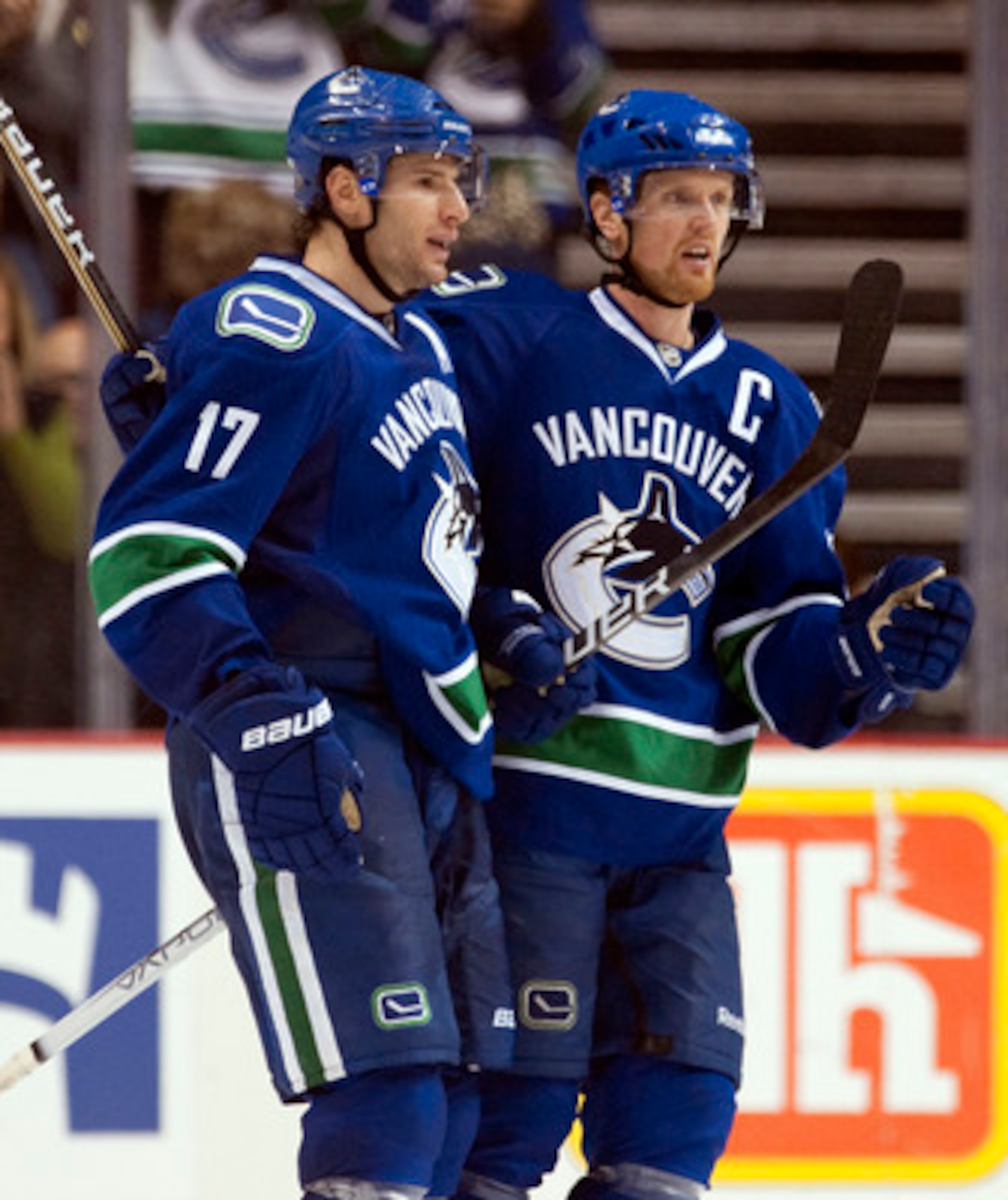
In the end, Vancouver was significantly better at the Playmaker and Conn Smythe roles.
Boston has the advantage in the Tenacious Defender role.
The Goalie battle was a draw, and the Sniper role was marginally in Vancouver's favor.
All in all, the Canucks perform better in these matchups than their Bruins counterparts, and that is a large reason why the Canucks will win in six games.
*For a more comprehensive preview of the Stanley Cup Finals, see this article.



.jpg?w=2560 "Latest Peyton-Colts Rumors")