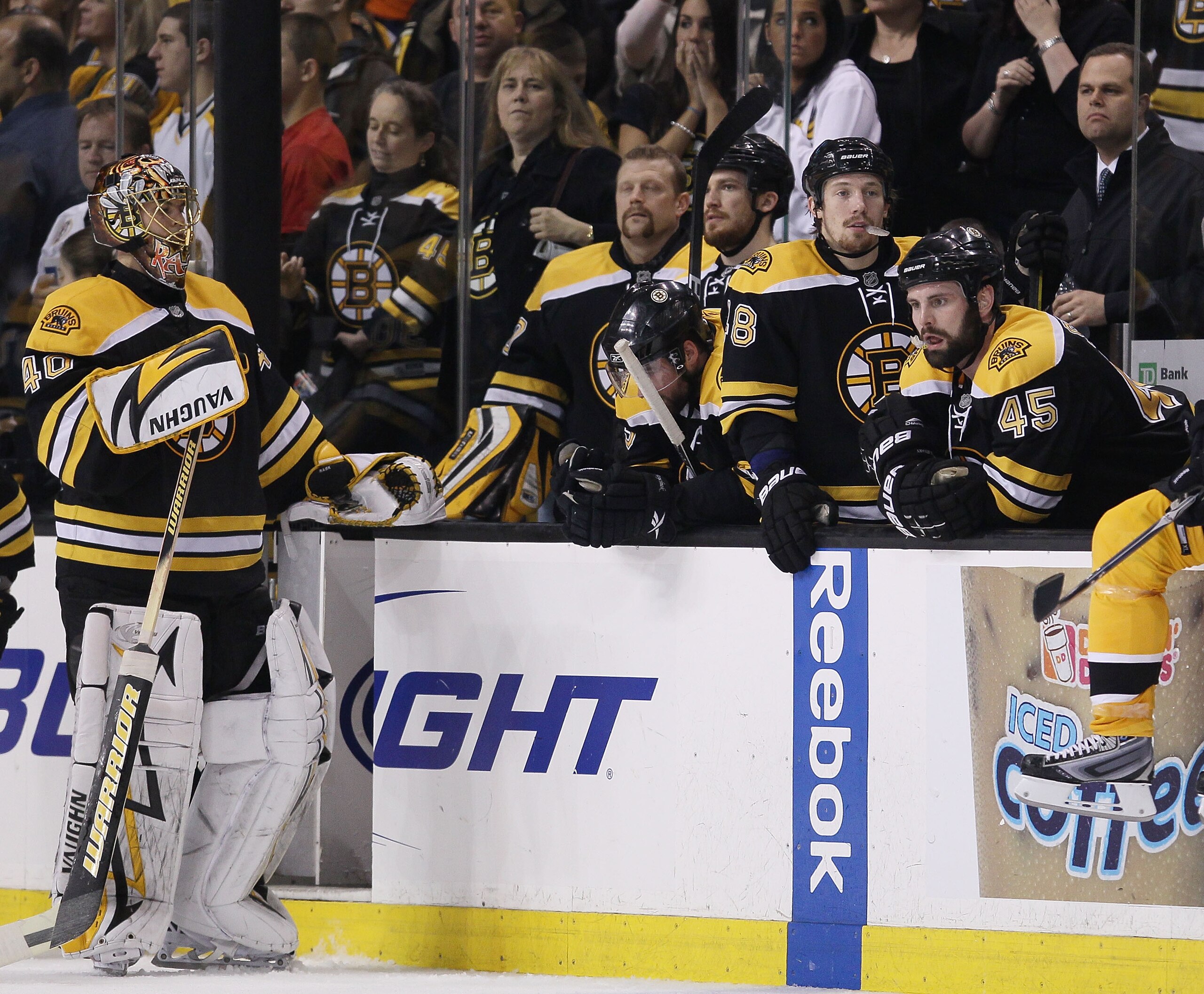

2011 Stanley Cup Playoffs: Ranking Top 10 NHL Playoff Chokes
The Stanley Cup Playoffs are the most exciting and unpredictable times of the year.
They're exciting because the team matchups are unpredictable, and no one can ever know for sure what the outcomes will be at the end of any round.
Throughout Stanley Cup Playoff history, many powerhouses have been brought down by the most unlikeliest of underdogs. Many of those powerhouses never recovered, or they simply forgot and moved on.
With so many upsets and chokes in the playoff history, it is difficult to compile a list that will be agreeable on all surfaces.
The only true way to rank these is by the point differential between the two teams at the end of the regular season or by the number of prolific scorers on each team.
Without further ado, here are the Top 10 NHL Playoff Chokes.
Honourable Mentions
1 of 11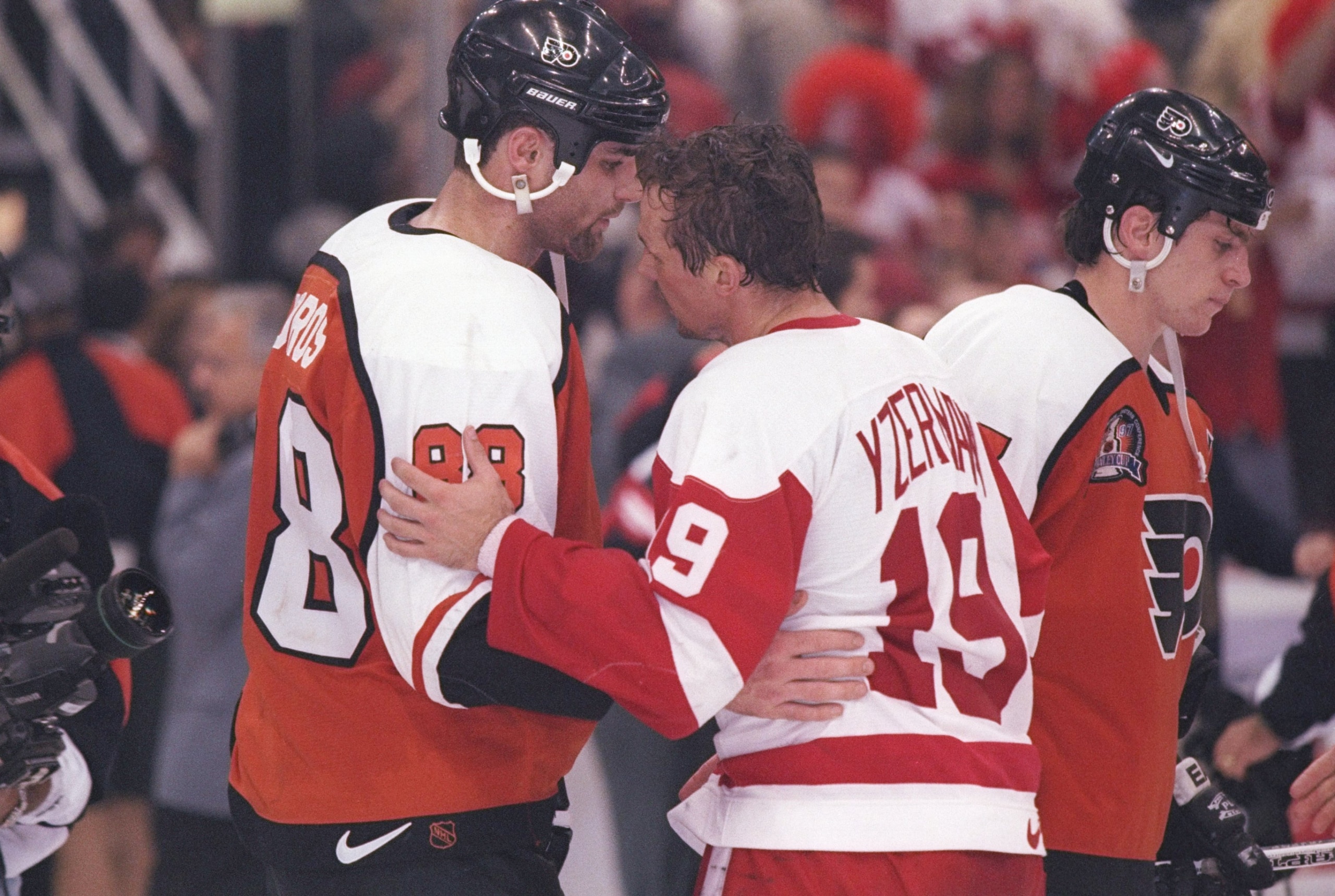
1997 Philadelphia Flyers (lost to Detroit Red Wings 4-0 in Stanley Cup Final)
In 1997, Eric Lindros and the Flyers were in full flight, and the Legion of Doom was taking aim at bringing the Stanley Cup back to Philadelphia for the first time since 1975.
Despite only playing 52 games that season, Lindros finished second in Flyers scoring with 79 points while John LeClair led the team with 97 points, including 50 goals.
The Flyers finished second in their division behind the New Jersey Devils and went on a tear in the playoffs, losing only three times before meeting the Detroit Red Wings in the Finals.
The Flyers offense dried up as they could only muster six goals in a four game sweep.
1986 Edmonton Oilers (lost to Calgary Flames 4-3 in Smythe Division Final)
Not on the main list because the Oilers did not choke as a team to lose out to the Flames in an effort to win a third straight Stanley Cup.
Steve Smith's unfortunate own goal in a 3-2 Game 7 loss was more of an individual choke than a team choke.
However, the Oilers re-grouped and won the 1987 and 1988 Stanley Cups with Smith being honoured for his perseverance.
1995 Detroit Red Wings (lost to New Jersey Devils 4-0 in Stanley Cup Final)
The Detroit Red Wings had finally made it back to the Stanley Cup Final for the first time since 1966 and were looking to win their first Stanley Cup since 1955, the longest drought of any NHL team at the time (since the Rangers won the 1994 Stanley Cup).
The Wings made easy work of their Western Conference opponents, only losing twice en route to the Finals against the upstart New Jersey Devils.
In the shortened 1994-95 season, the Wings had finished 18 points ahead of the Devils and won the President's Trophy.
However, the Devils shocked the hockey world by sweeping the Wings and winning their first Stanley Cup in franchise history, with the Wings being outscored 17-7 in the four games.
2004 Boston Bruins (lost to Montreal Canadiens 4-3 in Eastern Conference Quarterfinals)
Finishing 11 points ahead of Montreal, the Bruins went up 3-1 in the series on an infamous overtime goal by Glen Murray, who grabbed a lose puck left by Canadiens Alex Kovalev.
However, the Canadiens fought back to surprisingly win Game 5 5-1 in Boston, Game 6 5-2 in Montreal and Game 7 2-0 in Boston with Richard Zednik scoring late in the third.
It was the first time in Montreal Canadiens history they had come back after being 3-1 down in a series.
2009 San Jose Sharks (lost to Anaheim Ducks 4-2 in Western Conference Quarterfinals)
The San Jose Sharks finished with their first President's Trophy in franchise history after amassing 117 points and finishing 26 points ahead of their first round opponent Anaheim Ducks.
However, the Sharks found themselves struggling against the Ducks. The Ducks surprised the hockey world by winning the first two games in San Jose 2-0 and 3-2.
San Jose managed to win Game 3 and Game 5 back home before bowing out in Game 6 in Anaheim.
1998 Colorado Avalanche (lost to Edmonton Oilers 4-3 in Western Conference Quarterfinals)
15 points separated the Colorado Avalanche and Edmonton Oilers in the 1998 Playoffs.
The Avalanche had emerged as one of the powerhouses in the Western Conference along with the Detroit Red Wings and Dallas Stars, with all three teams winning the Stanley Cup between 1997 and 1999.
However, the Curtis Joseph-led Edmonton Oilers upset the Avs in seven games this season.
Fresh off a stunning seven game upset of the Dallas Stars the year before, the Oilers were down 3-1 to the Avs before Joseph started to stone the Avs offense.
The Avalanche only scored one goal in the final three games en route to the Oilers winning Games 6 and 7 2-0 and 4-0 to advance.
Other Honourable Mentions:
1990 Winnipeg Jets (lost to Edmonton Oilers 4-3 in Smythe Division Semifinal; had 3-1 series lead)
1988 Philadelphia Flyers (lost to Washington Capitals 4-3 in Patrick Division Semifinal; had 3-1 series lead)
1989 Edmonton Oilers (lost to LA Kings 4-3 in Smythe Division Semifinal; had 3-1 series lead)
1991 Detroit Red Wings (lost to St. Louis Blues 4-3 in Norris Division Semifinal; had 3-1 series lead)
1992 Winnipeg Jets (lost to Vancouver Canucks 4-3 in Smythe Division Semifinal; had 3-1 series lead)
10. 1971 Boston Bruins
2 of 11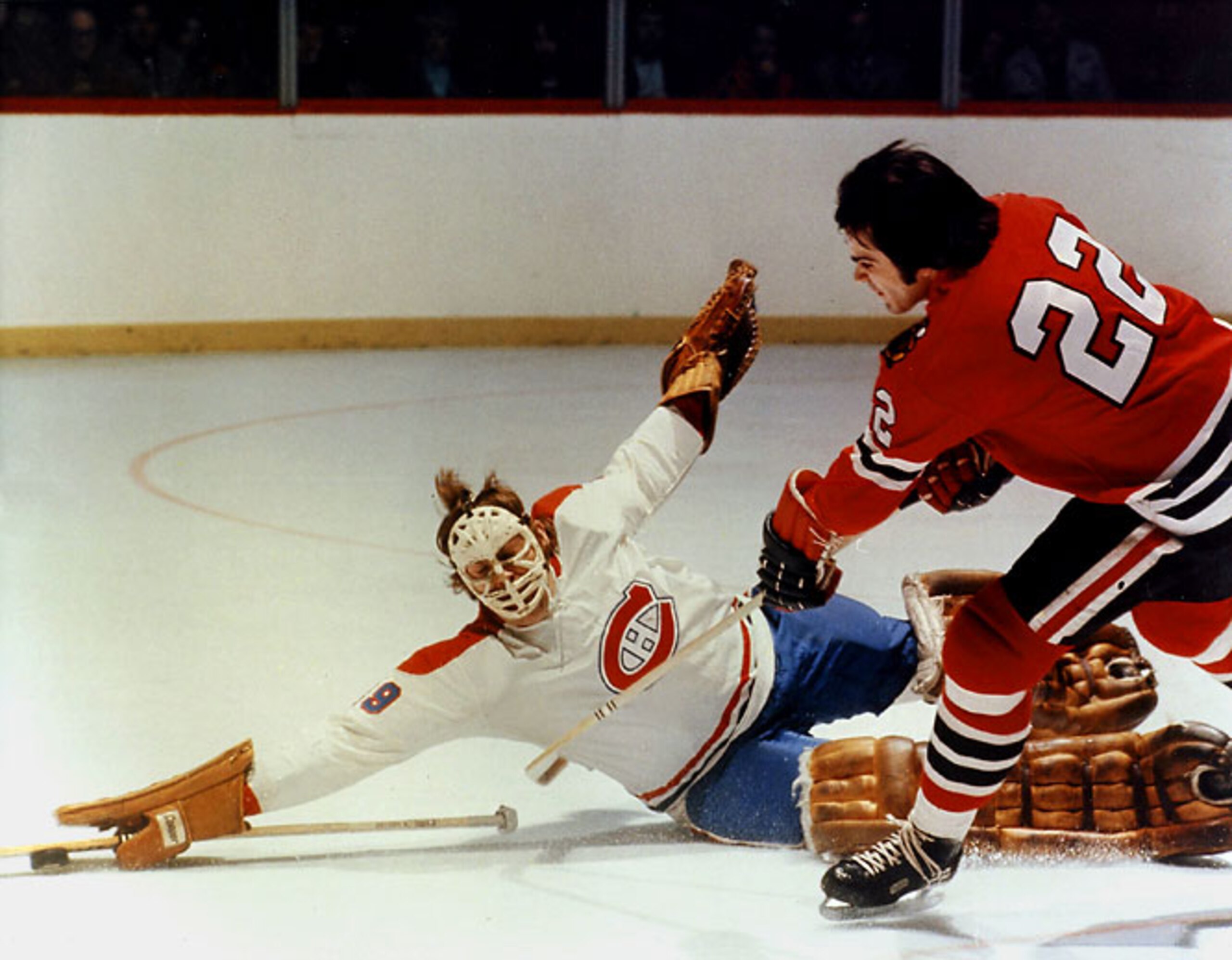
The 1971 Stanley Cup Playoffs were supposed to be another white wash for the mighty Boston Bruins.
The Bruins had finished with 121 points, 24 more points than their first round opponents, the Montreal Canadiens.
To add to that, the Bruins were coming off a Stanley Cup win, their first since 1941, with a team filled with superstars Bobby Orr, Phil Esposito, Ken Hodge and Johnny Bucyk, who finished in the top four of scoring that season.
Enter Ken Dryden.
Dryden had only played six games that season, splitting time in the AHL and the NHL. Dryden had won those six games with a 1.65 GAA.
Rookie head coach Al MacNeil decided to go with Dryden in the playoffs over Rogetien Vachon and Phil Myre.
The Bruins opened with a modest 3-1 win in Game 1 at the Boston Gardens. In Game 2, the teams exploded for 12 goals as Montreal came out on top with a 7-5 win.
Game 3 at the Montreal Forum shocked the Bruins, as they were beaten 3-1 and struggled to score. In Game 4, the Bruins tied the series with a resounding 5-2 win.
The Bruins would then take control of the series with a 7-3 drubbing of the Canadiens in Game 5.
Back in Montreal for Game 6, Dryden stood on his head, and his teammates responded with a 7-3 win to set up a deciding Game 7 in Boston.
Dryden stood tall again as the Bruins fell to the Canadiens 4-2 in the biggest upset of the 1970s, and possibly of all-time.
It was to the day, the largest upset between two teams with that much differential of point totals during the regular season.
9. 1942 Detroit Red Wings
3 of 11
The 1942 Stanley Cup Final was surprising in itself with the upstart Detroit Red Wings beating out the lowly Montreal Canadiens 2-1 in Round 1 and then upsetting the Boston Bruins, who finished 14 points ahead of the Wings, 2-0 in Round 2.
Powered by the scoring of little known Don Grosso (53 points in 45 games) and a young Sid Abel (49 points in 48 games), the Jack Adams-coached Wings would win the first three games of the 1942 Stanley Cup Final against the Toronto Maple Leafs, who finished 15 points ahead of the Wings in the standings.
However, the Wings began to unravel as they had a chance to win the Stanley Cup on home ice in Game 4.
The Wings lost a close game 4-3 and never recovered. The Leafs won Game 5 9-3 and shut out the Wings on their home ice 3-0 in Game 6.
The Leafs claimed the Stanley Cup on home ice winning 3-1 and becoming the first team to come back from a 3-0 series deficit in Stanley Cup Playoff history.

8. 1994 Detroit Red Wings
4 of 11
The Detroit Red Wings of 1994 entered the Stanley Cup Playoffs with the best regular-season record in the Western Conference with 100 points.
They faced the San Jose Sharks, a team that had made it to their first playoffs series in franchise history.
Despite finishing 18 points ahead of the Sharks, the Wings lost Game 1 5-4 in Detroit to the shock of the hockey world. The Wings responded with a 4-0 Game 2 win.
Going back to San Jose, Wings head coach Scotty Bowman had problems navigating the tunnels in the old San Jose Arena. Despite Bowman's troubles finding his way to the ice, the Wings won Game 3 3-2.
The resilient Sharks would tie the series with a 4-2 win in Game 4 and then go ahead with a 6-4 win in Game 5.
Bowman's troubles finding his way to the ice would be a foreshadowing of his team's loss of an answer to the Sharks stingy defense.
During the series, Games 3-5 were played in San Jose, with the final two games in Detroit.
The Sharks would bow out to the Wings in Game 6 7-1 before grinding out an astonishing 3-2 win in Game 7 in Detroit on the goal by rookie defenseman Vlastimil Kroupa.
At the time, the Sharks series win was seen as one of the greatest upsets in postseason history. It would be a foreshadowing of what was to come for the Sharks franchise.
7. 2006 Detroit Red Wings
5 of 11
In 2006, the Detroit Red Wings captured their fifth President's Trophy in franchise history and their third in four seasons.
However, the Wings had only managed to win one Stanley Cup with the previous two, bowing out to the Calgary Flames two years prior.
The Wings met the Edmonton Oilers, a team they had finished 29 points ahead of in the standings. They took advantage of home ice immediately, winning Game 1 3-2 in overtime.
In Game 2, the Oilers shocked the Wings with a 4-2 win with Brad Winchester playing hero in Detroit.
Game 3 saw a see-saw battle between the two teams end up with a Jarrett Stoll overtime goal clinching the game and a 2-1 series lead for Edmonton.
The Wings regrouped and took Game 4 4-2 to tie the series.
Back in Detroit, the Oilers shut down the Wings and jumped out to a 3-0 lead. The Wings narrowed the gap on goals by Brendan Shanahan and Henrik Zetterberg, but the Oilers grinded out a 3-2 win to take the series lead back home.
In Game 6, the Oilers trailed 2-0 after two periods before Fernando Pisani netted two goals to tie the game, with his fifth and six goals of the series. The Wings went ahead 3-2 before Ales Hemsky tied the game with 3:53 left on a controversial power play goal. After review, it was deemed a goal.
That led to Hemsky breaking the deadlock with the game-winning goal with 1:06 left in the third period, completing the upset.
6. 2000 St. Louis Blues
6 of 11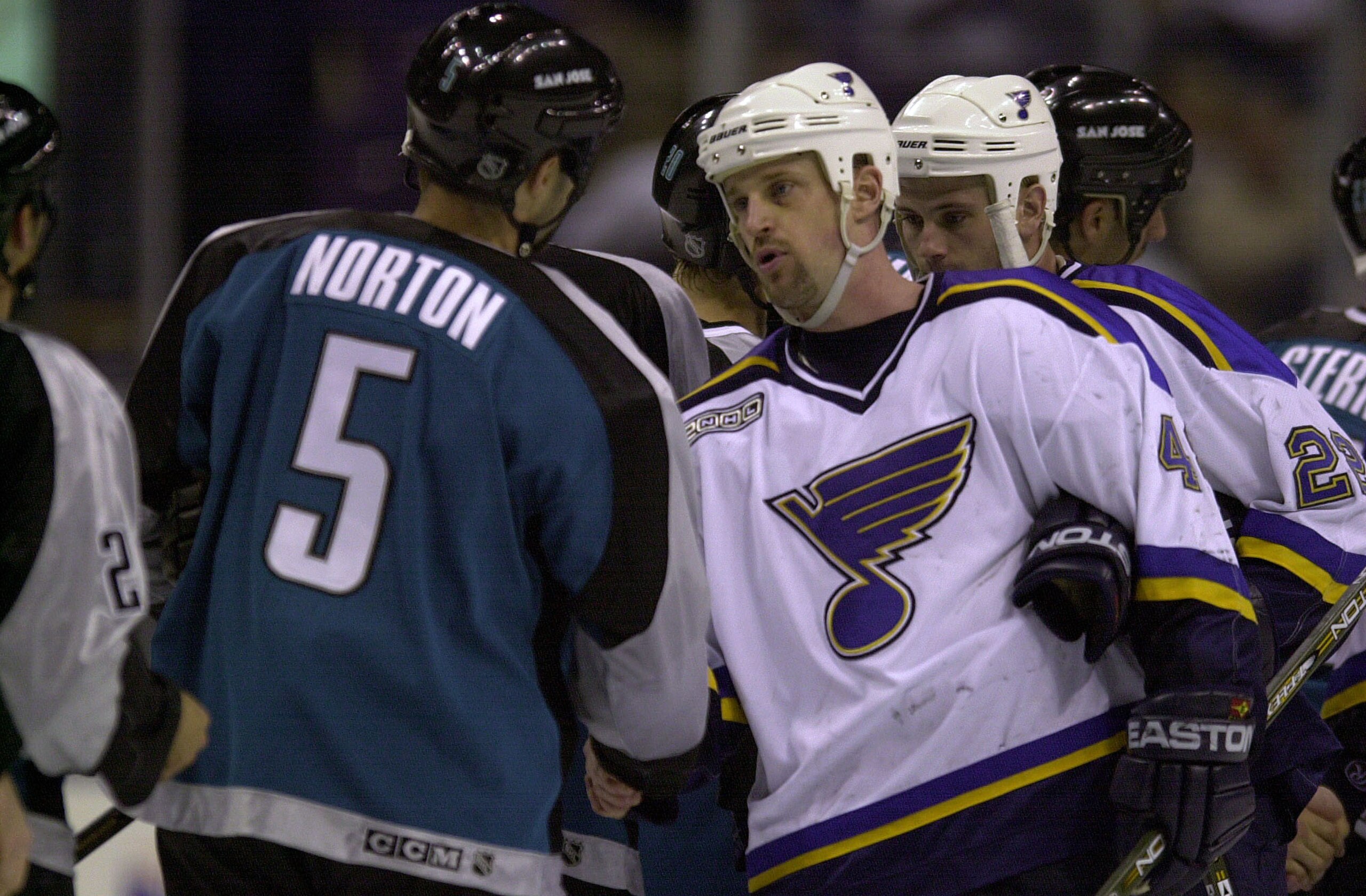
With 114 points and the President's Trophy in hand, the 2000 St. Louis Blues were favourites to go far in the Stanley Cup Playoffs.
Led by the solid goaltending of Roman Turek (42-15-9, 1.95 goals against average and .912 save percentage) and solid defense of Chris Pronger and Al MacInnis, the Blues finished 27 points ahead of their first round opponents, the San Jose Sharks.
The Blues came out with a 5-3 win at home in Game 1, but the Sharks would take away home ice with a 4-2 Game 2 victory.
The Sharks grabbed hold of that momentum back at the Shark Tank, winning Games 3 and 4, 2-1 and 3-2 respectively.
Back in St. Louis, the Blues rallied for a Game 5 win 5-3. They carried that momentum into Game 6, winning big 6-2 to force Game 7 in St. Louis.
However, the Sharks shut down the Blues with the goaltending of Steve Shields and the scoring of captain Owen Nolan, and the Sharks hung on to win Game 7 3-1 and upset the Blues in seven games.
5. 2010 Washington Capitals
7 of 11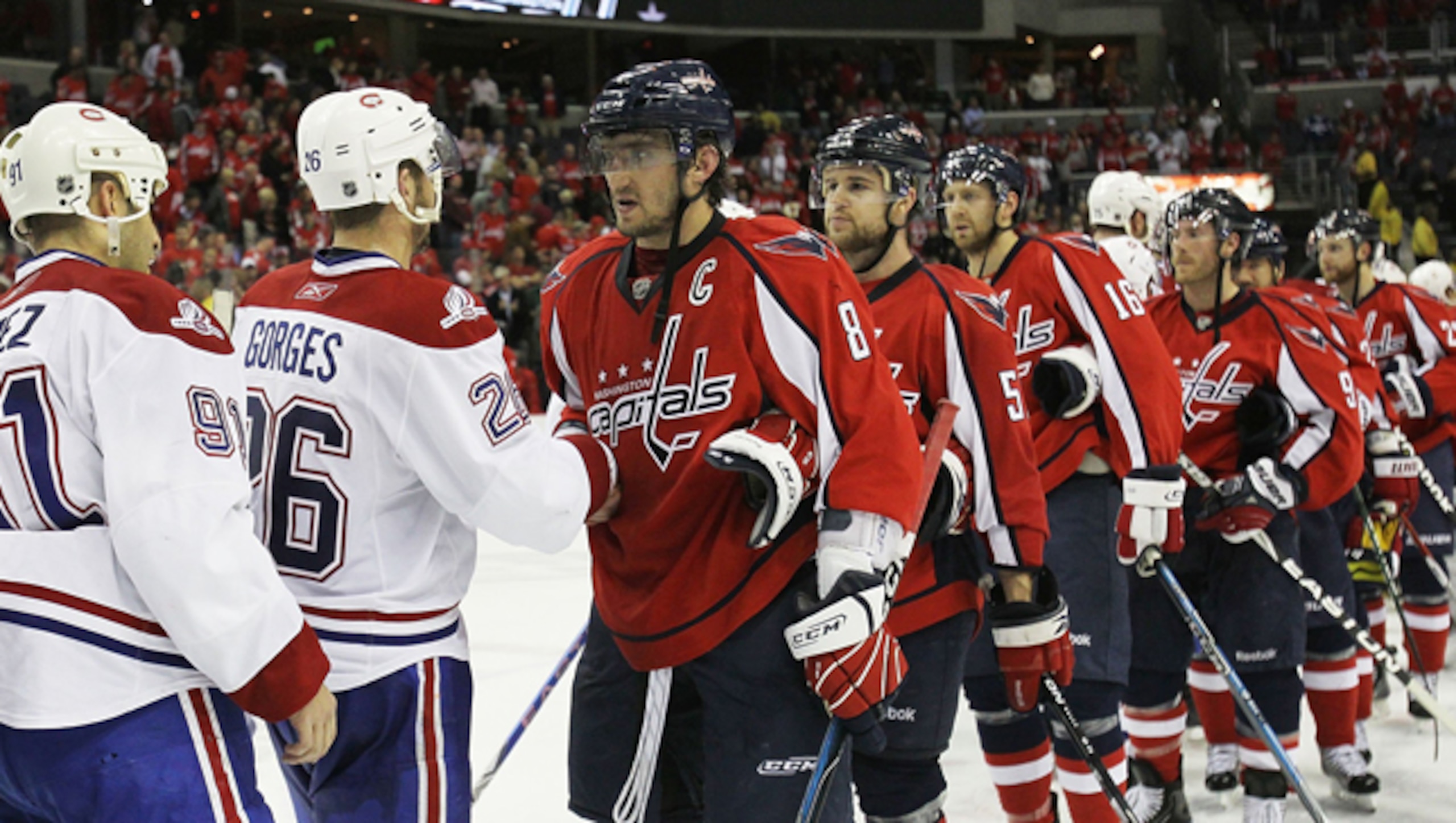
The Washington Capitals of the 2010 Stanley Cup Playoffs were destined to be a favourite for the Stanley Cup.
Everyone was already getting ready for another Sidney Crosy versus Alex Ovechkin showdown in the Eastern Conference Final.
The Capitals had some small business to attend to before that would happen.
The Montreal Canadiens were their first opponent, finishing 33 points behind the President Trophy winning Capitals and lacking the firepower offense of the Capitals.
With seven players garnering 50 or more points, including Ovechkin (109 points in 72 games) and Nicklas Backstrom (101 points in 82 games), the Capitals matched up very well with the Canadiens, who only had three players with 50 points or more, including leading scorer Tomas Plekanec (70 points in 82 games).
In Game 1, the teams traded goals to send the game to overtime. Plekanec would stun the Capitals with a overtime goal 13:19 into the extra frame.
The Capitals responded in Game 2 with a comeback overtime win of their own. After the Canadiens had gone up 4-1, the Capitals repsonded by making it 4-4, before the teams traded goals late to make it 5-5.
Nicklas Backstrom played hero to tie the series at 1-1 with the overtime winner 31 seconds into the extra frame.
The Capitals gained momentum, winning Game 3 5-1 in Montreal, chasing starter Jaroslav Halak from the net. In Game 34, much of the same as Carey Price started for Montreal and the Capitals won easily 6-3.
In Game 5, Halak was back in net for the Canadiens and saved 37 of 38 shots as the Canadiens extended the series with a 2-1 win.
In Gave 6, Halak took over again, stopping 53 of 54 shots in a 4-1 Canadiens win.
In Game 7, the Capitals and Canadiens played a tight game, with the Canadiens holding onto a one-goal lead before Dominic Moore scored with under five minutes to play to give the Canadiens a 2-0 lead.
Brooks Laich would score late but the Capitals couldn't muster any more goals, losing the series 4-3.
4. 1975 Pittsburgh Penguins
8 of 11
The 1975 Pittsburgh Penguins had a team that seemed to finally have a team that was going to compete for the Stanley Cup.
They finished with their highest point total since entering the NHL with 89 and took care of the St. Louis Blues in the first round 2-0.
The Penguins were led by the scoring of Vic Hadfield (31 goals), Rick Kehoe (32 goals), Pierre Larouche (31 goals), and Jean Pronovost (43 goals)
In Round 2, the Penguins met the New York Islanders, a team in only their third season of existence and also in their very first playoffs.
The Islanders had taken care of their cross-town rival the New York Rangers 2-1 and were looking like a promising, young team with the likes of Dennis Potvin, Bob Nystrom, and Billy Smith.
The Penguins took the first three games of the series, outscoring the young Islanders 14-9, including a 6-4 Game 3 win.
However, the Islanders stuck around in the series and made life hard for the Penguins. The Islanders won a 3-1 Game 4 to stay alive at home. In Pittsburgh, they won 4-2 to extend the series again.
After another home win, 4-1 in Game 6, the Penguins had a chance to win the series in seven at home only to lose a 1-0 game and fall to the Islanders in seven.
The Islanders resilience paid off as they outscored the Penguins 12-4 in the final four games. The Penguins became only the second team to lose after leading a series 3-0.
3. 1991 Chicago Blackhawks
9 of 11
The 1991 Chicago Blackhawks had a lot to be excited about.
They won their first President's Trophy in franchise history, they outlasted their divisional rival St. Louis Blues for that honour, and they were favourites to win the Stanley Cup.
With budding stars Steve Larmer and Jeremy Roenick as well as Ed Belfour's stellar Vezina Trophy, Calder Trophy, and William M. Jennings Trophy winning season (not to mention Dominik Hasek was his backup), the Hawks marched into the playoffs matched up against the Minnesota North Stars, a team that had beat out the Vancouver Canucks by three points to make the playoffs.
The North Stars had finished the regular season with a losing record of 27-39-14. Contrast that to the Hawks 49-23-8 record, the two teams were night and day different.
In Game 1, the gritty North Stars pushed the Hawks to overtime at the Chicago Stadium. The North Stars would silence the Hawks fans taking the game 4-3 4:14 into the extra frame.
Chicago took Game 2 5-2 and inched out a 6-5 Game 3 win at the Met Center. The North Stars would tie the series in Game 4 with a 3-1 win.
Back in Chicago, the North Stars stymied the Hawks attack and were deadly on the power play as they shocked the Hawks, shutting them out 6-0.
The Hawks had no answers in Game 6, as they fell 3-1 to the North Stars, losing the series 4-2.
The series was the largest differential of points between two teams in which the top seed was upset in NHL history.
2. 2010 Boston Bruins
10 of 11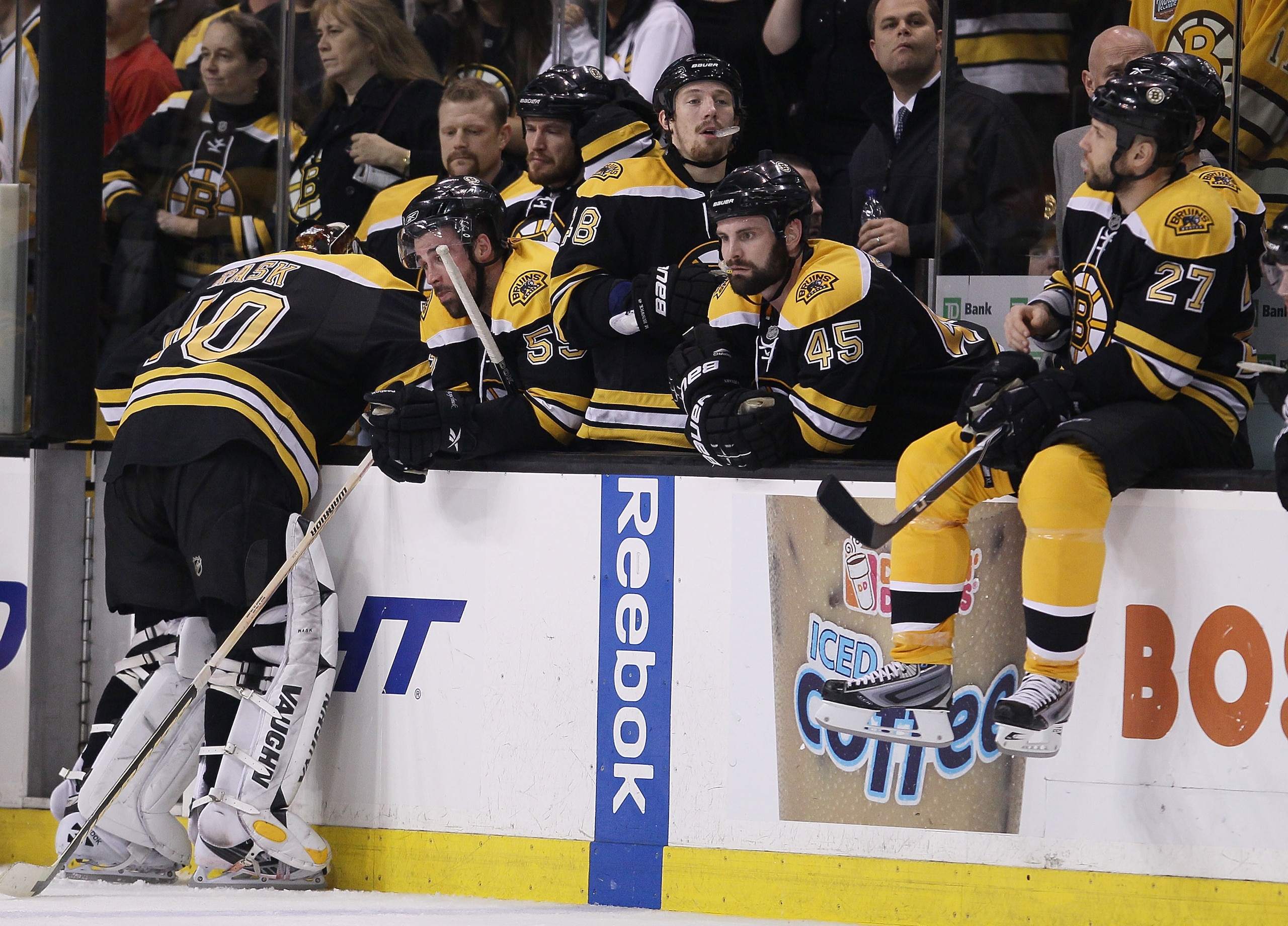
The Boston Bruins knew it was their time to finally see the Eastern Conference Finals for the first time since 1992. After dispatching the Buffalo Sabres in six games, the Bruins sped out to a 3-0 series lead against the Philadelphia Flyers, who themselves surprised the New Jersey Devils in five quick games.
The Bruins won Game 1, 5-4 in overtime on a Marc Savard goal at 13:52. They followed that up with a 3-2 win in Game 2 and a 4-1 win in Philadelphia in Game 3.
Game 4 came down to a 4-4 tie headed to overtime in Philadelphia. One goal from a Boston player and they would book their ticket to the Eastern Conference Finals. However, the hockey gods had other plans as Simon Gagne would put home the winner to extend the Flyers season.
In Game 5, the Bruins came out flat, succumbing to the Flyers, who would win easily, 4-0. Back in Philadelphia, the Flyers would pound out a hard earned 2-1 win to sent the series to Game 7.
In Game 7, the Bruins got back on track, with a goal by Michael Ryder and two by Milan Lucic for a 3-0 lead. Cue the Flyer comeback. James Van Riemsdyk would score to make it 3-1 before the period was out. Scott Hartnell would score 2:49 into the second while Danny Briere tied the game 8:39 into the second.
Each team would go scoreless until Simon Gagne would score with under eight and a half minutes to play to give the Flyers a 4-3 lead. The Bruins could not counter and the Flyers completed the most epic comeback in franchise and possibly NHL history.
The Flyers were down 3-0 in the series and 3-0 in Game 7 and overcame the odds to book a ticket to the Eastern Conference Final.
1. 1982 Edmonton Oilers
11 of 11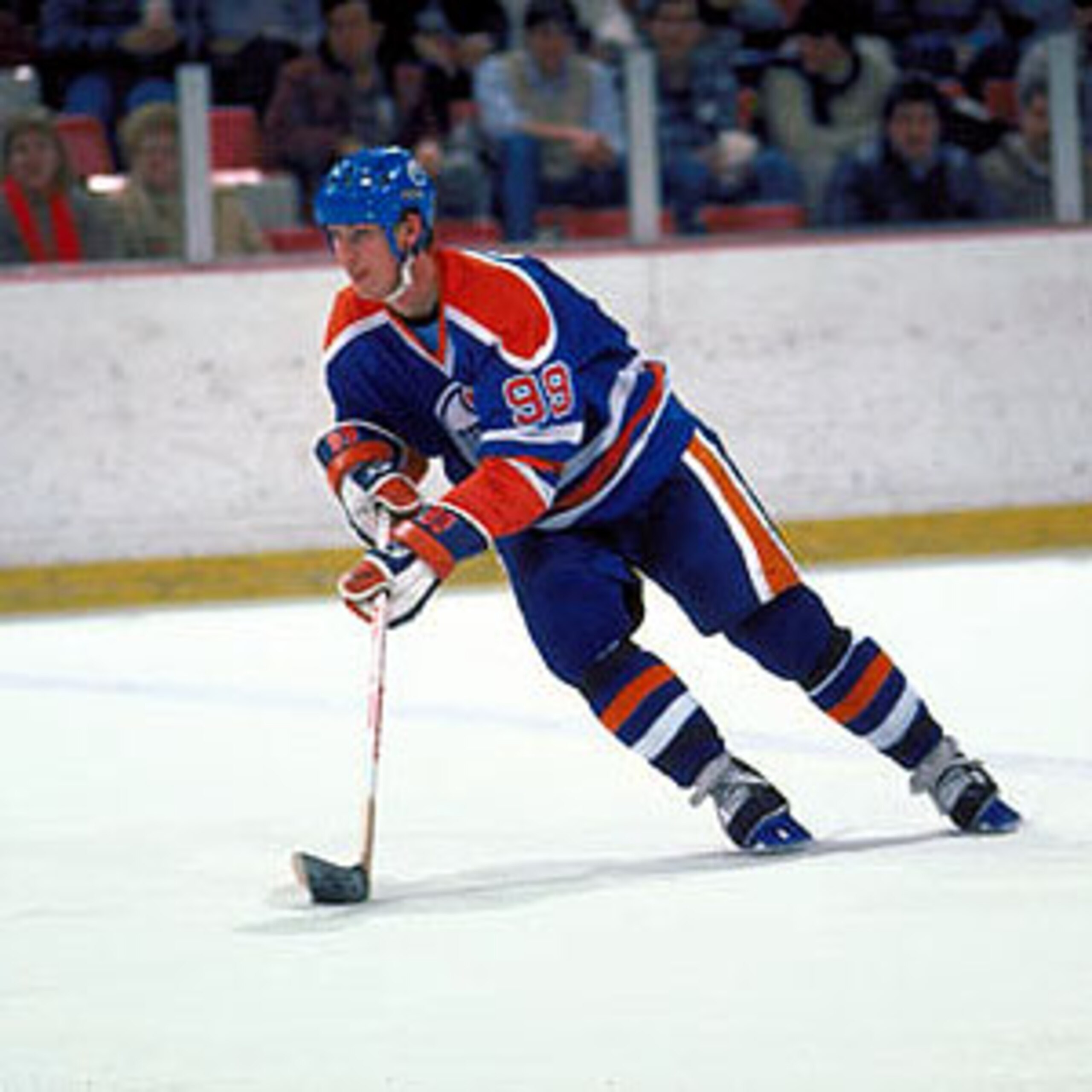
With eight players scoring 50 or more points during the 1981-82 season, the Edmonton Oilers seemed to be a team of destiny despite the New York Islanders dynasty that had captured two straight Stanley Cups. The Oilers finished seven points behind the same Islanders in the standings and the two teams seemed on a collision course for the Stanley Cup.
The Oilers were matched up against the lowly Los Angeles Kings in a best-of-five first round series. The Kings were led by the scoring of Marcel Dionne (117 points in 78 games) and Dave Taylor (106 points in 78 games), with three other players scoring 50 or more points.
The mismatch became more apparent when the Oilers finished a staggering 48 points ahead of the Kings in the standings, with the Kings mere 63 points earning the final playoff spot.
In Game 1, the two teams had a shootout with the teams combining for 18 goals in a 10-8 Kings win, a shocking outcome. The game still stands as the most goals between two teams in a Stanley Cup playoff game.
Game 2 was closely contested as well, with Gretzky scoring at 6:20 of overtime for a 3-2 Oilers win.
Enter the Miracle on Manchester Game in Los Angeles. The Oilers struck first with Mark Messier scoring on a snap shot from close in. The Oilers added to their lead with goals by Gretzky to make it 2-0, Lee Fogolin made it 3-0 with harmless shot off the rush, Risto Siltanen made it 4-0 on a high snap shot that fooled Kings netminder Mario Lessard, and Gretzky scored again to make it 5-0 Oilers after two periods.
It seemed the Oilers had the game and the series where they wanted it.
Cue the miracle.
Jay Wells' point shot made it past a screened Grant Fuhr at 2:46 of the final period to make it 5-1. King's forward Doug Smith would make it 5-2 with a shot through the legs of Oiler defenseman Kevin Lowe that made its way under the crossbar.
On a scramble play, Charlie Simmer tried to jam in a loose puck past Fuhr when Oiler defenseman Randy Gregg inadvertently knocked into Fuhr causing the puck to creep over the goal line to make it 5-3.
Mark Hardy would take a turnover off Gretzky and make a split second shot past Fuhr to make it 5-4 before the Oilers, two men down, would leave King's rookie winger Steve Bozen all alone to backhand the puck through Fuhr for a 5-5 tie.
In overtime, Messier had a chance to win the game with a wide open net but missed on the backhand. That gave the Kings the chance to win the game. With the faceoff in the Kings zone, centre Doug Smith won the puck cleanly off Messier to Daryl Evans whose slapshot eluded Fuhr to the top corner to give the Kings a 6-5 win and a 2-1 series lead.
The Oilers managed to win Game 4 but could not close out the Kings in Game 5 at home, losing 7-3 and having their Stanley Cup Playoff hopes dashed by the upstart Kings.
The teams combined for 50 goals in the five games, an NHL record. It is the second largest upset between two teams with the 48 point differential between them.

.jpg?w=2560 "NFL investigating 2 referees for separate viral exchanges")
.jpg?w=2560 "OBJ Calls Out Giants After Release")
.jpg?w=2560 "Report: Chiefs Contact Hill's Agent")
.jpg?w=2560 "Tyreek makes another cryptic post amid Chiefs rumors")