2011 NHL Playoffs: Western Conference Keys To Victory
The Western Conference playoff picture presents challenges for all teams. With the No. 8 seed being the defending champions, no team has an easy draw.
With no team appearing to have a significant advantage over their opponent, the battle for winning the Western Conference and earning a Stanley Cup appearance may be more about survival than about pure skill. Let's run through what must happen for each of these teams to win what looks to be a war of attrition out West.
Vancouver Canucks: Take Out Chicago Early
1 of 8
With one of the deepest defensive units in hockey, two 40-goal scorers, the Sedin twins who dominate games and a defense that provides ample point production, Vancouver might be the best team in hockey. Their reward: a date with the Chicago Blackhawks, the reigning Stanley Cup champions. The talent level is Vancouver's favor, but few think they are going to steamroll the Blackhawks. Many analysts, including ESPN's Scott Burnside, pick Chicago with the "upset" in this round.
What needs to go right for Vancouver? Basically, they need to squash Chicago and take them out quickly. A long battle against a Chicago team that features one of the better defenses in hockey, as well as a quick-strike offense, could wear Vancouver down past the breaking point. Could the curse of the President's Trophy strike again?
The Blackhawks feature a rookie goaltender in net, Corey Crawford, and the Canucks cannot allow him to channel his inner Antti Niemi. If Crawford gains confidence, the Canucks could be in trouble. Get to him early, get to him frequently and he could fold much like Jonathan Quick did last year.
Even if Vancouver prevails, a long series could spell doom if they have to go up against a team like Anaheim or Nashville in the second round, as those teams will wear you down physically. Get beat up by Chicago and then face a physical foe in the next round?
San Jose Sharks: Get the PK Rolling
2 of 8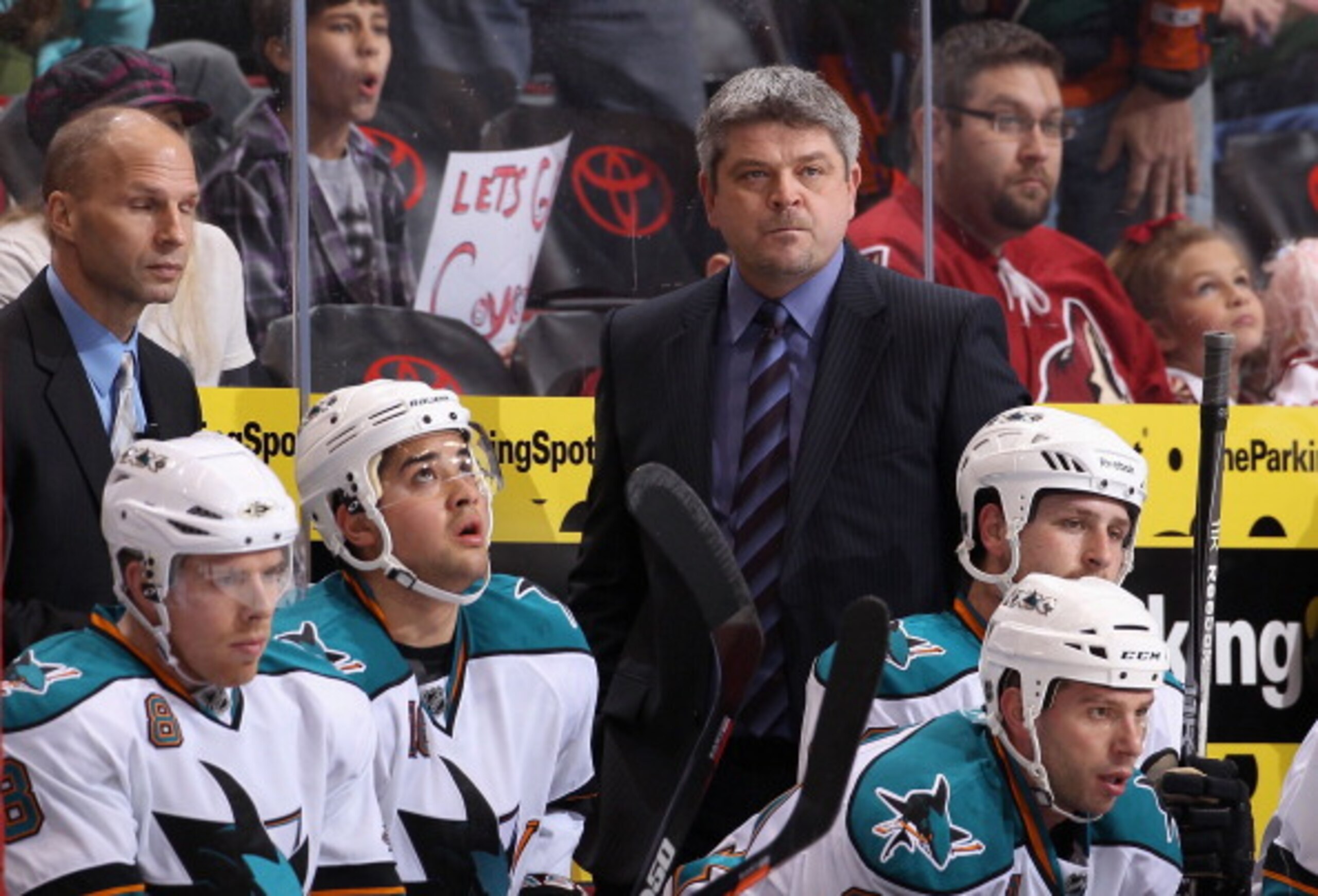
Coach Todd McLellan and his assistants implemented a new PK system in the playoffs last year in order to deal with high-octane power play units. The system worked wonders against the Red Wings, and well against Chicago. However, this year the same system has been a near disaster; the Sharks' PK ranks in the bottom third of the NHL at below 80 percent.
The 1-1-2 PK takes away cross-ice passes inside the defensive zone, but leaves opportunities for shots from the point. Teams like Nashville and L.A. that have defensemen with heavy shots are able to exploit the one forward high scheme. McLellan and staff have not changed the system all year, and the Sharks' fate in the playoffs could very well depend upon how well this scheme works. With so many close games decided by a goal or two, power play goals against can shift the entire series.
The Sharks hope that the return of PK specialist Scott Nichol will cure what ails the Sharks PK. But the Sharks simply need to do a better job of blocking shots, clearing pucks and winning defensive zone face-offs. If not, it may be one-and-done for the Sharks.
Detroit Red Wings: Jimmy Howard
3 of 8
Goaltender Jimmy Howard had a breakout campaign in his rookie year last year. He helped the Red Wings get to the Western Conference Semifinals, but had a lackluster second round, as he and his Red Wings were easily dispatched in five games by the San Jose Sharks. Detroit fans expected Howard to grow his game even more; however, this year may be a small step backwards as opposed to any real progress.
Playing behind a defense that features the likes of Nicklas Lidstrom, Brian Rafalski, Brad Stuart and Nik Kronwall, Howard should post very good numbers. However, a 2.78 GAA and a .908 SA percent are hardly confidence-inspiring, especially when journeyman backup Joey MacDonald has better stats than Howard does.
Detroit is going to score as they have the firepower up front. Their defense will block shots and limit chances, as they always have. The big question is this: will Jimmy Howard step up his game? The Red Wings, if they are going to win the Stanley Cup, need Howard to play better.


Anaheim Ducks: Dan Ellis
4 of 8
You have to feel bad for the Ducks. They went from playoff maybes to the fourth seed and having home-ice in the first round against Nashville, only to have BOTH of their goaltenders go down with injury.
Both Jonah Hiller and Ray Emery are hurt, and the burden falls to Dan Ellis. Ellis is no slouch, having started for Nashville in the past and Tampa Bay to start this year. Since taking over for Hiller and Emery, he has preformed admirably with 2.39 GAA and .917 SA%.
But when you are down to your third goaltender, no matter how well he preformed in limited action with your team, concern has to be there. Anaheim's defense is very good, and they will score plenty of goals; nevertheless, like Detroit, the concern for the Ducks is in net. However, unlike Detroit's Jimmy Howard, Ellis has played in only six playoff games, and that was three years ago with Nashville.
In Ellis' defense, he played well in those playoff games. But with the pressure of taking over for two goalies who are known playoff performers, how will Ellis handle it? Will Anaheim change their game because of Ellis?
We will find out soon enough.
Nasvhill Predators: Power Play Needs To Score
5 of 8
Nashville has trouble scoring. When your team scores 2.6 goals per game, and your leading scoring is Martin Erat with 50 points, you know your team has a problem. To make matters worse, the Predators' power play ranks near the very bottom, scoring on less than 16 percent of their power play opportunities.
Despite Nashville's rock-solid defense and superb goaltending, goal scoring goes down in the playoffs, and for a team that already scores so little, that has to be a serious concern. The Preds can't change the guys they have on the bench, but they can do a better job capitalizing on their power play chances. With scoring opportunities so limited come playoff time, the ability to capitalize when opportunity presents itself is critical.
Blue-liners Shea Weber and Ryan Suter are, quite frankly, studs. They are the engine that runs the Predators' power play, as they both have more points on the power play than any Nashville forward. Opposing teams know this, and they are going to do all they can to limit shots from the point. This presents a challenge, but also an opportunity for Nashville's forwards. They simply need to increase their power play efficiency.
Nashville will defend well and limit scoring chances, but they must capitalize on their power play if they hope to advance throughout the playoffs.
Phoenix Coyotes: Special Teams Are Key
6 of 8
The Phoenix Coyotes are widely praised for their superb coaching staff and creative front office that has molded together a team that is competitive game-in and game-out. So, for a team that has the talent on offense to score five-on-five, and talent on the blue-line and in net that hinders opposing offenses, why are their special teams so poor?
Ranking in both the bottom third of all teams in penalty killing and power play percentage, the Coyotes might be the biggest enigma in the NHL. With big-bodied captain Shane Doan, shifty winger Ray Whitney and big shots from the point in Keith Yandle and Adrian Aucoin, it is amazing that they do not score more on the power play. Yandle finished with the second most points on the team, a feat not easily accomplished by a defenseman. However, aside from Yandle and Ray Whitney, other Phoenix players do not have high power play point totals.
On their penalty kill, the problem becomes a little more apparent. Despite their solid five-on-five defense, their penalty kill suffers from a lack of size on the blue-line. Aside from Derek Morris and Rostislav Klesla, no defenseman weighs more than 220 pounds. The smallish defensemen cause problems when bigger bodied forwards are allowed to crash the net easily on the power play. The smaller Coyotes defense-men are easier to push around which creates more opportunities for opposing offenses.
Coyotes forwards need to do a better job of assisting the defense on the penalty kill, and on the power play defensemen other than Yandle need to present a threat from the point.
Los Angeles Kings: Overcome Significant Injuries To Kopitar and Williams
7 of 8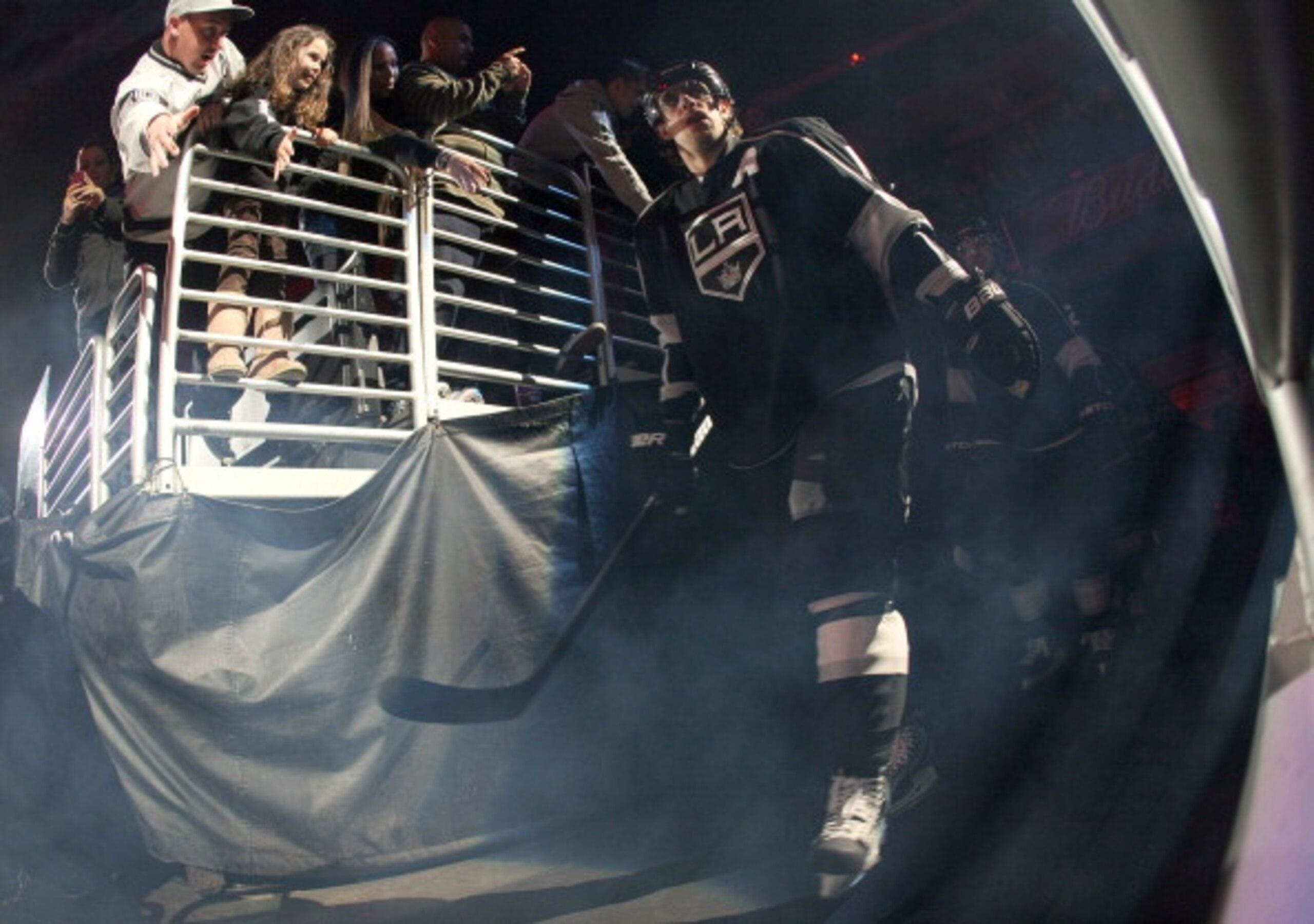
If there's one team out West that has the biggest hill to climb, it's the L.A. Kings. Not only do they draw the red-hot San Jose Sharks in Round One, but they will be without their best offensive player, Anze Kopitar. Kopitar being out hurts, but what makes it hurt even more is that their second best offensive player, Justin Williams, is hurt too. And if he plays at all, it will be at far less than 100 percent. That spells serious trouble for a team that already had trouble scoring during the regular season with those two in the lineup.
This means that L.A. forwards Jarret Stoll, Dustin Brown, Ryan Smyth and Dustin Penner are going to have to really step it up in the goal scoring department. Penner, especially, needs to prove to the Kings that their faith was not misplaced when they traded for him at the trade deadline. Since the Kings traded for him, he has only six points and two goals in 19 games. His effort has been questioned, and he must regain his scoring touch for the Kings to do any real damage.
Hopefully the lack of Kopitar and Williams does not cause coach Terry Murray to overplay young defensemen Jack Johnson and Drew Doughty as the team looks for additional offense. He'll need to rely upon his forwards for consistent scoring and not his young defensemen.
Chicago Blackhawks: Protect Corey Crawford
8 of 8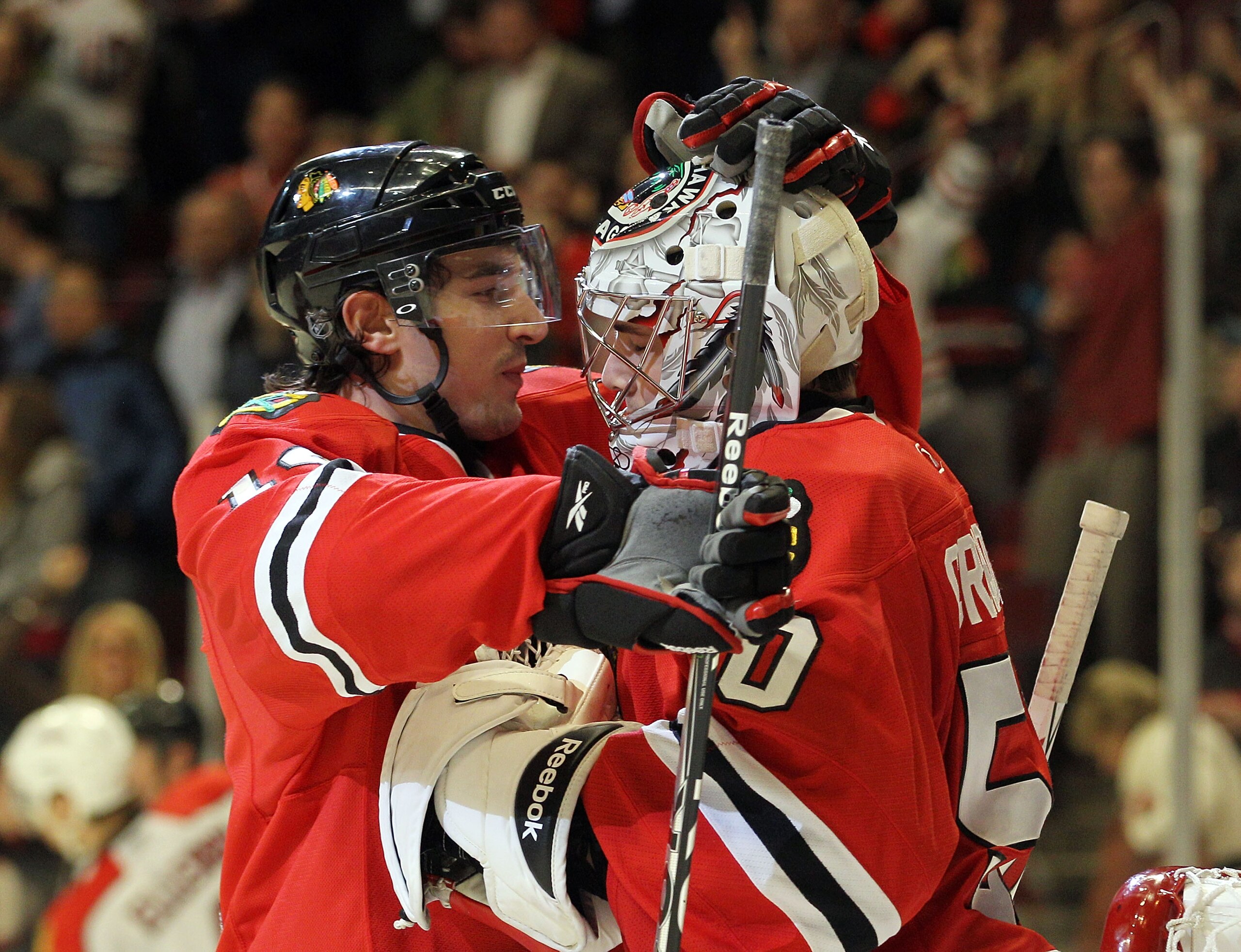
The Blackhawks' magical run to the Stanley Cup last year is credited to the maturation of Jonathan Toews, Patrick Kane and their rock solid defense. Who didn't get much credit last year was rookie goaltender Antti Niemi. Pundits argued that Niemi's success in the playoffs was due to the Chicago defense that cleared rebounds, boxed out forwards, blocked shots and limited scoring chances. Not entirely an unfair analysis, as there is something to having a great defense in front of a young goalie.
Niemi is no longer in Chicago, but another young and promising netminder is: Cory Crawford. Crawford got the job almost by default, as veteran Marty Turco struggled in the early part of the year. Crawford put up wonderful numbers, and should get strong consideration for the Calder Trophy as best rookie. However, again, how much is it Crawford and how much is it the strong Chicago defense? Well, to be honest, I'm pretty sure Chicago doesn't want to find out the hard way by having their defense struggle against Vancouver.
The best thing for the 'Hawks to do is to protect Crawford just like they did Niemi last year. Block shots, clear shooting lanes and clear rebounds. By limiting second chances and allowing Crawford to see the shots, they give their rookie goalie the best chance to ease into the playoffs and possibly channel his inner-Antti Niemi.
If Chicago can do that, there is no reason to think they cannot match their success of last season.

.jpg?w=2560 "NFL investigating 2 referees for separate viral exchanges")
.jpg?w=2560 "OBJ Calls Out Giants After Release")
.jpg?w=2560 "Tyreek makes another cryptic post amid Chiefs rumors")
.jpg?w=2560 "Report: Chiefs Contact Hill's Agent")