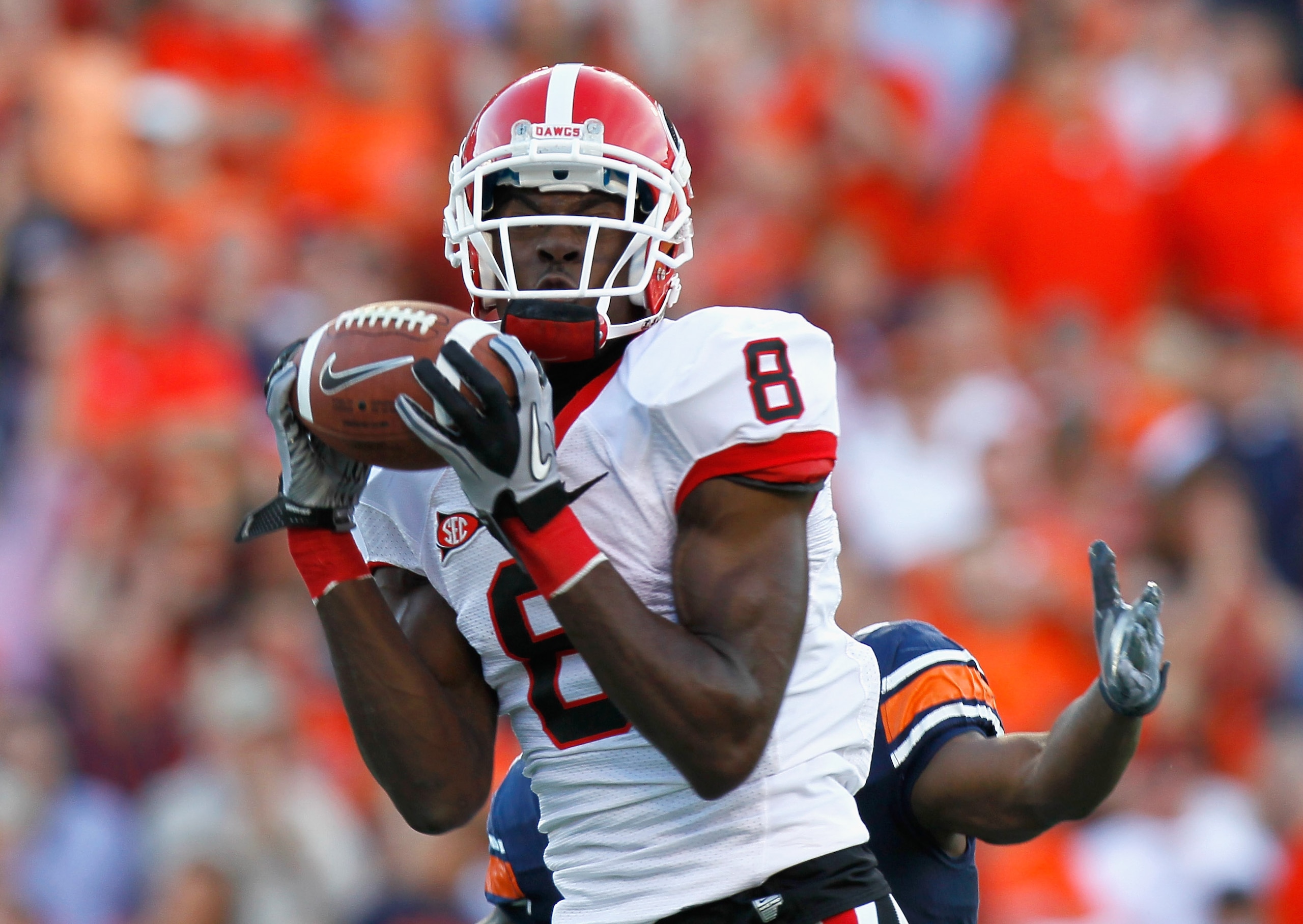

2011 NFL Mock Draft: Will A.J. Green Come Off the Board Earlier Than Expected?
Even though the CBA mess is clouding the NFL draft coverage, we still like to discuss and dissect the football event that falls only behind the Super Bowl in terms of importance among fans.
And what's the best way to do that? Well, with a mock draft, of course.
Today, we're going to take a look at who's going to go where and why.
Will A.J. Green crack the top five or even the top three picks? Will he fall to the bottom of the top 10?
Why don't you check out my latest 2011 NFL Mock Draft and find out.
1. Carolina Panthers: Blaine Gabbert, QB, Missouri
1 of 32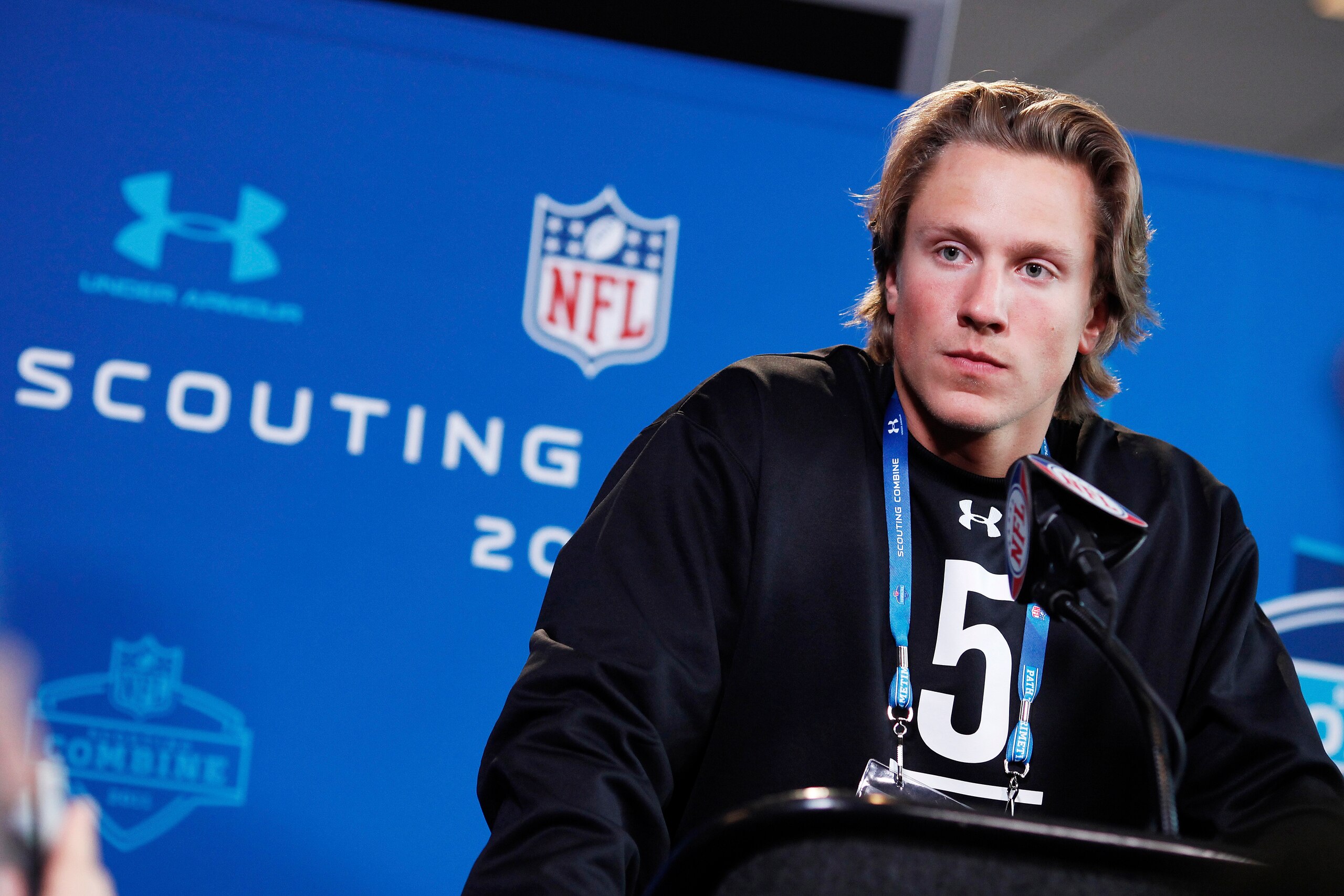
Why Gabbert is Special: At 6'5", 240 pounds, Gabbert looks like your prototypical NFL quarterback. He's quickly risen up draft boards because of his surprising athleticism (4.62 40 at the combine), his solid mechanics, his ability to avoid pressure and his potential to develop into an elite NFL starter.
Why Gabbert Goes Here: He's the No. 1 quarterback on most (though not all) draft boards, and not many teams are willing to take anything other than a franchise QB with the first overall pick. Though Gabbert's still a bit raw and has some accuracy issues, he's seen as the quarterback who's most likely to develop into an elite player in the NFL.
Why Gabbert Fits: Even if Carolina feels comfortable moving forward with Jimmy Clausen, Gabbert makes sense for a few reasons. One, he has more upside than Clausen. Two, the Panthers can always draft, then trade Gabbert. And three, defensive end (Bowers) and defensive tackle (Fairley or Dareus) aren't huge needs for Carolina.
2. Denver Broncos: Marcell Dareus, DT/DE, Alabama
2 of 32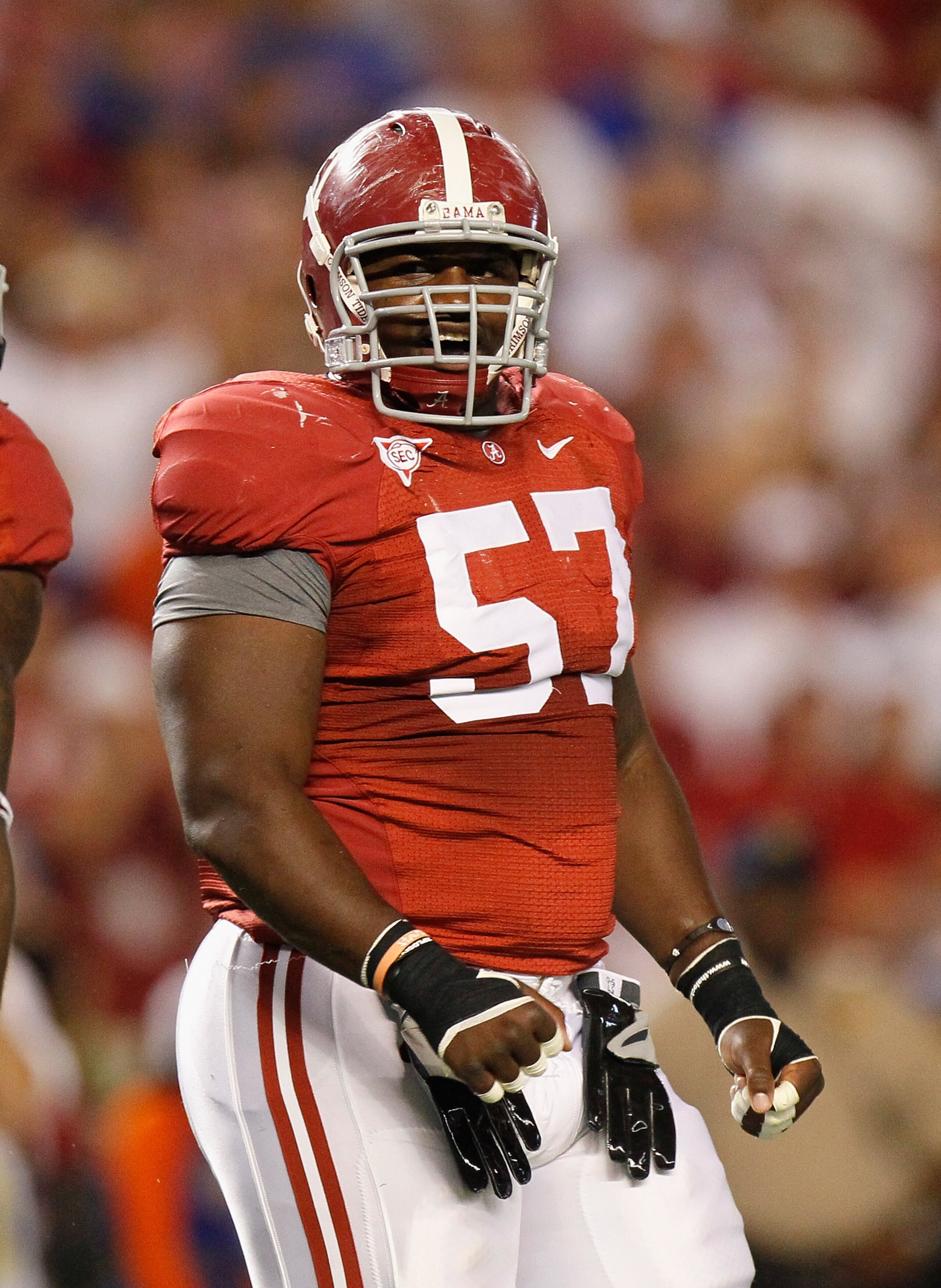
Why Dareus is Special: Dareus possesses the same size, strength and agility as your prototypical NFL defensive tackle. He can stuff the run, rush the passer and even play defensive end in certain 3-4 schemes.
Why Dareus Goes Here: He's one of the premier run-stuffers in this year's draft class and has shown the ability to be an unstoppable force up the middle. Dareus has closed the gap between himself and Nick Fairley considerably, and many analysts/scouts are saying that Dareus will be the better pro.
Why Dareus Fits: The Broncos were atrocious on defense all season, giving up more points than any defense in the league (29.4 per game) and the second most rushing yards (154.6 yards per game). Denver—who ranked dead last in the NFL with just 23 sacks—needs all the help it can get on that side of the ball, and it starts with a guy like Dareus on the defensive front.
3. Buffalo Bills: Nick Fairley, DT, Auburn
3 of 32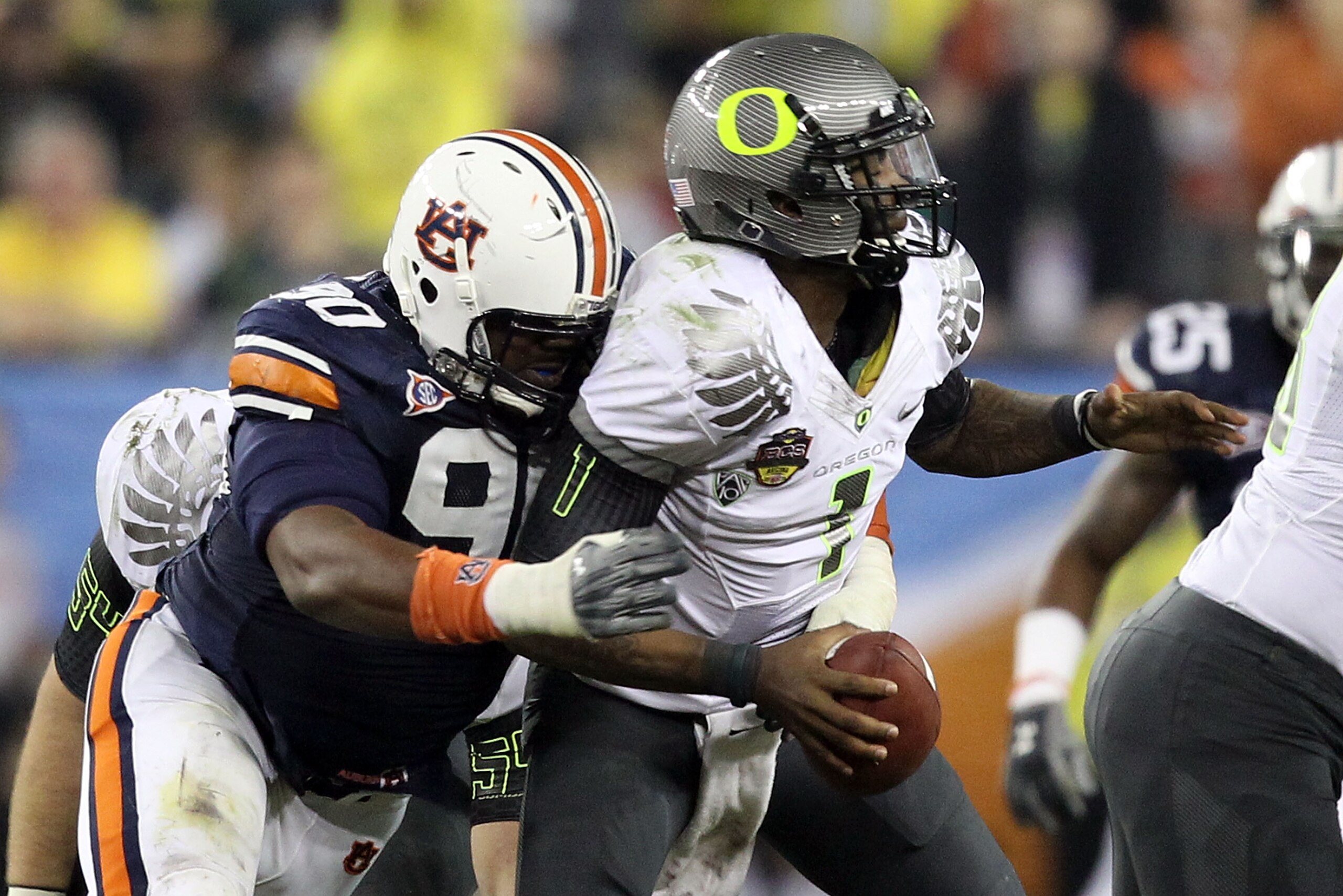
Why Fairley is Special: If it wasn't for Cam Newton, Fairley would be the Auburn player who everyone talked about all season long. He was the most dominant defensive player in the SEC in 2010, racking up 56 tackles and 12 sacks, which is tremendous for a defensive tackle.
Why Fairley Belongs Here: Watch this dude play. He eats up a ton of space in the middle. Though not as polished or dominant, he's this draft's Ndamukong Suh.
Why Fairley Fits: The Bills were worse than awful against the run last season. They gave up a league-worst 169.6 rushing yards per game, which really doesn't even sum up just how bad they were. If Fairley doesn't fit here, then who does?
.jpg?w=2560 "Seahawks Chiefs Football")

4. Cincinnati Bengals: Da'Quan Bowers, DE, Clemson
4 of 32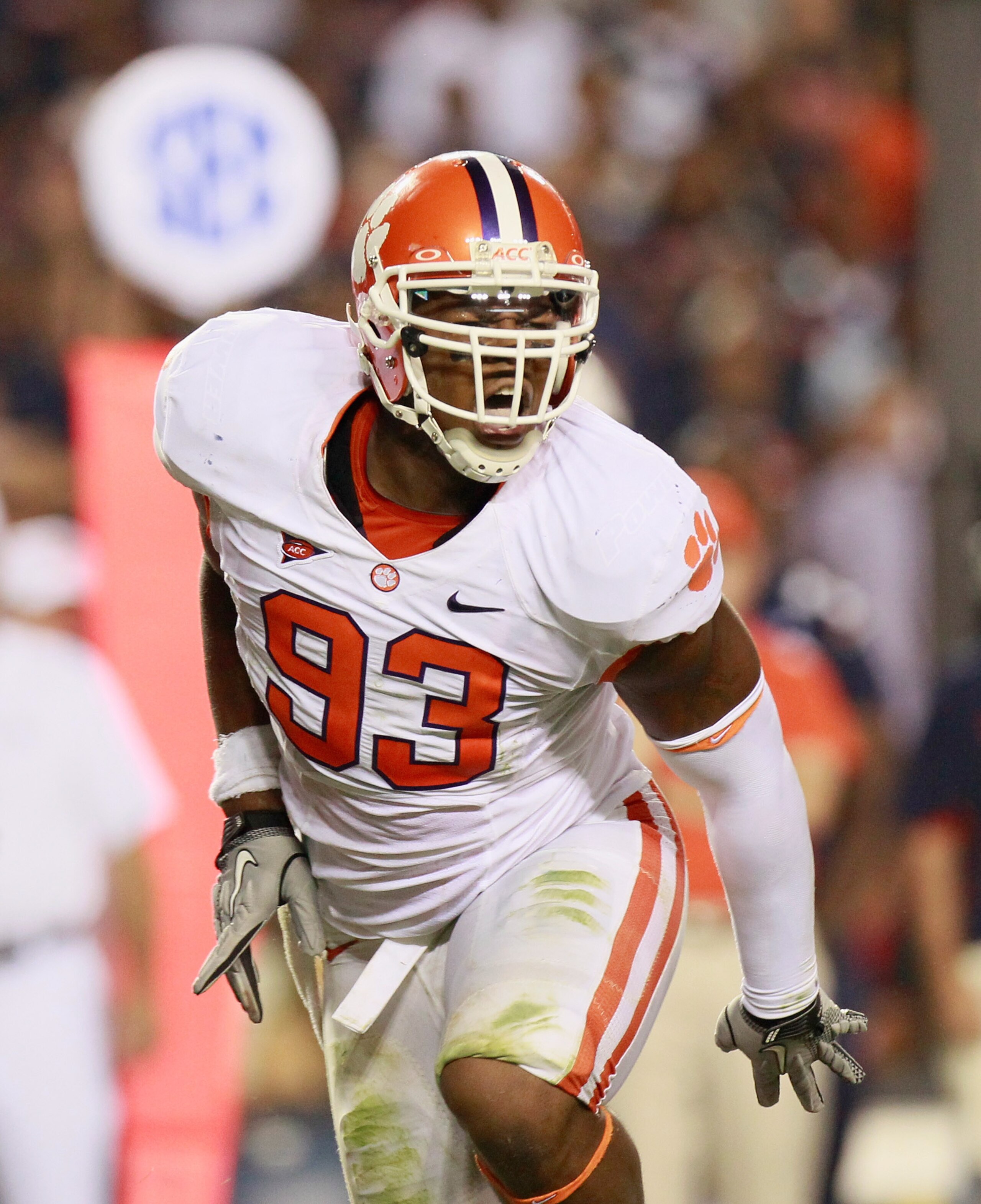
Why Bowers is Special: Size, strength, athleticism, speed, agility; you name it, Bowers has it. He was virtually unstoppable this season, with 24 tackles for loss and an FBS-high 16 sacks.
Why Bowers Goes Here: Bowers will undoubtedly be the first or second defensive end off the board. It's just a matter of how high he goes. I can't see him slipping out of the top five no matter what, though.
Why Bowers Fits: The Bengals could go with a quarterback if they give in and trade Carson Palmer (doubtful) or, A.J. Green (to make up for the loss of Terrell Owens and potentially Chad Ochocinco) if the Panthers don't take him. But they need help on the defensive line. Cincinnati ranked 27th in the NFL with just 27 sacks this season, and Bowers was a sack machine throughout his career at Clemson.
5. Arizona Cardinals: Von Miller, OLB, Texas A&M
5 of 32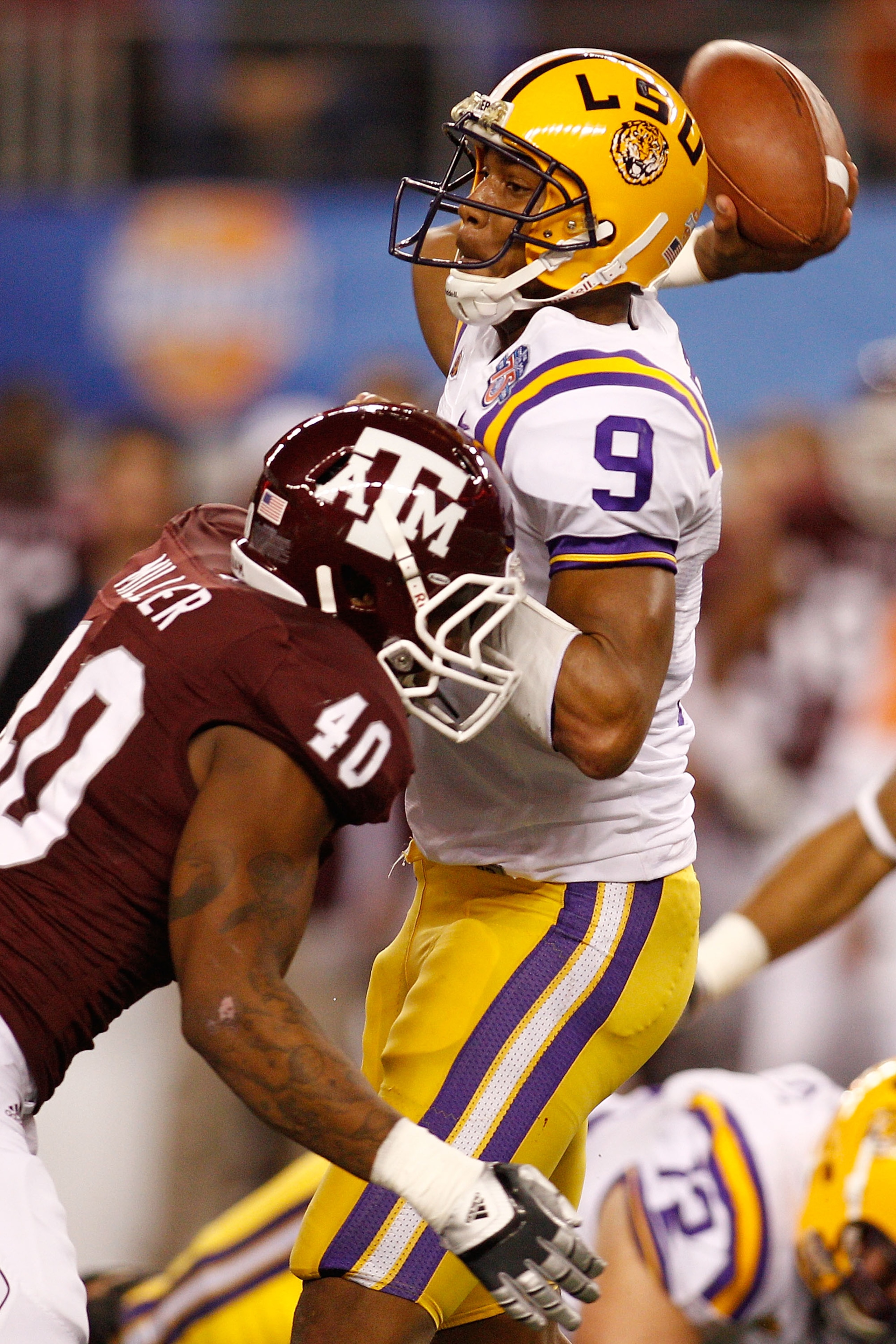
Why Miller is Special: Miller is a phenomenal athlete who possesses that rare ability scouts drool over. Want evidence? He had 16.5 sacks last season. He was also so impressive at the Senior Bowl that ESPN NFL Insider Adam Schefter tweeted that Miller is a lock to go in the top five picks.
Why Miller Goes Here: He's got excellent speed and has proven to be an incredible pass rusher off the edge. Miller has drawn comparisons to guys like Clay Matthews and DeMarcus Ware for his ability to get after the quarterback and could be Arizona's primary target unless the team goes with Patrick Peterson.
Why Miller Fits: Arizona's defense had struggles all over the place in 2010, but arguably the team's biggest concern was its pass rush. The Cardinals had an incredibly difficult time getting to the quarterback, and Miller is one of the best pass rushers in this draft class.
6. Cleveland Browns: A.J. Green, WR, Georgia
6 of 32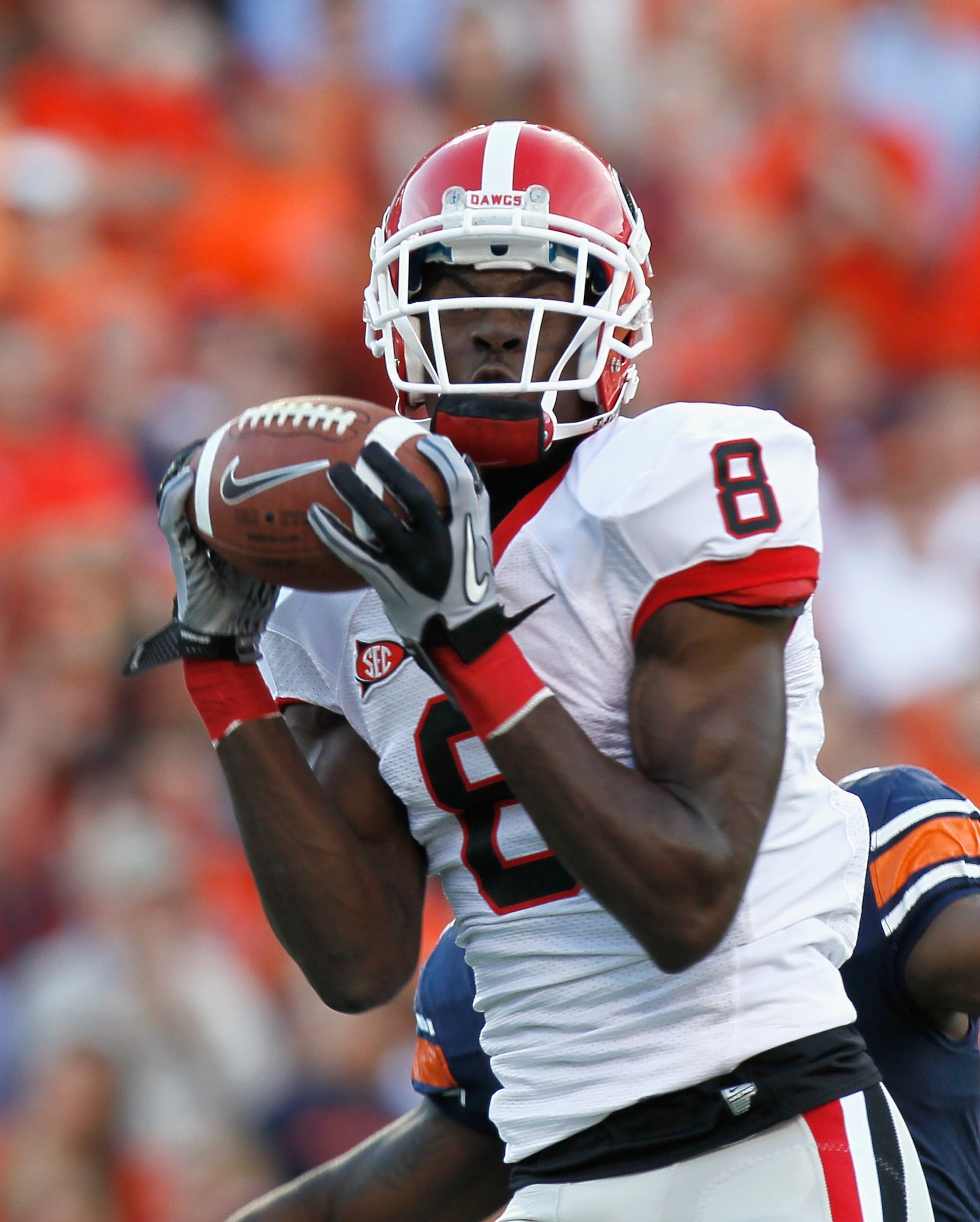
Why Green is Special: Green's the most complete wide receiver prospect since Calvin Johnson. He's the most polished route runner in the last few drafts, and his measurements and production are both off the charts.
Why Green Goes Here: Though Green is the consensus No. 1 wide receiver in the draft, there's a good chance he'll slip to this spot because the five teams who draft ahead of Cleveland have bigger needs elsewhere. Green would be a steal at this point, and the dominoes may fall that way.
Why Green Fits: No Browns receiver had more than 40 receptions or two touchdown catches last season. Think they need to draft a wideout? You betcha. And they'd be absolutely crazy to pass on Green if he's still on the board.
7. San Francisco 49ers: Patrick Peterson, CB, LSU
7 of 32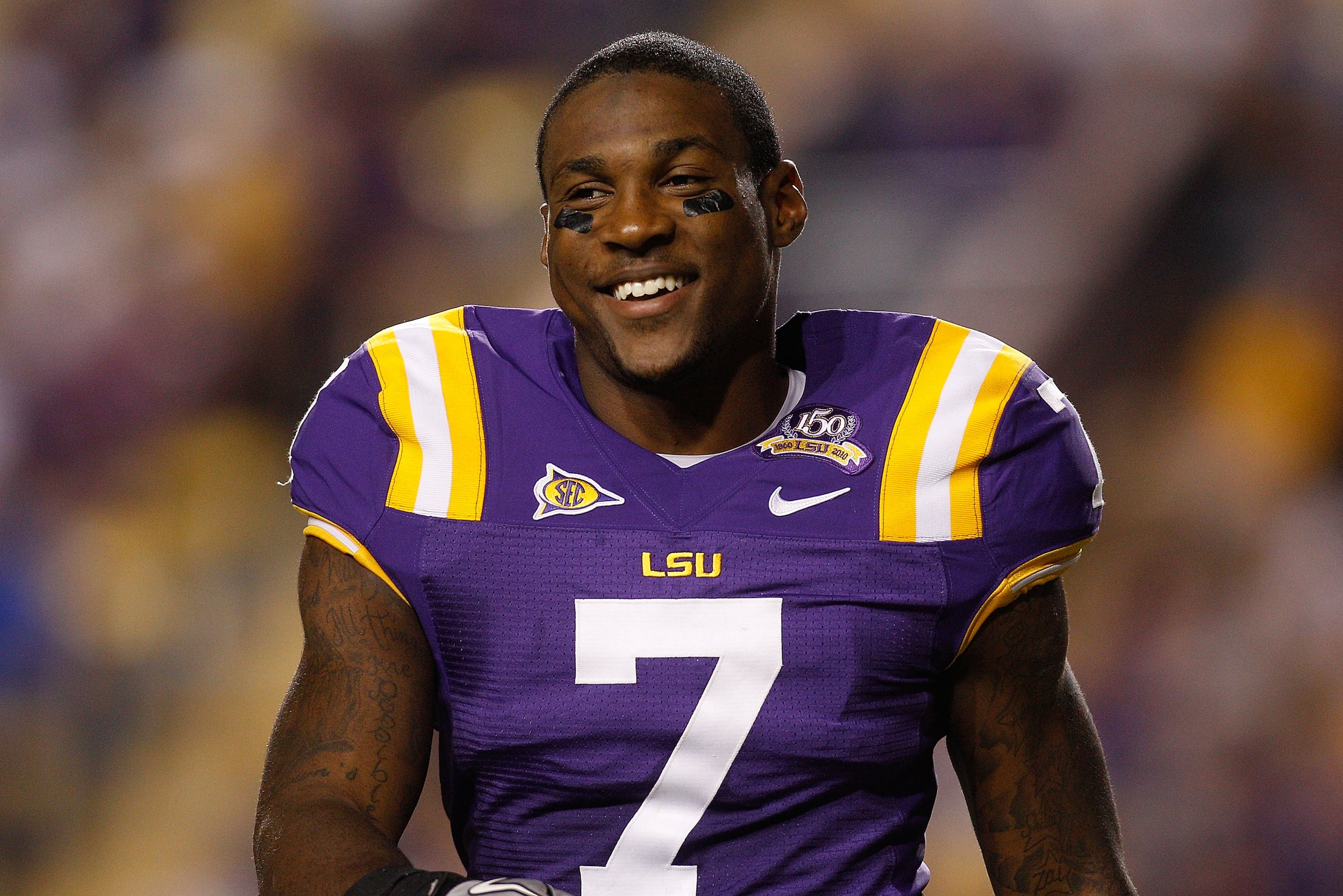
Why Peterson is Special: Peterson is listed at 6'1", 219 pounds, which is monstrous for a cornerback. Teams never threw his way because he was the nation's best shutdown cornerback and one of college football's most feared defensive players. He also showed some amazing skills as a return man this season.
Why Peterson Goes Here: He's not falling past this spot. It's not very often that you find a defensive player who's big enough to play safety but fast/athletic enough to line up at cornerback. From a skills/talent perspective, Peterson is arguably the best overall player in the draft class, and San Francisco would likely jump on him if he's still available.
Why Peterson Fits: Cornerback is one of San Francisco's biggest needs this offseason, and Peterson is clearly the best one in this draft class. Selecting him at No. 7 overall is pretty much a no-brainer.
8. Tennessee Titans: Cam Newton, QB, Auburn
8 of 32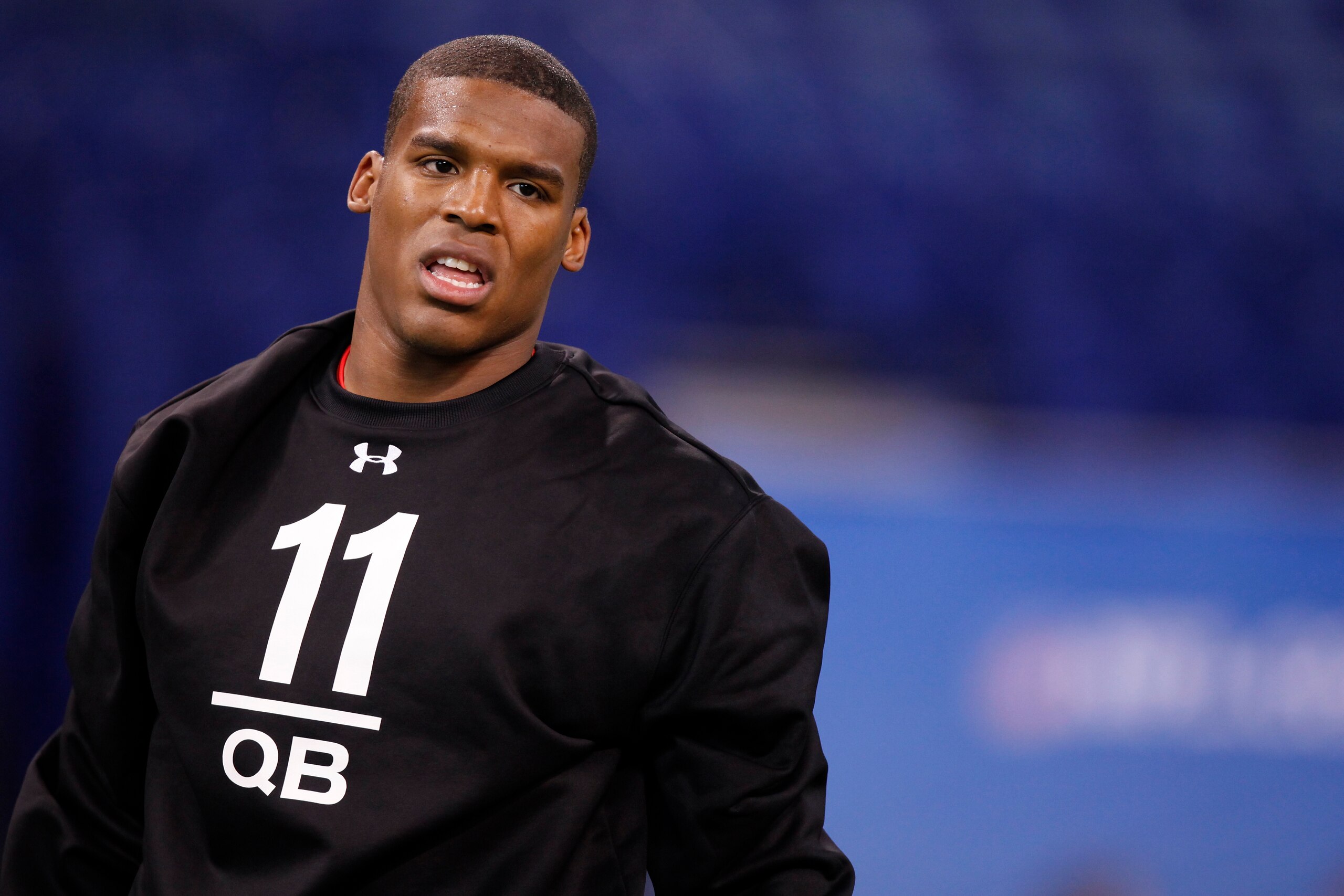
Why Newton is Special: If you watched any college football this season, you know why Newton is so special. He's a Heisman Trophy winner, a national champion and a human highlight reel. Newton is one of the top players, based purely on talent and potential, to enter the draft in years.
Why Newton Goes Here: Newton is an incredible dual-threat quarterback who is a better passer than Tim Tebow was, a more complete quarterback than Michael Vick was and clearly the best running quarterback prospect since Vince Young. Newton's NFL combine performance dropped his stock slightly, but he performed much better at Auburn's pro day and still has a shot at being a top-10 pick.
Why Newton Fits: Jeff Fisher is gone, Vince Young will be traded or released, and the new regime in Tennessee could be looking for a long-term solution at quarterback—Kerry Collins will turn 39 next season (and is currently a free agent). Though the Titans may try to sign or trade for a veteran, I'd expect Newton to get a long look if he's still on the board, and Gabbert isn't.
9. Dallas Cowboys: Prince Amukamara, CB, Nebraska
9 of 32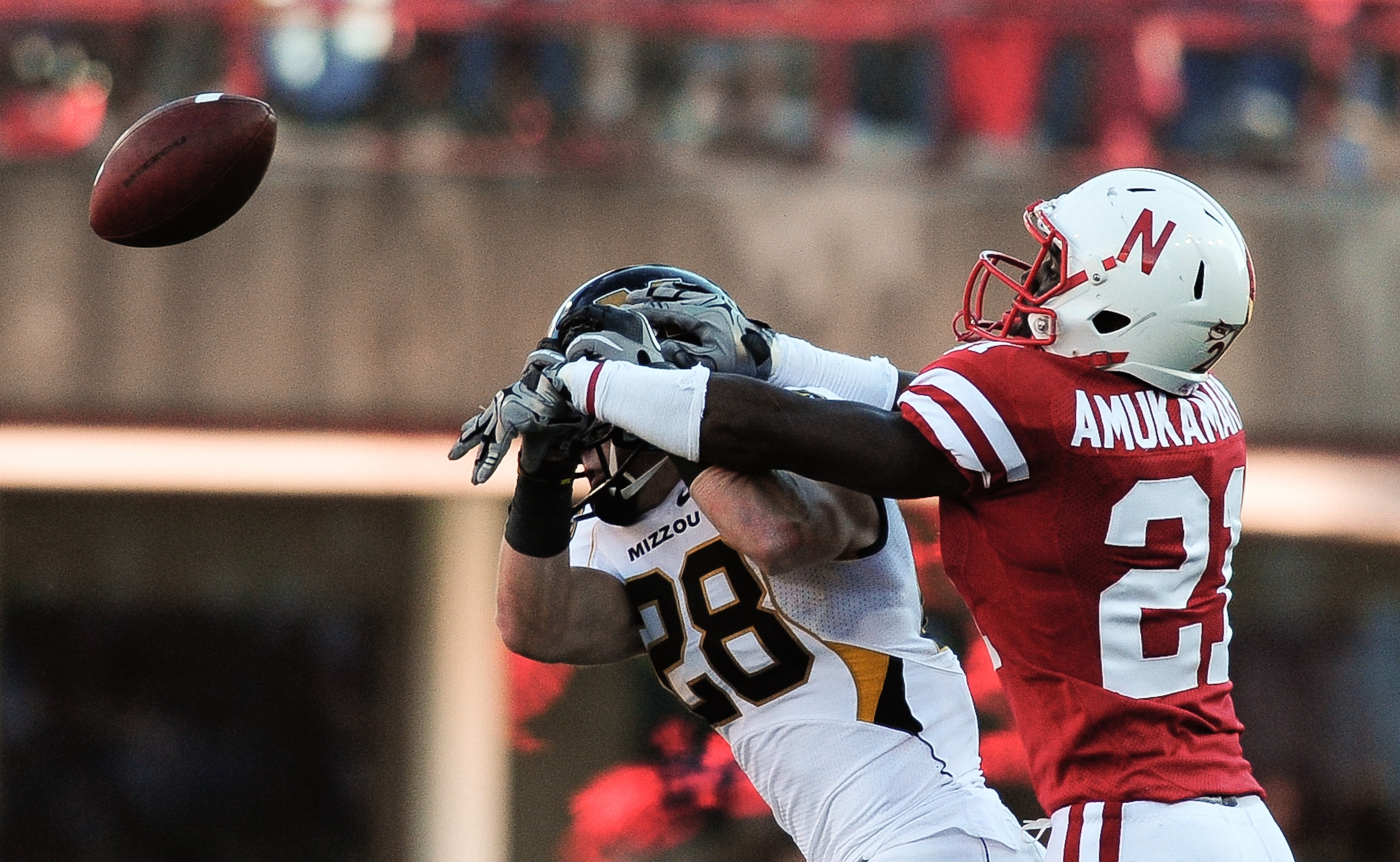
Why Amukamara is Special: Everything about Amukamara makes scouts think he's going to be a superstar. He's quick, he's fast, he has excellent cover skills, and at 6'0", 203 pounds, he's very big for a cornerback. He'd probably be the top cornerback in 99 percent of drafts, but he's rated slightly behind Patrick Peterson in this one.
Why Amukamara Goes Here: One of the most interesting debates of the 2011 NFL draft will be about which cornerback will go first: Amukamara or Peterson. No matter what happens, both of these guys should be franchise corners for the next 10 years. And both will go in the top 10, unless something out of the ordinary happens prior to the draft.
Why Amukamara Fits: Dallas certainly needs some help in the secondary. Mike Jenkins is on his way out of Big D, and Terence Newman's cover skills are clearly diminishing, so Amukamara would be an instant starter for the Cowboys.
10. Washington Redskins: Robert Quinn, DE/OLB, North Carolina
10 of 32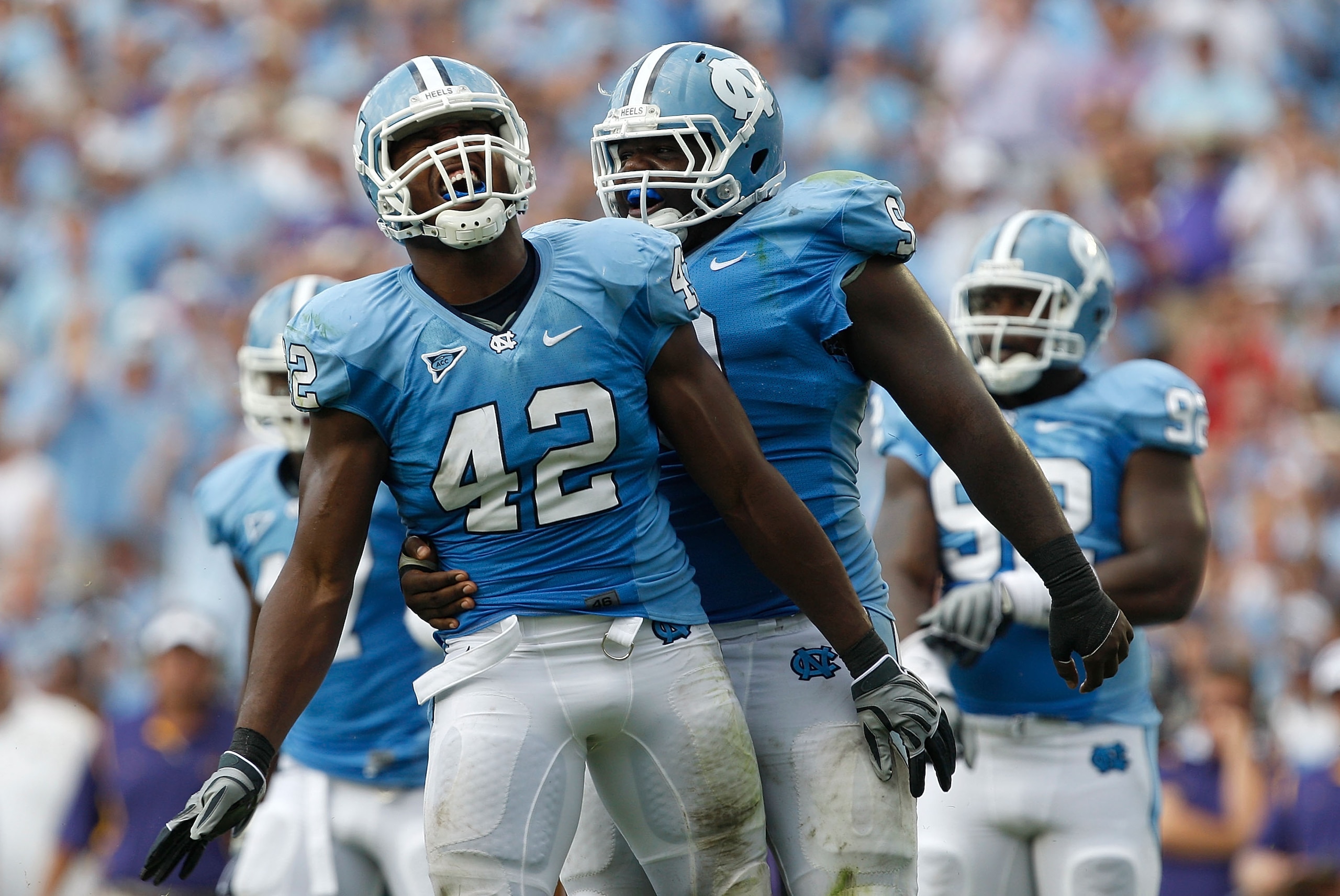
Why Quinn is Special: Although he will not have played football for more than a year when he takes his first NFL snap, Quinn will be an absolute stud. He's one of the draft's best pass rushers—slightly behind Bowers and Miller—and can play either defensive end or outside linebacker.
Why Quinn Belongs Here: Though his absence from football could cause him to slip down the draft considerably, Quinn entered the season as a top-five worthy talent. The Redskins made the switch to a 3-4 last season and could use another pass rusher opposite Brian Orakpo.
Why Quinn Fits: Orakpo was the only player on Washington's defense with more than 2.5 sacks last season, and Andre Carter got the boot from Washington after failing to adjust to the new 3-4 scheme. The Redskins need another player who can get pressure on the quarterback, and Quinn is one of the very best in the 2011 draft class.
11. Houston Texans: Aldon Smith, DE/OLB, Missouri
11 of 32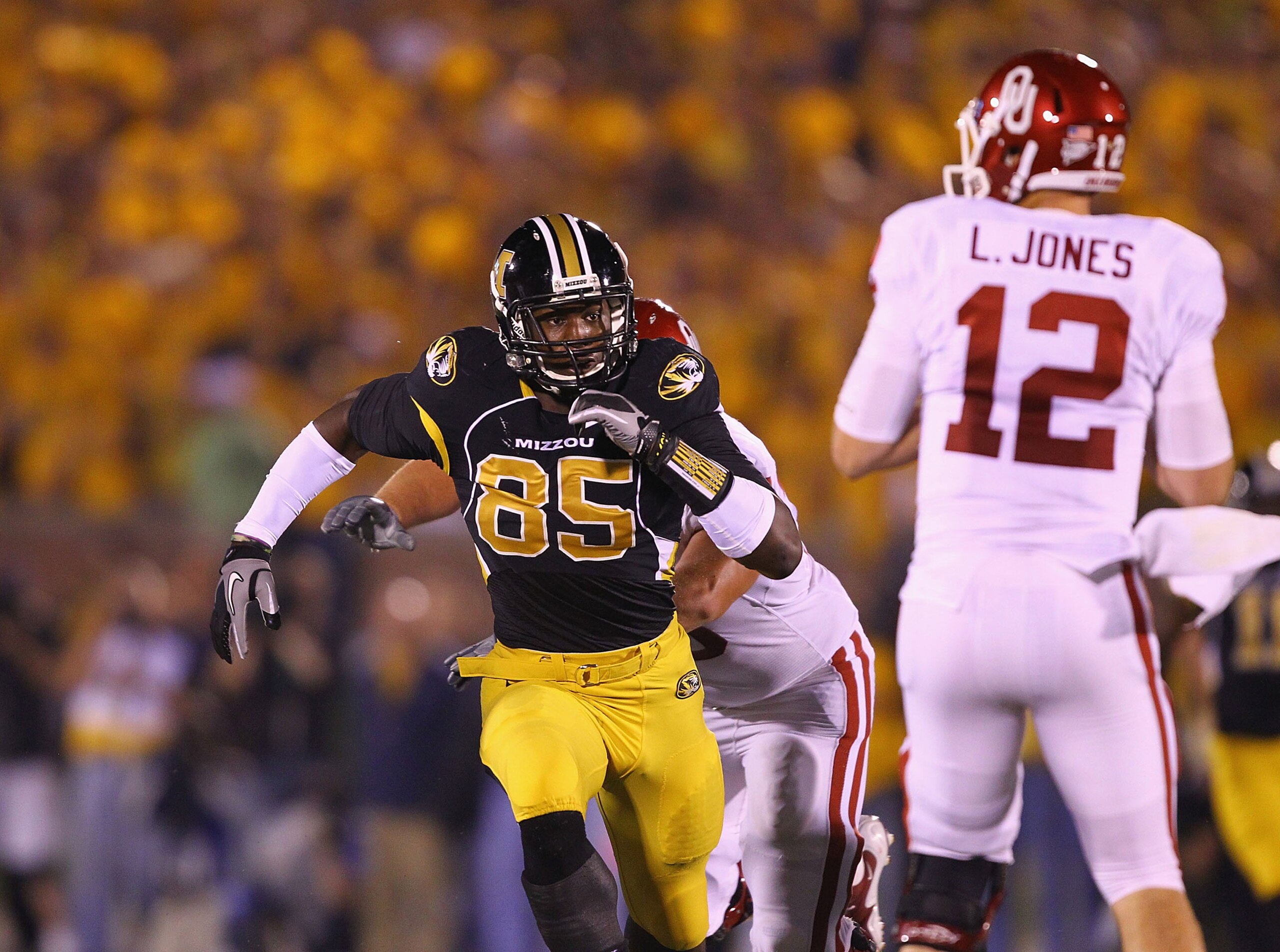
Why Smith is Special: Though durability is a bit of an issue with Smith, he's expected to be the guy that wows everyone with his physical skills. His incredible athleticism and agility give him enough versatility to play end in a 4-3 or outside linebacker in a 3-4 scheme.
Why Smith Goes Here: Again, Smith may be somewhat injury-prone, and it's unclear whether his physical skills will translate to success in the NFL. Though he's one of those "freak of nature" players, he's also still a bit raw and needs to get a better grasp on the game, which could cause him to fall to somewhere around pick 20.
Why Smith Fits: With Wade Phillips coming in as Houston's new defensive coordinator, the Texans will be shifting to a 3-4 scheme. DeMeco Ryans and Brian Cushing will likely switch to inside linebacker, so Smith could provide Houston with an elite outside linebacker who has the ability to rush off the edge.
12. Minnesota Vikings: Cameron Jordan, DT/DE, California
12 of 32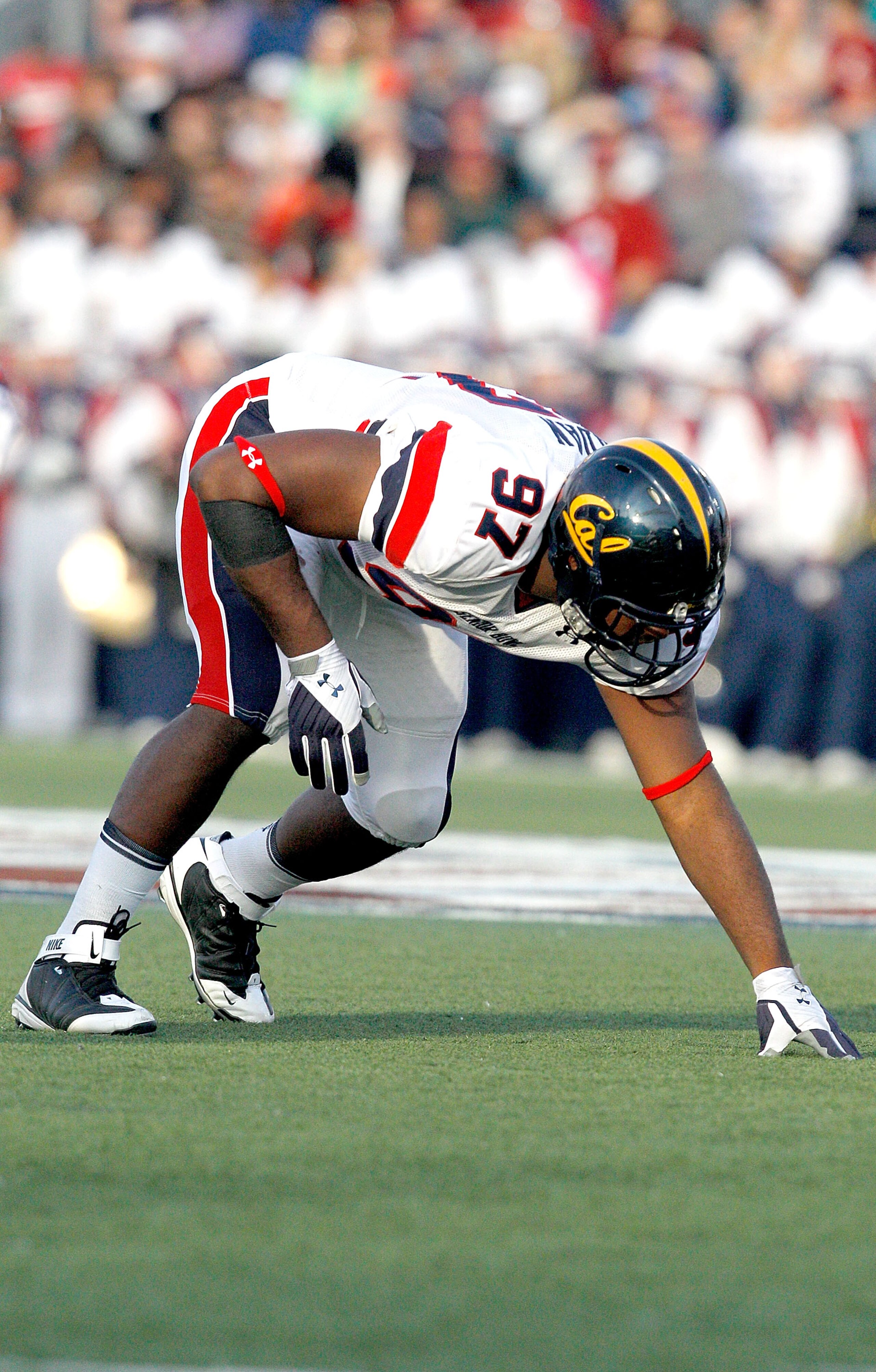
Why Jordan is Special: Jordan's a very versatile defensive lineman with the ability to play end or tackle, depending upon the scheme. He is an absolutely unstoppable pass rusher—either on the inside or the outside—who was arguably the most dominant player during the entire Senior Bowl week.
Why Jordan Goes Here: Jordan has skyrocketed up draft boards after a stellar showing at the Senior Bowl and the NFL combine, going from a late first-rounder to an early-to-mid first-round selection. Though it's unclear whether he'll play defensive tackle or defensive end, his unsure position is seen as a plus rather than a minus.
Why Jordan Fits: Ray Edwards is headed for free agency, and the Vikings could be looking to fill his shoes if he heads elsewhere. If Edwards does indeed bolt Minnesota, I'd expect the team to go with a defensive end one way or another. Just which d-end is the question.
13. Detroit Lions: Tyron Smith, OT, USC
13 of 32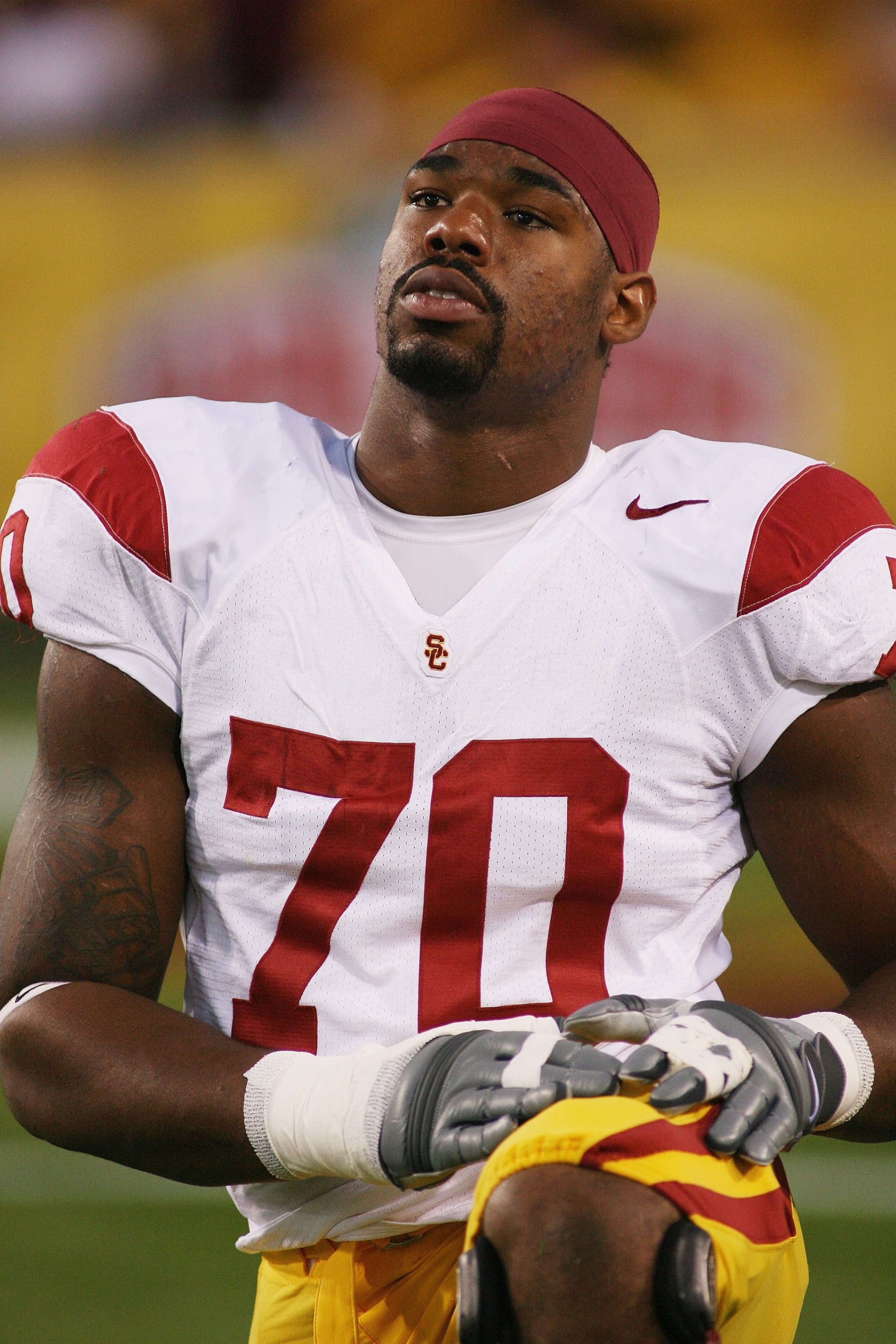
Why Smith is Special: Smith has shown incredible athleticism for an offensive tackle, and he's getting high grades from scouts and analysts across the country. At 290 pounds in college, he was exceptionally quick, and he showed up at the combine at 307 pounds without losing a step.
Why Smith Goes Here: Smith is a bit more of a project than most other offensive tackles in the draft, but he also has more potential than those guys. It wouldn't be a surprise to see him jump ahead of tackles with more impressive resumes, like Nate Solder and Gabe Carimi.
Why Smith Fits: The Lions have to do something to prevent Matt Stafford from getting injured again. That is, they need to give him some more protection. Detroit linemen Gosder Cherilus is coming off an injury, while Jeff Backus turns 34 in September, so the Lions definitely need some help along the offensive line, particularly at the tackle position.
14. St. Louis Rams: Julio Jones, WR, Alabama
14 of 32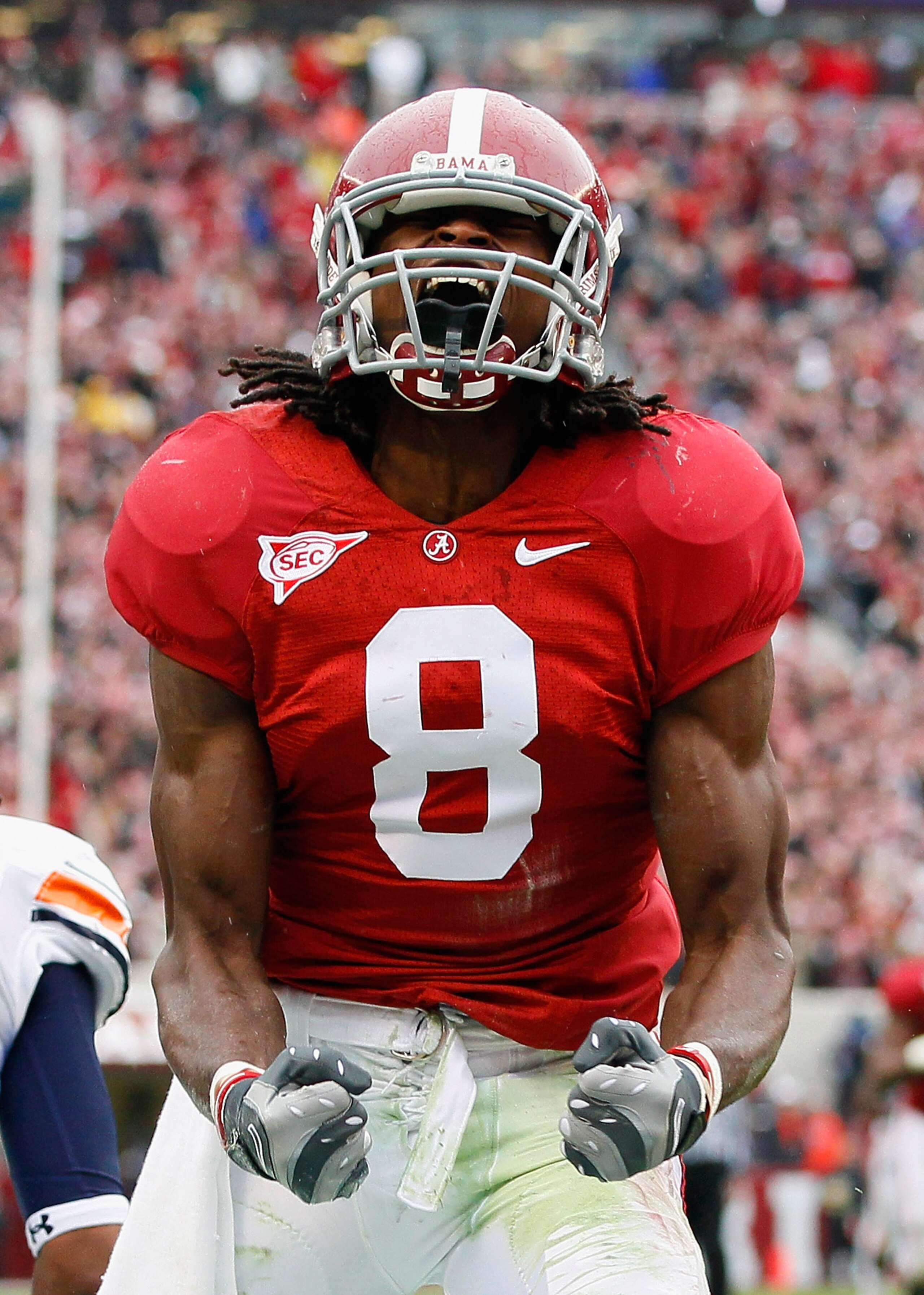
Why Jones is Special: Jones needs to work on his route-running, but he's arguably the most dominant physical presence—not just at wide receiver but in all of college football. He is huge with good hands and great speed. The 6'3", 220-pounder ran a 4.39 40-yard dash at the NFL combine—with a fractured foot.
Why Jones Goes Here: Jones is an incredible playmaker at wide receiver and in the kick return game, but A.J. Green is a better pure receiver, so Jones will be the No. 2 wideout on the board. Jones' draft status all depends on which teams will be looking for a wide receiver, and not many will be looking for one right away once Green is off the board.
Why Jones Fits: Casual NFL fans probably can't even name a single Rams wide receiver, and though Danny Amendola and guys like Brandon Gibson and Danario Alexander are decent, none of them are elite playmakers. Jones could provide a huge, instantaneous lift to Sam Bradford and the Rams wide receiver corps.
15. Miami Dolphins: Mark Ingram, RB, Alabama
15 of 32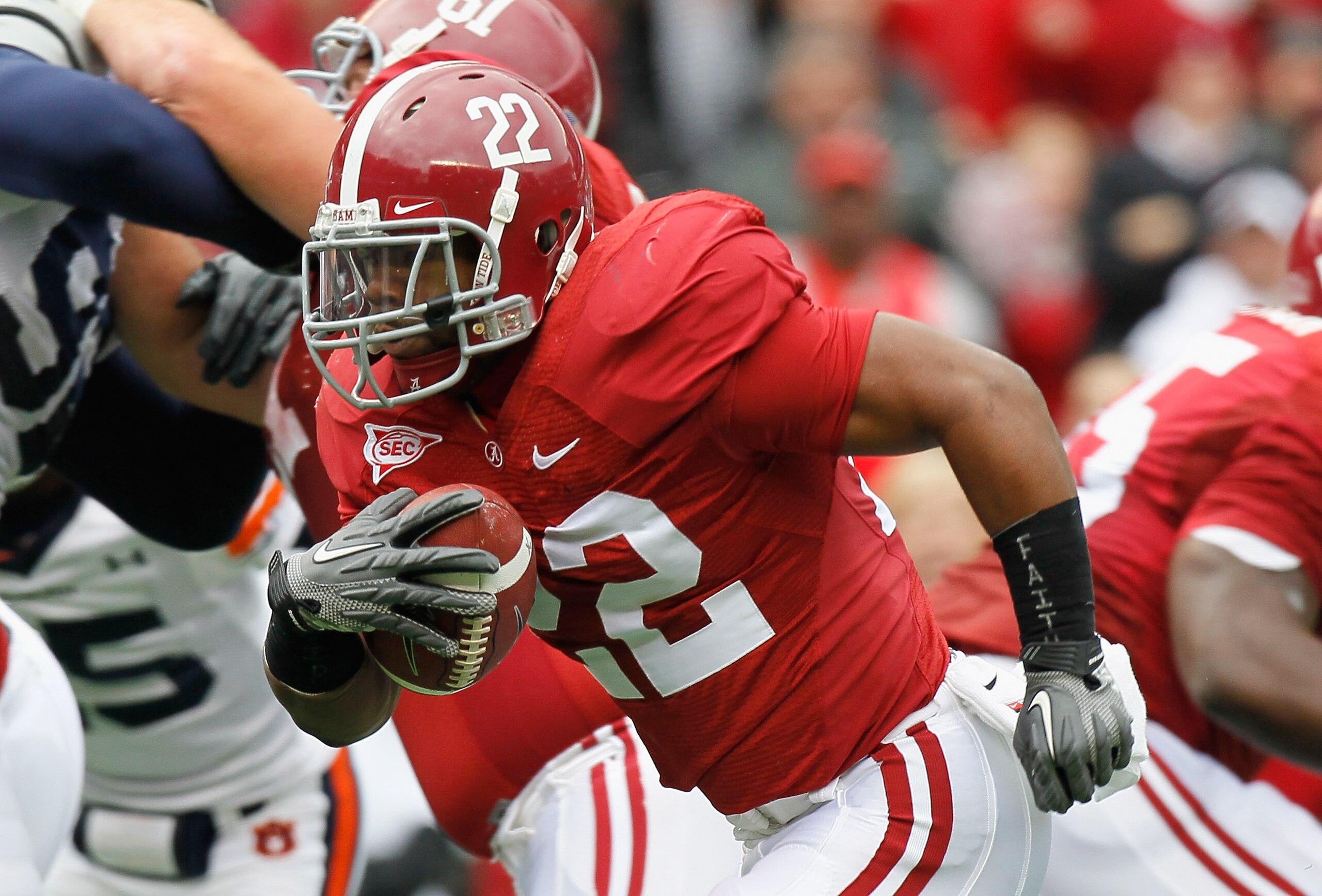
Why Ingram is Special: I believe this guy has had a solid college career. Didn't he win the Heisman Trophy or something like that? Seriously, I think Ingram's production at Alabama speaks for itself.
Why Ingram Goes Here: He's the top running back in this draft, but his NFL combine performance didn't help his draft stock. Actually, Ingram now has scouts thinking he's more likely to be a late-first or early-second-round pick. Still, any team looking for one of the hardest runners in recent college football history will gladly take him.
Why Ingram Fits: Ricky Williams and Ronnie Brown are both free agents this offseason, and there's a chance neither are brought back to Miami. Ingram would be a nice long-term replacement in the Dolphins backfield.
16. Jacksonville Jaguars: Adrian Clayborn, DE, Iowa
16 of 32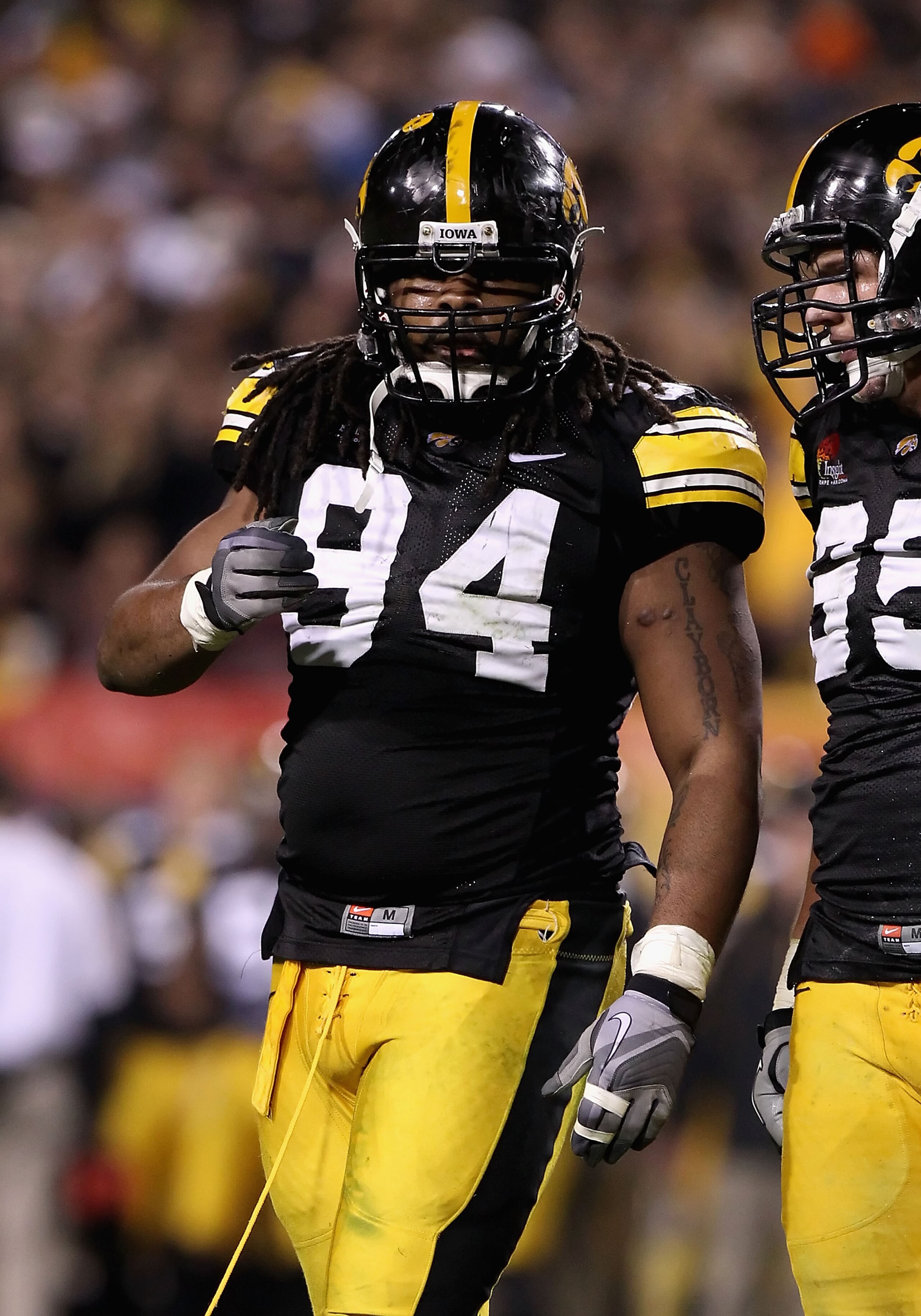
Why Clayborn is Special: His production wasn't really there this year, but scouts love how he measures up. He's 6'3", 285 pounds and has the ability to take over a game when his mind is right.
Why Clayborn Goes Here: The 2011 draft class has some incredibly talented defensive line prospects, and Clayborn is one of them. He's just not the best one of the bunch. Clayborn did, however, put up a very solid showing at the combine for a guy of his size, possibly boosting his draft stock into the upper half of the first round.
Why Clayborn Fits: Aaron Kampman tore his ACL for the second straight season in 2010, and his career is in doubt. Though there are questions about Clayborn's energy and effort, he could still provide Jacksonville with a nice compliment to 2010 first-round choice Tyson Alualu on the defensive front (if he stays focused, that is).
17. New England Patriots: Nate Solder, OT, Colorado
17 of 32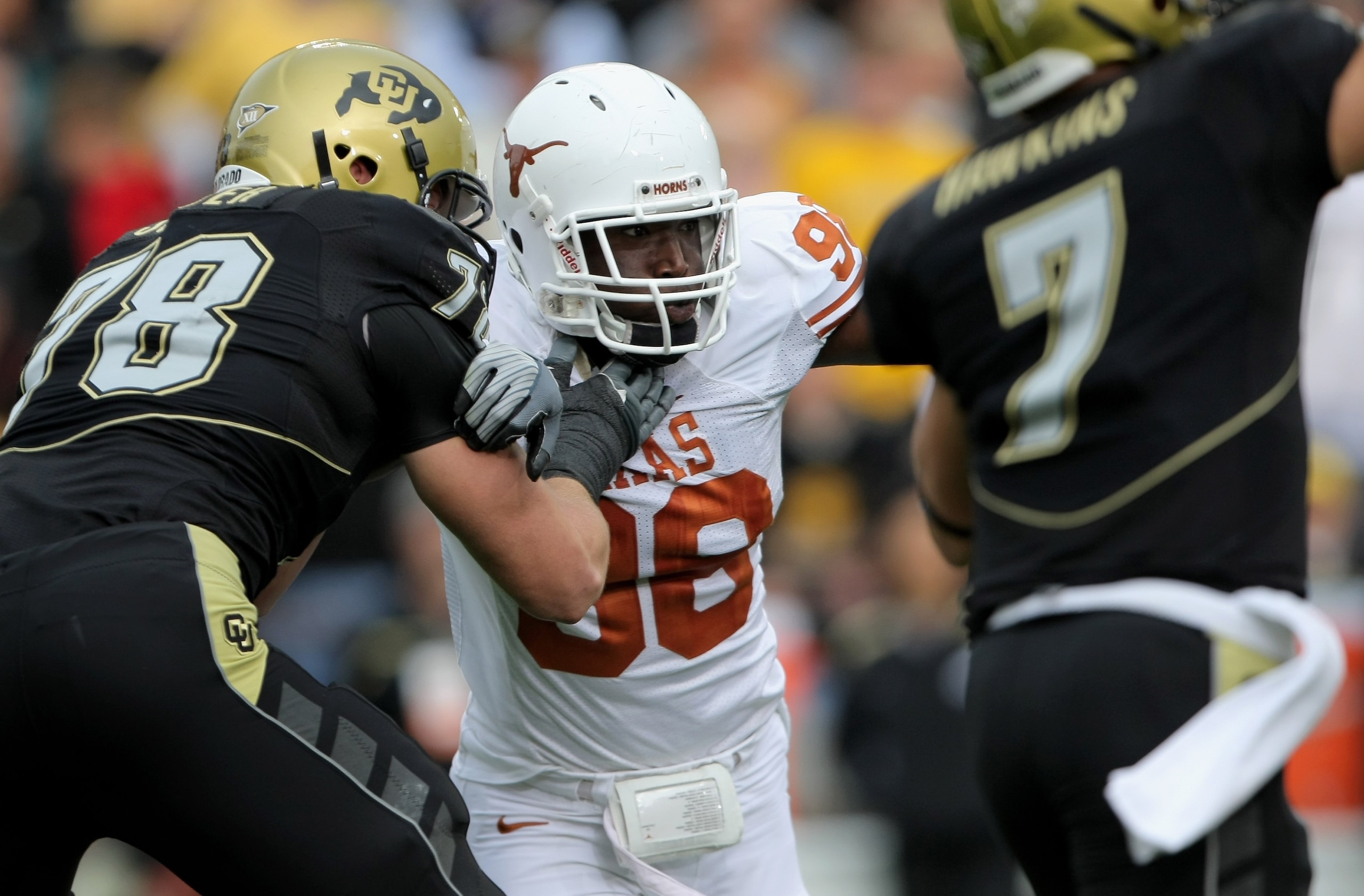
Why Solder is Special: At 6'8'', Solder is massive even for an offensive tackle, and he uses his extreme size and length to his advantage. He was widely recognized as the best offensive line prospect at the Senior Bowl, even though he still is a bit raw, lacks elite strength (only 23 bench press reps) and needs to add 15 pounds or so to his lanky frame.
Why Solder Goes Here: The 2011 draft class is surprisingly thin at the tackle position, but Solder really opened up scouts' eyes at the Senior Bowl. He's got the look and feel of a future franchise left tackle, but how well he develops on the field and in the weight room will go a long way in determining his success.
Why Solder Fits: There's no guarantee that New England will be able to re-sign left tackle Matt Light, and if they don't, then they'll be looking for an OT with one of their four picks in the top two rounds. So, Solder makes a ton of sense here.
18. San Diego Chargers: J.J. Watt, DE/DT, Wisconsin
18 of 32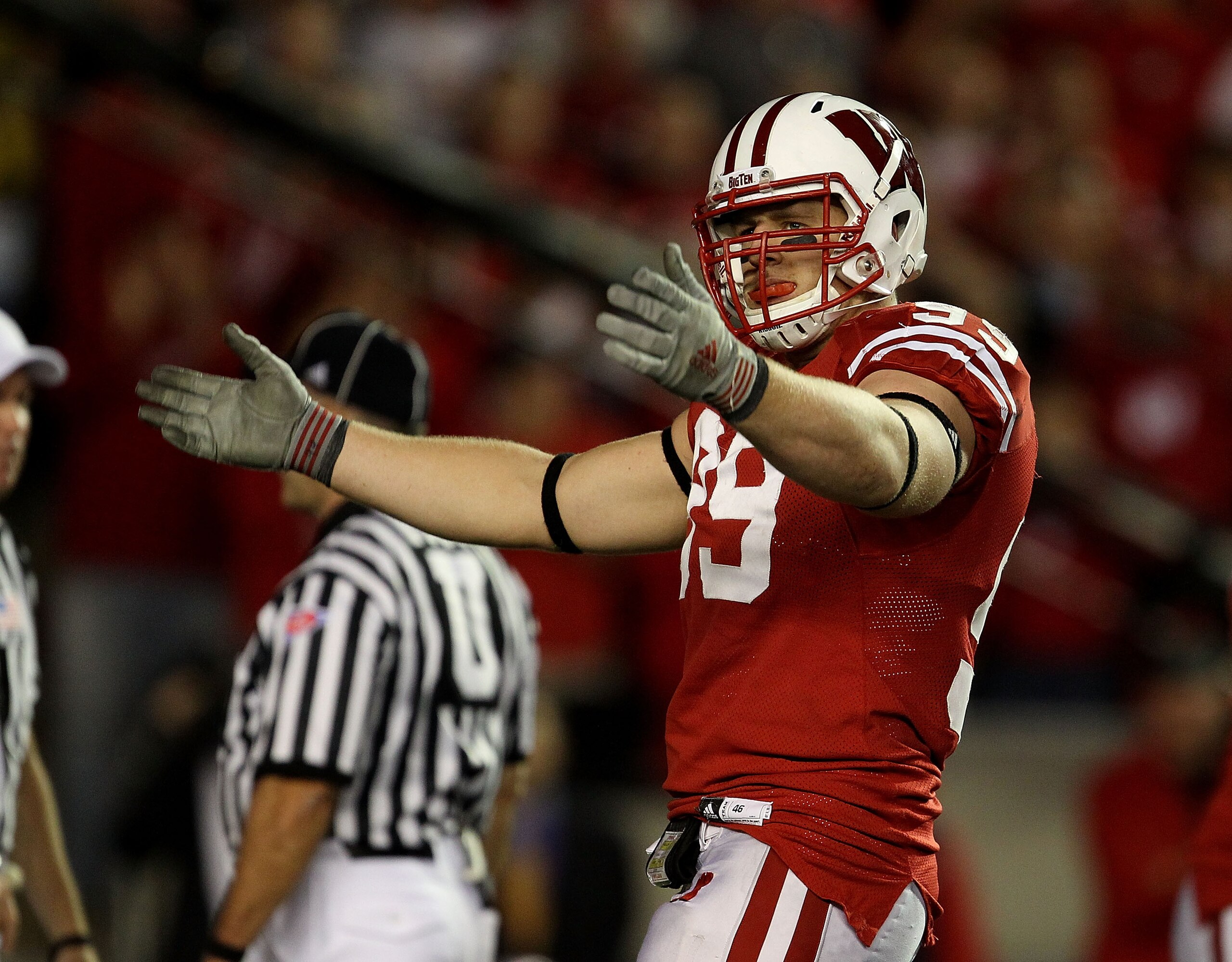
Why Watt is Special: Watt was a force for Wisconsin up the middle this season, registering 62 tackles, two forced fumbles and seven sacks at defensive tackle. His size (6'6", 292 pounds) makes him versatile enough to play end or tackle depending upon the scheme.
Why Watt Goes Here: His ability to play multiple positions makes him an attractive option for plenty of teams in the first round. Watt might be off the board by this point, but if he's not, he could go here to San Diego, which is looking to upgrade at the defensive end position.
Why Watt Fits: Jacques Cesaire is currently a free agent, and he's really struggled over the last season or two anyway. Watt is in the top 10 of many mock drafts, but this is probably a more likely landing spot on a Chargers team that's looking to get younger and quicker along the defensive front.
19. New York Giants: Mike Pouncey, OG/C, Florida
19 of 32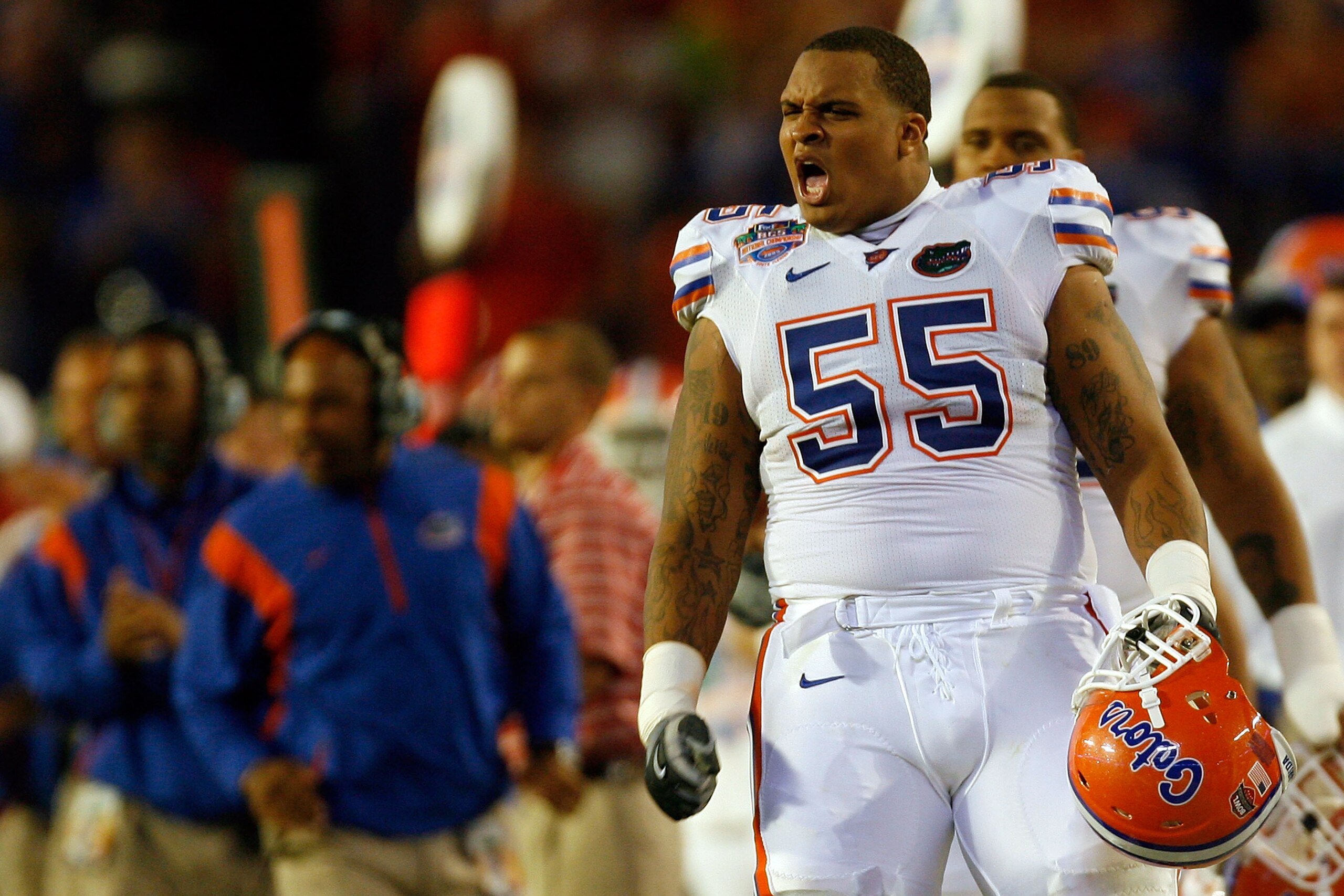
Why Pouncey is Special: The apple doesn't fall far from the family tree. Pouncey has a similar playing style to twin brother, Maurkice, who is currently Pittsburgh's starting center and made the Pro Bowl in his rookie season.
Why Pouncey Goes Here: The Giants are looking to upgrade their interior line, and Pouncey is one of the very best, with an NFL-ready skill set. He could and should be picked higher than this, but he could still be on the board because interior linemen generally aren't selected in the top portion of first round.
Why Pouncey Fits: When the Giants are at their best, it's because the team is able to pound the rock and open up the passing game for Eli Manning. If they want to do that in 2011, they'll need to improve their interior line play, which Pouncey would do.
20. Tampa Bay Buccaneers: Ryan Kerrigan, DE, Purdue
20 of 32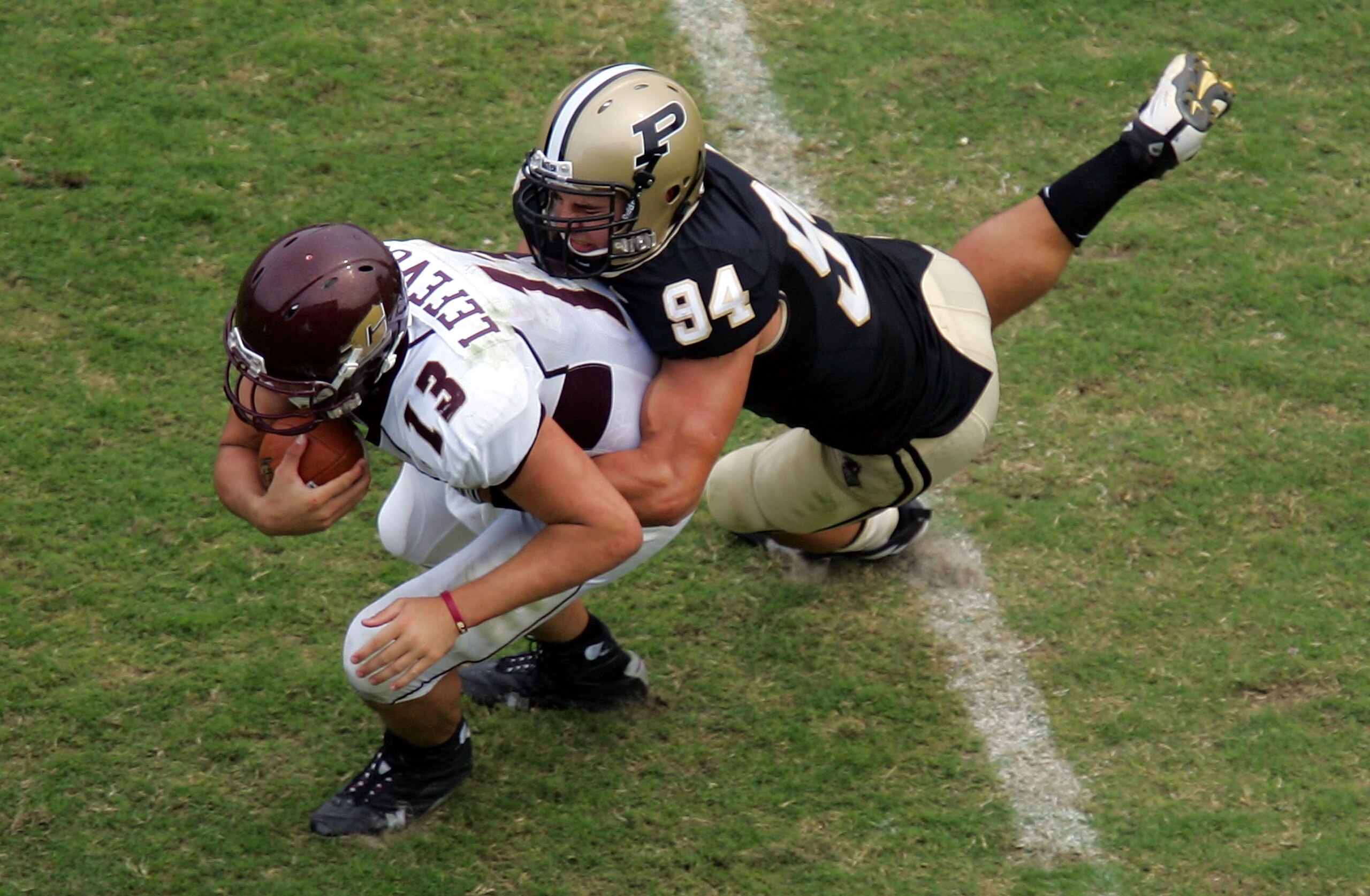
Why Kerrigan is Special: Kerrigan was a monster all season long at Purdue, raking in 12.5 sacks and leading the nation with 26 tackles for loss. His versatility could allow him to play defensive end in a 4-3 or outside linebacker in a 3-4 scheme.
Why Kerrigan Goes Here: Kerrigan is known for his non-stop motor and ability to get after the quarterback. At just 259 pounds, he's similar to the Colts' Robert Mathis. He ran a 4.67 40 at the NFL combine and is one of the quickest defensive ends you'll find in the 2011 draft class.
Why Kerrigan Fits: The Buccaneers need a compliment alongside Gerald McCoy on the defensive line. Kerrigan isn't a bad pick here, as he has the potential develop into a nightmare of a pass rusher at the NFL level.
21. Kansas City Chiefs: Akeem Ayers, OLB, UCLA
21 of 32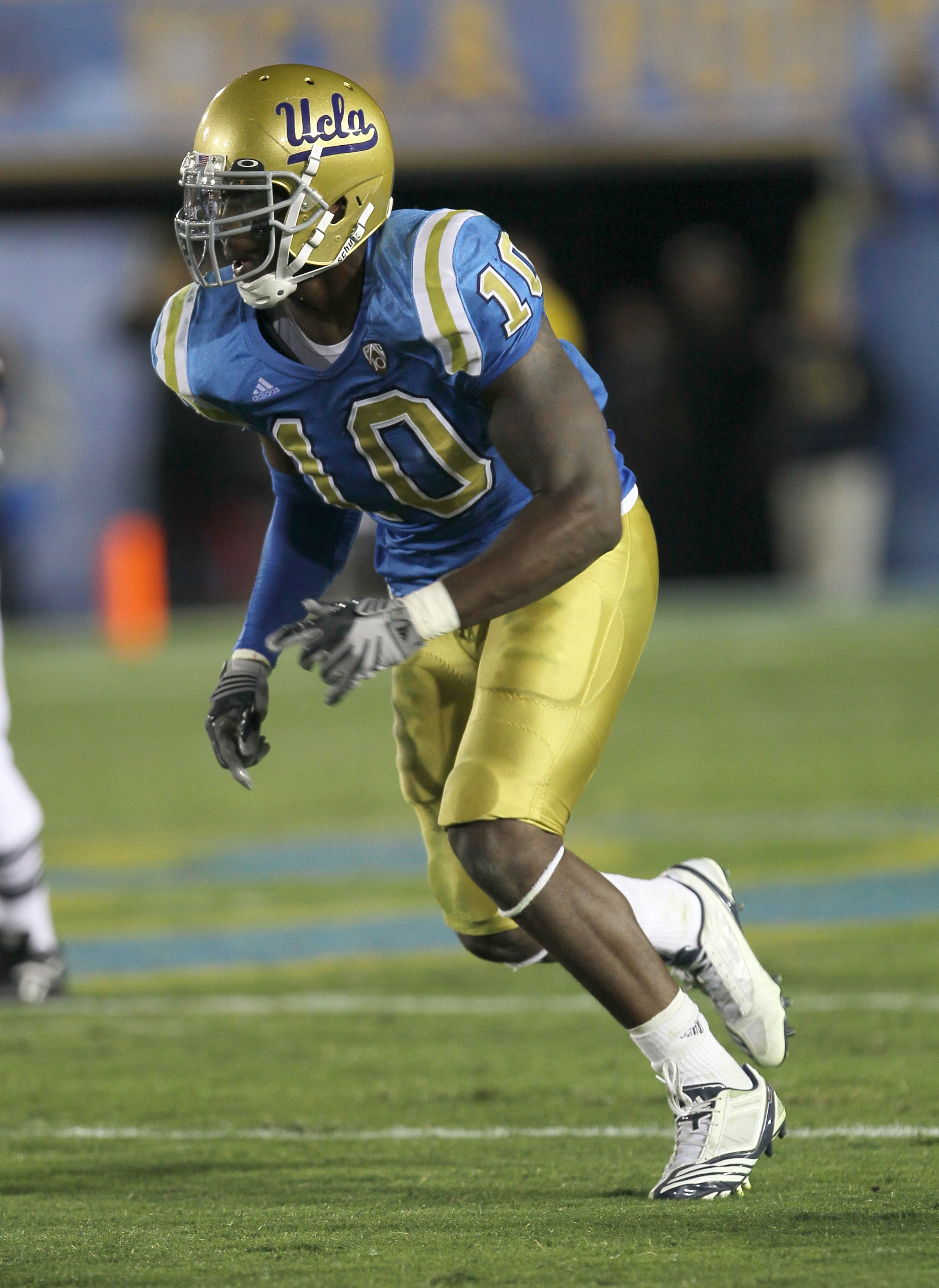
Why Ayers is Special: Ayers was one of the nation's most highly-touted recruits coming out of high school, and his physical attributes rank among the best in this draft class. He's got good size, he's quick and he excels as a push rusher.
Why Ayers Goes Here: Ayers would benefit from playing on a team with a 3-4 scheme because he'll make his money by applying pressure to the quarterback off the edge. But he also is versatile enough to play multiple positions in several different schemes.
Why Ayers Fits: Tamba Hali was a beast for Kansas City this season, but the Chiefs didn't have much of a pass rush outside of the former Penn State player. Ayers would provide them with another outside rusher, one who would really take some of the pressure off of Eric Berry and Brandon Flowers in the secondary.
22. Indianapolis Colts: Gabe Carimi, OT/G, Wisconsin
22 of 32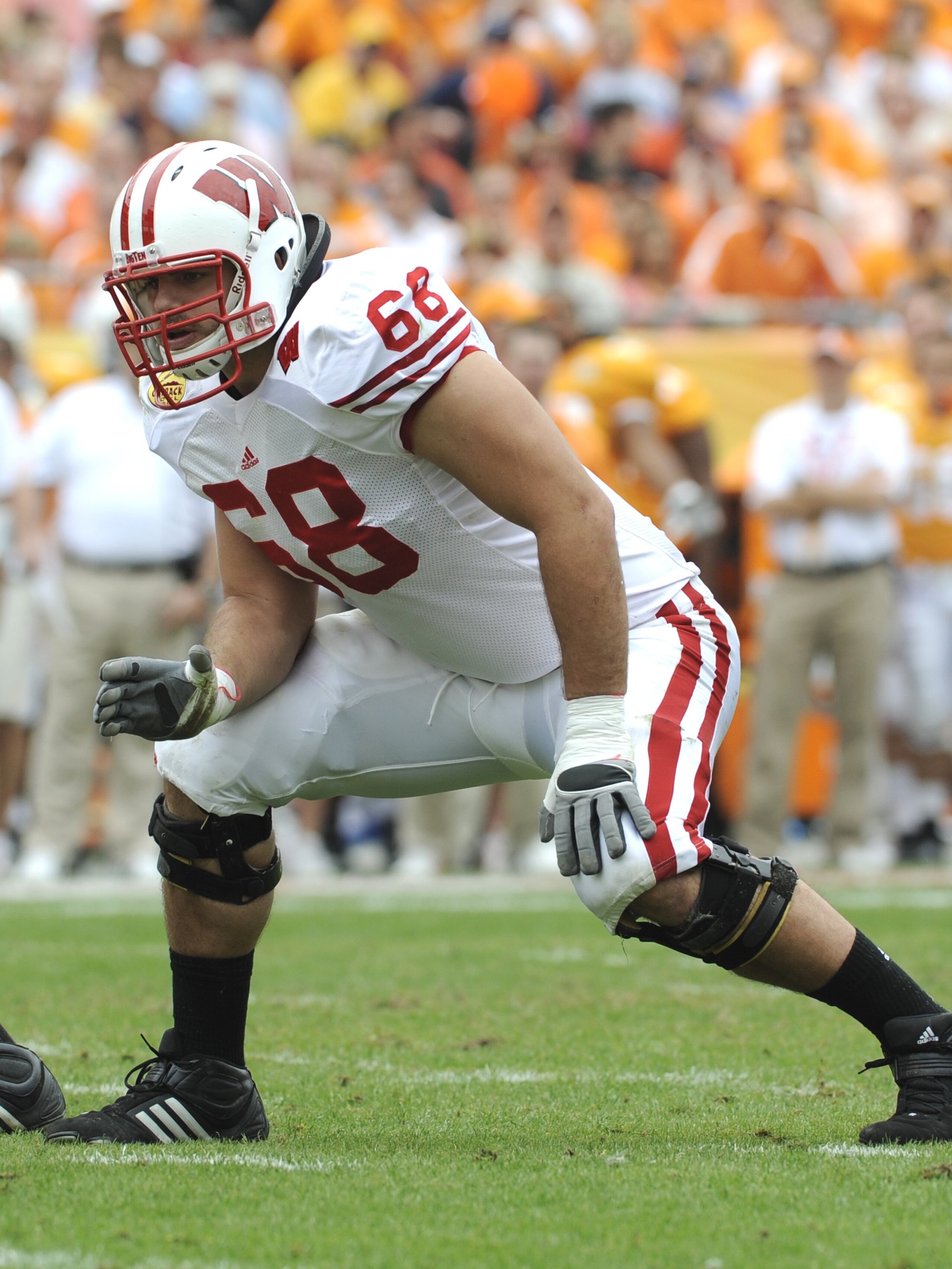
Why Carimi is Special: Remember a guy named Joe Thomas who played at Wisconsin? Carimi's not quite the player Thomas was/is, but he's pretty damn good. Carimi was a first team AP All-American this season and was the glue that held together one of the nation's best rushing attacks.
Why Carimi Goes Here: Tackles usually fly off the board during the NFL draft, and Carimi has more experience than most players at that position in this year's draft class. But Carimi was one of the most disappointing players at the Senior Bowl, having made the draft-status killing switch from tackle to guard.
Why Carimi Fits: Carimi may still play tackle at the NFL level, and Indianapolis could really use some help at that position. But either way, Carimi will be a starter somewhere along the offensive line in 2011, even if it is inside rather than outside.
23. Philadelphia Eagles: Anthony Castonzo, OT, Boston College
23 of 32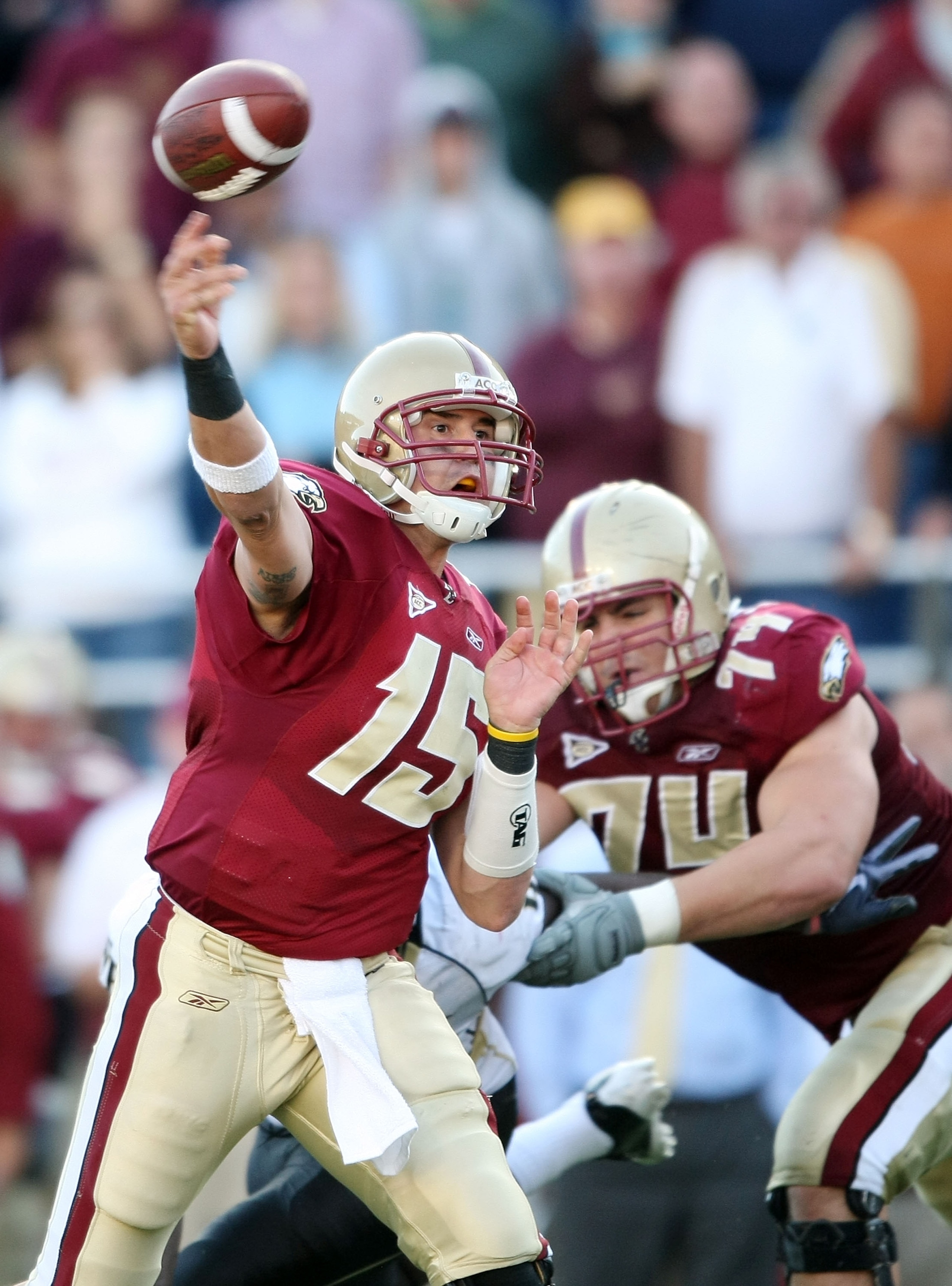
Why Castonzo is Special: He's one of the top offensive lineman in this year's draft class with a big 6'7" frame that should fill out once he matures a bit more.
Why Castonzo Goes Here: Castonzo could very well go in the top 20 if he bulks up, but he's listed at just 295 pounds, which is pretty thin for an offensive tackle who is that tall. He needs to hit the weight room and prove he can add strength without losing any of his mobility.
Why Castonzo Fits: The glaring weakness on Philadelphia's offense this year was its offensive line, which gave up the fourth most sacks in the NFL (49). Castonzo might be a bit of a project considering his weight issues, but he could eventually develop into a quality starter and help the Eagles give Michael Vick a little more protection.
24. New Orleans Saints: Justin Houston, DE/OLB, New Orleans Saints
24 of 32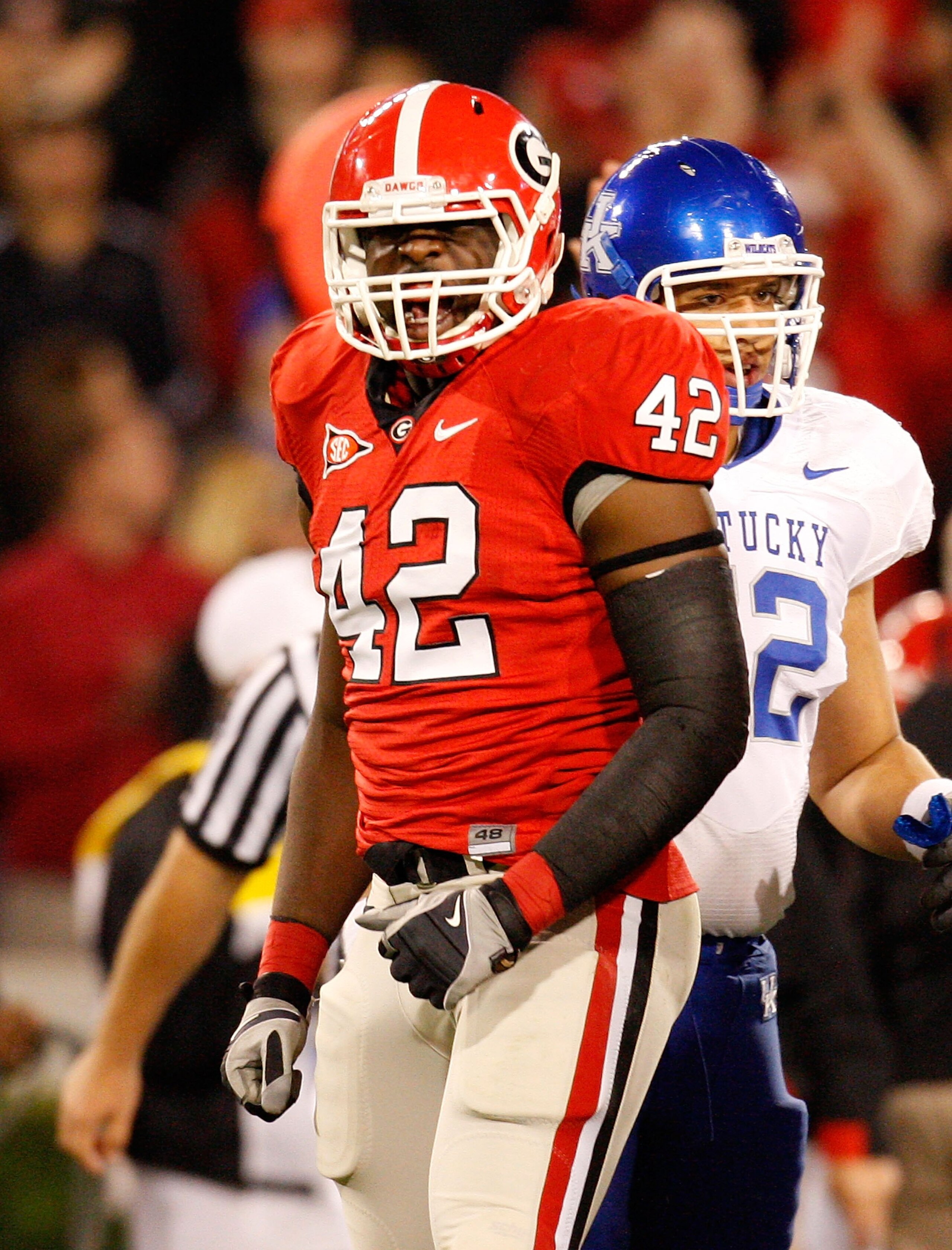
Why Houston is Special: Houston exploded onto the college football scene in 2010, with 19.5 tackles for loss and 11 sacks during his junior season. He's really made a name for himself as one of the better pass rushers in this year's draft class.
Why Houston Goes Here: He's sort of a one-hit wonder who came from nowhere to have a stellar season. Houston got into the backfield and disrupted plays more than any defensive player in the SEC not named Nick Fairley.
Why Houston Fits: With the size, strength and agility to play end in a 4-3 or OLB in a 3-4, Houston will be a force to be reckoned with no matter where he lines up on the field. And the Saints need a defensive end like humans need oxygen, so Houston would be a good fit opposite Will Smith.
25. Seattle Seahawks: Jake Locker, QB, Washington
25 of 32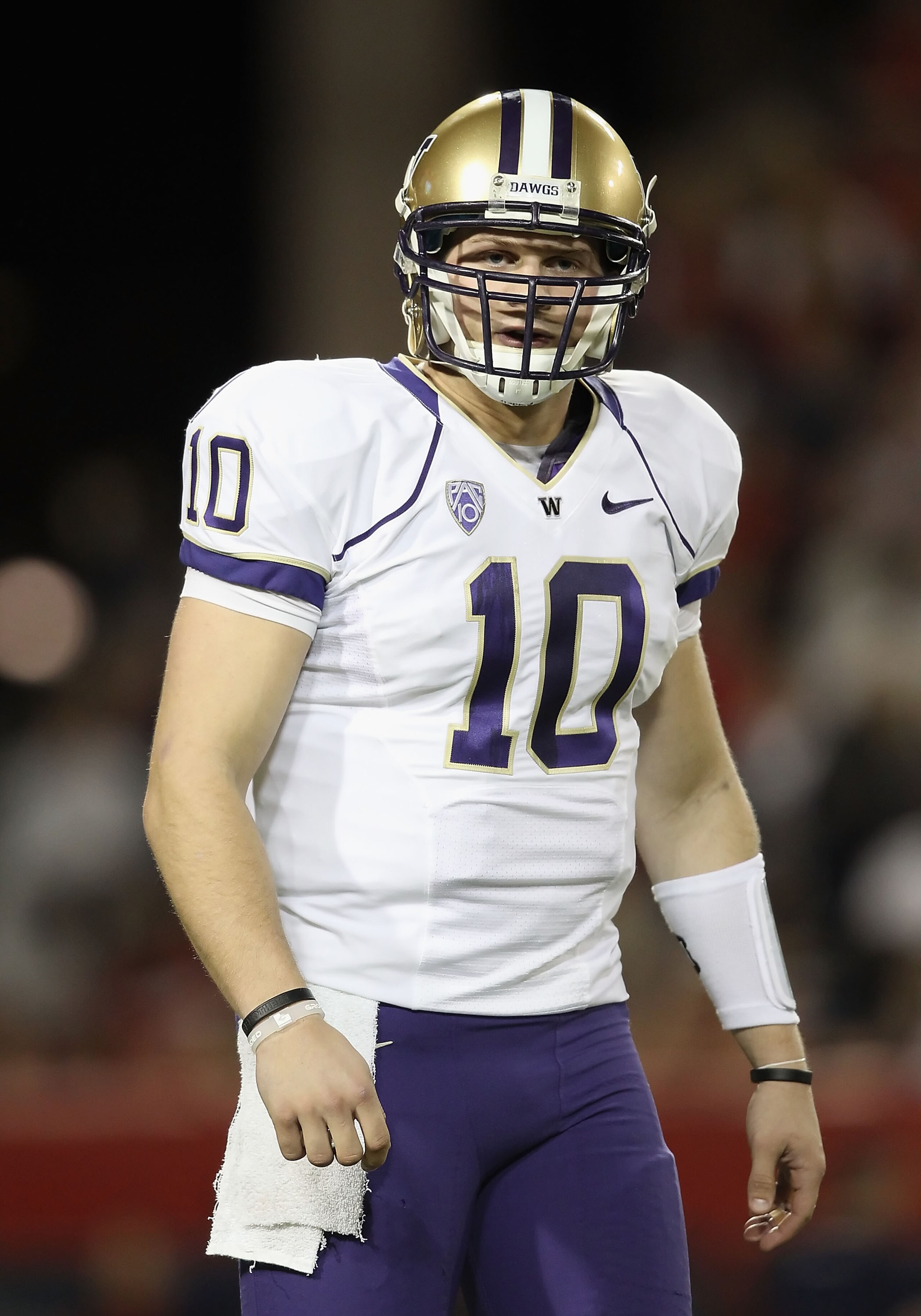
Why Locker is Special: Locker hasn't put up great numbers during his college career (especially in the completion percentage department), but he's showed decent improvement despite never playing on a very good team. He's got good size, a good arm and great athleticism, especially for a more traditional pocket passer.
Why Locker Goes Here: Locker could be anywhere from the second to the fourth quarterback chosen, so your guess is as good as mine as to where he'll end up in the draft. Still, Locker's potential is what scouts really like about him. Sure, he's been incredibly inconsistent, but plenty of scouts believe he would benefit from the Aaron Rodgers affect—sitting for two or three years before taking over as the starter.
Why Locker Fits: Matt Hasselbeck is a free agent, and no one's really sold on Charlie Whitehurst being the long-term answer in Seattle. If the Seahawks draft Locker, they can still let Whitehurst start, but will be able to pull the plug and roll with Locker if Whitehurst struggles?
26. Baltimore Ravens: Jimmy Smith, CB, Colorado
26 of 32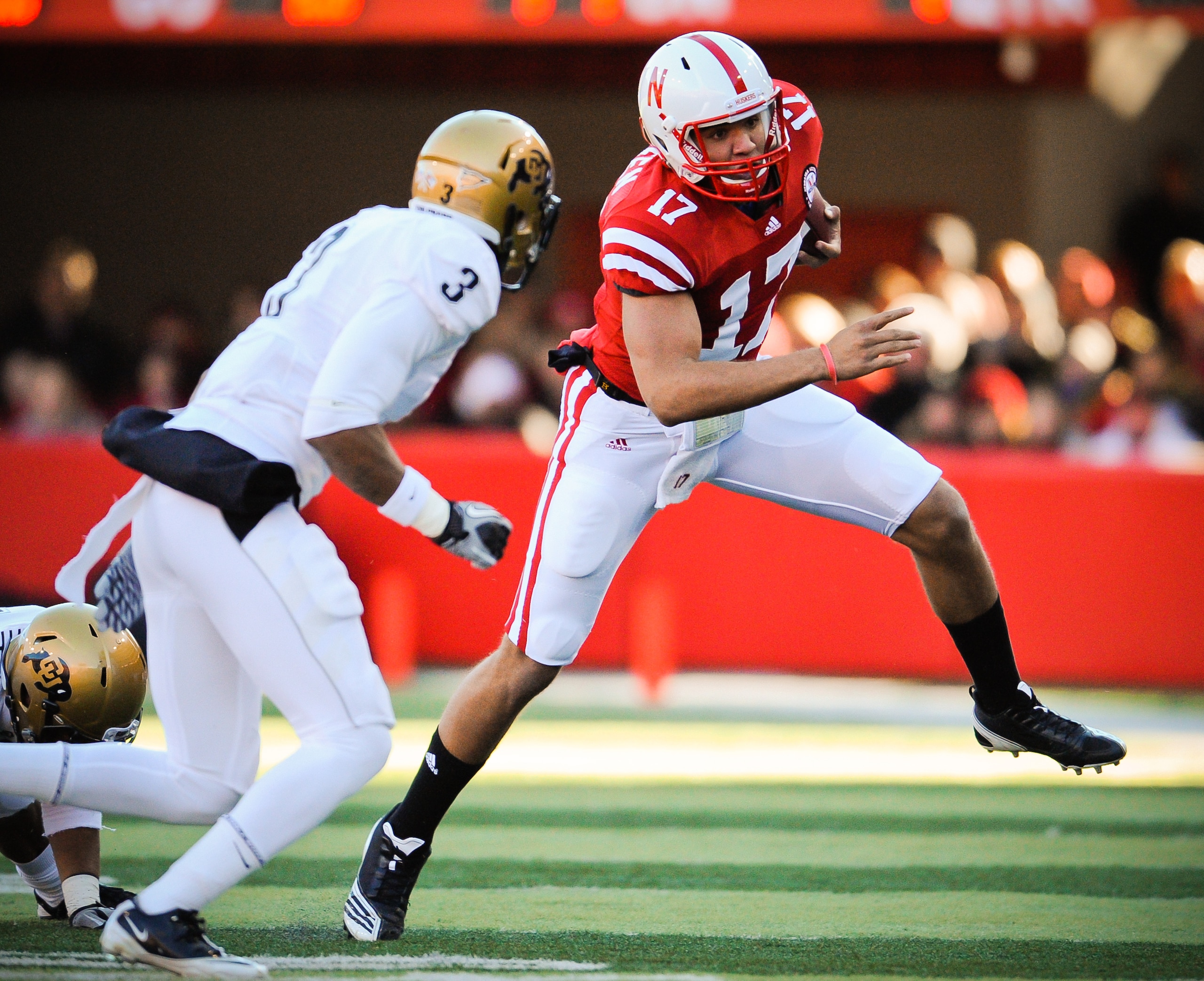
Why Smith is Special: In 40 career games, Smith has just three career interceptions. But you wanna know why? Smith has only allowed a staggering 11 career completions, because teams hardly ever threw his way. He also had 70 tackles in each of the past two seasons, proving that he's not afraid to contribute against the run either.
Why Smith Goes Here: At 6'2", 203 pounds, Smith is a physically-imposing defensive back not unlike LSU's Patrick Peterson. Though not quite the player Peterson is, Smith shows great cover skills and speed. He's just flown under the radar at Colorado.
Why Smith Fits: The Ravens only have two cornerbacks under contract for next season, and one of them, Dominique Foxworth, will be returning from an ACL injury. Needless to say, Baltimore needs to draft more than just one cornerback, but they should start with Smith, who is better than most people think.
27. Atlanta Falcons: Randall Cobb, WR, Kentucky
27 of 32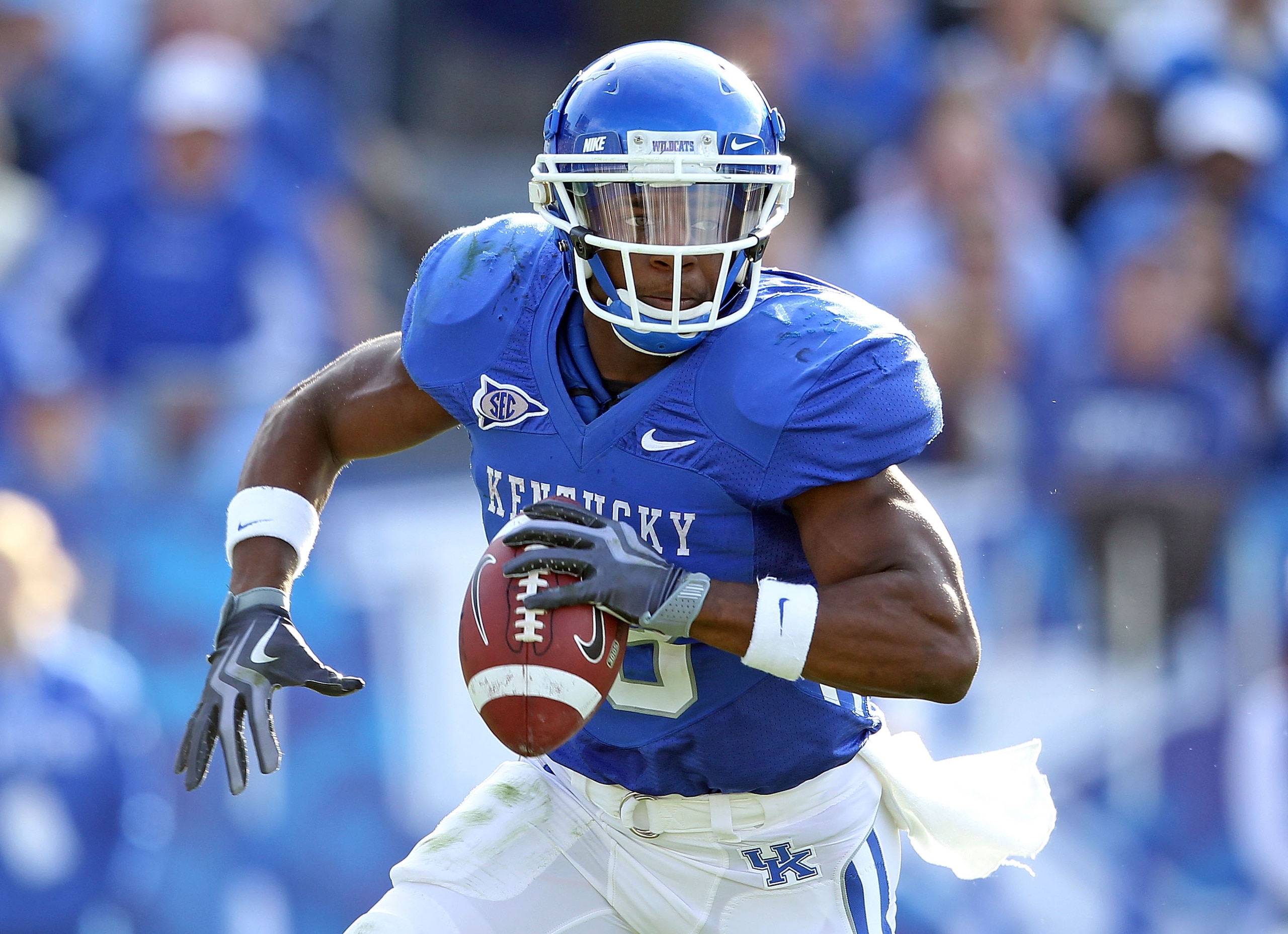
Why Cobb is Special: The true definition of a do-it-all wide receiver, Cobb caught 13 touchdown passes, returned two punts for touchdowns and scored 22 rushing touchdowns while at Kentucky. Though undersized (5'11", 186 pounds), he's as quick and elusive as they come.
Why Cobb Goes Here: Again, his size might be an issue, but he's similar in body type and playing style to electrifying Philadelphia Eagles wide receiver DeSean Jackson (though not quite that fast) and could develop into a gamebreaker in the NFL. He'll likely be used as a slot receiver, wildcat quarterback and running back, making him extremely versatile.
Why Cobb Fits: After Roddy White, the next best receivers for the Falcons in 2010 were Michael Jenkins (41 receptions) and Harry Douglas (22), so it's pretty clear that Atlanta needs another weapon in the passing game. Cobb would fit in well as a complement to both Jenkins and White.
28. New England Patriots: Muhammad Wilkerson, DE/DT, Temple
28 of 32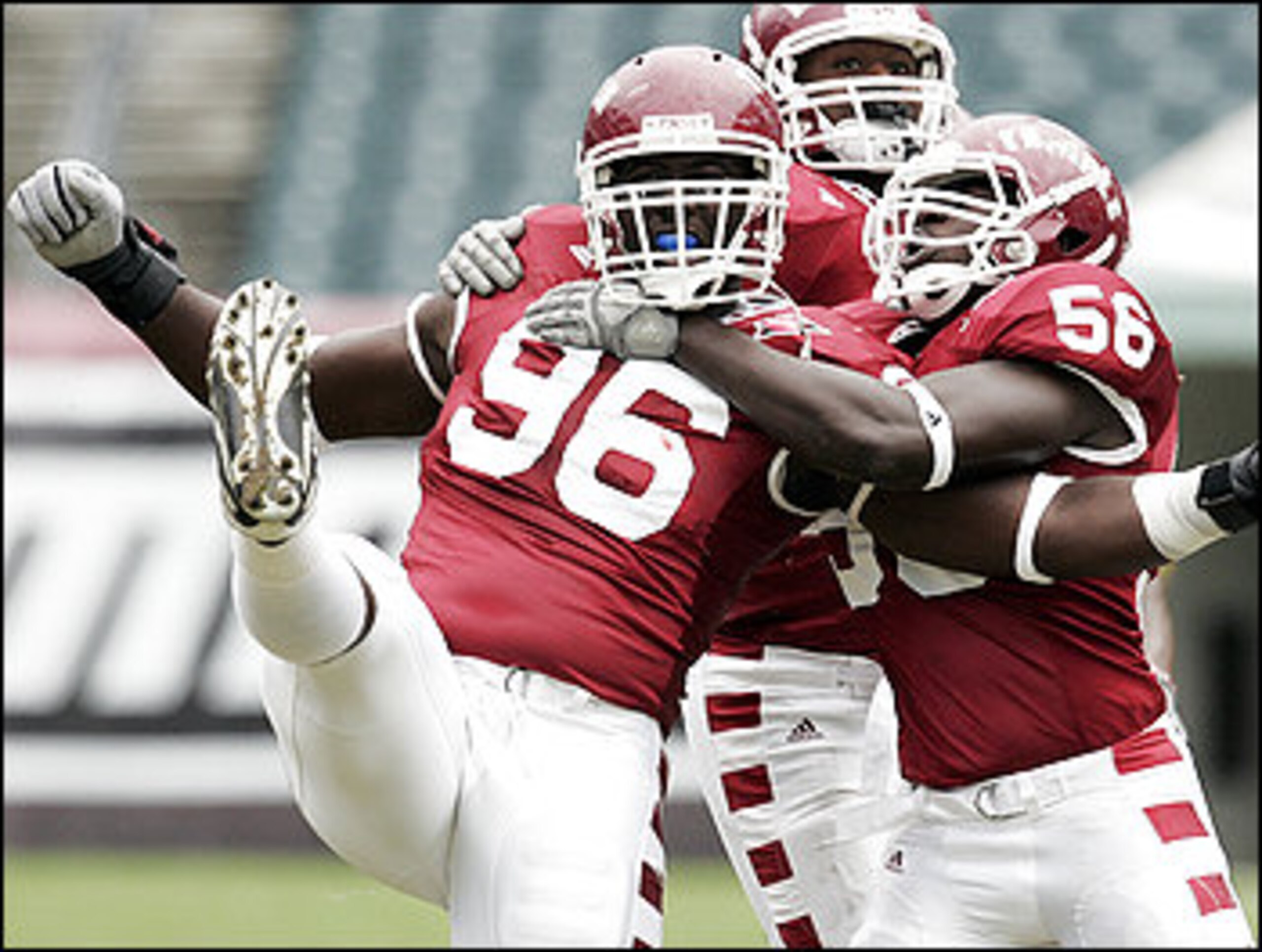
Why Wilkerson is Special: At 6'5", 305 pounds, Wilkerson is an incredibly physical specimen who has played defensive tackle at Temple but is versatile enough to play defensive end in a 3-4 scheme at the NFL level. In his final season at Temple, he was a beast up the middle, racking up 68 tackles, one forced fumble and 10 sacks.
Why Wilkerson Goes Here: Inconsistency was Wilkerson's biggest issue during his junior season, as he had two three-sack games but also went sack-less in six games. Still, scouts love his size and his aggression when he's got everything together.
Why Wilkerson Fits: He'd be a perfect choice as a 3-4 end in New England, because the Patriots really need some depth along the d-line. Though they might address that need earlier in the first round, it never hurts to stack up defensive linemen, especially on a team with a young secondary.
29. Chicago Bears: Jonathan Baldwin, WR, Pittsburgh
29 of 32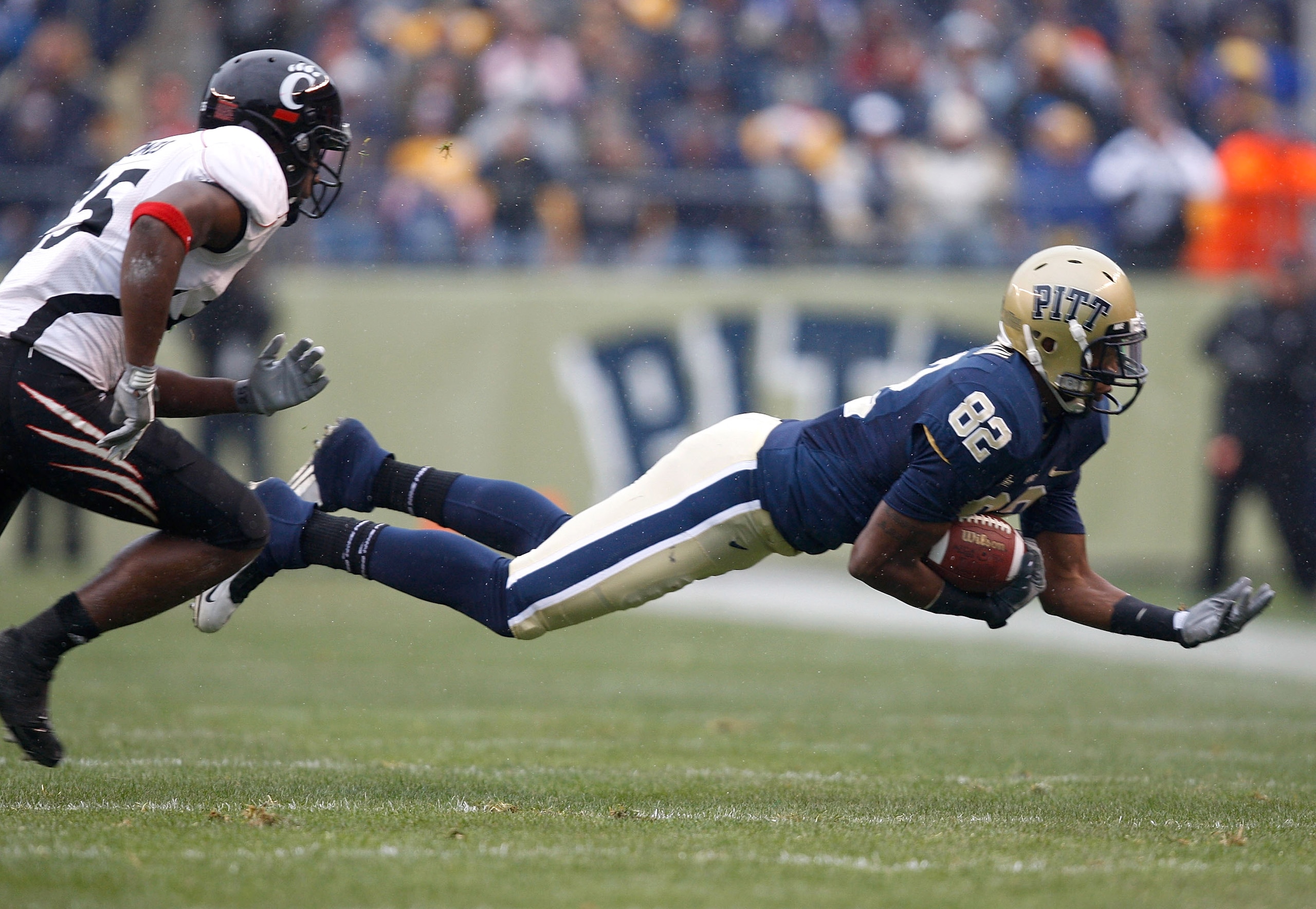
Why Baldwin is Special: He's the closest thing to Larry Fitzgerald Pittsburgh will ever see, and he managed to put up good numbers even with a shaky quarterback situation there. Baldwin will make jaw-dropping catches to bail out his quarterback and is as sure-handed of a wide receiver as there is in the draft.
Why Baldwin Goes Here: Baldwin needs to work on his route-running, but at 6'4'', 228 pounds, he's freakishly huge for a wide receiver. His potential is just too much for every team in the first round to pass up, especially one like Chicago who could use some serious help at that position. Though the Bears could go with an offensive tackle right here, all the elite ones are already off the board.
Why Baldwin Fits: Devin Hester is a nice weapon, while Earl Bennett and Johnny Knox are decent pieces. But the Bears really need a big weapon on the outside. Sure, they'd like to have someone like Randy Moss or Vincent Jackson, but Baldwin comes cheaper, younger and with less baggage.
30. New York Jets: Corey Liuget, DT, Illinois
30 of 32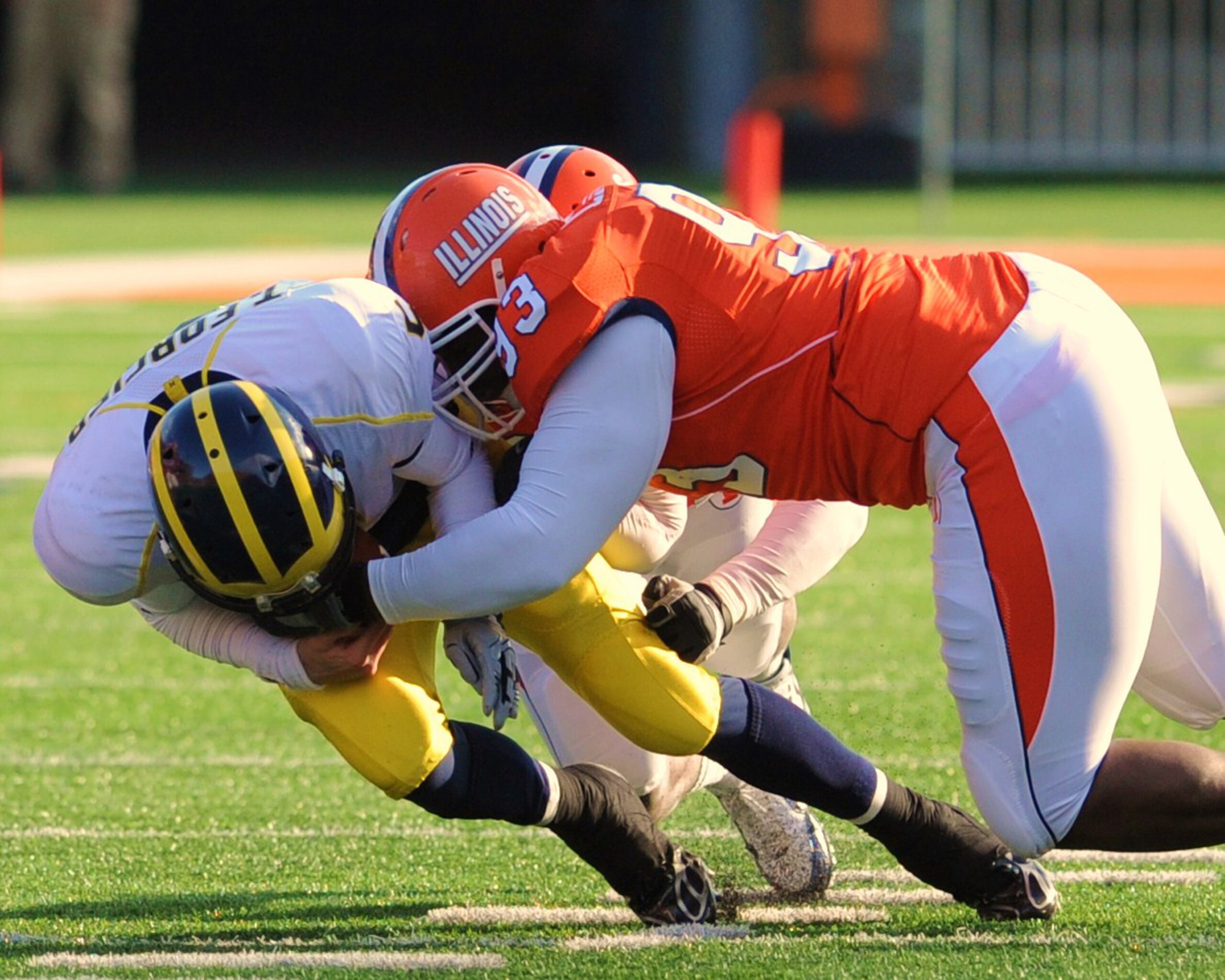
Why Liuget is Special: The best player on the Illinois defense, Liuget led the Fighting Illini in sacks (five), tackles for loss (12.5) and quarterback hurries (10). He really opened scouts' eyes with a dominant performance against Baylor in the Texas Bowl, racking up five tackles and a sack.
Why Liuget Goes Here: Liuget probably would benefit from playing in a 4-3 scheme, but he's arguably the No. 3 pure defensive tackle in the draft behind Nick Fairley and Marcell Dareus. His performance against Michigan State (11 tackles) and strong end to the season pushed him into the back end of the first round.
Why Liuget Fits: The Jets defensive line really struggled at time last season, and now, the team has cut ties with Kris Jenkins. That means they'll be looking for an anchor along the d-line of that 3-4 defense. Liuget, though a better 4-3 fit, is the best player on the board at this point.
31. Pittsburgh Steelers: Torrey Smith, WR, Maryland
31 of 32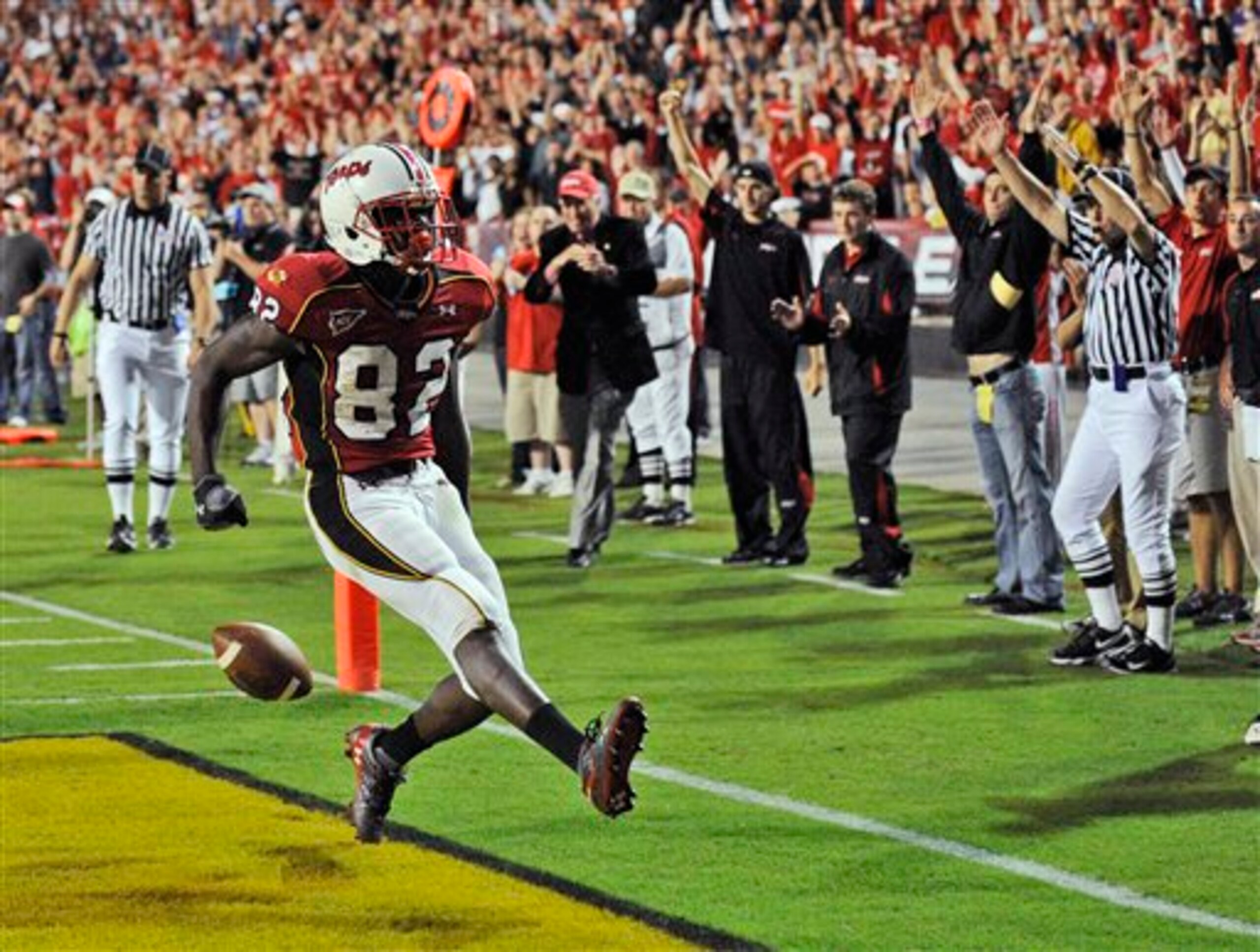
Why Smith is Special: If you're looking for a gamebreaker at wide receiver, look no further than Torrey Smith. He could very well be the fastest wide receiver in this draft and possesses a rare ability to stretch the field. His second gear is second to none.
Why Smith Goes Here: Though exceptionally fast, he's not the most polished receiver out there, as he doesn't run the greatest routes or have the best ball skills. He'll likely continue to draw comparisons to former Maryland receiver Darrius Heyward-Bey, which could cause teams in the top half of the first round to shy away from him.
Why Smith Fits: Hines Ward isn't going to play forever, and neither is Antwaan Randle El. Though Smith is similar in playing style to Mike Wallace, it can't hurt Pittsburgh to add another quality receiver when the team doesn't have very many pressing needs.
32. Green Bay Packers: Brandon Harris, CB, Miami
32 of 32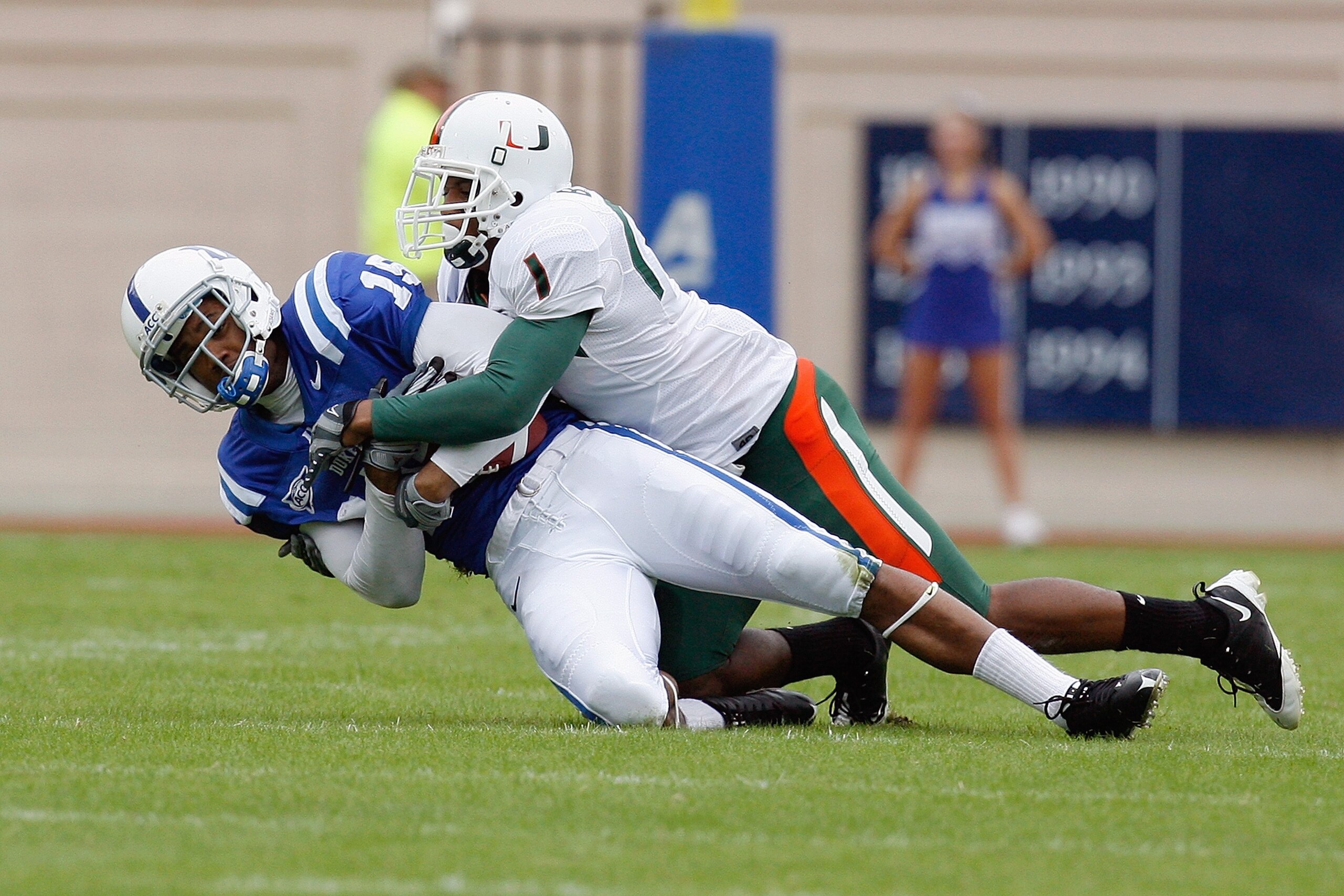
Why Harris is Special: At 5'11", 193 pounds, Harris has the prototypical size of an NFL cornerback to go along with good speed at the position. He's also got quick feet, is able to shed blocks from bigger wide receivers and contributes in run support more than most corners.
Why Harris Goes Here: He's good in all aspects of the game but really isn't great in any of them. While he'll likely develop into a No. 1 corner rather quickly, he doesn't have the upside of guys like Patrick Peterson, Prince Amukamara or even Jimmy Smith.
Why Harris Fits: On paper, cornerback might be Green Bay's biggest strength, but Charles Woodson will turn 35 years old next season and doesn't have too many years left. Drafting Harris would give the Packers a fourth good cornerback who would take on a bigger role when Woodson retires.
.jpg?w=2560 "Raiders Saints Football")



