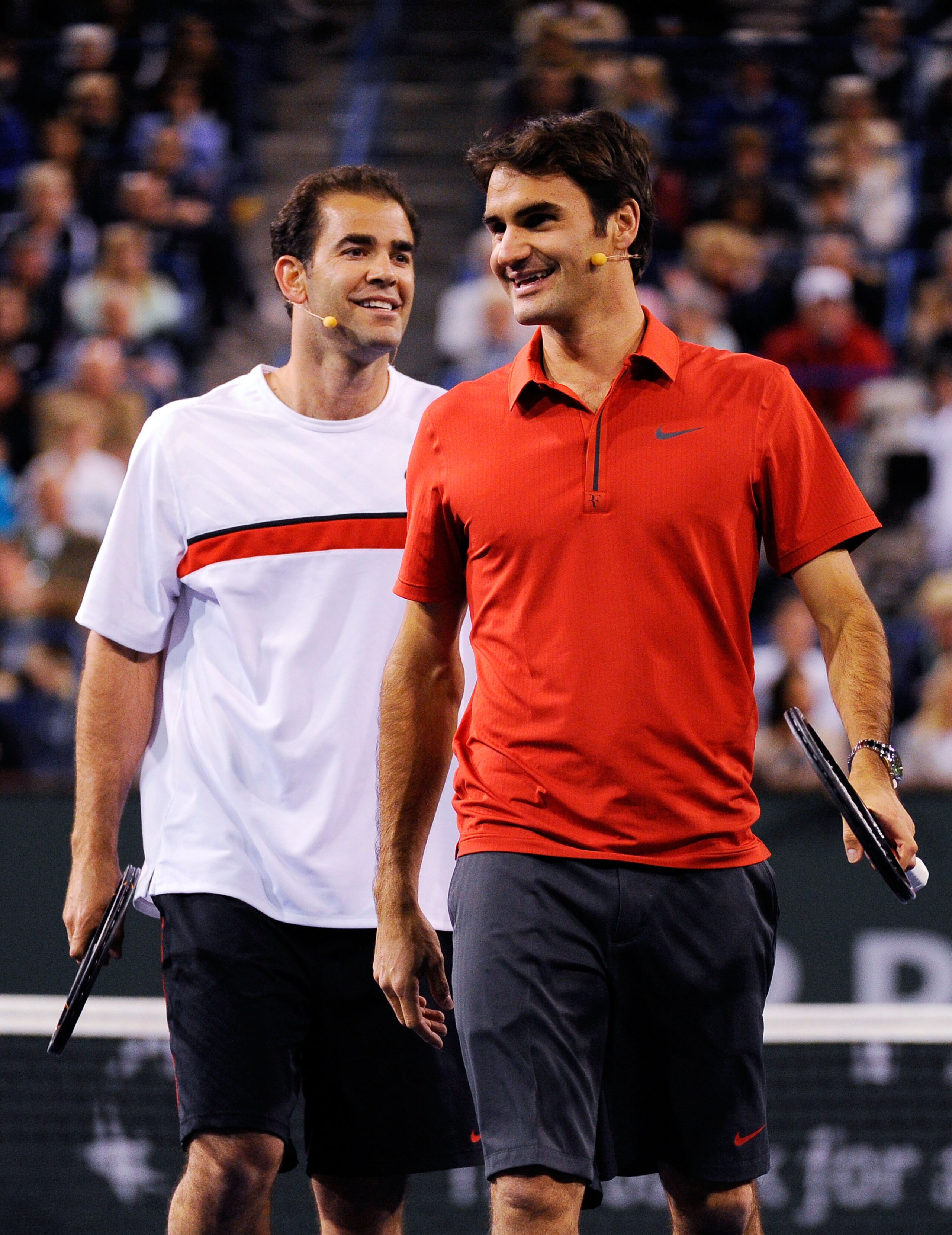

Tennis' Changings of the Guard: The Matches That Made History
Tennis history is replete with notable encounters, epic matches that have shaped its course. Generations of different styles and players have come and gone, much as a wave that inexorably ebbs and flows.
It has been the rule of 10: every 10 years, a new age, new rulers, a new dominant style of tennis. In the 1970s, Borg came to rule over the Lavers and Newcombes, only to be overtaken by McEnroe and Lendl in the mid-'80s.
The pattern moved, and in the 1990s, the baton was passed to Sampras, and then in the 2000s to Federer. Where the baton will pass now is still very much being decided.
Of course, these transitions didn't happen in a vacuum; matches and tournaments were played, of special significance, that signaled the change.
These were the 'Changes in the Guard,' the historic moments when the power struggles at the top of tennis visibly shifted in the favour of the younger, of the would-be successor.
Bjorn Borg Beats Ilie Nastase (Wimbledon 1976)
1 of 7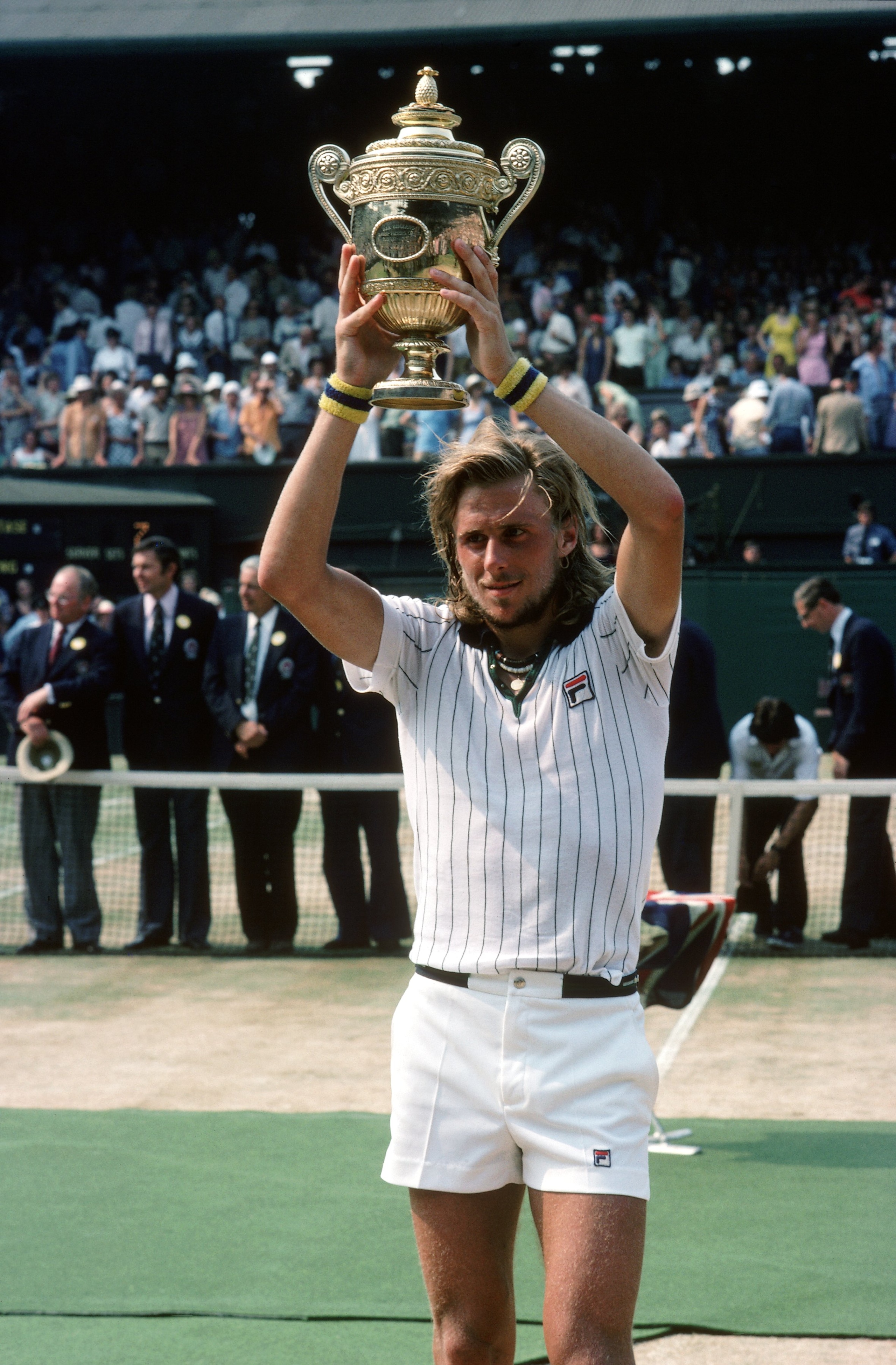
Borg's victory at Wimbledon in 1976 came at the expense of an old king: Ilie Nastase, the giant of Romanian tennis. Already 30 at that stage, and a two-time grand slam champion, change was in the air, as Borg played for his first Wimbledon.
The Swede had been questionable on grass, as many had doubted that his baseliner, grinding style of play would have translated onto the lawn. It did, however, for the 20-year-old, who was already a two-time French Open champion. The youngster humbled his old opponent, 6-4, 6-2, 9-7.
They didn't play with tiebreakers at Wimbledon finals in those days, but it would have mattered little even if they had. Borg was clearly the better player, and, perhaps, a better player.
Little might it have been known that his victory that day would spell the beginning of one of Wimbledon's most remarkable runs: five straight men's singles titles, engraving Borg forever in tennis immortality.
John McEnroe Beats Bjorn Borg (Wimbledon 1981)
2 of 7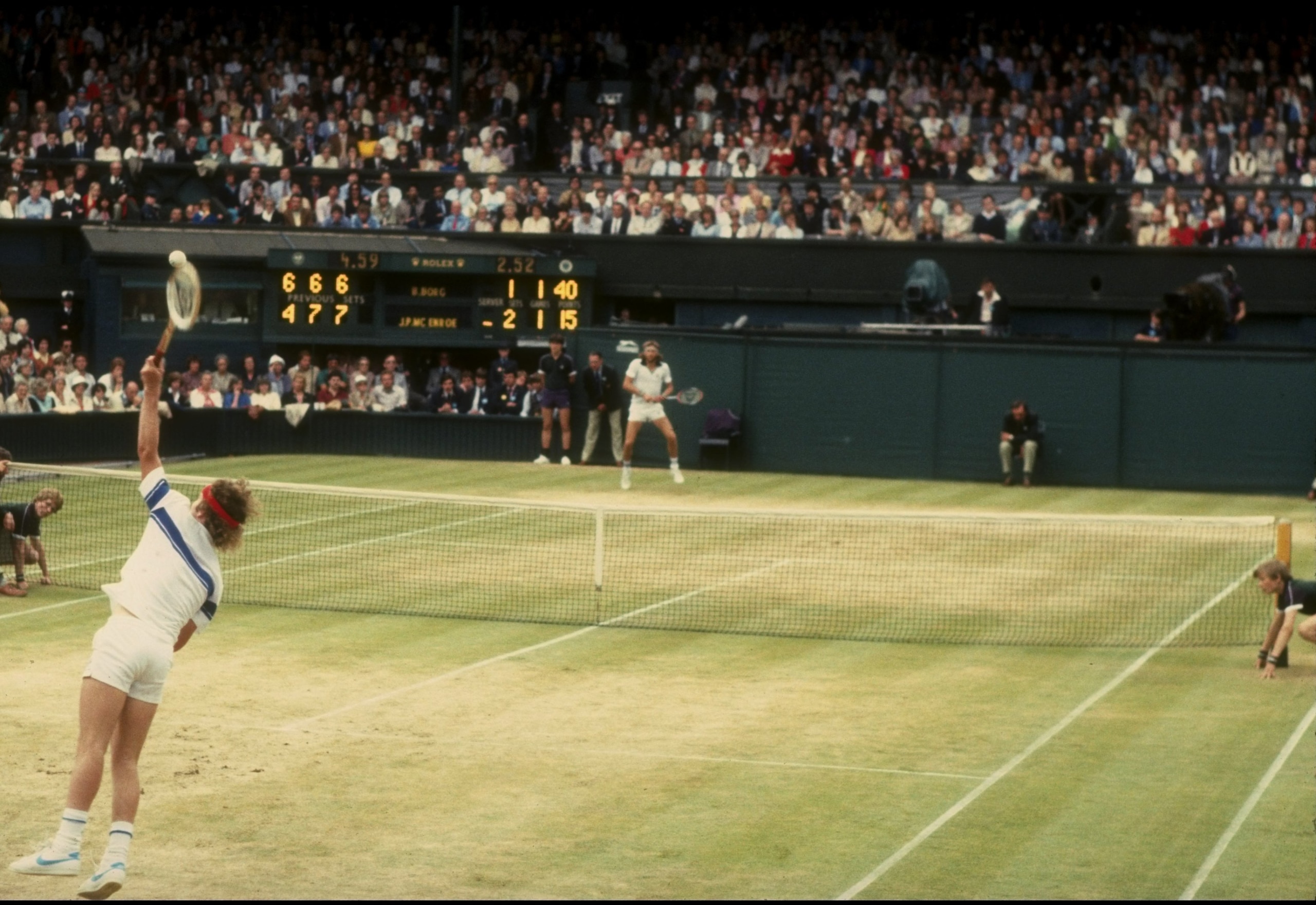
The era of Borg lasted for a good six-odd years, counting from his victory at Wimbledon in 1976. By the time 1981 came around, he had already won five French Opens and five Wimbledons, the last of which coming off his most demanding and glorious victory, against John McEnroe in 1980, to claim his fifth consecutive Wimbledon.
1981 started well, with a win at the French again, for a fourth straight title, although Wimbledon saw him face off, for a second straight year, his fast-playing American nemesis.
Just half the magic they had witnessed last year, repeated, would have delighted the fans immeasurably: a true rivalry on grass had finally been born.
Half the magic, however, was all they witnessed, as the match failed to reach anywhere near the drama of last year. Borg the king claimed the first set, but was then slowly challenged, and then surpassed, as McEnroe took the reins to win in four sets, 4-6, 7-6, 7-6, 6-4.
It was a crushing blow for Borg, who had fought so hard last year, only to see defeat, with much less drama, in the next.
The truth is, a new generation of grass king had been born in John McEnroe, and Borg could do little but witness the changing of the guard.
John McEnroe would go on to reach three more Wimbledon finals, winning twice more.
Pete Sampras Beats John McEnroe (US Open 1990)
3 of 7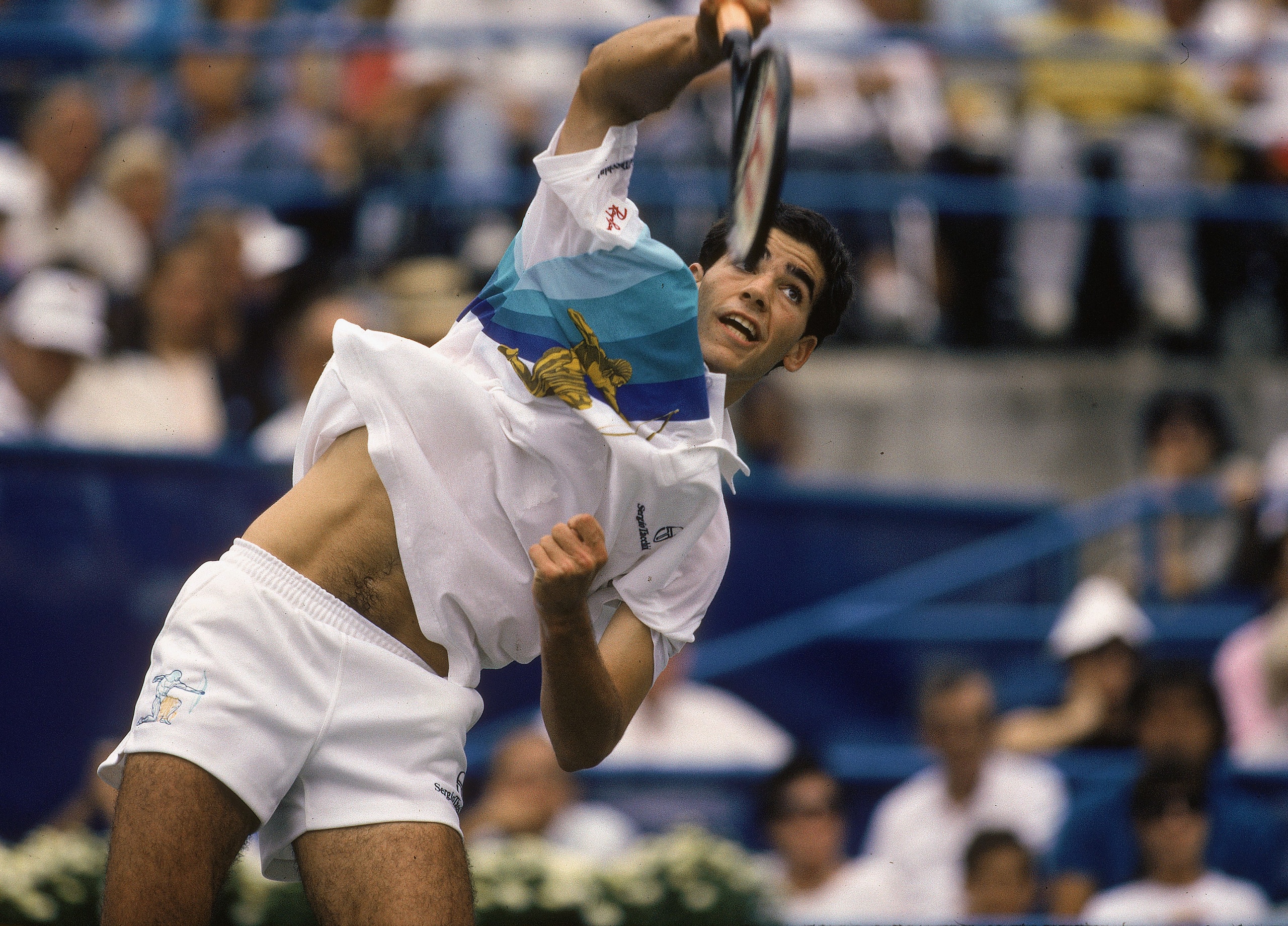
By 1990, John McEnroe was a spent force: he had failed to reach a Grand Slam final in five years, and was reaching a stage of entropy. His run at the US Open that year, however, to the semifinals, and his eventual defeat to Pete Sampras, was nonetheless historic and symbolic.
It was the clash of an old great, the conqueror of Borg, and a new and energetic force, in the big-serving, dynamic-volleying Sampras. He had lost the final the last year to Edberg, and was looking in 1990 to make amends.
At the end, it was hardly a true contest, and more the last fiery effulgence of a champion, 6-2, 6-4, 3-6, 6-3. He had managed the third set off a poor service game by Sampras, but the tide was clearly against him.
Sampras was just too powerful in every aspect, and most notably, in his serve, which was decisively superior to McEnroe's lefty delivery.
Sampras' win here was not wasted, and he went on to dominate the tournament, and his final opponent, Andre Agassi, to inaugurate a new era in winning his first Grand Slam.

.jpg?w=2560 "Seahawks Chiefs Football")
Pete Sampras Beats Boris Becker (Wimbledon 1995)
4 of 7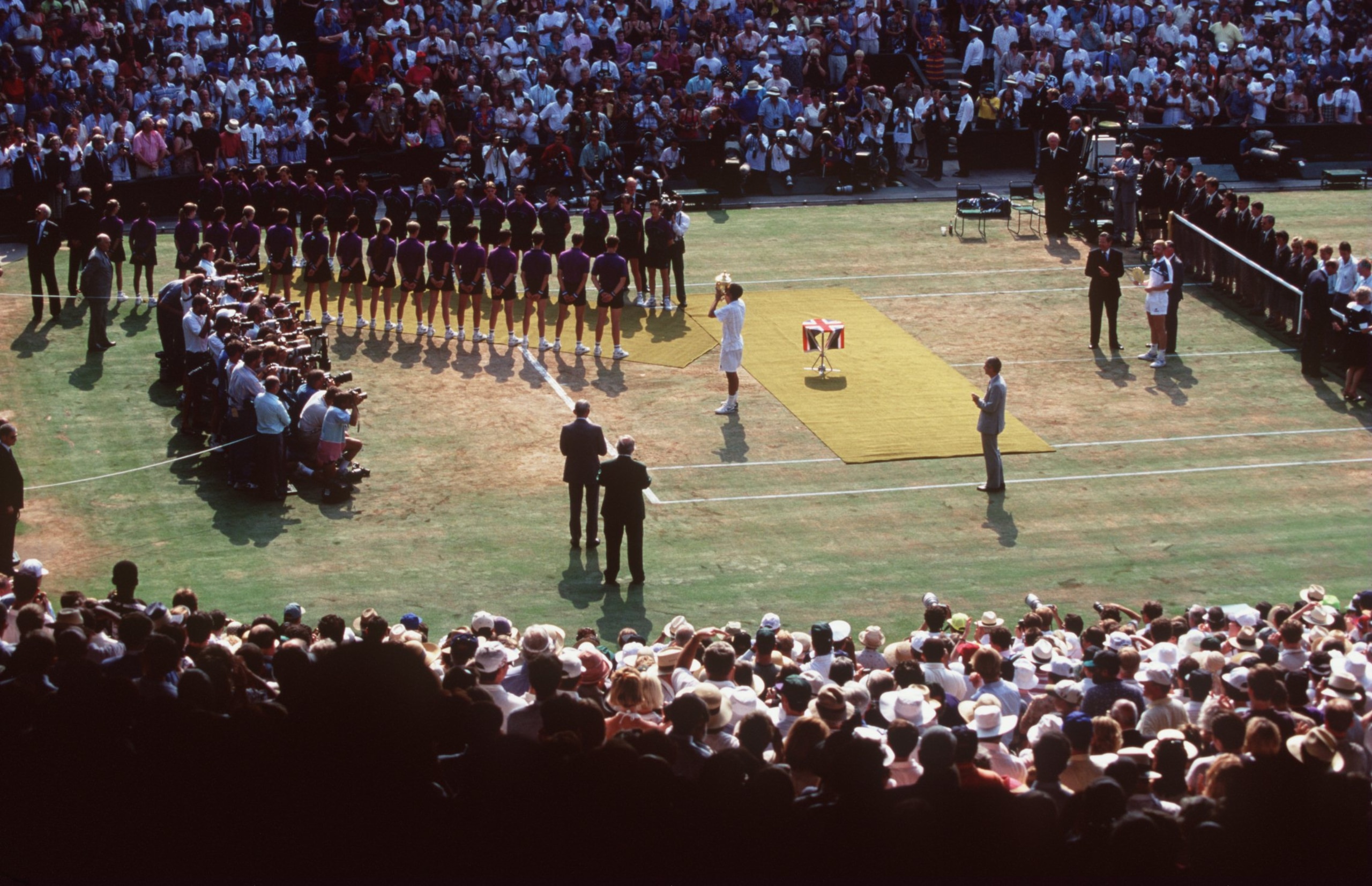
Sampras' reign saw his eclipse of several dominant forces of the 1980s, and this was no less apparent, indeed decisively so, at Wimbledon in 1995.
There, he faced Boris Becker, four-time Wimbledon champion, in the final. If ever there were a match that symbolised the transition from one era to another, this was it, in a grand slam final at the most famous tournament in the world.
With the trophy on the line, Becker brought out his A-game, winning the first set. Yet, as Sampras had done to McEnroe in 1990, he ran away with the match, as he increasingly demonstrated the superiority of both his serve and net game.
Booming Becker, who had once thundered across Wimbledon, was outgunned by Pistol Pete.
The American just outclassed the German in all aspects; he had the bigger serve, the bigger forehand, and a younger, more vivacious athleticism at net.
In the end, the change of 10 years was too clear, as Sampras ran away with victory, 6-7, 6-2, 6-4, 6-2.
Becker would admit later that this loss was earth-shattering; the self-belief that he was the best on his best day had been destroyed, as Pete clearly showed that day that, on his day, he was the best of all.
Roger Federer Beats Pete Sampras (Wimbledon 2001)
5 of 7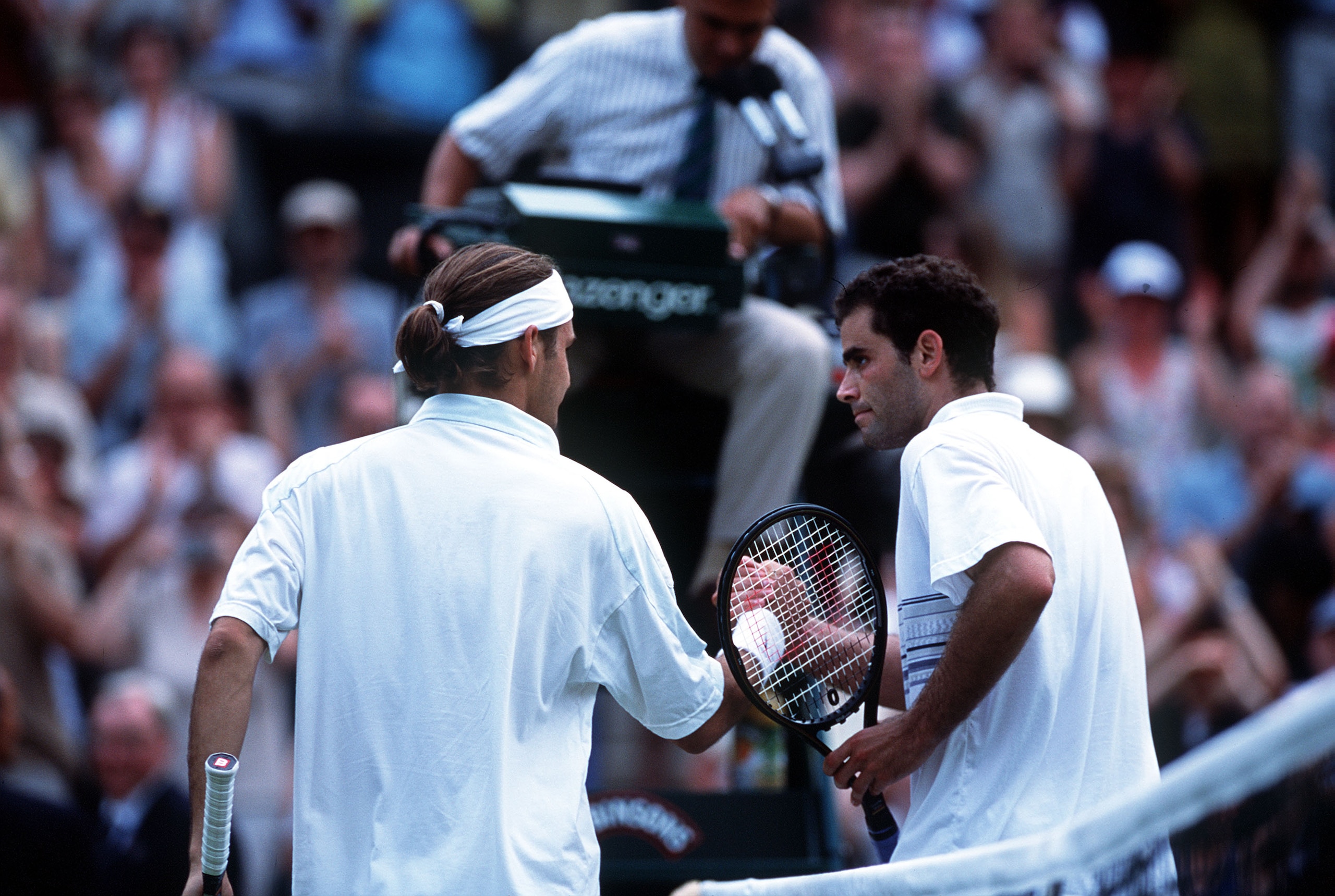
Pete Sampras' reign at Wimbledon would last eight years, winning every title save for 1996. At the same time, victory on grass assured his acknowledged dominance as the best player on the planet.
Going into the 2001 tournament, this was the only argument he could raise, as his career, and ranking, was slowly losing its sheen: I am the man to beat at Wimbledon.
This, of course, was until he reached the fourth round, and faced a young Swiss talent by the innocuous, and strangely unfamiliar, name of Roger Federer. It would prove a classic.
It went five sets, with both playing their best at times. Sampras was his typical, flaunting self, blasting serves, and knifing volleys, while Federer, whose dangers were unknown to the American, just maintained his cool challenge with occasional flashy winners.
When he won the first set, the crowd was slightly in awe, but when he won the third, a real chance at a massive upset seemed in the making.
In truth, Federer at times was just astounding, even in the face of Sampras. Pete had an all-out aggressive game, but Federer, even as a fresh 19-year-old, had every possible response: the cracking forehand, or the jaw-dropping backhand pass.
In the end, a combination of his characteristic finesse, and nerves from Sampras, revealed what this match was really about for the American's career: a watershed. Federer would win, off a forehand return winner, 7-6, 5-7, 6-4, 6-7, 7-5.
The all-round big net game that had dominated tennis for 30 years had found its challenge in someone who was sublimely gifted and well-rounded. It was the changing of the guard, from Sampras to Federer, but also the transition to an age of versatility.
Roger Federer Beats Andre Agassi (US Open 2005)
6 of 7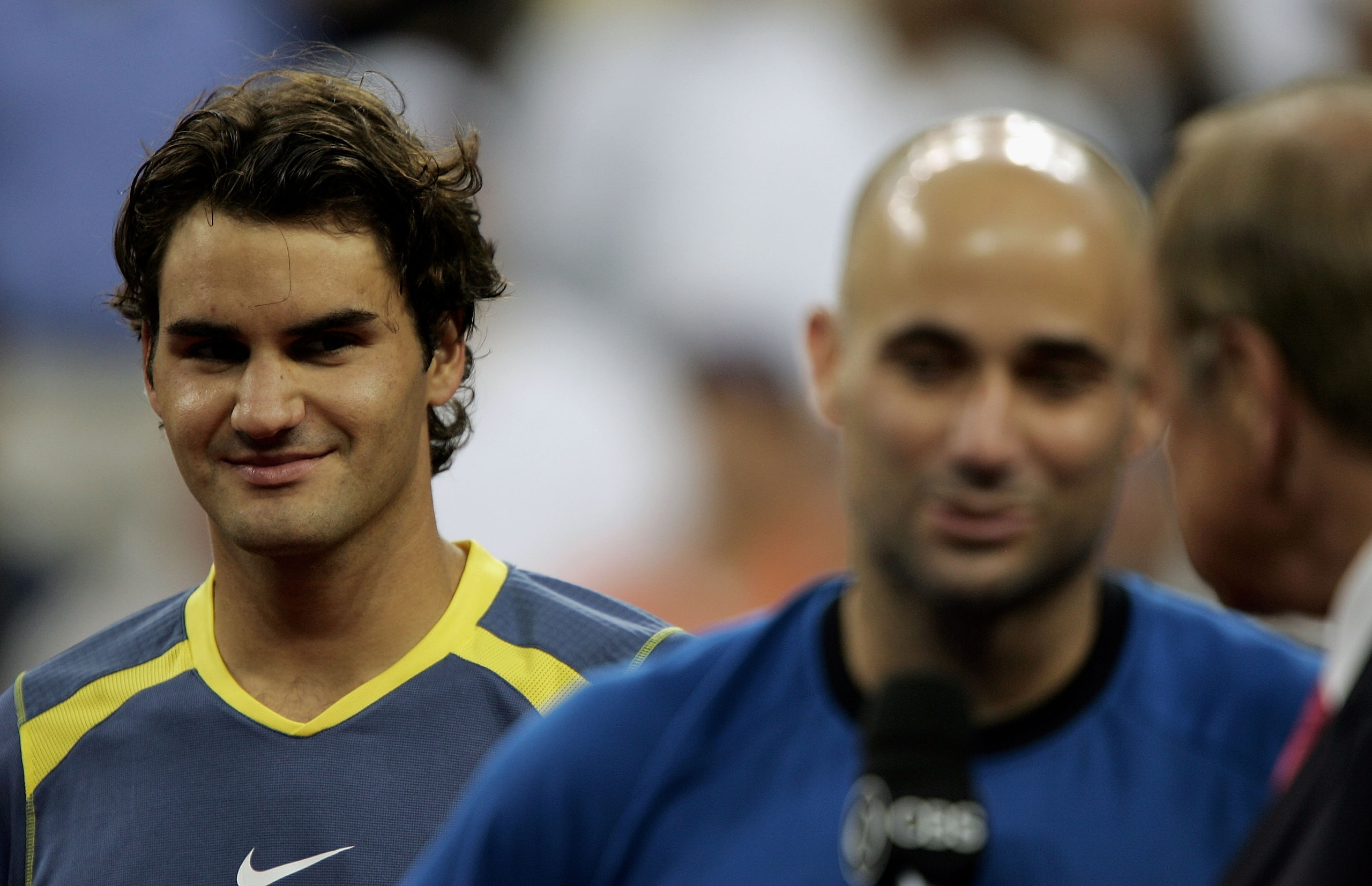
The age of Federer went quickly, and with victory at Wimbledon in 2003, victories just never stopped. His victory at the US Open in 2005, however, was one of the most poignant of his golden run.
It came against Andre Agassi, who hadn't won at Flushing Meadows in six years, making the last great run of his career.
On the other hand was Federer, the undoubted king of tennis. Victory was much to be expected from the Swiss; surely, taking down the mighty Federer would be a task too much for the aging American.
Like Borg and Nastase, Sampras and McEnroe, 10 years divided Federer and Agassi. For the large part the former dominated the match, although a significant, almost concessive blip in the second and mid-third (where Agassi found himself up in the match at one set all, 4-2 in the third).
Yet Federer would win the third convincingly in a tiebreak, and race through the fourth. The last game Agassi won, it is commonly held, was a giveaway by Federer, almost embarrassed to so utterly demolish an all-time great. The final score: 6-3, 2-6, 7-6, 6-1.
It was the final passage from the generation of Sampras and Agassi to that of the new king, Roger Federer. Here, at Flushing Meadows, the tennis world definitively crowned its new ruler.
Rafael Nadal Beats Roger Federer (Australian Open 2009)
7 of 7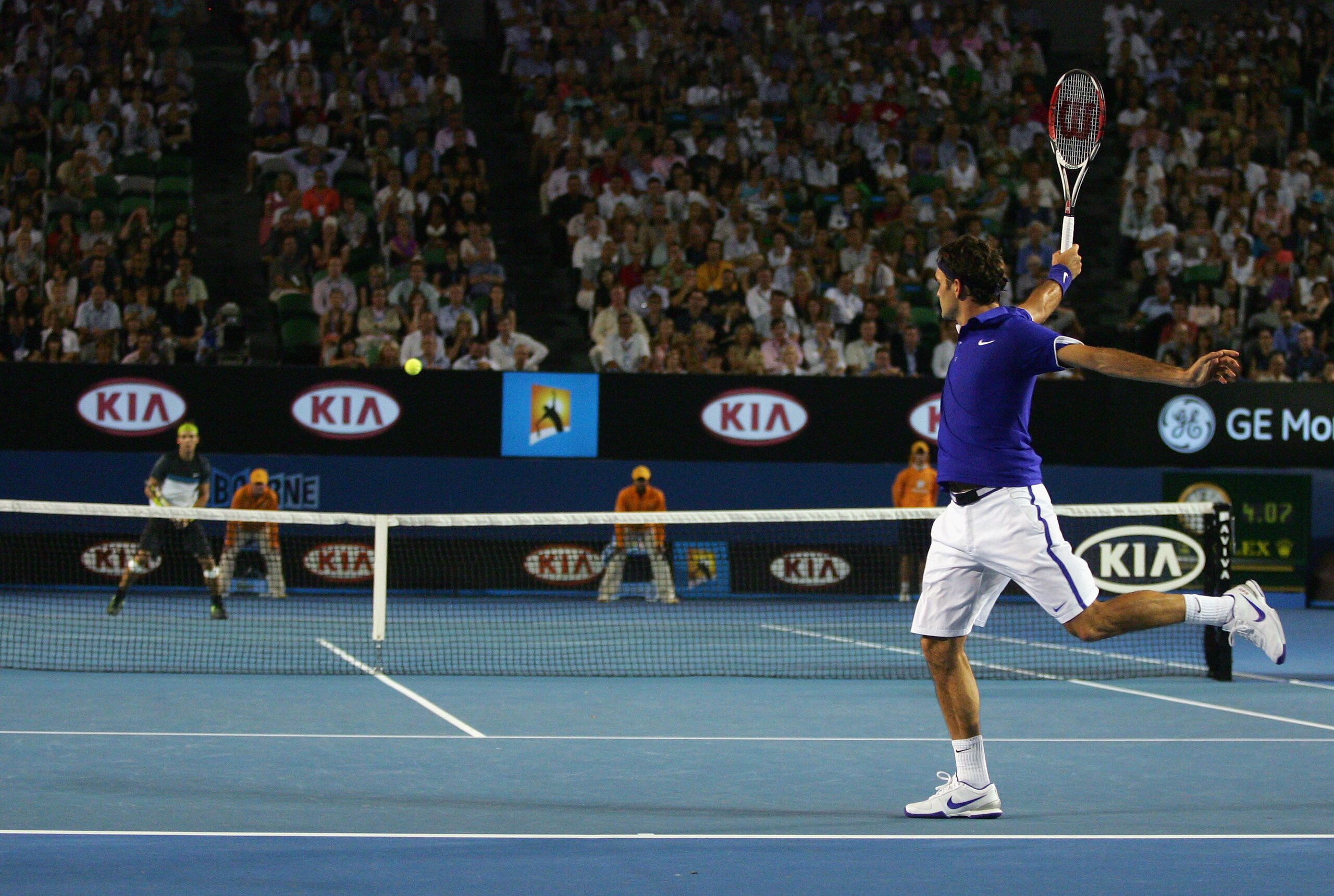
Roger Federer ruled tennis as the world No. 1 for six years, with Wimbledon constantly as the benchmark of his season. To say, then, that his loss there in 2008 was a shocking moment, would have been a grave understatement.
Tennis had never seen such a champion, but now it saw such a rivalry, and such a challenger: a new No. 1, Federer's long time rival, Rafael Nadal. After their meeting at Wimbledon, they would face off at the Australian Open in 2009, a match which reflected the subtle shift in power that was occurring at the time.
It was the battle between the top-ranked Nadal and second-rated Federer, where in years before the titles had been reversed. Did Federer really have it in him to beat Nadal, at his best? The match proved otherwise: Nadal would win in five grueling sets, triumphing over his rival yet again, 7-5, 3-6, 7-6, 3-6, 6-2.
The tennis was riveting, stunning, incredible. Yet at the end, Nadal proved too mentally strong, too solid on the big moments, filled with too much self-belief. Federer, perhaps, was simply lacking in the latter category.
His collapse in the fifth set, and subsequent emotional breakdown at the podium, famously remembered as the moment when Nadal had brought his rival to tears, were simply indicative of the change in temperament at the very top. Federer was no longer the very best, as good was he still remained.
This, of course, remains the chief paradigm in men's tennis at the very top, which continues to this day. How much longer will Federer and Nadal remain at the pinnacle of tennis?

.jpg?w=2560 "WWE Raw Live Grades 🔠")
.jpg?w=2560 "Multiple NFL Trades Predicted")


