
Jordan's '95-'96 Chicago Bulls and the Best Starting 5 in Each Team's History
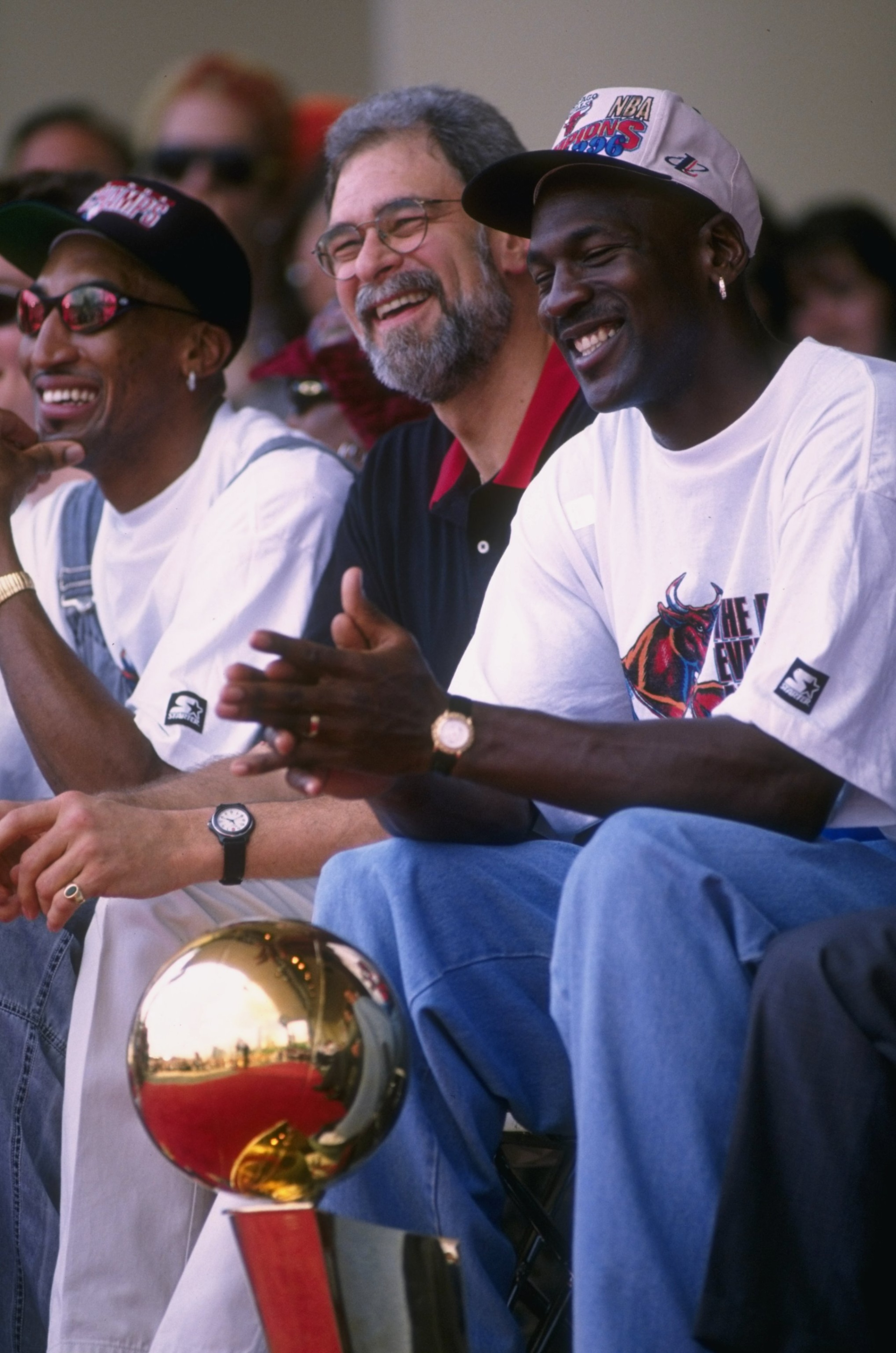
It's been nearly 15 years since Michael Jordan and the Chicago Bulls capped off the best season in NBA history, winning a record 72 games while securing a championship and going down as arguably the greatest team ever.
While records are made to be broken, it does not appear that this one will be falling anytime soon, and, for now, we are left only with the ability to argue over which team, and in turn which starting lineup, was the best of all time.
Really, until a team rips off an 82-0 year, there will always be some debate.
So what goes in to determining a great starting five?
Well, there has to be talent of course, and there also have to be some rather daunting statistics involved. Winning matters too, though, so what we're really looking for here is some mix of skill, individual numbers and team results.
After all, what good would it be to have a starting group that averaged 30 PPG a piece if they didn't even make the playoffs?
There are some easy calls with this, such as the Bulls team mentioned in the title and some of the franchises that don't exactly have spectacular histories, but there are also quite a few tough decisions to make when it comes to those organizations blessed with multiple championships, or even some who've had sustained runs that ultimately fell short.
But you're not reading this to hear about the selection process, are you? You want to know who's on this list.
Okay, so let's get into it and let the individually great players, season-long statistics and team achievements speak for themselves.
Atlanta Hawks: 1957-58
1 of 30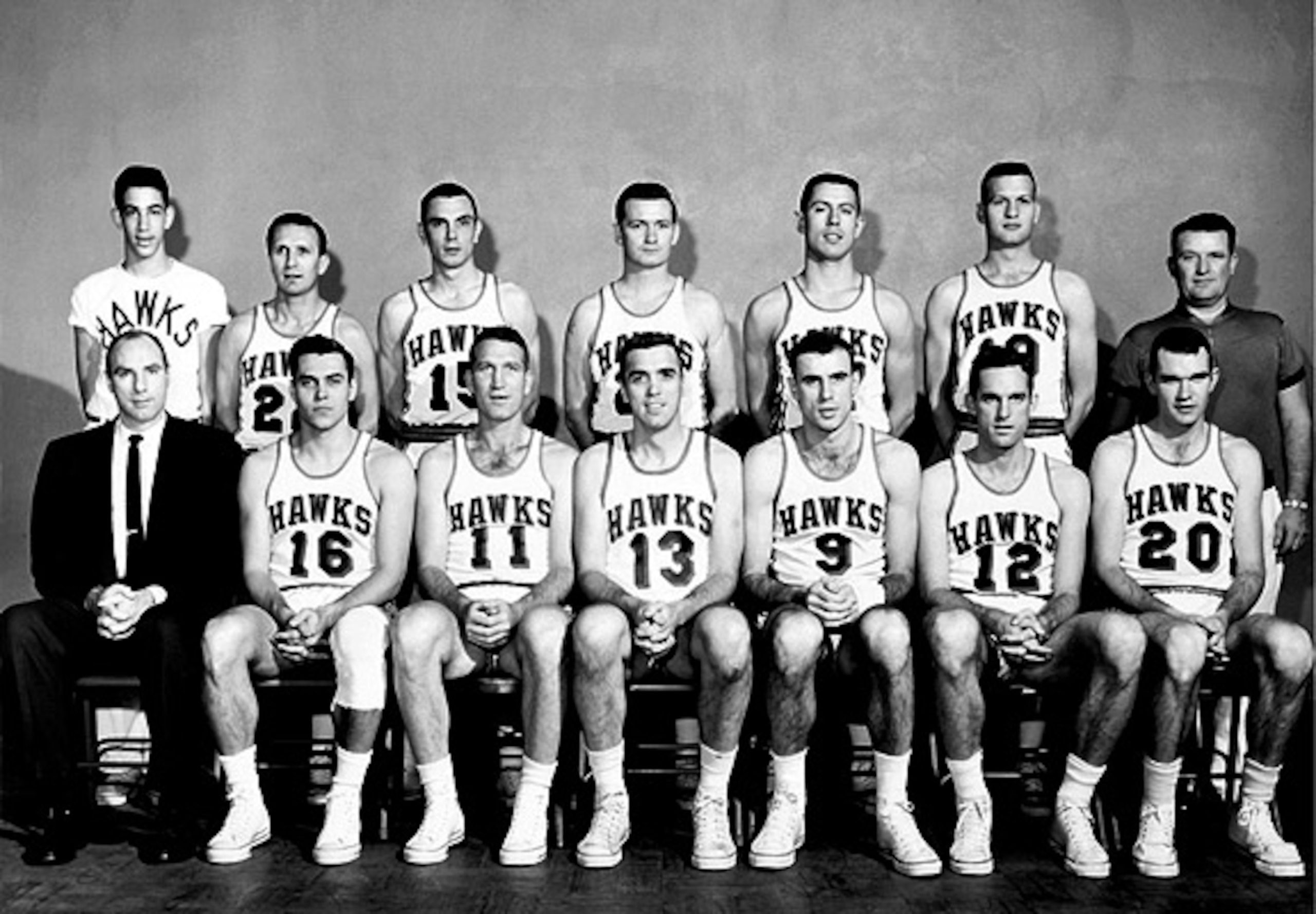
The Hawks' only championship in franchise history came when they were actually located in St. Louis.
There were only eight teams in the NBA during the 1957-58 season, and the Hawks had four Hall of Famers in their starting lineup.
Bot Pettit, Slater Martin, Cliff Hagan and Ed Macauley would all receive basketball's highest individual honor, and all were critical to the team's success.
Pettit in particular had a historical season, averaging 24.6 PPG and 17.4 RPG. He scored 50 points in the championship-clinching game against Bill Russell and the Boston Celtics, avenging a Game Seven, double-overtime loss to the C's the year before.
| PPG | APG | RPG | FG% | |
| Slater Martin | 12.0 | 3.6 | 3.8 | 33.6 |
| Jack McMahon | 7.9 | 4.6 | 2.7 | 30.0 |
| Cliff Hagan | 19.9 | 2.5 | 10.1 | 44.3 |
| Bob Pettit | 24.6 | 2.2 | 17.4 | 41.0 |
| Ed Macauley | 14.2 | 2.0 | 6.6 | 42.8 |
Boston Celtics: 1985-86
2 of 30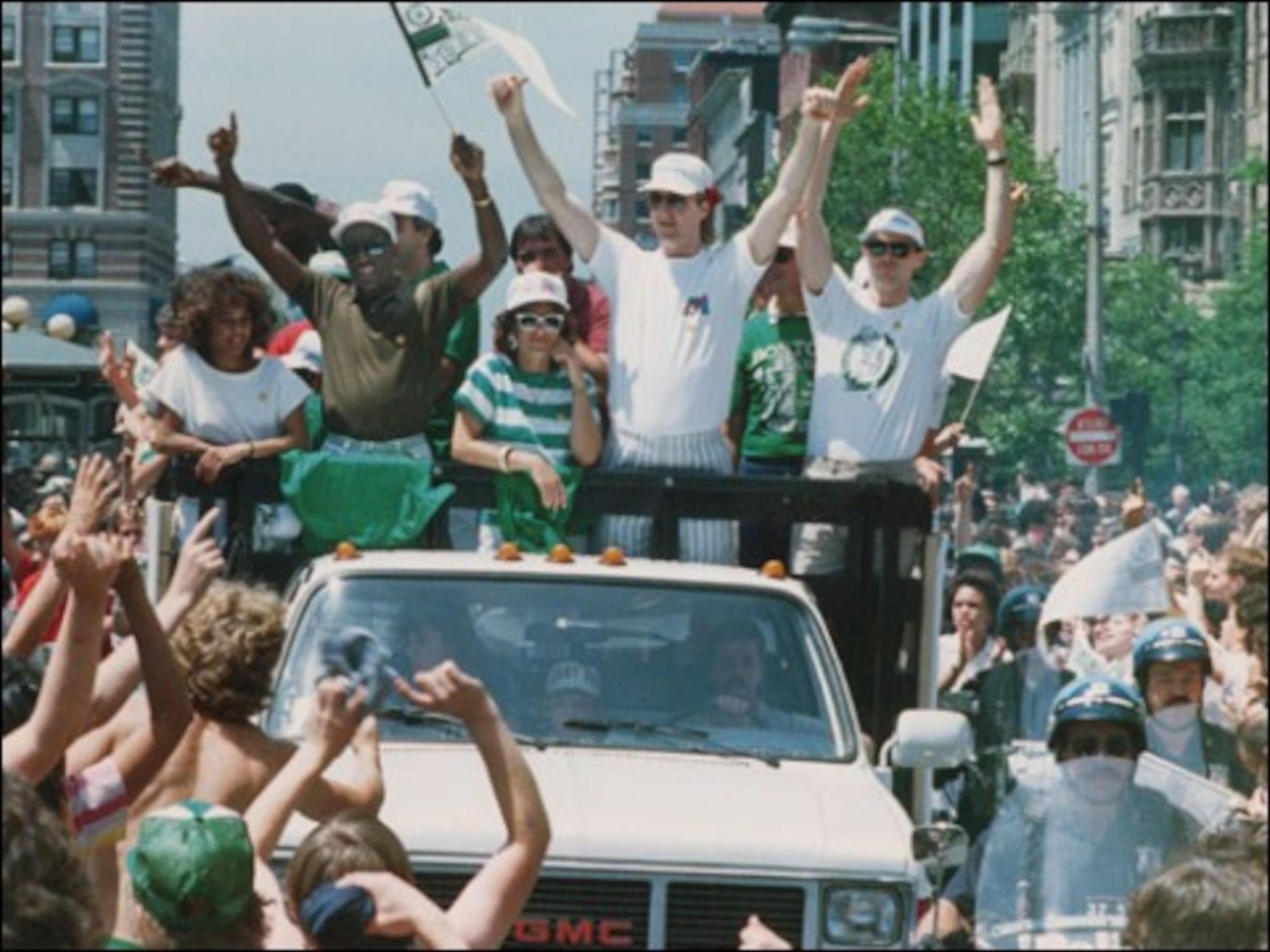
The 1985-86 Celtics' starting lineup consisted of league MVP, and eventual Hall of Famer, Larry Bird, along with three other Hall members in Dennis Johnson, Kevin McHale and Robert Parish.
Bird's statistics from this season were completely off the charts. He averaged 25.8 PPG, 9.8 RPG and 6.8 APG, shot 49.6 percent from the field, 42.3 percent on threes and just under 90 percent from the free-throw line.
The Celtics beat the Houston Rockets, 4-2, in the 1986 Finals—losing only one other game during the playoffs—and Boston's .817 winning-percentage remains the highest mark in franchise history for a championship-winning team.
| PPG | APG | RPG | FG% | |
| Dennis Johnson | 15.6 | 5.8 | 3.4 | 45.5 |
| Danny Ainge | 10.7 | 5.1 | 2.9 | 50.4 |
| Larry Bird | 25.8 | 6.8 | 9.8 | 49.6 |
| Kevin McHale | 21.3 | 2.7 | 8.1 | 57.4 |
| Robert Parish | 16.1 | 1.8 | 9.5 | 54.9 |
Charlotte Bobcats: 2009-10
3 of 30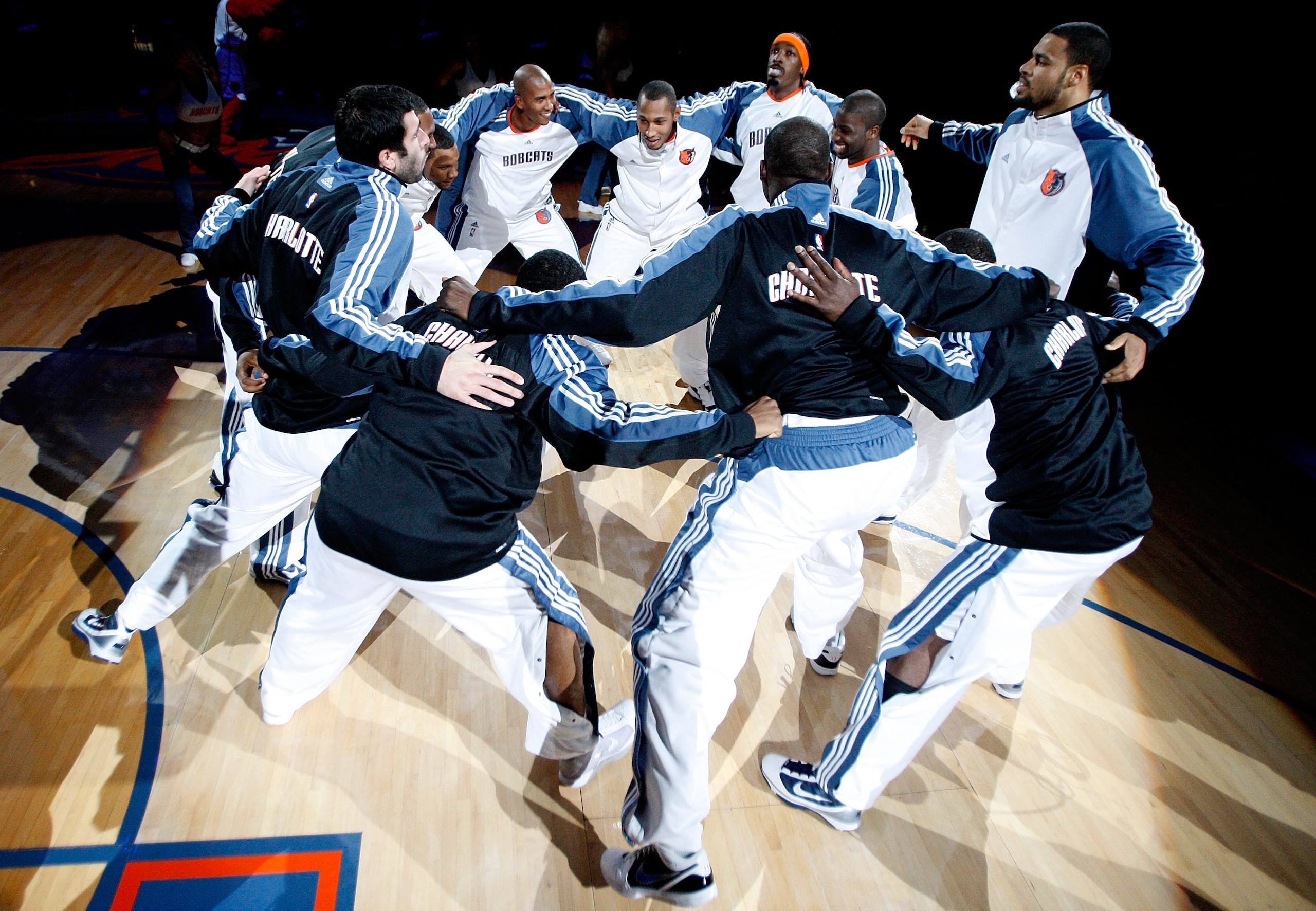
Sorry Bobcats fans, but there really isn't much to choose from here. Since joining the league in 2005, the 'Cats have had just one winning season, coming in the 2009-10 season when the team went 44-38, making the playoffs for the first, and so far only, time in the franchise's brief history.
While the first through fourth spots were locked down by Raymond Felton, Stephen Jackson, Gerald Wallace and Boris Diaw, Charlotte used a rotation of Tyson Chandler, Nazr Mohammed and Theo Ratliff at center (Mohammed had the most starts with 29).
Charlotte was quickly dispatched from the postseason, being swept by the Orlando Magic in the first round.
| PPG | APG | RPG | FG% | |
| Raymond Felton | 12.1 | 5.6 | 3.6 | 45.9 |
| Stephen Jackson | 21.1 | 3.6 | 5.1 | 42.3 |
| Gerald Wallace | 18.2 | 2.1 | 10.0 | 48.4 |
| Boris Diaw | 11.3 | 4.0 | 5.2 | 48.3 |
| Nazr Mohammed | 7.9 | 0.5 | 5.2 | 55.3 |
Chicago Bulls: 1995-96
4 of 30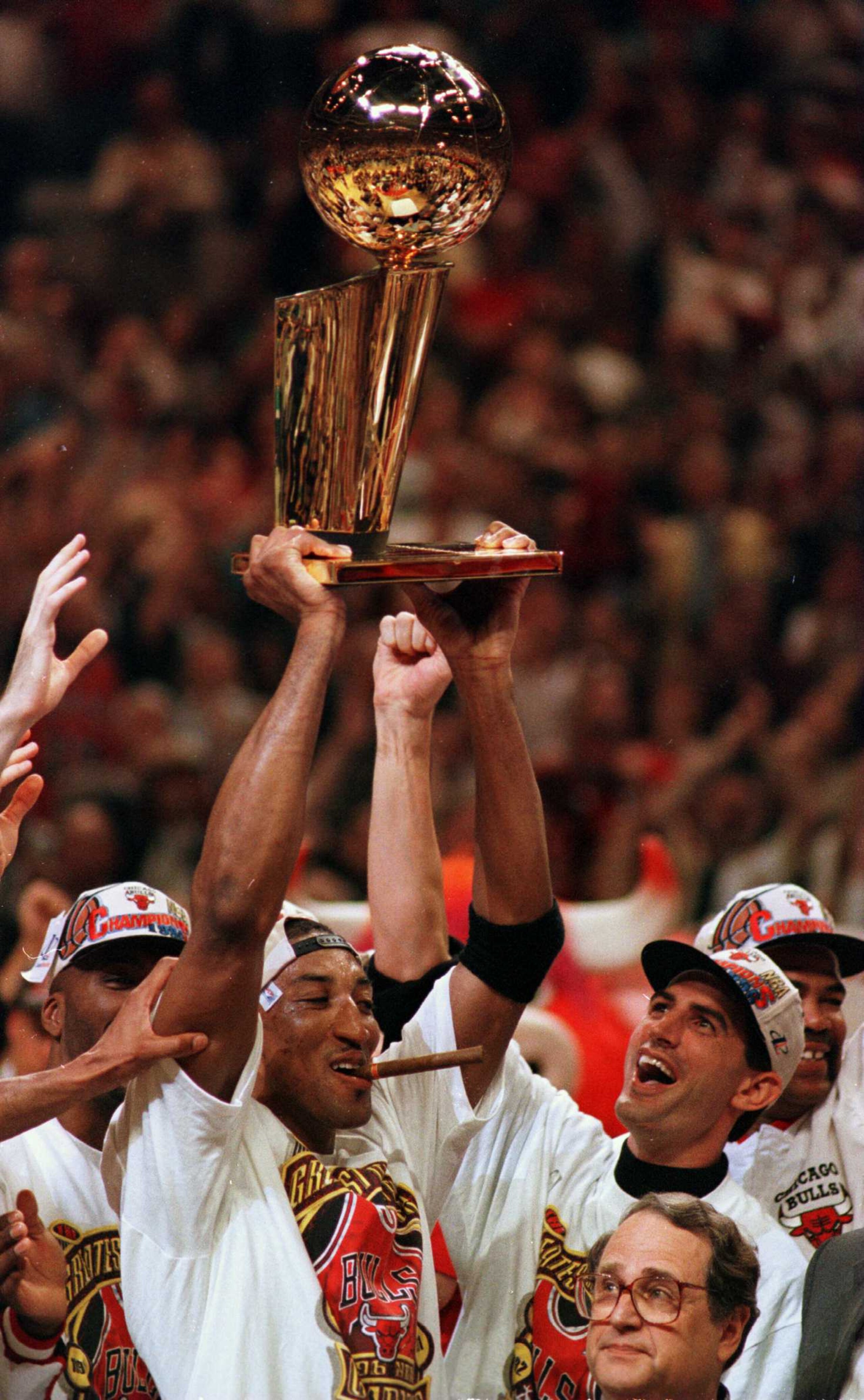
In Michael Jordan's first full season after his excursion into baseball, the Chicago Bulls set the league on fire, winning an NBA-record 72 games and losing just three playoff games en route to the franchise's fourth championship.
Jordan won the MVP that year, averaging 30.4 PPG, while Dennis Rodman further solidified himself as possibly the best rebounder of all time with 14.9 RPG. Both led the league in their respective categories.
Chicago's title was the first in what would become their second three-peat.
| PPG | APG | RPG | FG% | |
| Ron Harper | 7.4 | 2.6 | 2.7 | 46.7 |
| Michael Jordan | 30.4 | 4.3 | 6.6 | 49.5 |
| Scottie Pippen | 19.4 | 5.9 | 6.4 | 46.3 |
| Dennis Rodman | 5.5 | 2.5 | 14.9 | 48.0 |
| Luc Longley | 9.1 | 1.9 | 5.1 | 48.2 |
Cleveland Cavaliers: 2008-09
5 of 30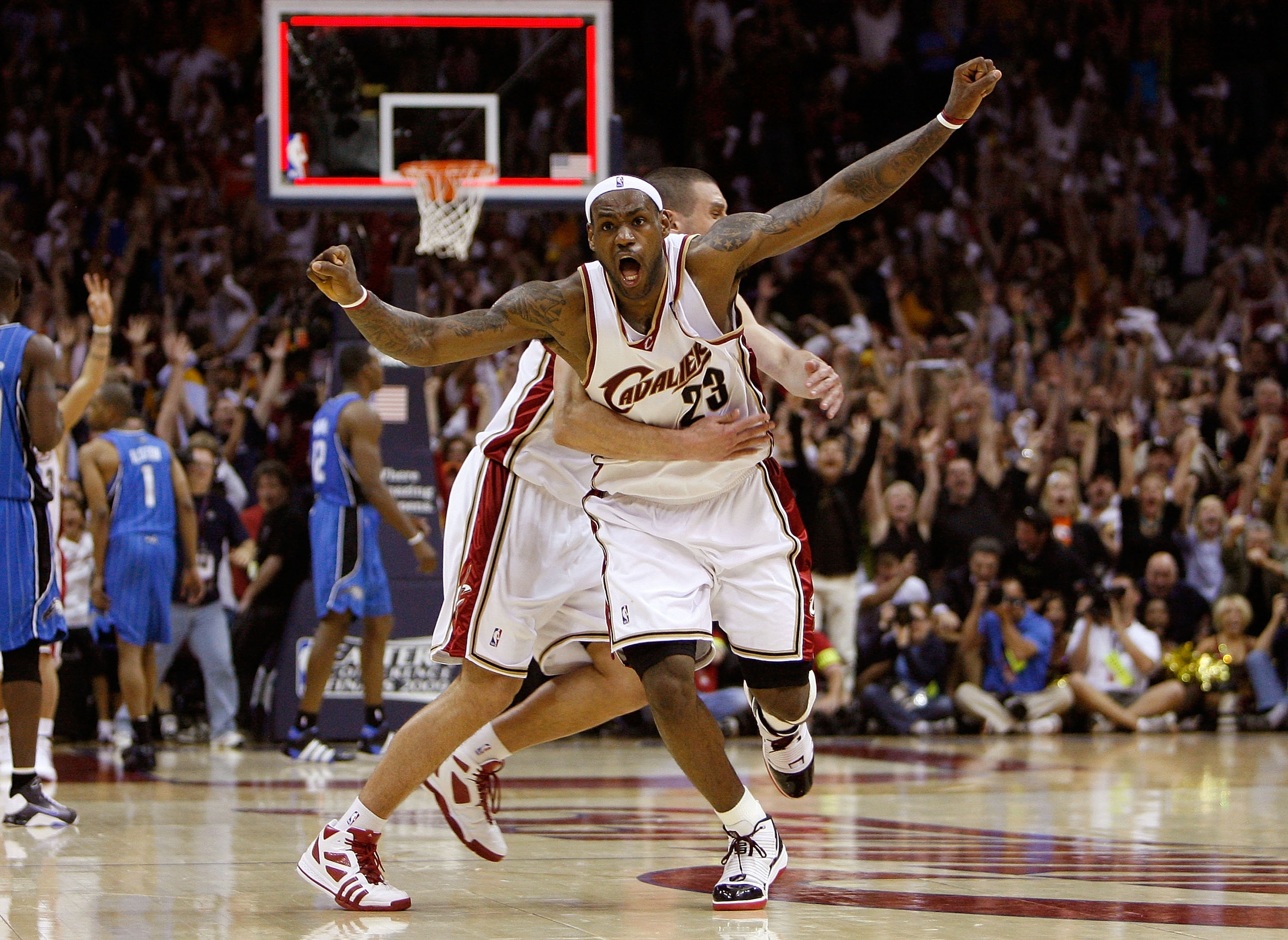
Cleveland's .805 winning-percentage and 66 wins during the 2008-09 season remain the highest totals in franchise history, and are marks that have only been approached one other time, in the 2009-10 campaign.
The Cavs had themselves the league MVP in LeBron James (28.4 PPG, 7.2 APG, 7.6 RPG) and other complementary pieces who performed quite well in Mo Williams and Zydrunas Ilgauskas.
Unfortunately for the team and its fans, the season ended in yet another Cleveland disappointment when they were beaten by the Orlando Magic, 4-2, in the Eastern Conference Finals.
| PPG | APG | RPG | FG% | |
| Mo Williams | 17.8 | 4.1 | 3.4 | 46.7 |
| Delonte West | 11.7 | 3.5 | 3.2 | 45.7 |
| LeBron James | 28.4 | 7.2 | 7.6 | 48.9 |
| Ben Wallace | 2.9 | 0.8 | 6.5 | 44.5 |
| Zydrunas Ilgauskas | 12.9 | 1.0 | 7.5 | 47.2 |
Dallas Mavericks: 2006-07
6 of 30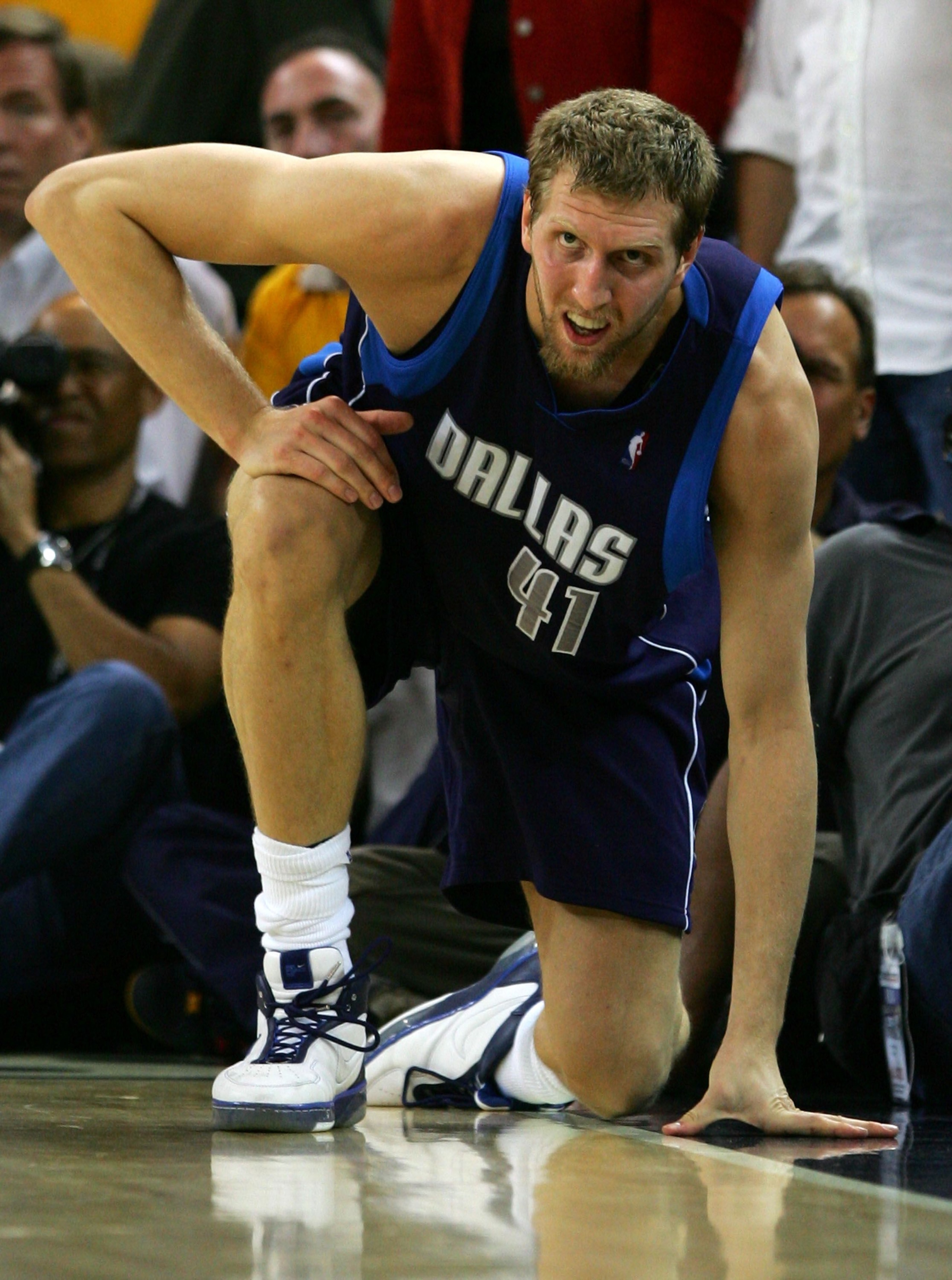
A humiliating loss to the eighth-seeded Golden State Warriors overshadowed what had been a tremendous 2006-07 season for the Mavs.
While it certainly didn't end the way Dallas had hoped, the season did give them the highest win total (67) and best winning-percentage (.817) in franchise history. Dirk Nowitzki also took home league MVP honors, the only player in the Mavericks' 31 seasons to do so.
The season also featured the emergence of Devin Harris as a starting-level point guard and the sharpshooting of Jason Terry.
| PPG | APG | RPG | FG% | |
| Devin Harris | 10.2 | 3.7 | 2.5 | 49.2 |
| Jason Terry | 16.7 | 5.2 | 2.9 | 48.4 |
| Josh Howard | 18.9 | 1.8 | 6.8 | 45.9 |
| Dirk Nowitzki | 24.6 | 3.4 | 8.9 | 50.2 |
| Erick Dampier | 7.1 | 0.6 | 7.4 | 62.6 |
Denver Nuggets: 1984-85
7 of 30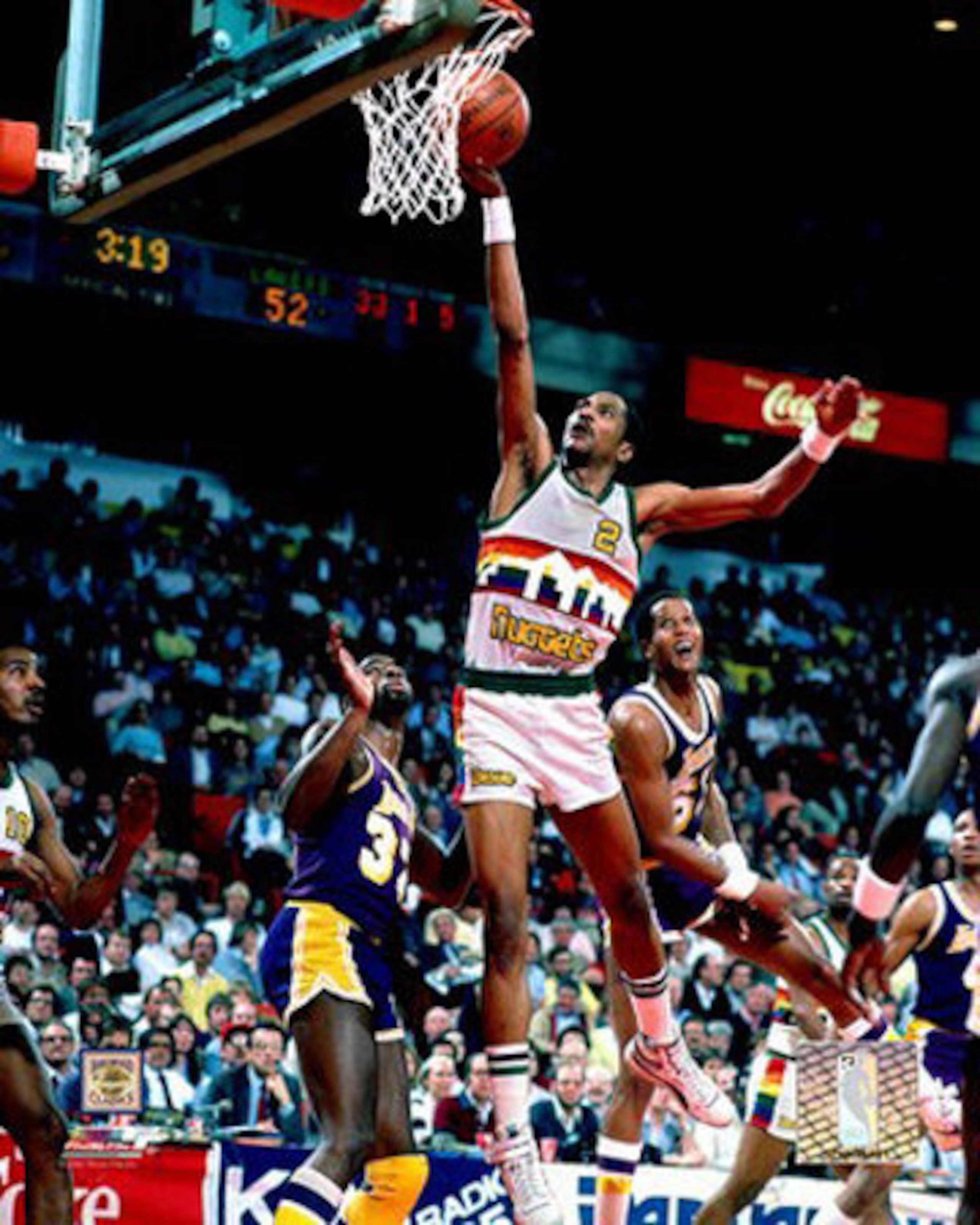
The 1984-85 season marked the Denver Nuggets' first—and until 2009 only—trip to the Western Conference Finals. Their 52 wins were also a franchise best until the 1987-88 year.
The starting lineup boasted one Hall of Famer in Alex English, and featured two players who shot over 50 percent from the field while attempting at least 16 shots a game (English and Calvin Natt).
As mentioned above, this Denver squad was one of only two in the organization's history to make the Western Conference Finals, where they lost to (who else?) the eventual champion L.A. Lakers.
| PPG | APG | RPG | FG% | |
| Fat Lever | 12.8 | 7.5 | 5.0 | 43.0 |
| T.R. Dunn | 5.4 | 1.9 | 4.8 | 48.9 |
| Alex English | 27.9 | 4.2 | 5.7 | 51.8 |
| Calvin Natt | 23.3 | 3.1 | 7.8 | 54.6 |
| Wayne Cooper | 12.1 | 1.1 | 7.9 | 47.2 |
Detroit Pistons: 1988-89
8 of 30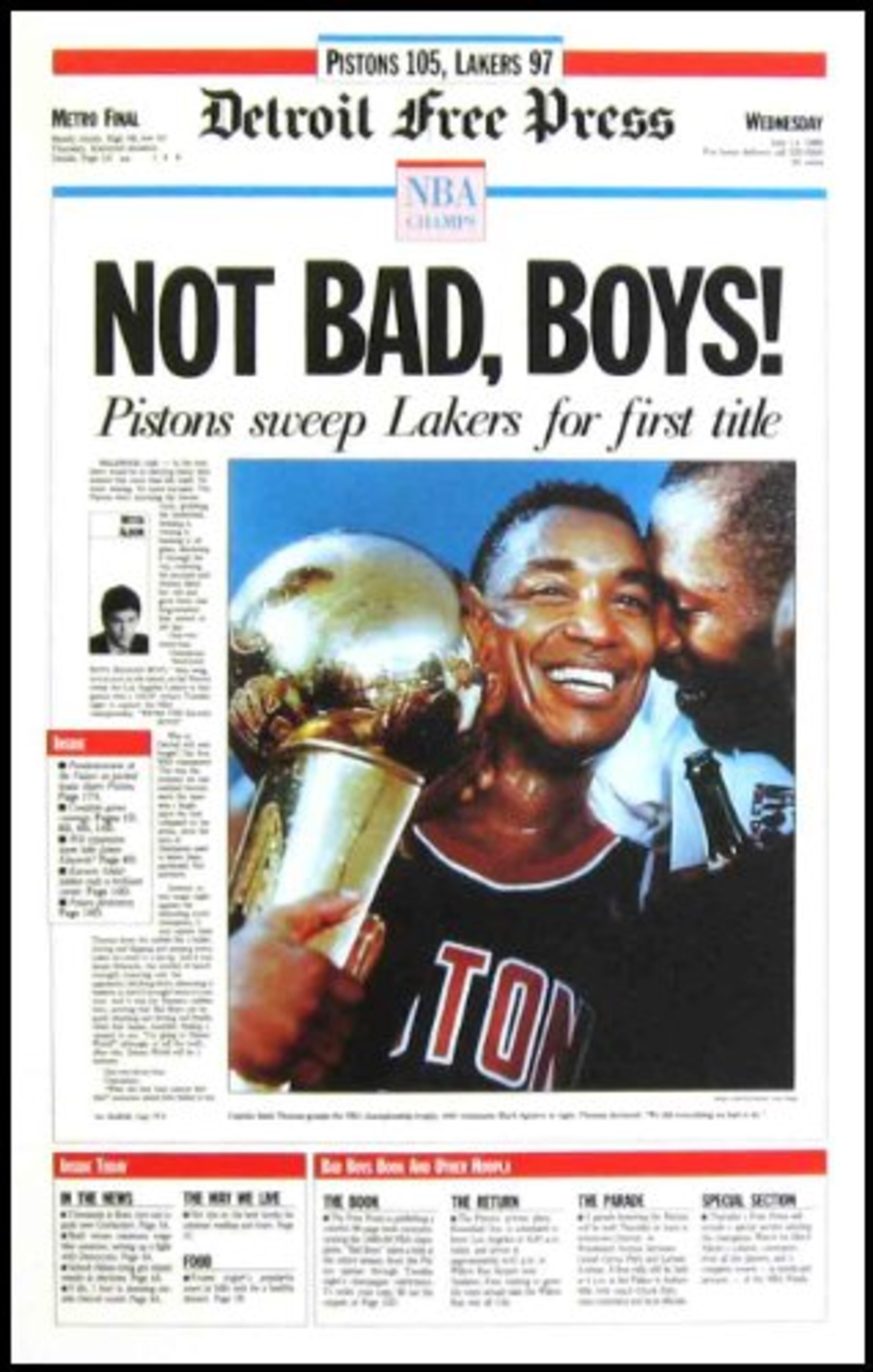
The Detroit Pistons won their first title at the conclusion of the 1988-89 season, a year in which they also recorded the second-highest win total in franchise history with 63 (one measly game behind the mark set by the 2005-06 squad).
The team started the year with three Hall of Famers—Isiah Thomas, Joe Dumars and Adrian Dantley—before trading Dantley to Dallas for Mark Aguirre. Aguirre would take Dantley's place in the starting five and the Pistons actually won more games with the new guy.
After losing just two games during the playoffs and sweeping the Lakers in the Finals, Detroit would win a second-consecutive title the following year.
| PPG | APG | RPG | FG% | |
| Isiah Thomas | 18.2 | 8.3 | 3.4 | 46.4 |
| Joe Dumars | 17.2 | 5.7 | 2.5 | 50.5 |
| Mark Aquirre | 15.5 | 2.5 | 4.2 | 48.3 |
| Rick Mahorn | 7.3 | 0.8 | 6.9 | 51.7 |
| Bill Laimbeer | 13.7 | 2.2 | 9.6 | 49.9 |
Golden State Warriors: 1974-75
9 of 30
Led by future Hall-of-Fame inductee Rick Barry, the 1974-75 Golden State Warriors boasted the highest scoring offense in the league (108.5 PPG) and would win the '75 title.
Barry had a magnificent season, averaging 30.6 PPG, 6.2 APG and 5.7 RPG. The team also got valuable contributions from the rest of its starters, as they were largely efficient when called upon and found ways to help the team even though their scoring numbers were not as high as Barry's.
The championship remains the only one claimed in Golden State. It was the franchise's first since the 1955-56 season, when it was located in Philadelphia.
| PPG | APG | RPG | FG% | |
| Charles Johnson | 10.9 | 2.9 | 3.9 | 41.2 |
| Butch Beard | 12.8 | 4.2 | 3.9 | 52.8 |
| Rick Barry | 30.6 | 6.2 | 5.7 | 46.4 |
| Jamaal Wilkes | 14.2 | 2.2 | 8.2 | 44.2 |
| Clifford Ray | 9.4 | 2.2 | 10.6 | 52.2 |
Houston Rockets: 1993-94
10 of 30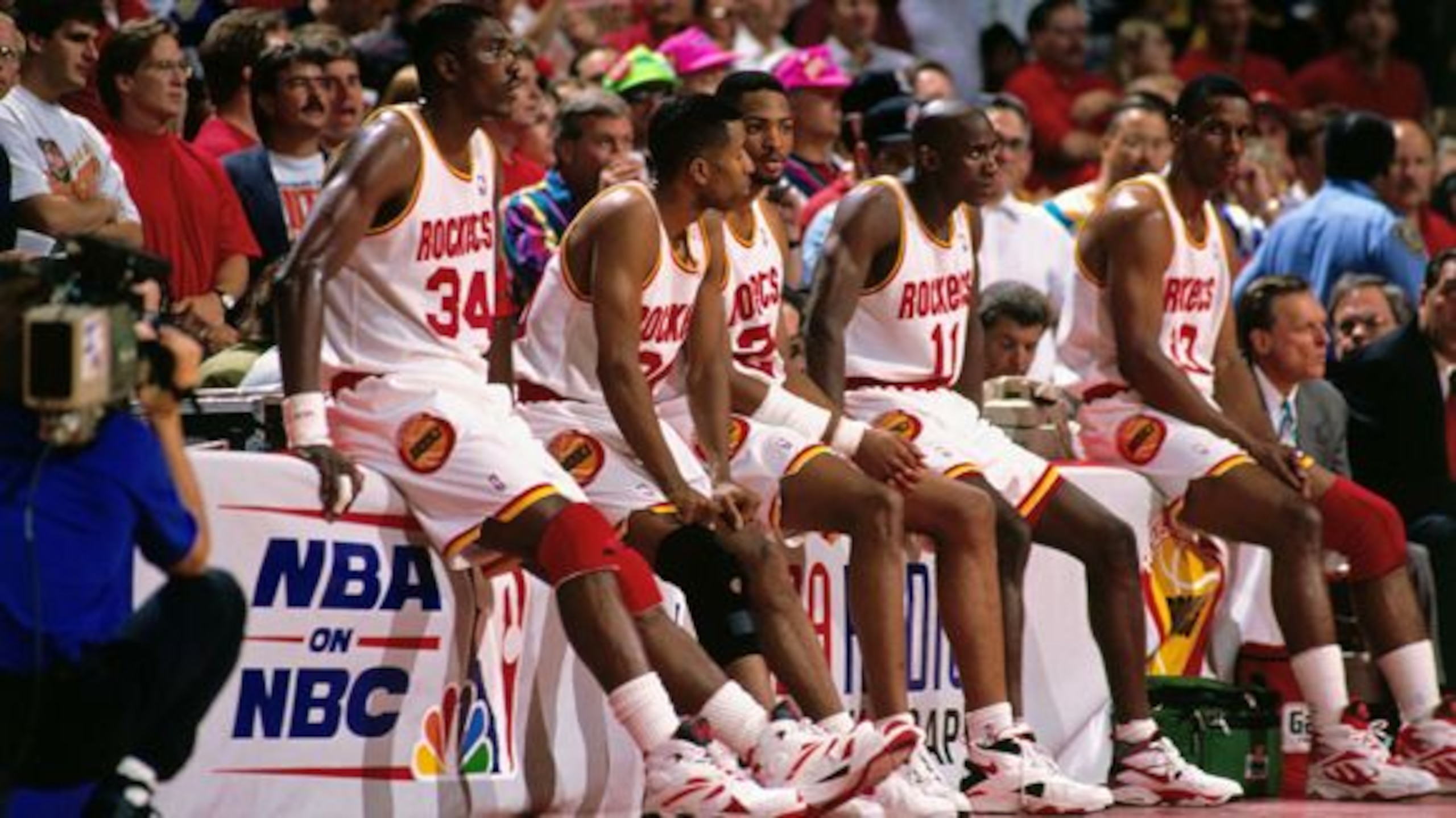
On their way to winning the first NBA Championship in franchise history, the 1993-94 Rockets also set team records for wins and winning-percentage.
Team leader, league MVP and Hall of Famer Hakeem Olajuwon posted team-highs in both scoring (27.3 PPG) and rebounding (11.9 RPG). The squad also got significant contributions from fellow starters Kenny Smith and Otis Thorpe.
At the conclusion of the season, the Rockets bested the New York Knicks in a hard-fought seven game series to win the title. They would win it all again the following season.
| PPG | APG | RPG | FG% | |
| Kenny Smith | 11.6 | 4.2 | 1.8 | 48.0 |
| Vernon Maxwell | 13.6 | 5.1 | 3.1 | 38.9 |
| Robert Horry | 9.9 | 2.9 | 5.4 | 45.9 |
| Otis Thorpe | 14.0 | 2.3 | 10.6 | 56.1 |
| Hakeem Olajuwon | 27.3 | 3.6 | 11.9 | 52.8 |
Indiana Pacers: 1997-98
11 of 30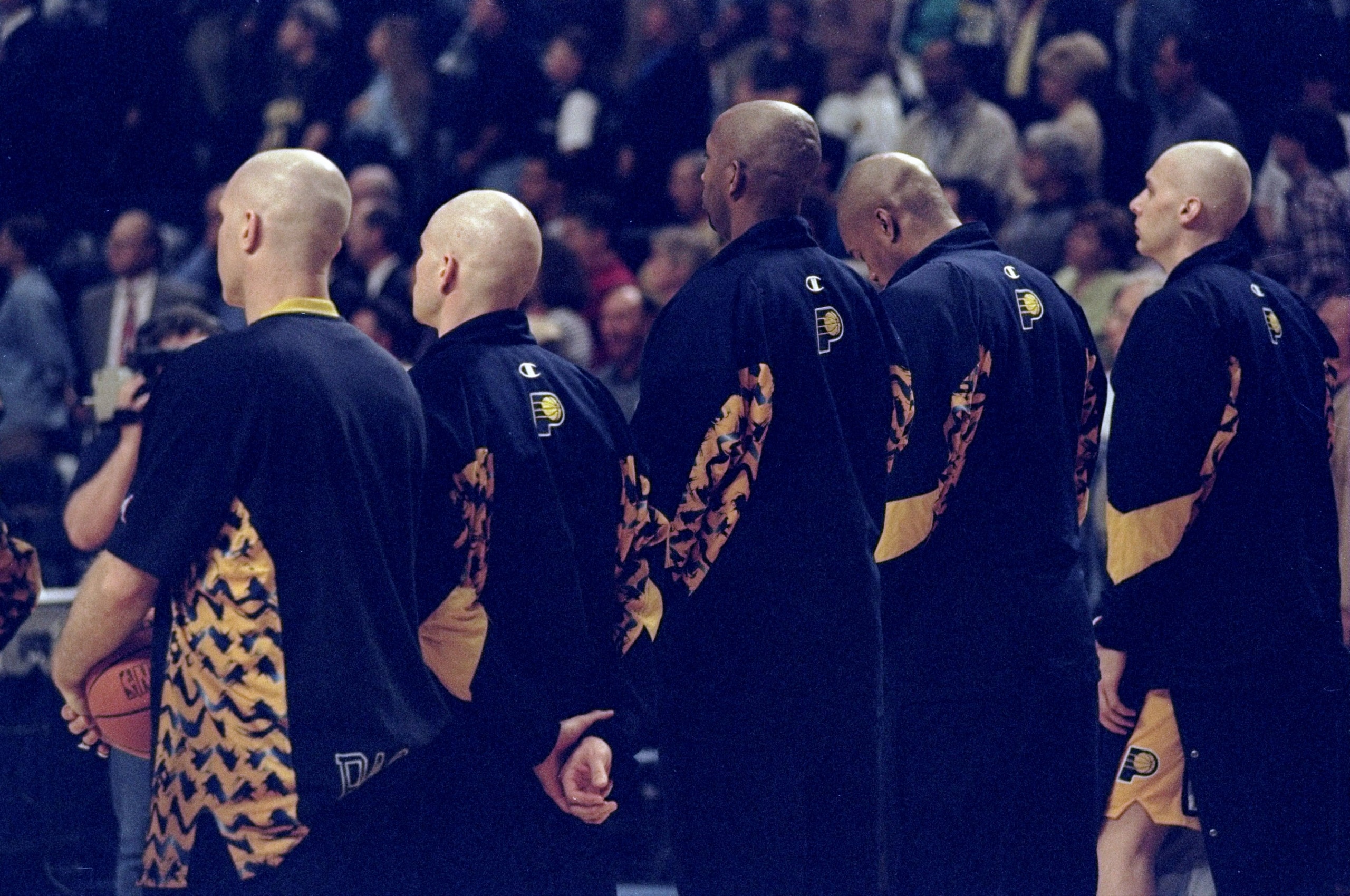
Unfortunately for the Pacers, the year they had their best starting lineup came when Michael Jordan was still playing.
The 1997-98 Pacers were fourth in the league in offensive rating (points per 100 possessions) at 108.4 and fifth in defensive rating (points allowed per 100 possessions) at 101.6. The staring five consisted of two potential Hall-of-Fame players in Reggie Miller and Chris Mullin, whom were complemented by some other very good pieces in Rik Smits, Mark Jackson and Dale Davis.
After winning 58 games and making it all the way to the Eastern Conference Finals, Indiana would ultimately lose, like so many others, to Jordan and the Chicago Bulls in seven games.
| PPG | APG | RPG | FG% | |
| Mark Jackson | 8.3 | 8.7 | 3.9 | 41.6 |
| Reggie Miller | 19.5 | 2.1 | 2.9 | 47.7 |
| Chris Mullin | 11.3 | 2.3 | 3.0 | 48.1 |
| Dale Davis | 8.0 | 0.9 | 7.8 | 54.8 |
| Rik Smits | 16.7 | 1.4 | 6.9 | 49.5 |
Los Angeles Clippers: 1974-75
12 of 30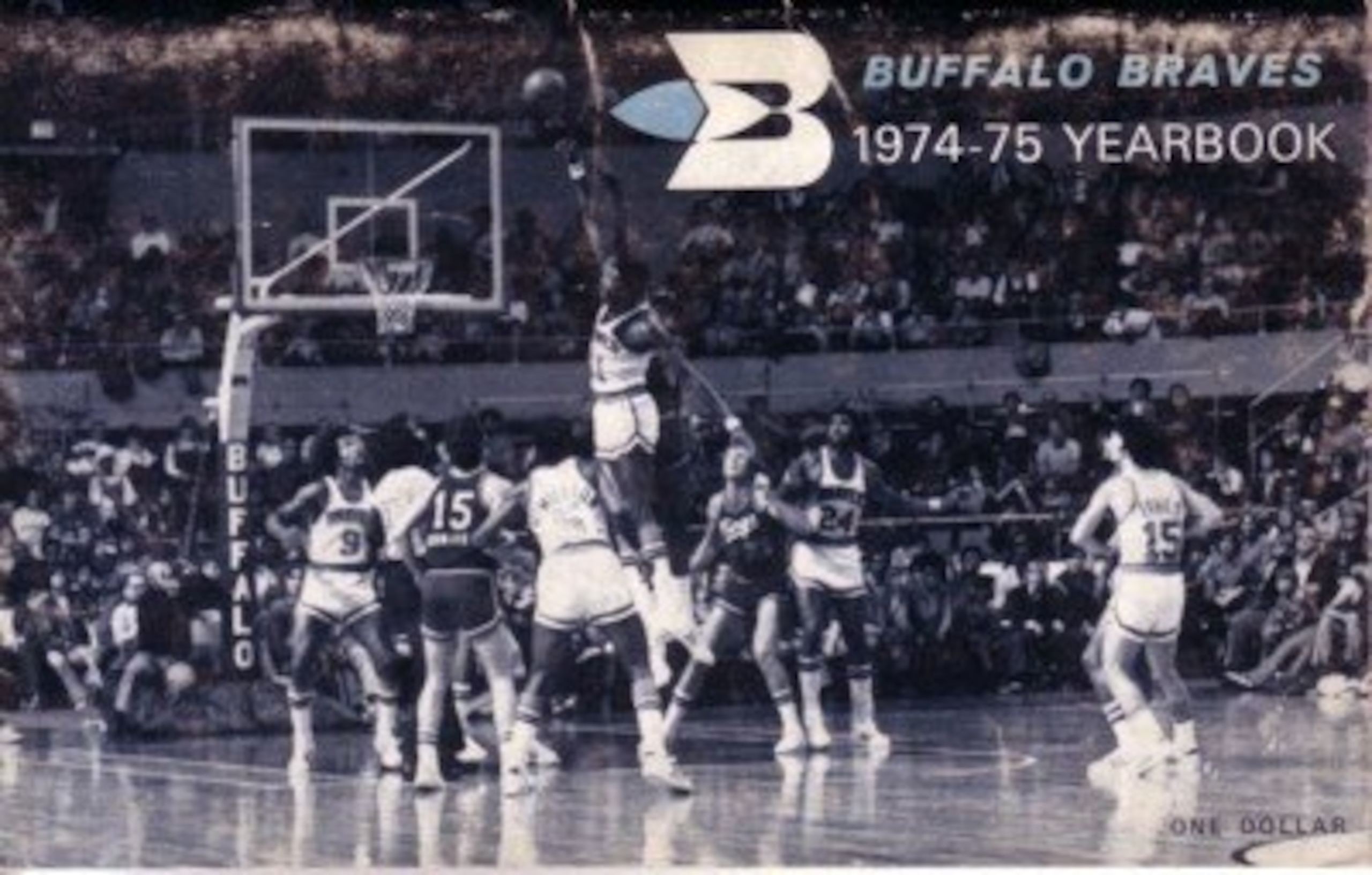
Eesh. The Clippers don't exactly have a sterling reputation, particularly since moving to L.A., but back when they were the Buffalo Braves the team played host to some darn good players.
This was never more evident than in the 1974-75 season when the starting lineup sported league MVP and future Hall-of-Famer Bob McAdoo, in addition to Jim McMillan and Randy Smith.
Alas, this Braves team would eventually lose in the Eastern Conference Semis, and the franchise has had only two winning seasons since moving to Los Angeles. There is some hope, however, that their current young core of players will someday become a formidable starting five.
| PPG | APG | RPG | FG% | |
| Randy Smith | 17.8 | 6.5 | 4.2 | 48.4 |
| Jack Marin | 11.8 | 3.2 | 4.5 | 45.5 |
| Jim McMillan | 14.3 | 2.5 | 6.2 | 49.9 |
| Gar Heard | 11.1 | 2.8 | 9.9 | 38.8 |
| Bob McAdoo | 34.5 | 2.2 | 14.1 | 51.2 |
Los Angeles Lakers: 1971-72
13 of 30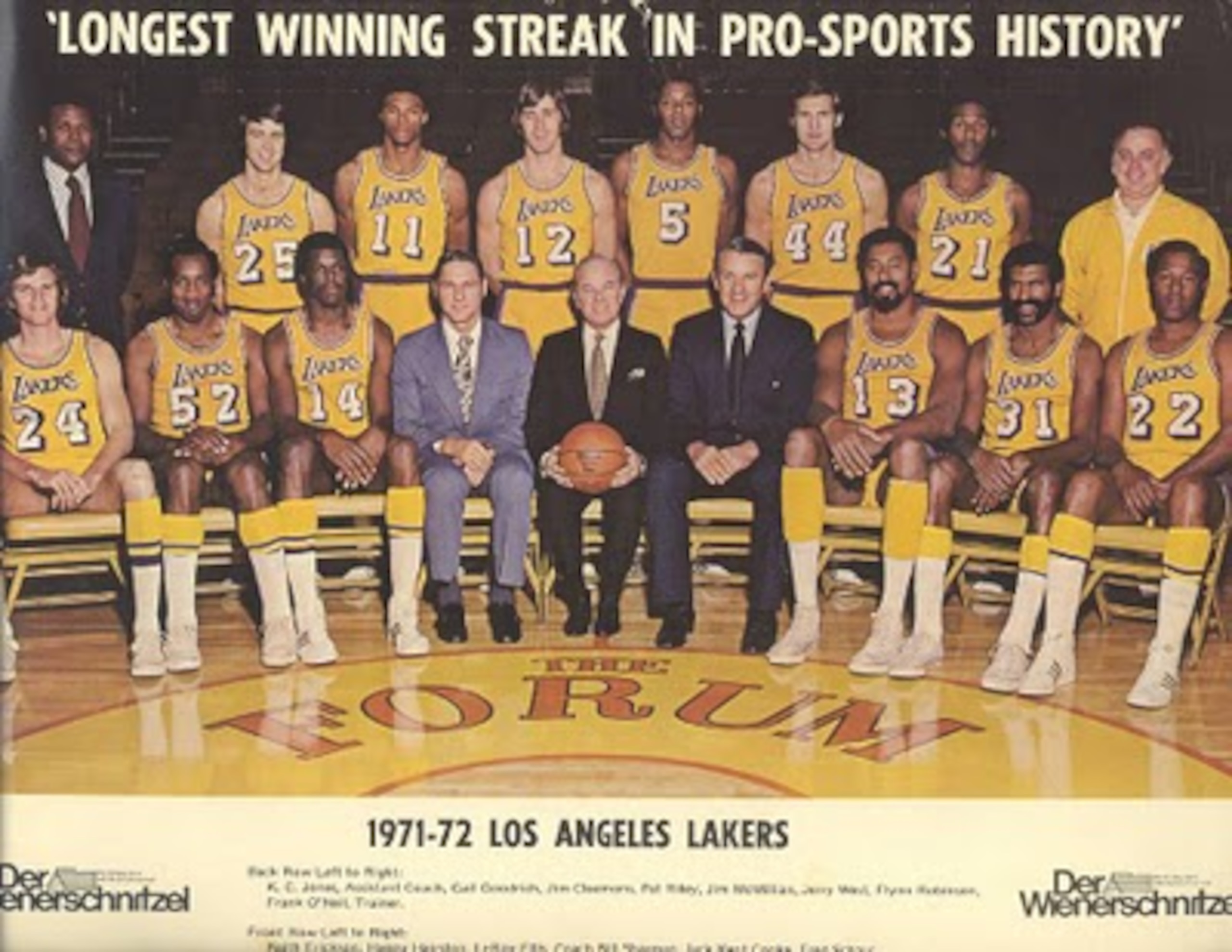
When a team has such a long and storied history as the Lakers do, it's always hard to single one team or starting group out as the best. It's equally tough to look past the accomplishments of the 1971-72 squad.
The starting five during the 1971-72 campaign consisted of three Hall of Fame members in Wilt Chamberlain, Jerry West and Gail Goodrich. Chamberlain and West were also in the league-leaders in RPG and APG, and all five players scored at least 13.1 PPG and none of them shot below 46.1 percent from the field—pretty impressive considering the league average for field-goal percentage that year was 45.5.
This Lakers won the NBA Championship and established two records, including one that still stands. L.A.'s 69 wins stood as the highest total in NBA history for 24 seasons and the 33-straight wins the team rattled off during the year is a mark that has yet to be broken.
| PPG | APG | RPG | FG% | |
| Gail Goodrich | 25.9 | 4.5 | 3.6 | 48.7 |
| Jerry West | 25.8 | 9.7 | 4.2 | 47.7 |
| Jim McMillan | 18.8 | 2.6 | 6.5 | 48.2 |
| Happy Hairston | 13.1 | 2.4 | 13.1 | 46.1 |
| Wilt Chamberlain | 14.8 | 4.0 | 19.2 | 64.9 |
Memphis Grizzlies: 2003-04
14 of 30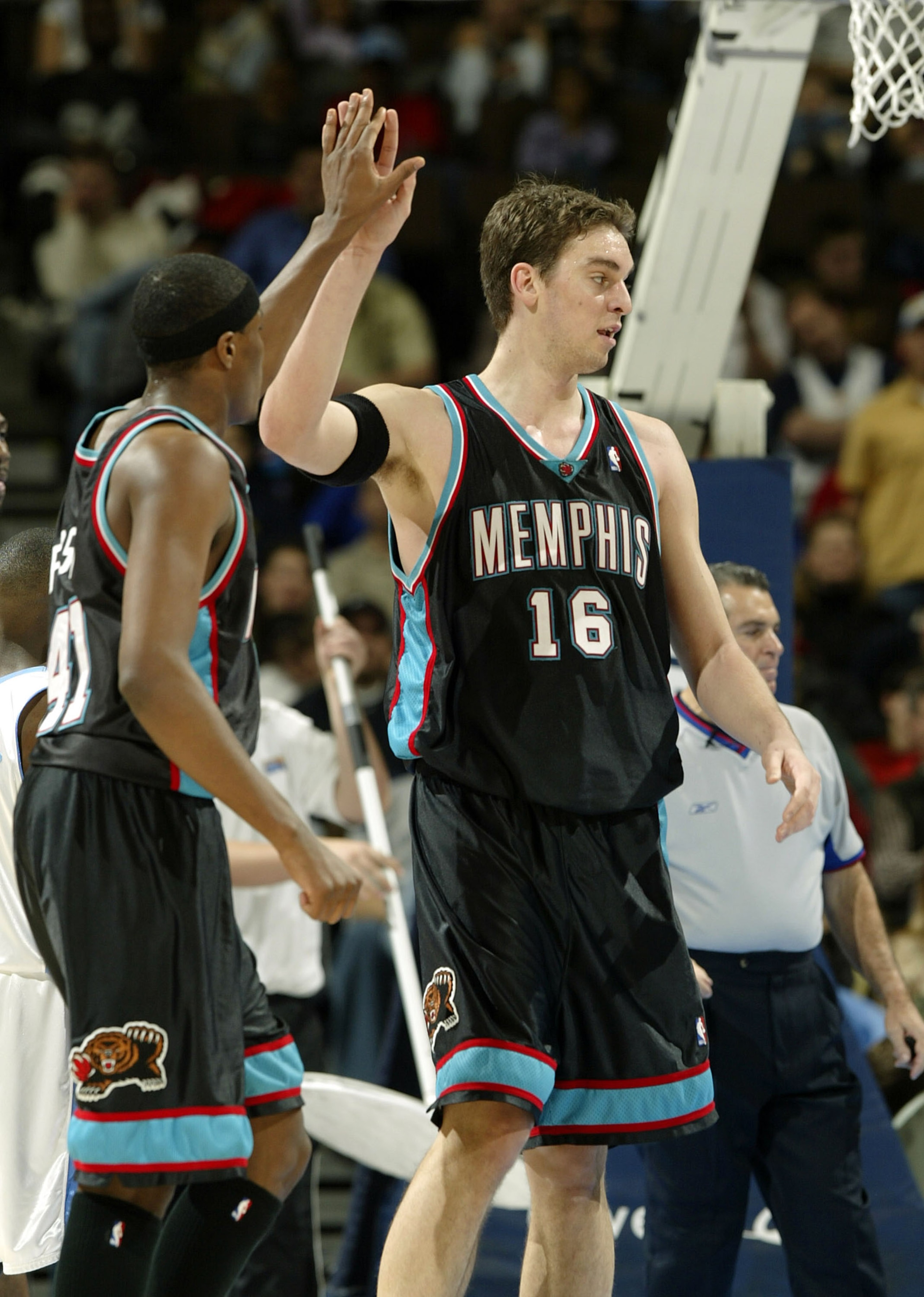
The Memphis Grizzlies have made the playoffs three times and have been swept out of the first round in each appearance. The first year they achieved any type of success, however, came in the 2003-04 season, when they recorded a franchise-best 50 wins shortly after relocating from Vancouver.
No starter had a particularly memorable season, although Pau Gasol and James Posey did make some noise. The team was also seventh in offensive rating and 11th in defensive rating, better combined marks than in any of the franchise's other winning years.
| PPG | APG | RPG | FG% | |
| Jason Williams | 10.9 | 6.8 | 2.0 | 40.7 |
| James Posey | 13.7 | 1.5 | 4.9 | 47.8 |
| Mike Miller | 11.1 | 3.6 | 3.3 | 43.8 |
| Lorenzen Wright | 9.4 | 1.1 | 6.8 | 43.9 |
| Pau Gasol | 17.7 | 2.5 | 7.7 | 48.2 |
Miami Heat: 2005-06
15 of 30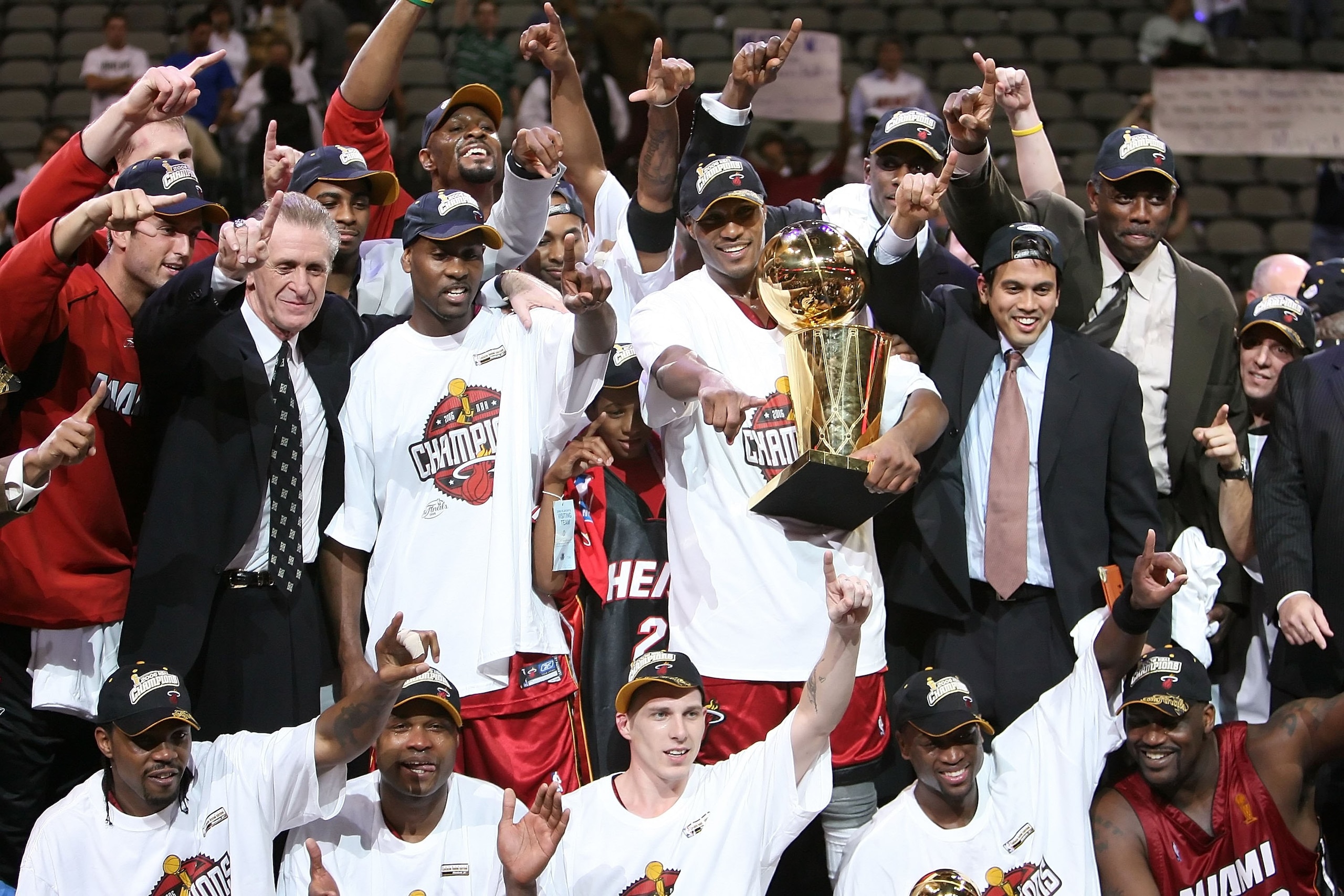
There is a perception that the 2005-06 Miami Heat were a one-man show with Dwyane Wade, and perhaps during the Finals that was true, but during the regular season the team got contributions from its starters across the board.
They were, of course, led by Wade's 27.2 PPG, with Shaquille O'Neal chipping in 20.0 PPG and 9.2 RPG and Udonis Haslem and Jason Williams also having solid, if unspectacular seasons.
Some will probably feel that some of the Heat teams from the '90s are more deserving, or that their current lineup should be up here, but this group's ability to win a championship sets them apart.
| PPG | APG | RPG | FG% | |
| Jason Williams | 12.3 | 4.9 | 2.4 | 44.2 |
| Dwyane Wade | 27.2 | 6.7 | 5.7 | 49.5 |
| James Posey | 7.2 | 1.3 | 4.8 | 40.3 |
| Udonis Haslem | 9.3 | 1.2 | 7.8 | 50.8 |
| Shaquille O'Neal | 20.0 | 1.9 | 9.2 | 60.0 |
Milwaukee Bucks: 1970-71
16 of 30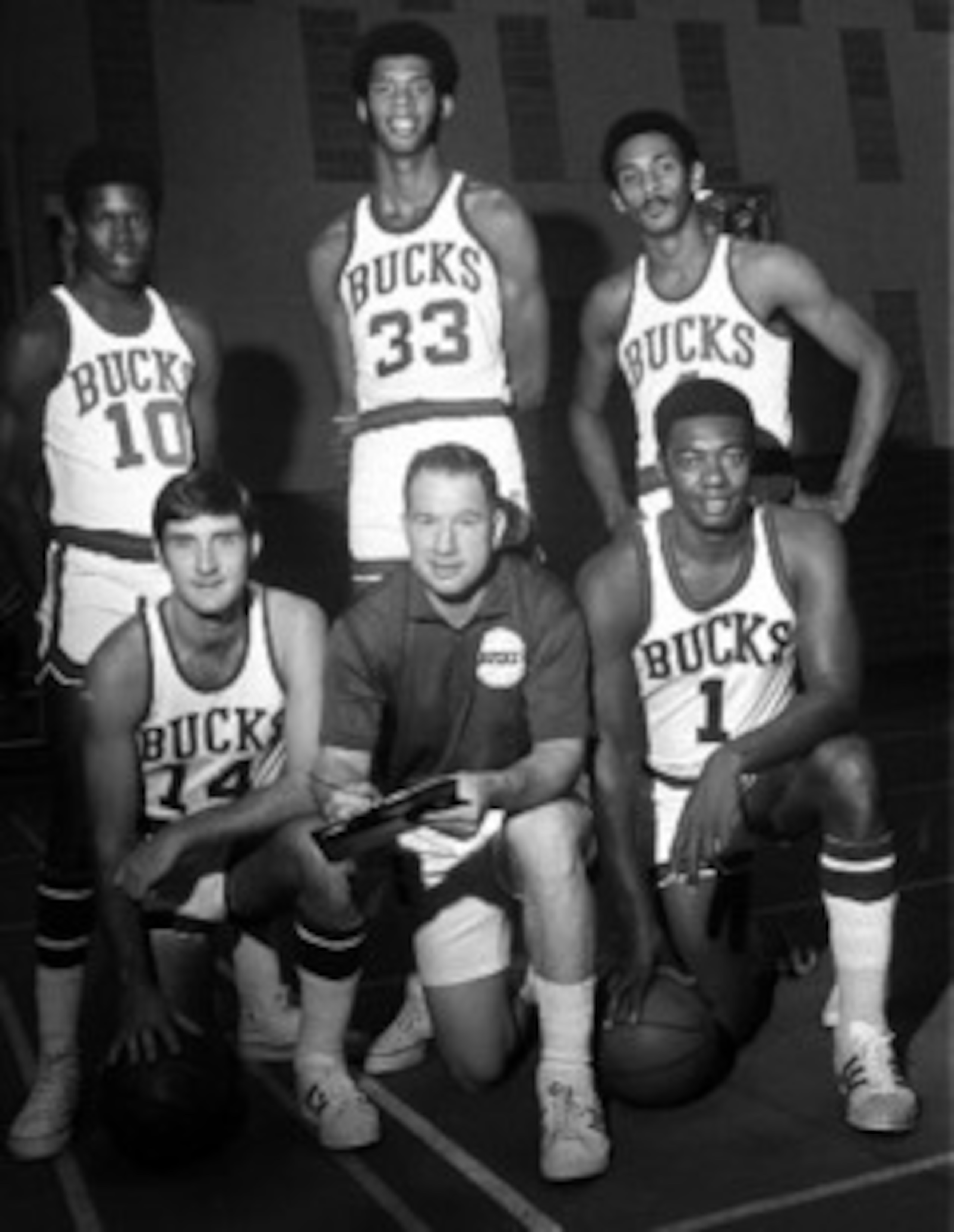
If you want to talk about a cohesive unit, you need look no further than the starting lineup for the 1970-71 Milwaukee Bucks, which featured two Hall of Fame inductees in Oscar Robertson and Kareem Abdul-Jabbar (who also won the MVP that year).
The league average for field-goal percentage for the 1970-71 season was 44.9, yet no member of Milwaukee's starting five shot below 49.6 percent. Obviously, these guys were taking high-percentage shots, and what bears out even more that there was some fantastic teamwork and ball movement going on is this stat: Only one starter averaged below 3.3 APG.
Milwaukee won the NBA Championship in 1971, and the team's 66 wins and .805 winning-percentage remain franchise bests.
| PPG | APG | RPG | FG% | |
| Oscar Robertson | 19.4 | 8.2 | 5.7 | 49.6 |
| Jon McGlocklin | 15.8 | 3.7 | 2.7 | 53.5 |
| Bob Dandridge | 18.4 | 3.5 | 8.0 | 50.9 |
| Greg Smith | 11.7 | 2.8 | 7.2 | 51.2 |
| Kareem Abdul-Jabbar | 31.7 | 3.3 | 16.0 | 57.7 |
Minnesota Timberwolves: 2003-04
17 of 30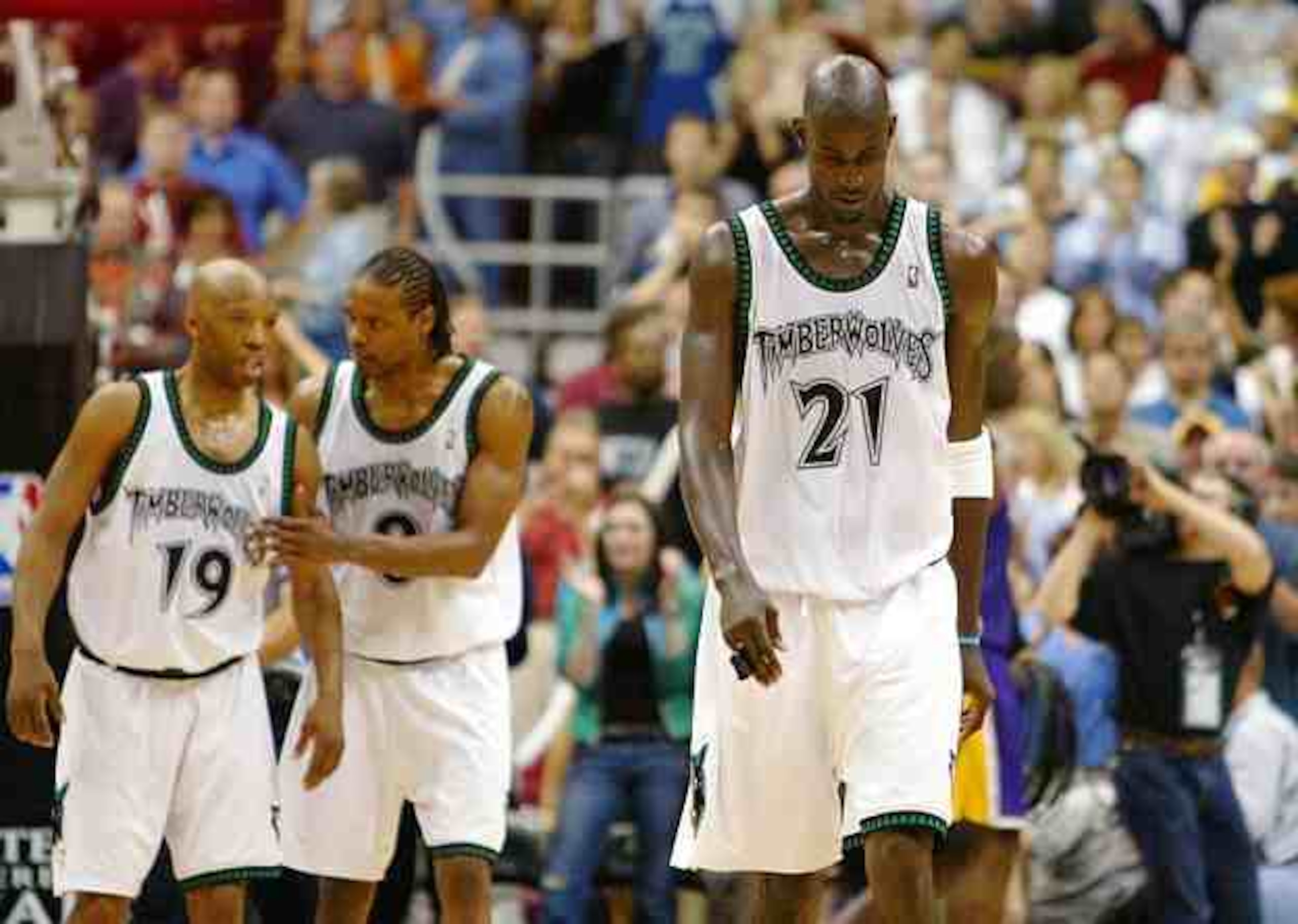
The T-Wolves advanced past the first round of the playoffs just once during Kevin Garnett's tenure, during the 2003-04 season when the organization finally surrounded him with some serious talent.
Playing alongside Latrell Sprewell and Sam Cassell, Garnett had possibly his best season, averaging 24.2 PPG, leading the league in rebounding with 13.9 RPG and winning the MVP Award. Sprewell and Cassell also put up some good numbers, particularly the latter with 19.8 PPG and 7.3 APG.
Minnesota won a franchise-best 58 games that year, making it to the Western Conference Finals before being dropped by the L.A. Lakers in six games.
| PPG | APG | RPG | FG% | |
| Sam Cassell | 19.8 | 7.3 | 3.3 | 48.8 |
| Latrell Sprewell | 16.8 | 3.5 | 3.8 | 40.9 |
| Trenton Hassell | 5.0 | 1.6 | 3.2 | 46.5 |
| Kevin Garnett | 24.2 | 5.0 | 13.9 | 49.9 |
| Ervin Johnson | 1.9 | 0.4 | 3.5 | 53.4 |
New Jersey Nets: 2001-02
18 of 30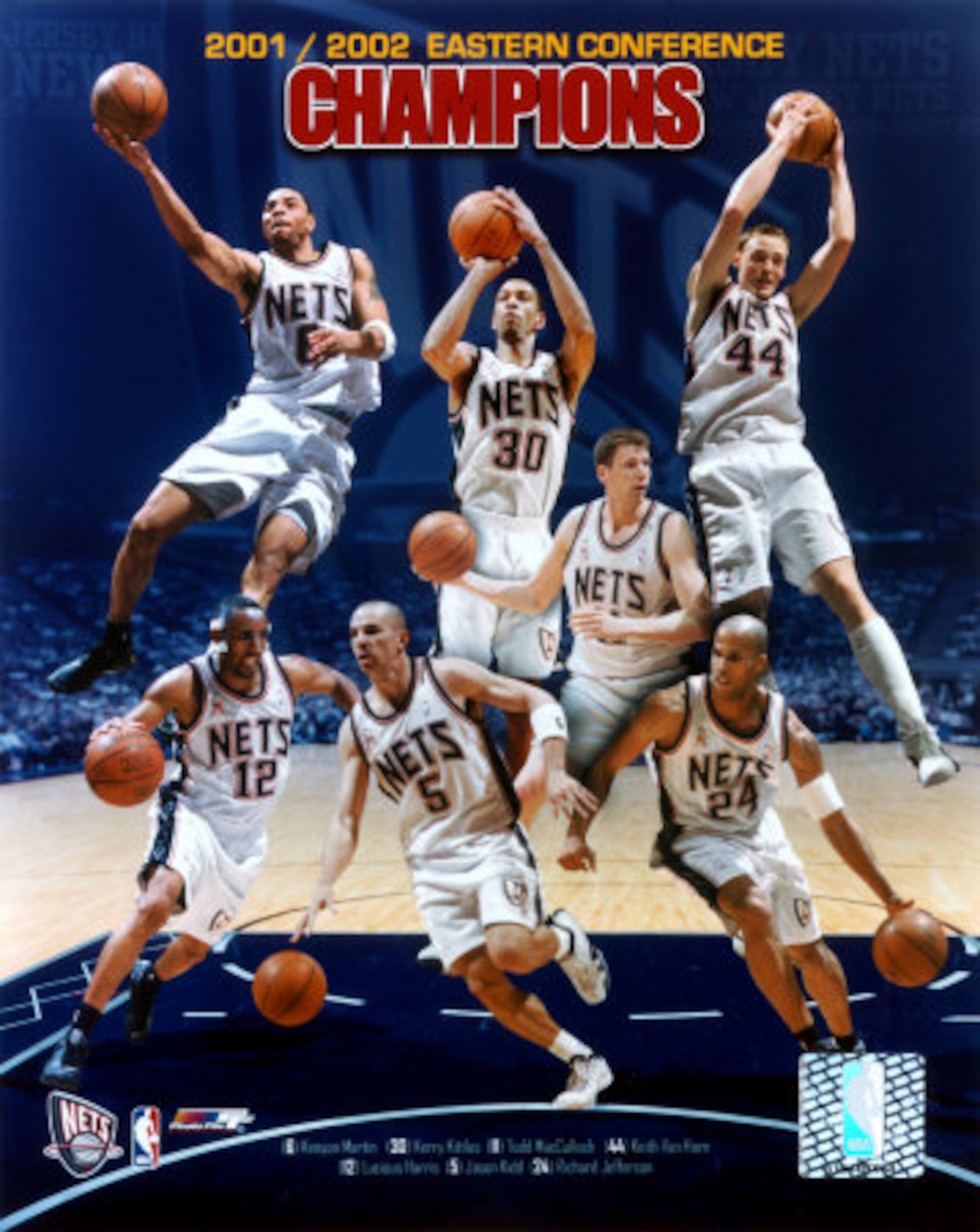
It's interesting how the impression left by the 2001-02 New Jersey Nets was that of a high-flying, push-the-tempo team, because they really made their mark on the defensive end, ranking No. 1 overall in defensive rating.
The Nets made the NBA Finals for the first time in franchise history that year, posting franchise records in wins and winning-percentage. It was Jason Kidd's first year in the Meadowlands, and the point guard did not disappoint, averaging 14.7 PPG, 9.9 APG and 7.3 RPG.
Kerry Kittles, Keith Van Horn and a young Kenyon Martin also had fine years, although, in the end, it was not enough, as New Jersey was swept by Shaq, Kobe and the L.A. Lakers in the championship round.
| PPG | APG | RPG | FG% | |
| Jason Kidd | 14.7 | 9.9 | 7.3 | 39.1 |
| Kerry Kittles | 13.4 | 2.6 | 3.4 | 46.6 |
| Keith Van Horn | 14.8 | 2.0 | 7.5 | 43.3 |
| Kenyon Martin | 14.9 | 2.6 | 5.3 | 46.3 |
| Todd MacCulloch | 9.7 | 1.3 | 6.1 | 53.1 |
New Orleans Hornets: 2007-08
19 of 30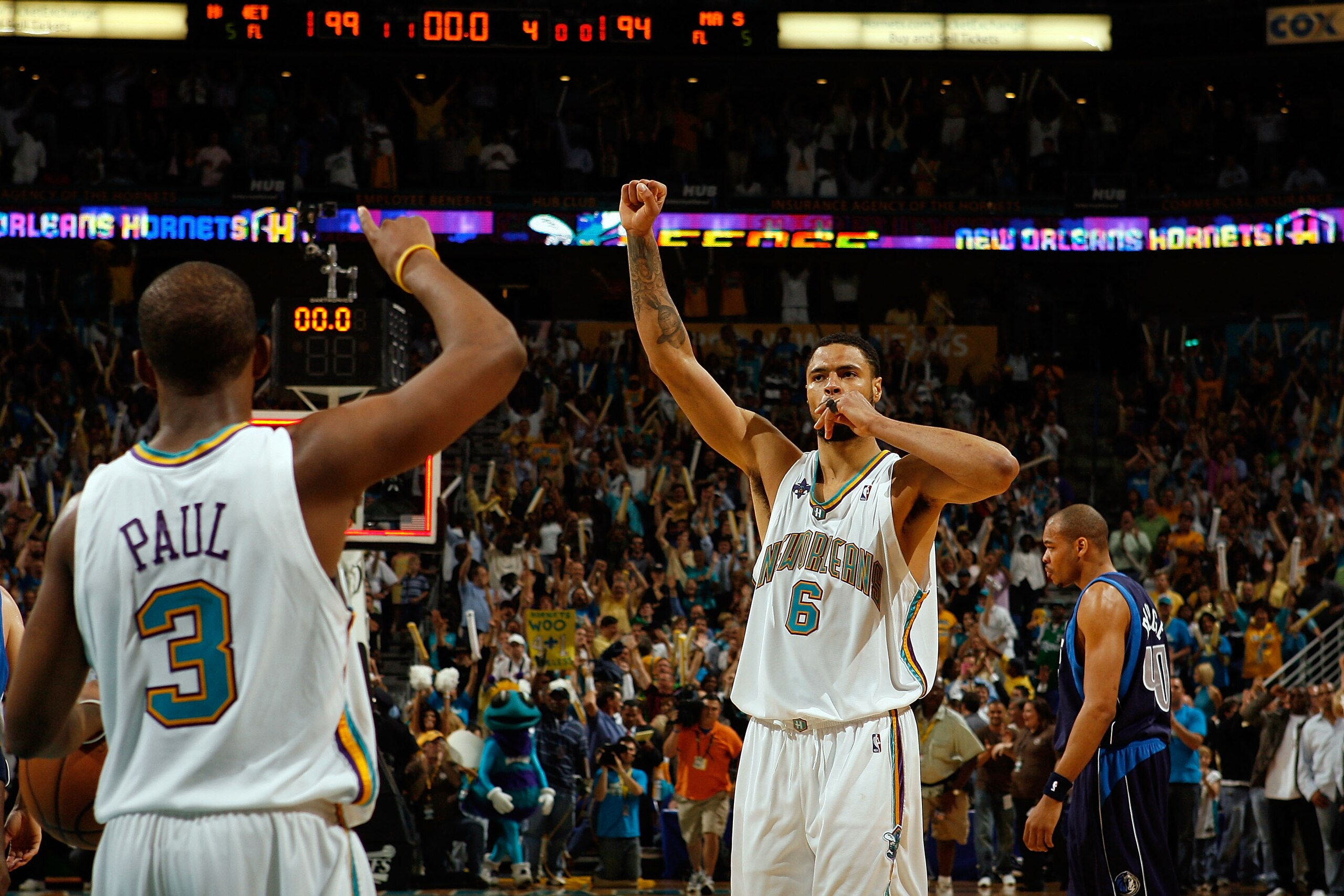
In Chris Paul's third season as a pro, he led the league in APG and helped the Hornets to a franchise-high 56 wins.
New Orleans also got major contributions from David West and Peja Stojakovic, who both scored at least 16.4 PPG, as well as Tyson Chandler, who hauled in 11.7 RPG while tallying a field-goal percentage of 62.3.
Finishing the season as the No. 2 seed in the Western Conference, New Orleans would lose a second-round series to the San Antonio Spurs in seven games.
| PPG | APG | RPG | FG% | |
| Chris Paul | 21.1 | 11.6 | 4.0 | 48.8 |
| Peja Stojakovic | 16.4 | 1.2 | 4.3 | 44.0 |
| Morris Peterson | 8.0 | 0.9 | 2.7 | 41.7 |
| David West | 20.6 | 2.3 | 8.9 | 48.2 |
| Tyson Chandler | 11.8 | 1.0 | 11.7 | 62.3 |
New York Knicks: 1972-73
20 of 30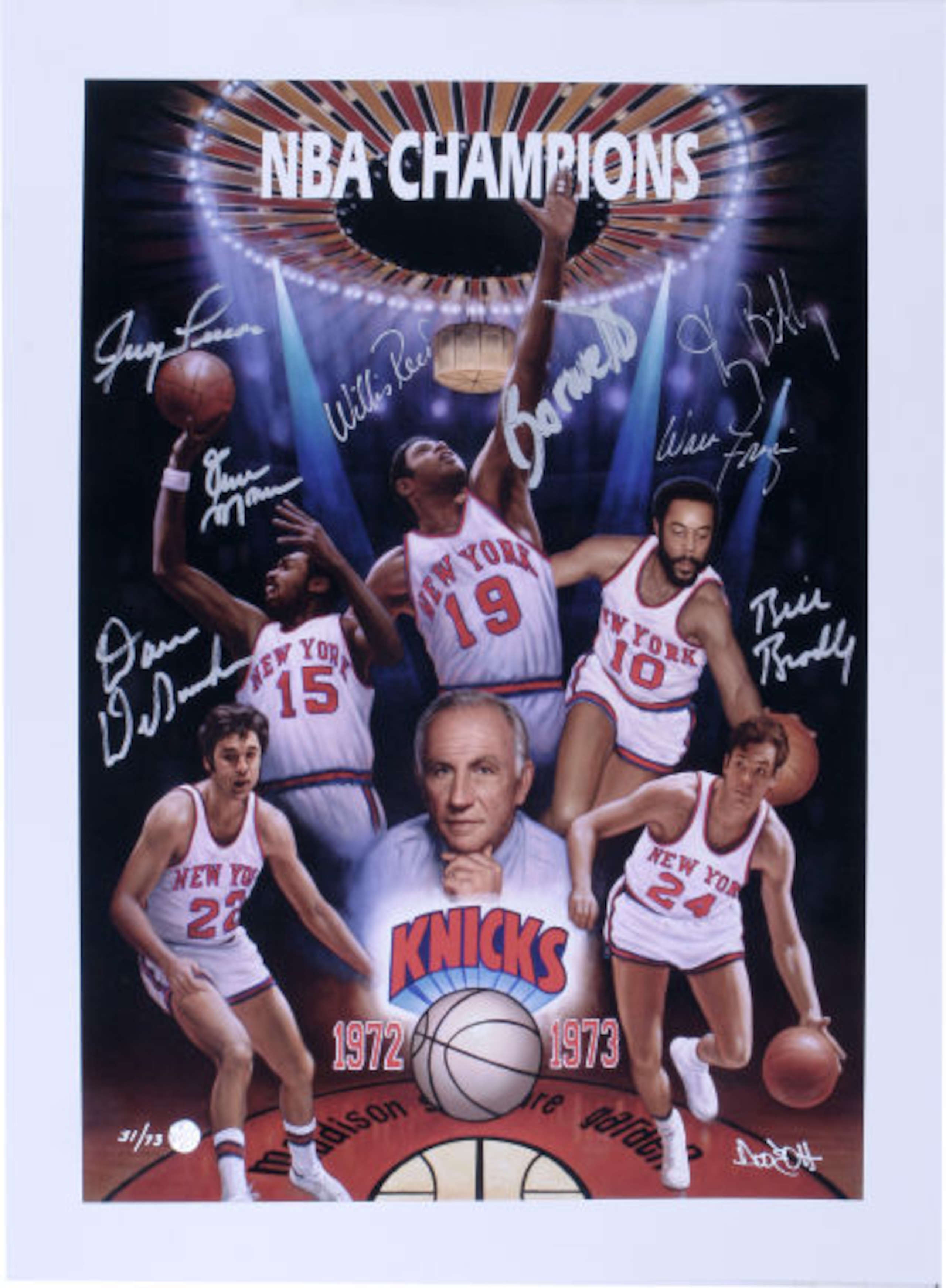
So good was the 1972-73 New York Knicks starting lineup, it allowed a future Hall of Famer in Jerry Lucas to come off the bench.
All the members of the starting five made it to Springfield as well, with each scoring in double-digits on their way to New York's second, and up to this point last, championship.
After winning 57 games in the regular season, New York survived a seven-game series with the Boston Celtics in the Eastern Conference Finals before making quick work of the Lakers in the NBA Finals.
| PPG | APG | RPG | FG% | |
| Walt Frazier | 21.1 | 5.9 | 7.3 | 49.0 |
| Earl Monroe | 15.5 | 3.8 | 3.3 | 48.8 |
| Dave DeBusschere | 16.3 | 3.4 | 10.2 | 43.5 |
| Bill Bradley | 16.1 | 4.5 | 3.7 | 45.9 |
| Willis Reed | 11.0 | 1.8 | 8.6 | 47.4 |
Oklahoma City Thunder: 1978-79
21 of 30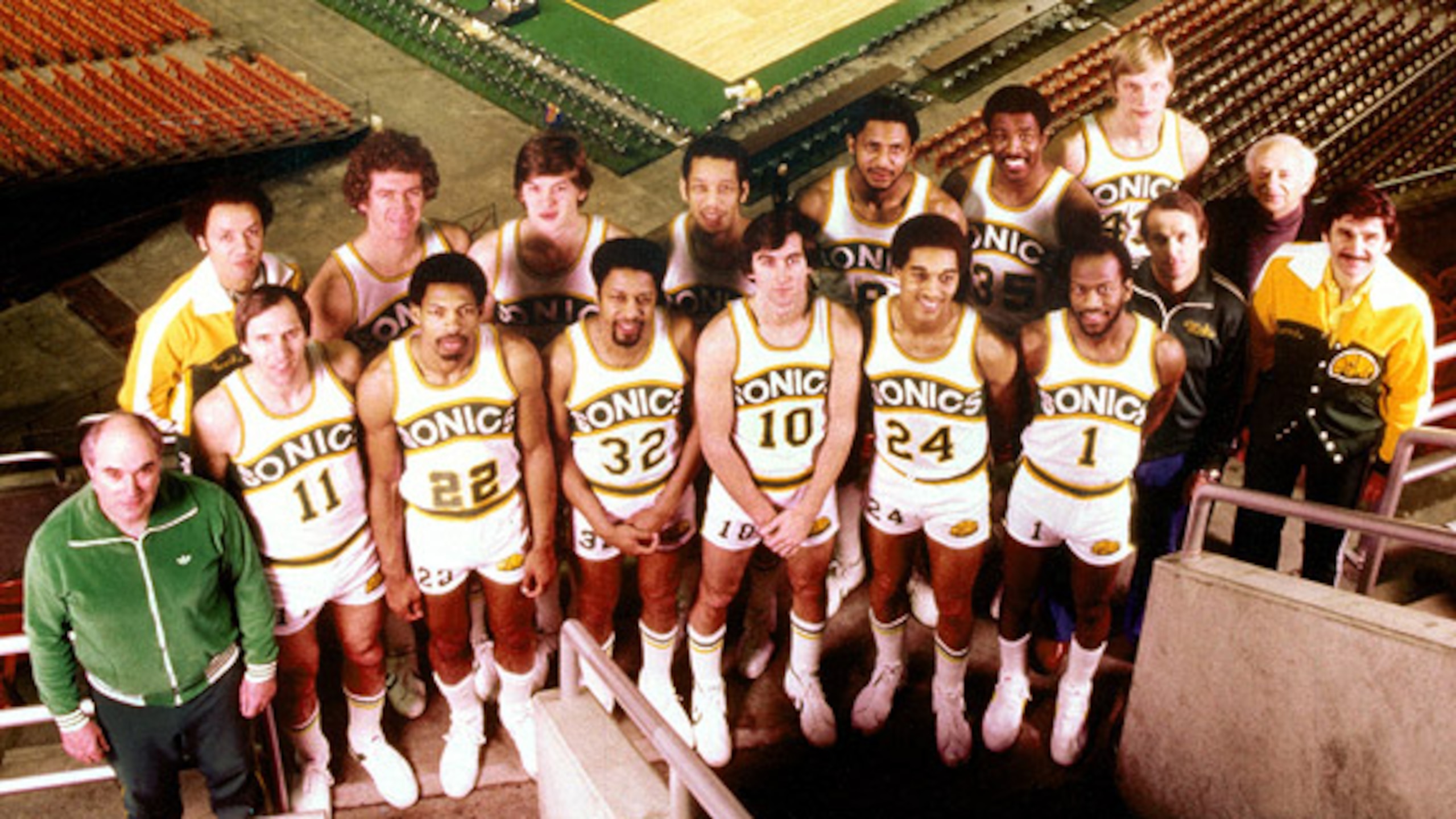
Having Dennis Johnson on your team is a good omen for making this list.
The 1978-79 season marks the only championship campaign in Oklahoma City Thunder/Seattle SuperSonics franchise history. The starting lineup was incredibly balanced in terms of scoring and shot distribution, which is never, ever a bad thing, especially when you have players capable of producing when needed.
After winning 52 regular-season games, the Sonics were really only tested in the playoffs during a seven-game Western Conference Finals series with Phoenix. They won both of their other series in five games, securing the championship with a series win over the Washington Bullets.
| PPG | APG | RPG | FG% | |
| Dennis Johnson | 15.9 | 3.5 | 4.7 | 43.4 |
| Gus Williams | 19.2 | 4.0 | 3.2 | 49.5 |
| John Johnson | 11.0 | 4.4 | 5.0 | 43.4 |
| Lonnie Shelton | 13.5 | 1.4 | 6.2 | 51.9 |
| Jack Sikma | 15.6 | 3.2 | 12.4 | 46.0 |
Orlando Magic: 1994-95
22 of 30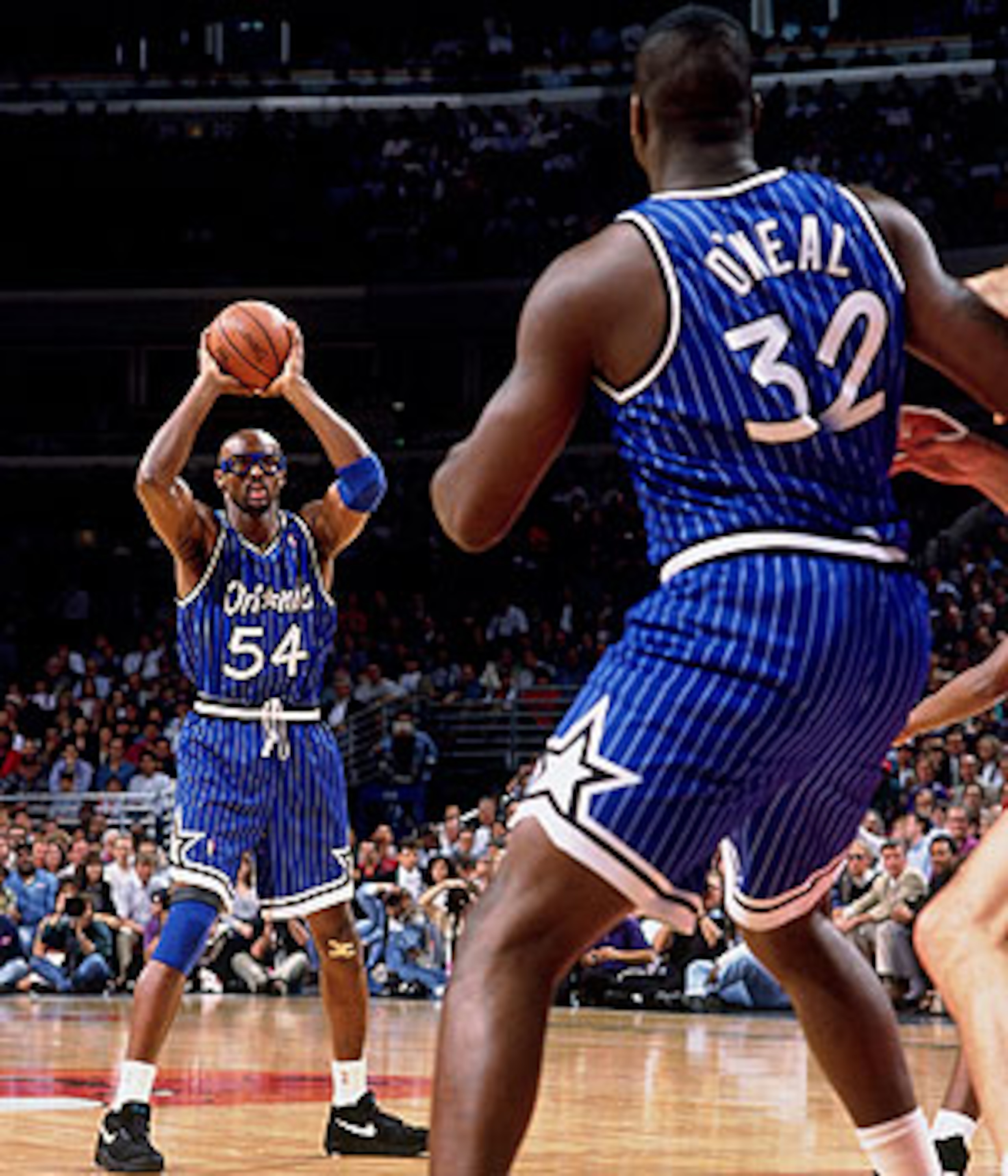
The 1994-95 Magic made the Finals for the first time in franchise history, winning what had been a team-high 57 wins in the process.
The starting lineup featured a future Hall of Famer in Shaq, a player who could have made it there had injuries not cut his career short in "Penny" Hardaway and the perpetually underrated Horace Grant. Those three alone combined to score 63.0 PPG, and when you add in Nick Anderson's 15.8 PPG you begin to understand how good this unit was.
In keeping with the sometimes cruel nature of sports, Anderson chose the worst time possible to freeze-up when he missed four consecutive free throws that could have sealed a Game One victory in the Finals.
Orlando would go on to be swept by Houston and Anderson was never quite the same. Still, this group remains the best starting lineup the organization has seen.
| PPG | APG | RPG | FG% | |
| Nick Anderson | 15.8 | 4.1 | 4.4 | 47.6 |
| Anfernee Hardaway | 20.9 | 7.2 | 4.4 | 51.2 |
| Donald Royal | 9.1 | 2.8 | 4.0 | 47.5 |
| Horace Grant | 12.8 | 2.3 | 9.7 | 56.7 |
| Shaquille O'Neal | 29.3 | 2.7 | 11.4 | 58.3 |
Philadelphia 76ers: 1982-83
23 of 30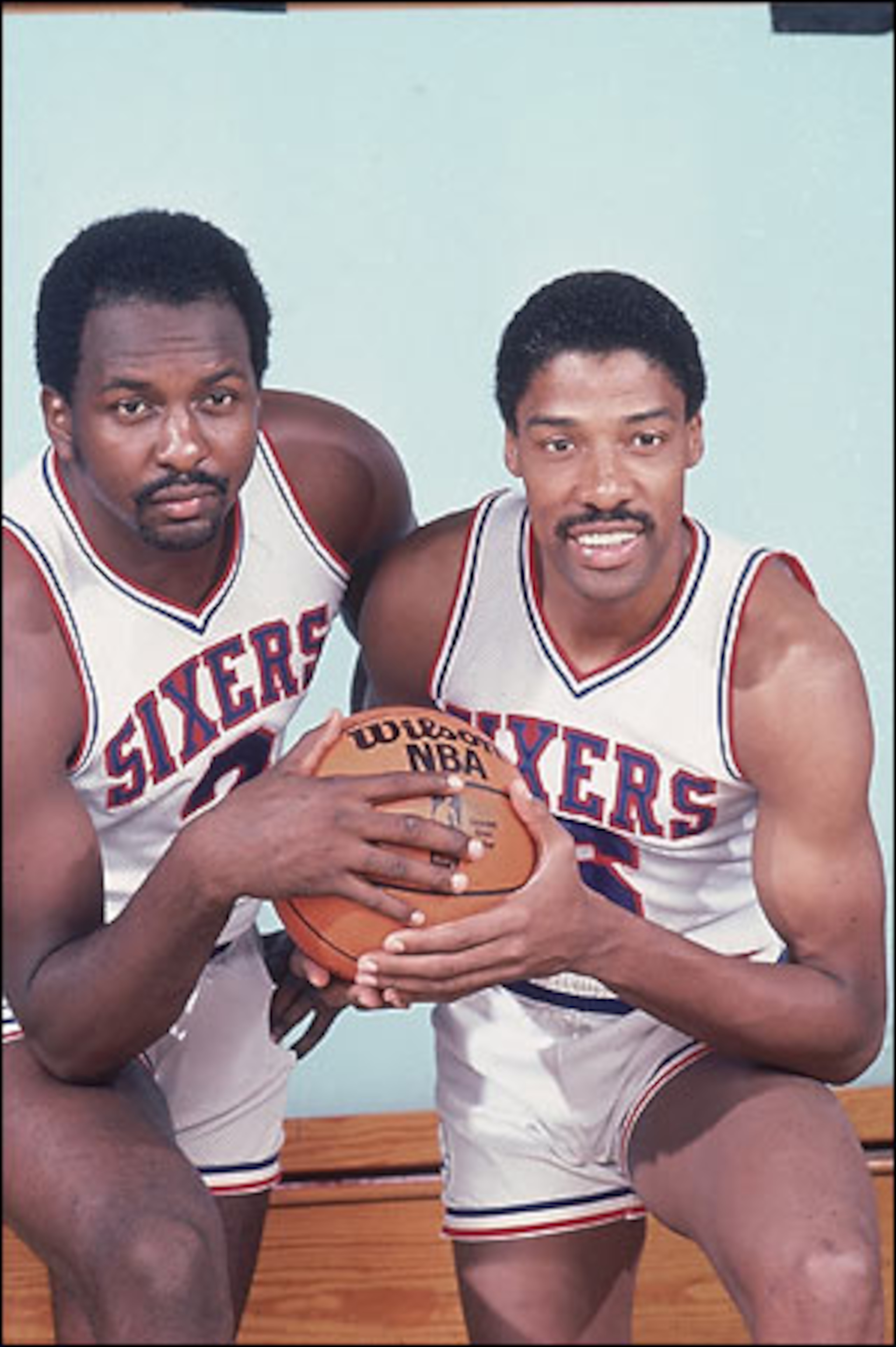
The 1982-83 Philadelphia 76ers won an NBA-best 65 regular-season games before blasting through the playoffs with a 12-1 record on their way to the franchise's third championship and second since moving to Philadelphia.
It doesn't hurt to have two Hall of Fame players in Julius Erving and Moses Malone setting the tone.
Those two combined for 45.9 PPG and 22.1 RPG, with Malone leading the league in rebounding and taking home the MVP Award.
Maurice Cheeks and Andrew Toney were also both good and efficient, although their numbers are overshadowed by what Erving and Malone did.
| PPG | APG | RPG | FG% | |
| Maurice Cheeks | 12.5 | 6.9 | 2.6 | 54.2 |
| Andrew Toney | 19.7 | 4.5 | 2.8 | 50.1 |
| Julius Erving | 21.4 | 3.7 | 6.8 | 51.7 |
| Marc Iavaroni | 5.1 | 1.0 | 4.1 | 46.2 |
| Moses Malone | 24.5 | 1.3 | 15.3 | 50.1 |
Phoenix Suns: 1992-93
24 of 30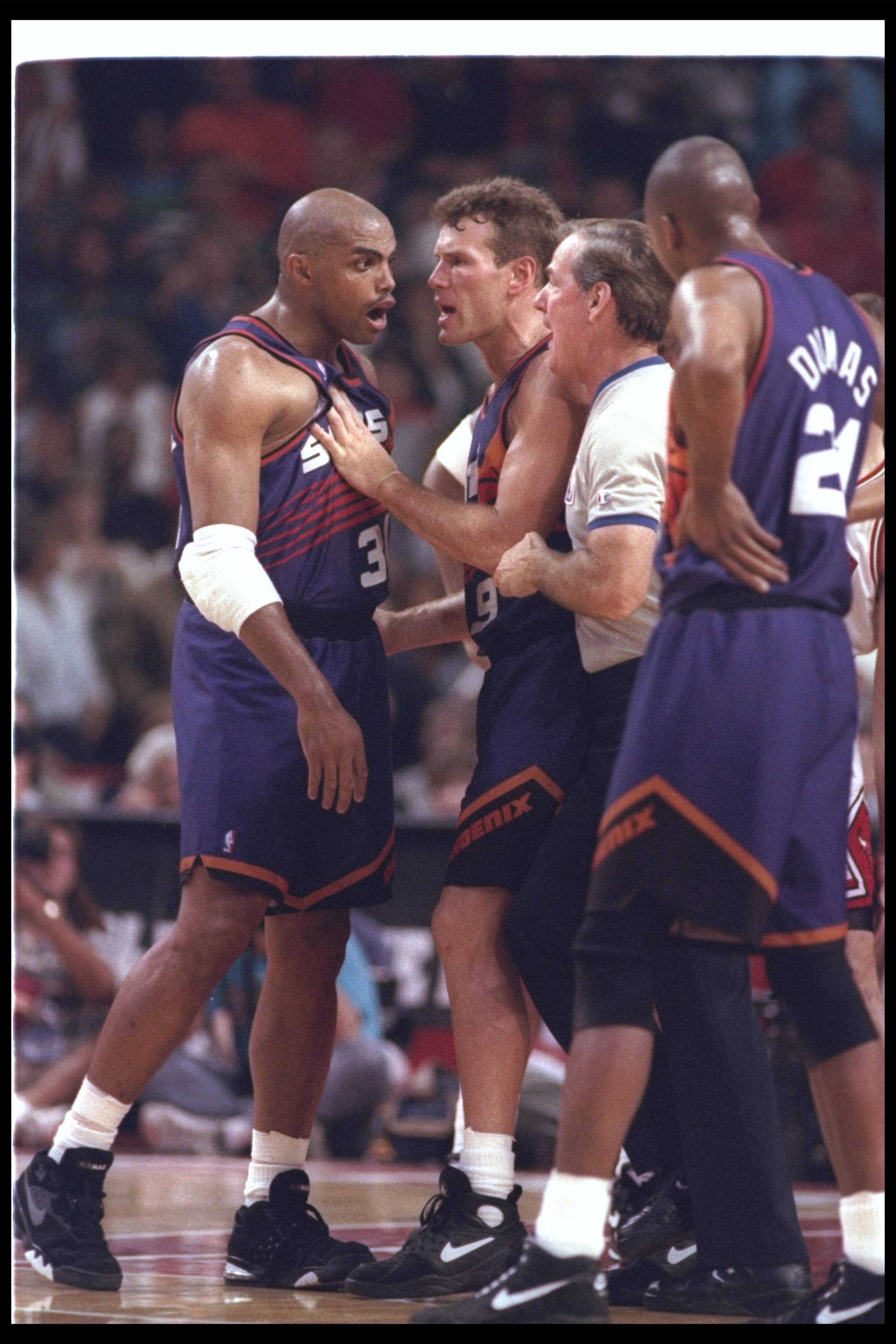
The 1992-93 Phoenix Suns campaign remains the only season in which the team has reached the Finals. The 2004-05 version matched the 62 wins put up by the '92-93 squad, but they ultimately fell short of landing on basketball's biggest stage.
Charles Barkley took home League MVP honors in 1993, and he was joined in the starting lineup by some other very good and productive players in Kevin Johnson, Dan Majerle and Cedric Ceballos.
Like the fate that befell most teams during the '90s, Phoenix lost to Michael Jordan and the Bulls, losing 4-2 in the NBA Finals.
| PPG | APG | RPG | FG% | |
| Kevin Johnson | 16.1 | 7.8 | 2.1 | 49.9 |
| Dan Majerle | 16.9 | 3.8 | 4.7 | 46.4 |
| Cedric Ceballos | 12.8 | 1.0 | 5.5 | 57.6 |
| Charles Barkley | 25.6 | 5.1 | 12.2 | 52.0 |
| Mark West | 5.3 | 0.4 | 5.6 | 61.4 |
Portland Trail Blazers: 1976-77
25 of 30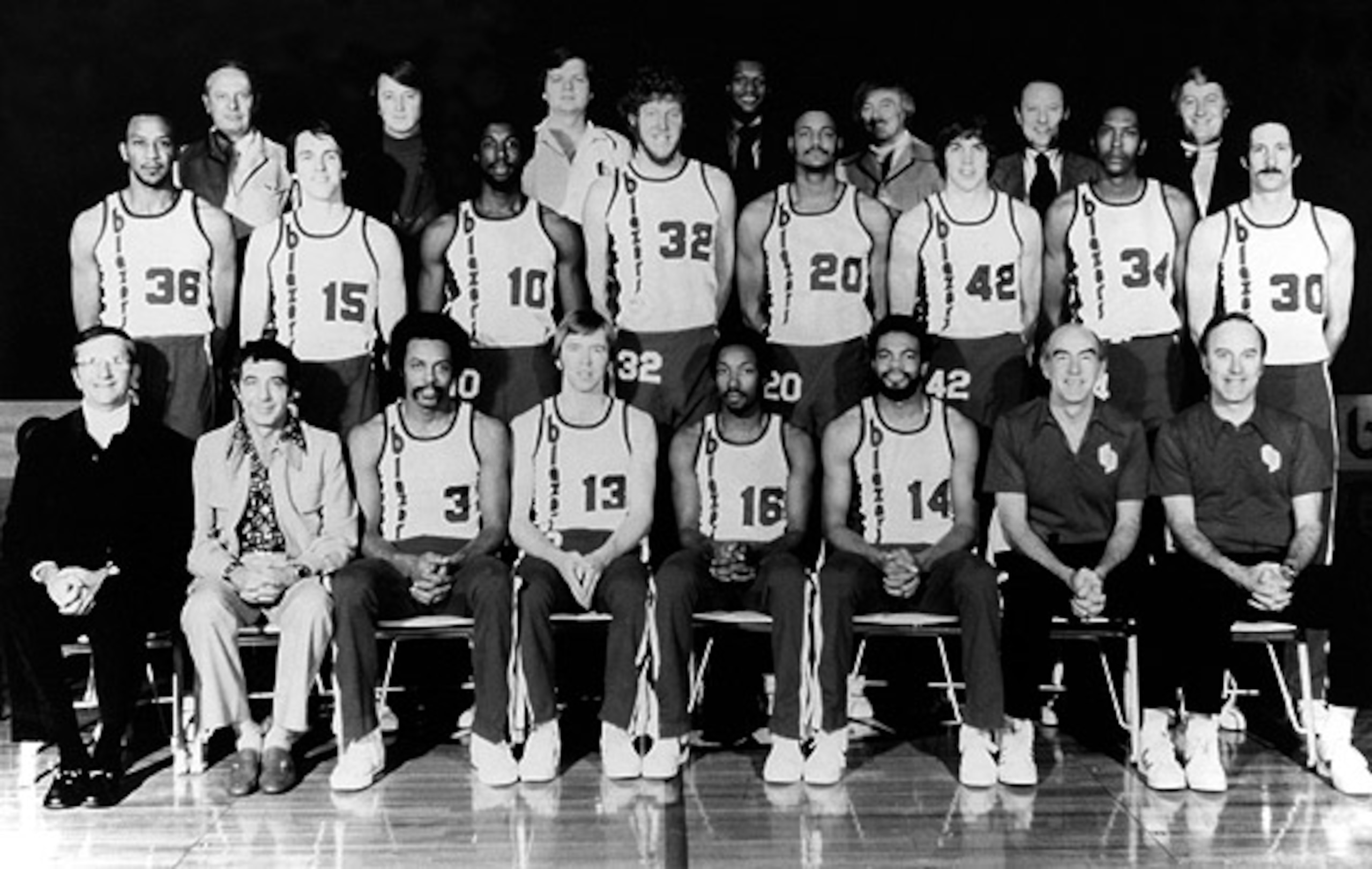
Winners of the only championship in Portland franchise history, the 1976-77 Blazers' starting lineup featured Hall of Famer Bill Walton and one of the all-time greats at power forward in Maurice Lucas.
Walton topped the NBA in rebounding for the season, while Lucas led the team in PPG and Dave Twardzik and Bob Gross provided what was needed when they were asked to contribute.
Portland has had many of its teams surpass the 49 wins of the '76-77 squad, but no other has been able to bring home the championship trophy, which is all that really matters.
| PPG | APG | RPG | FG% | |
| Dave Twardzik | 10.3 | 3.3 | 2.7 | 61.2 |
| Lionel Hollins | 14.7 | 4.1 | 2.8 | 43.2 |
| Bob Gross | 11.4 | 3.0 | 4.8 | 52.9 |
| Maurice Lucas | 20.2 | 2.9 | 11.4 | 46.6 |
| Bill Walton | 18.6 | 3.8 | 14.4 | 52.8 |
Sacramento Kings: 2001-02
26 of 30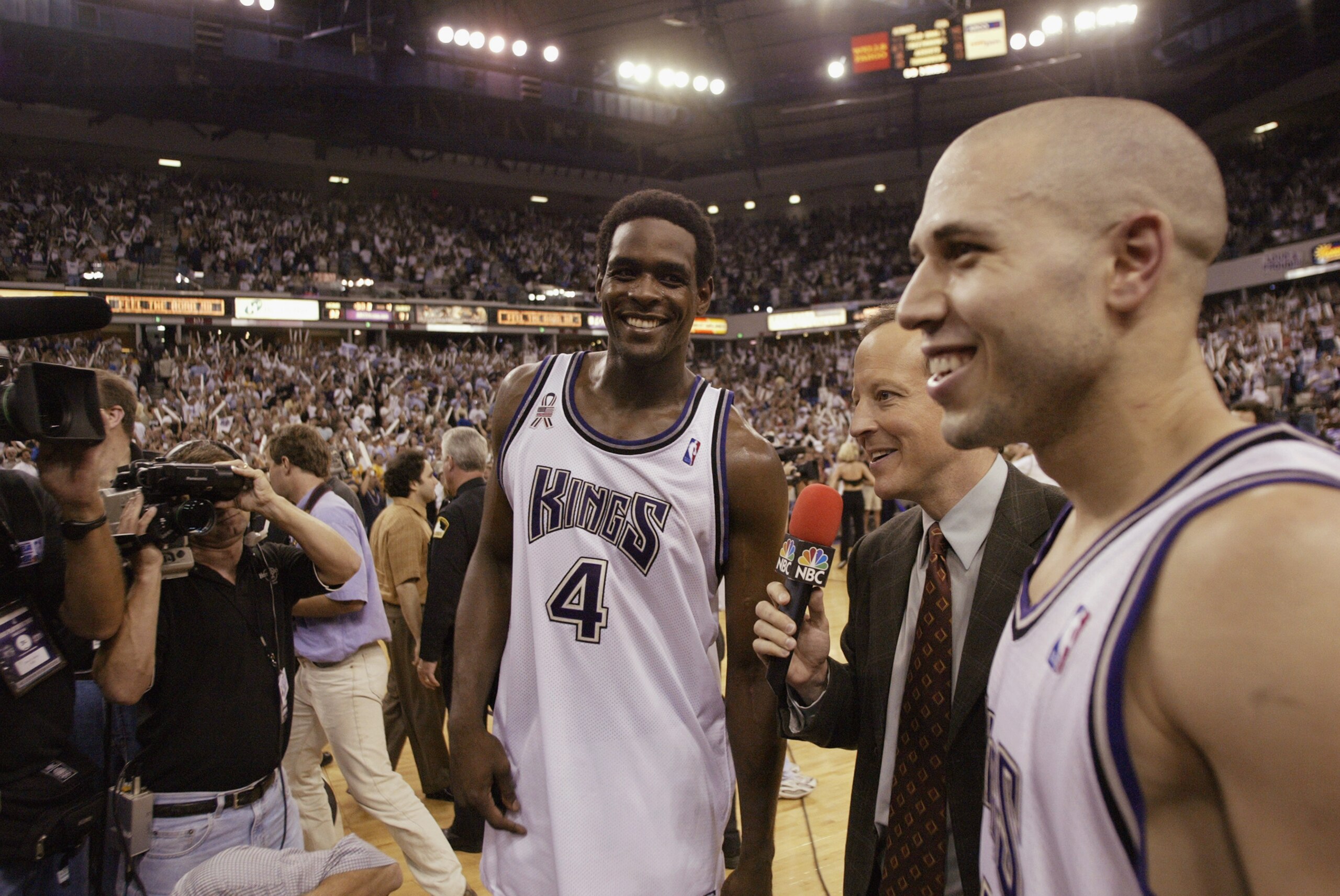
The rare exception to the rule that a unit must have come away with a title, the 2001-02 Kings starting five ranks ahead of its 1950-51 championship counterparts (way back when the team was known as the Rochester Royals).
The numbers that this group put up are just too much to look past, and, being that it has since come out that there seems to have been a fix put in by the league to keep this team out of the 2002 Finals, it's hard to argue that this wasn't the best collection of starters offered up by the franchise.
Chris Webber and Peja Stojakovic both had stellar years, while Mike Bibby, Doug Christie and Vlade Divac did what they had to do in order to make their presences known. The squad also set a franchise-high with 61 wins.
| PPG | APG | RPG | FG% | |
| Mike Bibby | 13.7 | 5.0 | 2.8 | 45.3 |
| Doug Christie | 12.0 | 4.2 | 4.6 | 46.0 |
| Peja Stojakovic | 21.2 | 2.5 | 5.3 | 48.4 |
| Chris Webber | 24.5 | 4.8 | 10.1 | 49.5 |
| Vlade Divac | 11.1 | 3.7 | 8.4 | 47.2 |
San Antonio Spurs: 1998-99
27 of 30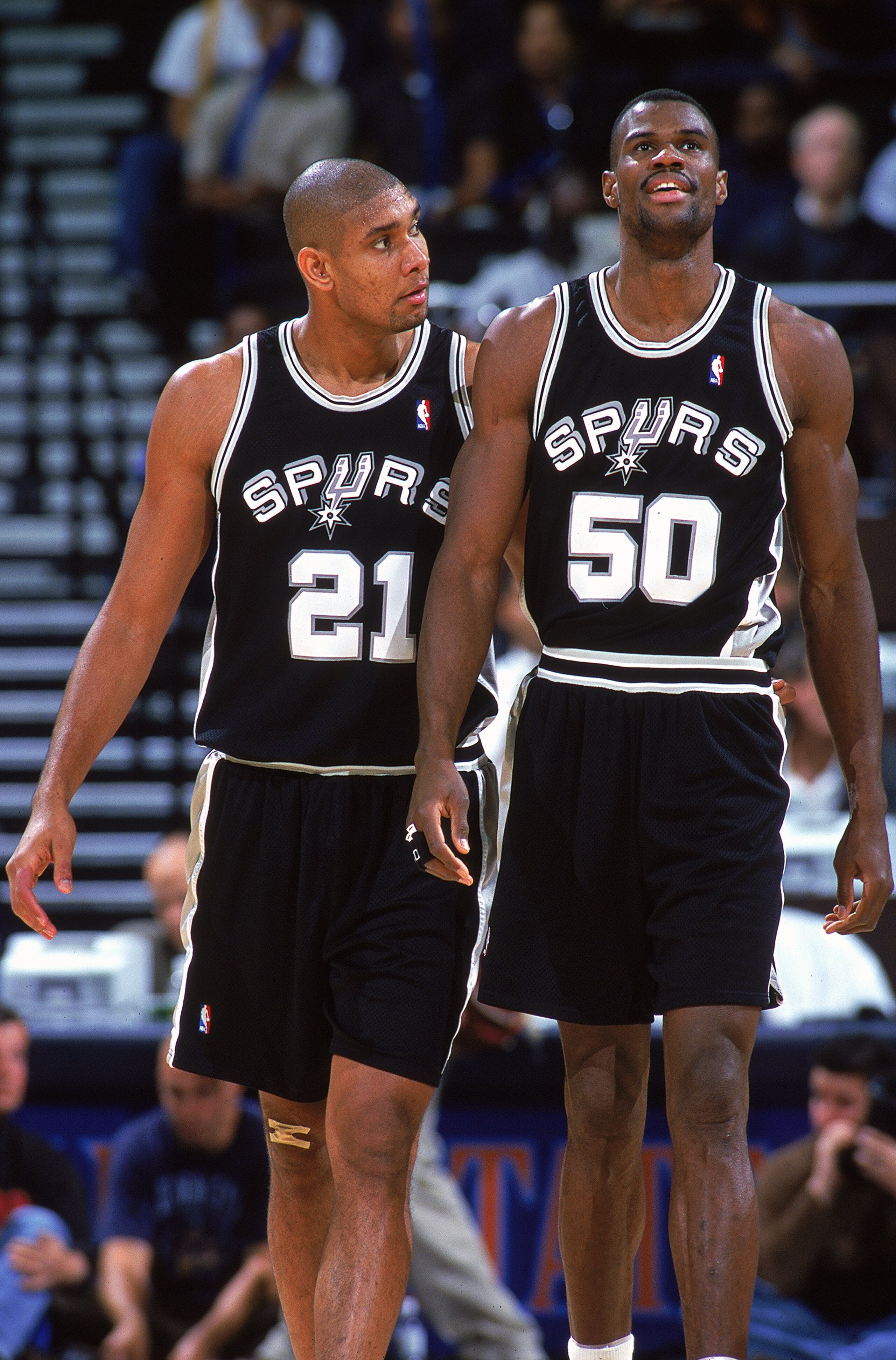
Even though the strike-shortened season helps this out a bit, the 1998-99 Spurs own the highest winning-percentage in franchise history—at least until the end of this season.
The starting five featured a current Hall of Famer in David Robinson and future inductee in Tim Duncan, while also throwing some good pieces in Avery Johnson, Mario Elie and Sean Elliott out there.
Even if the regular season was shorter than usual, the playoffs were still the normal length and the Spurs lost only two postseason games before finishing off the New York Knicks in five.
| PPG | APG | RPG | FG% | |
| Avery Johnson | 9.7 | 7.4 | 2.4 | 47.3 |
| Mario Elie | 9.7 | 1.9 | 2.9 | 47.1 |
| Sean Elliott | 11.2 | 2.3 | 4.3 | 41.0 |
| Tim Duncan | 21.7 | 2.4 | 11.4 | 49.5 |
| David Robinson | 15.8 | 2.1 | 10.0 | 50.9 |
Toronto Raptors: 2000-01
28 of 30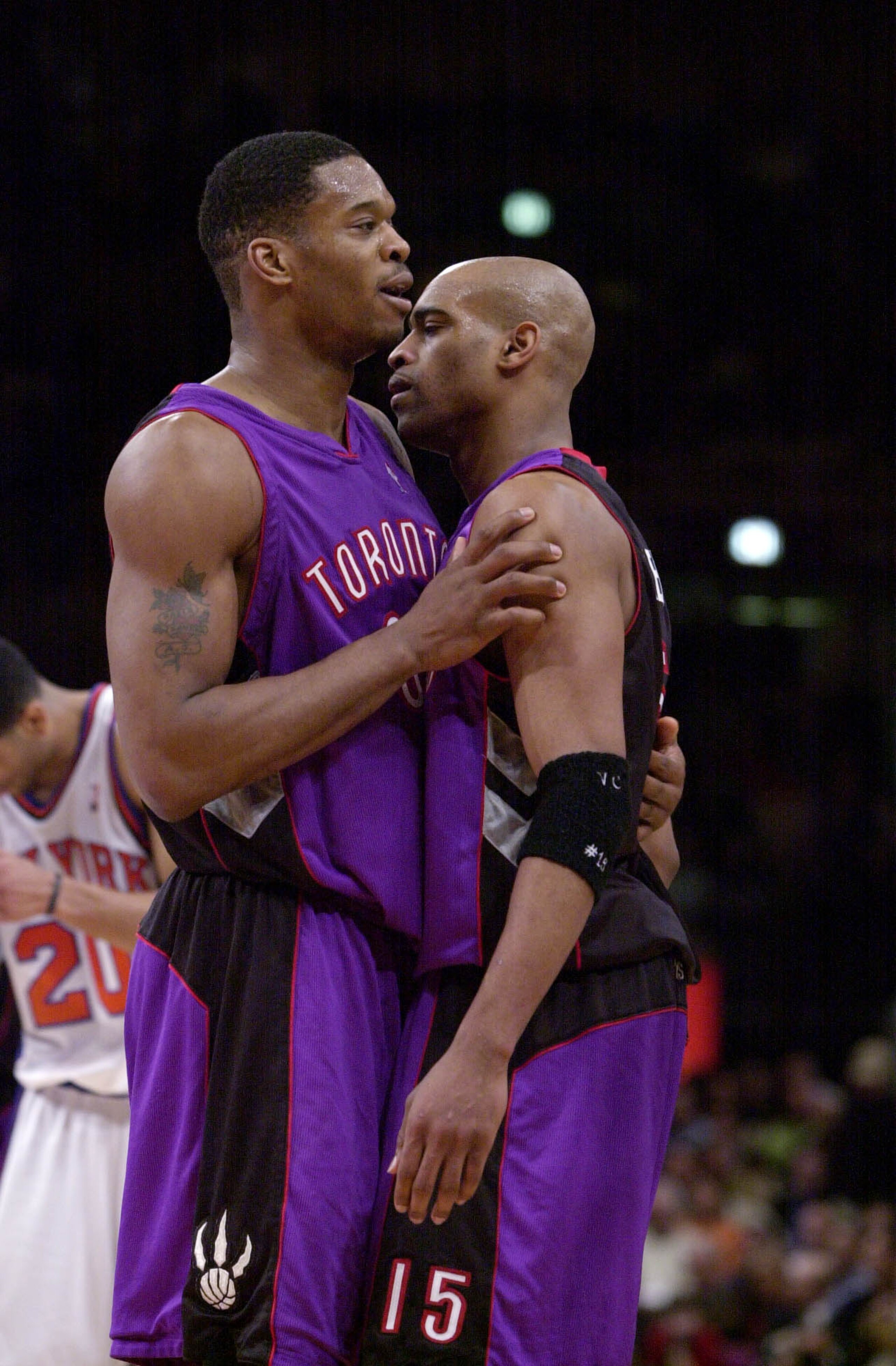
The 2000-01 Toronto Raptors share the franchise's single-season win record of 47 with the 2006-07 squad, but the former was able to make it past the first round and remains the only team in Raptors history to do so.
The team started out the year with Mark Jackson at point guard before trading him to New York and inserting Alvin Williams into the starting lineup. The season also served as Vince Carter's breakout year, as he posted a career-high 27.6 PPG.
Toronto eventually fell to the 76ers in Game Seven of the Eastern Conference Semis.
| PPG | APG | RPG | FG% | |
| Alvin Williams | 9.8 | 5.0 | 2.6 | 43.0 |
| Vince Carter | 27.6 | 3.9 | 5.5 | 46.0 |
| Morris Peterson | 9.3 | 1.3 | 3.2 | 43.1 |
| Charles Oakley | 9.6 | 3.4 | 9.5 | 38.8 |
| Antonio Davis | 13.7 | 1.4 | 10.1 | 43.3 |
Utah Jazz: 1996-97
29 of 30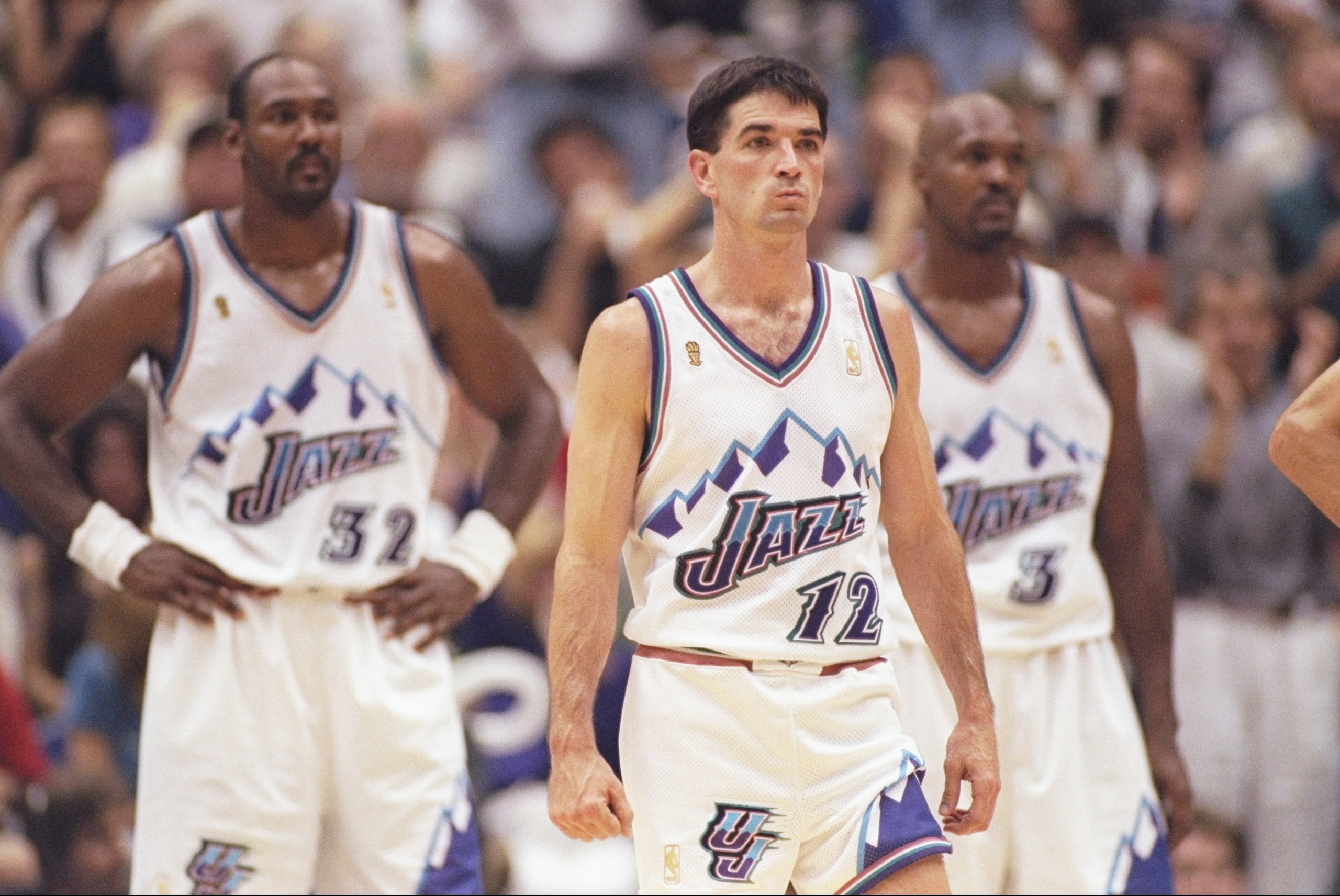
The Jazz made the first of what would be consecutive trips to the Finals at the end of the 1996-97 season. The starting lineup included Hall of Fame players John Stockton and Karl Malone as well as one of the best shooters ever in Jeff Hornacek.
Greg Ostertag was the only member of the starting five not to post a double-digit scoring average, although he did make a contribution with his rebounding and shot-blocking ability.
Malone won the League MVP Award, and, in what has now become a theme, became another victim of the Chicago Bulls in the Finals.
| PPG | APG | RPG | FG% | |
| John Stockton | 14.4 | 10.5 | 2.8 | 54.8 |
| Jeff Hornacek | 14.5 | 4.4 | 2.9 | 48.2 |
| Bryon Russell | 10.8 | 1.5 | 4.1 | 47.9 |
| Karl Malone | 27.4 | 4.5 | 9.9 | 55.0 |
| Greg Ostertag | 7.3 | 0.4 | 7.3 | 51.5 |
Washington Wizards: 1977-78
30 of 30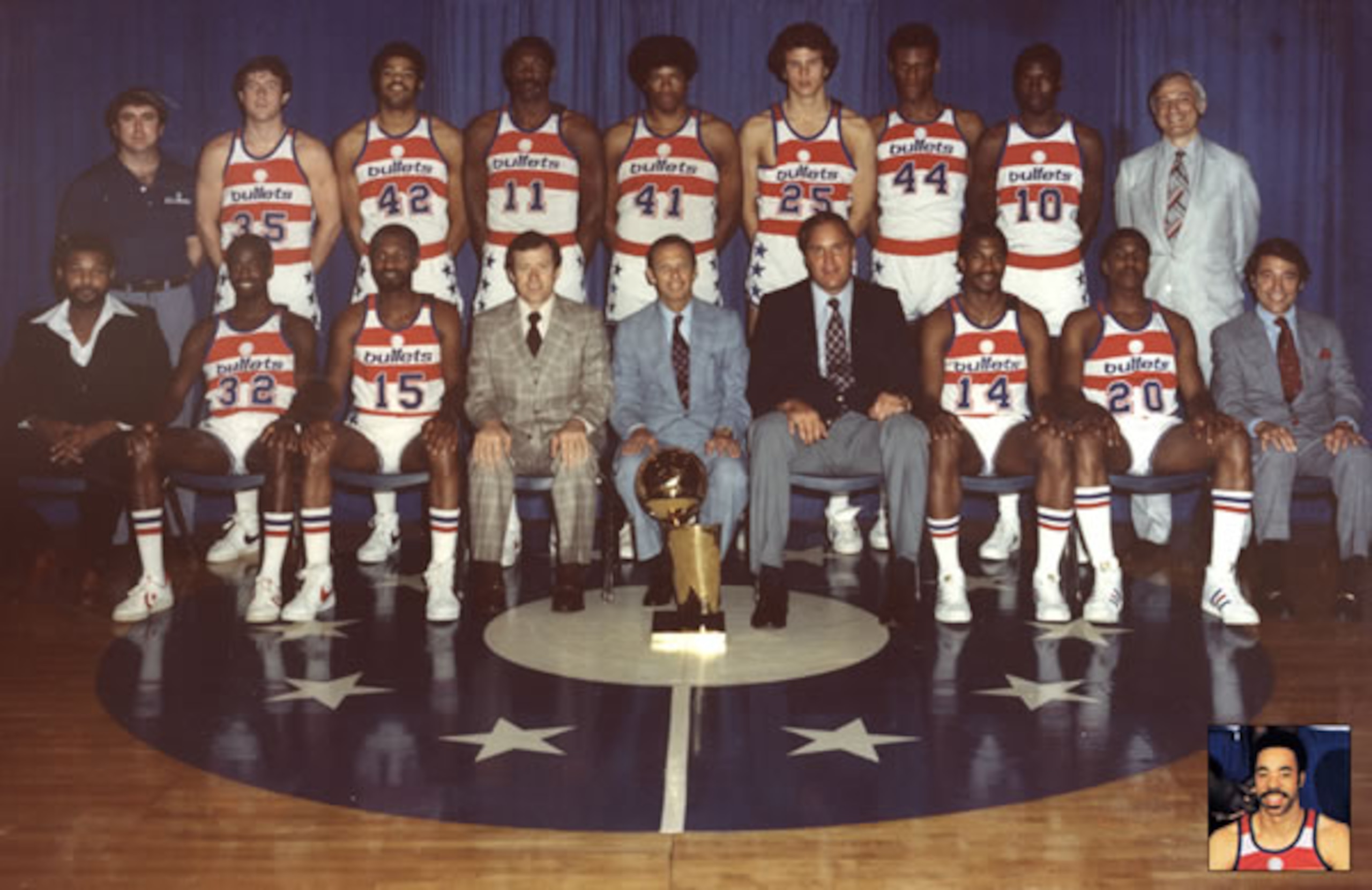
The Washington Wizards franchise has made four Finals appearance, although all of them came when the team was known as the Bullets with one of them occurring while the team was in Baltimore.
The 1977-78 team was the only won to win it all, however, and the starting lineup featured two Hall of Fame inductees along with some other pretty good pieces.
Elvin Hayes and Wes Unseld both went on to be been enshrined in the Hall, while Bob Dandridge and Kevin Grevey played integral roles in bringing home a championship in 1978.
The team had to overcome a number of injuries to attain basketball glory, a tribute to the squad's depth and overall talent.
| PPG | APG | RPG | FG% | |
| Tom Henderson | 11.4 | 5.4 | 2.6 | 43.2 |
| Kevin Grevey | 15.5 | 1.9 | 3.6 | 44.8 |
| Bob Dandridge | 19.3 | 3.8 | 5.9 | 47.1 |
| Elvin Hayes | 19.7 | 1.8 | 13.3 | 45.1 |
| Wes Unseld | 7.6 | 4.1 | 11.9 | 52.3 |

.jpg?w=2560 "B/R's Expert Week 7 NFL Picks 🔮")