
NFL Draft: 25 First Rounders Cam Newton and Other Top QBs Shouldn't Emulate
As the NFL Draft draws ever nearer, the predictions and debates over who will be drafted where is heating up.
However, no position is now or has ever been more hotly debated than the all-important quarterback position.
Widely agreed upon as the single most important position in football—and likely the second most important single position in all of North American sports—the QB draft class this year is chock full of talent, including Heisman winner Cam Newton.
However, many a year has come and gone with stronger QB draft classes and we’ve all likely seen too many QB first round busts in the past few seasons to be less than a little skeptical.
With that in mind, we here at Bleacher Report decided to look deeper and bring you the top 25 worst QB first round busts in NFL history.
This list stretches more than 30 years into the NFL’s illustrious past, conjuring up names many of you readers may never have even heard of.
This list has failures on all levels whether they be injuries, lack of NFL talent, drugs, gambling addictions and even in one case a man put in control of large sums of money who should’ve never been given control of, well, large sums of other people’s money.
So without further ado, we bring you the top 25 first round QB busts in the NFL, starting with an Honorable Mention for a man who just never seems to catch a break.
Honorable Mention: Vince Young, Tennessee Titans (2006)
1 of 26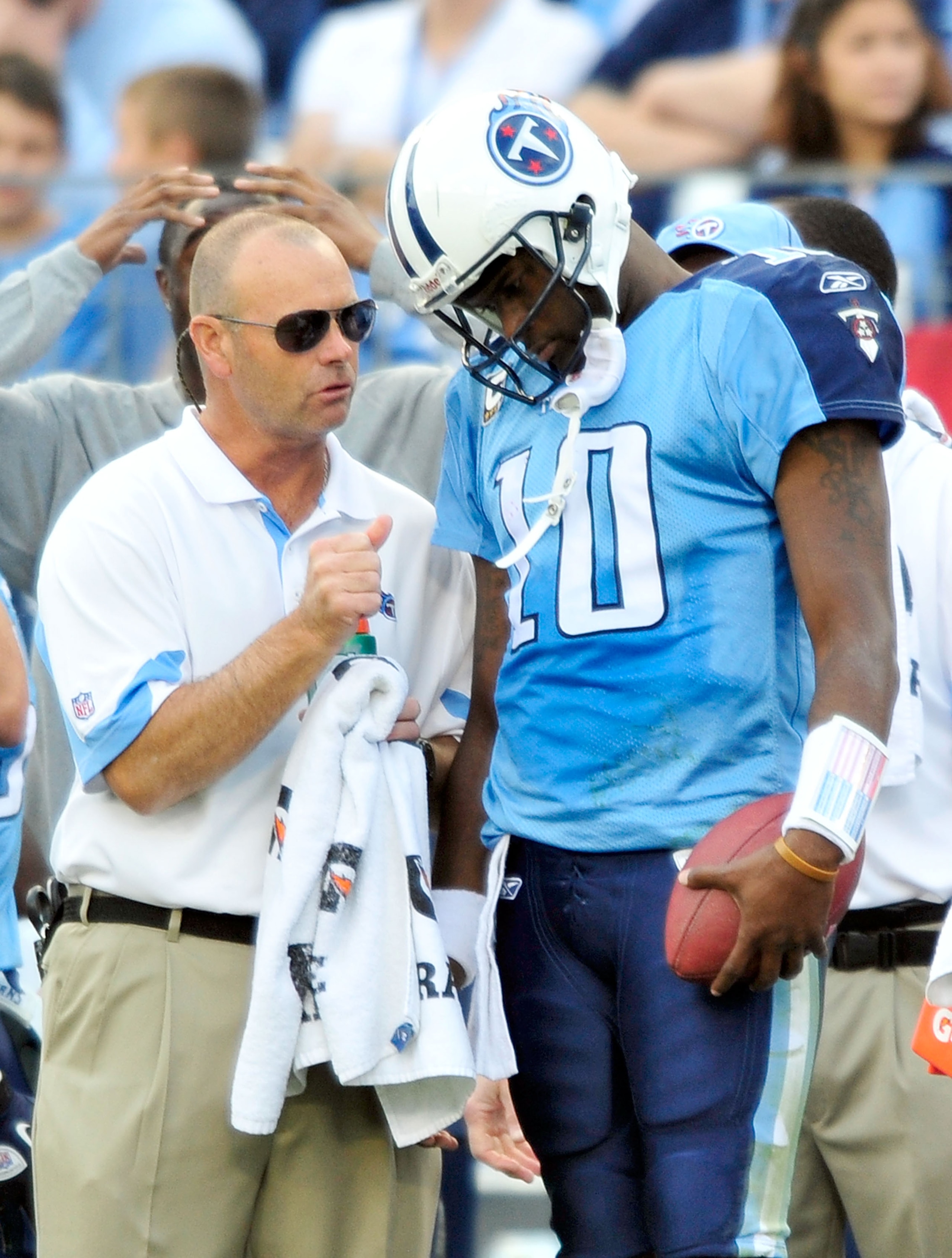
Poor Vince Young. He loses the Heisman Trophy to Reggie Bush, he is plagued with injuries and is constantly jeered by fans and press alike.
The fact is however, his play has not been much better than many of the QBs on this list.
His 42-42 TD-INT record is barely passable as a starter in the NFL.
His nearly 8,100 yards passing and 1,380 yards rushing in his “five” NFL seasons are hardly Hall of Fame numbers.
The fact is, Young is a young QB who has a chance to right the ship, but he needs to start.
He is extremely talented and with some Tim Tebow style work on his throwing motion, he could really shine as an NFL QB for years to come.
That is, if he can get his attitude and emotions in check and stop getting his head coaches fired and, more importantly, stop accumulating injuries.
25. Alex Smith: San Francisco 49ers (2005)
2 of 26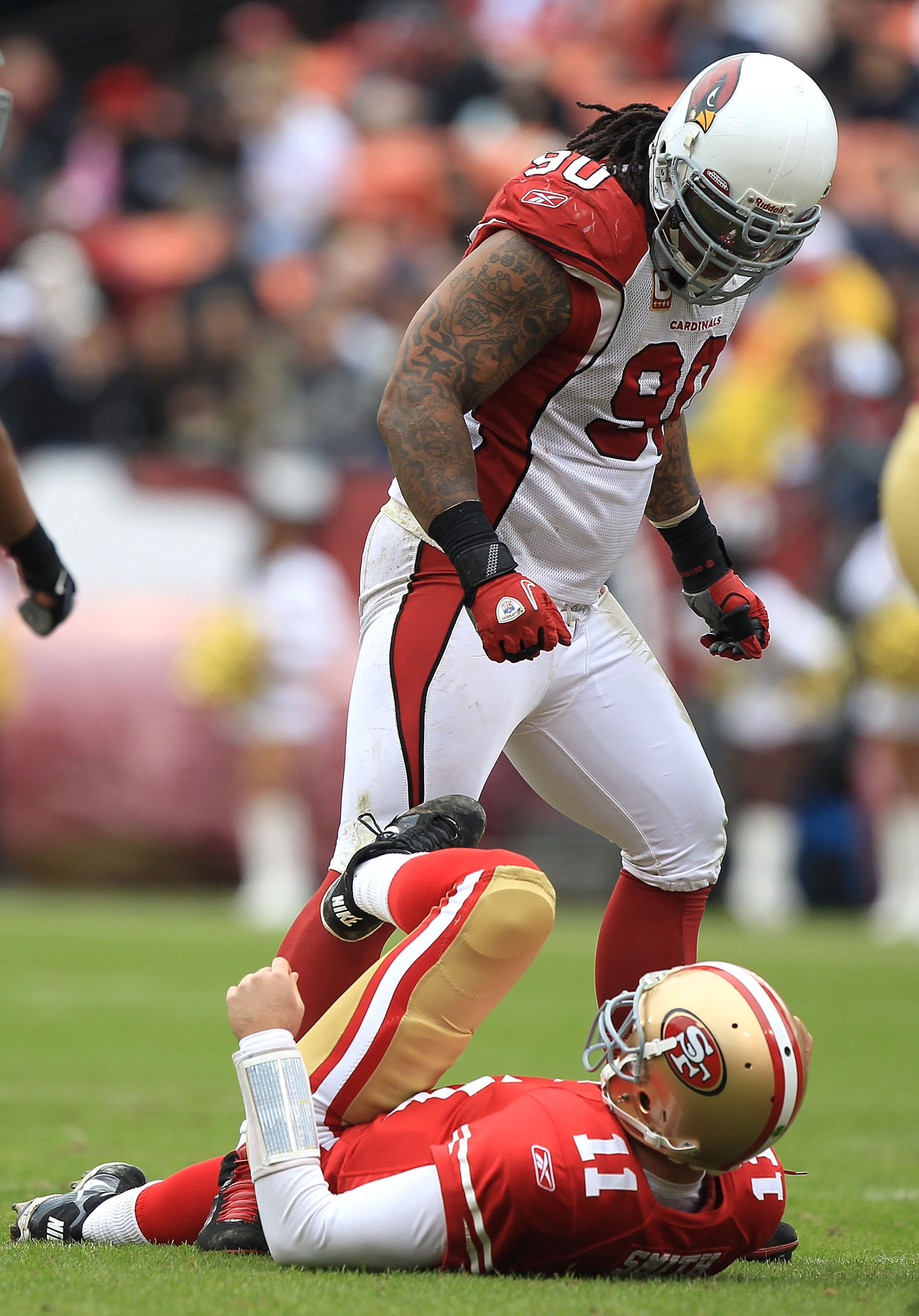
In many ways, Alex Smith has helped bring the Utah Utes to the forefront of college football news.
Utah has ridden that wave of publicity and their own continuing success since Smith’s departure in 2004 to make the move to the PAC-12 conference and be contenders for BCS bowl games and possibly a BCS title in the near future.
Only time will tell that story.
The same cannot be said for the 49ers however, who have continued to flounder with Smith under center.
He has only managed to play 54 of the 96 games since he entered the league in the 2005 season.
In that time, has compiled nearly 9,400 yards and a 57.1 completion percentage on around 1500 pass attempts.
Smith has been plagued with injuries like Vince Young, but even in his one complete season he completed 58.1 percent of his passes and threw the same number of touchdowns and interceptions, 16.
He is currently in contract talks with the 49ers and his future is uncertain.
While he has been improving slowly over his career, he certainly put a damper in Mike Singletary’s “win now” head coaching philosophy and may simply be too old to be a project quarterback in this league, especially with so many talented young QBs in this year’s draft.
San Francisco has this year’s seventh overall pick right now, and they could easily give someone new a shot, which would easily solidify Alex Smith as one of the biggest first overall pick busts in recent memory.
24. Steve Fuller: Chiefs/LA Rams/Bears (1979)
3 of 26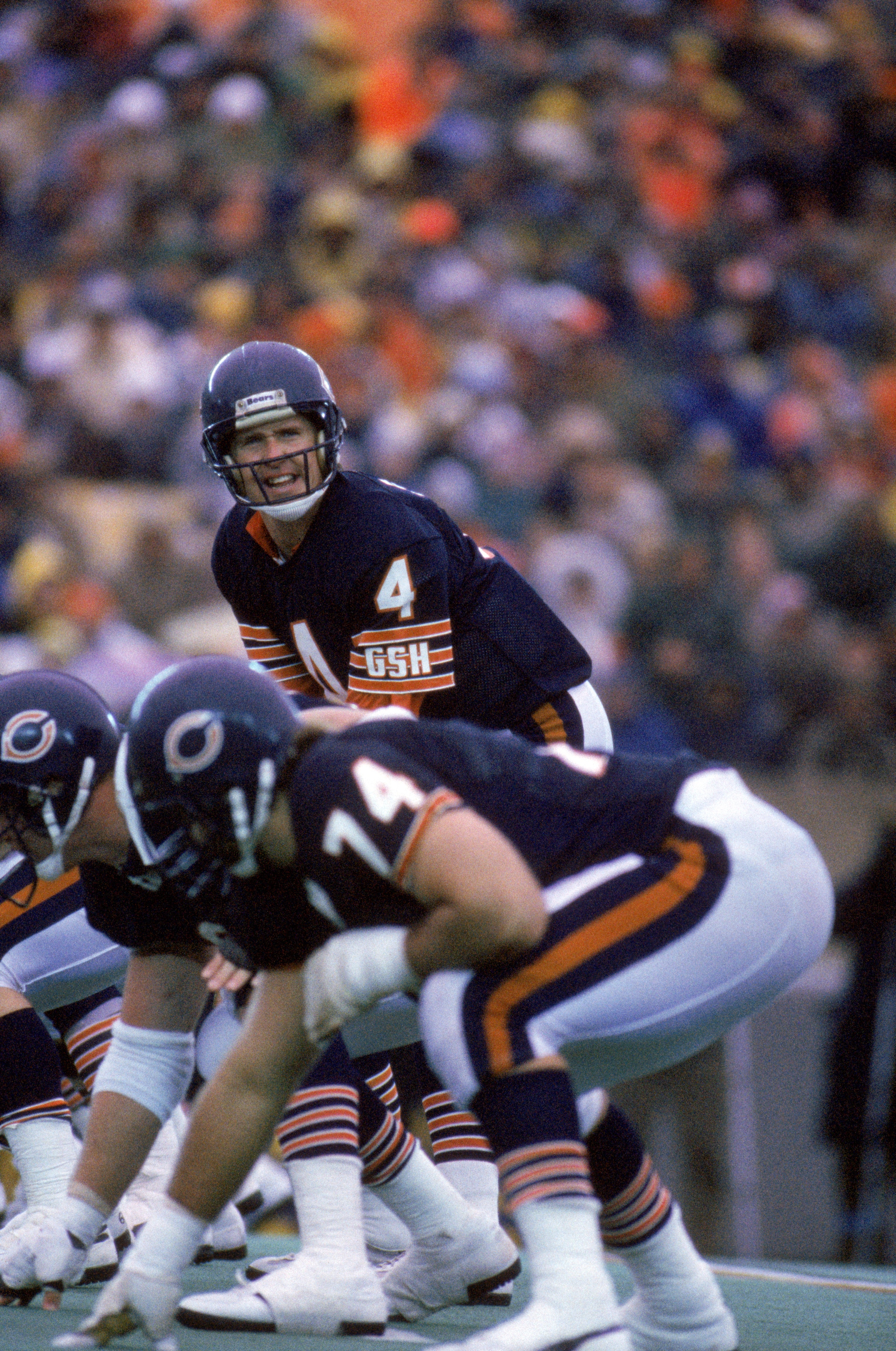
Steve Fuller may have a gold record for his work on the Super Bowl Shuffle and a Super Bowl ring to go along with it, but the perennial backup was one of the most inaccurate quarterbacks in first round history.
In seven years and only 42 games in the NFL, Fuller managed to throw 41 interceptions with only 28 touchdowns—just shy of 1100 total pass attempts.
Fuller was the 23rd overall pick in the 1979 draft, coming out of Clemson where he surprisingly wasn’t much better throwing a mere 22 TD passes along with 21 interceptions over 44 collegiate games .
Why he was a first round draft pick, I’m not entirely sure, especially when considering the next quarterback chosen in the draft—59 picks later—was 49ers legend Joe Montana.
The Chiefs got their second shot at Golden Joe in 1993 when he played one season for them, but Kansas City fans are still left with the questions of what might have been had the Chiefs pick Montana.
.jpg?w=2560 "Rams Raiders Football")

.jpg?w=2560 "Steelers Saints Football")
23. Dave Brown: Giants/Cardinals (1992 Supplemental)
4 of 26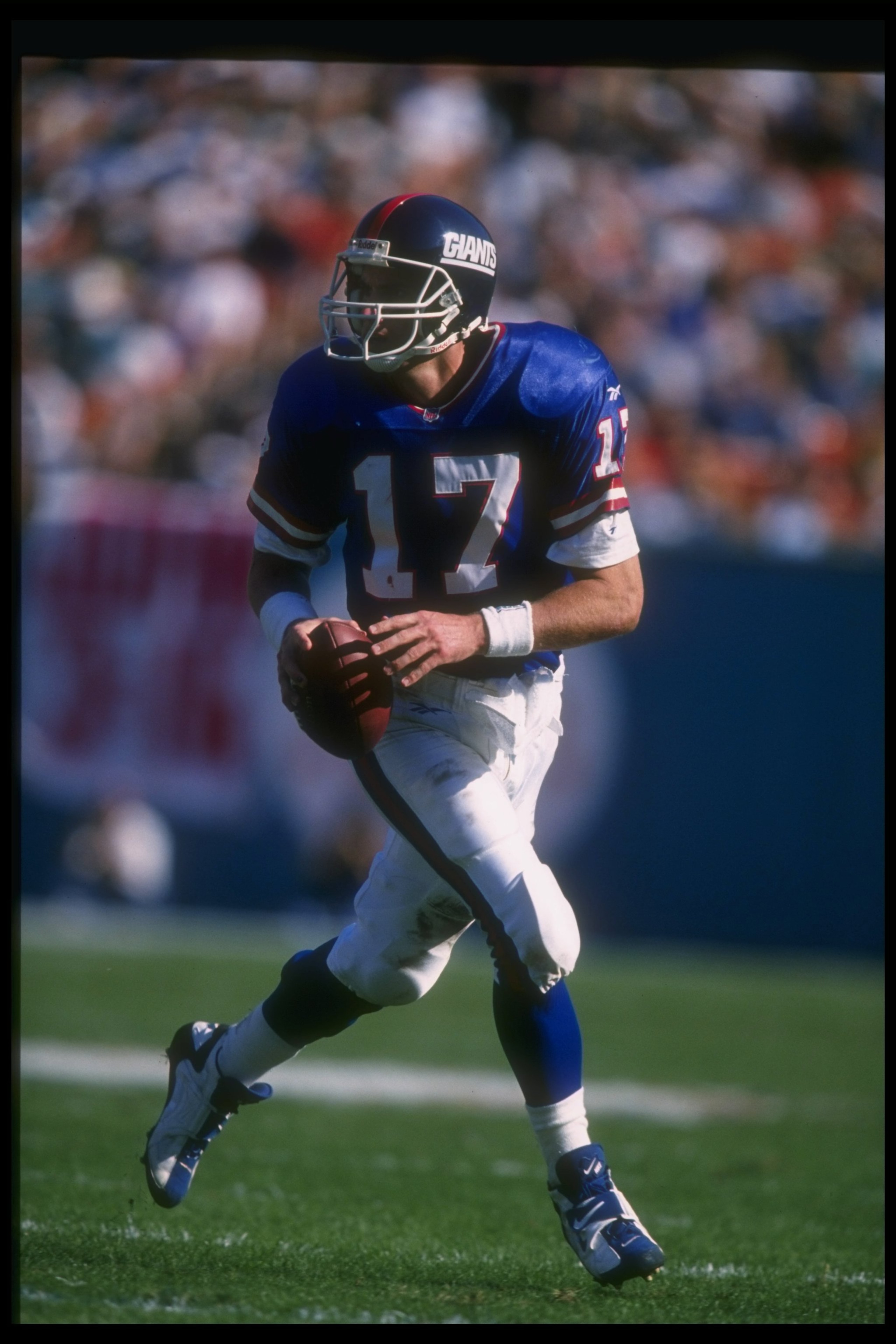
Dave Brown seems to bring failure wherever he has gone since college.
He played a great career in the NCAA for Duke, including a 444-yard performance in his 1989 debut against Wake Forest.
That game even included Duke’s then record for longest play from scrimmage, a 97 TD pass from Brown to Clarkston Hines. He still ranks in the top 10 in many QB categories in Duke history— including passing yards in a game, passing yards in a career, touchdown passes in a game and touchdown passes in a season.
However, after being selected with the first overall pick of the 1992 Supplemental Draft by the New York Giants, he floundered in his six seasons with the G-Men.
After throwing for only 8806 yards in New York with 40 TDs and 49 picks, he signed with the Arizona Cardinals hoping to prove that he was better than his 69.3 QB rating and 55.1 completion percentage suggested.
He wasn’t.
He played only 12 games for Arizona over three seasons, throwing for nine picks and only four touchdowns and left the league for a job in investment management after the 2000 NFL season.
His story doesn’t end their however.
After being a director of New York Life Investment Management, Brown became a Senior Vice President of Lehman Brothers’ Private Fund Marketing Group in 2008.
Many knew that he couldn’t be trusted to put a football accurately where it needed to go, but who knew the same lack of talent applied to money as well?
22. Tony Eason: Patroits/Jets (1983)
5 of 26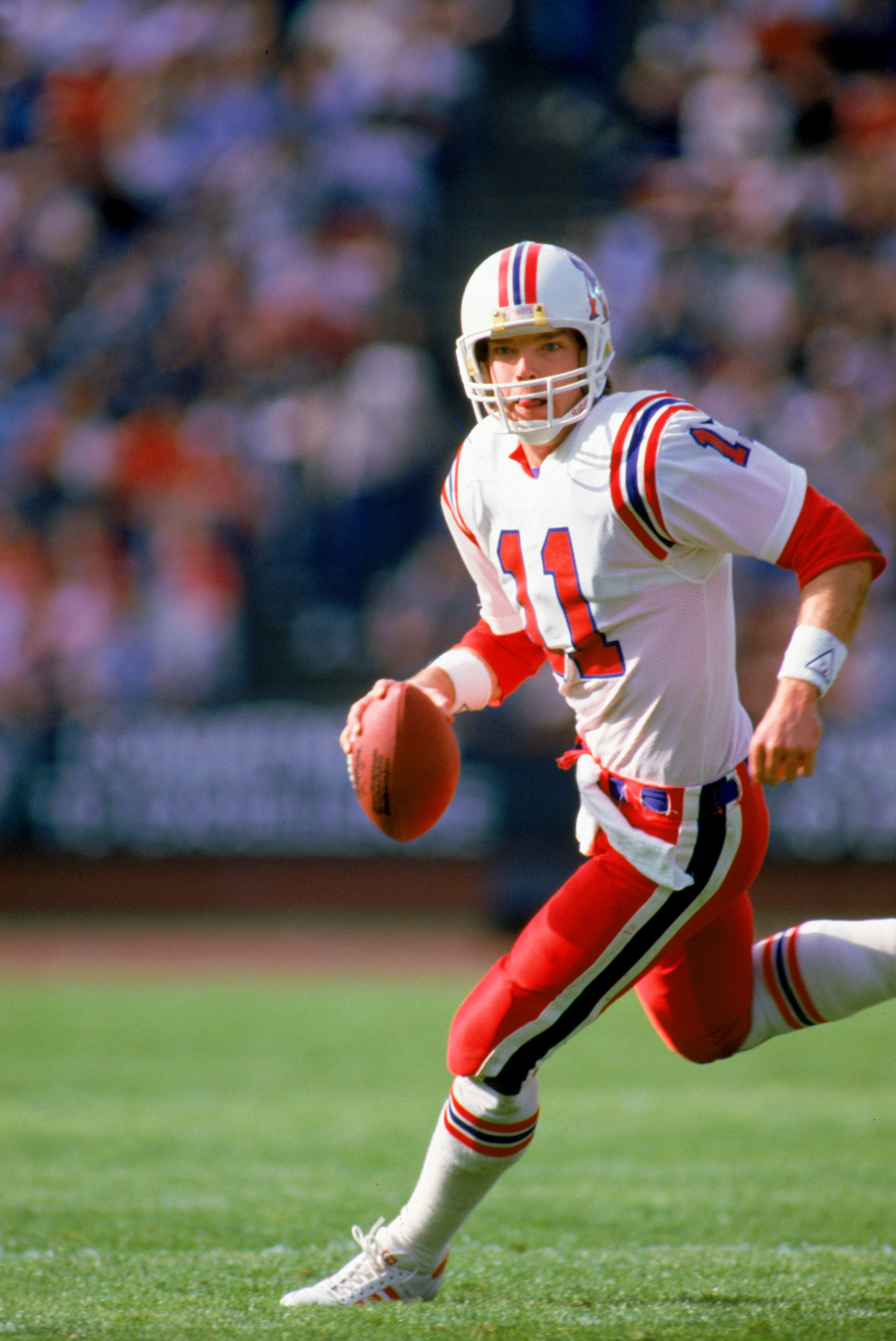
Playing for the Fighting Illini in the early 1980s he squared off against Dan Marino while he was at Pitt in his very first game for Illinois and also against Art Schlichter whom he beat out for the QB spot on the AP’s All Big Ten team in 1981.
Eason also tied or broke nine NCAA passing records in his senior season in 1982.
However, after being drafted by the New England Patriots with the 15th overall pick in a 1983 Draft that included John Elway, Todd Blackledge, Jim Kelly, and Dan Marino, he had limited success with the Patriots early in his career.
He was among the top passers in both 1984 and 1986, but in the end he would never live down his 0-for-6 performance against the Chicago Bears in Super Bowl XX and was traded to the New York Jets in 1989.
His play in the Super Bowl was rated dead last in 2008 by ESPN among all Super Bowl QB performances,
His washout of the league, after only 72 games, is among the best performances of a first round bust QB, but a bust nonetheless.
21. Brady Quinn: Browns/Broncos (2007)
6 of 26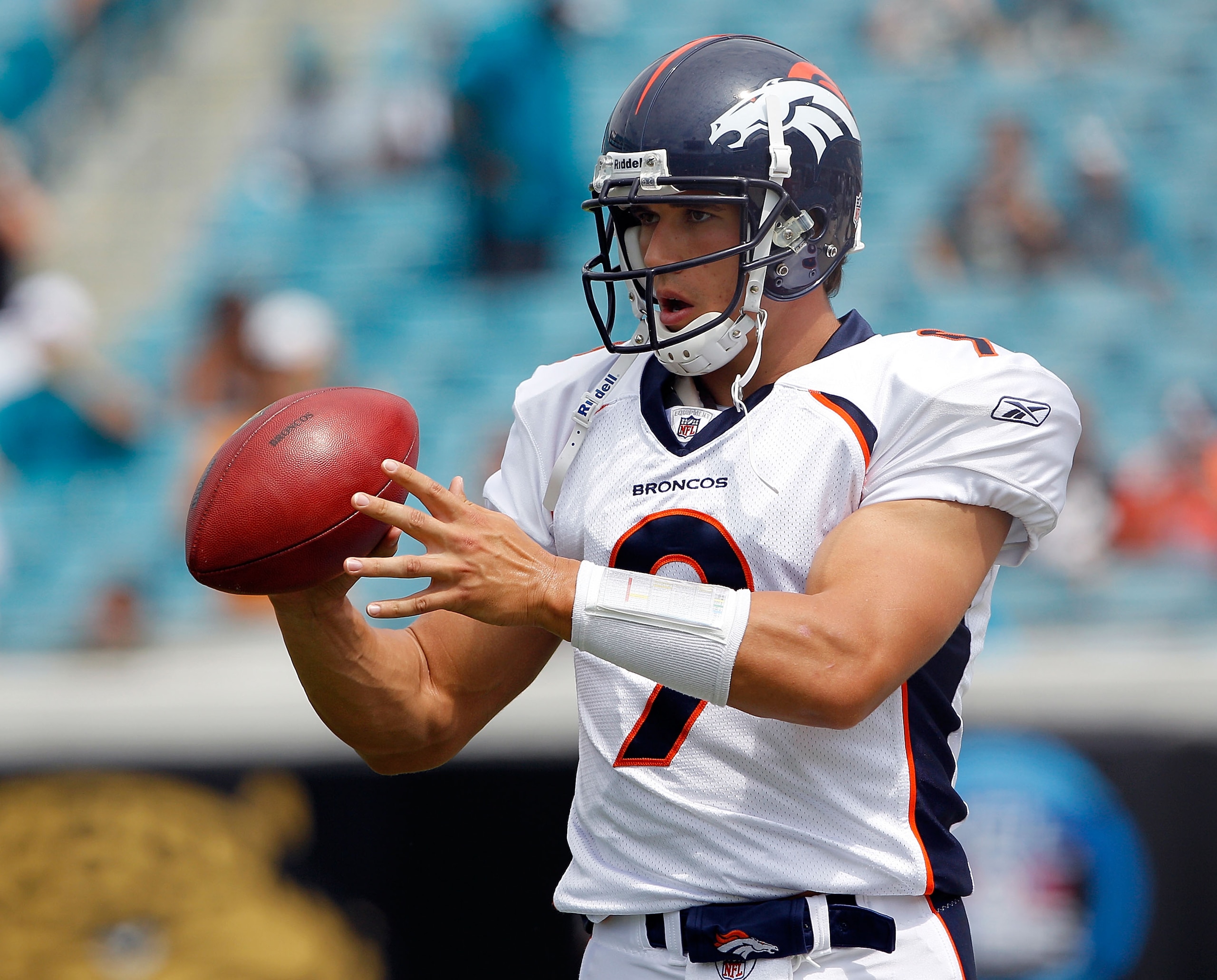
Forgive me if I never understood all the hype behind Brady Quinn.
Yes, he threw for 95 TDs in his Notre Dame career with only 39 INTs and a 134.4 QB rating. I get those numbers.
He is also 6’3” and 235 pounds, a great size for a franchise quarterback.
My issue is that he played for Notre Dame, a team, who because of their broadcasting deal with NBC, refuses to pick a conference and perennially beats up on weak teams including San Diego State and Navy.
Yes, they play USC every year and Michigan State is becoming a bigger contender.
They also play an almost guaranteed win against Purdue every year—especially when Purdue calls timeouts in the final seconds to help Notre Dame out.
Brady Quinn was also surrounded by talent when he played at Notre Dame as was Jimmy Clausen after him who is still too young in his career to make this list.
The concern with a QB surrounded by talent in college is that he will be drafted high by a relegated team and not be able to carry the team on his shoulders.
I never saw Quinn as having that leadership talent of Peyton Manning or Drew Brees, and his 66.8 passer rating at Cleveland exemplifies that.
He still has time to avoid becoming a complete bust, but to only play 14 games as a first round pick is definitely a bust in anyone’s book, especially for such a prolific passer in college.
20. Chuck Long: Lions/LA Rams (1986)
7 of 26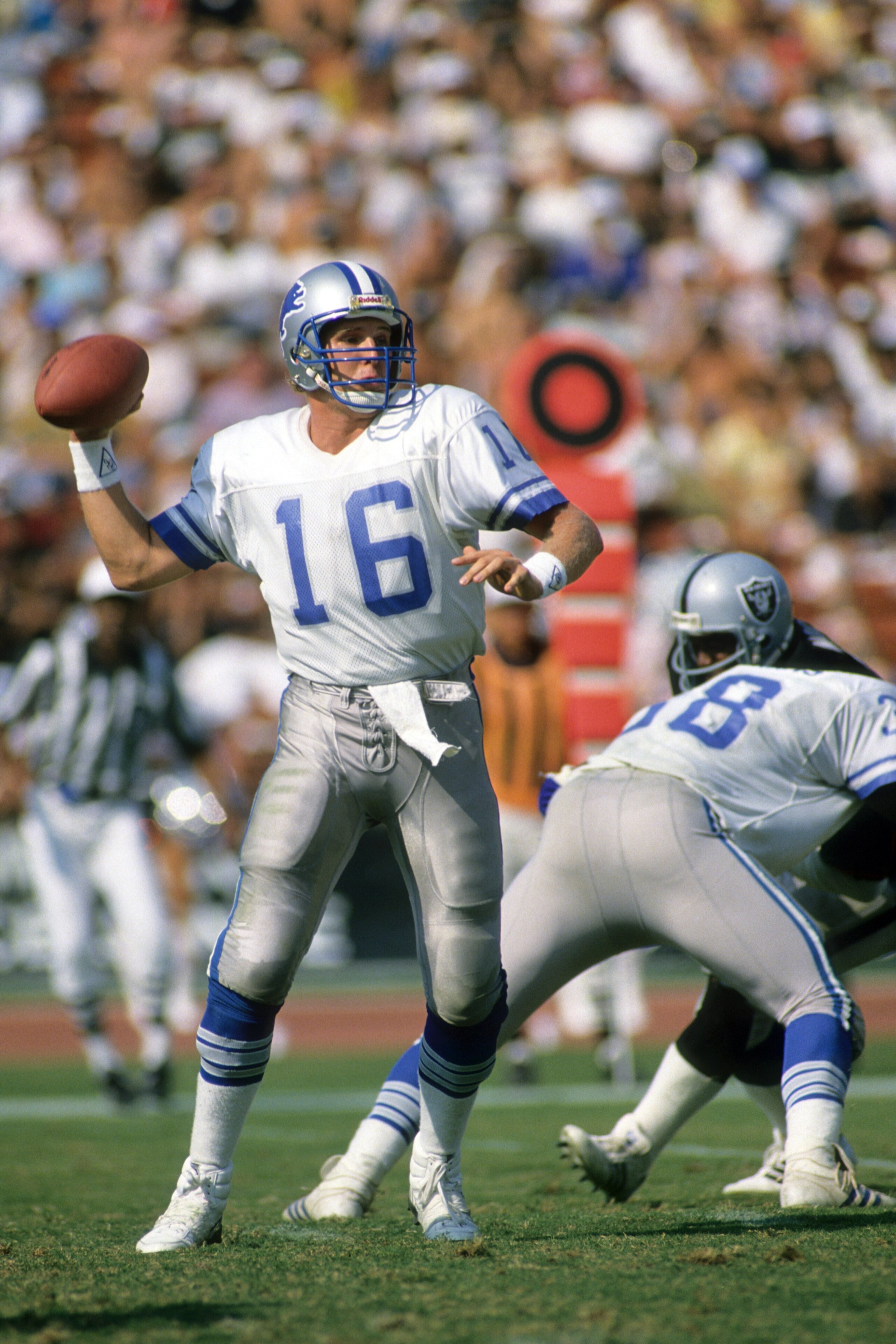
Despite the backing of then Iowa head coach Hayden Fry stating that he was “destined for greatness,” Chuck Long only survived 27 games in the NFL after being drafted 12th overall by the Detroit Lions in the 1986 NFL Draft.
23 of those games were played for the Lions, with his best season coming in 1987 when he played 12 games and threw for nearly 2600 yards, 11 TDs and 20 interceptions.
In 1990, the Los Angeles Rams signed Long as a backup QB and he played in four games for the Rams completing just one of his five pass attempts in his last NFL season with a 22.1 QB rating.
After his 10000 plus yard, 74 TD career at Iowa, Long truly looked destined for greatness.
The best laid plans of mice and men do often go astray however.
19. Dan McGwire: Seattle Seahawks (1991)
8 of 26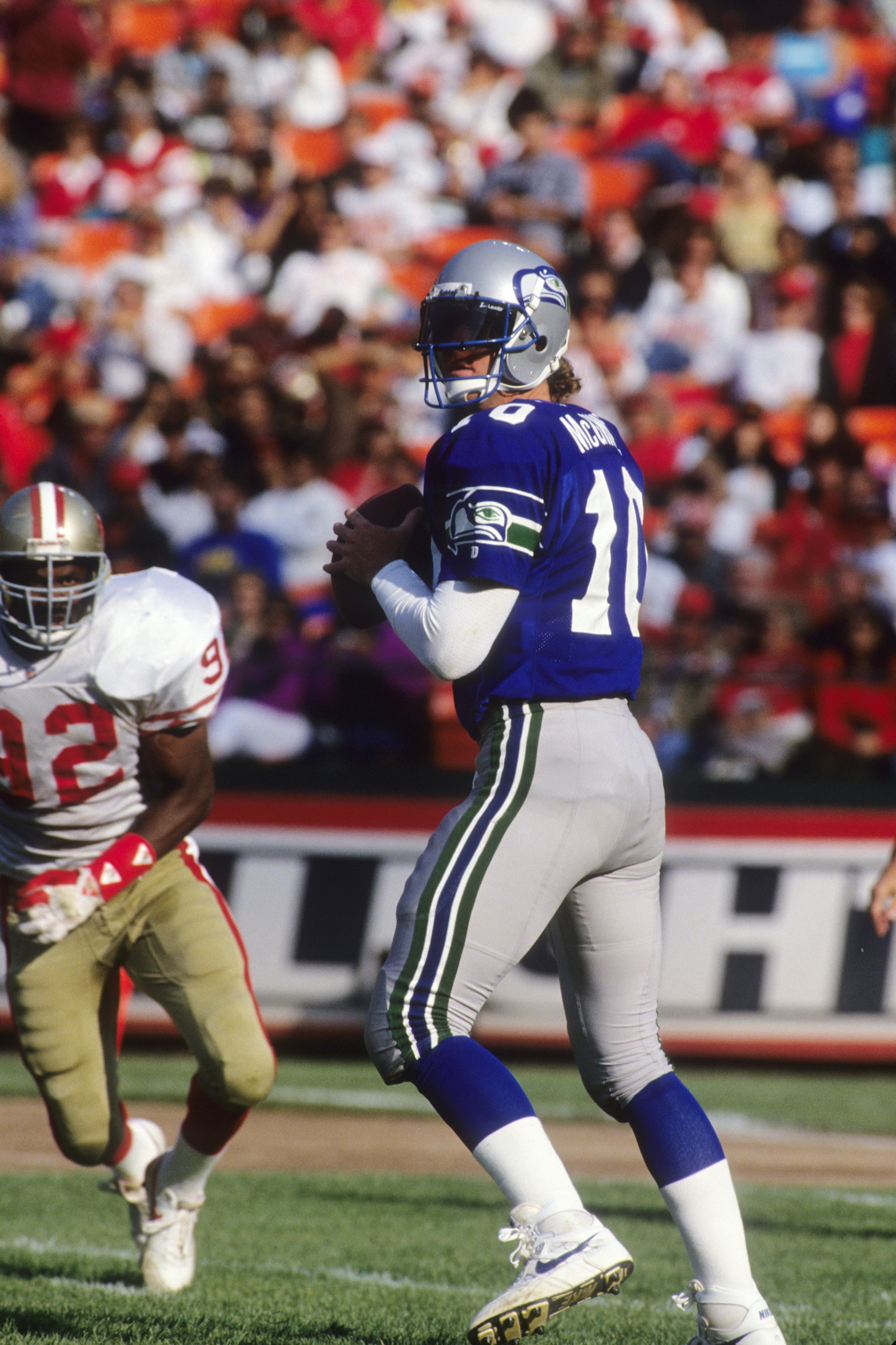
Strangely enough, McGwire is not only the brother of former St. Louis Cardinals and HGH user Mark McGwire, but he was also Chuck Long’s successor for the Iowa Hawkeyes.
After two seasons where he only got 84 total pass attempts at Iowa, he transferred to San Diego State to play for the Aztecs.
He blossomed in California, completing just over 60 percent of his passes and throwing for more than 3833 yards.
He also added a 148.6 QB rating and 27 TDs to only seven picks to solidify his position as the 16th overall pick by the Seahawks in the 1991 NFL Draft.
This was a very unfortunate time for Seahawks quarterbacks as they couldn’t decide which of their failed draft picks should be the starter.
McGwire washed out of the league after only four seasons and 12 games played for Seattle from 91-94.
He finished his career with a 52.7 passer rating, only 745 yards and two touchdowns while also throwing six picks.
18. Rick Mirer: Seahawks/Bears/Jets/49ers/Raiders (1993)
9 of 26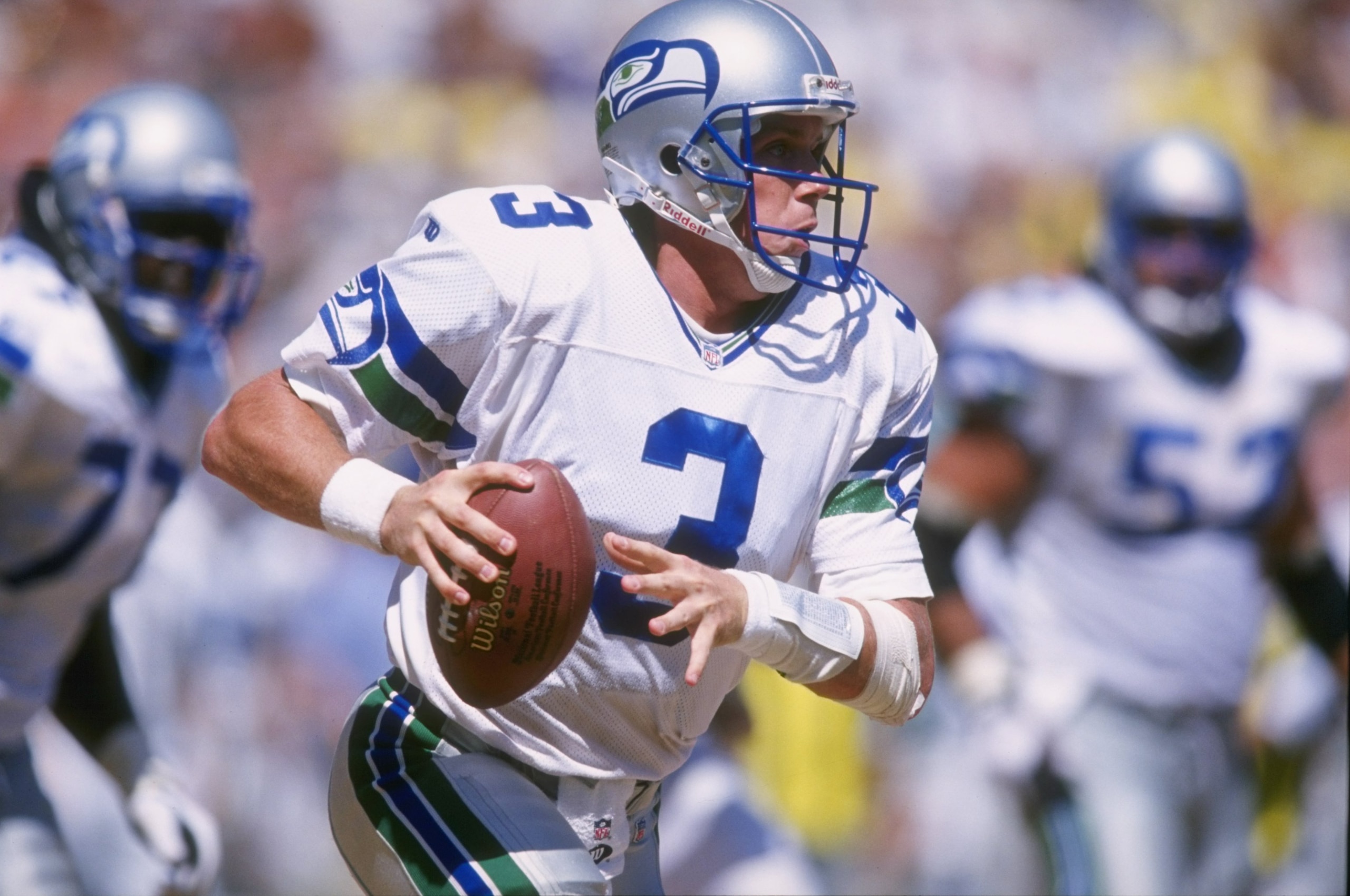
Rick Mirer may hold some sort of record for the most teams played for in less than ten seasons by a first round pick. We’re not sure.
What we are sure of is that the Notre Dame alum was brought in by Seattle to pick up where previous bust Dan McGwire left off in Seattle.
After a record breaking Indiana high school football career, and four years at Notre Dame where he threw for near-as-makes-no-difference 6000 yards and 41 TDs in 45 starts, Mirer was drafted with the second overall pick by the Seattle Seahawks.
Many claimed that Mirer would be the next Joe Montana, but in four seasons and 55 games with Seattle, he only managed around 9100 yards and a 65.2 QB rating.
He also had lost his good decision making from college throwing 56 picks in those same four seasons while only completing 41 TDs.
That is, more than double the number of interceptions he threw in college over the same number of touchdowns.
From 1997 to 2003, he would play four more seasons for four more teams and 27 more games but never found success with any of them.
His worst tenure coming in 1997 with the Chicago Bears when he threw for 420 yards, 6 picks with 0 interceptions and a 37.7 passer rating.
His three games in San Francisco in 2000 were arguably his best, but he never was the second coming of former 49ers legend Joe Montana.
17. Kelly Stouffer: Seattle Seahawks (1987)
10 of 26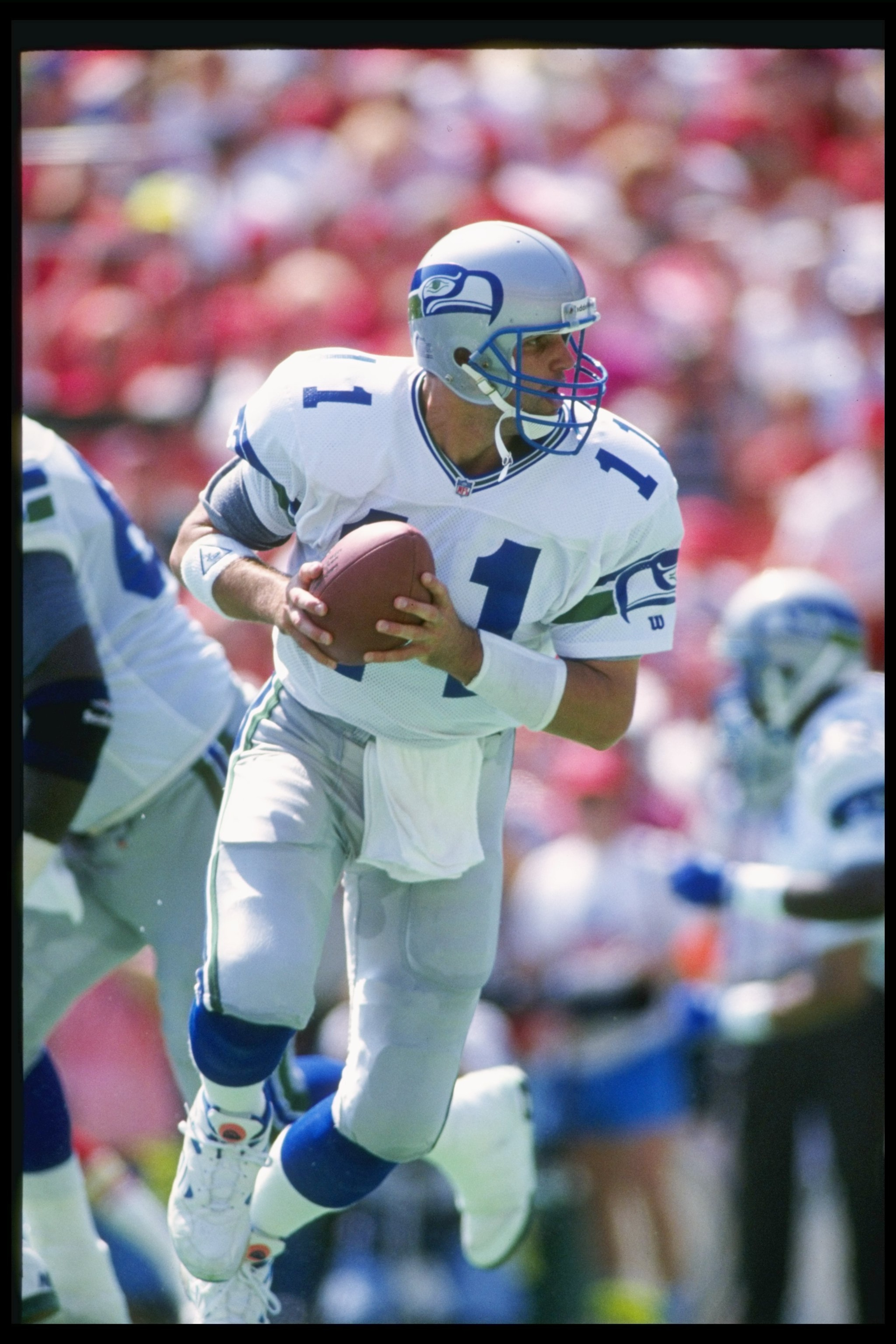
Are you sick of Seahawks QB failures yet? Good. I hoped so.
While the St. Louis Cardinals football team, not the Seahawks, are responsible for Stouffer being selected sixth overall, Stouffer is a bust in a league all his own.
Stouffer’s rights were traded to Seattle after he and St. Louis failed to agree on a contract and he did not play his rookie season.
When he did debut for the Seahawks in 1988 after starting QB Dave Krieg was injured and backup Jeff Kemp was benched, he showed that his true NFL colors had lost their luster in his year off.
After Tom Flores took over the head coaching job in 92, Krieg was released and Stouffer became the starter in front of Dan McGwire. However, he didn’t win any of the nine games he played in that season and was released the next season.
In his 22 career games in the NFL, he threw 19 picks and only seven TDs.
Along with 2333 yards, he earned a career passer rating of 54.5 and only averaged 106 yards per game in four seasons.
Though the Carolina Panthers tried to revive the prospect’s career in 1996, he never returned to the NFL and now works as a color analyst for college football games.
16. J.P. Losman: Bills/Raiders/Seahawks (2004)
11 of 26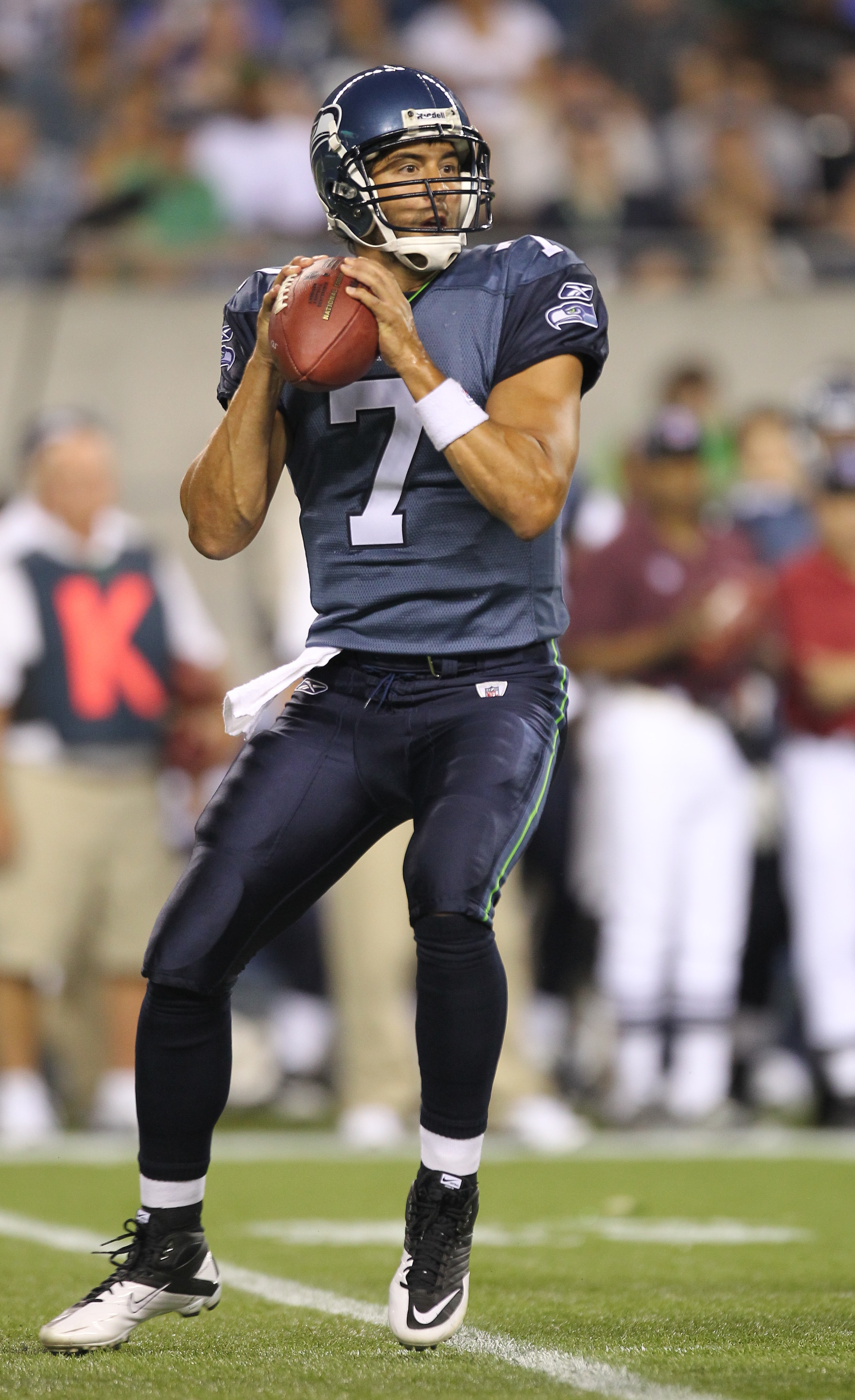
You thought you were out of the woods on Seahawks QBs didn’t you?
Losman was thought to be the QB of the future for the Buffalo Bills, a return to the times of Jim Kelly, the K-Gun, and overall offensive dominance in the AFC.
He did, after all, have a strong college career at Tulane after he transferred there from UCLA.
He sat for two seasons behind future first rounder Patrick Ramsey and showed impressive talent in limited work in 2000 and 2001.
When the reigns of the Green Wave offense were handed to him in 2002, his talent shined as he threw for 2500 and 3000 yards in 2002 and 2003 respectively.
He also threw for 52 of his 60 career TDs in those two seasons with only 28 interceptions and won the first ever Hawaii Bowl over the Hawaii Warriors 36-28.
However, after being selected with the 22nd overall pick in 2004, he never fully settled into his role as Buffalo’s franchise QB.
After being injured in 2007, he lost the starting job to Trent Edwards whom he would later take over for in 2008.
After wanting a trade for over a year he was not resigned after the 2008 season.
Losman lead the UFL’s Las Vegas Locos to the inaugural UFL championship in 2009 and has played in two NFL games since then throwing just one pass, an incompletion, for Oakland since then.
Maybe Seattle can revive his career, and with his career passer rating of 75.6 and his displays of talent in college, he might deserve a shot, but as it stands right now 6200 yards and a 33-34 TD to INT record is certainly bust territory for any first round pick QB.
15. Patrick Ramsey: Redskins/Jets/Broncos/Titans/Lions/Dolphins/Vikings (2002)
12 of 26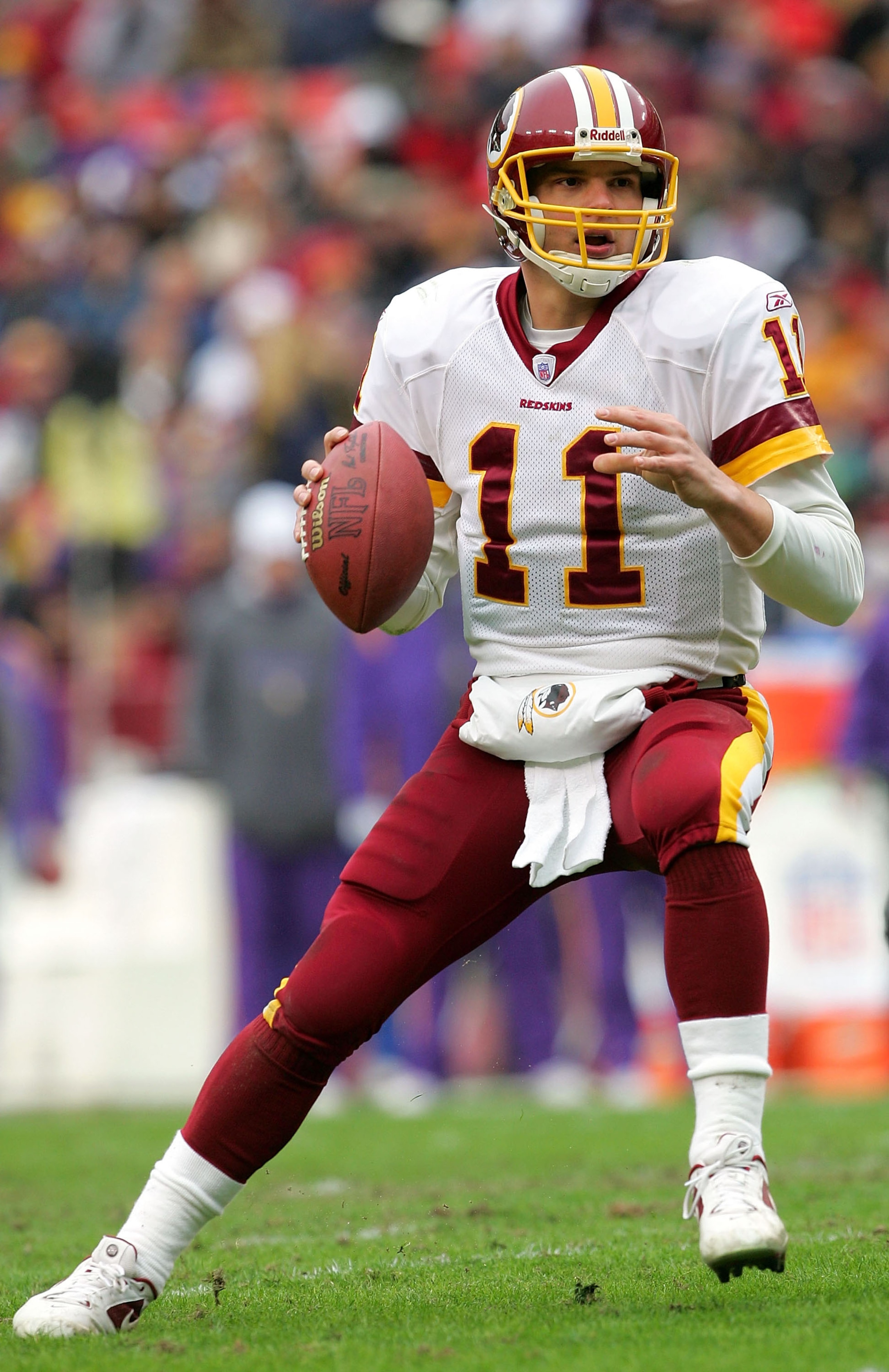
Patrick Ramsey would easily steal Rick Mirer’s “record” of teams played for in less than 10 seasons—if he had actually taken snaps for the majority of the teams that had signed him.
After a strong career at Tulane where Ramsey earned a gunslinger reputation, he was selected with the last pick in the first round of the 2002 NFL Draft.
However, in a tumultuous new millennium for Washington, he never started a full season and was the most sacked QB in the NFL in 2003.
The '03 season was also arguably his best with Ramsey, throwing for 14 TDs, nine picks and over 2100 yards.
That being said, he was plagued by injuries throughout his career and after being traded to the Jets in 2006, never found another home in the league.
He had a brief stint for Denver in 2007 and 2008 where he played three games but couldn’t regain the magic of his college career.
He is currently under contract to the Vikings who do need a quarterback to move forward with.
14. Jack Thompson: Bengals/Buccaneers (1979)
13 of 26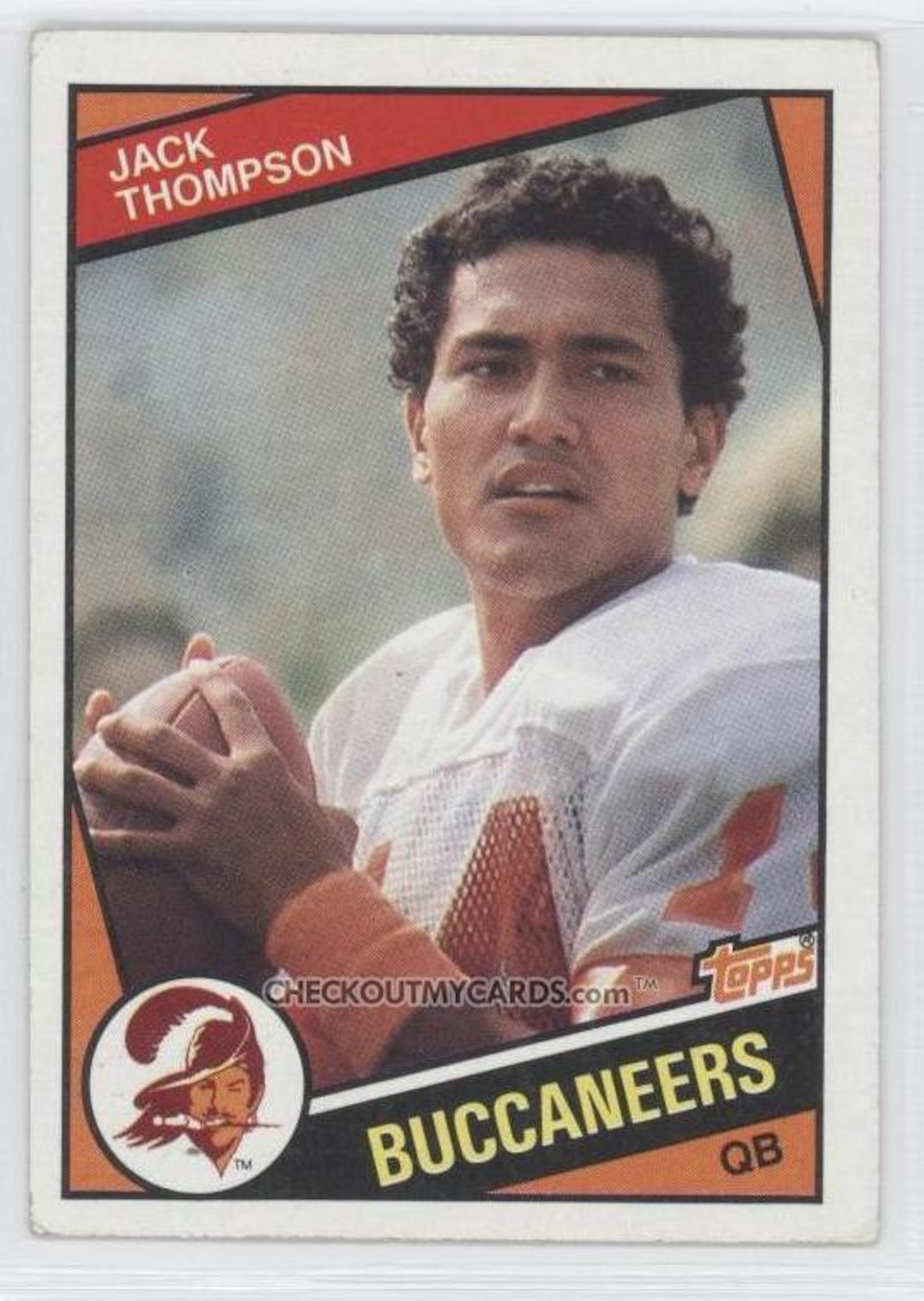
Jack Thompson—otherwise known as “The Throwin` Samoan”—is considered by ESPN to be the 26th worst draft pick bust in history was chosen third overall by the Cincinnati Bengals in the 1979 NFL Draft.
He had finished ninth in Heisman Trophy voting in 1978 while playing for Washington State University and was considered the most prolific passer in NCAA history after the 1978 season throwing for 7,818 yards and setting records in the Pac-10 conference for TD passes, completions and attempts.
After being drafted, Thompson became the starting QB for Cincinnati, throwing for just 481 yards in his first season with 1 TD and 5 picks. At the end of his three year career with the Bengals he had played only 32 games and completed only 47.3 percent of his passes for a measly 2072 yards and 13 TDs.
In 1983 the Tampa Bay Buccaneers gave him another shot hoping to rekindle the fire that had driven The Throwin` Samoan in college, but to no avail.
He played better for the Bucs, completing near-as-makes-no-difference 58 percent of his passes with Tampa Bay over 19 games but combined with only 170.7 yards per game and 26 interceptions with only 20 TDs.
Thompson was replaced by Steve DeBerg and never played another snap in the NFL.
13. David Klinger: Bengals/Raiders (1992)
14 of 26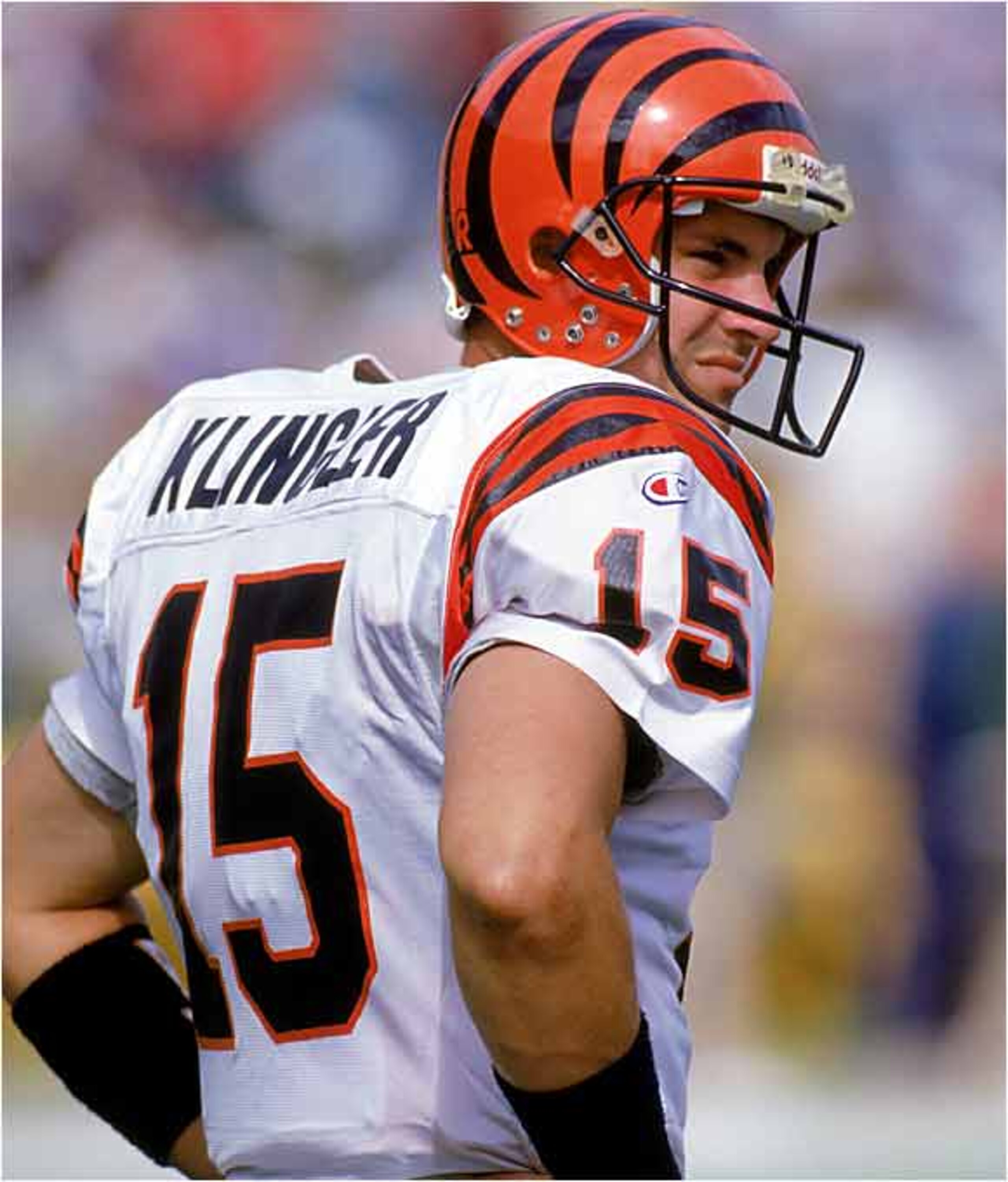
David Klinger set almost every QB record at the University of Houston, including one game where he threw 11 TD passes, and another where he threw for an NCAA-DI record 716 yards in one game.
He also threw for 9430 yards in his Houston career and 91 TDs in four years with the Cougars.
After starting two seasons for the Bengals and posting weak numbers including a 16-22 TD-INT ratio, he lost the starting job to Jeff Blake.
He was signed in Oakland for two seasons as a backup but never started another game in the NFL.
In 1998 after signing with the Green Bay Packers as Brett Favre’s backup, he was cut and never played in the league again, solidifying his position as one of the many 1990s first round busts.
12. Heath Shuler: Redskins/Saints (1994)
15 of 26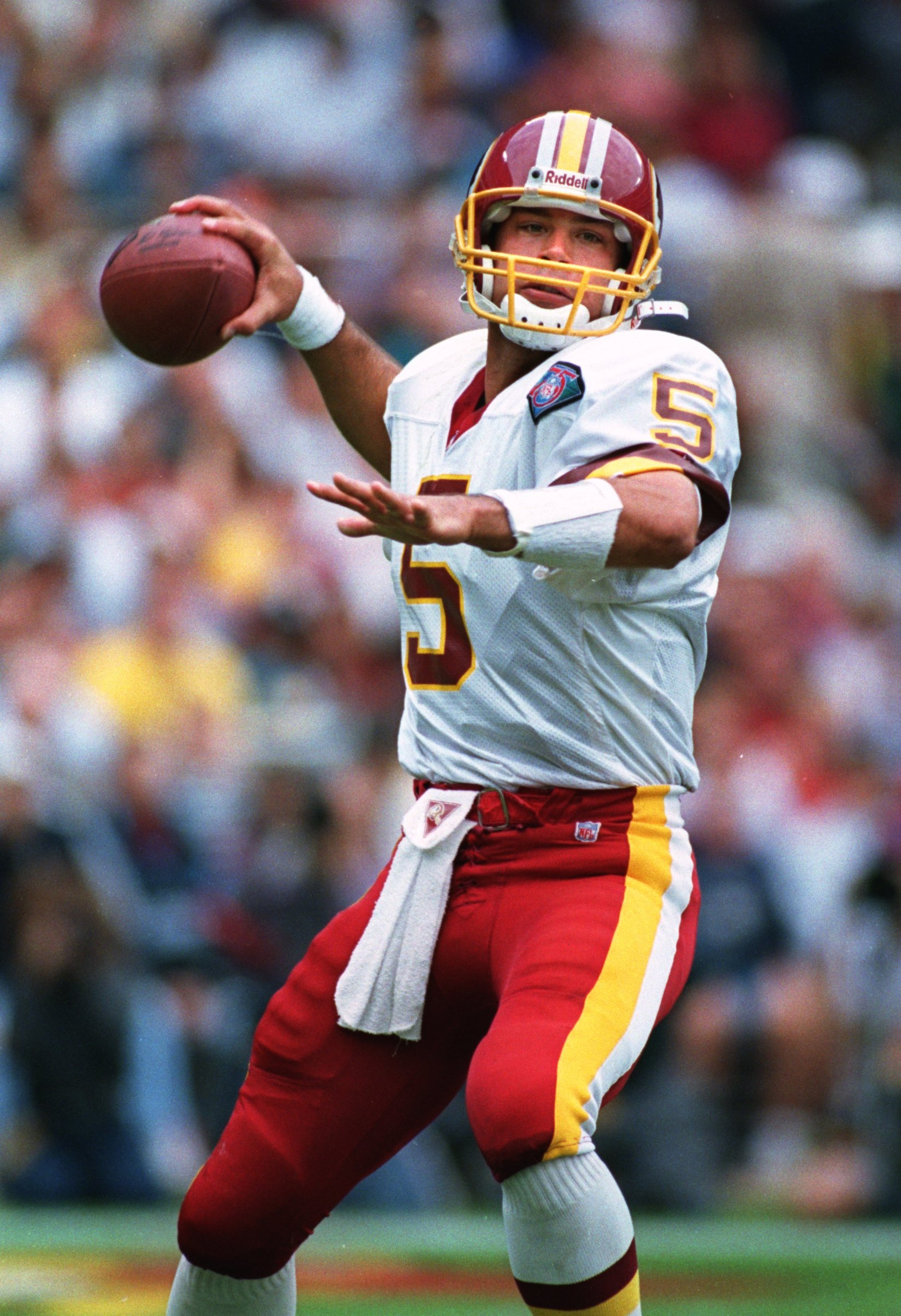
When Peyton Manning set all his records at Tennessee, he was eclipsing now U.S. Congressman Heath Shuler’s records.
Shuler was second in Heisman voting in 1993 and was selected third overall by the Washington Redskins.
He was seen as the QB of the future, and even earned a seven-year $19.25 million contract after a training camp holdout.
However, through poor play and a QB controversy between himself and fellow 94 Draft pick Gus Frerotte, he lost the starting job after only 18 games and two seasons with the Redskins.
He was then traded to the New Orleans Saints where he didn’t fare much better and eventually suffered a foot injury that required two surgeries to fix.
After being unable to play in his second season for the Saints, Shuler signed with Oakland but re-injured his foot in training camp and promptly retired.
Retiring with a 54.3 career passer rating and 15 TDs along with 33 interceptions, Shuler was rated by ESPN in 2004 as the 17th biggest sports flop of the past 25 years.
He is also ranked by ESPN as the fourth biggest NFL draft bust of all time.
Hopefully the North Carolina 11th district constituents who put their faith in him get a better return on their investment.
11. Terry Baker: LA Rams (1963)
16 of 26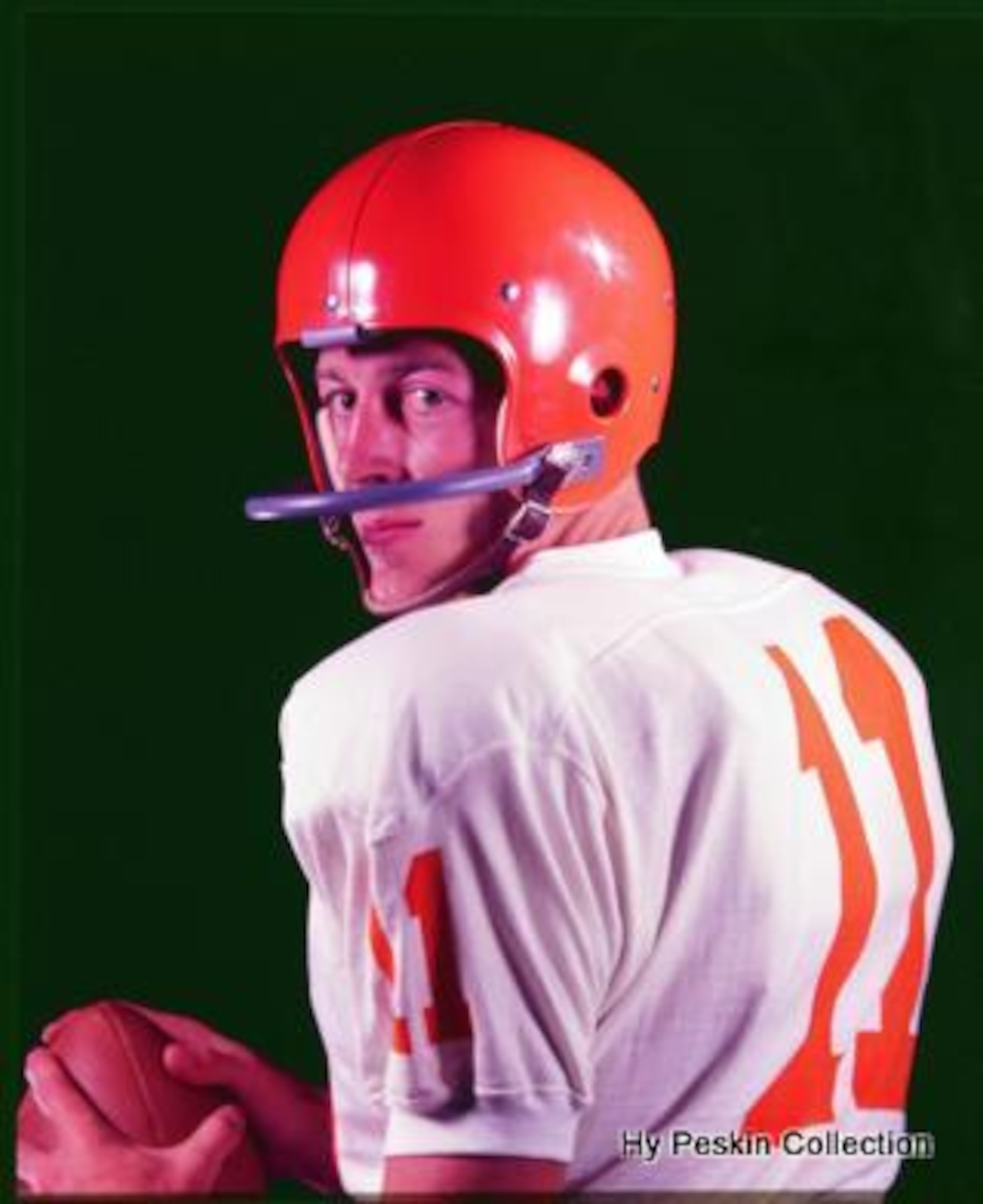
Baker is the only athlete to ever win a Heisman Trophy and compete in the Final Four, and he did both for Oregon State University in 1962.
He played very strong college ball putting up 3476 yards in three seasons at Oregon State from 1960-1962 and compiled a 51.3 completion percentage in a very different football era than we are used to today.
However, after being drafted by the Rams with the first overall pick in the 1963 Draft, the other shoe dropped and Baker left some people wondering if he maybe should have stuck with playing basketball instead.
His 40.7 career QB rating—bloated slightly by his one completion out of only one attempt in 1965 for 14 yards—ranks among some of the lowest in NFL history.
The former Heisman winner only started one game in his career for the team that drafted him first overall and never won a game or threw a touchdown pass.
He later moved on to play for the Edmonton Eskimos in the CFL, but he never lived up to the hopes and dreams of Rams fans that he would be a legendary QB they could build a dynasty around.
10. Rich Campbell: Green Bay Packers (1981)
17 of 26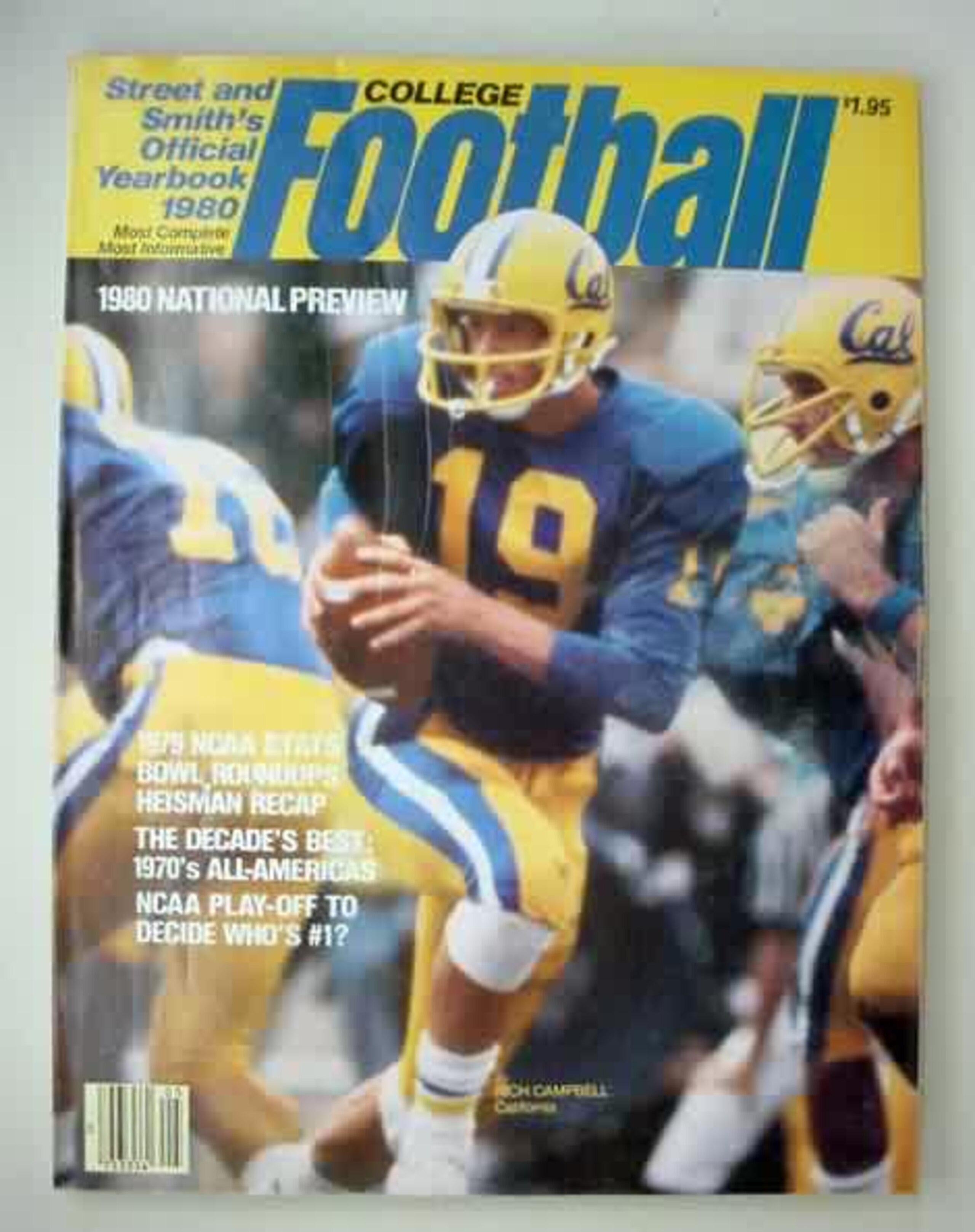
Rich Campbell is the exact opposite of what people think nowadays when they hear the words “Green Bay Packers starting quarterback.”
After three strong years as the starting QB for Cal, where he amassed a 133 passer rating and 35 touchdowns, Campbell was drafted sixth overall in the 1981 NFL Draft by the Green Bay Packers.
He would seem to be shades of what was to come as his decisions were often ill-advised which the Packers knew from his 42 college interceptions.
However, the Packers hoped that he would make better decisions and even improve on his 64.6 completion percentage.
He only managed to play five games for Green Bay, amassing only three touchdowns with nine picks and 386 yards passing.
His 38.8 career passer rating is at the absolute bottom of the career list and explains all on its own why he starts off the top 10 of this list.
9. Art Schlichter: Colts/Bills (1982)
18 of 26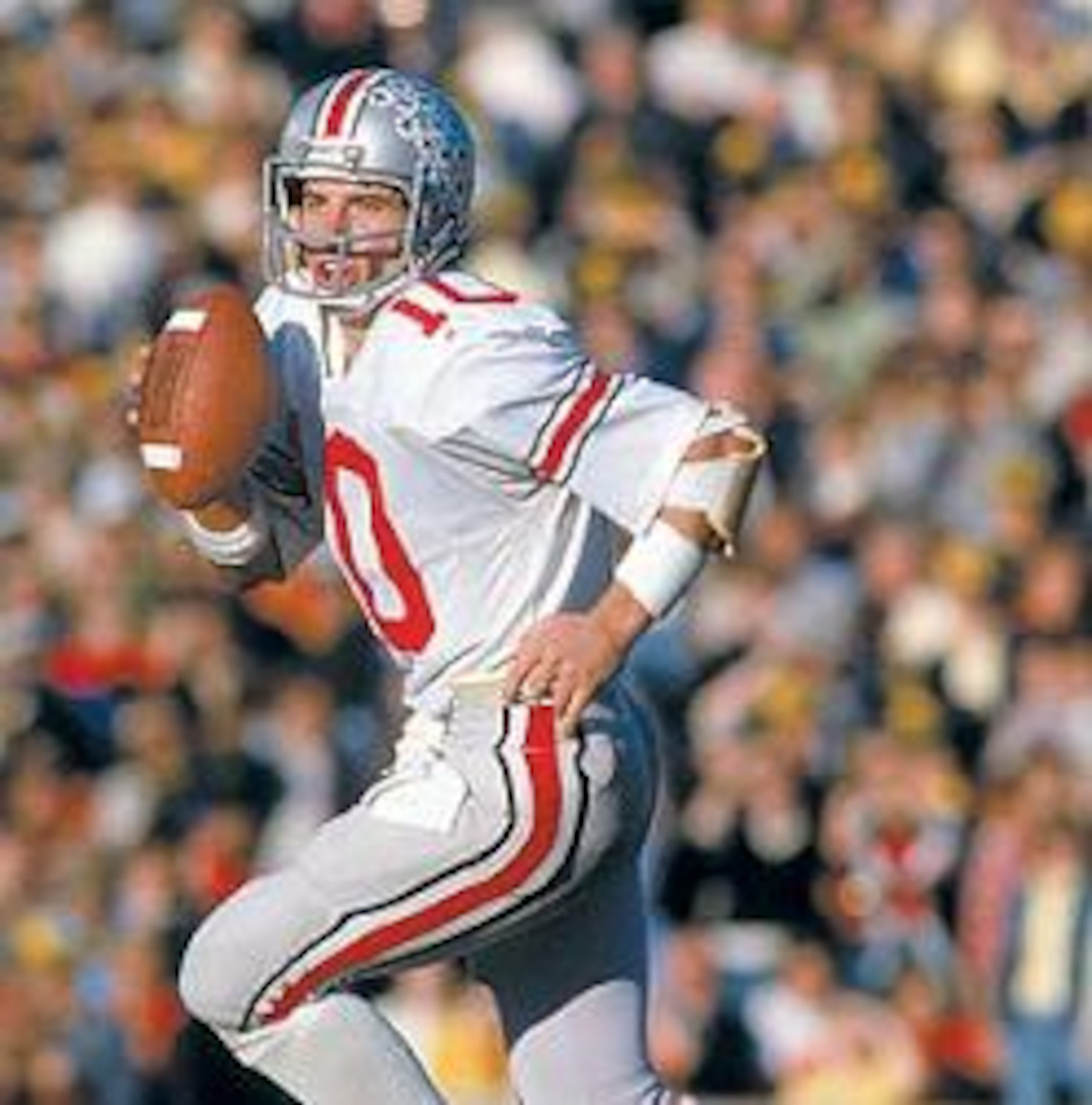
As the last starting QB under legendary Ohio State head coach Woody Hayes, you would expect Art Schlichter to be a great quarterback.
In fact, if you look at simply his college career you’d say that he was.
In his last three seasons with the Buckeyes, he finished no lower than sixth in the voting for the Heisman Trophy, finishing as high as fourth his sophomore year.
However, after he was chosen by the then Baltimore Colts with the fourth overall pick in the 1982 NFL Draft, his gambling habit started to get the better of him—culminating in his 1983 suspension from the NFL.
He had gone to the NFL for help after testifying against his bookies for the FBI and was fearful they may harm him or force him to throw games for them.
After only three seasons with the Colts, he was released in 1985 effectively ending his NFL career.
After being arrested in 1987 for his involvement in a large scale sports betting operation, he was effectively banned from playing in the NFL by then Commissioner Pete Rozelle.
He did win the AFL title and league MVP honors with the Detroit Drive in 1990, but his gambling continued to haunt him and in 1993 he left football for good to work on his gambling addiction.
He would later serve around 10 total years in over 40 different prisons and jails because of his habit, once even smuggling a cell phone into his cell so he continue to place bets.
Unfortunately, after being out of the criminal spotlight for years, Schlichter was arrested earlier this month in relation to a sports ticket scam that effectively stole millions of dollars from various people by promising to sell them tickets to various sporting events including this year’s Super Bowl, but never delivering even after they were paid for.
Hopefully Schlichter can finally learn from his mistakes and get help for his problems so that he can enjoy the rest of his Draft bust life. That life may be spent behind bars from now on however.
8. Tim Couch (And Others from the 99 Draft): Cleveland Browns (1999)
19 of 26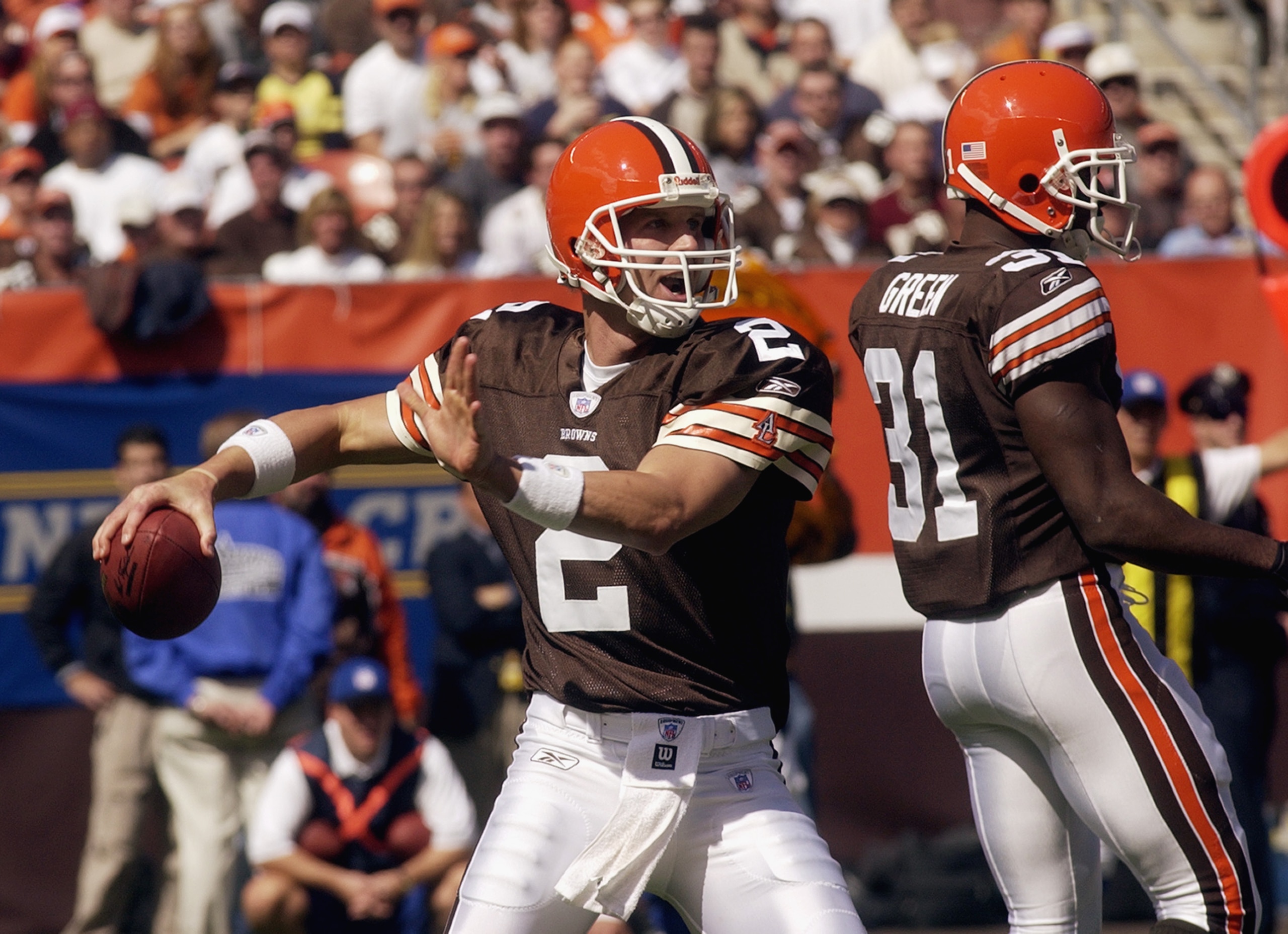
There was a lot of failures in the QB class of the 99 Draft—especially those selected in the first round with McNabb and Culpepper being the exceptions.
However, even with Akili Smith and Cade McNown involved in that first round, no one underachieved as much as Kentucy QB Tim Couch.
Couch was a Heisman finalist in 1998 and was selected with the first overall pick in 1999 by the Cleveland Browns.
After his very prolific 8400 plus yard 74 TD career with the Wildcats, Couch failed to bring the magic north to Cleveland.
In 62 games over five seasons with the Browns, Couch threw for over 11000 yards and also completed 64 touchdowns.
The accuracy he had displayed in college had failed him and he threw 67 interceptions in the same time span, more than one per game on average.
He did finish his career in 2003 with one of the highest QB ratings on this list at 75.1, but he never fit into the system with Cleveland and along with his fellow 1999 first round QB busts, he easily earns his spot well inside the top 10 on this list.
7. Todd Blackledge: Chiefs/Steelers (1983)
20 of 26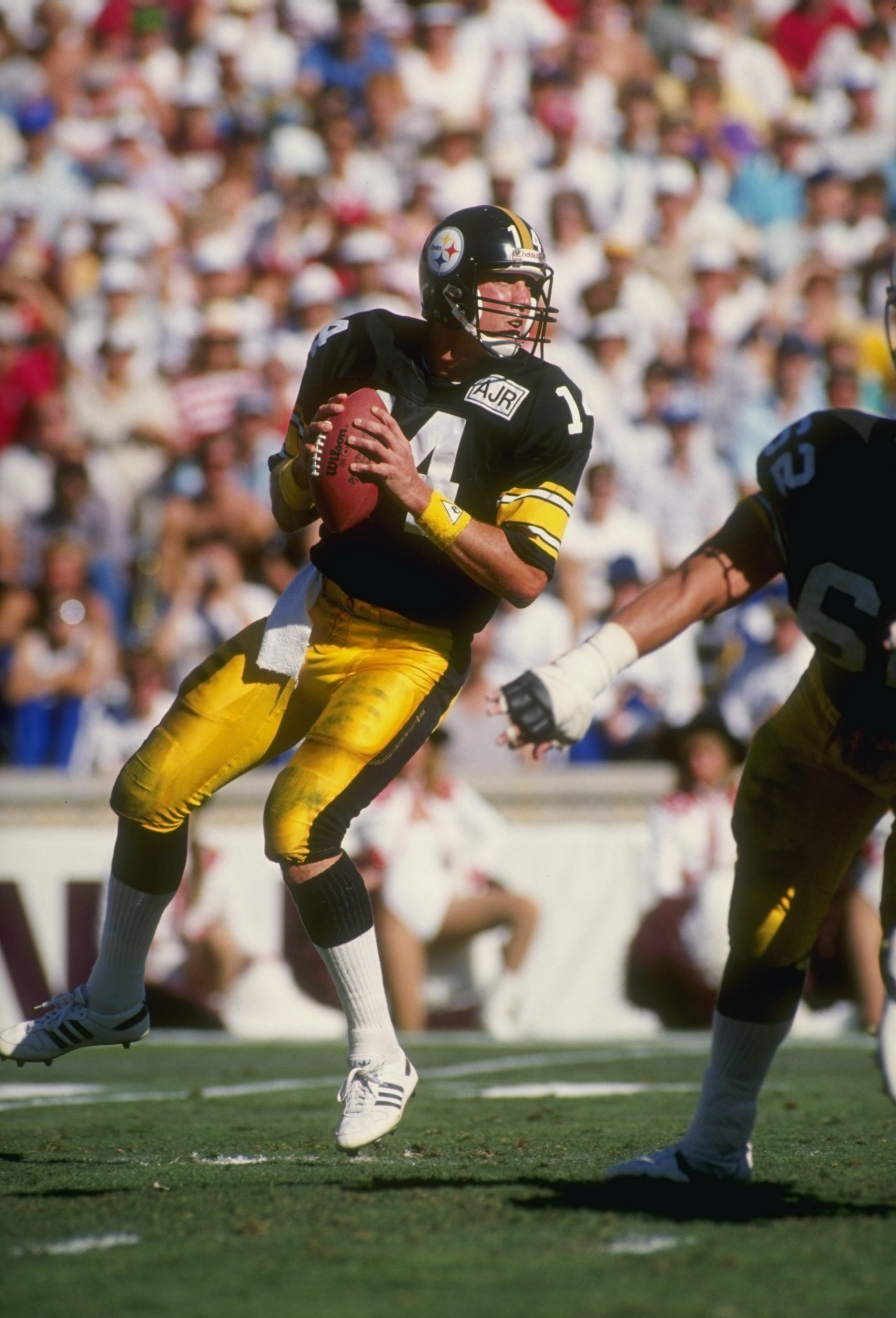
Part of that strong 1983 quarterback class, Todd Blackledge has to be the most disappointing of them all.
After finishing sixth in the Heisman voting in 1982, the year he and his Nittany Lions won the National Championship, he was drafted seventh overall by the Kansas City Chiefs.
Not learning from their mistake with Steve Fuller in the late 70s, KC chose Blackledge over Jim Kelly and Dan Marino who both went on to be Super Bowl and Hall of Fame quarterbacks.
In his five seasons with the Chiefs, he started just 24 games, amassing a record of 13-11-0.
He also earned a QB rating of 62 with 26 touchdowns and 32 picks.
In 1988 he moved to the Steelers where he didn’t fare any better and did not play in the NFL again after the 1989 season—eventually retiring with just over 5200 passing yards in 46 games played.
He is considered the biggest bust in Chiefs history.
6. Todd Marinovich: Los Angeles Raiders (1991)
21 of 26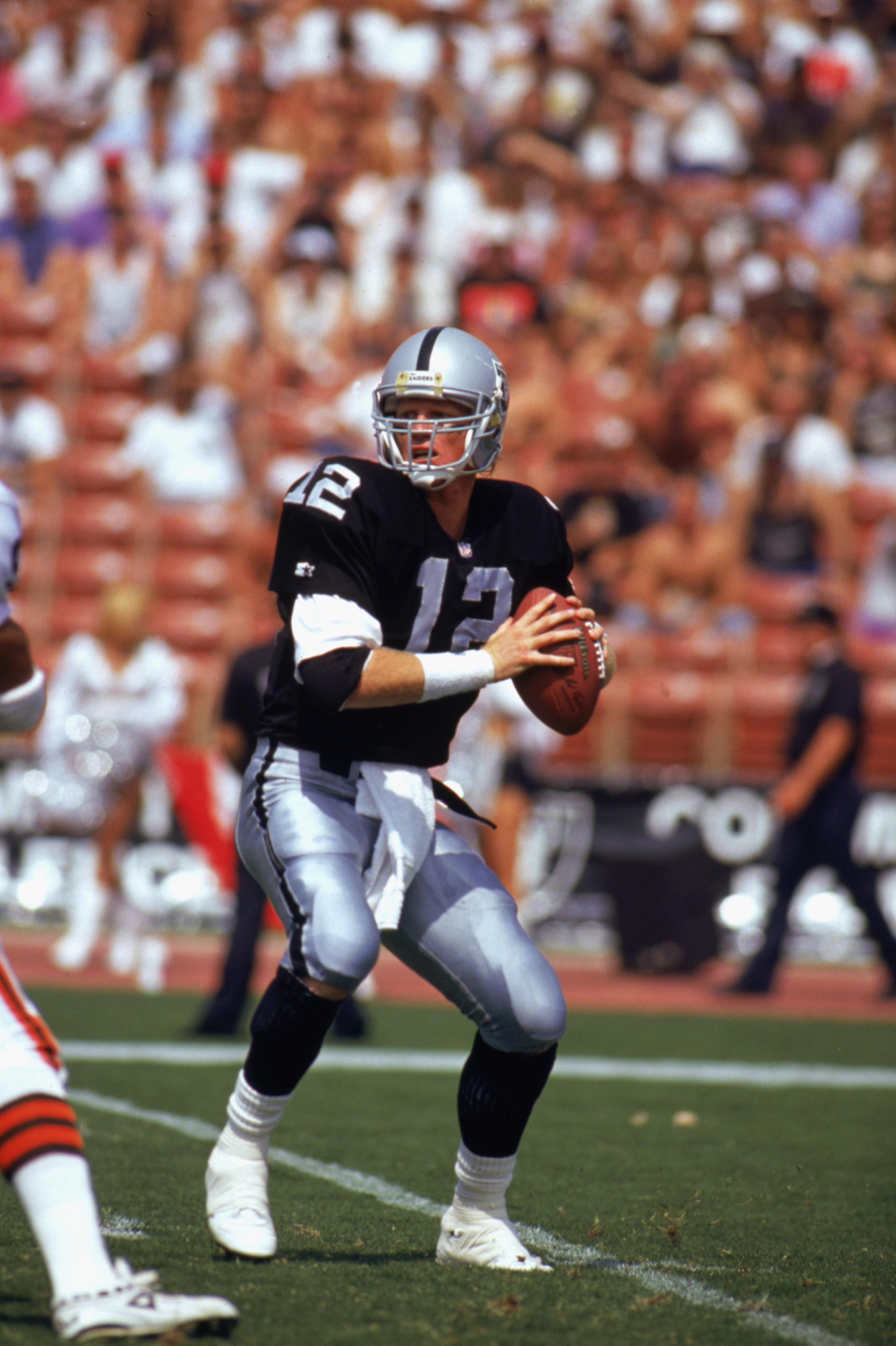
When you consider how he was brought up by his sports and conditioning obsessed dad, one would expect Marinovich would’ve been better QB in the NFL.
In a 1988 article in Sports Illustrated article, his childhood was explained as a very disturbing upbringing:
“He has never eaten a Big Mac or an Oreo or a Ding Dong. When he went to birthday parties as a kid, he would take his own cake and ice cream to avoid sugar and refined white flour," the article stated.
"He would eat homemade catsup, prepared with honey. He did consume beef but not the kind injected with hormones. He ate only unprocessed dairy products. He teethed on frozen kidney," the article continued.
"When Todd was one month old, Marv was already working on his son's physical conditioning. He stretched his hamstrings. Pushups were next. Marv invented a game in which Todd would try to lift a medicine ball onto a kitchen counter," the article explained.
"Marv also put him on a balance beam. Both activities grew easier when Todd learned to walk. There was a football in Todd's crib from day one. "Not a real NFL ball," says Marv. "That would be sick; it was a stuffed ball."”
Possibly due to the actions of his dad—rated by ESPN as one of history’s “worst sports fathers”—Todd had many personal issues and began using pot daily during high school.
In college, he played a very strong freshman season after being redshirted in 1988.
However, his drug issues got worse and after being arrested for cocaine possession after a very chaotic 1990 season Marinovich left USC for the NFL.
In the 1991 Draft he was selected 24th overall—ahead of future Hall of Famer Brett Favre—by the Oakland Raiders.
His drug problems continued, though.
He used urine samples from friends to pass drug screenings since he was using drugs throughout his NFL playing days, but was caught when he used the urine of a teammate who had been drinking and he was found to have a blood-alcohol level four times over the legal limit.
In the 1993 training camp, he failed another drug test, ending his NFL career after only eight starts.
He threw for 1345 yards, eight touchdown passes and nine interceptions in his NFL career.
He continued playing football in both the CFL and AFL, but it took Marinovich until 2007 to start on the true path to sobriety and his career never recovered.
5. Rex Grossman: Bears/Texans/Redskins (2003)
22 of 26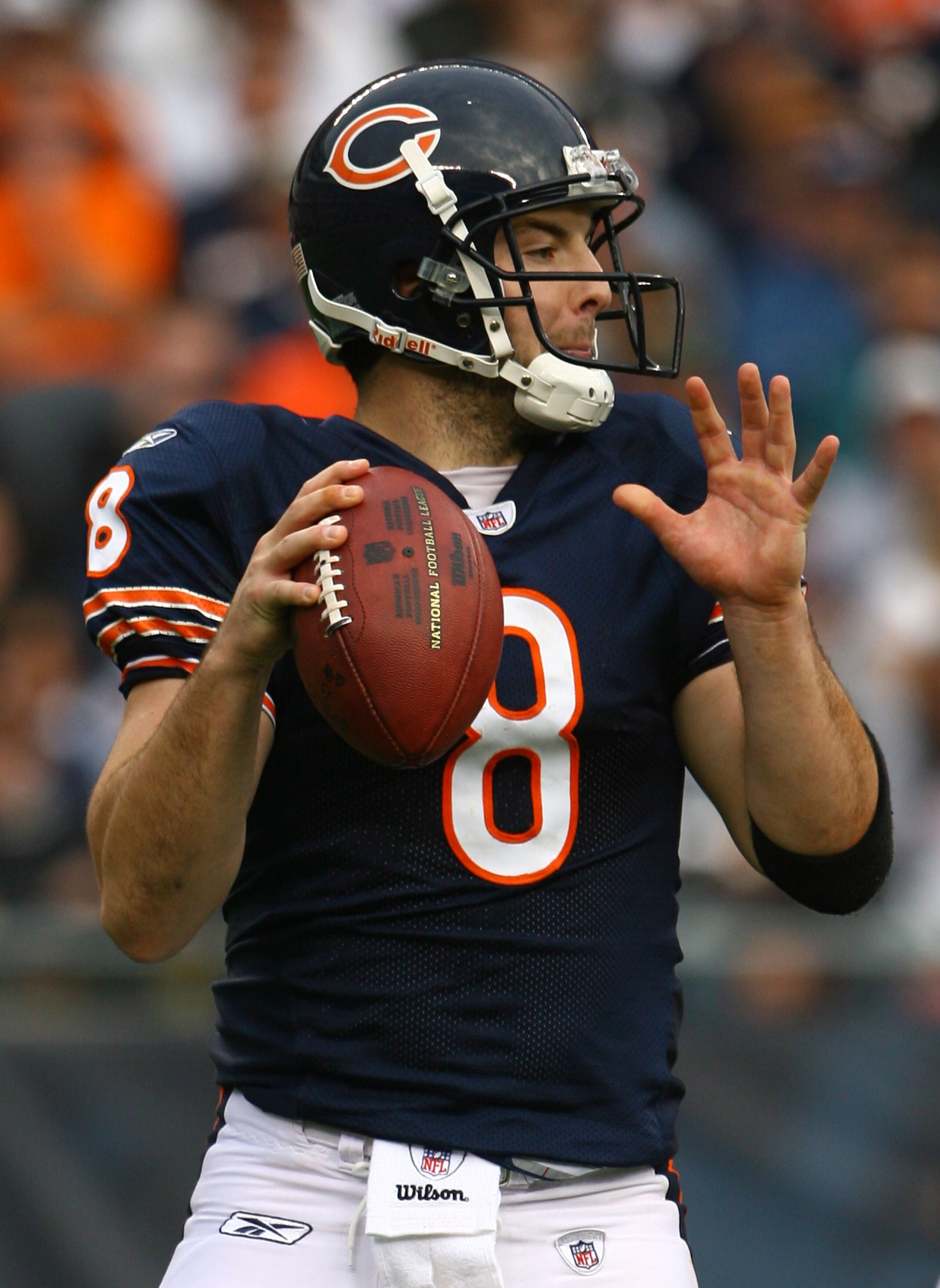
Oh Sexy Rexy, how we in Chicago don’t miss you.
After being a runner up for the Heisman in 2001 and throwing for over 9000 yards and 77 touchdowns in three seasons at Florida, Rex Grossman declared for the 2003 NFL Draft where he was selected 22nd overall by the Chicago Bears.
He debuted for the Bears in that year, but was sidelined with injuries for the majority of his first three seasons with Chicago until finally playing a whole season in 2006 leading the Bears to the Super Bowl against the Indianapolis Colts.
However, as this graph indicates, his 2006 season was anything but strong and after losing the Super Bowl he was never again seen as the true starting quarterback in Chicago.
His propensity for throwing interceptions and his uncanny ability to fumble the ball—which he still retains in Washington—earned him much hatred in Chicago and he was not resigned for the 2009 season.
After playing in only one game in Houston in 2009, Grossman became the starter in Washington for the last three games of the season as a sort of tryout for Head Coach Mike Shanahan.
Although he has an even TD-to-INT ratio at 40 each and has a career QB rating of 70.9, Grossman never seems able to be a reliable starter in the NFL and is considered by Bears fans to be one of the worst first round picks in team history.
4. JaMarcus Russell – Oakland Raiders (2007)
23 of 26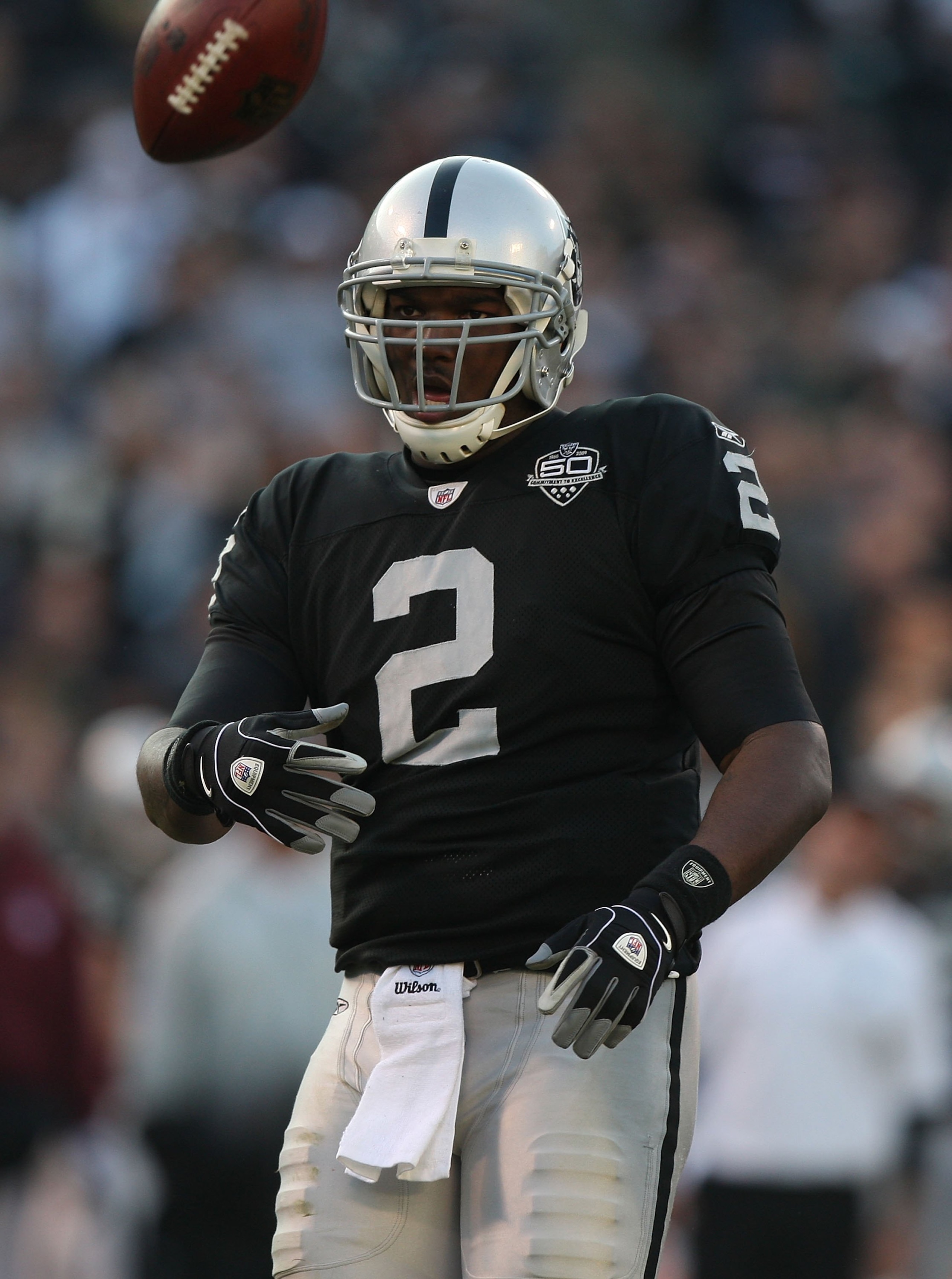
Russell was the MVP of the Sugar Bowl in 2007 for LSU and after a strong college career throwing for over 6600 yards and 52 touchdowns in the SEC, Russel declared for the 2007 NFL draft, forgoing his senior year.
When he was selected first overall by the Raiders, Russell held out until they finally signed him to a $61 million contract with $32 million of that guaranteed to be paid to the rookie. Russell only started one game his rookie season, going 36-for-66 in pass attempts over four games played.
As the starter for 15 games in 2008, Russel started to find his groove, throwing for over 2400 yards and 13 TDs on only eight picks. However, that progress only netted him a 5-10-0 record and he regressed in 2009 throwing 11 interceptions and only three touchdowns in nine starts and only twelve games played.
He was released with a 7-18-0 record as a starter in May of 2010 and is still a free agent. NFL.com’s Steve Wyche said that he believes Russell to be the biggest bust in NFL Draft history. We wouldn’t go that far, but he’s good enough for number four in our books.
3. Andre Ware – Detroit Lions (1990)
24 of 26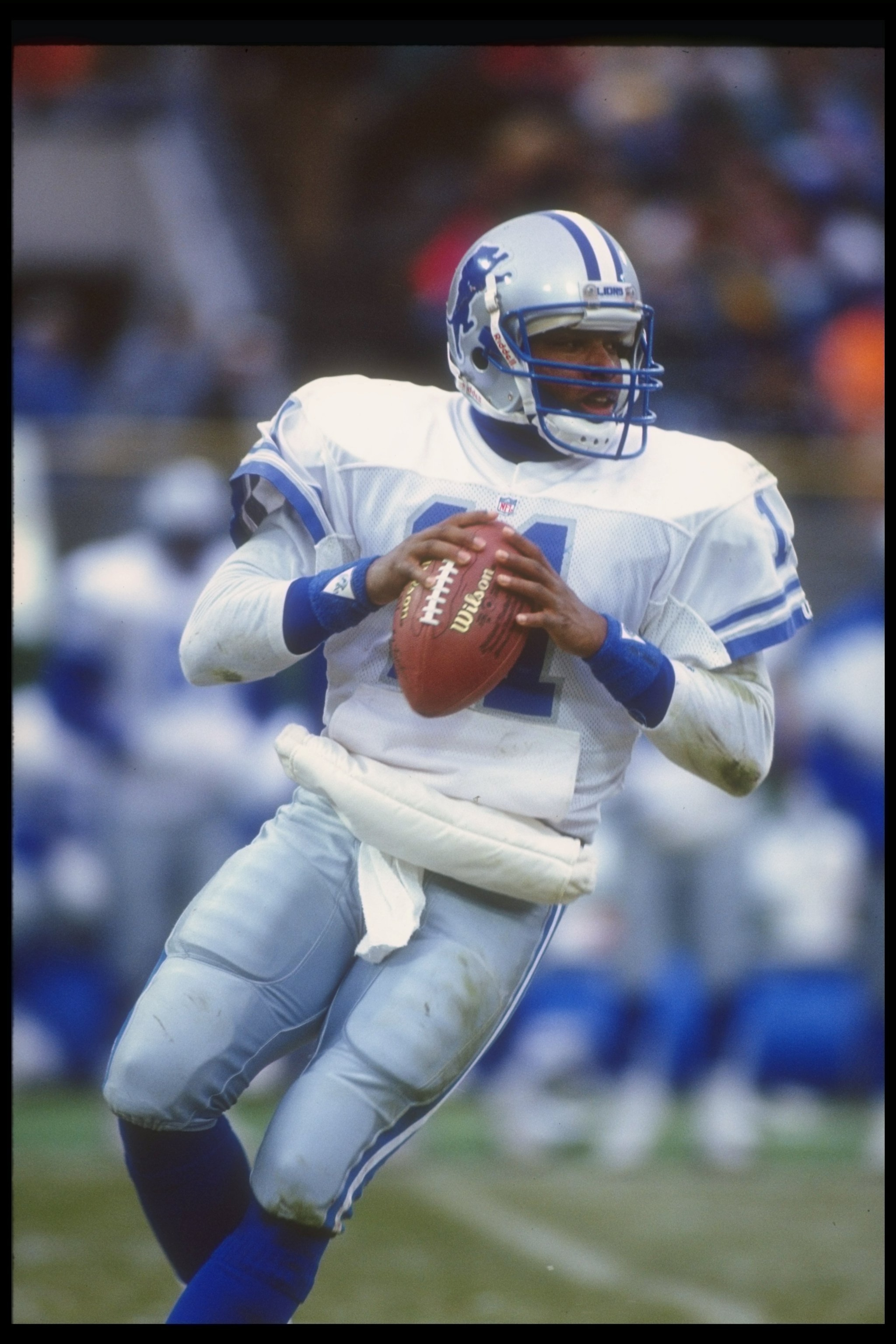
Andre Ware set a great example as the first African-American quarterback to win the Heisman in 1989—and then he literally threw it all away.
In three seasons with the Detroit Lions he only managed to throw for five touchdowns and just over 1100 yards while also throwing eight to the other team. Despite his prolific college career where he broke or set 26 different NCAA records, then Detroit Head Coach Wayne Fontes never saw him as the starting QB and Ware’s career never recovered.
He did move on to a decent career in the CFL throughout the 90s but like David Klinger, also from Houston, he never lived up to his hype in the NFL.
2. Ryan Leaf – Chargers/Cowboys (1998)
25 of 26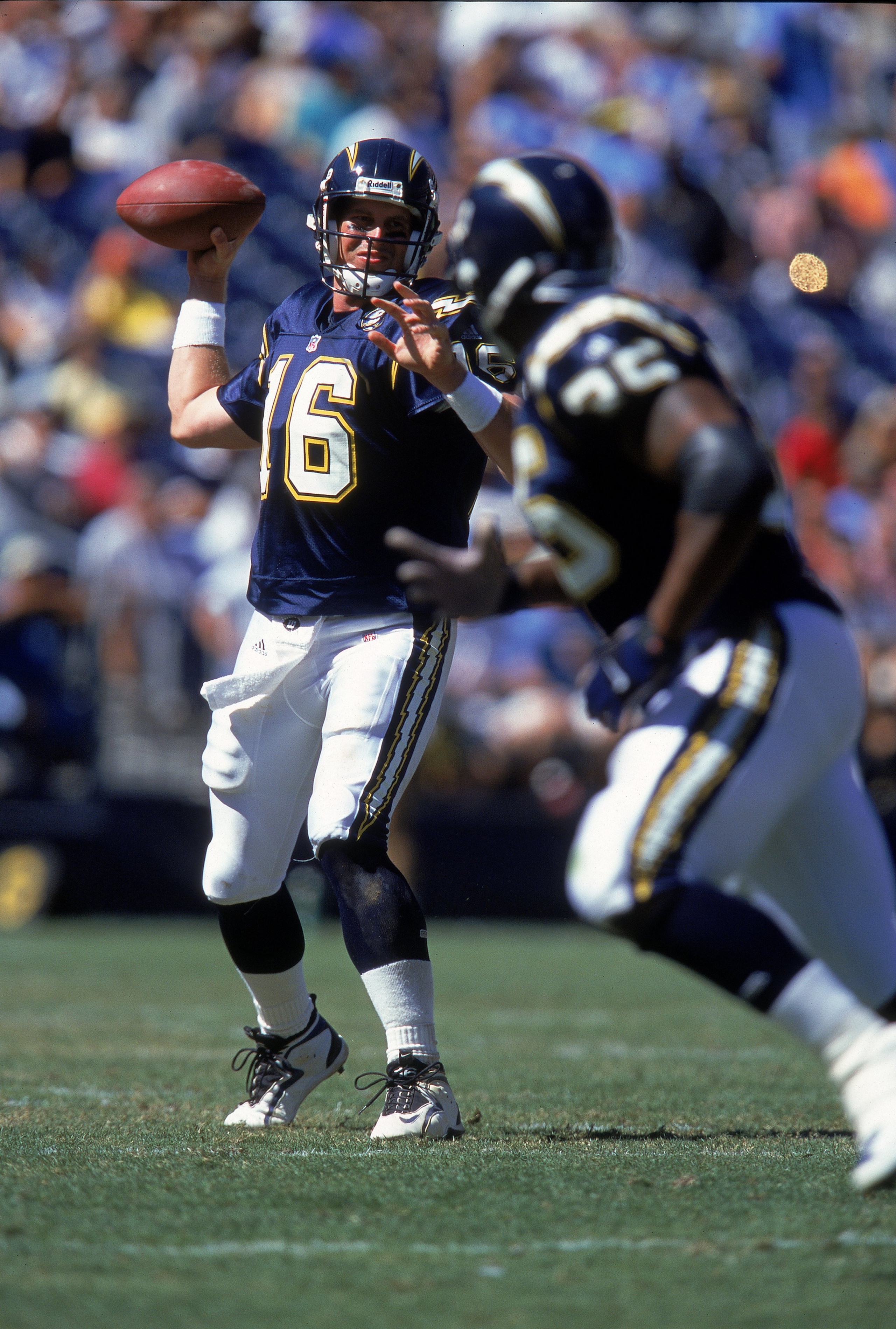
I know you were waiting for this one. Like his fellow WSU Cougar Jack Thompson, Ryan Leaf never struck it big like everyone expected him to. Must be something in the water up there.
He was taken as the second overall pick in the 1998 NFL Draft behind Peyton Manning, and we all now know who got the better first round QB in that draft. The Chargers traded up to pick either Leaf or Manning at the number two spot as both were scouted to be a toss-up for the number one overall pick.
However, once he started playing in the NFL it was clear that he had not made the transition that Manning soon would. In 1998 he threw for two touchdowns and 15 interceptions for a 39.0 passer rating in only 10 games. He bounced back briefly in the 2000 NFL season but still couldn’t manage more than 1883 yards in nine starts and threw 18 picks with only 11 TD passes to go along with them.
In the end he was traded to Dallas where he played four games in 2001 before retiring in 2002 after just 25 games in the NFL.
Since his retirement, Leaf has been widely considered the worst bust in NFL, and even sometimes all of sports history. On our list here at Bleacher Report though we have one stinker worse than Leaf, one more QB who can’t entirely blame injuries for his NFL meltdown, and the best part is that his meltdown isn’t over yet.
1. Matt Leinart – Cardinals/Texans (2006)
26 of 26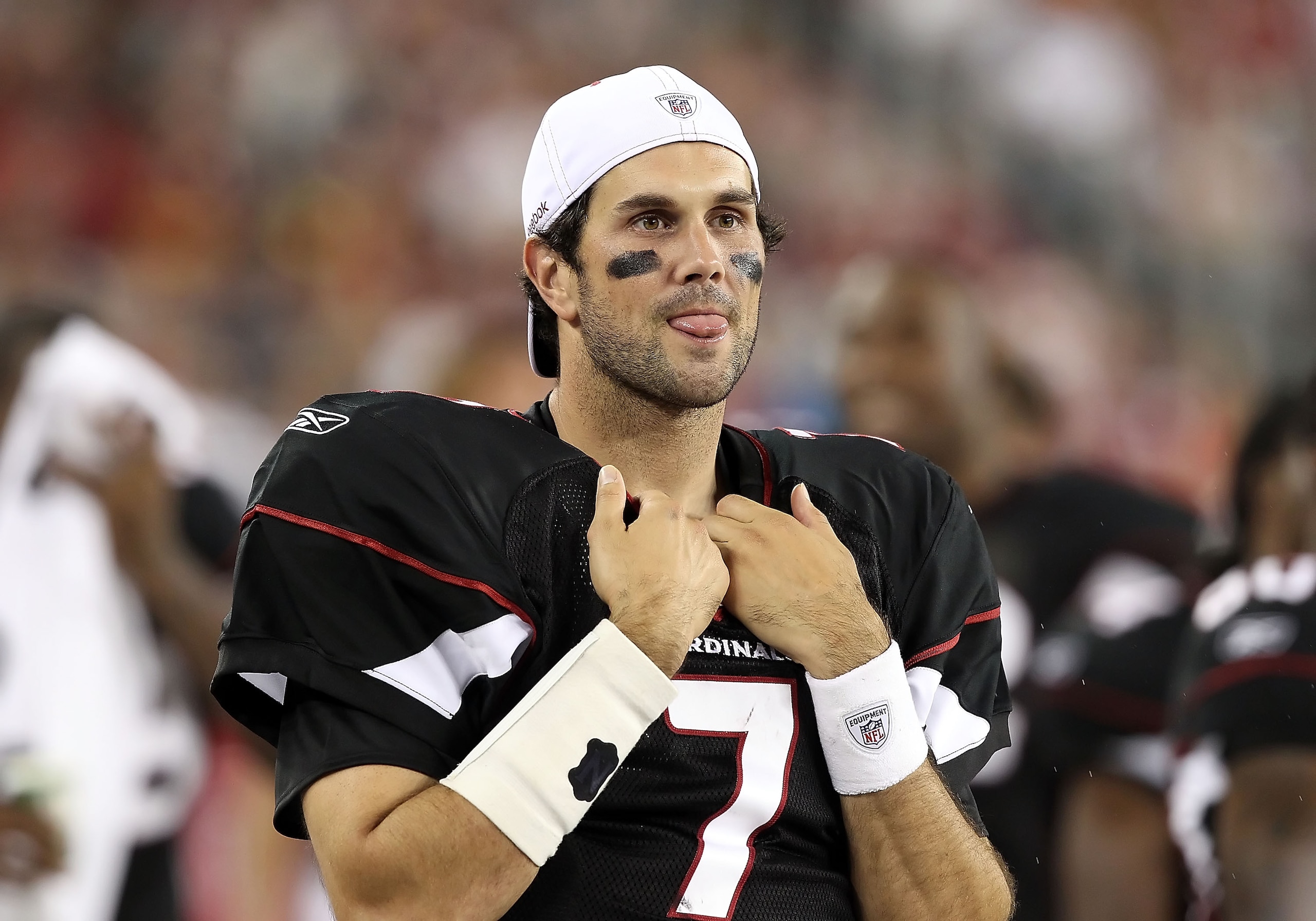
Cam Newton, are you listening? You especially should learn from this guy.
Who else could be at number one than former Heisman Trophy winner Matt Leinart? Since being drafted at number 10 overall by the Arizona Cardinals in the 2006 Draft, Matt Leinart has started only 17 games for Arizona, at one time losing his job to the aging, soon-to-be Hall of Famer, Kurt Warner.
At one point, Leinart had two seasons ended due to knee injuries in the span of five sacks. With Kurt Warner having a late career resurgence with the Cardinals in 2008 and 2009, Leinart saw limited duty as Warner’s backup.
However, after Warner retired prior to the 2010 season, Lienart still lost the starting job, this time to Derek Anderson and he was released by the Cardinals in September of 2010. Two days later he was signed to back up Matt Schaub by Houston but has yet to play a regular season snap for the Texans.
After three years at USC throwing for over 11000 yards and 99 touchdowns—with only 23 picks—it is a mystery to football fans everywhere how Leinart has failed to become a franchise QB in the NFL.
As with a few others on this list, his career isn’t over yet, but the window for a second chance is closing fast and he still is yet to prove that he can play at the level he was expected to when he was drafted in 2006.
.jpg?w=2560 "Cowboys Packers Football")




.jpg?w=2560 "🚨 Week 8 AP Top 25 Poll")