
2011 NFL Draft: The 40-Yard Dash and the 5 Most Useless Drills at the Combine
Americans love having concrete winners and losers. It's the reason brackets are so successful in our culture.
The combine is an extremely intriguing time in the draft. Most fans particularly enjoy watching drills and workouts that produce tangible results.
The problem is that many of these drills provide little insight into how that player plays on the field. Even so, fans don't have to be scouts to understand who is dominating a drill that produces time or a number of reps.
The combine provides the best college football has to offer with a platform to showcase their athleticism. Many will be checking results or even watching the drills themselves. Here are five drills that provide little more than entertainment value.
5. The Broad Jump
1 of 5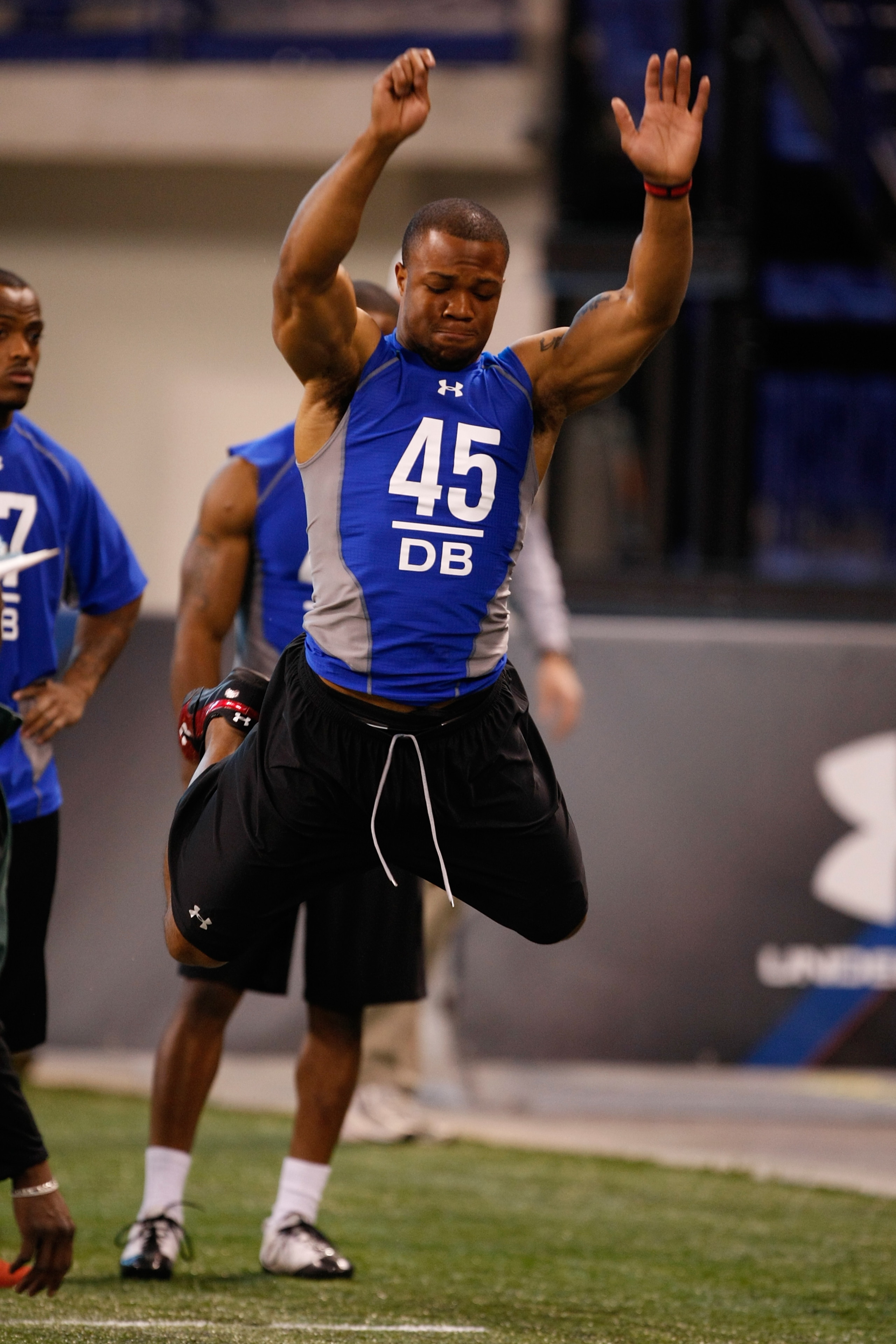
The broad jump is a poor way to measure the fitness of third-graders across America. Likewise, it does almost nothing for talent evaluators.The broad jump is a drill that is designed to measure the explosiveness and strength of the lower body.
Unfortunately, players rarely jump in a horizontal fashion in the game of football. The drill doesn't translate onto the field whatsoever. While players who excel in this drill have great lower body strength, players who struggle at the broad jump aren't necessarily hindered by a weak lower body.
Dominating the broad jump isn't going to "wow" scouts very much, just as botching it is unlikely to deter scouts.
4. The 40-Yard Dash
2 of 5
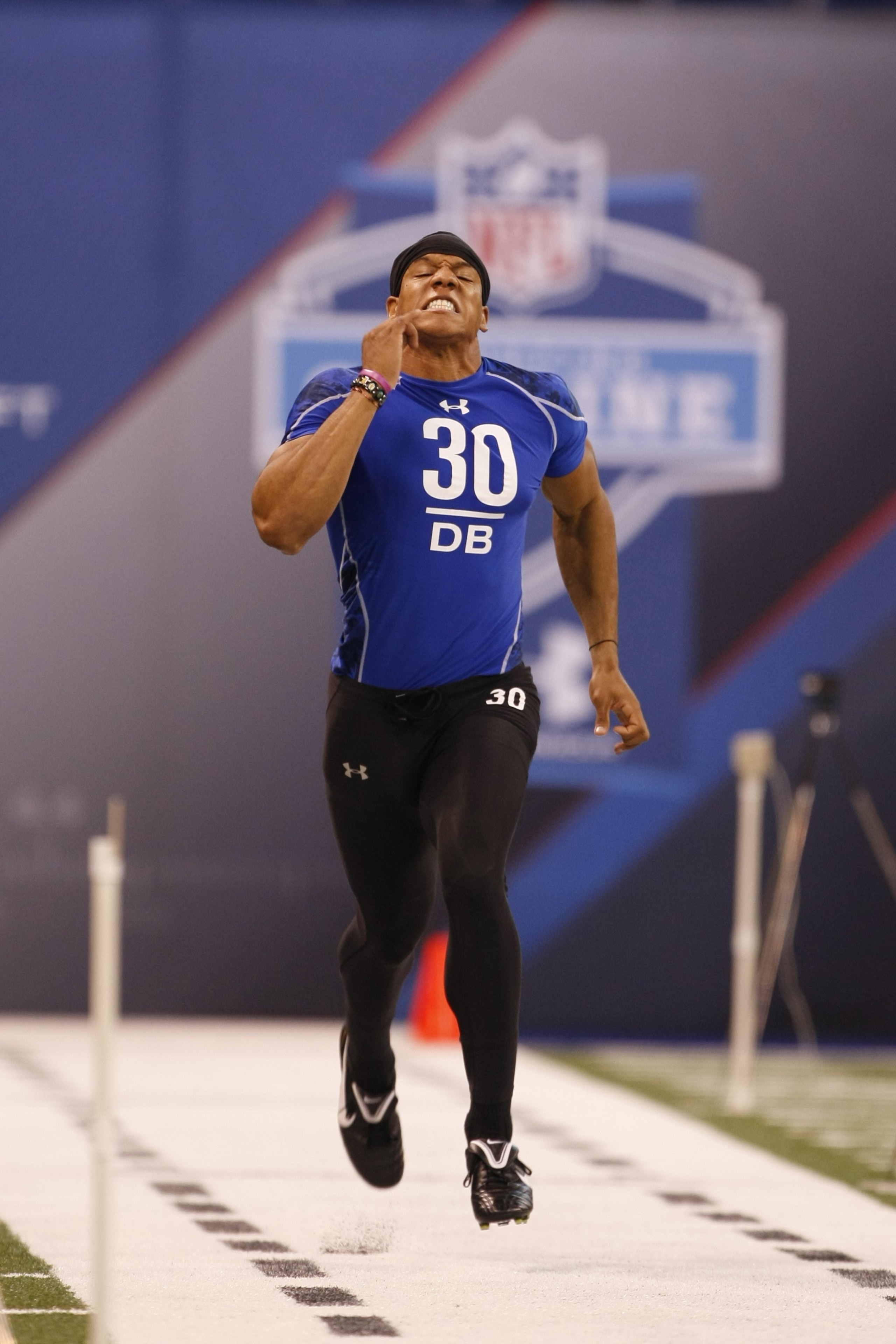
The 40-yard dash is, hands down, the most watched and talked about event of the combine. Speed in itself is exciting. Everyone wants to see who puts forth the fastest time, and even some NFL teams—like the Oakland Raiders—seem to place too much stock in this drill.
Aside from cornerbacks, wide receivers and running backs, most of the players who take part in the 40-yard dash will never run 40 yards in any given play for their entire careers.
The 40 measures times at three intervals; 10 yards, 20 yards and 40 yards. The first two times tell more about how a player's speed translates to the field.
As far as speed drills go, the 40 takes a back seat to the three-cone drill. Running a 4.3 is extremely impressive, but chances are scouts already know any player who runs that fast can flat-out fly.
3. The Bench Press
3 of 5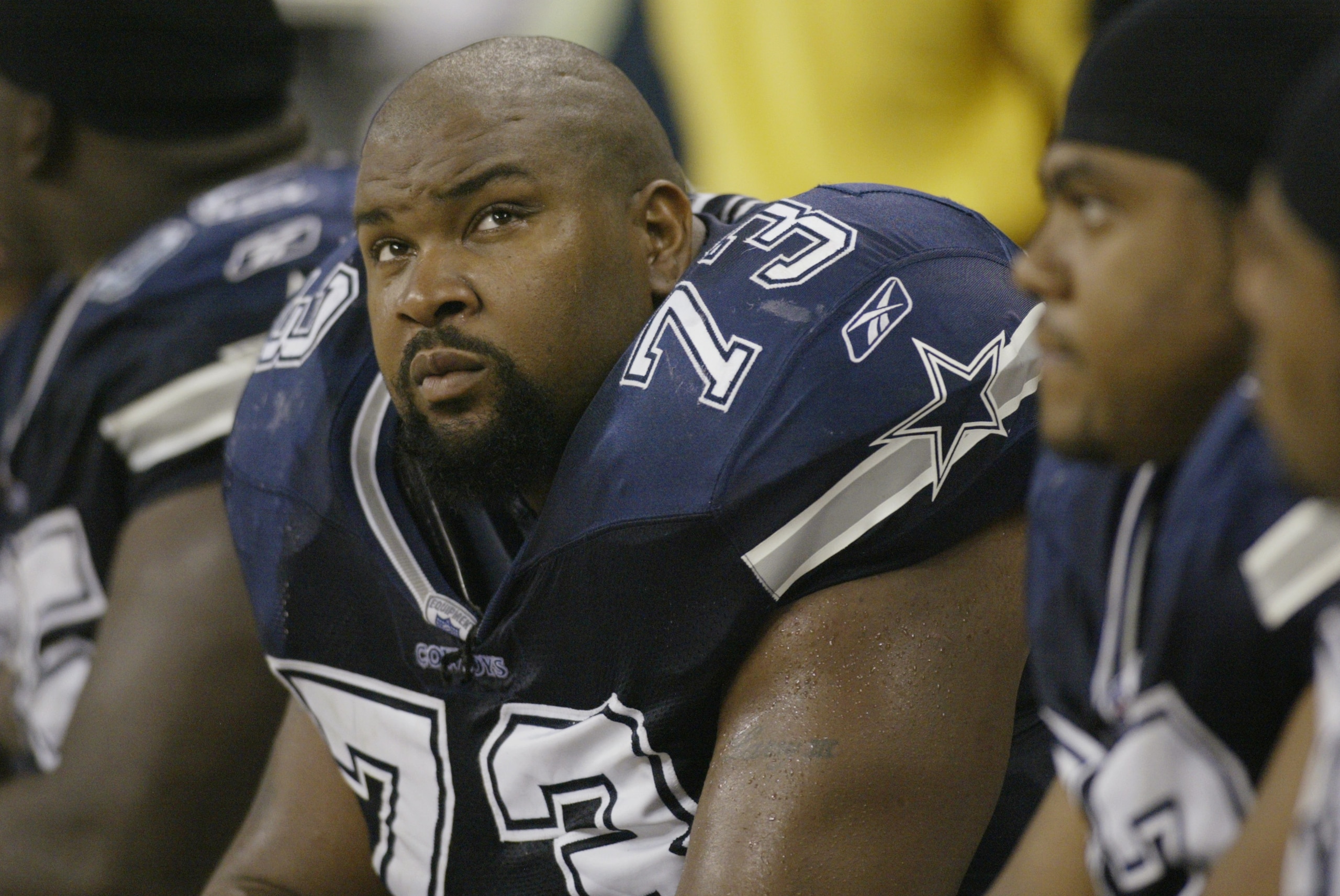
The bench press just might be the second most popular event at the combine. Raw strength is a very appealing attribute to have in a potential prospect. The problem with the bench press is that players who are tailor made for the bench press are shorter in stature with stubby arms and a compact frame.
Is it fair to say a 6'7" tackle who puts up five less reps than a 6'1" center is weaker? Seeing a player put up 30-plus reps on the bench press is impressive, but should back up the strength shown on tape, rather than be the gauge for overall strength.
.jpg?w=2560 "Rams Raiders Football")

.jpg?w=2560 "Steelers Saints Football")
2. The Vertical Jump for Offensive Linemen
4 of 5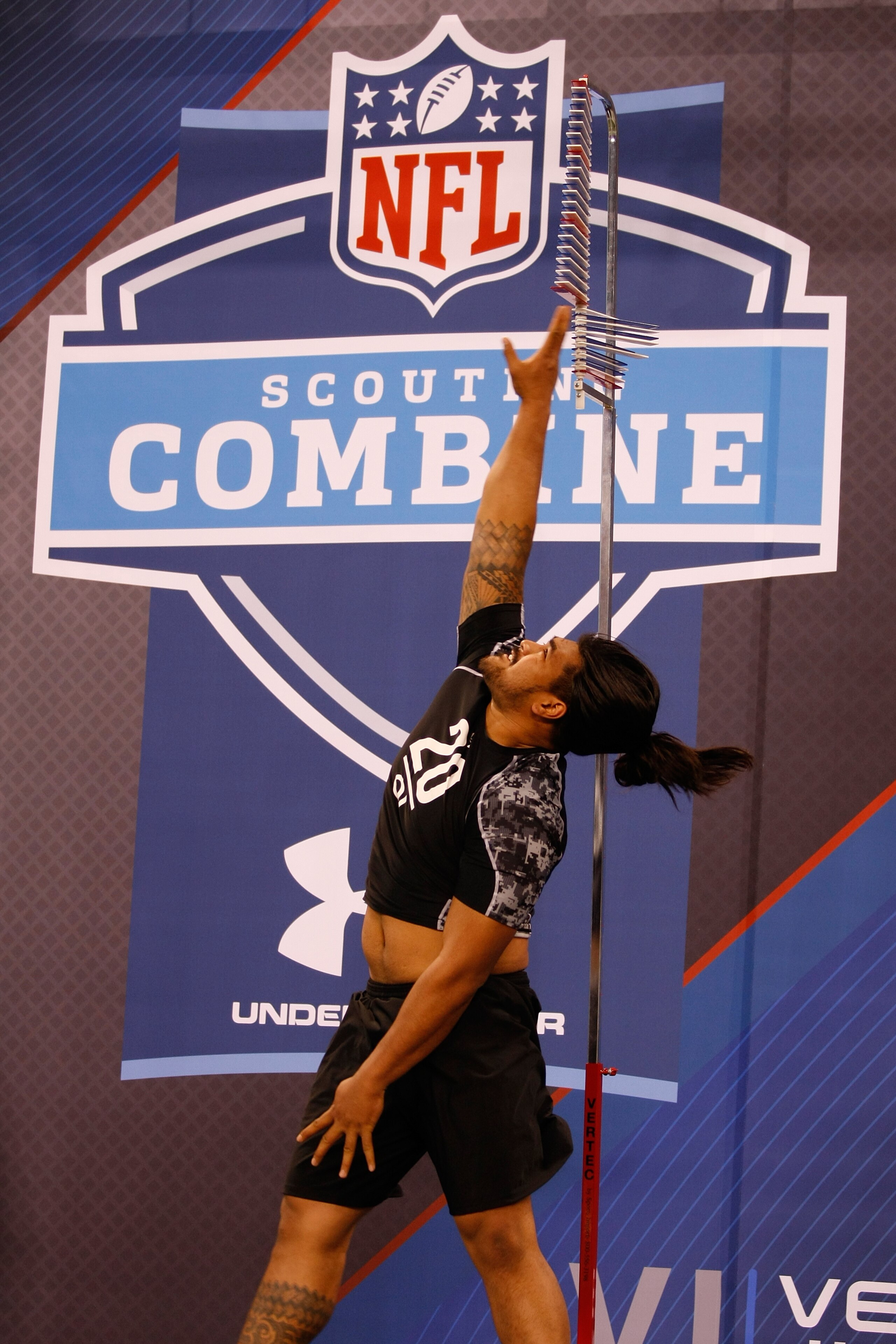
I'm guilty of this as well.
I watch the offensive linemen perform the vertical leap. The fact of the matter is that offensive linemen never leave the ground in a game and the test does nothing to say how they can play on Sundays.
For defensive backs and wide receivers, the drill can showcase athleticism relevant to their play on the field. The same cannot be said for a lineman performing the drill. It is easier to determine the athletic status of a lineman by looking to see his limitations on the film.
Can he make all the blocks? How are his feet? How high can he jump in the air in compression shorts? One of these questions is irrelevant.
1. The "Gauntlet" Drill
5 of 5
The Gauntlet is a drill that begins with a receiver being thrown a pass, flipping around and catching another pass. He then sprints down the field horizontally, catching a succession of passes being thrown at him until he reaches the sideline, where he is expected to make a sideline catch.
The drill has such a small window between passes, wide receivers don't perform complete catches. They often grab the ball and drop it without securing it whatsoever. I'm not a fan of drills that simulate something that would never happen on a football field.
Never on a football field are you going to have to make more than one catch in a matter of a few seconds.
.jpg?w=2560 "Cowboys Packers Football")




.jpg?w=2560 "🚨 Week 8 AP Top 25 Poll")