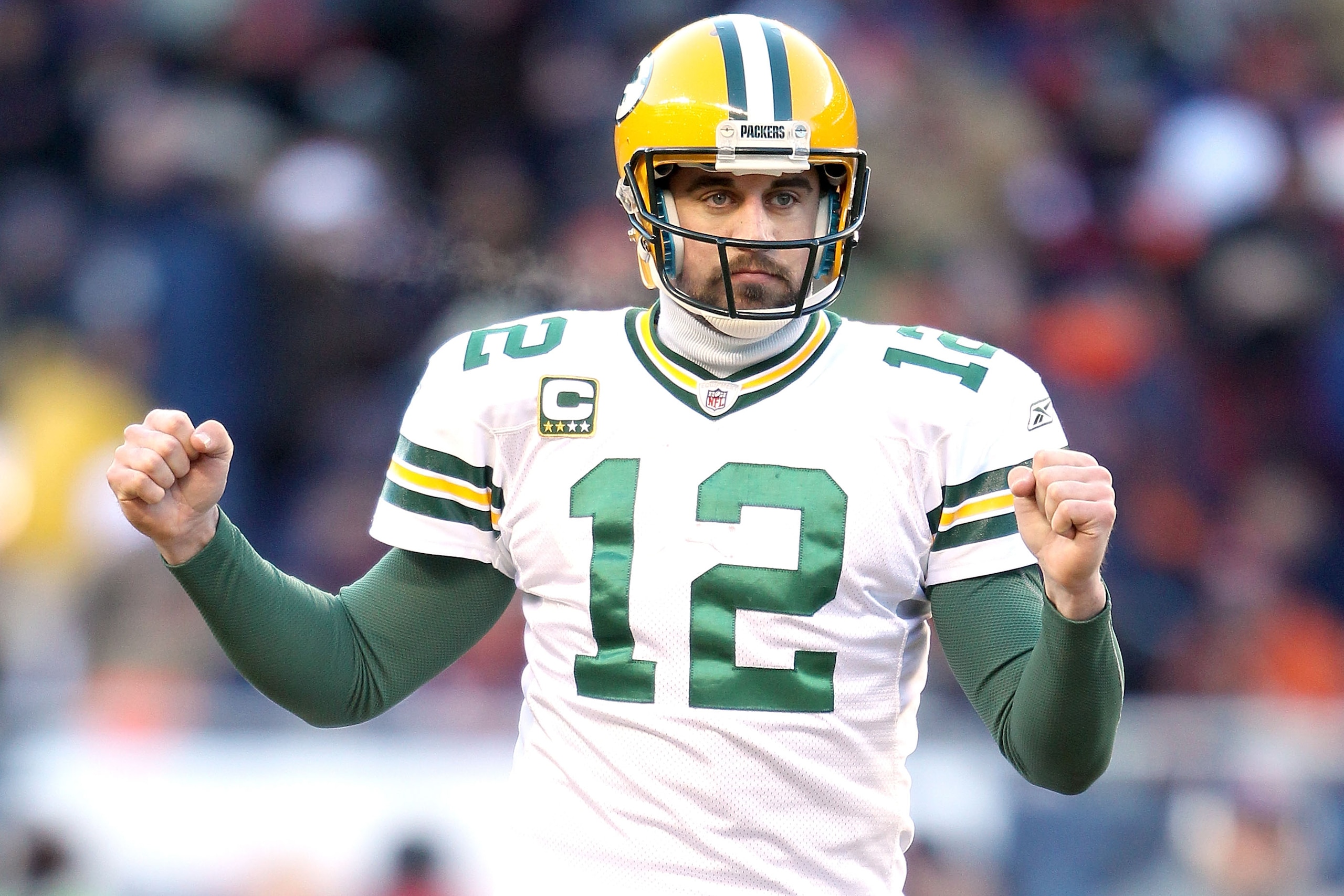

Super Bowl 2011: Power Ranking the Most Potent Offenses Ever Win a Super Bowl
Super Bowl 2011 Isn't Likely To Be A Good Old Fashioned Texas Shootout
Super Bowl 2011 might feature two great quarterbacks, but both have to face outstanding defenses.
Although the Steelers have a fine passing game and a top notch running game, and the Packers aerial attack is as good as any in the NFL, points are going to be hard to come by.
But Super Bowl defenses have faltered before in the big game.
Inside we've selected the 15 greatest offenses to win a Super Bowl.
Now their performance in that Super Bowl is part of the criteria, but not the only one. The offense's performance throughout the regular and postseason is also a factor. As is versatility: great passing games without much on the ground (or vice-versa) won't land a team atop this list!
No. 15: 1976 Oakland Raiders
1 of 15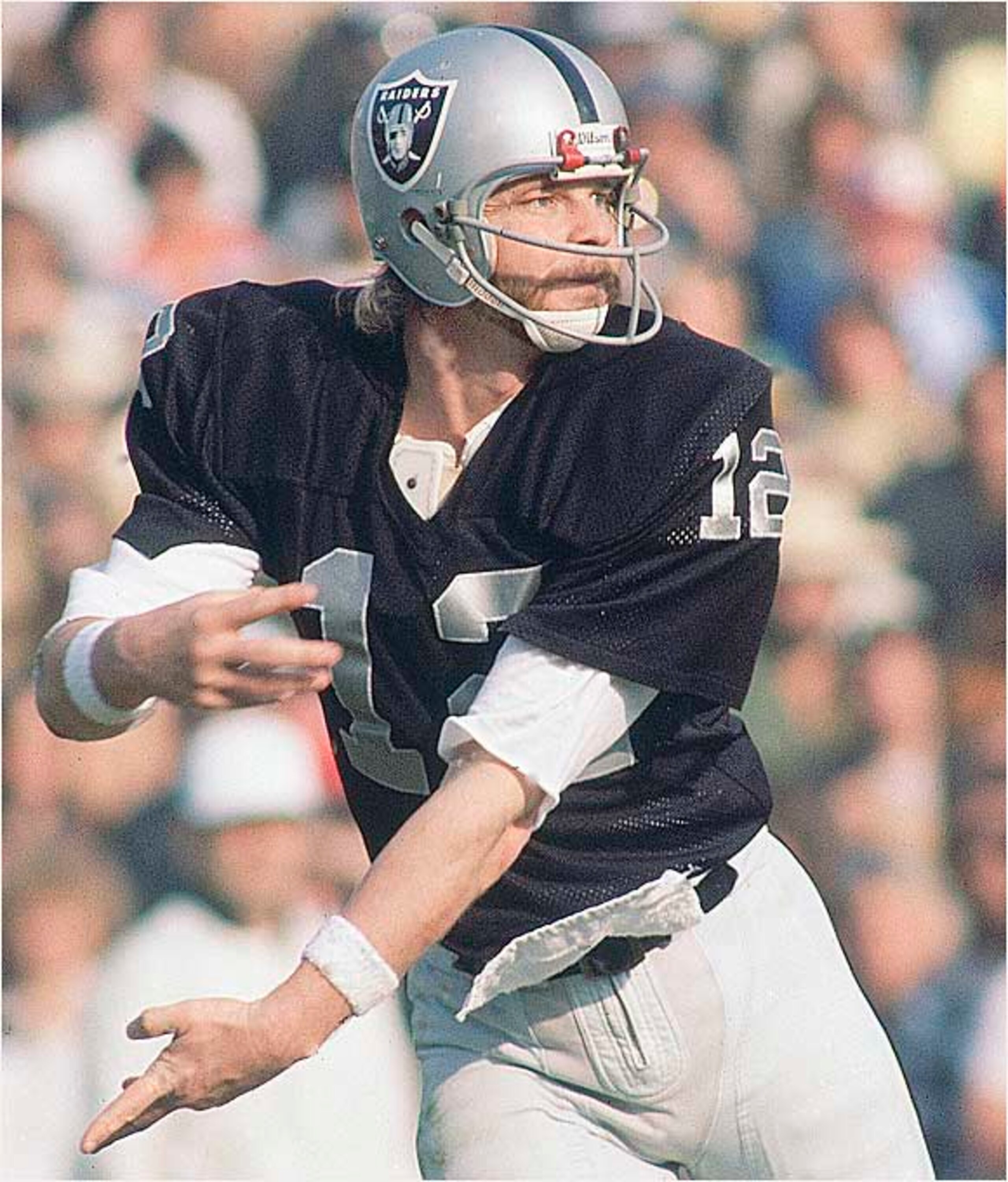
John Madden's team scored three touchdowns against the Steelers, one NFL's greatest defense's ever (9.9 points per game) to reach the Super Bowl.
Then in Pasadena against Minnesota, the NFC's best defense, the Raiders throttled the "Purple People Eaters," racking up 446 yards of total offense in a 32-14 victory.
Ken Stabler was at the peak of his career that season, tossing 27 touchdowns in just 12 games. Having Cliff Branch (who averaged an incredible 24.2 yards per catch that year) and Hall of Famers Dave Casper and Super Bowl XI MVP Fred Biletnikoff, helped.
But so did a pretty solid running game. Mark Van Eeghen and Clarence Davis combined to average better than 100 yards per game, a number they more than doubled in the Super Bowl XI win over Minnesota.
No. 14: 1996 Green Bay Packers
2 of 15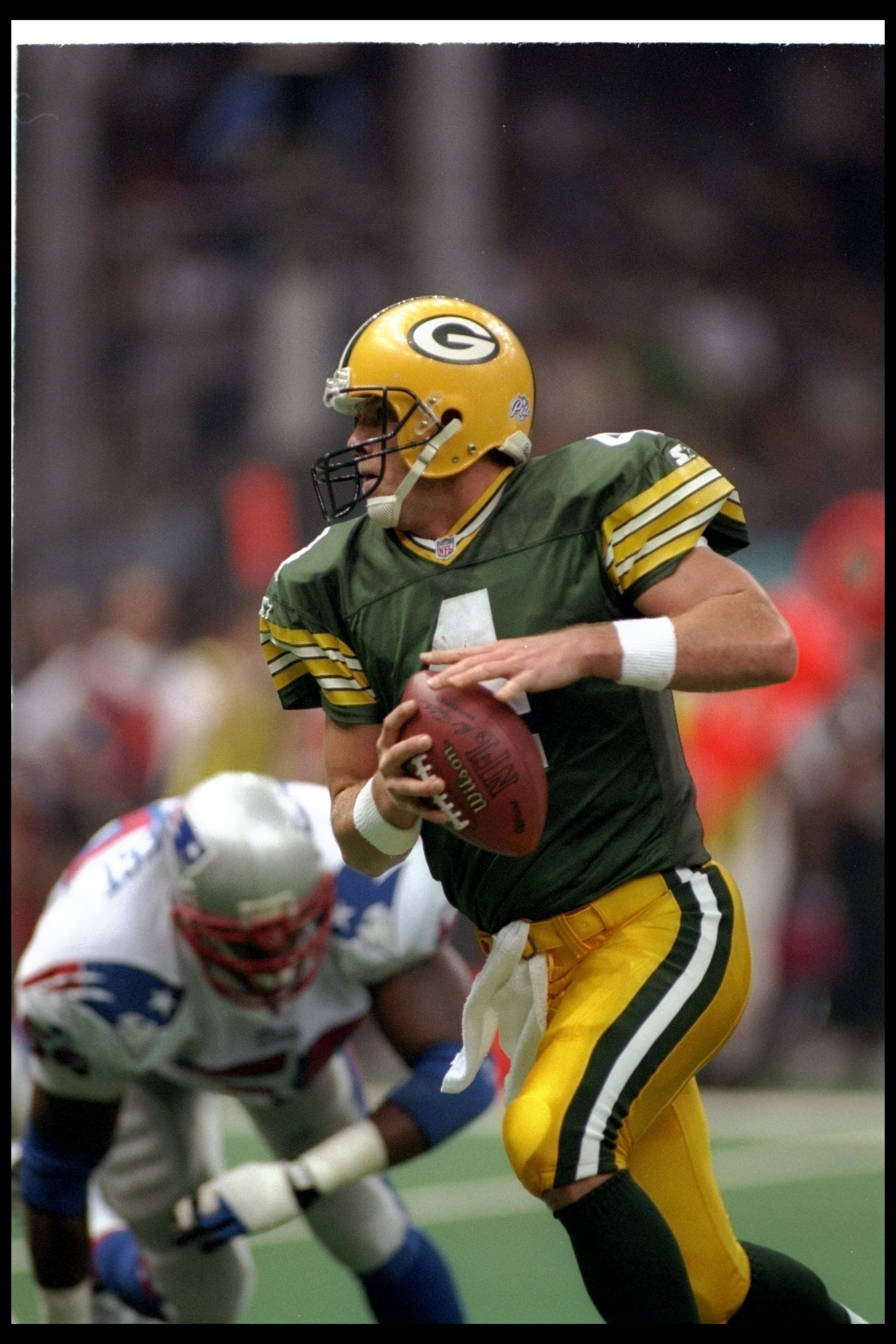
With MVP Brett Favre (39 touchdowns, 3,899 yards) at the helm, the 1996 Packers scored more points than anyone in the NFL that year.
That was an impressive feat, considering Favre was really the only great player on the offense.
The duo of Edgar Bennett and Dorsey Levens gave Green Bay the NFL's 11th highest ranking rush offense, and not one of the team's pass catchers recorded 1,000 yards receiving. (Antonio Freeman would defnitely have passed that figure if he didn't miss four games with an injury).
So although Favre deserves unyielding credit for spreading the ball around so well and making those players around him, there was a reason why Desmond Howard's special teams contributions were so important that postseason.
No. 13: 2006 Indianpolis Colts
3 of 15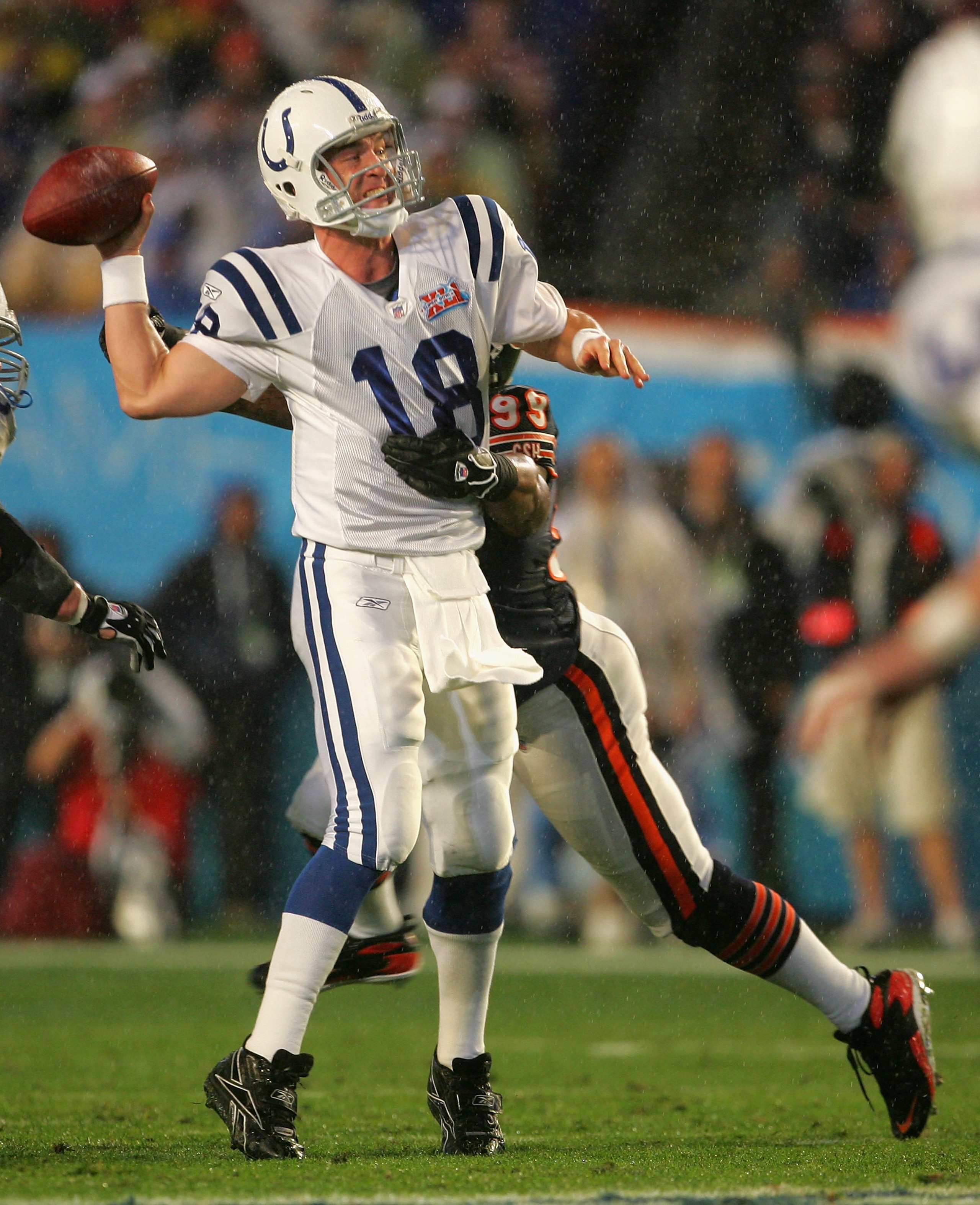
There's no doubt that Peyton Manning is one of the greatest quarterbacks of all time. And that 2006 Colts team had an incredible corps of receivers: Marvin Harrison, Reggie Wayne, and Dallas Clark,
The passing game scored the second most points in the NFL that season and resurrected Indianapolis in the second half of the AFC Championship Game.
Still, they weren't really a balanced group. Sure, Joseph Addai and Dominic Rhodes combined for 190 yards in the 29-17 Super Bowl victory over the Bears.
But they finished that 2006 season ranked 18th in the NFL in rushing.
No one is saying that this wasn't a great offense. But in terms of BALANCED greatness, there were a dozen better.

No. 12: 1991 Washington Redskins
4 of 15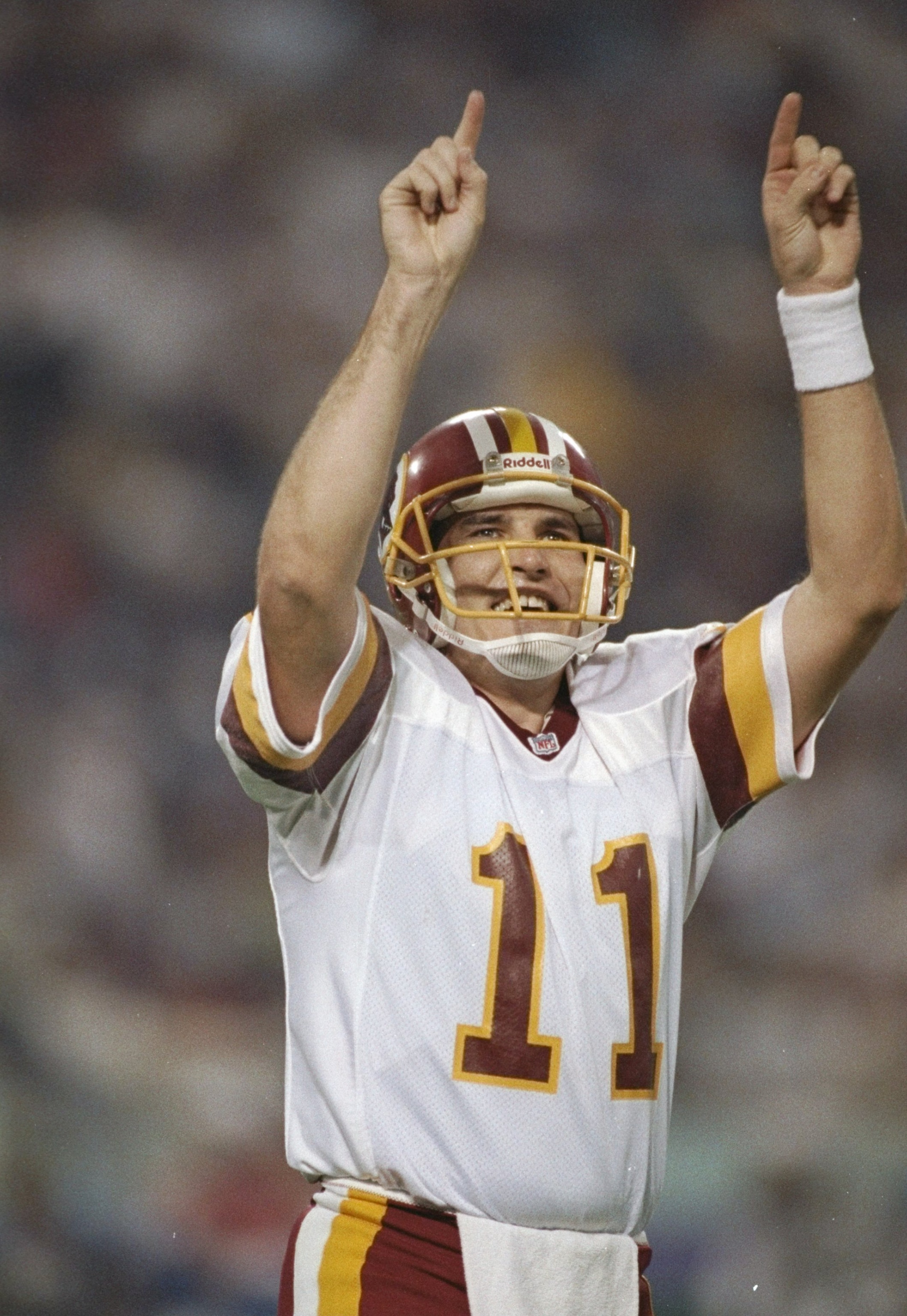
They didn't have a Hall of Fame quarterback or a Hall of Fame running back.
But the 1991 Redskins had plenty of future superstars on offense: a trio of great wide receivers, Gary Clark, Ricky Sanders, and Art Monk, along with the Hogs (namely, Jim Latchey, Joe Jacoby, and Mark Schlereth).
But it was the offensive genius of Joe Gibbs that was most important.
That Redskins team led the NFL in points, five times that year topped 40 points in a single game, and were top-seven in both yards rushing and passing.
Against Bruce Smith and the Bills defense, the Redskins scored seven times and totaled more than 400 yards of offense.
No. 11: 1977 Dallas Cowboys
5 of 15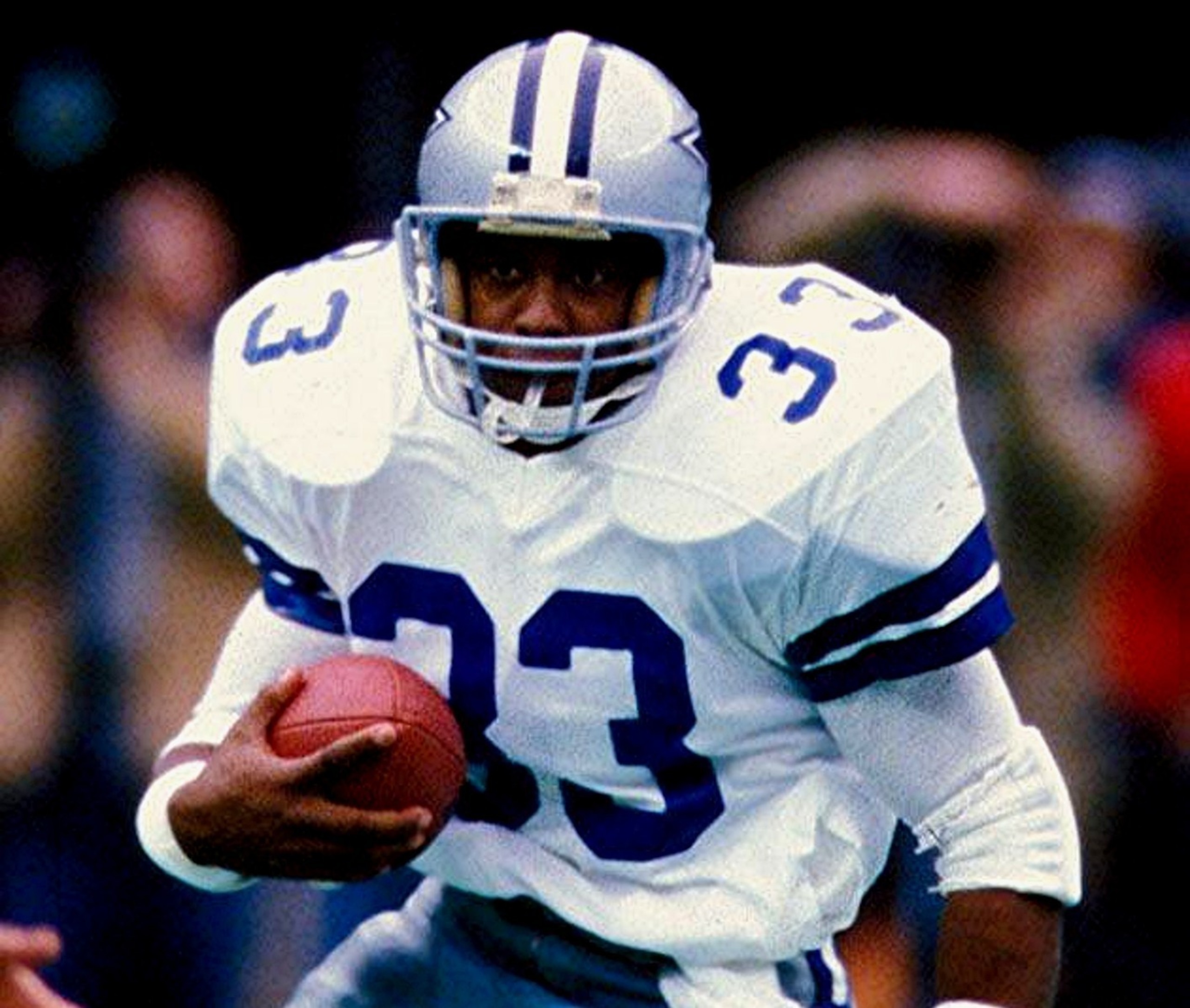
Roger Staubach was one of the all time greats to play quarterbacks. But the only Super Bowls he won came with a stud running back behind him.
After Duane Thomas and Calvin Hill left Dallas, they needed another runner to fit the bill.
And in the 1977 draft they got one: Tony Dorsett, who rushed for 1,007 yards and 12 touchdowns as a rookie.
So with a pair of Heisman Trophy winners in their backfield (Dorsett and Staubach), the Cowboys led the NFC in points.
And in the Super Bowl they pounded the AFC's top defense, the fabled Orange Crush of the Denver Broncos.
No. 10: 2009 New Orleans Saints
6 of 15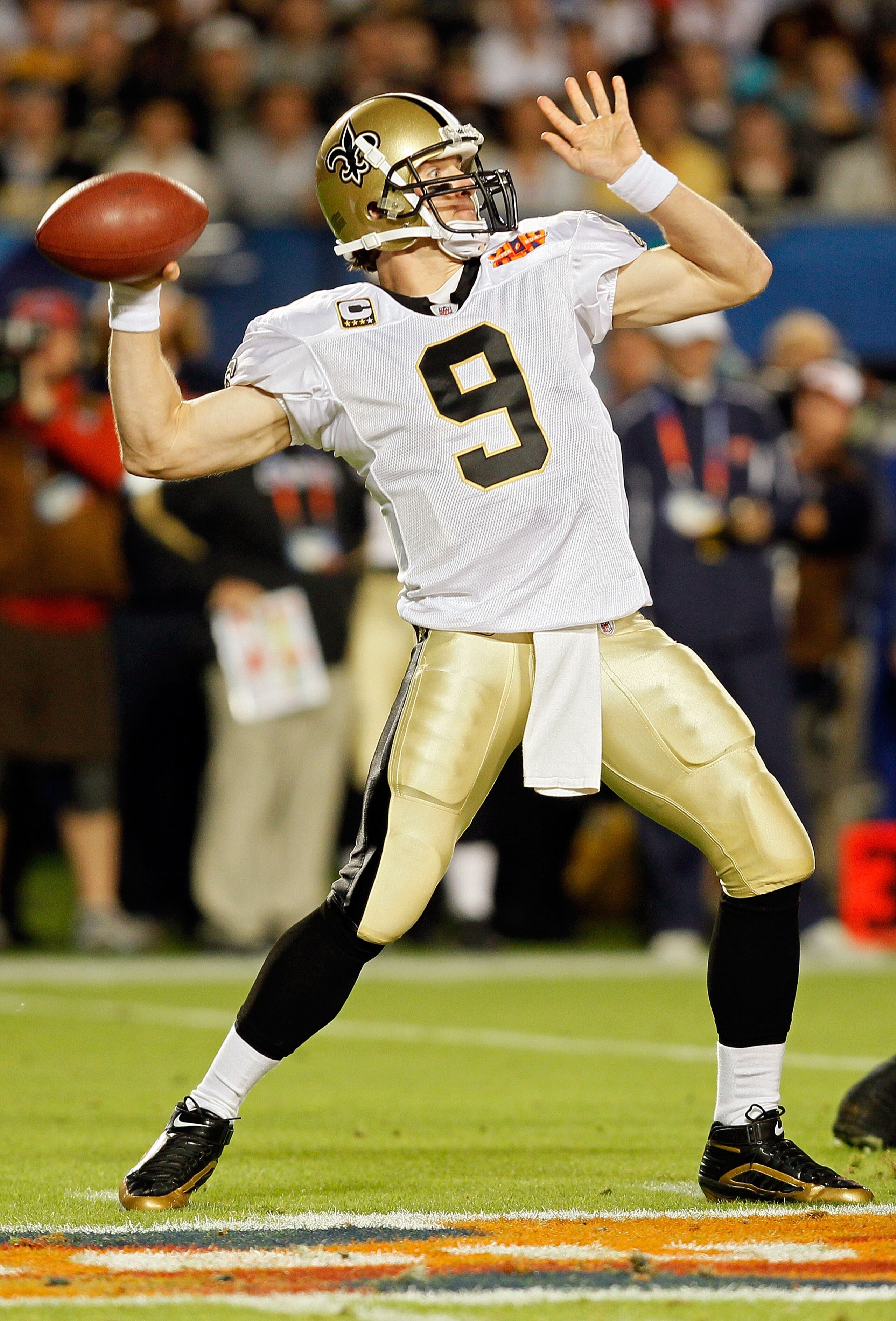
Like their opponent in Super Bowl XLIV, the Saints passing game was the reason for their berth in the title game.
Drew Brees and his plethora of wide outs helped New Orleans score a league best 510 points. And although their production declined drastically a year later due to injuries, the 2009 Saints running back committee was very good.
Reggie Bush, Pierre Thomas, and Mike Bell, gave the Saints the NFL's sixth best rushing attack.
They scored eleven offensive touchdowns in their postseason run, but more importantly, they didn't commit a single offensive turnover.
No. 9: 1982 Washington Redskins
7 of 15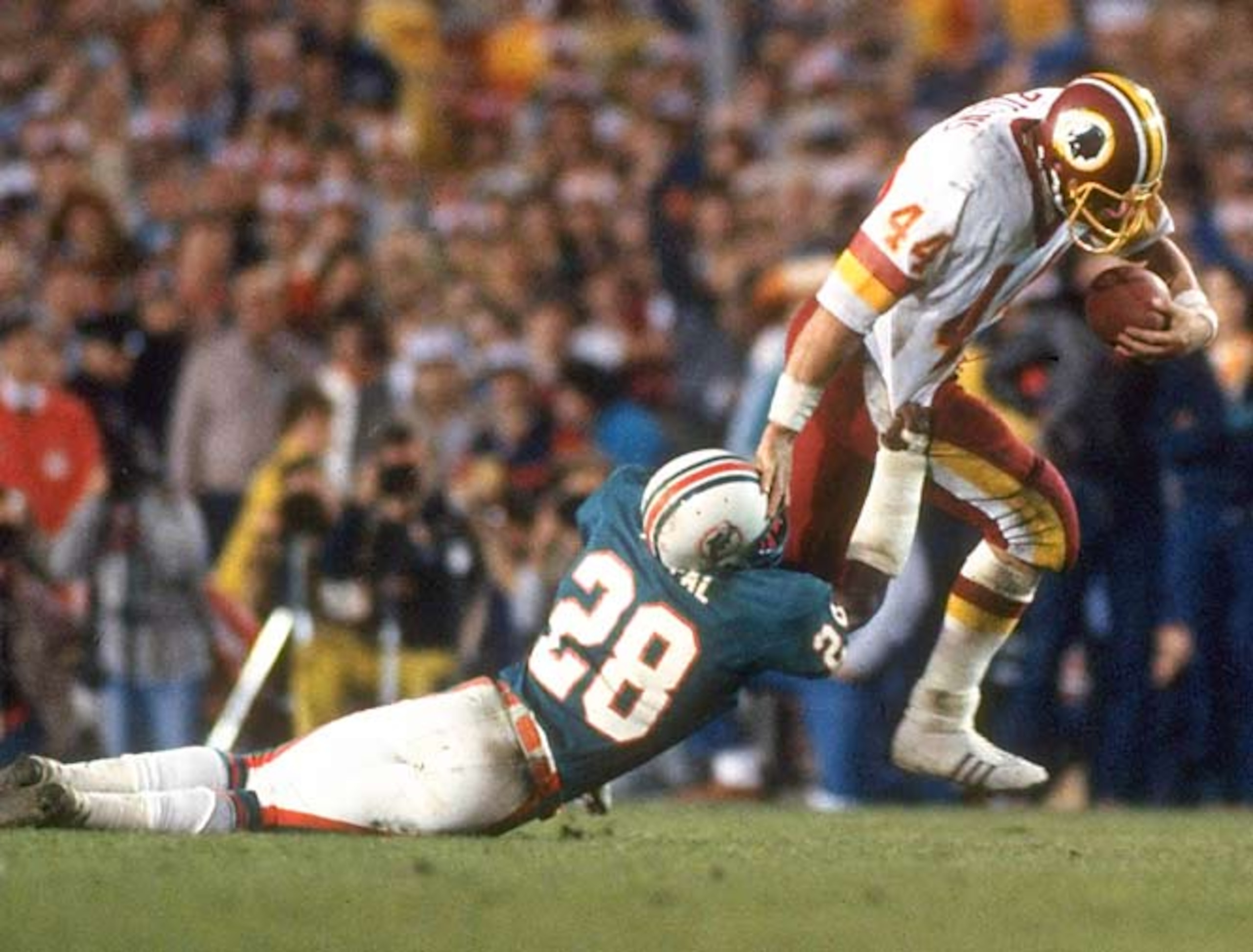
The individual and team stats from that year are skewed because a work stoppage that season cost the NFL seven games.
And in that Super Bowl win over the Miami Dolphins, the Redskins only managed 13 points through the first three quarters.
Nevertheless, that team had one of the greatest collections of offensive talent ever. Super Bowl MVP John Riggins totaled 610 yards and four touchdowns on an incredible 136 carries in four playoff games.
And Joe Theismann (who would be the league's MVP a year later) completed a career-best 64% of his passes that season.
But what earns them a spot inside the top 10 on this list? That team had perhaps the greatest offensive line in NFL history: Russ Grimm, Jeff Bostic, Joe Jacoby, Fred Dean, and George Starke.
No. 8: 2004 New England Patriots
8 of 15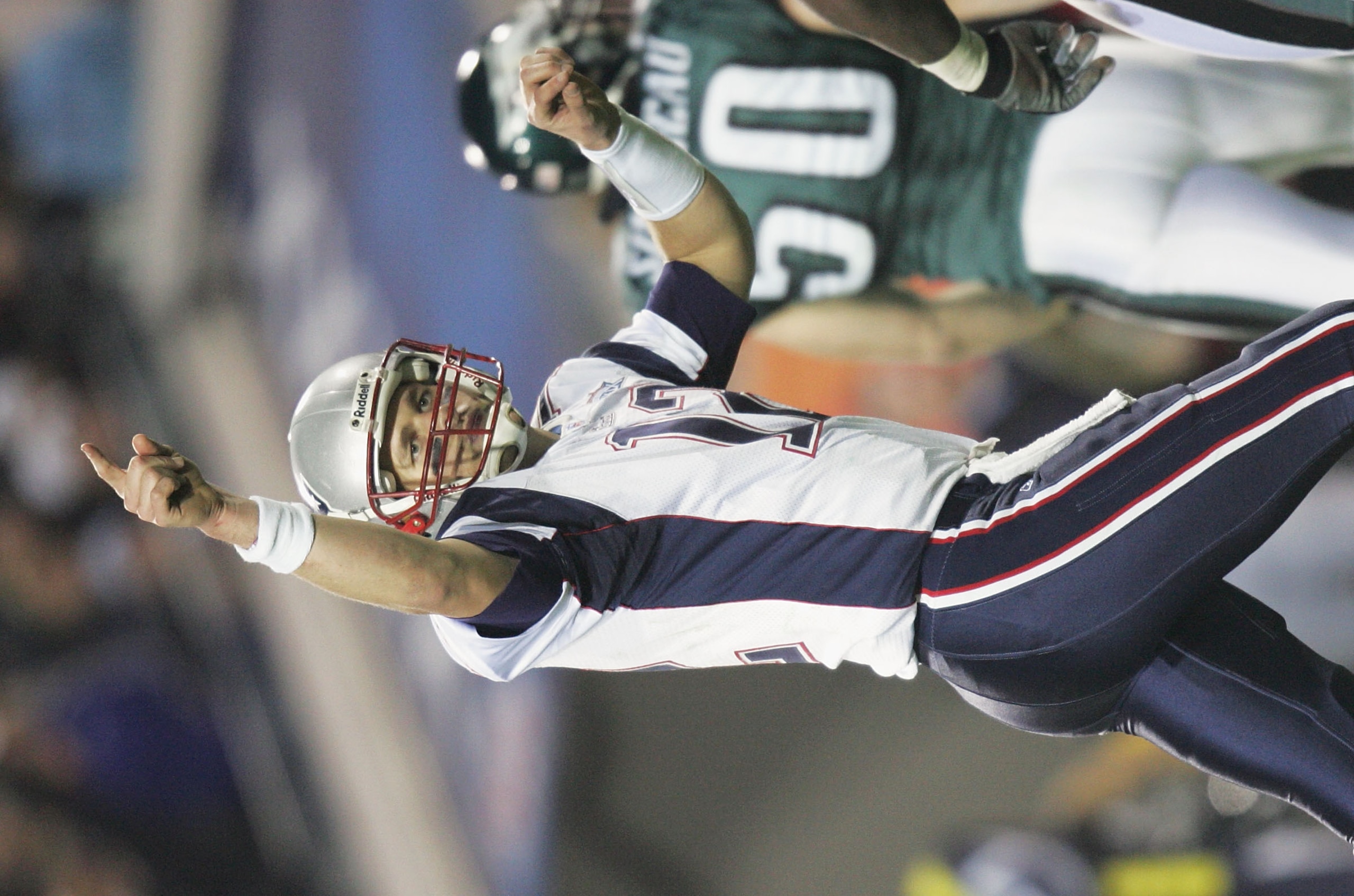
Although it wasn't as prolific as the team that would reach the Super Bowl three years, later the 2004 Patriots was more balanced and nearly as efficient.
Bringing in Corey Dillion that offseason (1,635 yards in 15 games) gave the Patriots the only truly great rushing attack during the Tom Brady/Bill Belichick era.
And Brady, fresh off a second Super Bowl MVP, posted a then-career best 92.6 quarterback rating that season.
On the road against the NFL's top ranked defense, the Patriots crushed the Steelers in the AFC Championship 41-27, then when they absolutely needed it, Brady racked up more than 100 yards in the fourth quarter of their Super Bowl XXXIX win over Philadelphia.
No. 7: 1966 Green Bay Packers
9 of 15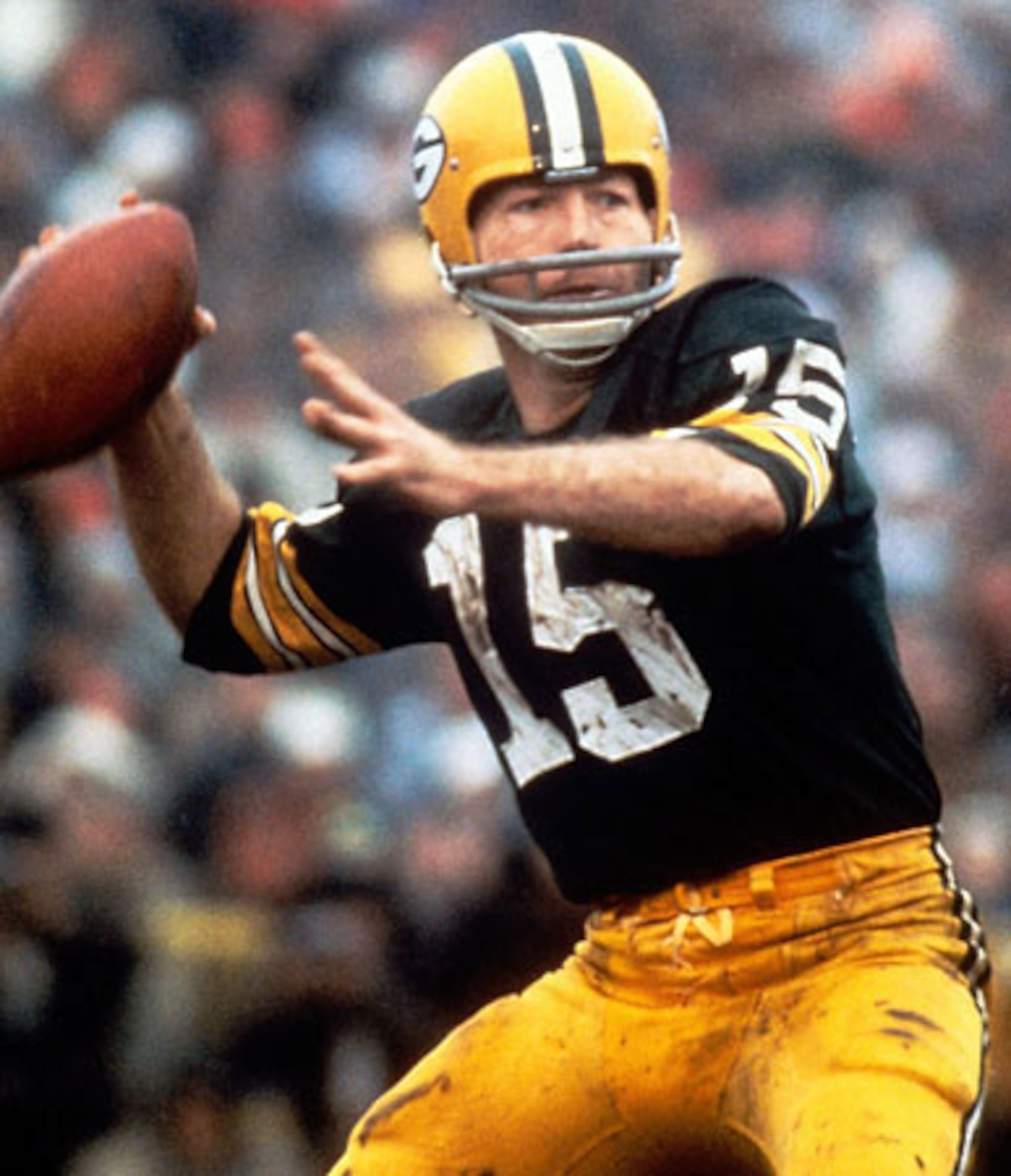
To do a ranking of ALL the Super Bowl teams, we've got to consider context.
Sure in today's game, the 2006 Colts offense would score way more points than a team from the 1960s.....the 2010 Arizona Cardinals probably would too.
But back in 1966, the Packers did have a comparatively explosive offense.
With Hall of Famers Bart Starr and Jim Taylor playing behind a great offensive line led by Jerry Kramer, Forrest Gregg, and Fuzzy Thurston, they scored the fourth most points in the NFL.
On the road in the Cotton Bowl for the NFL title game, Starr threw for 304 yards and four touchdowns against a great Cowboy defense (Bob Lilly, Chuck Howley, Mel Renfro).
And in Super Bowl I, facing an even better Chiefs defense that included three Hall of Famers (Buch Buchanan, Bobby Bell, Willie Lanier), the PAckers ran for 130 yards and three touchdowns in addition to 250 yards passing and two scores.
No. 6: 1998 Denver Broncos
10 of 15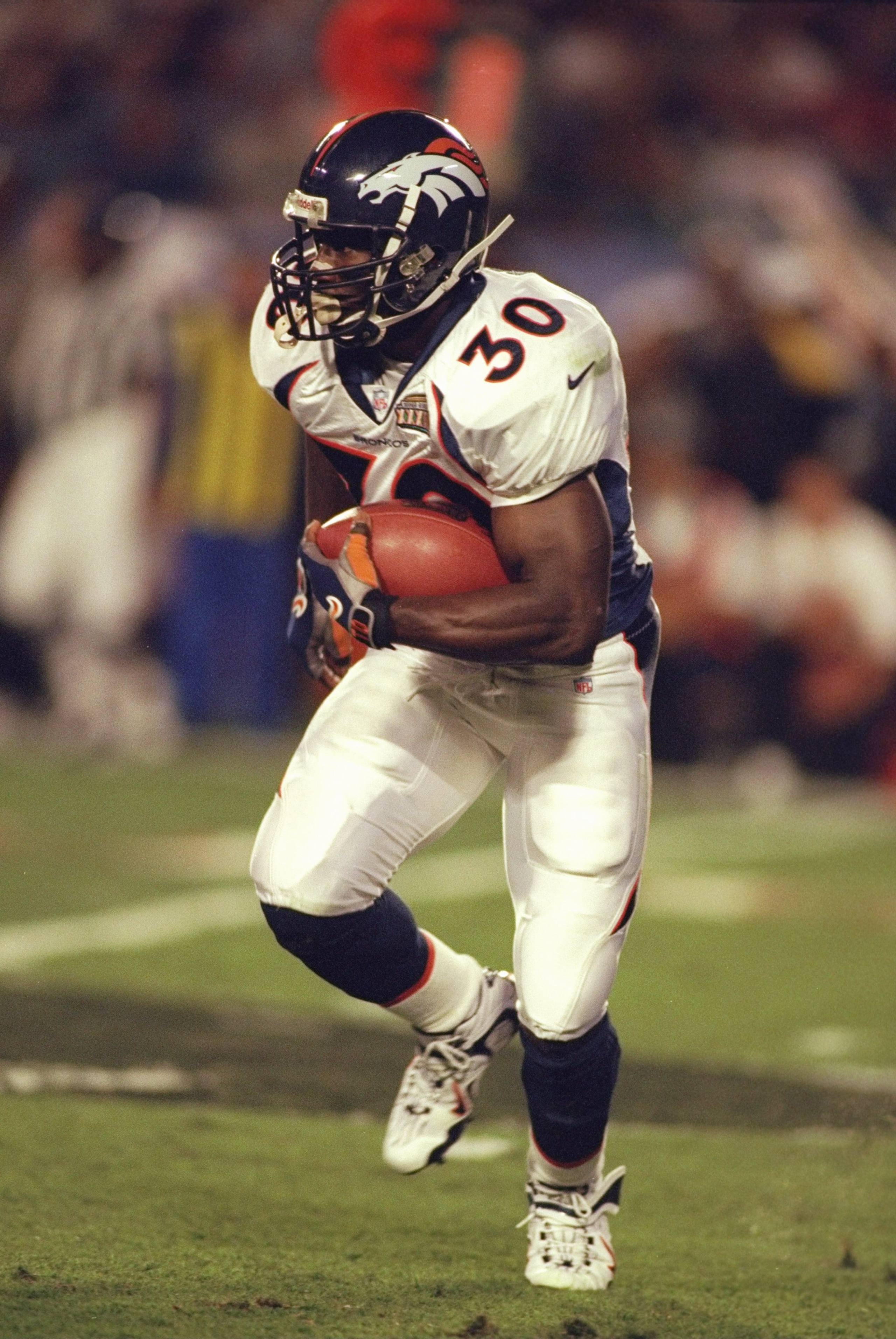
John Elway was clearly the leader and face of that Broncos franchise. And in his final season, number seven had a great swan song: he didn't throw for that many touchdowns (22) or yards (2,806), although his quarterback rating was a career best 92.8.
But it was Terrell Davis presence that made the Broncos from 1997-98 one of the all time best offenses.
As defending Super Bowl champions, the 1998 edition of the Broncos scored set a new AFC record with 501 points, had a 2,000-yard rusher in Davis, and scored 30-or-more points 10 times during the regular season.
And in Super Bowl XXXII, against a good Falcons defense, put up 34 points and 457 yards, even without their star tight end, Shannon Sharpe, who was hurt in the first quarter.
No wonder some members of the media and fan base actually thought the next season they could replace Elway with Bubby Brister and not skip a beat.
No. 5: 1994 San Francisco 49ers
11 of 15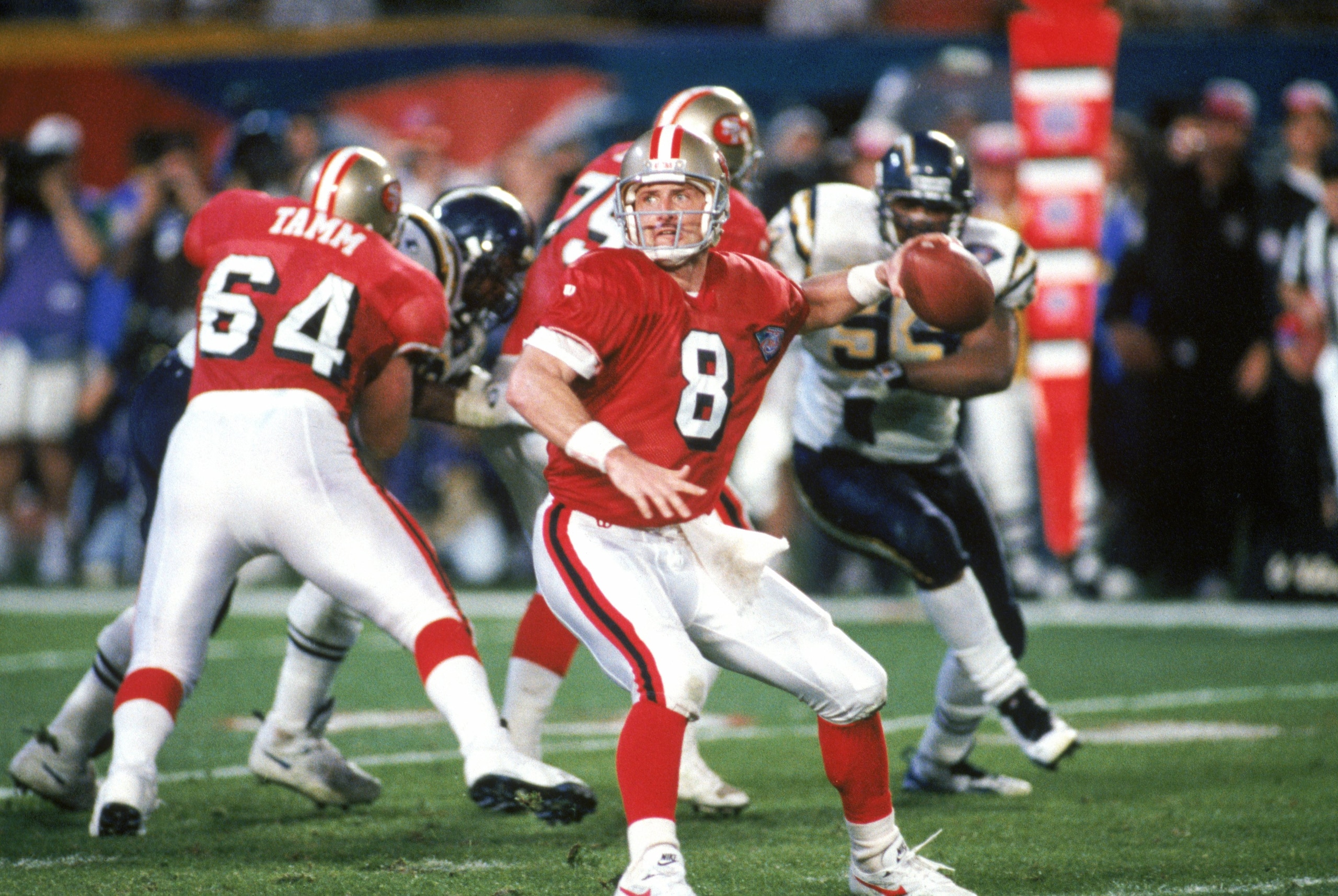
Here's where we really start to split hairs. Who was better Joe Montana or Steve Young? Roger Craig or Ricky Watters? Jerry Rice or...Jerry Rice?
That 1994 edition was great, scoring 505 points that year (31.6 per game) and another 131 (43 points per game) in the playoffs and Super Bowl.
They embarrassed the Chargers, scoring seven offensive touchdowns and 455 yards. But they weren't the greatest 49er offense to win a Super Bowl.
Even if it's a toss up between Montana and Young (which it isn't) a Roger Craig/Tom Rathman backfield trumps a Ricky Watters/William Floyd backfield, in both the passing game and the running game.
Plus, by 1994 both John Taylor and Brent Jones were nearing the ends of their career.
No. 4: 1978 Pittsburgh Steelers
12 of 15
The Steel Curtain defense deserves the bulk of the credit for Pittsburgh's first two Super Bowl triumphs in 1974 and 1975. But for the second pair of consecutive titles the offense gets the lions share of the praise.
Terry Bradshaw, the NFL MVP that year, had his best season in 1978. And although none of their other Hall of Famers (Franco Harris, Lynn Swann, John Stallworth) had particular outstanding regular season totals, in the playoffs the Steeler offense was better than any in the decade.
Against the Orange Crush defense, they racked up over 400 yards, then thumped the Oilers in the AFC title game, scoring four offensive touchdowns in the first quarter and a half.
Then squaring off once again with the Doomsday Defense of the Cowboys (tops in the NFC), Bradshaw threw touchdowns to Swann, Rocky Bleier and two to Stallworth, while Harris ran for another in a 35-31 victory.
No. 3: 1999 St. Louis Rams
13 of 15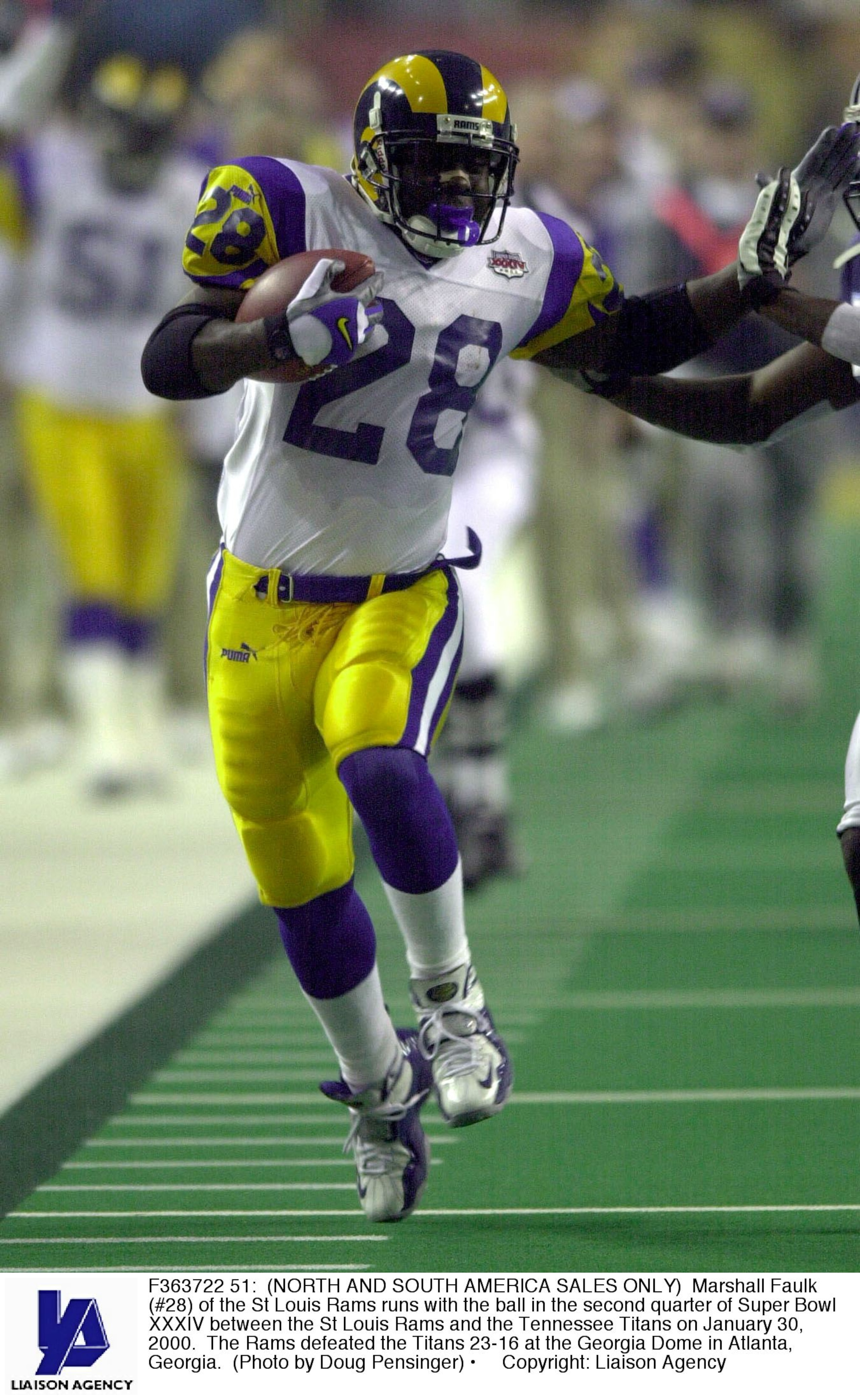
Whether it was Kurt Warner throwing to Isaac Bruce or Kurt Warner throwing to Torry Holt or Kurt Warner throwing to Marshall Faulk or Marshall Faulk running the ball, the Greatest Show on Turf was as dangerous an offense as the NFL has ever seen.
They led the NFL in points, total yards, passing yards, passing touchdowns while the running game, behind Faulk, finished the season fifth in the league. Talk about balance.
And although they didn't post gaudy numbers in the postseason (aside from their 49-37 win in the second round against Minnesota) when the Rams needed points in the NFC Championship and Super Bowl, Warner, Faulk and the rest of the offense produced them.
No. 2: 1992 Dallas Cowboys
14 of 15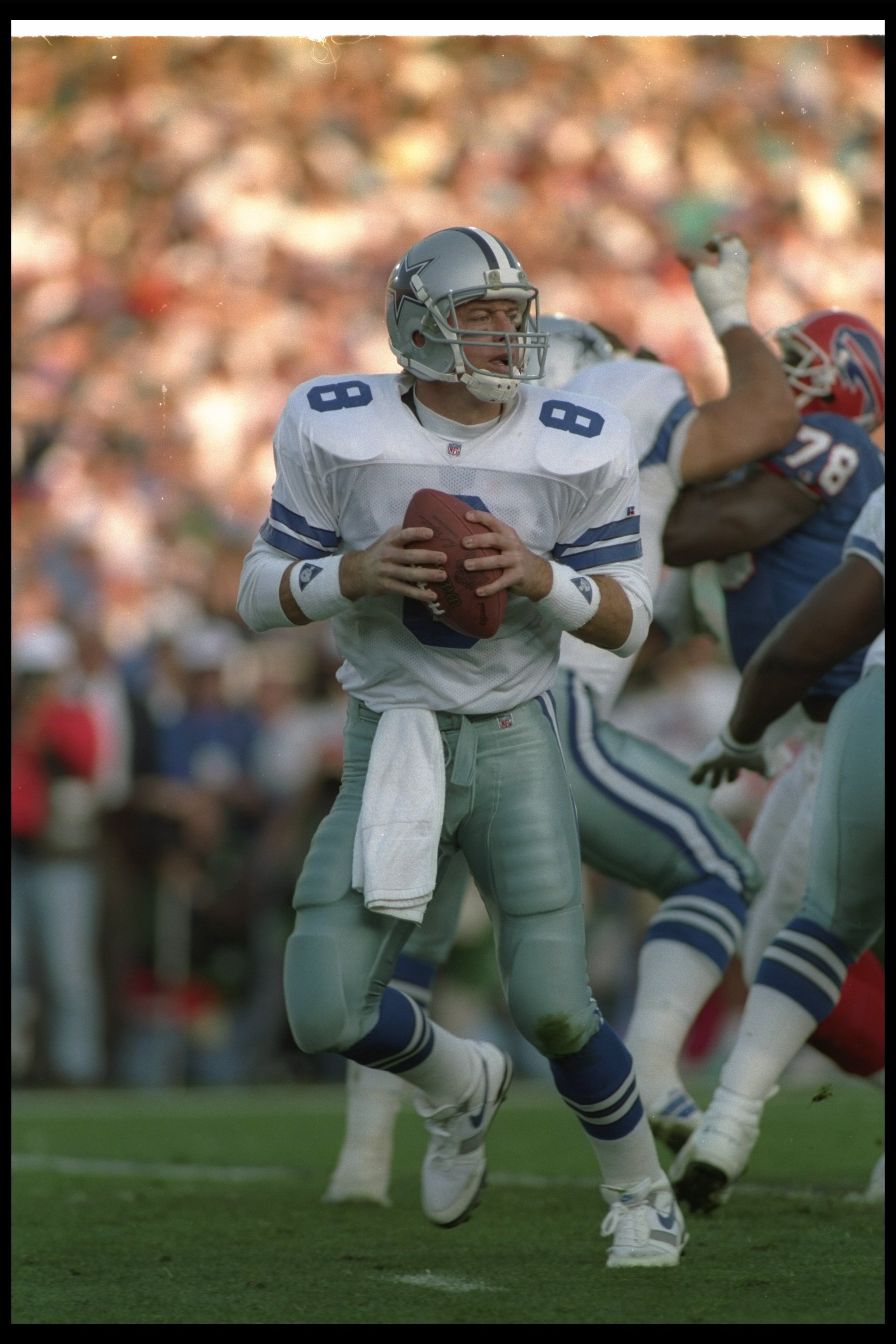
Hall of Famers at quarterback, running back, and wide receiver coupled with the greatest offensive line of it's generation, or perhaps any generation.
What other explanation is necessary? How about this: in three playoff games they scored 13 touchdowns and averaged just under 400 yards per game.
Enough said.
No. 1: 1989 San Francisco 49ers
15 of 15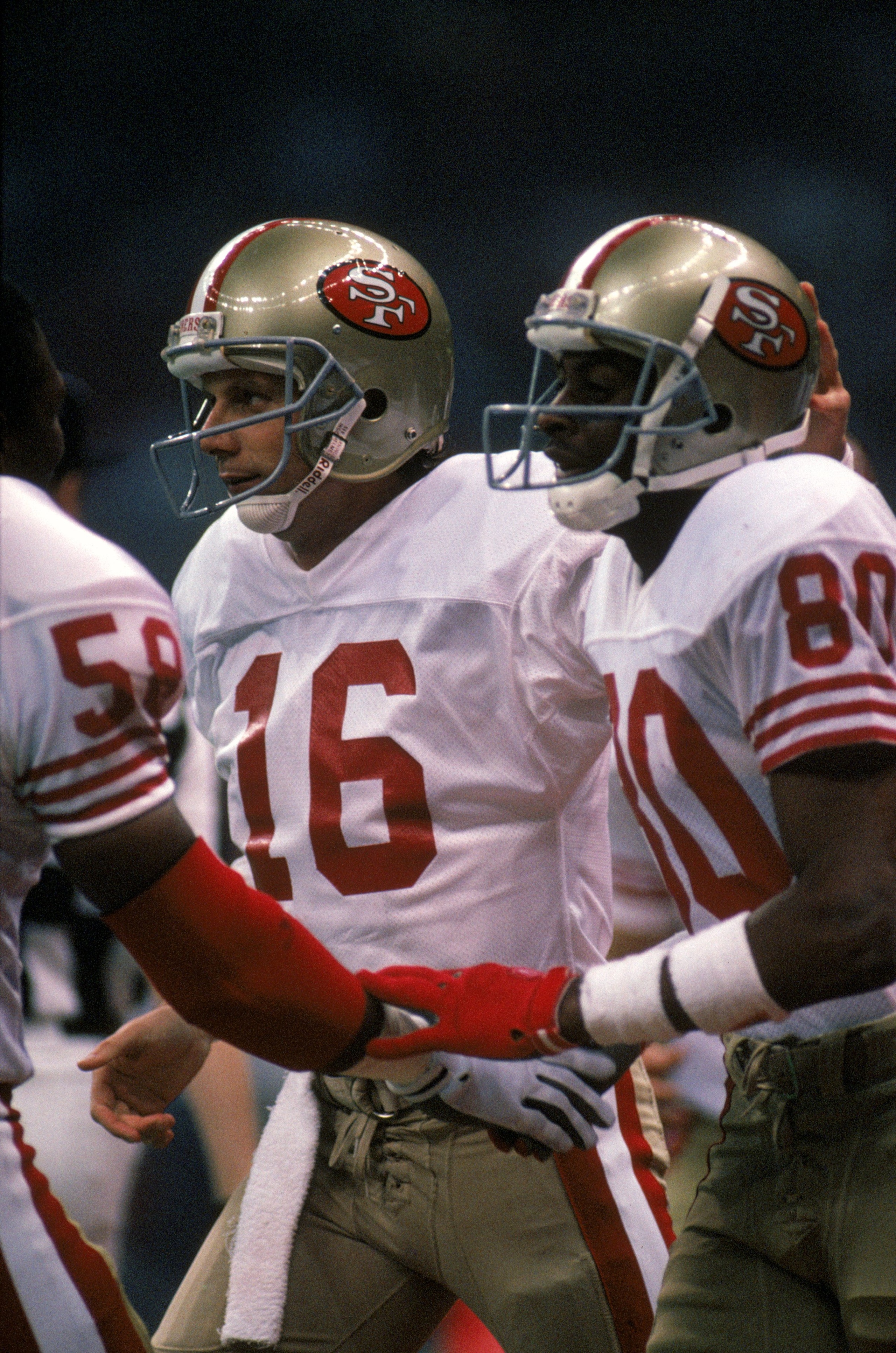
The greatest quarterback of all time and the greatest wide receiver of all time. That alone is enough to top the 1992 Cowboys, the 1999 Rams, and every one else.
But the team that won Super Bowl XXIV was much more than Jerry Rice and Joe Montana.
Roger Craig's last 1,000 yard season came in 1989 and he added 288 more in three playoff wins.
John Taylor posted his first 1,000-yard receiving season and caught touchdown passes in all three playoff wins.
In his first year as the starting tight end, Brent Jones caught 40 passes for 500 yards and four touchdowns.
With Harris Barton, Bubba Paris, Jesse Sapolu, and pro bowler Guy McIntyre, the 49ers offensive line was as good as any in the NFL, including the famed Hogs.
Once the postseason started, they scored five touchdowns in a thumping of the Vikings and with Montana completing 26-of-30 passes in the NFC Title Game, San Francisco crushed the Rams, 30-3.
And in their 55-10 shellacking of Denver in Super Bowl XXIV, they scored two touchdowns in every quarter.

.jpg?w=2560 "Rams Eagles Football")
.jpg?w=2560 "Grading WWE Raw 🔠")


.jpg?w=2560 "Injury-stricken Seahawks signing veteran RB")
