
Super Bowl: Power Ranking the 10 Most Unlikely MVPs in History
Power ranking the most unlikely MVPs in Super Bowl history depends on how you define unlikely.
For this list, we'll define unlikely as a player who, prior to that particular season, would never have been thought of as a good bet to win the Super Bowl MVP.
For example, when Joe Montana won the award at the end of Super Bowl XXIV, he had begun the 1989-90 season as, without a doubt, one of the game's premier players. The same was true when Drew Brees won the award last year in Miami.
The following 10 players didn't start the season as one of the league's most prolific stars and, therefore, when they won the Super Bowl MVP, it was a big surprise.
No. 10: Jim Plunkett, Oakland Raiders, Super Bowl XV
1 of 10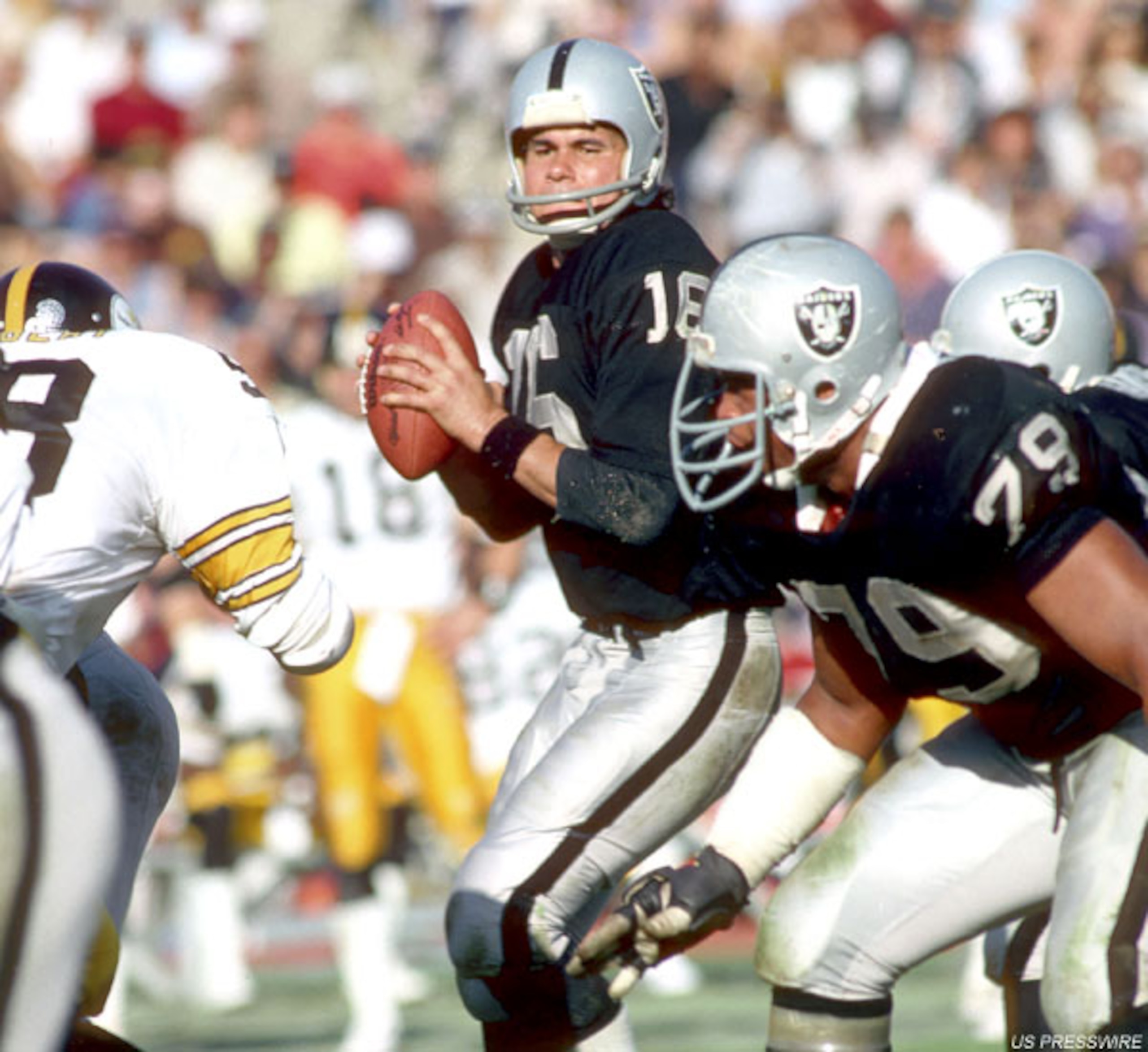
Now if it had been a decade earlier, Plunkett would have been a pretty good candidate to win the Super Bowl MVP.
Plunkett was a star at Stanford and the first overall pick in the 1971 NFL Draft. But his career bottomed out in the latter part of the decade, largely the result of horrific offensive lines during his stays in New England and San Francisco.
Plunkett signed with the Raiders in 1978 and spent that season on the bench, backing up Ken Stabler. But in 1980, Stabler was dealt to the Oilers and Plunkett soon stepped in, leading the Raiders to a Wild Card spot, then victories and a berth in Super Bowl XV.
Because he had thrown a grand total of 15 passes in the two seasons before 1980, his Super Bowl MVP award was surprising. Even more surprising, however? Plunkett was named the MVP (Oakland defeated Philadelphia 27-10) despite completing just 13 passes.
He did throw three touchdowns, however, which was as many interceptions as his teammate and linebacker Rod Martin (who many believe should have won the award) had.
No. 9: Roger Staubach, Dallas Cowboys, Super Bowl VI
2 of 10
Like Jim Plunkett, Roger Staubach was a college football hero, winning the Heisman Trophy at Navy in 1964.
But because of his military service, he was selected in the 10th round of that year's draft and didn't even join the NFL until 1969.
In his second season on the Cowboys roster, Staubach was beaten out for the starter's job by Craig Morton: Staubach threw eight interceptions and only two touchdowns in his three appearances that 1970 season.
Morton started the 1971 season as the team's starter, but Staubach soon took over and led the team to nine consecutive victories and a berth in Super Bowl VI.
In Dallas' 24-3 Super Bowl VI win over the Dolphins, Staubach completed 12 passes for 119 yards and two touchdowns. And similar to Plunkett, one of Staubach's teammates was probably just as worthy of the MVP award: running back Duane Thomas had 95 rushing yards and a touchdown.
No. 8: Ray Lewis, Baltimore Ravens, Super Bowl XXXV
3 of 10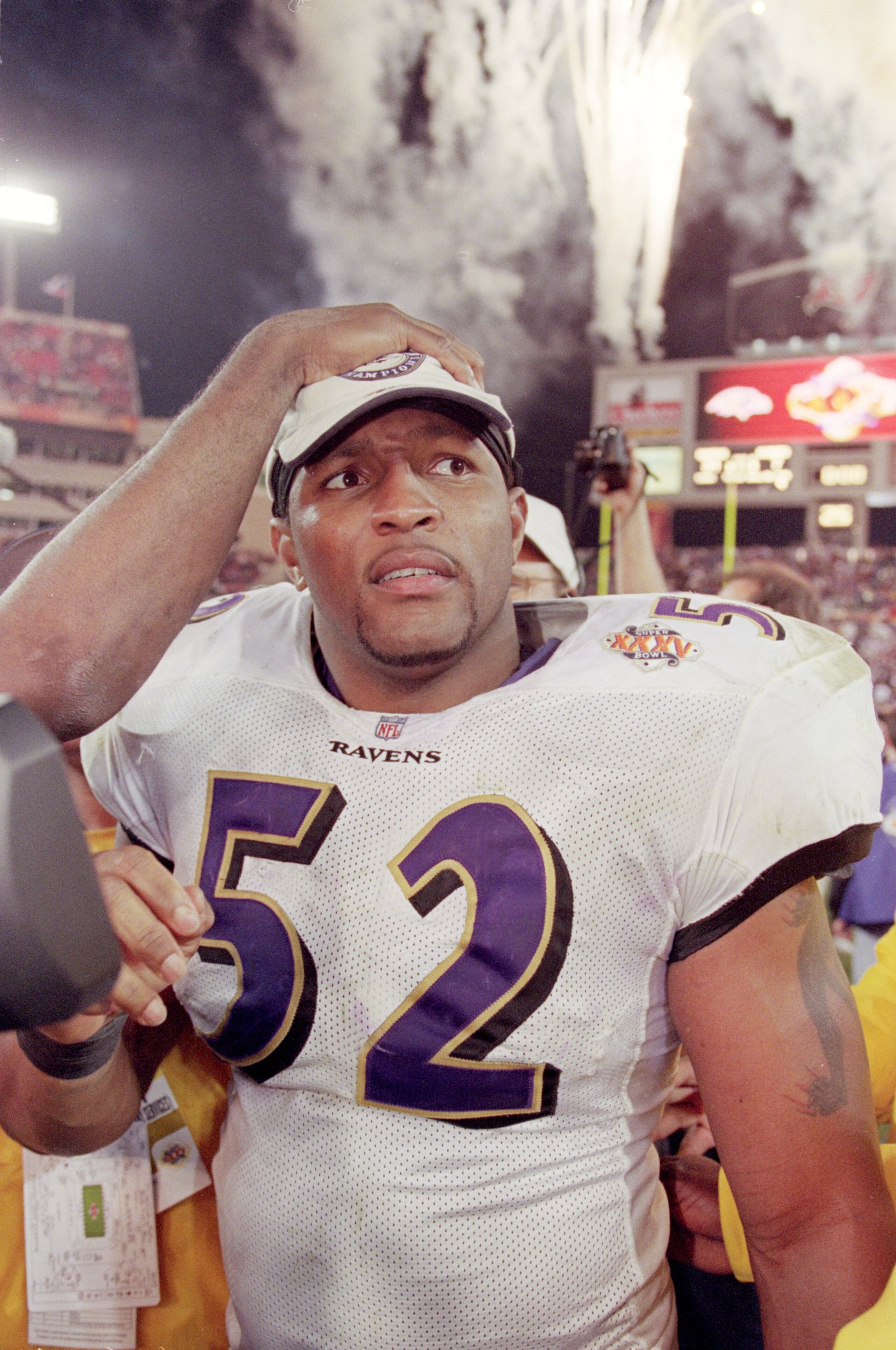
Ray Lewis is a special case.
Prior to the 2000 NFL season, he had been named to the Pro Bowl three straight seasons and was coming off a first team All-Pro selection.
So his talents weren't going to keep him from winning a Super Bowl MVP, but his availability would, however.
Lewis was arrested in February 2000 on suspicion of murder during the weekend of Super Bowl XXXIV.
That summer he pled to a lesser charge and was given probation. He was later fined $250,000 by the NFL.
He returned to top form on the field, however, winning the NFL's Defensive Player of the Year and leading the Ravens to a 34-7 win over the Giants in Super Bowl XXXV.
Lewis broke up four passes and recorded three tackles as the Ravens dominated the Giants, preventing a single offensive score.
.jpg?w=2560 "Cardinals Giants Football")
.jpg?w=2560 "Hill Injury Update Football")
.jpg?w=2560 "Titans Giants Football")
No. 7: Doug Williams, Washington Redskins, Super Bowl XXII
4 of 10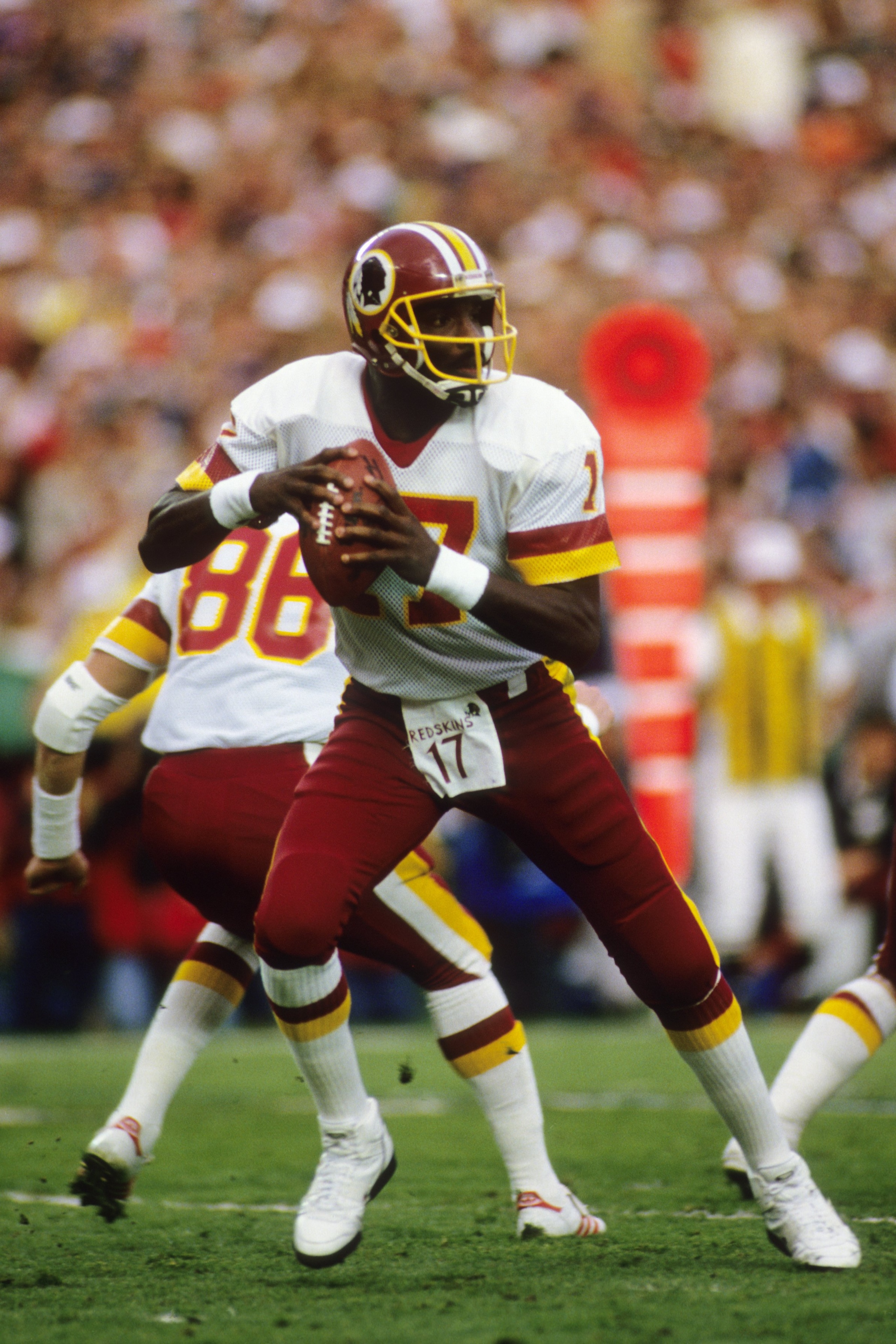
Doug Williams would have been a great Super Bowl MVP candidate back in 1979. That year he led the Tampa Bay Buccaneers to the NFC Championship.
But he gambled by signing with the USFL and when the league folded, he signed with the Redskins and his former Bucs offensive coordinator. He spent all of 1986 on the bench, throwing just one pass. And in 1987, he continued to serve as a backup to Jay Schroeder.
Williams stepped in when Schroeder was injured at a few points in the season and earned the starting spot in the playoffs. He guided Gibbs' bunch to Super Bowl XXI and, despite a knee injury early in the game, tossed four touchdowns in a rout over the Broncos.
No. 6: Chuck Howley, Dallas Cowboys, Super Bowl V
5 of 10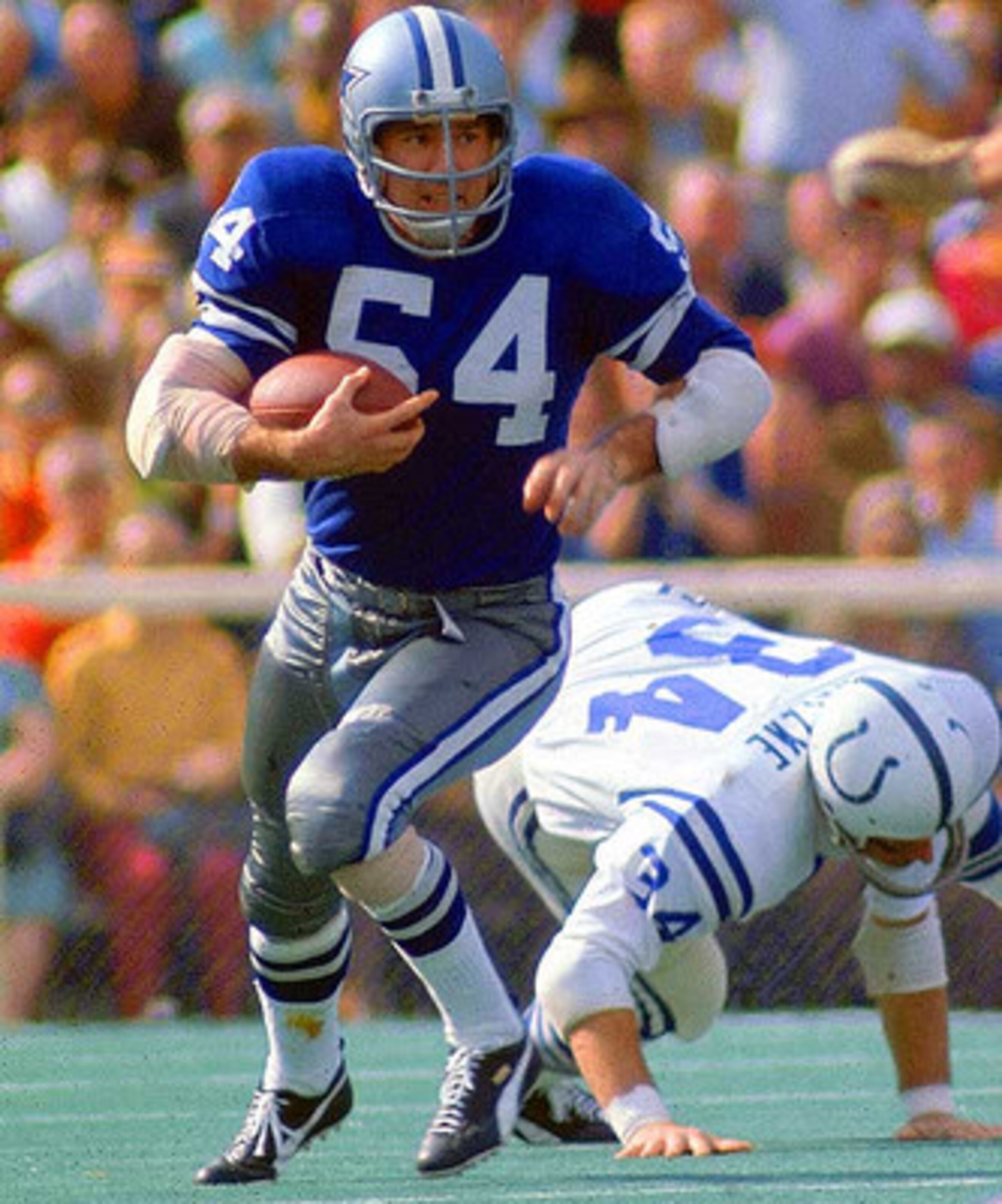
Chuck Howley was a great defensive player for Tom Landry's Cowboys. But by 1970, he was one of the NFL's oldest players.
In Super Bowl V, against the Baltimore Colts, Howley intercepted two passes and recovered a fumble as Dallas lost 16-13.
Even though he would finish his career with six Pro Bowl selections and eventually be enshrined in the Cowboys Ring of Honor, prior to that season, who would have thought a 34-year-old defensive player (the first four Super Bowl MVPs went to quarterbacks) on the losing team would win the game's MVP?
No. 5: Dexter Jackson, Tampa Bay Buccaneers, Super Bowl XXXVII
6 of 10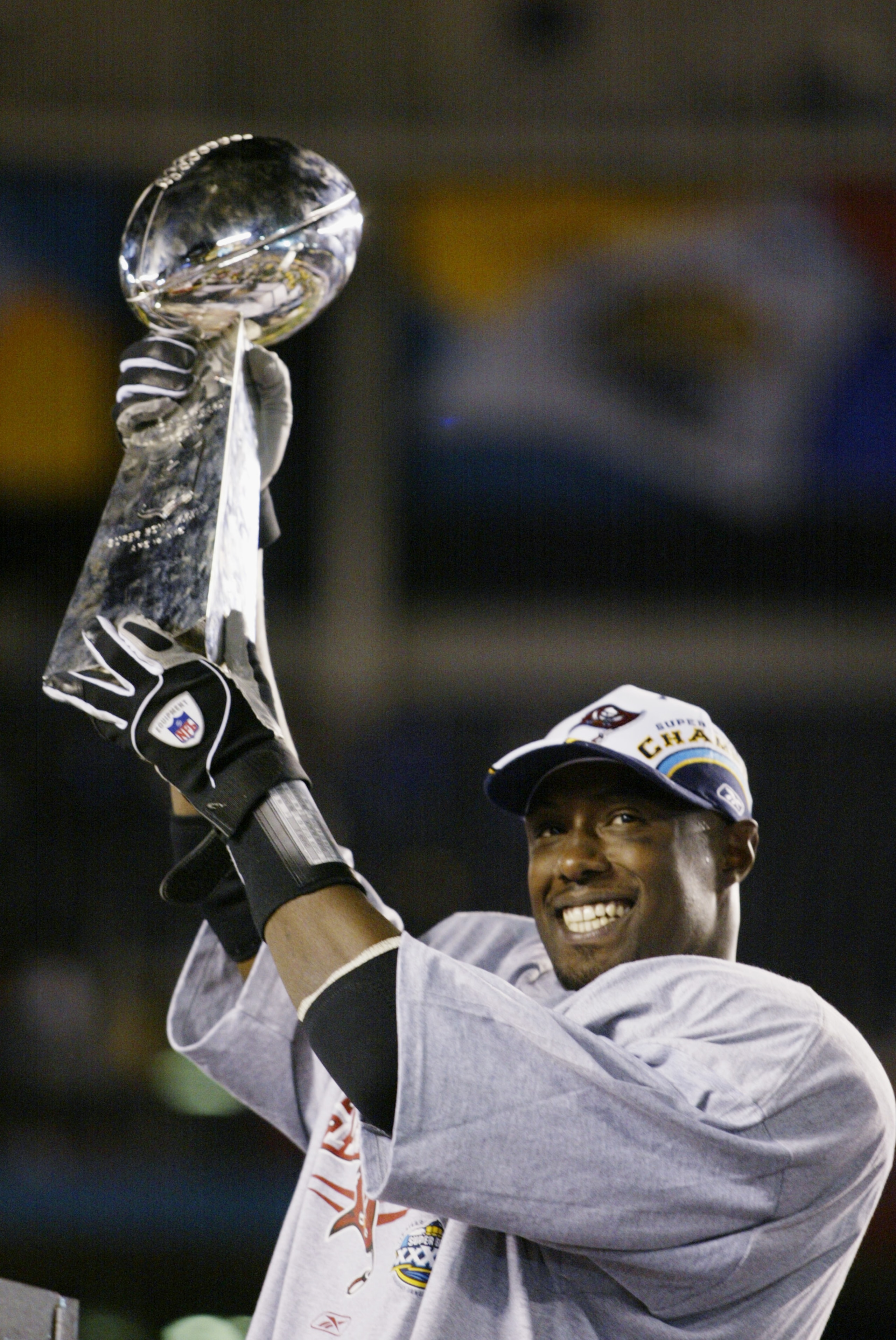
The 2002 Tampa Bay Buccaneers had one of the greatest defenses in NFL history. That year they allowed just 12.2 points per game and allowed just one touchdown in their first two playoff games.
There were several stars on that great unit: NFL Defensive Player of the Year Derrick Brooks, stud corner Ronde Barber, hard-hitting safety John Lynch and two great pass rushers in Warren Sapp and Simeon Rice.
Fourth-year safety Dexter Jackson was not one of the Bucs' big names. But in their 48-21 thumping of the Oakland Raiders, Jackson was...or at least that's what the fans determined.
Jackson picked off Rich Gannon twice and was named the game's MVP, largely because he earned a large share of the online voting.
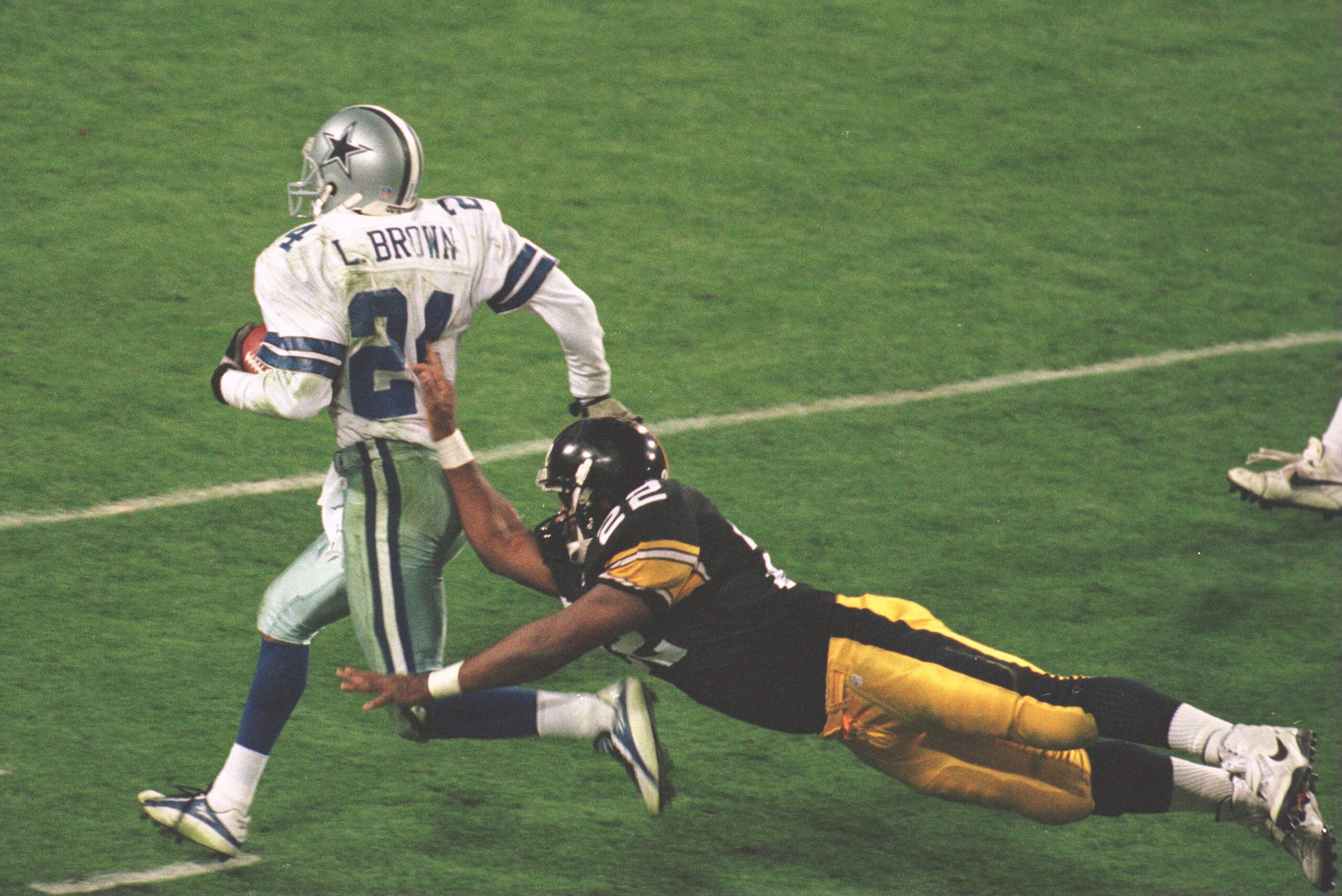
No. 4: Larry Brown, Dallas Cowboys, Super Bowl XXX
7 of 10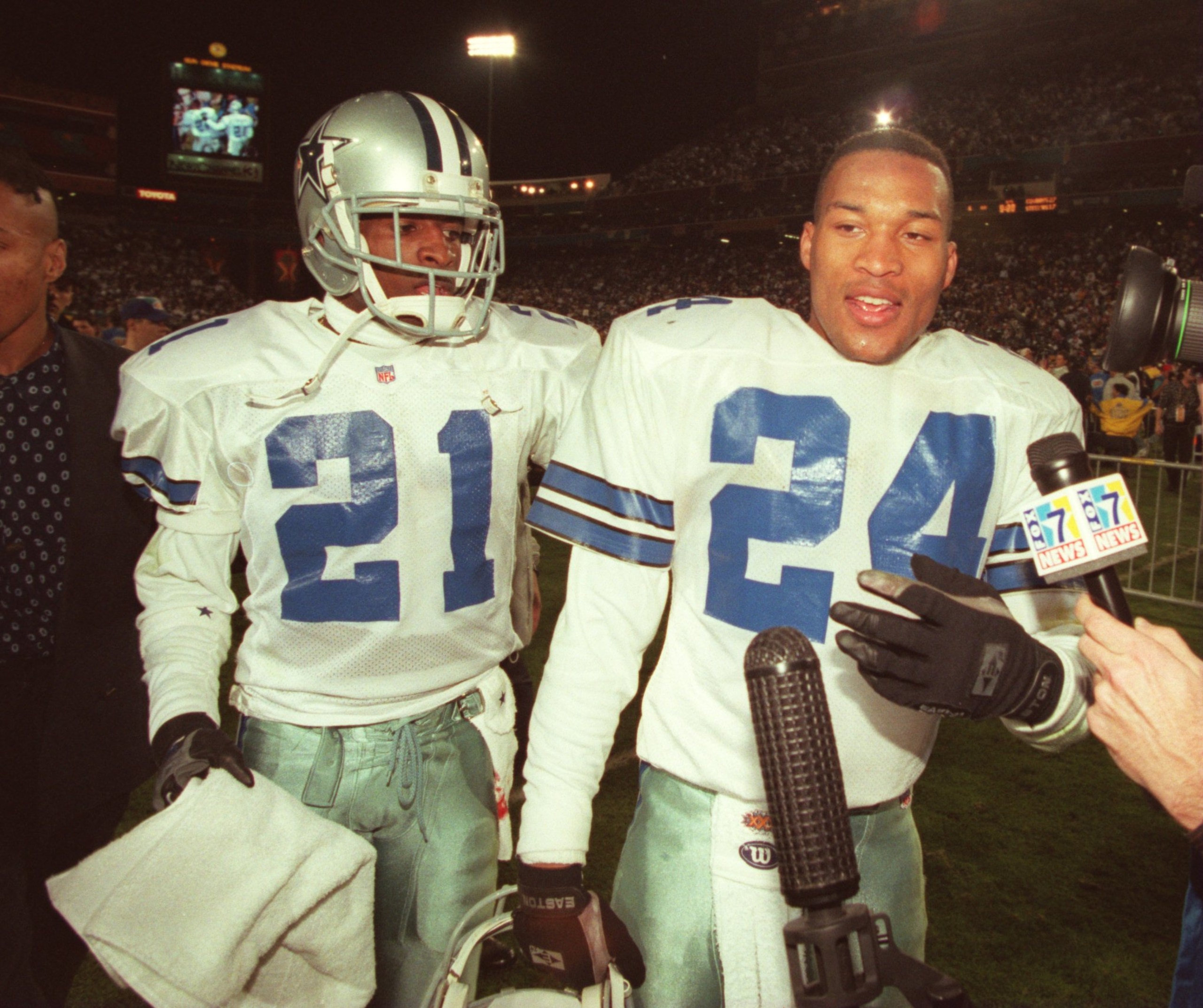
Prior to the 1995 NFL season, the Dallas Cowboys landed the NFL's premier free agent: cornerback Deion Sanders.
That year, the team's "other" cornerback, Larry Brown, was far less prominent: he had been a 12th-round pick out of TCU.
And when you consider that Troy Aikman, Emmitt Smith, Michael Irvin and a host of others were on that Cowboys team, the odds on Brown claiming a Super Bowl MVP that season were highly unlikely.
But in 1995, as opposing quarterbacks refused to test Sanders, Brown saw plenty of passes coming his way. He shared the team lead with six interceptions, returning two of them for scores.
He also overcame a terrible tragedy that season: his prematurely born son, Kristopher, died at 10 weeks of age a few days after the Cowboys' Week 11 loss to the 49ers. But he continued to play and helped the Cowboys reach Super Bowl XXX.
And say what you will about how they were recorded (Neil O'Donnell basically handed them to him) but Brown's two interceptions sealed the Cowboys' third Super Bowl title in four seasons. Those picks also landed him an enormous free agent contract that offseason with the Oakland Raiders.
No. 3: Tom Brady, New England Patriots, Super Bowl XXXVI
8 of 10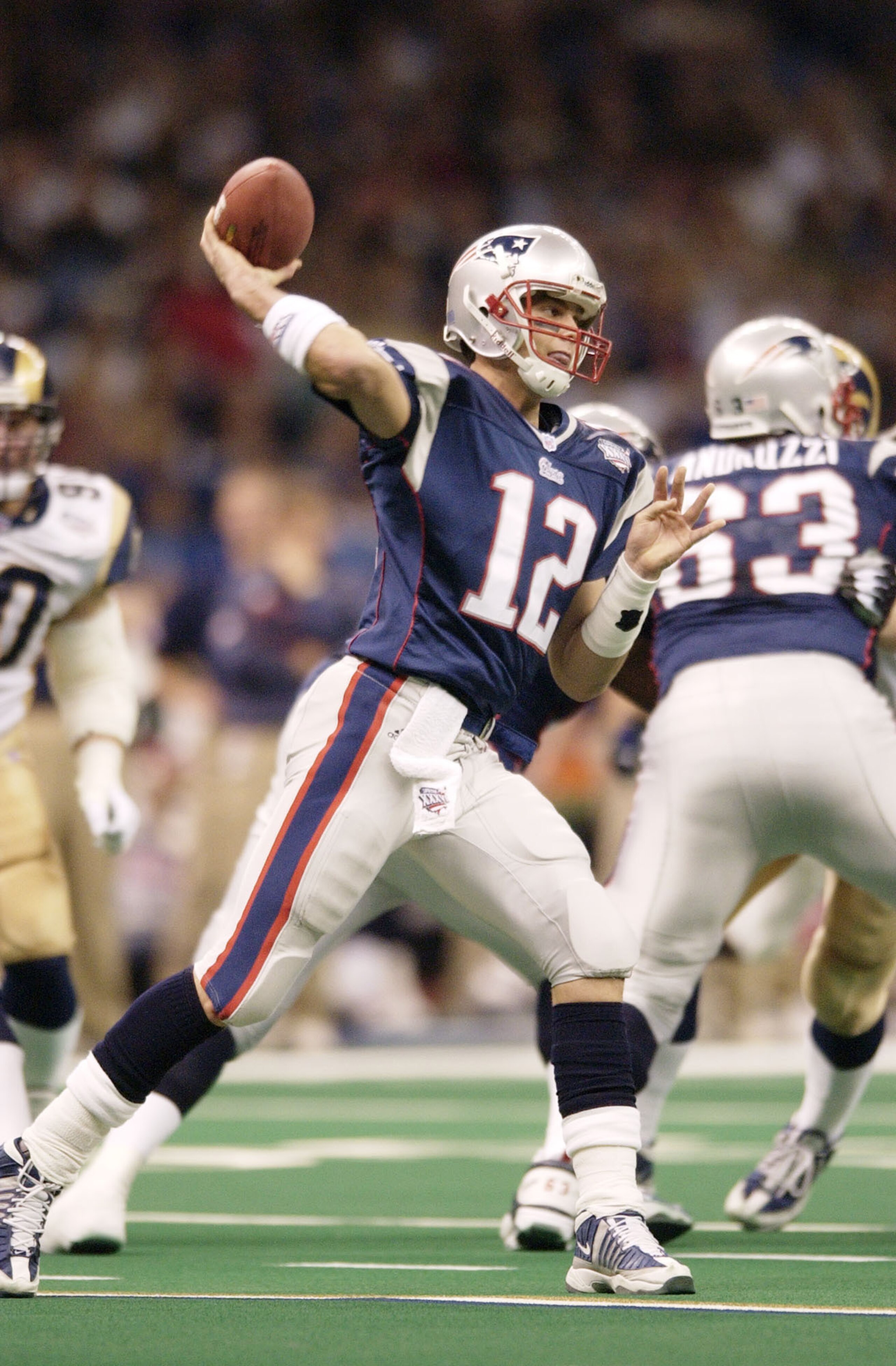
Now every year since, Tom Brady is as good a bet to win the Super Bowl MVP as anyone. But prior to the 2001 season, that was not the case.
Brady was the 199th player selected in the 2000 draft and spent his rookie year on the bench, backing up Drew Bledsoe. That year he attempted just three passes.
And when the 2001 season began, there seemed no way that Brady would set foot on the field: Bledsoe signed a 10-year, $103 million contract with the Pats.
You know the rest. Brady stepped in for an injured Bledsoe in Week 2 and led the Pats to a huge upset over the Rams.
Even though he had been a fine player at Michigan just two seasons earlier, who would have predicted that the skinny quarterback would be named Super Bowl MVP?
No. 2: Kurt Warner, St. Louis Rams, Super Bowl XXXIV
9 of 10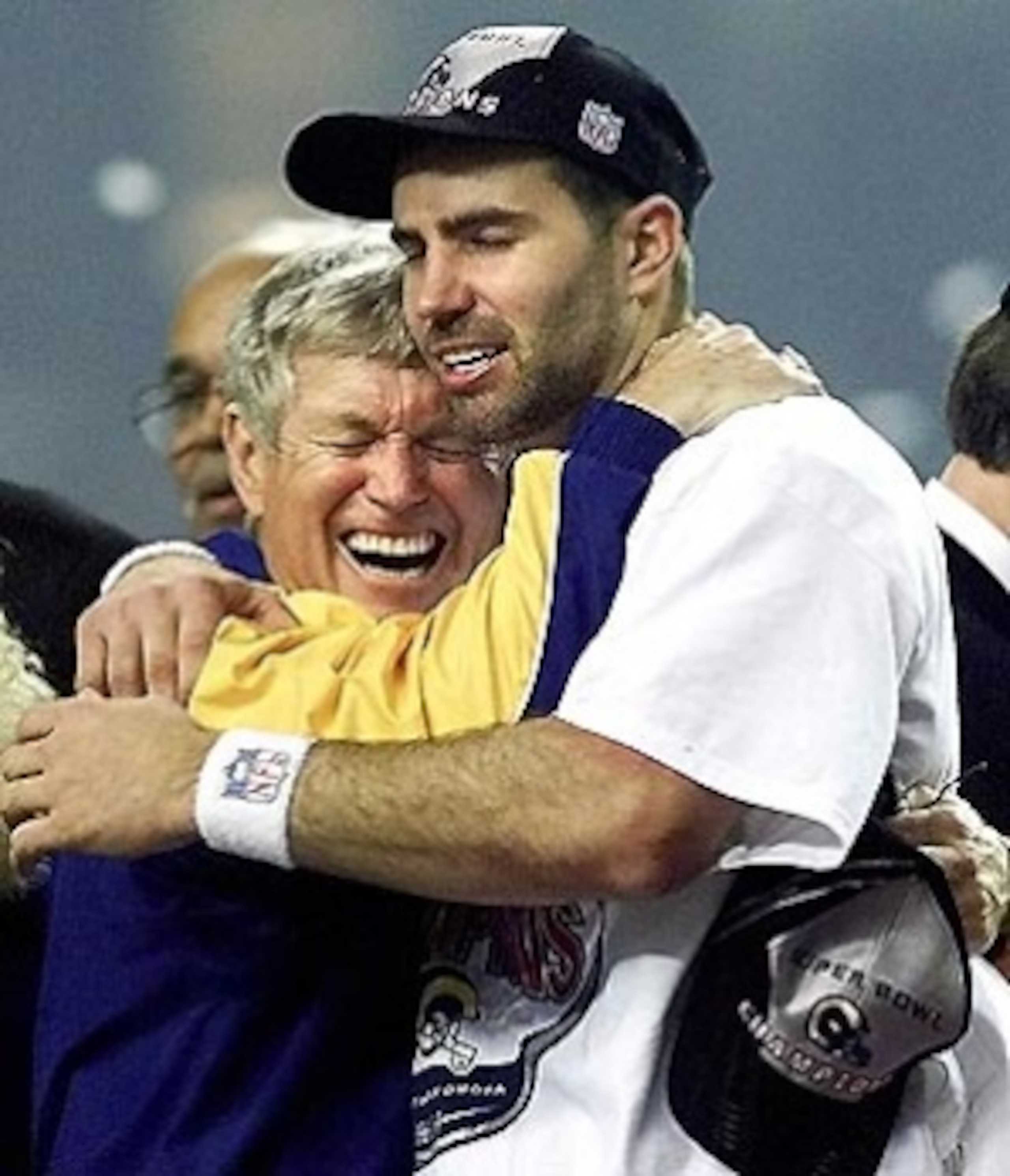
As surprising as it was that Tom Brady ascended to starter and Super Bowl MVP, Warner's rise to the top was much more stunning.
He played his college ball at Northern Iowa. He had been cut by the Green Bay Packers. He spent virtually all of his career prior to joining the Rams in the Arena Football League and NFL Europe.
Not only that, but prior to the 1999 season, the Rams had given a four-year, $16 million contract to Trent Green, whom Warner was to serve as a backup for.
And like the Brady story, you know the rest: Green was hurt in the preseason and Warner led the Rams to Super Bowl XXXIV.
Warner threw (what amounted to be) the game-winning touchdown in the final two minutes and set a new Super Bowl record with 414 yards passing as the Rams defeated the Titans 23-16.
No. 1: Desmond Howard, Green Bay Packers, Super Bowl XXXI
10 of 10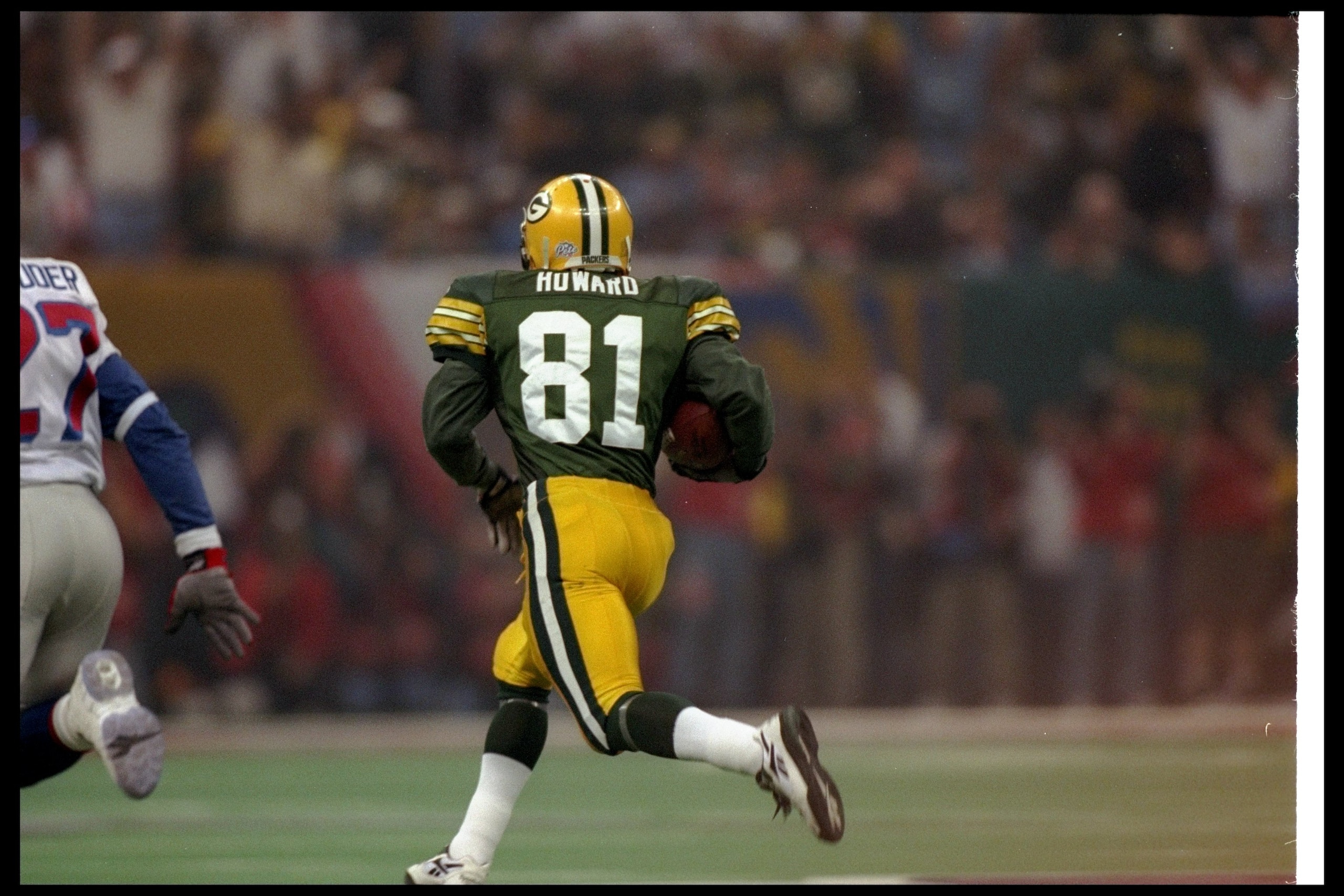
As a wide receiver, Desmond Howard was a tremendous NFL bust. The Redskins selected the Heisman Trophy winner with the fourth overall choice in the 1992 NFL Draft and Howard did very little during three seasons in Washington.
He was similarly unproductive as a pass catcher for the Jaguars in 1995. And when his 11-year career was over, he had only seven touchdown catches.
Surprisingly, he wasn't even a great return man for those first four years in the NFL.
But when the Packers signed him purely as a returner in 1996, he flourished. That year he led the NFL in punt return yards and scored three regular season touchdowns on special teams.
And in the postseason he was even better, helping the Packers defeat San Francisco thanks to a 71-yard punt return.
Then, against the Patriots in Super Bowl XXXI, he clinched the Pack's first Super Bowl title in 29 years, returning a kickoff 99 yards in the third quarter after the Patriots pulled within six points.
In all, the former Michigan star racked up 244 yards on 10 punt/kick returns, and remains the only special teamer to win the Super Bowl MVP. Any time a punt/kick returner claims that honor it's unlikely: they only touch the ball a handful of times. But Howard's redemption was especially stunning.

.jpg?w=2560 "Dolphins Bills Football")


.jpg?w=2560 "Greenlaw Talks Payton Exchange")