
Super Bowl: The 10 Most Exciting Finishes in the Big Game's History
In the 44 Super Bowls played since the 1966 NFL season, we have seen our share of blowouts, disappointments and downright laughers.
Fortunately, the past decade provided us with some dramatic finishes, making superstars out of players like Tom Brady, Kurt Warner and Drew Brees.
The underdogs pulling off the upsets, the amazing catches, the game-winning drives, the most memorable of plays that have cemented themselves in professional football history —that is what we all hope to see when watching a Super Bowl.
Unfortunately, we are usually let down, but on occasion we've been pleasantly surprised.
Here's hoping the finish to Super Bowl XLV is just as exciting as these were.
No. 10: Super Bowl XXXII—Terrell Davis Carries Denver to Its First Super Bowl
1 of 10The Broncos weren't supposed to be there.
They were a 12.5-point underdog to the world champion Green Bay Packers.
Your probably remember what was said about them.
Packers safety Eugene Robinson, in the middle of the game, infamously compared the Broncos to the Indianapolis Colts, who, during the 1997 season, had the league's worst record at 3-13.
Hall of Famer Reggie White admitted afterward that the Packers may have underestimated the Broncos.
Maybe the Packers were the better team. But for that one day, the Broncos outperformed them.
A back-and-forth game throughout, the Broncos had the ball on the Green Bay 49-yard line with 3:27 remaining, the game tied at 24 and a chance to claim the championship.
They did what they had done all game.
They rode Terrell Davis.
On the first play, he carried the ball for two yards, but a 15-yard face mask penalty on Green Bay moved the ball to the 32-yard line.
After John Elway completed a 23-yard pass to fullback Howard Griffith, a holding penalty brought the Broncos back to the 18-yard line.
From there, it was all Davis and the offensive line.
He nearly scored on the next play, running it 17 yards before being pushed out of bounds. He later scored from a yard out when Packers head coach Mike Holmgren instructed his team to let Denver score, thus ensuring more time for his offense when they got the ball.
Denver had the lead, 31-24, but Brett Favre and the Packers had one last shot.
After moving the ball into Denver territory, the Packers faced a 4th-and-6 from the Bronco 31-yard line.
We all know what happened next.
Favre looked for tight end Mark Chmura over the middle, but linebacker John Mobley deflected the pass, sealing the win for Denver and giving John Elway his first Super Bowl Championship.
We all remember the call from Broncos play-by-play man Dave Logan:
"Favre, hit as he throws, pass is gonna be...INCOMPLETE!!! Denver has...Denver's gonna win it!!!"
No. 9: Super Bowl XLIV—Drew Brees Leads the New Orleans Saints to Victory
2 of 10New Orleans, a city ravaged by Hurricane Katrina in 2005 and still recovering in some ways when Super Bowl XLIV came around, was desperate for a championship.
They didn't have a professional baseball or hockey franchise, and there were questions about the long-term viability of the New Orleans Hornets as a basketball franchise in the city.
The Saints had been, and still were, what the city clung to during hard times. The Saints were who they looked to. Unfortunately for the people of New Orleans, the Saints were usually not very good.
But the arrival of head coach Sean Payton and quarterback Drew Brees changed all that.
In their first season with the team, 2006, they advanced to the NFC Championship Game.
After failing to make the playoffs in '07 and '08, they started 14-0 in '09 and finished with the best record in the NFC, earning home field advantage throughout the playoffs.
After defeating Minnesota in overtime in the NFC Championship Game, they were finally there.
The Super Bowl.
Trailing 17-16 entering the fourth quarter, New Orleans answered the call and brought hope and joy to a town they call the Big Easy.
After Colts kicker Matt Stover missed a 51-yard field goal, the Saints had the ball on their own 41-yard line with a chance to make history.
Brees went to work, completing passes to seven different receivers on the drive before hitting tight end Jeremy Shockey from two yards out for the go-ahead touchdown touchdown with 5:42 remaining. The two-point conversion pass to Lance Moore was initially ruled incomplete, but after the Saints challenged, the officials ruled that Moore had in fact had possession of the ball while crossing the plane.
Looking to sustain his legacy as one of the game's all-time best, No. 18, Peyton Manning, led his team down the field.
Starting at the Indianapolis 25-yard line with 5:35 to play, the Colts went to work, taking seven plays to advance to the New Orleans 31-yard line.
Facing a 3rd-and-5, Manning looked for wide receiver Reggie Wayne on a slant, but cornerback Tracy Porter jumped the route and intercepted the pass, taking it 74 yards for the touchdown and rejuvenating an entire city at the same time.
No. 8: Super Bowl V—Jim O'Brien Boots a 32-Yarder to Give the Colts the Win
3 of 10They say that sometimes it's better to be lucky than good.
In the case of the Baltimore Colts in Super Bowl V, that was certainly true.
In one of the sloppiest games in Super Bowl history, the Colts turned the ball over six times, three of them on fumbles, and the Cowboys didn't fare much better, giving it away four times, three on interceptions.
But time and time again, the Baltimore defense would bail out its offense, stopping the Cowboys when they got into Colts territory.
Late in the fourth quarter, with the scored tied at 13 and Dallas facing a 2nd-and-35 from its own 27-yard line, quarterback Craig Morton threw for running back Dan Reeves, only to see the ball go through Reeves' hands and into the arms of Colts linebacker Mike Curtis, whose return set Baltimore up at the Dallas 28-yard line.
Two plays later, rookie kicker Jim O'Brien, who had an earlier extra point blocked, cemented his place in Super Bowl history, making a 32-yard field goal with five seconds left, giving the Colts a 16-13 victory.
Cowboys linebacker Chuck Howley was named the game's MVP after intercepting two passes and recovering a fumble. He was the first defensive player named Super Bowl MVP and is the only one to earn the honor while playing for the losing team.
Despite losing a heartbreaker, the Cowboys would advance to seven more Super Bowls, going 5-2 to sustain Dallas as one of sports' great franchises.
In the end, Colts defensive lineman Billy Ray Smith summed it up best.
"We figured we could win if our offense didn't put us into too many holes," said Smith of the game, which would be his last. "Let me put it this way, they didn't put us into any holes we couldn't get out of."
.jpg?w=2560 "Colts Football")
.jpg?w=2560)
.jpg?w=2560 "Commanders 49ers Football")
No. 7: Super Bowl XXXVIII—Vinatieri Kicks His Second Game-Winning FG in a SB
4 of 10The Carolina Panthers had just tied it up late in the fourth quarter.
Just like the Rams had.
Like he did in Super Bowl XXXVI, it was Ricky Proehl who caught the touchdown pass with less than two minutes to play.
And just like they did in response two years before, Tom Brady and the New England Patriots played for the win and drove the field.
Panthers kicker John Kasay made a key blunder, kicking the ball out of bounds and giving New England possession at its own 40-yard line with 1:08 to play.
Just like two years before, Troy Brown would come through for the Patriots.
Brady hit him for a 13-yard gain on second down. After an offensive pass interference by Brown moved New England back to its 43-yard line, he redeemed himself, catching a 13-yard pass and moving the Patriots into Carolina territory.
On 3rd-and-3, Brady hit tight end Daniel Graham for a four-yard gain, giving the Patriots a fresh set of downs and some newfound hope.
Brady then found wide receiver Deion Branch on an out route at the 24-yard line, setting up Vinatieri for a 41-yard field goal.
It's important to understand that at this point, Vinatieri had already missed a 31-yarder and had a 36-yarder blocked.
But this time, he was money.
The kick was true, and the Patriots had won their second Super Bowl in three years.
No. 6: Super Bowl XXV—Norwood Misses a 47-Yard FG, Giving the Giants the Win
5 of 10The Giants weren't supposed to be here.
They lost starting quarterback Phil Simms for the season to a broken foot in a Week 15 loss to the Bills.
And yet, they recovered.
They trailed the 49ers 13-12 in the NFC Championship Game with under three minutes to play and San Francisco with the ball, things looking quite bleak for the Giants.
And yet, they recovered.
They trailed Buffalo 12-3 and 19-17 in the Super Bowl.
And yet, they recovered.
A 21-yard field goal by Matt Bahr gave the Giants their final lead, 20-19, midway through the fourth quarter.
After trading possessions, Buffalo got the ball back on its own 10-yard line with 2:16 remaining and a chance to win the game.
By completing short passes and utilizing Thurman Thomas on the ground, Jim Kelly was able to engineer a drive that got to the New York 29-yard line with eight seconds to play.
At this point, it was all up to Bills kicker Scott Norwood.
Norwood, who was 1-for-5 on field goals of 40 yards or more on grass, had an opportunity to "fire the shot heard 'round the world."
It was a difficult situation for him. Norwood was used to kicking on the artificial turf of Rich Stadium, Buffalo's home field, and to make matters worse, the ball was placed on the right hash mark, meaning he would have to compensate the kick slightly to the left.
There was the snap, the hold and the kick.
And the waiting...
Finally, the ball sailed just wide to the right of the goalpost, giving the New York Giants their second Super Bowl victory in five seasons.
No. 5: Super Bowl XXXVI—Brady Leads New England on Game-Winning Drive
6 of 10In this game, the Legend of Tom Brady was born.
After blowing a 17-3 lead against the St. Louis Rams, the New England Patriots were faced with two choices: (1) Run out the clock and go to overtime, or (2) play for the win.
Against the advice of John Madden, who was calling the game on Fox with Pat Summerall, the Patriots went for the win instead of leaving it to chance in overtime against the Greatest Show on Turf.
Starting the drive at their own 18-yard line with 1:21 remaining and no timeouts, Brady went to work.
He completed three passes in four plays to running back J.R. Redmond, moving the Patriots to the 41-yard line.
And then it happened.
Brady hit wide receiver Troy Brown at the St. Louis 45-yard line, with Brown running out of bounds at the 36-yard line, gaining 23 yards on the play and putting New England in field goal range.
A six-yard completion to tight end Jermaine Wiggins moved the Patriots to the 30-yard line, and Brady spiked the ball with seven seconds remaining.
After that, Adam Vinatieri nailed a 48-yarder, immortalizing himself and giving New England its first Super Bowl victory in three tries.
No. 4: Super Bowl XXXII—Montana Hits Taylor to Lift San Francisco to Victory
7 of 10Back and forth it went.
Back and forth it went.
San Francisco 3-0. Tied 3-3.
Cincinnati 6-3. Tied 6-6.
Cincinnati 13-6. Tied 13-13.
A Jim Breech 40-yard field goal with 3:20 remaining gave Cincinnati a 16-13 lead, its third lead of the game.
But the 49ers, as they always seemed to do back then, responded.
As you may recall, according to offensive lineman Harris Barton, quarterback Joe Montana was able to ease the mood in the huddle during the television timeout by pointing out John Candy in the crowd.
Led by Montana, aka "Joe Cool," the 49ers drove from their own 8-yard line, methodically working their way down the field.
After several passes moved them into Cincinnati territory, the 49ers faced a 2nd-and-20 from the Bengal 45-yard line.
But again, they responded.
Montana hit Jerry Rice over the middle, and Rice broke free, eluding defenders before finally getting tackled at the 18-yard line, setting up a first down for San Francisco.
After that, an eight-yard completion to Roger Craig put San Francisco at the 10-yard line.
The call: 20 Halfback Curl X Up.
It was one of the most memorable plays in football history.
With 39 seconds remaining, Montana took the snap, looked ahead and found wide receiver John Taylor on a slant in the end zone, giving the 49ers the lead and their third Super Bowl championship.
No. 3: Super Bowl XLII—The Giants Use a Tenacious Pass Rush to Defeat NE
8 of 10The Patriots were 18-0 and poised to make history.
Certainly the New York Giants, a 10-6 wild card team, weren't going to stop Bill Belichick and company from making history.
This was New England's year.
They had accumulated 6,580 yards of total offense during the regular season, averaging a remarkable 36.8 PPG along the way.
But they didn't look particularly sharp in the playoffs, and facing the Giants, who had nearly beaten them in Week 17, proved to be too difficult a test for New England.
The weight of history, the pressure of trying to be perfect, attempting to win a fourth Super Bowl in the last seven years and dealing with the New York Giants proved to be too much to handle.
Having just given up a Tom Brady touchdown pass to Randy Moss, the Giants trailed 14-10 with 2:39 remaining and all three timeouts.
It was 1st-and-10 at the New York 17-yard line.
Eli Manning methodically moved the Giants down the field, converting a 4th-and-1 from the New York 38-yard line.
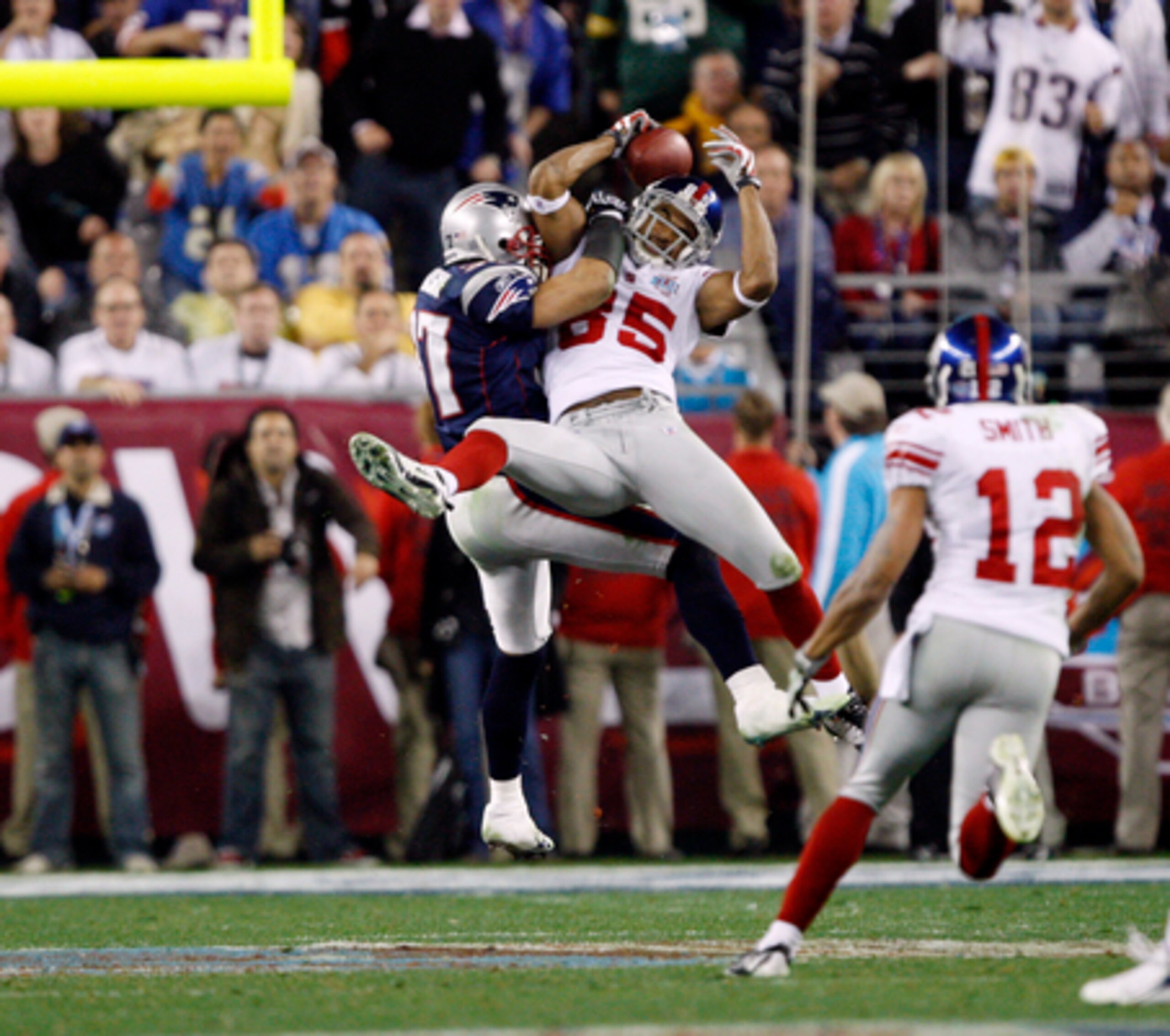
After nearly throwing an interception on 2nd-and-5 from the Giant 44-yard line, Manning redeemed himself, incredibly avoiding a sack before throwing it up for little-known wide receiver David Tyree, who, in probably the most famous play in Super Bowl history, caught the ball against his helmet at the New England 24-yard line with 59 seconds remaining.
Again, the Giants came through.
Three plays later, New York converted on 3rd-and-11 when Manning hit rookie wide receiver Steve Smith for 11 yards.
Then Manning hit Plaxico Burress on a slant-and-go route in the corner of the end zone, giving the Giants an incredible victory and their third Super Bowl championship.
No. 2: Super Bowl XLIII—Roethlisberger Leads Steelers on Late GW Drive
9 of 10The last three minutes of Super Bowl XLIII undertook a drastic turn of events.
With the Steelers leading 20-14 with 3:04 remaining and facing a 3rd-and-10 at their own 1-yard line, Pittsburgh, considering Arizona had no timeouts remaining, needed just one first down to virtually ice the game.
As he usually does, quarterback Ben Roethlisberger came through, finding wide receiver Santonio Holmes at the 20-yard line, seemingly locking up the second Super Bowl in four years for the Steelers.
But there was a flag on the play.
The Steelers had been called for holding in the end zone, giving Arizona two points and making it a 20-16 game.
Starting the drive at their own 35-yard line, the Cardinals scored quickly.
After an incompletion on first down, quarterback Kurt Warner found wide receiver Larry Fitzgerald over the middle at the 43-yard line, and Fitzgerald did the rest, running down the field 57 yards to the end zone, giving the Cardinals their first lead of the game.
But the Steelers, as they always seem to do, found a way to answer.
Starting at the 22-yard line with 2:37 remaining and two timeouts, the Steelers, following a holding penalty on the first play, moved the ball into Arizona territory on three passes and a Roethlisberger four-yard run.
On 2nd-and-6, Roethlisberger found Holmes on a short pass, and Holmes took it from there, racing down the field before being tackled at the 6-yard line.
After nearly making the game-winning pass on 1st-and-goal, Roethlisberger threw a bull's-eye to Holmes, who caught the pass in the right corner of the end zone with three defenders around him and 35 seconds remaining.
Who knows what would have happened if Arizona had a little more time to respond?
No. 1: Super Bowl XXXIV—TEN WR Dyson Stopped Just Short of Tying Game
10 of 10The first half wasn't particularly exciting.
The Rams offense was able to move the ball but had to settle for three field goals, taking a 9-0 lead into halftime.
In the third quarter, a nine-yard touchdown pass from NFL MVP Kurt Warner to wide receiver Torry Holt gave the Rams a 16-0 lead and, seemingly, control of the game.
But the Titans responded, scoring 16 unanswered points and tying the game on an Al Del Greco 43-yard field goal with 2:15 remaining.
But the Rams would not be denied.
On the first play of the ensuing drive, with the ball at the St. Louis 27-yard line, Warner dropped back and, under pressure, threw for wide receiver Isaac Bruce. The ball was underthrown, but Bruce adjusted and made the catch at the Tennessee 38-yard line, eluding defenders the rest of the way before scoring the biggest touchdown in Rams franchise history.
But it wasn't over just yet.
Down 23-16, the Titans, led by quarterback Steve McNair, embarked on a remarkable drive, moving all the way to the St. Louis 26-yard line.
Facing a 3rd-and-5, McNair took the snap, looked around, moved out of the pocket and, while nearly falling down in the process, cleared the grasp of defensive lineman Kevin Carter and Jay Williams, got up and rifled a pass to wide receiver Kevin Dyson, who was tackled at the 10-yard line.
Tennessee used its final timeout, stopping the clock with six seconds to play.
What happened next is one of the most memorable plays in sports history.
Out of the shotgun, McNair took the snap, looked right and hit Dyson at the 5-yard line. He ran to the end zone and, as he was being tackled by linebacker Mike Jones, reached the ball forward, falling one yard short, giving the Rams the most dramatic of victories.
The thinking on the play from the Titans' perspective was to get Jones to follow tight end Frank Wycheck on the play. Wycheck and Dyson were both lined up to the right and Dyson ran a slant while Wycheck headed straight for the end zone. At first, Jones looked like he was going to follow Wycheck, but he turned back and focused his attention on Dyson, tackling him just before the Tennessee wideout could cross the goal line.
.jpg?w=2560 "Ravens Browns Football")
.jpg?w=2560 "DOLPHINS-AIKMAN")

_0.png?w=2560 "Unranked Teams Cause Chaos in Rankings 📊")
.png?w=2560 "Week 8 Winners & Losers 📊")





