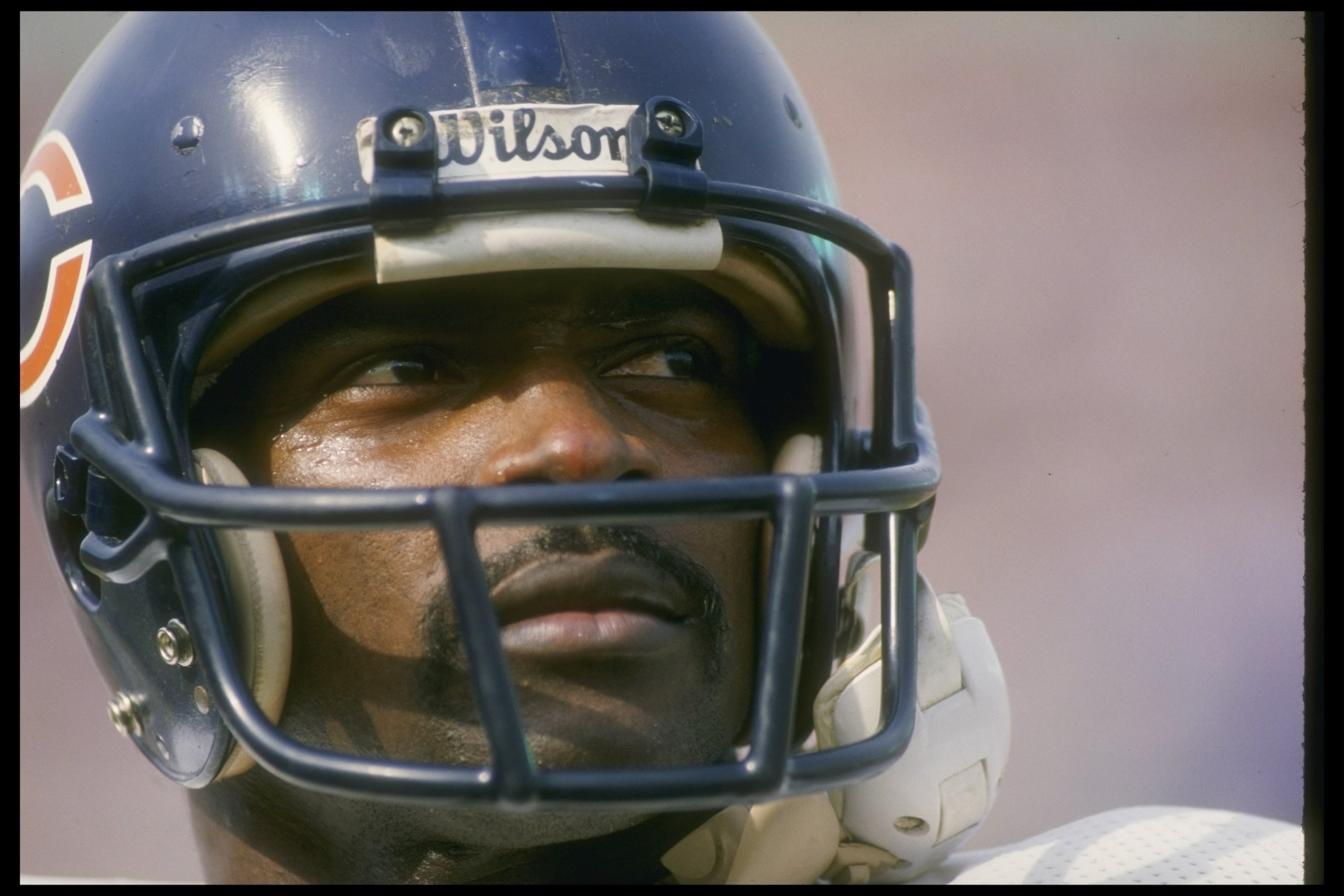

Chicago Bears: Top 10 Seasons from the Super Bowl Era
Fans in Chicago are excited as the Bears have reached the NFC Conference Championship game. But how good is this year's edition of the Monsters of the Midway? Are they one of the top 10 Bears teams in the Super Bowl era? Worry no more, as the answer will be revealed.
How does one judge the success of a team, though? Do you judge them by wins and losses? Do you judge them by what they did in the playoffs? Is it just a feeling of how good a team is?
To help narrow down the list to 10 seasons, a look at each of the previous factors took place. Then to help determine their specific spot in Chicago history, WhatIfSports's NFL SimMatchup was used. In honor of the commissioner's desire for an 18-game season, each season's team played two games against the other nine competitors, and their results helped shape the final rankings.
Let the rankings and debate begin.
Honorable Mentions
1 of 11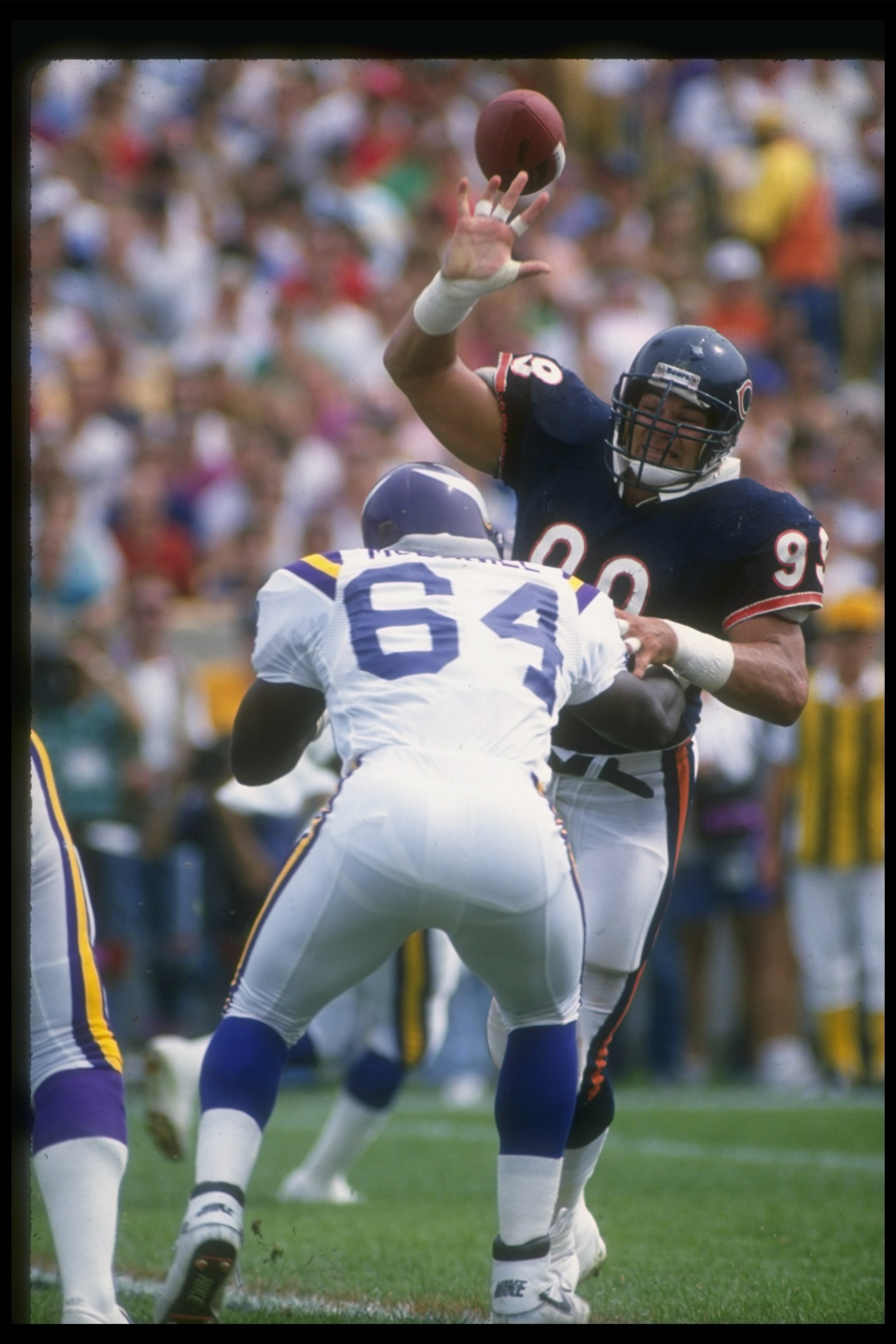
A couple of teams just missed making the top 10 and are worth mentioning.
The 1979 team, which was led by RB Walter Payton, managed to finish 10-6 despite three different starting quarterbacks (Vince Evans, Mike Phipps and Bob Avellini).
The 1984 team, which became the foundation of the Bears' success throughout the remainder of the decade, finished 10-6, losing to the San Francisco 49ers in the NFC Championship game.
10. 2010 Chicago Bears (11-5)
2 of 11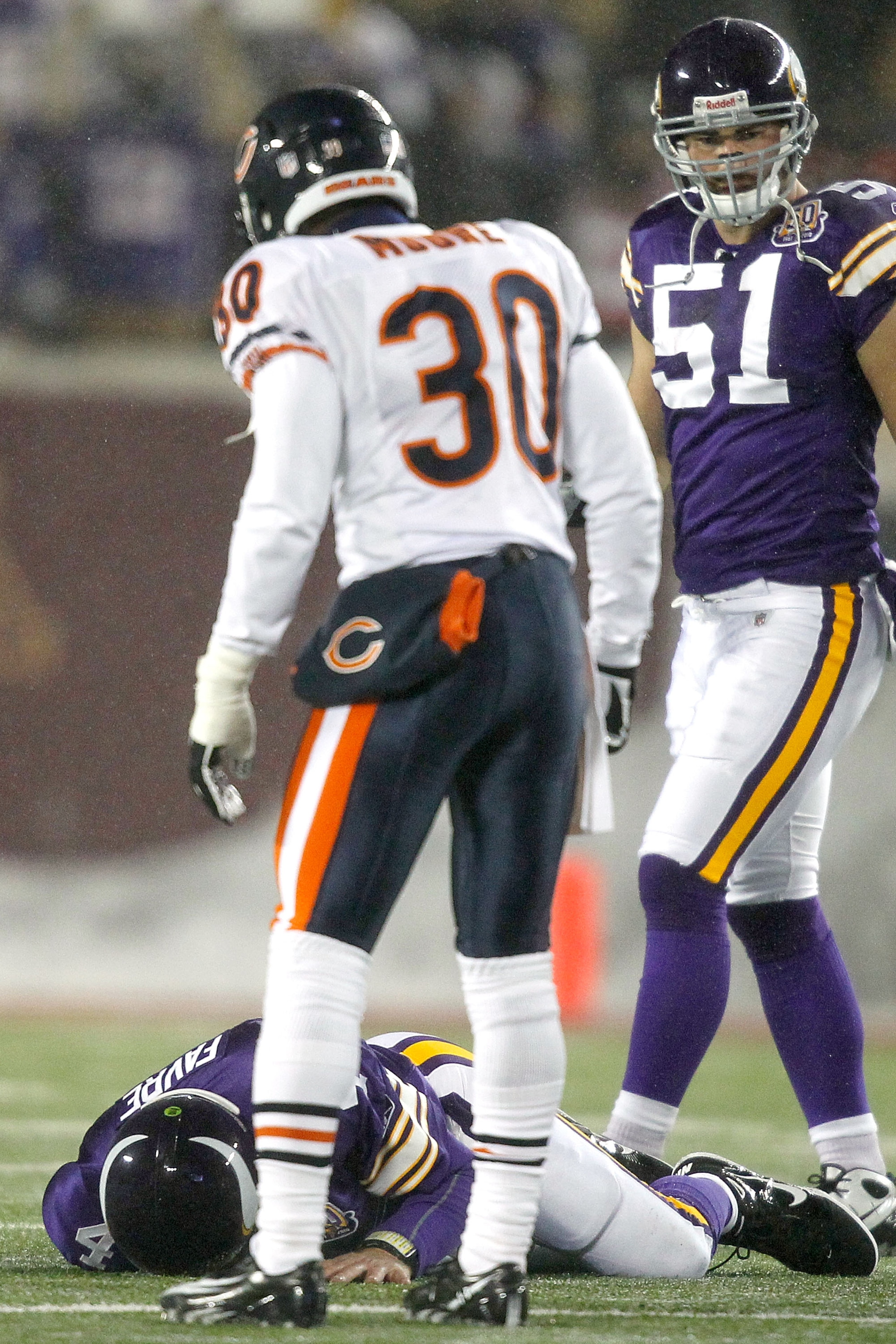
The 2010 Bears definitely provided a season that exceeded expectations. With experts being critical about the Bears failing to address the wide receiver position, making jokes of the coordinators selected and commenting on how the defense was getting old, it looked like another 7-9 season and possibly the end of the Lovie Smith era in Chicago.
The 2010 Bears are led by QB Jay Cutler, RB Matt Forte, LB Brian Urlacher, LB Lance Briggs and free-agent signing DE Julius Peppers. The Bears had the following highlights on their way to the NFC North crown:
• Cutler got on track following a rocky start, finishing the year with 3,274 yards passing and 23 touchdowns.
• Forte returned to his rookie season form, rushing for 1,069 yards and catching 51 balls for another 547 yards.
• WR Johnny Knox continued his progression towards being a top-line target with 51 catches for 960 and five touchdowns.
• Peppers and Israel Idonije kept the heat on quarterbacks with eight sacks each.
• Charles Tillman and Chris Harris had the secondary locked down as each had five interceptions.
• Devin Hester returned to form as he had four punt returns for touchdowns this season.
• Effectively ended Brett Farve's career on the University of Minnesota turf.
The Bears started the playoffs with a 35-24 win over the Seattle Seahawks. The Super Bowl dream ended with a hard-to-swallow 21-14 loss to Green Bay.
Simulation Record: 4-14
9. 1991 Chicago Bears (11-5)
3 of 11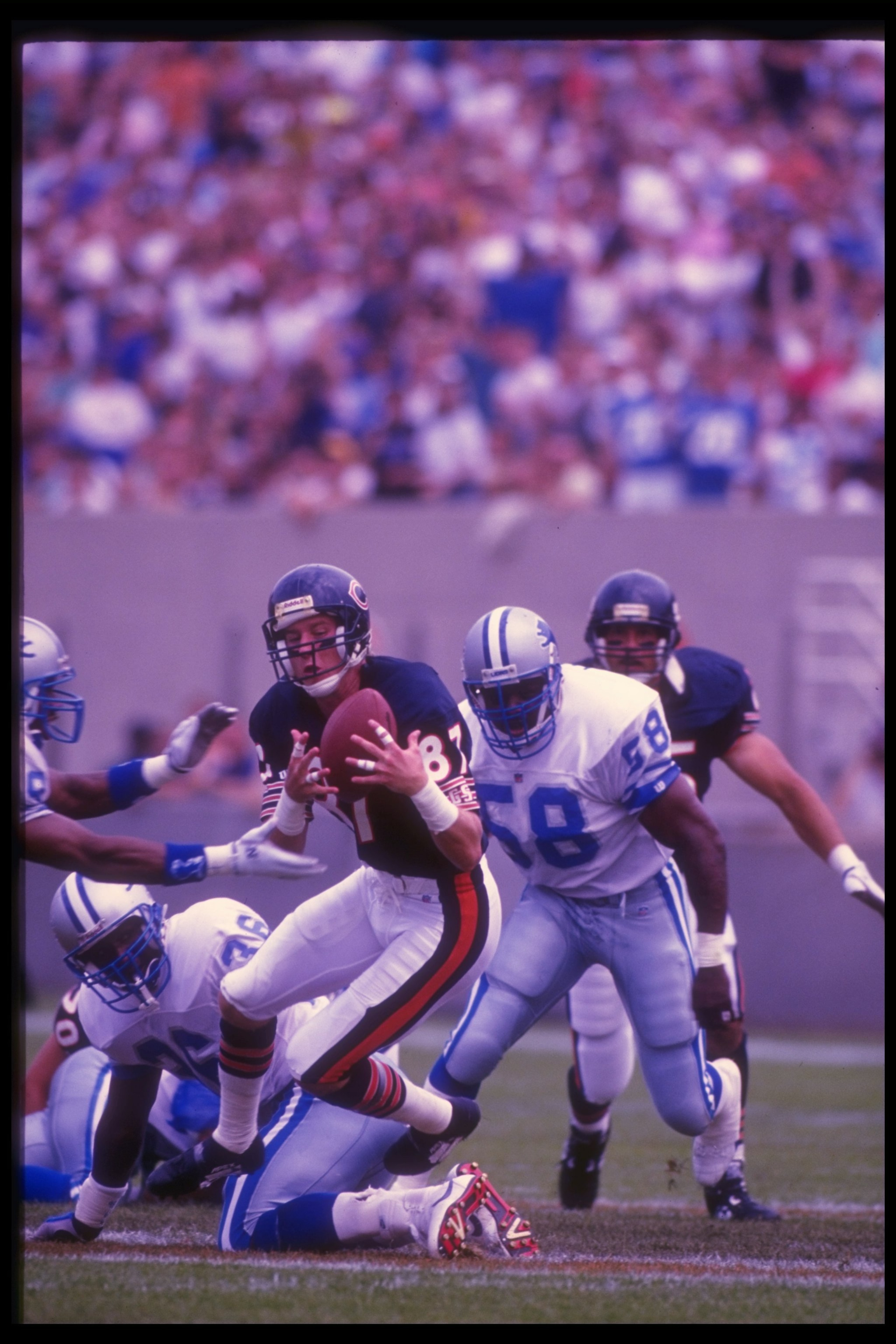
The 1991 squad posted a 11-5 record, finishing second in the NFC Central to the Detroit Lions. This squad had a chance to win the division going into the final week of the season. A win against Detroit would have clinched the division, but the Bears came out flat and lost 52-14 in one of their worst defeats under Mike Ditka. Unfortunately, the Bears' struggles continued in the playoffs as they lost to Dallas, 17-13.
The Bears had a significant change this season as Jim Harbaugh became the first Bears quarterback to start all 16 games in a season since Vince Evans in 1981. Neil Anderson made it to the Pro Bowl despite missing three games. Wendell Davis and Tom Waddle stepped up to led the Bears' receiving corps.
The defense continued to get solid defensive play as Richard Dent and Steve McMichael continued to spend ample time in the backfield and John Roper stepped up after a disappointing 1990 to record eight sacks. The following were team leaders in 1991:
• Harbaugh threw for 3,121 yards and 15 touchdowns.
• Anderson lead the team with 747 yards rushing and six touchdowns in 13 games. He continued to be a valuable resource in the passing game, adding 47 catches and 368 receiving yards.
• Davis led the team with 61 catches and 945 yards receiving.
• Richard Dent lead the team in sacks with 10.5 and added 84 tackles.
Simulation Record: 5-13
.jpg?w=2560 "Colts Football")
.jpg?w=2560)
.jpg?w=2560 "Commanders 49ers Football")
8. 1988 Chicago Bears (12-4)
4 of 11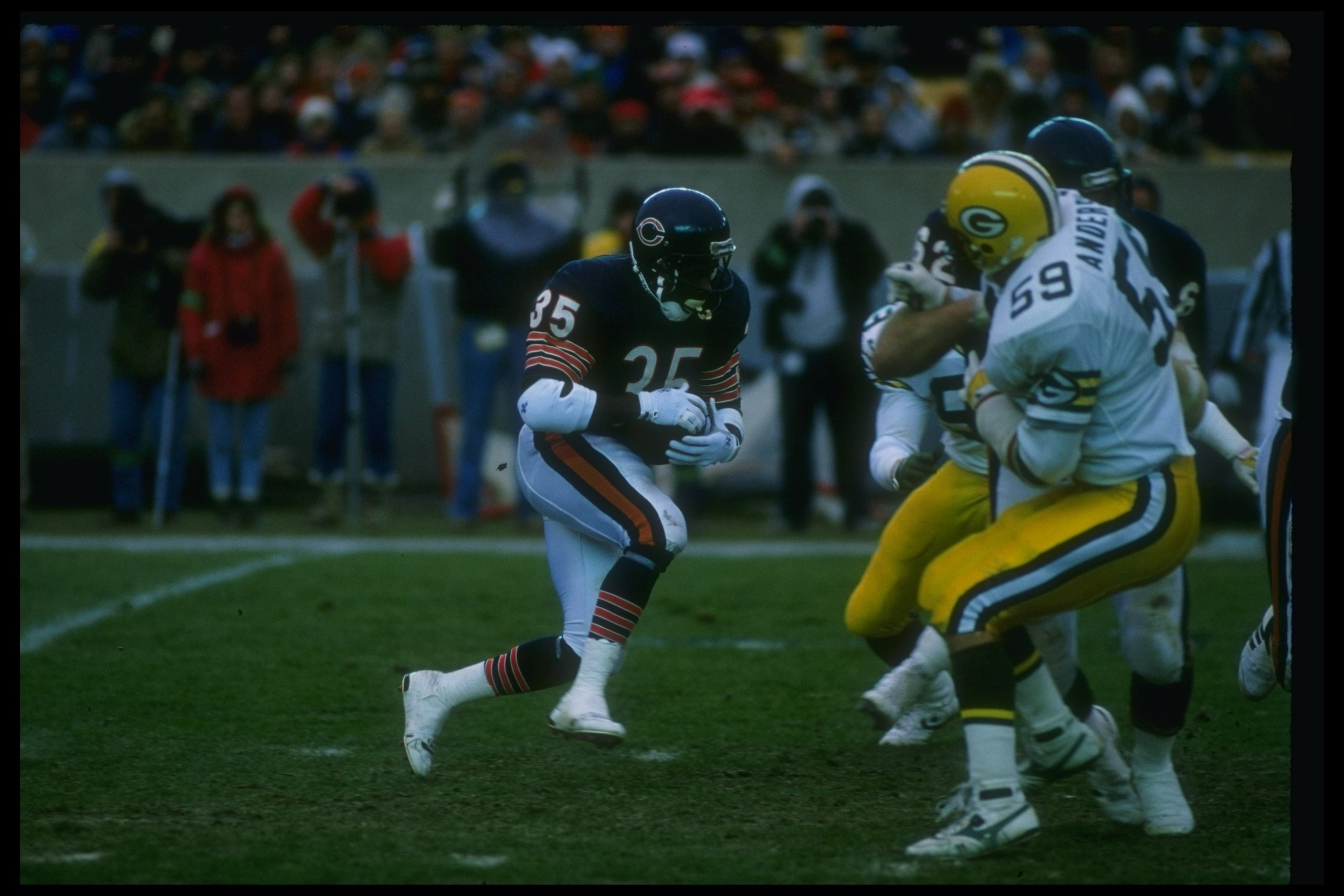
The 1988 season marked what would be the end of a run of success going back to 1984. The Bears posted a 12-4 record, winning the NFC Central for the fifth straight season. However, this season ended on a sour note as the 49ers routed the Bears, 28-3 in the Championship Game.
This team was successful despite continued problems at quarterback. For the second straight season, Jim McMahon missed playing time due to injury (this season succumbing to shoulder and knee problems). Neil Anderson cemented himself as the team's primary back as he stepped out of the large shadow of Walter Payton. With Willie Gault's departure to the Raiders, Dennis Gentry and Dennis McKinnon were thrust into leadership roles downfield and helped minimize the loss of the speedster.
The offense was not the only unit with significant injuries. The defense lost Shaun Gayle and William Perry among others during the season. However, as had been the case in recent seasons, players stepped up to fill the void. The following were team leaders in 1988:
• Jim McMahon only started nine games but led the team with 1,346 yards passing and six touchdowns.
• Anderson led the team with 1,106 yards rushing and 12 touchdowns. He also added 39 catches and 371 receiving yards.
• McKinnon led the team with 45 catches and 704 yards receiving.
• Dan Hampton (9.5 sacks), Steve McMichael (11.5 sacks) and Richard Dent (10.5) continued to be Monsters of the Midway, harassing quarterbacks throughout the season.
Simulation Record: 6-12
7. 2005 Chicago Bears (11-5)
5 of 11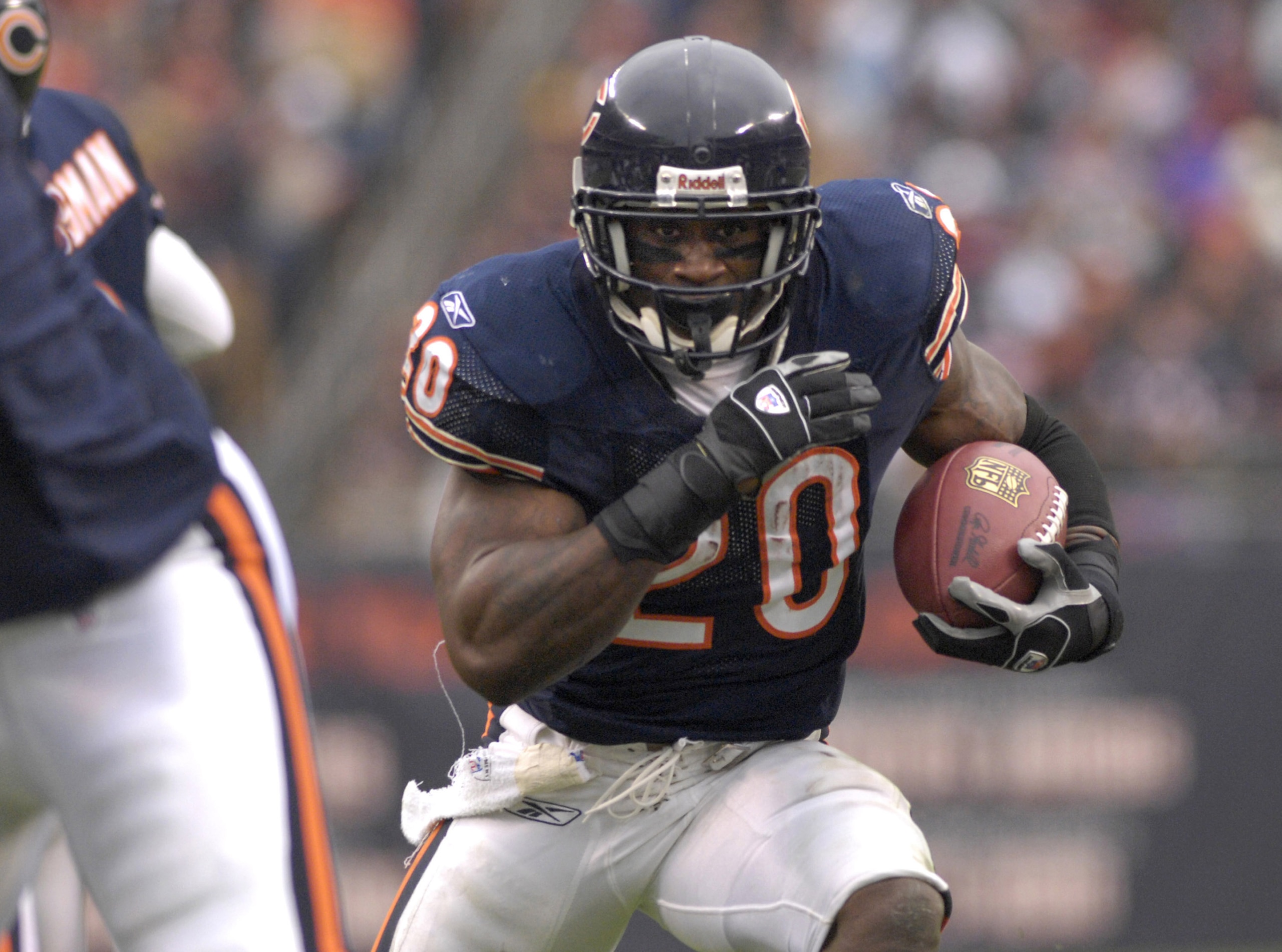
To say that the 2005 Bears were a surprise would be an understatement. Coming off a 5-11 season, there were not high expectations. In fact, Paul Zimmerman, a senior writer at Sports Illustrated, ranked the Bears last out of the 32 teams prior to the start of the season.
The Bears' luck with QB injuries continued as starter Rex Grossman was injured in the second pr-season game. While there was not to be a Kurt Warner fairy tale, it gave rookie Kyle Orton a chance to manage the team and lead them to a resurgence to past glory.
The offense leaned heavily on RB Thomas Jones, and he delivered with his first 1,000-yard season. Offseason signee Muhsin Muhammad took over the top spot in a receiving corps that was in desperate need of leadership.
Special teams were a bright spot as rookie kicker Robbie Gould started to cement his spot as probably the best Bears' kicker since Kevin Butler. Also, Nathan Vasher made one of the best plays in Bears' history as he had a 108-yard field goal return against the 49ers in one of the windiest games in recent Chicago history.
The following were team leaders in 2005:
• Orton started 15 games and passed for 1,869 yards with nine touchdowns.
• Jones led a bruising running game as he gained 1,335 yards and added nine touchdowns.
• Muhammad caught 64 passes for 750 yards and four touchdowns.
• Adawale Ogunelye led the defensive charge with 10 sacks.
• Nathan Vasher demonstrated Pro Bowl skills with eight interceptions in his second season.
Despite the pleasant regular season, the Bears stumbled in the playoffs, losing 29-21 to the Carolina Panthers in the Divisional round.
Simulation Record: 8-10
6. 1987 Chicago Bears (11-4)
6 of 11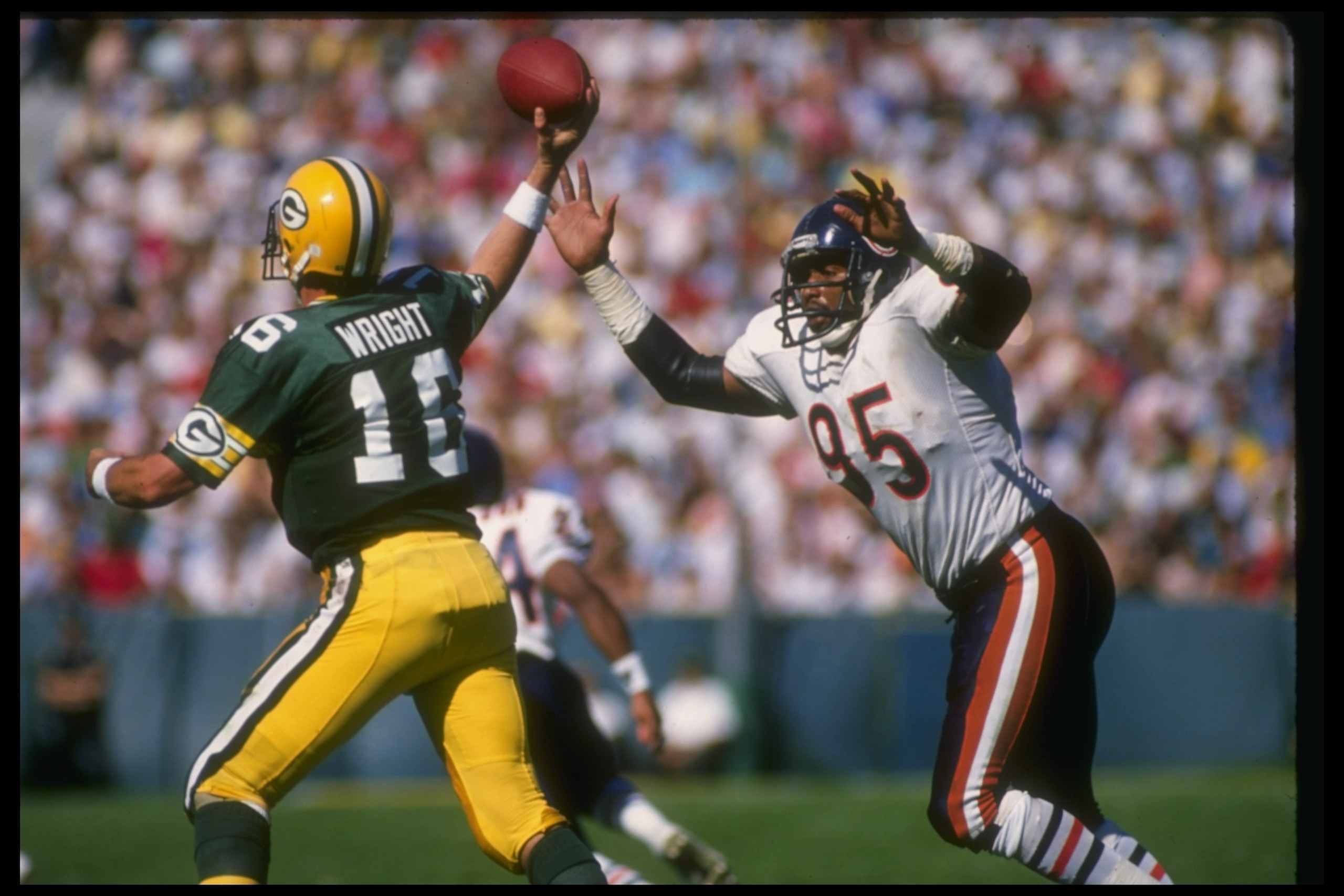
The club posted a 11-4 record in the strike-shortened season, winning two of the three games that the "Spare Bears" played. This was a season of sadness as Walter Payton and Gary Fencik, both long-term mainstays, retired. While the Bears were successful, this team did not gel as well as teams in the three previous seasons.
This team was successful despite not having true leadership on offense. Four different individuals started at quarterback due to the strike and injuries. Payton and Neil Anderson split the rushing duties, as it was clear that the torch had been passed. Injuries impacted the defense (with Dan Hampton and Otis Wilson, among others, missing significant time) but Richard Dent, Steve McMichael and Wilber Marshall kept reeking havoc on opposing quarterbacks. The following were team leaders in 1987:
• Jim McMahon only started seven games but led the team with 1,639 yards passing and 12 touchdowns.
• Anderson led the team with 586 yards rushing while Payton closed his career with 533 yards on the season.
• While only having 35 catches, WR Willie Gault led the team with 705 yards receiving and seven touchdown catches.
• Dent showed why he is a Hall of Fame finalist with 12.5 sacks in just 12 games.
The season came to a heartbreaking end with a 21-17 loss to the Washington Redskins.
Simulation Record: 9-9
5. 2001 Chicago Bears (13-3)
7 of 11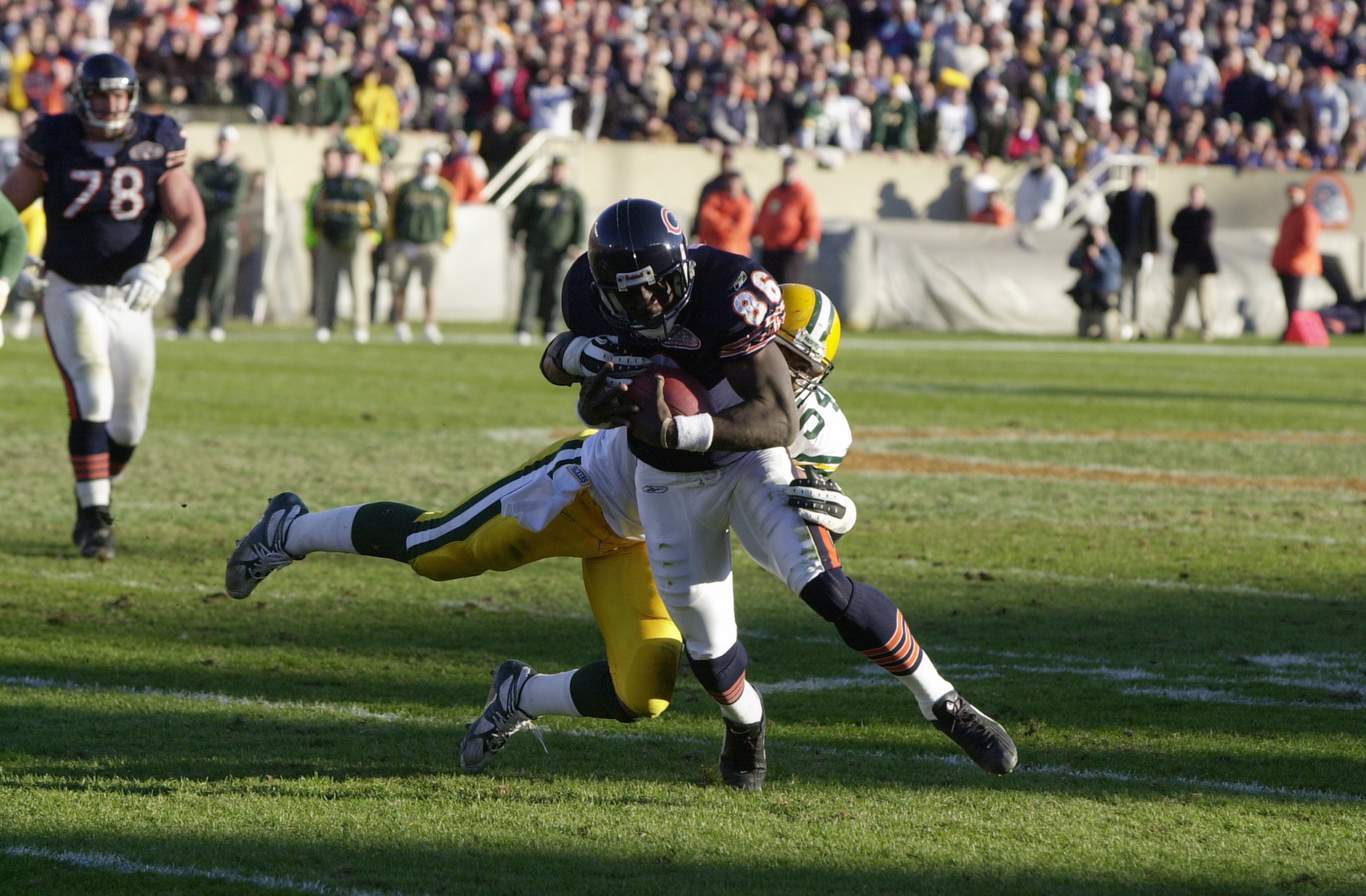
What do Shane Matthews, James Allen and Marcus Robinson have in common? They were offensive starters at the start of the season who lost their starting positions as things moved forward. Matthews and Robinson were lost early to injury and Allen was injured and ineffective during the year.
Their replacements, Jim Miller, Anthony Thomas and Marty Booker, all stepped up and made fans forget about the trio who were the original starters. In fact, these replacements were key in the 2001 Bears going 13-3 and winning the NFC Central title.
This season had back-to-back games that will stick in the mind of Bears fans for some time. The Bears rallied from down 15 points in the fourth quarter to force overtime against the San Francisco 49ers. On the 49ers' first play of overtime, Mike Brown intercepted a pass and ran 33 yards for the winning score.
The following week, the Bears were down by 14 with less than a minute to go in the fourth quarter against the Cleveland Browns, but Shane Matthews threw two touchdowns to force overtime. Then on the Browns' first possession of overtime, Bryan Robinson batted a pass up in the air and Mike Brown, for the second week in the row, ran the interception back for a game-ending score.
The following were team leaders in 2001:
• Miller started 13 games and passed for 2,299 yards with 13 touchdowns.
• Thomas stepped up as he took over the starting role and gained 1,183 yards and added seven touchdowns.
• Booker caught 100 passes for 1,071 yards and eight touchdowns.
• Roosevelt Colvin led the defensive effort with 10.5 sacks.
Despite the successful regular season, the Bears again tumbled in the playoffs, losing 33-19 to the Philadelphia Eagles.
Simulation Record: 10-8
4. 2006 Chicago Bears (13-3)
8 of 11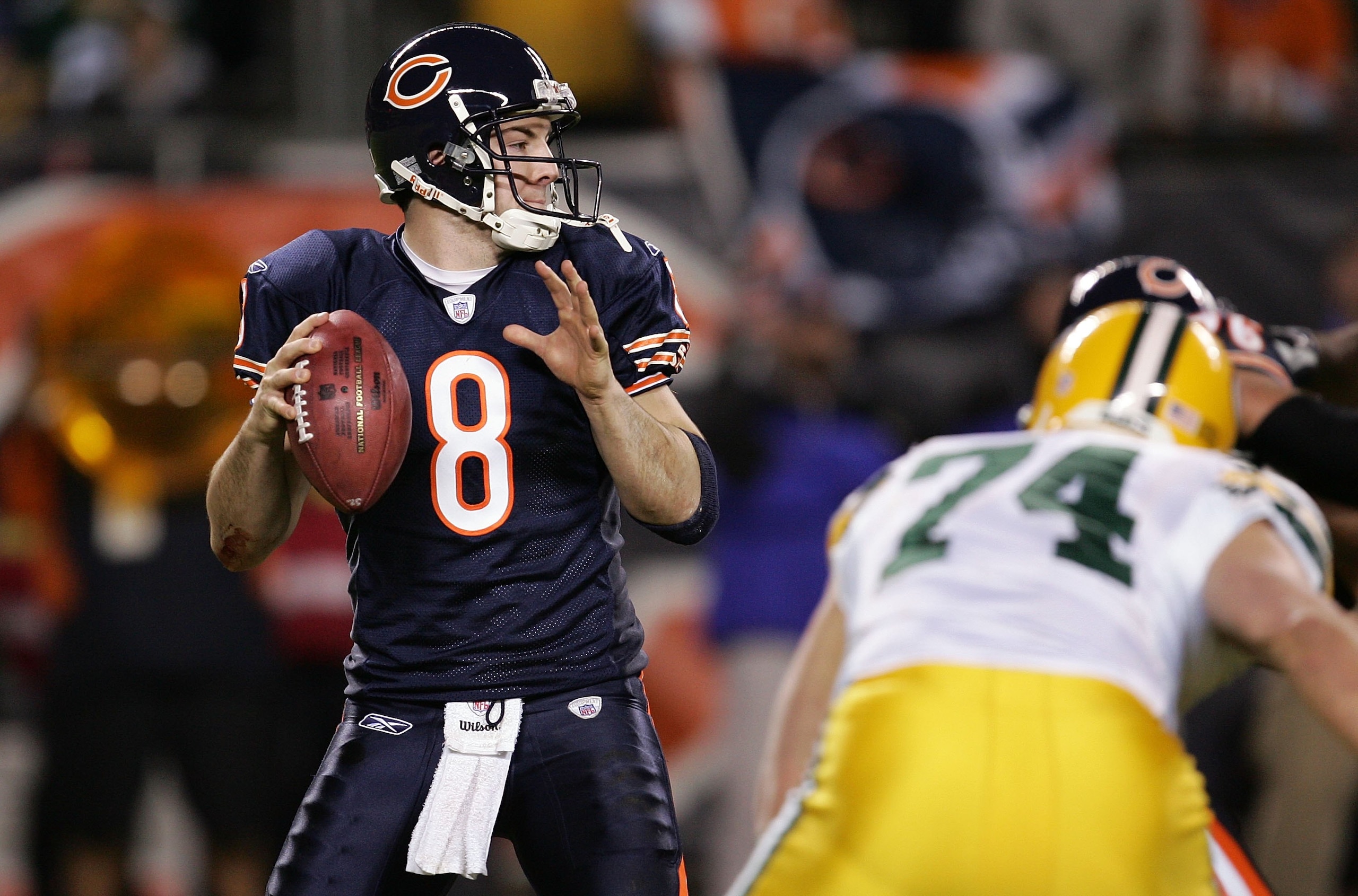
Looking back one can say that the Bears' 2006 success was built upon the efforts of the 2005 season. However, there wasn't optimism in training camp and the preseason as holdouts (Cedric Benson and Lance Briggs) and ineffective play made the Bears wondering if they were going in the right direction.
The fanbase had also become somewhat skeptical due to a lack of consistency in recent seasons. In fact, by finishing 13-3 and winning the NFC North, the Bears won back-to-back division titles for the first time since 1988.
The season was one that will not be forgotten anytime soon. There were weekly conversations about Good Rex and Bad Rex, as Grossman had games where he looked like an All-Pro and others where his QB rating was below 20.0.
Against the Arizona Cardinals, the Bears were down 20-0 at the half, but rallied to win 24-23 without scoring an offensive touchdown (two fumble returns and a punt return for touchdown accounted for the bulk of the scoring).
The season saw the blossoming of several players as Devin Hester (1,128 return yards and five touchdowns), Bernard Berrian (51 catches for 775 yards) and Cedric Benson (647 rushing yards and six touchdowns) became major contributors on the Super-Bowl bound Bears.
The following were team leaders in 2006:
• Grossman passed for 3,193 yards and 23 touchdowns. However, he also threw 20 interceptions.
• Jones led a bruising running game as he had 1,210 yards and six touchdowns.
• Muhammad caught 60 passes for 863 yards and four touchdowns.
• Rookie backup defensive lineman Mark Anderson made his mark on the Bears as he recorded 12 sacks.
The Bears struggled in their first playoff game, but prevailed 27-24 in overtime over the Seattle Seahawks. In the NFC title game, Chicago broke open a close game with 23 unanswered points to win 34-19 over the New Orleans Saints.
Devin Hester made his mark on the Super Bowl as he ran the opening kickoff back 92 yards to help the Bears take an early lead, but it was not enough as the Bears' dream of a Super Bowl title was dashed by Peyton Manning and the Indianapolis Colts, 29-17.
Simulation Record: 10-8
3. 1990 Chicago Bears (11-5)
9 of 11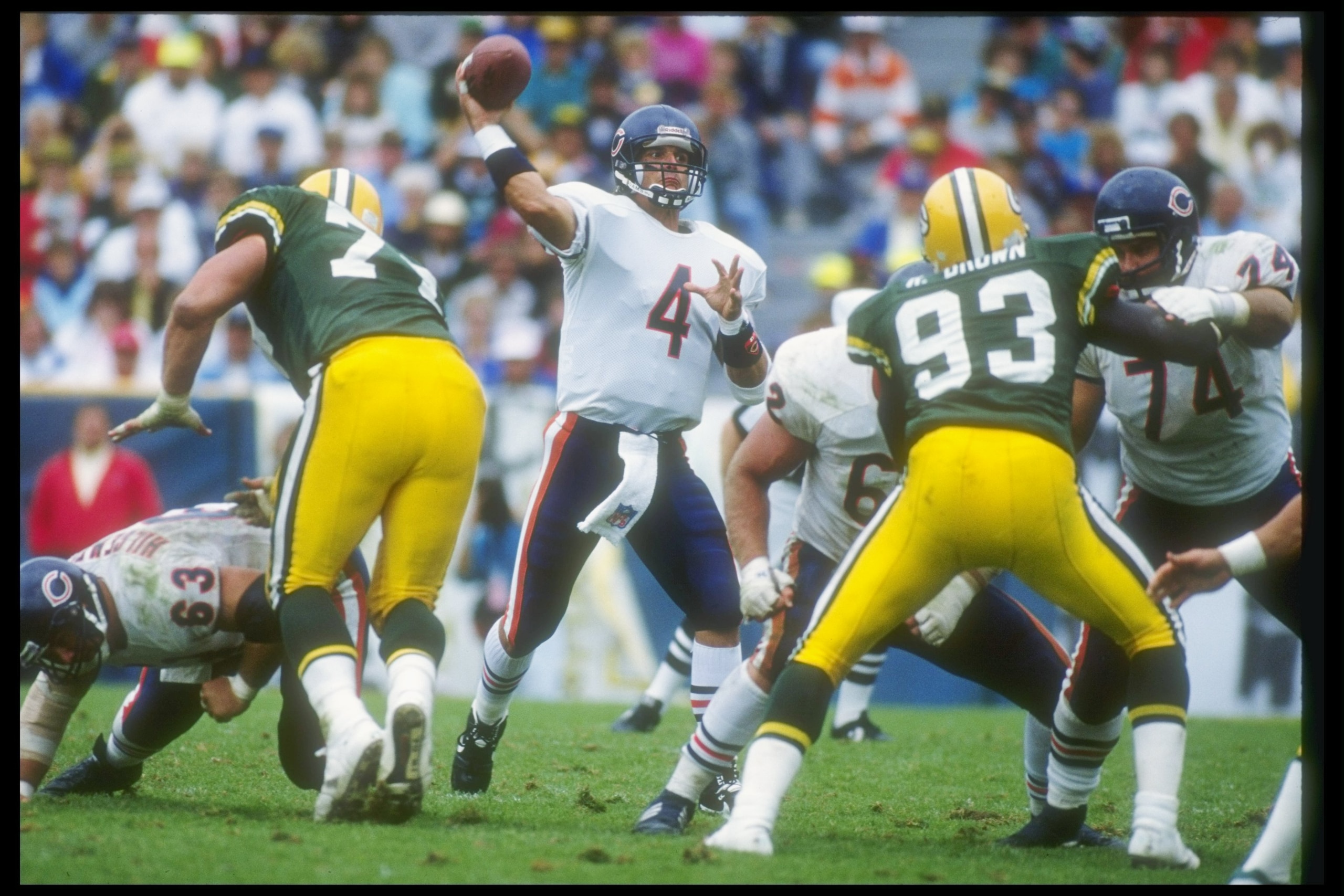
The 1990 squad posted a 11-5 record, winning the NFC Central for the sixth time in seven seasons. This team came into the season facing questions that had not been raised about the Bears in quite some time. The Bears' defense. which had dominated during most of the decade, had fallen to 25th overall in 1989. In fact, coming off a 6-10 season in 1989, many predicted the Bears to finish last in their division.
Injuries hindered the Bears again as Jim Harbaugh missed two games during the season. Neil Anderson made another Pro-Bowl appearance as he continued to spearhead an effective running game. The receiving corps was also was led by the backfield as FB Brad Muster and Anderson were team leaders in receptions. With the addition of Mark Carrier, the Bears started to move back up the defense charts.
The following were team leaders in 1990:
• Harbaugh threw for 2,178 yards and 10 touchdowns.
• Anderson led the team with 1,078 yards rushing and 10 touchdowns in 15 games. He also chipped in 42 catches and 484 receiving yards, which were both good for second on the team.
• Muster led the team with 47 catches while WR Wendell Davis led with 572 yards.
• Richard Dent led the team in sacks with 12 and added 81 tackles. Safeties Shaun Gayle and Mark Carrier were the leading tacklers with 125 and 122 respectively.
Chicago defeated the Saints 16-6 in the Wild Card round, but then lost to 31-3 to the eventual Super Bowl champion New York Giants.
Simulation Record: 10-8
2. 1986 Chicago Bears (14-2)
10 of 11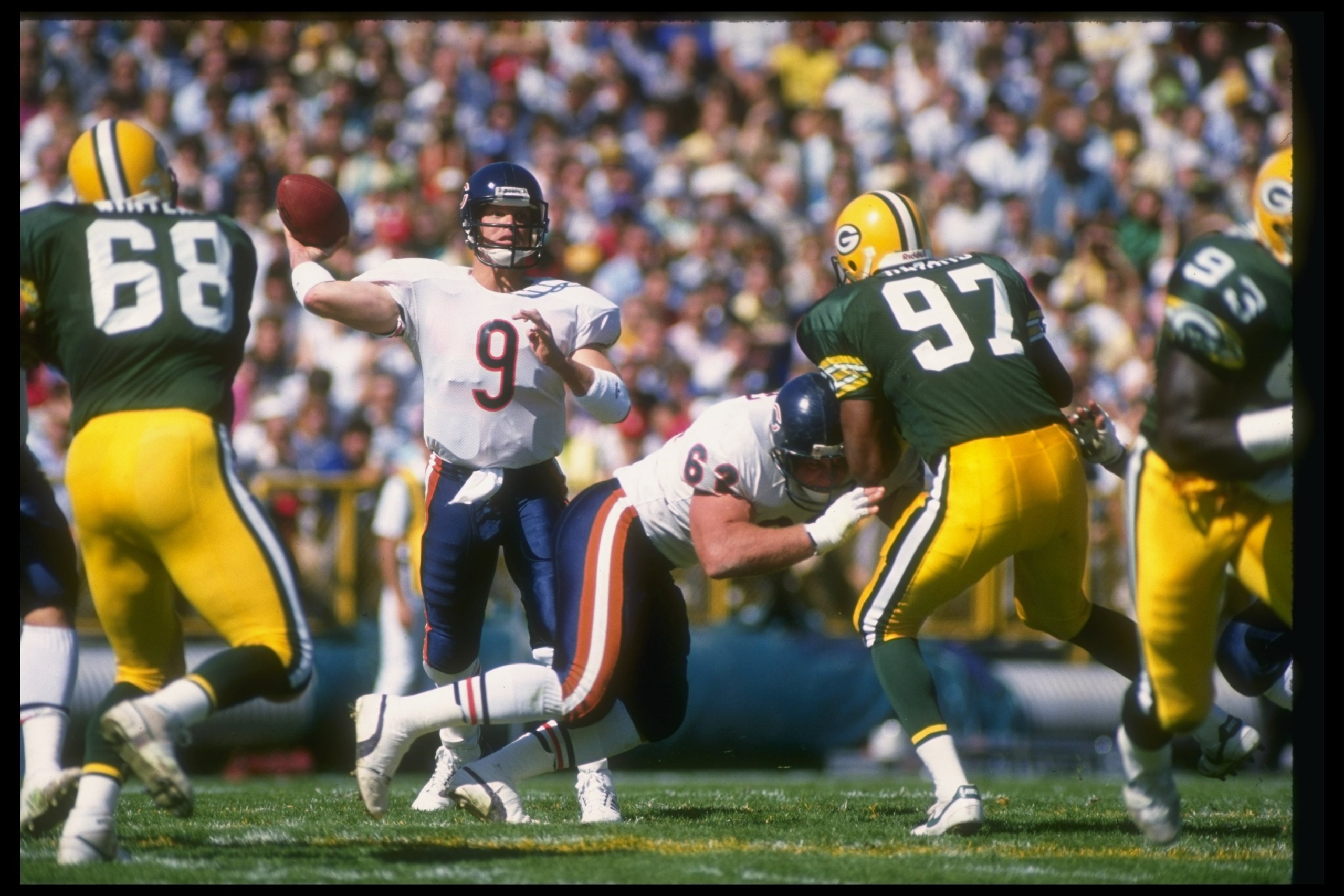
Expectations were very lofty for the 1986 Bears, and it appeared as the season started that they were going to be met. The Bears started the year 6-0 before dropping two of their next three games. However, the team was able to get back on track, despite having a season of revolving quarterbacks, to finish the regular season 14-2.
Injuries hindered the Bears again as four different players took snaps for the Bears this season (Jim McMahon, Steve Fuller, Mike Tomczak and Doug Flutie). With the struggles in the backfield, the receiving corps suffered with only Willie Gault and Walter Payton grabbing more than 35 catches.
Defensive stalwarts Richard Dent, Otis Wilson and Mike Singletary missed time, but the Bears defense continued to dominate opponents, as it set an NFL record for fewest points allowed in a 16-game season.
The following were team leaders in 1986:
• Tomczak was the passing leader for the Bears with 1,105 yards for two touchdowns and 10 interceptions. McMahon led the team with five touchdowns in only six games.
• Payton turned in the final 1,000-yard season of his career with 1,333 yards. Additionally, he added 37 catches for 382 yards.
• Gault led the team with 42 catches and 818 yards receiving.
• Dent led the team for the third straight season with 11.5 sacks. Wilber Marshall was a tackling machine with 105 tackles.
The season came to disappointing end as the Bears, led by Doug Flutie, lost 27-13 to the Washington Redskins.
Simulation Record: 13-5
1. 1985 Chicago Bears (15-1)
11 of 11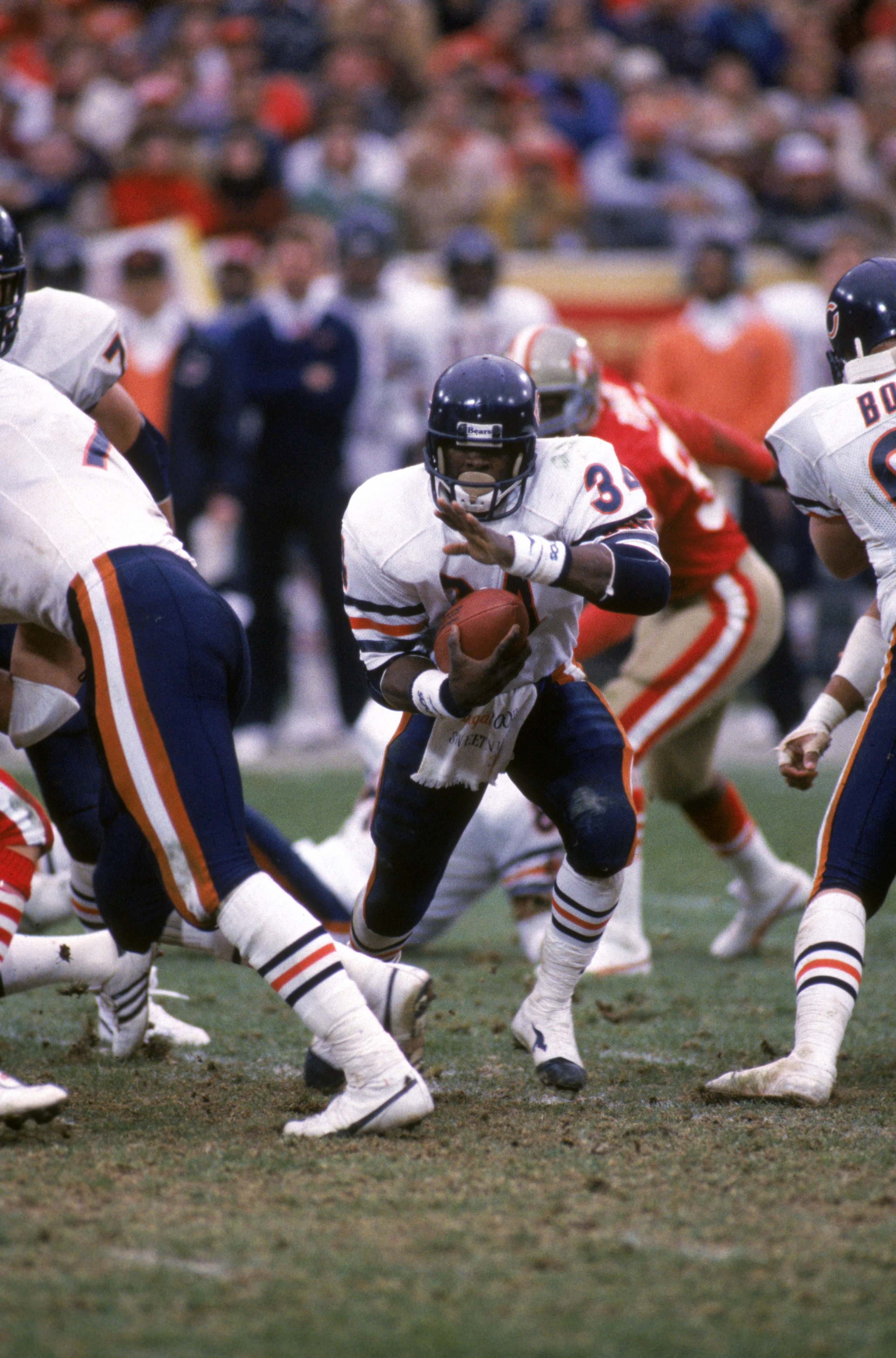
Three words sum up the season: Super Bowl Champions. The 1985 team was able to take the next step forward and get past the hurdles that had stopped them the season before. The Bears went 15-1 in the regular season, with a lone blemish coming against the Miami Dolphins, 38-24. Their dominating playoff performance gave fans something that is still talked about 25 years later.
This team of Grabowskis, as Coach Ditka called them because of their blue-collar image, were an image of their coach and their defensive coordinator Buddy Ryan. While the games may not have been pretty, they were impressive. This was the case from November 3-24, when Chicago outscored Detroit, Dallas and Atlanta by a combined score of 104-3.
The season saw the emergence of William "The Refrigerator" Perry, as he rumbled into the end zone and the hearts of Bears fans. There were memorable performances, such as an injured Jim McMahon coming off the bench to lead the Bears to three scores in a comeback against the Vikings. The season had a defense that can be viewed as one of the best of all time, a running back that was the franchise and role players who stepped up at the right time when needed for this piece of history.
The following were team leaders in 1985:
• McMahon threw for 2,392 yards and 15 touchdowns in 13 games.
• Payton had his best season since 1979 and gained 1,551 yards with nine touchdowns.
• Payton led the team with 49 catches while WR Willie Gault led with 704 yards.
• Richard Dent lead the team in sacks with 17.
The Bears had a playoff run that was completely dominating. They beat the New York Giants, 21-0, the Los Angeles Rams, 24-0 and the New England Patriots, 46-10 to wrap up what could be said was the best season in league history.
Simulation Record: 15-3
.jpg?w=2560 "Ravens Browns Football")
.jpg?w=2560 "DOLPHINS-AIKMAN")

_0.png?w=2560 "Unranked Teams Cause Chaos in Rankings 📊")
.png?w=2560 "Week 8 Winners & Losers 📊")





