
NFL Power Rankings: The Greatest All-Time Running Backs for Every NFL Team
NFL power rankings usually only deal with the current state of the NFL. But they can also be applied to team histories.
A great running back can change the course of a team's fortunes. Look what Darren McFadden did in Oakland, Peyton Hillis in Cleveland or Jamaal Charles in Kansas City.
But to become an legend for one particular team it takes several years of greatness.
And while some franchises have been fortunate to have a history of talented ball-carriers, others have struggled for years to find one.
Perhaps that's just the luck of the draw.
Inside we'll make the case for the top backs in the history of each franchise.
New England Patriots: Curtis Martin
1 of 32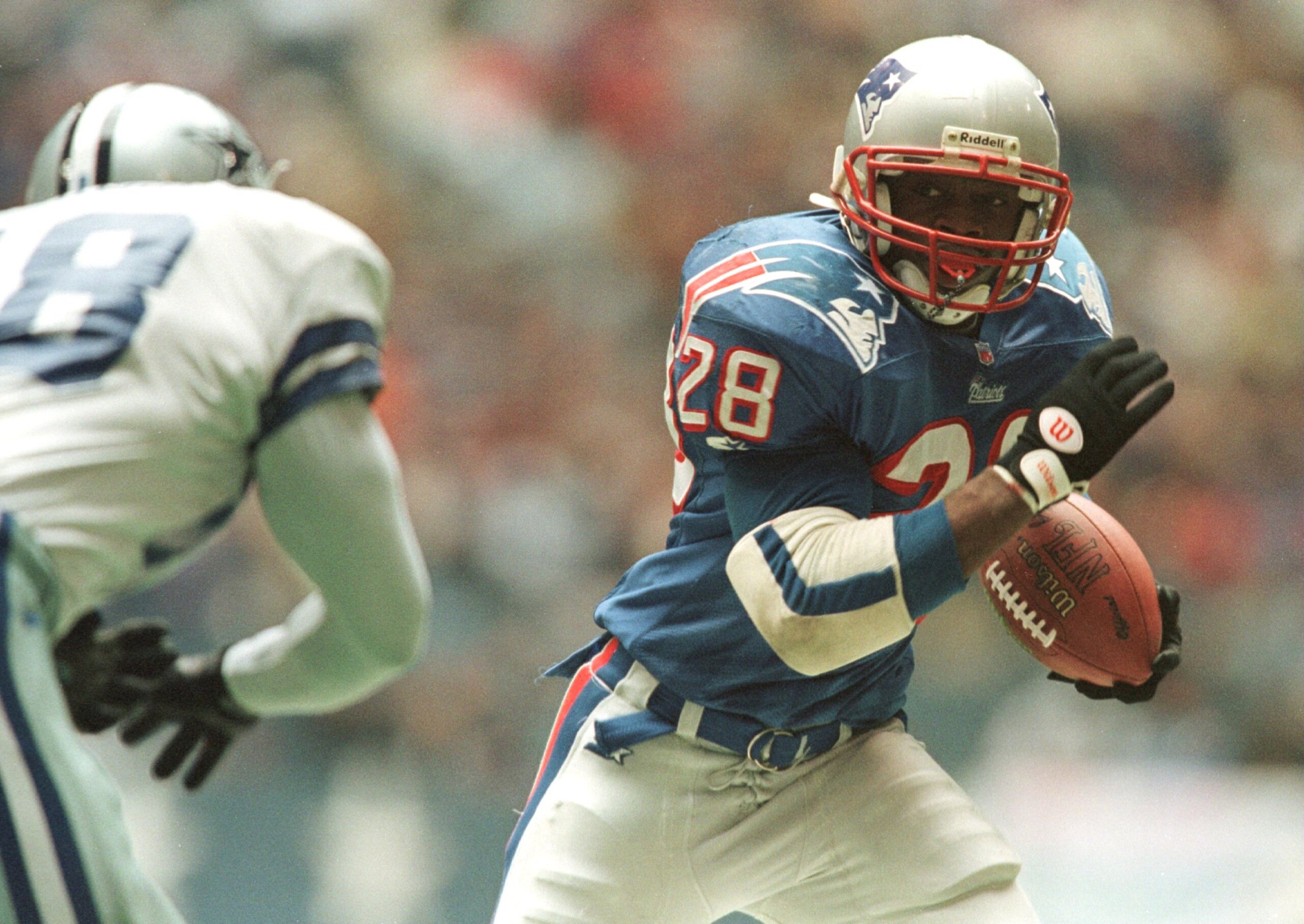
Stats: 958 carries, 3,799 yards, 32 rushing touchdowns
Awards: 2 Pro Bowls, Rookie of the Year, 1 Conference Championship
Seasons: 1995-97
Runner-Up: Sam Cunningham
Martin's career in New England was brief. But it was still the best in franchise history.
As a rookie he was the leading rusher in the AFC and set a franchise record with 1,487 yards.
A year later, he was the key contributor on a team that won the AFC Championship, scoring five touchdowns in their run to the the Super Bowl. In all, he scored eight touchdowns in just five playoff games in New England.
And although he was only there for three years, he is the only man in Patriots history to post three 1,000 yard seasons.
New York Jets: Curtis Martin
2 of 32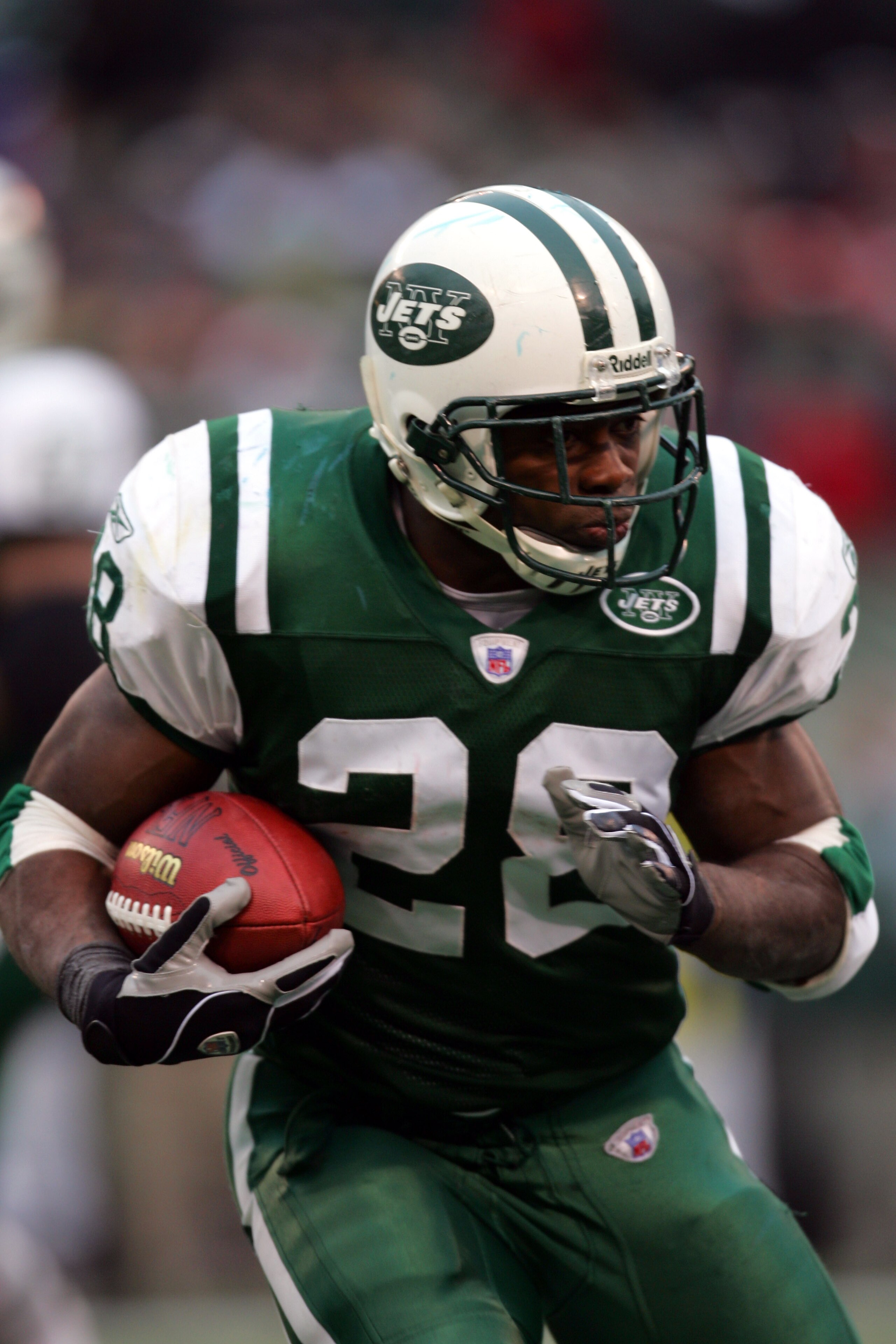
Stats: 2,560 carries, 10,302 yards, 58 rushing touchdowns
Awards: 3 Pro Bowls, 2 All-Pro selections, 1 NFL rushing title
Seasons: 1998-2005
Runner-Up: Freeman McNeil
As good as Martin was in New England, he was better with the Jets. In 1998, he followed Bill Parcells to East Rutherford and again made an immediate impact. The Jets came within a game of reaching the Super Bowl that year.
Martin spent seven more seasons in a Jets uniform and became the franchises all time leading rusher.
And in 2004 (considering he was a 10-year veteran and age 31) he had one of the greatest single season's ever by a running back, leading the NFL in both carries and yards.
In six of his eight years as a Jet, he rushed for 1,200-plus yards: no other Jets player ever achieved that feat more than once.
Miami Dolphins: Larry Csonka
3 of 32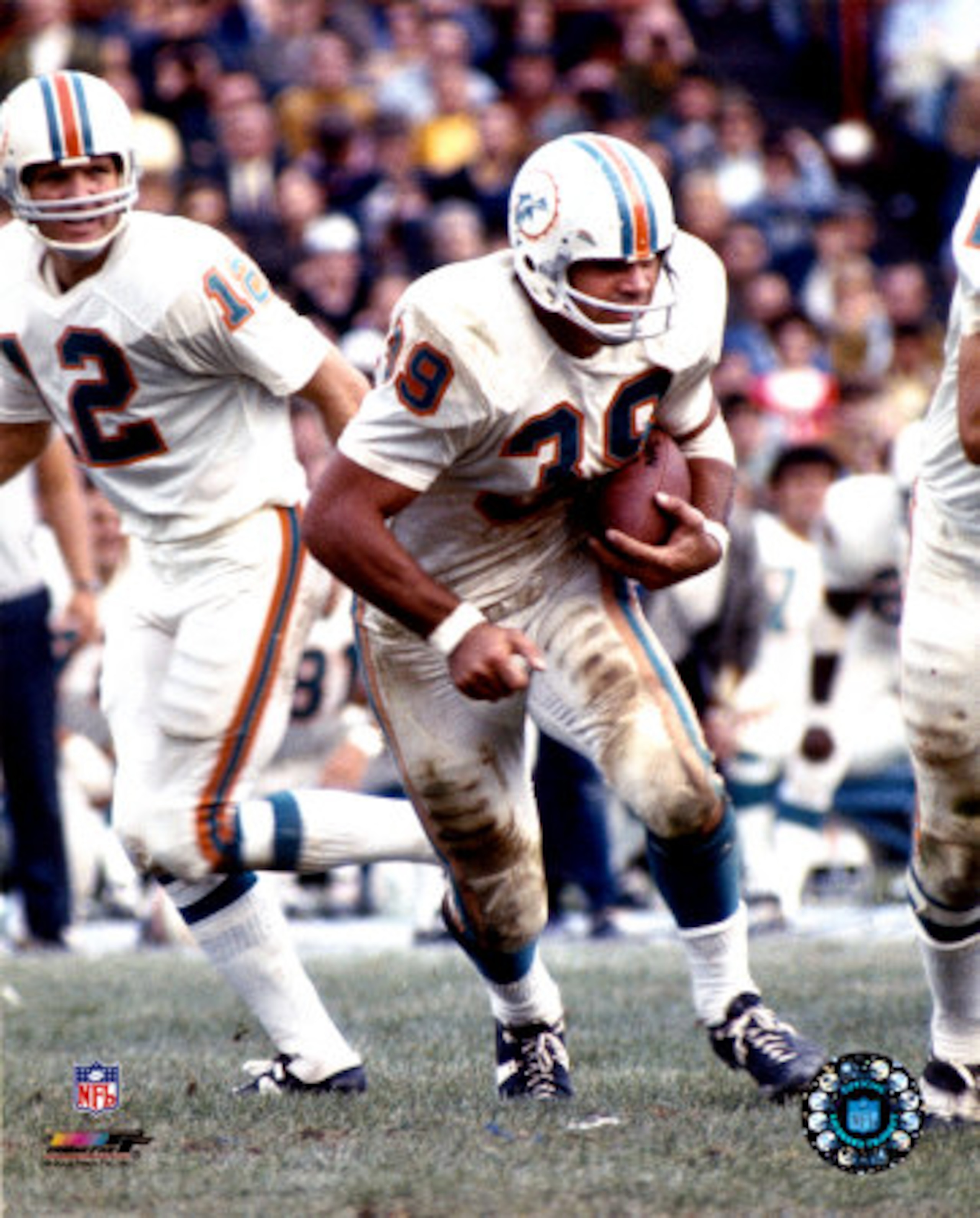
Stats: 1,506 carries, 6,737 yards, 53 rushing touchdowns
Awards: 5 Pro Bowls, 2 Super Bowl wins, 1 Super Bowl MVP
Seasons: 1968-74, '79
Runner-Up: Ricky Williams
During the Dolphins greatest days, Csonka was their greatest player.
Apart from being the all-time leading rusher, he led the club in rushing five straight seasons. And although he never rushed for more than 1,117 yards in a single season, he was at his best in the postseason.
He rushed for 112 yards in Super Bowl VII when the team capped off their perfect season in 1972, and then set a record a year later, carrying the ball 34 times for 145 yards and two touchdowns as the Dolphins repeated as World Champions in 1973.
Despite his antics and the headaches he's caused the franchise, Ricky Williams does make a good case for the best back in team history: That first season in Miami, he led the NFL in yards (1,853) and carries, and his three 1,000 yard seasons are as many as Csonka totaled.
.jpg?w=2560 "Cardinals Giants Football")
.jpg?w=2560 "Titans Giants Football")
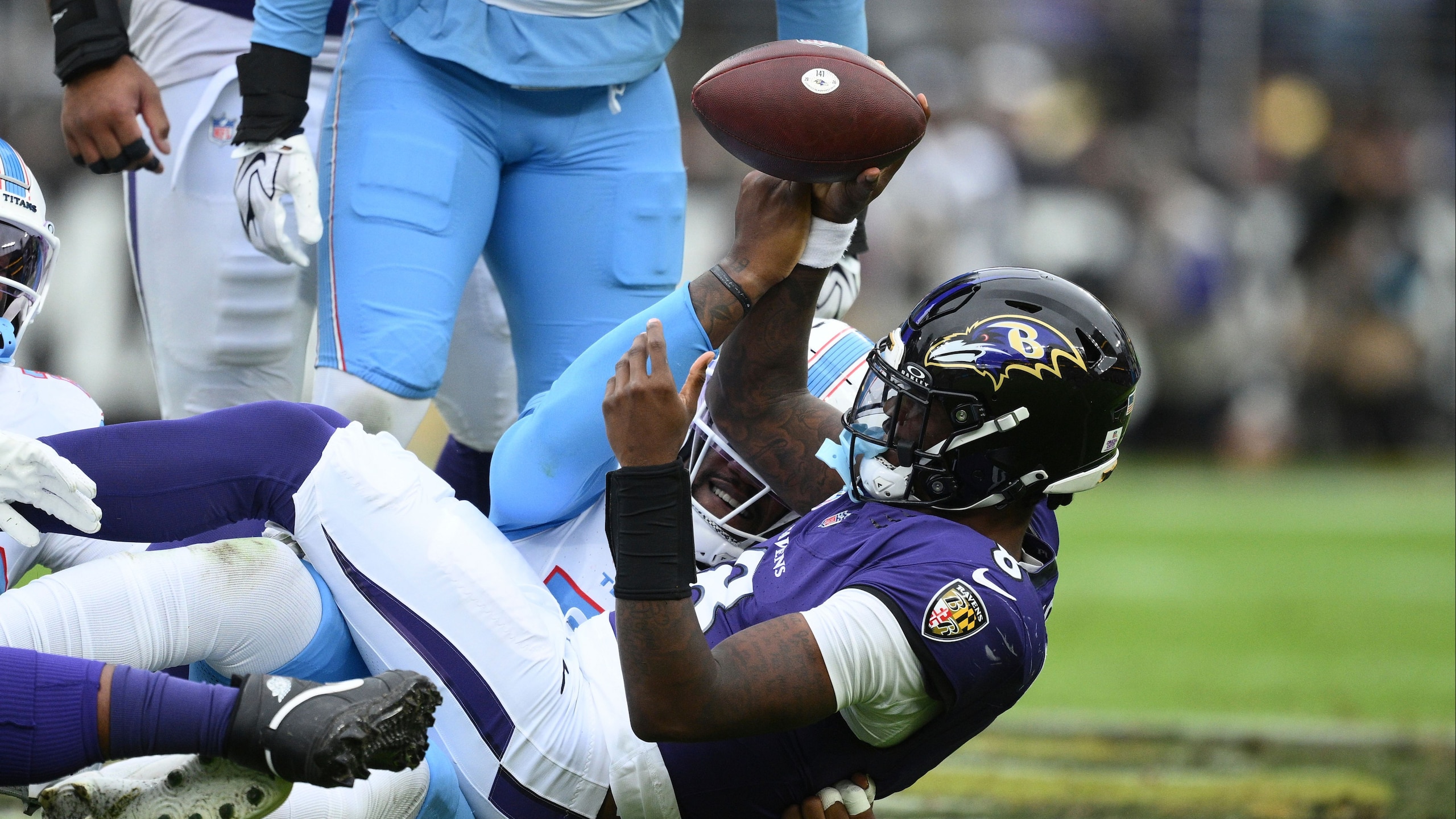
Buffalo Bills: Thurman Thomas
4 of 32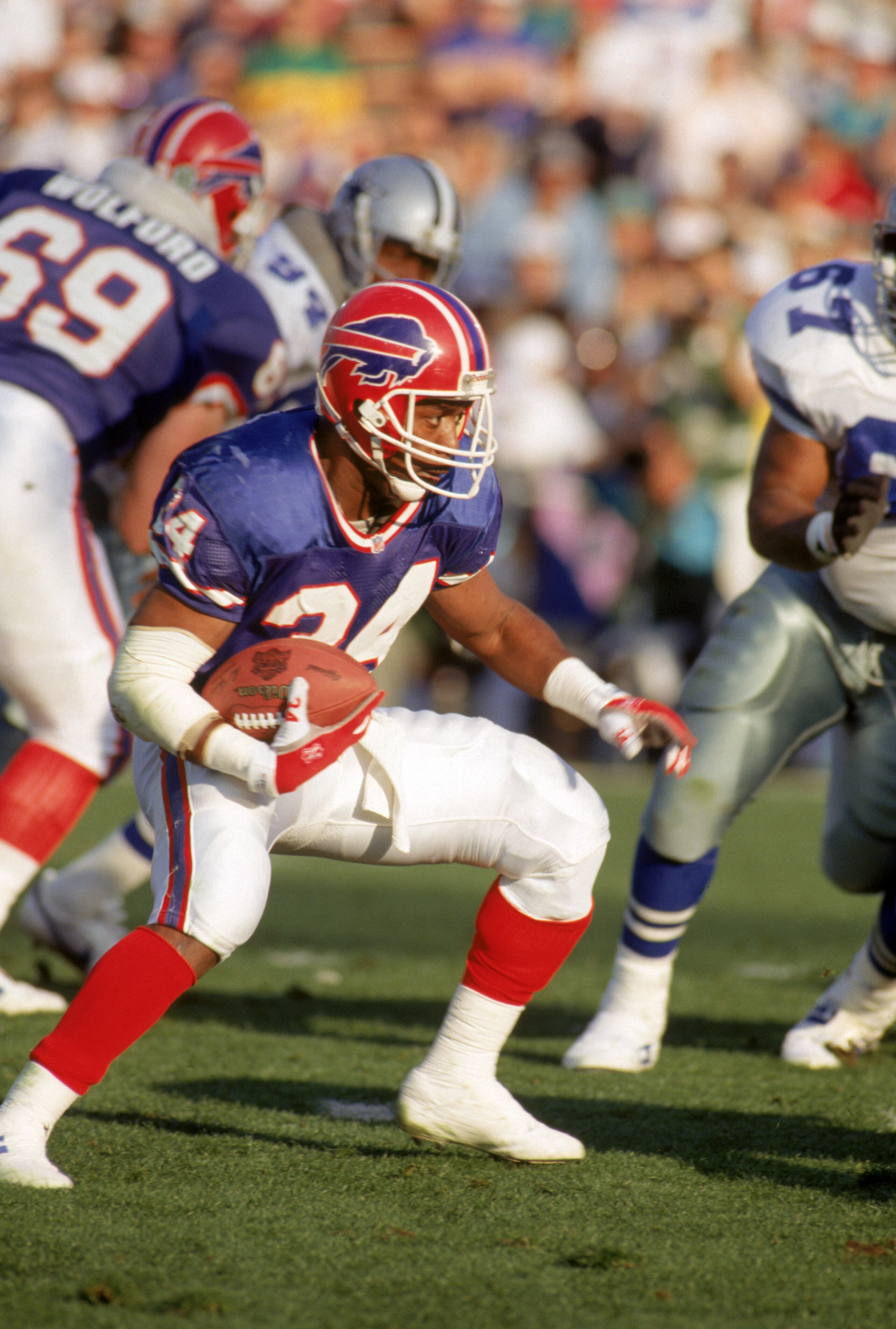
Stats: 2,849 carries, 11,938 yards, 65 rushing touchdowns
Awards: 5 Pro Bowls, 3 All-Pro selections, 4 Conference Championships, 1 MVP
Seasons: 1988-99
Runner-Up: O.J. Simpson
This is probably the closest debate on the entire list. Simpson was certainly one of the most dynamic runners in NFL history, and his 1973 season is among the greatest ever.
But Thomas was the key player on the Bills dynasty that reached four consecutive Super Bowls.
From the moment he arrived in Buffalo, the Bills were a Super Bowl contender, and his versatility as a runner and receiver was unparalleled in his day.
The case can be made for either back, but Thomas gets the nod...just barely.
Pittsburgh Steelers: Jerome Bettis
5 of 32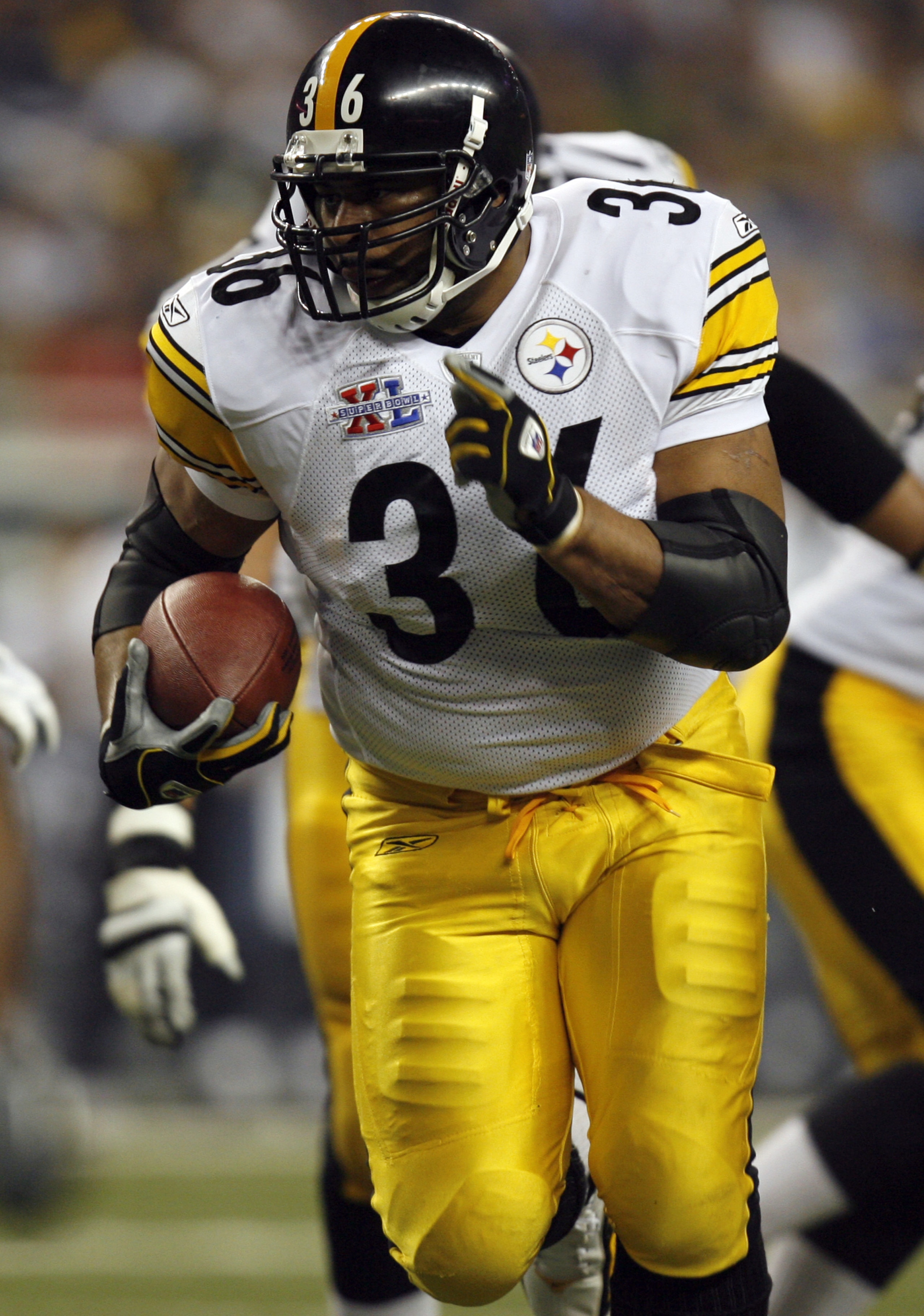
Stats: 2,683 carries, 10,571 yards, 78 rushing touchdowns
Awards: 4 Pro Bowls, 1 All-Pro selection, 1 Super Bowl championship
Seasons: 1996-2005
Runner-Up: Franco Harris
Much like the Buffalo Bills debate, there is a generational debate here. Franco Harris was an icon with the 1970s Steeler dynasty and a tremendous weapon, especially on the mid-1970s team that won consecutive Super Bowls.
But Bettis was the face of that franchise for the better part of the decade and achieved so much with such little offensive talent around him. During his best days, 1996-2000, his quarterbacks were Mike Tomczak, Jim Miller, Kordell Stewart and Kent Graham. Franco had Terry Bradshaw, two Hall of Fame wide receivers and arguably the greatest defense in NFL history.
Again, the case can be made for both men, but we'll make the deciding factor this: who had the better farewell?
Harris left Pittsburgh to spend half a season with the miserable Seattle Seahawks and then retired.
Bettis won a Super Bowl in his hometown.
Edge: Bettis.
Baltimore Ravens: Jamal Lewis
6 of 32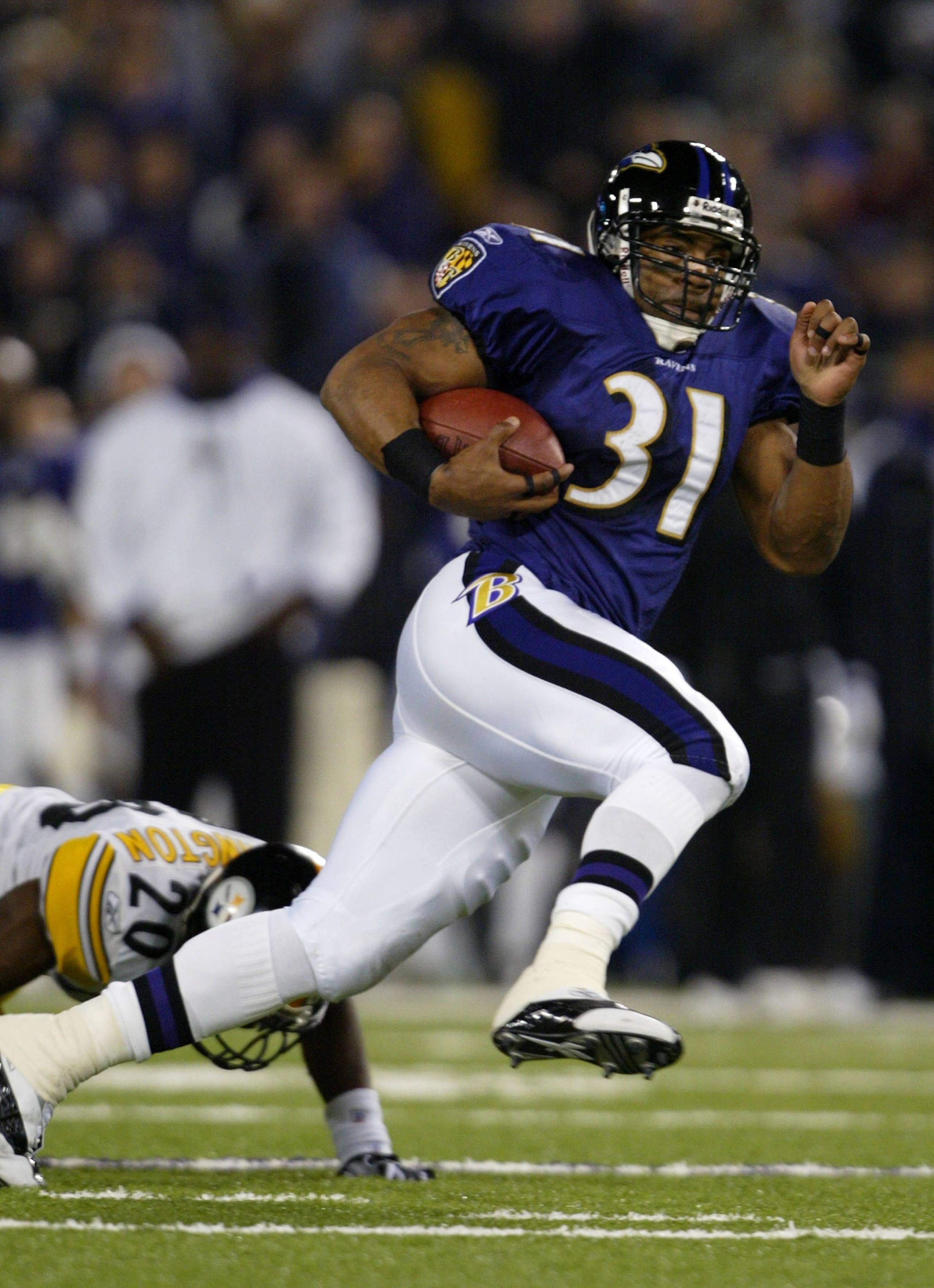
Stats: 1,822 carries, 7,801 rushing yards, 45 rushing touchdowns
Awards: 1 All-Pro, 1 Super Bowl championship
Seasons: 2000, 2002-06
Runner-Up: Ray Rice
In their short history, the Ravens have had many different lead backs. From Bam Morris to Priest Holmes (sadly for them, for just a year) to Errict Rhett to Willis McGahee.
But Jamal Lewis achieved, by far, more in his six seasons than anyone.
As a rookie he helped the team win their first and only Super Bowl: he ran the ball 27 times for 102 yards and a touchdown in their win over the New York Giants.
Then, after overcoming a devastating knee injury, he became just the fifth back in league history to top the 2,000 yard mark.
Ray Rice is only in his third season, but is proving to become one of the top backs in the AFC. In a few years, he definitely could overtake Lewis.
Cincinnati Bengals: Corey Dillon
7 of 32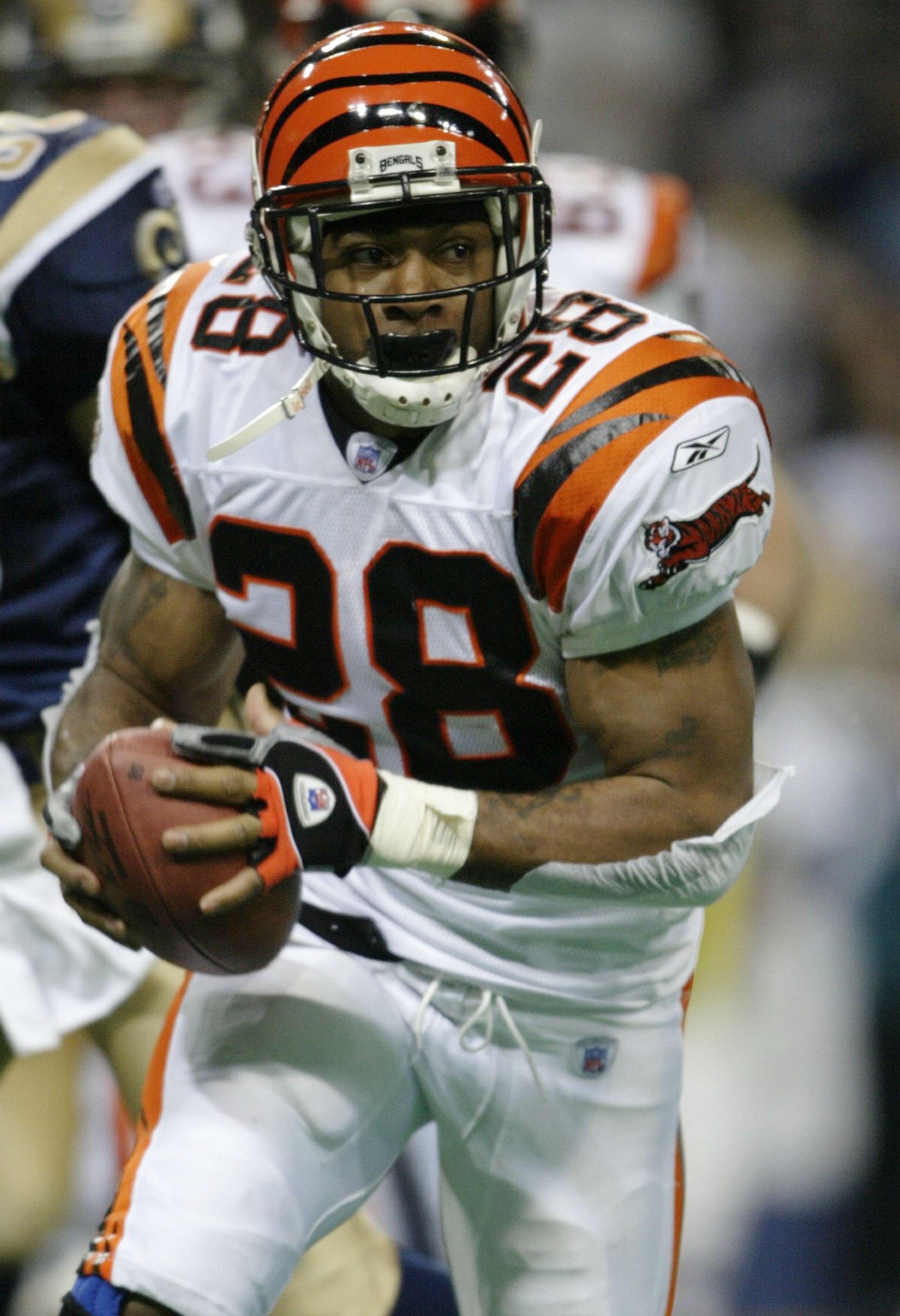
Stats: 1,865 carries, 8,061 rushing yards, 45 rushing touchdowns
Awards: 3 Pro Bowls
Seasons: 1997-2003
Runner-Up: James Brooks
Dillon was something of a modern day O.J. Simpson. In his first six seasons in Cincinnati he rushed for more than 1,100 yards each year, while the team won a grand total of 26 games.
And although his best single season came with the World Champion Patriots in 2004, he is still the finest back in Bengals history.
Three times he rushed for 200 yards or more, including a then-NFL record 278 yards (on just 22 carries) in 2000.
Brooks was a fine back as well, averaging nearly five yards per carry during his eight years in Cincinnati.
Cleveland Browns: Jim Brown
8 of 32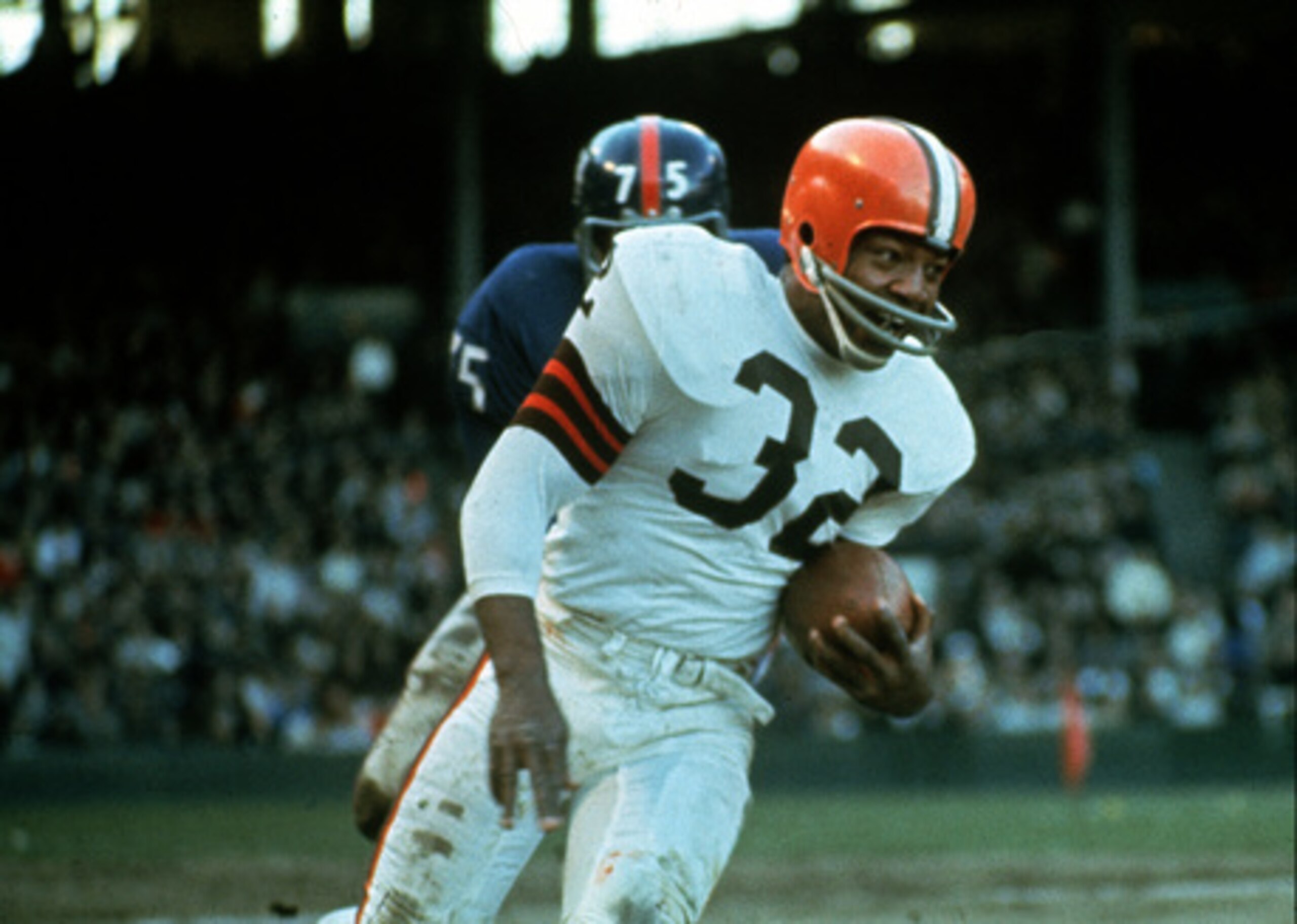
Stats: 2,359 carries, 12,312 rushing yards, 106 rushing touchdowns
Awards: 9 Pro Bowls, 8 All-Pro selections, 3 MVPs, 1 NFL title
Seasons: 1957-65
Runner-Up: Leroy Kelly
There is absolutely no need to validate the selection of Jim Brown for this choice: NFL Films recently named him the greatest FOOTBALL PLAYER of all time. That should justify him as the greatest running back of all time and therefore the greatest Browns running back of all time.
So who is in the race for the silver medal in the all-time Cleveland backfield?
For years, Greg Pruitt was a fine runner for the team, as was Kevin Mack. But the man who replaced Jim Brown was probably the next best.
Kelly took over for Brown in 1966 and promptly led the NFL in touchdowns for three straight seasons, claiming two rushing titles along the way.
Indianapolis Colts: Edgerrin James
9 of 32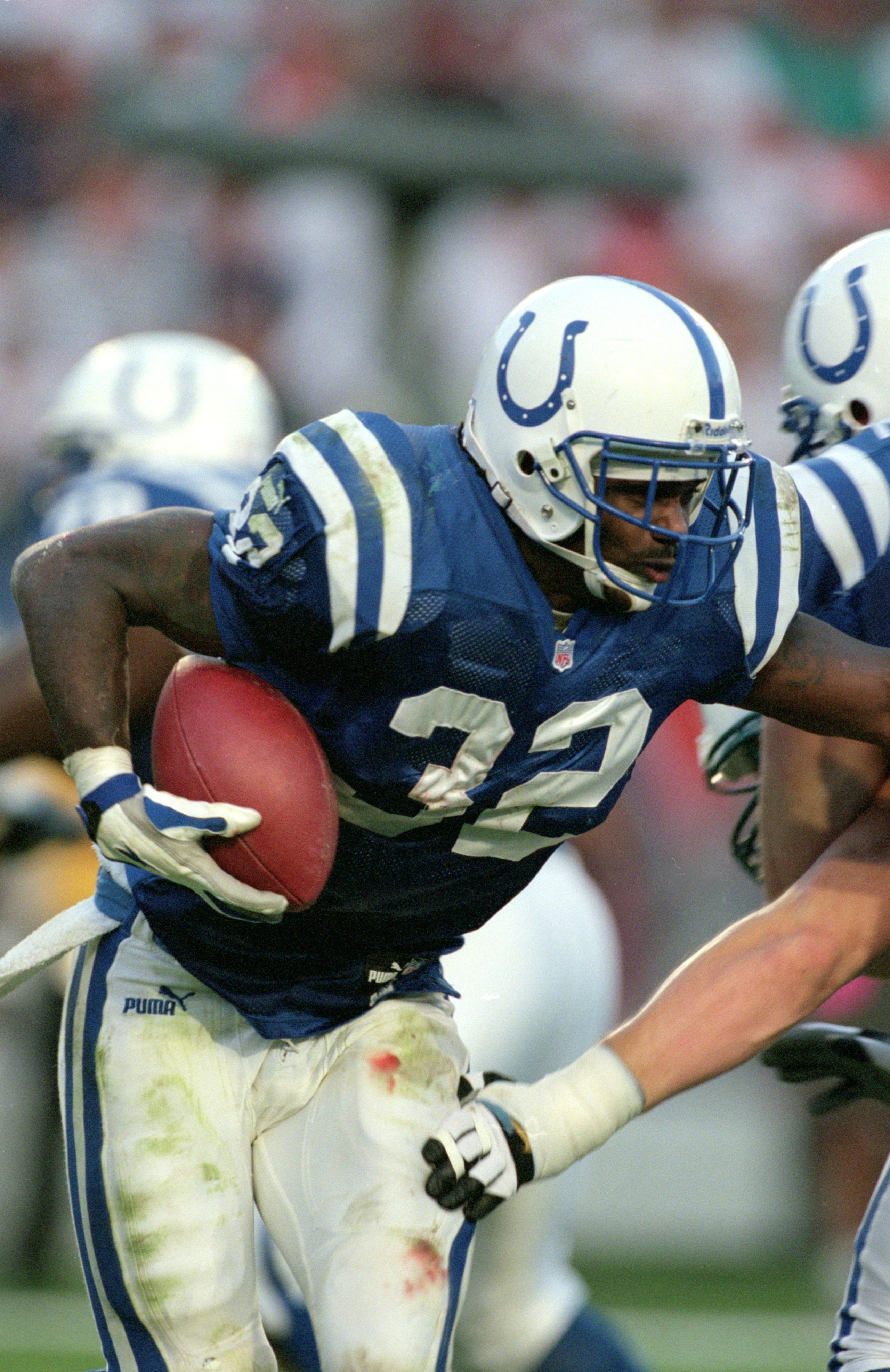
Stats: 2,188 carries, 9,226 rushing yards, 64 rushing touchdowns
Awards: 4 Pro Bowls, 2 All-Pro selections, Rookie of the Year,
Seasons: 1999-2005
Runner-Up: Marshall Faulk
The Colts running back tradition is as rich as any in NFL history. Alan Ameche was a legend and Lenny Moore, Eric Dickerson and Marshall Faulk are all Hall of Famers.
But Edgerrin James was the most dynamic runner the team ever had. In a somewhat truncated career with the Colts, he averaged just under 100 yards (96.1) every time he suited up for Indianapolis and four of his seven years there he rushed for at least 1,500 yards. Considering he was playing in a Peyton Manning offense, that's remarkable.
And twice he led the NFL in rushing.
Jacksonville Jaguars: Fred Taylor
10 of 32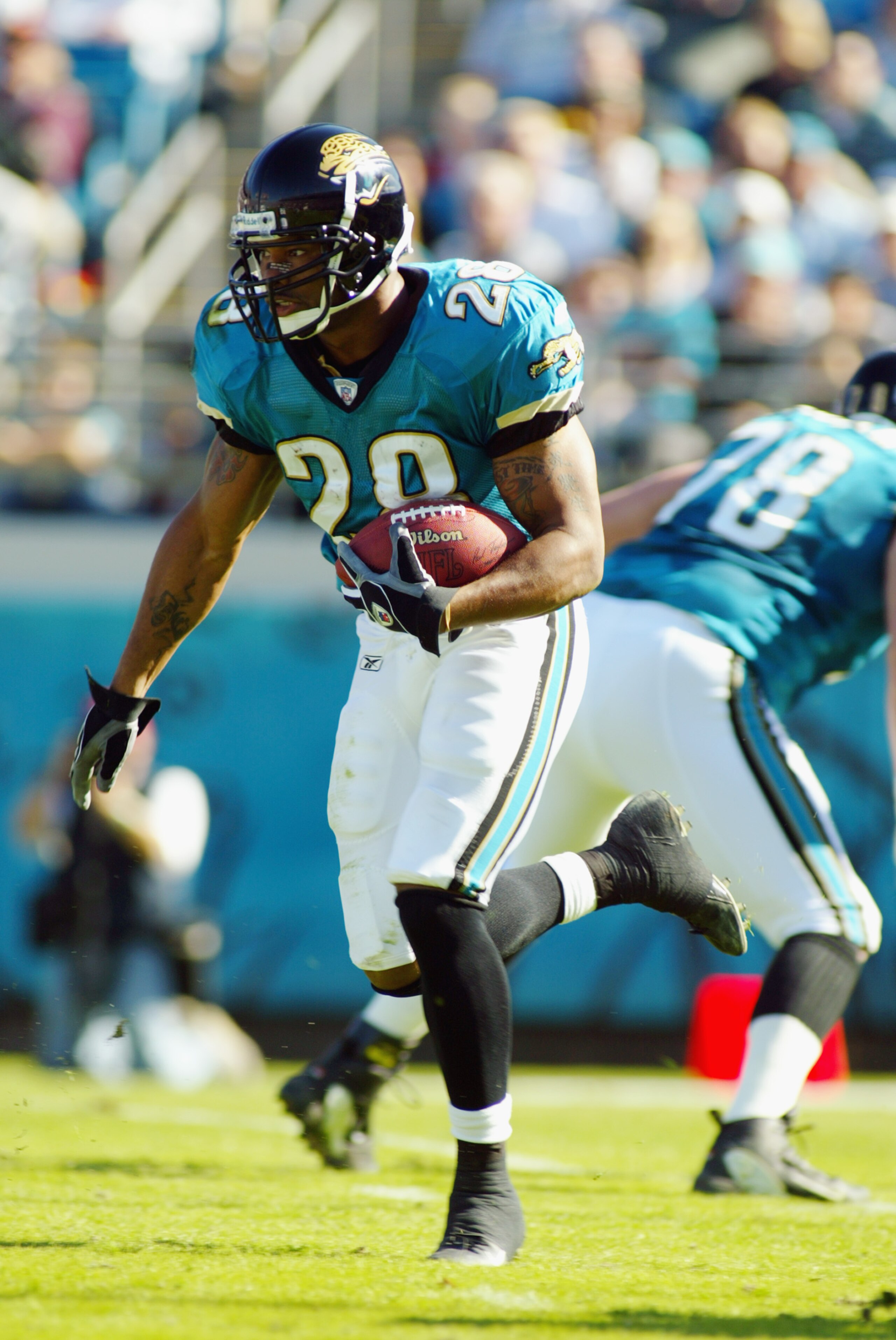
Stats: 2,428 carries, 11,271 rushing yards, 62 rushing touchdowns
Awards: 1 Pro Bowl, 1 All-Pro selection
Seasons: 1998-2008
Runner-Up: Maurice Jones-Drew
For 11 seasons, Fred Taylor was the heart and soul of the Jacksonville Jaguars. The occasional injury prevented Taylor from becoming a superstar (only twice in his career did he play a full 16 game season), but when he was healthy he was a safe bet to rush for 1,200 yards.
And like many great running backs, he was a clutch performer: in his first four playoff games, he totaled 493 yards on the ground.
Maurice Jones-Drew has a ways to go to overtake Taylor as the franchise's all time leader in total yards, but he is off to a good start, rushing for 1,300-plus yards the past two seasons.
Houston Texans: Arian Foster
11 of 32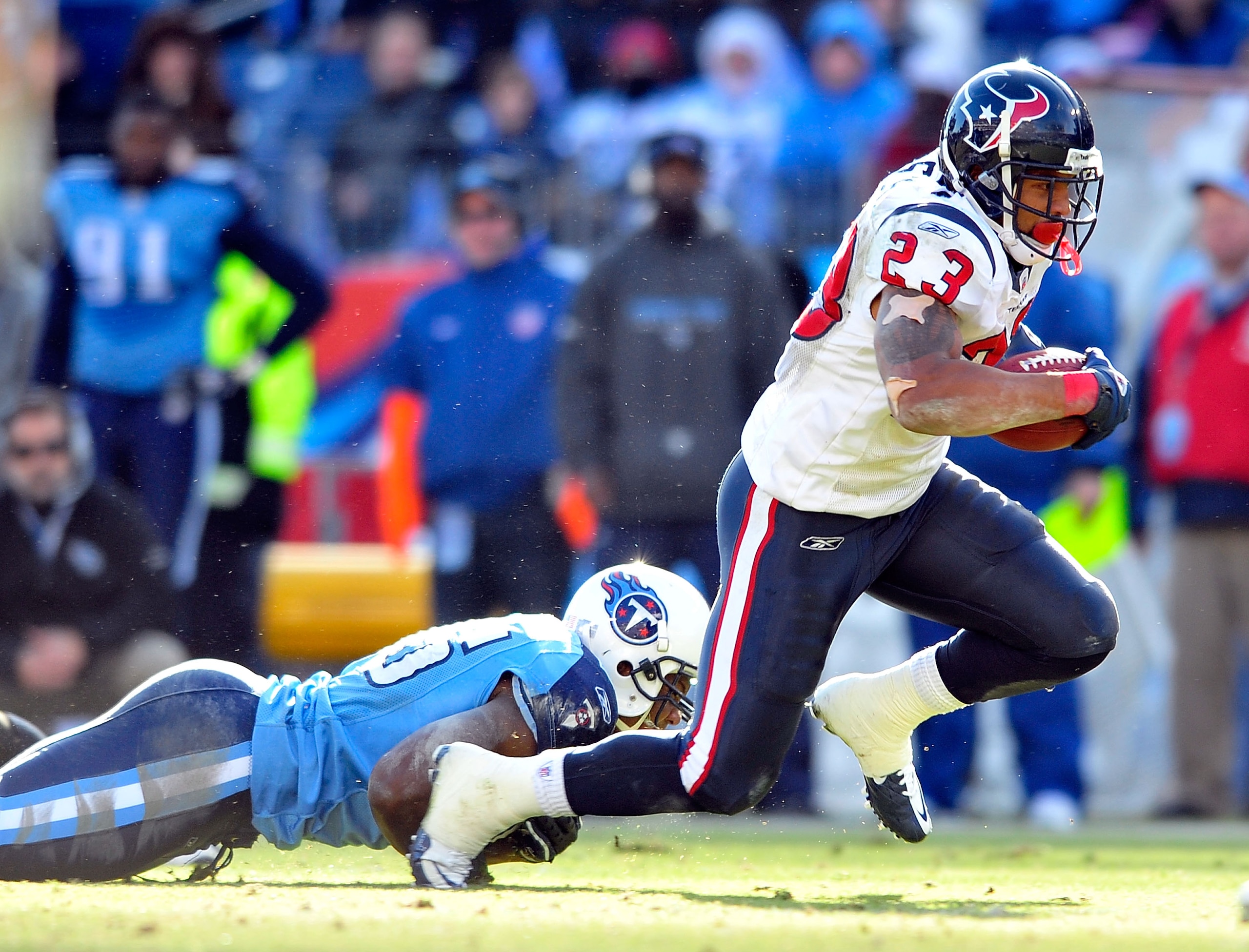
Stats: 350 carries, 1,693 rushing yards, 17 rushing touchdowns
Awards: None.....yet
Seasons: 2009-10
Runner-Up: Domanick Williams
With a franchise less than a decade old, choosing an "all-time" back is obviously problematic.
Foster has only been on the squad for two seasons, but that hasn't kept him from re-writing the team's record books.
He's already blown past the single season mark, held by teammate Steve Slaton and taken away a lot of the attention defenses have to pay to All Pro receiver Andre Johnson.
But because he is one week away from winning the NFL rushing title, he gets the nod over all his predecessors.
Houston Oilers/Tennessee Titans: Earl Campbell
12 of 32
Stats: 1,979 carries, 8,574 rushing yards, 73 rushing touchdowns
Awards: 5 Pro Bowls, 3 All-Pro selections, Rookie of the Year, 1 MVP Award
Seasons: 1978-84
Runners-Up: Chris Johnson, Eddie George
Campbell was one of the greatest running backs in NFL history: he led the NFL in rushing in each of his first three seasons and twice took the Oilers to the AFC Championship Game.
He was no doubt the greatest OILER running back ever.
Although Eddie George owns the team's career mark, and Chris Johnson owns the team's single season mark, neither man has been quite as dominant.
Kansas City Chiefs: Priest Holmes
13 of 32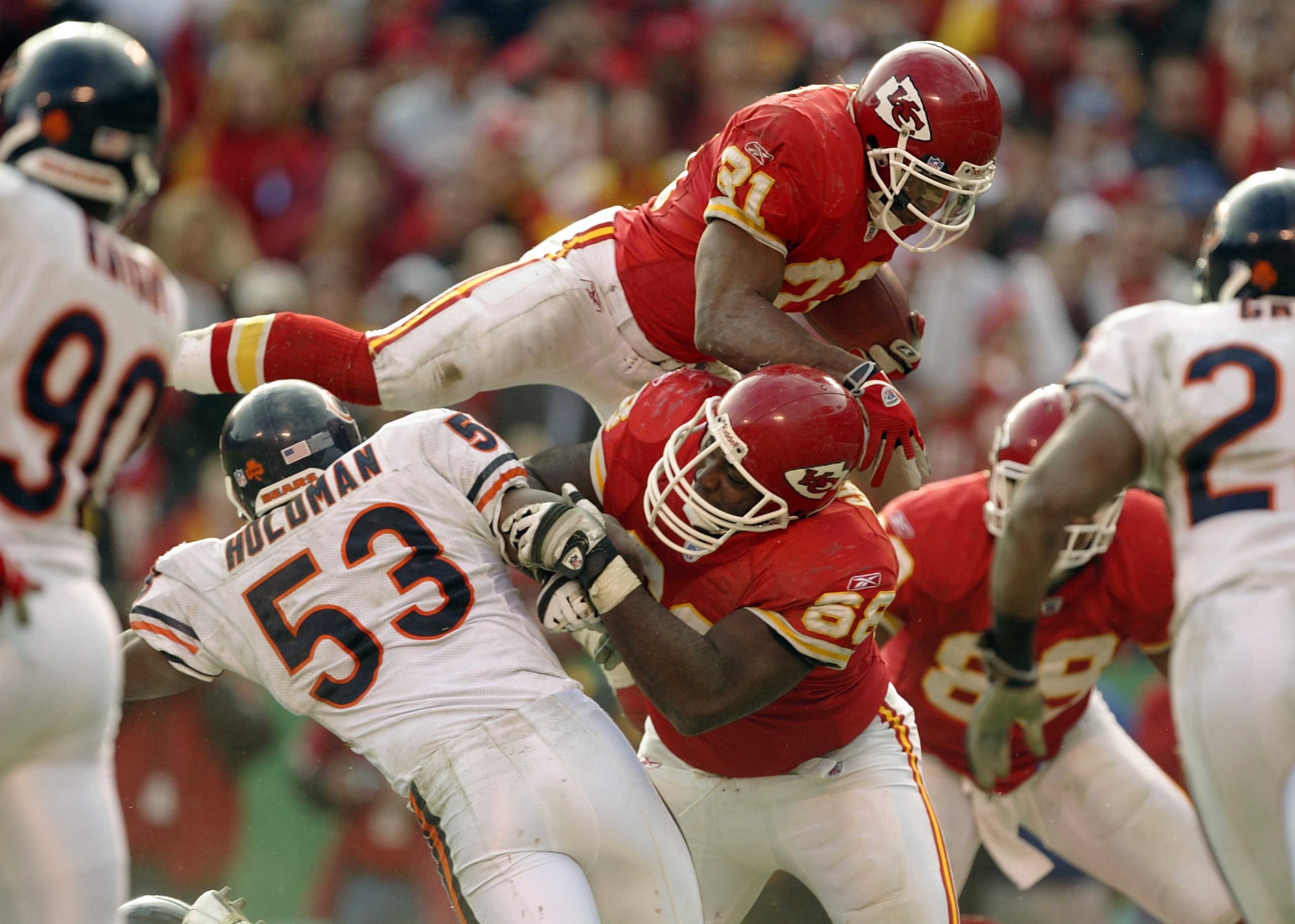
Stats: 1,321 carries, 6,070 rushing yards, 76 rushing touchdowns
Awards: 3 Pro Bowls, 3 All-Pro selections
Seasons: 2001-05, 2007
Runner-Up: Larry Johnson
Although they didn't last for long, Holmes was a record-setting machine in the early part of the last decade.
His 27 touchdowns in 2003 set a new NFL mark (later broken) and his 1,615 rushing yards the year before set a new franchise mark.
It isn't as fondly remembered, mainly because his team never won a playoff game let alone a Super Bowl, but Holmes' four-year stretch from 2001-04 was arguably as prolific as Terrell Davis' run in Denver.
The man who followed Holmes, Larry Johnson, was also pretty incredible for a short stretch: he is one of only three men to rush for more than 1,700 yards in consecutive years.
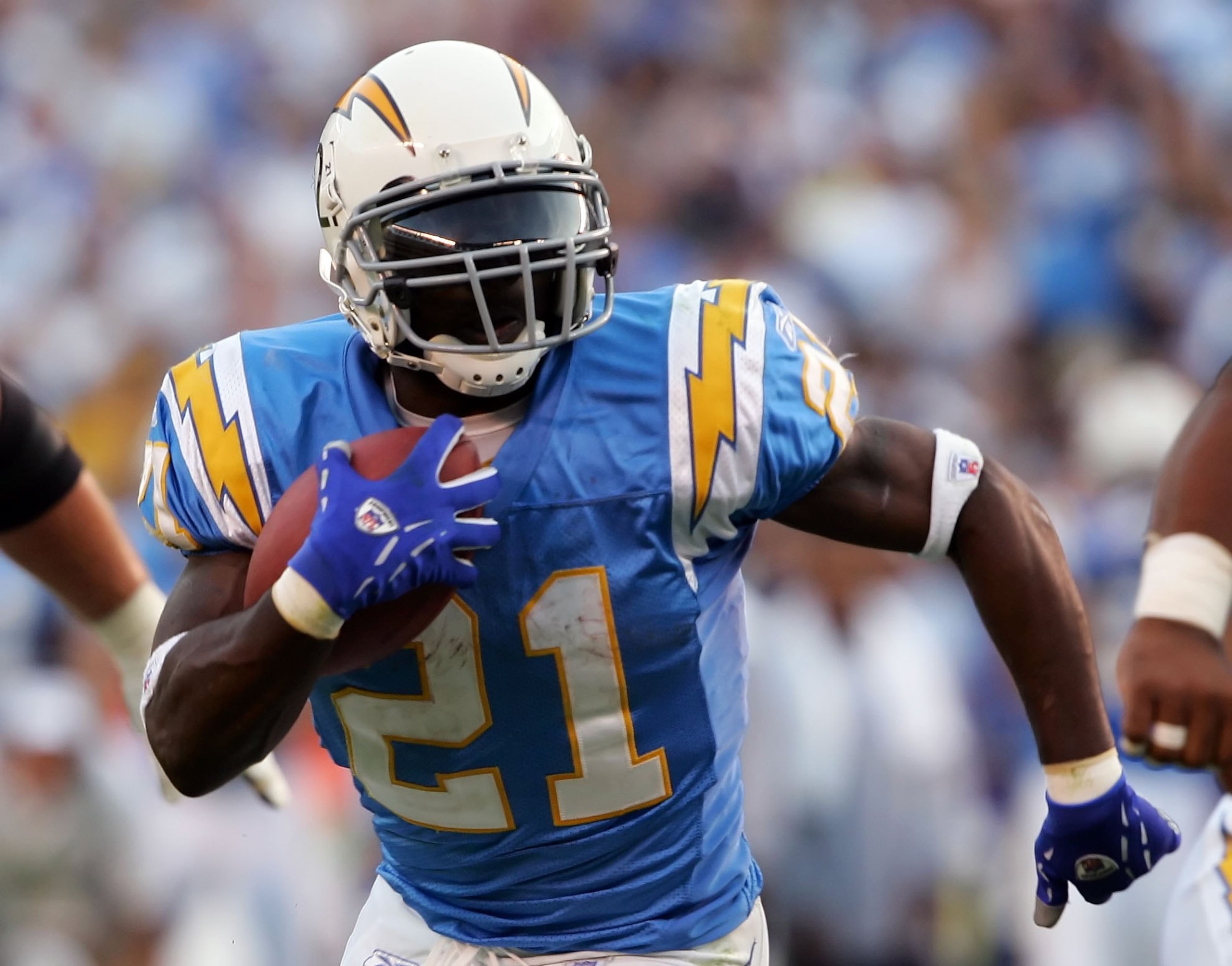
San Diego Chargers: LaDanian Tomlinson
14 of 32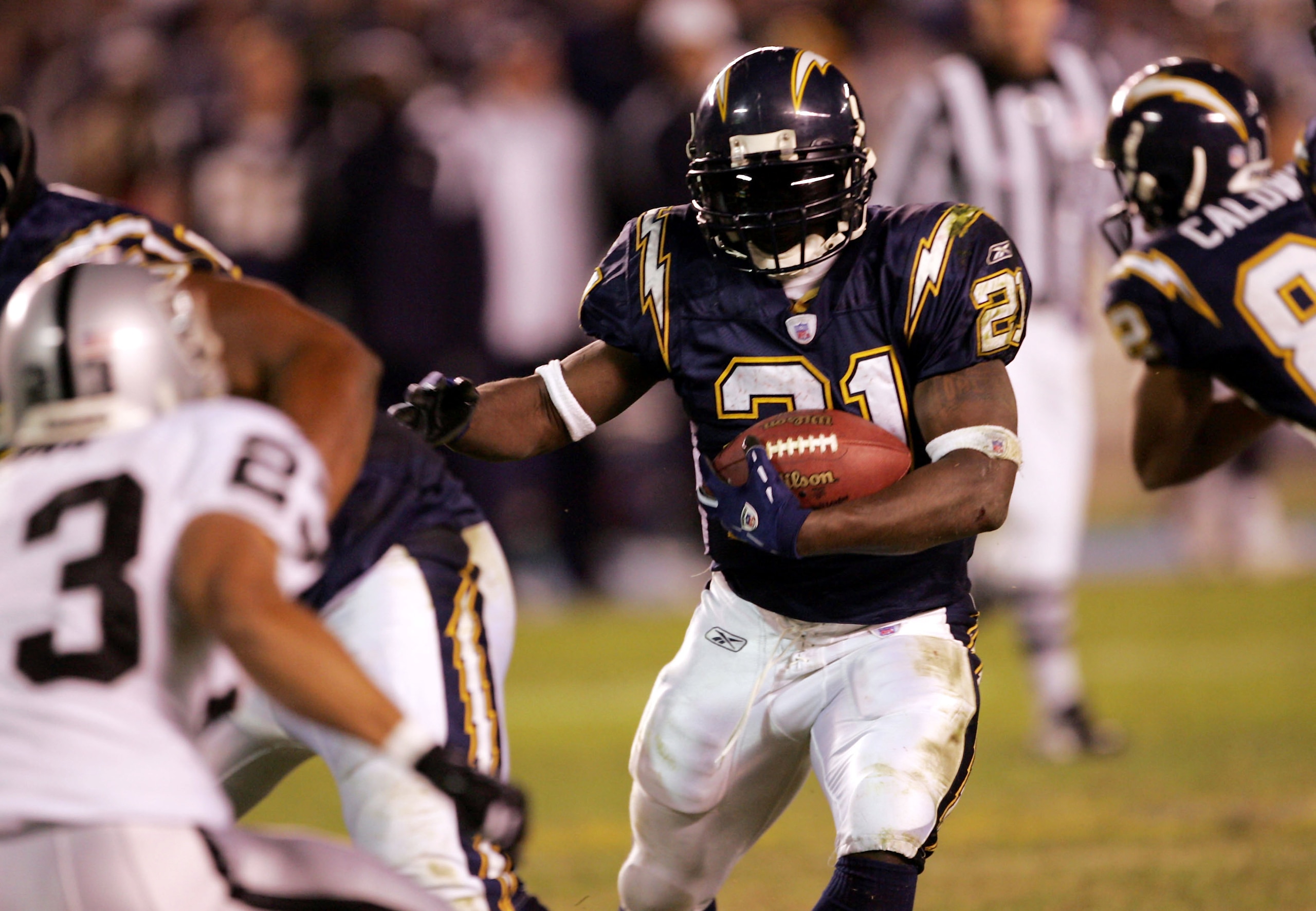
Stats: 2,880 carries, 12,490 rushing yards, 138 rushing touchdowns
Awards: 5 Pro Bowls, 4 All-Pro selections, 1 NFL MVP
Seasons: 2001-09
Runner-Up: Natrone Means
A few of the selections on this list (Jim Brown, for example) are no-brainers. L.T. is another.
Even though his production dipped a little in the last two seasons with San Diego, Tomlinson has proven himself to be the best running back of the 21st century. During his career with San Diego, he averaged at least one touchdown in every game he played.
Still, as great as L.T. was for the Bolts, Natrone Means is the only running back in team history to guide the Chargers to a Super Bowl berth. And his career totals are pretty good as well.
Oakland/Los Angeles Raiders: Marcus Allen
15 of 32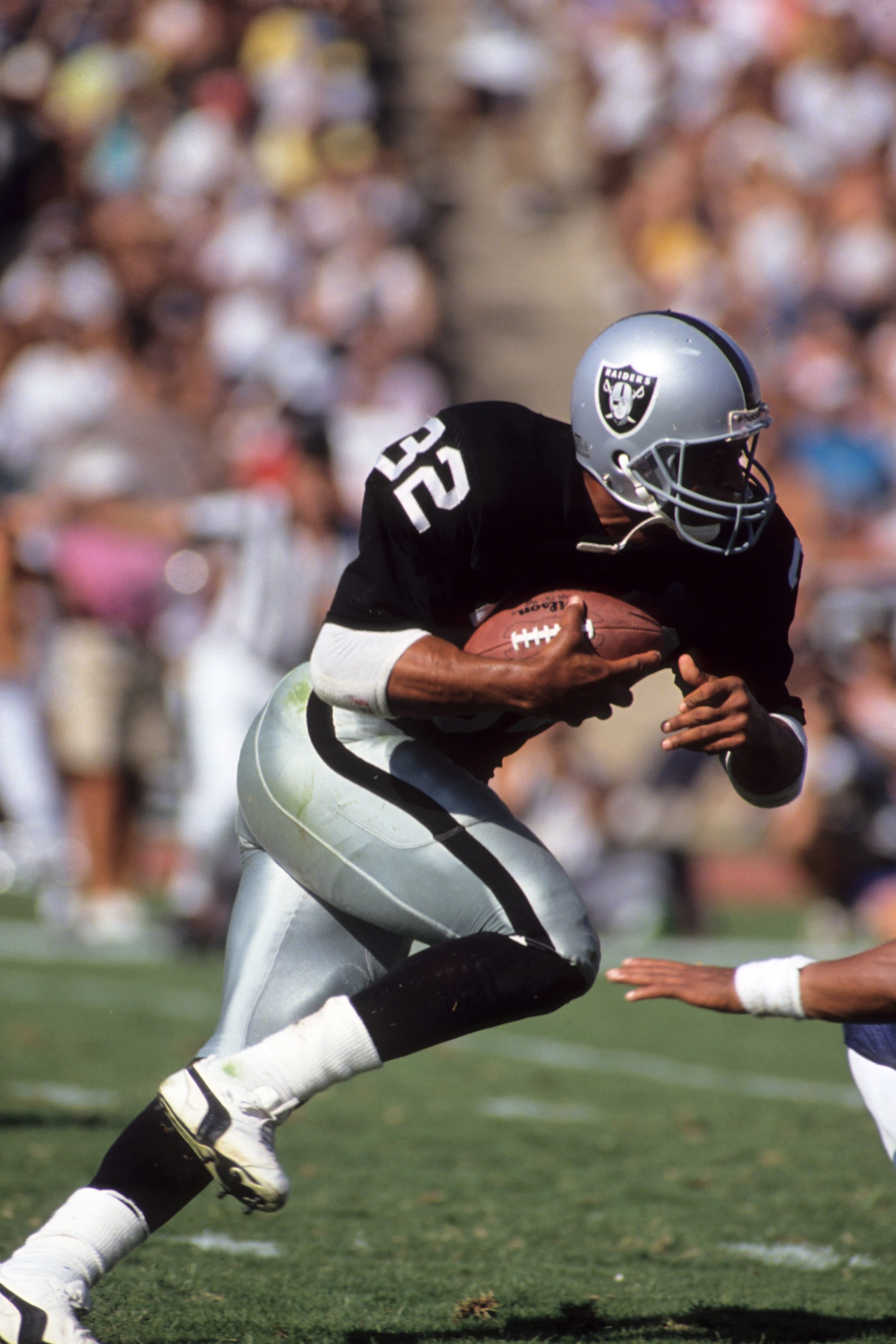
Stats: 2,090 carries, 8,545 rushing yards, 79 rushing touchdowns
Awards: 5 Pro Bowls, 2 All-Pro selections, 1 Super Bowl win, 1 Super Bowl MVP, 1 NFL MVP
Seasons: 1982-92
Runner-Up: Bo Jackson
Things didn't end up very pretty for Marcus Allen and the Raiders organization: they had an ugly divorce. But Allen remains the greatest running back ever to don the Silver and Black.
His performance in Super Bowl XVIII delivered the franchise their last world championship and two years later he had a tremendous season, leading the NFL with 1,759 yards and a then-record 2,314 yards from scrimmage.
His backfield mate for a few seasons, Bo Jackson, might have been the greatest running back of all time had he not split time with the Kansas City Royals and then injured his hip at age 28. He was perhaps the greatest blend of size and speed the position has ever seen.
Denver Broncos: Terrell Davis
16 of 32
Stats: 1,655 carries, 7,607 rushing yards, 60 rushing touchdowns
Awards: 3 Pro Bowls, 3 All-Pro selections, 2 Super Bowl wins, 1 Super Bowl MVP, 1 NFL MVP
Seasons: 1995-2002
Runner-Up: Floyd Little
From both a statistical and championship perspective, this is a pretty simple choice.
Davis is the club's all time leading rusher, he was just the fourth man to break the 2,000-yard mark and he delivered the city of Denver (and John Elway) a pair of world championships.
All that in basically four seasons, from 1995-98.
Recently elected to the Hall of Fame, Floyd Little is a similarly easy choice for the team's second-best back ever: Davis broke most of his records.
Philadelphia Eagles: Wilbert Montgomery
17 of 32
Stats: 1,465 carries, 6,538 rushing yards, 45 rushing touchdowns
Awards: 2 Pro Bowls, 1 Conference Championship
Seasons: 1977-84
Runner-Up: Brian Westbrook
Oft forgotten, Montgomery holds all of the significant rushing records for the Eagles: his 1,512 yards in 1979 are still the franchise record, as is his career total of 6,538.
But more importantly, he was one of the main reasons why the 1980 Eagles reached their first ever Super Bowl. Although he missed part of the season with an injury, it was his 194 yards on 26 carries and first quarter touchdown in the NFC Championship Game against Dallas that earned the Eagles their trip to Super Bowl XV.
Brian Westbrook might have broken all of Marshall's records, had he been able to avoid a slew of injuries. Nevertheless, he was a fine back.
New York Giants: Tiki Barber
18 of 32
Stats: 2,217 carries, 10,449 rushing yards, 55 rushing touchdowns
Awards: 3 Pro Bowls, 1 All-Pro selection, 1 Conference Championship
Seasons: 1997-2006
Runner-Up: Joe Morris
There have been a handful of very good running backs in Giants history: Frank Gifford, Joe Morris, O.J. Anderson and Rodney Hampton.
And while all of those players earned NFL titles as members of the club (Tiki didn't), Barber had the greatest individual career of anyone.
From 2002 to 2006, he averaged over 1,500 yards rushing per season. He may not have gotten along with head coach Tom Coughlin, but (even though they won a Super Bowl) the Giants have not been able to replace him entirely.
Dallas Cowboys: Emmitt Smith
19 of 32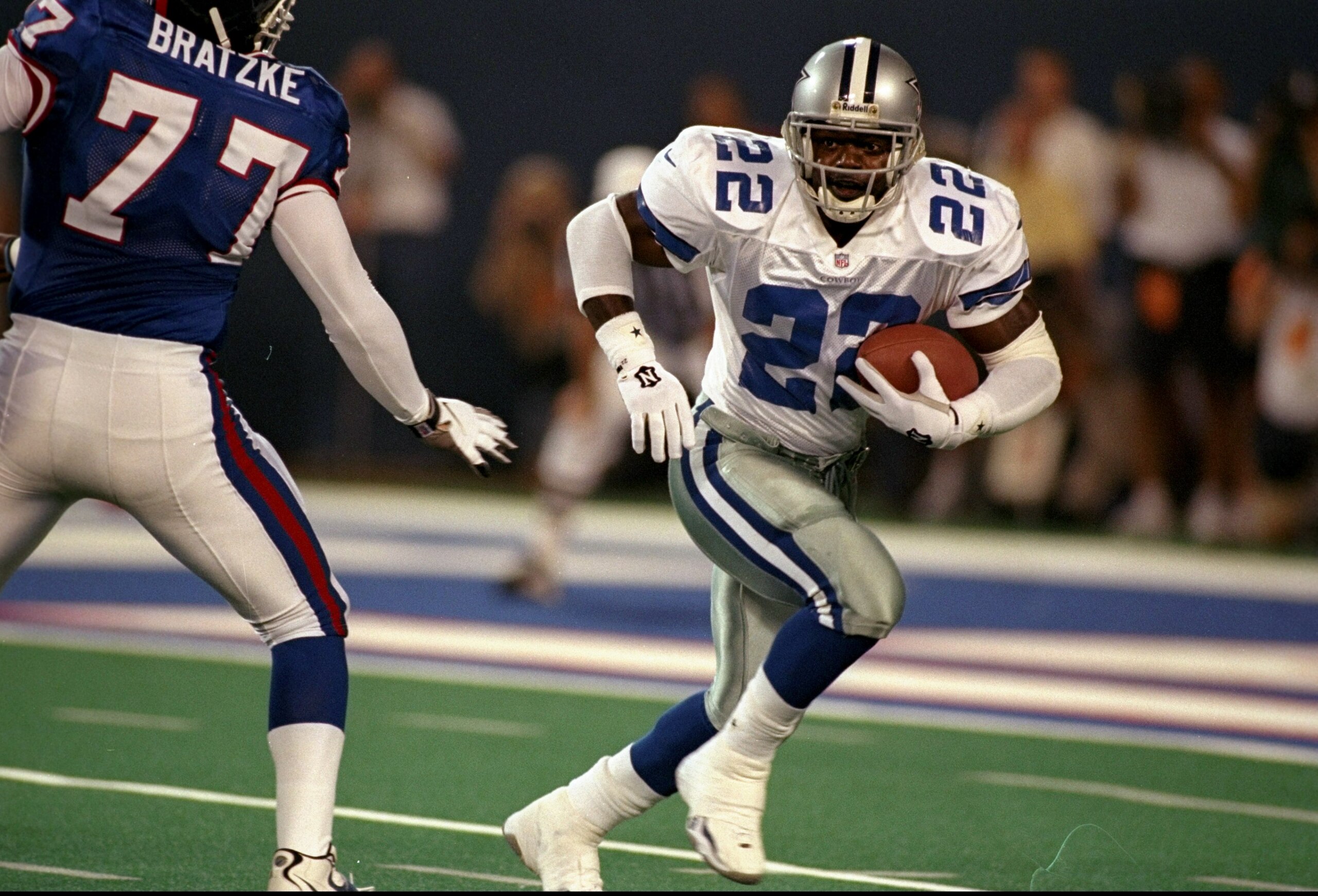
Stats: 4,052 carries, 17,162 rushing yards, 153 rushing touchdowns
Awards: 8 Pro Bowls, 4 All-Pro selections, 3 Super Bowl wins, 1 Super Bowl MVP, 1 NFL MVP
Seasons: 1990-2002
Runner-Up: Tony Dorsett
Not many teams can boast two Hall of Fame running backs, but the Cowboys can. Smith had the better career on every front: better personal stats, more Super Bowl rings, etc.
Still, on any given day of the week, T.D. may have been the better pure runner: who else could go 99 yards on one play?
Washington Redskins: John Riggins
20 of 32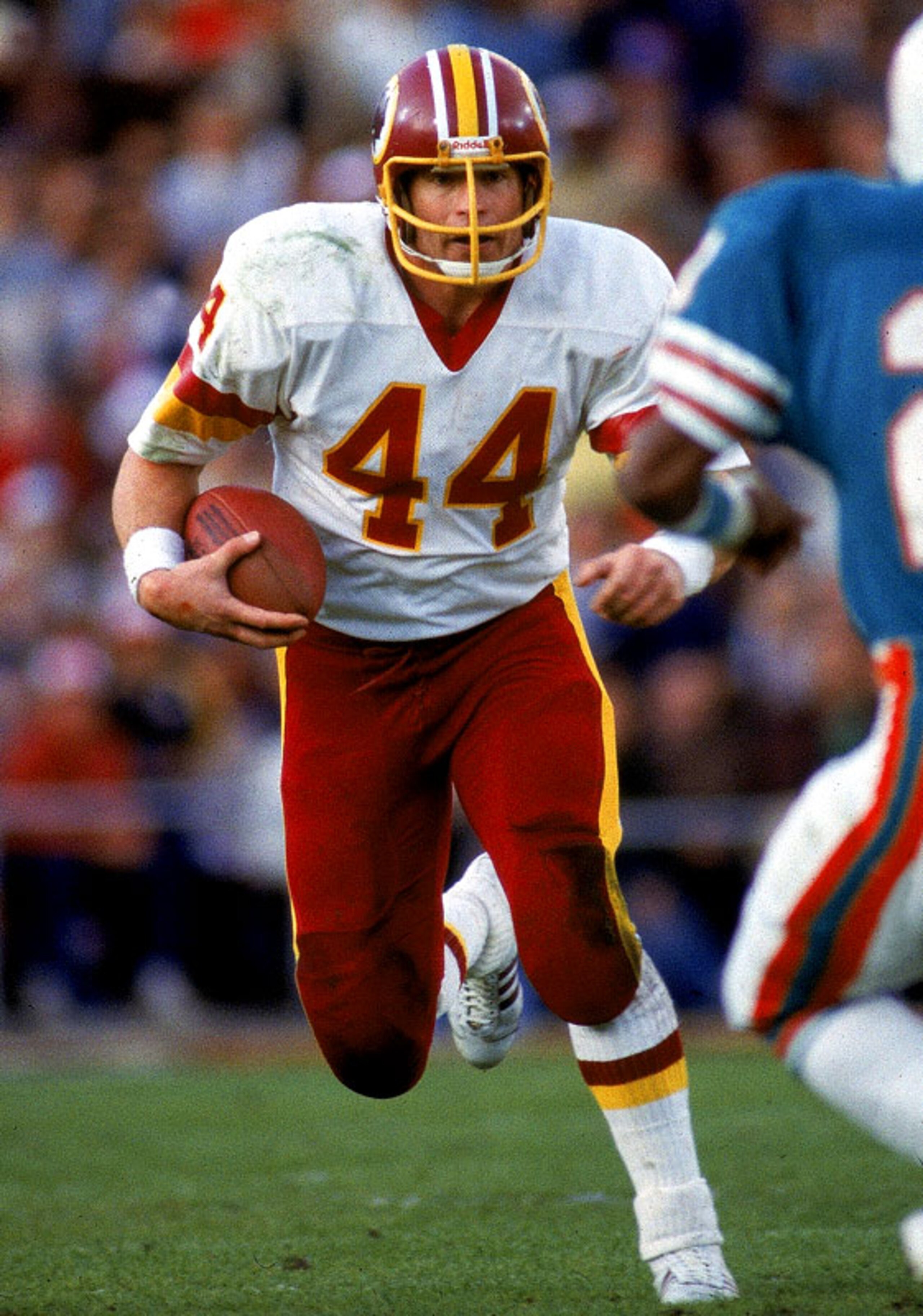
Stats: 1,988 carries, 7,472 rushing yards, 79 rushing touchdowns
Awards: 1 All-Pro selection, 1 Super Bowl win, 1 Super Bowl MVP
Seasons: 1976-79, 1981-85
Runner-Up: Clinton Portis
He wasn't the most dynamic runner and didn't post the type of consistency of the runner-up on this list (In his four full seasons in Washington, Clinton Portis averaged over 1,300 yards), but the Diesel delivered whenever the club needed him.
For three straight years, 1982-84, Riggins dominated the NFL: in 37 games he rushed for 41 touchdowns.
And although they would go on to win two additional world championships, Riggins effort in Super Bowl XVII might be the greatest single day any Washington Redskin ever had.
Chicago Bears: Walter Payton
21 of 32
Stats: 3,838 carries, 16,726 rushing yards, 110 rushing touchdowns
Awards: 9 Pro Bowls, 6 All-Pro selections, 1 Super Bowl win, 1 NFL MVP
Seasons: 1975-88
Runner-Up: Gale Sayers
With 10 seasons of over 1,300 yards rushing, Payton takes this honor without even thinking. Interestingly enough, so does his runner-up.
Sayers didn't have the longevity, but (pre-knee injury) there was not a better open field runner in NFL history.
As a rookie, he averaged a rushing touchdown per game, then led the NFL in rushing in his second season. And somehow he recovered from his knee injury to lead the league in carries and yards in 1969 for a one-win, last place team.
The better question would be who is the third greatest Bears runner ever. Probably Neal Anderson.
Green Bay Packers: Jim Taylor
22 of 32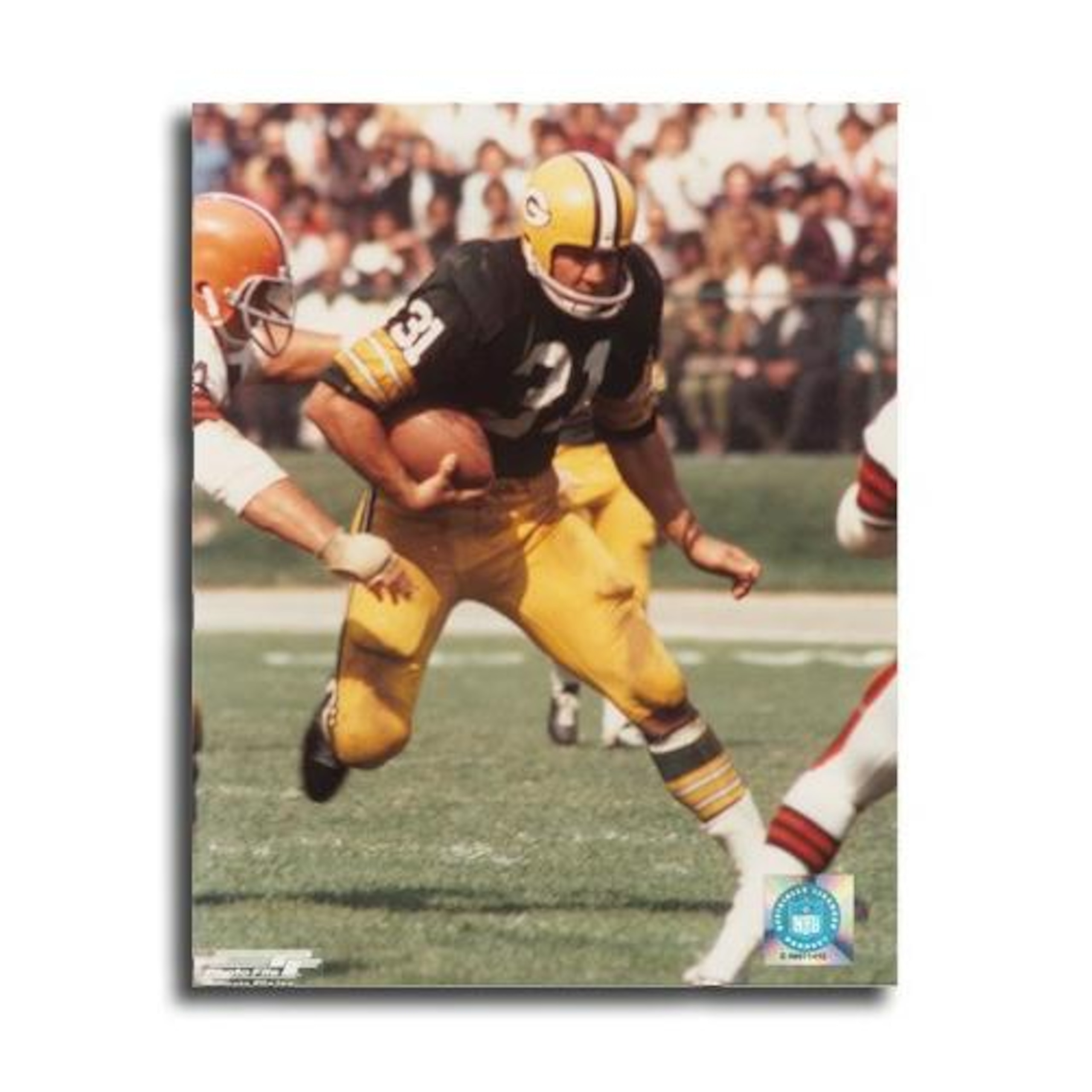
Stats: 1,811 carries, 8,207 rushing yards, 81 rushing touchdowns
Awards: 5 Pro Bowls, 6 All-Pro selections, 4 NFL championships
Seasons: 1958-66
Runner-Up: Ahman Green
Forget the Green Bay Packers, Jim Taylor remains one of the greatest running backs of all time.
Although Paul Hornung, Bart Starr, Forrest Gregg and Jerry Kramer were Packer legends, Taylor was the key offensive player on that Packer dynasty: the "Packer sweep" was virtually unstoppable because of Taylor's size and speed.
It would be over 30 years until another Packer running back could even think about contending with Taylor's records.
From 2000-04, Green averaged nearly 1,400 yards per game and snapped Taylor's single-season mark. And in his final years as a Packer, Green snapped Taylor's career mark.
Minnesota Vikings: Adrian Peterson
23 of 32
Stats: 1,162 carries, 5,633 rushing yards, 51 rushing touchdowns
Awards: 3 Pro Bowls, 2 All-Pro selections, Rookie of the Year
Seasons: 2007-present
Runner-Up: Robert Smith
In their 50 seasons, the Vikings have produced their share of outstanding runners, beginning with Chuck Foreman during their glory days of the 1970s.
But Adrian Peterson is far and away the finest ever to wear purple and gold. Since he joined the team, he has averaged 96 yards per game and been, by far, the best back in the NFC (if not the NFL) every year.
If he can stay reasonably healthy, the 25-year-old should be in position to snap Emmitt Smith's career mark, and perhaps Eric Dickerson's single season mark.
A decade before Peterson, Robert Smith was one of the league's best backs for a brief while: in his last year (2000) he led the NFC in rushing and set the franchises career mark which still stands.
Detroit Lions: Barry Sanders
24 of 32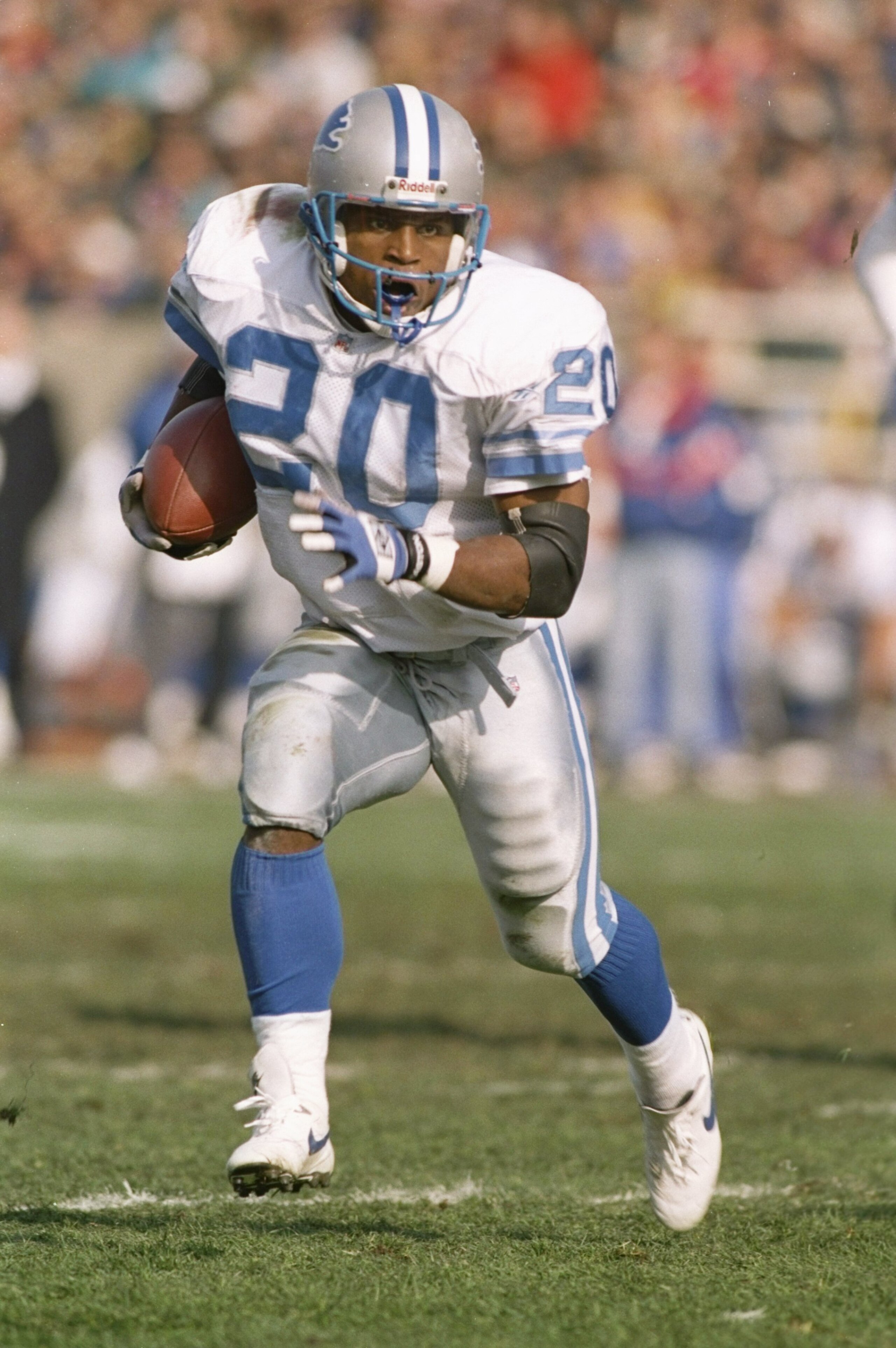
Stats: 3,062 carries, 15,269 rushing yards, 99 rushing touchdowns
Awards: 10 Pro Bowls, 6 All-Pro selections, 1 NFL MVP
Seasons: 1989-98
Runner-Up: Billy Sims
Like the Browns (Jim Brown), the Chargers (LaDainian Tomlinson) and the Bears (Walter Payton), this is another no-brainer.
To many members of the younger generation, Sanders was the finest running back ever to play.
Averaging over 1,500 yards per season for an entire career? Only decimal points below averaging 100 yards per game for an entire career? Unbelievable figures.
The only question remaining is who would be Sanders' backup on the All Time Lions team? The team's other Sooner state, Heisman Trophy winning running back who wore No. 20, Billy Sims, is the choice here. The first overall pick of the 1980 draft earned Pro Bowl spots in his first three seasons.
Atlanta Falcons: Gerald Riggs
25 of 32
Stats: 1,587 carries, 6,631 rushing yards, 48 rushing touchdowns
Awards: 3 Pro Bowls, 2 All-Pro Selections
Seasons: 1982-88
Runner-Up: Warrick Dunn
In recent years, there have been some pretty good Falcon backs.
Warrick Dunn was a productive back for several seasons (although playing beside Michael Vick probably helped his career totals a bit).
Jamal Anderson and his Dirty Bird danced all the way to Super Bowl XXXIII with one of the greatest single seasons in league history in 1998.
And in the past two years Michael Turner has become one of the NFC's top rushers.
But none of them were quite as good for a prolonged stretch as Riggs was from 1984-86. Considering the lack of talent everywhere else on the Falcons teams, Riggs' 4,532 yards and 1,093 carries during those three years was incredible.
New Orleans Saints: Deuce McAllister
26 of 32
Stats: 1,429 carries, 6,096 rushing yards, 49 rushing touchdowns
Awards: 2 Pro Bowl selections
Seasons: 2002-08
Runner-Up: George Rodgers
As the Saints first overall pick in 1981, George Rodgers had perhaps the greatest single season by any rookie running back ever: 1,674 yards and 13 touchdowns.
But for a career, it was another first round draft choice from the familiar SEC that was the greatest in team history. (Rodgers only started 51 games for New Orleans).
McAllister was only healthy enough to be a full-time starter for four seasons, but he rushed for over 1,000 yards each time and, in 2003, came just 33 yards shy of breaking Rodgers record.
In his 97-game career, McAllister set all the team records and only fumbled once every 71 carries, a figure much better than Hall of Famers Walter Payton and Earl Campbell.
Tampa Bay Buccaneers: Warrick Dunn
27 of 32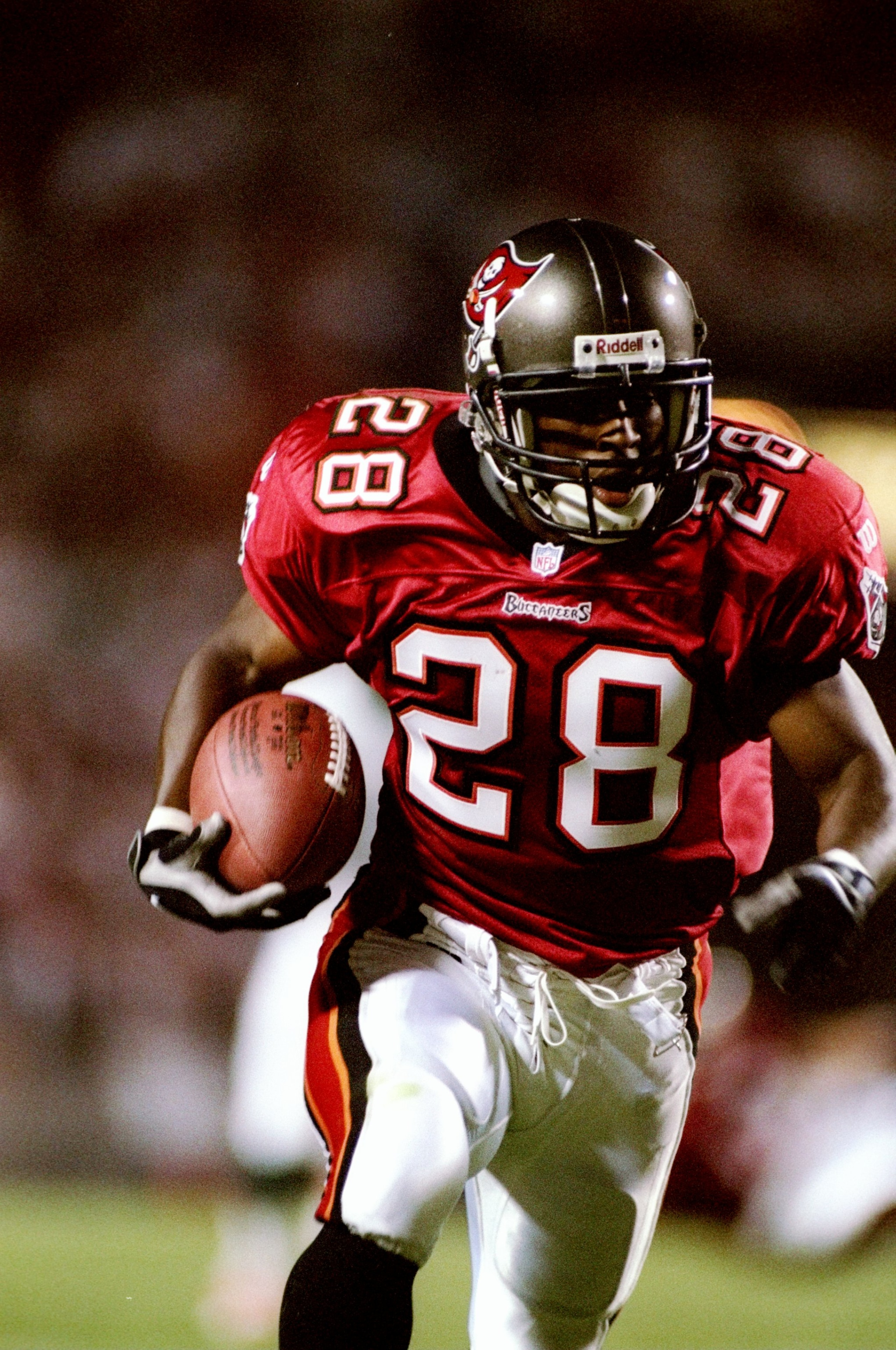
Stats: 1,256 carries, 4,986 rushing yards, 19 rushing touchdowns
Awards: 2 Pro Bowls
Seasons: 1997-2001
Runner-Up: James Wilder
The Buccaneers history isn't exactly replete with great running backs. And although James Wilder is the franchise's all time leading rusher and had two great seasons in the mid-1980s, Warrick Dunn was the greatest running back in the team's history.
It was no coincidence that as soon as the club drafted the Florida State Seminole, their reputation as the NFC's doormat started to cease: That year (1997) they made the playoffs for the first time in 15 seasons.
They would repeat that achievement three of the next four years. Dunn left right before the Bucs won their first Super Bowl, but that doesn't take away from his place as one of the greatest Bucs ever.
Carolina Panthers: DeAngelo Williams
28 of 32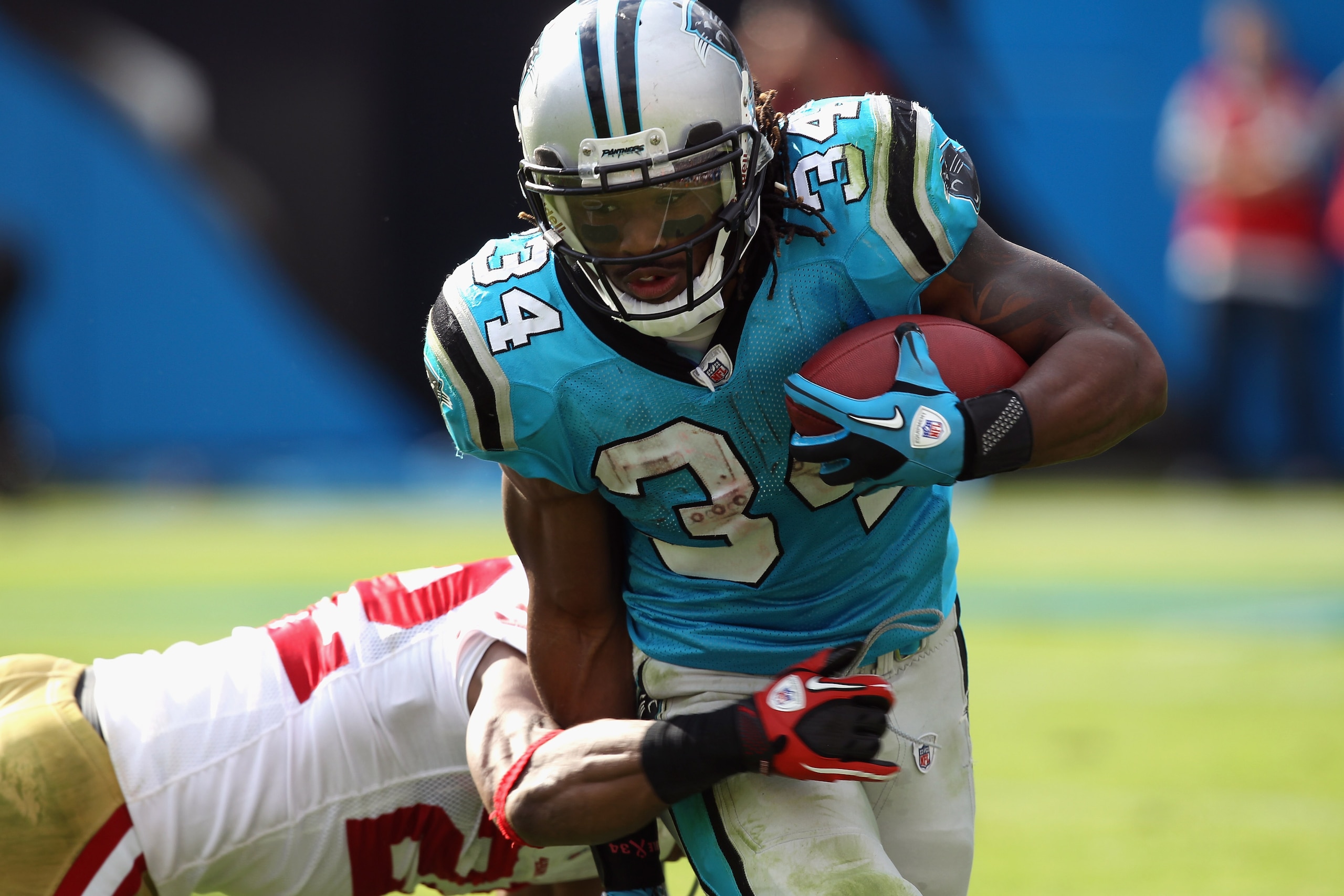
Stats: 841 carries, 4,211 rushing yards, 31 rushing touchdowns
Awards: 1 Pro Bowl, 1 All-Pro selection
Seasons: 2006-10
Runner-Up: Stephen Davis
With a very short history, there aren't many options to choose from here, but DeAngelo Williams is the best option.
He's the only Panther to ever post multiple 1,000 yard seasons and owns most of the single season and career rushing record.
And since, in 2008, Williams also had a great season (1,515 yards rushing) in a division-winning year for the Panthers he supplants Stephen Davis (who rushed for 1,444 yards in the club's Super Bowl 2003 season) he is the best back in Carolina history.
Los Angeles/St. Louis Rams: Marshall Faulk
29 of 32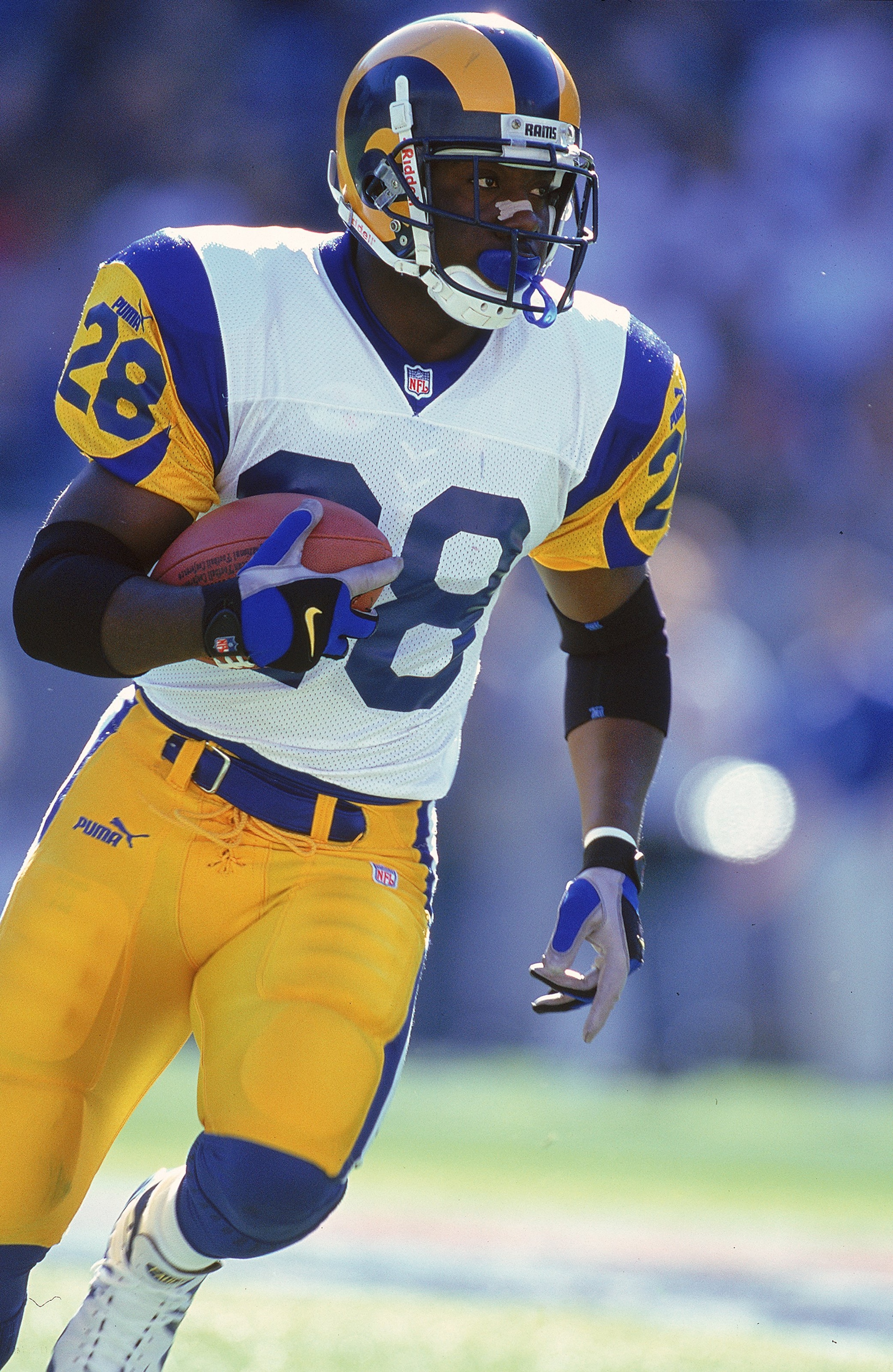
Stats: 1,447 carries, 6,959 rushing yards, 58 rushing touchdowns
Awards: 4 Pro Bowls, 3 All-Pro selections, 1 Super Bowl win, 1 NFL MVP
Seasons: 1999-2005
Runners-Up: Eric Dickerson, Steven Jackson
This might be the most difficult selection to make. Faulk really only had three great seasons for the Rams: 1999-2001. But they were incredible: nearly 1,400 yards per season and nearly 100 yards per game. And given his contributions out of the backfield (251 catches, 2,643 yards receiving, 22 touchdown catches), he was the best player in football.
A decade and a half before Faulk, Eric Dickerson had an equally great short stretch, averaging over 115 yards every game he played in a Rams uniform. But because Faulk helped produce the only Super Bowl victory in franchise history, he gets a slight boost in these power rankings.
Steven Jackson is the most interesting case amongst the three: very quitely, he has set the team career rushing record and posted six consecutive 1,000-yard seasons, something that neither Dickerson nor Faulk achieved in a Rams uniform.
Seattle Seahawks: Shaun Alexander
30 of 32
Stats: 2,176 carries, 9,429 rushing yards, 100 rushing touchdowns
Awards: 3 Pro Bowls, 1 All-Pro selection, 1 Conference Championship, 1 NFL MVP
Seasons: 2000-07
Runners-Up: Chris Warren, Curt Warner
The relatively sudden end to his career (he went from MVP to being cut in the span of a few seasons) doesn't diminish what Alexander did in his eight years in Seattle.
From 2001-2006 he was the best back in the NFC and was the main star who led the Seahawks to their one and only Super Bowl appearance in 2005.
As far as the runner up: Chris Warren and (the first) Curt Warner are virtually tied.
Both men were three-time pro bowlers, both had four 1,000-yard seasons and they rushed for nearly identical totals (6,706 yards for Warren, 6,705 for Warner). But since Warner led the Seahawks to two playoff appearances, we'll take him.
San Francisco 49ers: Roger Craig
31 of 32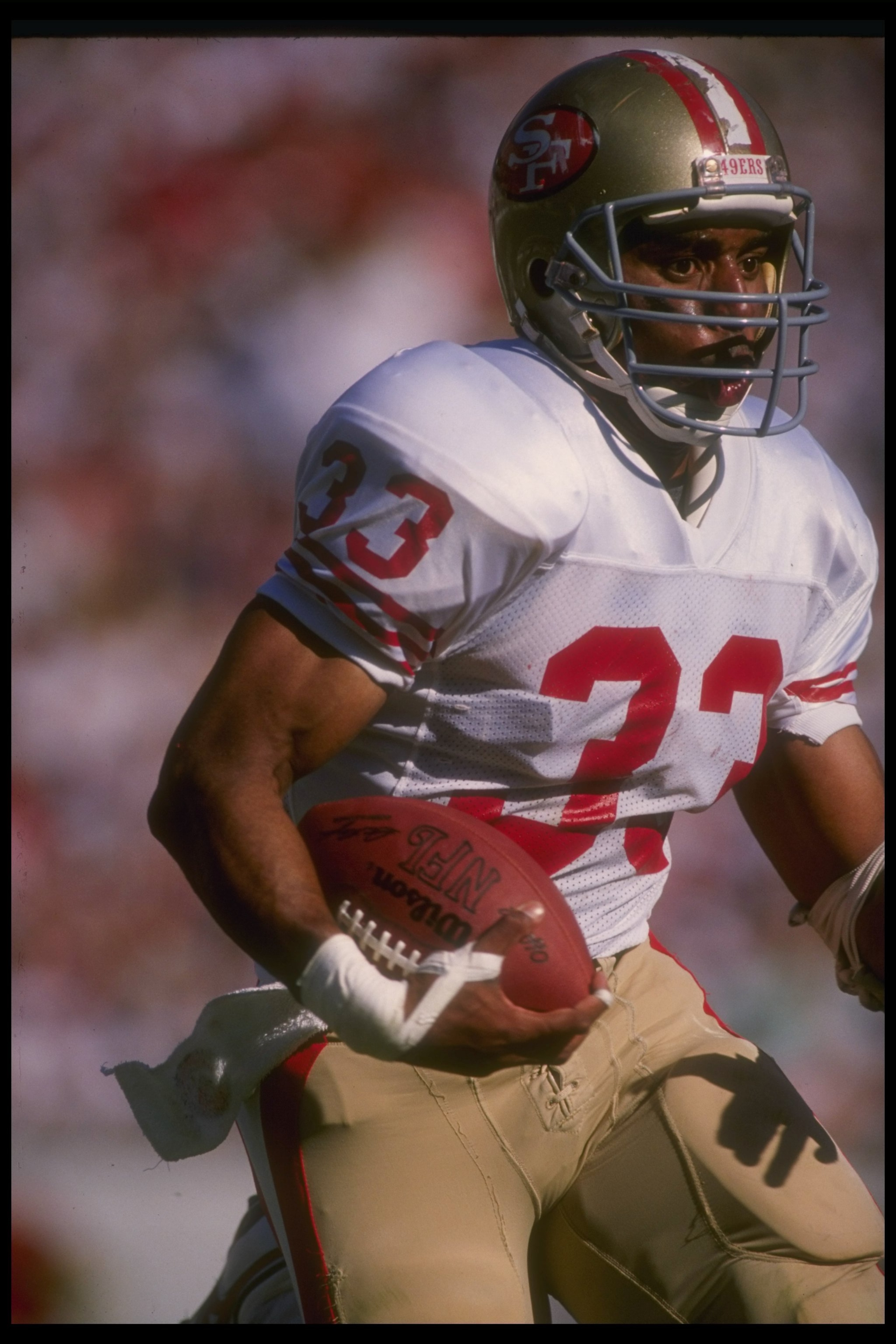
Stats: 1,686 carries, 7,064 rushing yards, 50 rushing touchdowns
Awards: 4 Pro Bowls, 4 All-Pro selections, 3 Super Bowl wins
Seasons: 1983-90
Runner-Up: Garrison Hearst
Craig definitely benefited from the talent that surrounded him: having Joe Montana as your quarterback and later Jerry Rice as a wide receiver, is going to open up the running game quite a bit.
But he took advantage of every opportunity: only once did he carry the ball more than 300 times, yet he still totaled over 7,000 yards in just eight years. And with his abilities out of the backfield (a precursor to Marshall Faulk, Craig caught 502 passes for 4,442 yards with the 49ers) he was deserving of his place on the All Decade team of the 1980s.
The next best 49ers back is tough to select. Joe Perry, who won the 1954 NFL MVP, remains the all-time leading rusher although he needed 14 seasons to set that total.
And Ricky Waters was a three-time Pro Bowler, but those were his only three seasons in a 49er uniform.
So Garrison Hearst is the choice: despite a slew of crippling injuries, he averaged over 1,000 yards in each of his five seasons with the team.
Chicago/St. Louis/Arizona Cardinals: Otis Anderson
32 of 32
Stats: 1,858 carries, 7,999 rushing yards, 46 rushing touchdowns
Awards: 2 Pro Bowls, 1 All-Pro selection, Rookie of the Year
Seasons: 1979-86
Runner-Up: Jim Otis
Otis Jerome "O.J." Anderson is best known for helping the 1990 New York Giants upset the Bills in Super Bowl XXV, a game in which he was named MVP.
But before he was shipped unceremoniously to the Giants for a pair of low draft picks in the middle of the 1986 season, he was the St. Louis Cardinals all-time leading rusher.
In 1979, he set a new rookie rushing record with 1,605 yards and (aside from the strike shortened 1982 campaign) broke the 1,000-yard mark every one of his first six seasons.
Coincidently, the man who he replaced as the team's feature back, Jim Otis, was a pretty fine runner prior to Anderson's arrival.
During their 38 years in St. Louis, the Cardinals only won their division twice, in 1974 and 1975. Otis totaled over 1,700 yards during those two seasons.






