

Minnesota Vikings: Recovering From The Fall—What to Expect In 2011
If the Minnesota Vikings don't win another game this season, and it is entirely possible that could happen, it would represent the single largest drop in wins in the team's history.
With losses at Philadelphia and Detroit, the Vikings would finish at 5-11, sevens wins short of their 12-4 season a year ago.
Since the inception of the franchise in 1961 there have only been six seasons, including 2010, that the team lost four or more games from the previous season.
If the results from the past are any indication, the 2011 season does not bode well Minnesota Vikings' fans.
In the five previous situations, the team was able to rebound, increasing their victories in the following season—but only by an average of 2.6 games.
That would project the Vikings to be an eight-win team in 2011.
Here's an analysis of the five previous situations and what we can expect for next season.
1971-1973: From 11 To Seven Wins, Rebounding to The Super Bowl.
1 of 7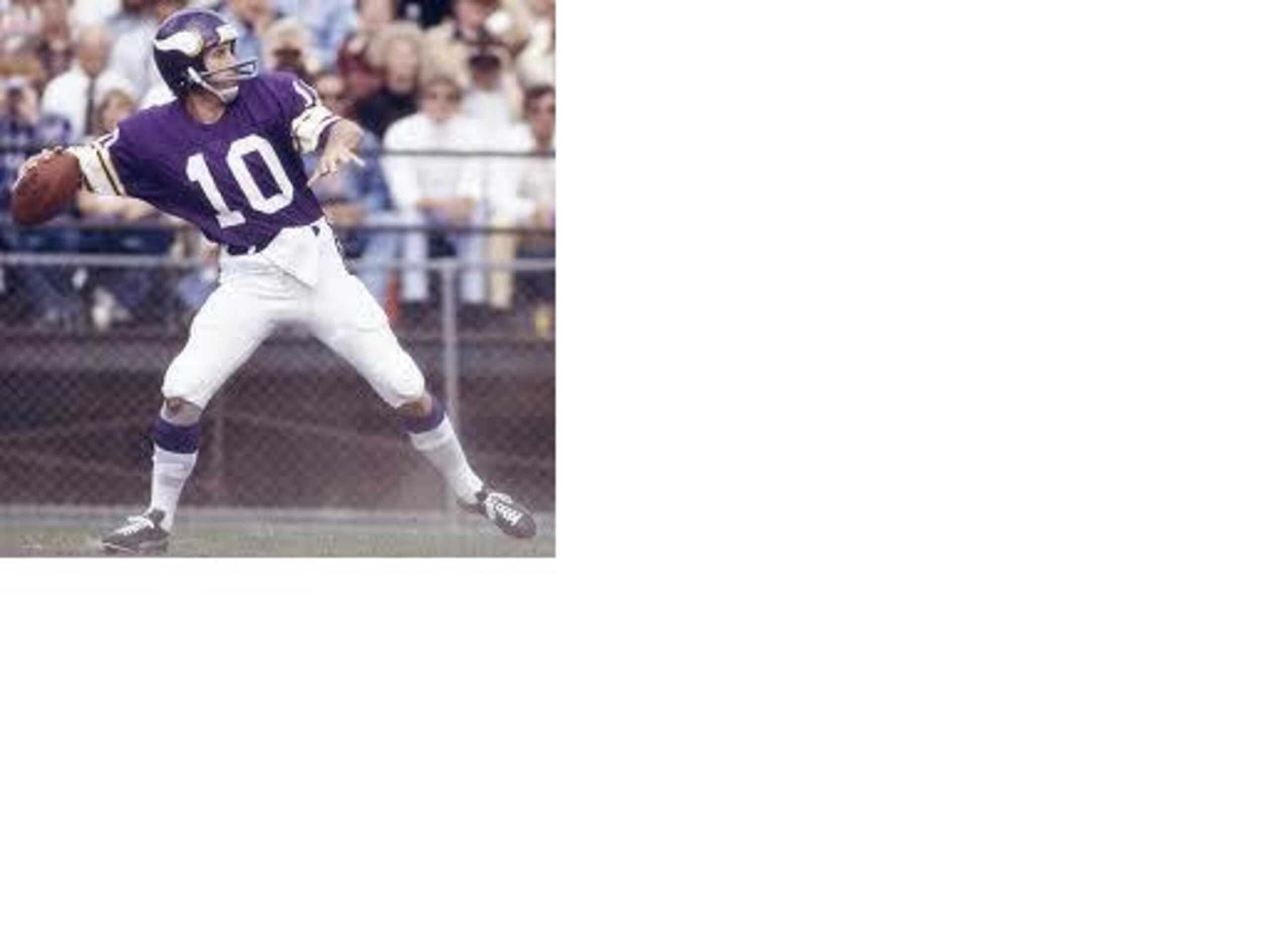
In 1968, Bud Grant's second season as the Vikings' coach, he was able to lead the Vikings to their first playoff appearance.
From 1969 to 1971, the Minnesota Vikings won three consecutive NFC Central Division titles.
In 1971, they tied the Dallas Cowboys for the best record in the NFL at 11-3.
Due to the playoff rules used at that time, the Vikings had to face Dallas to open the first round of the playoffs, where their season ended with a 20-12 loss.
The following year brought a changing of the guard at quarterback. Former Vikings draft pick Fran Tarkenton would return to Minnesota after playing five years for the Giants.
He would start all 14 games, throwing 18 touchdowns and 13 interceptions as the team dropped to 7-7.
In 1973, the Vikings would draft a running back out of Miami, who would earn the AP NFL Offensive Rookie of the Year. Chuck Foreman led the team with 182 carries and 801 rushing yards.
In his second year with Grant as coach, Tarkenton would improve his performance with 15 touchdowns and only seven interceptions.
This would help to propel the Vikings to a 12-2 record and their first Super Bowl appearance.
1983-1985: The Failed Les Steckel Experiment
2 of 7
In some situations, less is more. But in this situation, Les meant less, as in Vikings' head coach Les Steckel.
After coaching the Vikings to four Super Bowls in 17 seasons, Bud Grant announced his retirement following the 1983 season, a year the Vikings went 8-8.
That season saw them lose starting quarterback Tommy Kramer to injury and the promotion of back-up Steve Dils. In 12 starts, Dils's record was 5-7.
Steckel joined the Minnesota Vikings coaching staff as the receivers coach in 1979. In 1984, he was named Grant's replacement.
Steckel, a former Marine during the Vietnam War, intended to return the Vikings to their glory days of the '70s.
It had been 12 seasons since the Vikings' last Super Bowl appearance in 1976, and Steckel's approach was to make the Vikings more disciplined. That year, training camp would seem more like basic training.
Kramer would return to start nine games, going 2-7. The Vikings would turn to back-ups Wade Wilson, who started five games, and 35-year-old Archie Manning, who in one of two starts was sacked 11 times by the Chicago Bears.
After the season Steckel was fired, and Grant was coaxed to come back for one more season.
In 1985, the Vikings would rebound to win four more games than the previous season to finish 7-9.
In a trade with Miami, the Vikings added wide receiver Anthony Carter, a University of Michigan product who played three years in the USFL before debuting with the Vikings.
In six of the next seven seasons he would lead the Vikings in receiving.
1989-1991 The End of Three Consecutive Playoff Seasons
3 of 7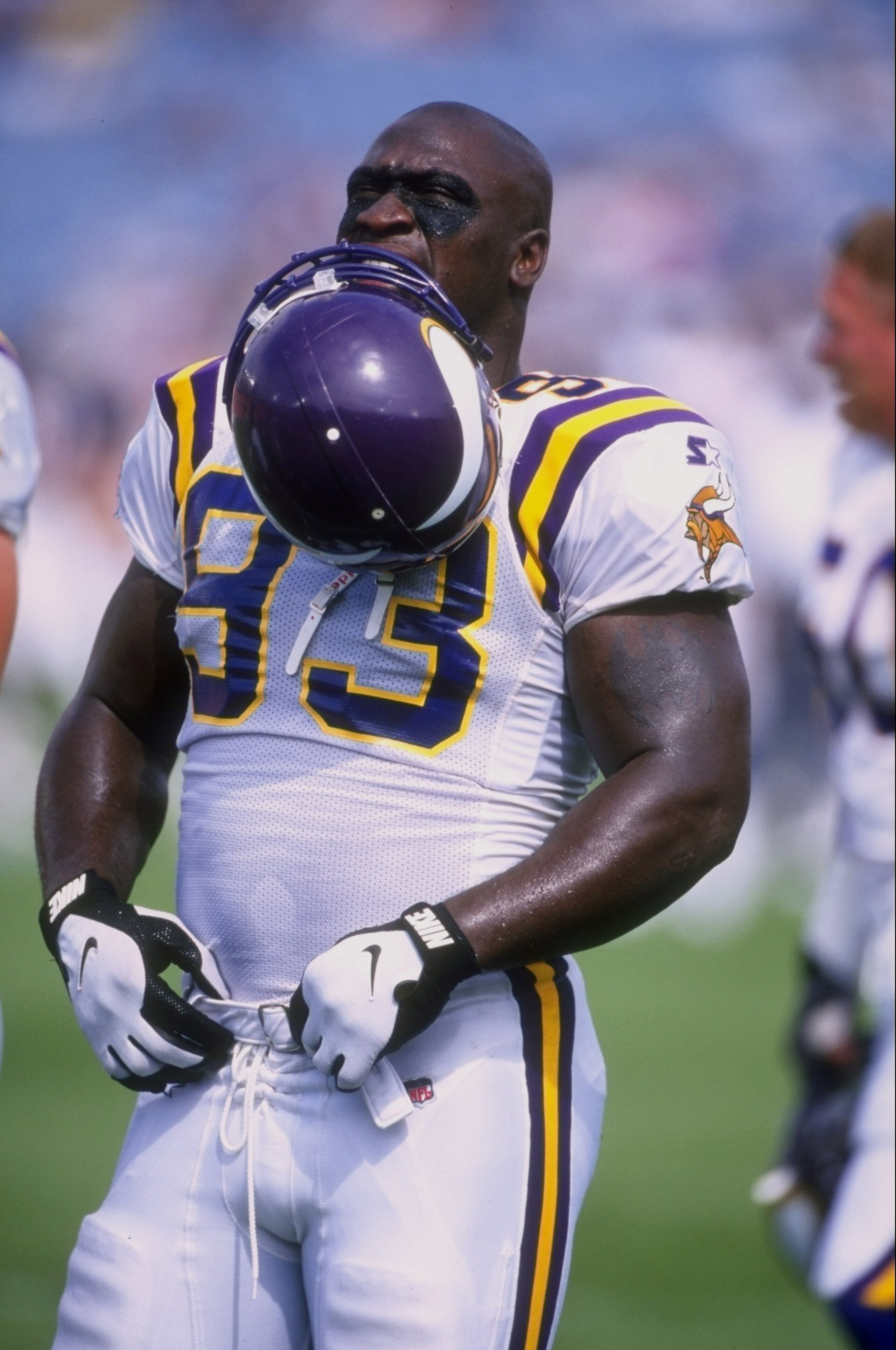
Starting in 1986, long time Vikings' offensive coordinator Jerry Burns would take over for Bud Grant as head coach. Burns would lead the Vikings' to three straight playoff appearances from 1987-1989.
In 1989 the Vikings would go 10-6 on the strength of their top ranked defense.
Led by defensive linemen Chris Doleman, with 21 sacks and Keith Millard, with 18, the Vikings would set the franchise record with 71 sacks that season. Millard would be named NFL AP Defensive Player of the Year.
In 1990, Millard would only play four games before suffering a season-ending knee injury. Without him, the Vikings defense dropped to 16th in the NFL.
The Vikings would fall to 6-10—four games less than the previous season.
1990 also saw another changing of the guard at quarterback, as Rich Gannon would split duties with Wade Wilson.
Milliard would not return for the 1991 season. His replacement was an undrafted free agent from Texas A&I University—John Randle.
Randle would lead the Vikings in sacks in 1991 with 9.5, as the team would only get 28 sacks for the season.
The team would only improve by two games, finishing the season 8-8.
Again, the quarterback duty would be split between Wilson and Gannon.
.jpg?w=2560 "Titans Giants Football")
.jpg?w=2560 "Cardinals Giants Football")
1998-2000: Franchise Best to Franchise Worst
4 of 7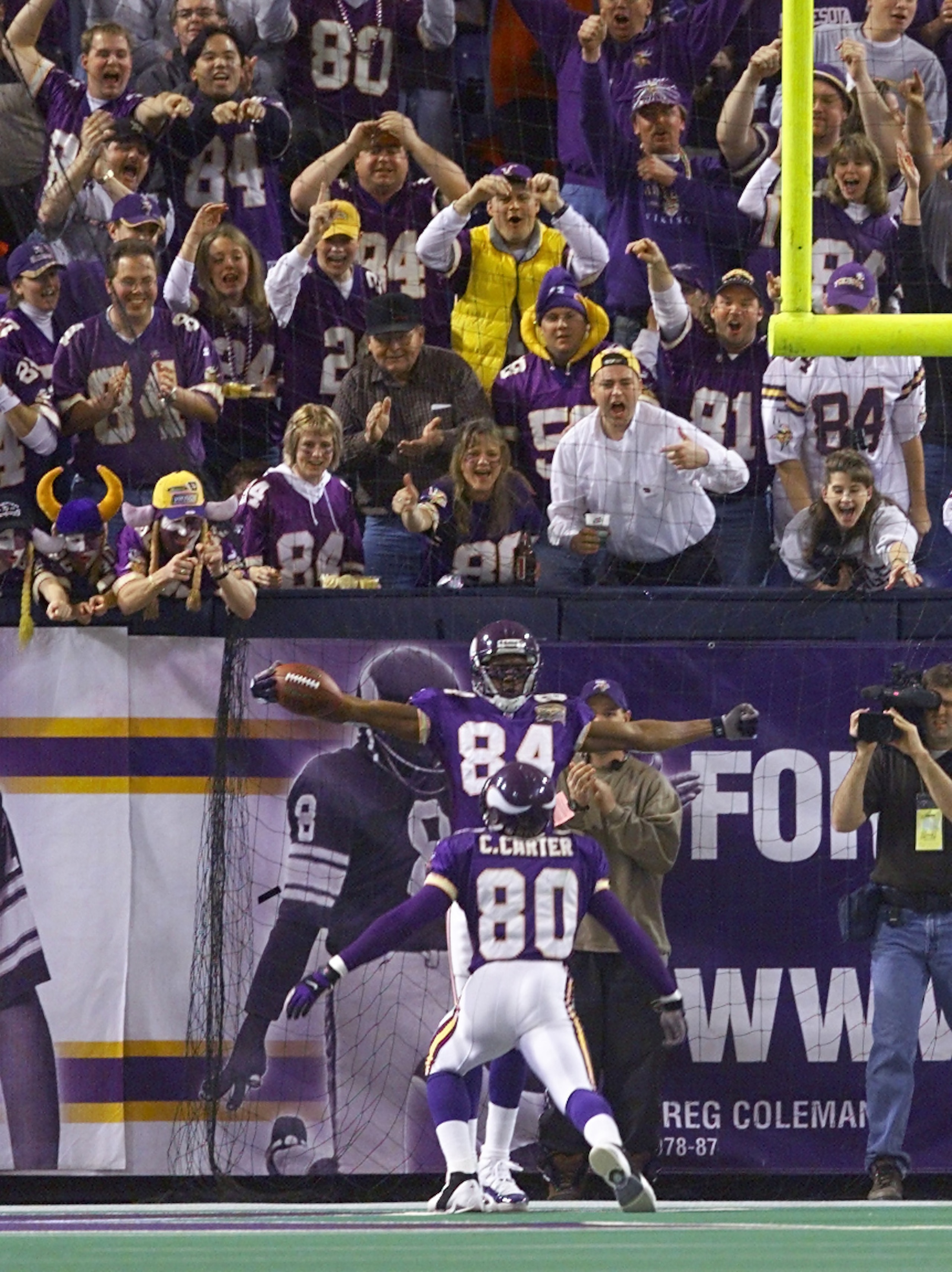
In 1998 the Vikings drafted Randy Moss with the 21st pick in the draft. He immediately made an impact on his way to earning the AP Offensive Rookie of the Year.
In the second game of the season, starting quarterback Brad Johnson suffered a broken leg.
Randall Cunningham, who signed with the Vikings as a back-up for the 1997 season, took over and would lead the Vikings to a franchise best 15-1 record.
The Vikings would end that season losing to the Atlanta Falcons in the NFC Championship game at the Metrodome.
The following year, the Vikings' traded Johnson to Washington, naming Cunningham the starter.
Cunningham would start the season going 2-4 with eight touchdowns and nine interceptions. He would be replaced by first-year Vikings back-up quarterback Jeff George.
George would win eight of the last 10 games, leading the Vikings to a 10-6 record—five more losses than in 1998, and the third largest drop from one season to the next in Vikings' history.
In 2000, both Cunningham and George would leave the Vikings and second-year quarterback Daunte Culpepper would take over.
Culpepper would start all 16 games, leading the team to a 11-5 record—a one-game improvement over the previous season, and a first-round bye in the playoffs.
Culpepper would throw for 33 touchdowns and 16 interceptions for 3,937 yards. He would also rush for 497 yards, the second most on the team behind running back Robert Smith.
The Vikings would defeat the Saints at home and travel to New York to face the Giants in the NFC Championship game.
This time it would not be an overtime heartbreaker, as the Vikings failed to show up and suffered the franchise's worst play-off defeat, 41-0.
2000-2003: The End Of Five Straight Play-Off Appearances
5 of 7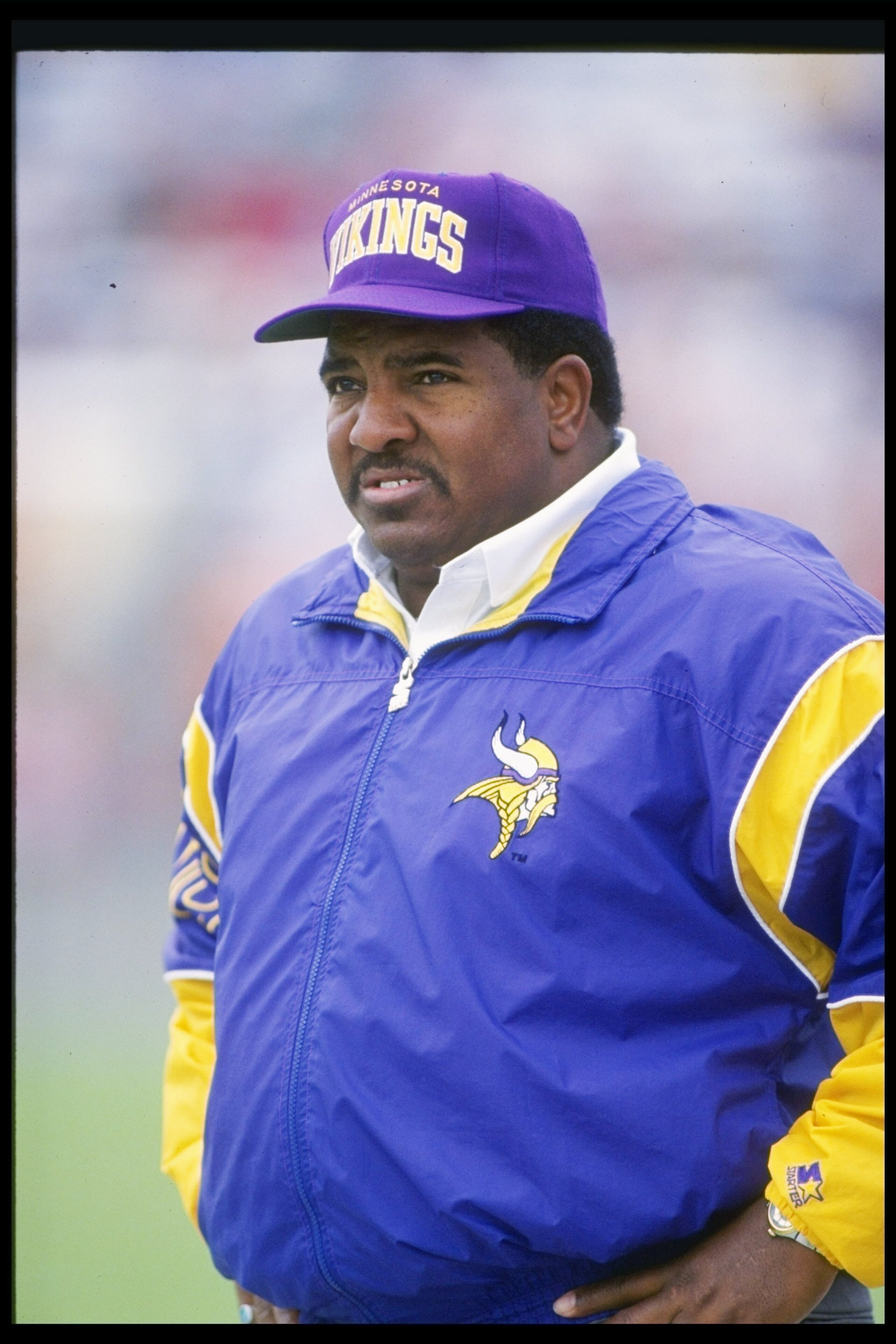
The 2000 season would be Dennis Green's ninth season as the Vikings' head coach.
It would also be his last full season with the team.
In 2001, Green would experience his only losing season. With the Vikings at 5-10, the team bought out his contract and replace him with Mike Tice for the remaining game of the season.
The Vikings would finish 5-11, six games below their 2000 season—the second largest drop in team history.
Robert Smith, the Vikings career rushing leader, would retire following the 2000 season after rushing for a career-high 1,521 yards.
The offense would struggle, as rookie running back Michael Bennett would only rush for 682 yards. Culpepper would struggle as well, going 4-7 as a starter.
A year after leading the NFL with 33 touchdown passes, Culpepper threw only 14 with along with 13 interceptions. Culpepper suffered a knee injury in week 12, ending his season after 11 games with a 4-7 record.
Culpepper would return as the starter in 2002 and start all 16 games, improving the team's record to 6-10—only a one-game improvement over the previous season.
2009-2010: Potentially The Biggest One-Year Drop in Team History
6 of 7
There are a lot of similarities between the 1998 and 2009 seasons.
Both teams experienced a resurgence with a veteran quarterback leading them to the NFC Championship game—Randall Cunningham in 1998, and Brett Favre in 2009.
Both teams had exciting 1,000 yard rushers—Robert Smith in 1998 and Adrian Peterson in 2009.
Both teams had shown an improvement over the previous season.
In each year, the team was essentially one play away from making it to the Super Bowl. In 1998, Vikings placekicker Gary Anderson missed only one field goal all season, and that was in the Championship game and would have given the Vikings a 10-point lead with two minutes remaining. Instead, the Vikings eventually lost in overtime.
Finally, both teams would also fall off the next season. For the 1998 Vikings, there really wasn't any way they could improve after winning 15 games.
The 1999 and 2010 seasons would start out the same way, going 2-4 to open the season. The difference was that the 1999 team could turn to its back-up quarterback and salvage the season.
The precipitous fall from 2009 can be attributed to the loss of the team's No. 1 receiver for the first nine games, the injuries to its cornerbacks and the fact that Favre has not been 100-percent all season.
All this turmoil led to a mid-season coaching change and a lot of uncertainty for the team's future.
2011: What Does The Future Hold?
7 of 7
A look back over the Vikings' history tells us we expect an improvement in 2011—but not by much.
With an average improvement of 2.6 games, the 2011 Vikings can expect to finish anywhere from 6-10 to 9-7.
The recovery in the past could be associated with the introduction of a key player that led the Vikings in one category or another—like in 1985, when Anthony Carter led the team in receiving yards, or when John Randle led the team in sacks in 2000.
If the Vikings don't sign Leslie Frazier as the head coach, the 2011 Vikings could suffer a set back when a new coach comes on board and wants to remake the team.
The team will also have a new quarterback. Right now, that does not appear to be rookie Joe Webb.
Will they be able to find someone like Cunningham or Favre who can step in and immediately turnaround the franchise? About the only way that happens is if Minnesota can somehow land Michael Vick, and I just don't see that happening.
The best best for 2011? Based on a new quarterback and possibly a new coach, a single game improvement and a 6-10 season is the best we can hope for.





.jpg?w=2560 "LaFleur's Fumbling Warning ⚠️")