Green Bay Packers: Showing the NFL How to Win Without a Running Game
In the National Football League, there are several time-honored adages about how to win consistently:
Play good defense. Win the field position battle. Protect your quarterback. And maybe the most used of all, run the football.
It seems that the Green Bay Packers have been the exception to that final rule. Because let's be honest, when your quarterback is your second leading rusher and leads the team in rushing touchdowns, it doesn't say very much about your ground attack.
So how have the Packers managed to win eight of their first 12 games this season without a running game?
Let's look at the most important reasons why the Packers have been able to win despite their obvious deficiencies in the rushing department.
The Big Five Formation
1 of 6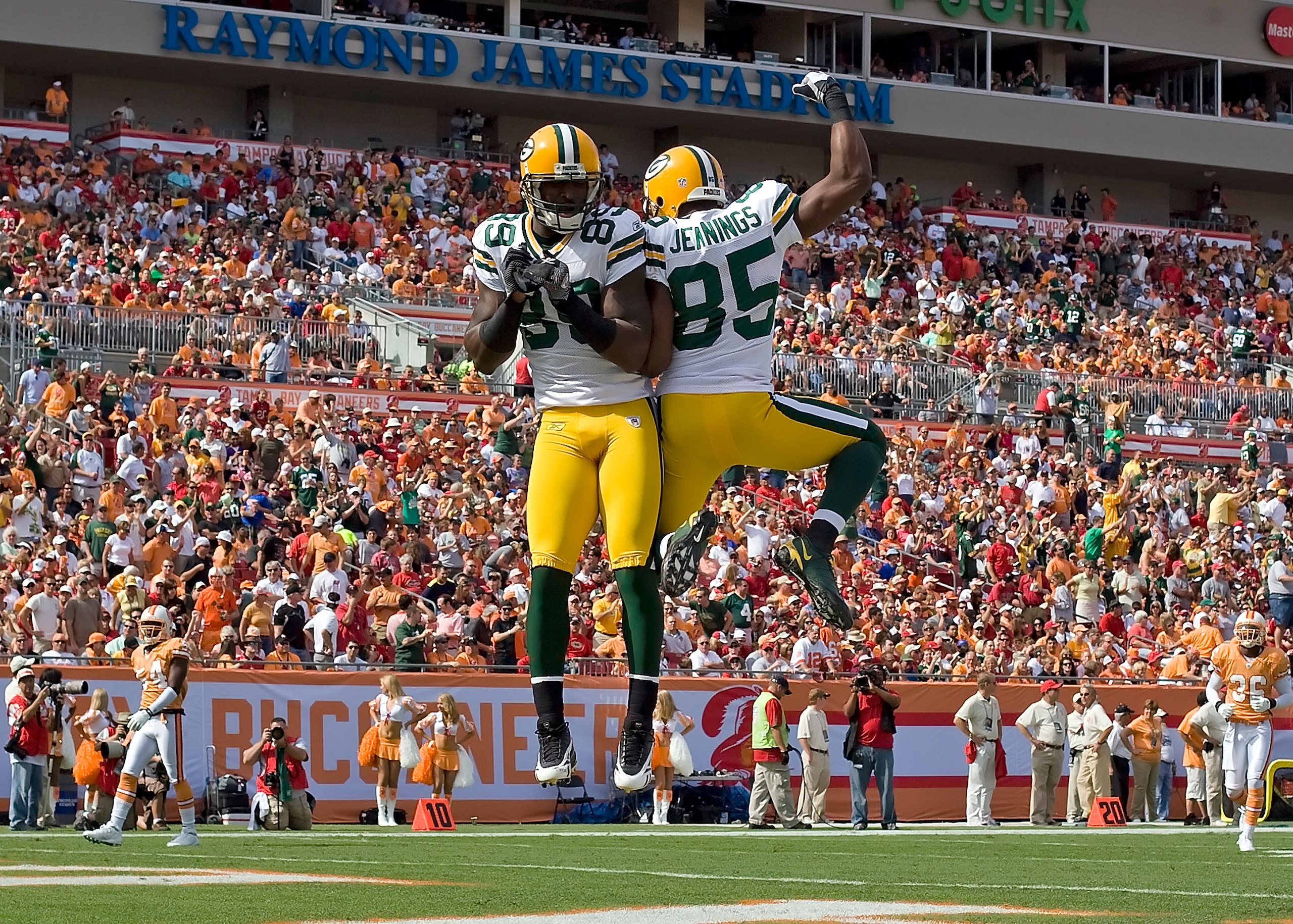
The Packers have only begun using the "Big Five" formation recently this season, but it looks like a trend that's here to stay in Green Bay.
Deploying all five receivers on the depth chart, the Packers feel that they can create matchup problems for any defense in the NFL.
But 2010 isn't the first time the Packers have turned to the "Big Five" when the running game was down. In fact, over the past four seasons, the Packers have used a five wide receiver set more than any team in the NFL.
Back in 2007, when the Packers were also struggling rushing the football, the Big Five was used to help offset the running problems. That Packers team finished 13-3 despite not having any resemblance of a running game until Ryan Grant burst onto the scene.
Fast forward to 2010, and the formation has been equally effective. It's hard to argue with the logic behind the idea: Packers receivers Greg Jennings, Donald Driver, James Jones, Jordy Nelson and Brett Swain represent probably the best five receiver combination in the NFL.
Jones and Nelson would be No. 2 and possibly No. 1 receivers on many NFL teams, and the Packers use that to their advantage in this formation.
It's about as opposite to a smash-mouth running attack as you can find, but the Packers have used this formation better then anyone in the NFL to help offset their rushing woes.
Aaron Rodgers' Legs
2 of 6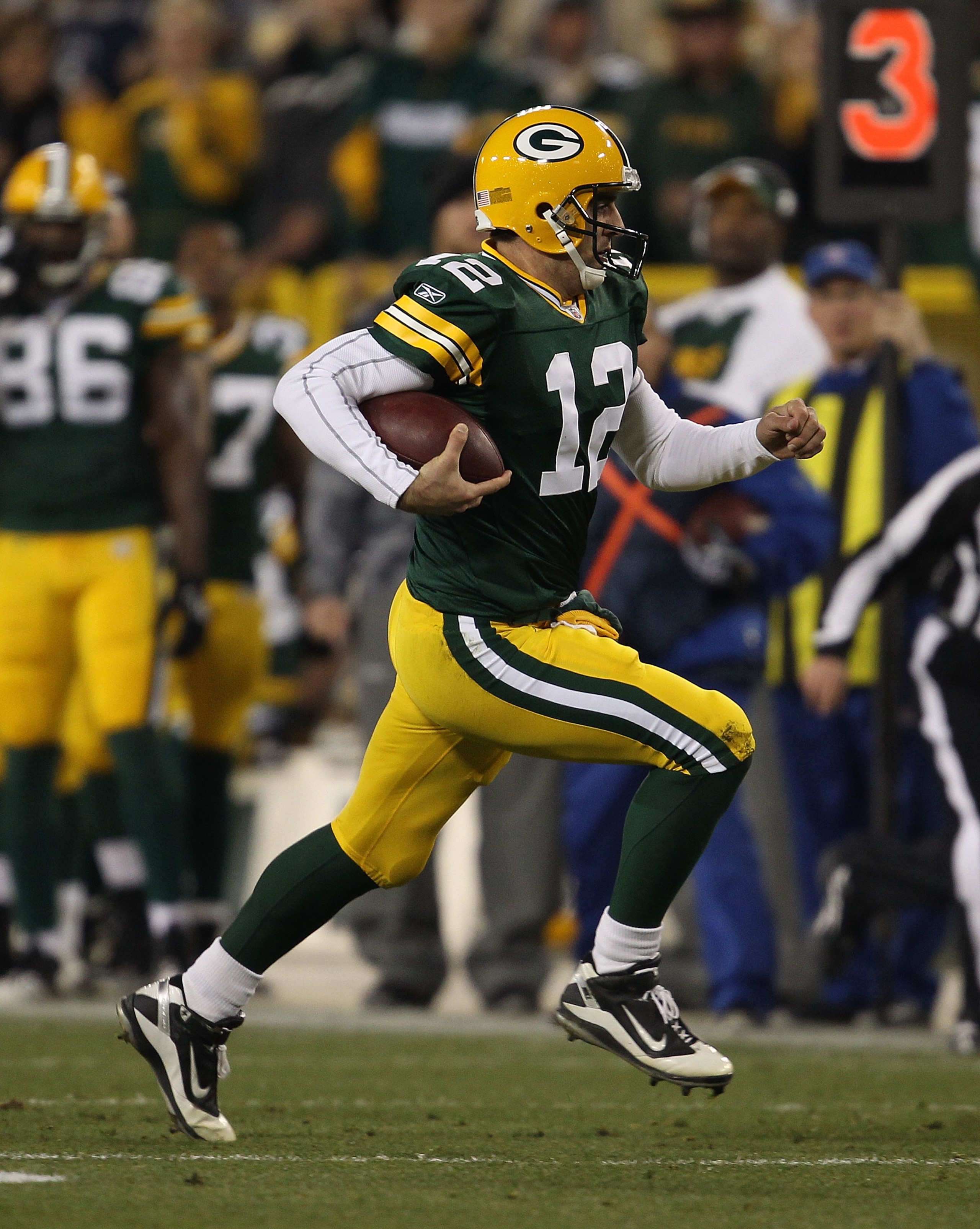
Aaron Rodgers is a far cry from Michael Vick, but he's added everything to the Packers' offense that Vick has for Philadelphia.
Rodgers is the Packers' second leading rusher with 284 yards, and he actually leads the team with four rushing touchdowns. That's as much an indication of how bad the Packers are running the ball as how important Rodgers is to offsetting that problem.
Because let's look at the facts:
The Packers have had one 100-yard rusher (Brandon Jackson, 115 yards, Week 5) in 2010. James Starks' 73 yards this Sunday was only the second time all season the Packers have had a rusher over 65 yards.
In five games this season, the Packers have had a leading rusher under 50 yards rushing, and Rodgers also led the Packers in rushing (51 yards) in their Week 11 loss to Atlanta.
Rodgers' 18 rushes resulting in a first-down also ranks him second on the Packers' roster.
All these shortcomings are why Rodgers and his athletic ability are so important to the Packers' success on offense without a rushing game.
Aaron Rodgers' Arm
3 of 6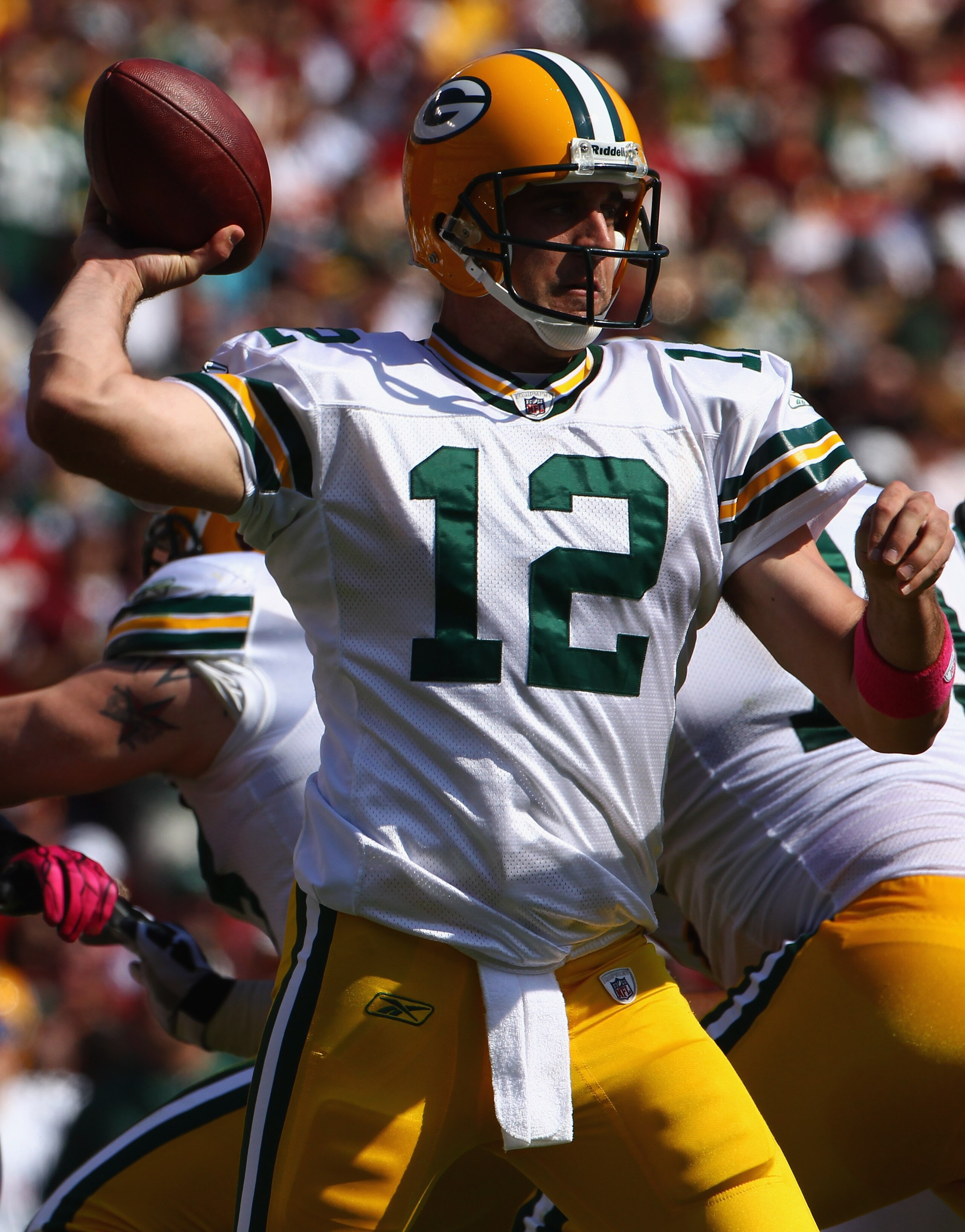
While the rushing ability of Rodgers certainly helps offset the Packers' rushing problems, it's his arm that really allows Green Bay to continue winning despite their lack of a running game.
Rodgers has blossomed into one of the NFL's best quarterbacks, and the Packers are lucky that's the case.
In games where the running game has faltered the most this season, Rodgers has had his best games. A couple of examples:
Week 3, Packers @ Bears: John Kuhn leads the team in rushing with a grand total of 31 yards, but Rodgers is nearly perfect. He finished the game 34-of-45 for 316 yards with one touchdown throwing and one rushing.
Week 9, Cowboys @ Packers: Again, Kuhn leads the team with just 50 yards, but Rodgers throws for 289 yards and three touchdowns in a Packers rout.
Week 11, Packers @ Falcons: Rodgers leads the team in rushing with 51 yards and also throws for 344 yards and a game tying touchdown with under a minute left.
Overall, it's Rodgers that keeps the Packers offense moving despite the defense's knowledge that Green Bay has very little in terms of a rushing game.
Basically, Rodgers has done it all and more for the Packers and their offense this season.
I'd go as far as to say he's had to do more for his team, and still won football games, than anyone in the NFL. Isn't that the definition of the Most Valuable Player award?
.jpg?w=2560 "Chiefs Giants Football")
.jpg?w=2560 "Steelers Buccaneers Football")
.jpg?w=2560 "Titans Colts Football")
A Smothering Defense
4 of 6
Aaron Rodgers has been undoubtedly spectacular this season, but the Packers wouldn't be winning at the pace they are without a defense that has played as good as anyone this season.
Without a solid run game helping out the offense, the defense has been called upon time after time to make big stops and turn the opponents' offense over so the Packers have short fields to work with.
The Packers defense has answered the call. Green Bay leads the NFL in scoring defense, and while they aren't ranked highly in yards given up, the Packers have made the offense work for every point they score.
In fact, according to NFL.com, the Packers have the most "efficient" defense in the NFL as well. The Packers make their opponent gain 127 yards for every touchdown they score, which to me is a much better standard of rating a defense than just looking at yards given up.
Put simply, the Packers bend-but-don't-break defense is actually a reality. That's been very important this season because at times the Packers offense takes it's time in getting into a rhythm—understandable considering the Packers' rushing problems.
Is Rushing a Thing of the Past?
5 of 6
On Sunday, the Packers wore throwback jerseys in honor of Green Bay's 1929 NFL Championship team. It was an ironic symbol of a time when rushing the football was the driving force of every football team.
It's been 81 years since then, and it'd be hard to argue that the NFL hasn't turned into a passing league. Look at all the elite passers in the league today: Tom Brady, Drew Brees, Peyton Manning, Phillip Rivers, Rodgers, etc.
These passers have put up numbers that were unheard of until recently in the NFL. However, that begs the question: Is rushing the football a thing of the past?
Recent history suggests that's more a truth than many think.
The Colts were the 32nd ranked rushing offense a year ago, and were 5 point favorites over the Saints in the Super Bowl. New Orleans were effective running the ball, but to say they were anything but a pass-first offense would be idiotic.
The Cardinals, Patriots and the 2006 Colts are all examples of pass-heavy offenses making the Super Bowl in the past few years.
Even having an elite rusher doesn't guarantee you anything either. Chris Johnson (2,008 yards last season, 8-8 record) and Adrian Peterson (best running back in the NFL, one career playoff win) are great examples of that fact.
Conclusion
6 of 6
Offensive mismatches, Aaron Rodgers and a smothering defense are all reasons why the Packers have overcome their lack of a running game this season.
But as the last few years have shown, the Packers aren't the first to beat the time-honored adage of a must-have unstoppable rushing attack.
It's no longer an anomaly in the NFL—teams that don't run the ball can and have won in the NFL in recent years. This league is set up for quarterbacks to succeed, and as long as you have a good one under center, your team has a chance.
And in the Green Bay Packers' case, they have that quarterback.
The Packers have eight wins this season, and yet, will be the first to agree that doesn't put anyone in the Super Bowl.
But would it be such a stretch to envision Aaron Rodgers and the Packers in the big game this season?
Running game or not, this team has been a winner this season. If they get into the playoffs, the Packers are going to be a hard out for any NFC team.
Because regardless of whether they have their ground game figured out, the Packers have found ways to win football games without it.
.jpg?w=2560 "Eagles Jaguars Football")
.jpg?w=2560 "Steelers Saints Football")

.jpg?w=2560 "🚨 Week 8 AP Top 25 Poll")