
NBA What Makes a Champion? The Five Most Common Factors From the Past
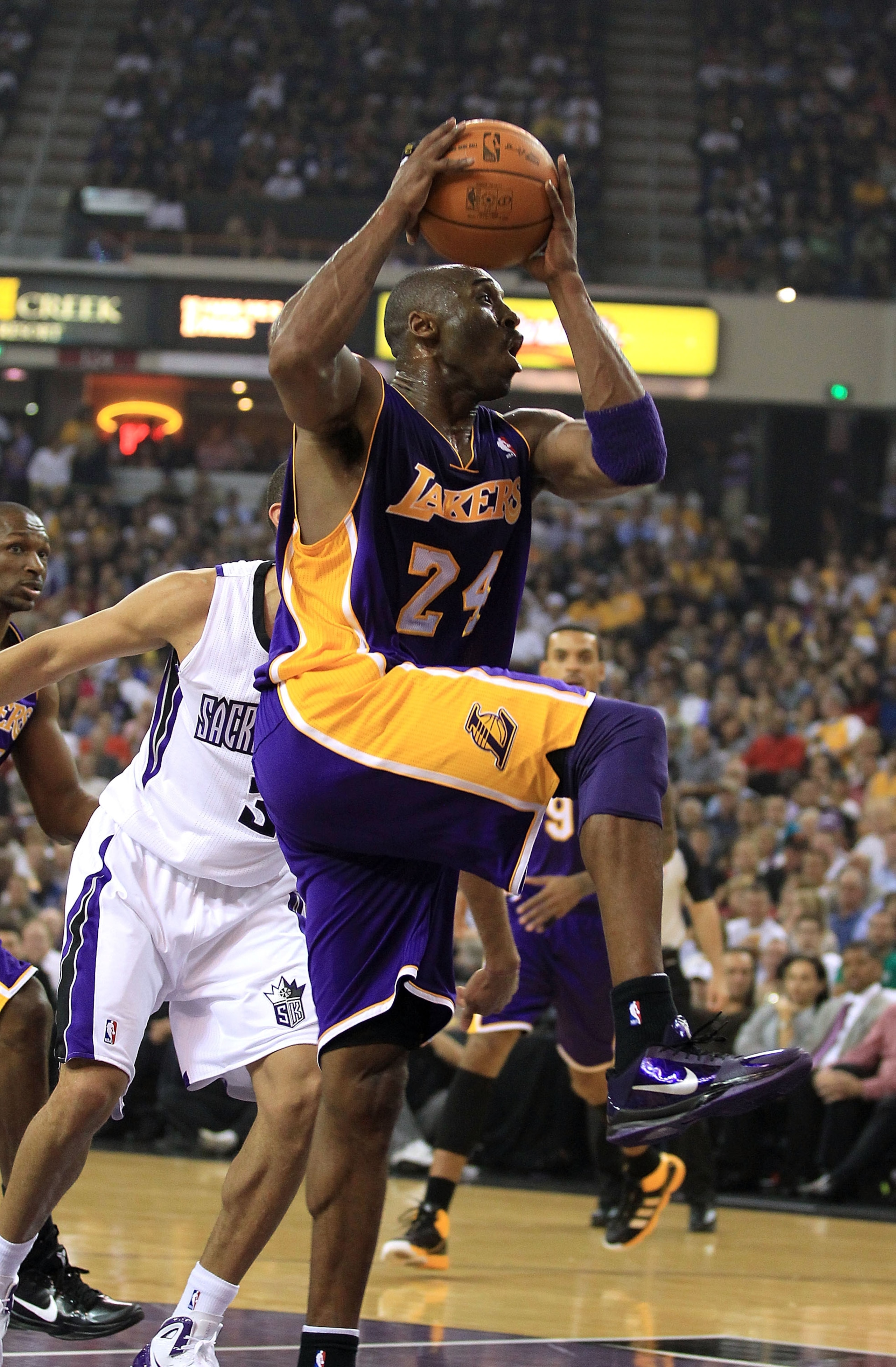
Kobe Bryant and the Los Angeles Lakers are chasing their third consecutive ring this year. The Miami Heat and Orlando Magic hope to prevent them. Young teams like the Oklahoma City Thunder and Chicago Bulls are full of promise and could be moving in that direction in the future. It all begs the question, what makes a champion?
Usually these conversations start with a thesis, and then point to limited examples of premises pointing to that conclusion. If a team has a strength, the advocates of that team will point to those strengths and argue using previous winners with similar strengths to "prove" that those strengths "win championships."
Rather than begin with a conclusion it seemed a worthwhile study to begin with the evidence and see if there were any commonalities between winning teams from the past. Such commonalities shouldn't necessarily be universal, but are there trends? Does defense really win championships? Do elite players win rings? I wanted to find out which of these statements were actually truths, and which were merely myths.
To find out, I took to basketball-reference.com and researched several key factors from all the championship teams since the merger in 1977. I assembled them into a table, and then looked at the evidence to see what trends appeared. These are the results of my study.
Do Elite Players Win Rings?
1 of 6
Karl Malone has scored more points in the history of the game than any player but one. Yet, when discussing the all-time greats, his name is not normally brought up. The reason being is the thought that the truly elite, the truly great players, win championships.
On the other side, Kobe Bryant recently won his fifth ring, and now his name is being mentioned as one which belongs in that conversation. While Bryant's numbers aren't quite the same as others who aren't in the conversation, his advocates point to his rings as proof of his greatness.
This actually brings up two questions. First, does a team need a great player to win, and second, is a great player enough to win? Is it accurate to say that "Kobe gets credit for the last two?" How does history compare with these sorts of statements?
Over the course of the last 33 years, 21 of the 33, or 61.76 percent of teams who have won the NBA Championship have had a player who was in the top three in Player Efficiency Rating. Almost 80 percent of the time (27 occurrences) teams have been led by one of the top five in PER among all starters in the league.
Of course there are four or five teams every year with at least one player in the top five, so having a player in the top five doesn't guarantee winning. However, if your team doesn't have a top five player—an elite player—the chances of winning are greatly diminished.
There are only five teams who have not had a top ten player in PER that have won a championship. The '78 Bullets, the '79 Supersonics and the Pistons from '89, '90, and '04 are the exceptions. In the case of the Pistons and Sonics, the anomaly can be explained by the fact they were largely defensively oriented teams. In other words, they had the players, PER just doesn't measure defense. Also, they were more of a balanced scoring attack. The Bullets though are just an anomaly.
The bottom line is that while it's not essential to have an elite player to win a ring, it sure does help. Kobe Bryant is an elite player and he deserves credit for at least the last two rings. We'll cover the other three next.
Are Ellite Players Enough To Win a Championship?
2 of 6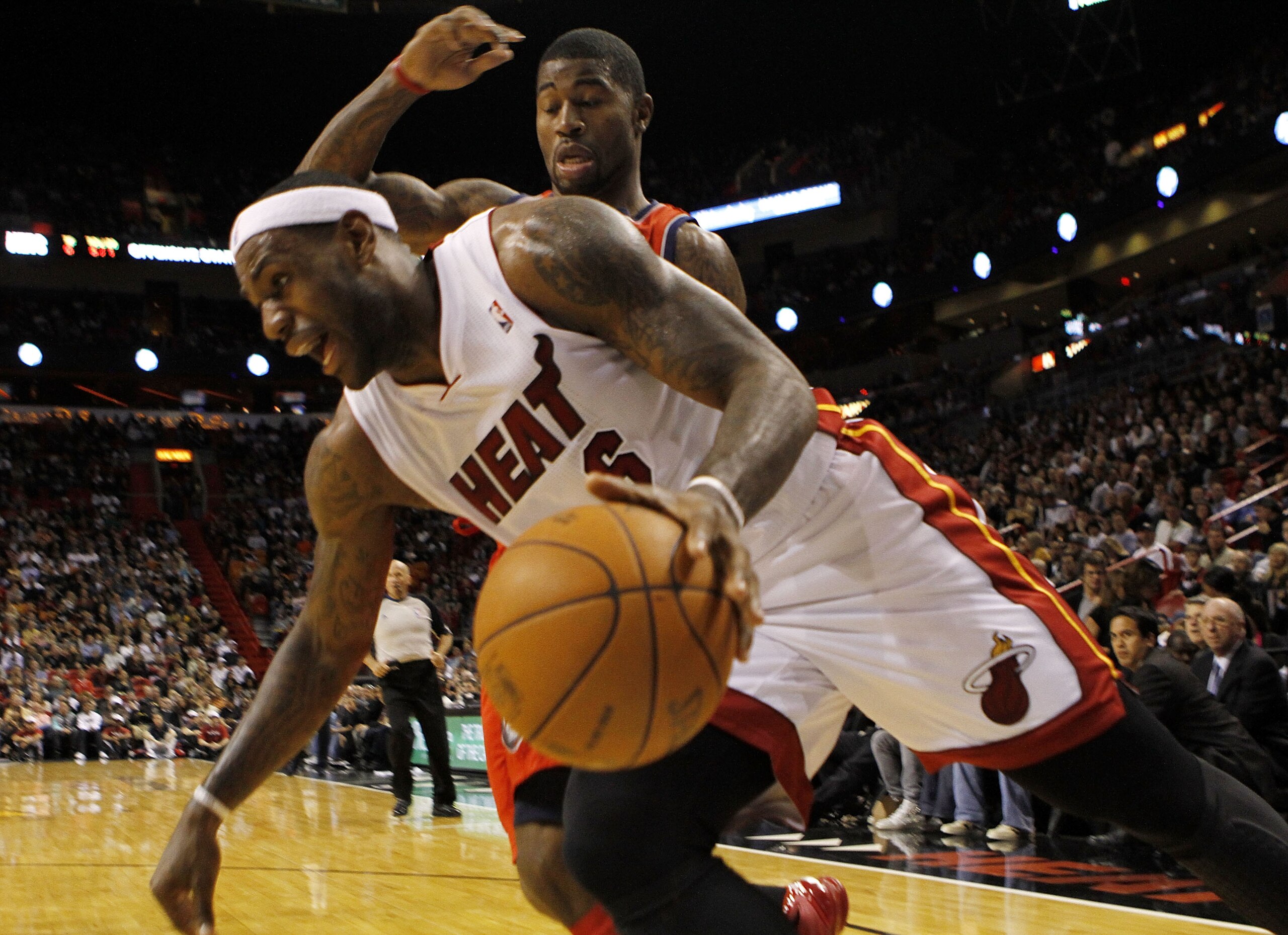
LeBron James, you may have heard, left Cleveland to play with Dwyayne Wade and Chris Bosh in Miami. Some, such as Charles Barkley, have said that he would have secured his legend had he stayed in Cleveland and won, and view his departing to play with Wade a concession that he doesn't "have what it takes." Are such criticisms legitimate?
It's feasible that the second best player on the team is more important than the best player on the team, if that make sense. By that I mean having a second top tier player is arguably as important as having the first great player. Over 53 percent of the NBA's last 34 champions have had at least two players among the top 15. Over 73 percent have had two players in the top 25.
Only one team has won without more than one player in the top 50—the Houston Rockets in '94, when Hakeem's "help" was Otis Thorpe, who finished 63rd in the league with 16.1. Last year LeBron's best "help" was Jamison, who's PER after joining Cleveland was 16.5, good for 67th in the NBA.
If Cleveland had won last year it would have been the worst supporting cast in the history of the NBA. While of course Cleveland didn't win, it seems unreasonable to expect that James would do something that even Oscar Robertson, Wilt Chamberlain, Kobe Bryant and Michael Jordan couldn't do: win without help. All of them played on teams without a significant number two, and none of them won until they had one.
In fact, at present the only team to have won an NBA championship in the last 30 years with Hall of Fame eligible players and have only one player in the HOF is the '94 Rockets team. The second important factor to winning a championship is to have a second great player.
Distribution of Scoring
3 of 6
It's not just about having a second great player, it's about distributing the scoring. In games he played, Kobe Bryant could be accounted on for about 26.55 percent of his teams points. Over the last three years LeBron James has scored about 30 percent of the Cavaliers points. Don't take that as a comparison of LeBron and Kobe, as the players have both been scoring at roughly the same pace over that time. In other words, it's not so much about what Kobe and LeBron are doing, it's about how much their teammates are scoring.
Only one team has won while having a player score more than 30 percent of it's points—the '93 Bulls. Only five teams, barely over 20 percent, have depended on their leading scorer for more than 27.5 percent of their points. More than 60 percent of teams get more than 75 percent of their scoring from the rest of the team. In short, it's a team game and the team needs to score.
As far as I can tell, the adage "teams win championships" is not a myth, it's a reality. Arguments about how "X" has rings makes for good discussions on Around the Horn but it makes for bad history.



Where They Play Matters
4 of 6
Think of the great tandems that have won in the past. Kobe and Pau; Allen, Pierce and Garnett; Kobe and Shaq; Duncan and Ginobli; Thomas and Dumars and Magic and Kareem. Almost every team that has won an NBA championship have done so with a particular combination of their top two or three players. Almost without exception they have a big man to play under the basket and a perimeter player.
There are a couple of exceptions to this rule, but even that's with a bit of a qualifier. The Bulls won without a high scoring big man, but they somewhat compensated for that. Pippen provided the outside scoring, and Jordan—whether it was from driving into the paint or from the low post game he developed later in his career—provided the points in the paint. The Bulls, in both of their three-peat runs, had capable defensive big men. It was Grant and Cartwright the first time, and Rodman and Longley the second time.
The other exception was the Celtics dynasty when their best players were McHale and Bird. While Bird was a "big man," he offered plenty of perimeter offense as one of the best shooters in the history of the game.
Then there is the great combo that never won, which is Stockton and Malone. My consideration of why they never won is that while Stockton was one of the great pure point guards to ever play, he wasn't a great pure scorer. It's not so much about an inside and outside player, it's about an inside and outside scorer.
This isn't an opinion about what you need, it's a historical reality of what winning teams have had. My thought on why this is is that it forces defenses to defend the whole court and also helps the team to defend the whole court. It's not about perimeter or paint it's about perimeter and paint.
Managing Possession
5 of 6
People don't realize how much pace matters in a game, and how little it matters. When I say how little it matters I mean all kinds of teams have won, from the "Bad Boy" Pistons to the Showtime Lakers. When I say how much it matters I mean how much it affects certain statistics.
For instance, the '05 Spurs aren't considered a great offensive team—and really, they aren't. However they are better than you might think. In terms of actual scoring they were 18th in the league, with 96.2 points per game. However, in terms of Offensive Rating, which measure points per 100 possessions, they ranked 8th.
It's not as much about how much you score, but how often you score. While 22 of 24 teams have finished in the top 10 in points per game, 28 have finished in the top 10 in Offensive Rating. In fact, on average NBA champions have finished two rankings higher in Offensive Rating than in points per game. In fact, more than half of NBA champs have finished in the top five, and only one team has won without finishing in the top half of the league.
Similarly, on defense some teams are better than you'd expect if you analyze how much they stop their opponents from scoring. The '85 Lakers were 14th in points allowed, but were 7th in Defensive Rating. With the tempo "Showtime" played with, obviously their opponents were going to score more points. It's not at as much an issue of how many points the other team scores, but how often you stop them from scoring.
The most compelling consistency in previous NBA champions is Defensive Rating. Nearly half (16 teams) have finished in the top three in the league, 23 have been in the top five, and only two teams—the '01 Lakers and the '95 Rocket—were outside of the top 10. When it comes to winning championships, nothing seems to matter as much as stopping the other team when they have the ball.
The saying goes, there's more than one way to skin a cat. The same can be said for this. Different teams have scored in different ways. Some have emphasized good shooting, some have emphasized offensive rebounding, some have managed the ball well and had low turnover rates.
Defensively, some teams have emphasized rebounding, others have had aggressive defenses which forced a lot of turnovers. Others have controlled the pace of the game and forced their opponents to slow down and "play their game."
Whatever method of "cat skinning" you choose, there are basic things which end up the same—said skin is separated from said cat. How you do it isn't important, what matters is whether you do it. Teams that win rings score when they have the ball and stop the other team from scoring when they have the ball. This may seem to be on the level of "duh" when you stop to think about it, but it's amazing how few people actually get it.
What Does This Tell Us About the Future?
6 of 6
There are two teams presently that meet all the criteria above. They have a superstar, they have another superstar, they have an inside scorer and outside scorer, they have scoring from multiple players,and they are in the top 10 in both Offensive Rating and Defensive Rating. Wanna take a guess who they might be?




.jpg?w=2560 "Jonathan Taylor Landing Spots 📍")


