
New York Mets All-Time Roster
With the Mets season winding down and culminating in yet another playoff miss, it is important for fans of the team to ask ourselves why we continue to support a perennial losing franchise?
To answer this question, I have compiled my own version of the Mets All-Time Roster to prove to my fellow fans that our franchise has a storied history.
Granted, I have only been a die-hard fan since the mid-1990s, but in following the team’s history religiously, I feel I am more than capable of constructing this team.
I only chose players who played for the Mets at least four seasons and made a significant impact on the club. For each position, I included players who deserve honorable mention.
For pitchers I only picked the top three starters and top three relievers rather than a full staff.
Feel free to agree, disagree, or even suggest players who I might have forgotten on this team.
Enjoy!
Manager: Gil Hodges
1 of 17
The first decision on this roster was a tough one.
I went with Gil Hodges because of the immediate impact he had on the expansion Mets.
Although he was an original member of the 1962 team, his real presence wasn’t felt until he took over as manager in 1968. The Mets improved by 12 games and started gaining some respectability.
Hodges was dubbed a miracle worker after the 1969 Mets won the World Series. His career was cut short when he passed away suddenly before the 1972 season. Who knows what the Mets could have accomplished with Hodges at the helm?
Naturally, Davey Johnson would be the other candidate for the manager of this team. Johnson owns the highest winning percentage in Mets history (.588) and the most wins (595). In fact, Johnson amassed over 200 more wins than Hodges.
However, I did not choose Davey because, unlike the 1969 team, the Mets teams of the late 1980's had worlds more talent but failed to play up to their full potential. Whether or not that was related to Johnson, I do not know.
I do know however that Gil Hodges took a team of no-names (other than Tom Seaver) and won the first World Series in franchise history.
Honorable mention: Bobby Valentine (who knows Mets’ fans? We may see Bobby V back in 2011).
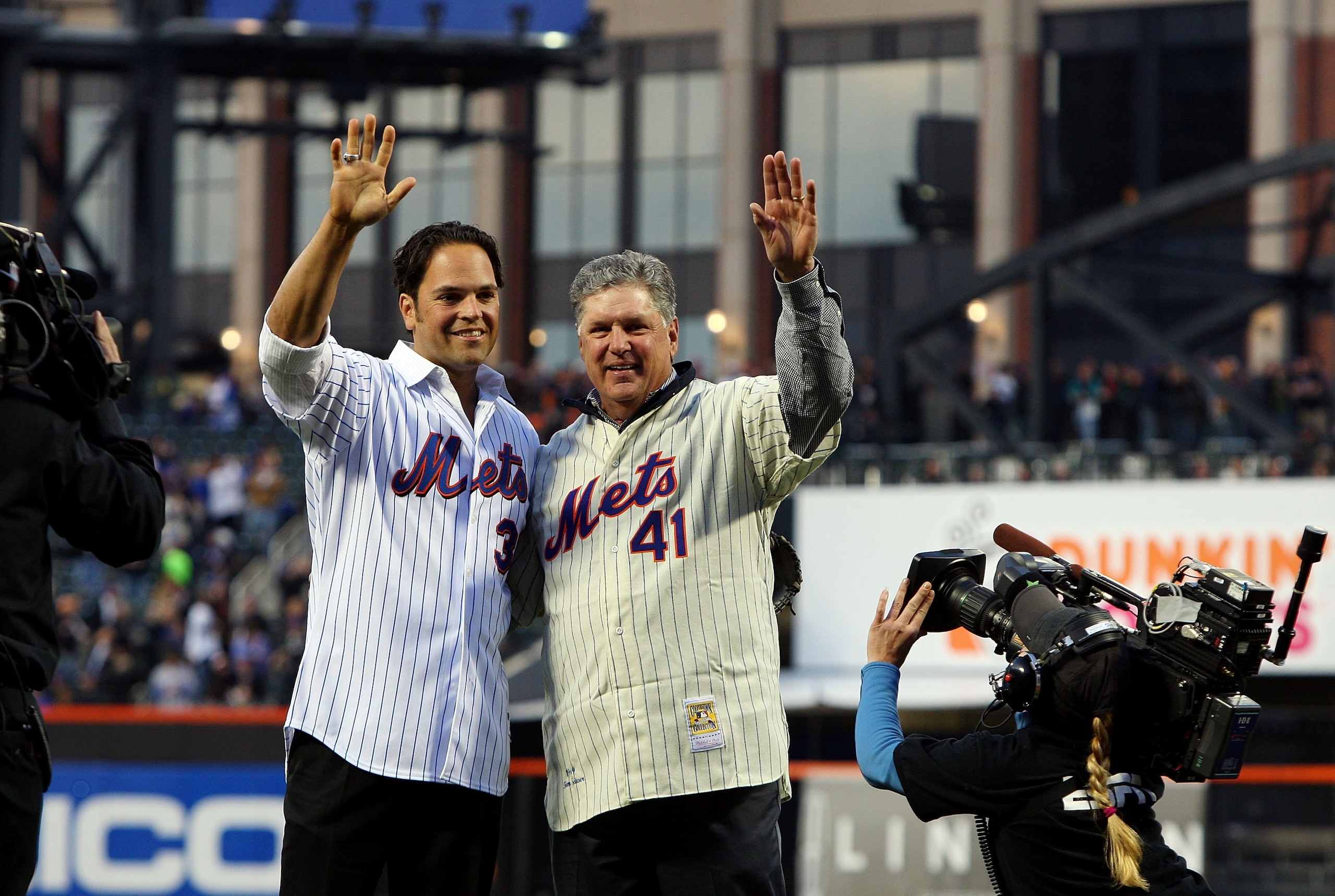
Catcher: Mike Piazza
2 of 17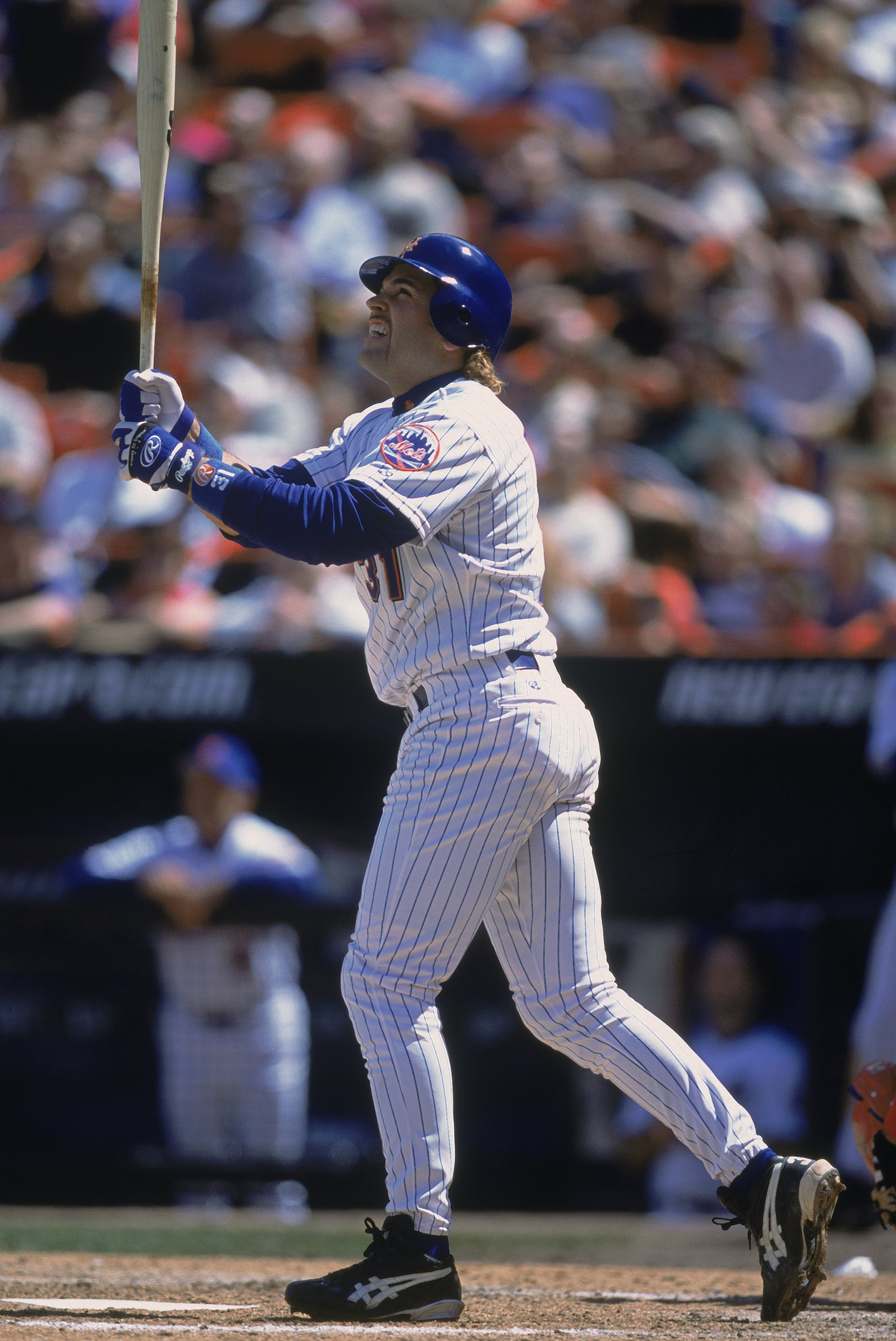
This one was easy.
Mike Piazza is the greatest hitting catcher in the history of the game, and Mets fans should consider themselves lucky to have been able to watch him play for almost a decade.
Piazza came over in a trade with the Florida Marlins in 1998 and immediately turned the Mets into a contender.
He was the reason fans showed up to Shea. He truly made this team better. Though the Mets missed the playoffs in 1998, they won the Wild Card in 1999 and even reached the World Series in 2000. Piazza was an integral part of these playoff runs.
Piazza hit 220 HR in a Mets uniform, trailing only Darryl Strawberry for most HR's as a Met. Remember though, Piazza was a catcher, a physically demanding position.
Piazza was a godsend to this franchise, and although he could not bring the Mets a World Series title, his legacy will always be remembered. Hopefully, he will be wearing a Mets cap when Cooperstown calls.
Fun fact: In his first return to Shea as a member of the Padres, Piazza received a curtain call after he hit a home run. How many times do opposing players receive curtain calls? That’s the type of impact he had on this town.
Honorable mention: Gary Carter, Jerry Grote
First Base: Keith Hernandez
3 of 17
When you think of the word “clutch,” the name Keith Hernandez must pop into your mind.
The Mets acquired Hernandez from the Cardinals in 1983. Slowly but surely, Hernandez established himself as the leader of this young, talented franchise.
And boy was he a magician with the glove! Keith redefined how the position of first base was played. He added countless big hits during the Mets playoff runs to build upon his Mets legacy.
He sported a .297 BA in six seasons with the Mets.
Ironically, the Mets enjoyed six consecutive winning seasons with Hernandez at first base, but they suffered through six consecutive losing seasons after he left.
Honorable mention: John Olerud


Second Base: Edgardo Alfonzo
4 of 17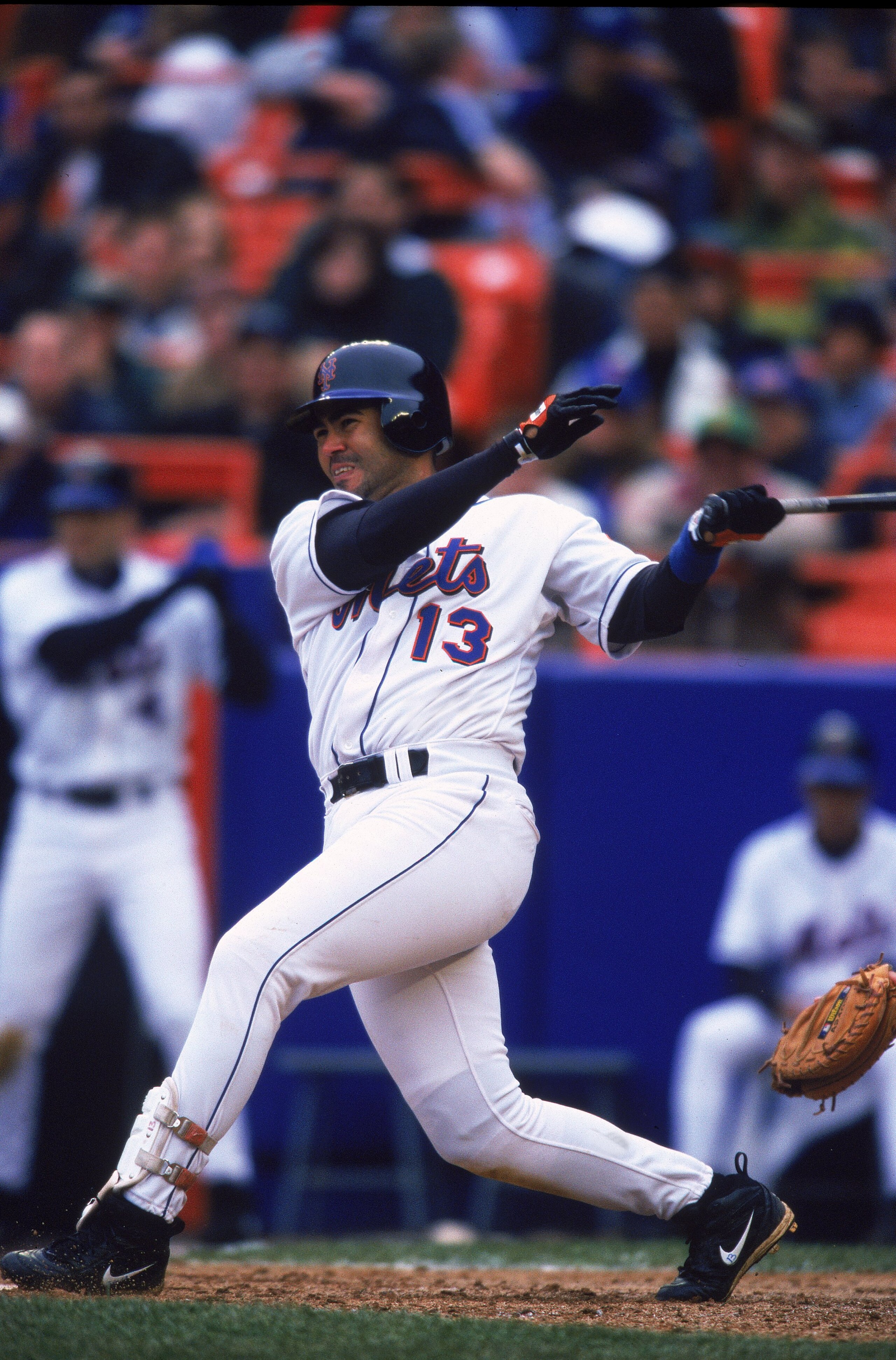
This was a tough one for me.
Though I never saw him play in person, I have seen countless footage of Wally Backman tearing up the basepaths and getting clutch hits for the Mets. Even Jeff Kent, who was only a Met for a short time before becoming a premier second basemen, had a few productive seasons in Flushing.
However, I chose Edgardo Alfonzo, in my opinion the anchor of the “Greatest Infield Ever.”
Fonzie could do it all. He played excellent defense up the middle, provided clutch base hits, and even developed a power stroke. Though he originally came up as a third baseman, he played the majority of his games at second.
In eight years as a Met, Alfonzo collected over 1,100 hits, 120 HR, and 538 RBI, all while sporting a solid .292 BA mostly batting in front of Mike Piazza.
Injuries cut Fonzie’s career short, but he will always be remembered as a terrific role player on the Mets’ teams of 1999 and 2000.
Honorable mention: Wally Backman
Third Base: David Wright
5 of 17
In their 48 year history the Mets have had over 140 different third basemen.
However, the most recent one, David Wright, has planted himself at the position for years to come.
In 2004 he burst onto the scene at age 21, hitting 14 HR in just 69 games.
Over the next four seasons, David put up monster numbers. He has become an annual selection to start in the All-Star Game for the National League.
Citi Field was tough to David, who saw his numbers slightly drop the first year in the new ballpark. He seems to have regained his power stroke this year and hopefully will continue his success for the next decade in Queens.
Though inconsistent at times, he always plays hard and has become the vocal leader of this team.
He is rapidly moving up the list in many offensive categories and most likely will be the sole holder of a number of Mets records before his career is over.
Honorable mention: Howard Johnson, Ray Knight
Shortstop: Buddy Harrelson
6 of 17
Bud Harrelson wasn’t exactly an offensive powerhouse. He hit .234 over 13 seasons as a Met.
However, he played the game hard and how it was supposed to be played. As Rusty Staub said of Buddy, “He was a winner. That’s the true measure of a player.”
The thing about Buddy was that he was clutch. Regardless of his overall batting average, Buddy constantly drove in a big run for the Mets in a big situation. He did whatever necessary to help his team win and played an instrumental role on the 1969 championship team.
Notice I did not choose Jose Reyes.
Reyes has been around for a while now, but still can be viewed as an uncultivated talent. He is on and off the field due to injury. There is no doubt that he is a valuable sparkplug, but his impact on the team was not as great as Harrelson’s.
So far Reyes has not won anything, and he has been on some talented teams. Luckily for Reyes, he still has a chance to prove himself, assuming the Mets do not do the unthinkable and trade him.
Honorable mention: Jose Reyes, Rey Ordonez
Left Field: Cleon Jones
7 of 17
In the words of Tom Seaver, “Cleon Jones could have been a Hall of Fame player. He had the talent to do it.”
Jones was a steady force for the Mets in the late 1960s and early 1970s. However, he lacked the discipline to be absolutely great. How can you forget when Gil Hodges strolled out to left field in the middle of a game in 1969 and removed Jones, claiming he did not hustle after a fly ball?
He did bat .340 that year en route to a World Series title.
Jones hit .281 in 12 years for the Mets. Though he was good, he could have been great, which goes to show the dearth of talent the Mets have had in left field.
Honorable mention: Cliff Floyd
Center Field: Mookie Wilson
8 of 17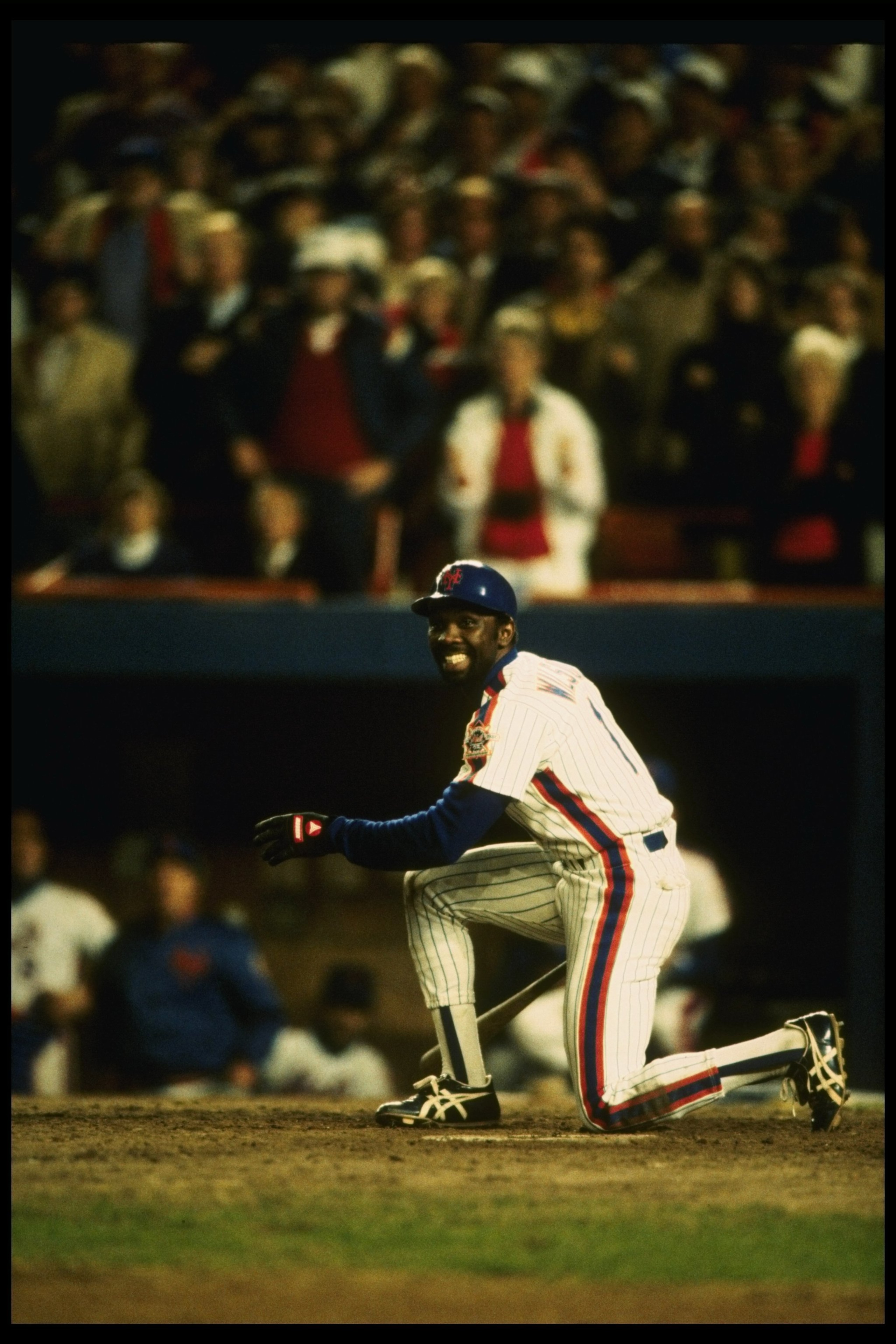
I wish I could say that Carlos Beltran is the best center fielder in Mets history. If you look solely at the numbers, Beltran has had a decent career with the Mets.
But what has he won? He will always be remembered for standing with his bat on his shoulder against Adam Wainwright in a Game 7 loss to the St. Louis Cardinals in the 2006 NLCS.
On the other hand, Mookie Wilson was a gamer. There was never a time when Mookie wasn’t giving his all out best effort on the diamond. Most fans will remember Mookie for his “little roller up along first” that snuck through Bill Buckner’s legs to earn the Mets a Game 6 victory in 1986.
But Mookie’s Mets’ career can be defined by more than just that moment. He played sparkling defense and lit up the basepaths, stealing 281 bags in 10 years. He was truly a leader on some good Mets clubs.
Note: Tommie Agee was given much consideration, but really only had three good years for the Mets. He had two game-saving catches in the 1969 World Series and countless other clutch moments in his Mets career. But his stint with the club was too short.
Honorable mention: Carlos Beltran, Tommie Agee
Right Field: Darryl Strawberry
9 of 17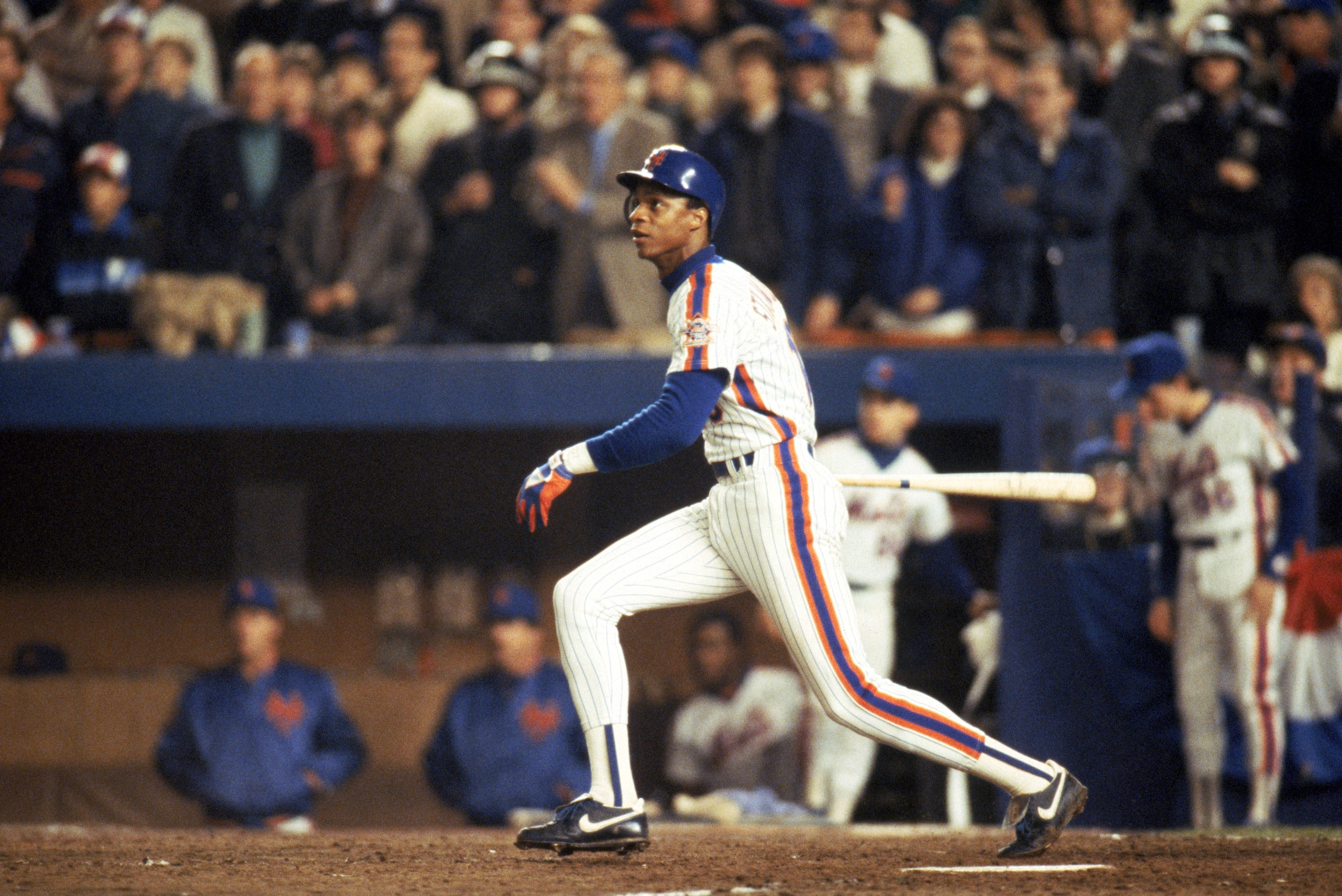
If Darryl Strawberry had not gotten involved with drugs we could possibly be talking about him as one of the greatest players of all time.
He was one of the first five-tool players in the league; he could run, throw, play solid defense, hit for contact, and hit tape-measure home runs.
He was the complete package and showed his worth for the Mets in the 1980s.
Strawberry is ranked first in team history in home runs (252), RBI (733), extra-base hits (469), runs scored (662), and walks (580). He also added 191 stolen bases. From 1983-1988, Strawberry was unstoppable and even recorded a 30-30 season in 1987.
Off-the-field problems cloud his Mets legacy, but Darryl will always be remembered as an important cog in the history of the Mets. To honor him, the Mets inducted him into their Hall of Fame over the summer.
Honorable mention: Ron Swoboda (his catch in 1969 was incredible)
Starting Pitcher: Tom Seaver
10 of 17
Tom Seaver was and still is considered “The Franchise” for the New York Mets.
Seaver was the definition of a big game pitcher. He won 25 games in the miracle season of 1969 and was awarded his first of three Cy Young awards. He finished with 198 wins in a Mets uniform to go along with 44 shutouts and a 2.57 ERA.
In a trade that still makes Mets fans cringe to this day, Seaver was dealt to Reds in what became known as “The Midnight Massacre.”
He is only player to wear a Mets cap in Cooperstown and was elected to the Hall of Fame with the highest voting percentage ever (98.84%).
I, as well as other Mets fans, can go on and on about Seaver. He was that good.
Starting Pitcher: Dwight Gooden
11 of 17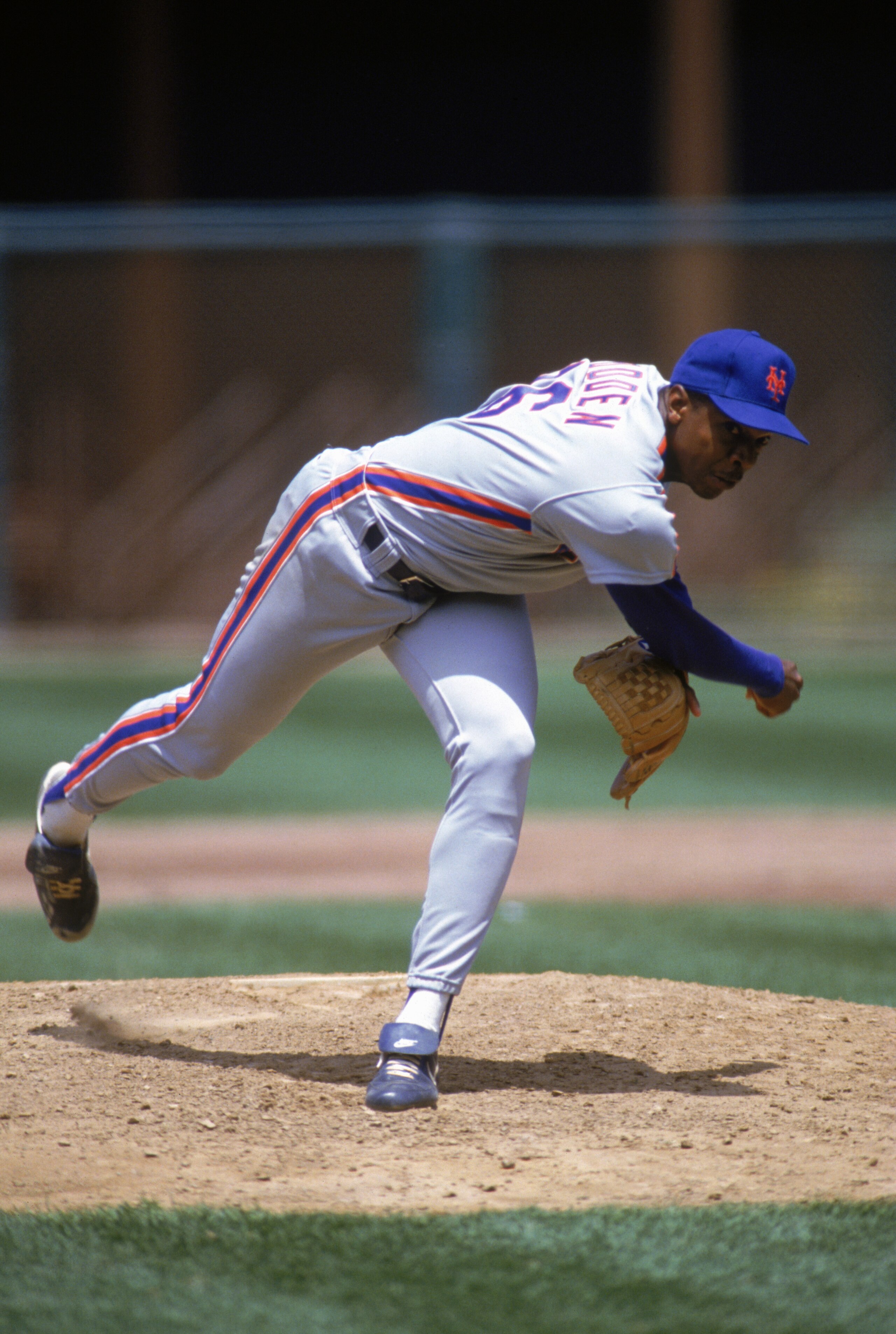
Doc Gooden…what a talent.
I was able to watch him later in his career when he pitched in the American League and I could tell by his demeanor on the mound that he was once great.
But like Darryl Strawberry, his off-the-field problems will always cloud his Mets career.
As a flame-throwing 19 year old, Gooden won 17 games and led the league with 276 strikeouts in 1984. The following year, Doc had a remarkable season going 24-4 with a minuscule 1.53 ERA, good enough to win the Cy Young.
However, beginning in the championship year of 1986, Doc’s numbers began to decline.
His struggle with drug abuse began to surface and he was never the same. He pitched for the Mets through the 1994 season but never regained his dominant form.
Still, Gooden will be remembered as a tremendous talent for the Mets. He too was inducted into the Mets Hall of Fame this summer.
Starting Pitcher: Jerry Koosman
12 of 17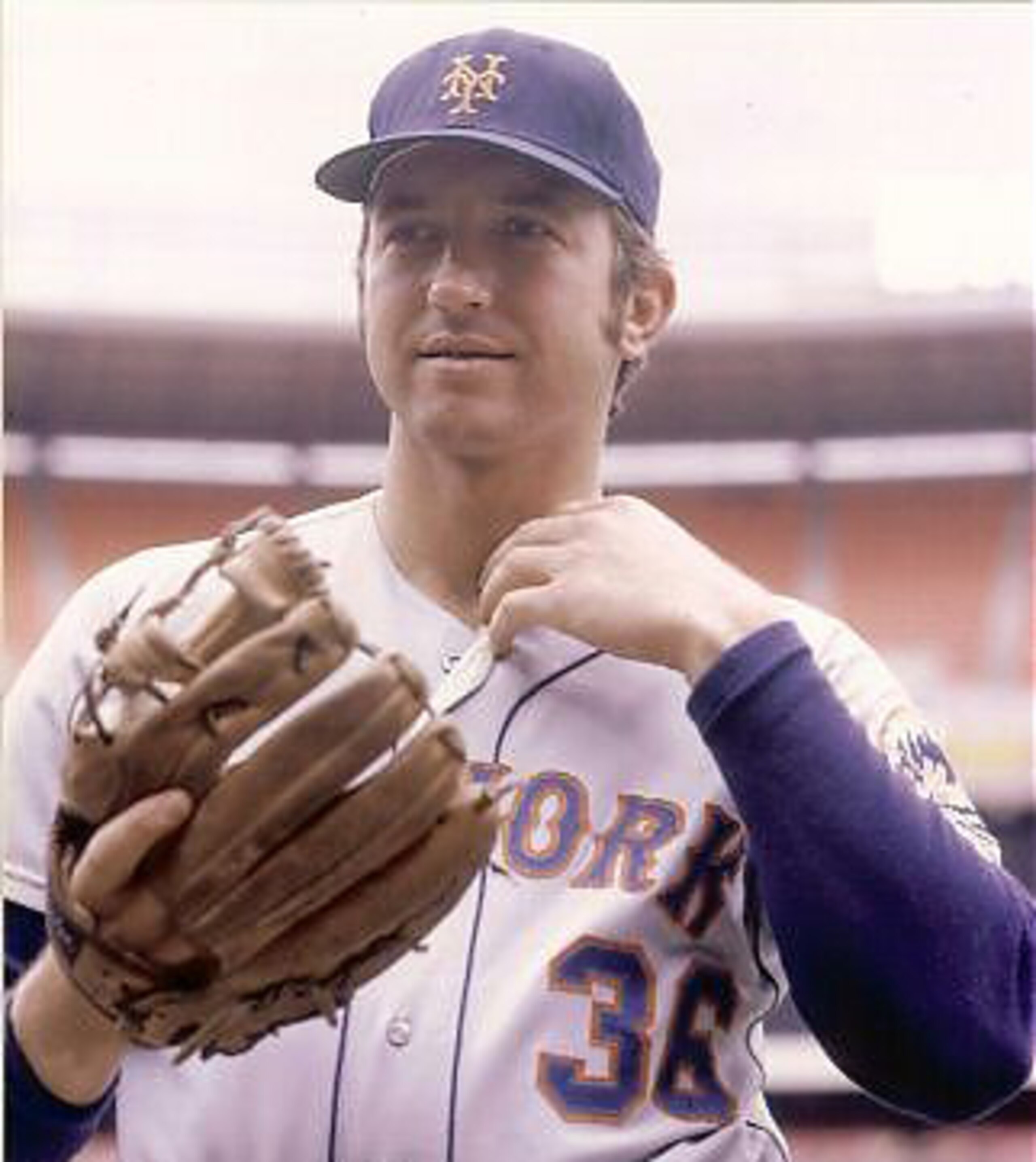
Jerry Koosman’s time as a Met was always overshadowed by the fact that he was the No. 2 man behind Tom Seaver.
However, Koosman had a brilliant Mets career.
He was 4-0 in the postseason, including two wins in the 1969 World Series. In Game 5, Koosman went the distance to seal the victory and the series for the Mets.
He, like Seaver, was a big game pitcher, one that his teammates wanted on the hill in a big spot. Koosman compiled 140 wins for the Mets over his 12 years with the club.
Honorable mention: Ron Darling, Al Leiter, Jon Matlack, Sid Fernandez, David Cone, Johan Santana (only three years as a Met for Johan)
Relief Pitcher: John Franco
13 of 17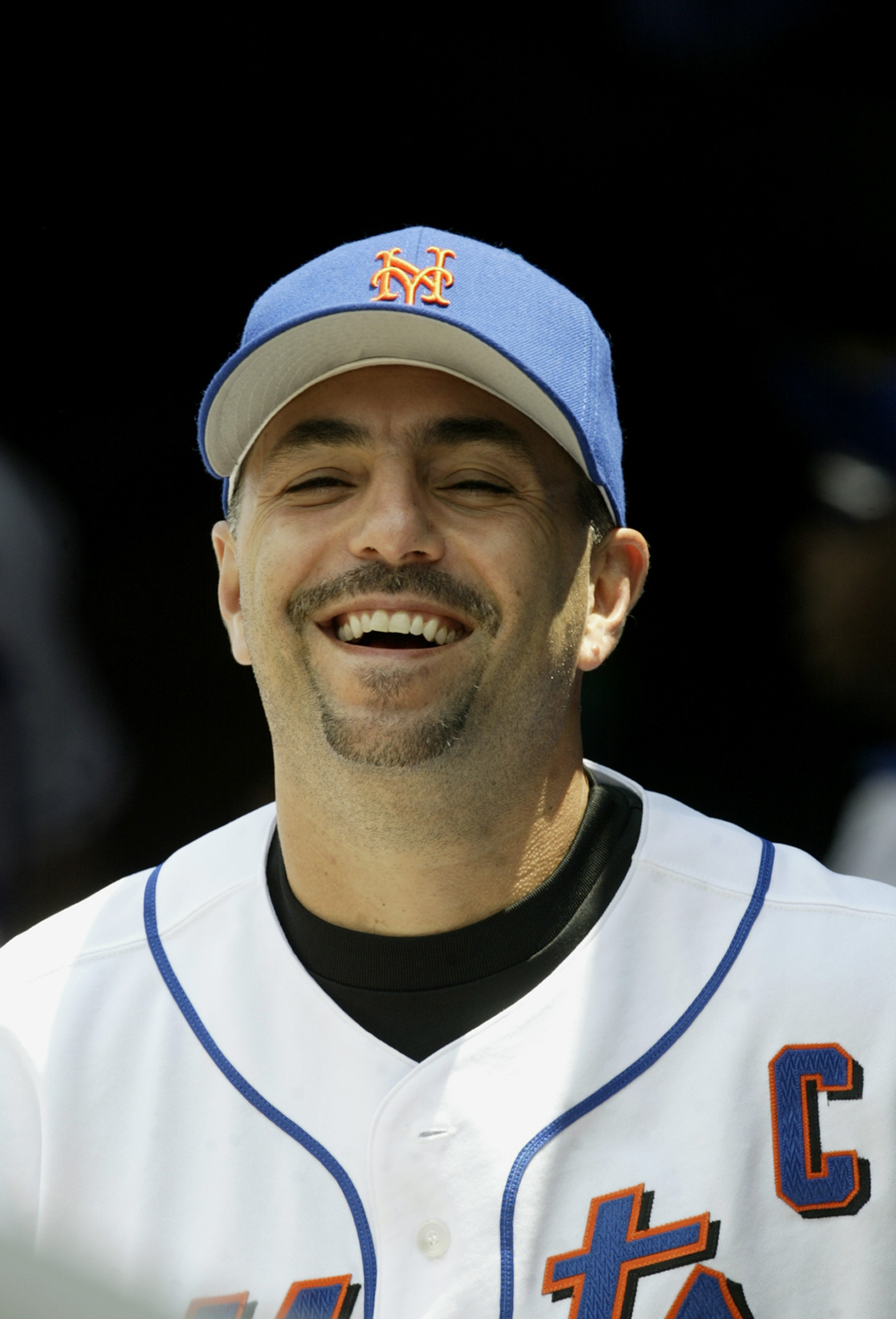
John Franco was a great closer on some bad Mets teams. As a Brooklyn boy, Franco enjoyed the opportunity to pitch for his hometown team.
He saved 276 games over 14 seasons as a Met. Franco never really had overpowering stuff, but he did have guts.
One of his greatest moments came in the 2000 NLDS when he struck out Barry Bonds looking to win Game 3.
He adopted more of a setup role when the Mets acquired the erratic Armando Benitez.
Franco was named team captain in 2001, joining Keith Hernandez, Gary Carter, and Mookie Wilson as the only captains in team history.
Relief Pitcher: Tug McGraw
14 of 17
“Ya Gotta Believe!”
This phrase, coined by Tug McGraw, propelled the Mets to an appearance in the 1973 World Series, one in which they fell a game short to the Oakland Athletics.
Tug was originally a starter, but Gil Hodges saw his value as a reliever. McGraw was a major reason guys like Seaver and Koosman amassed such great numbers as Mets.
He saved 86 games over eight years with the Mets at a time when saves were counted differently than today’s standards.
He was a leader on and off the field and will always be remembered for his famous phrase.
Relief Pitcher: Jesse Orosco
15 of 17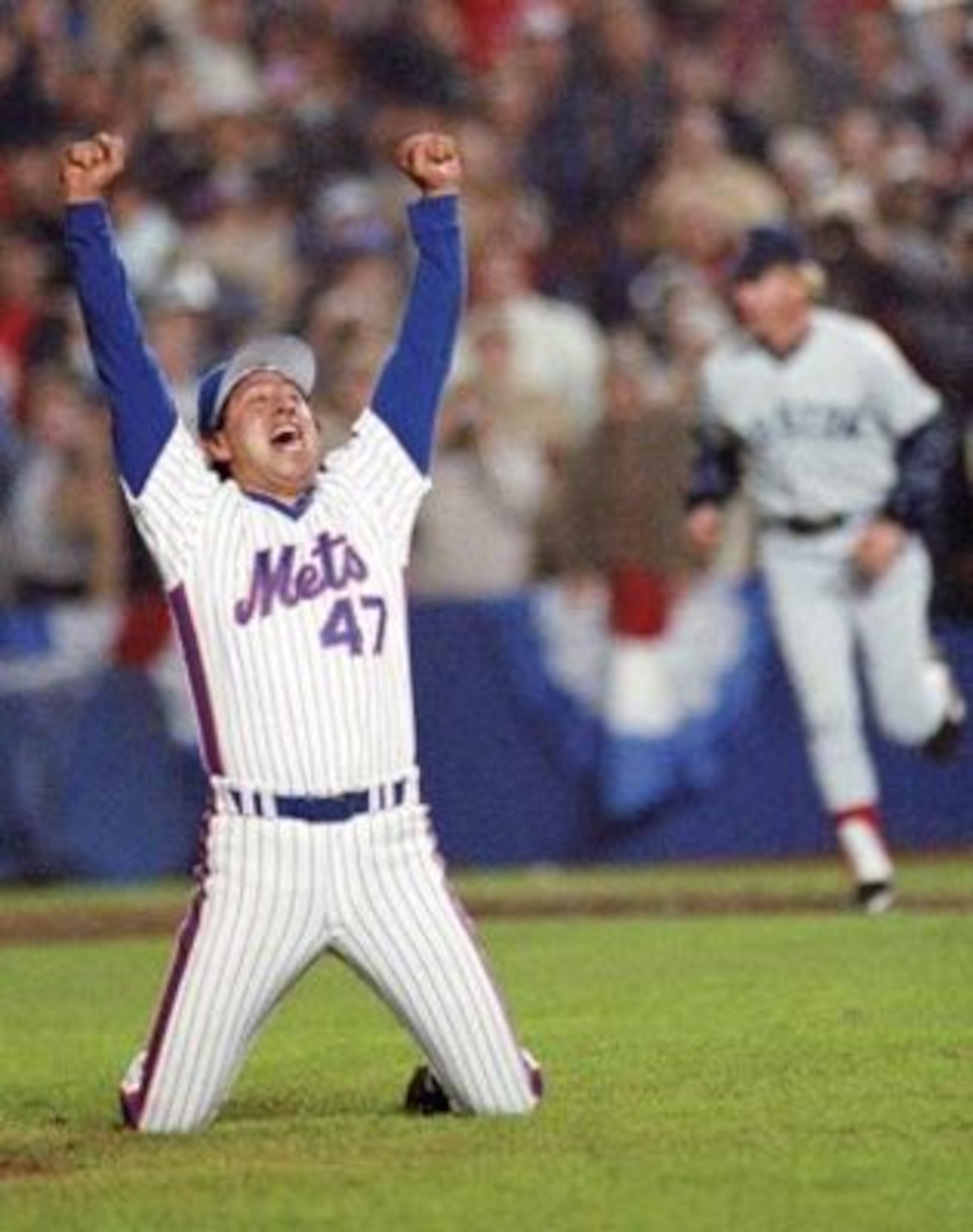
Jerry Koosman demanded a trade after the 1978 season. Seaver was already gone and now Jerry wanted out. The Mets pitching staff would be depleted.
However, the Twins, who acquired Koosman, sent back a 21-year old lefty named Jesse Orosco.
Orosco went on to pitch 24 years in majors, with his best years coming as a Met. He recorded 107 saves in eight years with the team, but keep in mind that he shared the closer role first with Doug Sisk and later Roger McDowell.
The main thing to remember about Jesse was that he was clutch. He pitched seven innings and won three of the four games in the 1986 NLCS against Houston, memorably striking out Kevin Bass to win the series.
He also pitched four of the seven World Series games, saving two of them and memorably striking out Marty Barrett to bring home the Mets second World Series title.
The image of him flinging his glove in the air will always be cherished by Mets fans.
Honorable mention: Armando Benitez, Billy Wagner, Roger McDowell
Lineup
16 of 17
Here is what the lineup for this team would look like:
1) Mookie Wilson CF
2) Edgardo Alfonzo 2B
3) Keith Hernandez 1B
4) Mike Piazza C
5) Darryl Strawberry RF
6) David Wright 3B
7) Cleon Jones LF
8) Buddy Harrelson SS
9) Tom Seaver P
Not bad at all!
Conclusion
17 of 17
Despite our team's recent struggles, we as Mets fans have a great history to look back on.
It includes the miracle of 1969, the juggernaut team of 1986, and the teams of 1973, 2000, and 2006 that came so close to World Series glory.
I look forward to another half century of Mets baseball and hope they will return to their winning ways for years to come.
Let’s Go Mets and, as always, Ya Gotta Believe!



.jpg?w=2560 "5 Teams Eyeing Jonathan Taylor")
.jpg?w=2560 "Mahomes Told Teammate to Leave Meeting")

.jpg?w=2560 "Jonathan Taylor Landing Spots 📍")