
Fantasy Football Guide, Part 4: Draft Day and Positional Breakdown
Reprinted from www.SCFantasyFootball.com. Make sure to check out the whole guide!
The draft is probably the single most important part of fantasy football. Not only does it allow you to craft your team, potentially defining your performance for the season on the whole, it is also a genuinely fun event, putting you and all your competition in one room, letting you exchange verbal barbs and relentlessly mock each other for seemingly bad picks.
That kind of makes it scary for all you new players. You’re going to be surrounded by a bunch of guys who, as far as you know, are seriously skilled players. So you don’t just want to put together a good team…you want to make everyone believe that you know what you’re doing. That is what this guide is about, after all.
I can’t really tell you how to not make yourself look stupid, outside of recommending you read as much pre-draft stuff as possible. But don’t be ashamed to have cheat sheets, tier lists and ADP printed out.
Coming now is a basic outline of the role of each position for your team. I’ll also post relevant articles from my draft guide section here. This isn’t customized for this year, but is just a general outline for how to think about particular positions. Make sure you check out other articles as well for specific information for this year’s draft.
Running Backs: The Foundation of Your Team
1 of 6
You can have Peyton Manning or Tom Brady. You can have Randy Moss or Andre Johnson. You can have Antonio Gates or Tony Gonzalez. And that won’t make a difference if you don’t have a decent batch of RBs.
Far and away, the most important position on your team is the running back. And because of this, your top priority in the first few rounds is to plug up all the RB spots. And one of your first duties after that is to start drafting depth at the position.
Why are running backs so important? Why did people ever draft Larry Johnson, who likes pulling Troy Polamalu’s hair over Peyton Manning, who likes licking the cream out of big black Oreos? Well, the answer is that top tier RBs are more likely to deliver you a reasonably high number of points on a consistent basis.
“Oh, but Steven, eight of the top 10 fantasy scorers in the 2008 fantasy football season were QBs! Why should we pass up the top scorers in favor of guys who don’t even lick the cream out of big black Oreos?” To reference literature from hundreds of years ago, the decay rate of RBs is exponential, while the decay rate of every other position is geometric. Simple, right?
Since you probably don’t know what that means, let me break down the numbers. In 2009, the highest-scoring QB was Aaron Rodgers, with 342.8 points. The No. 5 QB was Brett Favre with 289.8 points. That means the No. 1 QB was only about 18 percent better than the No. 5. Then compare that with Jay Cutler, the No. 10 QB who had 249.9 points. He was about 37 percent behind Rodgers.
Now let’s look at RBs. Chris Johnson had 346.9 points as the No. 1 RB. Frank Gore was the No. 5 with 230.6…and lagged behind Johnson by over 50 percent! Joseph Addai was No. 10 with 194.4 points, 78.8 percent behind Johnson. Then consider that almost all fantasy football leagues have you fielding, at the very least, two RBs. So throw in No. 20 Pierre Thomas with 157.7 points (who put up less than half of Chris Johnson) and it should be obvious why RBs need to be in the front of your mind during draft day.
While the WR position is somewhat similar to the RB, there are two things that make WRs tough to take in the first round. Firstly, year-to-year consistency is more elusive at the WR position than anywhere else in fantasy football. WRs fall in and out of the Top 20 positional rankings in a simply whimsical manner. Secondly…WRs just don’t put up as many points. The top five RBs in 2009 combined for 1392.6 points. The top five WRs combined for 986.9 points.
Now let’s wrap this up. Using 2007’s Average Draft Positions (on average, where any individual player is taken in the draft), Peyton Manning (ADP of 11) scored 287.1 points on the season. Matt Hasselbeck (ADP of 69) scored 258.3 points on the season (28.8 points less than Manning). Ben Roethlisberger (111 in ADP) scored 269.7 on the season (17.4 points fewer than Manning). Brett Favre (122 ADP) scored 258.5 (28.6 shy).
Let’s stack this up against the season total of the top six RBs, ADP-wise; Ladainian Tomlinson, Steven Jackson, Larry Johnson, Joseph Addai, Frank Gore, and Shaun Alexander (213.5 points on the season, even with a year of injuries from Alexander). RBs taken around Matt Hasselbeck included Julius Jones, Tatum Bell, Brandon Jackson, and LaMont Jordan, who averaged 66.1 points on the season (a difference of 147.3). RBs taken around Favre and Roethlisberger? Well, how much of Reuben Droughns, Vernand Morency and Mike Bell have you seen since? They averaged 33.3 points, by the way. If that isn’t the statistical proof you needed…well…I don’t know what is.
So let me just finish, once again, by saying that you should draft RBs early and often.
Other Random RB Notes:
- Every year, there will be a handful of RBs considered “elite.” They are usually the very first players taken during a draft. Consider yourself lucky if you get seeded high enough to take one of them. Don’t try to be bold and/or innovative by not.
- Almost without fail, there will be at least one rookie RB to run for 1000 yards. Recent examples include Kevin Jones (2004), Carnell Williams (2005), Joseph Addai (2006), and Marshawn Lynch (2007). 2008 was kind of crazy, with Steve Slaton, Matt Forte, and Chris Johnson all reaching this milestone. Kevin Smith just barely missed the mark (975 yards). 2009 didn’t have one…but Knowshon Moreno came close, though, with 947 yards (though he made up for it with over 200 receiving yards and nine total TDs).
- 2006 saw the “platoon” become standard. A “platoon” is where you have one or more RBs receiving a fantasy-relevant statistics. In these situations, the player with more fantasy value is typically the guy who gets more of the touchdowns (this is not always the case, however). “Elite” fantasy RBs usually have little to no competition in the backfield.
- PPR leagues completely shift around the rankings of the position. It puts a serious premium on players who are parts of West Coast offenses and players who often get passes dumped to them. Past examples include Brian Westbrook, Steven Jackson, and Ray Rice.
Quarterbacks: The Mixed Bag
2 of 6
My article on RBs outlined the basic dilemma found at the QB position. What’s this mean for you? Well, it means that it is kind of stupid to draft a QB super-early in standard-scoring leagues. However, there are several benefits to such a move.
Something that can make an enormous difference is not being required to spend a roster spot on a backup QB. If you draft Peyton Manning, that means that you will be playing him every week. No matter what team he’s up against. Without fail. You will not need a backup, freeing up room for one of those potential sleeper picks later in the draft.
This is only an option if you grab one of those top-tier QBs, or if you stumble upon one of those out-of-nowhere top 10 QBs (such as 2008 Kurt Warner or 2007 Derek Anderson). If you grab one of those Drew Brees or Tom Brady-like QBs, you get a free spot for one of those guys like 2008 Deangelo Williams, 2007 Earnest Graham, or 2006 Marion Barber.
This concept slips by many of the self-declared experts, but that freedom really can’t be overstated, even with the drop-off between RBs. It is an invaluable quality that can’t be found elsewhere.
Personally, the earliest I’ve ever drafted a QB in a semi-standard scoring league was in the sixth round of a 10-teamer. That was a reach for Jon Kitna in 2007, which didn’t pan out. Like I said, while I may be there jeering somebody for taking Peyton Manning, there are benefits. I’d never do it. The numbers don’t really back it up. But it’s not necessarily a horrible decision, and if you just happen to get stiffed on draft day, and Peyton fall to you, it doesn’t necessarily spell doom for your fantasy season.
Just as an example, I grabbed Warner in the 10th round of my draft and literally never had a backup save for the week before, and the week of, his bye (being Matt Cassel).
If you don’t grab one of those high-tier QBs, then you should draft a pair of mediocre hurlers. This is how most fantasy teams conduct themselves, and it usually goes well. Working matchups is easier at the QB position than anywhere else, and there is usually value at the position throughout the draft. Something to experiment with is simply drafting one QB, even if he isn’t elite, and just seeing how it alters my lineup management strategies.
An important footnote for two-QB leagues is that you shouldn’t go into things planning to grab one of those elite QBs just because there is going to be a shortage. Your plans should be altered to assure that you get three QBs by draft’s end (each with a different bye week, too!), but you definitely don’t need to scramble to grab Peyton Manning and Tom Brady in the first two rounds.
Wide Receivers: Buy High, Sell Never
3 of 6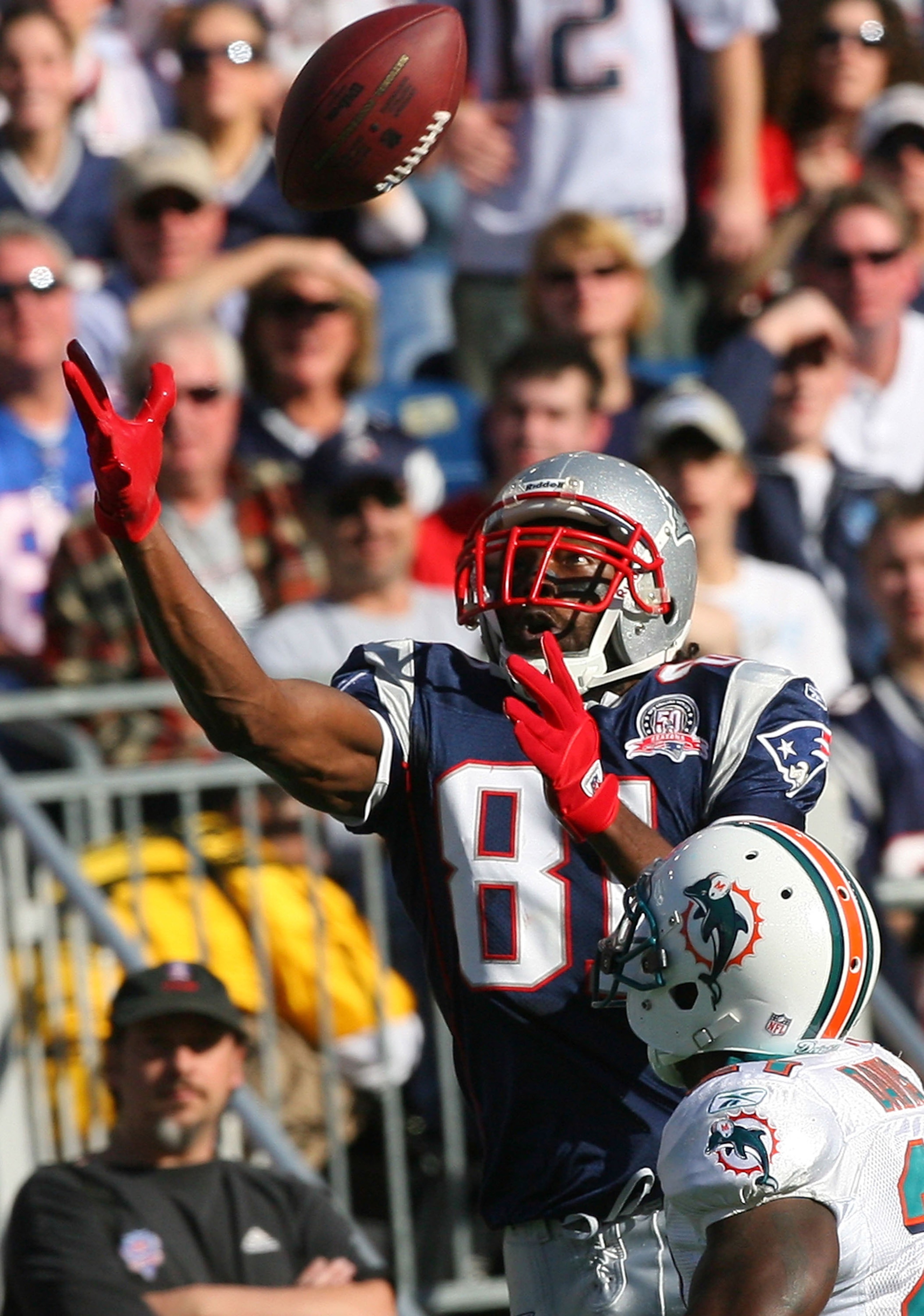
Javon Walker (OAK, WR). Deion Branch (SEA, WR). Devin Hester (CHI, WR). Anthony Gonzalez (IND, WR). What do these four WRs have in common? All of them were drafted as starting WR3s on 2008 fantasy teams, only to fall short of the Top 40 that season. As important as the RB position is, you can’t wait on WRs.
You’re always going to want to target mainstay WRs…somebody who has repeatedly put up strong numbers, and has flourished inside a system for a good length of time. On the other hand, you’re going to want to try and stay clear of WRs who are changing teams or older WRs dealing with a new QB.
The thirteenth overall WR in 2006 was Darrell Jackson (who was a Seahawk at the time). After 2006, he was traded to San Francisco in what was meant to be a “Shake-and-Bake” deal where the ‘Niners would instantly obtain a top WR. Within one year, he went from being the thirteenth highest-scoring WR…to being sixty-something-ith. Talented WRs sometimes can make things work out, even in awkward situations, but it rarely woks out.
The point of all this, however, is not to say “don’t draft these guys.” There was plenty of reason to believe that Anthony Gonzalez could end up a top 30 WR. A year from Devin Hester in the same vein as Ashley Lelie’s 2004 season wasn’t impossible. Javon Walker might’ve still had gas in the ol’ tank. Branch is good when he plays.
The point I’m trying to make is to simply avoid putting yourself into a position where you are starting unproven receivers. You could be setting yourself up to have a noticeable hole in your lineup from the beginning of the season. What you want to have are three guys who have defined, established roles in their offenses.
Something else of note is that it can be easy to predict a WR exploding. Two good examples of WRs who made a predictable jump from fringe plays to top-flight fantasy starters are Calvin Johnson and Vincent Jackson. Everyone knew that Calvin Johnson would be great. Really, really, really great. Many pegged him as the most physically gifted player in football since Randy Moss. He put up gaudy numbers in the NCAA and he was on a semi-potent, pass-first, run-never offense in Detroit. That’s a winning combination, even in an 0-16-0 season. And it all came to a head with his obscene 1331 yard, 12 TD sophomore year.
Vincent Jackson (or, as I call him, V-Jax) was in a different situation, but ended up becoming a potent fantasy force. Jackson has always been physically gifted, no doubt about it. This is best underlined by his “I-have-to-duck-under-the-threshold-to-get-into-my-house” 6'5" height. But he was in the unenviable position of playing strict games of “Marty Ball” (named for the infamous Marty Schottenheimer, who ran an incredibly run-intensive offense). After Marty got axed, V-Jax helped bring the Chargers deep into the 2007 postseason and quickly became a hot fantasy commodity. He became pegged as a 2008 sleeper hit and proved his fans right by tallying 1098 yards and seven TDs.
So indeed, there are tells when it comes to scouting out fantasy WRs. But the main thing is that even if you have interest in them, you really, really need to have a good plan B.
P.S. Don’t buy high on rookie WRs. Everyone says the steepest learning curve from the NCAA to the NFL lies in the WR position and all that jazz…but the fact is that almost all successful rookie WRs in recent seasons have come in the form of high-upside sleeper picks.
The highest-performing rookie WR of 2006 was Santonio Holmes from the Steelers, even though many rated then-Patriot Chad Jackson higher. The toast of the 2007 rookie class wasn’t Calvin Johnson, who was taken in the fourth or fifth round on average. It was Dwayne Bowe (KC, WR), who most hadn’t even heard of until he started his breakout.
2008 didn’t have any high-profile rookie WRs entering the season, but Desean Jackson (PHI, WR) was mostly a late-round flier while Steve Breaston (ARI, WR) and Eddie Royal (DEN, WR) were waiver pickups. Don’t bite on rookie WRs before the late rounds of your fantasy draft.
.jpg?w=2560 "Titans Giants Football")

Tight Ends: Shuffled Up
4 of 6
Some things are easy. Some things aren’t. For a long time, the tight end position in fantasy football was easy. Antonio Gates (SD, TE) was taken in the fourth round, or somebody got a little antsy and reached in the third. Tony Gonzalez (KC, TE) was snatched shortly after. Then everyone else would get taken several rounds later. Well, those days are over. There is now a fairly deep pool of potentially great TEs that you need to keep an eye on.
The thing about a “deep pool” in fantasy sports is that they also tend to be quagmires. In the last few years, there have been no less than twenty different TEs that have achieved fantasy-relevance. Two schools of thought have come out of these developments.
One is that TEs are particularly easy to wait on during the draft. Streaming TEs, where you pick different players up on a week-by-week basis, is a relatively viable option. A late-round flier or a waiver pickup can land you a top 10 TE easily.
On the other hand, who wants to roll the dice on somebody that could, hypothetically, become a top TE? There are plenty of almost sure things, right there, and just aching for you to snatch them up in the first six rounds.
This is a personal choice, really, and is something you need to prepare for, and get ready to react to, on draft day.
Defenses: Varying Opinions
5 of 6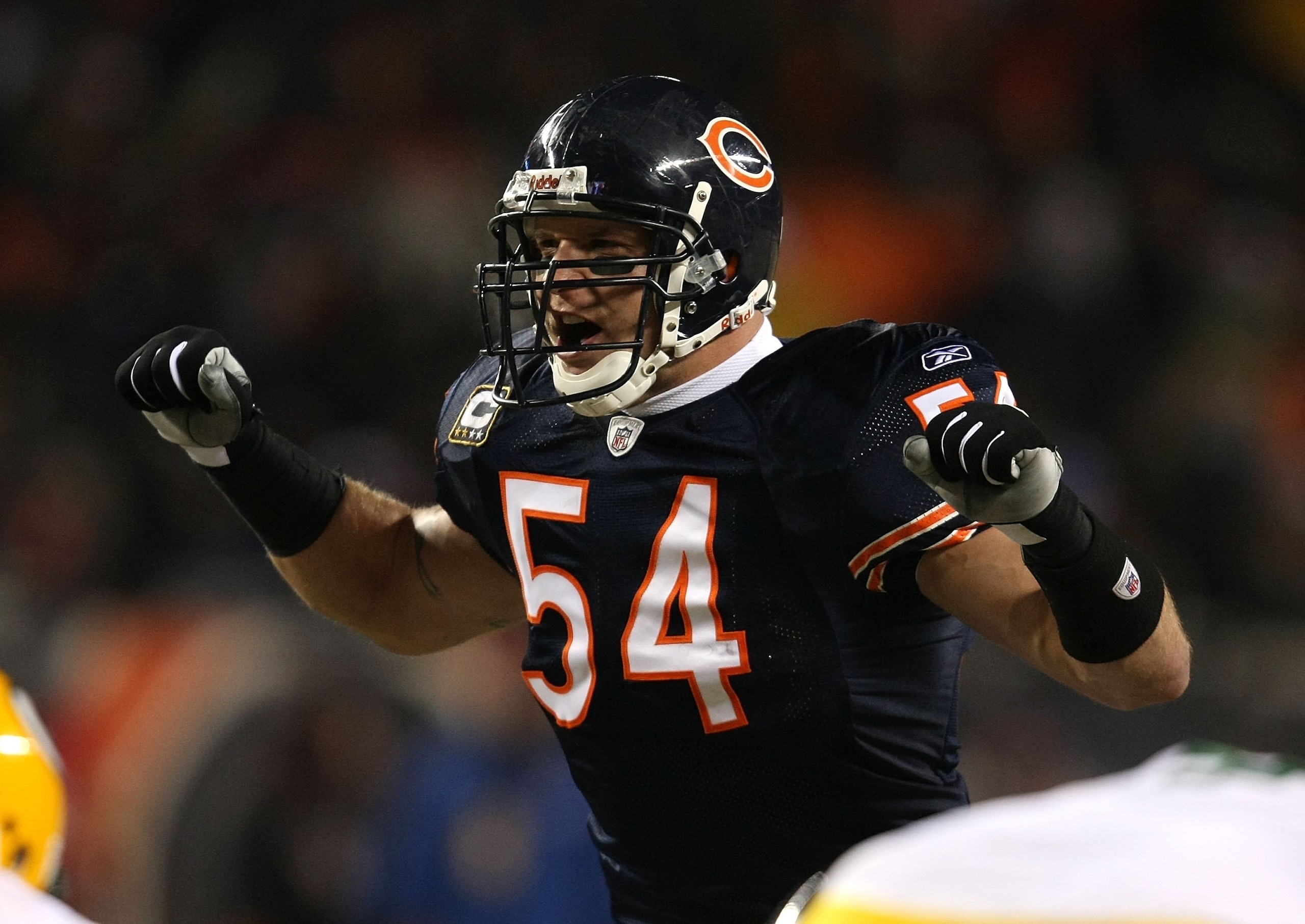
The D/ST spot is somewhat controversial in recent years, mainly because of certain writers from popular fantasy football websites advocating the reach-worthiness of top-drawer defensive units (being Yahoo!’s Andy Behrens). Many quickly decry him…but he didn’t get his job from being stupid. That said, I disagree with him…but his claims are worth mentioning, as everyone has their own idea about the D/ST position.
As said, Behrens advocates reaching…and sometimes reaching deep, for that top defensive unit. The issue then turns to “who is the top defensive unit?” The year-by-year production at this position is not really consistent enough to act on with confidence. Sometimes, those top tier defenses will end up coming close to a repeat performance (Chicago in 2006 and 2007) and sometimes, they fall off the map (as Minnesota did from 2007 to 2008). While that can be said for any position, you will probably never see a streak with a single defense topping charts in the way, say, Antonio Gates did for his position. Because of this, drafting those elite defenses with the expectation of a repeat performance is a recipe for disappointment.
“Streaming” defenses is a common strategy that people use when they decide to be thrifty during the draft. To “stream” defenses means to claim defenses off waivers on a week-by-week basis, specifically based on their matchup. This allows freedom during the draft, and gives leverage for finding a prospective breakout team to either keep or trade. The problem is that this system can only support one owner per-league. If two guys decide to do this, it will result in a weekly Three Stooges routine where the two owners get jammed in the doorway trying to grab the Buffalo Bills defense because they happen to be playing the Cleveland Browns that week.
So what does this humble writer do? Well, basically my plan for drafting defenses involves me waiting until there’s nobody I particularly want to draft, and then taking the best defense available. Sometimes this has me drafting a DEF early, and sometimes I end up grabbing somebody towards the end. It usually works out alright. Usually there are some upside picks around or some good teams that fall past everyone. Sometimes I’ve waited until the end, had the team I eventually settle on crap out, and then end up streaming out of necessity. So basically, I roll with things.
What should you do? Well, it’s your call. There are so many different ways people tackle the position that you can basically do whatever you want (except for taking a defense in the first four rounds) and have some sort of justification for it.
PS: Make sure to keep tabs on your defense’s bye week. There’re few things more frustrating than having to either drop a decent defensive unit because you can’t take the bye week punch, or having to drop an actual player because…well…you can’t leave the position vacant, now can you? You should make sure you don’t have a brutal bye week anyway, but it’s especially important because of the dynamics of this position.
Kickers: Take Them With Your Last Pick
6 of 6
I respect the people who put the “foot” in “football.” Adam Vinatieri should be a first ballot Hall of Famer. It’s a mortal sin that Ray Guy is not bronzed in the Hall of Fame yet. Kickers don’t get proper respect from the football media. However, the kicker is the least important position in fantasy football. And there’s basically no reason draft a kicker anywhere other than the last couple rounds of your draft.
Let me start by saying that the top kicker from last year will not be the best kicker the next year. Plain and simple. Don’t bother pursuing whoever got the top spot the last season. 2005’s best kicker was Neil Rackers. The next year he was in a three way tie for fifth. 2006 had Robbie Gould on top. The next year he was in seventh place. 2007 had Mason Crosby on top. Next year, he was in eighth place. Stephen Gostkowski was on top in 2008. He was sixth in 2009. Basically, anybody from a non-terrible offense will function as a decent kicker for fantasy purposes.
Why is this? Well, there are a few things. One of the issues is that almost all kickers hit roughly 80 percent of their kicks. There are a few outliers who end up around 90 percent. But this doesn’t change the fact that opportunities are out of their control, and don’t present themselves with any sort of consistency. You’ll have a kicker get one field goal opportunity one week, four the next, two the next, and so on.
So they don’t get consistent opportunities…probably don’t have raw skills that greatly exceed anybody else in their position (at least, none that translate into fantasy points)…and there’s no way to really gauge potential performance.
What does this mean? It means you shouldn’t reach for kickers. Ever. And if you do reach, it shouldn’t be anything past a sneaky little grab in the second to last round if you really like one guy. If a fantasy newbie picks up a kicker in the third round, I encourage you to join in the laughing.
Fun fact: I have some sort of ability to gauge which kickers are going to do well. In 2008, I ended up streaming kickers (seven different kickers over thirteen regular season weeks) and averaged out to 9.61 points, just barely behind Stephen Gostkowski’s mark. I did this with very little more than gut instinct. I’m not really trying to say I have precognitive abilities…but I would not deny it if somebody else said it.



.jpg?w=2560 "Saquon Out for Game")