

With the season still well short of the 20-game mark, the biggest 2021-22 NBA disappointments and surprises are all subject to skepticism.
Well, except for Seth Curry. He's never going to miss a shot again. You can book that one.
You know by now we're trafficking in small samples, so the usual caveats apply. There's a new one, too: We hope all of these unexpected developments—whether specific to a player or a team—persist. The league is more fun when positive changes stick and pleasant surprises become the norm.
We'll get a little niche on some of these, but where no single player is blowing us away in a particular area, we'll expand the search to include team-wide growth.
These are the expectation-exceeding players and teams that should have fans of every squad excited.
Atlanta Hawks: Cam Reddish
1 of 30
Talent was never the issue for Cam Reddish, whose raw skills were obvious from the moment he played his first NBA game. Actually, they were apparent before that, if the voting that pegged him as the 2019-20 rookie most likely to have the best career is any indication.
The results lagged behind the hype, as the 6'8" wing shot 38.4 percent from the field in his first season and 36.5 percent as a sophomore. He showed flashes in spot minutes and got frisky in the 2021 playoffs, posting double-digit point totals in three of the four games he played. But over the larger sample of his first two seasons, Reddish was often shot-hungry and out of control, perhaps trying to make the most of his limited playing time.
The less charitable take: He lacked feel and was destined to become a low-efficiency chucker.
Reddish is now shooting 38.9 percent from deep after never cracking that mark from the field in a season. What's more, he's changing his pace, reading the floor more quickly and showing real craft. He's become a more balanced offensive player, which should keep his valuable defense on the court more often.
Boston Celtics: Al Horford
2 of 30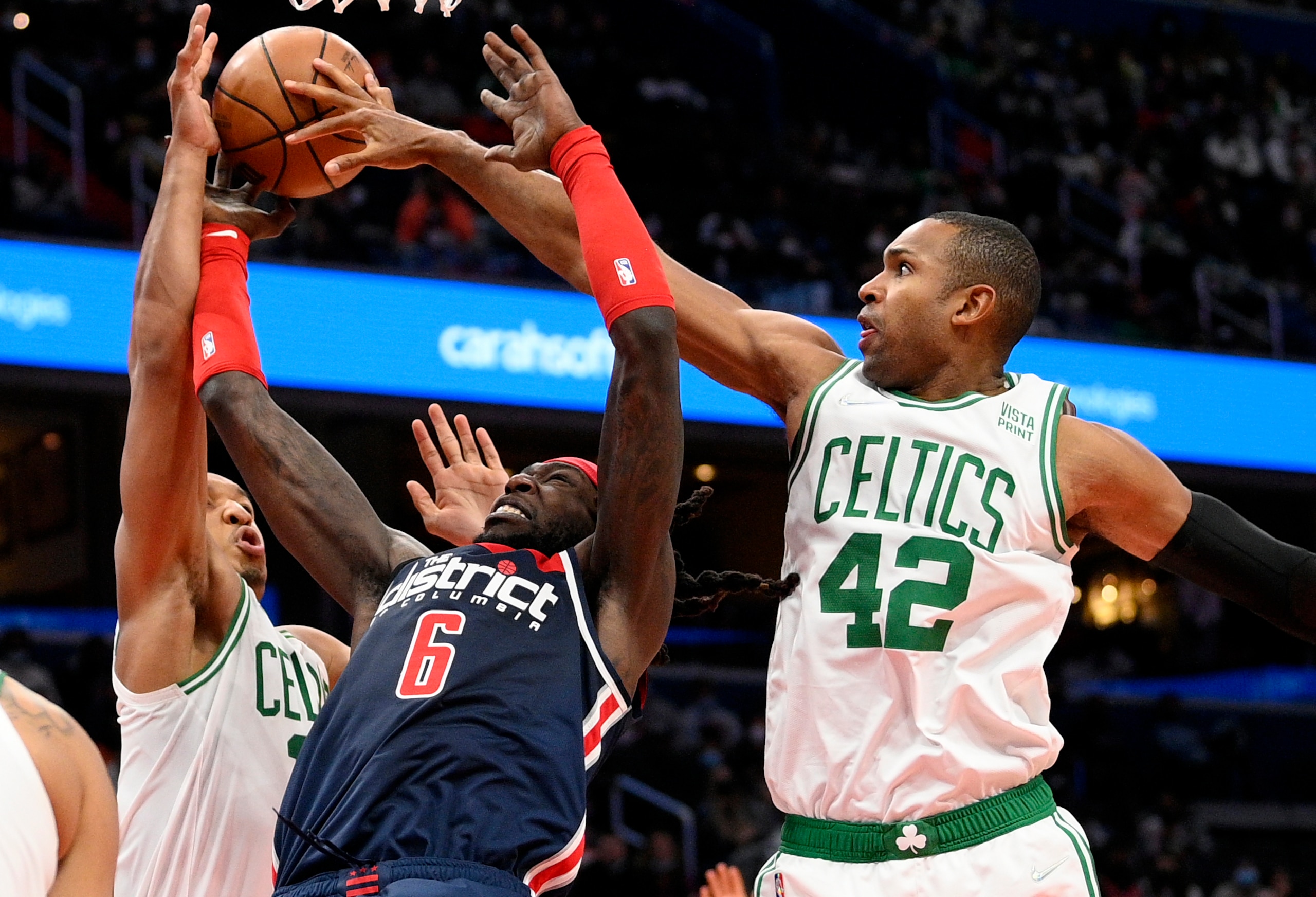
A five-time All-Star with an All-Defensive nod in 2017-18, Al Horford has a track record of difference-making play on both ends. But he's 35 years old and listed at 6'9", two biographical facts that don't exactly point to elite shot-stuffing. Nothing in Horford's past made what he's doing this year foreseeable.
He's rejecting shots at over twice the frequency of his previous career high.
Incredibly, he already has two games this season with at least five blocks. He'd never posted more than two such contests in any full year of his career. If his numbers hold, Horford will approach the record for blocks per game by a player 35 or older, threatening to pass guys who actually had reputations for rejection such as Tim Duncan, Alonzo Mourning and Patrick Ewing.
We might need to consider the possibility that Horford discovered de-aging technology and is actually 25 again.
Brooklyn Nets: LaMarcus Aldridge
3 of 30
LaMarcus Aldridge is a seven-time All-Star with career averages of 19.3 points and 8.2 rebounds per game. Under normal circumstances, we wouldn't bat an eye at his 12.3 points and 5.2 rebounds in 20.0 minutes per game this season. Those figures would be within the realm of what you'd expect from a 36-year-old former star occupying a bench role for the Brooklyn Nets.
But Aldridge isn't even supposed to be playing anymore, let alone producing this well for a contender.
He retired in April because of an irregular heartbeat, a symptom of Wolff-Parkinson-White syndrome, which he was diagnosed with in 2007.
In his 16th season, Aldridge is posting the highest block rate of his career and his best box plus/minus since he was an All-Star in 2017-18. Brooklyn's offense livens up when he's in the game burying jumpers and providing an outlet for broken plays. His effectiveness is one of the more satisfying feel-good stories of the season.


Charlotte Hornets: Miles Bridges
4 of 30
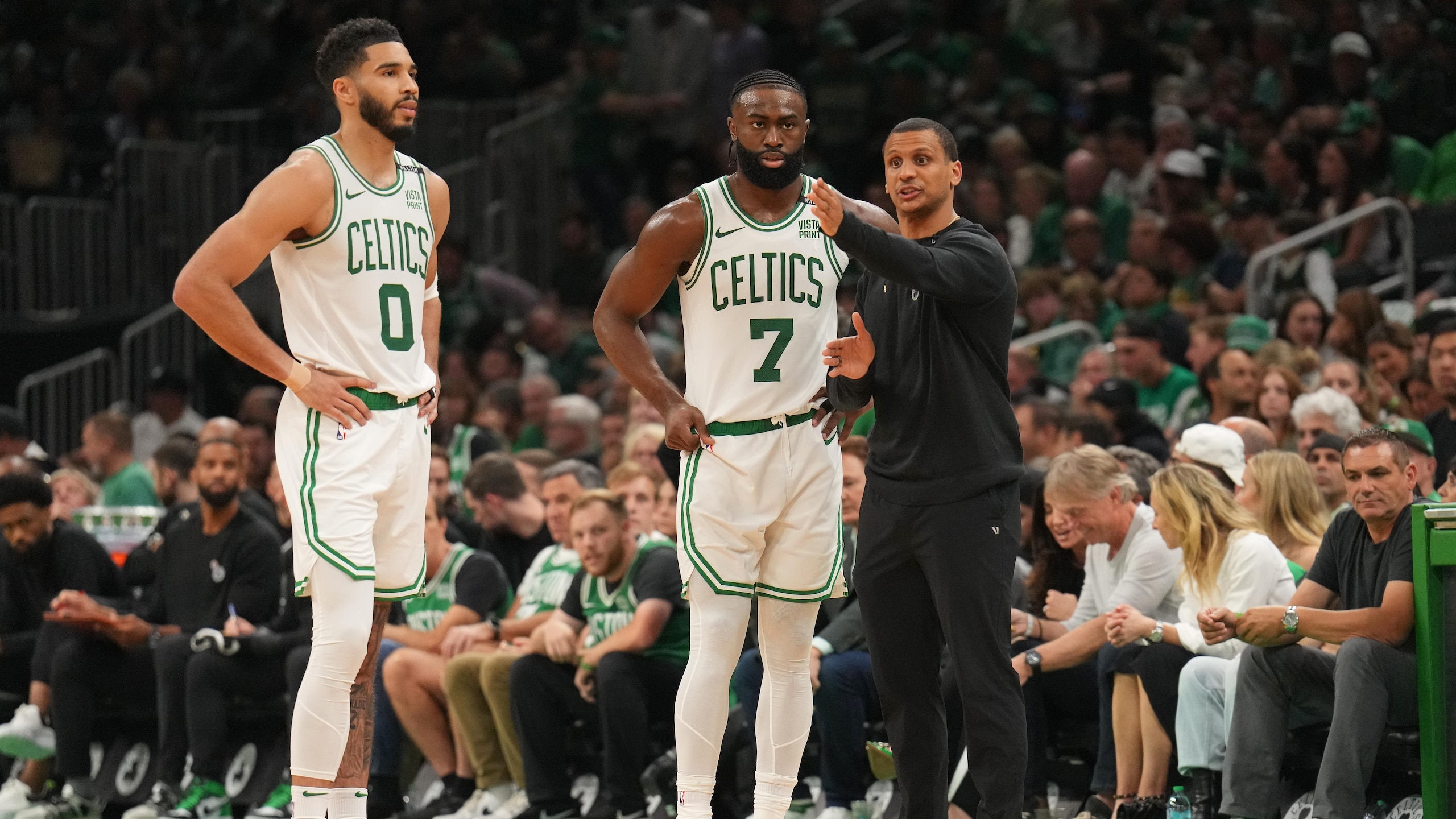
Miles Bridges improved last season, but you had to pay close attention (and stay locked into the Charlotte Hornets until the end of the year) to notice. Primarily coming off the bench, the bouncy left-handed forward actually suffered a year-over-year decline in points per game (13.0 to 12.7), but he also added subtle new dimensions to his game.
Bridges developed his handle and became more than a dunker, quietly finishing a handful of missed free throws away from a 50-40-90 season. He also averaged 19.8 points, 6.8 rebounds and 2.8 assists across 17 games after April 1.
But his work in 2021-22, which would earn him Most Improved Player honors if the season ended today, has been mind-blowing.
Bridges has become his team's best isolation threat, and he's an efficient pick-and-roll orchestrator who can finish on his own or find the open man, depending on how the defense plays him. He can score with either hand now, is averaging nearly double his points per game from a year ago and is also arguably the Hornets' most versatile defender.
LaMelo Ball is the first Charlotte player who comes to mind first for most fans, but Bridges has been the best Hornet by a mile.
Chicago Bulls: The Defense Is Fine
5 of 30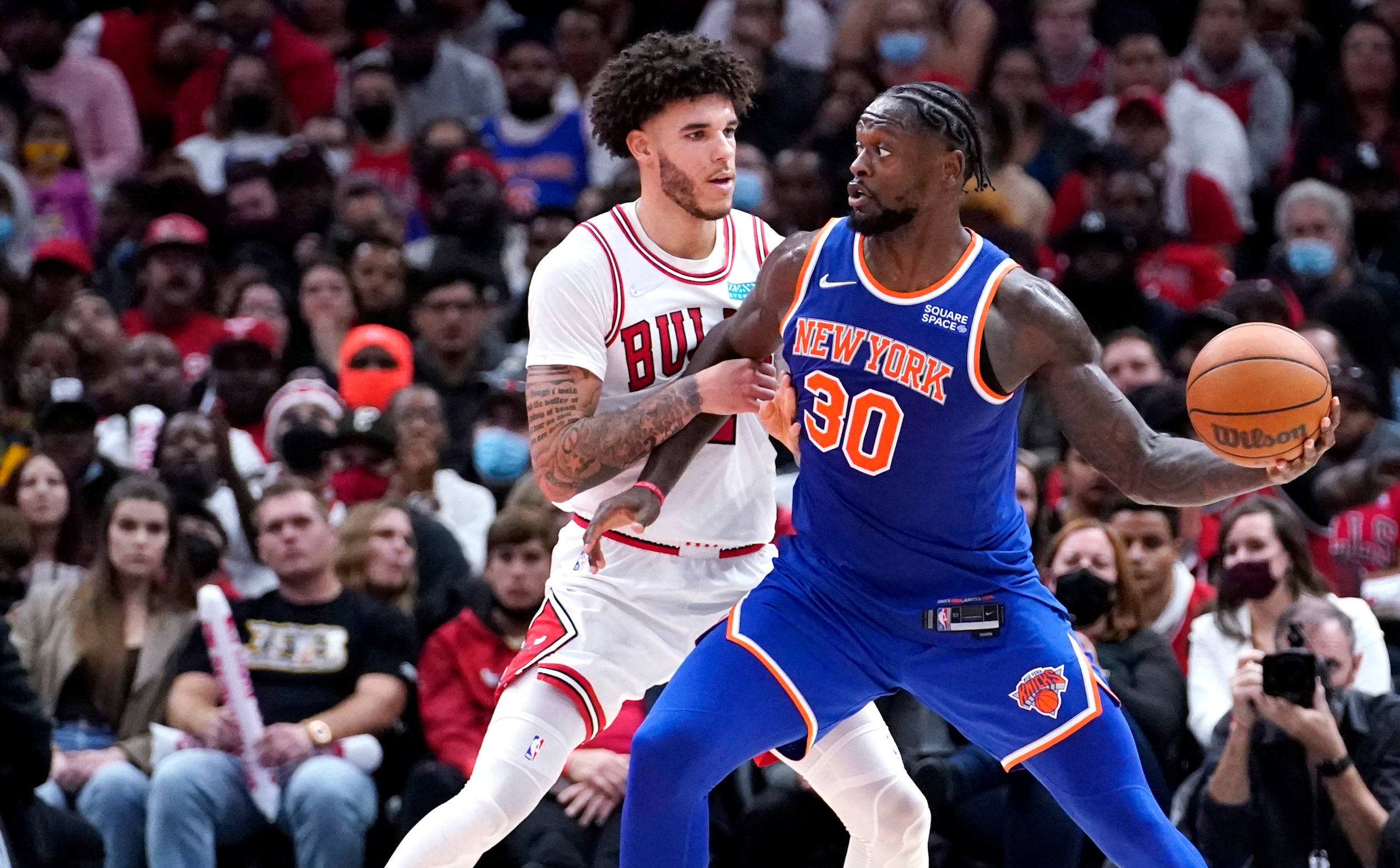
Our first non-player-specific surprise goes to the Chicago Bulls, a team we were all certain would go a full season without stopping anyone on defense. Yes, the addition of DeMar DeRozan to a lineup that already featured Zach LaVine and Nikola Vucevic would produce points. But the preseason consensus was that the Bulls would be so inept defensively as to offset whatever scoring gains they'd enjoy.
Smash cut to now, and the Bulls are sporting a top-five defensive rating, have kept opponent three-point attempts down and have defended at the rim extremely well.
Alex Caruso and Lonzo Ball, two slightly less heralded free-agent newcomers, give the Bulls a pair of plus defenders in the backcourt, which allows them to hide DeRozan on weaker matchups in most lineup constructions.
And though Vucevic will never be confused with a paint-patrolling difference-maker, he's shown just enough mobility and effort to survive, forcing us to recall that he was a big-minute player on a couple of solid Orlando Magic defenses in years past.
The Bulls are in for some regression; opponents are hitting threes at exceedingly low rates that will normalize during the year. But even pricing that in, Chicago could finish with a mid-pack or even top-10 defense. That'd defy every offseason expectation.
Cleveland Cavaliers: Evan Mobley
6 of 30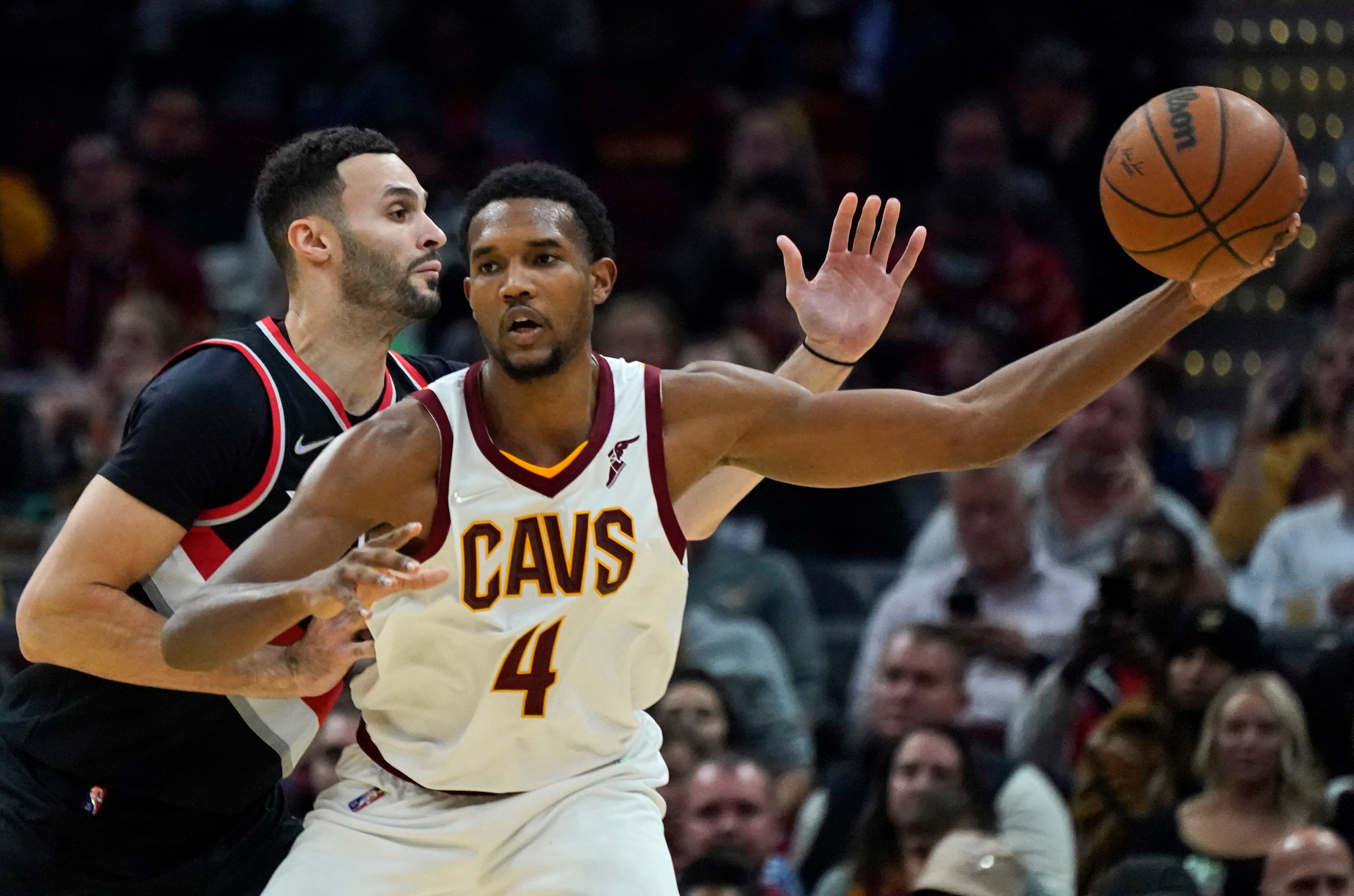
I understand the argument that a No. 3 pick should be expected to perform well, and that it shouldn't be a surprise when he does. But there are levels to "performing well," and Evan Mobley is succeeding in ways no one should have foreseen.
Sure, the rosiest forecasts of his potential included multiposition defense, better-than-average facilitation and perimeter skills for a near-7-footer, along with the shot blocking you'd need from a player that size. Some or all of those characteristics would theoretically come in time if they came at all—certainly not before the seasoning and lump-taking young players have to endure.
Instead, almost from day one, Mobley was one of the best perimeter stoppers we've ever seen at his height.
Every draft class has a handful of big men with the potential to guard positions 1 through 5, protect the paint and spread the floor on offense. Almost none fulfill it.
Mobley helps and recovers in ways that make you believe in teleportation. He's comfortable with the ball, showing genuine inside-out force on both ends at age 20. That's something you hope for with rookies like him, but it's never something you actually expect to get—let alone right away.
Dallas Mavericks: 3-Point Defense
7 of 30
Most of the Dallas Mavericks are playing near enough to expectations, which means we need to look for a teamwide trend that stands out as unusual.
Dallas has historically allowed opponents free rein to fire away from distance, so its sudden success preventing three-point shots is one of the most conspicuous changes of the 2021-22 season.
The Mavs permit opponents to take just 33.2 percent of their shots from beyond the arc. That's good for sixth-stingiest in the league. You have to go all the way back to 2008-09, long before the three-point revolution changed offensive norms, to find a Mavs team that ran foes off the arc that effectively. In each of the last dozen seasons, Dallas has ranked 15th or worse in that stat, including several years in the bottom five of the league.
Opponents are finishing well at the rim and killing the Mavs from the deep corners, which is why the team's overall defensive performance hasn't been great. But hey, at least Dallas is playing its typical brand of subpar defense differently.
Denver Nuggets: Nikola Jokic
8 of 30
An MVP award is supposed to represent a pinnacle, but lately that honor has felt more like a starting point.
Stephen Curry improved on his 2014-15 Most Valuable Player win by taking the award unanimously the following year, and Giannis Antetokounmpo doubled up on his 2018-19 victory with a season that earned him a second straight trophy in 2019-20—with a higher percentage of the vote, to boot.
With those precedents, Nikola Jokic's improved play shouldn't register as a surprise. It still feels like one.
Last year's MVP is scoring and rebounding at higher rates per 100 possessions while shooting more threes (and hitting them more efficiently) and grading out as a massively positive force on defense. The vagaries of opponent three-point shooting make that last stat a little iffy, but it remains the case that Jokic, the reigning MVP, has upped his game.
He declined to participate in the Olympics because of fatigue; Michael Porter Jr. wasn't himself and is now out indefinitely because of lower back soreness; and top running mate Jamal Murray hasn't played after last April's torn ACL. So the MVP's elevated performance is even more unexpected.
Detroit Pistons: Killian Hayes
9 of 30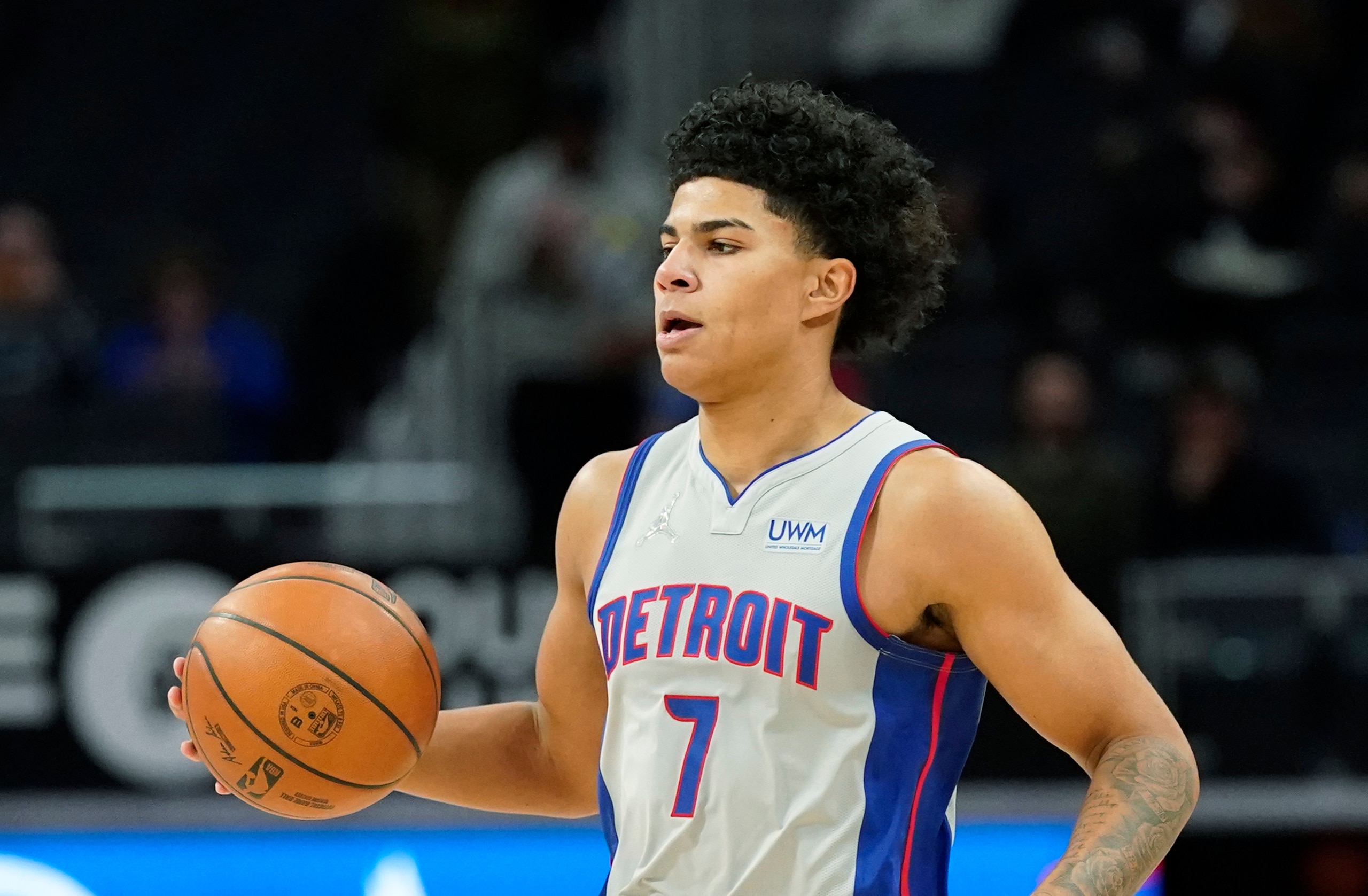
If Killian Hayes is going to be more of a shooting guard than a point guard, as the role change that began last season suggested would be the case, he picked a good skill to improve.
The Detroit Pistons' most significant lottery pick until Cade Cunningham showed up this year is hitting 38.1 percent of his triples. He's still missing a lot inside the arc and hasn't upped his long-range volume on a per-minute basis, but this jump in accuracy is still a big deal.
Hayes only hit 27.8 percent of his deep shots during an injury-interrupted rookie campaign.
After last year's hip setback, he's gone from being a player defenses could ignore beyond the arc to one who has, so far, made opponents pay. There are levels to three-point effectiveness; Hayes only has one game this year in which he made an unassisted three. His next step is hitting deep shots off the bounce consistently. Still, progress is progress.
Golden State Warriors: Damion Lee
10 of 30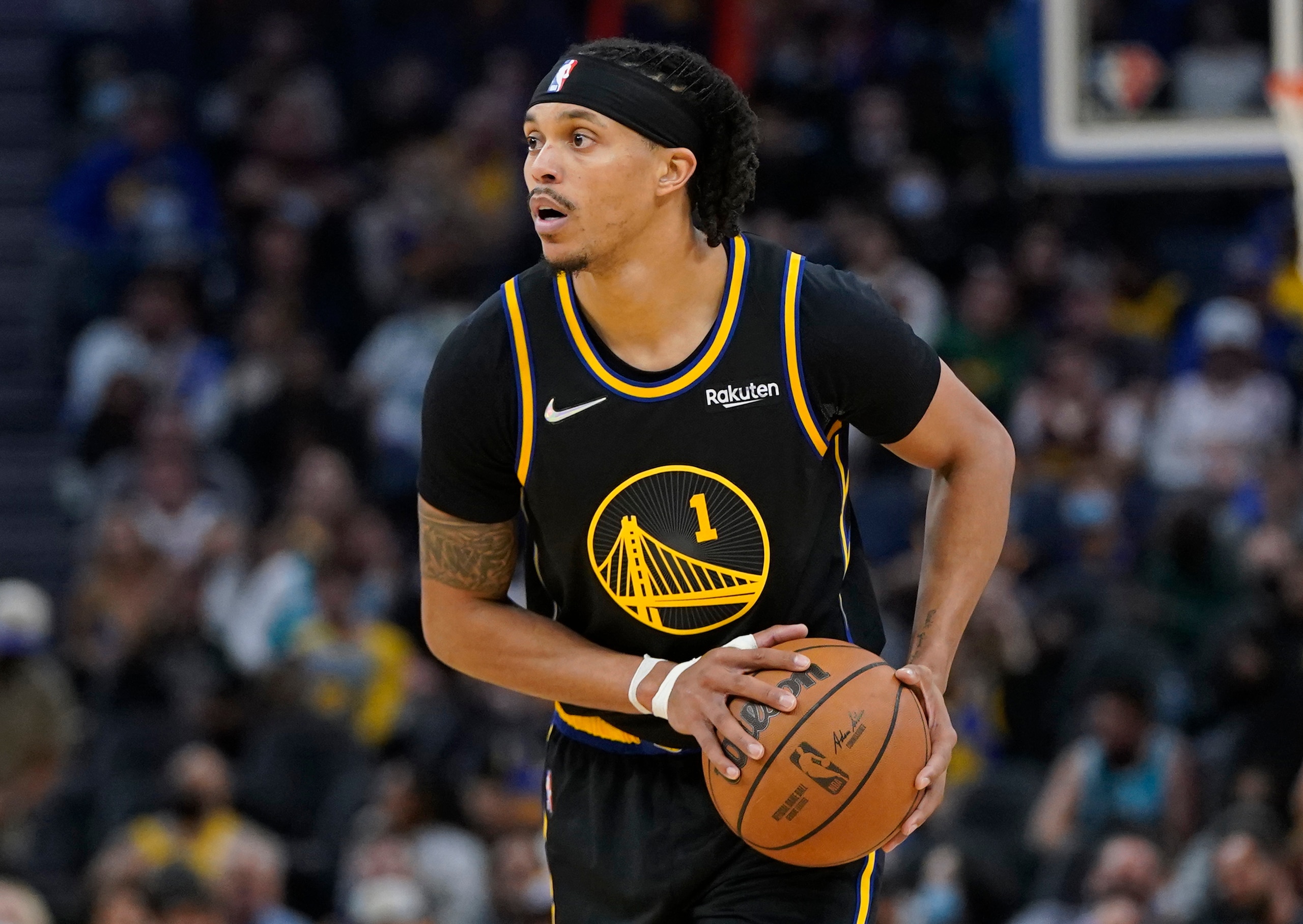
Damion Lee is fifth on the Golden State Warriors in minutes and true shooting percentage, and he owns the lowest turnover rate of anyone on the team who's seen regular time in the rotation. Not bad for a 29-year-old wing whose only consistent big-minute action came by default during the Dubs' lost 15-50 season two years ago.
Stephen Curry's brother-in-law has been Golden State's most consistent two-way wing. On nights when Andrew Wiggins performs his occasional disappearing act, Lee steps in and fires away with the confidence of a max-salaried star. If Andre Iguodala's 37-year-old joints are a little achy, Lee can handle spot duty as a wing stopper.
No one on the team has averaged more minutes in the fourth quarter.
Lee won't continue making 43.6 percent of his three-point attempts, but his understanding of how to operate in Golden State's system on both ends will endure. As will his value to what's looking like a legitimate title contender.
Houston Rockets: Alperen Sengun
11 of 30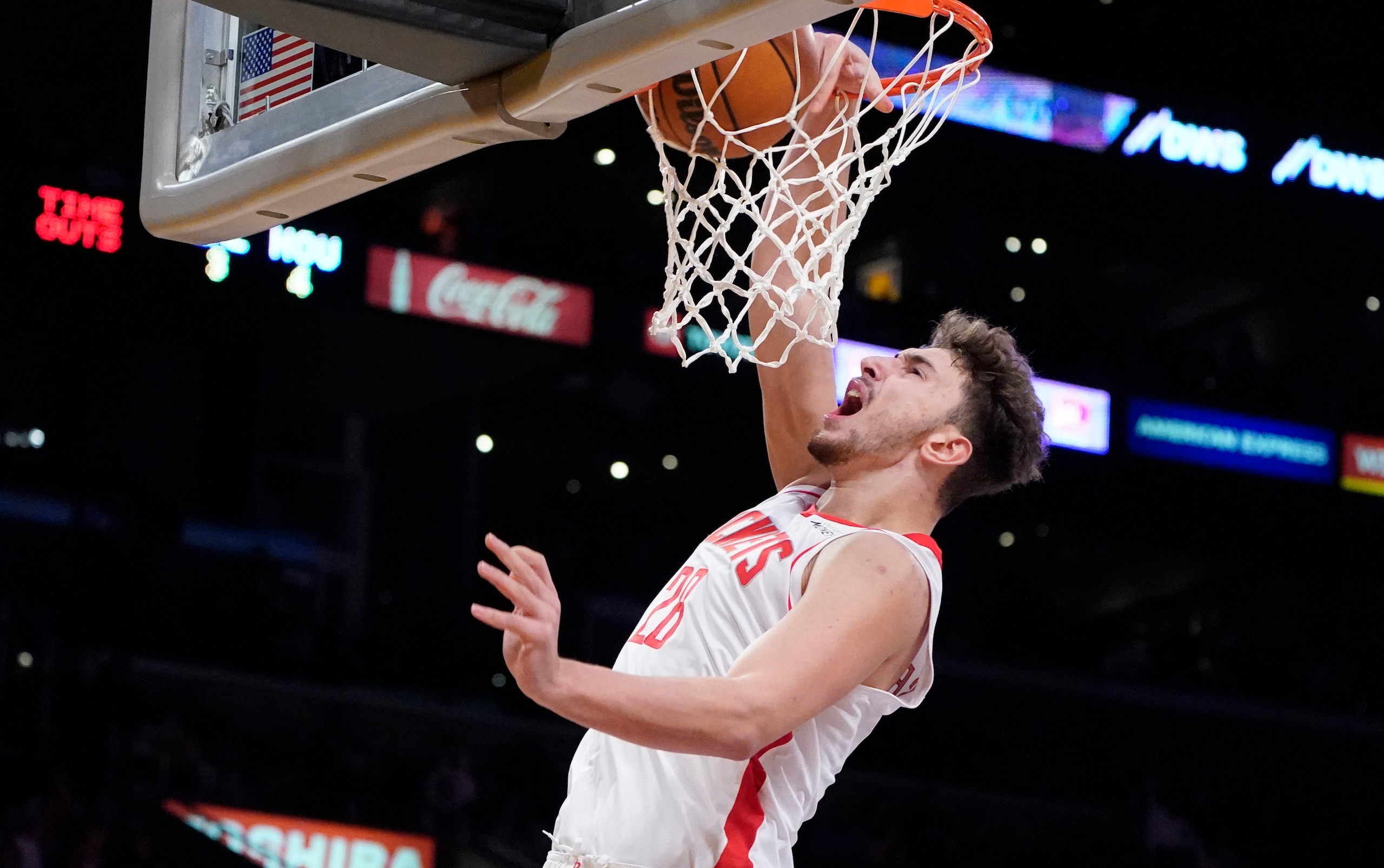
Maybe you were among those who saw Alperen Sengun's NBA readiness coming. Perhaps his uncommonly developed post game, passing acumen and comfort with physicality were obvious to you.
If that's the case, you certainly aren't an Oklahoma City Thunder employee with input on the draft. OKC sent the 16th pick to the Houston Rockets, taking back a pair of protected future firsts for Sengun's rights. The Thunder may yet win that draft-night deal, but it's not looking great.
Houston's offense sings when Sengun is in the game, and he's already moved into a starting role three weeks into the season. The skilled big man draws heaps of fouls using craft most players develop after a decade or so, and he's among the league's most audacious passers at his position.
Don't be misled by that clip. Sengun turns it over a ton, but he's got an elite assist rate.
No one should ever expect a teenager picked outside the lottery to come into the league with such polish and creativity. The Thunder sure didn't.
Indiana Pacers: Chris Duarte
12 of 30
Myles Turner leaning all the way into a three-heavy shot profile is a significant development for the Indiana Pacers, but the big man's progress toward that goal has been incremental. It's not a surprise because Turner has been trending that way, although perhaps not as quickly as some critics would like, for a handful of seasons.
Plus, picking Turner as Indy's surprise would be overthinking it. Chris Duarte, selected 13th in the 2021 draft, would finish no lower than third if Rookie of the Year voting happened today. Even for a prospect who was billed as NBA-ready because of his historically advanced age—he's the oldest first-round pick since 2002—Duarte's performance has been unexpectedly strong.
He's already in the Pacers' history books, he's hitting buzzer-beaters on the regular and he's playing with the confidence of, well, a 24-year-old veteran who knows what he's supposed to do on both ends of the floor.
Duarte might not have as much development left in his game as the younger players picked before him, but late-lottery selections almost never make an immediate impact like this.
Los Angeles Clippers: Luke Kennard
13 of 30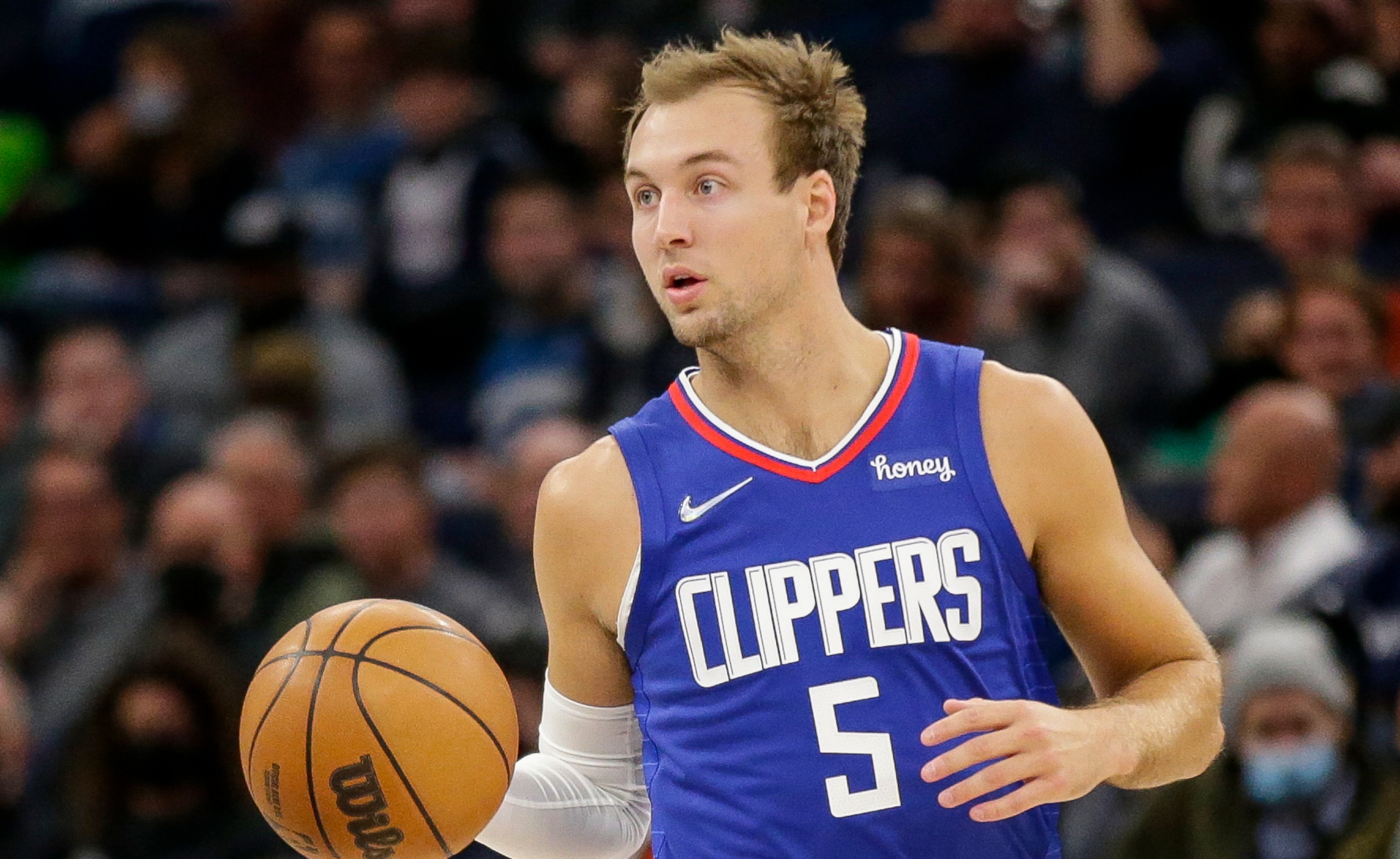
Luke Kennard is 25 years old and playing the second season of a four-year, $56 million contract. Given those descriptors, he should be expected to produce like he has so far this year. But the sweet-shooting lefty with more playmaking pizzazz than most think was an unqualified disappointment in 2020-21, averaging just 19.6 minutes and 8.3 points per game.
The Los Angeles Clippers got crushed by 9.9 points per 100 possessions with Kennard on the floor last season, with most of the damage coming on defense.
Now? Kennard is drilling a career-best 47.5 percent of his treys and, if his on-off splits are to be believed, helping the Clips on both ends. His positive defensive impact will surely regress, but the 6'5" guard still looks like a safe bet to stick in the main rotation. He's basically quit turning the ball over and is taking nearly three-quarters of his shots from long distance—a defensible strategy when you've shot 41.7 percent from that range for your career.
Los Angeles Lakers: Carmelo Anthony
14 of 30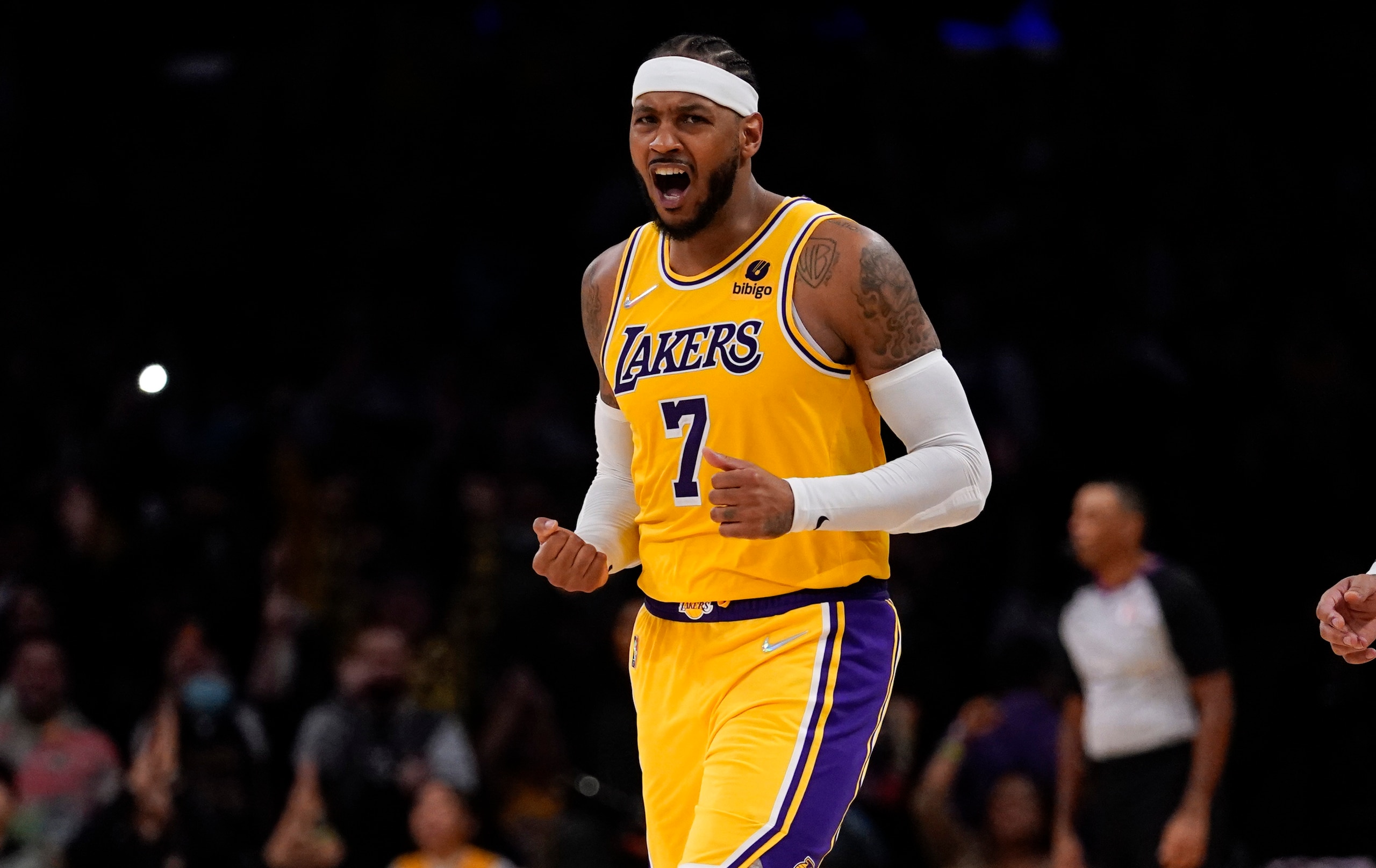
Carmelo Anthony seemed to reach an understanding over the last two seasons. He learned that, for him, sticking in the NBA depended on functioning as a support piece in a limited role, a praiseworthy bit of self-awareness for the one-time scoring champ and top-10 all-time scorer.
Most former stars don't so easily humble themselves.
But Melo is doing even more than that. In a rare feat, he's actually improving at that reduced role, becoming more effective at an age, 37, when merely hanging on would be an achievement. Never before has Anthony been this deadly from deep (52.0 percent on the highest attempt frequency of his career). Incredibly, almost two decades into his NBA run, Melo is averaging more points per shot attempt than he ever has.
Regression is coming. Nobody makes half their threes over a full season. But it's time to appreciate the fact that Anthony, essentially out of the league because he wasn't ready to change his game in 2018, is absolutely crushing it in his late-career role.
Memphis Grizzlies: Desmond Bane
15 of 30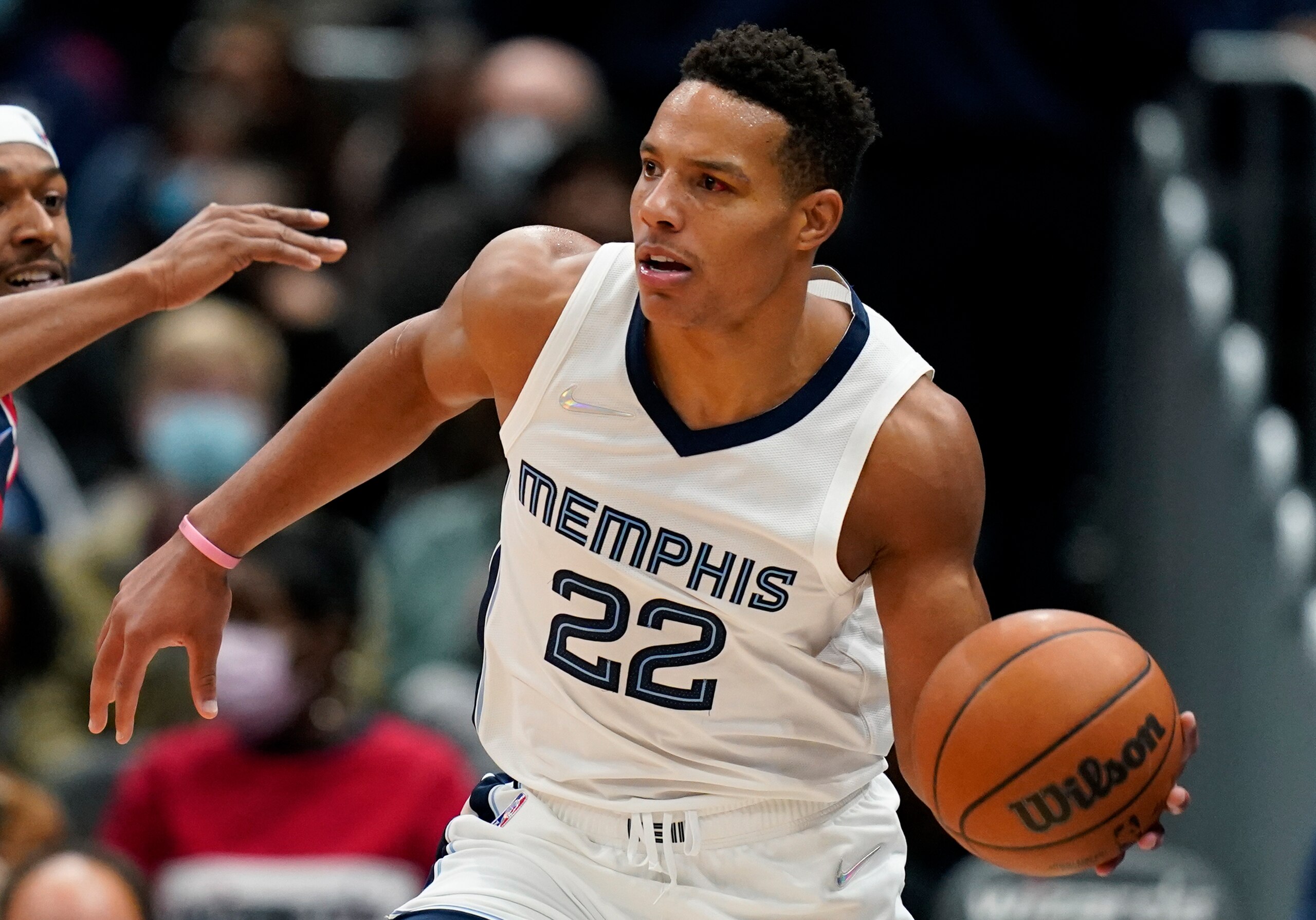
If Desmond Bane were just a three-point shooter, he'd still be a valuable player for the Memphis Grizzlies. His 41.9 percent knockdown rate since entering the league in 2020-21 is in the top 15 among players who've attempted at least 4.0 triples per contest in that span.
But Bane is expanding his game in surprising ways as a sophomore.
For one thing, he's getting his own looks more often. Fewer of his two-point buckets have come via assist this year, and he's finishing much more efficiently around the rim, all while positively affecting the Memphis Grizzlies' net rating by the second-largest margin on the team—notably ahead of breakout star Ja Morant.
Before the season, there was some question as to whether Kyle Anderson or Bane deserved to start at the 3. Question answered. Bane has been the Grizzlies' second-best player.
Miami Heat: Dewayne Dedmon
16 of 30
Tyler Herro is busting out in exactly the way a player with his scoring skill set should, even if it's coming a year later than some would have liked. So while it's undeniably great news for the Miami Heat that they've got the Sixth Man of the Year front-runner, Herro's step forward shouldn't knock anyone's socks off.
He had this in him all along.
Dewayne Dedmon is a different story. He's a journeyman center with modest success on his resume, most of which came with the Atlanta Hawks several seasons ago. He was out of the league entirely until Miami signed him in April.
Incredibly, no Heat player has made a bigger impact on the team's bottom line (on a per-possession basis) than Dedmon, who's averaging 15.9 points and 13.6 rebounds per 36 minutes while hitting every three and free throw he's attempted.
Not bad for a 32-year-old whose NBA career seemed all but over at this time last year.
Milwaukee Bucks: Grayson Allen
17 of 30
The Milwaukee Bucks' title defense has looked sluggish because of the absence of four projected starters—Jrue Holiday, Donte DiVincenzo, Khris Middleton and Brook Lopez—for significant chunks of the season. Nobody should worry about this group as long as Giannis Antetokounmpo is around, and none of the out-of-action starters are battling issues likely to hamper them come playoff time.
And, looking on the bright side, the Bucks have had plenty of minutes to toss around for any bench players ready to capitalize.
Grayson Allen has done the most with the opportunity he's been given, averaging a career-best 15.5 points and Gatling-gunning 8.5 triple attempts per game with a 41.5 percent success rate. He almost never turns it over (because why try to pass when you've got the ultimate green light to shoot?), and anyone who hasn't made a habit of watching the 26-year-old former college basketball pariah probably doesn't know about his sneaky bounce.
At this rate, DiVincenzo might return from his ankle injury to find Allen has taken his job.
Minnesota Timberwolves: Karl-Anthony Towns
18 of 30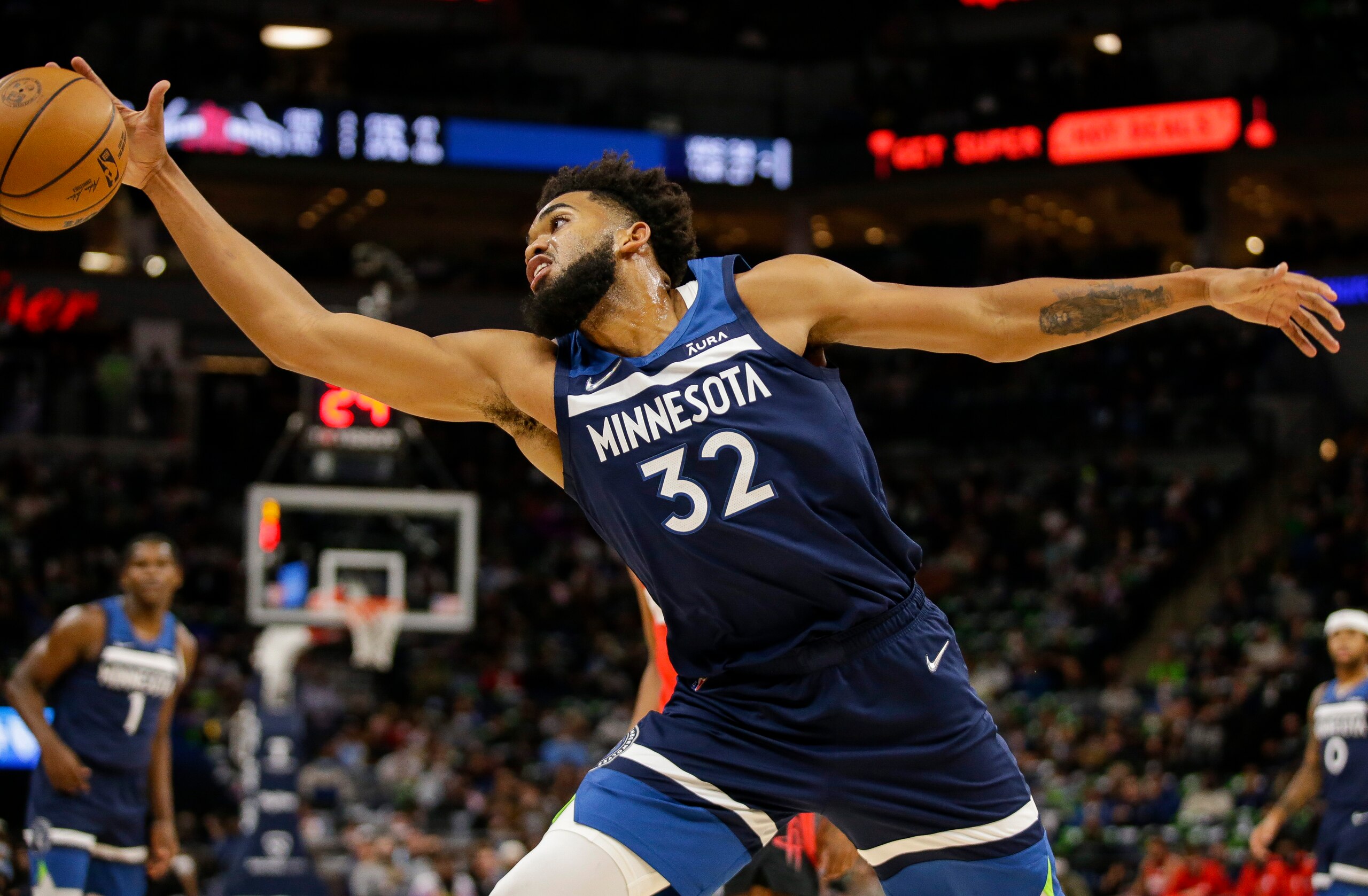
Karl-Anthony Towns is playing better defense this season than he has in any year that didn't involve Tom Thibodeau screaming at him. Whether "better" actually means "good" is another issue, as the Minnesota Timberwolves have been stingier with Towns on the bench, despite some standout efforts from the All-Star center.
As mixed as the results of Towns' defense have been, we can all agree that the process is improved. His activity level is way up, with proof showing in a steal rate nearly twice Towns' career average.
That handsiness isn't producing fouls, and Minnesota is running a ton off live-ball turnovers like the ones Towns has been generating.
The Wolves' passable defense is one of the more unexpected developments of 2021-22, and even when their opponents shake the bad luck that has suppressed their three-point accuracy, some of the foundation of that good D should remain.
New Orleans Pelicans: Herb Jones
19 of 30
Before Herb Jones entered the league's concussion protocol on Nov. 3, his counting numbers didn't exactly jump off the page. But through eight games (seven starts), the 23-year-old rookie established himself as a five-position shutdown machine, hassling everyone from Devin Booker to Julius Randle.
It's not that hard to be the best defender on the New Orleans Pelicans. But Jones' early work would make him a contender for that title on most of the other 29 squads in the league. Really, getting anything noteworthy from a No. 35 pick is a surprise—let alone in said pick's first couple of weeks as a professional.
Jones' offense is a little suspect, as evidenced by his scoreless 31 minutes in an Oct. 25 win against the Wolves and his limited range. But the second-rounder looks like he's got a real role in the NBA, and he's inspiring fits of joy among commentators.
New York Knicks: Derrick Rose
20 of 30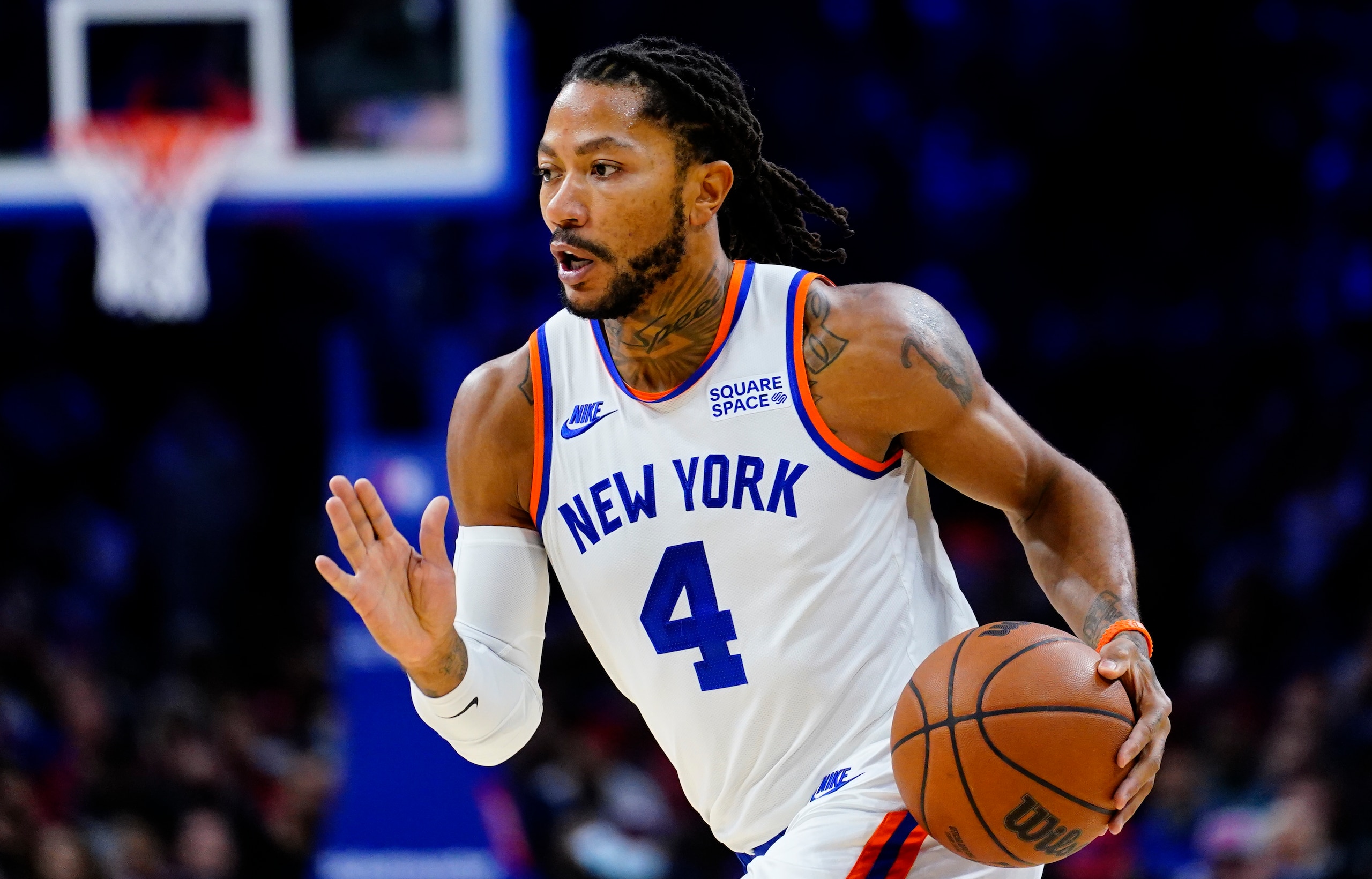
Derrick Rose did a lot for the New York Knicks' second unit after he joined the team via trade midway through the 2020-21 season, but he wasn't known for pushing the pace.
This year, things are different.
Rose's insertion into the action coincides with the Knicks mashing the pedal to the floor. They get out in transition 5.8 percent more often when he's in the game, an uptick that ranks in the 96th percentile. Last year, New York actually played slower with Rose at the point.
It helps that Rose sees a lot of time with Alec Burks, Obi Toppin and Immanuel Quickley, all of whom (especially Toppin) are open-floor players. But for a Knicks team that ran into trouble because its half-court offense wasn't dynamic enough in the 2021 playoffs, it can only help that its veteran backup is hunting transition chances at every opportunity.
Oklahoma City Thunder: Josh Giddey
21 of 30
I'll cop to not watching a ton of Josh Giddey's NBL film prior to the 2021 draft. Maybe if I'd seen more, I wouldn't be so surprised by the rookie point guard's game.
Giddey hasn't shot the ball well, and it's unclear if his limited athleticism will make him the wrong kind of 6'8" positionless defender—the kind that doesn't match up well with any spot from 1 to 5.
But he has innate court awareness and sees angles others don't, and he possesses an ultra-rare resistance to being sped up by the defense. He's comfortable and unhurried in traffic.
Giddey, like star teammate Shai Gilgeous-Alexander, operates at his own pace, working deliberately to get to his spots. Opponents tend to have success pressuring rookies into mistakes, and Giddey has made a few. But for the most part, his poise and control are advanced for his age. Just 19, Giddey often operates like a savvy vet.
Third on the Thunder in minutes, the Aussie leads them in assists and steals, all while taking surprisingly good care of the ball. These are all early markers of potential stardom, something I and the five teams that passed on Giddey in the draft apparently didn't see coming.
Orlando Magic: Cole Anthony
22 of 30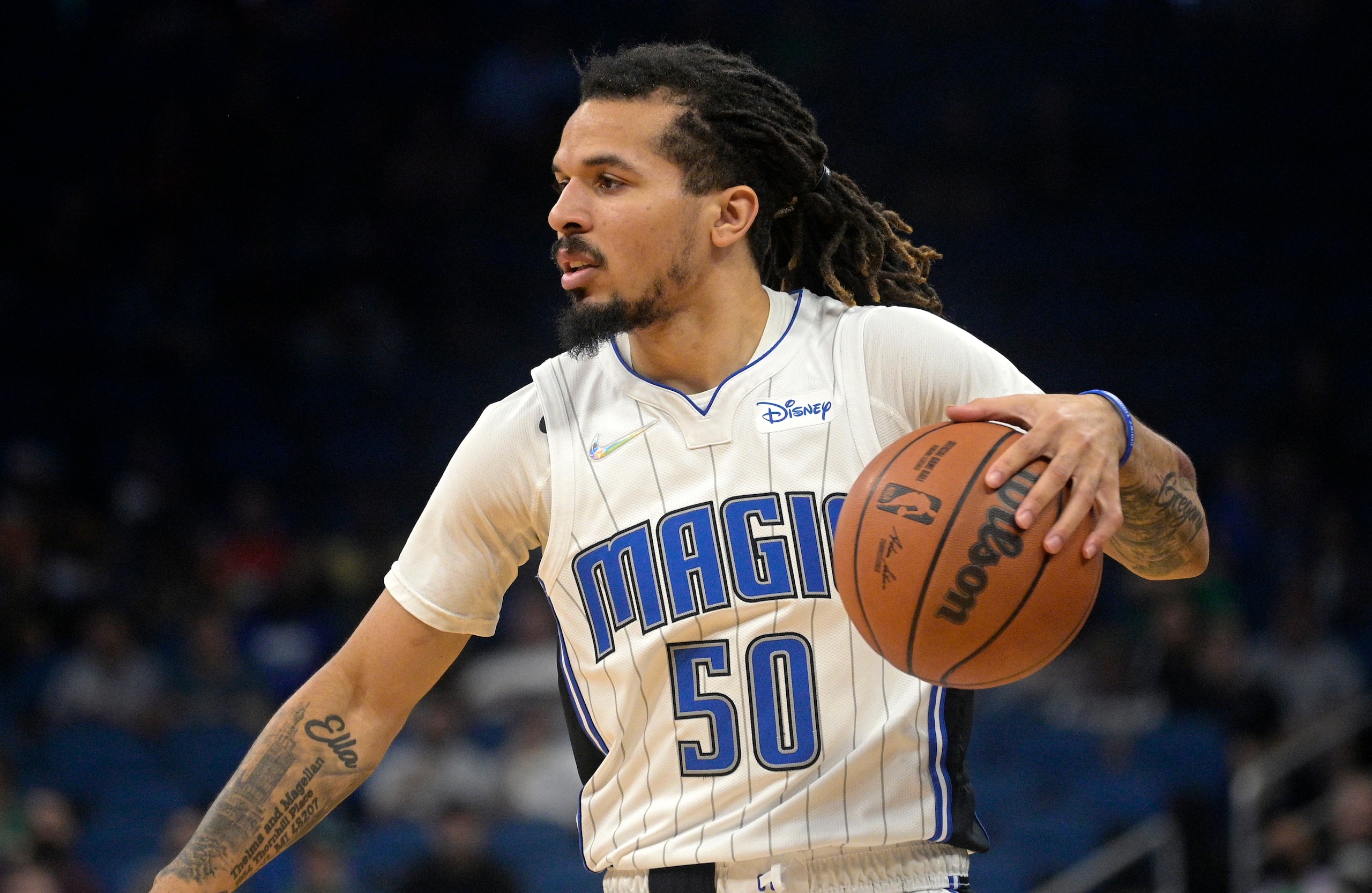
Primary ball-handlers who play significant minutes will put up counting stats by default, but Cole Anthony has been more than a "somebody's got to get stats on a bad team" guard in his second season.
After ranking in the 19th percentile at his position in points per shot attempt last year, Anthony is all the way up in the 89th percentile. His three-ball is falling, and he's attempting deep shots on significantly increased volume. For some context, Anthony has made more triples than James Harden, Duncan Robinson and Donovan Mitchell. Not bad for a guy who shot just 33.7 percent from deep as a rookie.
Spikes in his rebound and free-throw rates show further growth, and in a larger role than he occupied a year ago, the UNC product has actually turned the ball over less frequently per 100 possessions.
We should expect progress in a player's second season, but Anthony wasn't all that impressive as a rookie. Now, suddenly, he's the single biggest driver of (limited) success in Orlando.
Philadelphia 76ers: Seth Curry
23 of 30
Seth Curry was already a quality starter, and his status as one of the league's greatest shooters hasn't been in dispute at any point in the last half-decade or so. But the 31-year-old guard is taking things to a new level for the Philadelphia 76ers this season.
The league leader in true shooting percentage (among those who attempt at least 10 shots per game), Curry is shredding the nets from everywhere. He doesn't take many shots from close range, but he has yet to miss inside three feet, and Curry is shooting a preposterous 64.0 percent on mid-rangers. He's arguably been the best off-the-dribble shooter in the league.
Oh, and he's up to 48.3 percent from long distance which, compared to his career mark of 44.6 percent (second all-time), might actually be the least surprising aspect of his statistical profile.
Medical professionals caution against standing within 20 feet of Curry, due to the likelihood of third-degree burns. He's that hot.
Phoenix Suns: Frank Kaminsky
24 of 30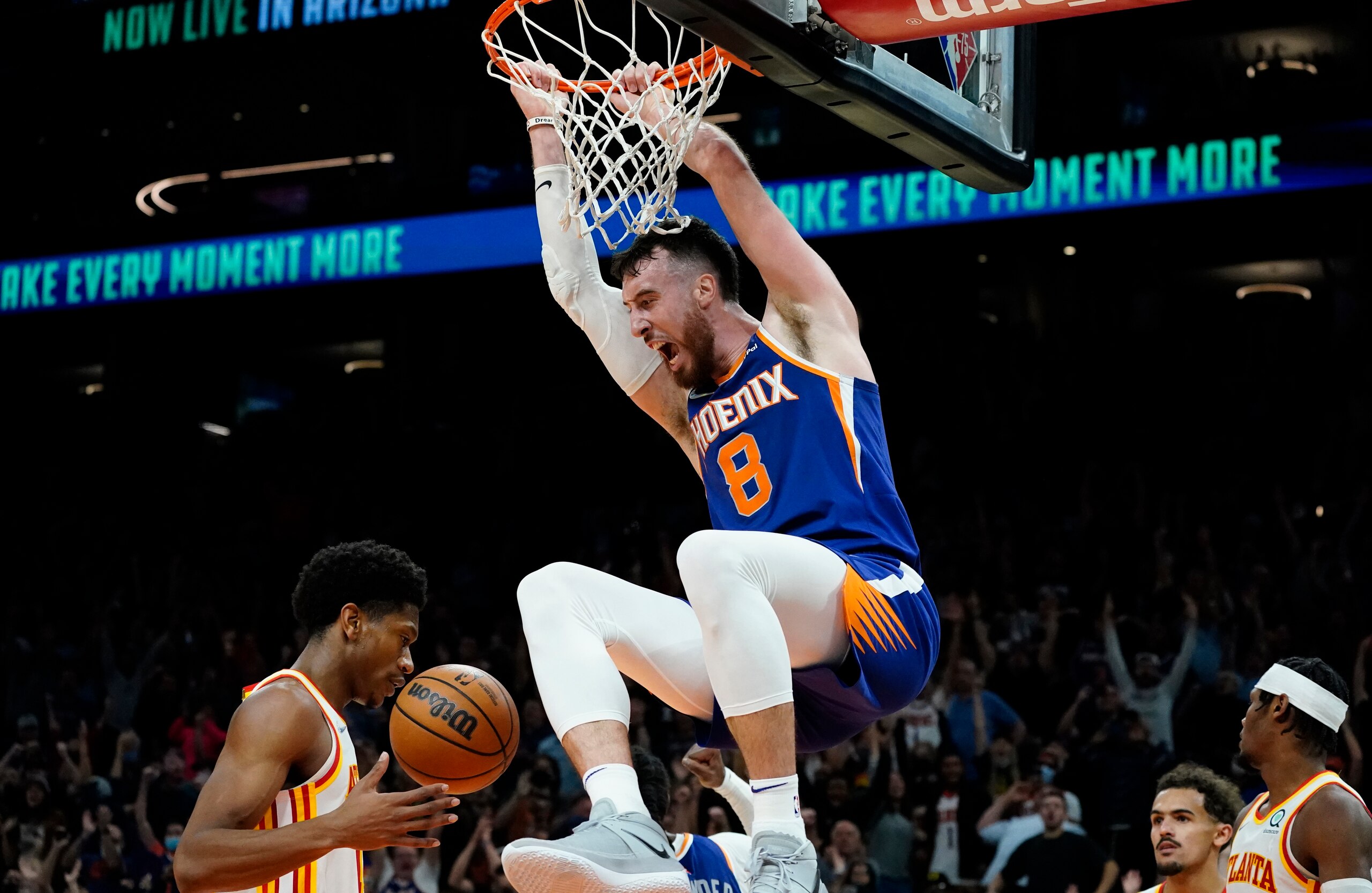
Though he's played precious few minutes on the season and logged several DNP-CDs, Frank Kaminsky stands out as one of the few Phoenix Suns surpassing expectations.
He's on pace to set a career high in field-goal rate (54.5 percent), and though we have to take on-off numbers with a boulder of salt when discussing a player who's seen so little court time, Kaminsky isn't killing the Suns on the defensive end. Prior to this season, the 28-year-old small-ball 5 was a reliable self-saboteur on that side of the floor.
JaVale McGee was supposed to be Deandre Ayton's primary backup, and he's been adequate in that rim-rolling, rebound-gobbling role. But Kaminsky is providing a floor-stretching dimension the Suns need. Who knows whether that'll hold up, but for now, his plus-2.3 box plus/minus stunningly ranks second on the team.
Portland Trail Blazers: Damian Lillard
25 of 30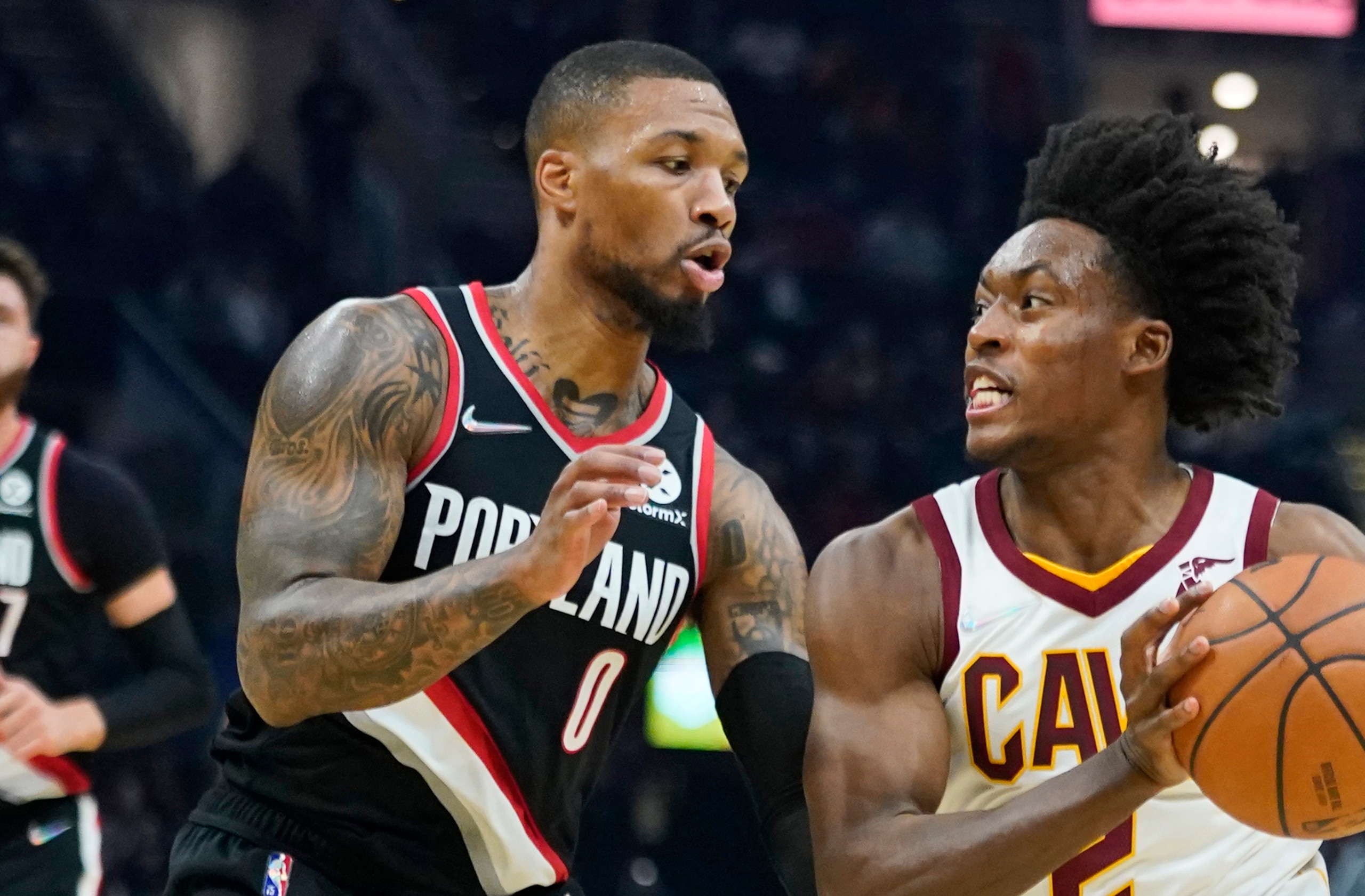
Damian Lillard's wayward three-point shooting is the biggest surprise of the Portland Trail Blazers' season, but we're avoiding the negative here. Fortunately for him and the Blazers, hidden behind his tough luck from deep is a positive sign on defense.
Portland hasn't just been better overall defensively with Dame on the floor this year, it's also been better by a margin that stands out among his career numbers. Lillard's minutes coincide with an improvement of 1.8 points per 100 possessions in defensive rating. Just once in his nine other seasons has his positive impact been that large.
Sample sizes are small enough that one opponent scoring flurry with Lillard in the game could erase the entire trend. But he had only graded out as a net-positive defender twice in those nine seasons, so this at least warrants mention.
Sacramento Kings: Harrison Barnes
26 of 30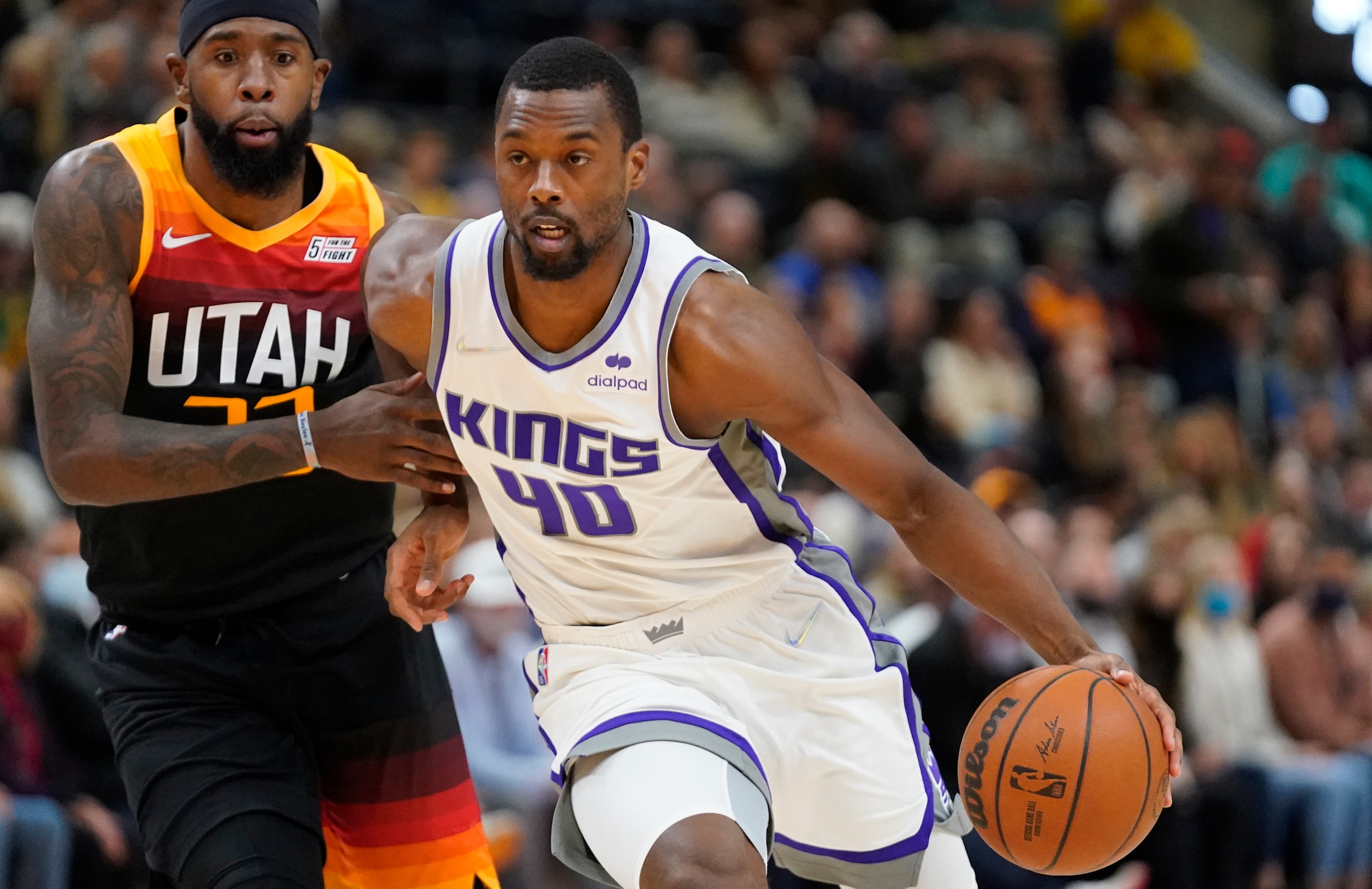
A solid starter for nearly a decade, Harrison Barnes has leveled up in his 10th campaign. And he got started early, putting up a career-high 36 points in the Sacramento Kings' season-opening win over the Blazers on Oct. 20.
Personal bests in scoring, rebounding and three-point hit rate have made the 29-year-old combo forward the Kings' best player this season.
Some portion of Barnes' success is due to his full-time status as a power forward. He's always been mobile enough to hang with wings on the perimeter, but he's better set up to succeed as a 4. Strong enough to bang underneath when called upon, Barnes is simply too quick for bigs who have no choice but to close out hard when he goes into his shooting motion from deep. His fake-and-go game is a big reason he's averaging more free-throw attempts than ever.
No stat will capture it, but Barnes this year just seems to have a total understanding of who he is and what he can do. Paradoxically, he's broken out by playing within himself.
San Antonio Spurs: Defensive Disruption
27 of 30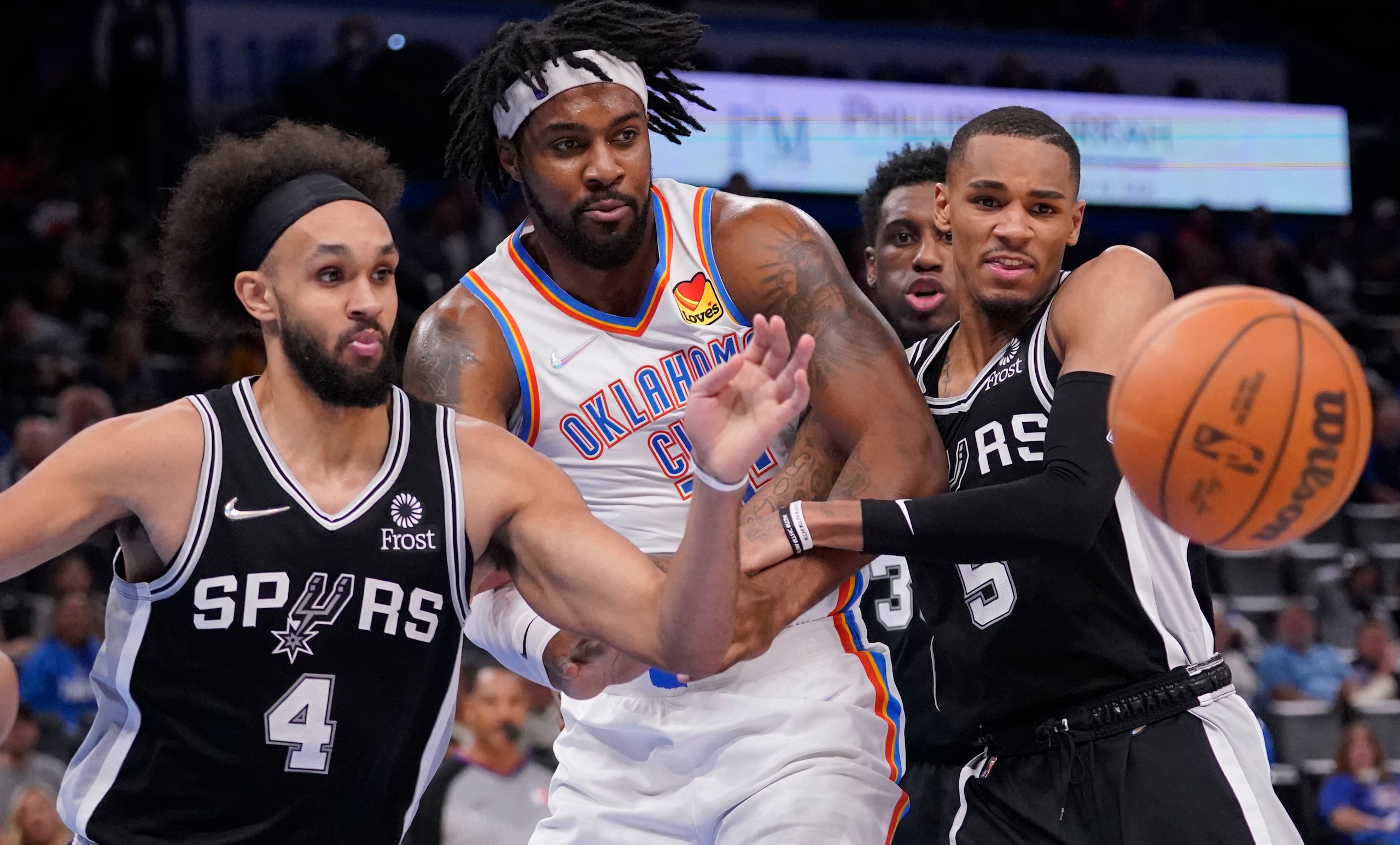
The San Antonio Spurs have tailored their style to personnel over the years, even if the constancy of head coach Gregg Popovich's presence has produced the illusion that they never really change. Example: The Spurs basically started the corner-three revolution on their own, ranking among the league leaders in those shots for most of a decade before abandoning the long ball when the roster made that the prudent decision.
They've played fast and slow. They've led the league in passes per game some years, and ranked nearly last in others.
One thing the Spurs haven't done, though, is rank among the NBA's best turnover-generating defenses. San Antonio's system on D has long been about keeping the action in front and containing threats—not attacking with the intent to take the ball away.
That's different this year, as the Spurs' younger roster is causing havoc to degrees rarely seen. If their rate of forced turnovers holds, it'll be the highest figure the franchise has produced since 2003-04.
Toronto Raptors: Scottie Barnes
28 of 30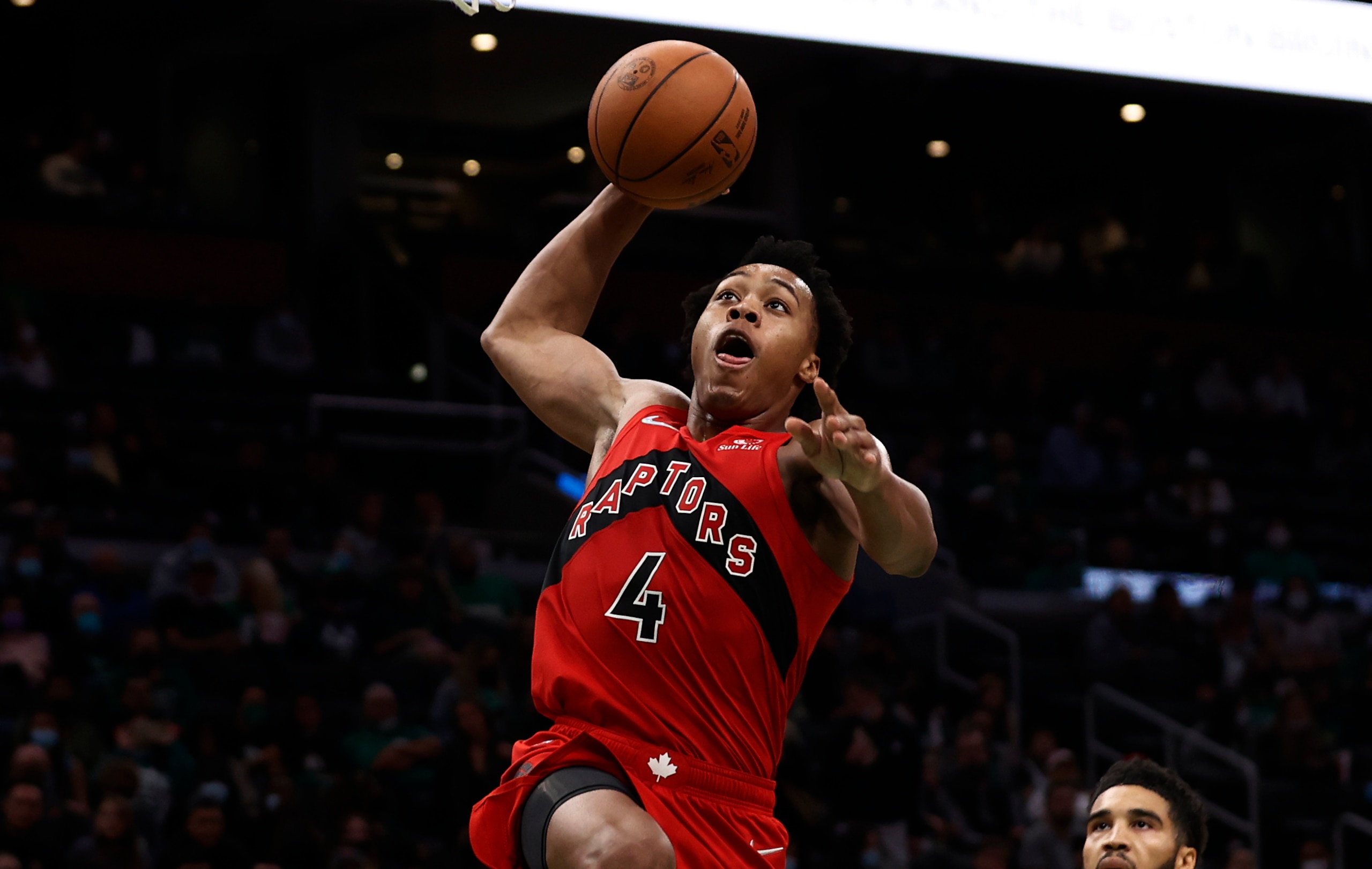
Even if he was the fourth pick in what's looking like a loaded 2021 lottery, Scottie Barnes was supposed to arrive with holes in his offensive game that would, theoretically, look even bigger against NBA competition.
He came off the bench at Florida State in part because he lacked stretch on offense and was even suspect from the foul line, where he shot just 62.1 percent.
Barnes showed up in the NBA with a retooled and slightly smoother jumper, albeit one that has yet to produce three-point accuracy. His mid-ranger is falling, though, and Barnes' length and touch make him a well-above-average finisher at the rim. His scoring average of 16.6 points per game is higher than what he managed in college (10.3), and he's getting his buckets on a true shooting percentage (.554) that's a hair above the league average.
The high IQ and defensive versatility were givens, but Barnes' status as a Rookie of the Year short-lister is the product of scoring chops that simply didn't show up until he turned pro.
Utah Jazz: Hassan Whiteside
29 of 30
With the exception of a stark uptick in free-throw accuracy, Utah Jazz second-string center Hassan Whiteside is pretty much the same guy he's always been. Which is to say he's making more than half his attempts from the field, swatting shots at top-tier rates and rebounding everything that comes off the rim.
It's just that this year, he's doing it for a team that may as well be built to emphasize his strengths and mitigate his weaknesses. If anyone knows how to get the most out of a paint-bound conventional center, it's the Jazz.
Utah is 6.1 points per 100 possessions stingier with Whiteside on the floor. That figure, if sustained, would be the best of the 32-year-old center's career. Whiteside is being put in a position to succeed, playing in schemes the Jazz have perfected over several years. Maybe this is a case of right place, right time for the veteran big man.
Either way, Whiteside has been a massive net-positive rotation player for the Jazz, which isn't what you normally expect to get from a castoff center signed for the minimum.
Washington Wizards: Deni Avdija
30 of 30
Deni Avdija's rookie season ended with a grisly ankle fracture. Though the injury wasn't as severe as similar "the foot's not supposed to point that way" ones suffered by Gordon Hayward and Paul George, it's no less impressive that the second-year forward made it back for the season opener while showing no signs of damage.
In fact, Avdija is playing as if his athleticism has increased, quite the opposite of what we've come to expect with injuries like his.
Everyone remembers how long it took Hayward to get his bounce back, yet here's Avdija getting to the rim more often and finishing better at that range than he did before getting hurt. Highlights have ensued.
Washington traded Russell Westbrook for what feels like half-a-roster's worth of rotation players, but Avdija has been good enough to average over 20 minutes per game on a much deeper Washington Wizards team. And he's done it largely by playing with athletic bursts that were hard to see coming.
Stats courtesy of NBA.com, Basketball Reference and Cleaning the Glass. Accurate through games played No. 10. Salary info via Spotrac.

.jpg?w=2560)

.jpg?w=2560 "Latest Peyton-Colts Rumors")
.jpg?w=2560 "Ugly Jets Scoring Stat 😳")
.jpg?w=2560 "Landing Spots for Trade Candidates 📍")