

The start of the 2021 NFL season is mere hours away. The Tampa Bay Buccaneers and Dallas Cowboys will kick off the season on Thursday night, and the 18-week extravaganza will be underway.
This means it's time to pivot from fantasy draft season to the real thing. Roster management, lineup optimization and waiver-wire scouting should be the focus from here on out. Trades, of course, will be a big part of the equation.
While it may be a bit early to be swinging trades, injuries can make deals desirable even before Week 1. Did you draft early and wind up with both J.K. Dobbins and Cam Akers on your roster? You may want to trade for an alternative.
The trouble with trading early in the season is that it can be hard to gauge a player's value before he has provided a significant sample size. Well, we're here to help simplify the process with an early trade-value chart. Much like real-world trade-value charts, we'll be assigning point values to players based on factors like proven production, projected role, supporting cast and player health.
We'll focus specifically at flex options here—running backs, receivers and tight ends—and base choices on point-per-reception (PPR) scoring.
The Do Not Trade List
1 of 6
1. Christian McCaffrey, RB, Carolina Panthers
2. Alvin Kamara, RB, New Orleans Saints
3. Dalvin Cook, RB, Minnesota Vikings
OK, so no player should truly be off limits when it comes to fantasy trades. If, for example, someone offers a pair of top-tier players worth 23 total points, moving Christian McCaffrey, Alvin Kamara or Dalvin Cook would make sense.
However, these three should never be traded one-for-one or for anything less than two elite starters. One top-tier player and a mid-level flex option? Don't do it.
McCaffrey, Kamara and Cook carry PPR floors so high that they are Popeil players—as in, set it and forget it. All three are going to see significant weekly workloads—even McCaffrey, who is coming off an injury-plagued season consisting of three games.
"The reality that the Panthers gave him an absurd 97 percent snap rate in Week 1 last year and allowed Mike Davis to walk in free agency paints the picture of McCaffrey continuing to get all the touches he can handle in 2021," Ian Hartitz of Pro Football Focus wrote.
These three will only come out of starting lineups for injury or the bye week.
Top Tier
2 of 6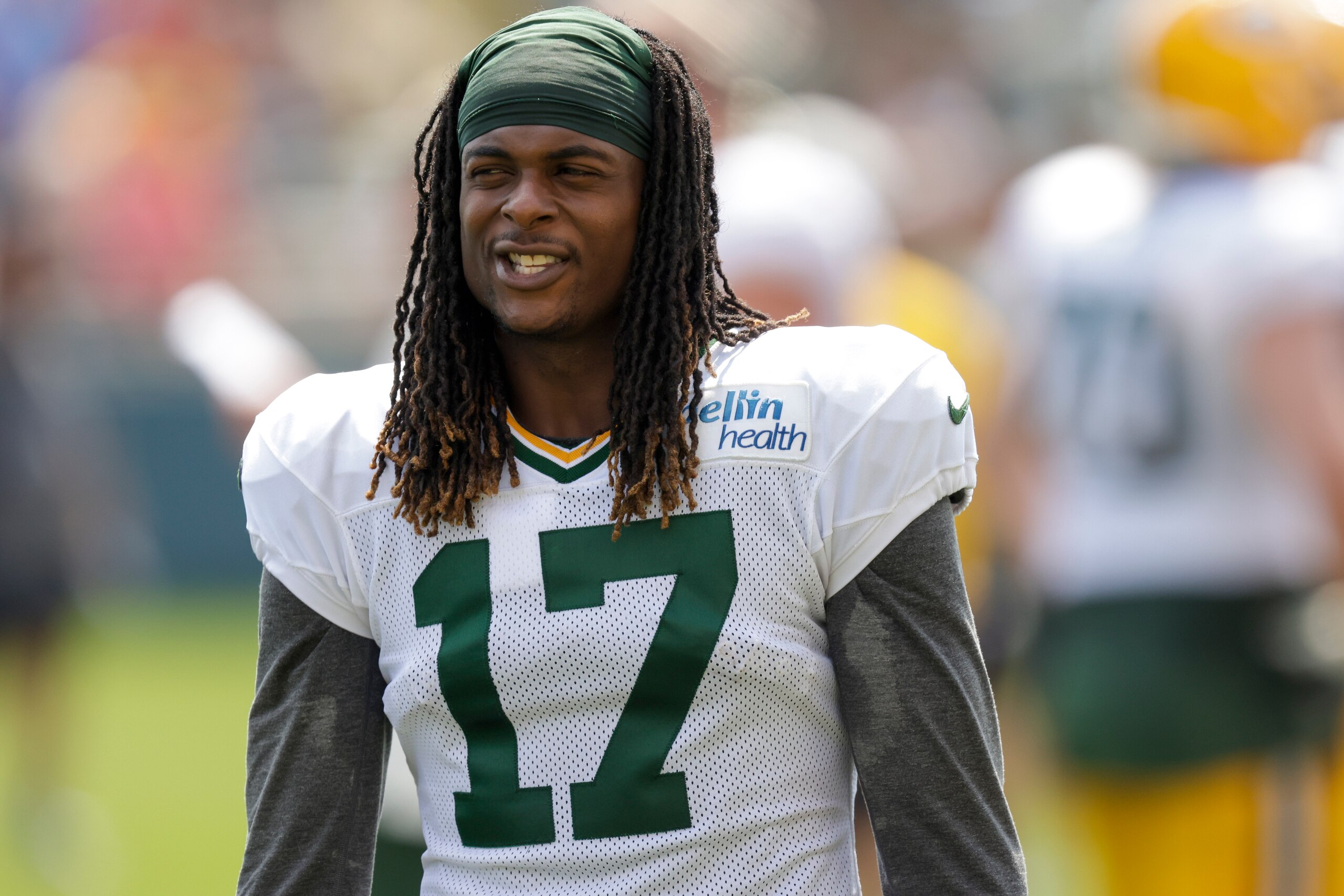
12 Points
4. Davante Adams, WR, Green Bay Packers
5. Derrick Henry, RB, Tennessee Titans
6. Ezekiel Elliott, RB, Dallas Cowboys
11 Points
7. Aaron Jones, RB, Green Bay Packers
8. Austin Ekeler, RB, Los Angeles Chargers
9. Tyreek Hill, WR, Kansas City Chiefs
10 Points
10. Stefon Diggs, WR, Buffalo Bills
11. Saquon Barkley, RB, New York Giants
12. DeAndre Hopkins, WR, Arizona Cardinals
13. Calvin Ridley, WR, Atlanta Falcons
14. Travis Kelce, TE, Kansas City Chiefs
15. Jonathan Taylor, RB, Indianapolis Colts
16. Justin Jefferson, WR, Minnesota Vikings
The top tier is where many league-winners are found. Though they may not possess the fantasy floor of the "elite three," players like Davante Adams and Derrick Henry have the potential to out-perform them over the course of the season.
These are players who can be traded but only in specific circumstances. If, for example, you have your best three wide receivers land on injured reserve, dealing a player like Saquon Barkley may become a necessity.
The trick with dealing 12-, 11- and 10-point players is to seek an unbalanced deal. Trading a 12-point player for an eight-point player and a four-point player is not proper value. That four-point option may never see play, so you're essentially only hurting your starting value. Similarly, you don't want to trade an 11-point player for three four-point players.
Trading a 12-point player for a 9-point player and a 6-point player is more fair, even if the math isn't equal. You're losing top-end value but still getting two starting-caliber options out of the deal.
Second Tier
3 of 6
9 Points
17. Nick Chubb, RB, Cleveland Browns
18. Antonio Gibson, RB, Washington Football Team
19. Darren Waller, TE, Las Vegas Raiders
20. DK Metcalf, WR, Seattle Seahawks
21. A.J. Brown, WR, Tennessee Titans
22. Keenan Allen, WR, Los Angeles Chargers
23. Allen Robinson II, WR, Chicago Bears
8 Points
24. Najee Harris, RB, Pittsburgh Steelers
25. Joe Mixon, RB, Cincinnati Bengals
26. George Kittle, TE, San Francisco 49ers
27. Terry McLaurin, WR, Washington Football Team
28. CeeDee Lamb, WR, Dallas Cowboys
29. Robert Woods, WR, Los Angeles Rams
30. Amari Cooper, WR, Dallas Cowboys
Second-tier players will generally form the backbone of your fantasy squad. These are the second- and third-round options who will rarely come out of the starting lineup but who probably won't challenge to be positional fantasy leaders.
Nick Chubb, for example, may challenge for the league rushing title in 2021. However, he doesn't possess the PPR upside (only 16 receptions last season) to be the top fantasy back—unless, of course, he rushes for over 2,000 yards as Henry did last season. With Kareem Hunt also in the backfield, that's unlikely.
Still, Chubb can be your RB1 and should be valued as such. Nine- and even eight-point players should be viewed similarly.
.jpg?w=2560 "Chiefs Giants Football")
.jpg?w=2560 "Steelers Buccaneers Football")

Third Tier
4 of 6
7 Points
31. Clyde Edwards-Helaire, RB, Kansas City Chiefs
32. D'Andre Swift, RB, Detroit Lions
33. Chris Carson, RB, Seattle Seahawks
34. Chris Godwin, WR, Tampa Bay Buccaneers
35. David Montgomery, RB, Chicago Bears
36. Cooper Kupp, WR, Los Angeles Rams
37. Mike Evans, Tampa Bay Buccaneers
38. James Robinson, RB, Jacksonville Jaguars
39. Tyler Lockett, WR, Seattle Seahawks
40. D.J. Moore, WR, Carolina Panthers
41. Julio Jones, WR, Tennessee Titans
42. Miles Sanders, RB, Philadelphia Eagles
43. Adam Thielen, WR, Minnesota Vikings
6 Points
44. Josh Jacobs, RB, Las Vegas Raiders
45. Tee Higgins, WR, Cincinnati Bengals
46. Chase Claypool, WR, Pittsburgh Steelers
47. Mark Andrews, TE, Baltimore Ravens
48. Diontae Johnson, WR, Pittsburgh Steelers
49. T.J. Hockenson, TE, Detroit Lions
50. Brandon Aiyuk, WR, San Francisco 49ers
The third tier is where managers will find RB2s and WR2s and where the bulk of trade chips will come from. A sleeper could easily wind up out-producing, say, Miles Sanders or Tee Higgins early in the season—leaving a quality player available for the trade block.
This is also where you should start pulling the trigger on trades of equal point value. Dealing Adam Thielen (seven points) for Tyler Boyd (four points) and Jarvis Landry (three) is perfectly acceptable.
Middle Tier
5 of 6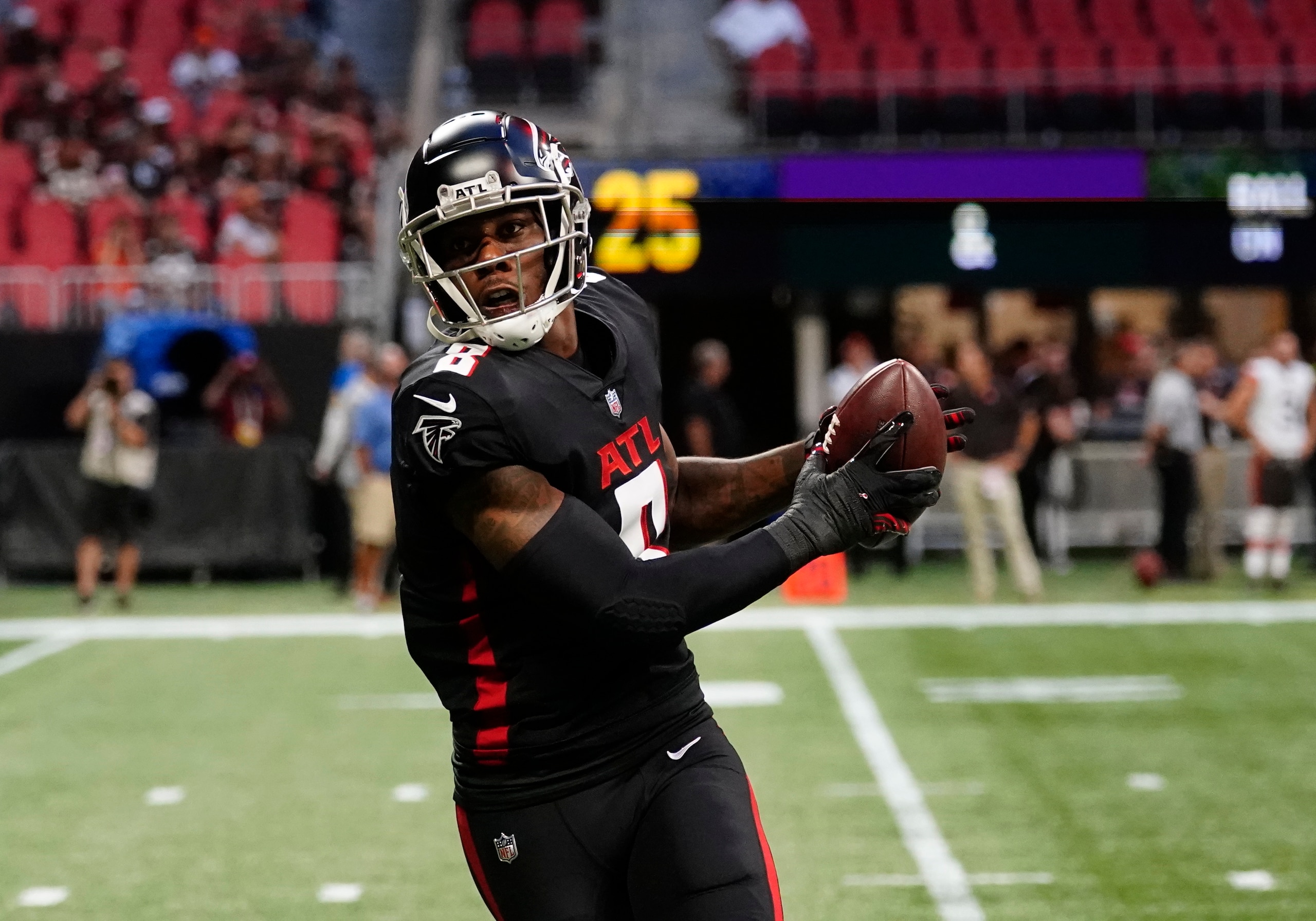
5 Points
51. Kyle Pitts, TE, Atlanta Falcons
52. Mike Davis, RB, Atlanta Falcons
53. Myles Gaskin, RB, Miami Dolphins
54. Darrell Henderson, RB, Los Angeles Ras
55. Gus Edwards, RB, Baltimore Ravens
56. Kareem Hunt, RB, Cleveland Browns
57. Jerry Jeudy, WR, Denver Broncos
58. Odell Beckham Jr., WR, Cleveland Browns
59. JuJu Smith-Schuster, WR, Pittsburgh Steelers
60. Robby Anderson, WR, Carolina Panthers
61. Chase Edmonds, RB, Arizona Cardinals
4 Points
62. Damien Harris, RB, New England Patriots
63. Tyler Boyd, WR, Cincinnati Bengals
64. Ja'Marr Chase, WR, Cincinnati Bengals
65. Kenny Golladay, WR, New York Giants
66. Javonte Williams, RB, Denver Broncos
67. Courtland Sutton, WR, Denver Broncos
68. Raheem Mostert, RB, San Francisco 49ers
69. Brandin Cooks, WR, Houston Texans
70. Deebo Samuel, WR, San Francisco 49ers
71. Noah Fant, TE, Denver Broncos
Five- and four-point players will make up the bulk of your trade fodder. We're now nearing the bottom end of positional starters, and there are no must-starts among this group. On some rosters, these players will be flex starters and streamers. On others, they'll rarely make it off the bench.
Lower Tier
6 of 6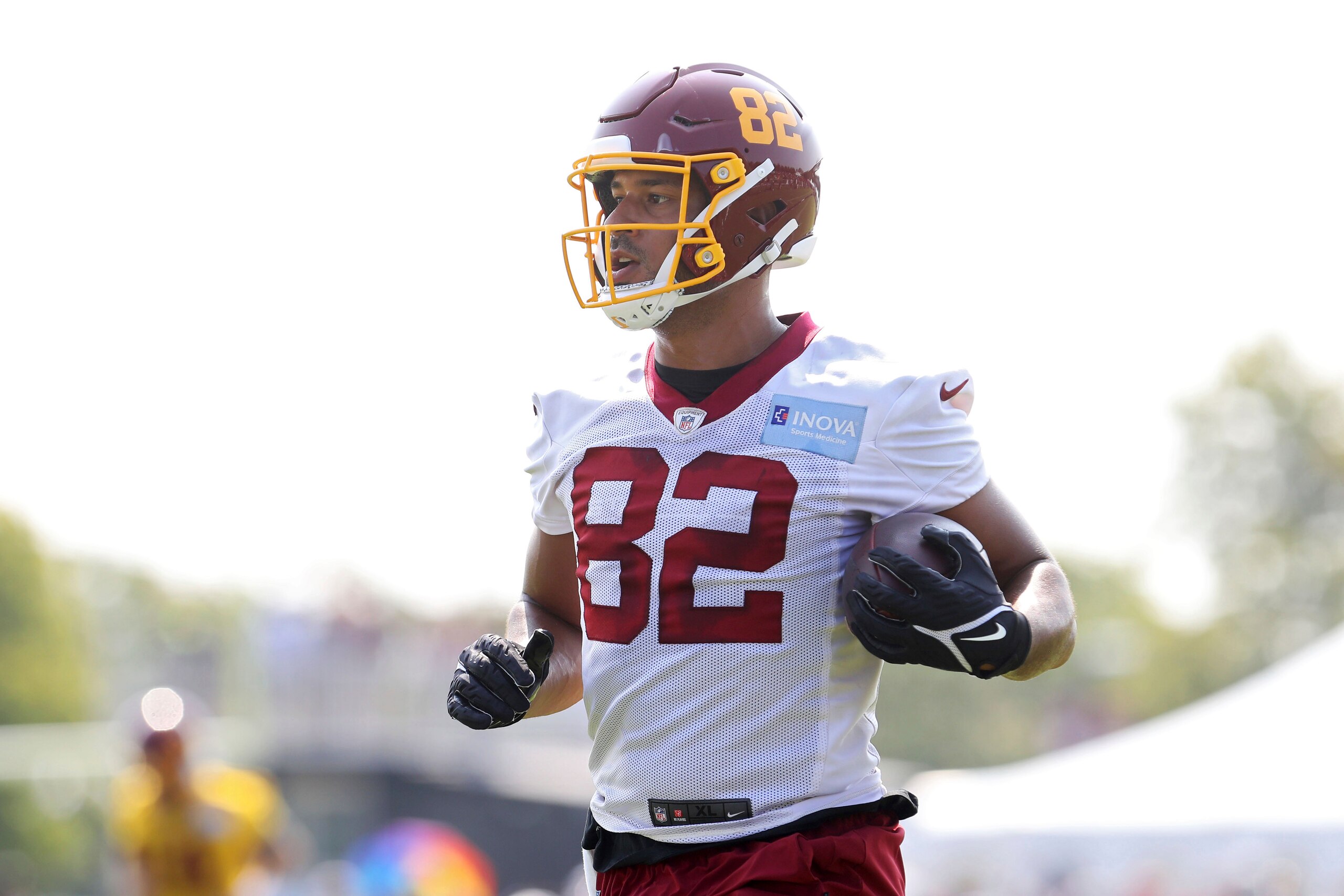
3 Points
72. Logan Thomas, TE, Washington Football Team
73. Corey Davis, WR, New York Jets
74. Laviska Shenault Jr., WR, Jacksonville Jaguars
75. Melvin Gordon III, RB, Denver Broncos
76. Antonio Brown, WR, Tampa Bay Buccaneers
77. Trey Sermon, RB, San Francisco 49ers
78. Will Fuller V, WR, Miami Dolphins
79. DeVonta Smith, WR, Philadelphia Eagles
80. D.J. Chark Jr., WR, Jacksonville Jaguars
81. Jarvis Landry, WR, Cleveland Browns
82. Ronald Jones II, RB, Tampa Bay Buccaneers
83. Dallas Goedert, TE, Philadelphia Eagles
84. Robert Tonyan, TE, Green Bay Packers
85. Michael Carter, RB, New York Jets
86. Tyler Higbee, TE, Los Angeles Rams
2 Points
87. Curtis Samuel, WR, Washington Football Team
88. James Conner, RB, Arizona Cardinals
89. Kenyan Drake, RB, Las Vegas Raiders
90. Nyheim Hines, RB, Indianapolis Colts
91. Devin Singletary, RB, Buffalo Bills
92. Mike Williams, WR, Los Angeles Chargers
93. Jamaal Williams, RB, Detroit Lions
94. Leonard Fournette, RB, Tampa Bay Buccaneers
95. Michael Pittman Jr., WR, Indianapolis Colts
96. Michael Gallup, WR, Dallas Cowboys
97. Mike Gesicki, TE, Miami Dolphins
98. AJ Dillon, RB, Green Bay Packers
99. Marvin Jones Jr., WR, Jacksonville Jaguars
100. Marquez Callaway, WR, New Orleans Saints
Lower-tier players are strictly flex options and depth. They can still help you win a championship—good flex players often will—but they should never be the focal points of trades.
The exception is at tight end, where players like Logan Thomas and Dallas Goedert can be quality position starters. It's important to weigh the tight end position a little differently, though, when it comes to flex value.
Thomas is valuable because you can't stick a running back into the TE slot of your starting lineup. If you're set at TE and are considering Thomas as a flex option—where you can stick a running back—his value drops to the lower tier.
Players outside of the top 100 should be viewed as throw-ins when it comes to trade value. They're not likely to make your starting lineup, even as flex options. Managers should be able to find comparable value on the waiver wire.
.jpg?w=2560 "Eagles Jaguars Football")
.jpg?w=2560)
.jpg?w=2560 "🚨 Week 8 AP Top 25 Poll")

.jpg?w=2560 "CFP Bracket After Week 8 🏆")