Heartbreak in Game 7 Loss Leaves Maple Leafs with More Questions Than Answers
The supply of interjections—or expletives, in extreme cases—has already been exhausted.
That's what 54 years of dissatisfaction will do to a fanbase.
Particularly one as hockey-mad as Toronto's.
TOP NEWS
Mark Scheifele Landing Spots 📍
Ranking Top 10 NCAA Men's Hockey Players for 2026-27 Season
-(2).jpg?w=2560 "Bleacher Report")
Opening Week Power Rankings 📊
To be sure, dozens of seasons have begun and ended across the last 19,755 days in which no rational Maple Leafs backer had any illusions about an on-ice parade lap in Canada's most-populous city.
After all, the franchise has missed the playoffs 21 times since its last Stanley Cup in 1967.
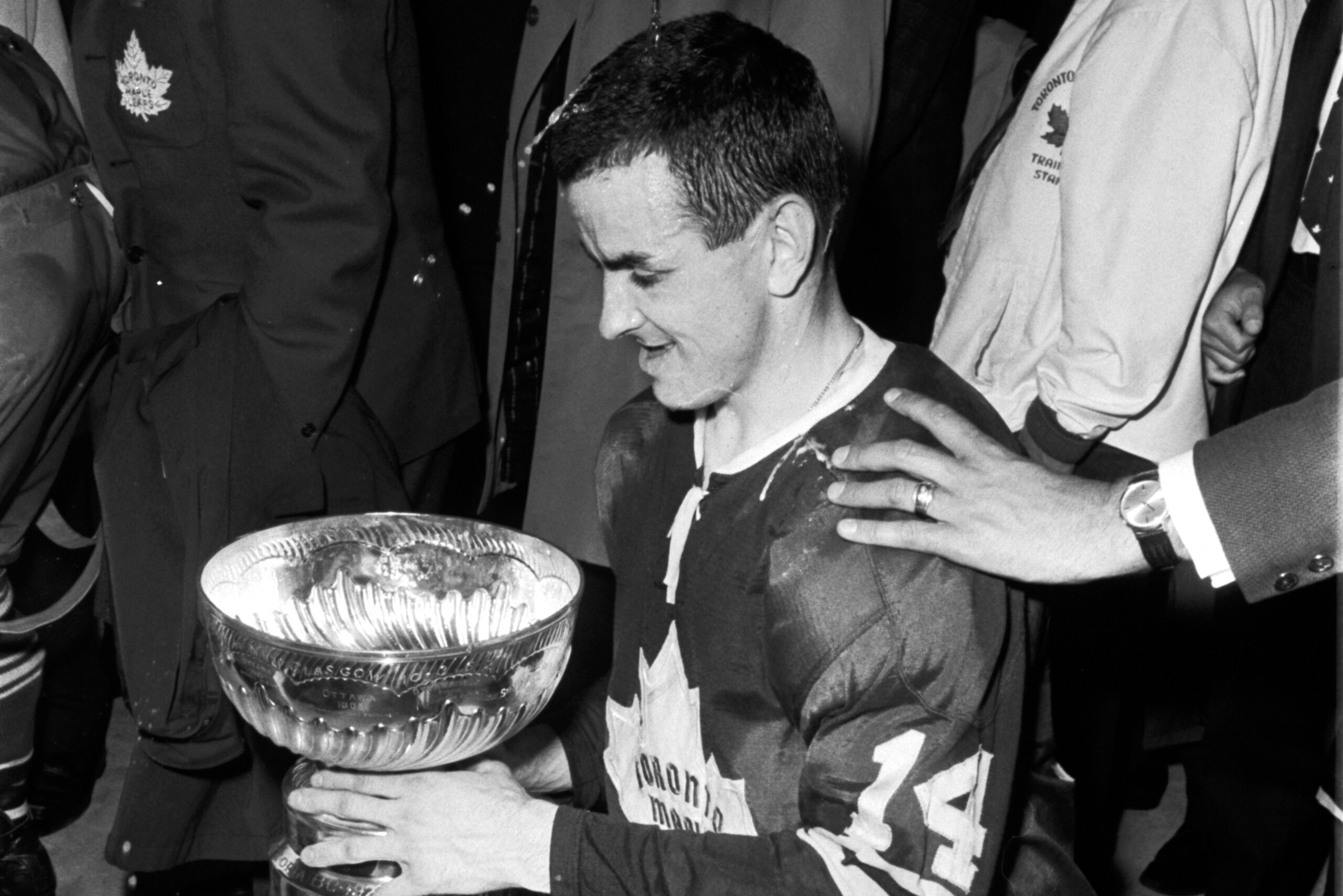
And of the 31 previous seasons in which it had qualified, Toronto arrived 25 times as no better than a mid- or low-tier tournament seed from its assigned division or conference.
So, while the heartbreak those years was real, it wasn't exactly unexpected.
But this time was different.
This time, more so than any of the others, the Leafs arrived with expectations.
And not just the pie-in-the-sky, it's-got-to-be-our-turn kind.
The legit kind that goes with having a top seed alongside your team's name in the standings and a handful of your players among league leaders in typically meaningful stats like goals (first), assists (fourth), points (fourth and fifth), goals-against average (sixth) and save percentage (ninth).
They were the best team in the North Division for nearly every moment of the regular season—holding or sharing first place every day since late January—and won five of seven games on the schedule against their eventual first-round playoff foes, the fourth-seeded Montreal Canadiens.
The Canadiens, incidentally, lost their final five games—including two to the Leafs.
And before their series was a week old, Toronto had stretched its record against the Habs to 8-3 and was poised to end its neighboring province rival's season for the first time since that last Cup raise.
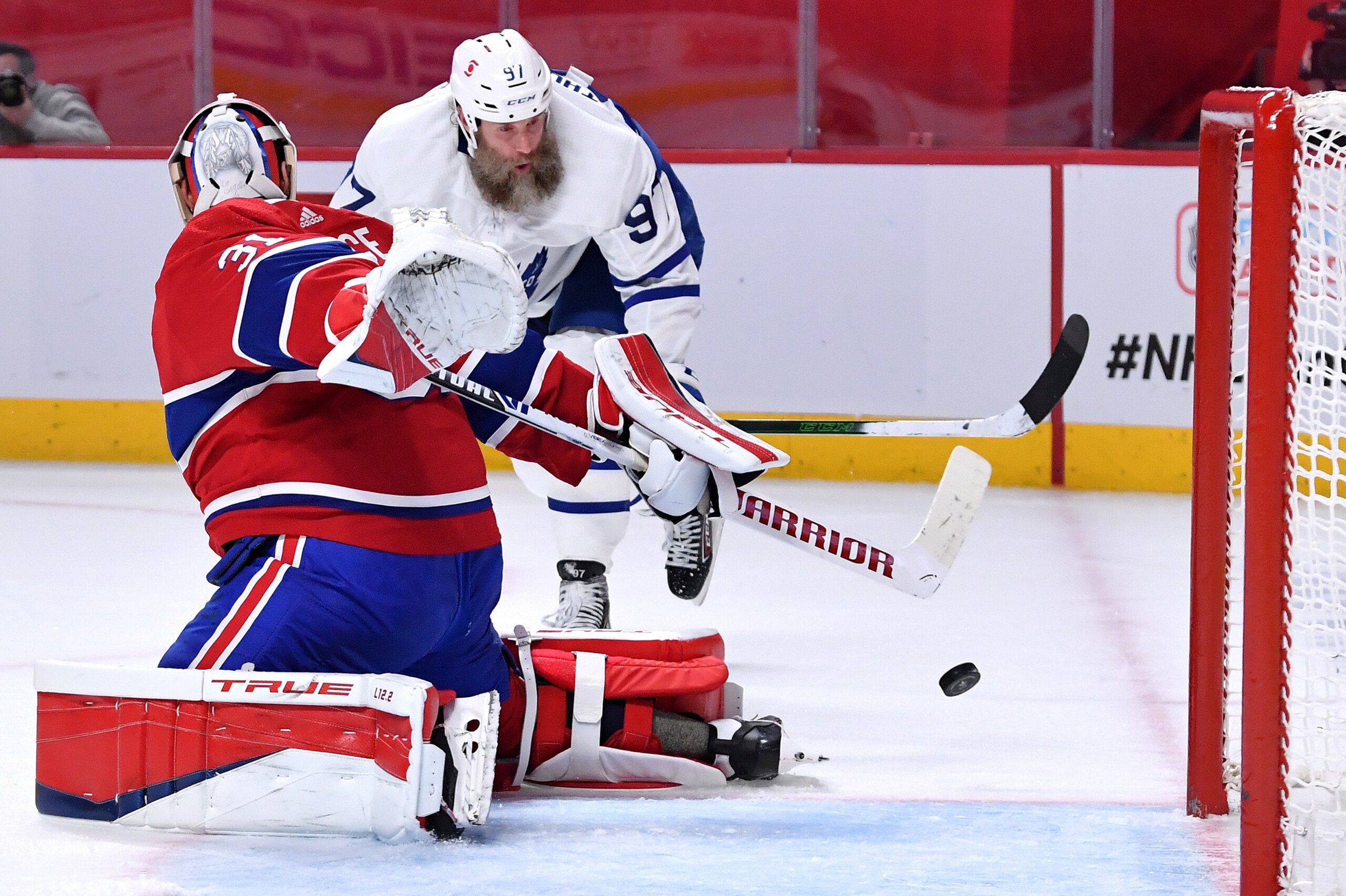
Until, well … you know, the inevitable happened.
Toronto "torontoed." The Leafs "leafed."
Meaning Montreal faces Winnipeg for a berth in the league's final four, and possession of the longest active Cup drought (19,755 days and counting) jumps the border—leaving Southern Ontario's hockey zealots stumbling dangerously near the corner of morose and catatonic, while wondering how in the Tim Horton-loving world it managed to blow up in their faces.
Again.
Though they had gotten to the brink of another Cup final five times in 53 years, none of those runs had nearly as much pre-tournament buzz as this one.
Surprise trips in 1978, 1994, 1999 and 2002 yielded a sweep loss to the champion Canadiens and a combined four wins in three series against ultimately beaten finalists Vancouver, Buffalo and Carolina.
And while fatalists surely recall Wayne Gretzky and Kerry Fraser conspiring to snatch Games 6 and 7 of the epic Campbell title battle in 1993—both by 5-4 scores, one in OT—they may forget Toronto entered those playoffs a slightly less heralded third in their division and fourth in the conference.
Still, even this time they should have known better.
From the moment John Tavares bounced off Montreal defenseman Ben Chiarot's hip into Corey Perry's knee—necessitating a stretcher ride out of an eerily silent building—the Leafs lost both their captain and a bit of their swagger. And even though they won three straight by an 11-2 count in response to the blow, they never quite landed a kill shot on a foe that finished 18 points downwind.
Instead, Alex Galchenyuk's turnover led to Nick Suzuki's OT winner in Game 5, and Travis Dermott's own-zone bobble yielded a dagger-plunger from Jesperi Kotkaniemi, again in OT, two nights later.
Once Canadiens goalie Carey Price got his hands on a Game 7 opportunity, the die was cast.
The ex-Vezina winner made 13 saves in those 16-plus minutes of extra time, then held Toronto off the scoresheet for all but 96 seconds of the finale, stopping the first 30 shots while teammates Perry, Brendan Gallagher and Tyler Toffoli got the best of a beleaguered Jack Campbell at the other end.

Still, though Campbell makes an easy knee-jerk target—particularly after a teary interview where he used the phrase “worst goal of my career” to describe Gallagher's tally—those looking to more accurately hang the scapegoat tag need go no further than the high-profile stat compilers.
Again.
Sniper Auston Matthews scored a league-high 41 times in 52 regular-season games, but only once against Montreal despite 35 shots. And sublime playmaker Mitchell Marner produced 67 points in 55 pre-playoff games, but only four against the Habs—and just one in the final four contests.
In fact, while averaging better than a point per game from Nos. 1 to 82 (or under) in the last three seasons, Marner has generated far fewer (12 points in 19 games) in money time. And it is not much better for Matthews, who, despite 199 goals in five NHL seasons, has yet to exceed 13 in five playoff opportunities.
And they are not alone. Though GM Kyle Dubas went all in on grit and gumption to exorcise the ghosts of five straight previous first-round fold-ups, precisely none of the abrasive commodities he brought in along the way—Joe Thornton, Wayne Simmonds and Nick Foligno among them—made anything more than a cosmetic impact in the vain attempt to keep the streak from reaching a half dozen.
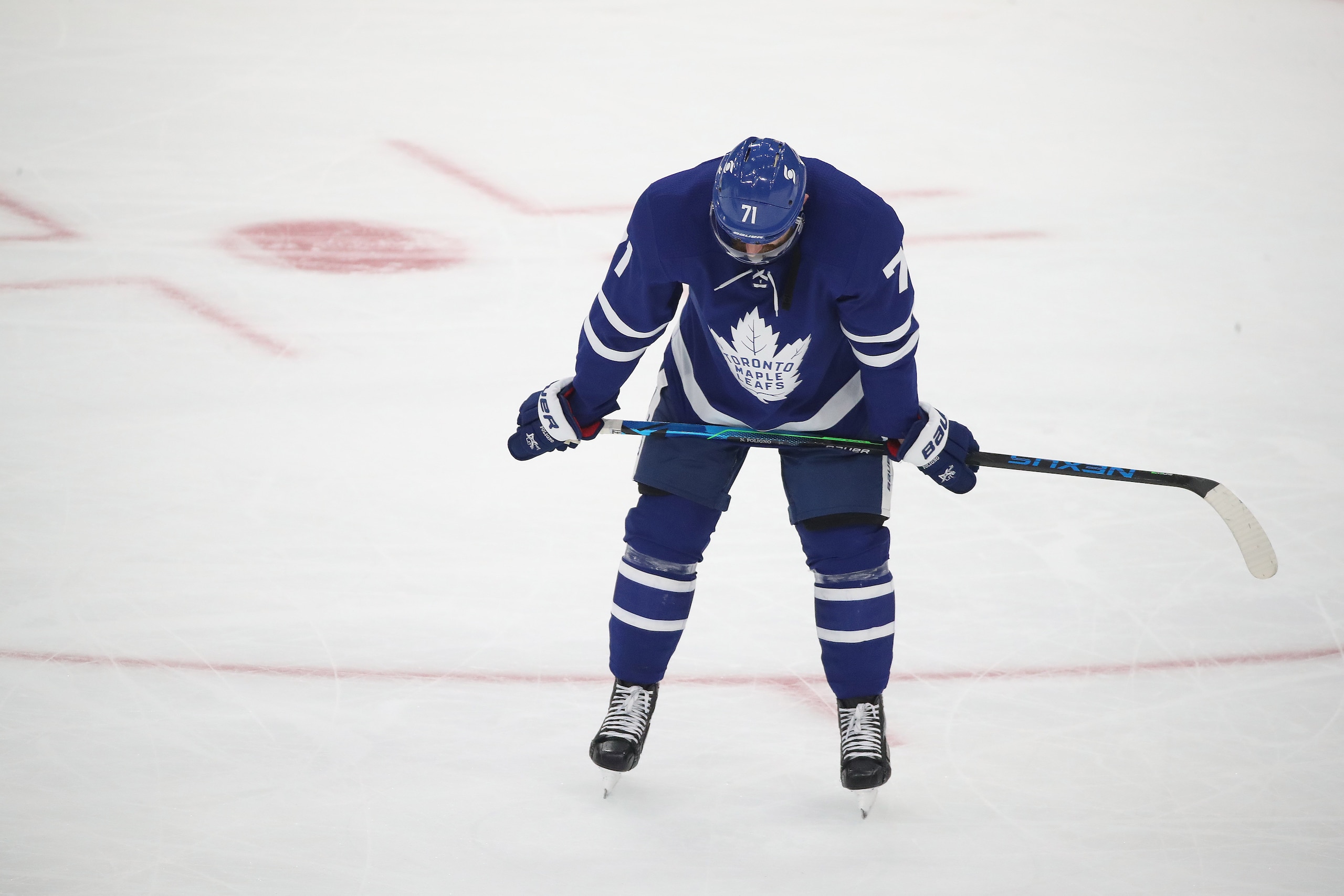
Unless a goal, two assists and a collective minus-1 rating is something beyond cosmetic.
Regardless, given those realities—and whenever he can sit at his desk again without tremoring—Dubas has some interesting personnel decisions to make.
Dismiss it all as a fluke and maintain the mission statement?
Eschew sandpapery play and retool with bargain-bin offensive skill?
Or blow up the core—read: move a high-ender or two—to change the locker room mix?
With 12 players on the verge of unrestricted free agency—leaving 14 signed for 2021-22 and a tick past $12 million to work with—he has the leeway to back up whatever answer he chooses.
But he had better be right this time. Or the next time will be more of the same.
Again.


.jpg?w=2560 "NFL investigating 2 referees for separate viral exchanges")

.jpg?w=2560 "Report: Chiefs Contact Hill's Agent")
.jpg?w=2560 "OBJ Calls Out Giants After Release")
.jpg?w=2560 "Tyreek makes another cryptic post amid Chiefs rumors")
.jpg?w=2560 "Greenlaw Talks Payton Exchange")