

The Best Quarterback Classes in NFL Draft History
Eli Manning, Ben Roethlisberger and Philip Rivers were each drafted in 2004, each one has thrown for more than 50,000 yards in his career, and that still isn't the gold standard for quarterback draft classes in NFL history.
With Joe Burrow, Justin Herbert, Tua Tagovailoa and other young quarterbacks about to embark upon the NFL portion of their careers, it's never too early to wonder if this could become one of the best positional draft classes ever.
But they have a whole heck of a lot of work to do just to crack the top 10.
Historical classes are ranked based on a combination of strength and depth. Having one of the 10 best quarterbacks of all time is a great starting point, but it doesn't amount to much in this discussion if the second- and third-best signal-callers in that class were duds.
One key thing to keep in mind: We'll note where each quarterback was drafted, but pick number/order was not relevant during the ranking process. Whether there were five first-round picks or zero first-round picks doesn't matter. We're just interested in what became of their careers after draft day.
Note: The approximate value (AV) listed for each quarterback is Pro Football Reference's attempt to assign a single number to each player's career, similar to wins above replacement or value over replacement player in other sports. It was the primary data point used to rank the quarterbacks within each class.
Honorable Mentions
1 of 11
1944 (Otto Graham and Bob Waterfield) and 1949 (George Blanda and Norm Van Brocklin)
Both classes produced a pair of Hall of Fame quarterbacks, but the game was so much different back then. None of the four even reached 27,000 career passing yards. Blanda scored nearly 2,000 points just as a kicker. Van Brocklin had more than 500 punts in his career. Waterfield was both a punter and a kicker in addition to his quarterback duties. It's an apples-and-oranges comparison to today's game.
1973 (Dan Fouts, Joe Ferguson, Ron Jaworski and Bert Jones)
It was a tough call to omit this one. Fouts made the Hall of Fame, Jones was the 1976 NFL MVP, Jaws had a nice peak with the Philadelphia Eagles, and Ferguson hung around until he was 40. But aside from Fouts, this class had a combined total of two Pro Bowl years. And Fouts isn't anywhere near the all-time great that Joe Montana, Drew Brees or Peyton Manning are.
2000 (Tom Brady, Marc Bulger, Chad Pennington)
Brady is awesome, but we have the same problem here as in 1973. Bulger went to two Pro Bowls after replacing Kurt Warner as the quarterback of the Greatest Show on Turf, but he is a far cry from the No. 2 options in each of the classes that comprise the top 10. And he's the only non-Brady quarterback from this class to make a Pro Bowl. That said, Brady's singular greatness almost forced us to put 2000 in the top 10.
2017 (Patrick Mahomes, Deshaun Watson, Mitchell Trubisky)
It's simply way too early to consider this a top-10 class, even though Mahomes already won an MVP. Also, Trubisky hasn't been that good, and no other quarterback from this class even made an appearance during the 2019 season.
10. The 1979 Class
2 of 11
The Headliner: No. 82 pick Joe Montana (40,551 yards, 273 TD, 139 INT, 164 AV)
It wasn't quite Michael Jordan in the 1990s, but Montana owned an entire decade of pro football. From 1981-90, he was named to seven Pro Bowls (and an eighth in 1993), won four Super Bowls and earned league MVP twice. He had a 98-33 record as a starter, plus a 14-5 record in the postseason.
Dan Marino was also around for most of that decade, but they had a sort of 2001-05 Tom Brady and Peyton Manning thing going on, in which they were both awesome in the regular season but Montana was unequivocally more respected because of his rings.
Supporting Act: No. 7 pick Phil Simms (33,462 yards, 199 TD, 157 INT, 118 AV)
A separated shoulder ended Simms' 1980 season after 13 games, and another one ended his 1981 campaign after 10 contests. He missed the entire 1982 season with a knee injury, and he barely played in 1983 before suffering a gruesome, season-ending thumb injury. It wasn't until he was 29 that he finally started to live up to the hype, going to two Pro Bowls and leading the New York Giants to a pair of Super Bowl titles, though he didn't play in the postseason during the second run due to a broken foot. It's hard to believe he eclipsed 30,000 yards while enduring so many injuries.
Undercard
No. 23 pick Steve Fuller (7,156 yards, 28 TD, 41 INT, 32 AV)
No. 3 pick Jack Thompson (5,315 yards, 33 TD, 45 INT, 14 AV)
This class gets ugly in a hurry after the top two guys, but Thompson was supposed to be great. Washington State did not retire the numbers of Drew Bledsoe or Ryan Leaf, but it retired Thompson's No. 14. He never even remotely panned out in the NFL, though.
9. The 2001 Class
3 of 11
The Headliner: No. 32 pick Drew Brees (77,416 yards, 547 TD, 237 INT, 267 AV)
Brees is currently the NFL's all-time leader in both passing yards and touchdown. At this point, it's just a question of whether he or Tom Brady will last deeper into their 40s as the latter is fewer than 3,000 yards and six touchdowns behind the former.
Whether he ultimately lands at No. 1 or No. 2 on those lists, there's no question Brees is a first-ballot Hall of Famer. He is a 13-time Pro Bowler who has led the league in passing seven times and was tops in passing touchdowns four times in the span of five years. From 2011-16, he averaged 5,140.8 yards and 38.3 touchdowns per season. And after the 2009 regular season, he led the Saints to their first Super Bowl ring with eight touchdowns and no interceptions during those playoffs.
Supporting Act: No. 1 Michael Vick (22,464 yards, 133 TD, 88 INT; 6,109 rushing yards, 36 TD, 113 AV)
Kids who grew up in the 1980s had Tecmo Bo Jackson, but Vick was the god for the next generation of video gamers. Using the Atlanta Falcons in Madden 2004-06 was basically cheating. And if you had Vick in fantasy for the 2010 season, there's a very good chance you won your league due to his 30 total touchdowns in 12 games.
This four-time Pro Bowl quarterback doesn't have Hall of Fame numbers, but there's an argument to be made that he should get in since you can't possibly tell the story of 2001-11 NFL football without him.
Undercard
None
Oh, there were other quarterbacks taken in 2001.
Quincy Carter and Marques Tuiasosopo were late-second-round picks. Chris Weinke, Sage Rosenfels, Jesse Palmer, Mike McMahon and A.J. Feeley all went in the Nos. 105-155 range. But those seven guys combined for 22,998 yards, 125 touchdowns and 155 interceptions. Carter was the only one who made more than 20 starts in his career, and even he was out of the league within four years.
Only a couple of classes can boast a better top tier than Brees and Vick. But the complete lack of depth hurt 2001 in the rankings.
.jpg?w=2560 "Packers 49ers Football")
.jpg?w=2560 "Lions Cardinals Football")
.jpg?w=2560 "Steelers Browns Football")
8. The 1993 Class
4 of 11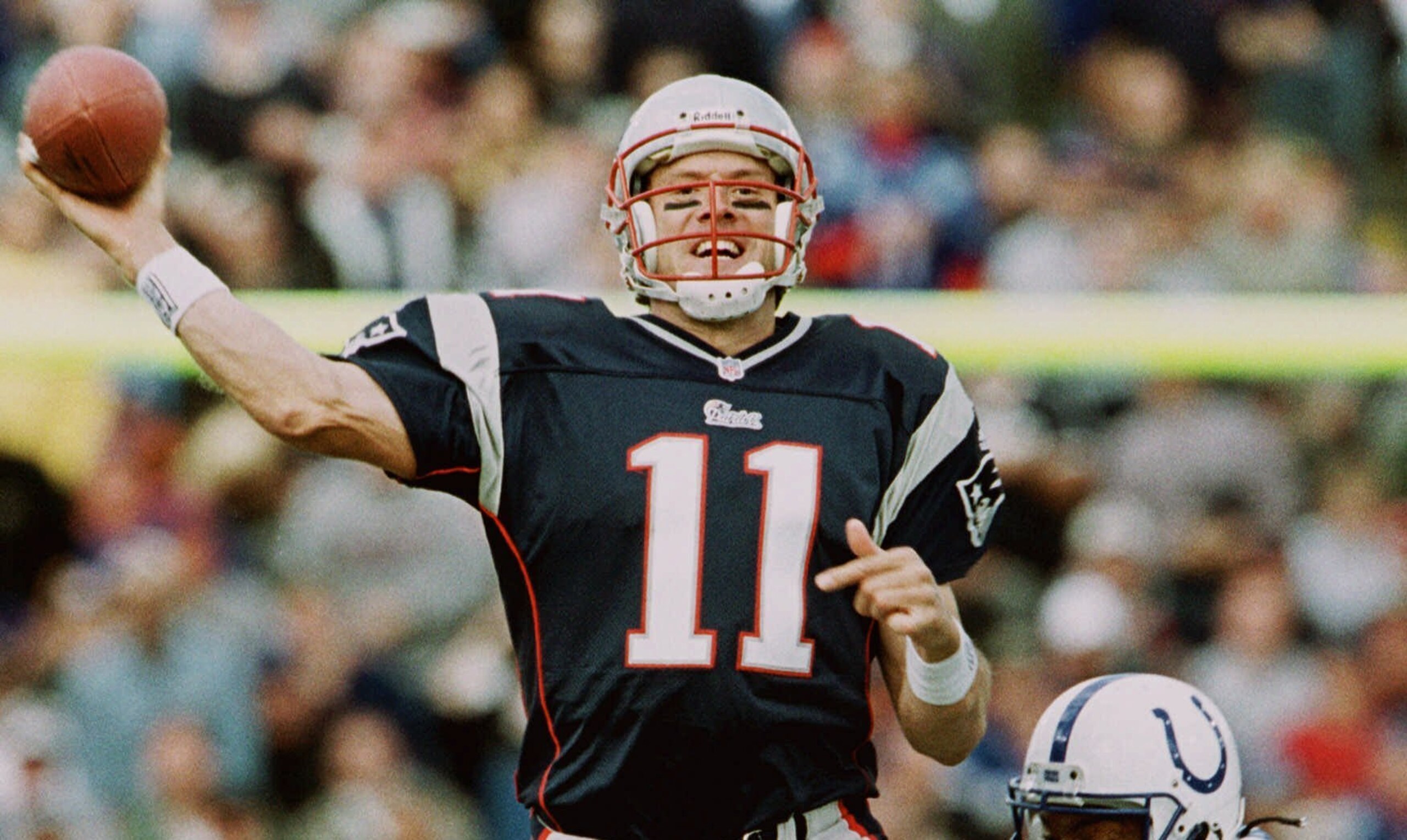
The Headliner: No. 1 pick Drew Bledsoe (44,611 yards, 251 TD, 206 INT, 137 AV)
Drew Bledsoe was the biggest reason Ryan Leaf went to Washington State and perhaps the biggest reason NFL scouts thought Leaf would be a franchise quarterback. He was a four-time Pro Bowler (three in his first five seasons) who still ranks top-20 on the NFL's all-time passing leaderboard.
This former Cougar thrived in a hurry, leading the league in passing yards (4,555) in just his second season. Prior to the injury that paved the way for Tom Brady to become the GOAT with the New England Patriots, Bledsoe averaged 3,657.1 yards and 20.5 touchdowns in his first eight seasons. And after the injury, he had three more solid years with the Buffalo Bills and a fourth with the Dallas Cowboys before deteriorating in a hurry.
Supporting Act: No. 118 pick Mark Brunell (32,072 yards, 184 TD, 108 INT; 2,421 rushing yards, 15 TD, 120 AV)
After he was drafted by the Green Bay Packers, Brunell saw no playing time in 1993 and barely got on the field in 1994. But during the 1995 NFL draft, he was traded to the expansion team in Jacksonville. The Jaguars had taken Steve Beuerlein with the first pick in the February expansion draft, but Brunell quickly became their guy. He led the NFL in passing yards in 1996 (4,367) and went to the Pro Bowl three times while turning Jacksonville into a legitimate contender almost immediately.
Undercard
No. 222 pick Trent Green (28,475 yards, 162 TD, 114 INT, 111 AV)
No. 219 pick Elvis Grbac (16,774 yards, 99 TD, 81 INT, 51 AV)
No. 2 pick Rick Mirer (11,969 yards, 50 TD, 76 INT, 35 AV)
The No. 2 overall pick didn't amount to much, but how about those two eighth-round picks? From 1997-2006, the third-to-last and sixth-to-last picks in the 1993 draft ended up combining for more than 31,000 passing yards as the starting quarterbacks for the Kansas City Chiefs—Grbac for the first four years, Green for the latter six. That was quite the coup for the Chiefs, who didn't even have an eighth-round pick that year.
7. The 2012 Class
5 of 11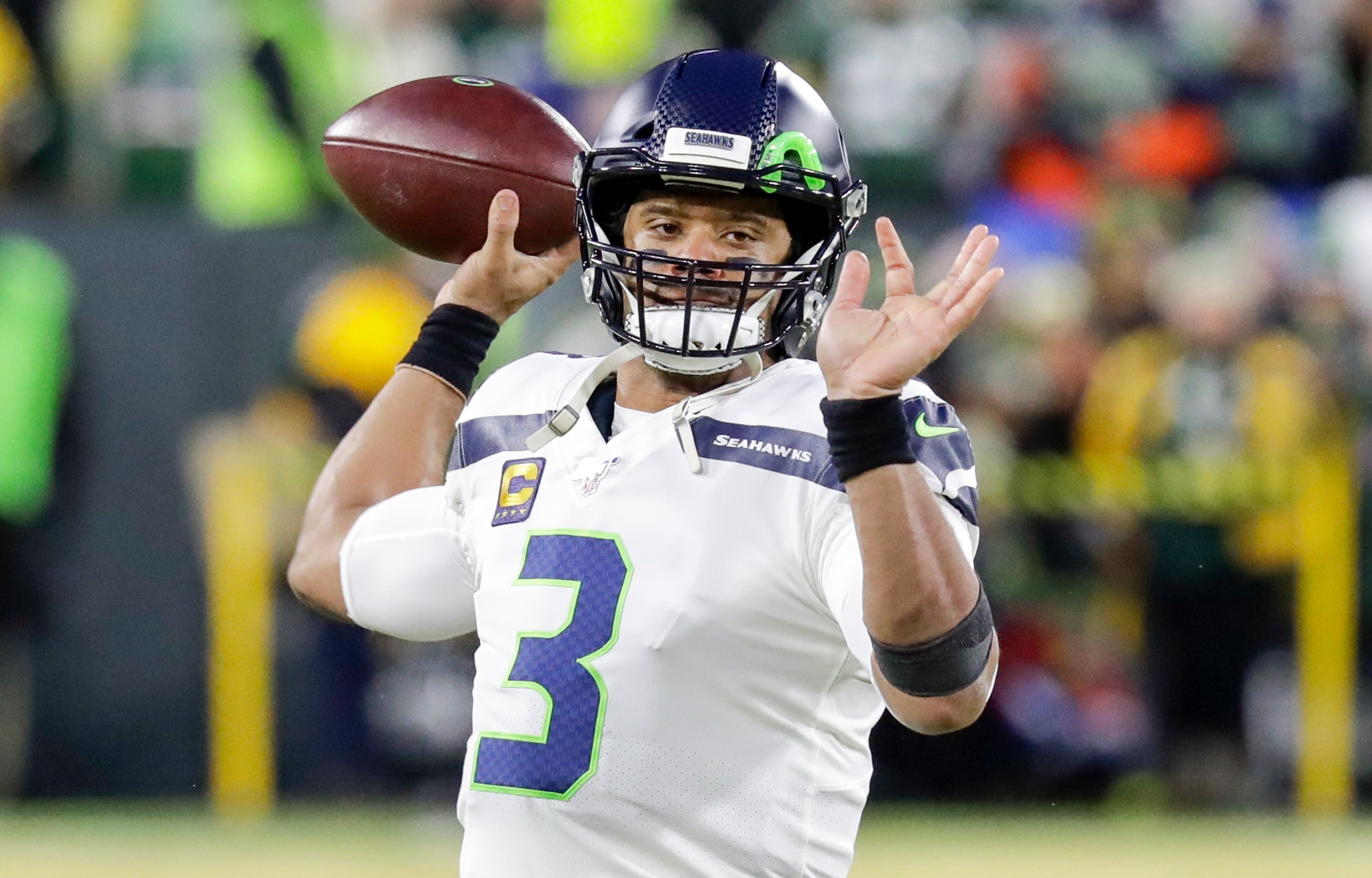
The Headliner: No. 75 pick Russell Wilson (29,734 yards, 227 TD, 68 INT; 3,993 rushing yards, 19 TD, 129 AV)
There's nothing like finding a durable franchise quarterback in the third round of the draft. Wilson has started all 128 regular-season games since he was selected by the Seattle Seahawks, earning Pro Bowl honors in six of those eight seasons. He has thrown for at least 3,000 yards and 20 touchdowns and rushed for at least 250 yards in each of those eight years.
Wilson has also led Seattle to a winning record in all eight years, reaching the playoffs seven times, including back-to-back trips to the Super Bowl in his second and third seasons in the NFL. The Seahawks won the first one, and were it not for head coach Pete Carroll's decision to throw the ball instead of handing it to Marshawn Lynch on 2nd-and-goal from the 1-yard line with 30 seconds (and a timeout) remaining in a four-point game, the Seahawks likely would have won the second one, too.
Supporting Act: No. 1 pick Andrew Luck (23,671 yards, 171 TD, 83 INT, 79 AV)
Luck retired at a shockingly early age, but in each of his first three seasons after the Indianapolis Colts' successful Suck for Luck campaign, he was a Pro Bowler who won 11 games and led the Colts to the playoffs. A similar story emerged in 2018. The Colts went 4-12 while he missed the entire 2017 season with a shoulder injury, but he then led them to 10 wins and a spot in the playoffs the following year.
Both Kirk Cousins and Ryan Tannehill will almost certainly bypass Luck in career AV, but the brevity of his stint in the NFL shouldn't detract from the impact he had while healthy.
Undercard
No. 8 pick Ryan Tannehill (23,176 yards, 145 TD, 81 INT, 72 AV)
No. 102 pick Kirk Cousins (24,107 yards, 155 TD, 71 INT, 69 AV)
No. 2 pick Robert Griffin III (9,229 yards, 43 TD, 28 INT, 38 AV)
No. 88 pick Nick Foles (11,901 yards, 71 TD, 35 INT, 32 AV)
Pretty much every draft class has an "Imagine if [insert bust] had panned out" type of guy, but Griffin might be the most noteworthy of them all. Remember, he was the Offensive Rookie of the Year in 2012, passing and rushing for more than 4,000 combined yards and 27 total touchdowns. Prior to tearing his ACL on that horrific FedExField turf in the wild-card game, he had the potential for greatness.
He was never the same after that injury, but he was still one of six quarterbacks drafted in 2012 to be named to at least one Pro Bowl roster. That's impressive depth for a crop of talent still young enough to climb a few more spots on this list before all is said and done.
6. The 1998 Class
6 of 11
The Headliner: No. 1 pick Peyton Manning (71,940 yards, 539 TD, 251 INT, 271 AV)
When he retired in 2015, Manning was the NFL's all-time leader in passing yards, touchdowns and AV. Ageless wonder Tom Brady has since bypassed him in all three categories, but TB12 is never going to catch Manning in one area: NFL MVPs.
Manning was named MVP in 2003, 2004, 2008, 2009 and 2013, the last of which came at age 37 when he threw for 5,477 yards and 55 touchdowns just two years after missing an entire season while recovering from spinal fusion surgery. He is the only player in league history to earn at least four MVPs, let alone five.
Supporting Act: No. 187 pick Matt Hasselbeck (36,638 yards, 212 TD, 153 INT, 111 AV)
Brady's class (2000) didn't quite make the cut because the drop-off to Marc Bulger and Chad Pennington—and the subsequent dip to Tim Rattay as the fourth-best pick—was too steep to ignore. But Hasselbeck had quite the decade-long run with the Seattle Seahawks, beginning in 2001. He was selected to three Pro Bowls and led the team to the Super Bowl in 2005, where they lost to the Pittsburgh Steelers.
His numbers pale in comparison to Manning's, but Donovan McNabb wasn't markedly better than Hasselbeck, for what it's worth.
Undercard
No. 91 pick Brian Griese (19,440 yards, 119 TD, 99 INT, 61 AV)
No. 60 pick Charlie Batch (11,085 yards, 61 TD, 52 INT, 37 AV)
No. 2 pick Ryan Leaf (3,666 yards, 14 TD, 36 INT, 1 AV)
Never forget that this was supposed to be an all-time-great class because of Ryan Leaf. But even though he ended up being one of the biggest draft busts in NFL history, the 1998 class had a decent amount of depth behind Manning. Griese went to a Pro Bowl, and while Batch floundered as a starter, he hung around as a serviceable backup well into his late 30s.
5. The 1957 Class
7 of 11
The Headliner: No. 5 pick Len Dawson (28,711 yards, 239 TD, 183 INT, 144 AV)
Dawson initially seemed like a colossal bust. Between his first three seasons with the Pittsburgh Steelers and the next two with the Cleveland Browns, his career stat line was 21-of-45 for 204 yards, two touchdowns and five interceptions.
But in 1962, he signed with the Dallas Texans, who became the Kansas City Chiefs the following year, and won the AFL championship while throwing for 2,759 yards and 29 touchdowns. He then led the Chiefs to the 1966 and 1969 Super Bowls, winning the latter. He was a seven-time Pro Bowler during his Hall of Fame career.
The assumption is that Patrick Mahomes will eventually obliterate these numbers, but Dawson is still the Chiefs' all-time leader in passing yards and touchdowns from his 14 seasons with the franchise.
Supporting Act: No. 43 pick Sonny Jurgensen (32,224 yards, 255 TD, 189 INT, 139 AV)
Like Dawson, Jurgensen eventually found his way into the Hall of Fame in spite of a rocky start. He fared better than Dawson initially, though not by much. After four years, he was 72-of-141 for 1,242 yards, 11 touchdowns and 10 interceptions.
He finally got a starting gig in 1961, though, and thrived for the next decade. He led the NFL in passing yards five times and was also named to five Pro Bowls. It's just too bad there wasn't any talent around him. Jurgensen did not attempt his first postseason pass until 1974 at age 40.
Undercard
No. 3 pick John Brodie (31,548 yards, 214 TD, 224 INT, 129 AV)
No. 203 pick Jack Kemp (21,218 yards, 114 TD, 183 INT, 83 AV)
No. 17 pick Milt Plum (17,536 yards, 122 TD, 127 INT, 59 AV)
By the end of the 1969 season, the 1957 draft class was responsible for five of the 20 players with at least 17,500 career passing yards. And that was before Brodie was named NFL MVP in 1970. Kemp was a seven-time Pro Bowler, and Plum received that honor twice.
4. The 1971 Class
8 of 11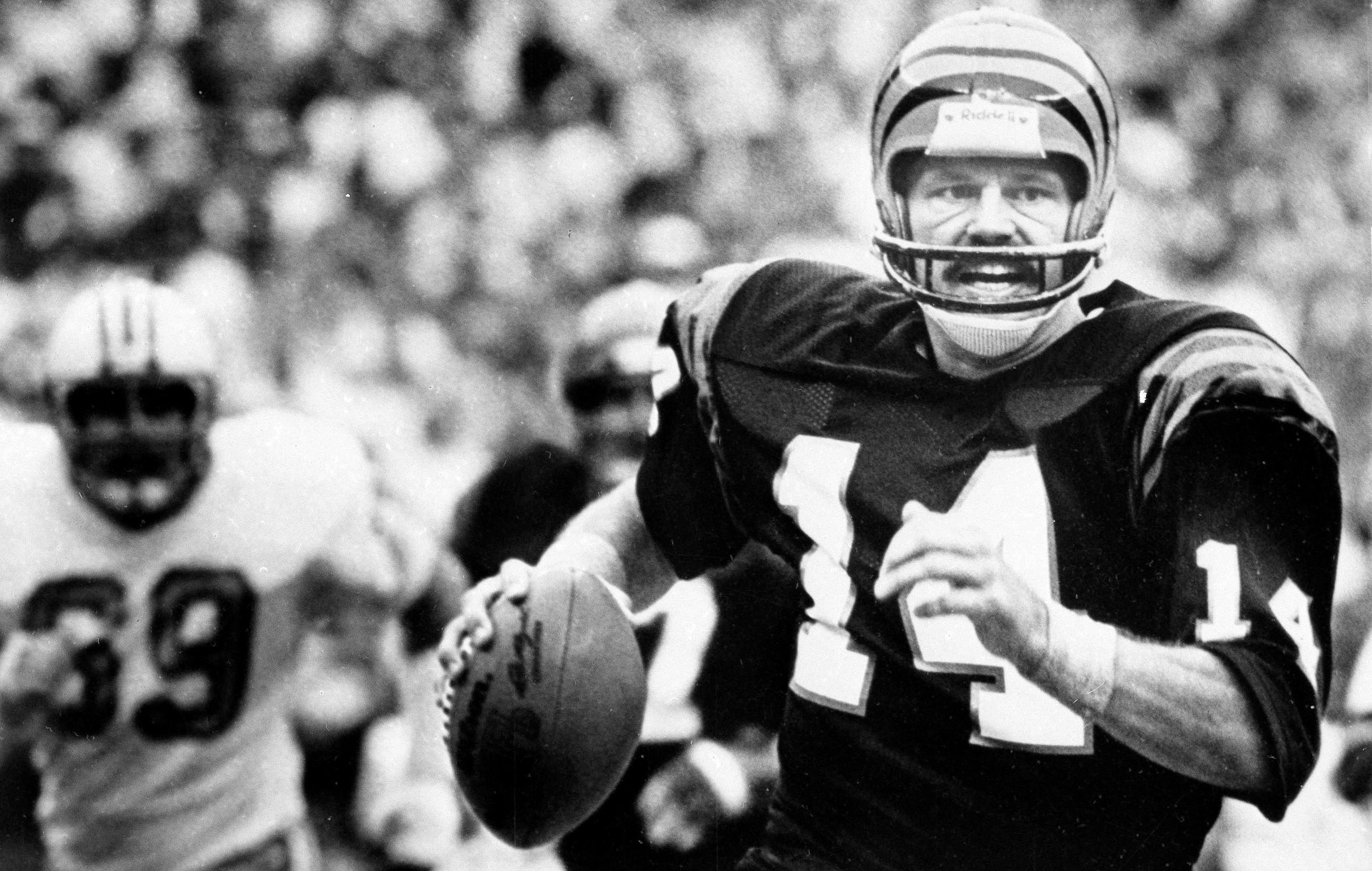
The Headliner: No. 67 pick Ken Anderson (32,838 yards, 197 TD, 160 INT, 161 AV)
Anderson wasn't exactly a Tom Brady-level long-shot success story, but no one expected this third-round pick to run away with the title of "Best quarterback drafted in 1971."
After a slow start in his first two seasons, Anderson became a four-time Pro Bowler who was named MVP in 1981—a year in which he led the Cincinnati Bengals to one of just two Super Bowl appearances in franchise history. (Both times, the Bengals narrowly lost to the San Francisco 49ers.) He led the NFL in passing yards in back-to-back years from 1974-75.
Supporting Act: No. 99 pick Joe Theismann (25,206 yards, 160 TD, 138 INT, 105 AV)
A lot of people under age 40 probably only remember Theismann for two things: his career-ending leg injury and his long run (1988-2005) as the color commentator for Sunday Night Football. But in 1982-83, he went 28-4 (including the playoffs) as the Washington Redskins' starting quarterback, winning the Super Bowl in 1982 and losing the title game the following year. He was also named NFL MVP in 1983.
Undercard
No. 1 pick Jim Plunkett (25,882 yards, 164 TD, 198 INT, 109 AV)
No. 2 pick Archie Manning (23,911 yards, 125 TD, 173 INT, 93 AV)
No. 56 pick Lynn Dickey (23,322 yards, 141 TD, 179 INT, 78 AV)
No. 3 pick Dan Pastorini (18,515 yards, 103 TD, 161 INT, 70 AV)
Racking up yards is a lot easier in today's game. Just last season, 25 guys threw for 3,000 yards, and 11 topped the 4,000-yard mark. And yet, the 1971 class is the only one that has produced at least five players who threw for more than 20,000 career yards.
This was also one of just two times in NFL history that quarterbacks were selected with each of the first three picks. It worked out a whole heck of a lot better in 1971 than it did in 1999 (Tim Couch, Donovan McNabb and Akili Smith).
3. The 2005 Class
9 of 11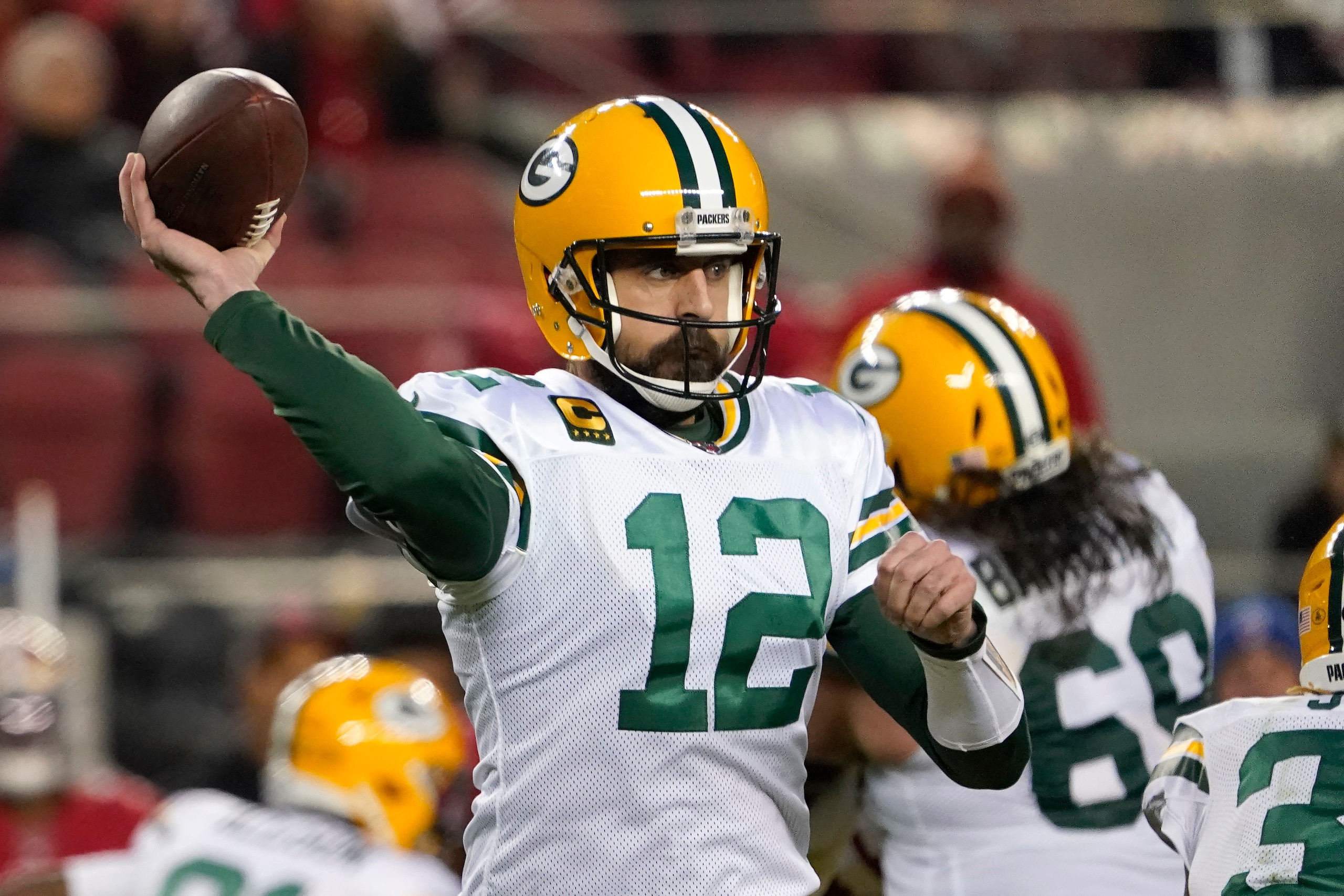
The Headliner: No. 24 pick Aaron Rodgers (46,946 yards, 364 TD, 84 INT; 3,122 rushing yards, 28 TD, 184 AV)
After three years holding the clipboard while Brett Favre did his thing, it didn't take long for Rodgers to become one of the best in the business. He won a Super Bowl in Year 3 as a starter and was named the NFL MVP in his fourth and seventh seasons as the Green Bay Packers' main guy. He has also been selected for eight Pro Bowls, including one this past season at age 36.
Perhaps most impressive is his microscopic interception rate. He has a career mark of 1.4 percent in that category, and he has somehow gotten better with age, throwing just six interceptions in 1,166 attempts (0.5 percent) over the past two seasons. The only other quarterback with at least 250 touchdowns and an interception rate below 2.1 percent is Tom Brady (1.8).
Supporting Act: No. 1 pick Alex Smith (34,068 yards, 193 TD, 101 INT; 2,601 rushing yards, 15 TD, 118 AV)
Alex Smith was OK for the team that took him No. 1 overall (San Francisco 49ers), but it wasn't until his age-29 season with the Kansas City Chiefs that he actually started to look worthy of that draft pick. Though he was still labeled a game manager who couldn't get it done in the postseason, Smith was selected to three Pro Bowls in his five years with the Chiefs.
Undercard
No. 250 pick Ryan Fitzpatrick (32,886 yards, 210 TD, 161 INT; 2,470 rushing yards, 19 TD, 96 AV)
No. 25 pick Jason Campbell (16,771 yards, 87 TD, 60 INT, 53 AV)
No. 230 pick Matt Cassel (17,508 yards, 104 TD, 82 INT, 51 AV)
No. 106 pick Kyle Orton (18,037 yards, 101 TD, 69 INT, 45 AV)
No. 213 pick Derek Anderson (10,878 yards, 60 TD, 64 INT, 22 AV)
Fitzpatrick was almost Mr. Irrelevant, yet he went on to have quite the career. He never landed as a franchise quarterback for anyone, but he has posted at least one 1,900-yard season with seven different franchises.
The sheer depth of this group is what elevated 2005 to No. 3 on our list. Not only is this the lone class to produce at least seven 10,000-yard quarterbacks, but No. 7 even went to a Pro Bowl with the Cleveland Browns.
Not bad for a class in which only one quarterback was selected in the top 20.
2. The 2004 Class
10 of 11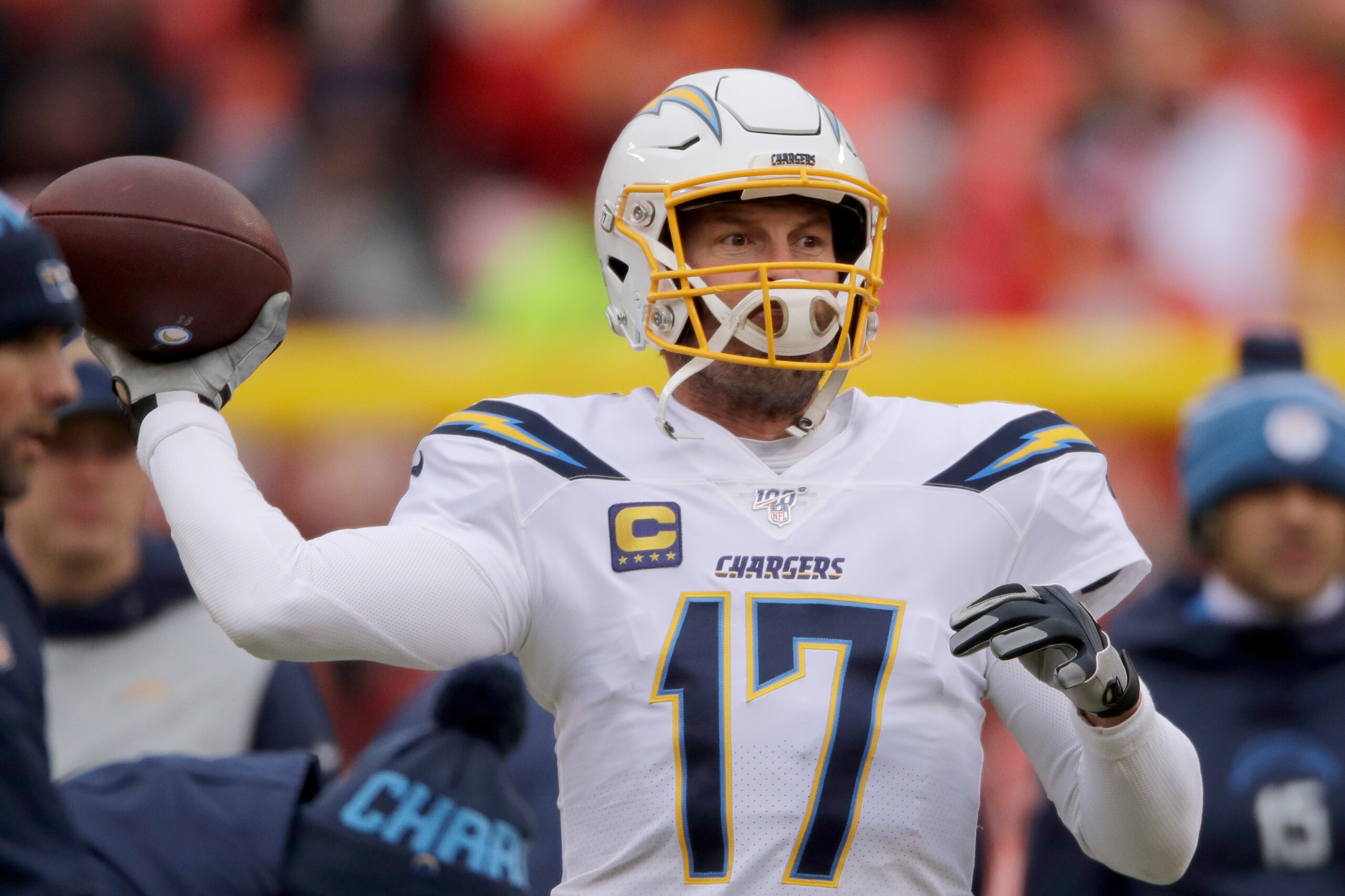
The Headliner: No. 4 pick Philip Rivers (59,271 yards, 397 TD, 198 INT, 204 AV)
Despite barely seeing the field in his first two seasons while backing up Drew Brees—and despite only leading the San Diego/Los Angeles Chargers to one conference championship game and no Super Bowls—Rivers is the career leader in yards, touchdowns and AV from an absolutely loaded class. Only eight quarterbacks in NFL history have thrown for at least 52,000 yards, and three were drafted in 2004.
It never amounted to postseason success, but Rivers has been to eight Pro Bowls. He led the NFL in touchdown passes in 2008 (34) and was the yardage leader in 2010 (4,710). Since becoming the starter in 2006, he has an active streak of 224 consecutive starts and has thrown for at least 3,150 yards in each season.
Supporting Act: No. 11 pick Ben Roethlisberger (56,545 yards, 363 TD, 191 INT; 1,357 rushing yards, 19 TD, 186 AV)
It only took five seasons for Big Ben to bring the Pittsburgh Steelers their fifth and sixth Super Bowl titles. He was still cutting his teeth in the NFL at that point, averaging roughly 3,000 yards and 20 touchdowns per year while the Steelers thrived on defense. Roethlisberger became much more of a gunslinger in his 30s, leading the NFL in yards during both the 2014 (4,952) and 2018 (5,129) seasons.
Undercard
No. 1 pick Eli Manning (57,023 yards, 366 TD, 244 INT, 165 AV)
No. 90 pick Matt Schaub (25,467 yards, 136 TD, 91 INT, 81 AV)
Manning led the New York Giants to two Super Bowl titles and ranks 30th in career AV. The 1983 crop has long been heralded as the greatest quarterback class of all time, but 2004 has made it more of a 1A and 1B situation with a four-time Pro Bowler at No. 3.
Schaub is a mighty fine No. 4 quarterback, too. At his peak with the Houston Texans from 2009-12, he was a two-time Pro Bowler who topped 4,000 yards three times.
1. The 1983 Class
11 of 11
The Headliner: No. 27 pick Dan Marino (61,361 yards, 420 TD, 252 INT, 216 AV)
Marino has since been left in the dust by Brett Favre, Peyton Manning, Tom Brady and Drew Brees, but he was the all-time leader in both yards and touchdowns—without a close runner-up—when he retired in 1999.
He ended up nearly 10,000 yards ahead of John Elway and 78 touchdowns clear of Fran Tarkenton. Even if those two Hall of Fame quarterbacks had another two seasons at their absolute peaks, they still would have been another 10 or so games away from catching Marino. He never won a Super Bowl, but he had one heck of a career all the same.
Supporting Act: No. 1 pick John Elway (51,475 yards, 300 TD, 226 INT, 203 AV)
After threatening to pursue a career in baseball if the Baltimore Colts didn't either pass on him in the draft or trade him to a more competent team, Elway was dealt to the Denver Broncos. In his 16 seasons there, he was selected to nine Pro Bowls, won two Super Bowls and was named the 1987 NFL MVP—three years after Marino earned the same award. Only Marino had more career passing yards when Elway retired.
Undercard
No. 14 pick Jim Kelly (35,467 yards, 237 TD, 175 INT, 132 AV)
No. 24 pick Ken O'Brien (25,094 yards, 128 TD, 98 INT, 86 AV)
No. 15 pick Tony Eason (11,142 yards, 61 TD, 51 INT, 39 AV)
Jim Kelly makes this the only class in draft history to produce at least three Hall of Fame quarterbacks (so far). And while O'Brien is a complete afterthought compared to that trio, he was a two-time Pro Bowler who had a respectable career with the New York Jets.
In addition to these five guys, the Kansas City Chiefs also took Todd Blackledge at No. 7 overall. However, he was a bust. Maybe they can laugh about it now that they have Patrick Mahomes and a Super Bowl, but Chiefs fans endured about three decades' worth of frustration over the fact that they could've had Marino or Kelly instead of Blackledge.
.jpg?w=2560 "Seahawks Cardinals Football")
.jpg?w=2560 "Cam Ward Says He's Not A Loser")


.jpg?w=2560 "Chargers Fall to 0-5 🤢")