
10 Best CBB Teams to Not Win a National Championship
One of the great things about March Madness is that it's almost impossible for anyone to predict what's going to happen. The single-elimination format means that no matter how much more talented one team is on paper, there's no guarantee something astonishing won't happen in any given game.
On one hand, this can create unforgettable moments like No. 16-seeded University of Maryland-Baltimore County's stunning first-round upset of top-seeded Virginia in 2018. But it can also lead to some of the most dominant regular-season teams and greatest players in college basketball devoid of a national championship.
Here are the best teams from each of the past 10 years that didn't win it all. Some of them had the most highly touted recruits or future NBA stars, others dominated the regular season before falling short in the tournament. All deserve to be remembered.
Kentucky Wildcats (2009-10)
1 of 10
John Calipari's first season as head coach at Kentucky featured one of his most loaded rosters ever, with four 5-star freshmen—John Wall, DeMarcus Cousins, Eric Bledsoe and Daniel Orton, per Rivals. Wall and Cousins were the No. 1 and No. 5 overall picks in the 2010 NBA draft, respectively, while Bledsoe and forward Patrick Patterson have had long, productive pro careers.
During the season, the Wildcats lived up to the hype, going 35-3 overall, finishing with the best record in the SEC (14-2) and winning the conference tournament. And they breezed through the first three rounds of the NCAA tournament as a No. 1 seed, with blowout wins over East Tennessee State in the first round, Wake Forest in the round of 32 and Cornell in the Sweet Sixteen.
But West Virginia shocked them in the Elite Eight, pulling out a 73-66 upset as Kentucky's shooters went cold. Wall (19 points) and Cousins (15 points) played well, but the Wildcats as a team shot just 34.3 percent from the field and 12.5 percent (4-of-32) from three-point range. West Virginia advanced to its first Final Four since 1959, and a dominant Kentucky team fell short of the title that seemed inevitable.
Ohio State Buckeyes (2010-11)
2 of 10
The Buckeyes recovered nicely from the loss of star guard Evan Turner to the NBA, finishing the 2010-11 season ranked No. 1 in the country with a 34-3 overall record, a 16-2 record in Big Ten play and a conference tournament championship. Freshman big man Jared Sullinger was a consensus All-American and made first-team All-Big Ten, as well as winning Big Ten Freshman of the Year.
In the tournament, they blew out their first two opponents, University of Texas-San Antonio and George Mason. They faced fourth-seeded Kentucky in the Sweet Sixteen, a Wildcats squad nowhere near as star-studded as the previous year's team. A tight contest came down to the final seconds—the Buckeyes' Jon Diebler hit a three-pointer to tie the score at 60 before Kentucky freshman guard Brandon Knight hit a game-winning jumper with five seconds remaining to seal the upset.
North Carolina Tar Heels (2011-12)
3 of 10
The 2011-12 season was one in which the best team—a Kentucky squad led by Anthony Davis and Michael Kidd-Gilchrist—was the eventual champion. But the team North Carolina fielded that year should not be forgotten.
This Tar Heels group had plenty of talent. Four of their top players—Harrison Barnes, Kendall Marshall, Tyler Zeller and John Henson—were first-round picks in the 2012 NBA draft. Barnes in particular had been a 5-star recruit in 2010 and would have been in strong consideration to go No. 1 in the 2011 draft had he not unexpectedly chosen to return for his sophomore season.
UNC finished the year with the best record in the ACC but lost to Florida State in the conference championship game. It entered the NCAA tournament as a No. 1 seed. The Tar Heels handled Vermont easily in the first round and beat Creighton in the second round but lost Marshall during that game to a wrist injury that sidelined him the rest of the tournament. Without him, they pulled out an overtime win in the Sweet Sixteen against Ohio but fell to Kansas in the Elite Eight. If it's any consolation, that Jayhawks team made it all the way to the national title game before losing to Kentucky.
.jpg?w=2560)
.png?w=2560)

Indiana Hoosiers (2012-13)
4 of 10
Two of the top four picks in the 2013 NBA draft, Victor Oladipo and Cody Zeller, led the Hoosiers to a 29-7 record, including a Big Ten-best 14-4 in conference play. They were ranked No. 1 in the country for 10 weeks and ended the season ranked No. 4, good enough to earn them the top seed in their NCAA tournament bracket.
However, they had a disappointing showing in the Big Dance after their opening-round blowout win over James Madison. They held on for a 58-52 victory over ninth-seeded Temple in the second round but fell 61-50 to fourth-seeded Syracuse in the Sweet 16.
Wichita State Shockers (2013-14)
5 of 10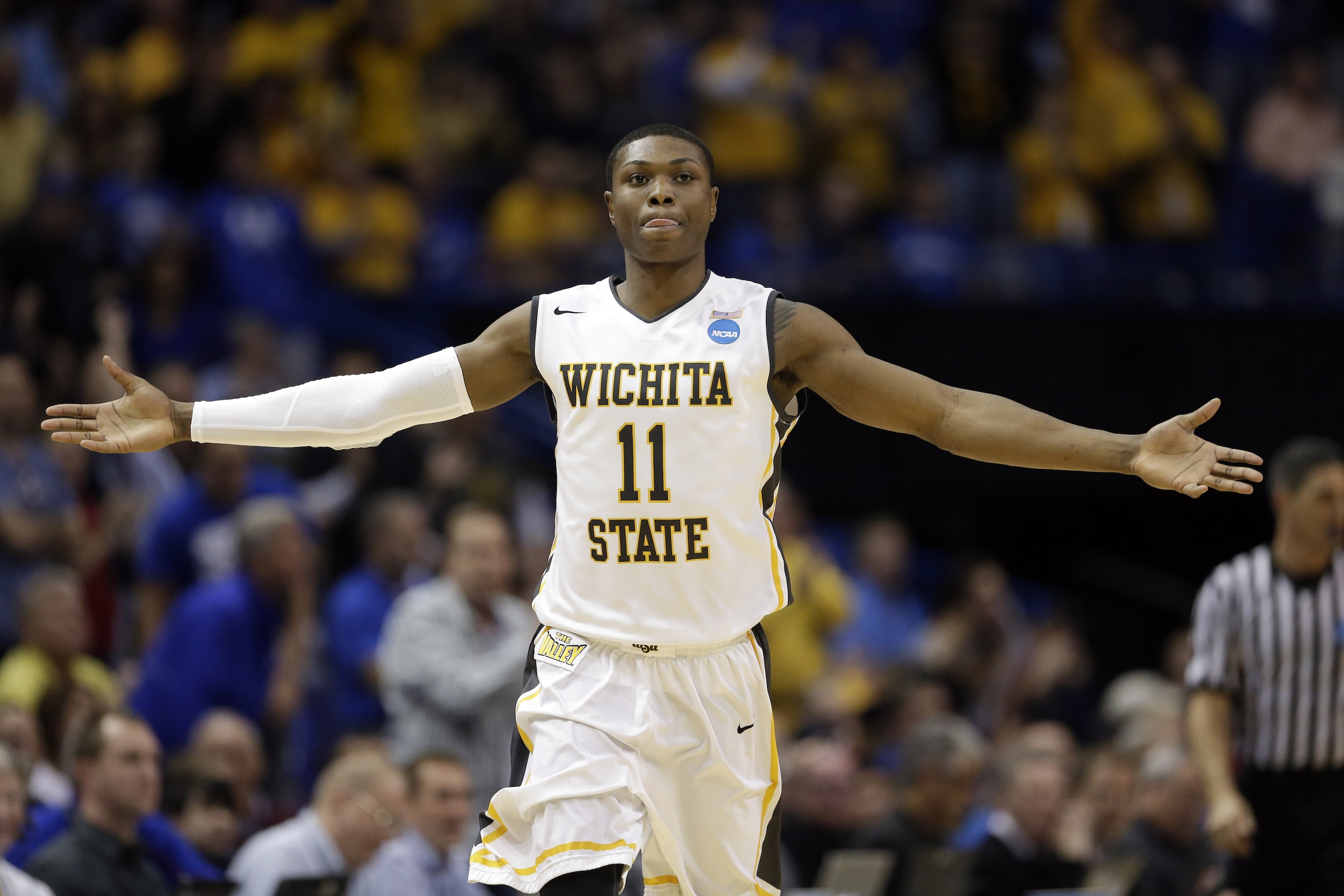
Unlike most teams on this list, the 2013-14 Shockers didn't have a ton of flashy recruits or future first-round picks. The best NBA player on this team was Toronto Raptors guard Fred VanVleet, who went undrafted. But they were one of the most dominant regular-season college teams in recent memory, going undefeated and winning the Missouri Valley Conference tournament easily.
Their only loss of the year came in the second round of the NCAA tournament to a Kentucky team led by Julius Randle. VanVleet had a chance to win it with a three-pointer attempt at the buzzer that rimmed out. It was a disappointing early exit for one of the great college teams of the decade.
Kentucky Wildcats (2014-15)
6 of 10
Among the best Kentucky teams of the Calipari era was the 2014-15 squad that featured future No. 1 overall draft pick Karl-Anthony Towns along with Devin Booker, Willie Cauley-Stein and Trey Lyles. It went undefeated in the regular season and the SEC tournament, entering March Madness as the No. 1-ranked team in the country.
The Wildcats made quick work of their first three opponents, with a 79-56 first-round win over Hampton, a 64-51 win over Cincinnati in the round of 32 and a 78-39 shellacking of West Virginia in the Sweet 16. They survived a scare against Notre Dame in the Elite Eight, pulling out a 68-66 win to advance to the Final Four, where they lost to Wisconsin 71-64.
Kansas Jayhawks (2015-16)
7 of 10
The Jayhawks didn't have an overwhelming recruiting class, but they were a complete team that featured five players who eventually played in the NBA: Frank Mason III, Devonte' Graham, Svi Mykhailiuk, Wayne Selden Jr. and Cheick Diallo. They finished with the best record in the Big 12 (15-3), won the conference tournament and entered the NCAA tournament as a No. 1 seed.
In the tournament, they blew through the first three rounds against Austin Peay, UConn and Maryland but ran into No. 2 seed Villanova in the Sweet Sixteen, losing 64-59. Villanova went on to win the national championship.
Gonzaga Bulldogs (2016-17)
8 of 10
The 2016-17 Bulldogs were led by freshman forward Zach Collins, as well as high-scoring junior Nigel Williams-Goss. Their only loss of the regular season came in the campaign's final contest against BYU, and they easily won the WCC tournament, ending the season as the No. 2 team in the country and a No. 1 seed in the NCAA tournament.
Gonzaga had an excellent March Madness run, advancing to the national championship game with wins over South Dakota State, Northwestern, West Virginia, Xavier and South Carolina. However, the Zags fell to fellow No. 1 seed North Carolina in the title game, a disappointing finish to an outstanding year for an exceptional team.
Duke Blue Devils (2017-18)
9 of 10
The Blue Devils entered the season with the top recruiting class in the country—including four 5-star recruits. With future lottery picks Marvin Bagley III and Wendell Carter Jr., as well as future NBA rotation players Gary Trent Jr. and Grayson Allen, this Duke team was more talented than its record showed. It had a strong season, finishing second in the ACC and ranked No. 9 in the country at the end of the year.
In the tournament, Duke was a No. 2 seed and defeated Iona, Rhode Island and Syracuse in the first three rounds. The Blue Devils pushed No. 1-seeded Kansas to overtime in the Elite Eight, falling 85-81. The results of this team's season didn't match up with the level of on-paper talent.
Duke Blue Devils (2018-19)
10 of 10
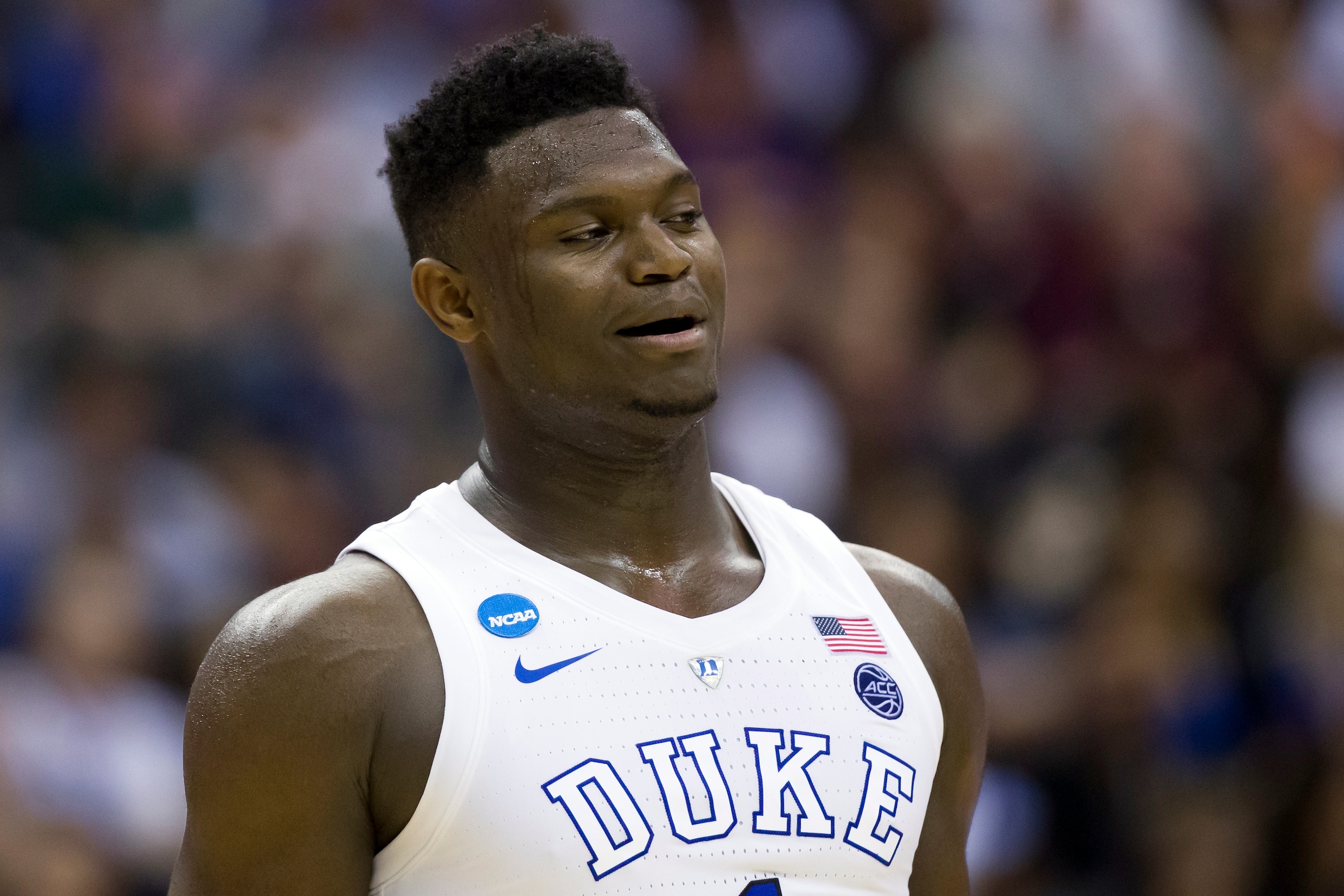
Yes, this team had worldwide sensation Zion Williamson, but he was arguably the least heralded of Duke's three main freshman recruits going into the 2018-19 season. The trio of Williamson, RJ Barrett and Cam Reddish was the story of the college basketball world and lived up to the hype in the regular season, slowed only by Williamson's famous exploding shoe and the knee injury he suffered as a result. The Blue Devils entered the tournament as the No. 1-ranked team in the country and a heavy favorite to win the national championship.
Duke took care of North Dakota State easily in the first round and then suffered two consecutive close calls in subsequent rounds, barely scraping past UCF (77-76) and Virginia Tech (75-73) on two consecutive missed buzzer-beaters to reach the Elite Eight. There, the luck ran out against Michigan State and Barrett missed a free throw that could have tied the game in the final seconds.
All recruiting info courtesy 247Sports unless otherwise noted.
.jpg?w=2560 "Aaron Donald Fights Bills OL😳")