In recent years, trades have put the NFL landscape on tilt.
With one trade, teams can shift the league's balance of power before, during or after a season. However, the transactions don't always go as planned. Teams have either celebrated shrewd moves or regret they even picked up the phone to broker transactions.
As the calendar turns to October, the month in which clubs contemplate trades before the Oct. 29 deadline, let's take a look at 10 of the biggest deals from the 2010s.
In addition to revisiting the most notable exchanges over the last 10 years, we'll also rank them based on the following criteria.
First, the player's status at the time of the trade. Did the club move him in his prime? Names with more cachet heighten the importance of the transaction.
Secondly, what did the team give up? Did the front office mortgage the future to obtain an unproven talent who beamed with potential? Could we say this club fleeced its trade partner?
Third, shock factor matters. General managers will give no sign of an imminent move and then boom, a star player goes elsewhere. Those trades leave a lasting imprint on our memories.
Lastly, we're in a position to fully assess older trades. Did the transaction change the trajectory of one or both franchises? Perhaps a player developed into an All-Pro talent or became a key cog on a Super Bowl roster. How did he contribute to the team that acquired him, and what happened to his former squad?
Using the elements above, we'll start at 10 and work our way to the biggest deal of the past decade.
10. Cleveland Browns Trade Trent Richardson to Indianapolis Colts (2013)
1 of 10
Compensation: 2014 first-round pick
We now look at Trent Richardson as a draft bust, but he came out of Alabama as a powerhouse in 2012. The Cleveland Browns selected him with the No. 3 overall pick, yet they dealt the running back to the Indianapolis Colts 17 games into his career.
How often does a team part ways with a top-three pick before he completes his second NFL season?
Then-Browns CEO Joe Banner decided to trade Richardson before his stock plummeted. The high-profile underperformer recorded 950 rushing yards and 11 touchdowns along with 51 receptions for 367 yards and score as a rookie, which convinced the Colts to give up a first-round pick for him.
The Browns got the far better end of the deal. Richardson played only three seasons in the NFL and averaged a mediocre 3.3 yards per carry in 46 games.
The Browns eventually used the Colts' pick in a draft-day deal with the Philadelphia Eagles to move up for quarterback Johnny Manziel. That turned out to be a huge mistake, too.
Neither the Browns nor the Colts came out of this exchange with anything significant, but we won't forget how quickly Richardson flamed out of the NFL.
9. Pittsburgh Steelers Trade Antonio Brown to Oakland Raiders (2019)
2 of 10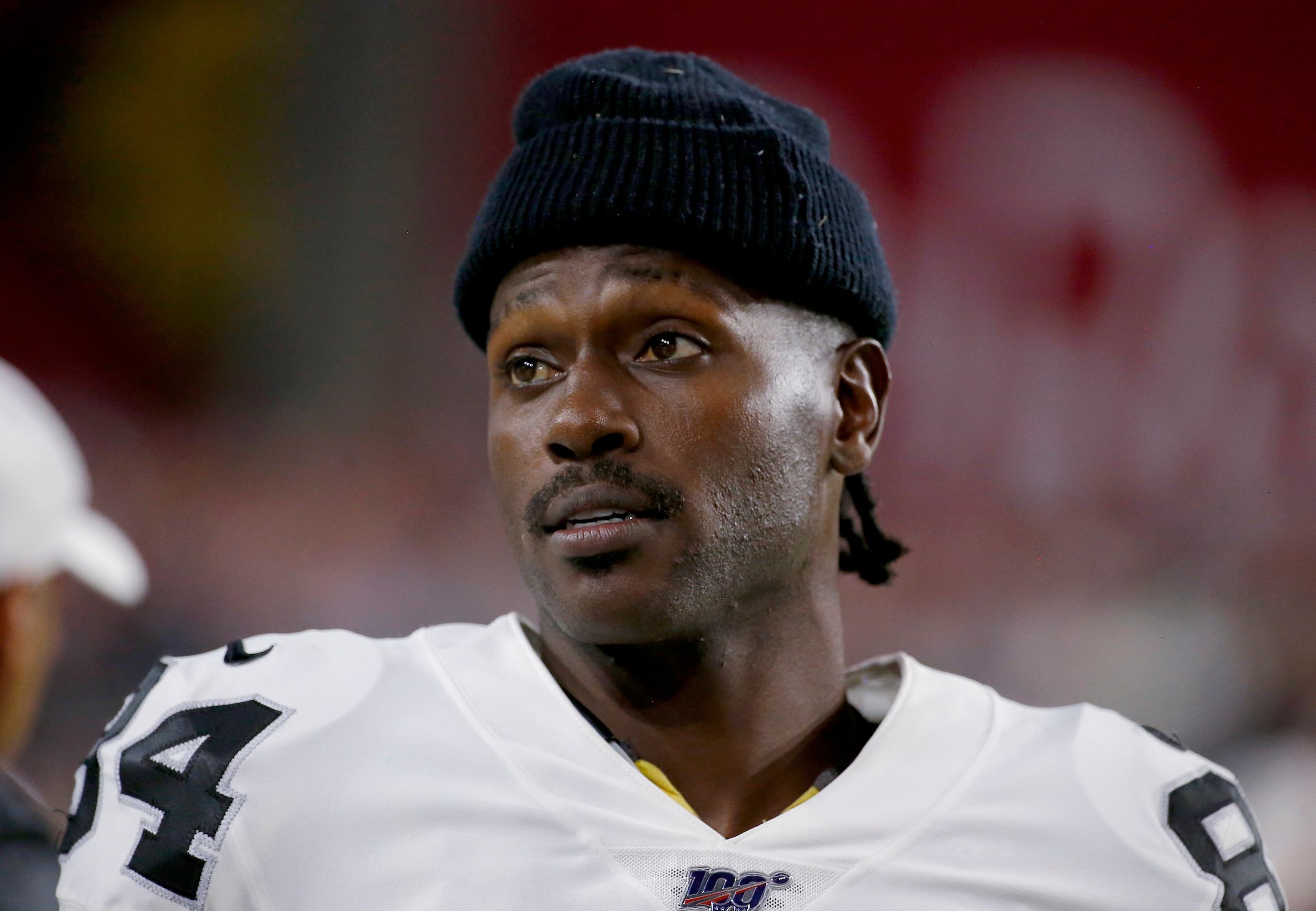
Compensation: 2019 third-round pick and 2019 fifth-round pick
Antonio Brown had established himself as a four-time All-Pro who led the league in receiving touchdowns (15) the season before the Pittsburgh Steelers traded him to the Oakland Raiders.
Brown took to social media to express his desire to leave the Steelers in mid-February, which takes away the shock element from this deal. Raiders head coach Jon Gruden is offensive-minded, so it's no surprise that he went above and beyond to accommodate the outspoken wideout despite his character questions.
Unlike Trent Richardson, Brown got traded at the top of his game with several accolades on his resume. Although the Raiders didn't give up much, the internet went into a frenzy when the deal went down.
However, this trade can't rise above the No. 9 spot because Brown didn't play a single down for the Raiders.
After a series of bizarre incidents which included freezing his feet in a cryogenic chamber, skipping out on practice over a gripe about the new helmet rule, posting his fine on Instagram, engaging in a shouting match with general manager Mike Mayock and then requesting his release, the Raiders parted ways with him ahead of Week 1.
Oakland signed Brown to a three-year, $50.125 million restructured contract with $30 million in guarantees, but the team voided the money upon his release. The 10th-year wideout will file a grievance to recoup some of that money, per ESPN's Jeremy Fowler.
For now, this trade yielded nothing more than offseason headaches for the Raiders and wide receiver Diontae Johnson along with tight end Zach Gentry for the Steelers.
8. New York Giants Trade Odell Beckham Jr. to Cleveland Browns (2019)
3 of 10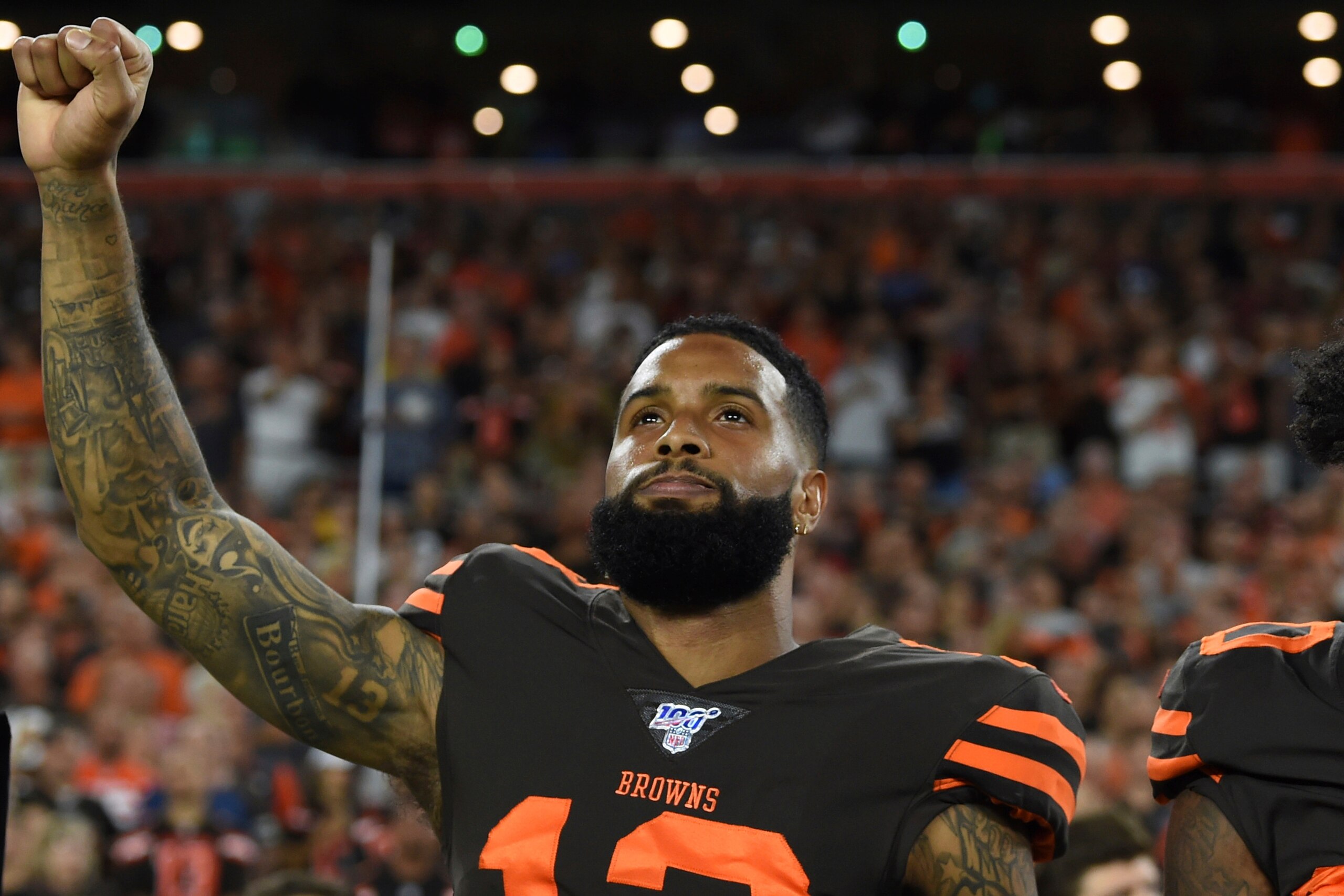
Compensation: 2019 first-round pick, 2019 third-round pick and S Jabrill Peppers
In the same offseason, Brown and wideout Odell Beckham Jr. moved to new teams, but the latter takes the eighth spot because of the compensation the New York Giants received for him and the shock aspect.
Giants general manager Dave Gettleman said the team didn't extend Beckham's contract in August 2018 just to trade him, but that's exactly what happened in mid-March.
Because of Gettleman's public stance against moving Beckham and the wideout's five-year, $90 million extension, the timing probably caught the Giants fanbase off guard. But the Browns made an aggressive move for a No. 1 wide receiver who had four 1,000-yard seasons in his first five years.
Beckham has played only four games with the Browns, so it's too early to declare who won this trade. The three-time Pro Bowler has caught 21 passes for 308 yards and a touchdown while building a rapport with quarterback Baker Mayfield.
The Giants turned the draft picks into defensive lineman Dexter Lawrence and edge-rusher Oshane Ximines who have a combined 18 tackles, three sacks and a pass deflection. Both have flashed signs of promise in the first quarter of the season.
.jpg?w=2560 "Seahawks Chiefs Football")

7. Cincinnati Bengals Trade Carson Palmer to Oakland Raiders (2011)
4 of 10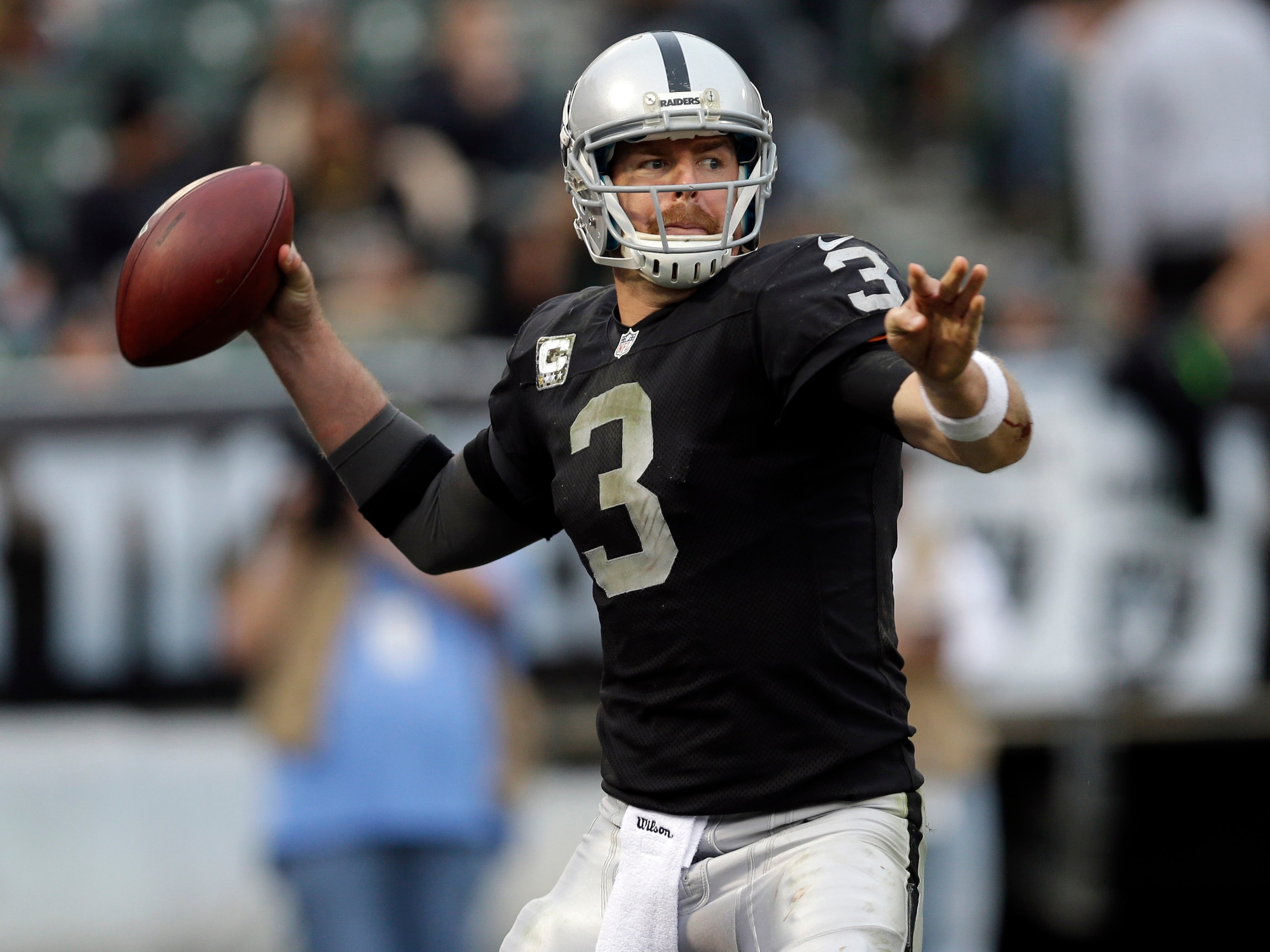
Compensation: 2012 first-round pick and 2013 second-round pick
The Raiders selected one of the biggest draft busts in history, quarterback JaMarcus Russell, with the No. 1 overall pick in 2007. He flamed out of the league in three years, which left the Silver and Black scrambling for a franchise signal-caller.
In 2010, the Raiders offense ranked sixth in scoring under offensive coordinator Hue Jackson, who accepted a promotion to head coach in the following season. He served as USC's offensive coordinator between 1997-2000 and the Cincinnati Bengals wide receivers coach between 2004-06, which gave him plenty of time with quarterback Carson Palmer.
In mid-October 2011, the Raiders acquired Palmer to reunite him with Jackson. Palmer threatened to retire if the Bengals didn't trade him, which created an opportune time for the Raiders to use familiarity to usher the player and organization into a new joint chapter.
However, the Raiders fired Jackson after one year, and Palmer played only two below-average seasons with the Silver and Black. The deal didn't work out for Oakland.
On the other side, the Bengals spent the Raiders' draft picks on cornerback Dre Kirkpatrick and running back Giovani Bernard, both of whom continue to play solid roles on the team in 2019. The former starts, and the latter serves as a steady pass-catching option out of the backfield.
Because of Palmer's status as a 2003 No. 1 overall pick, his threats of early retirement and his short, disappointing stay in Oakland, this deal ranks ahead of the Browns' move for Beckham—a trade that remains in its early stages.
6. San Francisco 49ers Trade Alex Smith to Kansas City Chiefs (2013)
5 of 10
Compensation: 2013 second-round pick and 2014 second-round pick
Like Palmer, quarterback Alex Smith came into the league as a No. 1 overall pick (2005). He didn't request a trade, but the San Francisco 49ers opted to go in another direction with Colin Kaepernick, who impressed former head coach Jim Harbaugh while his starter dealt with a concussion.
Following a Super Bowl appearance with Kaepernick, it seemed inevitable that the 49ers would trade Smith. In March 2013, they sent him to the Kansas City Chiefs, who desperately needed a new signal-caller after Matt Cassel wore out his welcome with subpar performances.
With Smith under center, the Chiefs made it to the playoffs in four out of five seasons. Although they won only one playoff game during his tenure, it was their first postseason victory since the 1993 campaign.
In exchange for two second-round picks, Kansas City had a chance to compete in January. That's a good trade-off.
Thanks to former general manager Trent Baalke's subsequent moves, the 49ers flipped those two second-rounders into five players: defensive end Tank Carradine, running back Carlos Hyde, wide receiver Stevie Johnson and linebackers Corey Lemonier and Chris Borland.
Among that group, Hyde had a few good years with the Niners. Borland put together a strong rookie campaign, logging 107 tackles, 12 tackles for loss, four pass breakups and two interceptions, but he retired the following offseason.
Because of the Chiefs' success following the Smith trade, this transaction ranks ahead of the Raiders' acquisition of Palmer.
5. Tennessee Titans Trade No. 1 Pick (Jared Goff) to Los Angeles Rams (2016)
6 of 10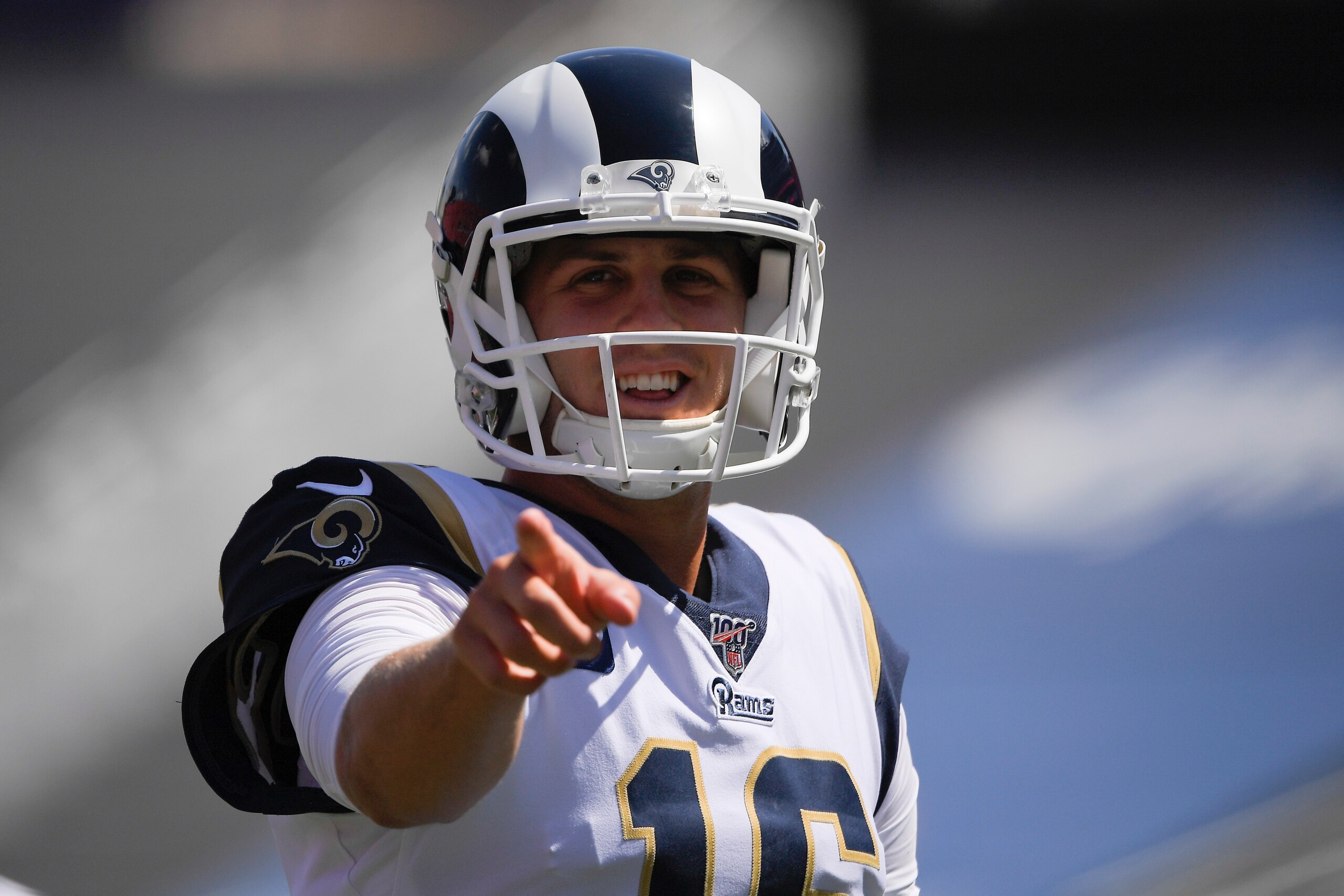
Compensation: 2016 first-round pick, two 2016 second-round picks, 2016 third-round pick, 2017 first-round pick, 2017 third-round pick
The Tennessee Titans landed the No. 1 overall pick in the 2016 draft after a 3-13 campaign, but they had already selected quarterback Marcus Mariota with the No. 2 pick in the 2015 draft. As a result, they were willing to discuss a trade with teams that wanted to move up.
The Los Angeles Rams reached out and executed a deal to get their quarterback of the future.
The Rams' trade package for quarterback Jared Goff supersedes the compensation that the Bengals and Niners received for Palmer and Smith, respectively. The Titans have defensive lineman Austin Johnson (2016 second-rounder), running back Derrick Henry (2016 second-rounder), wideout Corey Davis (2017 first-rounder) and tight end Jonnu Smith (2017 third-rounder) on their 2019 roster.
As a rookie, Goff didn't show much promise under former head coach Jeff Fisher, but he played up to his potential when Sean McVay took over in 2017. With the California product under center, the Rams have made two postseason trips, including one to last year's Super Bowl.
The Rams offense hasn't been as explosive this season with running back Todd Gurley II handling a lighter workload to keep his knee healthy. But they still have a starting-caliber signal-caller who's capable of making enough plays to keep this team in the playoff mix.
After a few losing seasons with quarterbacks such as Shaun Hill, Austin Davis, Nick Foles and Case Keenum, the Rams have stability with Goff. The front office showed its confidence in their franchise signal-caller, signing him to a four-year, $134 million extension in September.
Although the Rams paid a king's ransom to move up for Goff in the draft, it already paid off with a trip to the Super Bowl. The two-time Pro Bowler has early playoff experience and more upside than Smith, which lands this deal at No. 5.
4. Browns Trade No. 2 Pick (Carson Wentz) to Philadelphia Eagles (2016)
7 of 10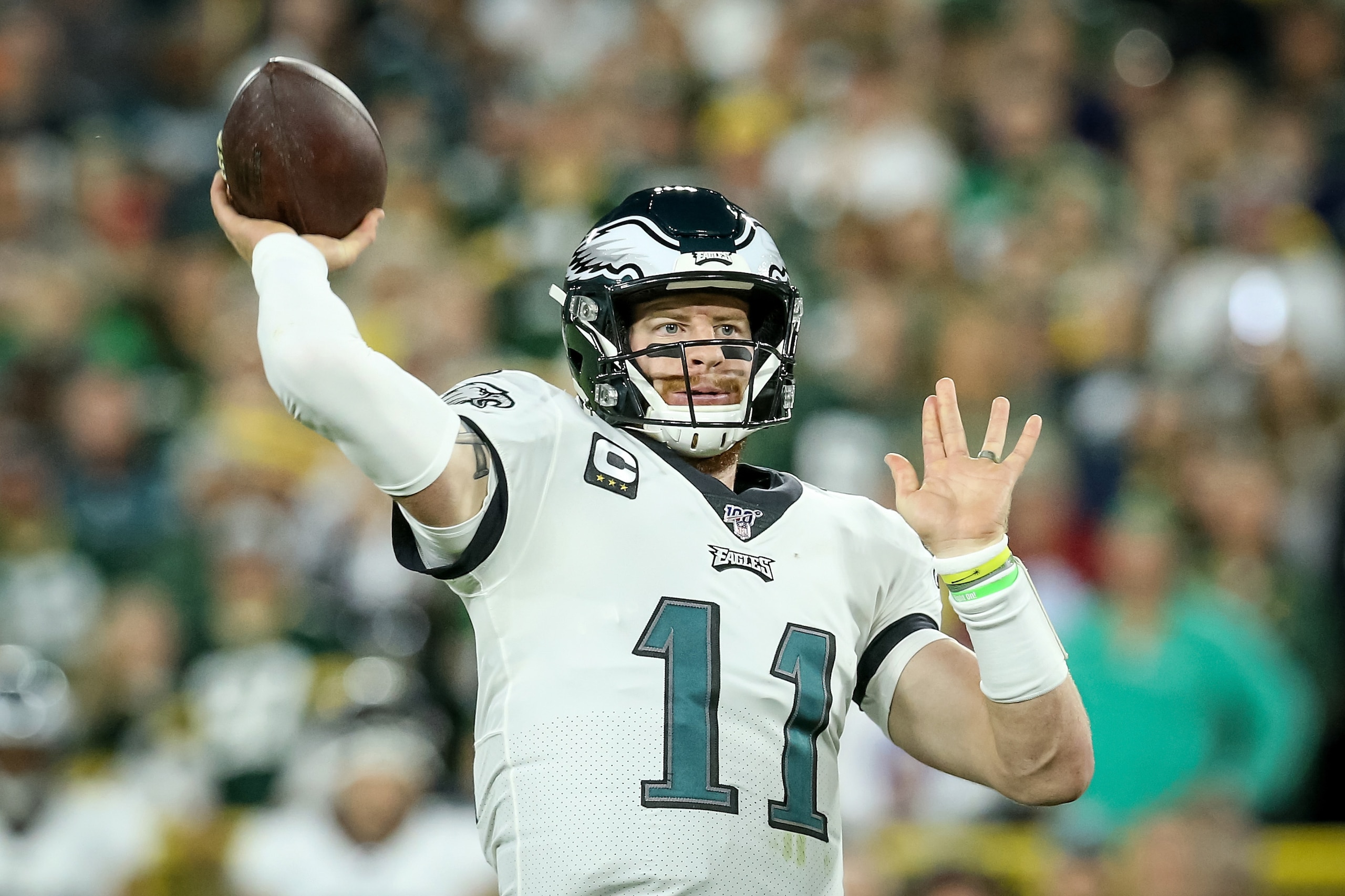
Compensation: 2016 first-round pick, 2016 third-round pick, 2016 fourth-round pick, 2017 first-round pick, 2018 second-round pick
Goff and Carson Wentz will always be associated with one another because their teams moved up for them in the same draft. The Browns sent the No. 2 overall pick to the Philadelphia Eagles for five picks and subsequently traded all of them.
Although Goff has already played in one Super Bowl, Wentz made the Eagles' first Super Bowl title possible with a 13-game MVP-caliber sophomore campaign (33 touchdowns and seven interceptions) before he suffered a season-ending knee injury.
No one can take away Foles' Super Bowl LII MVP honor and his statue outside Lincoln Financial Field, but he wouldn't have had that opportunity to play in the big game without Wentz first leading the Eagles to an 11-2 record.
In June, the Eagles gave Wentz a four-year, $128 million extension, ensuring he'll be their quarterback for years to come. He can keep the offense humming on a consistent basis without a top running back, which we can't say for Goff yet.
The Eagles may have the better quarterback from the 2016 class. Last year, Goff logged his best QBR (63.1). Wentz led the league in that category (77.2) in 2017 before his ACL tear. Through four weeks this season, he's sitting at 72.8.
Even though the Browns didn't keep any of the picks from this deal, the Eagles landed their franchise quarterback, which is worth every selection in the trade. Wentz's individual production and contributions to a championship squad elevate this transaction to the fourth spot in these rankings.
3. Buffalo Bills Trade Marshawn Lynch to Seattle Seahawks (2010)
8 of 10
Compensation: 2011 fourth-round pick and 2012 fifth-round pick
In one of the most lopsided trades in NFL history, the Buffalo Bills sent running back Marshawn Lynch to the Seattle Seahawks for two Day 3 picks. The Bills spent those picks on offensive lineman Chris Hairston and linebacker Tank Carder, the latter of whom didn't even play a regular-season game with them.
Hairston started 15 games for the Bills. Meanwhile, the Seahawks received a key component to their playoff-contending squad, which reached two Super Bowls and won one.
Once Lynch arrived in Seattle, Beast Mode emerged. He built a reputation as one of the most physical tailbacks in NFL history, running over and stiff-arming defenders into oblivion.
Despite playing with passing attacks that routinely ranked among the bottom third of the league, Lynch became a dominant ball-carrier from 2011 through 2014. He led the league in rushing yards (5,357) and touchdowns (48) during that stretch.
At the time of the trade, Lynch wasn't as highly regarded as he is today. Perhaps he was a poor fit in Buffalo, but the bruising ball-carrier changed the trajectory of the Seahawks franchise with one violent run at a time.
We don't yet know the full effects of the trades involving Goff and Wentz, but it's clear the Seahawks made the right move to acquire Lynch. He's exactly what the offense needed with quarterback Russell Wilson's inexperience during that period.
2. Oakland Raiders Trade Khalil Mack to Chicago Bears (2018)
9 of 10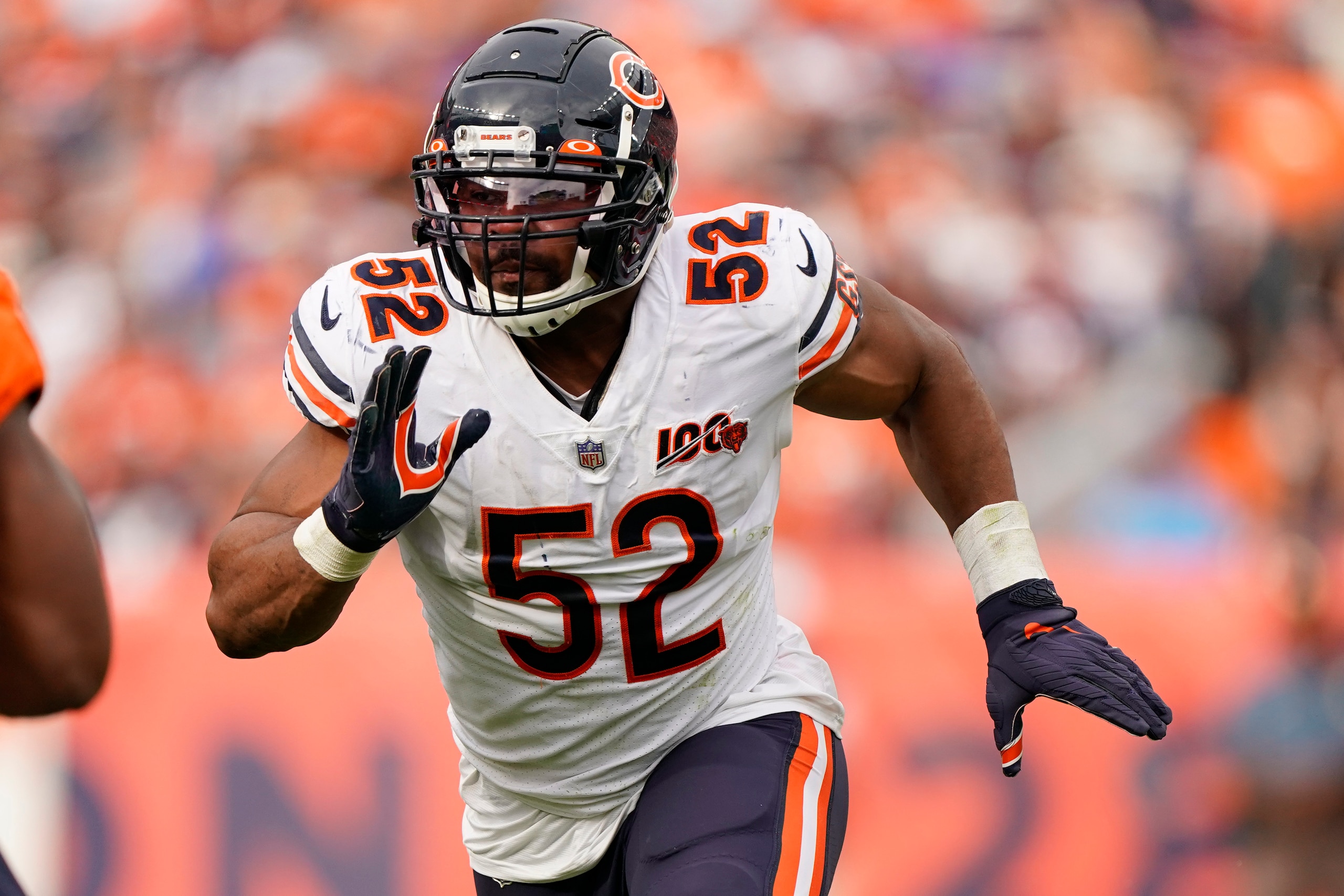
Compensation: 2019 first-round pick, 2019 sixth-round pick, 2020 first-round pick, 2020 third-round pick
Many Raiders fans rejoiced when Jon Gruden accepted an offer to coach the team. Owner Mark Davis called the hire "a big f--king deal," but a blockbuster trade involving edge-rusher Khalil Mack seemed to deflate all of that excitement ahead of the 2018 season.
The move even stunned Mack's former teammates. "No way," quarterback Derek Carr tweeted. Defensive end Bruce Irvin also chimed in on Twitter. "What a shock. Now move on and win.. time to beat the Rams!!"
During the 2018 offseason, Mack held out for a new deal that would eventually make him the NFL's highest-paid defensive player. Despite his elite talent, the Raiders didn't make long-term financial room for him.
Instead of paying him, the Raiders traded him to the Chicago Bears and recouped picks to initiate a rebuilding process. Oddly enough, Oakland also tossed in its 2020 second-round pick in the deal.
In Chicago, Mack continued to wreak havoc on offensive lines in a third All-Pro campaign with the No. 1 scoring defense. He logged 12.5 sacks alone, while Oakland had 13 as a team last year. The Raiders haven't been much better applying pressure this year, as they're tied for 25th in sacks with five in four games.
We still can't fully assess this deal because the Raiders have yet to make their 2020 selections. However, 2019 first-round pick Josh Jacobs looks like a premier running back. He's ninth leaguewide in rushing yards (307) and is averaging 5.0 yards per carry. Meanwhile, Oakland traded the sixth-round pick along with guard Kelechi Osemele to the New York Jets for a fifth-round pick.
Even if the Raiders nail their pair of picks in 2020, it'll be difficult for them to recoup full value for Mack, who was the first player in league history to earn All-Pro honors at two positions. His 17 sacks since joining the Bears are twice as many as his next-closest teammate, Akiem Hicks (8.5).
With Mack on board, Chicago's suffocating defense helped the franchise reach the playoffs for the first time since the 2010 campaign.
1. St. Louis Rams Trade No. 2 Pick (Robert Griffin III) to Washington (2012)
10 of 10
Compensation: 2012 first-round pick, 2012 second-round pick, 2013 first-round pick and 2014 first-round pick
The Raiders potentially could justify the Mack trade if they nail their 2020 first- and third-round picks. Who knows what those selections will become in the near future? Jacobs has flashed, and he's still in his early stages of development.
However, we have the complete scorecard for the trade that allowed the Washington Redskins to acquire quarterback Robert Griffin III, and they clearly lost by a wide margin.
In the deals involving Goff and Wentz, the Rams and Eagles moved two first-round picks in packages to draft a quarterback. Both signal-callers have performed at the level of starting-caliber talents for multiple years.
This trade doesn't look good for either side, but the Redskins surrendered three first-rounders and received one good year of Griffin in return.
Griffin was named Offensive Rookie of the Year in 2012 after throwing for 3,200 yards, 20 touchdowns and five interceptions. He also logged 815 yards and seven scores on the ground. The dynamic signal-caller looked well on his way to a promising career, but injuries and inconsistent play limited him to 37 games in Washington.
Three seasons after his draft year, the Redskins rolled out Kirk Cousins, who was a fourth-rounder in the same class, as a full-time starter.
The Rams didn't fare much better from this deal, though. Among they picks they receive in return, only cornerback Janoris Jenkins panned out to become a quality starter. Offensive tackle Greg Robinson, the No. 2 overall pick in 2014, was a huge whiff, allowing 17.5 sacks in 46 game, per the Washington Post's STATs.
Because of the compensation involved and Washington's minimal return, the draft-day trade for Griffin will go down as arguably the biggest miss in NFL history. The finality of the transaction elevates this trade to the top spot and also serves as a cautionary tale for teams willing to overplay their hand on potential.
.jpg?w=2560 "Raiders Saints Football")