
2018 NFL Free Agency: Predicting Impact of Week 1 Signings
We're only one day into the new league season, but most of the significant free agents on the market have already found new homes. Given how quickly trades (aka salary dumps) have taken over the NFL, along with the league's "legal tampering" period, the first wave of 2018 free agency was seemingly settled before the league year even officially began at 4 p.m. ET Wednesday.
With that in mind, we'll look at where the biggest stars in this free-agency class will sign. Will they make immediate impacts? What roles will they play? What do the signings mean for the teams moving forward?
The league's biggest signings include three quarterbacks and four defensive backs. The passing game's increasing influence over the league every year means that first wave of free agency will include more passers, catchers and coverage defenders in the future.
Kirk Cousins, QB, Minnesota Vikings
1 of 10
Going on the third straight offseason with a possible Kirk Cousins free agency, the 29-year-old quarterback finally hit the open market. According to Ian Rapoport of NFL Network, Cousins will sign with the Minnesota Vikings on a three-year, $86 million fully guaranteed contract. That compares similarly to the first three years of Detroit Lions quarterback Matthew Stafford's deal, as Stafford is slated to make $87 million over that period.
Is Cousins, who has posted 81 passing touchdowns and 36 interceptions over the last three years, better than Case Keenum (35 touchdowns and 19 interceptions since 2015), Sam Bradford (42 touchdowns and 19 interceptions since 2015) and Teddy Bridgewater (14 touchdowns and 10 interceptions since 2015)?
Yes. The question of how much better and juxtaposing the contracts of Keenum, Bradford and Bridgewater, all 2017 Vikings, to Cousins' is what's up for debate.
At the end of the day, Minnesota committed to what it considered the best option over the three quarterbacks on its 2017 roster. With an improved offensive line, running back Dalvin Cook returning from injury and one of the best receiver duos in the league in Adam Thielen and Stefon Diggs, expecting anything less than top-10 offense from the Vikings this year is disingenuous.
Diggs, linebackers Anthony Barr and Eric Kendricks and defensive end Danielle Hunter are all significant free agents next year, and the signing of Cousins will likely impact which of them Minnesota retains, but the 2018 season is full steam ahead for the Vikings.
Case Keenum, QB, Denver
2 of 10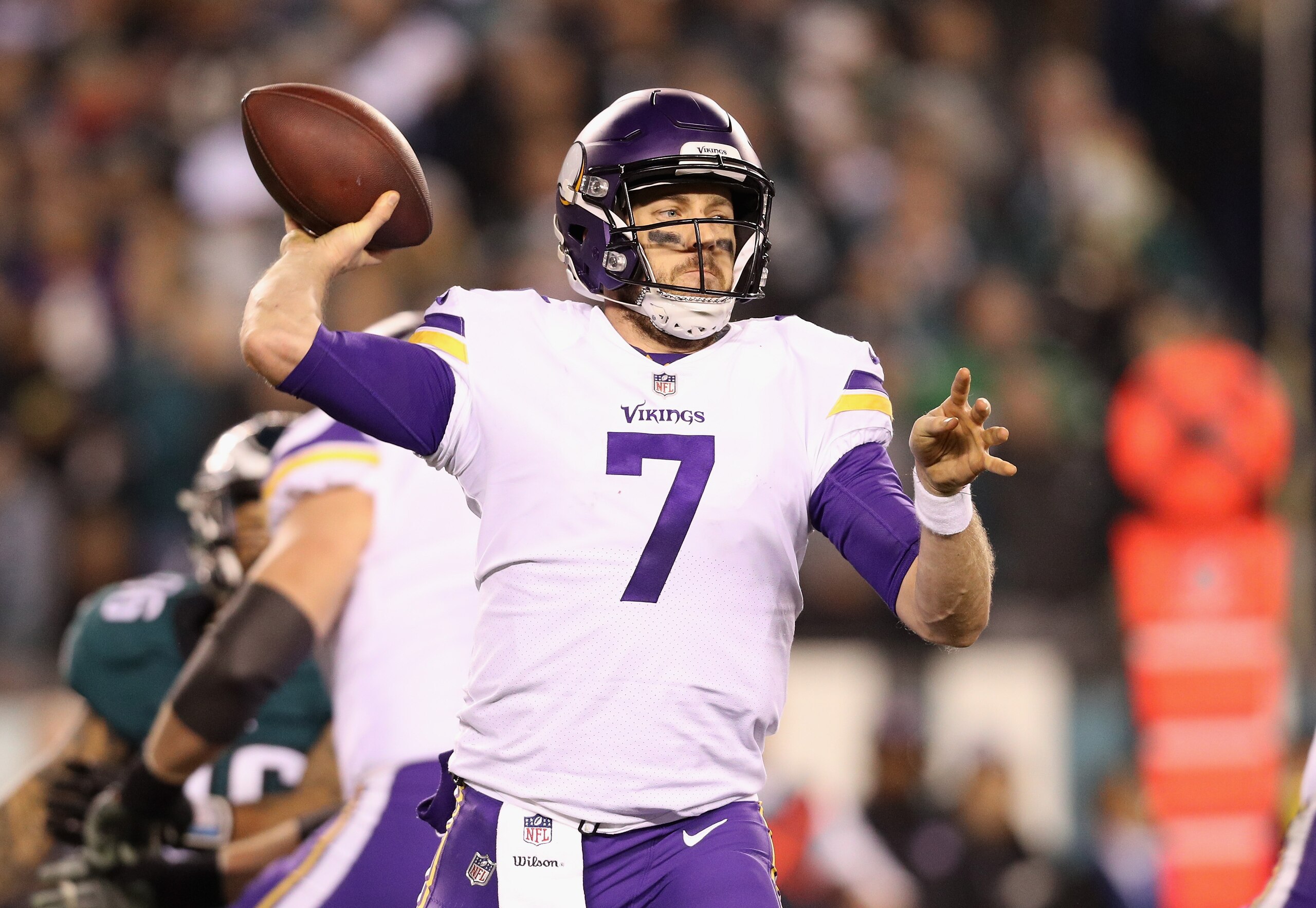
The first major quarterback to sign wasn't Cousins, but Case Keenum, the quarterback leaving the Minnesota Vikings. Over the last three offseasons, Keenum has gone from a first-round-tender restricted free agent, whom Jeff Fisher paraded around as the franchise quarterback before a trade-up for Jared Goff, to a redemption story, a third-string quarterback who beat the odds and took the Vikings to the NFC Championship Game.
According to Mike Klis of 9News in Denver, Keenum's two-year deal is worth $36 million. This isn't exactly Mike Glennon's three-year, $45 million contract, which really amounted to just one year worth of guarantees, but Keenum's two-year deal lets us know that teams weren't sold on his long-term future.
In 2018, as ridiculous as it sounds, two years and $36 million for a quarterback is "we'll let you compete and take this year-by-year" money, not "we're committed to you" money. Keenum, at worst, should produce like a league-average quarterback this year. A short contract leaves the Broncos, who hold the fifth overall pick in the draft, the option to select a rookie passer to develop behind Keenum.
Under John Elway, Denver has drafted Brock Osweiler, Zac Dysert, Trevor Siemian, Paxton Lynch and Chad Kelly at the quarterback position. The chances of Elway drafting a quarterback who can push Keenum in his contract year of 2019 may be slimmer than people realize.
Sam Bradford, QB, Arizona Cardinals
3 of 10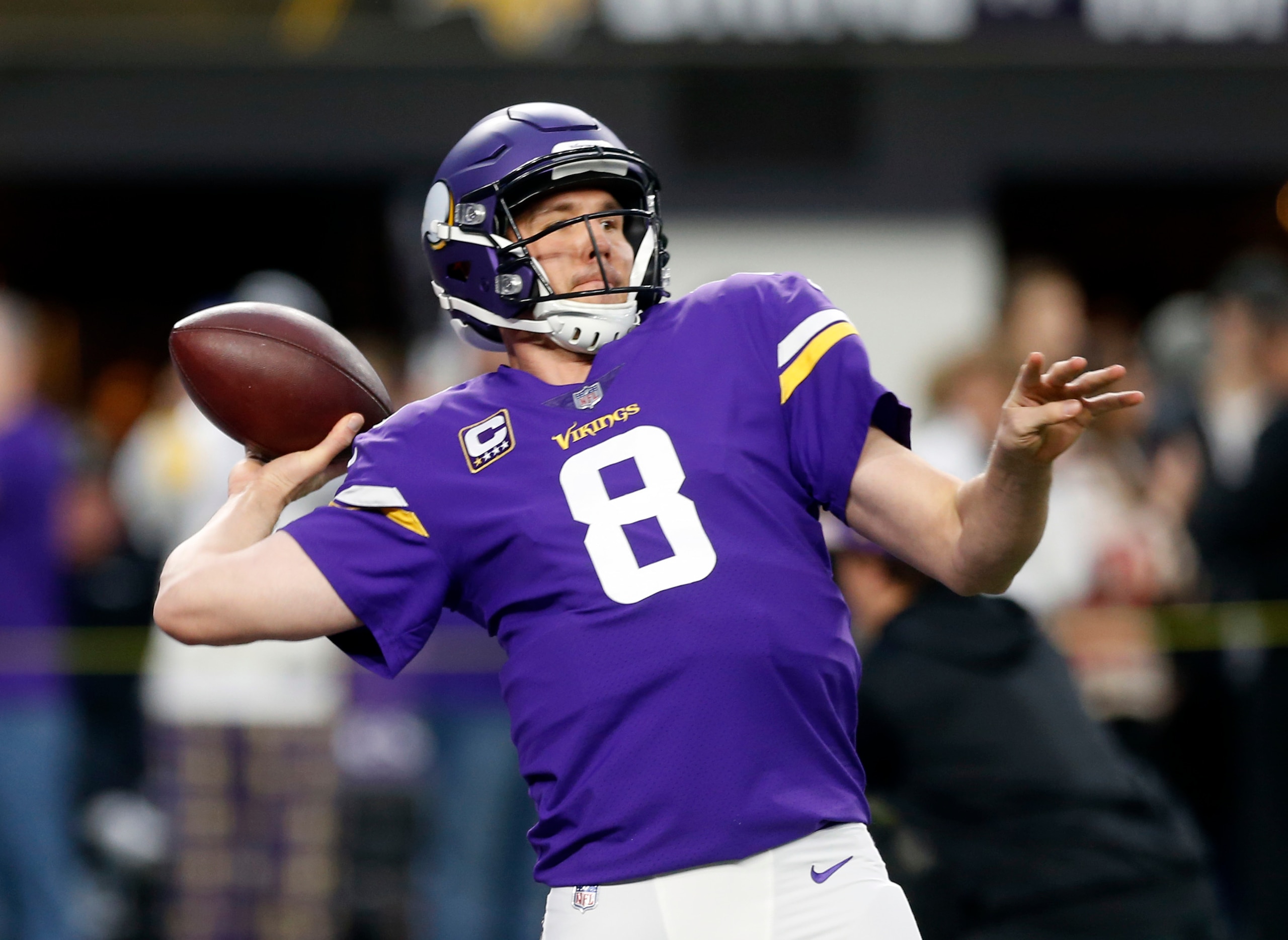
While he threw only 43 passes in 2017, former Minnesota Vikings quarterback Sam Bradford posted 8.38 adjusted net yards per attempt, nearly two full yards better than his career season of 2016. Right when he seemed to have put it all together, Bradford once again was bit by the injury bug. In early March, according to NFL Network's Tom Pelissero, Vikings head coach Mike Zimmer called Bradford's knee "degenerative."
His peaking play and inability to stay on the field are the reasons for the Arizona Cardinals' one-year, $20 million contract for 2018, according to Rapoport. It's worth noting that while his deal is short, Bradford is making more per year than Keenum, his former teammate who was discussed as a higher-quality quarterback on the free-agent market.
If Bradford can stay on the field and perform to the level of 2016 and 2017, he may actually allow Cardinals fans to forget Carson Palmer, who retired this offseason. If he doesn't, he'll be remembered like Daunte Culpepper's Miami Dolphins stint.
As the only quarterback on the Cardinals roster, one would have to assume that he's going to be Arizona's unquestioned starting quarterback heading into the regular season, barring another injury or massive trade-up for a quarterback. Who knows what, or rather for how long, you're getting from Bradford at this point, though.
.jpg?w=2560 "Rams Raiders Football")

.jpg?w=2560 "Steelers Saints Football")
Sammy Watkins, WR, Kansas City Chiefs
4 of 10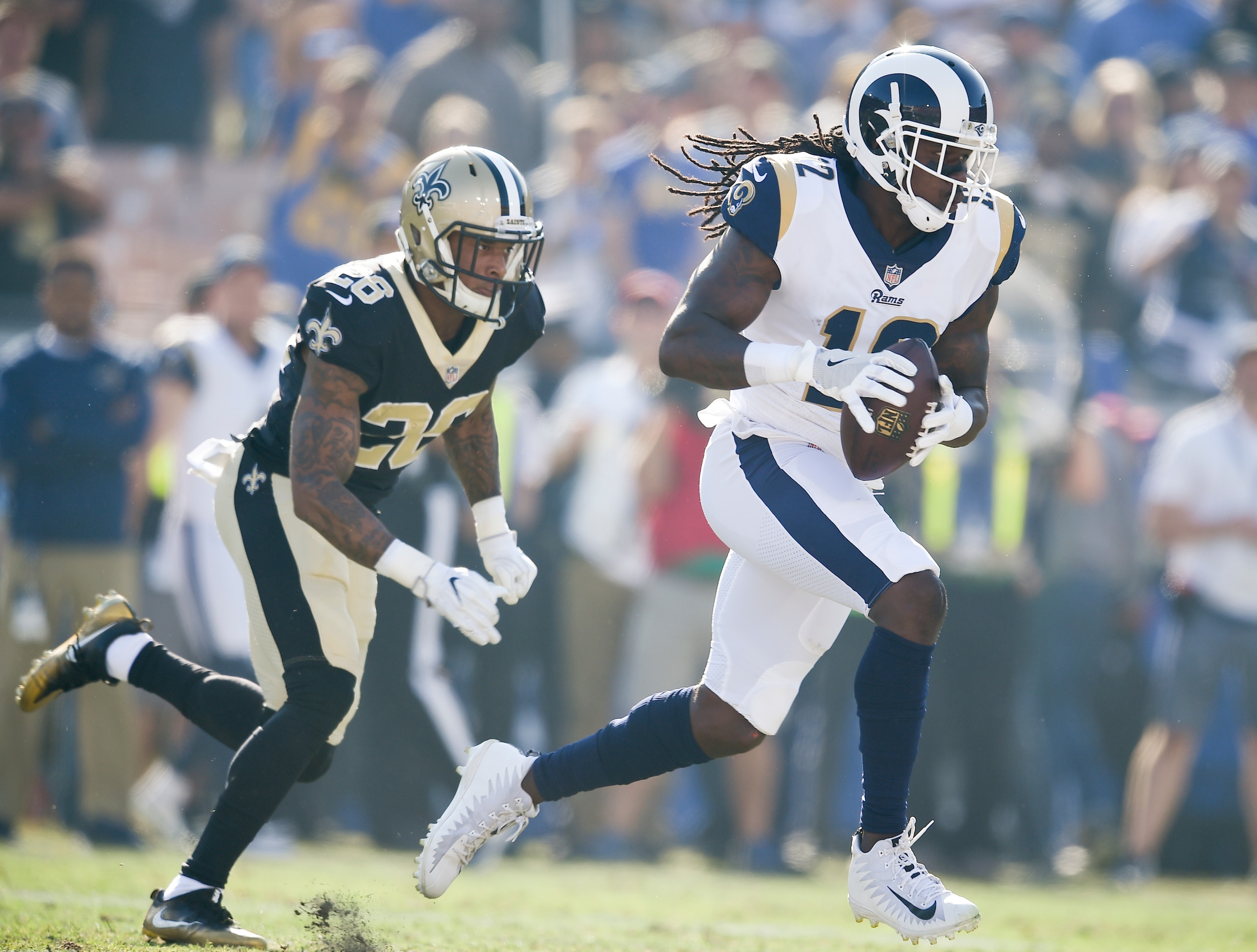
Last preseason, the Los Angeles Rams traded a second-round pick to the Buffalo Bills for former fourth overall pick Sammy Watkins on the last year of his rookie contract. Despite letting him sign with the Kansas City Chiefs, the Rams will likely receive a compensatory third-round pick based on his three-year, $48 million deal, according to Rapoport, the most costly contract for any free-agent wide receiver.
In Los Angeles, Watkins was a receiver whose primary job was to run off cornerbacks to open space underneath for Cooper Kupp and Robert Woods. Still, he managed to record eight receiving touchdowns in his first year in the Sean McVay system and posted 15.2 yards per reception, in line with his career number of 15.9.
The Chiefs landed a 24-year-old receiver who ran a 4.43-second 40-yard dash and has over 3,000 receiving yards and 25 touchdown receptions to his name, all while not giving up a draft pick. That's about as good a deal as you can make in today's NFL.
The Chiefs were already one of the better deep-ball teams in the league, more so because of receiver Tyreek Hill (15.8 yards per reception and seven touchdowns in 2017) and tight end Travis Kelce (12.5 yards per reception and eight touchdowns) than quarterback Alex Smith, last season. The team moved on from Smith, notoriously known for passing up deep targets, and has since crowned Patrick Mahomes, a former Air Raid passer and 2017 first-round pick, as their starter.
With Mahomes passing to him, opposite Hill and Kelce, Watkins could develop into one of the league's top-15 receivers. With Hill, a move receiver, as the only other significant wideout on the team, Watkins should be the isolated target in 1-x-3 formations.
Allen Robinson, WR, Chicago Bears
5 of 10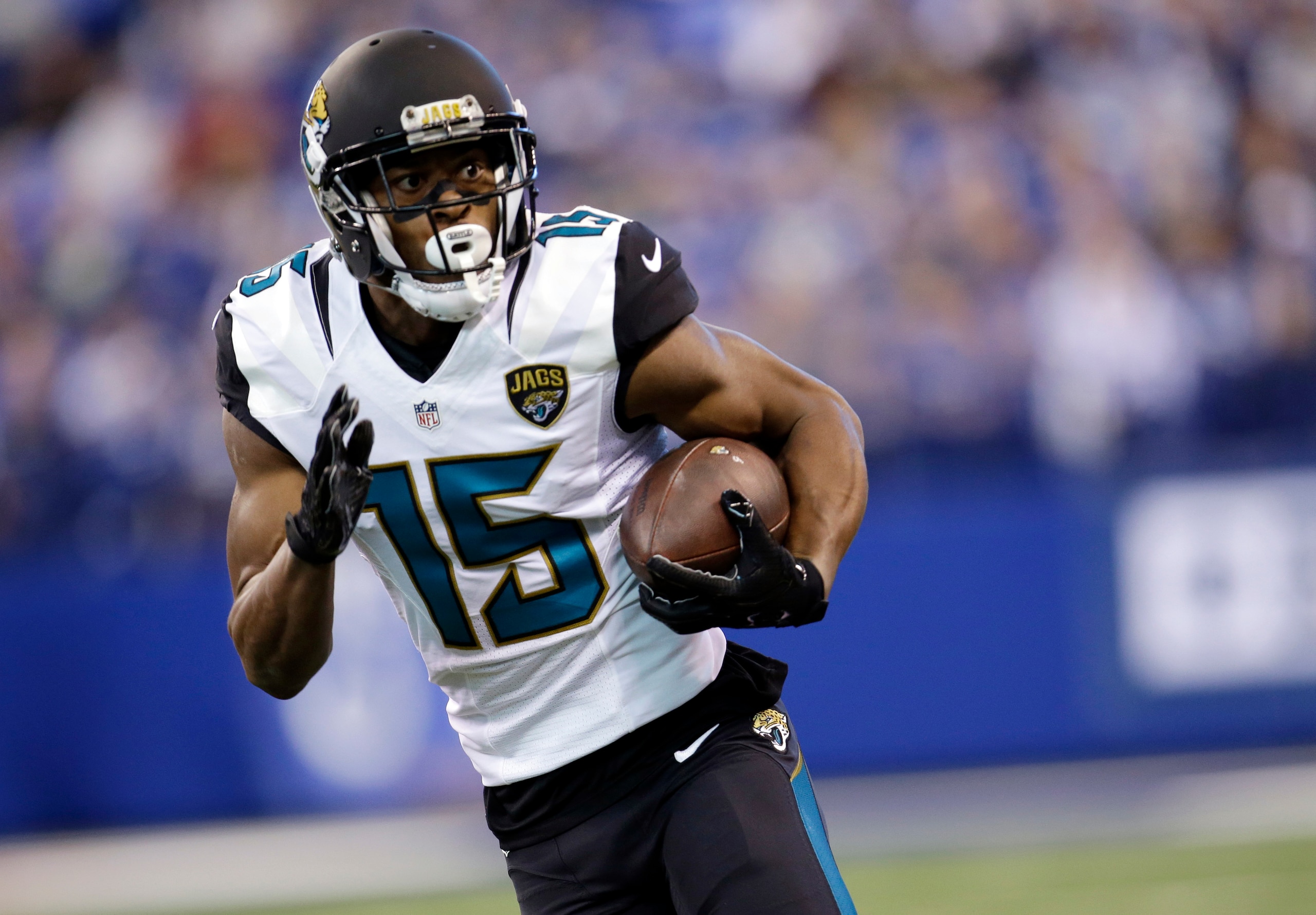
Last season, the Chicago Bears' top receiver was Kendall Wright, who registered 59 receptions for 614 yards and one single touchdown. Allen Robinson, a former Jacksonville receiver who agreed to a three-year, $42 million contract with Chicago, according to ESPN's Josina Anderson, could very well beat all of those numbers halfway into the season.
With Blake Bortles at quarterback, Robinson produced an 80-reception, 1,400-yard, 14-touchdown season in 2015. Had Robinson not missed most of the 2017 season with an ACL injury, we would be talking about the 24-year-old as one of the future faces of the wide receiver position.
After the losses of Kevin White and Cameron Meredith—two receivers who went down with injuries on a team already thin at receiver—the Bears threw just 473 passes in 2017, the fewest of any team in the last two years. Robinson should open up the passing game for 2017 first-round quarterback Mitch Trubisky.
The former Penn State receiver should easily win Chicago's No. 1 receiver slot, whether to or away from trips. And first-time NFL offensive coordinator Mark Helfrich learned from Chip Kelly at the University of Oregon. It's worth noting that in all three of Kelly's years in Philadelphia, he had a different top receiver. DeSean Jackson in 2013 (1,332 yards and nine touchdowns), Jeremy Maclin in 2014 (1,318 yards and 10 touchdowns) and Jordan Matthews in 2015 (997 yards and eight touchdowns).
Hopefully, Robinson's stint under Helfrich will have more consistency than any receiver under Helfrich's mentor.
Andrew Norwell, OG, Jacksonville Jaguars
6 of 10
Out goes one Jaguar, in comes another. Former Carolina Panthers guard Andrew Norwell signed a five-year, $66.5 million contract with the Jacksonville Jaguars, per ESPN's Adam Schefter. While the Jaguars committed to the run game by carrying the ball 26 times more than any other NFL team last year, they were just tied for 24th in first-down percentage on the ground.
The only teams who were significantly worse than Jacksonville in that aspect were Miami, the Jets, the Giants, Washington, Arizona and Detroit, all teams who have or should make changes to their primary ball-carrier from last season. With Leonard Fournette locked into his situation with the Jaguars, they need to change the surrounding cast.
Norwell would be a significant improvement over either A.J. Cann or Patrick Omameh, whose contract has expired. Under the league's most-expensive guard contract, Norwell better be able to replicate his first-team All-Pro performance from 2017, for Jacksonville's sake. Giving center Brandon Linder some help could go a long way for the Jaguars run game. Barring injury, Norwell should get every rep with the first-team offensive line from the first day of camp.
Malcolm Butler, CB, Tennessee Titans
7 of 10
In April, New England Patriots cornerback Malcolm Butler was dangled as a potential trade piece to the New Orleans Saints after signing a first-round tender as a restricted free agent. In February, the Patriots didn't play Butler on the field for a single defensive snap in their 41-33 Super Bowl loss. One month later, Butler will sign a five-year, $61 million with the Tennessee Titans, per Rapoport.
It turns out he did have a market after all. Titans general manager Jon Robinson spent 2002 through 2013 in the Patriots front office. Inside intel could have landed Butler in Tennessee.
With the Titans, it's unclear whether Butler will match up with No. 1 receivers, as Adoree' Jackson, the team's 2017 first-round pick, showed promise in his rookie season. The truth of the matter is that the speedy Jackson, the more nickel-ready Butler and his former Patriots teammate Logan Ryan will likely match up one-on-one against receivers whose style of play best matches their skill sets.
For example, Butler may fare better against a No. 1 receiver like Keenan Allen, known more for his nuance, than a speedy target like Tyrell Williams when the Titans play the Los Angeles Chargers. With 44 pass deflections and seven interceptions over the last three years, Butler has proven that he can man up with just about anyone who doesn't have elite speed.
If he's a No. 2 cornerback, expect Butler to rank among the top quarter of No. 2 cornerbacks in the league as soon as he puts on a Titans helmet.
Richard Sherman, CB, San Francisco 49ers
8 of 10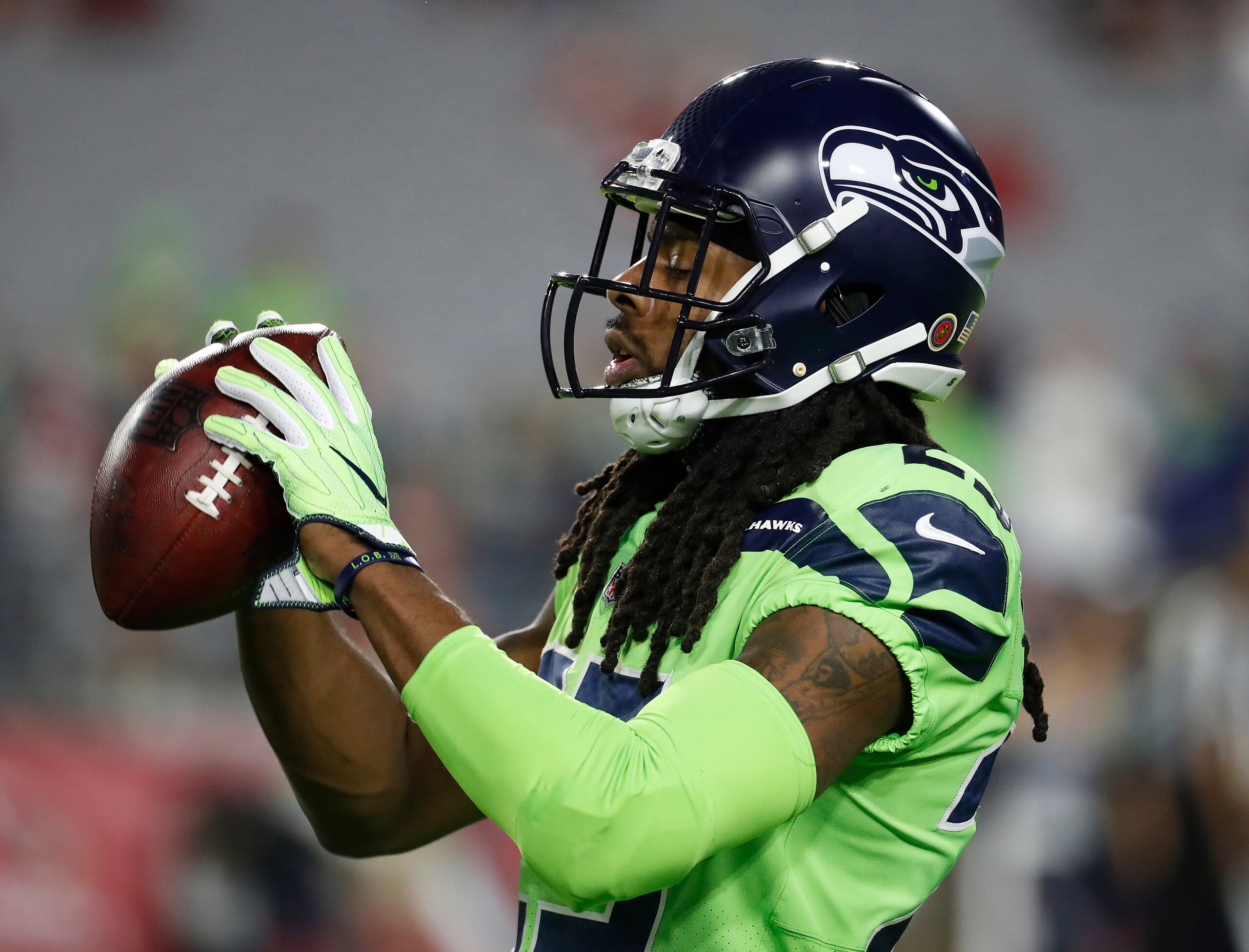
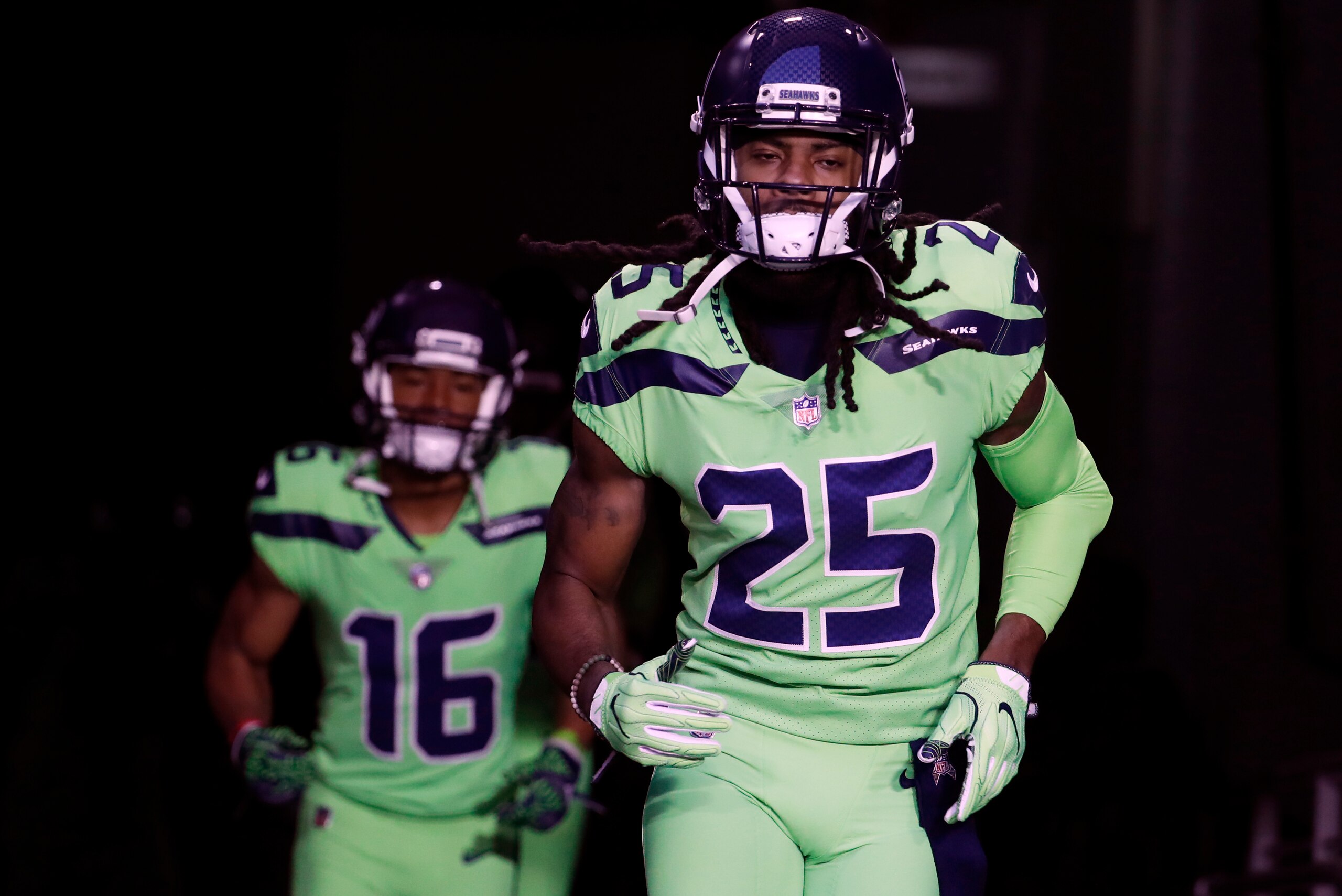
Richard Sherman's unemployment didn't last long. After being a free agent for just one day, the former Seattle Seahawks cornerback agreed to sign with his former NFC West rival San Francisco 49ers on a three-year contract worth $27 million, according to ProFootballTalk's Mike Florio, which essentially works out to be a one-year, $8 million contract with two team options.
A four-time Pro Bowler before an Achilles injury ended his 2017 season, Sherman could be a huge steal for the 49ers if he can prove that he's healthy and back in playing shape by September. K'Waun Williams and Ahkello Witherspoon were solid last year, but neither was No. 1 cornerback material. That's where Sherman can give a relatively faceless defense an identity.
Sherman can be a star cornerback who replaces the reps of, say, Dontae Johnson, who struggled last year. That's a tangible enough improvement to make him worth the $8 million risk. After lucking into Kyle Shanahan and Jimmy Garoppolo within a year of each other, it really does feel like the 49ers are playing with house money.
Aaron Colvin, CB, Houston Texans
9 of 10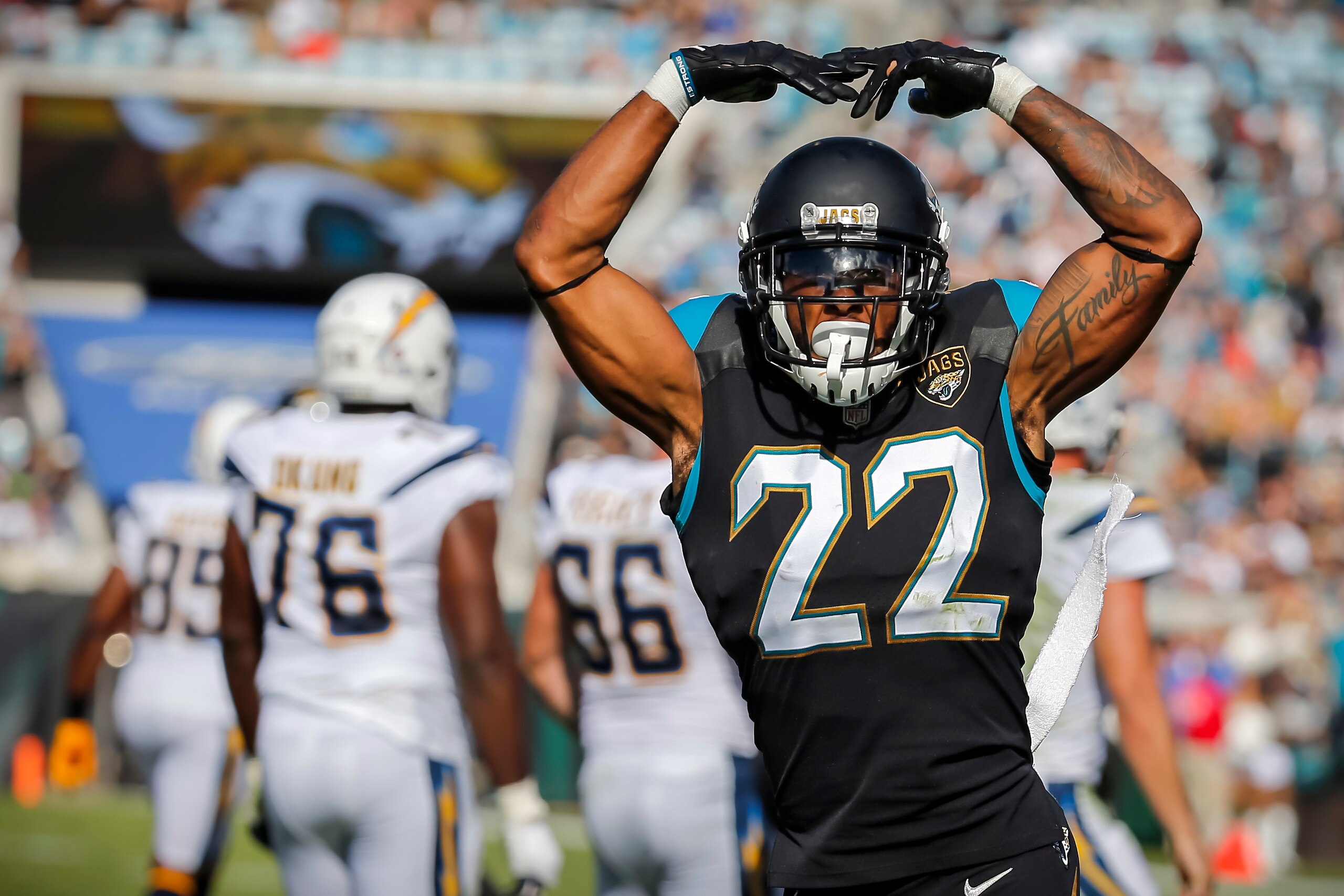
Last offseason, the Houston Texans wound up losing cornerback A.J. Bouye to the Jacksonville Jaguars in free agency. They spent the rest of their offseason managing to move away from Brock Osweiler and landing Deshaun Watson in the draft, which looked like the right move but cost the team draft capital. Little new talent was added to the team, which also cost them.
In 2017, Watson had to play hero ball until a knee injury, and the Texans went 4-12 in part because of their bottom-five secondary. While Aaron Colvin isn't Bouye, Houston did make up some ground in the AFC South by stealing Jacksonville's slot cornerback on a four-year, $34 million deal, according to the Houston Chronicle's Aaron Wilson.
In Houston, though, he will likely be asked to be more than just a third cornerback like he was with the Jaguars. He might even have to be the team's top cornerback, as no one stepped up after the loss of Bouye.
Don't expect Colvin to be a Pro Bowler; he's never been that type of cornerback, but he is a serviceable starter. Other than the Oakland Raiders and now the Green Bay Packers, after the trade of Damarious Randall to Cleveland, no team needed a "serviceable" defensive back more than Houston this offseason.
Trumaine Johnson, CB, New York Jets
10 of 10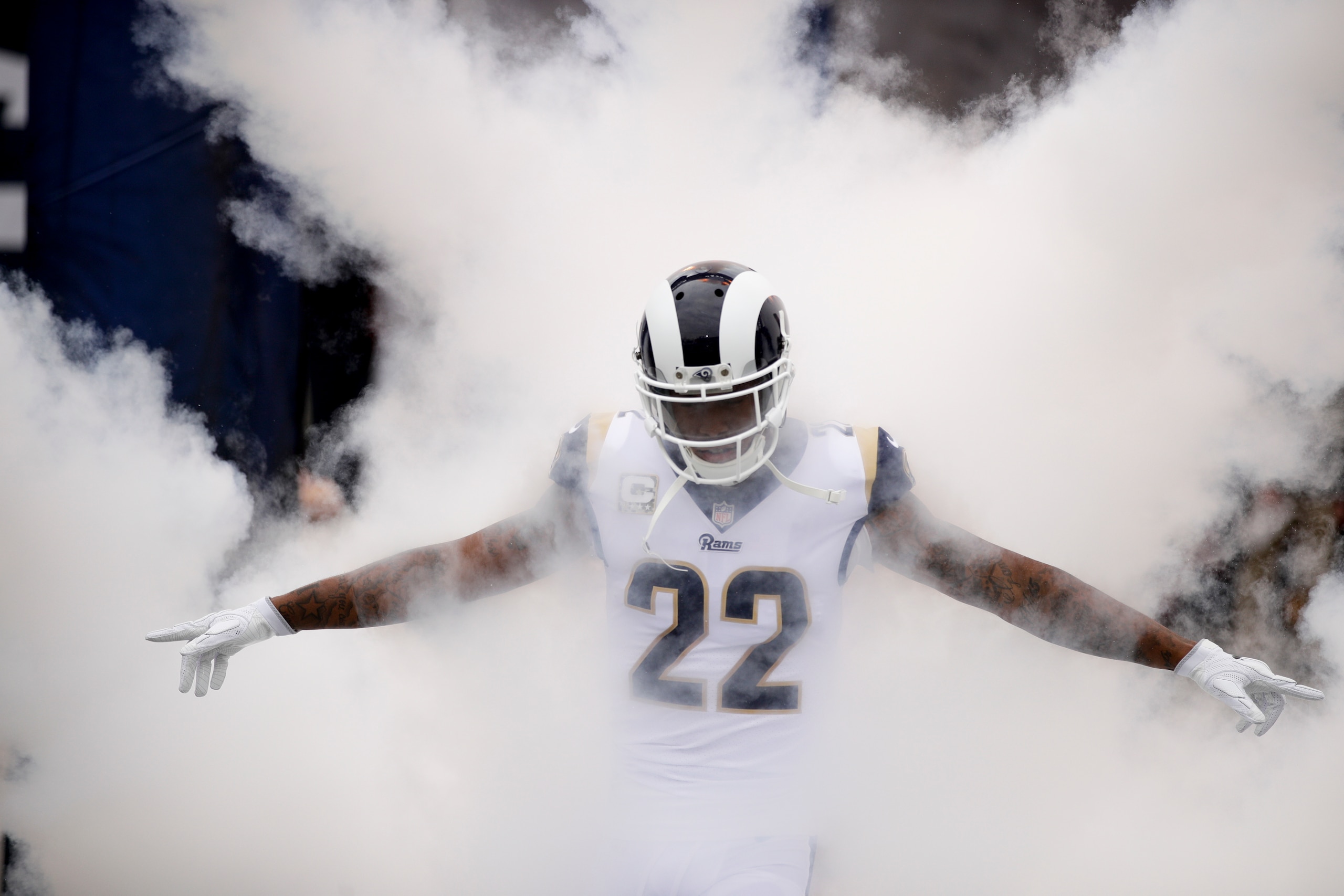
According to Rapoport, former Los Angeles Rams cornerback Trumaine Johnson will sign a six-year deal worth about $90 million. Los Angeles let Johnson walk after the team traded for cornerbacks Marcus Peters and Aqib Talib, while signing Sam Shields and re-signing slotback Nickell Robey.
After back-to-back franchise tags, it was time for Johnson to find a new home. In 2016, the Rams elected to franchise-tag Johnson over fellow cornerback Janoris Jenkins, who signed with the New York Giants. Jenkins immediately made a Pro Bowl in New York, something Johnson still hasn't accomplished.
Still, with the Jets, Johnson should be the team's No. 1 cornerback immediately. The combination of Buster Skrine, Morris Claiborne, Darryl Roberts and Juston Burris didn't exactly ease the mind of Todd Bowles last season. A $90 million price tag is heavy for a non-Pro Bowl cornerback, but just landing an average No. 1 cornerback could do wonders on a defense that gave up 30 passing touchdowns last season.
.jpg?w=2560 "Cowboys Packers Football")




.jpg?w=2560 "🚨 Week 8 AP Top 25 Poll")