

Ranking the Future Star Power of MLB's Loaded 2017 Rookie Class
What does the future hold for the top rookies of the 2017 Major League Baseball season?
Better have a seat, because that's actually a big question.
The future is never easy to predict, for one. Secondly, talented rookies seem to be popping up every day.
Nevertheless, the aim here is to rank the 10 rookies who'll have the most star power in, say, four or five years' time. This involves looking at what skills they have now and projecting how they'll evolve, as well as other factors that could come into play.
Since 10 slots aren't nearly enough to accommodate all the name-brand rookies out there, the first stops on this journey are honorable mentions and a "Show Me Something" brigade consisting of rookies who have star potential but also questions to answer.
Honorable Mentions
1 of 12
Matt Chapman, 3B, Oakland A's
There should be a Gold Glove or two in Matt Chapman's future, and he has plenty of power for the hot corner. It's too bad his numbers will be suppressed by the Oakland Coliseum and, even more so, his iffy hit tool.
Derek Fisher, OF, Houston Astros
Derek "Not the NBA Guy" Fisher has an exciting combination of power and speed that will make him a regular in highlight reels. However, doubts persist about his hit tool and defense.
Ian Happ, INF/OF, Chicago Cubs
Ian Happ did nothing but hit in the minors and got off to a promising start when he arrived in The Show. But it's still unclear how he fits on defense, and his high strikeout rate (30.1 percent) raises an additional question about his hit tool.
Manuel Margot, CF, San Diego Padres
Manuel Margot is a heck of a defensive center fielder with speed and developing power. Now all he needs is a hitting approach that will allow for greater consistency.
Jordan Montgomery, LHP, New York Yankees
Formerly a lesser-known prospect, Jordan Montgomery has been a pleasant surprise as a major leaguer. But without dominant stuff, he's more of a back-end type than a top-of-the-rotation type.
Hunter Renfroe, RF, San Diego Padres
Hunter Renfroe has enough power to clear rooftops. But until he develops a more consistent hit tool and/or becomes a better defender in right field, power is all he'll have.
Colorado Rockies Pitchers
Per Baseball Reference's wins above replacement, the Colorado Rockies trio of Kyle Freeland, German Marquez and Antonio Senzatela owns three of the top four slots for rookie pitchers. In the long run, though, they're bound to find themselves fighting losing battles with Coors Field.
The "Show Me Something" Brigade
2 of 12
Ozzie Albies, 2B. Atlanta Braves
Scouting reports describe Ozzie Albies as a peak Dee Gordon-type: a speedy dynamo with a good bat and a slick glove. But with only a .322 on-base percentage in 153 games at Triple-A, it would be nice to have more tangible proof of his hitting ability.
Clint Frazier, OF, New York Yankees
Clint Frazier's bat speed is something to swoon over. But it was just last year that he struggled at Triple-A, and his time in the majors this season has been marred by too many strikeouts (27.4 percent) and alarmingly few walks (4.4 percent).
Francis Martes, RHP, Houston Astros
There's a lot to like about Francis Martes' stuff, as he features a mid-to-high 90s fastball with a nasty curveball and nasty changeup. But between his time at Double-A and Triple-A, he's walked 4.3 batters per nine innings the last two seasons. That's a red flag if there ever was one.
Dansby Swanson, SS, Atlanta Braves
Dansby Swanson came into the year as a Rookie of the Year favorite but promptly crashed and burned hard enough to get sent back to the minors. He was never viewed as a high-ceiling guy to begin with and now has some redeeming to do to reinvigorate faith that he's even a high-floor guy.
10. Jacob Faria, SP, Tampa Bay Rays
3 of 12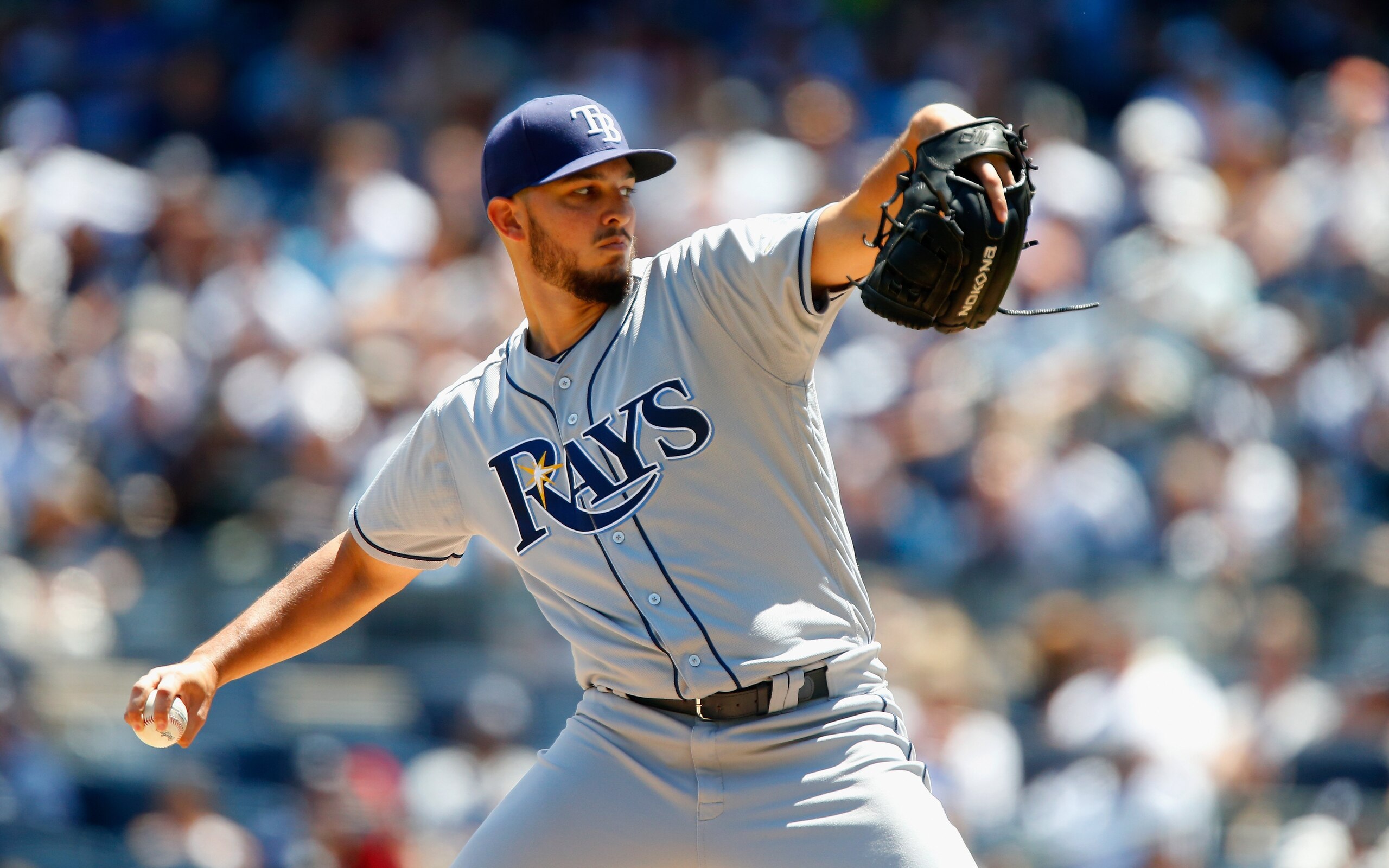
Jacob Faria has quickly gone from being an obscure prospect to a minor league strikeout master and, most recently, a quietly dominant major leaguer.
Faria began 2017 by fanning 84 batters in only 58.2 innings at Triple-A Durham. He's since made 11 starts for the Tampa Bay Rays and posted a 2.81 ERA with 67 strikeouts in 67.1 innings.
The 24-year-old further frustrates hitters by specializing in another brand of easy outs: pop-ups.
Doing the heavy lifting for Faria are two pitches that look like legit weapons.
As Josh Norris covered at Baseball America, improvements to Faria's lower half helped his fastball. It now sits at a solid average of 91.9 miles per hour, with elite vertical action to boot. His changeup, meanwhile, is a diving beauty that ranks behind only Stephen Strasburg's changeup in whiffs-per-swing percentage, according to Baseball Prospectus.
It all seems too good to be true for a guy who began his pro career as a 10th-round draft pick and then spent years pitching in obscurity.
But with two nasty pitches in his arsenal and impressive numbers now on his statsheet, Faria looks like at least a No. 3 starter and potentially even a No. 2 starter.
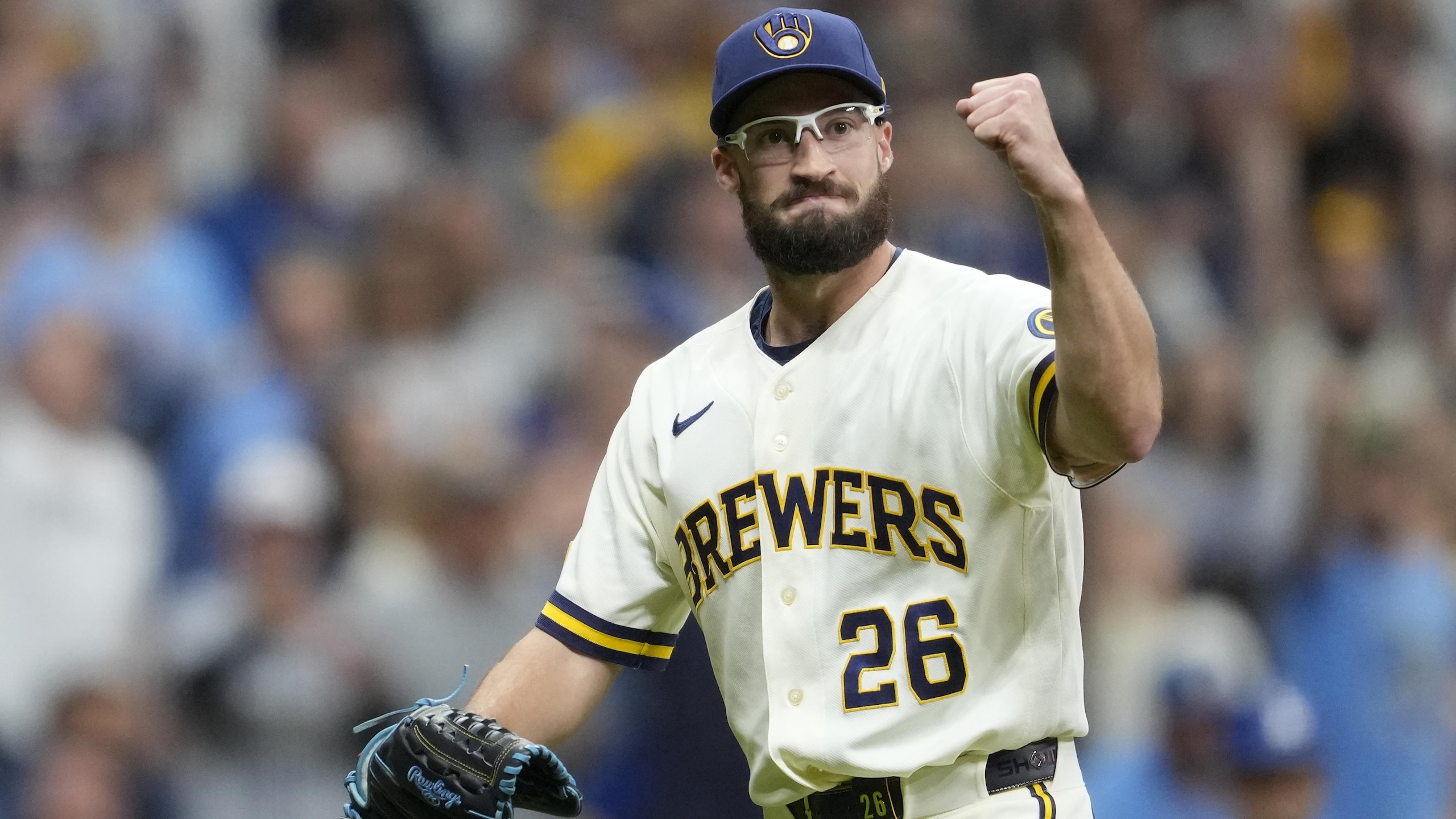


9. Josh Bell, 1B, Pittsburgh Pirates
4 of 12
Josh Bell came just two at-bats shy of losing his rookie qualification in 2016. So, he's the only "rookie" you'll find with over 500 major league at-bats.
At any rate, Bell's .251 average and .326 on-base percentage with the Pittsburgh Pirates cast him as a solid hitter. Since he's an advanced hitter who chooses his swings carefully and doesn't often miss when he unleashes, he should get even better.
In the meantime, Bell, who turns 25 Sunday, is answering questions that dogged him as a prospect.
Regarding his power potential, his 19 home runs this season are a big step in the right direction. And he's only getting more consistent at making hard contact.
The other question had to do with whether Bell, who began his pro career as a right fielder, could handle first base. The defensive metrics suggest he's become an adequate defender, which meshes with his own outlook.
"When balls are hit my way, there's not that gasp," Bell said in May, per MLB.com's Adam Berry. "It's more like, 'OK, I've been here before. I've had thousands of balls hit my way, so let's get after it.'"
It's easy to overlook Bell among his fellow rookies right now. But that'll become harder to do as he develops into an All-Star-caliber first baseman.
8. Amed Rosario, SS, New York Mets
5 of 12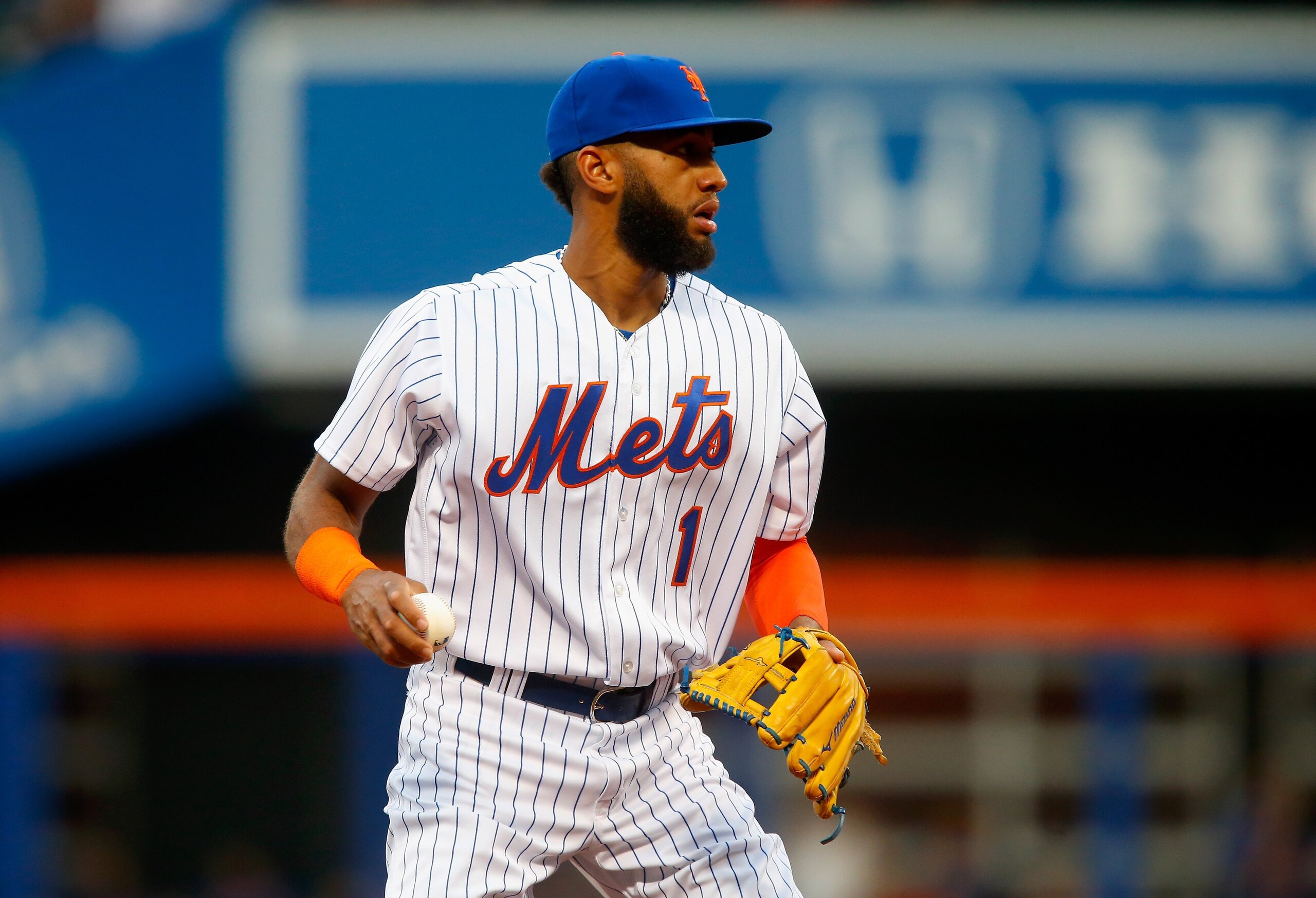
Amed Rosario can currently be found at No. 2 in MLB.com's top 100 prospects, so there's no blaming New York Mets fans for shouting "Finally!" when he was called up on August 1.
If nothing else, it's going to be a ton of fun to watch the 21-year-old in the field. The tape makes him look like a shortstop with quick actions, smooth hands and a strong arm. The scouting reports overwhelmingly concur.
"There is no question he'll be a shortstop long-term, with the potential to be an elite-level defender thanks to his range, hands, footwork and plus arm," reads the book on him at MLB.com.
On the other side of the ball, Rosario doesn't have the pop to join Carlos Correa, Corey Seager and Francisco Lindor in the power-hitting shortstop revolution. Nor is he a walk merchant, which won't help his OBP.
Rosario will hit for average, though, as he's a .291 career hitter in the minors for good reasons. Namely: a strong contact habit and a feel for hitting to all fields.
Throw in plus speed, and Rosario should be a lot like a young Elvis Andrus: a slick-fielding, strong-hitting, fast-running shortstop.
7. Lewis Brinson, CF, Milwaukee Brewers
6 of 12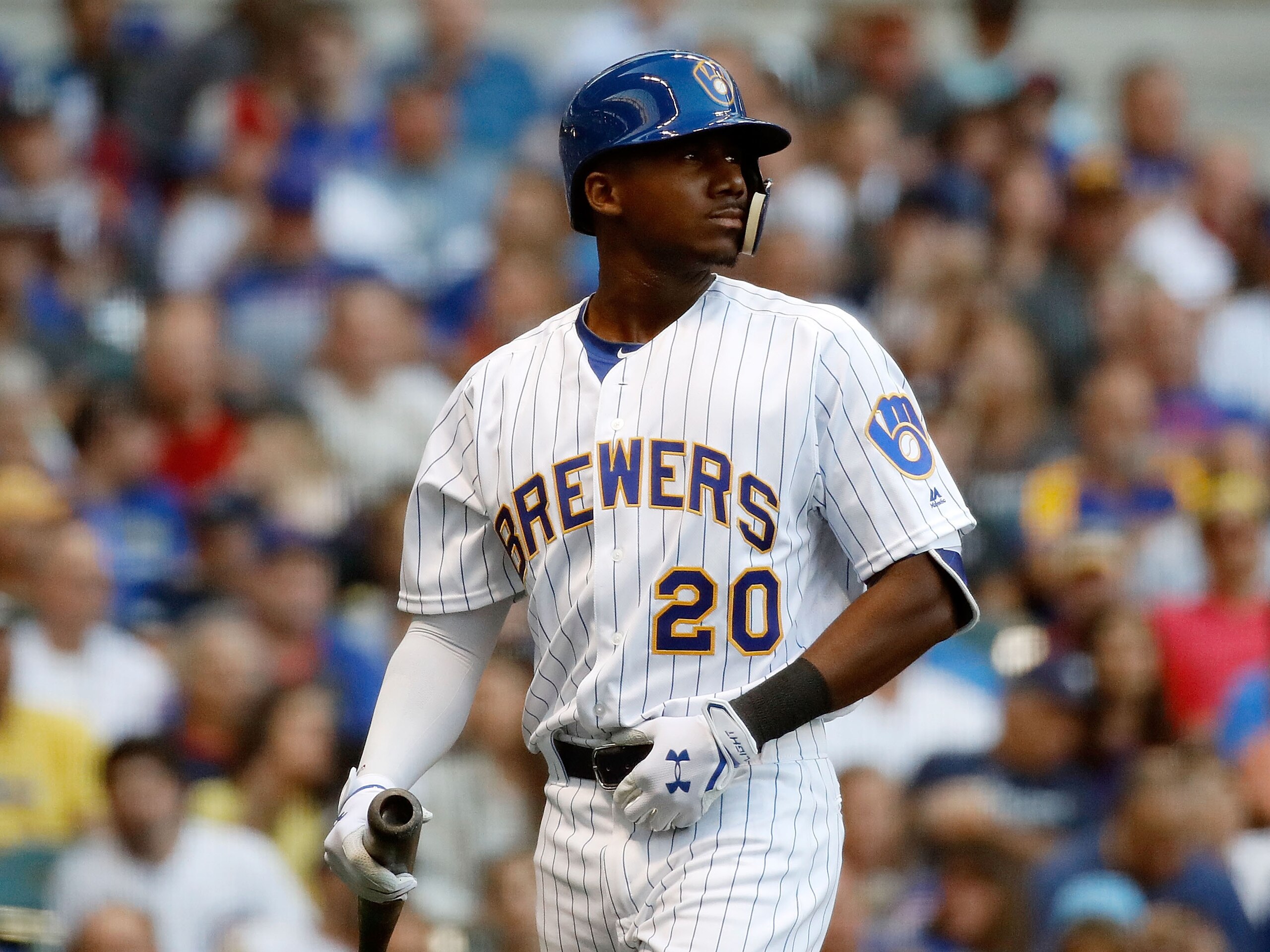
Lewis Brinson has been mostly disappointing in his 21 games with the Milwaukee Brewers. To wit, he's hit only .106 with a .513 OPS.
However, he's also teased why he's widely regarded as one of baseball's top prospects.
He's shown his power, launching one homer that went 441 feet and another that went 461 feet. And he's shown what he can do with his speed, turning in one brilliant catch in center field.
The big question mark has to do with Brinson's bat. It obviously hasn't produced in the majors, and the concern is heightened by how his bat has done a disappearing-reappearing trick in the minors.
It is encouraging, however, that Brinson's bat has been at its best at the highest level of the minors. He's a .351 career hitter in 103 games at Triple-A, with passable walk (8.8) and strikeout (19.6) percentages. Such numbers reflect real improvements.
"As Brinson matured, so did his plate discipline," wrote Norris when the Brewers first called Brinson up in June.
Brinson isn't going to be a perennial .300 hitter, but he should make enough adjustments to keep his head above water. His power, speed and defense will do the rest to establish him as an exciting two-way star.
6. Bradley Zimmer, CF, Cleveland Indians
7 of 12
Bradley Zimmer has come a long way from the talented yet seemingly doomed prospect that he was in 2016.
He put up a solid .790 OPS at Double-A and Triple-A in 2016, but also struck out in 30.7 percent of the time. This after whiffing a not-so-encouraging 21.6 percent in his first two minor league seasons.
"To be unusually blunt, it's unclear at this point if Zimmer can hit," wrote Jeffrey Paternostro at Baseball Prospectus.
But behind the scenes, Zimmer was working on changing his swing. What followed was a big-time breakout at Triple-A that earned him a call to the majors. He's now sitting on a .780 OPS through 71 games, with a 27.5 strikeout percentage that's high but forgivable.
That's because of all the things he's doing for the Cleveland Indians when he's not striking out. As Mike Petriello of MLB.com covered, the 24-year-old is showing with great baserunning, great defense and power-laced hitting that he can be a five-tool player in The Show.
As long as the strikeouts remain, consistency will elude Zimmer. But he should be a two-way star in the same mold as Brinson and has obviously already taken a big step toward making that a reality.
5. Yoan Moncada, 2B, Chicago White Sox
8 of 12
Yoan Moncada ranked No. 1 on Baseball America's most recent top 100 prospects and still ranks at No. 1 for MLB.com. So, "What the heck is he doing down at No. 5?" is a valid question.
It's not for lack of tools. Moncada is a switch-hitter with power, speed, arm strength and a developing batting eye. His scouting report at MLB.com notes that he's referred to as "a faster version of Robinson Cano," which should certainly excite the Chicago White Sox.
But nobody's perfect.
The 22-year-old Cuba native has had a strikeout problem in the high minors and has been unable to fix it in the majors. He's come to the plate 83 times and whiffed 33 times, a strikeout rate of 39.8 percent. That's only acceptable if your name is Joey Gallo.
Also looming over Moncada are concerns about his defense. He's shown he can translate his athleticism into highlight-reel plays. But in light of his 51 errors as a minor league second baseman, it's fair to wonder about his consistency.
Still, Moncada's eye-popping tools will help downplay any inconsistency he runs into. Rather than Cano, he'll be more like a speedier, more patient version of Rougned Odor.
4. Andrew Benintendi, LF, Boston Red Sox
9 of 12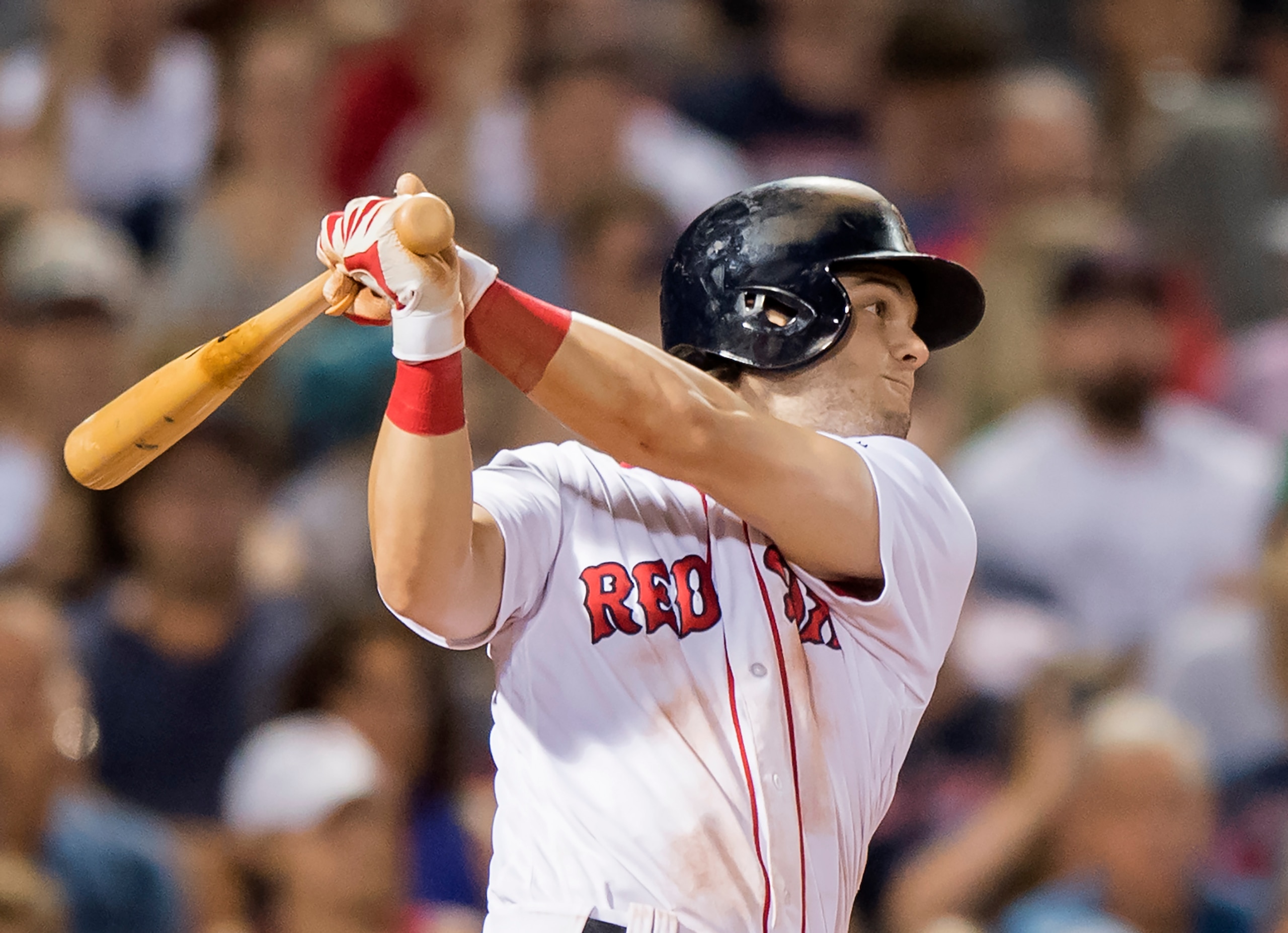
Andrew Benintendi hasn't disappointed in his rookie season. He just hasn't met expectations that came hand-in-hand with his previous status as MLB's No. 1 prospect.
His .269/.355/.420 batting line is solid, but far from spectacular. And the Boston Red Sox haven't even used him as an everyday player. They've taken a cue from his platoon splits and sidelined him against left-handers.
Through it all, however, Benintendi has continued to look the part of a future .300 hitter.
His elevated walk rate (11.1 percent) and decreased strikeout rate (16.8 percent) reflect a measured approach that's perfectly cut out for consistent hitting. And with a 35.5 hard contact percentage, he's actually hit the ball hard more often than Mookie Betts and Hanley Ramirez.
It shouldn't be lost that the 23-year-old is also a capable defender. In fact, defensive runs saved rates him as one of the league's better left fielders. That's not out of whack with what the eye test says about his athleticism and instincts.
Benintendi lacks the power profile of a superstar left fielder. But if his bat develops like it should while he continues his good work on defense, he'll be a well-rounded star who rarely strays from the spotlight.
3. Rafael Devers, 3B, Boston Red Sox
10 of 12
The Red Sox should be confident in Benintendi. With Rafael Devers, they should be downright thrilled.
The 20-year-old has only needed 11 major league games to make an impression. He's come to the plate 49 times and hit .349 with a 1.033 OPS. His process of producing these numbers has been just as impressive.
"His at-bats are just great," Betts said of Devers, per ESPN.com's Scott Lauber. "He's in control in all of his at-bats. He swings at good pitches. He's hitting the ball all over the plate, so they don't really know where to play him."
Even better is how Devers' power has developed. After hitting 29 homers in his first three pro seasons combined, he's hit 23 bombs across three levels this season. And he's hit them in all directions.
Where Devers still needs work is on defense. He has enough athleticism and arm strength to cut it at the hot corner, but his actions and instincts require polishing. Even once he has them, it's hard to see him as anything beyond an adequate gloveman.
But since his merely adequate defense will come with .300 averages and 30 homers from year to year, the Red Sox could live with that.
2. Aaron Judge, RF, New York Yankees
11 of 12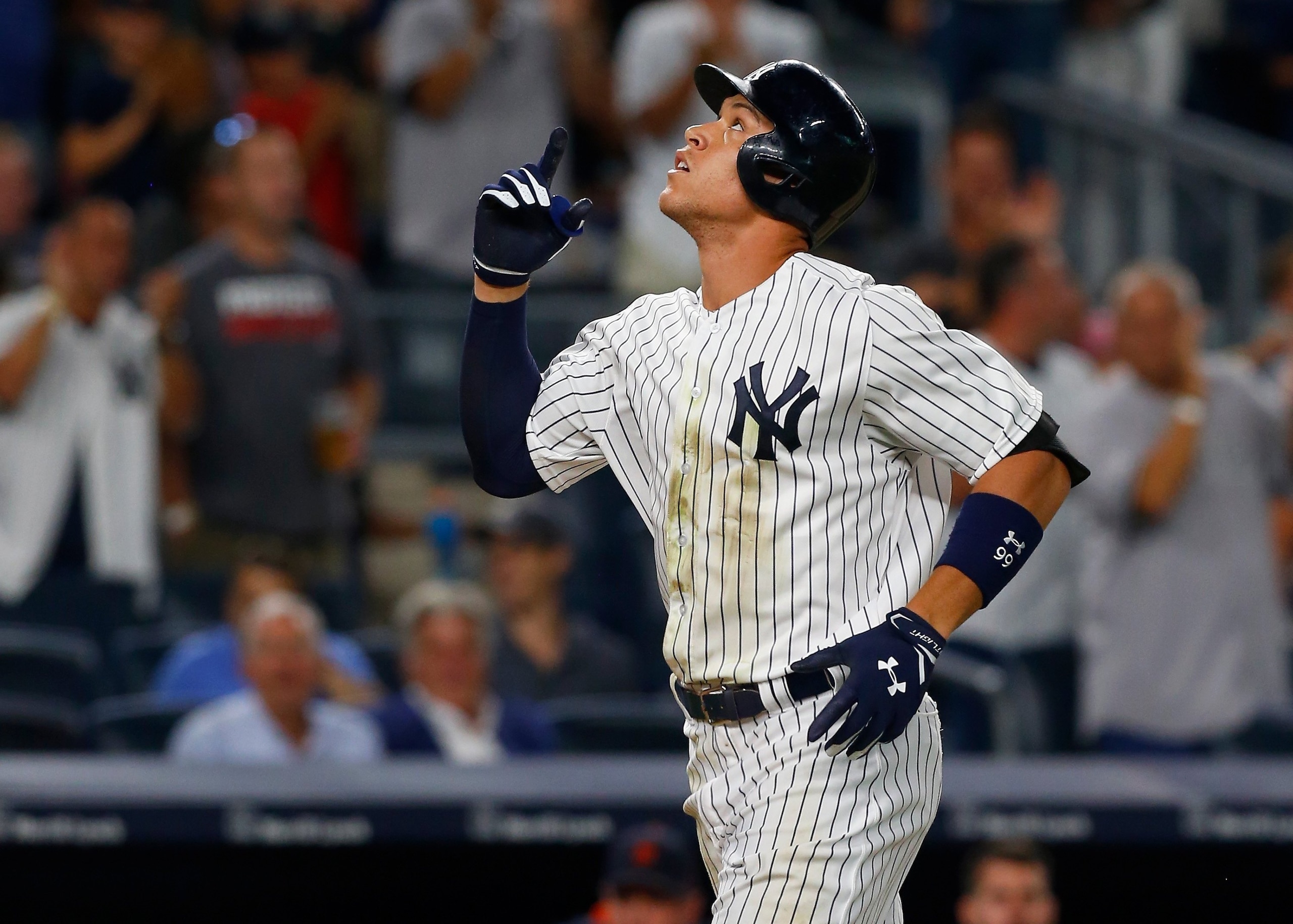
If right now is all anyone cares about, then Aaron Judge is obviously MLB's best rookie.
Wins above replacement justifies the "obviously," but advanced metrics aren't needed to see Judge's dominance. The New York Yankees' 25-year-old stud leads the American League in homers (35) and OBP (.424) and all of baseball in slugging percentage (.627).
Judge's power is here to stay. Baseball has never seen a hitter with his 6'7", 282-pound frame, and he puts it to work producing unparalleled exit velocity and an endless supply of jaw-dropping home runs.
And Judge's hit tool must not be overlooked. His walk rate spike to 17.1 percent is a testament to his keen eye. He'll also shorten up and poke easy base hits when he feels like it.
However, Judge's struggles since the All-Star break are a reality check. He comes with a big strike zone and with limited plate coverage, so asking him to sustain as a decidedly elite hitter is asking a lot.
And he probably isn't long for right field. As David Lennon covered at Newsday, the Yankees will likely move Judge to first base to fill a need and to protect his legs from long-term harm.
But in the scheme of things, these are nitpicks. Judge is a monster and will remain a monster.
1. Cody Bellinger, 1B, Los Angeles Dodgers
12 of 12
Judge or Cody Bellinger for the future? The best way to decide that might be a coin flip.
But in this space, Bellinger gets the slightest of slight edges.
The 22-year-old is no slouch in the power department. He's needed only 91 games with the Los Angeles Dodgers to hit 32 home runs.
Bellinger doesn't have Judge's size, but he does have a swing that's made for power. It has an uppercut quality that keeps the ball off the ground. And he never gets cheated.
Strikeouts are the drawback of that, but Bellinger has recently been cutting down on those. That's a reminder that he was known as a quality hitter before he was known as a slugger. He shouldn't be as prone to inconsistency as fellow big-swinging Dodger Joc Pederson.
Bellinger is also a good athlete, and it shows on defense despite his humble status as a first baseman. With good range and soft hands, he has the goods for Gold Gloves.
"There's no limit for how good he could be. He's going to be as a good defensively as anyone at first," former big leaguer Ryan Garko, who managed Bellinger at Double-A Tulsa, told Sam Dykstra of MiLB.com.
Judge and Bellinger are the two best rookies in a great rookie class. Going forward, though, only one of them still has untapped potential.
Data courtesy of Baseball Reference, FanGraphs, Baseball Savant, Brooks Baseball and MLBFarm.com.

.jpg?w=2560)
.jpg?w=2560 "Cam Ward Says He's Not A Loser")
.jpg?w=2560 "Chargers Fall to 0-5 🤢")

.jpg?w=2560 "Grading MHJ Trade 📝")