
Metrics 101: Best and Worst Trades of No. 1 Pick in NBA History
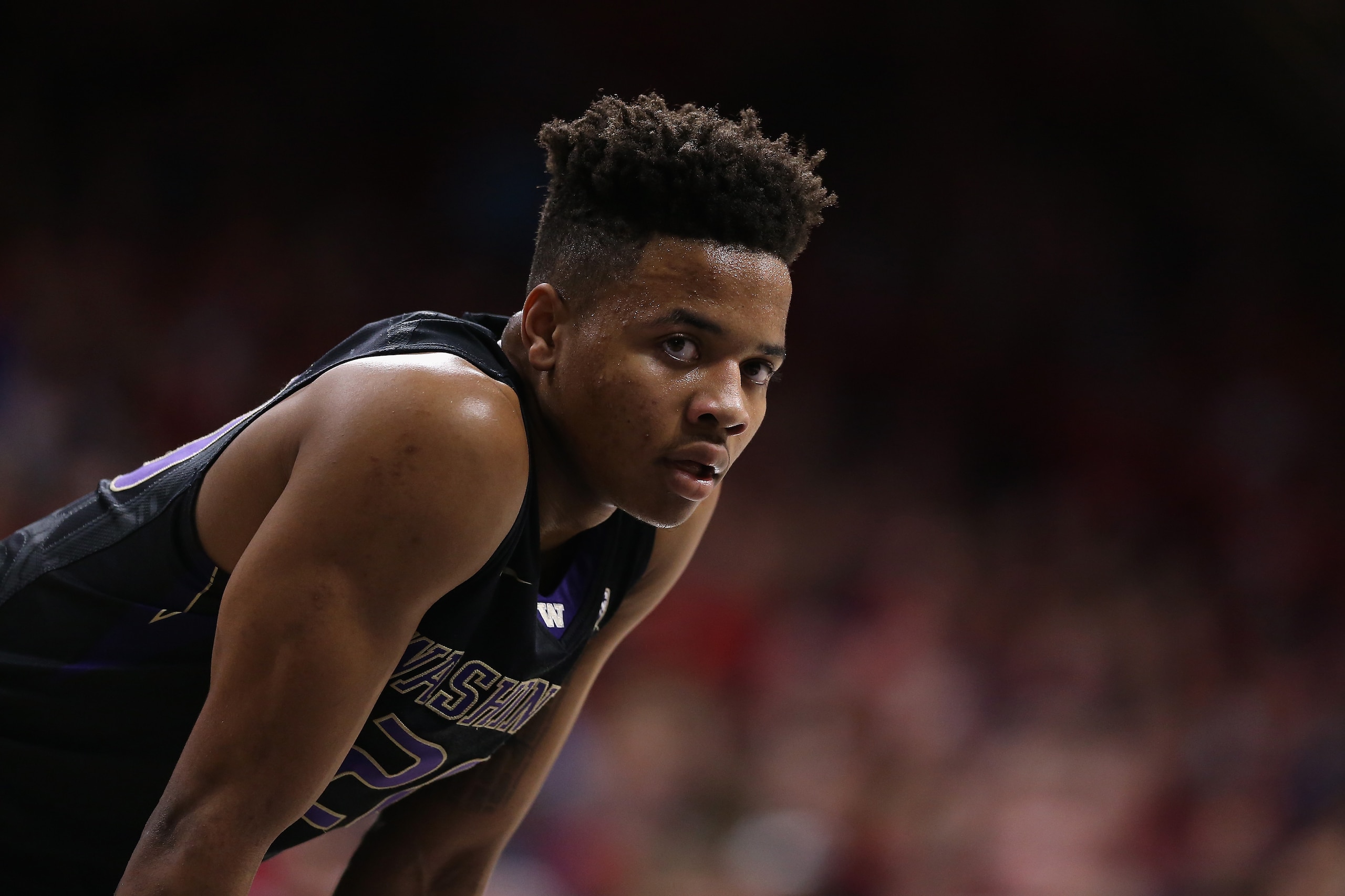
Trading the No. 1 pick in the NBA draft is never an easy decision, yet that's exactly what the Boston Celtics have officially elected to do. Shipping off the selection that will likely be used on Markelle Fultz to the Philadelphia 76ers for the No. 3 pick and a future first-rounder with a unique set of protections, the C's are continuing to load up on assets.
It's a move you don't see every year, but it isn't entirely without precedent.
Dating back to the 1950s, the No. 1 pick has changed hands after the draft order was set six different times—most recently when the Cleveland Cavaliers sent a package centered around Andrew Wiggins to the Minnesota Timberwolves for Kevin Love.
How frequently have those decisions worked out?
To answer that question, we're diving deep into the results of each swap. Win shares will be used for players from the distant past, while NBA Math's total points added (TPA) metric takes over for any deals after 1973, when the stat can first be calculated. In either situation, only the numbers recorded for the team on the receiving end matter.
Context is also important. Stats alone can't tell the full stories here, even if they help paint an initial picture.
Boston Celtics Trade Chuck Share in 1951
1 of 6
Boston Celtics Receive: Bill Sharman (9.3 win shares for Boston)
Fort Wayne Pistons: Chuck Share (5.4 win shares)
"We need a big man. Little men are a dime a dozen. I'm supposed to win, not go after local yokels," legendary Boston Celtics head coach Red Auerbach said about drafting Chuck Share over Bob Cousy in 1950, per Joe Belock of the New York Daily News.
Fortunately for the C's, the ridiculousness of that move still managed to work out.
Cousy refused to report to the Tri-Cities Blackhawks, was traded to the Chicago Stags and wound up in Boston after the Stags folded and he was the third pick (drawn from a hat) in the subsequent dispersal draft. From there, he'd become one of the greatest point guards in NBA history, leading the Celtics to six titles and eventually watching as his jersey was hung from the rafters of the Boston Garden.
Share simultaneously had issues of his own while finding a permanent landing spot. He refused to join the Celtics and instead played outside the NBA until the organization decided to trade him.
Meanwhile, the Fort Wayne Pistons had a disgruntled player of their own. Bill Sharman had joined the squad after the Washington Capitols folded midway through the 1950-51 campaign, but he chose to play baseball with the Brooklyn Dodgers until the Pistons sent him to a new franchise. Exchanging the two seemed like the perfect swap, especially since Share hadn't yet played an NBA game and was still brimming over with potential.
But the deal wasn't exactly even.
Share played slightly more than two seasons in Fort Wayne and averaged just 4.2 points before he was dealt to the Milwaukee Hawks for a 28-year-old Max Zaslofsky. It was only there that he'd experience a mini-breakout into a double-double threat, eventually earning captaincy on the title-winning '58 squad after the franchise moved to St. Louis.
Sharman's story went a bit differently. One of the deadliest free-throw shooters in NBA history, he grew into an eight-time All-Star, seven-time All-NBA guard and four-time champion. Not only does he boast a plaque in Springfield, but his No. 21 uniform still looks down over Boston's parquet floor.
Verdict: Boston has zero regrets.
Rochester Royals Trade Hot Rod Hundley in 1957
2 of 6
Rochester Royals Receive: Clyde Lovellette (10.1 win shares), Jim Paxson (2.8 win shares)
Minneapolis Lakers Receive: Bob Burrow (minus-0.4 win shares), Ed Fleming (3.9 win shares), Hot Rod Hundley (4.3 win shares), Monk Meineke (0.0 win shares), Art Spoelstra (1.4 win shares)
At the time of this trade, Clyde Lovellette was an established star for the Minneapolis Lakers. He was coming off back-to-back All-Star appearances and had already earned a ring as a role player during his rookie campaign.
So when the Rochester Royals made what amounted to a Godfather offer—the No. 1 pick of the 1957 NBA draft (who was coming off two consecutive All-American seasons at West Virginia) and a handful of talented players in their early 20s—they were surely expecting continued excellence that would help end their two-year playoff drought.
Instead, Lovellette dominated for just one season.
He averaged 23.4 points, 12.1 rebounds and 1.9 assists while shooting 44.1 percent from the field during the 1957-58 campaign, and he carried the newly relocated Cincinnati Royals back into the postseason. But he, Jack Twyman and Maurice Stokes were quickly swept by the Detroit Pistons, and the Royals soon traded him to the St. Louis Hawks for a package centered around Wayne Embry (then a third-round pick who would go on to make five All-Star squads and earn Hall of Fame recognition) and Jim Palmer (a second-round selection who would put together a nondescript career).
Meanwhile, Hot Rod Hundley parlayed his fantastic name and well-rounded game into a pair of All-Star berths. He was never a true superstar, but his flashy handles still made him a popular figure in both Minneapolis and—after the franchise moved—Los Angeles before he retired at 28 with bad knees. He didn't lead the Lakers to any titles, but he still provided more production than what the Royals got from their prized acquisition.
Verdict: The Royals might want this one back, even if they got more win shares out of the deal. But the return for the subsequent Lovellette trade mitigated any feelings of disappointment.
Boston Celtics Trade Joe Barry Carroll in 1980
3 of 6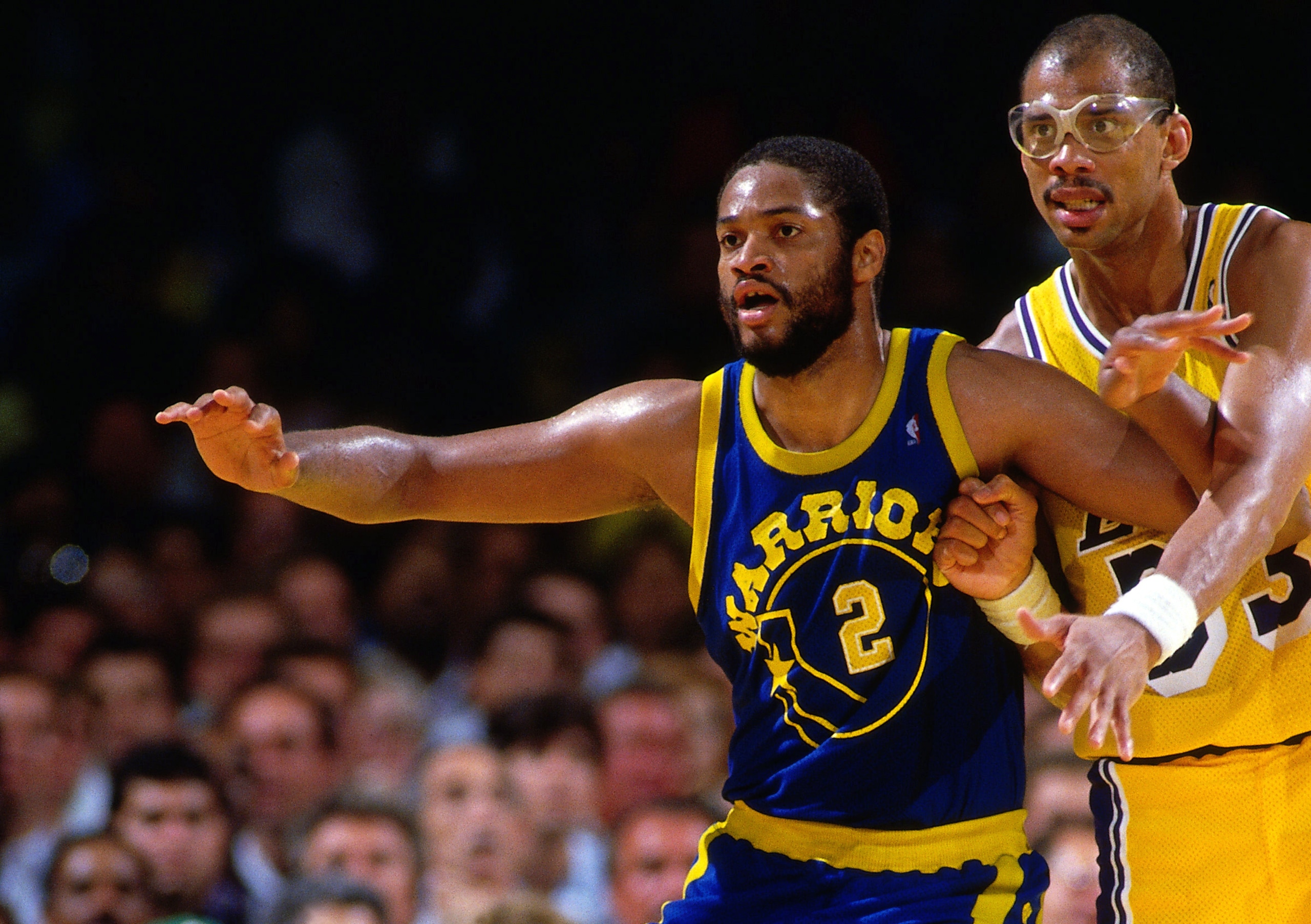
Boston Celtics Receive: Kevin McHale (1554.53 TPA for Boston), Robert Parish (1612.38 TPA)
Golden State Warriors Receive: Rickey Brown (minus-158.83 TPA), Joe Barry Carroll (minus-17.54 TPA)
Right off the bat, that looks massively unfair.
Rickey Brown's name doesn't resonate with the modern-day crowd—nor should it, since he played only five seasons and never averaged more than 5.7 points or 4.4 rebounds—and Joe Barry Carroll's uninspiring moniker (Joe Barely Cares) may be as well-known as the resume that includes an All-Star appearance and four seasons averaging at least 20 points. Kevin McHale and Robert Parish, on the other hand, are Hall of Famers who both played integral parts in the Boston Celtics dynasty that nearly spanned a decade.
But let's rewind to 1980 and look at where each of the four relevant players were at the time:
- Rickey Brown: A breakout senior season for Mississippi State vaulted him up draft boards, and he was eventually selected at No. 13.
- Joe Barry Carroll: Excellent during his four-year career at Purdue, he wasn't quite the consensus No. 1 pick. McHale and Darrell Griffith were both in the mix.
- Kevin McHale: A dominant player at Minnesota, he was gearing up for his rookie season and would be selected at No. 3 one day after this deal.
- Robert Parish: Four years into his career, he'd established himself as a fearsome defender and was coming off a season in which he averaged 17.0 points and 10.9 rebounds.
It's important to remember that Parish was the only man with NBA experience at the time of this deal, which was really him and the No. 3 pick for Nos. 1 and 13. But we're intentionally looking at these moves retroactively, giving us the luxury of taking full professional careers into account.
This was by no means a rip-off at the time. Giving up the first overall selection and another pick only a dozen slots later wasn't a steep price to pay for an up-and-coming big and another top-three pick, especially in a year where three prospects seemed to rise above the rest.
But now? Little did the Warriors know then, but they'd end up on the wrong end of one of the most lopsided deals in league history.
Verdict: Boston would do this 11 times out of 10.
Philadelphia 76ers Trade Brad Daugherty in 1986
4 of 6
Philadelphia 76ers Receive: Roy Hinson (minus-105.95 TPA)
Cleveland Cavaliers Receive: Brad Daugherty (1025.31 TPA)
Whoops!
Brad Daugherty became one of the best players in Cleveland Cavaliers history after this trade. He spent his entire career—sadly, shortened by back problems—with the organization and thrived as a skilled center. Not only did he average 19.0 points and 9.5 rebounds during a career that included five All-Star appearances and an All-NBA selection, but he also thrived as a non-traditional distributor and floor-spacer long before such versatility was coveted at the position.
But at least the Philadelphia 76ers got a comparable stud in return when they traded the North Carolina standout one day before the 1986 NBA draft. Right?
Well, not exactly.
Hinson appeared to be the next big thing in the NBA. He was coming off his third professional season, during which he averaged 19.6 points, 7.8 rebounds, 1.4 blocks, 1.2 assists and 0.8 steals while shooting 53.2 percent from the field. Pair that with impressive defensive chops, and the 24-year-old with a 6'9" frame seemed like he was trending toward stardom and elite status among the league's many talented small forwards.
That, coupled with the Sixers' thoughts about the status of the draft, pushed them to make the deal.
"It was a very confusing draft," former general manager Pat Williams told Fox Sports. "It will go down in history as the drug draft, unfortunately, and every player seemingly was surrounded by issues or rumors. And as it turned out, the rumors all proved to be true, from Len Bias to Roy Tarpley to Chris Washburn to William Bedford—and I know I've missed a few. So we struggled with what to do."
At the time, trading for a more established commodity made sense. However, the move backfired not just because Daugherty worked out for Cleveland, but because Hinson's scoring, rebounding and efficiency numbers declined substantially during his first go-round in Philadelphia.
Less than two years after the initial move, the 76ers decided to ship him off to the New Jersey Nets, and the rest is history.
Verdict: Are take-backs allowed?
Orlando Magic Trade Chris Webber in 1993
5 of 6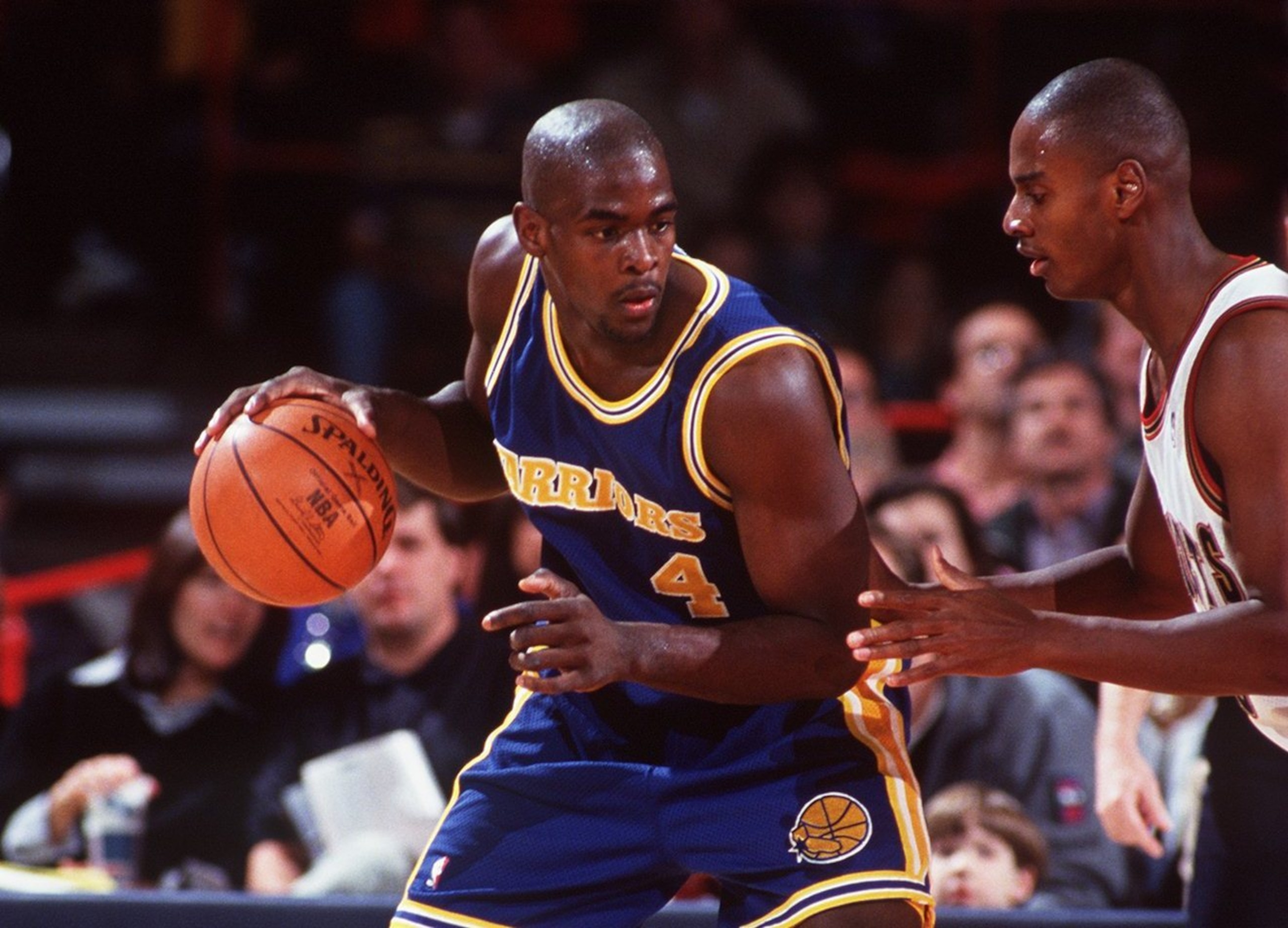
Orlando Magic Receive: Anfernee Hardaway (1160.3 TPA), 1996 first-round pick, 1998 first-round pick, 2000 first-round pick
Golden State Warriors Receive: Chris Webber (257.69 TPA)
Look past Chris Webber playing only a single season for the Golden State Warriors after he was dealt there on the night of the 1993 NBA draft. He still became a bona fide superstar for the Washington Bullets and Sacramento Kings, earning five All-Star and All-NBA selections while paving the way for the do-everything forwards running rampant in today's game.
The Orlando Magic probably don't regret anything, though.
Perhaps a Shaquille O'Neal-Webber tandem would've torched the NBA throughout the 1990s. It would've been a tremendously skilled duo capable of giving Hakeem Olajuwon and the rest of the decade's best bigs constant headaches.
But that's still a hypothetical. And in reality, the Magic acquired Penny Hardaway, who formed a fearsome pairing with O'Neal while racking up All-Star berths and helping carry the Magic to the 1995 NBA Finals. They'd lose to Olajuwon's Houston Rockets in a sweep, but it remains impressive that such young talents could advance through a high-powered Eastern Conference just to reach that stage.
Plus, they also picked up three more first-round picks:
- They sent the 1996 selection to the Washington Bullets a month later. Then, strangely enough, it conveyed to the Warriors as part of a package to acquire Webber. It wound up sitting at No. 11 and turned into Todd Fuller.
- The 1998 selection eventually became Vince Carter at No. 5, but only after it took the same path from the Warriors to the Magic to the Bullets to the Warriors in the package for Webber.
- The 2000 selection was much simpler, since the Magic held onto it and used the No. 5 pick to land Mike Miller, who would spend the first two-and-a-half years of his sharpshooting career in Orlando.
Even if nothing else had been involved, a Webber-for-Hardaway swap would've been perfectly fair. But getting Miller and using the other two draft picks to facilitate further trades pushes this over the top for Orlando.
Verdict: Webber might have been nice alongside O'Neal, but there's no reason to have second thoughts here.
Cleveland Cavaliers Trade Andrew Wiggins in 2014
6 of 6
Cleveland Cavaliers Receive: Kevin Love (241.46 TPA)
Minnesota Timberwolves Receive: Andrew Wiggins (minus-415.01 TPA), Anthony Bennett (minus-84.39 TPA), Thaddeus Young (minus-12.63 TPA), trade exception
Philadelphia 76ers Receive: Luc Mbah a Moute (minus-118.42 TPA), Alexey Shved (0.0 TPA), 2016 first-round pick (from Cleveland)
Don't overthink this.
Even though Kevin Love hasn't posted the same individual numbers he maintained while with the Minnesota Timberwolves, he's been plenty valuable to the Cleveland Cavaliers. His knack for spacing the floor, improving defense and persistent rebounding chops have allowed his superstar teammates to thrive. That helped facilitate three consecutive trips to the NBA Finals—one of which resulted in the championship that ended Northeast Ohio's title drought.
Sure, the Cavs had to give up quite a bit of talent to acquire him. But Andrew Wiggins, Anthony Bennett and the 2016 first-round pick that turned into Timothe Luwawu-Cabarrot (No. 24) was an easy price to pay for a player of Love's caliber, especially with Cleveland knocking on the door of a title after bringing LeBron James back from the Miami Heat.
Wiggins could eventually help balance the scales.
He's already a dangerous scoring threat for the 'Wolves, capable of throwing up more than 30 points on any given night. But until he becomes a more efficient scorer, contributes in other areas and stops playing some of the league's worst defense, advanced metrics won't love what he's doing. Just take a gander at his year-by-year breakdown in NBA Math's TPA metric:
| 2014-15 | minus-29.2 | minus-105.1 |
| 2015-16 | 22.57 | minus-141.08 |
| 2016-17 | 12.01 | minus-174.21 |
Even if you think that's selling him short—and it may be, since context shows how much Minnesota has relied upon his scoring chops—he hasn't come close to matching Love's production. And he likely won't for a while longer, helping this trade swing further in Cleveland's direction as it continues to rack up victories and assert supremacy over the Eastern Conference.
Verdict: Cleveland would make this trade again in a heartbeat.
Adam Fromal covers the NBA for Bleacher Report. Follow him on Twitter: @fromal09.
Unless otherwise indicated, all stats from Basketball Reference, NBA.com or ESPN.com. TPA scores for specific teams provided by NBA Math.
.jpg?w=2560 "Top Trade Targets Entering Week 6 🎯")


.jpg?w=2560 "Bleacher Report's Expert NFL Picks 🔮")
.png?w=2560 "Muncy Sums Up LA Offense 💩")