


The National Football League has made it clear over the years that it is a business. The problem is that the NFL is a messed-up business, especially when compared to other sports leagues.
Football players are some of the toughest, most physical athletes in the world. They're subjected to more physical abuse than athletes in any other sport. Yet football players tend to have less financial security than top-notch athletes in other sports. NFL contracts aren't guaranteed like they are in the NBA or MLB.
If an NFL player underperforms, he's cut or is forced to renegotiate his contract. If he outperforms his deal, he's forced to wait or beg for a new one—and fans never side with the player in contract disputes. For whatever reason, we have no problem with the seventh man on an NBA team making millions per year, but we want NFL players to be underpaid, blue-collar, team-first guys.
As an ex-player, I always side with the player because I know how demanding the job can be and how unfair the NFL's contract system is. Most folks blame players for not demanding better compensation during collective bargaining, but here's the thing: You're generally talking about 32 of the world's best business people matching up against a room full of 20-somethings.
It's never going to be easy to get 1,000 guys to agree on the core principles necessary to help NFL players. What we need are a few marquee guys to stand up and say, "This is crap, and we're not going to play until we're compensated fairly," not only for themselves but for other players and for future generations.
A handful of guys this offseason are in position to hold out for new deals, and they have enough clout to possibly bring change. Let's examine those star players more closely.
Why Is Change Needed?
1 of 8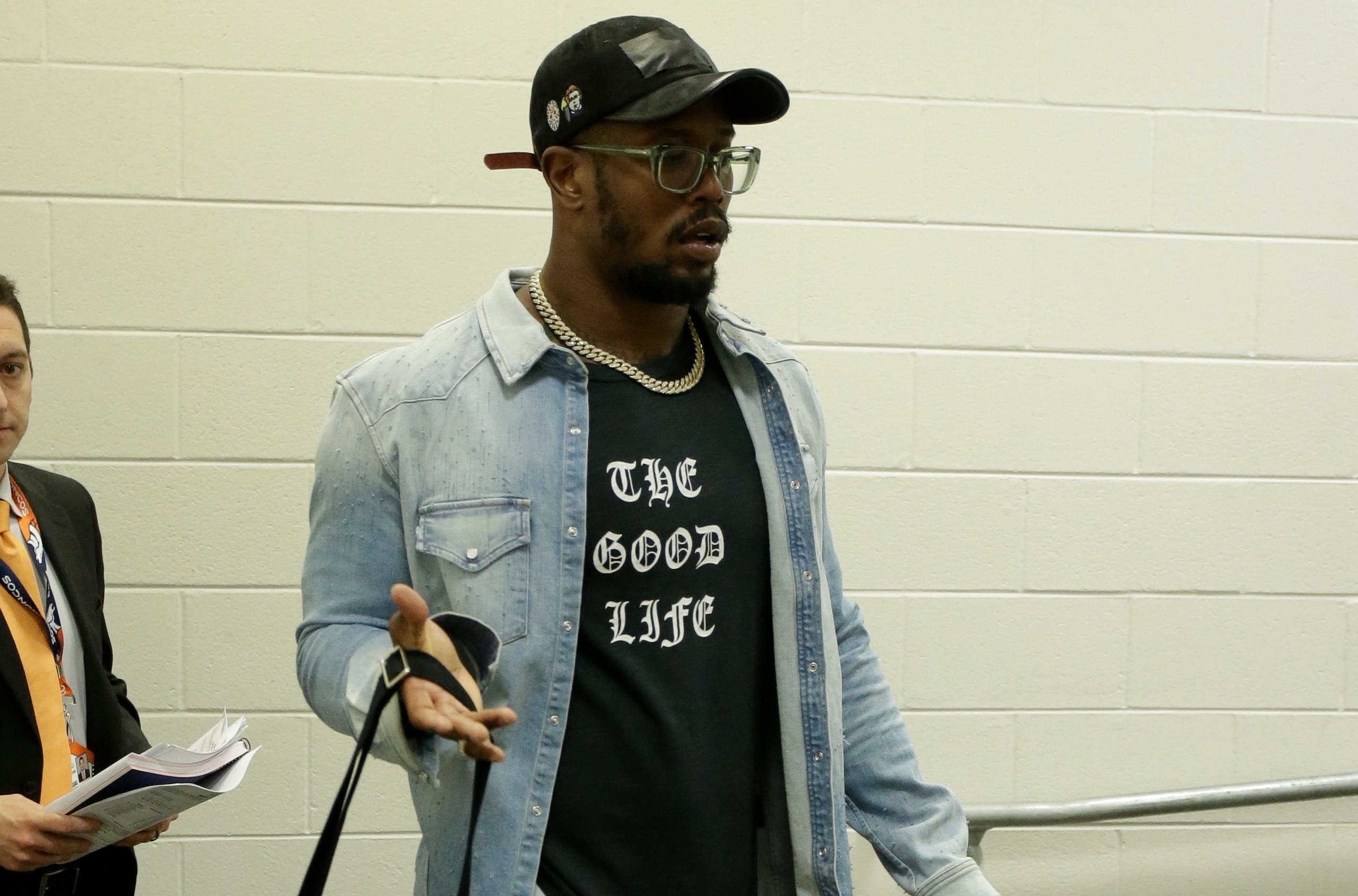
The NFL has screwed-up contract options that provide power to owners and give little leverage to players.
Restricted free agency allows teams to low-ball players for another year unless another team decides to pay them something close to market value.
The fifth-year option allows teams to lock up first-round picks for another year, with the only guarantees being against injury. This is like telling a top-notch lawyer who has been outstanding for four straight years that he's getting a slight raise but he still needs to prove himself for one more year. Oh, and if he loses a case in that last year, he's probably not getting the salary he deserves—or he could be sent looking for new employment.
The flip side of that ugly coin is that a non-first-round pick doesn't qualify for the fifth-year option and has no security against injury in the final year of his deal.
The franchise tag will compensate a player while also leaving him without financial security for the future. Large contract figures look great and all, but a player's business is his body, and he should have a right to protect his business for the long term. Those large franchise-tag numbers look great, but they mean little if a player blows out his knee and never suits up again.
Denver Broncos pass-rusher Von Miller had the right idea last offseason when he essentially said, "Go ahead and franchise me, but I'm not going to play under the tag."
Miller held out and ended up with a long-term deal that included $70 million guaranteed.
Many fans didn't side with Miller when he threatened to hold out. Maybe it's because players wear helmets or because fans stick with teams regardless of who's playing for them, but players are often treated as faceless, interchangeable tools.
Players are people, though, and they have people other than themselves depending on them. I heard every story you could imagine as a player. When I worked in New England's front office, I heard horror story after horror story about where some of these guys came from and who was depending on them. In same cases, you have entire families, communities even, relying on a guy to succeed. Tell them these players don't deserve the same basic security employees in other professions get.
Something has to change.
Odell Beckham Jr., WR, New York Giants
2 of 8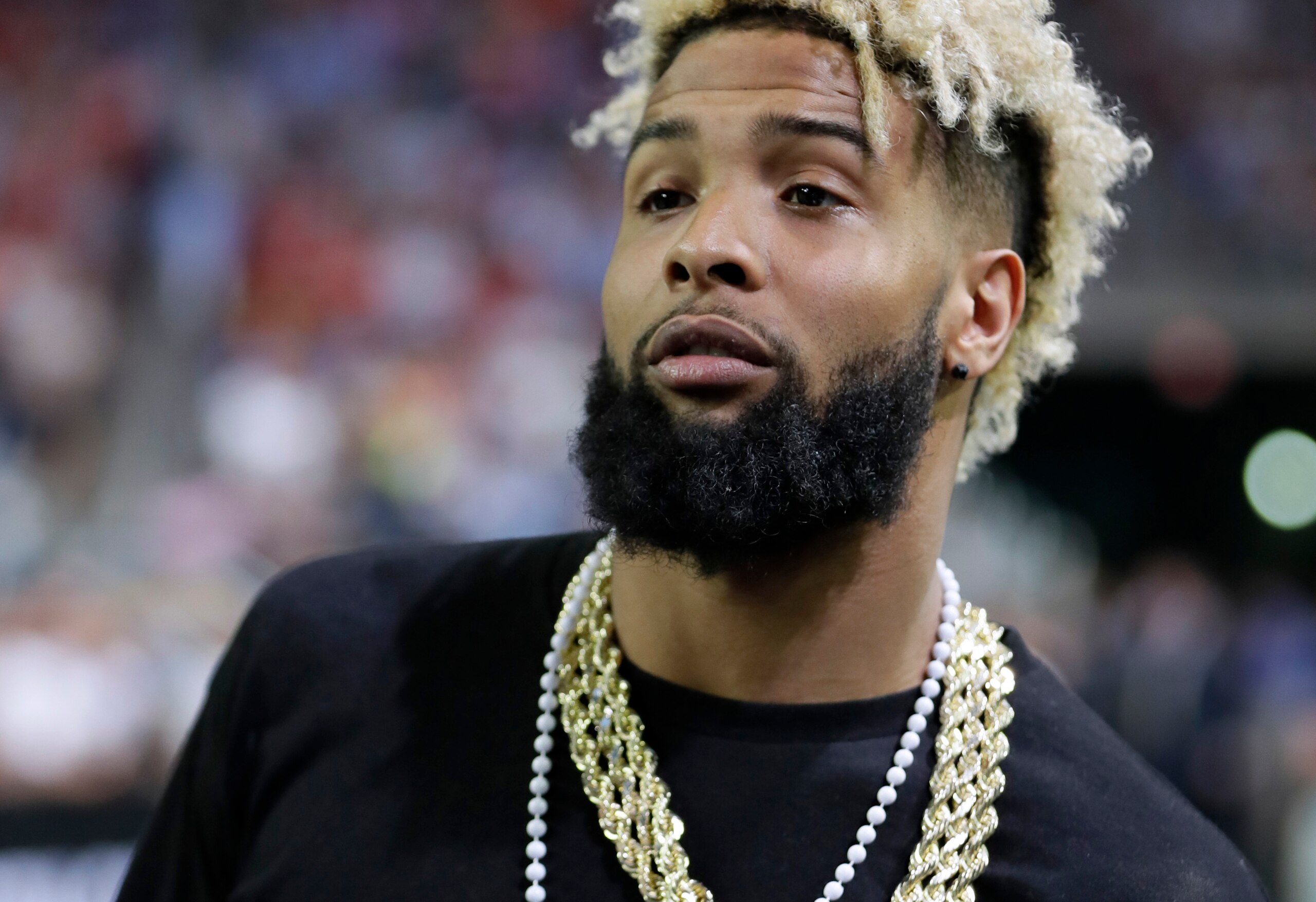
New York Giants wide receiver Odell Beckham Jr. is on pace to be the greatest wide receiver of our time. He already has numerous records to his name, and he's likely to set many more before he retires.
So far, he's become the fastest player to reach 4,000 receiving yards, the fastest to 250 receptions and the first player to have three straight seasons with 70-plus receptions, 1,000-plus yards and 10-plus touchdowns to start a career.
Thanks to the fifth-year option, Beckham is slated to earn just under $8.5 million in 2018. That's a lot of money—well, it'll be less than half of that after agent fees and taxes, but it's still a lot—but it isn't close to fair market value. For instance, Marvin Jones has a cap hit of $8.6 million for the Detroit Lions this season. Beckham's base salary for 2017, meanwhile, is just over $1.8 million.
Per ESPN's Adam Schefter, Beckham skipped OTAs to demonstrate his desire for a new contract, and he has the right idea. If I'm him, I'm not playing a down in New York this season without a long-term deal. One serious injury, and Beckham could become just another average receiver.
It's not like the Giants haven't been through this situation before. After wideout Steve Smith racked up 1,220 receiving yards in 2009, he played just nine games the next season and was out of the league by 2013.
Beckham needs to cash in now, and he has the leverage needed to force New York's hand. He's one of the NFL's most recognizable players and is the centerpiece of the Giants offense. The team ranked just 25th in total offense last season (330.7 yards per game) with Beckham on the roster.
How impactful is Beckham? Let's put it this way: When I watched film of the Giants against the Green Bay Packers in the 2016 playoffs, the Packers were essentially employing punt coverage against Beckham—meaning he was double-covered with safety help over the top.
You can't justify paying only $1.8 million for a player with that kind of impact.
Aaron Donald, DT, Los Angeles Rams
3 of 8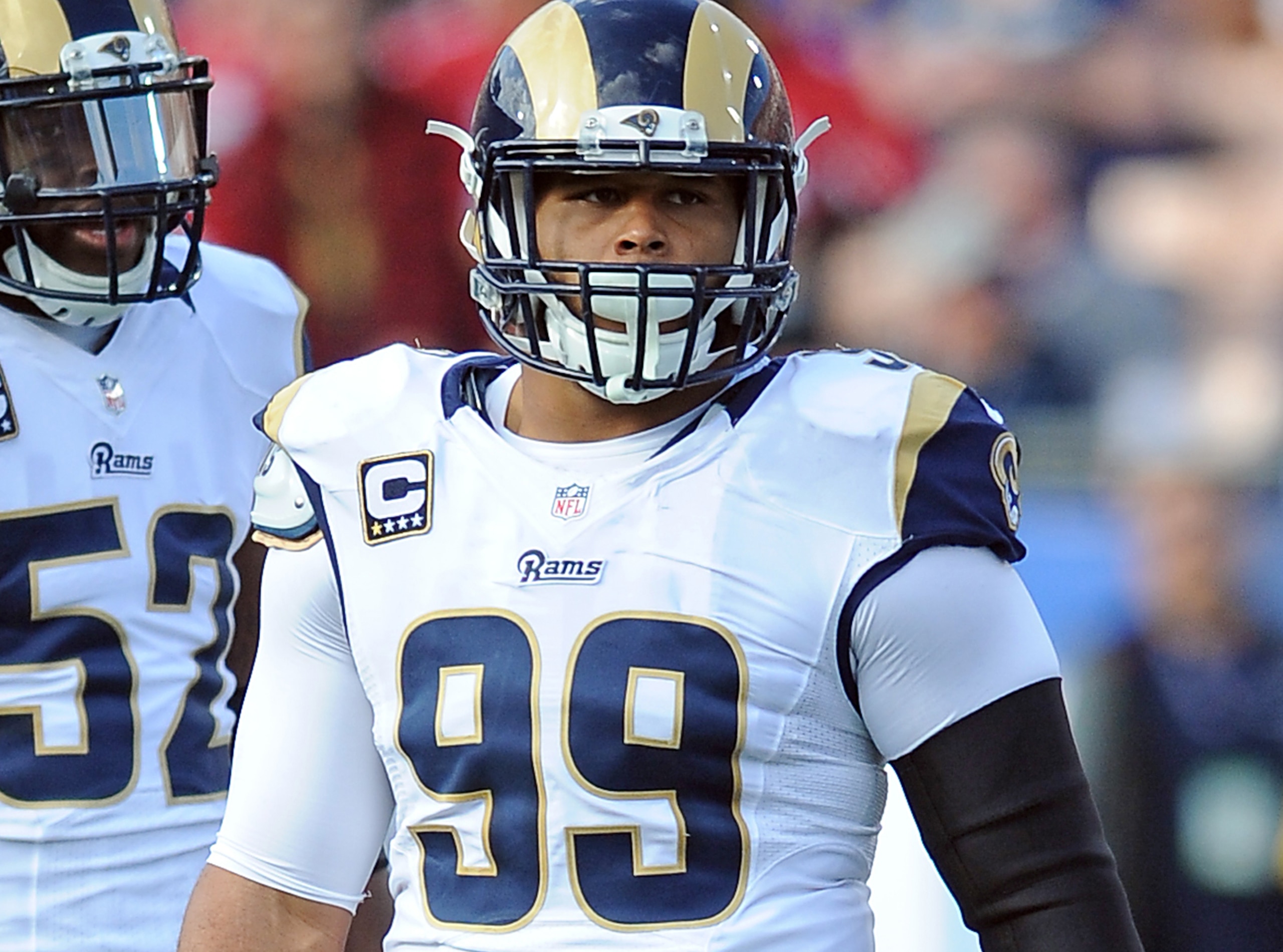
Maybe you aren't going to feel for Beckham because he's so marketable and can cash in on endorsement deals. He just signed a new five-year, $29-plus million shoe deal with Nike that set a record for an NFL player, according to Nick DePaula of Nice Kicks.
That's good money, but let's be honest: An NBA player would piss on that contract.
What about a player like Aaron Donald? He's in the same situation as Beckham. The Los Angeles Rams have him under contract for two more years thanks to the fifth-year option. Donald is set to earn just over $1.8 million this season and just under $6.9 million in 2018.
We're talking about arguably the best defensive lineman in the entire NFL, folks. He's the best player on the Rams by far, and he's making $1.8 million. That's dumb, and it's not like Donald has the commercial appeal of a guy like Beckham, either.
Where's the financial security? We're talking about a 285-pound defensive tackle whose game is predicated on quickness and explosion. One lower-body injury, and Donald may never be the same player again.
What's Donald supposed to say if such an injury occurs? "Well, now I'm screwed, but thanks, NFL!"
No. Donald should send the Rams and the league a message by refusing to suit up until his financial future is secure.
.jpg?w=2560 "Rams Raiders Football")
Malcolm Butler, CB, New England Patriots
4 of 8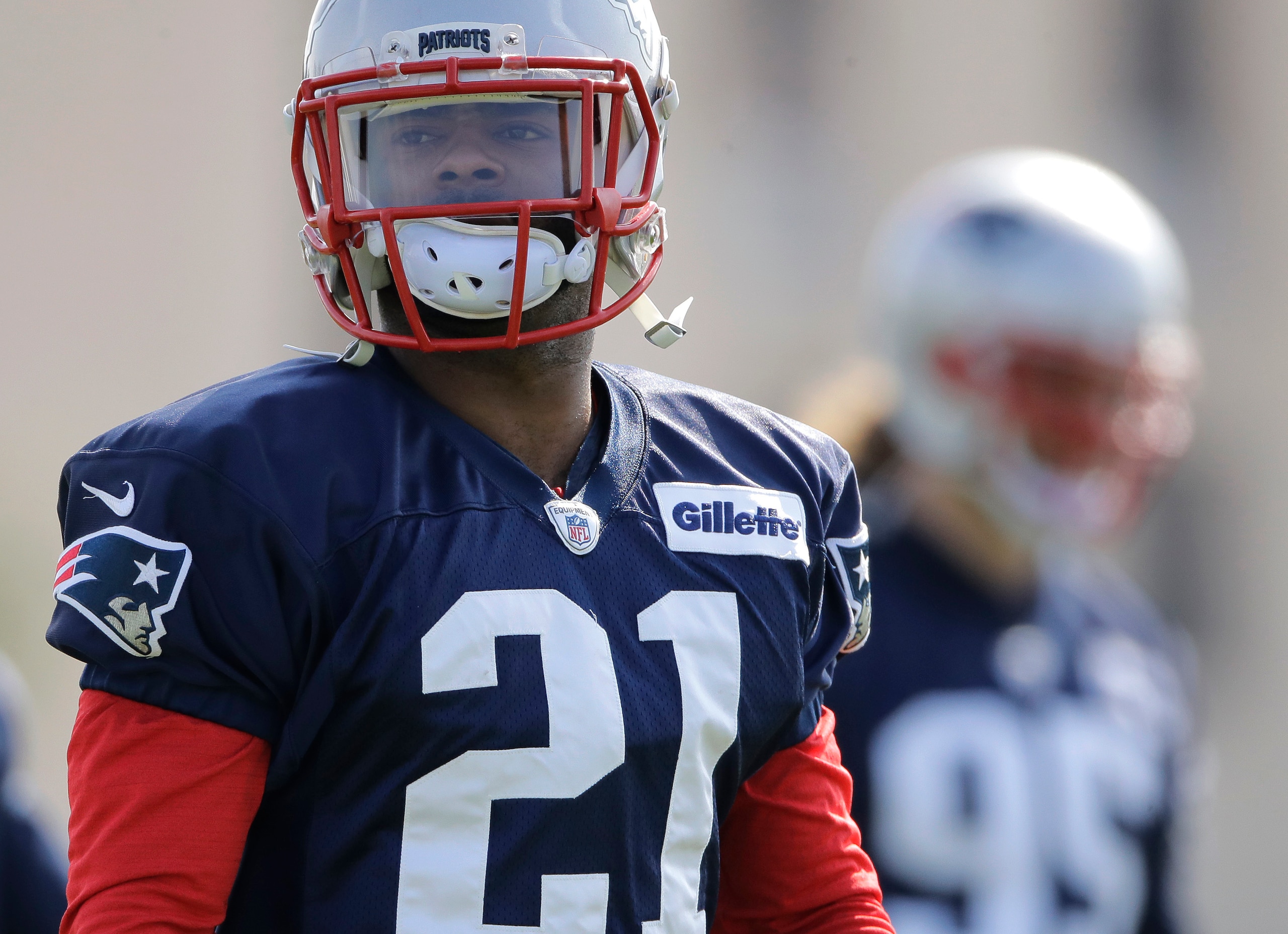
New England Patriots cornerback Malcolm Butler has gone from being a rookie free agent to one of the NFL's top cornerbacks. He's tough, he plays the game the right way, he's a shutdown guy and he's also responsible for perhaps the greatest play in Patriots history.
With the aid of restricted free agency, the Patriots are "rewarding" Butler with a $3.91 million salary in 2017.
Again, $3.91 million is a lot of money, but it's far from market value for a No. 1 cornerback. It certainly isn't close to what a cornerback like Butler deserves to make. The Super Bowl XLIX hero shouldn't play unless he's given a long-term deal or is traded to a team who will reward him accordingly.
While I don't put all of my stock into analytics sites like Pro Football Focus, it's worth noting the site rated Butler second league-wide in pass coverage last season. New teammate Stephon Gilmore—who New England just signed to a five-year, $65 million deal—was rated 139th.
Heck, PFF rated Vontae Davis as the league's 12th-worst cover corner last season. He'll earn roughly $5 million more than Butler in 2017.
Other teams didn't sign Butler to an offer sheet, which is part of the reason he's playing on his current deal. Just remember, any team that signed Butler would have had to surrender a first-round pick to the Patriots if New England didn't match the offer.
The entire process of restricted free agency gives all of the power to the team holding the player's rights and none to the player. Butler presumably would have liked nothing more than to sign a long-term deal with another team and to give the Patriots nothing in return after the way they treated him this offseason.
Unfortunately, if Butler suffers a serious injury this year, that $3.91 million deal may be the last significant contract he ever signs.
Derek Carr, QB, Oakland Raiders
5 of 8
If I'm Oakland Raiders quarterback Derek Carr, there's no way I play this season unless I'm making franchise-quarterback money.
Carr has proven that he's a borderline elite quarterback—he's at least one of the 10 best signal-callers in the game. The Raiders offense doesn't work without him, either. Yeah, Oakland has offensive weapons, but the clutch comebacks we saw in 2016 were all on Carr's shoulders.
The Raiders don't beat the Tampa Bay Buccaneers in overtime without Carr. They don't hold on to beat the Houston Texans in Mexico without Carr. They don't come back to beat the Baltimore Ravens without Carr.
Oakland might have been a Super Bowl contender had Carr not suffered a broken leg in Week 16. The Raiders probably wouldn't have been a playoff team, though, if Carr hadn't been under center until that point.
Do you know what Carr is going to make in 2017? His base salary is $977,519.
Since Carr was a second-round pick in 2014, he also isn't eligible for a fifth-year option. While that option is a trap for many players, it does provide protection against a significant injury. If Jacksonville Jaguars quarterback Blake Bortles goes down with a torn ACL this season, for example, he might collect his entire $19 million salary for 2018.
If Von Miller drives Carr into the ground later this year and the Raiders gunslinger suffers a torn labrum, he may never get a big payday. Bortles isn't in the same stratosphere as Carr, but he's the one with injury protection? Why? Because 32 teams screwed up their quarterback evaluation a few years ago and Carr fell a few picks outside of Round 1.
Players like Carr shouldn't get screwed over because team executives screwed up. Carr is eligible for a new long-term contract, and there's no way he should take a snap for Oakland without one.
Jordan Howard, RB, Chicago Bears
6 of 8
Carr is eligible for a new contract. Chicago Bears running back Jordan Howard isn't, which is unfair.
Holding out wouldn't earn Howard a new contract because the collective bargaining agreement (CBA) doesn't allow players to renegotiate their contracts until after three accrued seasons. I'm listing him here, though, because this part of the CBA needs to change.
Howard rushed for 1,313 yards last season, the second-most across the NFL. Despite that, he's set to earn just $602,000 in 2017. Howard will be the fifth-highest-paid running back on Chicago's roster this season.
Yeah, you read that right. Howard was second in the NFL in rushing last season and is going to be paid less than four running backs on his own team. Oh, and he can't ask for a raise for another two years thanks to the CBA.
This is like telling Justin Bieber or Kanye West that he's the second-best pop artist in the world but can't be paid like it for another two years. Until then, he'll have to just scrape by on the industry standard and hope it's enough to pay the bills after taxes and fees.
This has to change because of the potential path it lays out. For an example, let's look at former Washington Redskins back Alfred Morris.
Morris was second in the NFL with 1,613 yards as a rookie in 2012 (sound familiar?). He rushed for over 1,000 yards in each of the next two seasons and then 751 yards while splitting time in Year 4. By the time Morris was eligible for a second contract, teams said, "No thanks, you're beaten up and worn down, and we don't view you as a starting back."
Morris signed a two-year, $3.5 million deal with the Dallas Cowboys last offseason. If the Bears lean heavily on Howard over the next few years, his fate could be similar.
David Johnson, RB, Arizona Cardinals
7 of 8
Maybe you're not convinced Howard has proved his worth in the NFL. Well, what about Arizona Cardinals back David Johnson? He produced more than 1,000 combined rushing and receiving yards as a rookie and more than 2,000 combined yards last season.
Through two years, Johnson has amassed 1,820 yards rushing, 1,336 yards receiving and 32 total touchdowns. He might be the NFL's best young all-around back today. Unfortunately, he can't ask Arizona for a raise for another year. If he gets hurt before then, he may have to play out his four-year, $2.9 million contract and then look for new employment.
Thanks, CBA.
It's great that the players union and the NFL decided to put a cap on rookie salaries, as it helps add money to the pool available for veterans. However, the CBA should have allowed for players like Howard and Johnson to renegotiate their rookie deals sooner than the three-year time frame. This is especially relevant for running backs, many of whom have careers that don't last longer than a handful of seasons.
I'd rather be a boxer than an NFL running back. These guys are asked to shoot through the hold, bounce off a 300-pound defensive lineman, break through a linebacker tackle and then run over a defensive back. That's just on running plays. They're also getting hit while trying to haul in passes and are asked to withstand the car crash of a 280-pound defensive end in pass protection.
Running backs are battered on every single play, so naturally, their careers aren't going to last as long as, say, the careers of quarterbacks. A guy like Johnson—who had 373 touches last season—faces the possibility of never getting a second deal and making maybe $1.5 million after taxes before retiring.
If Johnson's career ended after his rookie contract, he'd have to find other employment—and good luck doing anything physical if your career ended because of knee or hip injuries.
The rules are put in place to force rookies to earn their salaries, but even second- and third-year players deserve financial security. Hell, if players had the option of renegotiating early, Carr and the Raiders likely would have already struck a long-term deal.
Le'Veon Bell, RB, Pittsburgh Steelers
8 of 8
While we're on the topic of running backs, we might as well talk about Pittsburgh Steelers star Le'Veon Bell.
The Steelers gave Bell the franchise tag this offseason, so he's set to make $12.1 million in 2017. Though that's a good chunk of money, it provides no long-term security for Bell, who has already suffered one major leg injury and is coming off groin surgery.
Because he's a running back, Bell is making far less than the $23.9 million Kirk Cousins is making under the franchise tag this year. Quarterbacks are always going to make more money than players at other positions, but $12.1 million isn't fair market value for a guy who might be a better all-around back than Johnson.
Bell is the centerpiece of the Steelers offense now. I'm not trying to take anything away from Ben Roethlisberger, but look at how he and the rest of the Pittsburgh offense played in the AFC title game last postseason after Bell went out with his groin injury.
Without Bell, Big Ben had no dump-off outlet and no real threat on the ground. The Patriots ended up trouncing the Steelers, 36-17.
Bell is arguably the most important player on Pittsburgh's roster. Even with the franchise tag, he's only going to be the third-highest-paid player on the team this season. He'll make roughly $1 million more per year than offensive linemen Maurkice Pouncey and David DeCastro and about $1.7 million more than defensive end Cam Heyward.
Yet Bell is the one with the least long-term security.
His situation highlights both the problems with the franchise tag and the disparity between positions with the tag. If Bell took the Von Miller approach and refused to play, the league would perhaps start to recognize these issues.

.jpg?w=2560 "Steelers Saints Football")



.jpg?w=2560 "Big Trade to Shake Up East 💡")